Research Articles
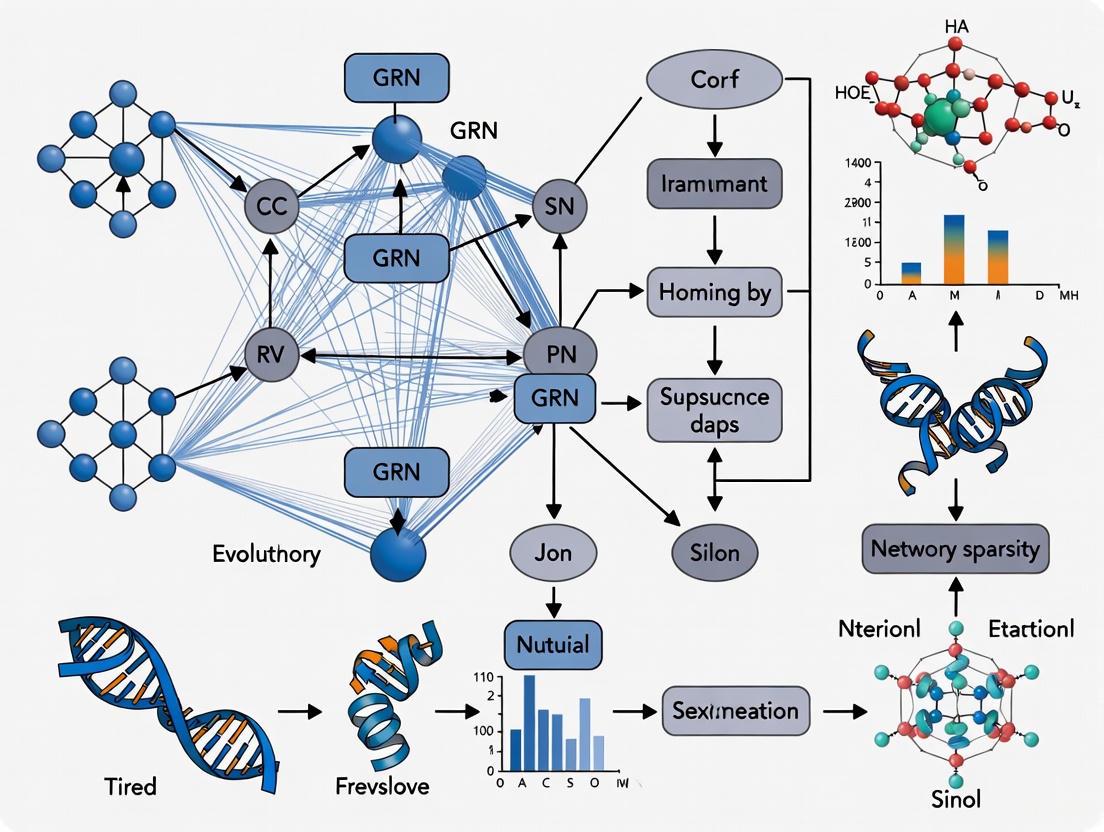
Overcoming the Sparsity Challenge: Advanced Strategies for Robust Gene Regulatory Network Reconstruction
Reconstructing Gene Regulatory Networks (GRNs) from single-cell RNA sequencing (scRNA-seq) data is fundamental for understanding cellular identity and disease mechanisms.
Strategic Balance: Optimizing Network Performance and Resource Costs in Biomedical Research
This article provides a comprehensive framework for researchers, scientists, and drug development professionals to navigate the critical trade-offs between computational network performance and associated resource costs.
Beyond the Data Limit: Advanced Strategies for Maximizing Molecular Information Extraction in Drug Discovery
This article addresses the critical challenge of extracting robust and meaningful information from limited molecular datasets, a common bottleneck in early-stage drug discovery.

Beyond the Black Box: Advanced Computational Strategies to Overcome Key Hurdles in Regulatory Interaction Prediction
Accurately predicting direct regulatory interactions, such as those between drugs and targets or transcription factors and genes, is fundamental to accelerating drug discovery and understanding disease mechanisms.
Conquering Technical Variation: Advanced Strategies for Robust Single-Cell GRN Inference
Inference of Gene Regulatory Networks (GRNs) from single-cell RNA sequencing (scRNA-seq) data is fundamentally challenged by pervasive technical variation, notably zero-inflation or 'dropout' events, where true gene expression is erroneously...
Beyond the Binding Site: Advanced Computational Strategies for Accurate TF-Gene Interaction Prediction
Predicting transcription factor (TF)-gene interactions in complex organisms is fundamental to understanding gene regulation, yet it remains challenging due to biological complexity and technical limitations.
PHLOWER: Inferring Complex Cell Differentiation Trajectories from Multimodal Single-Cell Data
The PHLOWER method represents a significant advance in computational trajectory inference, leveraging the harmonic component of the Hodge decomposition on simplicial complexes to reconstruct complex, multi-branching cell differentiation trees from...
Modeling Gene Regulation: Computational Strategies for Simulating GRN Structure and Perturbation Effects
This article provides a comprehensive overview of cutting-edge computational models for simulating Gene Regulatory Network (GRN) structure and predicting the effects of genetic perturbations.
Leveraging PageRank Algorithm for Key Regulator Gene Discovery in Biomedical Networks
This comprehensive review explores the transformative application of PageRank algorithms in identifying key regulator genes within complex biological networks.
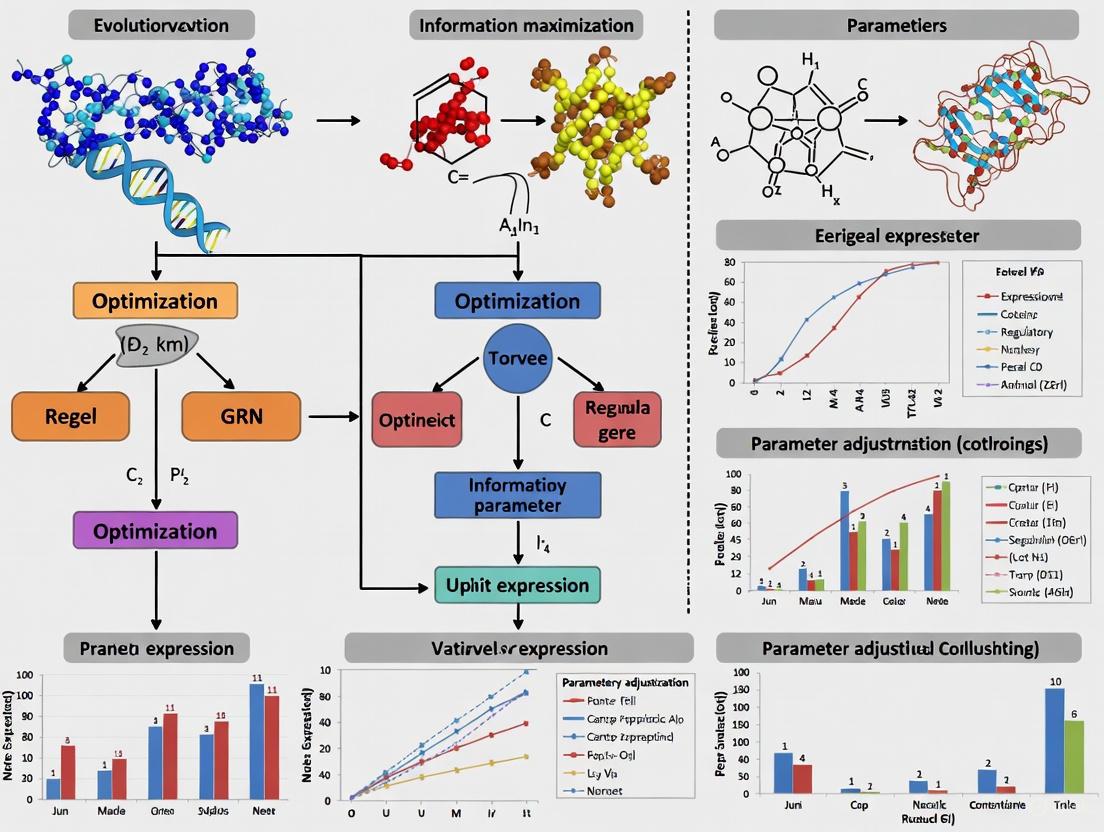
Information Maximization in Drosophila Gene Regulatory Networks: From Optimization Principles to Biomedical Applications
This article explores the paradigm of information maximization as a guiding principle for optimizing parameters in Drosophila melanogaster Gene Regulatory Networks (GRNs).