Network Propagation in Genetic Disease: From Molecular Associations to Clinical Applications
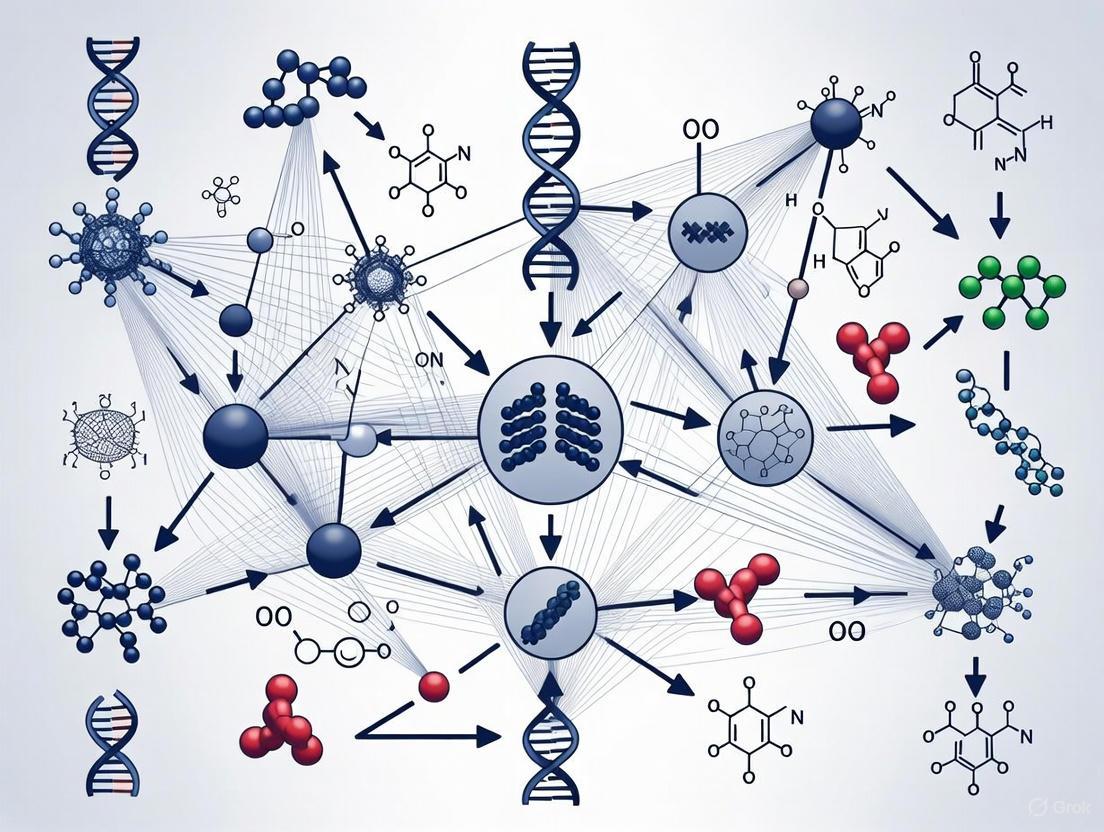
This article provides a comprehensive examination of network propagation methodologies for elucidating genetic disease associations and their transformative potential in biomedical research.
Network Propagation in Genetic Disease: From Molecular Associations to Clinical Applications
Abstract
This article provides a comprehensive examination of network propagation methodologies for elucidating genetic disease associations and their transformative potential in biomedical research. It explores the foundational principles that establish biological networks as essential frameworks for understanding disease mechanisms, detailing how disease-associated genes cluster within functional modules across genomic, transcriptomic, proteomic, and phenotypic scales. The content systematically reviews cutting-edge computational techniques including random walk algorithms, multi-omics integration, and hypergraph neural networks, highlighting their applications in target identification, drug repurposing, and patient stratification. Through critical analysis of validation frameworks and performance benchmarks, we demonstrate how network propagation amplifies genetic signals to reveal biologically plausible therapeutic targets with higher clinical success rates. This resource equips researchers and drug development professionals with both theoretical understanding and practical implementation strategies to advance precision medicine initiatives.
The Biological Basis of Network Medicine: Why Genes Cluster in Disease Modules
Frequently Asked Questions (FAQ)
What is the core difference between reductionist and systems thinking in pathology? A reductionist approach attempts to understand a disease by isolating and studying its individual molecular components (e.g., a single gene or protein). In contrast, systems thinking uses network theory to understand diseases as emergent properties of complex, interconnected systems. It focuses on the interactions and relationships between molecular components, which often provide more biological meaning than the components in isolation [1].
Why are network approaches particularly useful for studying complex genetic diseases? Complex diseases like cancer, autism, and Alzheimer's are rarely caused by a single gene defect but involve large sets of genes. Network medicine has shown that the products of these disease-associated genes tend to cluster together in specific topological modules within larger molecular interaction networks. It is the concentration of mutations in these interconnected modules, rather than just a general increase in mutation count, that often characterizes the transition from health to disease [1].
What is a 'disease module' and how is it identified? A disease module is a set of network nodes (e.g., genes, proteins) that are not only topologically close within a biological network but are also collectively associated with a specific disease. These modules are often located using network propagation or network diffusion methods. These algorithms use known disease-associated "seed" genes to explore the network and identify other genes that are topologically related, thus expanding the potential set of disease-relevant genes [1] [2] [3].
My GWAS study produced many genetic variants with weak statistical signals. How can network propagation help? Network propagation can amplify weak signals from GWAS summary statistics. By mapping genetic variants to genes and then using a molecular network (like a protein-protein interaction network), the method "smoothes" the initial gene-level scores. Genes with initially modest association scores can receive higher "network influence" scores if they are surrounded by other genes with strong associations in the network, thereby helping to prioritize high-confidence candidate genes [2].
What are the main challenges in applying network propagation to my GWAS data? Key challenges include the choice of methodology for mapping SNPs to genes (e.g., simple genomic proximity vs. more complex chromatin interaction mapping or eQTL data), the method for aggregating SNP-level P-values into a gene-level score, and the selection of the appropriate molecular network, as the size and density of the network can significantly impact the results [2].
Can these methods be applied to rare diseases? Yes. Network analysis is particularly powerful for rare diseases, which are often monogenic. A multiplex network approach, which integrates data from multiple biological scales (genome, transcriptome, proteome, phenome), can reveal distinct disease modules and help mechanistically dissect the impact of a single gene defect across different levels of biological organization [4].
Troubleshooting Guides
Issue: After running a GWAS, you have a long list of genetic variants, but distinguishing true causal genes from statistical noise is challenging.
Solution: Implement a network propagation workflow to integrate your GWAS results with prior biological knowledge embedded in molecular networks.
Experimental Protocol: Network Propagation for GWAS
Map SNPs to Genes:
- Do not rely solely on genomic proximity. To account for regulatory elements, use more robust methods like:
- Chromatin Interaction Mapping: Associate SNPs with genes located within the same Topologically Associated Domain (TAD) using data from assays like Hi-C [2].
- eQTL Mapping: Use expression Quantitative Trait Loci (eQTL) data from tissues relevant to your disease to link non-coding SNPs to the genes they regulate [2].
- Do not rely solely on genomic proximity. To account for regulatory elements, use more robust methods like:
Generate Gene-Level Scores:
- Assign an aggregate score to each gene from the P-values of its mapped SNPs. Avoid simple binary scoring.
- Use methods that correct for gene length and linkage disequilibrium (LD) between SNPs, such as PEGASUS or fastCGP, which only require summary statistics and a reference population [2].
Select a Biological Network:
- Choose a network that reflects the relationships you want to explore. Common choices include:
- Consider that the size and density of the network will affect the propagation results. Testing on multiple networks or using ensemble methods can be beneficial [2].
Perform Network Propagation:
- Use algorithms like Random Walks with Restarts or guided network propagation (e.g., as in the uKIN tool) to diffuse the gene-level scores across the network [3].
- This step allows genes with strong network connections to other high-scoring genes to have their scores boosted.
Rank Genes and Validate:
- Rank genes based on their final, network-smoothed scores.
- The top-ranked genes are your high-confidence, prioritized candidates for further experimental validation (e.g., in vitro or in vivo functional studies).
The workflow is also summarized in the diagram below.
Problem: Interpreting the Functional Impact of a Rare Disease Gene
Issue: You have identified a novel gene variant in a patient with a rare disease, but its biological role and relationship to the observed clinical phenotypes are unknown.
Solution: Use a cross-scale multiplex network to contextualize the rare gene defect across multiple levels of biological organization [4].
Experimental Protocol: Cross-Scale Network Analysis for Rare Diseases
Construct or Access a Multiplex Network:
- Build a network with multiple layers, where each layer represents a different biological scale. Key layers to include are [4]:
- Genome: Genetic interactions (e.g., from CRISPR screens).
- Transcriptome: Gene co-expression (pan-tissue and tissue-specific).
- Proteome: Physical protein-protein interactions.
- Pathway & Function: Pathway co-membership and shared Gene Ontology terms.
- Phenome: Phenotypic similarity based on ontologies (HPO/MPO).
- Build a network with multiple layers, where each layer represents a different biological scale. Key layers to include are [4]:
Map the Gene and Phenotypes:
- Insert your candidate gene as a node in the relevant network layers (e.g., Proteome, Pathway).
- Map the patient's clinical phenotypes (using HPO terms) to the phenotypic layer.
Identify Conditionally Associated Nodes:
- Analyze the network to find nodes (genes, phenotypes) that are conditionally associated with your candidate gene. This means their connection remains significant even when accounting for all other connections in the network.
- This step helps filter out spurious connections and reveals the most direct relationships.
Characterize Network Roles:
- Use graph theory metrics to understand the gene's importance:
- Expected Influence: The sum of a node's edge weights, showing its total direct impact on the network.
- Clustering Coefficient: Measures how interconnected a node's neighbors are, indicating potential functional redundancy [5].
- A gene with high expected influence in the phenotypic layer is a strong candidate for being central to the disease mechanism.
- Use graph theory metrics to understand the gene's importance:
The structure of this multiplex network is illustrated below.
Research Reagent Solutions
Table 1: Key analytical tools and resources for network pathology.
| Tool/Resource Name | Type | Primary Function | Relevant Use Case |
|---|---|---|---|
| Human Phenotype Ontology (HPO) [1] | Vocabulary / Ontology | Provides standardized terms for describing human phenotypic abnormalities. | Mapping patient symptoms to computational models; calculating phenotypic similarity between diseases [1] [4]. |
| HIPPIE [4] | Protein-Protein Interaction (PPI) Network | A database of curated physical protein-protein interactions with confidence scores. | Building the proteome layer for network propagation or module detection studies [4]. |
| GTEx Database [4] | Transcriptome Data | A resource containing tissue-specific gene expression and regulation data from a wide variety of human individuals. | Constructing tissue-specific co-expression networks to contextualize disease genes [4]. |
| REACTOME [4] | Pathway Database | Provides curated knowledge of biological pathways and processes. | Defining pathway co-membership to create functional network layers [4]. |
| uKIN [3] | Algorithm / Software Tool | A guided network propagation method that integrates prior knowledge of disease genes with new candidate genes in a PPI network. | Improving the accuracy of identifying true disease genes from cancer genomics or GWAS data [3]. |
| GNA (Genomic Network Analysis) [5] | Analytical Framework / R Package | Estimates sparse Gaussian graphical models from genetic covariance matrices to find conditionally independent genetic relationships between traits. | Deconvolving shared and unique genetic signals across multiple correlated complex traits or symptoms [5]. |
Key Methodologies in Detail
Method: Guided Network Propagation (exemplified by uKIN)
- Principle: This method integrates two key sources of information: 1) Prior knowledge - a set of known disease-associated genes, and 2) New data - a set of candidate genes from a new experiment (e.g., GWAS, sequencing). It uses the prior knowledge to guide or "bias" a random walk on a PPI network that is initiated from the new candidate genes. This allows for the functional integration of both data types within a unified network framework [3].
- Workflow:
- Input: A PPI network, a set of known "guide" genes, and a set of new candidate genes.
- Propagation: A random walk is performed from the new candidate genes. The walk's progression is influenced by the proximity to the guide genes, making it more likely to traverse through areas of the network that are already known to be disease-relevant.
- Output: A ranked list of genes, where top-ranked genes are those new candidates that are not only topologically close to each other but also reside in a network neighborhood densely populated by known guide genes. This has been shown to outperform methods that use only prior knowledge or only new data [3].
Method: Genomic Network Analysis (GNA) for Trait Deconvolution
- Principle: GNA applies network modeling to genetic covariance data (from methods like LDSC) to estimate partial genetic correlations ((p_{rg})). This is the genetic correlation between two traits after conditioning on all other traits in the network. The result is a sparse network that highlights the most critical, conditionally independent genetic relationships [5].
- Workflow:
- Input: GWAS summary statistics for a set of traits (e.g., T2D, BMI, blood pressure, lipids).
- Estimation: Calculate the genetic variance-covariance matrix for all traits.
- Model Fitting: Fit a Gaussian Graphical Model (GGM) and use a stepdown procedure to prune non-significant edges, resulting in a sparse network.
- Interpretation: Analyze the resulting network. Traits connected by an edge have a direct genetic relationship, even when controlling for other traits. Traits with no edge are genetically independent once the network is accounted for, suggesting their observed correlation is mediated by other traits in the model [5].
Core Concept FAQs
What is the Disease Module Principle? The Disease Module Principle is a concept in network medicine which posits that genes associated with the same disease are not scattered randomly across the cellular interactome, but instead cluster together in specific functional modules. These modules are groups of genes whose products work in concert to perform a specific cellular function, and whose disruption leads to a particular disease phenotype. Similar disease phenotypes arise from functionally related genes that work together as a functional module [6].
How does network propagation help identify these modules? Network propagation acts as a "universal amplifier" of genetic associations. It is a mathematical data transformation method that diffuses genetic evidence through biological networks, allowing researchers to infer genes without direct genetic association but which are network neighbors of genes with strong association signals. This approach helps define disease-associated network modules containing both known disease genes and novel candidate targets [7] [8].
What biological evidence supports this principle? Multiple studies provide empirical support. Analyses of UK Biobank GWAS data have shown that protein networks formed from specific functional linkages (like protein complexes and ligand-receptor pairs) successfully enrich for clinically validated drug targets. Genes identified through network propagation of genetic evidence are significantly enriched for successful drug targets, demonstrating the biological and clinical relevance of the identified modules [7].
Experimental Protocols & Methodologies
Protocol 1: Identifying Functional Gene Modules with GMIGAGO
GMIGAGO (Functional Gene Module Identification algorithm based on Genetic Algorithm and Gene Ontology) is an overlapping gene module identification algorithm that considers both expression similarity and functional similarity [9].
Stage 1: Initial Identification of Gene Modules
- Input: Gene expression data (e.g., RNA-Seq, microarray) for n genes across m samples.
- Distance Calculation: Calculate distance between genes using Pearson correlation coefficient:
Dist = 1 - rwhere r is the correlation between gene expression profiles. - Clustering: Use Improved Partitioning Around Medoids Based on Genetic Algorithm (PAM-GA) for initial clustering.
- Cluster Number Determination: Run PAM with cluster numbers (k) from 8 to 20, selecting the k that optimizes the Silhouette Score.
- Output: Traditional gene co-expression modules.
Stage 2: Functional Similarity Optimization
- Optimization Method: Apply Genetic Algorithm for Functional Similarity Optimization (FSO-GA).
- Functional Similarity Calculation: Based on Gene Ontology (GO) terms using Information Content (IC) and Lowest Common Ancestor (LCA) of GO terms in the Directed Acyclic Graph.
- Goal: Increase functional similarity within modules by adjusting gene membership under rule constraints.
- Genetic Algorithm Operators: Uses selection, crossover, and mutation with elite crossover strategy for faster convergence.
Table 1: GMIGAGO Performance on Six Disease Datasets
| Dataset | Key Findings | Functional Similarity |
|---|---|---|
| BRCA | Identified modules with important biological functions | Much higher than state-of-the-art algorithms |
| THCA | Hub genes potential therapeutic targets | Much higher than state-of-the-art algorithms |
| HNSC | Discovered interesting functional modules | Much higher than state-of-the-art algorithms |
| COVID-19 | Key modules with pathophysiological relevance | Much higher than state-of-the-art algorithms |
| Stem | Important developmental functions identified | Much higher than state-of-the-art algorithms |
| Radiation | Potential radiation protection targets | Much higher than state-of-the-art algorithms |
Protocol 2: Network Propagation for Drug Target Identification
This methodology uses network propagation to identify proxy genes for disease association based on high-confidence genetic hits [7].
Step 1: Define High-Confidence Genetic Hits (HCGHs)
- Data Source: Genome-wide association studies (GWAS) summary statistics (e.g., UK Biobank data).
- Colocalization: Perform colocalization with GTEx eQTLs.
- Filtering Criteria:
- eGene must be protein-coding
- GWAS p-value ≤ 5e-8
- eQTL p-value ≤ 1e-4
- GWAS/eQTL colocalisation p12 ≥ 0.8
- Selection: For loci with multiple qualifying eGenes, select the one with highest posterior probability of colocalisation across all tissues.
Step 2: Define Proxy Genes Using Network Methods
- Network Types Used:
- Protein-protein interaction networks
- Protein complexes
- Ligand-receptor pairs
- Signaling pathways
- Propagation Algorithms: Implement random walk, information diffusion, or electrical resistance approaches.
Step 3: Validation Against Clinical Data
- Data Source: Citeline's Pharmaprojects database for drug target success/failure data.
- Enrichment Analysis: Measure enrichment of successful drug targets in both HCGHs and proxy genes.
- Background: Use full protein-coding gene list (22,758 genes) as universe for comparison.
Figure 1: Network Propagation Workflow for identifying disease-associated gene modules through genetic evidence propagation.
Technical Troubleshooting Guides
Issue: Low Functional Similarity in Identified Modules
Symptoms
- Gene modules show poor enrichment for specific GO terms.
- Biological interpretation of modules is challenging.
- Hub genes lack coherent functional annotation.
Solutions
- Adjust GMIGAGO Parameters:
- Increase the number of generations in FSO-GA stage.
- Modify the fitness function to weight functional similarity more heavily.
- Extend the cluster number (k) search space beyond 8-20.
Enhance Functional Annotation:
- Use updated GO term databases.
- Incorporate additional functional databases beyond GO.
- Consider tissue-specific functional annotations.
Validation Approach:
- Compare with known disease pathways in databases like KEGG.
- Use orthogonal validation methods (e.g., protein-protein interaction data).
Issue: Poor Network Propagation Results
Symptoms
- Proxy genes show no enrichment for known drug targets.
- Network propagation fails to amplify genetic signals.
- Results are highly dependent on network choice.
Solutions
- Network Selection:
- Test multiple network types (protein complexes, ligand-receptor pairs, global PPI).
- Use tissue-specific networks when available.
- Consider functional linkage types with higher confidence.
Parameter Optimization:
- Adjust propagation parameters (e.g., restart probability in random walks).
- Implement ensemble approaches combining multiple algorithms.
- Use permutation testing to establish significance thresholds.
Validation Framework:
- Benchmark against historical clinical trial data.
- Use multiple validation datasets to ensure robustness.
- Compare performance against naive guilt-by-association approaches.
Table 2: Research Reagent Solutions for Disease Module Identification
| Reagent/Tool | Function | Application Context |
|---|---|---|
| GMIGAGO Algorithm | Identifies functional gene modules | Initial module discovery from expression data |
| BioTapestry | GRN visualization and modeling | Network visualization and cis-regulatory analysis |
| GeNeCK Web Server | Gene network construction | Multi-method network inference and integration |
| UK Biobank GWAS | Source of genetic associations | High-confidence genetic hit identification |
| GTEx eQTL Data | Expression quantitative trait loci | Genetic variant to gene mapping |
| Pharmaprojects Database | Drug target success/failure data | Clinical validation of candidate targets |
Figure 2: GMIGAGO Workflow showing the two-stage process of initial clustering followed by functional optimization.
Advanced Applications & Integration
Multi-Omics Integration for Enhanced Module Detection
Strategy: Combine GMIGAGO with network propagation approaches for comprehensive module identification.
- Input Layers: Genetic associations (GWAS), gene expression, protein interactions.
- Integration Points: Use HCGHs as seeds for module identification in GMIGAGO.
- Validation: Cross-reference identified modules with drug target databases.
Hub Gene Identification and Prioritization
Approach: Leverage scale-free network characteristics for target prioritization.
- Hub Definition: Genes with high connectivity in identified modules.
- Prioritization Criteria: Network centrality, evolutionary conservation, functional essentiality.
- Experimental Follow-up: Focus resources on top hub genes for functional validation.
This technical support framework provides methodologies and troubleshooting guidance for researchers applying the Disease Module Principle in network medicine and drug discovery contexts.
Frequently Asked Questions (FAQs)
Q1: What is a multiplex biological network and how is it used in genetic disease research? A multiplex biological network is a multi-layered representation where the same set of nodes (e.g., genes, proteins) are connected by different types of edges in each layer. Each layer typically represents a distinct type of biological relationship (e.g., protein-protein interactions, gene co-expression) or data source (e.g., different omics datasets) [10] [11]. In genetic disease research, this framework allows for the simultaneous integration of genotypic and phenotypic information, helping to uncover disease modules and mechanisms that are not apparent when analyzing single data sources alone [12] [11]. For instance, it has been used to show that diseases with common genetic origins often share symptoms, and to propose novel disease associations [11].
Q2: What is network propagation and why is it called a "universal amplifier" in genetics? Network propagation is a computational technique that diffuses information (such as genetic association signals) across a biological network. It operates on the principle that genes underlying the same phenotype tend to interact, allowing the method to combine and amplify signals from individual genes [13]. It is termed a "universal amplifier" because it improves our ability to find disease-associated genes by propagating genetic signals through interaction networks, effectively identifying "proxy" or "missing" genetic associations that direct analysis might lack the power to detect [12] [13]. This is particularly valuable for identifying new drug targets [12].
Q3: My network analysis identifies disconnected components. How can I improve connectivity and biological relevance? This is a common challenge, often arising from data sparsity or noisy, high-throughput datasets. To improve connectivity and relevance:
- Integrate Multiple Data Sources: Use a multiplex network approach. Combine your primary network (e.g., protein-protein interactions) with other layers, such as gene co-expression from condition-specific data (e.g., drug responders vs. non-responders) or functional linkages like ligand-receptor pairs [10] [14]. Tools like MOGAMUN are specifically designed to identify connected, active modules in multiplex networks by optimizing both interaction density and node scores [14].
- Apply Network Propagation: Techniques like random walks can diffuse signals and connect nodes within a functional module, even if they are not directly linked in the original network [12] [13]. This can help bridge disconnected components that are functionally related.
- Leverage High-Confidence Functional Linkages: Start propagation or analysis from specific, high-confidence interactions like protein complexes or curated pathway relationships, which often form more reliable and interpretable connections [12].
Q4: How can I validate that my identified network module is biologically significant and not a computational artifact? Validation requires connecting your computational results to independent biological evidence.
- Conduct Enrichment Analysis: Test your module for significant enrichment of known biological pathways, Gene Ontology (GO) terms, or disease-associated genes from curated databases [14].
- Benchmark Against Known Targets: Compare your module's genes to historically successful drug targets. Research has shown that genes identified via network propagation of genetic evidence are enriched for targets that have succeeded in clinical trials [12].
- Use Statistical Testing: Employ tools that provide p-values for the identified modules or their components. For example, PLEX.I can test the statistical significance of neighborhood variations in a network, and MOGAMUN compares its results to state-of-the-art methods to demonstrate performance [10] [14].
Troubleshooting Guides
Issue 1: Inconsistent or Conflicting Results Between Different Network Layers
Problem: When integrating genotypic and phenotypic network layers, the resulting communities or modules for a set of diseases show little overlap between the layers, making biological interpretation difficult [11].
Solution:
- Do Not Force Integration: Recognize that genotype and phenotype layers capture different biological realities and may naturally form distinct communities. A cohesive multiplex community with high similarity in both layers is biologically significant but may not be the norm [11].
- Use Multiplex-Specific Algorithms: Apply community detection methods designed for multiplex networks, such as multiplex Infomap, which compresses the description of information flow across all layers simultaneously. This can reveal cohesive groups of diseases that are connected through a combination of molecular and clinical features [11].
- Analyze the "Overlap Hubs": Investigate diseases that are hubs in the overlap network (disease pairs connected in both layers). These are often multi-system disorders with wide-ranging symptoms and common genetic factors with other diseases, and they can provide key biological insights into the interplay between genotype and phenotype [11].
Issue 2: Difficulty Integrating Heterogeneous Omics and Phenotypic Data
Problem: Researchers struggle to harmonize disparate data types (e.g., genomics from GWAS, transcriptomics, and clinical EHR phenotypes) into a unified multiplex network model for predictive analysis [15] [16].
Solution:
- Adopt a Multi-Scale AI Framework: Move beyond simple correlation models. Implement an AI-powered biology-inspired framework that integrates multi-omics data across biological levels and organism hierarchies to predict genotype-environment-phenotype relationships [16].
- Leverage Data Fusion Techniques: Use methods like matrix factorization to fuse different molecular and ontological data sources. This approach can generate a multi-level disease classification and predict novel disease-disease associations that are not visible in any single data source [11] [17].
- Prioritize Genetic Evidence for Causal Inference: When linking molecular profiles to disease, prioritize genetic data (e.g., from GWAS colocalized with eQTLs) to establish directionality and reduce false positives from reverse causation, as changes in DNA sequence are less likely to be a consequence of disease [12].
Issue 3: High Computational Cost and Long Runtimes for Large-Scale Network Analysis
Problem: Algorithms for network propagation or active module identification on large, multiplex networks are computationally intensive and slow, hindering research progress.
Solution:
- Utilize Optimized Algorithms: Seek out recently developed tools that prioritize computational efficiency. For example, the CROSSIM algorithm for multiplex embedding uses an efficient iteration method that reports a two-fold improvement in runtime over standard power iteration techniques [18].
- Choose Efficient Method Implementations: Opt for software that is implemented in high-performance languages and offers parallelization. The availability of tools as R/Bioconductor packages (e.g., MOGAMUN, PLEX.I) often ensures they are optimized for performance on large biological datasets [10] [14].
| Method Name | Primary Function | Data Inputs | Key Outputs | Application in Disease Research |
|---|---|---|---|---|
| CROSSIM [18] | Multiplex Network Embedding | Multiple networks sharing a common node set (e.g., different interaction types) | Low-dimensional node embeddings | Protein function prediction by integrating multiple network topologies. |
| MOGAMUN [14] | Active Module Identification | Multiplex networks + node scores (e.g., differential expression) | Connected, high-scoring subnetworks (modules) | Identified perturbed processes in Facio-Scapulo-Humeral muscular Dystrophy. |
| PLEX.I [10] | Neighborhood Variation Analysis | A two-layer multiplex network (e.g., case vs. control) | Genes with statistically significant neighborhood changes | Discovered genes associated with tamoxifen treatment response and sex-specific immune responses. |
| Multiplex Infomap [11] | Multiplex Community Detection | Genotype and phenotype-based disease layers | Cohesive communities of diseases | Proposed a novel disease classification linking molecular and clinical features. |
Table 2: Research Reagent Solutions for Multiplex Network Analysis
| Reagent / Resource | Type | Function in Analysis | Availability / Link |
|---|---|---|---|
| CROSSIM [18] | Software (Matlab Library) | Performs multiplex embedding of biological networks using cross-network node similarities, accounting for topological similarity. | https://github.com/mustafaCoskunAgu/Hattusha |
| MOGAMUN [14] | Bioconductor R Package | A multi-objective genetic algorithm to find active modules in multiplex biological networks. | https://bioconductor.org/packages/release/bioc/html/MOGAMUN.html |
| PLEX.I [10] | R Package | Quantifies and tests variation in the direct neighborhood of a node between different network conditions. | Available via PMC (PMCID: PMC10620964) |
| UK Biobank GWAS + Pharmaprojects [12] | Data Resource | Provides genetic association data and linked drug target success/failure data for validation of network-predicted targets. | https://pharmaintelligence.informa.com/ |
Workflow and Pathway Diagrams
Multiplex Network Analysis Workflow
From Genetic Hit to Drug Target via Network
Frequently Asked Questions (FAQs)
Q1: What are the core concepts of network topology in genetic disease research? Biological networks are mathematical representations of interactions between molecules like proteins or genes. In disease research, three core topological concepts are pivotal [19]:
- Hubs: Highly connected nodes (e.g., genes or proteins) that are often essential for network stability and function. Dysfunction in hubs can have widespread consequences.
- Bottlenecks: Events or nodes that stochastically reduce genetic variation in a population. In viral infections or population genetics, bottlenecks limit diversity, which can impact disease susceptibility and evolution [20] [21].
- Functional Modules: Tightly interconnected groups of nodes (e.g., proteins) that perform a specific biological function. Disease phenotypes often arise from the malfunctioning of one or more such modules [22].
Q2: Why is it challenging to identify disease-relevant modules in biological networks, and how can this be improved? Standard community detection algorithms often perform poorly because disease modules are typically small, densely connected, and may not form structurally "perfect" clusters based on traditional metrics like modularity [22]. Furthermore, biological networks are noisy. Improvement strategies include [22]:
- Using core module identification heuristics to find small, structurally well-defined communities.
- Employing overlapping community detection algorithms, as genes often participate in multiple biological functions and disease processes.
- Leveraging known disease genes as seeds and including their topologically close neighbors to form a "gold-standard" disease module for analysis.
Q3: What software and tools are available for network visualization and analysis? A range of specialized software and programming libraries exists for this purpose [23] [19].
- Desktop Software:
Cytoscape(integrates networks with attribute data),Gephi(leading visualization software), andPajek(for large networks). - Programming Libraries:
NetworkX(Python),igraph(R, Python), andvisNetwork(R, for interactive visualizations).
Q4: How can hub nodes be prioritized for drug discovery? A metric-space zoning framework can systematically identify central hubs. This method models a protein-protein interaction (PPI) network as a metric space where distance is the shortest path between nodes [24]. The node with the minimum eccentricity (the maximum shortest path to any other node) is the network center. Proteins are then assigned to zones (Zone 1, Zone 2, etc.) based on their distance from this center. Functional enrichment analysis often reveals that proteins in the central zones (Zone 1 and 2) are enriched in essential proteins and critical regulatory pathways, making them prime candidates for therapeutic targeting [24].
Troubleshooting Guides
Guide 1: Constructing a Transcription Factor (TF)-Target Gene Regulatory Network
This protocol outlines the steps for identifying key transcription factors and their target genes from gene expression data, as applied in Type 2 Diabetes research [25].
- Problem: Researchers encounter difficulties in moving from a list of differentially expressed genes (DEGs) to a causal regulatory network.
- Solution: Follow a structured pipeline from data acquisition to network visualization.
Experimental Protocol
Microarray Data Acquisition:
Data Processing and DEG Identification:
- Tools: Use the
Expression ConsoleandTranscriptome Analysis Consolesoftware (Affymetrix) for background correction, normalization, and logarithmic conversion [25]. - Analysis: Apply a significance analysis of microarrays (SAM) method to identify DEGs between case and control groups. Use a fold change >1.0 or <-1.0 and a p-value <0.05 as significance thresholds [25].
- Tools: Use the
Network Construction:
- TF Prediction: Input the list of identified DEGs into the Transcriptional Regulatory Element Database (TRED) to predict possible regulating transcription factors and their target genes [25].
- Visualization: Use
Cytoscapesoftware (version 3.9.1 or newer) to plot the network. Represent TFs and target genes as nodes (e.g., yellow and blue rhombuses) and connect them with directed edges (dotted lines with arrows) [25].
Logical Workflow Diagram
Guide 2: Identifying Disease Modules in Heterogeneous Biological Networks
This guide addresses the challenge of extracting biologically meaningful disease modules from complex interaction networks [22].
- Problem: Standard non-overlapping community detection algorithms yield few modules that are significantly enriched for known disease genes.
- Solution: Implement a core module identification approach and leverage known disease genes.
Experimental Protocol
Network Pre-processing:
- Data: Obtain biological networks (e.g., Protein-Protein Interaction, signaling, co-expression) from sources like STRING, InWeb, or the DREAM challenge [22].
- Cleaning: Biological networks are noisy. Apply pre-processing to filter low-confidence interactions, which is crucial for reliable results [22].
Core Module Identification:
- Method: Apply classic community detection algorithms (e.g.,
igraphin R orNetworkXin Python). - Heuristic: Post-process the detected communities to extract "core modules"—small, structurally well-defined, and highly interconnected sub-communities. This step is key to identifying compact, disease-relevant modules [22].
- Method: Apply classic community detection algorithms (e.g.,
Validation and Enrichment Analysis:
- Validation: Use Genome-Wide Association Study (GWAS) datasets to test the significant association of the predicted modules with a complex trait or disease [22].
- Gold-Standard Modules: For a known disease, use its known associated genes as seeds. Expand this set by including their topologically close neighbors in the network to form a high-quality "gold-standard" disease module for downstream analysis [22].
Logical Workflow Diagram
Data Presentation
Table 1: Key Transcription Factors and Highly Regulated Target Genes in a Type 2 Diabetes Network
This table summarizes quantitative results from a study that constructed a TF-target gene regulatory network for Type 2 Diabetes, highlighting the most connected TFs and the most regulated target genes [25].
| Transcription Factor (TF) | Number of Target Genes | Description |
|---|---|---|
| Jun | 78 | jun proto-oncogene |
| Stat1 | 66 | signal transducer and activator of transcription |
| Fos | 69 | FBJ osteosarcoma oncogene |
| Atf5 | 48 | activating transcription factor 5 |
| Target Gene | Number of Regulating TFs | Transcription Factors |
|---|---|---|
| Pik3r1 | 4 | Atf5, Jun, Fos, Stat1 |
| Ephb2 | 3 | Fos, Jun, Atf5 |
| Il6 | 3 | Jun, Fos, Stat1 |
| Mapk3 | 3 | Jun, Fos, Stat1 |
Table 2: Research Reagent Solutions for Network Analysis
This table lists essential databases, software, and other resources crucial for conducting network topology analysis in disease research.
| Reagent / Resource | Type | Primary Function / Application |
|---|---|---|
| GEO Database | Database | Repository for high-throughput gene expression and other functional genomics datasets [25] [26]. |
| TRED Database | Database | Resource for predicting transcription factors and their target genes for building regulatory networks [25]. |
| DAVID Database | Database | Online tool for Gene Ontology (GO) functional annotation and KEGG pathway enrichment analysis [25]. |
| String Database | Database | Resource for known and predicted Protein-Protein Interactions (PPIs), used to construct PPI networks [25]. |
| Cytoscape | Software | Open-source platform for visualizing complex networks and integrating them with attribute data [25] [23]. |
| igraph | Library | A collection of network analysis tools with connectors for R and Python; used for community detection and network metrics [23] [22] [19]. |
| Metascape | Web Tool | A portal for comprehensive gene function annotation and functional enrichment analysis [26]. |
| CIBERSORT Algorithm | Algorithm | Used to characterize immune cell composition from bulk tissue gene expression profiles (immune infiltration analysis) [26]. |
Advanced Methodologies
Protocol: Metric-Space Zoning of Cancer PPI Networks to Identify Central Hubs
This methodology describes a metric-based approach to stratify a PPI network into concentric zones, revealing a conserved architecture across cancers where central zones are enriched with essential proteins and druggable targets [24].
Experimental Protocol
Network Construction:
- Source: Start with a comprehensive human interactome, such as the HFPIN (9,448 nodes, 181,706 interactions) [24].
- Induced Subgraph: For a specific cancer type, map consistently expressed tumor proteins (e.g., genes present in ≥99% of tumor samples) onto the interactome. Construct the cancer-specific PPI network as the induced subgraph containing these proteins and all interactions between them present in the global interactome [24].
Modeling as a Metric Space and Zoning:
- Distance Metric: Define the topological distance between any two proteins as the shortest path length (number of edges) between them in the network. Use Dijkstra's algorithm (e.g., via the BOOST graph library) to compute all pairwise shortest paths [24].
- Find Network Center: Calculate the eccentricity for each node (its maximum shortest-path distance to any other node). The node(s) with the minimum eccentricity is designated the network center [24].
- Zone Assignment: Assign every node in the network to a zone (Zone 1, Zone 2, ..., Zone N) based on its shortest-path distance from the network center [24].
Functional Enrichment and Target Prioritization:
- Analysis: Perform functional enrichment analysis (e.g., using the Comparative Toxicogenomics Database) on the proteins in each zone.
- Identification: Zones 1 and 2 are consistently uniquely enriched in specific pathways and contain a high density of essential proteins, oncogenes, and tumor suppressors, highlighting them for drug discovery [24].
Logical Workflow Diagram
Frequently Asked Questions (FAQs)
Q1: My network visualization has low color contrast, making nodes and edges hard to distinguish. How can I fix this to meet accessibility standards?
A: Low color contrast is a common issue that affects readability, especially for users with visual impairments. To resolve this, adhere to the Web Content Accessibility Guidelines (WCAG). For normal text within nodes, ensure a minimum contrast ratio of 4.5:1 against the background. For large-scale text or graphical objects like icons, a minimum ratio of 3:1 is required [27] [28]. Use high-contrast color pairs like dark blue on light gray or black on white. Always test your color choices with tools like the WebAIM Contrast Checker or your browser's developer tools to verify the ratios [27] [28].
Q2: How can I effectively use the DisGeNET Cytoscape App to create a gene-disease association network?
A: The DisGeNET Cytoscape App is designed to query, analyze, and visualize gene-disease and variant-disease associations as bipartite networks [29]. If your queries are returning incomplete networks, ensure you are using the correct identifiers (e.g., NCBI Entrez Gene IDs, UMLS CUIs) and leverage the app's filter functionalities. You can filter results by data source (e.g., curated, animal models, inferred), DisGeNET score, evidence level, or MeSH disease class to refine your network and highlight the most relevant associations [29].
Q3: What are the best practices for selecting color palettes in biological network visualizations to ensure they are interpretable and accessible?
A: Choosing the right color palette is critical for clarity and accessibility. Follow these rules:
- Identify Data Nature: Use sequential palettes for quantitative data and categorical palettes for qualitative data [30].
- Ensure Perceptual Uniformity: Color spaces like CIE L*a*b* are superior to RGB or HSL as they are designed to reflect human vision, meaning a numerical change in color value corresponds to a uniform perceptual change [30].
- Check for Color Deficiencies: Avoid problematic color combinations like red/green. Use multiple visual indicators such as patterns, shapes, or icons in addition to color to convey information. Tools like Color Contrast (iOS) or Android Accessibility Scanner can help you simulate different color vision deficiencies [27] [31].
- Use Pre-set Palettes: Platforms like PARTNER CPRM offer pre-designed, colorblind-friendly palettes that can be applied with one click to ensure accessibility [32].
Q4: How can I provide an accessible text description for a complex network graph?
A: Complex images require more than just alt text. Provide a comprehensive image description that explains the network's content and context. This description can be included in the main content or linked from the alt text. For a network graph, the description should summarize the key findings, list the main nodes and their relationships, and note the visual encoding (e.g., "hub genes are represented by larger nodes"). For highly detailed graphs, consider providing the underlying data in a table format, which allows users to explore the data directly [31].
Troubleshooting Guides
Issue: Poor Color Contrast in Network Visualizations
Problem: Nodes, edges, or labels in a network diagram have insufficient color contrast, making the visualization difficult to read and inaccessible.
Solution: Follow this step-by-step protocol to diagnose and resolve contrast issues:
- Identify Contrast Requirements: Determine the WCAG compliance level you are targeting. The standards for graphical objects and text are summarized in the table below [27] [28].
- Measure Contrast Ratios: Use a contrast checking tool like the WebAIM Contrast Checker to test the colors of your nodes (background) against the text (foreground) and the colors of connected edges [27].
- Select Alternative Colors: If the ratio is insufficient, use the tool's "Click to fix" feature or similar functions to find compliant colors. Choose from opposite ends of the color wheel (e.g., dark blue on light gray) [27].
- Re-test and Validate: After applying new colors, re-check the contrast ratios. Use browser add-ons like WAVE or WCAG Contrast Checker to test the entire visualization page [27].
Required Materials:
- WebAIM Contrast Checker: Online tool for measuring color contrast ratios.
- WAVE Browser Extension: For evaluating overall page accessibility.
- Color Oracle (Desktop App): Simulates color blindness.
Issue: Integrating and Visualizing DisGeNET Data in Cytoscape
Problem: Difficulty in building, filtering, or interpreting gene-variant-disease networks from the DisGeNET database.
Solution: This protocol guides you through creating a meaningful network visualization.
- Installation: Ensure you have Cytoscape 3.x installed and install the DisGeNET Cytoscape App from the Cytoscape App Store.
- Query Construction:
- Open the DisGeNET control panel in Cytoscape.
- Select the network type (Gene-Disease or Variant-Disease).
- Input your query using standard identifiers (e.g., Entrez Gene ID, UMLS CUI). You can search for single or multiple entities.
- Data Filtering:
- Use the filter options to refine your network. Restrict the source database to "CURATED" for high-confidence associations or "ALL" for comprehensive coverage.
- Filter by the DisGeNET score to focus on strongly associated genes/variants. Apply filters for Evidence Level or MeSH disease class to narrow the scope.
- Network Visualization & Analysis:
- The app will generate a bipartite network. Use Cytoscape's layout algorithms to organize the graph.
- Use the app's analytic functions, such as disease enrichment analysis for a list of genes, to gain further biological insights [29].
Required Materials:
- Software: Cytoscape 3.x.
- Cytoscape App: DisGeNET Cytoscape App (v7.3.0 or higher).
- Data Source: DisGeNET database (v7.0), which contains over 1.1 million gene-disease and 369,554 variant-disease associations [29].
Data Presentation Tables
Table 1: WCAG Color Contrast Requirements for Network Visualizations
This table summarizes the minimum color contrast ratios required to make visual elements in your network maps accessible to a wider audience [27] [28].
| Visual Element | Minimum Ratio (AA Rating) | Enhanced Ratio (AAA Rating) | Notes |
|---|---|---|---|
| Normal Text (in node labels) | 4.5:1 | 7:1 | Applies to most text in a visualization. |
| Large-Scale Text (≥18pt or 14pt bold) | 3:1 | 4.5:1 | For larger headings or labels. |
| Graphical Objects (nodes, edges, icons) | 3:1 | Not defined | Essential for distinguishing UI components. |
| Logos or Decorative Text | Exempt | Exempt | Does not require minimum contrast. |
Table 2: DisGeNET Data Source Groups for Network Filtering
When building networks with the DisGeNET Cytoscape App, you can filter associations by the following source groups to control the level of evidence in your visualization [29].
| Source Group | Description | Use Case |
|---|---|---|
| CURATED | Associations from human expert-curated data sources. | Building high-confidence, reliable networks for validation. |
| ANIMAL MODELS | Associations from animal model repositories. | Exploring conserved genetic mechanisms across species. |
| INFERRED | Associations from GWAS Catalog, HPO, and GWASdb. | Incorporating data from genome-wide association studies. |
| BEFREE | Associations derived from text mining the biomedical literature. | Discovering the most recent findings not yet in curated DBs. |
| ALL | Includes all groups: CURATED, ANIMAL MODELS, INFERRED, BEFREE. | Comprehensive analysis, maximizing coverage. |
Experimental Protocols
Protocol: Creating an Accessible Gene Co-expression Network with hdWGCNA
This methodology details the process of generating and visualizing a weighted gene co-expression network analysis (hdWGCNA) with a focus on accessible color choices.
1. Network Construction and Module Detection:
- Construct the co-expression network using the standard hdWGCNA pipeline to identify modules of highly correlated genes.
- Calculate the topological overlap matrix (TOM) and identify module eigengenes.
- Assign each gene to a module, with the results stored in the
GetModules(seurat_obj)table.
2. Hub Gene Identification and UMAP Embedding:
- Identify hub genes within each module based on intramodular connectivity (kME).
- Run the supervised UMAP algorithm on the TOM using the
RunModuleUMAPfunction. Use the gene module assignments as labels to improve the separation between modules in the low-dimensional embedding [33].
3. Accessible Network Visualization:
- Extract the UMAP coordinates and module colors using
umap_df <- GetModuleUMAP(seurat_obj). - Create the base plot with
ggplot2, sizing points by kME. Crucially, verify that the default module colors inumap_df$colorhave sufficient contrast against the plot background. If not, manually define a new, high-contrast color palette. - For a full network plot, use
ModuleUMAPPlotand adjust parameters likeedge_propfor clarity.
Research Reagent Solutions
Table 3: Essential Tools for Network Propagation Research
| Item | Function | Example/Reference |
|---|---|---|
| Cytoscape | Open-source platform for complex network visualization and analysis. | Cytoscape [29] |
| DisGeNET App | Cytoscape app for querying and visualizing gene/variant-disease networks. | DisGeNET Cytoscape App v7.3.0 [29] |
| hdWGCNA R Package | Tool for performing weighted gene co-expression network analysis. | hdWGCNA [33] |
| WebAIM Contrast Checker | Online tool to verify color contrast ratios against WCAG guidelines. | WebAIM [27] |
| CIE L*a*b* Color Space | A perceptually uniform color space for creating more accurate color palettes. | Recommended for scientific visualization [30] |
| PARTNER CPRM Color Palettes | A set of 16 pre-designed, colorblind-friendly palettes for network maps. | Visible Network Labs [32] |
Network Visualization Diagrams
Genotype to Phenotype Workflow
Data Integration & Propagation
Accessible Viz Color Rules
Computational Framework: Network Propagation Algorithms and Their Implementation
Frequently Asked Questions (FAQs)
FAQ 1: What is the key difference between a standard Random Walk and a Random Walk with Restart (RWR)?
A standard Random Walk is a stochastic process where a "walker" moves from one node in a network to an adjacent node at each time step, with the transition probability defined by the network's edges. The primary goal is often to calculate the long-term probability of being at any given node.
Random Walk with Restart (RWR) introduces a crucial modification: at each step, there is a probability (1-c) that the walker will "teleport" or "restart" back to its initial starting node(s), rather than following a network edge. This creates a tighter, more localized exploration of the network around the seed nodes, providing a robust measure of the closeness or functional relatedness between the starting point and all other nodes in the graph [34] [35].
FAQ 2: In the context of genetic disease research, why is network diffusion so effective for prioritizing candidate genes?
Network diffusion techniques, like RWR, are effective for several key reasons [36]:
- Amplifies Genetic Signals: They act as a "universal amplifier" for genetic association signals, helping to identify genes that may not have reached genome-wide significance in a GWAS but are network-proximate to strong candidate genes [12].
- Guilt-by-Association: They operate on the well-supported biological "local hypothesis" that proteins involved in the same disease often interact physically or functionally within the cellular network. RWR quantifies this global network proximity, going beyond simple direct neighbors [37] [36].
- Enhances Replication: Empirical studies have shown that integrating GWAS results with protein interaction networks using network diffusion improves the replication rate of candidate genes in validation studies [37].
- Data Integration: It provides a powerful framework for integrating multiple types of -omics data (e.g., co-expression, protein interactions, pathways) by projecting them onto a unified network scaffold [36] [38].
FAQ 3: How do I choose the restart probability parameter (c) for my RWR analysis?
The restart parameter c is a value between 0 and 1 that represents the probability of following an edge in the network versus restarting to the seed nodes. There is no universally optimal value, and it is a known challenge in the field [34].
- A value closer to 1 (e.g., 0.9) allows the walk to explore the network more broadly but may dilute the signal from the seed genes.
- A value closer to 0 (e.g., 0.5) keeps the walk more focused on the immediate neighborhood of the seeds.
- Practical Guidance: A common starting point is a value between 0.7 and 0.9 [38]. The parameter should be tuned based on the specific biological question and network properties. It is recommended to perform a sensitivity analysis to see how stable your results are across different values of
c.
FAQ 4: My RWR results are unstable with minor changes to the seed gene set. How can I improve robustness?
This is a common concern. To enhance the robustness of your findings:
- Bootstrap Aggregation: Use a statistical bootstrap approach. Repeatedly resample your initial gene set and run RWR on each resampled set. Genes that are consistently ranked high across the majority of bootstrap iterations are considered high-confidence predictions [37].
- Filtering Steps: Implement methods like RWR-Filter, which iteratively tests the connectivity of an "active" gene set against a "reject" set using statistical tests (e.g., Kolmogorov-Smirnov) to refine the final list of core genes [38].
Troubleshooting Common Experimental Issues
Issue 1: Poor Enrichment of Biologically Relevant Pathways in RWR Results
| Symptom | Potential Cause | Solution |
|---|---|---|
| Top-ranked genes from RWR do not show significant enrichment for known disease-related pathways. | 1. The underlying molecular network is too generic or low-quality.2. The initial seed gene set is too small, noisy, or incorrect.3. The restart parameter is set too high, causing over-diffusion. | 1. Curate a high-quality network. Use tissue-specific or context-specific networks (e.g., from GTEx, STRING) instead of a generic PPI network [36].2. Use a High-Confidence Genetic Hit (HCGH) list. Define seeds using rigorous criteria, such as colocalization of GWAS signals with expression quantitative trait loci (eQTLs) [12].3. Adjust the restart parameter (c) to a lower value to maintain a stronger focus on the seed network [34]. |
Issue 2: Handling Different Data Types in an Integrative Analysis
| Symptom | Potential Cause | Solution |
|---|---|---|
| Difficulty integrating disparate omics data (e.g., GWAS, transcriptomics, proteomics) into a single RWR analysis. | The data layers have different scales, distributions, and biological meanings, making direct integration challenging. | Construct a multiplex network. In a multiplex network, the same set of nodes (genes) are connected through different layers of networks, each representing one type of data (e.g., a co-expression layer, a PPI layer, a pathway layer). RWR can then be run on this integrated multiplex structure, allowing the walk to jump between layers [38]. |
Key Experimental Protocol: RWR for Candidate Gene Prioritization
The following protocol details a method for using RWR to prioritize novel candidate genes for a genetic disease, based on a set of known disease-associated genes.
Summary: This protocol uses a multiplex network to integrate multiple biological data types. RWR is used to diffuse information from a seed set of known disease genes across this network. The resulting output is a ranked list of all genes in the network based on their proximity to the seeds, which are then analyzed for functional enrichment [38].
Workflow Diagram: RWR for Candidate Gene Prioritization
Step-by-Step Methodology:
Prepare the Seed Gene Set:
- Curate a robust set of known disease-associated genes from the literature and databases. This set, often called Robust AD (RAD) genes or High-Confidence Genetic Hits (HCGHs), should contain genes with strong, replicated genetic evidence [37].
- Example: For Alzheimer's disease, this might include APP, PSEN1, PSEN2, and APOE [37].
Construct the Multiplex Network:
- Gather network data from various relevant biological sources. Common layers include [38]:
- Protein-Protein Interaction (PPI) Network: From databases like STRING-DB.
- Co-expression Network: Derived from transcriptomic data relevant to your disease tissue.
- Pathway Network: Based on shared metabolic or signaling pathways (e.g., from KEGG, Reactome).
- Phenotype Network: Based on shared knockout phenotypes.
- Use a tool like the
RandomWalkRestartMHR package to combine these individual network layers into a single multiplex network object [38].
- Gather network data from various relevant biological sources. Common layers include [38]:
Execute the Random Walk with Restart:
- Run the RWR algorithm on the multiplex network using your seed genes as the starting points.
- Key Parameter: Set the restart probability. A typical default value is
restart = 0.7(a 70% chance of moving along an edge, and a 30% chance of restarting to a seed) [38]. - The algorithm will output a score for every gene in the network, representing its proximity to the seed set.
Post-Process and Analyze Results:
- Extract the top-ranked genes from the RWR output (e.g., the top 200 genes) [38].
- Perform Gene Ontology (GO) enrichment analysis and pathway analysis on this top gene list to determine if they are significantly enriched for biological processes relevant to the disease. Tools like PlantRegMap or clusterProfiler can be used for this purpose [38].
The Scientist's Toolkit: Essential Research Reagents & Materials
The table below lists key software, data resources, and packages essential for implementing network diffusion analyses in genetic research.
Table: Key Research Reagents and Computational Solutions
| Item Name | Type | Function / Application |
|---|---|---|
| Cytoscape [39] | Software Platform | An open-source platform for visualizing complex molecular interaction networks and integrating them with attribute data. Essential for visualizing and exploring RWR results. |
| RandomWalkRestartMH [38] | R Package | An R package specifically designed to run RWR on multiplex heterogeneous networks. It simplifies the creation of multiplex networks and the execution of the RWR process. |
| STRING-DB | Database | A database of known and predicted protein-protein interactions, which can be used as a network layer. |
| GTEx (Genotype-Tissue Expression) | Data Resource | Provides tissue-specific gene expression and eQTL data, which can be used to build context-specific co-expression networks [36]. |
| NetworkX | Python Library | A Python library for the creation, manipulation, and study of complex networks. It includes a built-in PageRank function, which is a variant of RWR [34]. |
Mathematical Core Diagram: Random Walk with Restart Algorithm
The mathematical equation solved by RWR is r = cWr + (1-c)e, where r is the steady-state probability vector, W is the normalized adjacency matrix of the network, c is the restart probability, and e is the initial seed vector [35].
Troubleshooting Guide: Addressing Common Multi-Omics Integration Challenges
Q1: My multi-omics data comes from different sets of cells. Can I still integrate it, and what is the best method?
A: Yes, you can integrate data from different cells, a scenario known as unmatched or diagonal integration [40]. This is common when combining datasets from different experiments. The key is to use methods that project cells from different modalities into a shared space to find biological commonality, rather than using the cell itself as an anchor.
- Recommended Action: Employ tools specifically designed for unmatched integration.
- Suggested Tools: GLUE (Graph-Linked Unified Embedding) is a powerful method that uses a graph-linked variational autoencoder and prior biological knowledge to anchor features from different omics [40]. Other excellent options include LIGER (Integrative Non-negative Matrix Factorization) and Pamona (Manifold Alignment) [40].
- Workflow Consideration: If your experimental design involves multiple samples, each with different (but overlapping) combinations of omics measured, you can use Mosaic Integration tools like StabMap or COBOLT, which are designed for such partially paired data [40].
Q2: I have integrated my data, but the biological interpretation is unclear. How can I extract meaningful insights about disease mechanisms?
A: This is a common challenge. Moving from an integrated model to biological understanding requires downstream analysis focused on the integrated space.
- Recommended Action: Use the integrated data to identify multi-omics patterns associated with disease.
- Suggested Workflow:
- Identify Joint Features: Use a method like MOFA+ (Multi-Omics Factor Analysis) to decompose your multi-omics data into a set of latent factors that capture the shared variance across all datasets [41] [40]. Each factor represents a pattern of covariation across omics layers.
- Correlate with Clinical Data: Correlate these latent factors with your available clinical data (e.g., disease severity, survival). Factors strongly associated with clinical outcomes are prime candidates for further investigation [41].
- Perform Gene Set Enrichment: Analyze the loadings (weights) of genes, proteins, or metabolites on the disease-associated factors. Conduct enrichment analysis to see if these molecular sets are involved in specific biological pathways or processes [41].
Q3: When applying network propagation, my gene prioritization results seem over-optimistic and do not validate well. What could be wrong?
A: A major pitfall in network propagation is biased evaluation, often due to the presence of protein complexes. Genes within the same complex are highly interconnected and often functionally related, leading to over-optimistic performance in cross-validation if they are split across training and test sets [42].
- Recommended Action: Implement a protein complex-aware cross-validation scheme.
- Suggested Strategy: Instead of a standard random split, ensure that all genes belonging to the same protein complex are assigned entirely to either the training set or the test set. This provides a more realistic and challenging evaluation, preventing the algorithm from "cheating" by leveraging tight network connections within complexes [42].
- Tool Selection: Benchmarking studies suggest that diffusion-based methods and machine learning applied to diffusion-based features generally outperform simpler neighbor-voting methods [42].
Frequently Asked Questions (FAQs)
Q1: What are the main computational strategies for integrating multi-omics data from the same cell?
A: For matched (vertical) integration, where multiple omics are measured from the same cell, the cell itself is the anchor. Common computational methodologies include [40]:
- Matrix Factorization (e.g., MOFA+): Decomposes the data into factors that represent shared sources of variation across omics.
- Neural Networks / Deep Learning (e.g., scMVAE, totalVI): Use models like variational autoencoders to learn a joint representation of the different data modalities in a lower-dimensional space.
- Network-Based Methods (e.g., Seurat v4, citeFUSE): Use weighted nearest-neighbor graphs or other network structures to connect cells based on multi-omics profiles.
Q2: How does network propagation help in identifying disease genes from multi-omics data?
A: Network propagation is based on the "guilt-by-association" principle, where genes causing the same disease tend to be proximal in biological networks (e.g., protein-protein interaction networks) [13] [42]. It amplifies weak genetic signals by diffusing them through the network. A powerful approach is guided network propagation, which integrates both prior knowledge of known disease-associated genes and new information from your multi-omics study (e.g., mutated genes) within the same network framework. This combined approach has been shown to outperform using either source of information alone [43].
Q3: What are the key public data repositories where I can find multi-omics data for my research?
A: Several repositories provide high-quality, publicly available multi-omics datasets that can be used for analysis or to benchmark your methods [41].
| Repository Name | Primary Omics Content | Key Species |
|---|---|---|
| The Cancer Genome Atlas (TCGA) [41] | Genomics, Epigenomics, Transcriptomics, Proteomics | Human |
| Answer ALS [41] | Whole-genome sequencing, RNA transcriptomics, ATAC-sequencing, Proteomics, Clinical data | Human |
| jMorp [41] | Genomics, Methylomics, Transcriptomics, Metabolomics | Human |
| DevOmics [41] | Gene expression, DNA methylation, Histone modifications, Chromatin accessibility | Human, Mouse |
Experimental Protocols & Workflows
Protocol 1: A Basic Workflow for Matched Multi-Omics Integration and Subtype Identification
This protocol outlines the steps to integrate multiple omics datasets (e.g., transcriptomics and epigenomics) from the same cells to identify novel patient or cell subtypes.
- Data Preprocessing: Independently preprocess each omics dataset. This includes normalization, quality control, and filtering of low-quality cells or features for each modality.
- Feature Selection: Select highly variable features (e.g., genes, peaks) for each omics layer to reduce dimensionality and computational noise.
- Data Integration: Choose a matched integration tool (e.g., Seurat v4, MOFA+, or scMVAE) and apply it to the preprocessed datasets. This step will output a combined representation of the cells.
- Clustering: Perform clustering (e.g., Louvain, Leiden clustering) on the integrated cell representation to identify groups of cells with distinct multi-omics profiles.
- Subtype Characterization: Annotate the identified clusters using marker genes, pathway enrichment analysis, and correlation with clinical outcomes to define biologically meaningful subtypes.
Protocol 2: A Workflow for Disease Gene Identification Using Guided Network Propagation
This protocol describes how to use a guided network propagation approach to prioritize new candidate disease genes by combining prior knowledge with new multi-omics data [43].
- Network Preparation: Obtain a comprehensive biological network (e.g., a protein-protein interaction network from BioGRID or STRING).
- Define Seed Sets:
- Prior Knowledge Seeds: Compile a list of genes with strong established evidence for involvement in your disease of interest.
- New Information Seeds: From your multi-omics data, compile a list of genes with new putative evidence (e.g., significantly mutated genes from genomics, differentially expressed genes from transcriptomics).
- Run Guided Propagation: Use a guided propagation method that initiates random walks from the "new information" seeds, but biases these walks towards regions of the network that are enriched for the "prior knowledge" seeds [43].
- Gene Prioritization: Rank all genes in the network based on the final scores from the guided propagation. Genes with the highest scores are your top candidate disease genes.
- Validation: Validate top candidates using independent datasets or through functional experiments.
Key Signaling Pathways, Workflows & Relationships
Basic Multi-Omics Integration and Analysis Workflow
Guided Network Propagation for Gene Identification
The Scientist's Toolkit: Research Reagent Solutions
Essential Computational Tools for Multi-Omics Integration
| Tool Name | Type | Primary Function in Multi-Omics | Key Reference |
|---|---|---|---|
| MOFA+ | Integration Tool (R/Python) | Discovers latent factors representing shared variation across omics; ideal for subtype ID and pattern detection. | [41] [40] |
| Seurat v4/v5 | Integration Toolkit (R) | Performs weighted nearest-neighbor (WNN) integration for matched data and bridge integration for unmatched data. | [40] |
| GLUE | Integration Tool (Python) | Uses graph-linked VAE for unmatched integration; can integrate >2 omics layers using prior knowledge. | [40] |
| SCENIC+ | Downstream Analysis | Uses integrated transcriptomics & chromatin accessibility to infer gene regulatory networks. | [40] |
| Resource Name | Content Type | Function in Research | |
|---|---|---|---|
| The Cancer Genome Atlas (TCGA) | Multi-omics Repository | Provides a large-scale, standardized source of cancer genomics data for analysis and benchmarking. | [41] |
| BioGRID / STRING | Protein-Protein Interaction Network | Serves as the foundational biological network for network propagation algorithms. | [42] |
| Open Targets | Gene-Disease Association | Provides evidence scores for gene-disease relationships, useful for defining prior knowledge seeds. | [42] |
Core Concepts and Workflow
What is the fundamental principle behind Network-Based Stratification (NBS)? NBS is a computational method that integrates sparse somatic mutation profiles with gene interaction networks to stratify cancer patients into molecularly and clinically distinct subtypes. The core principle is that while two tumors may share very few actual mutated genes, they may share mutations that affect the same molecular network or pathway, a concept known as "genetic canalization". By projecting mutation data onto biological networks, NBS identifies patients with mutations in similar network regions, revealing subtypes with different clinical outcomes such as survival and drug response [44].
What are the key experimental steps in performing NBS analysis? The standard NBS workflow consists of four main stages [44]:
- Data Preprocessing: Somatic mutation data for a patient cohort is encoded as a binary profile (1 for mutated gene, 0 for non-mutated).
- Network Propagation: Each patient's mutation profile is projected onto a gene interaction network (e.g., STRING, HumanNet). A network propagation algorithm diffuses the mutation signal across the network, creating a "network-smoothed" profile that captures the influence of mutations in their local network neighborhood.
- Clustering: The matrix of network-smoothed patient profiles is factored into a predefined number of subtypes (K) using non-negative matrix factorization (NMF).
- Consensus Clustering: Steps 2-3 are repeated over many data subsamples to build a consensus matrix, ensuring robust and stable cluster assignments.
Table 1: Standard NBS Inputs and Outputs
| Component | Description | Example Sources |
|---|---|---|
| Input: Somatic Mutations | Binary matrix of mutated genes per patient. | The Cancer Genome Atlas (TCGA) |
| Input: Gene Network | Network of gene-gene interactions. | STRING, HumanNet, PathwayCommons |
| Output: Patient Subtypes | Groups of patients with mutations in similar network regions. | K=2 to 8 subtypes |
| Output: Clinical Associations | Subtype correlations with survival, histology, or drug response. | Kaplan-Meier survival analysis |
Figure 1: The core NBS workflow integrates mutation data with a network to output patient subtypes.
Table 2: Key Resources for NBS Implementation
| Resource Category | Specific Examples | Function in NBS |
|---|---|---|
| Somatic Mutation Data | TCGA (e.g., OV, LUAD, UCEC), ICGC | Provides binary mutation matrices for patient cohorts. |
| Prior Gene Networks | STRING, HumanNet, PathwayCommons, PCNet | Serves as the scaffold for mapping and propagating mutations. |
| Cancer-Type-Specific Networks | Significant Co-expression Networks (SCNs) | Constructed from cancer-specific gene expression data to replace prior networks. |
| Clustering Algorithms | Non-negative Matrix Factorization (NMF), Network-regularized NMF (netNMF) | Factors the smoothed mutation matrix to assign patients to subtypes. |
| Software & Code | Original NBS Tool, netNMF implementations | Provides reference code for the entire NBS pipeline. |
Advanced Methodologies: Multi-Omics Integration
How can I integrate other data types, like gene expression, with somatic mutations in NBS? Early NBS used a fixed prior network. Advanced methods now integrate gene expression to construct cancer-type-specific Significant Co-expression Networks (SCNs). This recognizes that gene interactions differ by cancer type. The workflow involves:
- Calculating pairwise Spearman's rank correlations from tumor gene expression data.
- Filtering correlations by statistical significance (q-value < 0.05) to build a cancer-specific SCN.
- Mapping somatic mutations onto this SCN for propagation and clustering [45].
Another method, Integrated NBS, combines somatic mutation and gene expression data before network propagation. The integrated profile S_i for patient i is a linear combination of their mutation profile p_i and normalized expression profile q_i: S_i = β × p_i + (1-β) × q_i. The hyperparameter β controls the relative weight of each data type and is tuned per cancer cohort (e.g., β=0.8 for ovarian cancer, β=0.3 for bladder cancer) [46].
Which integration strategy should I use? The choice depends on your hypothesis and data. Using an SCN may better reflect cancer-specific biology, while directly integrating profiles may more tightly couple genetic and transcriptomic signals. Studies show both methods can outperform standard NBS. For example, SCN-based NBS identified survival-associated subtypes in uterine cancer that standard NBS missed [45], and Integrated NBS showed stronger survival associations in ovarian and bladder cancers [46].
Table 3: Comparison of NBS Methodologies and Performance
| Method | Key Innovation | Reported Advantage | Cancer Types Tested |
|---|---|---|---|
| Standard NBS | Integrates mutations with a fixed prior network. | Found subtypes predictive of survival in ovarian, lung, and uterine cancer. | OV, LUAD, UCEC |
| SCN-based NBS | Uses cancer-type-specific co-expression networks from RNA-seq data. | Outperformed NBS in survival association; identified survival-relevant UCEC subtypes. | OV, LUAD, UCEC |
| Integrated NBS | Linearly combines mutation and expression data before propagation. | Subtypes more significantly associated with patient survival or histology. | OV, UCEC, Bladder |
| uKIN (Guided Propagation) | Uses known disease genes to guide walks from new candidate genes. | Better identified cancer driver genes than other network methods. | 24 cancer types |
Troubleshooting Guides and FAQs
FAQ 1: Subtype Interpretation and Validation
Q: My NBS subtypes are not significantly associated with patient survival. What could be wrong?
- Check Your Input Network: The choice of gene network is critical. A general prior network (e.g., STRING) might not capture cancer-specific interactions. Solution: Try using a cancer-type-specific SCN built from your cohort's or a public cohort's gene expression data [45].
- Validate Clustering Robustness: Ensure your consensus clustering results are stable. A low consensus score indicates the subtype number (K) may be inappropriate. Solution: Run NBS for a range of K values (e.g., 2-8) and use the consensus matrix to select the most stable K.
- Confirm Sufficient Mutational Burden: Cohorts with very low mutation rates may lack power. Solution: Consider integrating other genomic data, like copy number alterations, or using a multi-omics integration method to boost signal [46].
Q: How can I biologically characterize the driver networks of each subtype? After defining subtypes, you can extract genes that are most characteristic of each cluster from the NMF basis matrix. Perform functional enrichment analysis (e.g., GO, KEGG) on these gene sets to identify pathways and biological processes driving each subtype. Integrated NBS studies have found subtypes enriched for processes like ubiquitin homeostasis, p53 regulation, and cytokine signaling [46].
FAQ 2: Data and Algorithm Implementation
Q: How do I handle the sparsity and heterogeneity of somatic mutation data in my analysis? Sparsity is the very problem NBS is designed to solve. The network propagation step is key, as it amplifies the signal of a mutation by spreading it to its network neighbors, effectively "filling in" the sparse data. The success of this relies on the quality and relevance of the network. Using an inappropriate network will lead to noise amplification instead of signal enhancement [44].
Q: What is the role of the propagation parameter (α), and how should I set it?
In the propagation formula F_{t+1} = α * F_t * A + (1-α) * F_0, the parameter α (between 0 and 1) controls the trade-off between retaining the original mutation signal (F_0) and incorporating information from network neighbors. A higher α allows influence to spread farther. The original NBS publication and subsequent studies have benchmarked this parameter and typically use a value of α=0.7 [44] [46].
Figure 2: A troubleshooting pathway for a common NBS challenge.
FAQ 3: Advanced Applications and Extensions
Q: Can NBS be used to identify specific driver genes and protein complexes beyond patient subtyping? Yes, the underlying principle of network propagation is a universal amplifier for genetic associations. Methods like PRINCE and uKIN use a similar propagation framework not for clustering patients, but for prioritizing candidate disease genes. These methods use known disease genes as a prior to guide a network propagation process starting from new candidate genes (e.g., from mutation or GWAS data), successfully identifying novel cancer driver genes and disease-relevant protein complexes [47] [3] [43].
Q: How does NBS fit into the broader paradigm of network-based precision oncology? NBS is a key application of a larger shift from a "reductionist paradigm" (focusing on single genes) to a "systems paradigm" in precision oncology. This new paradigm views cancer as a network disease and uses computational network models to integrate multi-omics data. The goals extend beyond subtyping to include biomarker identification, network target recognition, and understanding drug resistance and tumor heterogeneity [48].
Frequently Asked Questions & Troubleshooting
FAQ 1: Why does my model fail to predict drug-disease associations with high confidence?
- Potential Cause: The model may be relying on a single, limited source of disease similarity data, such as only phenotypic information.
- Solution: Integrate multiple disease similarity networks to enrich the data. Construct separate networks for phenotypic (e.g., from OMIM), ontological (e.g., using Human Phenotype Ontology), and molecular (e.g., from gene interaction networks) similarities, then combine them into a multiplex network [49].
- Check: Ensure that the similarity scores in each layer are properly normalized (e.g., to a [0,1] range) and that the network is sparse enough for reliable computation by selecting the five nearest neighbors for each disease node.
FAQ 2: How can I validate the novel drug-disease associations predicted by my model?
- Solution: Use a multi-tiered biological validation approach. Rank the candidate associations and check for supporting evidence from:
- Shared proteins/genes between the drug and disease.
- Shared biological pathways.
- Shared protein complexes.
- Protocol: After computational prediction, cross-reference candidates with established biological databases and existing clinical trial records to find independent validation [49].
FAQ 3: What is the impact of the "k nearest neighbors" parameter when building a phenotypic disease similarity network?
- Explanation: The
kLNparameter controls the number of highest-similarity connections for each disease node, balancing network connectivity and specificity. - Troubleshooting: A low
kLNvalue (e.g., 5) creates a sparse network with the most robust connections, while higher values (e.g., 10 or 15) increase connectivity. Test different values (e.g., 5, 10, 15) and similarity thresholds (e.g., sim ≥ 0.3) and evaluate the performance via cross-validation to select the optimal parameter for your specific dataset [49].
FAQ 4: My heterogeneous network is too large and computationally expensive to run the RWR algorithm. How can I optimize this?
- Solution: Consider starting with a smaller, well-curated dataset. The network from the PREDICT study, for example, includes 593 drugs and over 175,000 associations, which is more manageable than a larger network of thousands of drugs [49].
- Optimization: Before integrating multiple layers, profile the runtime and memory usage of the RWR algorithm on a single-layer network to establish a baseline. Then, incrementally add network layers to monitor the performance cost.
Experimental Protocols
Protocol 1: Constructing a Multi-Source Disease Similarity Network
This protocol details the construction of three distinct disease similarity networks and their integration into a multiplex network.
1. Phenotypic Similarity Network (DiSimNetO)
- Data Source: Disease phenotype similarity matrix from MimMiner, based on OMIM records [49].
- Method:
- Load the precomputed similarity matrix where each value represents the phenotypic similarity between two diseases.
- For each disease, select its
kLNnearest neighbors (e.g., kLN=5) based on the highest similarity scores. - Construct a network where nodes are diseases and edges connect a disease to its
kLNmost similar counterparts.
- Output: A phenotypic disease similarity network (e.g., 5,080 nodes and 19,791 edges with kLN=5).
2. Ontological Similarity Network (DiSimNetH)
- Data Sources: Human Phenotype Ontology (HPO) and its annotation database [49].
- Method:
- Map diseases to OMIM records and then to HPO terms using the HPO annotation database.
- Calculate the semantic similarity between two HPO terms,
t_iandt_j, using the information content (IC) of their most informative common ancestor:simTerm(t_i, t_j) = max(IC(c)) for c in P(t_i, t_j), whereP(t_i, t_j)is the set of shared ancestor terms. - Define the similarity between two diseases as the maximum
simTermbetween any of their respective HPO terms. Normalize this value to the [0,1] range. - Select the five nearest neighbors for each disease to build the network.
- Output: An ontological disease similarity network (e.g., 6,521 nodes and 34,476 edges).
3. Molecular Similarity Network (DiSimNetG)
- Data Sources: OMIM diseases with associated genes and the HumanNet gene-gene functional network [49].
- Method:
- For a given disease pair (
d_i,d_j), with associated gene setsG1andG2, calculate the disease similarity using a gene-set similarity metric. - A proposed metric is:
simDis(d_i, d_j) = [ ∑_(g_i in G1) max(sim(g_i, G2)) + ∑_(g_j in G2) max(sim(g_j, G1)) ] / (|G1| + |G2|), wheresim(g, G)is the functional similarity between genegand gene setGderived from HumanNet. - Apply a k-nearest neighbor filter to build the network.
- For a given disease pair (
- Output: A molecular disease similarity network (e.g., 3,229 nodes and 82,241 edges).
4. Integration into a Multiplex Network
- Method: Combine the three individual networks (DiSimNetO, DiSimNetH, DiSimNetG) into a single disease multiplex network, DiSimNetOHG, where each layer represents a different type of similarity relationship [49].
Protocol 2: Applying Random Walk with Restart (RWR) on a Multiplex-Heterogeneous Network
This protocol describes the core computational method for predicting novel drug-disease associations.
1. Network Construction
- Construct a multiplex-heterogeneous network. This involves:
- A drug similarity network (e.g., DrSimNetP or DrSimNetC) [49].
- The disease multiplex network (DiSimNetOHG) from Protocol 1.
- Known drug-disease associations linking the two networks.
- The resulting network will have multiple layers for diseases and one or more layers for drugs, connected by known drug-disease links.
2. Algorithm Execution
- Adapt the Random Walk with Restart (RWR) algorithm for this multiplex-heterogeneous structure [49].
- The RWR simulates a "walker" that randomly traverses the network. At each step, it can either move to a neighboring node within the same layer, jump to a corresponding node in a different layer of the multiplex, or restart from a seed node.
- The steady-state probability distribution of the walker landing on each node represents the proximity of all nodes to the seed set. In this context, you can initiate the walk from a specific drug node to rank all disease nodes based on their association score.
3. Prediction and Validation
- Prediction: After running RWR from a drug node, rank the disease nodes by their final visit probability. Top-ranked diseases are potential new indications.
- Biological Validation: Search for shared genes, proteins, or pathways between the drug and the predicted disease to provide mechanistic support for the prediction [49].
- Experimental Validation: The highest-confidence predictions can be forwarded for in vitro or in vivo testing, for instance, in a drug repurposing platform like the Broad Institute's Drug Repurposing Hub which tests compounds against disease cell lines [50].
Research Reagent Solutions
The table below lists key computational and data resources used in building disease similarity networks for drug repurposing.
| Resource Name | Type/Function | Key Utility in Research |
|---|---|---|
| OMIM Database [49] | Database of human genes and genetic phenotypes. | Primary source for disease phenotypes and associated genes; foundational for building phenotypic (DiSimNetO) and molecular (DiSimNetG) networks. |
| Human Phenotype Ontology (HPO) [49] | Standardized vocabulary of phenotypic abnormalities. | Provides semantic, ontological relationships between disease phenotypes for constructing the ontological similarity network (DiSimNetH). |
| HumanNet [49] | Functional gene network. | Provides gene-gene interaction scores crucial for calculating molecular disease similarity in DiSimNetG. |
| KEGG DRUG [49] | Database of drug molecules. | Source for drug chemical structures used to compute drug similarity (DrSimNetC) via tools like SIMCOMP. |
| Drug Repurposing Hub [50] | Curated collection of compounds. | Provides a valuable resource of compounds and their activities for validating computational predictions experimentally. |
| MimMiner [49] | Text-mined disease phenotype similarity matrix. | Supplies precomputed phenotypic similarity scores between diseases, forming the basis for DiSimNetO. |
Workflow & Pathway Diagrams
Multiplex-Heterogeneous Network for Drug Repurposing
Random Walk with Restart on a Multiplex Network
Frequently Asked Questions (FAQs)
FAQ 1: What are the primary advantages of using Hypergraph Neural Networks (HyperGNNs) over traditional Graph Neural Networks (GNNs) for genetic association research?
Traditional GNNs excel at modeling pairwise relationships but are inherently limited when representing the complex, higher-order interactions common in biological systems, such as the coordinated action of multiple genes within a functional pathway. HyperGNNs address this by using hyperedges, which can connect any number of nodes simultaneously. This provides a natural and superior framework for modeling multi-gene functional units, biological pathways, and intricate relationships among entities like food, gut microbiota, and disease [51] [52]. This capability leads to more accurate predictions of complex disease associations.
FAQ 2: My biological dataset is sparse and high-dimensional. How can a HyperGNN effectively learn from it?
Advanced HyperGNN architectures incorporate specific mechanisms to handle data sparsity. One effective approach is integrating contrastive learning. For instance, a Lightweight Single-View Contrastive Learning Hypergraph Neural Network (LSCHNN) has been developed to enhance the model's ability to extract discriminative features from sparse data. This method uses a microbiota-level negative sampling strategy to reduce noise, significantly improving predictive performance compared to traditional methods [51].
FAQ 3: How can I capture both the internal structure of hyperedges and the global hierarchical nature of my biological network?
A multi-channel approach is highly effective. For example, the Hyperbolic Multi-channel HyperGraph Convolutional Neural Network (HMHGNN) integrates three complementary structural perspectives [53]:
- Derivative Graph Channel: Models global dependencies between nodes within the same hyperedge.
- Line Graph Channel: Characterizes structural and semantic relationships between different hyperedges.
- Hyperbolic Convolution Channel: Maps node embeddings into hyperbolic space to more accurately represent the hierarchical, tree-like structures often found in biological data with less distortion than Euclidean space.
FAQ 4: What are the key data sources for building a hypergraph to prioritize disease-risk genes?
A foundational resource is the Molecular Signatures Database (MSigDB), a comprehensive collection of annotated gene sets. It includes several major collections that are highly relevant [52]:
- Hallmark (H) Gene Sets: Represent well-defined biological states and processes.
- Curated (C2) Gene Sets: Sourced from pathway databases and published literature.
- Regulatory Target (C3) Gene Sets: Include genes sharing microRNA or transcription factor binding sites.
- Ontology (C5) Gene Sets: Derived from Gene Ontology (GO) and Human Phenotype Ontology (HPO) terms. Using these databases allows you to construct hyperedges from functionally related gene groups, providing the higher-order context for your model.
Troubleshooting Guides
Problem 1: Poor Model Generalization and Accuracy on Sparse Data
- Symptoms: The model fails to predict potential associations not seen in the training data; validation metrics like AUPR (Area Under the Precision-Recall curve) are low.
- Possible Causes & Solutions:
- Cause: Insufficient negative samples or noisy data.
- Solution: Implement a lightweight single-view contrastive learning mechanism. This focuses on learning discriminative features from a single data perspective, which is less susceptible to noise than multi-view methods and enhances generalization. One study reported an 8.91% improvement in AUPR using this technique [51].
- Cause: Simple hypergraph structure fails to capture complex network properties.
- Solution: Augment the model with discrete curvature notions or hypergraph Laplacians as encodings. These can provably increase the model's representational power and have been shown to boost performance on relational tasks by over 10% [54].
Problem 2: Inability to Model Complex, Hierarchical Biological Relationships
- Symptoms: The model performs poorly on networks with clear hierarchical or scale-free (power-law) structures, such as protein-protein interaction networks.
- Possible Causes & Solutions:
- Cause: Euclidean embedding space causes distortion of hierarchical distances.
- Solution: Employ hyperbolic geometric spaces for embedding. Models like the Hyperbolic Multi-channel HyperGraph Convolutional Neural Network (HMHGNN) map features to hyperbolic space, which naturally accommodates hierarchical data, reducing embedding distortion and improving topological fidelity for tasks like node classification and link prediction [53].
Problem 3: Ineffective Integration of Multi-Layer or Multi-Modal Network Data
- Symptoms: The model cannot leverage information from interconnected hypergraphs, such as different layers representing various biological contexts (e.g., different tissues or omics data types).
- Possible Causes & Solutions:
- Cause: Using a single-layer hypergraph model.
- Solution: Construct a multilayer hypergraph model. For instance, in a scientific collaboration network, different layers can represent collaboration in different academic fields. A multi-channel convolution mechanism can then be designed to integrate intra-layer and inter-layer information systematically [53].
Experimental Protocols & Data
Table 1: Hypergraph Model Performance on Biological Tasks
| Model | Task / Application | Key Performance Metric | Result / Advantage over Baselines |
|---|---|---|---|
| HyperAD [52] | Alzheimer's Disease Risk Gene Prioritization | Prediction Accuracy | Significantly outperformed state-of-the-art methods in comprehensive evaluations. |
| LSCHNN [51] | Food-Microbe-Disease Ternary Association Prediction | AUPR (Area Under the Precision-Recall Curve) | Outperformed other methods; use of contrastive learning provided an 8.91% AUPR improvement. |
| HMHGNN [53] | Node Classification & Link Prediction on Multilayer Hypernetworks | Accuracy / F1-Score | Significantly outperformed traditional hypergraph and hyperbolic neural network models. |
| Hypergraph Encodings [54] | Relational Learning on Social Networks | Task Performance (e.g., Accuracy) | Increased performance by more than 10 percent by using hypergraph Laplacians and discrete curvature. |
Table 2: Essential MSigDB Collections for Hypergraph Construction in Genetics [52]
| Collection Code | Description | Role in Hypergraph Construction |
|---|---|---|
| H | Hallmark Gene Sets | Hyperedges represent specific, well-defined biological processes or states. |
| C1 | Positional Gene Sets | Hyperedges group genes based on their chromosomal location. |
| C2 | Curated Gene Sets | Hyperedges represent genes involved in specific pathways from known databases (e.g., KEGG) or literature. |
| C3 | Regulatory Target Gene Sets | Hyperedges connect genes that are regulated by the same microRNA or transcription factor. |
| C5 | Ontology Gene Sets | Hyperedges are formed from Gene Ontology (GO) terms or Human Phenotype Ontology (HPO) terms. |
Detailed Methodology: HyperAD for Alzheimer's Disease Risk Gene Prediction
The following workflow, based on the HyperAD model, provides a reproducible protocol for prioritizing genetic associations with complex diseases [52].
1. Data Acquisition and Hypergraph Construction:
- Node Definition: Define nodes in the hypergraph as genes from the human genome.
- Hyperedge Definition: Construct hyperedges using gene sets from MSigDB (see Table 2). Each gene set (e.g., a GO term, a KEGG pathway) forms a hyperedge that connects all genes annotated to that set.
- Ground-Truth Labels: Curate a positive set of high-confidence disease-associated genes from authoritative databases like OMIM, GWAS Catalog, and DisGeNet. Create a negative set by randomly sampling genes not known to be associated with the disease from the complete human genome.
2. Two-Stage Hypergraph Message Passing Neural Network:
- Stage 1 - Node to Hyperedge: Messages are passed from gene nodes to hyperedges. Each hyperedge aggregates the features of all its constituent genes.
- Stage 2 - Hyperedge to Node: Messages are passed from hyperedges back to nodes. Each gene node aggregates the features from all hyperedges it belongs to. This two-stage process allows each gene to integrate information from all the functional contexts (pathways, regulatory modules) it participates in.
3. Model Training and Prediction:
- The updated node (gene) embeddings from the message-passing steps are used as input to a classifier (e.g., a multi-layer perceptron) to predict the probability of a gene being a disease-risk gene.
- The model is trained using the ground-truth labels to minimize a cross-entropy loss function.
Diagram 1: HyperAD Experimental Workflow
The Scientist's Toolkit: Research Reagent Solutions
Table 3: Essential Resources for HyperGNN-based Genetic Research
| Item / Resource | Function / Description | Example / Source |
|---|---|---|
| Molecular Signatures Database (MSigDB) | Provides curated gene sets for constructing biologically meaningful hyperedges, forming the foundation of the hypergraph. | Broad Institute [52] |
| Disease Gene Databases | Provide ground-truth data for model training and validation. Includes known disease-associated genes and variants. | OMIM, GWAS Catalog, DisGeNet, AlzGene [52] |
| Hypergraph Construction Libraries (Python) | Software tools to build hypergraph data structures from biological data and perform computations. | HyperGNN, DHG, DeepHypergraph |
| HyperAD Model Architecture | A reference two-stage message-passing HyperGNN framework specifically designed for prioritizing disease-risk genes. | Ma et al. [52] |
| Hyperbolic Geometry Layers | Neural network layers that project and transform embeddings in hyperbolic space, crucial for modeling hierarchical data. | GeoML, HyperbolicLib (e.g., as used in HMHGNN [53]) |
| Contrastive Learning Framework | A lightweight, single-view framework to improve feature discrimination and model performance on sparse datasets. | LSCHNN implementation [51] |
Diagram 2: HMHGNN Multi-Channel Architecture
FAQs & Troubleshooting Guides
Frequently Asked Questions
Q1: What is the primary advantage of integrating somatic mutations with gene expression data for cancer subtyping, as opposed to using a single data type?
Integrating these data types provides a more holistic view of tumor biology. Somatic mutation data identifies potential cancer-driver genes, while gene expression data reveals the functional activity of those genes and downstream pathways [46]. This combination can yield subtypes with stronger associations to clinical outcomes like patient survival. For example, in ovarian and bladder cancers, integrated subtypes were more significantly associated with overall survival than subtypes derived from either data type alone [46].
Q2: My integrated subtypes are not showing significant association with patient survival. What could be the issue?
This is a common challenge. Key areas to investigate are:
- Data Preprocessing: Ensure proper normalization of gene expression data (e.g., TPM normalization) and correct representation of somatic mutation data as binary vectors (0 for no mutation, 1 for mutation) [46].
- Hyperparameter Tuning: The integration parameter
β, which controls the relative weight of the mutation and expression data, is critical. Its optimal value is cancer-type specific. For instance, one study foundβ=0.8worked best for ovarian cancer, whileβ=0.3was better for bladder cancer [46]. Implement a hyperparameter selection procedure, testing values between 0 and 1 and evaluating the resulting subtypes using survival analysis metrics like the log-rank test. - Cohort Size: Verify you have a sufficient number of patients. The cited studies used cohorts of 279 to 399 patients [46].
Q3: How do I choose an appropriate gene interaction network for network propagation?
The choice of network is crucial as it provides the biological prior knowledge for the analysis. A common approach is to use a comprehensive network like PCNet (with ~19,000 genes and ~2.7 million interactions) and then filter it for cancer-specific genes and interactions from trusted sources such as the Cancer Gene Census, Oncogene, Tumor Suppressor Gene, and Cancer Pathway databases [46]. This results in a focused cancer subnetwork, which was used effectively in integrated Network-Based Stratification (NBS) to reveal subtype-specific genes and pathways [46].
Q4: What does the "classifier-negative" subtype refer to in the context of KRAS status and RNA subtyping?
In pancreatic cancer, a "classifier-negative" subtype was identified when KRAS mutation status was integrated with transcriptome-based subtyping. This subgroup of tumors, which are predominantly KRAS wild-type, shows low expression for both the "classical" and "basal-like" gene expression signatures and exhibits a distinct neural-like gene expression pattern [55]. This subtype has a significantly better prognosis on FOLFIRINOX chemotherapy, highlighting how integration can reveal biologically distinct and clinically relevant subgroups that single-data-type classifiers might miss [55].
Troubleshooting Common Problems
Problem: Network propagation results are unstable or do not converge.
- Solution: Check the propagation parameters. The iterative procedure
F_{t+1} = αF_tA + (1-α)F_0should use a common damping factorαof 0.7 [46]. Run the propagation until the change between iterations is negligible (e.g.,|F_{t+1} - F_t| < 0.001).
Problem: Clustering results are inconsistent across runs.
- Solution: Employ consensus clustering. Perform the clustering (e.g., using network-regularized NMF) multiple times (e.g., 100 repetitions) on randomly sampled subsets of patients (e.g., 80% without replacement). Then, construct a consensus similarity matrix from all runs to derive stable, final cluster assignments [46].
Problem: Identified subtypes lack clear biological interpretation.
- Solution: Perform pathway enrichment analysis on the genes that are characteristic of each subtype. This can reveal overarching biological differences, such as involvement in ubiquitin homeostasis, p53 regulation, or cytokine signaling, which helps validate the clinical and biological relevance of the subtypes [46].
Experimental Protocols & Data
Detailed Methodology for Integrated Subtyping
The following workflow is adapted from a study that successfully integrated somatic mutations and gene expression for network-based stratification of ovarian, bladder, and uterine cancers [46].
1. Data Acquisition and Preprocessing
- Source: Obtain somatic mutation and RNA sequencing (e.g., TPM normalized) data from repositories like The Cancer Genome Atlas (TCGA) Genomic Data Commons.
- Formatting:
- Somatic mutations: Convert to a binary patient-by-gene matrix
p_i, where 1 indicates a mutation in a gene for a patient. - Gene expression: Min-max normalize the continuous values gene-by-gene to a [0,1] range, resulting in matrix
q_i.
- Somatic mutations: Convert to a binary patient-by-gene matrix
2. Data Integration
- Linearly combine the processed data to create an integrated profile
S_ifor each patienti:S_i = β × p_i + (1-β) × q_i - Hyperparameter
β: Determines the weight of each data type. It must be tuned for each cancer cohort. Use a grid search (e.g., values from 0.1 to 0.9) and select theβthat produces subtypes with the most significant association to survival or another relevant clinical variable [46].
3. Network Propagation
- Network: Use a filtered, cancer-specific gene interaction network (e.g., derived from PCNet) [46].
- Propagation: Map the integrated profiles onto the network and smooth the signals using the iterative propagation formula:
F_{t+1} = α × F_t × A + (1-α) × F_0F_0is the initial integrated matrix (patients × genes).Ais the symmetric adjacency matrix of the gene network.αis the damping factor (typically 0.7).
- Convergence: Iterate until
F_tconverges (e.g.,|F_{t+1} - F_t| < 0.001). - Post-processing: Quantile normalize the final smoothed matrix
Fby row (per patient) to ensure consistent distribution across patients.
4. Clustering with Network-Regularized NMF
- Apply non-negative matrix factorization (NMF) with a network constraint to the propagated matrix
F. - The objective function to minimize is:
min_{W, H>0} { ||F - WH||^2 + trace(W^t J W) }WandHare the non-negative factor matrices.trace(W^t J W)is the network regularization term that respects the structure of the gene network, whereJis the graph Laplacian.
5. Consensus Clustering
- For robustness, repeat the clustering 100 times on 80% of randomly subsampled patients.
- Build a patient-by-patient consensus matrix from all runs, which records how often each pair of patients is clustered together.
- Perform final clustering on this consensus matrix to assign patients to stable subtypes.
Table 1: Hyperparameter (β) and Cohort Details from a Multi-Omics Integration Study [46]
| Cancer Type | Cohort Size (Patients) | Tuned β Value | Rationale for β Selection |
|---|---|---|---|
| Ovarian Cancer | 279 | 0.8 | Maximized significance (p-values) in survival analysis across cluster numbers. |
| Bladder Cancer | 399 | 0.3 | Maximized significance (p-values) in survival analysis across cluster numbers. |
| Uterine Cancer | 318 | 0.1 | Maximized association (χ² test statistic) with established TCGA histology subtypes. |
Table 2: Clinical Utility of Integrated vs. Single-Omics Subtypes [46]
| Data Type Used for Subtyping | Association with Overall Survival (Ovarian & Bladder) | Association with Tumor Histology (Bladder & Uterine) |
|---|---|---|
| Somatic Mutations Only | Less Significant | Less Significant |
| Gene Expression Only | Less Significant | Less Significant |
| Integrated (Somatic + Expression) | More Significant | More Significant |
The Scientist's Toolkit: Research Reagent Solutions
Table 3: Essential Materials and Computational Tools
| Item | Function / Description | Relevance in Integrated Subtyping |
|---|---|---|
| TCGA Data | A large-scale public repository of multi-omics cancer patient data. | Primary source for somatic mutation calls and RNA-Seq gene expression data [46]. |
| PCNet | A large, publicly available human gene interaction network. | Serves as the foundational biological network for network propagation analysis [46]. |
| Cancer Gene Census | A catalog of genes with documented roles in cancer. | Used to filter PCNet, creating a cancer-specific subnetwork for more relevant analysis [46]. |
| Non-negative Matrix Factorization (NMF) | A dimension-reduction and clustering algorithm. | Core method for decomposing the propagated data matrix into patient subtypes [46]. |
| Consensus Clustering | A resampling-based method to evaluate and stabilize clustering results. | Critical for ensuring the derived subtypes are robust and not artifacts of random initialization [46]. |
Workflow and Pathway Visualizations
The following diagrams, generated with Graphviz, illustrate the core concepts and experimental workflow.
Integrated Subtyping Workflow
Network Propagation Concept
Overcoming Computational and Biological Challenges in Network Analysis
Frequently Asked Questions (FAQs)
FAQ 1: What is the primary rationale for using biological networks in genetic disease research? Biological networks are powerful resources because they operate on the principle that genes underlying the same disease phenotype tend to interact. Network propagation methods leverage these interactions to amplify often weak or scattered genetic signals from studies like GWAS, allowing researchers to infer associations for genes that lack direct genetic evidence but are connected to those that have it [7] [8]. This approach helps prioritize new disease genes and drug targets.
FAQ 2: I have a list of candidate genes from a GWAS. How can I use network propagation to find more? Your candidate genes serve as the initial "seed" signals in the network. A network propagation algorithm, such as Random Walk with Restart (RWR) or Heat Diffusion, is then applied. This algorithm spreads the signal from your seeds across a pre-defined biological network (like a PPI network). Genes that accumulate significant signal through this process are considered high-confidence predictions, as they are topologically close to your original seeds and likely participate in related biological processes [56] [57].
FAQ 3: What are the most common pitfalls when selecting a network for my disease study? Common pitfalls include:
- Using an inappropriate network: Applying a generic, global PPI network to a highly tissue-specific disease without considering network context.
- Ignoring network quality and coverage: Using an outdated or low-coverage network that misses critical interactions relevant to your disease.
- Topology bias: Incorrect network normalization during propagation can cause results to be biased by the network's structure (e.g., highly connected nodes) rather than the biological signal [56].
- Overlooking network type: Assuming a PPI network is always best, when a pathway-based or co-expression network might be more appropriate for the specific research question.
FAQ 4: How can I optimize the parameters for a network propagation analysis? Optimal parameters, like the spreading coefficient in RWR, can be determined by:
- Maximizing biological consistency: Tuning parameters to maximize the agreement between propagated results from different omics layers (e.g., transcriptomics and proteomics) from the same samples [56].
- Maximizing technical consistency: Selecting parameters that maximize the agreement between results from different biological replicates [56].
- Leveraging known positives: Using a set of known disease-associated genes not included in the seed set to validate and tune the prediction performance.
FAQ 5: Are propagated gene scores a reliable indicator for selecting drug targets? Yes, empirical evidence suggests they are. Studies have shown that genes identified as "proxies" through network propagation of high-confidence genetic hits are enriched for successful drug targets from historical clinical trial data. This indicates that network propagation can effectively identify targetable genes that may have been missed by direct genetic association alone [7].
Troubleshooting Guides
Issue 1: Poor Overlap Between Predictions and Known Biology
Problem: The list of genes prioritized by network propagation does not show significant enrichment for known disease pathways or functions.
Solution: Follow this troubleshooting workflow:
Detailed Steps:
- Validate Network Relevance: The chosen network might not be specific to the disease context. For example, using a generic PPI network for a brain-specific disorder may introduce noise. Action: Switch to a tissue-specific or condition-specific network if available.
- Assess Seed Quality: The initial seed genes might be weak or inaccurate. Action: Re-evaluate the evidence for your seed genes. Use a more stringent threshold for inclusion or incorporate functional genomic data (e.g., eQTLs) to strengthen gene-disease links [7].
- Check Parameter Settings: The propagation parameter (e.g.,
αin RWR) may be too high or too low, causing over-smoothing or under-smoothing. Action: Re-run the propagation using optimization strategies, such as maximizing the consistency between biological replicates or different data types to find the optimal parameter [56]. - Try an Alternative Network: The type of network might be wrong for your hypothesis. Action: If a PPI network fails, try a signaling pathway network (e.g., from Reactome) or a gene co-expression network to see if it yields more biologically coherent results [58].
Issue 2: Propagation Results are Dominated by Highly-Connected "Hub" Genes
Problem: The top predictions are consistently well-known, highly-connected genes (e.g., TP53), which are not specific to your disease of interest.
Solution:
- Check Network Normalization: This is a classic symptom of "topology bias." Action: Ensure the propagation algorithm uses a properly normalized network matrix (e.g., a symmetric normalized adjacency matrix). Review the method's documentation to confirm it corrects for node degree [56].
- Use a Filtered Network: Action: Pre-process the network to remove promiscuous or low-quality interactions. Integrate functional data, such as gene co-expression, to re-weight edges or filter out connections unlikely to be biologically relevant in your context.
- Adjust the Restart Probability: In RWR, a higher restart probability
(1 - α)keeps the walker closer to the seed genes. Action: Increase the restart probability to reduce the influence of distant hub genes [56] [57].
Experimental Protocols
Protocol 1: Guilt-by-Association via Network Propagation for Novel Gene Discovery
Objective: To prioritize novel candidate disease genes by propagating signals from known disease-associated seed genes across a protein-protein interaction (PPI) network.
Workflow Overview:
Methodology:
- Seed Gene Definition: Compile a high-confidence set of genes with direct genetic or functional evidence linking them to the disease. For genetic evidence, this can be derived from GWAS loci that colocalize with expression quantitative trait loci (eQTLs) [7].
- Network Selection: Select an appropriate, high-quality PPI network. Options include:
- Global Networks: STRING, BioGRID.
- Tissue-Specific Networks: GTEx co-expression based networks.
- Comprehensive Knowledge Graphs: PrimeKG, which integrates multiple relationship types [58].
- Propagation Execution:
- Represent the seed genes as an initial vector
F₀, where genes are assigned a value of 1 (seed) or 0 (non-seed). - Apply a Random Walk with Restart (RWR) algorithm. The core iterative equation is:
Fᵢ = α * W * Fᵢ₋₁ + (1 - α) * F₀whereWis the normalized network adjacency matrix, andαis the spreading coefficient (e.g., 0.7). The algorithm runs untilFᵢconverges (change between iterations falls below a threshold like 10⁻⁶) [56].
- Represent the seed genes as an initial vector
- Result Interpretation: The converged vector
Fcontains a score for every gene in the network. Rank genes by this score. Genes with high scores, not in the original seed set, are high-priority candidates for experimental validation.
Protocol 2: Two-Stage Training for Multi-Relation Prediction with Knowledge Graphs
Objective: To predict multiple types of biological interactions (e.g., drug-target, disease-gene) simultaneously, leveraging a large-scale biological knowledge graph to capture complex inter-dependencies.
Workflow Overview:
Methodology (as implemented in the BIND framework) [58]:
- Data Preparation: Utilize a comprehensive knowledge graph like PrimeKG, which contains ~129,000 nodes (proteins, diseases, drugs, etc.) and ~8 million relationships across 30 types [58].
- Stage 1 - Global Model Training:
- Action: Train a Knowledge Graph Embedding Model (KGEM) on the entire graph, encompassing all 30 relationship types.
- Purpose: This allows the model to learn a rich, contextualized representation for each entity that captures the broader biological landscape and how different interaction types influence one another.
- Stage 2 - Relation-Specific Fine-Tuning:
- Action: Take the pre-trained entity embeddings from Stage 1 and further fine-tune them separately for each specific interaction type of interest (e.g., protein-protein, drug-disease).
- Purpose: This stage optimizes the embeddings for the specific prediction task while retaining the global context learned in Stage 1, mitigating issues from class imbalance and improving performance by up to 26.9% for some relation types [58].
- Prediction and Validation:
- The fine-tuned embeddings for each relation are used as features for a machine learning classifier (e.g., SVM, Random Forest) to score potential new interactions.
- High-confidence predictions should be validated against existing literature or through new experimental assays.
The Scientist's Toolkit: Research Reagent Solutions
Table 1: Key computational resources for network-based disease research.
| Resource Name | Type | Primary Function | Key Application in Disease Research |
|---|---|---|---|
| PrimeKG [58] | Knowledge Graph | Provides a consolidated resource of 30 biological relationships between 129k nodes. | A unified starting point for multi-relational disease research, offering context for drug repurposing and biomarker discovery. |
| STRING | Protein-Protein Interaction (PPI) Network | Documents both physical and functional protein associations. | Core network for guilt-by-association studies and pathway analysis in monogenic and complex diseases [56] [57]. |
| HotNet2 [57] | Network Propagation Algorithm | Performs an advanced diffusion-based propagation with a restart probability. | Identifies dysregulated subnetworks in cancer and other complex diseases from mutational or expression data. |
| BIND Framework [58] | Prediction Pipeline | A unified platform using KG embeddings and ML for multi-relational prediction. | Simultaneously predicts drug-target, disease-gene, and other interactions to generate novel, testable hypotheses. |
| ClusterEPs [59] | Supervised Complex Detection | Uses contrast patterns to identify protein complexes in PPI networks. | Predicts unknown protein complexes, which are often disrupted in disease, from PPI data. |
| UK Biobank GWAS [7] | Genetic Association Data | Provides summary statistics from genome-wide association studies for hundreds of traits. | Source of seed genes for network propagation analyses to find novel drug targets. |
| GTEx eQTLs [7] | Functional Genomic Data | Maps genetic variants to genes whose expression they regulate in various tissues. | Used to refine GWAS hits into high-confidence seed genes (HCGHs) via colocalization analysis. |
Frequently Asked Questions (FAQs)
Q1: What are the core hyperparameters in network propagation algorithms like Random Walk with Restart (RWR) and Heat Diffusion (HD)?
The core hyperparameters control the flow of information across the network. In RWR, the restart probability (α) determines the balance between exploiting local network structure and retaining original node information. In HD, the diffusion time (t) controls the spread of signal, where higher values allow influence from more distant neighbors [60].
Q2: My propagated results seem dominated by highly connected network hubs. How can I mitigate this topology bias? This is a known issue often stemming from inappropriate network normalization. Using a normalized Laplacian transformation for the network matrix can help counteract the inherent bias toward high-degree nodes. The choice of normalization method directly influences the extent of this topology bias in your final results [60].
Q3: What strategies can I use to select optimal parameters for my specific dataset? Two robust strategies are:
- Maximizing Inter-Omics Consistency: Tune parameters to achieve the highest possible agreement between propagated scores from different data layers (e.g., transcriptomics and proteomics) [60].
- Maximizing Replicate Agreement: Optimize parameters to maximize the consistency of results between biological or technical replicates within your dataset [60].
Q4: Can I use machine learning to optimize hyperparameters for constructing Gene Regulatory Networks (GRNs)? Yes. Hyperparameter optimization is crucial for ML-based GRN inference. For instance, Genetic Algorithms (GAs) can efficiently navigate complex, high-dimensional search spaces to find hyperparameter configurations that maximize performance metrics, overcoming limitations of methods like grid search or Bayesian optimization in these contexts [61].
Q5: How does transfer learning help with GRN prediction in species with limited data? Transfer learning addresses the data scarcity problem in non-model species. It involves training a model on a well-characterized, data-rich species (e.g., Arabidopsis thaliana) and then applying the learned knowledge to infer regulatory relationships in a less-characterized target species (e.g., poplar or maize), significantly enhancing model performance [62].
Troubleshooting Guides
Problem: Poor Consistency Between Biological Replicates After Propagation
Description: After network propagation, the results for biological replicates are highly divergent, reducing confidence in the findings.
Diagnosis: The propagation parameters are likely set too low (α too small for RWR, t too small for HD), resulting in insufficient smoothing. This means the propagated scores are too close to the initial noisy measurements, failing to leverage the network's ability to integrate information and reduce noise.
Solution:
- Systematically increase the smoothing parameter (
αort). - At each parameter value, calculate a measure of inter-replicate consistency (e.g., Pearson correlation between propagated scores of replicates).
- Select the parameter value that maximizes this consistency. This approach uses the network to reinforce robust, replicable signals [60].
Problem: Over-Smoothing Leading to Loss of Specific Signal
Description: The propagated results are overly homogeneous across the network, and key, sharp signals of interest have been diluted.
Diagnosis: The propagation parameters are set too high (α too large for RWR, t too large for HD). This causes the signal to spread too far, blurring localized, condition-specific patterns and making the results overly dependent on the global network topology.
Solution:
- Systematically decrease the smoothing parameter.
- Use prior biological knowledge (e.g., a small set of known ground-truth associations for your disease context) to guide optimization.
- Select the parameter value that best recovers these known associations while maintaining a reasonable level of replicate consistency or inter-omics agreement [60].
Problem: Suboptimal Gene Regulatory Network (GRN) Inference Accuracy
Description: Your machine learning model for predicting TF-target relationships has low accuracy or fails to identify key regulators.
Diagnosis: The hyperparameters of the ML/DL model (e.g., learning rate, network depth, number of layers) may be poorly tuned for your specific transcriptomic data and prior knowledge base.
Solution:
- Implement a structured hyperparameter optimization (HPO) strategy. Do not rely on manual tuning.
- Consider using a Genetic Algorithm (GA) to efficiently explore the complex, high-dimensional search space of deep learning hyperparameters [61].
- For species with limited data, employ transfer learning. Use models pre-trained on data-rich species and fine-tune them for your target organism, which can dramatically improve inference of key master regulators [62].
Experimental Protocols for Parameter Optimization
Protocol 1: Optimizing for Inter-Omics Consistency
Application: Ideal for studies with paired multi-omics data (e.g., transcriptomics and proteomics from the same samples).
Methodology:
- Input Preparation: Map your transcriptomic (e.g., mRNA fold changes) and proteomic (e.g., protein abundance fold changes) data onto the same network nodes.
- Propagation: For a candidate parameter value, perform network propagation separately on the transcriptomic (
F_transcript) and proteomic (F_proteome) input vectors. - Agreement Calculation: Compute a consistency metric (e.g., Pearson correlation) between the two resulting propagated score vectors.
- Iteration: Repeat steps 2-3 across a range of parameter values.
- Selection: The optimal parameter is the one that maximizes the correlation between
F_transcriptandF_proteome[60].
Protocol 2: Optimizing via Bias-Variance Tradeoff Minimization
Application: A general-purpose method suitable for any dataset, based on fundamental machine learning principles.
Methodology:
- Error Decomposition: Treat the initial, unpropagated data as the observed values and the propagated data as the predictions. The Mean Squared Error (MSE) between them can be decomposed into bias and variance.
- Parameter Sweep: Calculate the bias and variance for a range of propagation parameters.
- Selection: Identify the "elbow" of the curve where the combined bias and variance are minimized, representing the optimal trade-off. A small
αortyields low bias but high variance (noise); a largeαortyields high bias (over-smoothing) but low variance [60].
Workflow and Pathway Visualizations
Diagram 1: Parameter optimization workflow for network propagation.
Diagram 2: Transfer learning workflow for cross-species GRN inference.
Research Reagent Solutions
Table 1: Essential computational tools and data resources for network propagation and hyperparameter optimization in genetic disease research.
| Category | Item / Algorithm | Function / Application | Key Features |
|---|---|---|---|
| Core Algorithms | Random Walk with Restart (RWR) [60] | Prioritizes genes/proteins associated with a query set. | Incorporates restart probability; retains information from input seeds. |
| Heat Diffusion (HD) [60] | Infers altered network regions by spreading signal. | Continuous-time process controlled by a single time parameter t. |
|
| Hybrid CNN-ML Models [62] | Constructs Gene Regulatory Networks (GRNs) from transcriptomic data. | Combines feature learning of DL with classification of ML; >95% accuracy reported. | |
| Optimization Techniques | Genetic Algorithm (GA) [61] | Hyperparameter optimization for complex models (e.g., DL). | Efficiently navigates high-dimensional, non-differentiable search spaces. |
| Transfer Learning [62] | Cross-species GRN inference for data-limited organisms. | Leverages knowledge from data-rich species to improve predictions in another. | |
| Data Resources | STRING Database [60] | Source for protein-protein interaction (PPI) networks. | Provides weighted interaction networks with confidence scores. |
| OMIM Knowledgebase [47] | Repository for known gene-disease associations. | Serves as a gold standard for training and validating prioritization methods. | |
| SRA Database (NCBI) [62] | Source for large-scale transcriptomic data (RNA-seq). | Provides raw sequencing data for constructing expression compendia. |
FAQs: Core Concepts and Pre-Integration Queries
What is data heterogeneity in the context of multi-omics studies? Heterogeneity refers to the inherent dissimilarities between elements that comprise a dataset. In multi-omics, this manifests as differences in data types, measurement units, scales, and technical variability across genomics, transcriptomics, proteomics, and other omics layers [63]. When integrating these diverse data, heterogeneity can occur within a single omics sample, between samples from different batches, or between the results of different studies included in a meta-analysis [63].
Why is addressing heterogeneity crucial for network propagation in genetic disease research? Network propagation methods use molecular networks to amplify genetic signals and identify disease-relevant genes beyond direct GWAS hits [2] [12]. Heterogeneous data can introduce bias and noise, misleading the propagation algorithm. Properly integrated and harmonized data ensures that the biological signal, rather than technical artifact, is propagated through the network, leading to more accurate identification of true disease genes and successful drug targets [12] [3].
What are the first steps before integrating omics data for a network analysis? The critical first steps are standardization and harmonization [64]. This involves normalizing data to account for differences in sample size or concentration, converting data to a common scale, removing technical biases, and filtering out outliers. For network propagation, a key step is often converting SNP-level P-values from GWAS into robust gene-level scores to be used as initial node weights in the network [2].
Troubleshooting Guides: Common Experimental Issues
Issue: Inconsistent or Conflicting Results After Network Propagation
Problem: Running a network propagation algorithm (e.g., Random Walk) on your integrated data yields results that are inconsistent with known biology or are highly variable between similar datasets.
| Potential Cause | Diagnostic Steps | Solution |
|---|---|---|
| Inadequate Preprocessing | Check distributions of different omics datasets using histograms or boxplots for scale differences. | Apply rigorous normalization (e.g., quantile normalization) and batch effect correction (e.g., ComBat) [64] [65]. |
| Poor SNP-to-Gene Mapping | Review the method used to assign SNPs to genes (e.g., simple genomic distance vs. chromatin interaction). | For GWAS integration, use more robust mapping strategies like chromatin interaction mapping (TADs) or eQTL data from disease-relevant tissues [2]. |
| Unaddressed LD Structure | Use tools like PLINK to check for Linkage Disequilibrium (LD) between SNPs mapped to the same gene. | Employ gene-level score aggregation methods that account for LD between SNPs, such as PEGASUS or fastCGP [2]. |
| Unsuitable Molecular Network | Analyze the network's properties (size, density, functional bias). | Select a network that is appropriate for the disease context. Consider using ensemble methods that combine multiple networks [2]. |
Experimental Protocol: Generating Robust Gene-Level Scores from GWAS A common protocol for preparing genetic data for network propagation involves converting SNP P-values to gene scores using the PEGASUS method [2].
- Input: GWAS summary statistics (SNP, P-value).
- Reference: A reference population panel (e.g., 1000 Genomes) for LD calculations.
- Mapping: Map SNPs to genes using a chosen strategy (e.g., gene body ± a buffer).
- Calculation: For each gene, PEGASUS computes a test statistic from a null chi-square distribution that captures the LD between the SNPs within that gene.
- Output: A gene-level P-value that is not biased by gene length and is sensitive to genes with multiple moderately associated SNPs. This score is then transformed (e.g., -log10(P-value)) for use in network propagation.
Issue: Failure to Replicate Known Disease Gene Associations
Problem: Your integrated analysis does not recover genes with strong prior evidence for involvement in the disease, suggesting a loss of valid biological signal.
| Potential Cause | Diagnostic Steps | Solution |
|---|---|---|
| Over-Correction of Data | Compare results on raw (where available) and harmonized data. | Ensure normalization and batch correction parameters are not too aggressive. Validate preprocessing steps with positive control genes [65]. |
| Low Statistical Power | Perform power analysis on your GWAS or other omics datasets. | Increase sample size if possible. For GWAS, utilize network propagation as a "universal amplifier" to boost signal from underpowered variants [12]. |
| Weak Guidance from Prior Information | Check the list and strength of known disease genes used to "guide" the propagation. | Use a high-confidence set of known disease-associated genes (HCGHs), for example, defined by strict colocalization of GWAS hits and eQTLs, to guide the network propagation [12] [3]. |
Issue: Technical Errors in Workflow Execution
Problem: The computational pipeline for data integration or network propagation fails with error messages or becomes unresponsive.
| Potential Cause | Diagnostic Steps | Solution |
|---|---|---|
| Incorrect Data Format | Validate input files against the tool's documentation. | Convert all data into a unified format, typically an n-by-k samples-by-feature matrix [64]. Use standardized file formats. |
| Exceeded Computational Resources | Check system logs and monitor memory/CPU usage. | Leverage High-Performance Computing (HPC) or cloud-based platforms (AWS, Google Cloud). Optimize workflow parameters and use data compression [66] [65]. |
| Software Version/Dependency Conflict | Review installation logs and dependency lists. | Use containerized environments (e.g., Docker, Singularity) to ensure consistent software versions and dependencies [66]. |
Essential Workflow and Pathway Visualizations
The following diagram illustrates the core workflow for integrating heterogeneous omics data with network propagation for genetic disease gene identification.
Data Integration and Network Propagation Workflow
The next diagram details the critical step of mapping genetic associations to genes, a major source of heterogeneity in GWAS integration.
SNP-to-Gene Mapping Strategies
The Scientist's Toolkit: Research Reagent Solutions
The following table lists essential resources for conducting integrated multi-omics analyses with network propagation.
| Resource Name | Type | Function in Addressing Heterogeneity |
|---|---|---|
| TCGA (The Cancer Genome Atlas) [67] | Data Repository | Provides matched multi-omics data (genome, transcriptome, epigenome) from the same tumor samples, serving as a benchmark for integration methods. |
| CPTAC (Clinical Proteomic Tumor Analysis Consortium) [67] | Data Repository | Provides proteomics data corresponding to TCGA cohorts, adding a crucial functional layer for integration. |
| GTEx eQTLs [12] | Data Resource | Enables functional mapping of GWAS SNPs to genes they regulate in specific tissues, improving SNP-to-gene mapping. |
| PEGASUS [2] | Software Tool | Aggregates SNP-level GWAS P-values into gene-level scores while correcting for gene length and LD, reducing bias. |
| ComBat [64] [65] | Software Tool | Statistically corrects for batch effects across different experimental runs, a key source of technical heterogeneity. |
| MOFA (Multi-Omics Factor Analysis) [65] | Software Tool | Identifies the principal sources of variation (both technical and biological) across multiple omics data sets. |
| Cytoscape [65] | Software Platform | Visualizes and analyzes molecular interaction networks and the results of propagation algorithms. |
| uKIN [3] | Software Algorithm | A guided network propagation method that integrates prior knowledge of disease genes with new candidate genes. |
| mixOmics [64] | Software Toolkit (R) | Provides a wide range of statistical and machine learning methods for integrated omics data analysis. |
Troubleshooting Guides and FAQs
Frequently Asked Questions (FAQs)
Q1: My network analysis is taking too long and consuming excessive memory. What are my primary options for improvement? You have several options to improve performance. First, consider building a sparse Individual Specific Network (ISN) using a knowledge-based biological network (e.g., the human interactome) as the underlying graph, which drastically reduces computational requirements by restricting inference to known interactions rather than a fully connected graph [68]. Second, leverage new algorithmic improvements, such as the incremental computation of Pearson correlation, which reduces computational complexity from Θ(Np²) to Θ(p²), where N is the number of samples and p is the number of nodes [68]. Finally, utilize computational parallelization on GPUs or multiple CPUs to achieve significant speed increases [68].
Q2: When should I consider using an adjacency matrix over a standard node-link diagram? You should consider an adjacency matrix when visualizing dense networks with many edges, as every possible edge is represented by a cell without causing visual clutter [69]. This representation is also superior when you need to encode edge attributes using the color or saturation of cells, or when node labels are essential but would cause significant clutter in a comparable node-link layout [69].
Q3: What are the key computational constraints I should diagnose before selecting an analysis platform? Before selecting a platform, diagnose the nature of your problem [70]:
- Network-bound: Determined by your data set size, the location of other required data sets, and network speed. Becomes a critical constraint if terabytes of data cannot be efficiently moved over the internet.
- Disk-bound: Occurs when extremely large data sets cannot be processed on a single disk and instead demand a distributed storage solution.
- Memory-bound: Applies to applications that operate most efficiently when data is held in a computer’s RAM, but your data set is too large.
- Computationally-bound: Involves processing that requires intensely complex algorithms (e.g., NP-hard problems like reconstructing Bayesian networks), demanding supercomputing resources.
Q4: How can network propagation of genetic evidence aid in drug discovery? Network propagation can identify 'proxy' genes that are functionally related to genes with direct genetic evidence from genome-wide association studies (GWAS) [71] [7]. These proxy genes are enriched for successful drug targets, as propagation recovers known disease genes and drug targets even when they lack direct genetic association [71]. This approach helps prioritize new targets and can identify groups of traits (e.g., diseases) that share a common genetic and biological basis, opening opportunities for drug repurposing [71].
Troubleshooting Common Experimental Issues
Problem: Poor readability of node labels or edge attributes in network figures.
- Cause: The visual encoding (e.g., color, size, layout) does not effectively support the intended message of the figure [69].
- Solution:
- Determine the figure's purpose before creating it. Write down the caption you wish to convey. If the message is about network functionality, use a data flow encoding with arrows. If it is about structure, use undirected edges and a layout that reinforces topology [69].
- Ensure labels are legible by using a font size that is the same as or larger than the caption font. If labels cannot be made larger in the main figure, provide a high-resolution, zoomable version online [69].
- Use color to show attributes effectively. For example, use a sequential color scheme (yellow to green) for expression variance and a divergent scheme (red to blue) to emphasize extreme values of differential expression [69].
Problem: Inefficient computation of Individual Specific Networks (ISNs) for large datasets.
- Cause: Using conventional methods that recalculate correlation metrics from scratch for each leave-one-out step in the analysis, leading to massive redundant operations [68].
- Solution: Implement an incremental calculation algorithm. Instead of recomputing, store summary statistics (e.g., sum of gene values, sum of products of gene pairs) for the entire population. For each leave-one-out step, calculate the new correlation by simply adding and subtracting the contribution of the target sample from these summary statistics [68]. This avoids redundant operations and drastically speeds up computation.
Summarized Data and Protocols
Table: Comparison of Computational Approaches for Large-Scale Networks
| Approach | Key Principle | Best Suited For | Scalability & Performance |
|---|---|---|---|
| Sparse ISNs [68] | Restricts inference to a knowledge-based biological network (e.g., interactome). | Analyses where prior biological network knowledge is available and sufficient. | Drastically reduces memory and computational requirements. Enables analysis of larger gene sets. |
| Incremental Pearson Correlation [68] | Uses summary statistics to avoid redundant calculations during leave-one-out steps. | Perturbation-based methods like LIONESS for constructing ISNs. | Reduces complexity from Θ(Np²) to Θ(p²). Substantial speedup in ISN computation. |
| Parallelization (CPU/GPU) [68] | Distributes computational tasks across multiple processors or cores simultaneously. | Computationally intensive algorithms that can be parallelized. | Superior speed increase and scalability for processing large datasets. |
| Network Propagation [71] | Uses algorithms (e.g., Personalized PageRank) to score genes based on proximity to seed genes in a network. | Augmenting GWAS by identifying additional trait-associated genes via guilt-by-association. | Effectively identifies functionally related genes and trait modules; performance depends on the underlying network quality. |
Table: Analysis Algorithm Characteristics and Constraints
| Algorithm Type | Example | Key Computational Constraints | Potential Solutions |
|---|---|---|---|
| NP-hard Problems | Reconstructing Bayesian networks through data integration [70]. | Computationally-bound; search space grows super-exponentially with node increase. | Employ supercomputing resources or specialized hardware accelerators. |
| Memory-Intensive | Constructing weighted co-expression networks [70]. | Memory-bound; requires data to be held in RAM for efficient operation. | Use expensive special-purpose supercomputing resources or cluster low-cost components for aggregate memory [70]. |
| Data-Intensive | Comparing whole-genome sequence data from multiple tissue pairs [70]. | Disk-bound or Network-bound; data size prohibits single-disk processing or efficient web transfer. | Use distributed storage solutions or house data centrally and bring computation to the data [70]. |
Experimental Protocol: Network Propagation for Trait-Associated Gene Discovery
This protocol outlines the method for augmenting GWAS data using network propagation, as used to define a pleiotropy map of human cell biology [71].
1. Prepare the Protein Interaction Network:
- Combine physical protein interactions from sources like IntAct, Reactome, and SIGNOR.
- Add functional associations from databases such as STRING to create a comprehensive network.
- The resulting network (e.g., the "OTAR interactome") will contain nodes (proteins) and edges (interactions/associations).
2. Map GWAS Trait Associations to Genes:
- Use a locus-to-gene (L2G) scoring method (e.g., from Open Targets Genetics) that integrates features like SNP fine-mapping, gene distance, and molecular QTL information.
- Select genes with L2G scores above a specific confidence threshold (e.g., >0.5) as seed genes for the propagation.
3. Execute Network Propagation:
- Use the seed genes as inputs to the interaction network.
- Apply a network propagation algorithm like Personalized PageRank (PPR) to score all other protein-coding genes in the network. Genes connected via short paths to seed genes will receive higher scores.
4. Identify Significant Gene Modules:
- Select genes in the top percentile (e.g., top 25%) of network propagation scores.
- Identify gene modules that are significantly enriched for high network propagation scores using a statistical test (e.g., Kolmogorov-Smirnov test with BH-adjusted p-value < 0.05) and contain at least two GWAS-linked seed genes.
5. Analyze Results for Pleiotropy and Trait Relationships:
- Pleiotropy Analysis: Identify gene modules that are linked to multiple traits. These represent pleiotropic cellular processes.
- Trait-Trait Relationships: Calculate pairwise similarity of network propagation scores across traits. Use hierarchical clustering to build a tree and identify subgroups of functionally related traits.
Workflow and Pathway Diagrams
DOT Script: Incremental ISN Computation Workflow
DOT Script: Network Propagation for Genetic Associations
The Scientist's Toolkit: Research Reagent Solutions
| Item Name | Type/Format | Primary Function in Research |
|---|---|---|
| ISN-tractor [68] | Python Library | A highly optimized tool for the fast and scalable computation of Individual Specific Networks (ISNs) from various omics data types (e.g., transcriptomics, proteomics). |
| OTAR Interactome [71] | Protein Interaction Network (Neo4j Graph Database) | A comprehensive integrated network of physical and functional protein interactions, serving as a prior knowledge base for network propagation and guilt-by-association approaches. |
| Locus-to-Gene (L2G) Score [71] | Machine Learning Score | Integrates multiple data features (e.g., SNP fine-mapping, QTL information) to identify the most likely causal gene within a GWAS locus, providing high-confidence seed genes for propagation. |
| Personalized PageRank (PPR) [71] | Network Algorithm | Used for network propagation to score all genes in an interactome based on their connectivity and proximity to a set of seed genes, thereby identifying new candidate trait-associated genes. |
| Incremental Pearson Algorithm [68] | Computational Method | Dramatically speeds up the calculation of correlation-based networks in perturbation-based approaches (e.g., LIONESS) by avoiding redundant operations, reducing computational complexity. |
Frequently Asked Questions (FAQs) & Troubleshooting Guides
FAQ 1: Why are my cross-species network alignment results biologically implausible, and how can I fix this?
- Problem: The alignment maps genes between species that have no known functional similarity, making the results difficult to interpret mechanistically.
- Solution: This is often caused by inconsistent gene or protein nomenclature across the networks being compared. Synonyms and different database identifiers for the same biological entity can lead to missed alignments and artificial network sparsity [72].
- Troubleshooting Protocol:
- Extract Identifiers: Compile all gene names or IDs from your input networks into a list.
- Normalize: Use a programmatic mapping tool (e.g., BioMart, biomaRt R package, MyGene.info API) to convert all identifiers to a standardized nomenclature [72].
- Authoritative Sources: For human data, adopt HGNC-approved gene symbols. Use species-specific equivalents like MGI for mouse [72].
- Deduplicate: Remove any duplicate nodes or edges introduced by merging synonyms during network reconstruction [72].
FAQ 2: How do I choose the right pathway database to guide my interpretable deep learning model?
- Problem: The choice of pathway database significantly impacts the design, performance, and biological interpretability of Pathway-Guided Interpretable Deep Learning Architectures (PGI-DLA) [73].
- Solution: Select a database based on your biological question and the type of knowledge you need to integrate. Different databases vary in scope, hierarchical structure, and curation focus [73].
- Troubleshooting Guide: The table below summarizes key databases to inform your selection.
| Database | Knowledge Scope & Curation Focus | Key Considerations for PGI-DLA |
|---|---|---|
| KEGG | Well-defined metabolic and signaling pathways [73] | Strong for classic metabolism; manually curated. |
| Reactome | Detailed, structured pathway knowledge with hierarchical events [73] | High level of detail and formalism; good for complex cellular processes. |
| Gene Ontology (GO) | Biological Processes (BP), Molecular Functions (MF), Cellular Components (CC) [73] | Not pathways per se, but provides functional context via a directed acyclic graph (DAG) structure. |
| MSigDB | Broad collection of gene sets, including pathways and expression signatures [73] | Contains both canonical pathways and computationally derived sets; useful for hypothesis generation. |
FAQ 3: My network visualization is cluttered and key findings are hard to see. How can I improve it?
- Problem: The default colors in a network map lack sufficient contrast or are not colorblind-friendly, obscuring important nodes, edges, or clusters.
- Solution: Apply professionally designed color palettes that enhance contrast, align with branding, and ensure accessibility [32].
- Troubleshooting Protocol:
- Accessibility First: Ensure your color choices meet a minimum contrast ratio of 3:1 against adjacent colors for graphical objects, as per WCAG (Web Content Accessibility Guidelines) standards [74]. Avoid very thin lines that can render with low contrast due to anti-aliasing [74].
- Choose a Palette Type:
- Apply Palette: Use tools like the PARTNER CPRM Color Palette Selector or online data visualization color pickers to apply a pre-set, accessible palette to your nodes and edges with one click [32] [76].
FAQ 4: How can I detect non-linear genetic interactions from my trained visible neural network?
- Problem: While visible neural networks (VNNs) provide node importance, they do not inherently reveal interacting features like epistatic SNP pairs [77].
- Solution: Apply specific post-hoc interpretation methods designed to detect feature interactions within trained neural networks [77].
- Troubleshooting Protocol:
- Model Training: First, train your VNN (e.g., using the GenNet framework) on your genetic case-control data [77].
- Select Methods: Apply one or more of these interaction detection methods to the trained model:
- Neural Interaction Detection (NID): Uses the network's weights to find statistically significant feature interactions [77].
- PathExplain: An explainable AI (XAI) method for interpreting model predictions and interactions [77].
- Deep Feature Interaction Maps (DFIM): Detects interactions in genomic sequences for epigenetic predictions [77].
- Validation: Benchmark detected interactions against known biological pathways and/or validate them using statistical methods in an independent cohort [77].
Experimental Protocols & Workflows
Protocol 1: Data Preprocessing for Robust Network Alignment
- Objective: Ensure node nomenclature consistency across networks to enable biologically meaningful alignment [72].
- Workflow:
Protocol 2: Detecting Genetic Interactions with a Visible Neural Network
- Objective: Identify non-linear SNP-SNP interactions (epistasis) from a trained interpretable model [77].
- Workflow:
The Scientist's Toolkit: Research Reagent Solutions
Table: Essential Resources for Interpretable Biological Network Research
| Item Name | Type | Function & Rationale |
|---|---|---|
| HUGO Gene Nomenclature Committee (HGNC) | Database | Provides standardized human gene symbols, crucial for node identifier consistency across studies [72]. |
| BioMart / MyGene.info | Tool/API | Programmatic services for mapping and normalizing gene identifiers, automating a key preprocessing step [72]. |
| GenNet Framework | Software | A framework for creating visible neural networks (VNNs) that embed prior gene and pathway knowledge into the model architecture [77]. |
| Kyoto Encyclopedia of Genes and Genomes (KEGG) | Database | A curated knowledge base of well-defined pathways, ideal for guiding PGI-DLA models focused on metabolism and signaling [73]. |
| Reactome | Database | A detailed, open-source pathway database with hierarchical event modeling, useful for complex cellular process analysis [73]. |
| Neural Interaction Detection (NID) | Algorithm | A post-hoc method to extract statistically significant feature interactions from the weights of a trained neural network [77]. |
| PARTNER CPRM Color Palette Selector | Tool | Provides 16 pre-set, accessible color palettes to improve contrast and interpretability of network visualizations [32]. |
Mitigating Literature Bias in Protein-Protein Interaction Networks
Frequently Asked Questions (FAQs)
1. What is literature bias in Protein-Protein Interaction (PPI) networks, and why is it a problem for genetic disease research? Literature bias occurs when certain well-studied proteins (like cancer-associated proteins) are tested more frequently in experiments, making them appear as highly connected "hubs" in PPI networks. This skews the network structure and can lead to misleading biological conclusions. For genetic disease research, this bias can cause network propagation algorithms to prioritize already well-studied genes instead of revealing novel, genuine disease associations, potentially leading researchers away from valid therapeutic targets [78] [79].
2. How does study bias in PPI data specifically affect network propagation studies for genetic diseases? Biased PPI data distorts the network topology that propagation algorithms rely on. When genetic evidence (e.g., from GWAS) is propagated through a biased network, the signal tends to concentrate around already highly-studied proteins, regardless of their true biological role. This can create a false "guilt-by-association" effect, reducing the power to identify novel disease genes and successful drug targets that lie outside heavily researched areas [78] [12].
3. My PPI network seems to be dominated by a few very well-studied proteins. How can I identify if this is due to literature bias? You can perform these diagnostic checks:
- Analyze bait-prey relationships: Check if high-degree nodes were frequently used as "baits" in AP-MS or Y2H experiments. A true hub should be discovered as a "prey" as often as a "bait."
- Examine degree distribution: Use statistical tests (e.g., goodness-of-fit) to see if the network's degree distribution follows a power law, which can be a sign of bias. One study found that less than one in three study-specific PPI networks are genuinely power law distributed [78].
- Check study provenance: Trace the experimental origin of interactions for top hubs in databases like BioGRID or IntAct. Over-representation from a few large-scale studies on certain proteins indicates bias [78].
4. What computational strategies can I use to correct for literature bias when building a PPI network for my disease gene study?
- Use context-specific networks: Build tissue-specific or condition-specific networks instead of aggregated global networks.
- Apply statistical corrections: Use methods that down-weight interactions involving highly-studied proteins or incorporate priors based on study bias.
- Leverage functional networks: Prioritize networks based on specific functional linkages (e.g., protein complexes, ligand-receptor pairs) which may be less prone to bias than global PPI networks [12].
- Benchmark with negative controls: Include non-interacting protein pairs from databases like Negatome, and use uniform sampling to avoid over-representing hubs in your negative set [79].
5. Are certain experimental methods for detecting PPIs more prone to literature bias than others? Yes. Affinity Purification-Mass Spectrometry (AP-MS) is particularly sensitive to study bias because researchers often select already well-characterized proteins as baits. Yeast Two-Hybrid (Y2H) screens can also be biased if the bait library is not representative. Methods that test random or systematic pairs in an unbiased way are less prone, but no method is completely free from bias [78].
Troubleshooting Guides
Problem: High False Positive Rates in Co-Immunoprecipitation (Co-IP) Experiments
Issue: Non-specific binding leads to false protein interactions in your Co-IP data, which compounds literature bias by adding erroneous connections to already well-studied proteins.
Solutions:
- Antibody Validation:
- Use monoclonal antibodies when possible to ensure specificity [80].
- For polyclonal antibodies, pre-adsorb them with a sample devoid of the primary target (bait protein) to remove clones that might bind prey proteins directly [80].
- Use independently derived antibodies against different epitopes on the target protein for verification [80].
Appropriate Controls:
- Always include a negative control with non-treated affinity support (minus bait protein, plus prey protein) to identify non-specific binders [80].
- Include an immobilized bait control (plus bait protein, minus prey protein) to detect proteins that non-specifically bind to the tag of the bait protein [80].
Confirm Biological Relevance:
Problem: Bias in Machine Learning Models for PPI Prediction
Issue: Your PPI prediction model keeps identifying already well-studied proteins as interaction hubs, potentially reinforcing existing literature bias rather than discovering novel biology.
Solutions:
- Curate Balanced Training Data:
- For negative examples (non-interacting pairs), use uniform sampling of protein pairs rather than focusing only on proteins from different cellular compartments, which can overestimate accuracy [79].
- Consider using databases of known non-interacting proteins (e.g., Negatome) though coverage may be limited [79].
Prevent Information Leakage:
Model Selection and Interpretation:
- Be aware that functional genomics-based models and sequence-based models have different strengths; the former performs better on lone proteins while the latter specializes in interactions involving hubs [79].
- Interpret model predictions in the context of known study biases rather than taking all predictions at face value.
Problem: Network Propagation Reinforces Known Disease Associations
Issue: When applying network propagation to GWAS data, the algorithm primarily identifies already well-established disease genes rather than novel associations.
Solutions:
- Network Selection:
- Choose molecular networks carefully - the size and density of networks significantly impact propagation results [2].
- Consider using protein networks formed from specific functional linkages (e.g., protein complexes, ligand-receptor pairs) rather than global PPI networks [12].
- Explore ensemble methods that combine multiple networks to improve performance [2].
Gene Scoring:
- Use gene-level scores based on GWAS p-values rather than binary seed gene selection, as this transfers more information and improves propagation [2].
- Employ robust p-value aggregation methods like PEGASUS or fastBAT that account for linkage disequilibrium between SNPs without being biased by gene length [2].
Validation:
- Compare your results against known successful drug targets for enrichment analysis to verify that your propagation method is identifying biologically relevant associations [12].
- Use clinical trial success/failure data (e.g., from Pharmaprojects) as a benchmark for assessing the quality of identified targets [12].
Quantitative Data on Literature Bias in PPI Networks
Table 1: Evidence and Impact of Literature Bias in PPI Networks
| Aspect of Bias | Quantitative Finding | Research Implication |
|---|---|---|
| Power Law Distribution | Less than 1 in 3 study-specific PPI networks show genuine power law distribution [78] | PL fitting should not be used as a network quality criterion |
| Experimental Error Rates | Some PPI techniques have false positive rates up to 80% [78] | Single experimental findings require orthogonal validation |
| Protein Study Focus | Cancer-associated proteins receive disproportionate attention [78] | Networks over-represent disease-related proteins regardless of biological function |
| Hub Representation | Top 20% of proteins by interactions involved in 94% of PPIs [79] | Machine learning models can become biased toward predicting interactions for hubs |
| Drug Target Success | 93.8% of approved drug targets lack direct genetic evidence [12] | Over-reliance on genetic hits from biased networks may miss valuable targets |
Table 2: Strategies for Mitigating Literature Bias in PPI Studies
| Strategy | Methodology | Key Benefit |
|---|---|---|
| Provenance Tracking | Record experimental origin of each interaction in databases | Enables bias detection and filtering |
| Bait-Prey Analysis | Distinguish interactions where protein was bait vs. prey | Identifies technically vs. biologically validated hubs |
| Network Selection | Use functional linkage networks over global PPI networks | Reduces noise from irrelevant interactions |
| Aggregation Methods | Employ bias-aware p-value aggregation (e.g., PEGASUS) | Minimizes gene length and study bias in GWAS |
| Balanced Sampling | Uniform sampling of non-interacting protein pairs | Prevents over-representation of hubs in negative training sets |
Table 3: Key Research Reagent Solutions for Bias-Aware PPI Research
| Reagent/Resource | Function | Application Notes |
|---|---|---|
| Monoclonal Antibodies | Target-specific immunoprecipitation | Reduce false positives in Co-IP vs. polyclonal antibodies [80] |
| Gateway or TOPO Cloning Systems | High-throughput plasmid construction | Facilitate screening of multiple tags/baits to optimize expression [81] |
| Stable Isotope Labeling (¹⁵N, ¹³C) | Protein detection and structural studies | Essential for NMR characterization of protein interactions [81] |
| Membrane-Permeable Crosslinkers (e.g., DSS) | Capture transient interactions | "Freeze" interactions inside cells to study dynamic complexes [80] |
| Photo-reactive Crosslinkers | Spatiotemporal interaction capture | Enable precise control over crosslinking timing via UV activation [80] |
| 3-Amino-1,2,4-triazole (3AT) | Suppress bait self-activation in Y2H | Critical control for false positives in yeast two-hybrid screens [80] |
| IntAct Database | Manually curated molecular interactions | High-quality, provenance-aware PPI data [79] |
| STRING Database | Integrated experimental and predicted PPIs | Combines multiple evidence sources for confidence scoring [82] |
| Negatome Database | Curated non-interacting protein pairs | Limited coverage but valuable for machine learning training [79] |
Experimental Protocols for Bias-Aware PPI Research
Protocol 1: Validating True Protein Hubs vs. Technically Artifactual Hubs
Purpose: Distinguish biologically relevant hub proteins from those that appear highly connected due to literature bias or experimental artifacts.
Methodology:
- Provenance Analysis: For each high-degree protein in your network, trace all interactions to their original publications using BioGRID or IntAct.
- Bait-Prey Ratio Calculation: Classify each interaction based on whether the protein was used as bait or identified as prey. Calculate the ratio: (Interactions as Prey)/(Total Interactions).
- Study Diversity Assessment: Count the number of independent studies supporting the protein's interactions.
- Orthogonal Validation Check: Identify interactions supported by multiple experimental methods (e.g., Y2H + AP-MS + structural data).
Interpretation: True biological hubs typically have balanced bait-prey ratios (close to 0.5), interactions supported by multiple independent studies, and validation across different experimental methods. Artifactual hubs show strong bait bias (ratio << 0.5) and limited methodological support.
Protocol 2: Building a Bias-Corrected PPI Network for Network Propagation
Purpose: Construct a PPI network optimized for network propagation applications in genetic disease research while minimizing literature bias.
Methodology:
- Data Integration: Collect PPI data from multiple databases (IntAct, BioGRID, STRING) while preserving experimental provenance [79].
- Confidence Scoring: Assign confidence scores to interactions based on:
- Number of supporting studies
- Diversity of experimental methods
- Orthogonal biological evidence
- Context Filtering: Filter for tissue-specific or pathway-specific interactions relevant to your disease context.
- Hub Correction: Apply statistical correction (e.g., down-weighting interactions from over-studied proteins) or use a weighted network where edge weights reflect confidence and bias correction factors.
- Validation: Compare your corrected network's performance against clinical success data for drug targets [12].
Workflow Diagrams
Bias Assessment in PPI Networks
Network Propagation with Bias Correction
Benchmarking Performance and Clinical Validation of Network Predictions
Frequently Asked Questions
What are the main causes of over-optimistic performance estimates in network propagation validation, and how can I avoid them? Standard cross-validation often leads to over-optimistic performance because it ignores protein complexes. When proteins within the same complex are split between training and test sets, algorithms can easily predict test genes based on their proximity to training genes within these tightly connected groups, artificially inflating performance metrics. To obtain realistic estimates, use complex-aware cross-validation schemes that keep all proteins within a complex in either the training or test set. This approach caused one study's performance to drop from ~12 to ~4.5 true hits in the top 20 predictions [83].
Which performance metrics are most meaningful for evaluating disease gene prediction in practical drug development scenarios? While Area Under the Receiver Operating Characteristic Curve (AUROC) is commonly reported, it can be misleading. For drug development where only a small set of genes can be experimentally validated, Top 20 Hits (the number of true targets found within the top 20 predictions) is more relevant. Studies show that with known drug targets as input, successful methods find around 2-4 true targets within the top 20 suggestions. Performance drops below 1 true hit on average when using genetically associated genes instead of known drug targets as input [83].
How does the choice of molecular network impact prediction performance? The size and density of biological networks significantly impact performance. Research indicates that larger networks, even if noisier, generally improve overall performance for disease gene identification. When selecting a network, also consider the type of interactions it captures. Protein-protein interaction networks like STRING (with high-confidence interactions >700 score) are commonly used, but specialized networks capturing protein complexes and ligand-receptor pairs have also proven effective [83] [2] [84].
What is the optimal strategy for integrating GWAS summary statistics into network propagation? Simply selecting "seed" genes based on significance thresholds discards valuable information. For better performance, use continuous gene-level scores derived from GWAS p-values rather than binary associations. Methods that aggregate SNP-level p-values into gene-level scores (such as minSNP or more advanced approaches like PEGASUS that account for linkage disequilibrium) outperform discrete approaches because they preserve information about association strength [2].
What are the theoretical limits of genetic prediction accuracy? The maximum achievable accuracy for genetic prediction is mathematically constrained by the heritability and prevalence of the disease. For example, with type 2 diabetes (heritability 26%, prevalence 13%), the maximum achievable AUC is 89%. This means that at 99% specificity, sensitivity cannot exceed 36%. Knowing these limits helps contextualize your method's performance relative to what is biologically possible [85].
Troubleshooting Guides
Poor Performance Despite High AUROC
Problem: Your method shows high AUROC but fails to identify true disease genes in the top predictions.
Solution:
- Examine metric sufficiency: AUROC can be misleading as it weights all rankings equally. Add metrics focused on early recognition:
- Top K Hits: Number of true positives in top K predictions (e.g., Top 20, Top 100)
- Partial AUROC: AUROC at low false positive rates (e.g., pAUROC at 5% or 10% FPR)
- Review cross-validation strategy: Implement complex-aware validation instead of standard random cross-validation [83].
- Check input gene quality: Use known drug targets rather than genetically associated genes when possible, as the latter show substantially lower performance [83].
Table: Performance Comparison of Network Propagation Methods Using Different Validation Schemes
| Method Type | Example Algorithms | Top 20 Hits (Standard CV) | Top 20 Hits (Complex-Aware CV) | Best Performing Network |
|---|---|---|---|---|
| Diffusion-based | ppr, raw, gm, mc, z | 8-12 | 2-4 | Larger, noisier networks |
| Machine Learning | rf, svm, bagsvm | 10-12 | 3-4.5 | Larger, noisier networks |
| Semi-supervised | knn, wsld | 7-10 | 2-3.5 | Larger, noisier networks |
| Baseline | EGAD, neighbor-voting | 4-6 | 1-2 | Network dependent |
Inconsistent Results Across Different Diseases
Problem: Your validation framework performs well on some diseases but poorly on others.
Solution:
- Account for disease-specific factors:
- Implement ensemble approaches:
- Stratify analysis by disease type:
Handling GWAS Data for Network Propagation
Problem: You're unsure how to properly process GWAS summary statistics for network propagation.
Solution:
- Map SNPs to genes using biologically informed approaches:
- Generate gene-level scores using methods that:
- Select appropriate propagation algorithm based on your priority:
Table: Key Research Reagents and Resources for Validation Experiments
| Resource Type | Specific Examples | Function in Validation | Key Considerations |
|---|---|---|---|
| Biological Networks | STRING, BioGRID, IntAct | Provide connectivity for propagation | Use larger networks despite noise; consider specialized networks for specific interactions |
| GWAS Data Sources | UK Biobank, OpenTargets | Provide genetic associations for seeding | Ensure phenotypic match between GWAS trait and drug indication |
| Drug Target Benchmarks | Pharmaprojects, OpenTargets | Define "true" associations for validation | Include only targets with clinical trial evidence |
| Propagation Algorithms | Random walk, diffusion, machine learning | Implement the network propagation | Supervised methods generally outperform unsupervised |
| Validation Frameworks | Complex-aware cross-validation | Realistic performance assessment | Avoid standard CV that splits protein complexes |
Workflow Diagram for Validation Framework
Methodology Diagram for Complex-Aware Cross-Validation
Frequently Asked Questions
FAQ 1: What is the core principle behind using network proxies for drug target identification? The core principle is "network propagation" or "guilt-by-association." This approach is considered a universal amplifier of genetic associations. The hypothesis is that genes underlying the same phenotype tend to interact within biological networks. Therefore, even if a gene lacks a direct genetic association with a disease, it can be considered a plausible drug target if it is a close network neighbor (a "proxy") of a high-confidence genetic hit, based on the idea that it participates in the same functional module or pathway [7] [8].
FAQ 2: What constitutes a "High-Confidence Genetic Hit" (HCGH) in this workflow? A High-Confidence Genetic Hit (HCGH) is a protein-coding gene identified through a specific analytical pipeline to ensure robust genetic evidence. The criteria typically include [7]:
- A genome-wide association study (GWAS) p-value ≤ 5e-8.
- An expression quantitative trait locus (eQTL) p-value ≤ 1e-4.
- A statistical colocalization probability (e.g., p12 ≥ 0.8) between the GWAS and eQTL signals, ensuring the same variant likely influences both the trait and gene expression.
- Selection of the eGene with the highest colocalization probability when multiple candidates exist for a single locus.
FAQ 3: My network-propagated target list has yielded many candidates. How do I prioritize them for experimental validation? Prioritization should be based on the strength of the supporting evidence and the biological context. Key factors include [7]:
- Network Type: Prioritize targets identified through high-confidence network types like protein complexes and ligand-receptor pairs, which have been shown to be highly enriched for successful drug targets.
- Functional Link: Prefer proxies with a clear, direct functional relationship to a HCGH.
- Multi-method Concordance: Candidates that are consistently identified by multiple, independent network algorithms and data sources (e.g., global protein-protein interaction networks, pathway databases) are more reliable.
- Cell-Type Specificity: Incorporate single-cell genomic data to determine if the target is active in cell types relevant to the disease pathology [86].
FAQ 4: How can I address the challenge of sparse signal when comparing gene signatures from different experiments? Overcoming sparseness is a known challenge when comparing gene signatures based on gene identity overlap. A modern solution is to use functional representation methods like the Functional Representation of Gene Signatures (FRoGS). Inspired by natural language processing, FRoGS maps genes into a high-dimensional space based on their biological functions (from Gene Ontology) and co-expression patterns (from databases like ARCHS4). This allows for the detection of shared pathway signals between two gene signatures even when they have very few genes in common by identity, significantly increasing sensitivity [87].
Troubleshooting Guides
Problem: Weak or No Enrichment of Successful Drug Targets in Network Proxies A failure to find enrichment suggests that the selected proxies are not, as a group, more likely to be successful drug targets than random genes.
| Potential Cause | Diagnostic Steps | Solution |
|---|---|---|
| Inappropriate Network Choice | Test your HCGHs on different network types (e.g., protein complexes, signaling pathways, global PPI). | Switch to a network type with a established empirical support for drug target prediction, such as those based on specific functional linkages [7]. |
| Low-Quality HCGH Set | Re-check the colocalization evidence for your HCGHs. Ensure they are not false positives. | Re-run the HCGH definition pipeline with stricter statistical thresholds for colocalization to improve the quality of your seed genes [7]. |
| Poor Proxy Selection Algorithm | Compare a simple "nearest neighbor" approach with more sophisticated methods like Random Walk with Restart. | Implement a robust network propagation algorithm that considers the entire network topology to identify relevant modules, rather than just immediate neighbors [7]. |
Problem: Inability to Replicate Findings from a Published Network Propagation Study Failure to replicate can stem from differences in data or computational procedures.
| Potential Cause | Diagnostic Steps | Solution |
|---|---|---|
| Data Version Differences | Confirm you are using the same versions of all input data: GWAS summary statistics, eQTL catalog, and network database. | Document all data sources and versions meticulously. Where possible, use the exact same datasets as the original study. |
| Parameter Sensitivity | Systematically test the key parameters in the propagation algorithm (e.g., the restart probability in a random walk). | Perform a parameter sweep to identify the optimal settings for your specific dataset and research question. |
| Phenotype Mis-match | Verify that the disease phenotype you are studying is comparable to the one in the original publication. | Ensure the clinical definition of your target disease and the GWAS phenotype are well-matched [7]. |
Quantitative Validation of Network-Based Target Discovery
The utility of network propagation is supported by empirical evidence linking proxy genes to clinical success. The following table summarizes key validation data from a large-scale study using UK Biobank and Pharmaprojects data [7].
| Analysis | Network / Method Type | Key Finding on Drug Target Enrichment |
|---|---|---|
| Naïve Guilt-by-Association | Protein Complexes | Significant enrichment for successful drug targets was observed. |
| Naïve Guilt-by-Association | Ligand-Receptor Pairs | Significant enrichment for successful drug targets was observed. |
| Pathway-based Propagation | Pathway Databases (e.g., Reactome) | Successful enrichment of clinically validated drug targets. |
| Advanced Algorithmic Propagation | Global PPI Networks (e.g., Random Walk) | Successful enrichment of clinically validated drug targets. |
Experimental Protocols
Protocol 1: Defining High-Confidence Genetic Hits (HCGHs) from GWAS and eQTL Data This protocol outlines the steps to map genetic associations to specific genes with high confidence [7].
- Input Data: Obtain GWAS summary statistics for your disease of interest and eQTL data from a relevant tissue source (e.g., GTEx, or disease-specific eQTL datasets).
- Colocalization Analysis: Perform statistical colocalization (e.g., using a tool like
colocin R) for every GWAS locus and all cis-eQTLs in the region. - Filtering: For each locus, retain only protein-coding genes that pass the following filters:
- GWAS p-value ≤ 5e-8.
- eQTL p-value ≤ 1e-4.
- Colocalization posterior probability (H4, p12) ≥ 0.8.
- Selection: If multiple genes at a single locus pass the filters, select the gene with the highest posterior probability of colocalization across all tested tissues. This final list is your set of HCGHs.
Protocol 2: Implementing a Basic Network Propagation Workflow This protocol describes a foundational method for identifying proxy genes using network propagation [7].
- Network Preparation: Select a biological network (e.g., a protein-protein interaction network from STRING or BioGRID) and represent it as a graph where nodes are genes and edges are interactions.
- Seed Preparation: Create a binary vector where genes that are HCGHs are assigned a value of 1, and all other genes are 0.
- Propagation Execution: Run a network propagation algorithm, such as Random Walk with Restart (RWR). In RWR, a random walker starts at the seed nodes and iteratively moves to neighboring nodes, with a probability of restarting at a seed node at each step.
- Output Interpretation: After many iterations, the algorithm converges. Each node in the network receives a "diffusion score" or "influence score." Genes with high scores that are not your original HCGHs are your top candidate proxy genes for further validation.
Workflow Visualization
The following diagram illustrates the complete workflow from genetic data to a prioritized list of proxy drug targets.
The Scientist's Toolkit
The following table lists essential reagents, datasets, and software for conducting network propagation studies for drug target identification.
| Item Name | Function / Application |
|---|---|
| GWAS Summary Statistics | Provides the initial genetic association data for the disease or trait of interest. Sources include UK Biobank, GWAS Catalog, and disorder-specific consortia [7]. |
| eQTL Datasets (e.g., GTEx) | Used for colocalization analysis to map genetic association signals to specific genes and define HCGHs [7]. |
| Biological Networks | The underlying graph structure for propagation. Examples: protein-protein interactions (STRING, BioGRID), ligand-receptor pairs, protein complexes (CORUM), and pathways (Reactome) [7]. |
Colocalization Software (e.g., coloc) |
Performs statistical tests to determine if GWAS and eQTL signals share a common causal variant, strengthening gene-disease links [7]. |
| Network Propagation Algorithms | The computational engine (e.g., Random Walk with Restart) that diffuses signal from HCGHs through the network to identify proxy genes [7] [8]. |
| Drug Target Database (e.g., Pharmaprojects) | Provides data on the clinical success or failure of historical drug targets, which is essential for validating the enrichment of proxy genes [7]. |
| Single-Cell Multiomics Data (e.g., PsychENCODE) | Adds cell-type-specific resolution to network analysis, helping to identify the relevant cellular context for drug targets in complex tissues like the brain [86]. |
| Functional Representation Tools (e.g., FRoGS) | A deep learning-based method that represents gene signatures by their biological functions rather than identities, improving sensitivity in detecting weak, shared pathway signals [87]. |
FAQ 1: Why are my performance estimates for disease gene prediction likely over-optimistic, and how can I get a realistic assessment?
A: Over-optimistic performance is a common pitfall, often due to standard cross-validation (CV) schemes that inappropriately split genes from the same protein complex into both training and test sets. This allows methods to perform well by exploiting this local network structure rather than demonstrating true predictive power.
- The Problem: Standard CV fails to account for the fact that genes within a protein complex are topologically close and functionally related. When genes from the same complex are in both the training and testing sets, the algorithm has an unrealistic advantage, inflating performance metrics [83].
- The Solution: Implement a protein complex-aware cross-validation strategy.
- Methodology: Before splitting your data, map all genes to their known protein complexes (e.g., from databases like CORUM or ComplexPortal). During CV, ensure that all genes belonging to the same complex are assigned entirely to either the training set or the test set. This tests the algorithm's ability to generalize beyond immediate network neighborhoods [83].
- Quantitative Impact: One benchmark study showed that using a complex-aware CV scheme caused a significant performance drop. For example, a Random Forest method applied to the STRING network saw its average true positive hits in the top 20 predictions fall from nearly 12 to fewer than 4.5 [83]. This highlights the critical importance of the validation scheme.
Performance of Algorithms and Networks
The table below summarizes the performance of various algorithm types based on a large-scale benchmark study. Note that "hits" refer to the average number of correctly identified true target genes within the top 20 predictions [83].
| Algorithm Category | Specific Methods Mentioned | Avg. Top 20 Hits (with known drug targets as seeds) | Key Characteristics |
|---|---|---|---|
| Machine Learning & Diffusion-Based | rf (Random Forest), svm, diffusion-based priors |
~2-4 hits | Best overall performance; can integrate network propagation features [83]. |
| Random Walk / Propagation | RWR, PRINCE, uKIN |
Varies by context | Effective for global prioritization; PRINCE performs well with no known seeds; uKIN excels by integrating prior knowledge with new data [3] [88]. |
| Neighbor-Voting Baseline | EGAD |
Lower than ML/Diffusion | Simpler approach; outperformed by more sophisticated methods [83]. |
FAQ 2: Which network propagation algorithm should I choose if I have no known disease-associated genes for my disease of interest?
A: Your choice of algorithm is highly dependent on the availability of prior knowledge, known as "seed" genes.
Scenario: No Known Seed Genes
- Recommended Algorithm: PRINCE (PRIoritizatioN and Complex Elucidation).
- Protocol: PRINCE uses a network propagation algorithm on a heterogeneous network that integrates a PPI network with a disease similarity network. It operates on the principle that prior information from diseases similar to your query disease can be propagated through the network to prioritize genes, even without direct seeds for your specific disease [88].
- Evidence: In experimental comparisons, PRINCE was identified as the most competitive method in the absence of known disease-associated genes [88].
Scenario: With Known Seed Genes
- Recommended Algorithm: HerGePred or guided propagation methods like uKIN.
- Protocol:
uKINuses a guided network propagation approach. It initiates random walks from newly identified candidate genes but uses known disease-associated genes to guide or "bias" these walks within the PPI network. This effectively integrates both prior and new data [3]. - Evidence:
uKINhas been shown to outperform state-of-the-art network methods in identifying cancer driver genes, and HerGePred, an integrative method, outperformed others when known disease genes were available [3] [88].
FAQ 3: My gene prioritization results are biased toward well-studied, high-degree genes. How can I normalize for this?
A: Degree bias is a known limitation of raw network propagation scores. Several normalization methods have been developed to address this.
Common Normalization Methods:
- EC (Eigenvector Centrality): Normalizes the raw propagation score of a gene by its eigenvector centrality.
- RSS (Random Seed Sets): Compares a gene's propagation score from the real seed set to scores obtained from numerous random seed sets to generate a p-value.
- RDPN (Random Degree-Preserving Networks): A novel method that compares a gene's propagation score on the real network to scores from multiple randomized versions of the network that preserve the original node degrees. This method directly accounts for network topology and provides statistically sound p-values [89].
Performance Comparison: An evaluation of normalization methods across diverse gene prioritization tasks found that while several methods (RDPN, RSS_SD, EC) had similar average AUROCs, RDPN achieved the highest number of "best performance" counts across individual disease and function groups [89]. This makes it a robust choice for reducing degree bias.
FAQ 4: How does the choice of biological network impact prediction performance?
A: The underlying network is as crucial as the algorithm choice. Different networks encode different biological information and have varying levels of coverage and noise.
- Network Type Comparison:
| Network Type | Description | Performance Notes |
|---|---|---|
| Global PPI Networks | Large, integrated networks (e.g., STRING, BioGRID) compiled from multiple data sources. | Although noisier, larger networks generally improve overall performance. They provide a broader context for information diffusion [83]. |
| Functional Linkage Networks | Networks based on specific relationships like protein complexes or ligand-receptor pairs. | Even naive guilt-by-association approaches work well on these high-confidence, functionally coherent networks [12]. |
| Heterogeneous Networks | Integrate multiple data types (e.g., PPI + disease similarity networks). | Methods using heterogeneous networks generally perform better than those using a homogeneous PPI network alone [88]. |
The Scientist's Toolkit: Research Reagent Solutions
| Reagent / Resource | Function / Application in Research |
|---|---|
| STRING Network | A comprehensive, large-scale protein-protein interaction network that integrates direct and functional associations. Used as a foundational network for propagation [83]. |
| OpenTargets Platform | Provides gene-disease association scores, integrating genetic, genomic, and drug target evidence. Used as a source for seed genes and validation sets [83]. |
| UK Biobank GWAS & GTEx eQTLs | Used to define High-Confidence Genetic Hits (HCGHs) via colocalization analysis, providing a robust starting point for identifying or validating disease-associated genes [12]. |
| Citeline's Pharmaprojects | A database containing drug development histories. Used as a source of ground-truth data on successful and unsuccessful drug targets for validation [12]. |
| RDPN Normalization | A method to normalize propagation scores using random degree-preserving networks, mitigating the bias toward high-degree genes and providing p-values [89]. |
Experimental Protocol: Benchmarking a New Propagation Method
This protocol outlines key steps for rigorously evaluating a new network propagation algorithm for disease gene identification.
Data Curation:
- Networks: Obtain standard biological networks like STRING (a large, global PPI) and a more specific functional linkage network (e.g., from protein complexes).
- Ground Truth: Compile a list of known drug-target-disease associations from resources like the OpenTargets platform or Pharmaprojects [83] [12].
- Seed Genes: Prepare two types of seed sets: a) known drug targets for a disease, and b) genes with genetic association evidence (e.g., HCGHs from GWAS colocalization) [83] [12].
Cross-Validation Setup:
- Implement three CV schemes:
- Standard CV: Randomly split known associations into training/test sets.
- Protein Complex-Aware CV: Ensure all genes in a complex are in the same set (training or test).
- Temporal Validation: Use older, established discoveries for training and predict newer findings.
- Implement three CV schemes:
Method Comparison:
- Include a diverse set of algorithms: your new method, diffusion-based methods (e.g., RWR), machine learning methods (e.g., Random Forest on propagation features), and a simple neighbor-voting baseline (e.g., EGAD) [83].
Performance Metrics and Analysis:
Workflow for Method Selection and Benchmarking
In network propagation research, multi-source validation is the cornerstone of translating genetic associations into biologically meaningful insights and viable drug targets. This approach integrates evidence from genome-wide association studies (GWAS), functional interaction networks, and single-cell multi-omics to robustly identify and prioritize disease-associated genes and pathways. This technical support center provides practical guidance for troubleshooting common experimental and computational challenges encountered in this field.
Troubleshooting Guides & FAQs
FAQ: Computational & Analytical Challenges
Q1: Our network propagation results yield too many false positives. How can we improve specificity?
A: This is a common challenge. Implement an ensemble method approach.
- Solution: Combine multiple differential expression or gene-ranking methods (e.g., Welch's t-test, Wilcoxon ranked-sum, MAST) to generate a consensus ranking. The EIGEN (Ensemble Identification of Gene Enrichment) framework demonstrates that a community consensus outperforms any single method, more robustly identifying marker genes with restricted spatial expression validated by in situ hybridization and immunofluorescence [90].
- Technical Note: The ensemble technique assimilates individual gene rankings from each method, leveraging their different statistical assumptions and heuristics to create a more reliable final list [90].
Q2: How can we validate that genes prioritized by network propagation are truly relevant to human disease?
- Solution: Benchmark your results against known disease genes and drug targets.
- Protocol:
- Obtain a curated "gold standard" set of disease-associated genes (e.g., from https://diseases.jensenlab.org) and known drug targets (e.g., from the ChEMBL database). Ensure these gold standard genes do not overlap with your initial GWAS seed genes to avoid circularity [71].
- Use your network propagation scores to predict these gold standard genes.
- Construct a Receiver Operating Characteristic (ROC) curve and calculate the Area Under the Curve (AUC). An AUC > 0.7 indicates good performance in recovering known biological relationships [71].
Q3: How do we define high-confidence genetic hits from GWAS summary statistics?
A: Use a colocalization approach to map associations to causal genes confidently [7].
- Filtering Criteria:
- The gene must be protein-coding.
- The GWAS p-value must be ≤ 5e-8.
- The eQTL (expression Quantitative Trait Locus) p-value from a resource like GTEx must be ≤ 1e-4.
- The GWAS and eQTL colocalization probability (e.g., p12 ≥ 0.8) must indicate a shared causal variant.
- If multiple genes at a locus pass these filters, select the one with the highest posterior probability of colocalisation [7].
FAQ: Experimental Validation Challenges
Q4: A candidate gene shows strong computational support, but immunofluorescence staining is dim or absent. What should we do?
A: Dim staining can stem from protocol issues or biological reality. Follow this troubleshooting flowchart and subsequent steps [91].
- Repeat the Experiment: Simple errors in pipetting or protocol steps are common. Replicate the experiment if feasible [91].
- Consider Biological Plausibility: The protein might genuinely be expressed at low levels or not at all in your specific tissue type. Revisit single-cell RNA-seq or other expression data for the tissue [91].
- Run a Positive Control: Stain for a protein known to be highly expressed in your tissue. If this signal is also dim, the issue is likely with your protocol or reagents. If the control is bright, your candidate might not be present [91].
- Check Equipment & Reagents:
- Verify that antibodies have been stored correctly and have not expired.
- Confirm primary and secondary antibody compatibility.
- Visually inspect solutions for cloudiness or precipitation [91].
- Change Variables Systematically: Isolate and test one variable at a time. Logical variables to test include [91]:
- Microscope Settings: Easiest to check first.
- Antibody Concentration: Test a range of concentrations in parallel.
- Fixation Time.
Q5: How can we functionally validate gene-regulatory interactions predicted from single-cell multi-omics data?
A: Use a framework like FigR (functional inference of gene regulation).
- Workflow: FigR computationally pairs scATAC-seq and scRNA-seq data from the same biological sample to connect distal regulatory elements to genes and infer gene-regulatory networks (GRNs). This identifies key transcription factor drivers of chromatin accessibility changes in response to stimuli, which can be linked to disease-associated regulatory elements [92].
- Application: This approach can define "Domains of Regulatory Chromatin" (DORCs) and elucidate transcription factor activity, providing functional candidates for experimental perturbation (e.g., CRISPRi) to validate their role in disease [92].
Data Presentation
| Method | AUROC Performance (across 12 clusters) | AUPR Performance (across 12 clusters) | Validated "Anchor Gene" Ranking (Kidney Interstitium Study) |
|---|---|---|---|
| EIGEN (Ensemble Consensus) | Best performer for 11/12 clusters | Best performer for 7/12 clusters | Ranked validated marker highest in 9/13 cases; near-optimal in others |
| MAST (used individually) | Lower than ensemble | Lower than ensemble | Ranked markers lower than EIGEN in most validated cases |
| Wilcoxon Ranked-Sum Test | Lower than ensemble | Lower than ensemble | Performance variable across validated markers |
| Welch's t-test | Lower than ensemble | Lower than ensemble | Performance variable across validated markers |
| Binomial Test | Lower than ensemble | Lower than ensemble | Performance variable across validated markers |
| Metric | Result | Implication |
|---|---|---|
| Network Propagation Performance (AUC) | >0.7 | Successfully recovers known disease genes and drug targets not directly linked by GWAS. |
| Number of Traits Analyzed | 1,002 | Large-scale systematic analysis across diverse human traits. |
| Pleiotropic Gene Modules Identified | 73 modules | Groups of genes linked to multiple traits, revealing shared biological processes. |
| Examples of Pleiotropic Processes | Protein ubiquitination, extracellular matrix organization, RNA processing | Perturbations in these core cellular systems have broad consequences across many traits. |
Experimental Protocols
Objective: To robustly identify genes that mark distinct cell states from single-cell RNA-seq data.
- Data Input: Publicly available scRNA-seq data (e.g., peripheral blood mononuclear cells - PBMCs).
- Differential Expression Analysis: Apply multiple independent methods (e.g., Welch's t-test, Wilcoxon ranked-sum test, binomial test, MAST) to quantify gene expression differences between cell clusters.
- Generate Rankings: Each method produces a ranked list of genes by their likelihood of being enriched in a specific cluster.
- Consensus Ranking: Assimilate the individual rankings from all methods to create a single, community consensus ranking of genes. This is the EIGEN output.
- Validation: Validate top-ranked genes using spatial techniques like antisense mRNA in situ hybridization or immunofluorescence.
Objective: To augment GWAS findings and discover novel trait-associated genes using interaction networks.
- Network Construction: Combine multiple sources of protein interactions (e.g., IntAct, Reactome, SIGNOR) and functional associations (e.g., STRING) into a comprehensive interactome.
- Seed Gene Selection: Map GWAS trait associations to high-confidence causal genes using a scoring system like the L2G (Locus-to-Gene) score from Open Targets Genetics.
- Network Propagation: Use the seed genes as inputs for the Personalized PageRank (PPR) algorithm to propagate signals through the interactome. Genes connected via short paths to seed genes receive higher scores.
- Module Definition: Select genes in the top 25% of propagation scores. Identify gene modules significantly enriched for these high-scoring genes.
- Pleiotropy Analysis: Identify gene modules linked to multiple traits, indicating pleiotropic biological processes.
Research Reagent Solutions
Table 3: Key Research Reagents, Tools, and Databases
| Item | Function / Application |
|---|---|
| OTAR Interactome | A comprehensive protein interaction network combining IntAct, Reactome, and SIGNOR data, used for network propagation [71]. |
| Open Targets Genetics | A portal providing GWAS data and L2G (Locus-to-Gene) scores to identify high-confidence causal genes from genetic loci [71]. |
| FigR (Functional Inference of Gene Regulation) | A computational framework to pair scATAC-seq with scRNA-seq data, connect regulatory elements to genes, and infer gene-regulatory networks [92]. |
| ChEMBL Database | A database of bioactive molecules with drug-like properties, used to identify known drug targets for benchmark validation [71]. |
| JensenLab Disease Database | A resource for curated disease-associated genes, used as a "gold standard" for validating network propagation results [71]. |
| Primary & Secondary Antibodies | Essential reagents for immunofluorescence validation of protein expression and localization for candidate genes [91]. |
| scRNA-seq & scATAC-seq Reagents | Commercial kits and platforms (e.g., 10x Genomics) for generating single-cell multi-omics data from tissues [92]. |
Frequently Asked Questions (FAQs)
Q1: What is the core hypothesis behind using network propagation for drug target identification? The core hypothesis is that genetic evidence can be amplified by propagating it through biological networks. While genes with direct genetic associations to a disease make promising drug targets, many true targets lack this direct evidence. Network propagation acts as a "universal amplifier" to infer these missing associations by leveraging the principle that genes underlying the same phenotype tend to interact [7] [8]. This approach allows researchers to identify proxy genes that are biologically related to direct genetic hits.
Q2: Why is UK Biobank data particularly suitable for this type of analysis? UK Biobank is a prospective cohort of 500,000 individuals, designed to enable research into the genetic, lifestyle, and environmental determinants of a wide range of diseases [93]. Its scale, depth of phenotypic and genotypic data, and comprehensive linkage to health outcomes provide the necessary statistical power. Furthermore, its accessible data policy has fostered a large research community, encouraging the development of advanced analytical methods, including machine learning and network-based approaches [94] [93].
Q3: What defines a "High Confidence Genetic Hit" (HCGH) in this context? An HCGH is a gene for which there is robust evidence of a genetic association derived from Genome-Wide Association Studies (GWAS) and a clear mapping of that association to the gene via colocalization with an expression quantitative trait locus (eQTL). The specific filtering criteria used in the featured study were [7]:
- The gene is protein-coding.
- The GWAS p-value ≤ 5e-8.
- The eQTL p-value ≤ 1e-4.
- The GWAS/eQTL colocalisation probability (p12) ≥ 0.8.
- If multiple eGenes pass these criteria for a single locus, the one with the highest posterior probability of colocalisation is selected.
Q4: How do you validate whether a target identified via network propagation is clinically relevant? Clinical relevance is measured by enrichment for successful drug targets, using historical clinical trial data from sources like Citeline's Pharmaprojects database [7]. The key metric is whether the proxy genes identified through network propagation are statistically enriched for targets of drugs that have successfully progressed through clinical trials compared to a background set of all protein-coding genes. This tests if the method can replicate the success rate observed for targets with direct genetic evidence [7].
Troubleshooting Guides
Issue 1: Low Yield of High-Confidence Genetic Hits
Problem: Your analysis pipeline is identifying very few HCGHs from the UK Biobank GWAS data.
| Potential Cause | Solution |
|---|---|
| Overly stringent colocalization thresholds | Consider a stepwise approach. Start with a lower colocalization probability (e.g., p12 ≥ 0.5) and perform sensitivity analysis to see how the downstream network results change [7]. |
| Incorrect phenotype matching | Ensure accurate mapping between the GWAS trait and the disease of interest. The featured study used fuzzy Medical Subject Headings (MeSH) matching, considering parent-child relationships and co-occurrence in literature [7]. |
| Limited GWAS power | This is a fundamental constraint. Confirm the GWAS you are using has a sufficient sample size and number of cases for the disease you are studying [93]. |
Issue 2: Network Propagation Fails to Enrich for Known Drug Targets
Problem: The list of proxy genes generated by network propagation is not enriched for historically successful drug targets.
| Potential Cause | Solution |
|---|---|
| Poor choice of underlying network | The performance of propagation algorithms is highly dependent on the network used. Test different network types: functional networks (like protein complexes or ligand-receptor pairs) often yield high-confidence proxies, while global protein-protein interaction (PPI) networks can capture broader relationships [7]. |
| Suboptimal propagation algorithm parameters | Algorithms like Random-Walk have parameters (e.g., restart probability) that influence the spread of information. Benchmark different parameter settings against a set of known disease gene associations [7] [8]. |
| Inadequate validation data | Verify the quality and relevance of your clinical validation dataset. Ensure the drug target success/failure data accurately corresponds to the disease indication being studied [7]. |
Issue 3: Managing and Analyzing Large-Scale UK Biobank Data
Problem: The computational scale of genetic and network data is prohibitive for standard analysis workflows.
| Potential Cause | Solution |
|---|---|
| Local computational limitations | Leverage the UK Biobank Research Analysis Platform, a cloud-based environment that provides streamlined access to the data, including large genomic datasets, with integrated computing power [93]. |
| Lack of expertise in processing complex data | Utilize derived variables made available by expert research groups. For instance, pre-processed physical activity metrics from accelerometer data or image analysis results from MRI scans can be integrated directly into your analysis [93]. |
| Complexity in data integration | Use established, open-source bioinformatic pipelines for genetic colocalization and network analysis to ensure reproducibility and methodological rigor [7] [94]. |
Experimental Protocols & Data Presentation
Detailed Methodology: From GWAS to Proxy Target Validation
The following workflow outlines the key experimental steps as described in the research:
1. GWAS and Phenotype Selection:
- Select UK Biobank GWAS where a phenotypic match can be made to a disease with available drug target data.
- Matching can be performed using fuzzy Medical Subject Headings (MeSH) term matching, which includes:
- MeSH parent-child relationships.
- Significant co-occurrence in literature abstracts.
- Ontology-based matching methods [7].
2. Identification of High Confidence Genetic Hits (HCGHs):
- Perform colocalization of GWAS summary statistics with expression quantitative trait locus (eQTL) data from a source like the GTEx portal.
- Filter colocalized genes to define HCGHs using stringent criteria (see FAQ #3) [7].
- Retain only GWAS with at least one HCGH and one corresponding drug target for analysis.
3. Network Propagation and Proxy Gene Identification:
- Choose a biological network: Options include:
- Apply a propagation algorithm: Use methods like Random-Walk, information diffusion, or other network propagation algorithms to spread the genetic signal from the HCGHs through the network [7] [8].
- Extract proxy genes: The genes that accumulate a high propagated score are considered proxy targets.
4. Validation of Clinical Actionability:
- Obtain drug target success/failure data from commercial or proprietary databases (e.g., Citeline's Pharmaprojects).
- Statistically test whether the identified HCGHs and proxy genes are enriched for targets of clinically successful drugs compared to a background set of all protein-coding genes [7].
The featured study provided the following key data points, consolidated from the results:
Table 1: Scale of Analysis in the Featured Network Propagation Study
| Metric | Value | Description |
|---|---|---|
| UK Biobank GWAS Analyzed | 648 | GWAS with a MeSH trait match and ≥1 HCGH [7]. |
| Distinct MeSH Traits | 170 | Individual diseases covered by the analysis [7]. |
| HCGH-GWAS Combinations | 14,374 | Unique gene-trait associations used as seeds [7]. |
| Distinct Drug Targets with Success/Failure Data | 1,045 | Targets used for validation [7]. |
| Background Gene Universe | 22,758 | Total protein-coding genes used for statistical testing [7]. |
Table 2: Types of Networks for Propagation
| Network Type | Example | Utility for Target Identification |
|---|---|---|
| Specific Functional Linkages | Ligand-Receptor Pairs, Protein Complexes | High-confidence, biologically direct proxies [7]. |
| Pathway-Based | KEGG, Reactome | Identifies genes in the same biological pathway as an HCGH [7]. |
| Global PPI with Advanced Algorithms | Random-Walk on a Global PPI Network | Discovers disease-associated network modules beyond immediate neighbors [7]. |
The Scientist's Toolkit
Table 3: Essential Research Reagents & Resources
| Item | Function in the Experiment |
|---|---|
| UK Biobank Data | The foundational resource providing GWAS summary statistics, phenotypic data, and linked health outcomes for half a million participants [7] [93]. |
| eQTL Data (e.g., GTEx) | Provides data on how genetic variants affect gene expression. Essential for colocalization analysis to map GWAS signals to specific genes (HCGHs) [7]. |
| Biological Networks | The structured prior knowledge (PPI, pathways, complexes) through which the genetic signal is propagated to infer new associations [7] [8]. |
| Drug Target Validation Database (e.g., Pharmaprojects) | A source of historical clinical trial success/failure data used as the gold standard to validate the clinical relevance of identified targets [7]. |
| Colocalization Software (e.g., COLOC) | A statistical tool to determine if GWAS and eQTL signals share a common causal genetic variant, crucial for defining HCGHs [7]. |
| Network Propagation Algorithms | Computational methods (e.g., Random-Walk, HotNet2) that perform the core task of amplifying genetic signals through biological networks [7] [8]. |
Neurodegenerative diseases such as Alzheimer's disease (AD), Parkinson's disease (PD), and amyotrophic lateral sclerosis (ALS) are pressing health concerns in modern aging societies for which effective therapies are still lacking [95]. Decades of research on individual diseases have offered deep insights, but recent patterns of converging features across these diseases call for a better understanding of their relationships [95]. The integration of genetic association data from genome-wide association studies (GWAS) with biological networks through network propagation techniques provides a powerful framework to uncover both disease-specific and shared mechanisms [71] [12]. This approach is particularly valuable for drug discovery, as targets identified through genetic evidence have shown higher clinical success rates [12]. This technical support center provides essential guidance for researchers applying network propagation to identify shared pathological mechanisms across neurodegenerative disorders.
Key Shared Mechanisms and Quantitative Evidence
Research has revealed significant genetic correlations and shared molecular pathways between major neurodegenerative diseases. Systematic integration of GWAS results with human brain transcriptomes and proteomes has identified numerous cis- and trans-regulated proteins with pleiotropic effects across multiple disorders [96].
Table 1: Shared Genetic Factors Across Neurodegenerative Diseases
| Diseases Compared | Shared Genetic Factors | Shared Pathways/Processes |
|---|---|---|
| AD, PD, ALS | 2 overlapping genes (HLA-DRB5, MAPT) from GWAS [95] | Vesicle-mediated transport [95] |
| AD, PD | 9 shared pathways [95] | Synaptic signaling, neuron projection development, proteolysis [95] |
| AD, PD, ALS, HD | Not specified | Immune response/inflammation, metabolic deficits, oxidative phosphorylation [95] |
Table 2: Shared Causal Proteins in Psychiatric and Neurodegenerative Diseases
| Disease Category | Total Causal Proteins Identified | Proteins Shared with Neurodegenerative Diseases | Key Shared Biological Processes |
|---|---|---|---|
| Neurodegenerative Diseases | 42 | 13 (30%) shared with psychiatric disorders [96] | Protein ubiquitination, extracellular matrix organization, RNA processing [71] |
| Psychiatric Disorders | Not specified | 13 shared with neurodegenerative diseases [96] | Immune response, synaptic function, metabolic processes [96] |
Experimental Protocols & Methodologies
Network Propagation for Disease Gene Identification
Purpose: To augment GWAS findings by identifying novel candidate genes for neurodegenerative diseases through biological networks.
Workflow:
- Network Construction: Combine protein-protein interaction data from IntAct, Reactome, and SIGNOR with functional associations from STRING database [71]. The combined network typically contains ~571,917 edges connecting ~18,410 proteins [71].
- Seed Gene Selection: Map GWAS trait associations to genes using locus-to-gene (L2G) scores from Open Targets Genetics, selecting genes with L2G > 0.5 as seeds [71].
- Propagation Algorithm: Apply the Personalized PageRank (PPR) algorithm to score all protein-coding genes in the network based on their connectivity to seed genes [71].
- Module Identification: Select genes in the top 25% of network propagation scores and identify modules significantly enriched for high scores (BH-adjusted P < 0.05 with Kolmogorov-Smirnov test) with at least two GWAS-linked genes [71].
Network Propagation Workflow for Identifying Shared Disease Mechanisms
Defining High-Confidence Genetic Hits (HCGHs)
Purpose: To establish a robust set of genetically validated seed genes for network propagation analyses.
Method:
- Colocalization Analysis: Perform colocalization of GWAS summary statistics with GTEx eQTLs [12].
- Filtering Criteria: Select colocalization eGenes that are protein coding with:
- GWAS p-value ≤ 5e-8
- eQTL p-value ≤ 1e-4
- GWAS/eQTL colocalisation p12 ≥ 0.8
- Locus Resolution: Where multiple eGenes pass criteria for a single locus, select the eGene with highest posterior probability of colocalisation (H4, p12) across all tissues [12].
Proteome-Wide Association Study (PWAS) Integration
Purpose: To identify cis-regulated brain proteins consistent with a causal role in neurodegenerative diseases.
Method:
- Sample Preparation: Profile brain proteomes (typically from frontal cortex) using tandem mass tag mass spectrometry [96].
- Quality Control: Perform normalization, remove effects of clinical characteristics and technical factors, standardize protein abundance using Z-scale [96].
- Heritability Filter: Include only proteins with significant SNP-based heritability for PWAS (2,909 of 9,363 proteins in reference dataset) [96].
- Integration: Perform PWAS using FUSION to integrate genetic effect on protein abundance with genetic effect on disease [96].
- Validation: Apply Mendelian randomization (SMR/HEIDI test) and colocalization (COLOC) to confirm causal relationships [96].
Troubleshooting Guides & FAQs
Frequently Asked Questions
Q1: Our network propagation results include many false positives. How can we improve specificity?
A: This common issue can be addressed by:
- Validation Strategy: Implement protein complex-aware cross-validation, which prevents over-optimistic performance estimates [83]. Standard cross-validation that splits protein complexes artificially inflates performance metrics.
- Network Selection: Use larger, combined networks despite increased noise. Studies show comprehensive networks (e.g., OTAR interactome) outperform narrower subsets [71].
- Algorithm Choice: Diffusion-based prioritizers and machine learning applied to diffusion-based features generally outperform simpler neighbor-voting methods [83].
Q2: How do we determine whether a shared mechanism is truly pleiotropic versus coincidental?
A: Apply rigorous statistical validation:
- Enrichment Testing: For gene modules, use Benjamini-Hochberg adjusted P < 0.05 with Kolmogorov-Smirnov test for enrichment of high network propagation scores [71].
- Pathway Coherence: Ensure shared modules are enriched in specific biological processes (e.g., protein ubiquitination, RNA processing) rather than generic cellular functions [71].
- Multi-trait Association: Define pleiotropic modules as those significantly linked to multiple traits (empirical studies identified 73 such modules across 1,002 traits) [71].
Q3: What are the most reliable source networks for neurodegenerative disease research?
A: Based on systematic benchmarking:
- Primary Sources: Combine International Molecular Exchange physical interactions from IntAct (protein-protein interactions), Reactome (pathways), and SIGNOR (directed signaling pathways) [71].
- Functional Associations: Augment with STRING database functional associations [71].
- Network Characteristics: Prioritize networks with ~571,917 edges connecting ~18,410 proteins for comprehensive coverage [71].
Q4: How can we translate shared mechanism findings into potential drug targets?
A: Successful translation requires:
- Genetic Evidence: Prioritize targets with network support that also show enrichment in known successful drug targets [12].
- Clinical Validation: Use historical clinical trial data to test whether proxy genes identified through network propagation are enriched for successful targets [12].
- Pleiotropy Consideration: Focus on modules associated with multiple related traits, as these represent core pathological processes with broader therapeutic potential [71].
Common Experimental Issues and Solutions
Table 3: Troubleshooting Network Propagation Experiments
| Problem | Possible Causes | Solutions |
|---|---|---|
| Poor recovery of known disease genes | Low-quality seed genes; sparse network | Use stringent seed selection (L2G > 0.5); combine multiple network sources [71] |
| Inconsistent results across algorithms | Method-specific biases; parameter sensitivity | Test multiple methods (PPR, Random Walk); use complex-aware validation [83] |
| Weak enrichment for drug targets | Indirect genetic associations | Use direct evidence data rather than indirect genetic associations [83] |
| Inability to replicate trait-trait relationships | Poor trait annotation; limited GWAS power | Use EFO annotations for benchmarking; focus on traits with ≥2 GWAS genes [71] |
Signaling Pathways and Shared Biological Processes
Network propagation analyses have consistently identified specific shared biological processes across major neurodegenerative diseases. The following diagram illustrates key shared mechanisms and their interrelationships:
Shared Pathways in Neurodegenerative Diseases
The Scientist's Toolkit: Essential Research Reagents
Table 4: Key Research Reagents for Network Propagation Studies
| Reagent/Resource | Function | Example Sources |
|---|---|---|
| OTAR Interactome | Combined protein interaction network for propagation | IntAct, Reactome, SIGNOR [71] |
| Open Targets Genetics | GWAS gene prioritization with L2G scores | https://genetics.opentargets.org/ [71] |
| GTEx eQTLs | Gene expression quantitative trait loci for colocalization | GTEx Portal [12] |
| Personalized PageRank | Network propagation algorithm | Various implementations (igraph, networkX) [71] |
| FUSION Software | PWAS integration tool | https://github.com/gusevlab/fusion [96] |
| ChEMBL Database | Drug target validation | https://www.ebi.ac.uk/chembl/ [71] |
| STRING Database | Functional associations | https://string-db.org/ [71] |
Conclusion
Network propagation has emerged as a powerful paradigm that fundamentally enhances our ability to interpret genetic associations and unravel the complex etiology of human diseases. By contextualizing genetic findings within biological networks, these methods successfully bridge the gap between statistical associations and mechanistic understanding, effectively acting as a 'universal amplifier' of genetic signals. The integration of multi-omics data and the development of sophisticated algorithms like hypergraph neural networks and multi-layer network analysis have significantly improved the resolution and biological relevance of predictions. Validation studies consistently demonstrate that network-derived targets show greater enrichment for clinically successful drugs, underscoring the translational potential of these approaches. Looking forward, the field must address key challenges including incorporating temporal and spatial dynamics, improving computational efficiency for large-scale data, and establishing standardized evaluation frameworks. As network medicine continues to evolve, it promises to accelerate therapeutic discovery and advance the implementation of precision medicine across diverse disease contexts, ultimately enabling more targeted and effective interventions based on a systems-level understanding of disease pathogenesis.
References
- 1. Network-Based Methods for Approaching Human ... [https://pmc.ncbi.nlm.nih.gov/articles/PMC9222217/]
- 2. Network propagation for GWAS analysis - PubMed Central - NIH [https://pmc.ncbi.nlm.nih.gov/articles/PMC10858647/]
- 3. uKIN Combines New and Prior Information with Guided ... [https://www.sciencedirect.com/science/article/pii/S2405471220301939]
- 4. Network analysis reveals rare disease signatures across ... [https://www.nature.com/articles/s41467-021-26674-1]
- 5. Genomic network analysis characterizes genetic architecture ... [https://pmc.ncbi.nlm.nih.gov/articles/PMC11643167/]
- 6. From phenotype to gene: Detecting disease-specific ... [https://www.sciencedirect.com/science/article/pii/S001457931000596X]
- 7. Network and pathway expansion of genetic disease ... [https://pmc.ncbi.nlm.nih.gov/articles/PMC7708424/]
- 8. Network propagation: A universal amplifier of genetic ... [https://collaborate.princeton.edu/en/publications/network-propagation-a-universal-amplifier-of-genetic-associations/]
- 9. A functional gene module identification algorithm in ... [https://pmc.ncbi.nlm.nih.gov/articles/PMC9936134/]
- 10. PLEX.I: a tool to discover features in multiplex networks that ... [https://pmc.ncbi.nlm.nih.gov/articles/PMC10620964/]
- 11. The multiplex network of human diseases [https://www.nature.com/articles/s41540-019-0092-5]
- 12. Network and pathway expansion of genetic disease ... [https://www.nature.com/articles/s41598-020-77847-9]
- 13. a universal amplifier of genetic associations - PubMed - NIH [https://pubmed.ncbi.nlm.nih.gov/28607512/]
- 14. A multi-objective genetic algorithm to find active modules in ... [https://journals.plos.org/ploscompbiol/article?id=10.1371/journal.pcbi.1009263]
- 15. Integration of Omics and Phenotypic Data for Precision ... [https://pubmed.ncbi.nlm.nih.gov/35437716/]
- 16. AI-driven multi-omics integration for multi-scale predictive ... [https://www.sciencedirect.com/science/article/pii/S2001037024004513]
- 17. Teaching troubleshooting skills to graduate students - PMC [https://pmc.ncbi.nlm.nih.gov/articles/PMC11407763/]
- 18. Multiplex Embedding of Biological Networks Using Cross ... [https://pubmed.ncbi.nlm.nih.gov/41182950/]
- 19. Network Visualization and Analysis - Guides at Penn Libraries [https://guides.library.upenn.edu/networks]
- 20. Population bottleneck [https://en.wikipedia.org/wiki/Population_bottleneck]
- 21. Genetic Bottlenecks Reduce Population Variation in an ... [https://pmc.ncbi.nlm.nih.gov/articles/PMC516416/]
- 22. Adapting Community Detection Algorithms for Disease ... [https://www.frontiersin.org/journals/genetics/articles/10.3389/fgene.2019.00164/full]
- 23. Network Visualization - Data Visualization [https://guides.library.jhu.edu/datavisualization/network]
- 24. Identifying Central Protein Hubs for Drug Discovery [https://www.lidsen.com/journals/genetics/genetics-09-04-312]
- 25. Study of hub nodes of transcription factor-target gene ... [https://pmc.ncbi.nlm.nih.gov/articles/PMC11157018/]
- 26. Identification of hub genes and potential molecular ... [https://translational-medicine.biomedcentral.com/articles/10.1186/s12967-023-04029-2]
- 27. Color Contrast Guidelines for Text & UI Accessibility [https://daily.dev/blog/color-contrast-guidelines-for-text-and-ui-accessibility]
- 28. Color contrast - Accessibility - MDN Web Docs - Mozilla [https://developer.mozilla.org/en-US/docs/Web/Accessibility/Guides/Understanding_WCAG/Perceivable/Color_contrast]
- 29. The DisGeNET cytoscape app: Exploring and visualizing ... [https://pmc.ncbi.nlm.nih.gov/articles/PMC8163863/]
- 30. Ten simple rules to colorize biological data visualization - PMC [https://pmc.ncbi.nlm.nih.gov/articles/PMC7561171/]
- 31. Accessible complex images [https://it.wisc.edu/learn/make-it-accessible/accessible-complex-images/]
- 32. Make Your Network Maps Shine with 16 New Analyzer ... [https://visiblenetworklabs.com/2025/03/06/make-your-network-maps-shine-with-16-new-analyzer-color-palettes/]
- 33. Network Visualization • hdWGCNA - Sam Morabito [https://smorabit.github.io/hdWGCNA/articles/network_visualizations.html]
- 34. Random Walks with Restart Explained [https://towardsdatascience.com/random-walks-with-restart-explained-77c3fe216bca/]
- 35. Random Walk with Restart and its applications [https://medium.com/@chaitanya_bhatia/random-walk-with-restart-and-its-applications-f53d7c98cb9]
- 36. Network Diffusion Promotes the Integrative Analysis of ... [https://www.frontiersin.org/journals/genetics/articles/10.3389/fgene.2020.00106/full]
- 37. Improving replication of genetic studies through network ... [https://pmc.ncbi.nlm.nih.gov/articles/PMC5933817/]
- 38. 2.5. Random walk with restart network analysis [https://bio-protocol.org/exchange/minidetail?id=18426222&type=30]
- 39. Cytoscape: An Open Source Platform for Complex Network ... [https://cytoscape.org/]
- 40. A Guide to Multi-omics Integration Strategies [https://frontlinegenomics.com/a-guide-to-multi-omics-integration-strategies/]
- 41. A guide to multi-omics data collection and integration for ... [https://pmc.ncbi.nlm.nih.gov/articles/PMC9747357/]
- 42. Benchmarking network propagation methods for disease gene ... [https://journals.plos.org/ploscompbiol/article?id=10.1371/journal.pcbi.1007276]
- 43. A guided network propagation approach to identify disease ... [https://arxiv.org/abs/2001.06135]
- 44. Network-based stratification of tumor mutations [https://www.nature.com/articles/nmeth.2651]
- 45. Network based stratification of major cancers by integrating ... [https://journals.plos.org/plosone/article?id=10.1371/journal.pone.0177662]
- 46. Integrating genetic and gene expression data in network ... [https://bmcbioinformatics.biomedcentral.com/articles/10.1186/s12859-025-06143-y]
- 47. Associating Genes and Protein Complexes with Disease via ... [https://journals.plos.org/ploscompbiol/article?id=10.1371/journal.pcbi.1000641]
- 48. Network-based cancer precision medicine: A new ... [https://www.sciencedirect.com/science/article/abs/pii/S0304383519303106]
- 49. Improving computational drug repositioning through multi- ... [https://www.nature.com/articles/s41598-025-04772-0]
- 50. Drug Repurposing Hub [https://www.broadinstitute.org/developing-diagnostics-and-treatments/drug-repurposing-hub]
- 51. A lightweight single-view contrastive learning hypergraph ... [https://pmc.ncbi.nlm.nih.gov/articles/PMC12584493/]
- 52. A hypergraph neural network for prioritizing Alzheimer's ... [https://www.frontiersin.org/journals/genetics/articles/10.3389/fgene.2025.1668200/full]
- 53. Hyperbolic multi-channel hypergraph convolutional neural ... [https://www.nature.com/articles/s41598-025-08594-y]
- 54. Higher-Order Learning with Graph Neural Networks via ... [https://openreview.net/forum?id=oeMK0Js4lq]
- 55. KRAS mutation status integrated with RNA subtyping ... [https://www.sciencedirect.com/science/article/pii/S2666634025000285]
- 56. Optimizing network propagation for multi-omics data integration [https://journals.plos.org/ploscompbiol/article?id=10.1371/journal.pcbi.1009161]
- 57. Network Learning - from Network Propagation to Graph ... [https://towardsdatascience.com/network-learning-from-network-propagation-to-graph-convolution-eb3c62d09de8/]
- 58. Bind: large-scale biological interaction network discovery ... [https://translational-medicine.biomedcentral.com/articles/10.1186/s12967-025-06789-5]
- 59. Using contrast patterns between true complexes and ... [https://www.nature.com/articles/srep21223]
- 60. Optimizing network propagation for multi-omics data integration [https://pmc.ncbi.nlm.nih.gov/articles/PMC8664198/]
- 61. Hybrid genetic algorithm and deep learning techniques for ... [https://www.nature.com/articles/s41598-025-06375-1]
- 62. Gene regulatory network prediction using machine learning ... [https://pmc.ncbi.nlm.nih.gov/articles/PMC12441907/]
- 63. Heterogeneity in Data and Samples for Statistics [https://statisticsbyjim.com/basics/heterogeneity/]
- 64. Ten quick tips for avoiding pitfalls in multi-omics data ... [https://pmc.ncbi.nlm.nih.gov/articles/PMC10325053/]
- 65. Overcoming Common Challenges in Omics Data Analysis [https://aimed-analytics.com/blog/overcoming-common-challenges-in-omics-data-analysis]
- 66. Troubleshooting - AWS HealthOmics [https://docs.aws.amazon.com/omics/latest/dev/troubleshooting.html]
- 67. Multi-omics Data Integration, Interpretation, and Its Application [https://pmc.ncbi.nlm.nih.gov/articles/PMC7003173/]
- 68. A python library for the fast and scalable computation of ... [https://www.nature.com/articles/s41598-024-69067-2]
- 69. Ten simple rules to create biological network figures for ... [https://pmc.ncbi.nlm.nih.gov/articles/PMC6762067/]
- 70. Computational solutions to large-scale data management and ... [https://pmc.ncbi.nlm.nih.gov/articles/PMC3124937/]
- 71. Network expansion of genetic associations defines a ... [https://www.nature.com/articles/s41588-023-01327-9]
- 72. Ten practical tips and tricks to improve the effectiveness of ... [https://pmc.ncbi.nlm.nih.gov/articles/PMC12410751/]
- 73. Pathway-Guided Architectures for Interpretable AI in ... [https://www.sciencedirect.com/science/article/pii/S2001037025004659]
- 74. Understanding Success Criterion 1.4.11: Non-text Contrast [https://www.w3.org/WAI/WCAG21/Understanding/non-text-contrast.html]
- 75. Color Palettes for Data Visualization [https://www.geeksforgeeks.org/data-visualization/color-palettes-for-data-visualization/]
- 76. Data Viz Color Palette Generator (for Charts & Dashboards) [https://learnui.design/tools/data-color-picker.html]
- 77. Detecting genetic interactions with visible neural networks [https://www.nature.com/articles/s42003-025-08157-x]
- 78. Emergence of power law distributions in protein - protein ... interaction [https://elifesciences.org/articles/99951]
- 79. Pitfalls of machine learning models for protein–protein ... [https://pmc.ncbi.nlm.nih.gov/articles/PMC10868344/]
- 80. Protein-Protein Interactions Support—Troubleshooting [https://www.thermofisher.com/my/en/home/technical-resources/technical-reference-library/protein-assays-analysis-support-center/protein-protein-interactions-support/protein-protein-interactions-support-troubleshooting.html]
- 81. Troubleshooting Guide to Expressing Intrinsically ... [https://pmc.ncbi.nlm.nih.gov/articles/PMC6345686/]
- 82. Protein-protein interaction networks | Bioinformatics Class ... [https://fiveable.me/bioinformatics/unit-9/protein-protein-interaction-networks/study-guide/iRiKxkgIkWVbmsUO]
- 83. Benchmarking network propagation methods for disease gene ... [https://pmc.ncbi.nlm.nih.gov/articles/PMC6743778/]
- 84. Identifying disease associated genes by network propagation [https://bmcsystbiol.biomedcentral.com/articles/10.1186/1752-0509-8-S1-S6]
- 85. How accurate can genetic predictions be? - PMC [https://pmc.ncbi.nlm.nih.gov/articles/PMC3534619/]
- 86. Network-based drug repurposing for psychiatric disorders ... [https://pmc.ncbi.nlm.nih.gov/articles/PMC12648111/]
- 87. Drug target prediction through deep learning functional ... [https://www.nature.com/articles/s41467-024-46089-y]
- 88. Network-Based Approaches for Disease-Gene Association ... [https://www.mdpi.com/1422-0067/23/13/7411]
- 89. Comparative Analysis of Normalization Methods for ... [https://www.frontiersin.org/journals/genetics/articles/10.3389/fgene.2019.00004/full]
- 90. Integration of Multiple, Diverse Methods to Identify Biologically ... [https://pmc.ncbi.nlm.nih.gov/articles/PMC10210129/]
- 91. Troubleshooting Protocols - Biological Sciences: Summer ... [https://guides.library.cmu.edu/biologicalsciencesSRI/troubleshooting]
- 92. Functional inference of gene regulation using single-cell ... [https://www.sciencedirect.com/science/article/pii/S2666979X22001082]
- 93. Prospective study design and data analysis in UK Biobank [https://pmc.ncbi.nlm.nih.gov/articles/PMC11127744/]
- 94. Novel machine learning methods for gene-network ... [https://www.ukbiobank.ac.uk/projects/novel-machine-learning-methods-for-gene-network-profiling-and-dynamic-cancer-micro-outcome-prediction/]
- 95. Shared mechanisms among neurodegenerative diseases [https://pmc.ncbi.nlm.nih.gov/articles/PMC6211183/]
- 96. Shared mechanisms across the major psychiatric and ... [https://www.nature.com/articles/s41467-022-31873-5]