Research Articles
Hierarchical Architecture of Gene Regulatory Networks: From Foundational Principles to Therapeutic Applications
This article explores the hierarchical structure and organization of gene regulatory networks (GRNs), a fundamental principle governing cellular control systems.
Small-World and Scale-Free Architectures in Biological Networks: From Foundational Principles to Therapeutic Applications
This article explores the prevalence, significance, and application of small-world and scale-free properties within biological networks.
Transcription Factors in Cell Fate: From Fundamental Mechanisms to Clinical Applications in Differentiation and Development
This article synthesizes the latest advances in transcription factor (TF) biology, exploring their fundamental role in cell fate determination and their immense potential for therapeutic application.
Modularity and Criticality: Orchestrating Robustness and Evolvability in Developmental Gene Regulatory Networks
This article explores the intertwined roles of modularity and criticality as fundamental organizing principles in developmental Gene Regulatory Networks (GRNs).
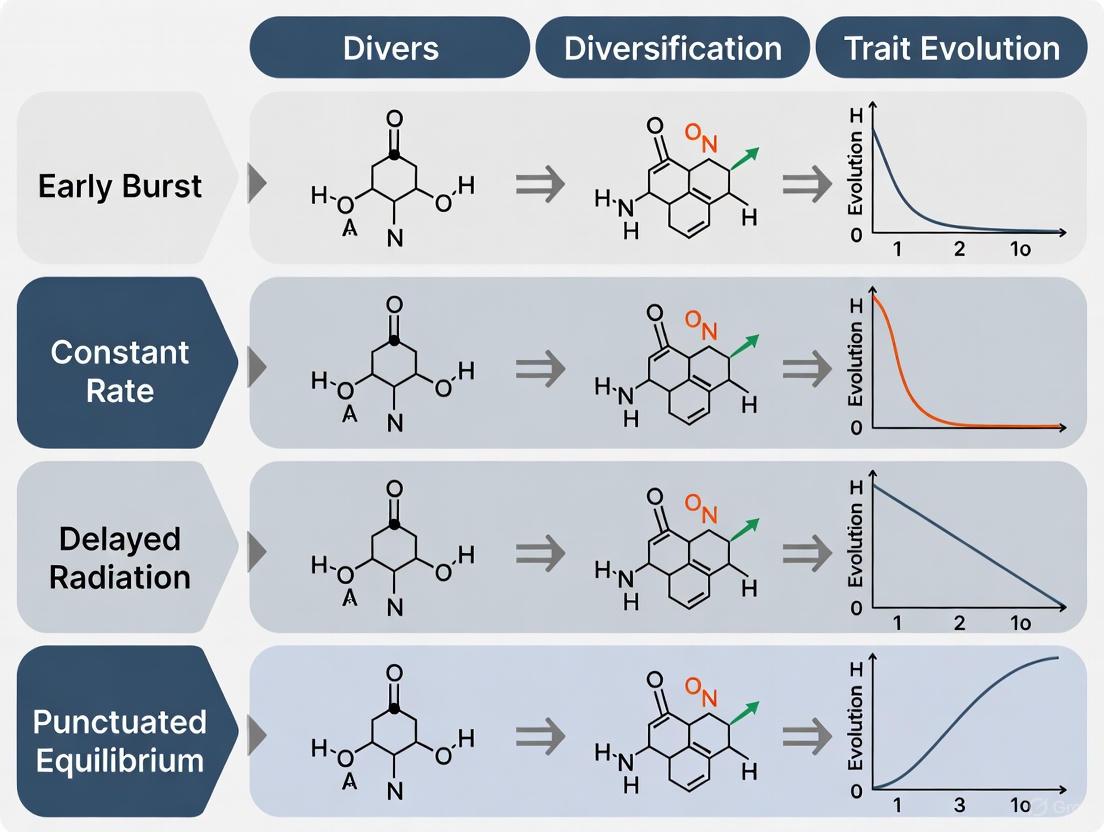
Beyond Brownian Motion: A Comparative Framework for Diversification Models in Trait Evolution and Biomedical Innovation
This article provides a comprehensive analysis of stochastic diversification models used in phylogenetic comparative methods (PCMs) to study trait evolution.
Pagel's λ vs. Blomberg's K: A Practical Guide for Measuring Phylogenetic Signal in Biomedical Research
This article provides a comprehensive guide for researchers and scientists on evaluating phylogenetic signal using Pagel's lambda (λ) and Blomberg's K.
Reference-Based Taxonomy: A Practical Framework for Validating Species Delimitation in Genomic Research
This article provides a comprehensive guide to reference-based taxonomy, an emerging framework that uses comparative genetic divergence from well-established species to validate new species hypotheses.
Xenoplasy and Hybridization Detection: Phylogenetic Comparative Methods for Evolutionary Analysis
This article provides a comprehensive framework for detecting hybridization and introgression using phylogenetic comparative methods (PCMs).
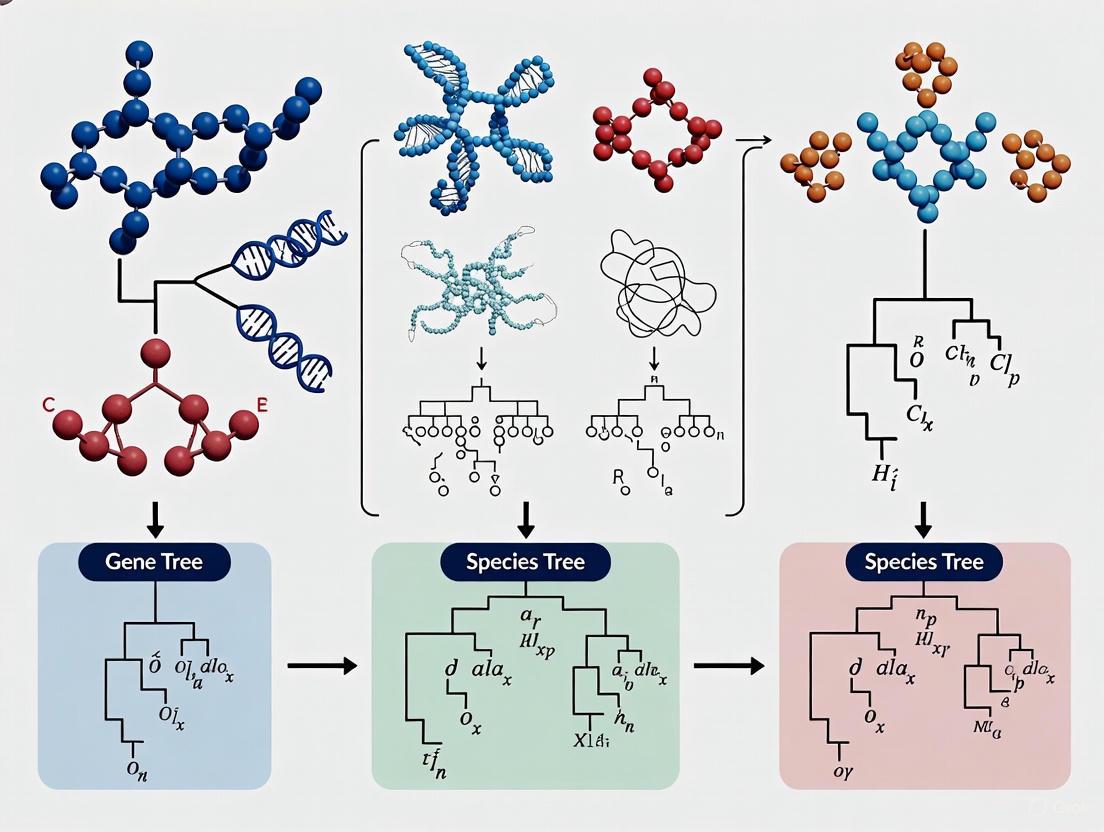
Gene Tree-Species Tree Discordance: Causes, Methods, and Solutions for Evolutionary Genomics
This article provides a comprehensive overview of gene tree-species tree discordance, a central challenge in modern phylogenomics.
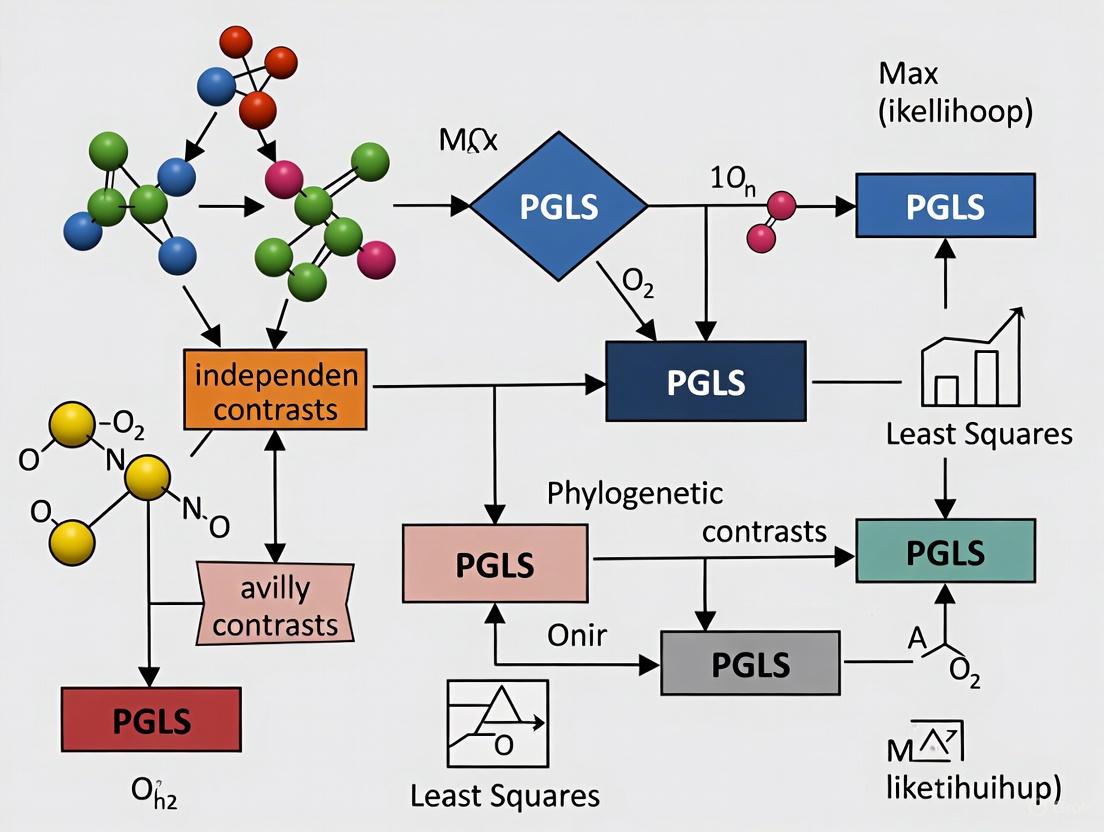
Phylogenetic Comparative Methods: Mastering Independent Contrasts and PGLS for Evolutionary Analysis and Drug Discovery
Phylogenetic comparative methods (PCMs), including Phylogenetic Independent Contrasts (PIC) and Phylogenetic Generalized Least Squares (PGLS), are essential tools for testing evolutionary hypotheses by accounting for the shared ancestry of species.