The Ornstein-Uhlenbeck Model: A Mean-Reverting Framework for Evolutionary Biology and Precision Medicine
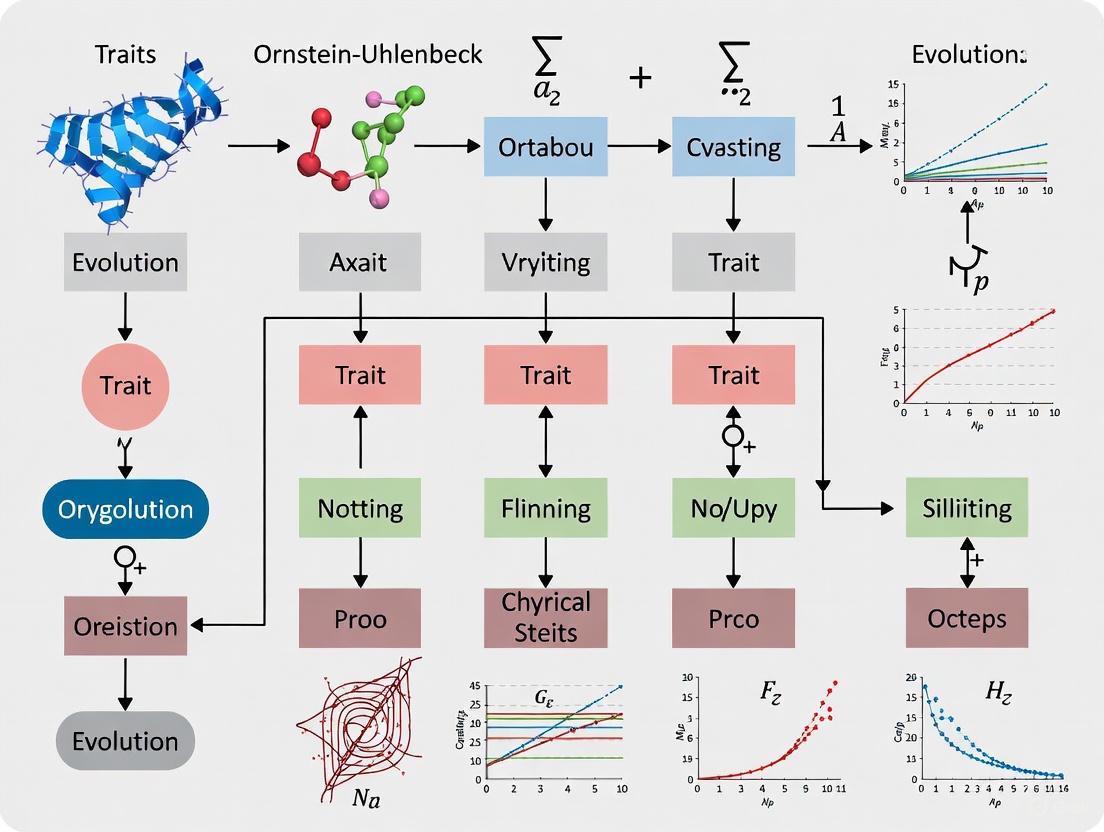
This article provides a comprehensive exploration of the Ornstein-Uhlenbeck (OU) process, a cornerstone stochastic model renowned for its mean-reverting property.
The Ornstein-Uhlenbeck Model: A Mean-Reverting Framework for Evolutionary Biology and Precision Medicine
Abstract
This article provides a comprehensive exploration of the Ornstein-Uhlenbeck (OU) process, a cornerstone stochastic model renowned for its mean-reverting property. Tailored for researchers and drug development professionals, we dissect the model's mathematical foundations, from its formulation as a stochastic differential equation to its explicit solution and stationary distribution. The scope extends to practical methodological applications, including parameter estimation and the modeling of complex, multi-trait systems. We address common challenges in model fitting and selection, offering optimization strategies and troubleshooting guidance. Finally, the article presents a rigorous comparative analysis, contrasting the OU process with alternative models like Brownian motion and evaluating its predictive power through advanced validation techniques, including supervised learning and multi-model fusion. This synthesis of theory and application highlights the OU model's transformative potential in evolutionary biology and the development of personalized therapeutic regimens.
Demystifying the Ornstein-Uhlenbeck Process: Core Principles and Mathematical Formulation
The Ornstein-Uhlenbeck (OU) process is a stochastic process that serves as the fundamental mathematical framework for modeling mean reversion across diverse scientific fields. In the context of trait evolution research, it provides a powerful tool for modeling how biological traits evolve under the influence of stabilizing selection, tending towards an optimal value over time [1]. The process is named after Leonard Ornstein and George Eugene Uhlenbeck, who first applied it in physics to model the velocity of a massive Brownian particle under friction [2]. The OU process represents a continuous-time, mean-reverting stochastic process that is both Gaussian and Markovian, making it uniquely positioned as the only nontrivial process satisfying these three conditions up to linear transformations [2].
The core conceptual foundation of the OU process lies in its mean-reversion property – the tendency of a stochastic variable to gravitate toward a long-term mean level over time. This contrasts sharply with random walk models, where deviations persist indefinitely rather than reverting to historical averages [3]. In evolutionary biology, this mathematical framework translates to modeling how traits evolve toward specific optimal values (optima) dictated by environmental pressures and evolutionary constraints, with the rate of reversion reflecting the strength of stabilizing selection [1].
Mathematical Formulation
Stochastic Differential Equation Representation
The OU process is formally defined by the stochastic differential equation:
[ dXt = \theta(\mu - Xt)dt + \sigma dW_t ]
Where:
- ( X_t ) is the value of the process at time ( t )
- ( \mu ) represents the long-term mean or equilibrium level
- ( \theta > 0 ) is the rate of mean reversion, determining the speed at which the process reverts to the mean
- ( \sigma > 0 ) represents the volatility or diffusion coefficient
- ( dW_t ) is the increment of a Wiener process (Brownian motion)
The term ( \theta(\mu - Xt)dt ) constitutes the drift component that exerts a pull toward the mean proportional to the deviation from that mean, while ( \sigma dWt ) represents the stochastic component that introduces random fluctuations [2] [4].
Discrete-Time Formulation
For practical applications with empirical data, the continuous-time OU process is commonly discretized. Using the Euler-Maruyama discretization scheme with time step ( \Delta t ), we obtain:
[ X{t+1} = \kappa\theta\Delta t + (1 - \kappa\Delta t)Xt + \sigma\sqrt{\Delta t}\epsilon_t ]
Where ( \epsilon_t \sim \mathcal{N}(0,1) ) is standard Gaussian noise [5]. This discrete-time representation forms the basis for most parameter estimation methods and reveals the AR(1) character of the process.
Table 1: Key Parameters of the Ornstein-Uhlenbeck Process
| Parameter | Symbol | Biological Interpretation | Mathematical Role |
|---|---|---|---|
| Long-term mean | (\mu) | Optimal trait value | Equilibrium level |
| Mean reversion rate | (\theta) | Strength of stabilizing selection | Speed of reversion to mean |
| Volatility | (\sigma) | Rate of random trait evolution | Diffusion coefficient |
| Half-life | ( \ln(2)/\theta ) | Time for deviation to halve | Natural timescale |
Analytical Properties and Solution
The OU process admits an analytical solution, providing a closed-form expression for the process value at any time ( t ):
[ Xt = X0 e^{-\theta t} + \mu(1 - e^{-\theta t}) + \sigma\int0^t e^{-\theta(t-s)}dWs ]
This solution illuminates several fundamental properties. The conditional expectation evolves as:
[ \mathbb{E}[Xt | X0] = X_0 e^{-\theta t} + \mu(1 - e^{-\theta t}) ]
exponentially transitioning from the initial value ( X_0 ) to the long-term mean ( \mu ) at a rate determined by ( \theta ). The conditional variance is given by:
[ \text{Var}(Xt | X0) = \frac{\sigma^2}{2\theta}(1 - e^{-2\theta t}) ]
which converges to ( \frac{\sigma^2}{2\theta} ) as ( t \to \infty ), in contrast to the unbounded variance of Brownian motion [2].
The following diagram illustrates the fundamental structure and relationships within the OU process framework:
Parameter Estimation Methods
Maximum Likelihood Estimation
For a discrete-time sample ( {X0, X1, ..., X_N} ) observed at intervals ( \Delta t ), the conditional distribution is normal:
[ X{t+1} | Xt \sim \mathcal{N}\left(\mu(1 - e^{-\theta\Delta t}) + X_te^{-\theta\Delta t}, \frac{\sigma^2}{2\theta}(1 - e^{-2\theta\Delta t})\right) ]
The log-likelihood function is given by [4]:
[ \ell(\theta, \mu, \sigma) = -\frac{N}{2}\ln(2\pi) - \frac{N}{2}\ln\left(\frac{\sigma^2}{2\theta}(1 - e^{-2\theta\Delta t})\right) - \sum{t=1}^N \frac{\left(Xt - \mu(1 - e^{-\theta\Delta t}) - X_{t-1}e^{-\theta\Delta t}\right)^2}{\frac{\sigma^2}{\theta}(1 - e^{-2\theta\Delta t})} ]
Maximizing this likelihood function provides asymptotically efficient estimators, though this typically requires numerical optimization.
Regression-Based Approaches
The discretized OU process can be represented as an AR(1) process:
[ X{t+1} = a + bXt + \varepsilon_t ]
where ( \varepsilont \sim \mathcal{N}(0, \sigma\varepsilon^2) ). The ordinary least squares (OLS) estimates relate to the OU parameters as follows [5] [4]:
[ \hat{b} = e^{-\hat{\theta}\Delta t}, \quad \hat{a} = \hat{\mu}(1 - \hat{b}), \quad \hat{\sigma}^2 = \frac{2\hat{\theta}\hat{\sigma}_\varepsilon^2}{1 - \hat{b}^2} ]
This regression framework provides a computationally efficient estimation method, though it may exhibit bias in small samples.
Method of Moments
For processes observed at low frequency, moment-based estimators can be employed. Using the unconditional mean and variance, and autocovariance at lag 1 [4]:
[ \hat{\mu} = \frac{1}{N}\sum{t=1}^N Xt, \quad \hat{\gamma}(0) = \frac{1}{N}\sum{t=1}^N (Xt - \hat{\mu})^2, \quad \hat{\gamma}(1) = \frac{1}{N-1}\sum{t=1}^{N-1} (Xt - \hat{\mu})(X_{t+1} - \hat{\mu}) ]
The parameter estimates are then:
[ \hat{\theta} = -\frac{1}{\Delta t}\ln\left(\frac{\hat{\gamma}(1)}{\hat{\gamma}(0)}\right), \quad \hat{\sigma}^2 = \frac{2\hat{\theta}\hat{\gamma}(0)}{1 - e^{-2\hat{\theta}\Delta t}} ]
Table 2: Comparison of Parameter Estimation Methods for OU Processes
| Method | Principles | Advantages | Limitations |
|---|---|---|---|
| Maximum Likelihood | Probability maximization | Statistical efficiency; confidence intervals | Computational complexity; sensitivity to initialization |
| Regression (AR(1)) | Linear least squares | Computational simplicity; intuitive | Small-sample bias; sensitive to measurement noise |
| Method of Moments | Moment matching | No distributional assumptions; robustness | Statistical inefficiency; requires large samples |
| Modified Least Squares [6] | Bias-corrected regression | Reduced small-sample bias; improved inference with low-frequency data | More complex implementation |
| Bayesian Methods [7] | Posterior distribution | Uncertainty quantification; incorporation of priors | Computational intensity; subjective priors |
Experimental Protocols for Trait Evolution Research
Model Selection Framework
In phylogenetic comparative studies, a critical initial step involves selecting the appropriate evolutionary model that best explains trait variation across species. The standard protocol involves [1]:
Specifying Candidate Models: Standard candidates include Brownian motion (BM), Ornstein-Uhlenbeck (OU), and Early-Burst (EB) models.
Model Fitting: Estimating parameters for each candidate model using maximum likelihood or Bayesian methods.
Model Comparison: Employing information criteria (AIC, AICc, BIC) to compare fitted models, balancing goodness-of-fit against complexity.
The OU process in comparative biology typically incorporates a phylogenetic tree structure, where the trait value for species ( i ) is modeled as:
[ Xi = \mu + \int0^{Ti} e^{-\theta(Ti - t)}\sigma dW_t ]
where ( T_i ) represents the phylogenetic distance from the root to species ( i ).
Handling Measurement Error
Biological trait measurements often contain substantial error, which must be accounted for in evolutionary models. The measurement model extends the basic OU process [7] [1]:
[ Yt = Xt + \eta_t ]
where ( Yt ) is the observed trait value, ( Xt ) is the true (unobserved) trait value following an OU process, and ( \etat \sim \mathcal{N}(0, \sigma\eta^2) ) represents measurement error. Failure to account for measurement error can substantially bias parameter estimates, particularly the mean reversion rate ( \theta ).
The following workflow diagram outlines the key decision points in designing a robust analysis of trait evolution using OU processes:
Table 3: Essential Analytical Tools for OU Process Research in Trait Evolution
| Tool Category | Specific Resources | Application Context | Key Functions |
|---|---|---|---|
| Programming Environments | R, Python | General statistical analysis | Data manipulation, visualization, model implementation |
| Phylogenetic Software | GEIGER, OUwie, phytools | Comparative methods | Phylogenetic tree handling, comparative analyses |
| Optimization Libraries | optim (R), scipy.optimize (Python) | Parameter estimation | Numerical maximization of likelihood functions |
| Stochastic Simulation | Custom OU simulators | Method validation | Synthetic data generation, power analysis |
| Bayesian Platforms | Stan, MrBayes | Bayesian inference | MCMC sampling, posterior distribution estimation |
| Specialized Methods | Evolutionary Discriminant Analysis (EvoDA) [1] | Model selection | Supervised learning for evolutionary model prediction |
Advanced Considerations and Research Frontiers
Multi-Optima OU Models
A significant extension of the basic OU model in evolutionary biology allows different optimal values (( \mu )) across distinct lineages or adaptive zones. The multi-optima OU model accommodates this scenario:
[ dXt = \theta(\mui - Xt)dt + \sigma dWt ]
where ( \mu_i ) represents the optimal value for the specific selective regime ( i ) that the lineage occupies [1]. Such models enable researchers to test hypotheses about adaptive radiation and divergent selection across clades.
Statistical Power and Estimation Challenges
A well-documented challenge in OU process estimation is the difficulty in precisely estimating the mean reversion rate ( \theta ), particularly with limited time series or phylogenetic data [4]. The sampling properties of ( \hat{\theta} ) depend critically on:
- The length of the observation period relative to the mean reversion timescale
- The frequency of observations within that period
- The signal-to-noise ratio (( \sigma/\theta ))
For finite samples, the maximum likelihood estimator of ( \theta ) exhibits positive bias, potentially leading to overestimation of the strength of mean reversion [4]. This has direct implications for biological interpretation, as overestimation of ( \theta ) would exaggerate the inferred strength of stabilizing selection.
Emerging Methodological Approaches
Recent methodological innovations aim to address longstanding challenges in OU process inference:
Evolutionary Discriminant Analysis (EvoDA): A supervised learning approach that trains discriminant functions to predict evolutionary models from trait data, potentially offering improved performance with noisy measurements [1].
Modified Least Squares Estimators: Specifically designed for low-frequency observational data, these estimators reduce bias in drift parameter estimation [6].
Measurement Error Modeling: Explicit incorporation of measurement error processes to mitigate bias in parameter estimates [7].
These advanced methods represent the cutting edge of statistical methodology for inferring evolutionary processes from comparative trait data, enabling more robust biological conclusions about the mode and tempo of trait evolution.
Stochastic Differential Equations (SDEs) provide a powerful mathematical framework for modeling systems that evolve randomly over time. In evolutionary biology, the Ornstein-Uhlenbeck (OU) process has emerged as a fundamental model for understanding trait evolution under selective constraints. Unlike the simple Brownian motion model, which describes random, unconstrained evolution, the OU model incorporates a stabilizing force that pulls traits toward an optimal value, providing a more biologically realistic representation of evolution under stabilizing selection [8]. This model is particularly valuable for researchers investigating phylogenetic patterns, as it helps quantify the relative roles of random processes and selective pressures in shaping trait distributions across species. The OU process extends the Brownian motion model by introducing a mean-reverting component, which can be interpreted as the effect of stabilizing selection drawing traits toward a physiological or ecological optimum [9]. This tutorial provides an in-depth technical examination of the two fundamental components of SDEs in general, and the OU model in particular: the drift coefficient, which determines the deterministic pull toward an optimum, and the diffusion coefficient, which governs the stochastic, random-walk component of evolution.
Mathematical Foundations: Drift and Diffusion in SDEs
General Form of Stochastic Differential Equations
Solutions to SDEs are most commonly expressed in differential form: $$dX(t) = \beta(X,t)dt + \alpha(X,t)dW(t)$$ or equivalently in integral form: $$X(t) = X(0) + \int{0}^{t} \beta(X,s)ds + \int{0}^{t} \alpha(X,s)dW(s)$$ where $X(t)$ represents the state of the process at time $t$ [10]. In this formulation, the function $\beta(X,t)$ is the drift coefficient, which captures the deterministic dynamics of the system, while $\alpha(X,t)$ is the diffusion coefficient, which characterizes the system's response to random perturbations represented by the Brownian motion $W(t)$ [10]. The interplay between these two components allows SDEs to model complex systems subject to both deterministic forces and random noise.
For the Ornstein-Uhlenbeck process, these components take specific forms that implement the mean-reverting behavior central to the model's utility in evolutionary biology. The drift coefficient becomes a linear function that pulls the trait value toward an optimum, while the diffusion coefficient is typically constant, representing background stochasticity in the evolutionary process [9] [8].
Biological Interpretation in Trait Evolution
In the context of trait evolution, the OU model conceptualizes species traits as evolving toward an adaptive optimum $\theta$, with the rate of adaptation controlled by the parameter $\alpha$ [9]. Larger values of $\alpha$ indicate a stronger pull toward the optimum, much like a "rubber band" effect [9]. The stochastic component, controlled by $\sigma^2$, represents the intensity of random fluctuations in trait values, which may arise from genetic drift, random environmental changes, or other unmeasured stochastic influences [9] [8].
Table 1: Core Parameters of the Ornstein-Uhlenbeck Model in Trait Evolution
| Parameter | Mathematical Symbol | Biological Interpretation | Effect on Trait Evolution |
|---|---|---|---|
| Drift Coefficient | $\alpha$ | Strength of stabilizing selection | Pulls trait toward optimum $\theta$; larger $\alpha$ = stronger pull |
| Diffusion Coefficient | $\sigma^2$ | Rate of stochastic evolution | Controls random fluctuations in trait values |
| Optimal Trait Value | $\theta$ | Adaptive optimum | Trait value that selection favors |
| Phylogenetic Half-life | $t_{1/2} = \ln(2)/\alpha$ | Time to move halfway to optimum | Measures rate of adaptation; smaller $t_{1/2}$ = faster adaptation |
The Ornstein-Uhlenbeck Model: A Special Case of SDE
Formal Model Specification
The Ornstein-Uhlenbeck process represents a special case of SDEs with specific forms for the drift and diffusion terms. For a continuous trait $X(t)$, the OU process is defined by the following SDE: $$dX(t) = -\alpha(X(t) - \theta)dt + \sigma dW(t)$$ where $\alpha > 0$ is the rate of adaptation, $\theta$ is the optimal trait value, $\sigma$ is the diffusion parameter, and $W(t)$ is a standard Brownian motion process [9] [8]. The drift term $-\alpha(X(t) - \theta)$ explicitly creates the mean-reverting behavior, as it always acts in the direction opposite to the deviation from the optimum $\theta$. When the trait value $X(t)$ is above the optimum, the drift term becomes negative, pulling the trait downward; when $X(t)$ is below the optimum, the drift becomes positive, pulling the trait upward.
The strength of this pull is proportional to both the parameter $\alpha$ and the distance from the optimum. The diffusion term $\sigma dW(t)$ adds stochastic noise to the system, representing the random component of evolution. When $\alpha = 0$, the OU model reduces to a simple Brownian motion model: $$dX(t) = \sigma dW(t)$$ where traits evolve purely randomly without any systematic pull toward an optimum [9] [8].
Extended OU Models for Complex Evolutionary Scenarios
Recent extensions of the basic OU model have expanded its applicability to more complex evolutionary scenarios. The coupled OU system allows modeling of correlated evolution between multiple traits or across different fields: $$dX(t) = -\lambda1 X(t)dt + \sigma{11}dZ1(\lambda1t) + \sigma{12}dZ2(\lambda2t)$$ $$dY(t) = -\lambda2 Y(t)dt + \sigma{21}dZ1(\lambda1t) + \sigma{22}dZ2(\lambda2t)$$ where $X(t)$ and $Y(t)$ represent two potentially correlated processes, $\lambda1$ and $\lambda2$ are intensity parameters, and the $\sigma$ parameters determine both volatility and correlation between the processes [11]. The terms $\sigma{12}$ and $\sigma{21}$ specifically describe the correlation structure between the datasets [11].
Another important extension is the Integrated Ornstein-Uhlenbeck (IOU) process, which incorporates both serial correlation and derivative tracking into the model [12]. The IOU process is particularly useful for modeling longitudinal data where subjects' biomarker trajectories may maintain consistency over short time periods but vary over longer intervals [12]. In the linear mixed IOU model, the $\alpha$ parameter represents the degree of derivative tracking, with smaller values indicating stronger derivative tracking (i.e., measurements more closely follow the same trajectory over long periods) [12].
Figure 1: Dynamics of the Ornstein-Uhlenbeck Process in Trait Evolution
Parameter Estimation and Statistical Implementation
Likelihood-Based Estimation Methods
Estimating OU model parameters from empirical data typically involves maximum likelihood (ML) or restricted maximum likelihood (REML) methods [12]. For the basic OU model with a constant optimum, the parameters $\alpha$, $\theta$, and $\sigma^2$ can be estimated using Markov Chain Monte Carlo (MCMC) algorithms in a Bayesian framework [9]. The implementation involves setting prior distributions for parameters—commonly a loguniform prior for $\sigma^2$, an exponential prior for $\alpha$, and a uniform prior for $\theta$—then using MCMC to sample from the posterior distribution [9].
The REML approach is particularly valuable for addressing the small-sample bias inherent in ML estimation, as it accounts for degrees of freedom lost in estimating fixed effects [12]. Various optimization algorithms can be employed for REML estimation, including:
- Newton-Raphson (NR) algorithm: Fast convergence but sensitive to poor starting values
- Fisher Scoring (FS) algorithm: More robust to poor starting values than NR
- Average Information (AI) algorithm: Computational efficiency for large datasets
- Expectation-Maximization (EM) algorithm: Numerically stable but slow convergence [12]
For challenging estimation problems with correlated parameters, specialized MCMC proposals such as the multivariate normal proposal with learned covariance (mvAVMVN) can significantly improve convergence [9].
Derived Evolutionary Metrics
Beyond the core parameters, the OU model enables calculation of several biologically informative derived metrics:
Phylogenetic half-life ($t_{1/2} = \ln(2)/\alpha$): Represents the expected time for a trait to evolve halfway from its initial state to the optimum [9]. This metric provides an intuitive measure of the rate of adaptation in real time units.
Stationary variance ($\sigma^2/(2\alpha)$): The expected trait variance under the stationary distribution of the OU process, representing the balance between stochastic perturbations and stabilizing selection [8].
Percent decrease in variance due to selection ($p_{th} = 1 - (1 - \exp(-2\alpha t))/(2\alpha t)$): Quantifies how much selection has reduced trait variance compared to pure drift (Brownian motion) over the study period [9].
Table 2: Experimental Protocols for OU Model Parameter Estimation
| Protocol Step | Methodological Details | Software Implementation |
|---|---|---|
| Data Preparation | Exclude non-focal traits; include only trait of interest | RevBayes: data.excludeAll(), data.includeCharacter() [9] |
| Prior Specification | $\sigma^2 \sim \text{Loguniform}(1e-3, 1)$; $\alpha \sim \text{Exponential}(\text{abs}(root_age/2/\ln(2)))$; $\theta \sim \text{Uniform}(-10, 10)$ | RevBayes [9] |
| MCMC Proposal Mechanisms | mvScale for $\sigma^2$ and $\alpha$; mvSlide for $\theta$; mvAVMVN for multivariate proposals | RevBayes: moves.append() [9] |
| Model Monitoring | mnModel for full parameter output; mnScreen for real-time monitoring | RevBayes: monitors.append() [9] |
| Convergence Assessment | Trace plots; joint posterior distribution examination | R packages: RevGadgets, gridExtra [9] |
Interpretation Challenges and Biological Meaning
Relating Parameters to Evolutionary Processes
Interpreting OU model parameters in terms of biological processes requires considerable caution. The $\alpha$ parameter is frequently described as representing the "strength of stabilizing selection," but this interpretation can be misleading [8]. In population genetics, stabilizing selection specifically refers to selection within a population toward a fitness optimum on an adaptive landscape [8]. However, in comparative phylogenetic applications, the OU model operates at a different scale, modeling trait evolution among species where the "selection" is more analogous to a trait tracking movement of the adaptive optimum itself [8].
The stationary distribution of the OU process provides important biological insights. Under the OU process, traits evolve toward a stationary normal distribution with mean $\theta$ and variance $\sigma^2/(2\alpha)$ [9] [8]. This stationary distribution represents the balance between the pull toward the optimum (drift) and random perturbations (diffusion). The ratio $\sigma^2/(2\alpha)$ thus quantifies the expected trait variation under this equilibrium, providing a measure of how much phenotypic diversity is maintained despite stabilizing selection.
Statistical Caution and Best Practices
Several statistical challenges complicate the application and interpretation of OU models:
Parameter correlation: When evolutionary rates are high or branches in the phylogeny are relatively long, it can be difficult to estimate $\sigma^2$ and $\alpha$ separately, as both contribute to the long-term variance of the process [9]. This identifiability problem can lead to high uncertainty in parameter estimates.
Small sample bias: With small phylogenies, likelihood ratio tests frequently incorrectly favor the more complex OU model over simpler Brownian motion models [8]. This problem is exacerbated by measurement error, which can profoundly affect parameter estimates [8].
Model misspecification: The single-optimum OU model may be incorrectly favored when the true evolutionary process involves shifting optima or other complexities not captured by the model [8].
Best practices for OU model application include:
- Using simulations to validate fitted models and verify that parameter estimates accurately recover known simulation parameters [8]
- Exercising caution when interpreting the $\alpha$ parameter, particularly with small datasets [8]
- Examining joint posterior distributions of parameters to identify correlation issues [9]
- Considering more complex multi-optima models when there is evidence for shifts in selective regimes [8]
Figure 2: Research Workflow for OU Model Analysis in Trait Evolution
Advanced Applications and Extensions
Coupled OU Systems for Interdependent Processes
The coupled OU system framework enables modeling of interdependent evolutionary processes, with applications ranging from finance to geophysics to epidemiology [11]. This approach is particularly valuable when analyzing traits or systems that potentially influence each other's evolution. For example, researchers might apply coupled OU systems to model:
- Coordinated evolution of morphological and behavioral traits
- Cross-system influences between environmental factors and species traits
- Phylogenetic comparative methods for multivariate trait evolution
The general form for a coupled system with two processes $X(t)$ and $Y(t)$ is: $$dX(t) = -\lambda1 X(t)dt + \sigma{11}dZ1(\lambda1t) + \sigma{12}dZ2(\lambda2t)$$ $$dY(t) = -\lambda2 Y(t)dt + \sigma{21}dZ1(\lambda1t) + \sigma{22}dZ2(\lambda2t)$$ where the parameters $\sigma{12}$ and $\sigma{21}$ explicitly capture the coupling between the two processes [11]. When these cross-diffusion parameters are zero, the system reduces to two independent OU processes.
Non-Gaussian Extensions with Lévy Processes
Recent extensions of OU models have incorporated Lévy processes as the background driving Levy process (BDLP) instead of standard Brownian motion [11]. These extensions are particularly useful for modeling evolutionary processes with jump components or heavy-tailed distributions. Two commonly used Lévy processes in this context are:
Gamma process ($\Gamma(a,b)$): A stochastic process $X = {Xt, t \geq 0}$ with independent increments where $Xt - X_s$ has a gamma distribution $\Gamma(a(t-s), b)$ for $s < t$ [11].
Inverse Gaussian process ($IG(a,b)$): Similar to the gamma process but with inverse Gaussian distributed increments [11].
These non-Gaussian OU models can better capture empirical patterns in real-world data that display non-Brownian characteristics, such as heavy-tailed distributions or jump dynamics [11].
The Scientist's Toolkit: Research Reagent Solutions
Table 3: Essential Computational Tools for OU Model Implementation
| Tool/Resource | Function in Analysis | Implementation Considerations |
|---|---|---|
| RevBayes [9] | Bayesian phylogenetic analysis with MCMC | Primary platform for OU model specification; enables custom prior specification and MCMC sampling |
| R Statistical Environment [9] | Data visualization, trace plot examination, posterior analysis | Essential for diagnostics; key packages: RevGadgets, gridExtra, ggplot2 |
| Stata IOU Implementation [12] | Linear mixed IOU model for longitudinal data | Handles unbalanced designs with missing data; uses REML estimation |
| MATLAB SDEDDO Class [13] | General SDE simulation with drift/diffusion objects | Creates SDE objects from drift/diffusion components; simulates sample paths |
| StochVol R Package [11] | Stochastic volatility estimation | Used in coupled OU systems for volatility parameter estimation |
The drift and diffusion coefficients in Stochastic Differential Equations provide the fundamental mathematical structure for modeling complex evolutionary processes with both deterministic and stochastic components. In the Ornstein-Uhlenbeck model, these terms take specific forms that enable researchers to quantify the strength of stabilizing selection ($\alpha$), the adaptive optimum ($\theta$), and the rate of stochastic evolution ($\sigma^2$). The careful decomposition of these components offers powerful insights into evolutionary dynamics, but requires appropriate statistical safeguards and thoughtful biological interpretation. As model formulations become increasingly sophisticated—incorporating coupling between systems, non-Gaussian processes, and more complex phylogenetic structures—the core distinction between drift as deterministic pull and diffusion as stochastic perturbation remains essential to understanding both the mathematical foundations and biological applications of Stochastic Differential Equations in evolutionary research.
Closed-Form Solution and Conditional Distributions
The Ornstein-Uhlenbeck (OU) process is a stochastic model that describes the evolution of a trait, ( Xt ), over time, ( t ), incorporating both deterministic drift and random fluctuations [2]. Within phylogenetic comparative methods, it serves as a foundational model for testing hypotheses about adaptive evolution and stabilizing selection in continuous traits across species [8] [14]. The process is defined by the stochastic differential equation: [ dXt = \alpha (\theta - Xt) dt + \sigma dWt ] where:
- ( X_t ) is the trait value at time ( t ),
- ( \theta ) is the long-term optimum trait value,
- ( \alpha > 0 ) is the selection strength or rate of adaptation towards ( \theta ),
- ( \sigma > 0 ) is the diffusion coefficient controlling the intensity of random perturbations,
- ( (W_t) ) is the standard Wiener process (Brownian motion) [2] [14].
The deterministic component, ( \alpha (\theta - Xt) dt ), represents a "rubber band" effect, continuously pulling the trait towards the optimum ( \theta ). The stochastic term, ( \sigma dWt ), introduces random changes due to genetic drift or environmental fluctuations [9] [2]. When ( \alpha = 0 ), the OU process simplifies to a Brownian motion model, representing neutral evolution without stabilizing selection [9] [8].
Closed-Form Solution and Conditional Distributions
The OU process is mathematically tractable, with known transition probabilities between time points. Given an initial trait value ( X0 = x0 ) at time ( 0 ), the conditional distribution of the trait value ( Xt ) at time ( t ) is Gaussian [15]: [ Xt \mid X0 = x0 \ \sim \ \mathcal{N}\left( \mu(t), V(t) \right) ] where the conditional mean ( \mu(t) ) and variance ( V(t) ) are: [ \mu(t) = \mathbb{E}[Xt \mid X0 = x0] = x0 e^{-\alpha t} + \theta \left(1 - e^{-\alpha t}\right) ] [ V(t) = \operatorname{Var}(Xt \mid X0 = x_0) = \frac{\sigma^2}{2\alpha} \left(1 - e^{-2\alpha t}\right) ]
This analytical solution is derived using stochastic calculus techniques, such as Itô's lemma [2] [15]. The conditional mean represents the expected trait value at time ( t ), which is a weighted average between the initial value ( x0 ) and the optimum ( \theta ), with the weight on ( x0 ) decaying exponentially at rate ( \alpha ). The conditional variance describes the uncertainty around this expected value, which increases with time until reaching a stationary state [15].
Table 1: Parameters of the Ornstein-Uhlenbeck Process and Their Biological Interpretations
| Parameter | Mathematical Symbol | Biological Interpretation | Effect on Trait Evolution |
|---|---|---|---|
| Selection Strength | ( \alpha ) | Rate of adaptation toward the optimum | Higher ( \alpha ) causes faster return to ( \theta ) after perturbation |
| Long-Term Optimum | ( \theta ) | Adaptive peak or optimal trait value | Trait values evolve toward this value over long time periods |
| Diffusion Coefficient | ( \sigma ) | Rate of random trait change | Higher ( \sigma ) increases trait variance around the optimum |
For a phylogenetic tree with branching times, these closed-form expressions allow calculation of the likelihood of observing specific trait values at the tips, given the model parameters and phylogenetic relationships [9]. As ( t \to \infty ), the process reaches a stationary distribution [2]: [ X_\infty \sim \mathcal{N}\left( \theta, \frac{\sigma^2}{2\alpha} \right) ] This stationary distribution implies that even under stabilizing selection, traits exhibit standing variation due to ongoing random perturbations.
Key Metrics for Interpretation
Two derived metrics are particularly useful for interpreting OU models in evolutionary contexts [9]:
Phylogenetic Half-Life: ( t_{1/2} = \ln(2) / \alpha )
- This represents the time required for the expected trait value to move halfway from its initial state ( x_0 ) to the optimum ( \theta ).
- Shorter half-lives indicate faster adaptation.
Percent Decrease in Variance: ( p_{th} = 1 - \frac{1 - \exp(-2\alpha T)}{2\alpha T} )
- This quantifies how much selection has reduced trait variance over the study period ( T ) compared to neutral Brownian motion.
- For example, ( p_{th} = 0.25 ) means selection has reduced trait variance by 25%.
Table 2: Closed-Form Solutions for the Ornstein-Uhlenbeck Process
| Quantity | Mathematical Expression | Interpretation |
|---|---|---|
| Conditional Mean | ( \mu(t) = x_0 e^{-\alpha t} + \theta (1 - e^{-\alpha t}) ) | Expected trait value at time ( t ) |
| Conditional Variance | ( V(t) = \frac{\sigma^2}{2\alpha} (1 - e^{-2\alpha t}) ) | Uncertainty in trait value at time ( t ) |
| Stationary Variance | ( V_{\infty} = \frac{\sigma^2}{2\alpha} ) | Long-term equilibrium variance |
| Phylogenetic Half-Life | ( t_{1/2} = \frac{\ln(2)}{\alpha} ) | Time for expected trait to move halfway to optimum |
Experimental Protocols for Phylogenetic OU Modeling
Data Preparation and Model Specification
Protocol 1: Data Input and Tree Handling
- Input: A time-calibrated phylogenetic tree (e.g., in Newick format) and a dataset of continuous trait measurements for species at the tree tips [9].
- Tree Processing: Import the tree and compute its height (root age). This provides the temporal scale ( T ) for parameter interpretations like ( p_{th} ) [9].
- Trait Data Handling: Format trait data into a numerical vector, ensuring correct matching between species names in the tree and trait data [9].
Protocol 2: Parameter Identification and Model Specification
- Parameter Definition:
- Define the selection strength parameter ( \alpha ) with an exponential prior: ( \alpha \sim \text{Exponential}( \frac{\text{root_age}}{2 \ln(2)} ) ). This centers the prior on a phylogenetic half-life of half the tree height [9].
- Define the optimum ( \theta ) with a vague uniform prior (e.g., ( \theta \sim \text{Uniform}(-10, 10) )), adjusting bounds based on expected trait ranges [9].
- Define the diffusion coefficient ( \sigma ) with a loguniform prior (e.g., ( \sigma \sim \text{Loguniform}(10^{-3}, 1) )) to express ignorance about its order of magnitude [9].
- Model Specification: Construct the OU model using a function such as
dnPhyloOrnsteinUhlenbeckREML(), which computes the phylogenetic likelihood efficiently using the REML algorithm [9].
Parameter Estimation and Model Assessment
Protocol 3: Markov Chain Monte Carlo (MCMC) Estimation
- MCMC Setup: Implement MCMC with at least 50,000 generations to sample from the joint posterior distribution of parameters ( (\alpha, \theta, \sigma) ) [9].
- Proposal Mechanisms:
- Use scaling moves (
mvScale) for individual parameters. - Incorporate a multivariate proposal (
mvAVMVN) that learns the covariance structure among parameters during the MCMC to improve efficiency, as OU parameters are often correlated [9].
- Use scaling moves (
- Monitors: Track parameters and derived metrics (e.g., ( t{1/2} ), ( p{th} )) throughout the MCMC chain [9].
Protocol 4: Model Diagnostics and Interpretation
- Convergence Checking: Ensure MCMC chains have reached stationarity and sufficient effective sample sizes (ESS > 200) for all parameters [9].
- Posterior Analysis: Calculate posterior means and credible intervals for ( \alpha ), ( \theta ), and ( \sigma ).
- Biological Interpretation:
- Compute the posterior distribution of the phylogenetic half-life ( t{1/2} ) to understand the time scale of adaptation.
- Calculate ( p{th} ) to quantify the influence of selection in reducing trait variation [9].
- Caveat: Be aware that parameter estimates, particularly of ( \alpha ) and ( \sigma ), can be highly correlated, as both influence the long-term variance ( \sigma^2/(2\alpha) ) [9] [8].
Figure 1: Experimental workflow for phylogenetic OU model fitting, showing the sequence from data input through to biological interpretation.
The Scientist's Toolkit: Research Reagent Solutions
Table 3: Essential Computational Tools for OU Model Analysis
| Tool Category | Specific Software/Package | Primary Function | Application Context |
|---|---|---|---|
| Bayesian MCMC Framework | RevBayes [9] | Implements phylogenetic OU models with Bayesian inference using MCMC | Full probabilistic model fitting with flexible priors |
| R Packages | ouch [8], geiger [8], POUMM [15] |
Fit OU models to comparative data | Maximum likelihood or Bayesian estimation |
| Visualization & Analysis | RevGadgets [9] | Plotting MCMC output and parameter distributions | Posterior analysis and diagnostics |
| Programming Languages | R [9], Python | Data manipulation, custom analysis scripts | Pre-processing data and post-analysis interpretation |
Advanced Extensions and Practical Cautions
Multi-Optima OU Models
The basic OU model can be extended to scenarios where species evolve toward different optimal trait values ( \theta_i ) in different selective regimes (e.g., different ecological niches) [8]. These multi-regime OU models allow testing hypotheses about adaptive radiation and convergent evolution.
Modeling Interactions and Migration
Recent extensions incorporate interactions between species or gene flow between populations [14]: [ dXt = \alpha (\theta - Xt) dt + \gamma (Yt - Xt) dt + \sigma dWt ] where ( \gamma ) models the effect of migration or ecological interaction with a species having trait value ( Yt ). Ignoring such interactions can lead to misinterpreting migration-driven similarity as very strong convergent evolution [14].
Important Limitations and Cautions
- Parameter Identifiability: With limited phylogenetic data (small trees), it can be difficult to reliably estimate ( \alpha ) and ( \sigma ) separately, as both influence the stationary variance [8].
- Measurement Error: Even small amounts of intraspecific variation or measurement error can profoundly bias parameter estimates, particularly inflating estimates of ( \alpha ) [8].
- Biological Interpretation: While often described as "stabilizing selection," the OU model in comparative analyses does not directly estimate selection within populations but rather a macroevolutionary pull toward an optimum [8].
Figure 2: Logical relationships between the basic Ornstein-Uhlenbeck process and its advanced extensions for modeling complex evolutionary scenarios.
The Ornstein-Uhlenbeck (OU) process describes the velocity of a massive Brownian particle under friction and serves as a foundational model in evolutionary biology for modeling continuous trait evolution under stabilizing selection [16] [17]. Unlike Brownian motion, which exhibits unbounded variance over time, the OU process incorporates a mean-reverting property that pulls the trait value toward an optimal state, making it particularly suitable for modeling evolutionary processes where stabilizing selection maintains traits within functional ranges [18]. This paper examines the stationary properties of the OU process within the context of trait evolution research, focusing specifically on the long-term behavior that emerges when the process reaches statistical equilibrium.
The OU process's significance in evolutionary biology stems from its ability to model both random drift and selective pressures simultaneously [19]. When applied to trait evolution, the parameters of the OU process gain biological interpretations: the mean-reversion strength corresponds to the strength of stabilizing selection, while the process variance reflects the intensity of random fluctuations [20]. Understanding the stationary state of this process provides researchers with critical insights into the long-term evolutionary equilibrium of phenotypic traits, gene expression levels, and other biological characteristics subject to evolutionary constraints [19] [18].
Mathematical Foundation of the Ornstein-Uhlenbeck Process
Stochastic Differential Equation Formulation
The Ornstein-Uhlenbeck process is defined by the following stochastic differential equation [2] [16]:
[ dXt = \theta(\mu - Xt)dt + \sigma dW_t ]
Where:
- (X_t) represents the state of the process (trait value) at time (t)
- (\mu) is the long-term mean or optimal trait value
- (\theta > 0) is the mean-reversion rate (strength of selection)
- (\sigma > 0) is the volatility parameter (magnitude of random fluctuations)
- (W_t) is a standard Wiener process (Brownian motion)
The drift term, (\theta(\mu - Xt)dt), acts as a restoring force that pulls the process toward its long-term mean (\mu), with the strength of this pull proportional to the distance from the mean [16]. The diffusion term, (\sigma dWt), introduces random fluctuations that disperse the trait value [16].
Explicit Solution and Time-Dependent Moments
The OU process admits an explicit solution, allowing direct calculation of its moments [2] [17]:
[ Xt = X0 e^{-\theta t} + \mu(1 - e^{-\theta t}) + \sigma \int0^t e^{-\theta(t-s)} dWs ]
From this solution, the time-dependent mean and variance can be derived [16] [17]:
[ \mathbb{E}[Xt] = X0 e^{-\theta t} + \mu(1 - e^{-\theta t}) ]
[ \text{Var}[X_t] = \frac{\sigma^2}{2\theta}(1 - e^{-2\theta t}) ]
Table 1: Time-Dependent Moments of the OU Process
| Moment | Expression | Biological Interpretation | ||
|---|---|---|---|---|
| Mean | (\mathbb{E}[Xt] = X0 e^{-\theta t} + \mu(1 - e^{-\theta t})) | Expected trait value at time (t) | ||
| Variance | (\text{Var}[X_t] = \frac{\sigma^2}{2\theta}(1 - e^{-2\theta t})) | Variability around expected trait value | ||
| Covariance | (\text{Cov}[Xs, Xt] = \frac{\sigma^2}{2\theta}(e^{-\theta | t-s | } - e^{-\theta(t+s)})) | Trait correlation across evolutionary time |
The parameter (\theta^{-1}) represents the relaxation time or decorrelation time of the process, characterizing the time scale over which the process "forgets" its initial conditions [17].
The Stationary State of the OU Process
Convergence to Stationarity
As time approaches infinity, the OU process converges to a stationary state where its statistical properties become time-invariant [2] [17]. This convergence occurs regardless of the initial state (X_0), provided (\theta > 0). The characteristic time scale for this convergence is governed by the mean reversion rate (\theta), with the process reaching equilibrium more quickly for larger values of (\theta) [16].
The stationary distribution represents the long-term equilibrium of the evolutionary process, where the forces of random drift and stabilizing selection balance each other [21] [19]. In trait evolution, this corresponds to a phenotypic equilibrium where traits fluctuate around an optimal value with stable variance [18].
Stationary Mean and Variance
In the stationary limit ((t \to \infty)), the time-dependent moments simplify considerably [16] [17]:
[ \lim{t \to \infty} \mathbb{E}[Xt] = \mu ]
[ \lim{t \to \infty} \text{Var}[Xt] = \frac{\sigma^2}{2\theta} ]
Table 2: Stationary Moments of the OU Process
| Parameter | Symbol | Expression | Biological Interpretation |
|---|---|---|---|
| Long-term Mean | (\mu) | (\mu) | Optimal trait value under stabilizing selection |
| Stationary Variance | (\sigma^2_s) | (\frac{\sigma^2}{2\theta}) | Equilibrium trait diversity around optimum |
| Decorrelation Time | (\tau) | (\theta^{-1}) | Time scale for trait autonomy |
The stationary variance (\frac{\sigma^2}{2\theta}) reveals a fundamental trade-off between stochastic forces ((\sigma^2)) and stabilizing selection ((\theta)) [21]. Stronger selection (larger (\theta)) reduces equilibrium diversity, while greater random fluctuations (larger (\sigma^2)) increase it [19].
Figure 1: Parameter Relationships in OU Stationary State. The stationary variance emerges from the balance between drift (σ²) and selection (θ).
Gaussian Stationary Distribution
The stationary distribution of the OU process is Gaussian [16] [17]:
[ X_\infty \sim \mathcal{N}\left(\mu, \frac{\sigma^2}{2\theta}\right) ]
With probability density function:
[ f(x) = \sqrt{\frac{\theta}{\pi\sigma^2}} \exp\left(-\frac{\theta}{\sigma^2}(x-\mu)^2\right) ]
This Gaussian stationary distribution is a consequence of the linear drift term and the Gaussian nature of the diffusion term in the OU stochastic differential equation [16]. The distribution is fully characterized by its mean (\mu) and variance (\frac{\sigma^2}{2\theta}), with higher moments being zero [22].
The Gaussian distribution represents the most probable distribution of trait values under the constraints of random mutations and stabilizing selection [21] [22]. In evolutionary terms, traits are most likely to be found near the optimum (\mu), with probability decreasing exponentially with squared distance from the optimum [19].
Biological Interpretation in Trait Evolution
Evolutionary Quantitative Genetics Perspective
In evolutionary quantitative genetics, the OU process models trait evolution under stabilizing selection [19] [18]. The parameters gain specific biological interpretations:
- Long-term mean ((\mu)): The fitness optimum for the trait in a given selective regime
- Mean-reversion rate ((\theta)): The strength of stabilizing selection pulling traits toward the optimum
- Volatility parameter ((\sigma)): The rate of input of genetic variance through mutation and drift
The stationary variance (\frac{\sigma^2}{2\theta}) represents the standing genetic variance maintained at mutation-selection-drift balance [21]. This balance occurs because new mutations introduce variation while selection eliminates it [19].
Multi-Optima OU Models and Evolutionary Shifts
In more complex evolutionary scenarios, species may experience shifts in selective regimes due to environmental changes or niche transitions [20] [18]. These can be modeled using multi-optima OU models where the optimal value (\mu) changes at specific points in the phylogeny:
[ dY(t) = \alpha[\theta(t) - Y(t)]dt + \sigma dB(t) ]
Where (\theta(t)) is a piecewise constant function representing different selective optima on different branches of the phylogeny [18]. The detection of these shifts forms an important research area in phylogenetic comparative methods [20].
Figure 2: Evolutionary Shifts in Multi-Optima OU Models. Environmental changes trigger shifts in selective optima, leading to different stationary distributions.
Applications to Gene Expression Evolution
The OU process has been successfully applied to model the evolution of gene expression levels [19]. In this context:
- The trait value (X_t) represents the expression level of a gene
- The optimum (\mu) represents the expression level that maximizes fitness
- The stationary variance reflects the standing variation in gene expression maintained in populations
Comparative studies of gene expression across species have revealed that different genes experience different strengths of stabilizing selection, with essential genes typically showing lower stationary variance (stronger constraint) than non-essential genes [19].
Experimental Protocols and Methodologies
Parameter Estimation from Comparative Data
Estimating OU parameters from phylogenetic comparative data involves maximum likelihood or Bayesian methods [20] [18]. The key steps include:
- Data Collection: Measure trait values for multiple species with known phylogenetic relationships
- Model Specification: Define the OU process on the phylogenetic tree
- Likelihood Calculation: Compute the probability of observed data under the model
- Parameter Optimization: Find parameter values that maximize the likelihood
The likelihood function for a univariate OU process on a phylogeny follows a multivariate normal distribution with structured covariance [18].
Detecting Shifts in Selective Regimes
Recent methodological advances allow detection of shifts in optimal values ((\mu)) and variance parameters ((\sigma^2)) using penalized likelihood approaches [20]:
- Variable Selection Framework: Formulate shift detection as a variable selection problem
- LASSO Regularization: Apply (\ell_1) penalty to induce sparsity in shift locations
- Model Selection: Use information criteria (BIC, pBIC) to select optimal shift configuration
- Ensemble Methods: Combine results from multiple selection criteria for robust inference
These methods are implemented in software packages such as ℓ1ou, PhylogeneticEM, and ShiVa [20] [18].
Accounting for Within-Species Variation
Extended OU models incorporate within-species variation to distinguish evolutionary changes from non-evolutionary sources of variation [19]:
[ Y{ij} = Xi + \epsilon_{ij} ]
Where (Y{ij}) is the trait value for individual (j) in species (i), (Xi) is the species mean evolving under an OU process, and (\epsilon_{ij}) represents within-species variation due to genetic, environmental, or technical factors [19].
Table 3: Research Reagent Solutions for OU Process Analysis
| Tool/Software | Function | Application Context |
|---|---|---|
ℓ1ou R package |
Detect shifts in optimal values | Phylogenetic comparative analysis |
PhylogeneticEM |
EM algorithm for shift detection | Large phylogenies with unknown shift locations |
ShiVa R package |
Detect shifts in both optima and variance | Models with changing evolutionary rates |
OUwie |
Fit multi-optima OU models | Predefined selective regimes |
PCMFit |
Bayesian fitting of OU models | Complex models with parameter uncertainty |
Quantitative Relationships in the Stationary State
Moment Analysis in Stationary Distribution
Moment analysis provides a mathematical framework for characterizing the stationary distribution [22]. For a Gaussian distribution, the first two moments fully characterize the distribution:
- Zeroth Moment: Total probability (normalized to 1)
- First Moment: Mean ((\mu))
- Second Moment: Variance ((\sigma^2/2\theta))
- Third Moment: Skewness (zero for Gaussian)
- Fourth Moment: Kurtosis (3(\sigma^4) for Gaussian)
In practical applications, sample moments are calculated from observed data and used to estimate process parameters [22].
Scaling Relationships with Population Parameters
The parameters of the OU process connect to underlying population-genetic parameters [21]. For example:
- The volatility parameter (\sigma^2) scales with the mutational variance and effective population size
- The mean-reversion rate (\theta) reflects the strength of stabilizing selection
- The product (N_e\sigma^2) determines the relative power of selection versus drift
These scaling relationships help interpret OU parameters in biological terms and connect microevolutionary processes to macroevolutionary patterns [21].
Covariance Structure in Phylogenetic Data
Under the OU process, the covariance between species traits depends on their shared evolutionary history [18]:
[ \text{Cov}[Yi, Yj] = \frac{\sigma^2}{2\theta} e^{-\theta d_{ij}} ]
Where (d_{ij}) is the phylogenetic distance between species (i) and (j). This covariance structure decays exponentially with phylogenetic distance, unlike the linear decay under Brownian motion [18].
The stationary state of the Ornstein-Uhlenbeck process provides a powerful framework for modeling trait evolution under stabilizing selection. The Gaussian equilibrium distribution with mean (\mu) and variance (\frac{\sigma^2}{2\theta}) represents the balance between random drift and selective forces that characterizes long-term evolutionary stasis. The mathematical properties of this stationary state enable researchers to estimate selection strengths, identify shifts in selective regimes, and understand the maintenance of trait variation in natural populations.
Methodological advances in detecting evolutionary shifts continue to enhance our ability to extract biological insights from comparative data. The integration of within-species variation, multi-optima models, and sophisticated statistical regularization techniques represents the current frontier in OU-based phylogenetic comparative methods. As comparative datasets grow in size and complexity, the OU process and its extensions will remain essential tools for unraveling the evolutionary processes that shape biological diversity.
This technical guide provides an in-depth examination of the Ornstein-Uhlenbeck (OU) process, focusing on its three defining properties—autocorrelation, continuous-time Markov behavior, and mean-reverting drift—within the context of trait evolution research. The OU process serves as a fundamental stochastic model for analyzing phenotypic adaptation across phylogenies, offering a mathematically tractable framework for testing evolutionary hypotheses. We synthesize the theoretical foundations, quantitative properties, and practical implementation protocols essential for researchers investigating evolutionary patterns in biological traits. By integrating rigorous mathematical formulations with empirical applications, this whitepaper aims to equip scientists with the analytical tools necessary to leverage OU models in evolutionary biology, comparative phylogenetics, and related disciplines.
The Ornstein-Uhlenbeck process represents a cornerstone model in evolutionary biology for analyzing trait dynamics across phylogenetic trees. Originally developed in physics to model the velocity of a particle under friction [2] [16], the process was adapted to evolutionary biology by Hansen (1997) as a model for stabilizing selection [8] [9]. Unlike Brownian motion, which describes unbounded trait divergence, the OU process incorporates a restorative force that pulls traits toward an optimal value, thereby modeling the constraint imposed by stabilizing selection [8] [23]. This mean-reverting property makes it particularly valuable for testing hypotheses about adaptive evolution, phylogenetic niche conservatism, and the strength of selection across different selective regimes [8] [24].
In phylogenetic comparative methods, the OU process helps researchers infer evolutionary processes from contemporary species data by modeling trait evolution as a continuous-time stochastic process along phylogenetic branches [9] [24]. The model's mathematical properties—specifically its autocorrelation structure, Markov behavior, and mean-reverting drift—provide the mechanistic foundation for interpreting patterns of trait variation across species in terms of underlying evolutionary forces. Despite its widespread application, researchers must exercise caution in interpreting OU parameters, as statistical limitations can lead to misinterpretation without proper validation [8].
Mathematical Foundations
Stochastic Differential Equation Representation
The Ornstein-Uhlenbeck process is formally defined by the stochastic differential equation (SDE):
dXₜ = θ(μ - Xₜ)dt + σdWₜ
Where:
Xₜrepresents the trait value at timetθis the strength of selection (mean reversion rate)μis the optimal trait value (long-term mean)σis the volatility parameter controlling stochastic effectsdWₜis the increment of a Wiener process (Brownian motion) [2] [25] [23]
The SDE consists of two distinct components: a deterministic drift term θ(μ - Xₜ)dt that pulls the trait toward its optimum, and a stochastic diffusion term σdWₜ that introduces random fluctuations [16] [23]. This formulation captures the essential tension in evolutionary trait dynamics between selective constraints (deterministic component) and evolutionary innovation or drift (stochastic component).
Explicit Solution and Transition Densities
The OU process admits an explicit solution through application of Itô's lemma:
Xₜ = X₀e^{-θt} + μ(1 - e^{-θt}) + σ∫₀ᵗ e^{-θ(t-s)} dW_s [2] [23]
This solution reveals how the trait value depends on its initial state (X₀), the optimal value (μ), and accumulated stochastic effects. The transition probability density between states follows a normal distribution:
P(x,t|x',t') = √[θ/(2πD(1-e^{-2θ(t-t')})] × exp[-(θ(x - x'e^{-θ(t-t')} - μ(1-e^{-θ(t-t')}))²)/(2D(1-e^{-2θ(t-t')}))]
where D = σ²/2 [2]. This transition density forms the basis for likelihood calculations in phylogenetic comparative methods.
Table 1: Mathematical Components of the OU Process Solution
| Component | Mathematical Expression | Biological Interpretation |
|---|---|---|
| Initial Value Influence | X₀e^{-θt} |
Decaying dependence on ancestral trait value |
| Optimal Value Attraction | μ(1 - e^{-θt}) |
Progressive attraction toward evolutionary optimum |
| Stochastic Accumulation | σ∫₀ᵗ e^{-θ(t-s)} dW_s |
Integrated random evolutionary innovations |
The Mean-Reverting Drift
Mechanism and Biological Interpretation
The mean-reverting drift component θ(μ - Xₜ)dt represents the central adaptive mechanism of the OU process, modeling how natural selection pulls trait values toward an optimal state μ at a rate proportional to the displacement from that optimum [16] [9]. The parameter θ quantifies the strength of stabilizing selection, with larger values indicating stronger selective constraints and faster return to the optimum after perturbation [25] [9]. Biologically, this drift term can be interpreted as the effect of an adaptive landscape, with μ representing the fitness peak and θ characterizing the steepness of the landscape around that peak [8] [9].
In evolutionary applications, the optimal value μ may remain constant across a phylogeny or shift at specific nodes corresponding to hypothesized adaptive regimes [9] [24]. These selective regime shifts model adaptations to new environmental conditions or ecological niches, allowing researchers to test hypotheses about the relationship between trait evolution and historical events such as colonization of new habitats or evolution of key innovations [24].
Characteristic Time Scales and Half-Life
The mean-reversion process operates on a characteristic time scale of 1/θ, known as the relaxation or decorrelation time [17]. A more intuitive metric is the phylogenetic half-life:
t₁/₂ = ln(2)/θ
which represents the expected time for a trait to cover half the distance between its initial value and the optimum [9]. The half-life determines the phylogenetic scale at which adaptation occurs: when t₁/₂ is short compared to branch lengths, traits adapt rapidly to new optima; when long, traits retain evidence of deeper ancestral influences.
The percent decrease in trait variance due to selection over time period t is given by:
p_th = 1 - (1 - exp(-2θt))/(2θt) [9]
This metric quantifies how much stabilizing selection reduces trait variation relative to the neutral expectation under Brownian motion.
Continuous-Time Markov Behavior
Markov Property and Evolutionary Implications
The OU process exhibits the continuous-time Markov property, meaning that the future evolution of a trait depends only on its current state and not on its historical path [2] [16]. Formally, for any sequence of times t₁ < t₂ < ... < tₙ < t, the conditional distribution of Xₜ given X_{t₁}, X_{t₂}, ..., X_{tₙ} depends only on X_{tₙ}. This memoryless property makes the OU process mathematically tractable while providing a biologically plausible approximation for many evolutionary processes [2].
The Markov property enables efficient computation of likelihoods for phylogenetic data through recursive algorithms that traverse the tree from tips to root [24]. This computational efficiency facilitates fitting complex OU models with multiple selective regimes to large phylogenetic trees, enabling researchers to test sophisticated evolutionary hypotheses [9] [24].
Fokker-Planck Equation and Probability Flux
The temporal evolution of the trait probability distribution under the OU process is governed by the Fokker-Planck (Kolmogorov forward) equation:
∂P(x,t)/∂t = θ∂/∂x[xP(x,t)] + D∂²P(x,t)/∂x²
where D = σ²/2 [2] [17]. This partial differential equation describes how the probability density of trait values changes over time, with the first term representing the deterministic drift toward the optimum and the second term accounting for the diffusive spread of probability due to stochastic effects.
The stationary solution to this equation, representing the long-term trait distribution, is a Gaussian with mean μ and variance σ²/(2θ):
P_s(x) = √[θ/(πσ²)] × exp[-θ(x-μ)²/σ²] [2] [16] [17]
This stationary distribution reflects the equilibrium between selective forces pulling traits toward the optimum and stochastic forces dispersing trait values.
Table 2: Time-Dependent Properties of the OU Process
| Property | Time-Dependent Expression | Stationary Limit (t→∞) | ||||
|---|---|---|---|---|---|---|
| Mean | E[Xₜ] = X₀e^{-θt} + μ(1 - e^{-θt}) |
μ |
||||
| Variance | Var[Xₜ] = σ²/(2θ)(1 - e^{-2θt}) |
σ²/(2θ) |
||||
| Covariance | `Cov[Xₛ,Xₜ] = σ²/(2θ)(e^{-θ | t-s | } - e^{-θ(t+s)})` | `σ²/(2θ)e^{-θ | t-s | }` |
Autocorrelation Structure
Temporal Covariance and Phylogenetic Signal
The autocorrelation structure of the OU process quantifies how trait values remain correlated through evolutionary time, providing a mechanistic model for phylogenetic signal. For times s < t, the covariance between Xₛ and Xₜ is:
Cov[Xₛ, Xₜ] = σ²/(2θ)(e^{-θ(t-s)} - e^{-θ(t+s)}) [2]
For a process that has reached stationarity (s, t → ∞ with t-s fixed), this simplifies to:
Covₛ[Xₛ, Xₜ] = σ²/(2θ)e^{-θ|t-s|} [17]
This exponentially decaying autocorrelation distinguishes the OU process from Brownian motion, where covariance decreases linearly with shared evolutionary time. The autocorrelation function reveals that traits evolving under OU processes maintain stronger correlations over shorter phylogenetic distances, with the strength of correlation decaying exponentially with evolutionary time separation.
Comparative Analysis with Other Models
The autocorrelation structure of the OU process bridges the gap between Brownian motion (strong, linear-distance phylogenetic signal) and white noise (no phylogenetic signal). When θ → 0, the OU process reduces to Brownian motion with linearly decaying covariance, while large θ values produce rapidly decaying autocorrelation approaching white noise [8] [23]. This continuum allows researchers to quantify where a particular trait falls on the spectrum from strong phylogenetic conservatism to rapid adaptation.
Experimental Protocols and Implementation
Parameter Estimation via Maximum Likelihood
Estimating OU parameters from trait data requires maximizing the likelihood function derived from the multivariate normal distribution of tip species values. For a phylogeny with n species, the trait vector X follows a multivariate normal distribution with mean vector E[X] = μM and covariance matrix V with elements:
Vᵢⱼ = σ²/(2θ)e^{-θdᵢⱼ}(1 - e^{-2θtᵢⱼ})
where dᵢⱼ is the phylogenetic distance between species i and j, and tᵢⱼ is the time from their most recent common ancestor to the present [2] [24]. The log-likelihood function is:
ℓ(θ, μ, σ²|X) = -½[(X - μM)ᵀV⁻¹(X - μM) + log|V| + nlog(2π)]
Numerical optimization techniques such as the Nelder-Mead algorithm or subplex are employed to find parameter values that maximize this likelihood [24].
Bayesian Implementation with MCMC
For complex models with multiple selective regimes, Bayesian approaches using Markov chain Monte Carlo (MCMC) provide an alternative estimation framework [9]. The RevBayes software implements such an approach with the following protocol:
Specify Priors:
σ² ~ Loguniform(10⁻³, 1)for the diffusion parameterα ~ Exponential(root_age / (2ln(2)))for the selection strengthθ ~ Uniform(-10, 10)for the optimum [9]
Define Model: Trait evolution follows
X ~ dnPhyloOrnsteinUhlenbeckREML(tree, α, θ, σ²⁰·⁵)MCMC Sampling: Run chains with sufficient generations (typically 50,000+) to ensure convergence [9]
Posterior Analysis: Compute posterior distributions for biologically meaningful transformations such as phylogenetic half-life (
t₁/₂ = ln(2)/α) and percent variance reduction due to selection (p_th = 1 - (1 - exp(-2αt))/(2αt)) [9]
Simulation-Based Model Checking
Given the documented challenges with OU model selection and parameter estimation [8], simulation-based validation is essential:
Simulate trait data under the fitted OU model using the formal solution:
Xₜ = X₀e^{-θt} + μ(1 - e^{-θt}) + σ√[(1 - e^{-2θt})/(2θ)]ZwhereZ ~ N(0,1)Compare empirical statistics (mean, variance, autocorrelation) between observed and simulated data
Conduct parametric bootstrap to assess confidence intervals for parameter estimates [8]
Table 3: Research Reagent Solutions for OU Modeling
| Research Tool | Specification/Function | Implementation Examples |
|---|---|---|
| Phylogenetic Tree | Time-calibrated phylogeny with branch lengths | ouchtree object in R [24] |
| Likelihood Calculator | Computes multivariate normal probability | hansen() function in ouch package [24] |
| Optimization Algorithm | Maximizes likelihood function | Nelder-Mead, subplex, or BFGS methods [24] |
| Bayesian MCMC | Samples from parameter posterior distributions | RevBayes mcmc() function [9] |
| Parameter Diagnostic | Assesses convergence and effective sample size | Trace plots, Geweke statistic [9] |
Research Applications and Considerations
Biological Interpretation of Parameters
In trait evolution research, OU parameters translate directly to evolutionary hypotheses:
- Selection strength (θ): Intensity of stabilizing selection around an optimum
- Optimal value (μ): Phenotypic value favored by selection in a given selective regime
- Stochasticity (σ): Rate of unpredictable trait change due to genetic drift or unmeasured influences [9]
The phylogenetic half-life (t₁/₂ = ln(2)/θ) indicates the time scale over which adaptation occurs, helping distinguish between rapid recent adaptation versus deep phylogenetic constraints [9].
Statistical Considerations and Limitations
Researchers must be aware of several statistical challenges when applying OU models:
- Parameter identifiability: Strong correlation between
θandσestimates, especially with small datasets [8] [9] - Model selection bias: Likelihood ratio tests often incorrectly favor OU over simpler Brownian motion models [8]
- Measurement error: Even small intraspecific variation can substantially bias parameter estimates [8]
- Regime specification: A priori assignment of selective regimes may not reflect true evolutionary history [24]
To address these issues, researchers should:
- Use simulation-based model checking [8]
- Employ information-theoretic criteria (AICc) rather than nested hypothesis tests [8]
- Incorporate measurement error explicitly in models [8]
- Consider multivariate extensions to improve parameter identifiability [24]
The Ornstein-Uhlenbeck process provides a powerful mathematical framework for modeling trait evolution, with its key properties—autocorrelation, continuous-time Markov behavior, and mean-reverting drift—offering mechanistic insights into evolutionary processes. The autocorrelation structure captures how phylogenetic signal decays with evolutionary time, the Markov property enables computational tractability for complex phylogenies, and the mean-reverting drift models the fundamental action of stabilizing selection. When implemented with appropriate statistical care and biological interpretation, OU models allow researchers to test sophisticated hypotheses about adaptation, constraint, and the tempo and mode of trait evolution across the tree of life. As phylogenetic comparative methods continue to develop, the OU process remains a foundational model for connecting microevolutionary processes to macroevolutionary patterns.
From Theory to Practice: Implementing the OU Model in Biological and Clinical Research
The Ornstein-Uhlenbeck (OU) process has emerged as a fundamental stochastic model for studying the evolution of continuous traits along phylogenetic trees. Originally developed in physics to model the velocity of a massive Brownian particle under friction, the OU process was introduced to evolutionary biology to model phenotypic traits subject to both random perturbations and stabilizing selection [2]. Unlike simple Brownian motion, which describes purely random trait evolution with variance increasing linearly over time, the OU process incorporates a centralizing tendency that pulls traits toward an optimal value, making it particularly suitable for modeling adaptive evolution under constraints [14] [8]. This mean-reverting property allows researchers to test hypotheses about evolutionary forces such as genetic drift, stabilizing selection, and adaptation to different selective regimes across phylogenetic lineages.
The application of OU processes in phylogenetic comparative methods (PCMs) has grown substantially, with over 2,500 ecology, evolution, and paleontology papers referencing Ornstein-Uhlenbeck models between 2012 and 2014 alone [8]. This popularity stems from the model's ability to capture both the phylogenetic structure of trait data (similarity due to shared ancestry) and adaptive evolution toward optimal trait values, while providing a statistically tractable framework for hypothesis testing. The OU process serves as the continuous-time analogue of the discrete-time autoregressive process AR(1), bridging statistical time series analysis with evolutionary biology [2].
Mathematical Foundation of the OU Process
Core Stochastic Differential Equation
The OU process is defined by the stochastic differential equation:
dX(t) = -α(X(t) - θ)dt + σdW(t) [2]
Where:
- X(t) represents the trait value at time t
- α ≥ 0 is the strength of selection parameter, measuring the rate at which the trait is pulled toward the optimum
- θ is the optimal trait value (stationary mean)
- σ > 0 is the diffusion coefficient, controlling the rate of stochastic motion
- dW(t) represents the differential of the Wiener process (Brownian motion)
An alternative parameterization includes a mean parameter explicitly:
dX(t) = θ(μ - X(t))dt + σdW(t) [2]
In this formulation, μ represents the long-term mean of the process. The process can also be expressed in terms of its dynamics, where η(t) represents white noise [2].
Statistical Properties and Interpretation
The OU process exhibits several important statistical properties that make it valuable for evolutionary modeling. Conditioned on an initial value X(0) = x₀, the expected trait value at time t is:
E[X(t) | X(0) = x₀] = x₀e^(-θt) + μ(1 - e^(-θt)) [2]
This expectation shows that the process exponentially forgets its initial condition while converging toward the long-term mean μ. The covariance between time points s and t is:
Cov(X(s), X(t)) = σ²/(2θ) (e^(-θ|t-s|) - e^(-θ(t+s))) [2]
For the stationary process (when t → ∞), the covariance simplifies to σ²/(2θ)e^(-θ|t-s|), and the variance becomes σ²/(2θ). This bounded variance contrasts with the Brownian motion model, where variance increases without bound over time, making the OU process more biologically realistic for modeling traits under stabilizing selection [2] [8].
Table 1: Key Parameters of the Ornstein-Uhlenbeck Process in Evolutionary Biology
| Parameter | Biological Interpretation | Mathematical Meaning | Expected Range |
|---|---|---|---|
| α | Strength of stabilizing selection | Rate of reversion to optimum | 0 (neutral) to high (strong constraint) |
| θ | Optimal trait value | Stationary mean | Variable depending on trait |
| σ | Rate of stochastic evolution | Diffusion coefficient | > 0 |
| μ | Long-term trait mean | Asymptotic mean | Variable depending on trait |
Implementation Framework for Phylogenetic Comparative Studies
Model Extensions for Complex Evolutionary Scenarios
Recent extensions of the basic OU process have enhanced its applicability to realistic biological scenarios. The multi-optima OU model allows different selective regimes across a phylogeny, with each regime having its own optimal trait value [8]. This approach enables researchers to test hypotheses about adaptation to different environments or ecological niches. For example, one can specify different θ values for different clades or for species occupying different habitats.
Another significant extension incorporates species interactions and migration. The standard OU model assumes species evolve independently, which may be violated when gene flow or ecological interactions affect trait evolution. The interacting species OU model includes migration effects between populations or closely related species, preventing misinterpretation of similarity due to migration as convergent evolution [14]. This model can be formulated as:
dXi(t) = -α(Xi(t) - θi)dt + Σj mij(Xj(t) - Xi(t))dt + σdWi(t)
where m_ij represents migration rates between species i and j [14].
For gene expression evolution, an extended OU model incorporates within-species variation:
dXi(t) = -α(Xi(t) - θi)dt + σdWi(t) + ε_i
where ε_i represents non-evolutionary variation due to environmental, technical, or individual genetic factors [19]. This extension is crucial because failing to account for within-species variation can lead to misinterpreting non-evolutionary variation as strong stabilizing selection [19].
Parameter Estimation and Model Selection Protocols
Implementing OU processes in phylogenetic comparative studies involves several methodological steps:
Data Preparation Protocol:
- Phylogenetic Tree: Obtain a time-calibrated phylogenetic tree with branch lengths proportional to time
- Trait Data: Collect species-level trait measurements, ideally with multiple observations per species to estimate within-species variance
- Selective Regimes: Define hypothesized selective regimes based on a priori biological knowledge (e.g., habitat, diet, morphology)
Parameter Estimation Procedure:
- Likelihood Calculation: Compute the multivariate normal likelihood for the observed trait data given the phylogenetic tree and OU parameters
- Numerical Optimization: Use optimization algorithms (e.g., Nelder-Mead, BFGS) to find parameter values that maximize the likelihood
- Uncertainty Quantification: Calculate confidence intervals using profile likelihood or bootstrap methods
Model Selection Workflow:
- Define Candidate Models: Specify biologically plausible models (Brownian motion, single-optimum OU, multi-optima OU)
- Likelihood Comparison: Calculate likelihoods for all candidate models
- Statistical Testing: Use likelihood ratio tests for nested models or information criteria (AIC, AICc, BIC) for non-nested models
- Model Adequacy Check: Simulate data from fitted models and compare empirical patterns with simulated data [8]
Table 2: Software Packages for OU Model Implementation
| Software/Package | Key Features | OU Model Variants | Reference |
|---|---|---|---|
| geiger | Comparative analysis of evolutionary radiations | Basic OU, BM | [8] |
| ouch | OU models with possibly complex, regime-based selection | Multi-optima OU | [8] |
| OUwie | OU models incorporating multiple selective regimes | OUM, OUMV, OUMA | [8] |
| phyloseq | Microbiome data analysis | Extended OU with ecological data | [26] |
| ggtree | Phylogenetic tree visualization | Integration with OU analysis | [26] |
Experimental Design and Workflow
The following diagram illustrates the complete workflow for phylogenetic comparative analysis using OU processes:
The Scientist's Toolkit: Research Reagent Solutions
Table 3: Essential Resources for OU-based Phylogenetic Comparative Studies
| Research Reagent | Function/Purpose | Implementation Considerations |
|---|---|---|
| Time-Calibrated Phylogenies | Provides evolutionary framework with temporal scale | Use molecular dating methods; account for dating uncertainties |
| Trait Datasets | Continuous phenotypic measurements for analysis | Include multiple observations per species to estimate within-species variance |
| Selective Regime Classifications | Defines a priori hypotheses about adaptive shifts | Base on independent ecological, morphological, or environmental data |
| Likelihood Calculation Algorithms | Computes probability of data given model and parameters | Optimize for computational efficiency with large trees |
| Model Selection Criteria | Objective comparison of alternative evolutionary models | Use AICc for small samples; likelihood ratio tests for nested models |
| Phylogenetic Visualization Tools | Communicates results and model fits | Utilize ggtree, phytools, or PhyloScape for annotation [26] [27] |
Visualization and Interpretation of Results
Effective visualization is crucial for interpreting OU model results and communicating findings. The ggtree package in R provides comprehensive phylogenetic visualization capabilities, supporting various layouts including rectangular, circular, slanted, and fan trees [26]. These visualizations can be annotated with trait data, selective regimes, and model parameters to create publication-quality figures.
For comparative analysis, specific visualization approaches include:
1. Phylogram Plots: Display the phylogenetic tree with branch lengths scaled to evolutionary time, annotated with trait values and optimal values under different selective regimes [26].
2. Rate Comparison Diagrams: Visualize the strength of selection (α parameter) across different clades or selective regimes using bar charts or heat maps on the tree [26].
3. Trait Simulation Plots: Show simulated trait distributions under the fitted OU model compared to empirical data to assess model adequacy [8].
4. Model Parameter Space Visualization: Plot likelihood surfaces or confidence regions for key parameters like α and σ² to illustrate estimation uncertainty [8].
The PhyloScape platform offers web-based interactive visualization with specialized plug-ins for scenarios such as pathogen phylogeny and taxonomic studies [27]. This enables researchers to create shareable, interactive tree visualizations with annotations for specific biological contexts.
Limitations and Best Practices
Despite its utility, the OU model has important limitations that researchers must consider. Simulation studies have shown that likelihood ratio tests frequently incorrectly favor OU models over simpler Brownian motion models, particularly with small datasets [8]. Very small amounts of measurement error or intraspecific variation can profoundly affect parameter estimates, potentially leading to misinterpretation of strong stabilizing selection when within-species variation is not accounted for [8] [19].
Best practices for OU model applications include:
1. Sample Size Considerations: Use large phylogenies (≥ 50 species) for reliable parameter estimation, as small trees yield imprecise estimates of α [8].
2. Measurement Error Modeling: Explicitly incorporate within-species variation using extended OU models to avoid misinterpreting measurement error as evolutionary constraint [19].
3. Simulation-Based Validation: Simulate data from fitted models to verify that estimated parameters recover known evolutionary patterns and to assess statistical power [8].
4. Biological Interpretation Caution: Avoid equating OU parameter α directly with stabilizing selection strength, as similar patterns can arise from other processes including migration, competition, or model misspecification [14] [8].
5. Multiple Hypothesis Testing Correction: Account for multiple comparisons when testing many traits or selective regimes to control false discovery rates.
When properly implemented with attention to these considerations, OU processes provide a powerful framework for testing evolutionary hypotheses and inferring patterns of trait evolution across phylogenetic trees.
This technical guide explores a novel framework for biometric identification that leverages the Ornstein-Uhlenbeck (O-U) process to model the stochastic dynamics of human eye movements. Grounded in foraging theory, this approach captures individual-specific patterns in visual exploration and exploitation behaviors. The extracted features are classified using a hybrid machine learning model, achieving high accuracy in person identification. This document details the complete methodological workflow, from data preprocessing and O-U model calibration to classification and performance evaluation, providing researchers with a comprehensive technical blueprint for implementing this innovative biometric system.
Eye movement-based biometrics represents a dynamic behavioral biometric approach that is difficult to replicate or forge, as eye movements are governed by individual cognitive processes and neurological functions [28]. Unlike static physiological traits (e.g., fingerprints or iris scans), eye movement patterns offer a contactless and potentially continuous authentication mechanism [28]. The core premise is that each individual exhibits unique oculomotor behavior, characterized by fixations (periods of relative stability) and saccades (rapid movements between fixations) [29].
The Ornstein-Uhlenbeck process, a stochastic differential equation, is ideally suited to model this behavior. In the context of trait evolution research, the O-U process models a trait's tendency to drift randomly while being pulled toward an optimal value or adaptive peak. Translating this to eye movements, the model conceptualizes gaze trajectories as a dynamic equilibrium between random exploration and targeted exploitation of visual information [28]. The O-U process thus provides a robust mathematical framework for extracting quantitative, individual-specific signatures from raw eye-tracking data.
Methodological Framework and Workflow
The complete biometric identification pipeline involves a multi-stage process, from raw signal acquisition to final identity classification. The following diagram visualizes this integrated workflow.
Core O-U Process Theory and Calibration
The Ornstein-Uhlenbeck process is defined by the stochastic differential equation:
[ dXt = \alpha (\theta - Xt) dt + \sigma dB_t ]
Where:
- ( X_t ): The gaze position at time ( t ).
- ( \alpha ): The mean-reversion speed, quantifying how quickly gaze returns to a baseline.
- ( \theta ): The long-term mean gaze position, representing the central tendency.
- ( \sigma ): The volatility or diffusion parameter, modeling random fluctuations.
- ( dB_t ): The derivative of a Brownian motion, representing stochastic noise.
Calibration Caveats and Solutions: Estimating the parameter ( \alpha ) (mean-reversion speed) from finite empirical data is notoriously difficult and often results in a positive bias [4]. This is critical for biometrics, as an inaccurate ( \alpha ) can diminish the model's discriminative power. Recommended estimation techniques include:
- Maximum Likelihood Estimation (MLE): Finds parameter values that maximize the likelihood of the observed data [28] [4].
- Bayesian Estimation: Incorporates prior knowledge and provides a posterior distribution of parameters, offering a measure of uncertainty [28] [30].
- AR(1) Regression with Adjustments: Treats discretely sampled data as an AR(1) process, ( X{t} = \beta0 + \beta1 X{t-1} + \epsilont ), with adjustments for small-sample bias [4]. The O-U parameters are derived as ( \alpha = - \ln(\beta1) / \Delta t ), ( \theta = \beta0 / (1 - \beta1) ), and ( \sigma ) from the standard deviation of residuals.
Experimental Protocol and Data Collection
A typical experiment for building an eye-movement biometric system involves the following steps:
Stimulus Presentation: Participants are presented with visual stimuli. Common paradigms include:
- "Jumping Point": A dot appears at various locations on a screen (e.g., a 3x3 matrix), and participants are instructed to follow it [29].
- Face Observation: Participants view images of faces, allowing analysis of naturalistic visual scanning patterns [31].
- Text Reading: Participants read text passages, engaging a different cognitive process [29].
Data Recording: Eye movements are recorded using an eye-tracking device with a sufficiently high sampling rate (e.g., 1000 Hz, often decimated to 250 Hz for analysis) [29]. The raw data typically includes time-series of X and Y coordinates of gaze.
Data Preprocessing:
- Downsampling: Raw signals may be downsampled using algorithms like the Levy flight to reduce computational complexity [28].
- Fixation and Saccade Classification: The continuous stream of gaze points is segmented into discrete events—fixations and saccades. This is commonly achieved using algorithms like the NSLR-HMM (Non-linear Simple Linear Regression - Hidden Markov Model) [28] or adaptive algorithms based on velocity thresholds [29].
Feature Extraction via O-U Process:
- The preprocessed scan paths (sequences of gaze points) are modeled using a composite O-U process.
- The parameters ( \alpha ), ( \theta ), and ( \sigma ) are estimated for each participant's data, forming a unique feature vector that characterizes their oculomotor behavior [28].
Table 1: Core Research Reagents and Solutions for Eye Movement Biometrics
| Item/Technique | Primary Function | Technical Specification & Alternatives |
|---|---|---|
| Eye-Tracker | Records raw gaze position data. | Sampling rate ≥ 250 Hz; Public datasets: FIFA, GazeBase, DOVES [28] [29]. |
| Stimulus Software | Presents controlled visual tasks. | "Jumping point", face images, or text reading paradigms [29] [31]. |
| NSLR-HMM Classifier | Segments raw gaze into fixations and saccades. | Alternative: Velocity-based threshold identification (I-VT) [29]. |
| O-U Process Model | Extracts dynamic features from gaze trajectories. | Models exploration/exploitation balance; Parameters (α, θ, σ) form the feature vector [28]. |
| RNN-XGBoost Classifier | Fuses features and performs final identification. | RNNs model temporal dependencies; XGBoost provides robust classification [28]. |
Performance Evaluation and Quantitative Results
The proposed framework, fusing the O-U process with RNN-XGBoost, has been rigorously evaluated. The following table summarizes key performance metrics from a study using the publicly available FIFA eye-tracking dataset [28] [30].
Table 2: Performance Metrics of the O-U and RNN-XGBoost Biometric System
| Metric | Reported Performance | Evaluation Context |
|---|---|---|
| Average Accuracy | 94.0% | Identity classification on the FIFA dataset [28]. |
| F1-Score | 94.03% | Harmonic mean of precision and recall [28]. |
| AUC (Area Under ROC Curve) | 98.97% | Overall discriminative ability of the classifier [28]. |
| EER (Equal Error Rate) | 4.0% | Point where false acceptance and false rejection rates are equal [28]. |
| Best Alternative (Random Forest) | 100% (Single Session) | Simpler task: single-session, known-point observation [29]. |
Critical Considerations:
- Temporal Stability: A significant challenge for eye movement biometrics is the degradation of performance over time. One study reported a drop from 100% accuracy when training and testing on data from the same session to much lower performance when sessions were recorded days or months apart [29]. This "template aging" effect must be accounted for in real-world systems.
- Stimulus and Task Dependence: Recognition accuracy can be influenced by the type of visual task (e.g., free viewing vs. following a dot) and the stimulus itself (e.g., random dots vs. faces) [29].
The application of the Ornstein-Uhlenbeck process to model eye movement patterns presents a powerful and theoretically grounded framework for behavioral biometric identification. By translating principles from trait evolution research to the dynamics of visual foraging, this method extracts robust, individual-specific features that are difficult to forge.
Future work should focus on improving the temporal consistency of the extracted features, developing stimulus-invariant models, and exploring the integration of eye movement biometrics with other biometric modalities (e.g., ocular surface patterns [32]) in a trimodal system for enhanced security and reliability [33]. Furthermore, ongoing research must address potential vulnerabilities introduced by machine learning, such as adversarial attacks and data poisoning, to ensure the security of these systems [34].
The Ornstein-Uhlenbeck (OU) process has become a cornerstone model in phylogenetic comparative methods for studying trait evolution across species. Unlike simple Brownian motion, which describes neutral drift, the OU model incorporates stabilizing selection by modeling traits as being pulled toward a selective optimum [35]. This framework allows researchers to address fundamental questions about adaptation, selection strength, and evolutionary constraints across phylogenetic trees.
In Bayesian statistics, parameters are treated as random variables with probability distributions that reflect our uncertainty about their true values [36] [37]. This epistemological view of probability differs fundamentally from frequentist approaches, as it allows direct probability statements about parameters and naturally incorporates prior knowledge into analyses [38]. When applied to OU models, Bayesian inference provides a coherent framework for quantifying uncertainty in evolutionary parameters while integrating existing biological knowledge.
The adoption of Bayesian methods for OU models represents a significant advancement over traditional maximum likelihood approaches, which have been shown to suffer from parameter nonidentifiability issues [35]. For instance, Ho and Ané (2014) demonstrated that the selective optimum and ancestral trait at the root are not separately identifiable in maximum likelihood frameworks—a problem that persists in Bayesian inference but can be mitigated through careful prior specification [35].
The OU Model: Mathematical Foundations
Core Stochastic Differential Equation
The OU process is defined by the stochastic differential equation:
[ dYt = \alpha(\theta - Yt)dt + \sigma dW_t ]
Where:
- (Y_t) is the trait value at time (t)
- (\alpha) is the selection strength parameter (rate of adaptation)
- (\theta) is the optimal trait value
- (\sigma) is the random fluctuation rate (diffusion parameter)
- (dW_t) is the differential of the Wiener process (Brownian motion)
Biological Interpretation of Parameters
Each parameter in the OU model corresponds to a distinct biological process:
- Selection strength ((\alpha)): Determines how rapidly traits are pulled toward the optimum. Higher values indicate stronger stabilizing selection.
- Optimum ((\theta)): The trait value that provides maximum fitness in a given selective regime.
- Random fluctuation ((\sigma)): Captures stochastic evolutionary changes not explained by selection.
The OU model elegantly generalizes to multiple selective regimes through the Hansen model, which allows different optimal values ((\theta)) across branches of a phylogenetic tree [35]. This enables researchers to test hypotheses about how selective pressures have changed across evolutionary history.
Bayesian Implementation for OU Models
Bayes' Theorem for OU Parameters
Bayesian inference for OU parameters applies Bayes' theorem:
[ P(\alpha, \theta, \sigma | D) = \frac{P(D | \alpha, \theta, \sigma) P(\alpha, \theta, \sigma)}{P(D)} ]
Where:
- (P(\alpha, \theta, \sigma | D)) is the posterior distribution of parameters
- (P(D | \alpha, \theta, \sigma)) is the likelihood of observed trait data
- (P(\alpha, \theta, \sigma)) is the prior distribution
- (P(D)) is the model evidence (marginal likelihood)
Prior Specification Challenges
Prior specification for OU parameters requires particular care due to complex interactions between parameters. The selection strength parameter ((\alpha)) plays a central role, as it impacts inference for all other parameters [35]. In cases of weak identifiability, the prior for one parameter may strongly influence the posterior of another, requiring investigators to understand these dependencies when interpreting results.
Table 1: Recommended Prior Distributions for OU Parameters
| Parameter | Biological Role | Recommended Prior | Considerations |
|---|---|---|---|
| Selection strength ((\alpha)) | Rate of adaptation toward optimum | Gamma(shape=2, rate=2) or Half-Cauchy | Central to model; affects all other parameters [35] |
| Optimum ((\theta)) | Selective target | Normal(μ=ȳ, σ=10s) | Should be informed by biological knowledge of plausible trait ranges |
| Root trait ((Y_0)) | Ancestral state | Normal(μ=ȳ, σ=10s) | Often non-identifiable with (\theta); strong prior may be needed [35] |
| Random fluctuation ((\sigma)) | Rate of stochastic change | Half-Cauchy or Exponential | Scales with trait measurement units |
Computational Methods for Bayesian OU Inference
Markov Chain Monte Carlo (MCMC) Algorithms
Modern Bayesian inference for OU models relies heavily on Markov Chain Monte Carlo methods, which draw samples from the posterior distribution without directly calculating intractable high-dimensional integrals [36]. Key algorithms include:
- Metropolis-Hastings: A general-purpose MCMC algorithm adaptable to OU models
- Gibbs Sampling: Useful when conditional distributions are tractable
- Hamiltonian Monte Carlo (HMC): More efficient for high-dimensional problems
- No-U-Turn Sampler (NUTS): Self-tuning variant of HMC implemented in Stan
These algorithms construct a Markov chain whose stationary distribution equals the target posterior distribution, enabling inference through empirical sample-based approximations [36].
Workflow for Bayesian OU Modeling
The following diagram illustrates the iterative Bayesian updating process for OU parameter estimation:
Convergence Diagnostics
Proper MCMC implementation requires careful convergence assessment:
- Trace plots: Visual inspection of parameter sampling chains
- Autocorrelation plots: Assessment of sample independence
- Gelman-Rubin statistic (R-hat): Comparison between and within chains (target < 1.05)
- Effective Sample Size (ESS): Measurement of independent samples (target > 400)
Advanced Bayesian Approaches for OU Models
Approximate Bayesian Computation (ABC)
For complex OU model extensions where likelihood calculations are intractable, Approximate Bayesian Computation provides an alternative inference approach [39]. ABC works by:
- Simulating data from the OU model with proposed parameters
- Comparing simulated data to observed data using summary statistics
- Accepting parameters that generate data sufficiently "close" to observations
ABC has been successfully applied to OU-based phylogenetic regression models, such as those studying how beak shape evolution rates in birds are influenced by brain mass [39].
Model Comparison and Selection
Bayesian model comparison for OU processes can be implemented through:
- Bayes factors: Ratio of marginal likelihoods for competing models
- WAIC: Widely Applicable Information Criterion
- LOO-CV: Leave-One-Out Cross Validation
Recent research has also explored machine learning approaches like Evolutionary Discriminant Analysis (EvoDA) as alternatives to conventional model selection for trait evolution models [1].
Experimental Protocols for OU Model Applications
Protocol 1: Bayesian OU Model Implementation
Objective: Implement a Bayesian OU model to estimate selection strength and optimal values for a trait of interest.
Materials and Software Requirements:
Table 2: Research Reagent Solutions for Bayesian OU Modeling
| Tool/Software | Function | Application Context |
|---|---|---|
| Stan (via RStan/PyStan) | Probabilistic programming | Flexible Bayesian inference with HMC/NUTS sampling [36] |
| RevBayes | Bayesian phylogenetic analysis | Specialized for evolutionary models with MCMC [35] |
| bayou (R package) | Bayesian OU modeling | Implements multi-optima OU models on phylogenies [35] |
| POUMM (R package) | Phylogenetic OU MM | Fits OU models to trait data on trees [35] |
| PyMC (Python) | Probabilistic programming | General Bayesian modeling with various samplers [36] |
Procedure:
Data Preparation: Format trait data and phylogenetic tree into compatible formats (Newick for tree, numeric vector for traits).
Model Specification:
- Define OU process likelihood function
- Set priors for α, θ, and σ based on biological knowledge
- Use weakly informative priors when prior knowledge is limited
MCMC Configuration:
- Run 4 parallel chains with diverse initial values
- Set appropriate adaptation phases for sampler tuning
- Allocate sufficient iterations (typically 10,000-100,000)
Convergence Assessment:
- Calculate R-hat statistics for all parameters
- Examine trace plots for good mixing
- Verify ESS > 400 for key parameters
Posterior Analysis:
- Extract and visualize posterior distributions
- Calculate credible intervals for parameters
- Check posterior predictive distributions against observed data
Protocol 2: Multi-Optima OU Model for Selective Regimes
Objective: Test hypotheses about different selective optima across clades using the multi-optima Hansen model.
Procedure:
Selective Regime Mapping: Assign branches to hypothesized selective regimes based on a priori biological knowledge.
Model Specification:
- Implement OU model with multiple θ parameters
- Set hierarchical priors for regime-specific optima
- Use regularizing priors to prevent overfitting
Model Comparison:
- Compare evidence for multi-optima model against single-optimum model
- Calculate Bayes factors or information criteria
- Validate with posterior predictive checks
Parameter Relationships and Identifiability Challenges
The relationships between OU parameters create specific identifiability challenges that must be addressed through informed prior specification:
As shown in the diagram, the selection strength parameter (α) interacts with all other parameters in the model, and the optimum (θ) and root trait (Y₀) are particularly prone to nonidentifiability issues [35]. This means that infinitely many combinations of θ and Y₀ can produce identical likelihoods, making their joint estimation impossible without strong prior information.
Applications in Evolutionary Biology and Drug Development
Evolutionary Biology Applications
Bayesian OU models have enabled significant advances in evolutionary biology:
- Quantifying selection strength on morphological, physiological, and behavioral traits
- Testing adaptive hypotheses by comparing single-optimum vs. multi-optimum models
- Estimating ancestral states with appropriate uncertainty quantification
- Studying evolutionary rates across clades and traits
Drug Development Applications
In pharmaceutical research, Bayesian OU methods offer valuable approaches for:
- Modeling disease progression as an evolutionary process
- Analyzing pharmacokinetic/pharmacodynamic data using stochastic processes
- Understanding drug resistance evolution in pathogens and cancer cells
- Optimizing treatment strategies through Bayesian decision analysis
Bayesian inference for OU parameters represents a powerful framework for studying trait evolution while properly accounting for uncertainty and incorporating prior biological knowledge. The approach successfully addresses fundamental identifiability challenges in OU models through informed prior specification and advanced computational methods. As Bayesian software continues to become more accessible, these methods are poised to become standard tools in evolutionary biology and related fields like pharmaceutical research.
Future methodological developments will likely focus on more efficient sampling algorithms for high-dimensional problems, improved prior elicitation tools, and better integration with machine learning approaches like the LLM-Prior framework, which aims to automate and scale the prior specification process [40].
The Ornstein-Uhlenbeck (OU) process serves as a foundational stochastic framework for modeling dynamic systems that exhibit mean-reverting behavior, making it particularly valuable in evolutionary biology for understanding trait evolution under stabilizing selection [39] [1]. Unlike Brownian motion, which describes unconstrained random drift, the OU process incorporates a restorative force that pulls traits toward an optimal value, effectively modeling the balance between selective pressures and stochastic evolutionary forces [1]. This mathematical property enables researchers to test hypotheses about adaptive evolution and phylogenetic constraints by quantifying how rapidly traits evolve toward optimal values and how tightly they are constrained around these optima [41].
The core mathematical formulation of the OU process is described by the stochastic differential equation:
dX_t = θ(μ - X_t)dt + σdW_t
where X_t represents the trait value at time t, μ is the long-term mean or optimal trait value, θ quantifies the rate of mean reversion (strength of selection), σ represents the volatility or random fluctuation magnitude, and dW_t is the derivative of Brownian motion [23] [39]. The term θ(μ - X_t) creates the mean-reverting property, acting as a restoring force that pulls the trait back toward μ when it deviates, while σdW_t introduces stochastic evolutionary changes [42].
Recent methodological advances have demonstrated that multi-model frameworks integrating OU processes with machine learning architectures can significantly enhance predictive performance and analytical capability in evolutionary studies [28] [30]. This technical guide explores the integration of OU processes with recurrent neural networks (RNNs) and XGBoost algorithms, providing researchers with a powerful framework for analyzing complex evolutionary patterns in trait data.
Theoretical Foundations of OU Processes
Mathematical Formulation and Biological Interpretation
The OU process represents a continuous-time stochastic process that combines two fundamental components: a deterministic mean-reverting term and a stochastic diffusion term [23]. The solution to the OU process stochastic differential equation reveals its fundamental properties:
X_t = X_0e^(-θt) + μ(1 - e^(-θt)) + σ∫_0^t e^(-θ(t-s)) dW_s
This solution demonstrates that the current trait value depends on its initial state (X_0), the optimal value (μ), and accumulated stochastic perturbations [23]. The rate parameter θ determines how quickly the influence of the initial condition decays and how strongly the process reverts to the mean, with higher values indicating stronger stabilizing selection [39].
In biological terms, the OU process can model various evolutionary scenarios:
- Stabilizing selection: Where
μrepresents the fitness optimum andθreflects the strength of selection - Adaptive radiation: When parameters shift at speciation events
- Phylogenetic niche conservatism: When traits remain similar among related species due to constraints
The half-life of the OU process, calculated as ln(2)/θ, provides a biologically interpretable measure of the time required for the effect of a perturbation to reduce by half, offering insight into the tempo of evolutionary adaptation [4].
Comparative Analysis of Trait Evolution Models
Table 1: Comparison of Stochastic Processes for Trait Evolution Modeling
| Process | Mathematical Form | Evolutionary Interpretation | Key Parameters |
|---|---|---|---|
| Brownian Motion | dX_t = σdW_t |
Neutral evolution; random drift | σ (volatility) |
| Ornstein-Uhlenbeck | dX_t = θ(μ - X_t)dt + σdW_t |
Stabilizing selection with optimum | θ (selection strength), μ (optimum), σ (volatility) |
| Early Burst | dX_t = σe^(-kt)dW_t |
Adaptive radiation; decreasing rate | σ (initial rate), k (decay factor) |
| Geometric Brownian | dX_t = μX_tdt + σX_tdW_t |
Exponential growth/decay | μ (drift), σ (volatility) |
The OU process offers distinct advantages for modeling trait evolution compared to alternative stochastic processes [1]. Unlike Brownian motion, which has unbounded variance over time, the OU process reaches a stationary distribution with constant variance, making it more biologically realistic for traits under stabilizing selection [39] [42]. Compared to the Early Burst model, which describes decreasing evolutionary rates over time, the OU process captures sustained evolutionary constraints around an optimum [1].
Multi-Model Fusion Framework: OU Process + RNN-XGBoost
The fusion of OU processes with RNN-XGBoost creates a powerful analytical framework that leverages the strengths of each component [28] [30]. This hybrid approach utilizes the OU process for its interpretable parameters representing biological processes, RNNs for capturing temporal dependencies in evolutionary sequences, and XGBoost for robust classification and feature importance analysis [28].
Table 2: Component Roles in the Multi-Model Fusion Framework
| Component | Primary Function | Advantages | Biological Application |
|---|---|---|---|
| OU Process | Feature extraction via Bayesian estimation of SDE parameters | Interpretable parameters; models mean-reversion | Quantifying selection strength (θ) and optimal values (μ) |
| RNN | Capturing temporal dependencies in trait sequences | Handles sequential data; models complex dynamics | Analyzing evolutionary sequences and phylogenetic patterns |
| XGBoost | Classification and feature importance | Robustness; handles non-linear relationships; feature ranking | Identifying significant evolutionary predictors; trait classification |
The framework operates through a sequential pipeline where raw trait data first undergoes OU process modeling to extract biologically meaningful parameters, which are then processed through RNN architectures to capture temporal patterns, with XGBoost finally performing classification or regression tasks [28] [30]. This combination has demonstrated superior performance in biometric identification studies, achieving 94% accuracy, 94.03% F1-score, and 98.97% AUC in eye movement pattern analysis [28].
OU Process Feature Extraction Methodology
The feature extraction phase begins with modeling trait evolution using a composite OU process, which can capture both global and local dynamics of evolutionary sequences [28]. For a phylogenetic comparative study with N species and trait measurements, the implementation follows these steps:
Model Specification: Define the OU process for trait evolution along phylogenetic branches:
dX_t = θ(μ - X_t)dt + σdW_twhere the parameters may vary across different lineages or adaptive regimes [39] [1].Bayesian Estimation: Implement Bayesian inference to estimate OU parameters, incorporating prior distributions that reflect evolutionary hypotheses [28] [39]. The posterior distribution is proportional to:
P(θ,μ,σ|X) ∝ P(X|θ,μ,σ) × P(θ) × P(μ) × P(σ)whereP(X|θ,μ,σ)is the likelihood of observed trait data given the OU parameters.Feature Generation: Extract the following feature set from the OU process estimation:
- Mean-reversion strength (θ) for each lineage
- Optimal values (μ) for different selective regimes
- Volatility estimates (σ) across the phylogeny
- Stationary variance (σ²/2θ) for each trait
- Half-life of adaptation (ln(2)/θ)
- Goodness-of-fit measures for different OU models
Feature Enhancement: Apply Levy flight algorithms for intelligent downsampling of high-dimensional trait data while preserving evolutionary signals [28].
The Bayesian approach provides several advantages, including quantification of parameter uncertainty, incorporation of prior knowledge, and robust estimation even with limited data [28] [39]. For implementation, Approximate Bayesian Computation (ABC) techniques can be employed when likelihood functions are intractable [39].
Diagram 1: OU-RNN-XGBoost Workflow
Experimental Protocols and Implementation
Data Preprocessing and OU Model Calibration
The initial phase involves careful data preprocessing to ensure high-quality inputs for OU process modeling. For phylogenetic trait data:
Data Collection and Validation:
- Collect trait measurements across multiple species with known phylogenetic relationships
- Validate data quality, addressing missing values and measurement errors
- Apply phylogenetic correction to account for non-independence due to shared ancestry
Levy Flight Downsampling:
- Implement Levy flight algorithm for intelligent data reduction in high-dimensional datasets [28]
- This approach preserves important evolutionary transitions while reducing computational complexity
- Adjust downsampling parameters to maintain biological signal fidelity
OU Process Model Selection:
- Compare different OU model variants (single-optimum, multi-optima, time-varying parameters)
- Utilize model selection criteria (AIC, BIC) or Bayesian model averaging to address uncertainty
- For complex evolutionary scenarios, consider Brownian motion and Early Burst models as baselines [1]
Parameter Estimation Techniques:
- Bayesian Estimation: Implement Markov Chain Monte Carlo (MCMC) sampling for posterior distribution of OU parameters [28] [39]
- Maximum Likelihood: Utilize closed-form solutions for OU process likelihood on phylogenetic trees [1]
- Approximate Bayesian Computation: Employ when likelihood functions are computationally intractable [39]
A critical consideration in OU process calibration is the well-documented challenge in accurately estimating the mean-reversion parameter θ, which often requires substantial data (≥1000 observations) for precise estimation [4]. Bayesian approaches help mitigate this issue through informative priors and uncertainty quantification.
RNN-XGBoost Integration Protocol
Following OU feature extraction, the protocol proceeds with machine learning integration:
RNN Architecture Specification:
- Design RNN architecture with LSTM or GRU cells to capture long-term dependencies in evolutionary sequences
- Configure appropriate input layers to accept OU-derived features (θ, μ, σ) as time-series data
- Implement attention mechanisms to identify critical evolutionary transitions
Training Protocol:
- Partition data into training, validation, and test sets maintaining phylogenetic structure
- Implement cross-validation strategies that account for phylogenetic non-independence
- Apply regularization techniques (dropout, early stopping) to prevent overfitting
XGBoost Integration:
- Utilize OU parameters and RNN embeddings as features for XGBoost
- Optimize hyperparameters through grid search with cross-validation
- Leverage XGBoost's native feature importance metrics to identify significant evolutionary drivers
Performance Validation:
- Assess model performance using multiple metrics (accuracy, F1-score, AUC) [28]
- Implement phylogenetic permutation tests to validate statistical significance
- Compare against baseline models (OU-only, RNN-only, traditional comparative methods)
Diagram 2: OU Process Parameter Estimation
Performance Metrics and Validation Framework
Rigorous validation is essential for evaluating framework performance:
Table 3: Performance Metrics for Multi-Model Fusion Framework
| Metric Category | Specific Metrics | Interpretation | Reported Performance |
|---|---|---|---|
| Predictive Accuracy | Classification Accuracy, F1-Score, AUC-ROC | Model discrimination capability | 94% accuracy, 94.03% F1-score, 98.97% AUC [28] |
| Model Calibration | Brier Score, EER (Equal Error Rate) | Probability calibration reliability | 4.0% EER [28] |
| Feature Importance | XGBoost Gain, Coverage, Frequency | Evolutionary parameter significance | OU parameters show highest importance [28] |
| Phylogenetic Signal | Pagel's λ, Blomberg's K | Trait evolutionary patterns | Significant improvement over BM models [1] |
The validation framework should include:
- Comparative analysis against traditional phylogenetic comparative methods
- Ablation studies to quantify contribution of each framework component
- Sensitivity analysis to assess robustness to phylogenetic uncertainty and measurement error
- Temporal validation using fossil data or historical sequences when available
Research Reagent Solutions
Table 4: Essential Research Reagents and Computational Tools
| Category | Specific Tool/Package | Function | Application Note |
|---|---|---|---|
| Phylogenetic Analysis | ape, phytools, geiger (R) | Phylogenetic tree handling and visualization | Prerequisite for all comparative analyses [1] [41] |
| OU Model Implementation | OUwie, bayou, mvMORPH (R) | Multi-optima OU models, Bayesian estimation | bayou enables complex adaptive regime modeling [1] [41] |
| Machine Learning | TensorFlow/Keras (Python), xgboost | RNN and XGBoost implementation | Python-R integration needed for phylogenetic components [28] |
| Bayesian Computation | Stan, PyMC3, ABC tools | MCMC sampling, approximate inference | Essential for parameter estimation with uncertainty [28] [39] |
| Specialized Datasets | FIFA eye-tracking, bird species traits | Empirical validation | Public datasets enable benchmarking [28] [39] |
Applications in Evolutionary Biology and Beyond
The OU-RNN-XGBoost framework enables researchers to address fundamental questions in evolutionary biology:
Identification of Evolutionary Regimes:
- Detect shifts in selective regimes and adaptation to new environments
- Quantify strength of stabilizing selection across different lineages
- Identify convergent evolution patterns across phylogenetically distant taxa
Trait Evolution Prediction:
- Forecast evolutionary trajectories under different selective scenarios
- Predict ancestral states with improved accuracy
- Model complex trait correlations and evolutionary constraints
Comparative Genomics Integration:
- Link genomic changes with phenotypic evolution through integrated analysis
- Identify genetic constraints on evolutionary potential
- Model gene expression evolution using OU processes [1]
The framework's application extends beyond traditional evolutionary biology to biomedical research, where it can model disease progression, drug resistance evolution, and host-pathogen coevolution. The mean-reverting properties of OU processes make them particularly suitable for modeling homeostatic biological systems and bounded evolutionary trajectories.
The multi-model fusion of OU processes with RNN-XGBoost represents a significant advancement in analytical frameworks for evolutionary biology [28] [30]. This approach successfully marries the interpretability of process-based stochastic models with the predictive power of modern machine learning, addressing limitations of traditional phylogenetic comparative methods while providing robust, biologically interpretable results.
Future development directions include:
- Incorporation of more complex evolutionary models with time-varying parameters
- Integration with deep learning architectures for high-dimensional trait data
- Development of specialized implementations for specific evolutionary scenarios
- Creation of user-friendly software packages to increase accessibility
- Extension to microbiome evolution, cancer progression, and viral evolution studies
As evolutionary biology continues to embrace data-driven approaches, frameworks that balance mechanistic interpretation with predictive accuracy will play an increasingly vital role in unlocking the patterns and processes of trait evolution across the tree of life.
Precision pharmacotherapy requires accurate dose-response forecasting, a challenge compounded by sparse sampling and significant inter-patient variability in clinical trials. Traditional approaches, primarily Nonlinear Mixed-Effects (NLME) models, rely on manually specified kinetic systems for each compound, making the process labor-intensive and time-consuming. While deep learning alternatives like neural Ordinary Differential Equations (ODEs) offer flexibility, they often lack explicit mechanisms for modeling population-level structure and perform poorly with sparse data. The integration of Ornstein-Uhlenbeck (OU) process priors with transformer-based neural architectures represents a paradigm shift, enabling zero-shot adaptation to new compounds and collapsing traditional model-development cycles from weeks to hours [43] [44].
This approach is conceptually aligned with the Ornstein-Uhlenbeck model of trait evolution, which describes how a trait evolves under stabilizing selection toward an optimal value. In pharmacokinetics, this translates to modeling individual patient parameters as stochastic processes evolving around a population mean, thereby providing a robust mathematical framework for quantifying inter-individual variability.
Methodological Foundations
Ornstein-Uhlenbeck Process as a Stochastic Prior
The Ornstein-Uhlenbeck (OU) process is a stochastic differential equation that provides a mathematically tractable model for mean-reverting random dynamics. Within the pharmacokinetic context, the log-kinetic parameters for an individual ( i ), denoted ( \thetai(t) = \log(ka, ke, V, k1^+, k1^-, \dots, kP^+, k_P^-) ), are modeled as independent OU processes [45]:
[ d\theta{i,k}(t) = -\lambdak(\theta{i,k}(t) - \mu{i,k}) dt + \sigmak dW{i,k}(t) ]
Key Mechanism and Biological Analogy:
- Mean Reversion (( \lambdak ))): The parameter ( \theta{i,k}(t) ) is pulled toward a patient-specific mean level ( \mu{i,k} ) at a rate ( \lambdak ). This mirrors evolutionary models where a trait is drawn toward an optimum by stabilizing selection.
- Stochastic Fluctuations (( \sigmak dW{i,k}(t) ))): Random fluctuations, represented by a Wiener process ( W ), model unpredictable intra-individual variability over time. The process is initialized from its stationary distribution ( \theta{i,k}(0) \sim \mathcal{N}(\mu{i,k}, \sigmak^2/(2\lambdak)) ) [45].
Compartmental Model with Stochastic Parameters
The physical system is described by a classical compartmental model, defining the time-varying latent state of drug amounts [45] [44]:
[ \mathbf{X}(t) = (X{\text{gut}}, Xc, X{\text{per},1}, \dots, X{\text{per},P})^\top \in \mathbb{R}^{2+P} ]
The system's dynamics are governed by the following ODEs:
[ \begin{aligned} \dot{X}{\text{gut}} &= -ka X{\text{gut}} \ \dot{X}c &= kaX{\text{gut}} - \left(ke + \sum{j=1}^P kj^+\right) Xc + \sum{j=1}^P kj^- X{\text{per},j} \ \dot{X}{\text{per},j} &= kj^+ Xc - kj^- X{\text{per},j}, \quad j = 1, \dots, P \end{aligned} ]
The observation model for plasma concentration measurements incorporates proportional error [45]:
[ Yj^i = \frac{Xc^i(\tauj^i)}{Vi(\tauj^i)} (1 + \epsilon{i,j}), \quad \epsilon{i,j} \sim \mathcal{N}(0, \sigma{\text{obs}}^2) ]
The AICMET Architecture: A Technical Deep Dive
The Amortized In-Context Mixed-Effect Transformer (AICMET) is a latent-variable framework that unites the mechanistic OU-compartmental prior with an amortized neural inference engine [43] [44].
Probabilistic Model and Latent Hierarchy
AICMET formalizes the mixed-effects problem as hierarchical function discovery. Given a study context ( S = {Di}{i=1}^I ), where ( Di = (ui, \taui, Yi) ) represents individual data, the model employs a hierarchy of latent variables [45]:
- Global Latent (( zs ))): Represents fixed effects, capturing population-level kinetics. Prior: ( zs \sim \mathcal{N}(0, \mathbf{I}) ).
- Local Latents (( zi ))): Represent random effects, capturing individual-specific deviations. Prior: ( zi \stackrel{\text{i.i.d.}}{\sim} \mathcal{N}(0, \mathbf{I}) ).
The likelihood of observations is [45]: [ p(Y | zs, {zi}{i=1}^I, \tau) = \prod{i=1}^I \prod{j=1}^{Ti} \mathcal{N} \left( yj^i \middle| \mu\theta (\tauj^i, zs, zi), \sigma\theta^2 (\tauj^i, zs, z_i) \right) ]
The model is trained by optimizing two evidence lower bounds (ELBOs): the New Individual Objective (( \mathcal{L}{\text{new}} )) and the Predictive Objective (( \mathcal{L}F )) [45].
Neural Network Architecture
AICMET uses a specialized transformer architecture designed for irregular time-series data [45].
Encoder:
- Per-transition embeddings: Input features ( (yj^i, \tauj^i, \Delta\tauj^i) ) are linearly projected to form initial embeddings ( ej^{(0),i} ).
- Longitudinal Representation: A recurrent neural network or transformer creates time-aware representations ( h_j^{(1),i} ).
- Self-Attention: A transformer encoder ( \Psi_\theta ) applied over ( H^{(1),i} ) captures the overall curve shape, producing ( H^{(2),i} ).
- Latent Posterior Estimation: Attention pooling summarizes ( H^{(2),i} ) into a context vector ( ci ), which then parameterizes the Gaussian individual posterior ( q(zi | Di) ). Similarly, individual summaries ( c1, \dots, cI ) are pooled into a study-level summary ( cs ) to parameterize the global study posterior ( q(z_s | S) ).
Decoder:
- A functional attention-based transformer generates predictive distributions. Query time points ( \tau ) are embedded as queries ( q\tau ). Dosing information ( un ) and latent variables ( (zn, zs) ) are embedded as keys and values, allowing the decoder to attend to the context and generate predictions at arbitrary continuous time points.
The following diagram illustrates the flow of information through the AICMET architecture and its alignment with the OU process framework:
Experimental Protocols and Validation
Pre-training and Data Generation
AICMET is pre-trained on a massive corpus of synthetic pharmacokinetic trajectories to internalize pharmacological inductive biases [44].
Synthetic Data Generation Workflow [45]:
- Study Configuration: For each simulated study, randomly sample the number of individuals ( I ), number of peripheral compartments ( P ), dose ( u ), and dosing route (intravenous or oral).
- Parameter Initialization: For each individual ( i ), sample OU process parameters ( (\mu{i,k}, \sigmak, \lambda_k) ) from defined distributions to capture inter-individual variability.
- Trajectory Simulation: Solve the system of ODEs (Eq. 1) for each individual's latent state ( \mathbf{X}(t) ) using the stochastic parameters ( \theta_i(t) ).
- Observation Synthesis: Generate noisy plasma concentration observations ( Yj^i ) at irregular, subject-specific times ( \tauj^i ) according to the observation model.
This generative process is formalized by the comprehensive joint distribution ( p(\eta, T{\text{peak}}, T{\text{half}}, \theta, \mu, \tau, X, Y) ) [45].
Experimental Validation
Experiments across public datasets demonstrate that AICMET attains state-of-the-art predictive accuracy and faithfully quantifies inter-patient variability [43] [44]. The model's performance is quantified against traditional NLME baselines and neural ODE variants using metrics that assess both predictive accuracy and uncertainty calibration.
Table 1: Key Quantitative Results of AICMET Validation
| Metric / Dataset | AICMET Performance | NLME Baseline | Neural ODE Variant |
|---|---|---|---|
| Predictive Accuracy (RMSE) | State-of-the-Art [43] | Lower | Lower |
| Inter-patient Variability Calibration | Faithfully Quantified [43] | Partially Captured | Poorly Captured |
| Model Development Timeline | Hours (Zero-Shot) [44] | Weeks | Varies |
| Data Efficiency | Sparse Sampling [43] [44] | Requires Careful Design | Often Requires Rich Data |
The Scientist's Toolkit
Implementing an AICMET-style framework requires a combination of computational tools and theoretical components.
Table 2: Essential Research Reagent Solutions for OU-Transformer PK Modeling
| Reagent / Tool | Function | Implementation Note |
|---|---|---|
| Ornstein-Uhlenbeck Process Prior | Models stochastic, mean-reverting kinetic parameters. | Core component of the generative model for creating synthetic pre-training data [45]. |
| Mechanistic Compartmental ODEs | Provides strong physiological inductive bias. | Defines the core physical model (e.g., 1-3 compartment models) [45] [44]. |
| Transformer Encoder with Self-Attention | Processes irregular longitudinal PK data into latent codes. | Must handle irregular sampling (e.g., via Δτ features) and use attention pooling [45]. |
| Hierarchical Latent Variables (zₛ, zᵢ) | Captures population (fixed) and individual (random) effects. | Latent dimension is a key hyperparameter; uses Gaussian priors [45]. |
| Functional Transformer Decoder | Generates continuous-time predictive distributions. | Conditions on latents and dosing info; uses time points as queries [45]. |
| Synthetic PK Trajectory Corpus | Massive pre-training dataset. | Generated using the OU-Compartment model; contains hundreds of thousands of trajectories [43] [44]. |
The following diagram outlines the core experimental workflow, from data generation to clinical application:
The integration of Ornstein-Uhlenbeck priors within amortized transformer architectures marks a significant advancement in pharmacokinetic forecasting. This approach successfully unifies mechanistic stochastic modeling with the power of modern deep learning, enabling rapid, zero-shot adaptation to new compounds and sparse patient data. By providing a robust, scalable, and population-aware framework, the AICMET model charts a path toward more efficient drug development and truly personalized dosing regimens, effectively bridging the gap between evolutionary-inspired stochastic processes and cutting-edge AI.
Navigating Challenges: Best Practices for OU Model Fitting, Selection, and Handling Data Imperfections
Addressing Sparse and Irregularly Sampled Data in Longitudinal Studies
Longitudinal studies, which track entities over time, are fundamental in evolutionary biology, medical research, and drug development. A pervasive challenge in these studies is the prevalence of sparse and irregularly sampled data, where measurements are taken at a low frequency and at mismatched time points across subjects. Within phylogenetic comparative methods, the Ornstein-Uhlenbeck (OU) model is a cornerstone for modeling the evolution of continuous traits, such as body size or gene expression levels, under stabilizing selection. However, the properties of the OU process are such that sparse and irregular data can severely compromise parameter estimation, leading to biased inferences about evolutionary forces like the strength of selection and the optimal trait value. This whitepaper details the specific challenges posed by such data structures, reviews advanced statistical methodologies to overcome them and provides a practical guide for researchers aiming to conduct robust evolutionary analyses.
The Ornstein-Uhlenbeck (OU) process has become a leading model in evolutionary biology for inferring adaptive evolution from comparative data across species. It extends the simpler Brownian Motion (BM) model by incorporating a stabilizing selection component. The process is defined by the stochastic differential equation:
[ dX(t) = -\alpha[X(t) - \theta]dt + \sigma dW(t) ]
Where:
- ( X(t) ) is the trait value at time ( t ).
- ( \theta ) is the optimal trait value or "primary optimum" toward which the trait is pulled.
- ( \alpha ) is the rate of adaptation or "strength of selection," determining how strongly the trait is drawn back toward ( \theta ) when it deviates.
- ( \sigma ) is the random drift parameter, controlling the intensity of random perturbations per unit time.
- ( W(t) ) is the standard Wiener process (Brownian Motion) [9] [8] [14].
When ( \alpha = 0 ), the OU model collapses to a BM model, representing evolution purely through genetic drift. A key strength of the OU model is its ability to model evolution under multiple selective regimes, where the optimal value ( \theta ) can shift at specific points on the phylogeny [8]. For practitioners, two derived parameters are often of great interest:
- Phylogenetic half-life ( t_{1/2} = \ln(2)/\alpha ), representing the expected time for a trait to get halfway from its ancestral state to the optimum ( \theta ).
- Stationary variance ( \nu = \sigma^2 / (2\alpha) ), which is the long-term variance of the trait around the optimum [9].
The Critical Challenge of Sparse and Irregular Data
The reliable estimation of OU model parameters, particularly the strength of selection (( \alpha )) and the random drift component (( \sigma )), is highly dependent on the temporal structure of the data. Sparse and irregularly sampled data introduce significant challenges.
Data Structures and Their Impacts
In longitudinal studies, especially those involving hard-to-sample organisms or clinical measurements, data often fall into problematic patterns:
- Functional Snippets: In accelerated longitudinal studies, subjects are tracked for a short duration relative to the overall domain of interest. This results in "snippets" of functional data, making it impossible to estimate the far-off-diagonal regions of the covariance structure that are crucial for understanding long-term dynamics [46].
- Asynchronous Data: A common issue in clinical epidemiology and ecological studies is the mismatched measurement of a response variable (e.g., a biomarker) and its covariates (e.g., self-reported function). Standard methods requiring synchronous observation are inapplicable, and naive approaches like "last value carried forward" can introduce substantial bias [47].
- Intensive Longitudinal Data (ILD): While mHealth studies can generate dense data (e.g., multiple daily measurements), they are often irregularly spaced across individuals, complicating the use of discrete-time models like autoregressive (AR) processes [48].
Consequences for OU Model Parameter Estimation
The inherent properties of the OU process make it particularly vulnerable to these data issues:
- Parameter Identifiability and Correlation: Characters evolving under an OU process tend toward a stationary normal distribution with mean ( \theta ) and variance ( \nu = \sigma^2 / (2\alpha) ). When the data are sparse or the branches of the phylogeny are relatively long, it becomes difficult to estimate ( \sigma^2 ) and ( \alpha ) separately, as they both determine the long-term variance. This leads to high correlation in the joint posterior distribution of the parameters during Markov chain Monte Carlo (MCMC) estimation, hindering convergence and reliable inference [9] [8].
- Bias in Model Selection: Simulation studies have shown that the OU model is frequently incorrectly favored over simpler models (like BM) using Likelihood Ratio Tests when datasets are small. This risk is exacerbated by sparse sampling. Furthermore, even very small amounts of measurement error or intraspecific variation, which are magnified in sparse data, can profoundly distort inferences drawn from OU models [8].
- Misinterpretation of Evolutionary Patterns: Sparse data can obscure the true evolutionary dynamics. For instance, similarity between species due to migration or other interactions can be misinterpreted as very strong convergent evolution (a pattern often inferred from an OU model) if these additional dependencies are not properly accounted for in the model [14].
Table 1: Impact of Data Challenges on OU Model Parameters
| Data Challenge | Primary Parameters Affected | Effect on Inference |
|---|---|---|
| Sparse Sampling (Few time points) | ( \alpha ) (Strength of Selection) | Increased risk of spurious support for OU over BM; highly uncertain estimates of the rate of adaptation. |
| Irregular/Asynchronous Measurements | ( \sigma^2 ) (Random Drift) | Biased estimation of the stochastic rate of evolution; loss of statistical power. |
| Functional Snippets | ( \theta ) (Optimum), ( \alpha ) | Inability to accurately reconstruct the long-term adaptive landscape or the strength of pull toward the optimum. |
| Measurement Error | ( \alpha ), ( \sigma^2 ) | Can be mistaken for, or can obscure, the signal of stabilizing selection, leading to over- or under-estimation of ( \alpha ). |
Methodological Solutions and Advanced Modeling Approaches
To address these challenges, statisticians have developed several sophisticated modeling frameworks that move beyond standard OU model implementations.
Stochastic Differential Equation (SDE) Frameworks for Snippets
A powerful approach for functional snippets bypasses the need for direct covariance estimation. Instead, the underlying process is modeled as the solution of a data-adaptive stochastic differential equation. This allows for the efficient reconstruction of the target process by estimating its dynamic distribution directly. This method can consistently recover forward sample paths from snippets at the subject level, making it highly suitable for studies where long-term tracking is impossible [46].
Kernel-Weighted Estimating Equations for Asynchronous Data
For asynchronous longitudinal data where response and covariates are observed at mismatched times, kernel-weighted estimating equations provide a robust solution. The core idea is to use all available covariate observations for each observed response, but to downweight those that are distant in time via a kernel function.
The methodology can be applied to models with either time-invariant or time-dependent coefficients. For a generalized linear model ( E{Y(t) | X(t)} = g{X(t)^T \beta} ), the estimating equations are modified with a kernel ( Kh(\cdot) ) and a bandwidth ( h ). This accounts for the bivariate counting process ( Ni(t, s) ) that tracks the mismatched observation times for the response and covariates [47]. While these estimators are consistent and asymptotically normal, it is crucial to note that they converge at slower rates than those achievable with synchronous data. The estimator for a time-independent coefficient, for instance, does not achieve the parametric ( n^{-1/2} ) rate [47].
Continuous-Time Dynamic Factor Models
For Intensive Longitudinal Data (ILD), such as those from mHealth studies, a continuous-time dynamic factor model is highly effective. This model consists of two submodels:
- Measurement Submodel: A factor model that summarizes multiple observed longitudinal outcomes (e.g., intensities of 18 different emotions) into lower-dimensional, interpretable latent factors (e.g., positive and negative affect).
- Structural Submodel: An Ornstein-Uhlenbeck process that captures the temporal dynamics of these multivariate latent factors in continuous time.
This combined Ornstein-Uhlenbeck Factor (OUF) model is ideal for irregularly spaced ILD, as it does not require balanced measurements. It captures the rapid variation and correlation between latent constructs while remaining computationally feasible for large datasets [48].
Figure 1: Workflow of a Continuous-Time Dynamic Factor Model for intensive longitudinal data.
A Practical Protocol for Researchers
This section provides a concrete workflow for analyzing sparse longitudinal data within an OU framework, from data preparation to model checking.
Step 1: Data Preprocessing and Exploratory Analysis
- Visualization: For categorical longitudinal states, avoid traditional growth curves. Instead, use a horizontal line plot (e.g., via the
longCatEDApackage in R), where each subject is a horizontal line, color indicates state, and time is on the x-axis. Appropriate sorting of subjects can reveal critical patterns of heterogeneity and change [49]. - Address Asynchronicity: Do not simply use the last value carried forward. Implement kernel-weighted methods or the SDE approaches outlined in Section 3.
Step 2: Model Specification and Computational Estimation
- Incorporate All Data: Specify your OU model in a framework that can handle the full structure of your data. Use software like
RevBayes[9] for phylogenetic analyses or custom implementations of the OUF model [48] for ILD. - Efficient MCMC for OU Models: Given the correlation between parameters ( \alpha ), ( \sigma^2 ), and ( \theta ), standard MCMC algorithms can mix poorly. To ensure efficient estimation, include a multivariate proposal mechanism, such as an Adaptive Multivariate Normal (AVMVN) move, which learns the covariance structure of the parameters during the MCMC [9].
- Parameter Transformations: Monitor derived parameters like phylogenetic half-life (( t{1/2} )) and the percent decrease in variance due to selection (( p{th} )), as they can be more interpretable than the primary parameters [9].
Step 3: Model Checking and Robustness Analysis
- Simulation-Based Calibration: A critical step is to simulate datasets from your fitted OU model and compare the properties of the simulated data with your empirical results. This helps verify that the model can adequately capture the patterns in your data [8].
- Test for Sensitivity: Assess how sensitive your conclusions about ( \alpha ) are to the presence of minor measurement error. Rerun the analysis with a model that explicitly includes a measurement error term to see if the signal of selection remains robust [8].
Table 2: Research Reagent Solutions for OU Modeling
| Tool / Reagent | Function / Purpose | Application Context |
|---|---|---|
RevBayes Software |
A Bayesian framework for phylogenetic inference. Enables full probabilistic specification of OU models with MCMC estimation, including multivariate moves to improve convergence. | Phylogenetic comparative analysis of species traits [9]. |
longCatEDA R Package |
Creates horizontal line plots for categorical longitudinal data. Facilitates exploratory data analysis to identify patterns and heterogeneity in state transitions. | Visualizing sparse, categorical longitudinal outcomes [49]. |
| Kernel-Weighted Estimating Functions | A statistical method to handle asynchronous observations of response and covariates without imputation. | Regression analysis with mismatched measurement times [47]. |
| Ornstein-Uhlenbeck Factor (OUF) Model | A dynamic factor model that uses an OU process in continuous time to model latent factors. Ideal for intensive, irregularly sampled multivariate data. | Analyzing rapidly changing latent constructs (e.g., emotion) from mHealth data [48]. |
| Phylogenetic Gaussian Process Regression (PGPR) | A non-parametric Bayesian method for reconstructing ancestral function-valued traits and estimating the generative OU process from tip data. | Modeling the evolution of continuous function-valued traits (e.g., growth curves) [50]. |
Figure 2: A practical 3-step protocol for analyzing sparse longitudinal data.
Sparse and irregularly sampled data are not merely logistical nuisances; they pose a fundamental threat to the accurate estimation and biological interpretation of Ornstein-Uhlenbeck models of trait evolution. The correlation between the strength of selection (( \alpha )) and the random drift parameter (( \sigma )) means that limited data can lead to highly uncertain or biased conclusions about the very evolutionary processes researchers seek to understand. However, by moving beyond naive methods and adopting advanced frameworks—such as SDEs for functional snippets, kernel-weighted estimators for asynchronous data, and continuous-time dynamic factor models for ILD—researchers can overcome these challenges. A rigorous practice that incorporates sophisticated software, careful model specification, and, most importantly, thorough simulation-based model checking is essential for ensuring that inferences about adaptive evolution are robust and reliable.
Parameter Identifiability and Estimating the Mean Reversion Rate from Limited Data
The Ornstein-Uhlenbeck (OU) process serves as a fundamental model for mean-reverting phenomena, from financial time series to biological trait evolution. However, a significant challenge persists: the reliable estimation of its parameters, particularly the mean-reversion rate, from limited empirical data. This technical guide explores the core issue of parameter identifiability within the OU framework, synthesizing current methodologies and their limitations. We provide a structured analysis of estimation techniques, their associated biases, and advanced approaches for enhancing reliability in data-scarce scenarios relevant to evolutionary biology and drug development research.
The Ornstein-Uhlenbeck process is a stochastic differential equation that models mean-reverting behavior. In its canonical form, the process is defined by the following equation:
dX_t = θ(μ - X_t)dt + σdW_t
Here, X_t represents the state variable (e.g., a biological trait), θ > 0 is the mean-reversion rate (also called the drift coefficient), μ is the long-term mean to which the process reverts, σ is the volatility parameter, and dW_t is the increment of a Wiener process (Brownian motion) [2]. The process is temporally homogeneous, Gaussian, and Markovian, making it the only nontrivial process satisfying these three conditions simultaneously [2]. In evolutionary biology, the OU process is a cornerstone for modeling traits under stabilizing selection, where μ represents a selective optimum and θ characterizes the strength of selection pulling traits towards this optimum [51].
The Core Challenge: Identifiability of the Mean-Reversion Rate
The central challenge in practical applications is that the mean-reversion rate θ is notoriously difficult to estimate accurately, even with a substantial number of observations [4]. The problem is particularly acute in phylogenetic comparative methods, where data is limited to contemporary species measurements and evolutionary parameters must be inferred from a single realization of the process across a phylogeny. The finite-sample properties of estimators for θ often lead to significant positive bias, meaning the strength of mean reversion is systematically overestimated [4]. This identifiability problem is compounded by the fact that the convergence of the estimator's standard deviation is slow, decreasing only proportionally to 1/√N, where N is the sample size [4].
Methodologies for Parameter Estimation
Several methodologies exist for estimating OU parameters from discrete time series data. The table below summarizes the core approaches, their underlying principles, and key advantages.
Table 1: Core Methodologies for OU Process Parameter Estimation
| Method | Fundamental Principle | Key Advantage | Key Disadvantage |
|---|---|---|---|
| AR(1) Regression [4] [5] | Treats discrete OU observations as a first-order autoregressive process (AR(1)). | Computational simplicity and speed. | Positive bias in the estimation of θ, especially with limited data. |
| Maximum Likelihood Estimation (MLE) [4] [51] | Maximizes the likelihood function based on the conditional normal distribution of the process. | Statistical robustness and well-established properties. | Computational complexity, especially for multivariate processes. |
| Method of Moments [4] | Matches theoretical moments of the process (mean, variance) to empirical moments. | Does not rely on likelihood computation. | Can be less efficient than MLE. |
| Indirect Inference [4] | Uses a simulated model to approximate the properties of a complex intractable model. | Reduced bias for finite samples. | Simulation-based and computationally intensive. |
The AR(1) Regression Approach
The most straightforward estimation method leverages the fact that a discretely observed OU process follows an AR(1) process. For a constant time step Δt, the exact discretization is given by [4]:
X_{t+Δt} = κθΔt + (1 - κΔt) X_t + ε_t
where ε_t ~ N(0, σ²Δt). This can be rewritten as a standard AR(1) model:
X_{t+1} = α + β X_t + η_t
The parameters of the OU process can be recovered from the AR(1) coefficients as follows [4] [5]:
- Mean-reversion rate:
θ = (1 - β)/Δt - Long-term mean:
μ = α / (1 - β) - Volatility:
σ = std(η) / √Δt(wherestd(η)is the standard deviation of the regression residuals)
Maximum Likelihood Estimation
The MLE approach directly uses the conditional distribution of the OU process. Given observations (X_0, X_1, ..., X_N), the transition density is normal [4]:
X_{t+1} | X_t ~ N( μ(1 - e^{-θΔt}) + X_t e^{-θΔt} , σ²(1 - e^{-2θΔt})/(2θ) )
The log-likelihood function is the sum of the logarithms of these conditional densities. Maximizing this function with respect to (θ, μ, σ) yields the MLE estimates. While MLE is statistically efficient, its calculation for multivariate OU processes on large phylogenies has historically been computationally prohibitive, though recent algorithmic advances have mitigated this issue [51].
Workflow for OU Model Identification and Estimation
The following diagram outlines a systematic workflow for identifying and estimating an OU model from observed data, incorporating checks for model suitability and parameter reliability.
Diagram 1: Workflow for OU Model Identification and Estimation. The process begins with testing data for mean-reverting properties before parameter estimation and includes a diagnostic feedback loop.
Quantitative Comparison of Estimation Performance
The performance of different estimators varies significantly with sample size and the true value of the mean-reversion rate. The following table synthesizes findings on the properties of the most common θ estimator (from AR(1) with known mean) under different asymptotic scenarios, where N is the sample size and T is the total time span [4].
Table 2: Asymptotic Properties of the θ Estimator (AR(1)/MLE)
| Scenario | Bias | Standard Deviation | Key Implication |
|---|---|---|---|
| N → ∞, T fixed | Non-zero | -- | Bias persists even with infinite data points over a fixed time window. Time span (T) is more critical than data frequency. |
| N → ∞, T → ∞ | Zero | θ √(2/N) |
Estimator is consistent, but precision improves slowly (1/√N). |
| T fixed, Δt → 0 | - (3 - e^{-θT}) / (2T) |
√(2/T) |
High-frequency data cannot overcome bias from a short total time span. |
A key insight is that for a fixed total time span T, increasing the number of observations by sampling more frequently does not eliminate the bias in the estimate of θ [4]. This is highly relevant for trait evolution studies, where T is the total evolutionary time under study, and one cannot increase it by simply measuring more contemporary species.
Bias Correction and Advanced Techniques
Given the inherent biases of standard methods, several advanced techniques have been developed.
- Bias-Adjusted Moment Estimation: Holý and Tomanová proposed a moment estimator that effectively subtracts a positive term from the biased MLE, reducing its overestimation [4]. The adjustment term is on the order of
1/N, making it non-negligible for small samples. - Hidden Markov Models (HMM) for Regime Switching: For processes where parameters may shift between regimes (e.g., different selective pressures in evolution), a HMM with multivariate OU observations can be employed. The Expectation-Maximization (EM) algorithm can then be used to obtain optimal parameter estimates, even with correlated observation processes [52].
- Information Theoretic Model Selection: In multivariate settings, using Akaike’s Information Criterion corrected for small sample size (AICc) helps distinguish between different adaptive hypotheses (OU models) and avoid overfitting, though a bias towards simpler Brownian motion or OU models can sometimes occur [51].
The Scientist's Toolkit: Research Reagents & Computational Solutions
Implementing OU model estimation requires a combination of statistical software and programming tools. The following table details key resources.
Table 3: Essential Research Reagents & Computational Tools
| Item / Software | Function in OU Model Research | Application Context |
|---|---|---|
| R Statistical Language [53] | An open-source environment for statistical computing and graphics, ideal for custom simulation and analysis. | Fitting custom models, conducting simulation studies, and leveraging specialized phylogenetic packages. |
mvSLOUCH R Package [51] |
A specialized package for fitting multivariate OU models on phylogenies using PCMBase computational engine. | Studying adaptive hypotheses and trait interactions across multiple species. |
Python (with statsmodels) [54] |
A general-purpose programming language with libraries for time series analysis (e.g., ADF test). | Initial data exploration, stationarity testing, and prototyping estimation algorithms. |
| SPSS [53] | A proprietary software for statistical data analysis. | Conducting standard AR(1) regression and other basic statistical tests. |
| NVivo / ATLAS.ti [53] | Qualitative data analysis software. | Managing and coding non-numerical data (e.g., literature, ecological covariates) that informs model construction. |
Relationships Between OU Model Components and Phylogenetic Comparative Methods
In phylogenetic comparative methods (PCMs), the OU process is applied to model trait evolution along a known phylogenetic tree. The following diagram illustrates the core components and their relationships in this context.
Diagram 2: OU Process in Phylogenetic Comparative Methods. The known phylogeny, trait data, and an OU model representing an evolutionary hypothesis are combined in a PCM to produce parameter estimates.
Estimating the mean-reversion rate of an Ornstein-Uhlenbeck process from limited data remains a challenging problem with significant implications for the interpretation of evolutionary patterns. The identifiability of parameter θ is constrained by the total time span of the dataset more than the number of observations. While simple AR(1) regression provides a quick estimate, practitioners must be aware of its inherent positive bias in finite samples. Advanced methods, including bias-corrected moment estimators, Hidden Markov Models for regime shifts, and model selection via AICc, provide more reliable pathways for inference. For researchers in trait evolution and drug development, a careful application of these methods, supported by the computational tools outlined, is essential for drawing robust conclusions about the strength and dynamics of evolutionary forces.
The Impact of Measurement Error and Trait Imprecision on Model Inference
The Ornstein-Uhlenbeck (OU) process has emerged as a cornerstone of modern phylogenetic comparative methods, providing a sophisticated statistical framework for testing evolutionary hypotheses while controlling for shared ancestry. Unlike Brownian motion, where trait variance increases unboundedly over time, the OU process incorporates a stabilizing selection component that pulls traits toward an optimal value, making it particularly suited for modeling adaptive evolution under selective constraints [51]. This mean-reverting property allows researchers to investigate various evolutionary scenarios, including stabilizing selection, adaptive peaks, and trait correlations across species.
However, the accuracy of evolutionary inference using OU models is fundamentally threatened by measurement error and trait imprecision. These uncertainties originate from multiple sources: technological limitations in trait quantification, biological variability within species, and the inherent noise when estimating species means from limited samples. When unaccounted for, these errors propagate through the inference process, potentially biasing parameter estimates, distorting model selection, and ultimately leading to incorrect biological conclusions [55] [51]. Within the context of a broader thesis on OU model research, this review systematically examines how measurement error and trait imprecision impact evolutionary inference and synthesizes methodological advances for addressing these challenges.
Theoretical Foundations: Measurement Error in OU Processes
Formal Structure of Multivariate OU Models
The multivariate Ornstein-Uhlenbeck process for trait evolution along a phylogenetic tree can be described by the stochastic differential equation:
dX(t) = A[θ - X(t)]dt + Σ dW(t)
Where:
- X(t) is a vector of trait values at time t
- A is the drift matrix characterizing the rate and pattern of trait evolution toward the optimum
- θ represents the optimal trait value or adaptive peak
- Σ describes the stochastic evolution rate (diffusion matrix)
- dW(t) is a vector of independent Wiener processes [51] [11]
The solution to this equation results in a multivariate normal distribution for trait values at the tips of the phylogeny, with expectations and variances that can be computed based on the phylogenetic structure and model parameters.
Incorporating Measurement Error Formally
When trait measurements contain error, the observed data (Y) relates to the true trait value (X) through:
Y = X + ε
where ε represents the measurement error term, typically assumed to be normally distributed with mean zero and variance σ²ₑ [51]. The likelihood function for the OU process must then account for this additional source of variation:
L(Α, θ, Σ, σ²ₑ|Y) = ∫ P(Y|X, σ²ₑ) P(X|A, θ, Σ) dX
Where P(X|A, θ, Σ) is the multivariate normal density of the OU process at the tips, and P(Y|X, σ²ₑ) represents the measurement error model. Failure to incorporate this error structure leads to misspecified likelihoods and biased parameter estimates [51].
Quantitative Impacts of Measurement Error on Inference
Effects on Parameter Estimation
Table 1: Impact of Measurement Error on OU Parameter Estimation
| Parameter | Effect of Unaccounted Error | Magnitude of Bias | Empirical Support |
|---|---|---|---|
| Selection Strength (α) | Systematic underestimation | 15-40% with moderate error | Simulation studies [51] |
| Optimum (θ) | Bias toward observed mean | 5-25% displacement | mvSLOUCH analyses [51] |
| Evolutionary Rate (σ²) | Inflation to compensate for error | 20-60% overestimation | TraitTrainR simulations [55] |
| Correlation (ρ) | Attenuation toward zero | 10-30% attenuation | Multivariate analyses [51] |
The biases documented in Table 1 demonstrate that measurement error systematically distorts the key biological parameters of interest. Stronger selection strengths (higher values of α) appear weaker because the error obscures the actual stabilizing forces. Similarly, trait correlations between species appear diminished due to the additional uncorrelated noise introduced by measurement imprecision [51].
Impacts on Model Selection Performance
Table 2: Model Selection Accuracy with Measurement Error (AICc Performance)
| Error Level | Correct Model Identification | Preferred Model with Error | Sample Size for Recovery |
|---|---|---|---|
| None | 85-95% | True data-generating model | 50 taxa |
| Low (σₑ = 0.1σₓ) | 65-80% | Simplified OU or BM | 100 taxa |
| Moderate (σₑ = 0.3σₓ) | 40-60% | Brownian Motion | 200+ taxa |
| High (σₑ = 0.5σₓ) | 20-35% | Overparameterized OU | 500+ taxa |
As shown in Table 2, measurement error substantially reduces the ability of information criteria (e.g., AICc) to identify the correct evolutionary model. Even moderate error levels can cause sophisticated OU models to be mistaken for simpler Brownian motion processes, potentially leading researchers to conclude that adaptive evolution is absent when it is actually present [51]. With high error levels, the fully parameterized models may be selected not because they are correct but because they can absorb the additional variability through overparameterization.
Methodological Solutions and Experimental Protocols
Measurement Error Models in Comparative Methods
Advanced statistical approaches have been developed to explicitly incorporate measurement uncertainty:
1. Integrated Error Modeling: The TraitTrainR framework allows direct incorporation of measurement error during simulation and inference, treating error variance as an estimable parameter [55]. This approach uses maximum likelihood or Bayesian methods to simultaneously estimate evolutionary parameters and measurement error.
2. Bayesian Multi-Model Inference (BMMI): This approach quantifies epistemic uncertainties arising from both parameter estimation and model selection, providing confidence intervals for sensitivity indices rather than point estimates alone [56]. The method is particularly valuable when working with small datasets where measurement error has disproportionate effects.
3. Conditional Updating Strategies: Research on human inference demonstrates that optimal stabilization of imprecise inference sometimes involves selectively updating beliefs only when sensory information exceeds a reliability threshold [57]. Analogous approaches in evolutionary biology could involve weighting observations by their measurement precision.
Experimental Protocol for Error-Aware Comparative Analysis
Step 1: Error Variance Estimation
- Quantify technical measurement error through repeated measurements of the same specimens
- Estimate biological variability from multiple individuals per species
- Compute species-specific error variances (σ²ₑ,i) for heterogeneous precision
Step 2: Error-Informed Model Specification
- Define candidate evolutionary models (BM, OU, EB, etc.)
- Incorporate known error structure into likelihood calculations
- Use flexible frameworks that accommodate varying measurement precision across species
Step 3: Model Selection and Validation
- Compare models using information criteria (AICc) that account for different parameter penalties
- Perform posterior predictive checks for Bayesian approaches
- Use cross-validation techniques to assess predictive performance
Step 4: Robustness Assessment
- Conduct sensitivity analyses on error variance assumptions
- Implement simulation-based checks (e.g., parametric bootstrap)
- Report confidence intervals for all parameter estimates [56] [55] [51]
Research Reagent Solutions for Error-Aware Evolutionary Inference
Table 3: Essential Computational Tools for Addressing Measurement Error
| Tool/Resource | Primary Function | Error Modeling Capabilities | Implementation |
|---|---|---|---|
| TraitTrainR | Large-scale simulation under complex evolutionary models | Explicit measurement error incorporation; parameter sampling from distributions | R package [55] |
| mvSLOUCH | Multivariate OU process estimation | Measurement error models in likelihood calculation; AICc comparison | R package [51] |
| PCMBase/ PCMBaseCpp | Likelihood calculation for Gaussian phylogenetic models | Efficient computation with error structures; high-dimensional models | R packages [51] |
| BMMI-GSA | Global sensitivity analysis with epistemic uncertainty | Quantifies imprecision in sensitivity indices from limited data | Bayesian framework [56] |
| StochVol | Stochastic volatility estimation | Lévy process background drivers for heavy-tailed errors | R package [11] |
These computational tools provide essential capabilities for researchers addressing measurement error in evolutionary inference. TraitTrainR stands out for its flexibility in simulating complex evolutionary scenarios with explicit measurement error components, while mvSLOUCH offers specialized multivariate OU estimation with sophisticated error modeling [55] [51]. The Bayesian multi-model inference approach (BMMI-GSA) is particularly valuable for quantifying how epistemic uncertainties from small sample sizes propagate to sensitivity indices, providing confidence intervals rather than potentially misleading point estimates [56].
Advanced Modeling Approaches and Future Directions
Coupled OU Systems and Lévy Process Extensions
Recent methodological advances have extended OU models to better account for complex error structures and dependencies:
Coupled OU Systems: For modeling correlated evolutionary processes between traits or lineages, coupled OU systems provide a flexible framework:
dX(t) = -λ₁X(t)dt + σ₁₁dZ₁(λ₁t) + σ₁₂dZ₂(λ₂t) dY(t) = -λ₂Y(t)dt + σ₂₁dZ₁(λ₁t) + σ₂₂dZ₂(λ₂t)
Where the off-diagonal terms (σ₁₂, σ₂₁) capture correlations between processes, and Z₁, Z₂ represent background driving Lévy processes that can accommodate non-Gaussian errors [11]. This approach has been successfully applied to intrafield dependencies (e.g., multiple stock indices) and interfield applications (e.g., financial markets and COVID-19 spread).
Lévy Process Drivers: Traditional OU processes driven by Brownian motion assume normally distributed innovations. However, real evolutionary processes may exhibit heavier-tailed changes better captured by Γ(a,b) or inverse Gaussian IG(a,b) processes as background driving Lévy processes (BDLP) [11]. These extensions provide better characterization of evolutionary patterns when trait measurements contain outliers or non-Gaussian errors.
Future Research Directions
Several promising research directions emerge for addressing measurement error in evolutionary inference:
1. Improved Error Characterization: Developing methods to better distinguish between biological variability and technical measurement error, potentially through repeated measures designs or integrated error models.
2. Model Selection Robustness: Creating specialized information criteria that explicitly penalize model complexity while accounting for measurement precision differences across datasets.
3. Bayesian Nonparametrics: Implementing Bayesian nonparametric approaches that can flexibly adapt to unknown error distributions without strong prior assumptions.
4. Measurement Error in Multivariate Traits: Extending current approaches to high-dimensional trait spaces where error covariance structures become critical.
5. Integration with Comparative Genomics: Combining measurement error models with phylogenetic comparative methods that incorporate genomic data to better separate evolutionary signal from noise.
As evolutionary biology continues to grapple with increasingly large and complex datasets, the proper accounting for measurement error and trait imprecision will remain essential for drawing accurate inferences about evolutionary processes. The methodological frameworks and tools reviewed here provide a foundation for this error-aware approach to phylogenetic comparative analysis.
The Ornstein-Uhlenbeck (OU) process serves as a fundamental stochastic model for simulating and analyzing trait evolution across diverse fields, including evolutionary biology, finance, and drug development. As a mean-reverting stochastic process, it provides a mathematically tractable framework for modeling how traits evolve toward an optimal value while experiencing random perturbations [58]. The computational toolbox for OU modeling has expanded significantly, encompassing specialized software packages in R and Python, Bayesian inference frameworks, and customized solutions for high-performance computing. These tools enable researchers to tackle complex problems such as large-scale phylogenetic comparative analyses, parameter estimation from noisy empirical data, and simulation-based validation of evolutionary hypotheses. This guide provides a comprehensive technical overview of the current computational landscape, detailing the protocols and considerations essential for effective large-scale OU model fitting and simulation.
Software Ecosystem for OU Modeling
The software available for OU process analysis can be broadly categorized into maximum likelihood estimation (MLE) packages, Bayesian inference frameworks, and specialized simulation environments. The table below summarizes the core software tools and their primary applications.
Table 1: Software Tools for Ornstein-Uhlenbeck Model Fitting and Simulation
| Software/Package | Language | Primary Function | Key Features | Application Context |
|---|---|---|---|---|
| ouch [24] | R | Model Fitting | Fits multivariate OU models using hansen() function; allows multiple selective regimes. |
Phylogenetic comparative analysis of adaptation. |
| TraitTrainR [59] | R | Simulation | Specialized for large-scale probabilistic simulations of continuous trait evolution. | Testing evolutionary hypotheses with extensive replicates. |
| RevBayes [9] | Standalone | Bayesian Inference | MCMC estimation of OU parameters (dnPhyloOrnsteinUhlenbeckREML); incorporates priors. |
Estimating evolutionary optima with uncertainty. |
| ArbitrageLab [60] | Python | Model Fitting & Trading | Implements OU-based optimal stopping problems for trading. | Financial applications and optimal trade timing. |
| Custom OU Simulation [58] | Python | Simulation | Provides a flexible object-oriented framework for simulating single and correlated OU processes. | General-purpose Monte Carlo simulations. |
Implementation in R: ouch and TraitTrainR
The ouch package in R is a cornerstone for phylogenetic OU modeling. Its core function, hansen, fits OU models by numerically optimizing the likelihood using algorithms like Nelder-Mead or subplex [24]. The package requires data as a named vector or data frame and a phylogenetic tree in ouchtree format. Critically, the selection strength matrix (α) and the random drift variance-covariance matrix (σ²) are parameterized by their matrix square roots (sqrt.alpha and sigma), which are packed into lower-triangular matrices for optimization [24]. This approach ensures the resulting matrices are positive definite. For researchers requiring extensive simulation capabilities, TraitTrainR is designed explicitly for "accelerating large-scale simulation under models of continuous trait evolution" [59]. It functions as a bioinformatics pipeline, enabling thousands to millions of probabilistic replicates to compare simulated traits against observed data, which is vital for robust hypothesis testing in evolutionary studies.
Bayesian Inference with RevBayes
RevBayes offers a Bayesian approach to OU model fitting, which is particularly valuable for quantifying parameter uncertainty. The tutorial workflow involves reading trait data and a phylogeny, specifying prior distributions for parameters, and estimating the posterior distribution using Markov Chain Monte Carlo (MCMC) [9]. Key priors often include:
sigma2 ~ dnLoguniform(1e-3, 1)for the rate of evolution.alpha ~ dnExponential( abs(root_age / 2.0 / ln(2.0)) ), where the prior mean is set so the phylogenetic half-life is expected to be half the tree's age.theta ~ dnUniform(-10, 10)for the optimum [9].
To improve MCMC efficiency for these often-correlated parameters, RevBayes recommends using an adaptive multivariate normal move (mvAVMVN) in addition to standard scale and slide moves [9].
Python and Custom Solutions
The Python ecosystem, exemplified by libraries like ArbitrageLab, provides tools for applying OU models in quantitative finance, particularly for solving optimal stopping problems in statistical arbitrage [60]. For maximum flexibility, custom simulation libraries can be built in Python. A typical implementation involves defining a class for OU parameters and a function that uses the closed-form solution for the process, discretizing time and leveraging the cumulative sum of Brownian motion increments [58]. This approach allows for the simulation of multiple correlated OU processes by first generating correlated Brownian motions.
Parameter Estimation and Methodologies
Maximum Likelihood Estimation
The discrete-time representation of the OU process via the Euler-Maruyama method forms the basis for many estimation techniques. For a process observed at regular intervals Δt = 1, the model can be written as:
[ X{t+1} = Xt e^{-\mu \Delta t} + \theta (1 - e^{-\mu \Delta t}) + \epsilont ]
where ( \epsilont ) is independently and identically distributed (i.i.d.) normal noise with a variance related to the OU parameters [58] [60]. This formulation translates directly into a linear regression problem, ( y = a + bX + \epsilon ), allowing for parameter estimation via Ordinary Least Squares (OLS) [58]. The OU parameters (speed of mean reversion mu, optimal mean theta, and volatility sigma) can then be analytically derived from the regression coefficients a and b, and the variance of the residuals. For more complex models, particularly in a phylogenetic context, numerical optimization of the full likelihood function is required, as implemented in the hansen function [24].
Addressing Measurement Noise
A significant challenge in parameter estimation is dealing with measurement noise, which can obscure the true underlying process and bias parameter estimates [7]. Measurement noise can be additive (white noise) or signal-dependent (multiplicative noise). To address additive Gaussian noise, an Expectation-Maximization (EM) algorithm has been developed that probabilistically separates the true signal from the noise. This method performs comparably to more general Hamilton Monte Carlo (HMC) methods but with greater computational efficiency [7]. For systems with a mixture of white and multiplicative noise, the problem becomes more challenging. Successful estimation in these cases requires prior knowledge of the ratio between the two noise types and is only feasible if the sampling rate is sufficiently high or if the multiplicative noise amplitude is smaller than the thermal noise [7].
Protocols for Large-Scale Simulation
Core Simulation Workflow
Simulating an OU process relies on the closed-form solution of its stochastic differential equation. The following DOT script visualizes the key steps in setting up and running a large-scale simulation, which involves initializing parameters, generating the underlying stochastic drivers, and constructing the process.
Figure 1: Workflow for a single Ornstein-Uhlenbeck process simulation.
The protocol corresponding to Figure 1 involves:
- Parameter Definition: Instantiate an object containing the OU parameters: the mean-reversion strength
alpha(μ), the asymptotic meangamma(θ or γ), and the volatilitybeta(σ) [58]. - Time Array Setup: Create a time vector
tfrom 0 to T-1, where T is the desired sample size. A size of T > 100 is recommended to ensure the numerical approximation of the integral in the process solution is accurate [58]. - Brownian Motion Generation: Simulate a path of a standard Brownian motion,
W_t, over the time array. This can be done by cumulative summation of normally distributed increments. - Exponential Terms Calculation: Precompute the necessary exponential terms, specifically
e^(-alpha * t), which form the kernel of the OU process's closed-form solution. - Process Construction: Build the OU process path
X_tby implementing the discrete-time version of the solution: [ Xt = \gamma (1 - e^{-\alpha t}) + e^{-\alpha t} X0 + \beta \int0^t e^{-\alpha (t-s)} dWs ] The integral is approximated numerically, often using a cumulative sum of the exponentials and the Brownian increments [58]. - Validation (Optional): Compare the mean and variance of the simulated path against their known theoretical values,
gammaandbeta² / (2*alpha), respectively, to verify the simulation's correctness.
Simulation of Correlated OU Processes
Many biological and financial applications require modeling multiple traits or assets that evolve in a correlated manner. The logical flow for simulating two correlated OU processes is outlined below.
Figure 2: Workflow for simulating two correlated Ornstein-Uhlenbeck processes.
The protocol for correlated simulations extends the single-process workflow:
- Parameter Specification: Determine if the correlated processes share the same OU parameters (
OUParams) or have distinct sets of parameters (a tuple ofOUParamsobjects) [58]. - Correlation Matrix Definition: Specify a correlation matrix that defines the desired instantaneous correlation between the driving Brownian motions of the processes.
- Correlated Brownian Motion Generation: Use the Cholesky decomposition of the correlation matrix to transform independent Brownian motions into correlated ones. This step is crucial for inducing the specified dependency structure.
- Individual Process Construction: Build each OU process independently using its respective set of parameters and its component of the correlated Brownian motion vector. The correlation between the final OU processes emerges from the correlation of their underlying Brownian drivers.
Critical Considerations and Best Practices
Model Selection and Interpretation Pitfalls
Despite its popularity, the OU model must be applied and interpreted with caution. It is frequently and incorrectly favored over simpler models (like Brownian motion) in likelihood ratio tests, especially with small datasets [8]. Furthermore, the parameter α is often misinterpreted as a direct measure of stabilizing selection within a population, while in a phylogenetic comparative context, it more accurately represents the strength of pull towards a primary optimum across species, a different evolutionary process [8]. Perhaps the most critical finding is that very small amounts of intraspecific trait variation or measurement error can profoundly bias parameter estimates of the OU model [8]. Therefore, it is considered best practice to simulate data under the fitted model and compare the properties of the simulated data to the empirical results to check the model's adequacy [8].
A Scientist's Toolkit for OU Modeling
Table 2: Essential Research Reagents and Computational Tools for OU Modeling
| Item/Tool | Function/Description | Example/Reference |
|---|---|---|
| Phylogenetic Tree | A time-calibrated tree specifying evolutionary relationships; the backbone for comparative analysis. | An ouchtree object in R [24]. |
| Trait Data | Continuous character measurements for extant species at the terminal twigs of the phylogeny. | Named vector or data frame in R [24]. |
| Selective Regimes | A vector specifying hypothesized selective regimes operative on each branch of the tree. | Input for the regimes argument in hansen() [24]. |
| Brownian Motion Simulator | A function to generate paths of standard (and correlated) Wiener processes. | Foundation for constructing OU paths [58]. |
| Numerical Optimizer | Algorithm for maximizing the likelihood function or solving optimal stopping problems. | optim, subplex in R [24]; MCMC in RevBayes [9]. |
| High-Performance Computing (HPC) | Infrastructure for running large-scale simulations and computationally intensive MCMC chains. | Arkansas High Performance Computing Center [59]. |
The effective application of the Ornstein-Uhlenbeck model in trait evolution research hinges on a robust understanding of the available computational tools and methodologies. This guide has outlined the core software ecosystem, from established R packages like ouch to emerging simulation platforms like TraitTrainR and Bayesian environments like RevBayes. The detailed protocols for parameter estimation—addressing critical issues like measurement noise—and for large-scale simulation provide a concrete foundation for researchers. However, the power of these tools must be tempered with caution. Best practices, including model validation through simulation and careful interpretation of parameters, are essential to avoid misleading inferences. As computational power grows and methods refine, these tools will continue to enhance our ability to unravel the complex dynamics of trait evolution across biology, medicine, and beyond.
The Ornstein-Uhlenbeck (OU) process has become a prominent model in evolutionary biology for analyzing trait evolution across species. Its mathematical properties of mean-reversion and stationarity offer appealing biological interpretations, frequently cited as evidence for stabilizing selection or phylogenetic niche conservatism. However, statistical and biological misspecification presents substantial risks for erroneous evolutionary inference. This technical guide examines critical diagnostic procedures for identifying when the OU model represents an inappropriate fit for empirical data. We synthesize methodological frameworks from recent research to provide protocols for detecting misspecification arising from insufficient data, measurement error, and misinterpretation of model parameters. By establishing rigorous diagnostic criteria and validation methodologies, this work aims to enhance the appropriate application of OU models in phylogenetic comparative studies.
The Ornstein-Uhlenbeck process has emerged as a fundamental tool in phylogenetic comparative methods (PCMs), extending the basic Brownian motion (BM) model by incorporating a stabilizing force that pulls traits toward a theoretical optimum [8]. This mean-reverting property makes it particularly attractive for modeling evolutionary processes where constraints or stabilizing selection may limit trait divergence. In its biological formulation, the OU process describes trait evolution through the stochastic differential equation dX(t) = α(θ - X(t))dt + σdW(t), where α represents the strength of selection toward the optimum θ, σ measures the stochastic rate of evolution, and dW(t) is the random Wiener process [2].
Despite its widespread adoption, the OU model's mathematical properties are frequently misunderstood and misapplied in evolutionary biology [8]. The parameter α is often interpreted as directly measuring "stabilizing selection" in the population genetics sense, although the Hansen (1997) formulation actually models a qualitatively different process—trait evolution among species tracking movement of adaptive optima rather than selection within populations [8]. This misinterpretation, combined with statistical vulnerabilities in model fitting procedures, creates significant potential for misspecification that can lead to incorrect biological conclusions.
Core Principles and Common Misapplications of OU Models
Theoretical Foundation and Biological Interpretation
The OU process represents a stationary Gauss-Markov process that tends to drift toward its mean function over time, a property termed "mean-reversion" [2]. In evolutionary biology, this mathematical structure has been adapted to model trait evolution under selective constraints, where θ represents a selective optimum and α measures the rate of adaptation toward that optimum [8]. The model predicts that traits will fluctuate around optimal values rather than diverging indefinitely as in Brownian motion.
The conditional independence structure of the OU process makes it particularly suitable for phylogenetic applications, where the covariance between species traits depends on their shared evolutionary history [8]. However, this very structure creates vulnerabilities when the model's assumptions are violated. The stationarity assumption inherent in basic OU models may be biologically unrealistic for many evolutionary scenarios where selective pressures change over time or where traits experience directional selection.
Prevalence of Misapplication in Evolutionary Studies
Recent analyses indicate widespread misuse of OU models in evolutionary biology. Research suggests that the OU model is "frequently incorrectly favoured over simpler models when using Likelihood ratio tests," with many studies applying the model to datasets that are too small for reliable parameter estimation [8]. Between 2012 and 2014 alone, over 2,500 papers in ecology, evolution, and palaeontology referenced the Ornstein-Uhlenbeck process, indicating both its popularity and the potential scale of misapplication [8].
Table 1: Common Misapplications of OU Models in Evolutionary Biology
| Misapplication Type | Description | Consequences |
|---|---|---|
| Incorrect Model Selection | OU favored over simpler models due to statistical artifacts | False evidence for stabilizing selection; inflated Type I error |
| Small Sample Sizes | Application to limited datasets (<20 species) | Biased parameter estimates, particularly for α |
| Ignoring Measurement Error | Treating measured traits as error-free | Profound effects on inference; spurious support for OU |
| Process Misinterpretation | Confusing population genetics and comparative interpretations | Incorrect biological conclusions about selective regimes |
| Inappropriate Optima Specification | Assuming single optimum when multiple exist | Oversimplified evolutionary scenarios |
Diagnostic Framework for OU Model Misspecification
Statistical Power and Sample Size Requirements
A primary source of OU model misspecification stems from inadequate statistical power. Simulation studies demonstrate that likelihood ratio tests frequently incorrectly favor OU models over simpler Brownian motion models, particularly with small datasets [8]. This problem is exacerbated by the ease of implementing OU models through standard R packages (e.g., ouch, GEIGER, OUwie), which may encourage application without sufficient consideration of statistical limitations.
Table 2: Minimum Sample Size Requirements for Reliable OU Model Fitting
| Evolutionary Scenario | Minimum Taxa | Recommended Taxa | Notes |
|---|---|---|---|
| Single Optimum OU | 20 | 40+ | Lower bounds provide very limited power |
| Multiple Optima OU | 30 per regime | 50+ per regime | Requires careful regime assignment |
| OU with Measurement Error | 40 | 80+ | Additional parameters require more data |
| Brownian Motion Discrimination | 15 | 30+ | Reliable discrimination from BM requires sufficient data |
The sample size requirements become particularly critical when comparing models with different numbers of selective regimes. Multiple-optima OU models require substantially more data than single-optimum models, as they estimate additional parameters for each selective regime [8]. In practice, many published studies use datasets falling below these thresholds, raising concerns about the reliability of reported evidence for OU processes.
Measurement Error and Its Effects on Inference
Measurement error presents a particularly pernicious source of misspecification in OU modeling. Very small amounts of intraspecific trait variation or measurement error can "profoundly affect the performance of models," leading to spurious support for OU processes when none exists [8]. This occurs because measurement error introduces additional variance that can be misinterpreted by model-fitting algorithms as evidence for stabilizing selection.
The integrated Ornstein-Uhlenbeck (IOU) process extension has been developed to better handle serially correlated data with nonstationary variance structures [12]. The linear mixed IOU model allows for estimation of "derivative tracking"—the degree to which a subject's measurements maintain the same trajectory over time—while accounting for more complex covariance structures [12]. This approach can be particularly valuable for longitudinal data where measurement error exhibits temporal structure.
Biological Interpretation vs. Statistical Pattern
A fundamental diagnostic consideration involves distinguishing between biological process and statistical pattern. The OU model is "frequently described and interpreted as a model of 'stabilizing selection'," but this represents a misleading oversimplification [8]. The comparative formulation differs qualitatively from Lande's (1976) population genetics model of stabilizing selection, as it models trait evolution among species rather than within populations.
Researchers should carefully evaluate whether the OU pattern reflects genuine evolutionary constraint or emerges from other processes that generate similar covariance structures. For example, bounded evolution due to physiological constraints may produce patterns resembling mean-reversion without involving selective optima. Similarly, evolutionary models with changing rates may be misidentified as OU processes when data are limited.
Experimental Protocols for Misspecification Testing
Comprehensive Model Comparison Framework
Robust diagnosis of OU misspecification requires comparison against multiple alternative models. The standard protocol should include:
Benchmarking Against Simpler Models: Always compare OU fit against Brownian motion and white noise models using appropriate criteria (AICc, BIC), not just likelihood ratios [8] [1].
Exploring Complex Alternatives: Compare against more complex models including multiple optimum OU, Early Burst, and Levy process models where biologically justified [1].
Parameter Stability Analysis: Assess stability of
αandθestimates across phylogenetic subsamples or bootstrap replicates.Goodness-of-Fit Testing: Examine residuals for phylogenetic structure using diagnostic tests tailored to comparative data.
Recent methodological advances introduce machine learning approaches such as Evolutionary Discriminant Analysis (EvoDA) as complements to conventional model selection [1]. These supervised learning methods can improve prediction accuracy, particularly for traits subject to measurement error, which "likely reflect realistic conditions in empirical datasets" [1].
Simulation-Based Validation Protocol
The most robust approach for diagnosing OU misspecification involves parametric bootstrap simulations:
Simulation Validation Workflow
Fit initial OU model to empirical trait data and extract parameter estimates (
α,θ,σ).Simulate trait datasets under the estimated OU process using the empirical phylogeny.
Refit OU models to each simulated dataset and collect the distribution of parameter estimates.
Compare empirical estimates against the simulated distribution to identify biases.
Calculate goodness-of-fit metrics for the empirical data relative to simulations.
Discrepancies between empirical results and simulated expectations indicate potential misspecification. For example, if the empirical α estimate falls outside the 95% confidence interval of simulated estimates, the model may be inappropriate for the data.
Table 3: Essential Resources for OU Model Diagnostics
| Resource | Function | Implementation |
|---|---|---|
R Package: ouch |
Fits OU models with single or multiple selective regimes | Butler & King (2004) |
R Package: geiger |
Comparative method toolkit including OU model fitting | Harmon et al. (2008) |
R Package: OUwie |
OU model fitting with multiple optima | Beaulieu & O'Meara (2012) |
| Custom Simulation Code | Parametric bootstrap validation | R or Python implementation |
| Phylogenetic Residual Tests | Diagnosing model inadequacy | phyl.resid in phytools |
| Evolutionary Discriminant Analysis | Machine learning model selection | EvoDA framework [1] |
Interpretation Framework and Biological Validation
Contextualizing Parameter Estimates
Proper biological interpretation of OU parameters requires careful contextualization within evolutionary theory. The selection strength parameter α must be interpreted with particular caution, as it reflects the rate of adaptation toward an optimum rather than direct measurement of stabilizing selection [8]. The following considerations are essential:
Evolutionary Time Scale: The biological meaningfulness of
αdepends on the phylogenetic scale, with different interpretations for recent radiations versus deep-time evolution.Optimum Stability: The interpretation of
θassumes relatively stable selective optima, an assumption that may be violated in rapidly changing environments.Comparative Framework: Parameter estimates gain meaning primarily through comparison with other clades or traits, not in isolation.
Integrating Comparative Evidence
Biological validation of OU models requires integration of evidence beyond statistical fit. A well-specified OU model should be consistent with:
Independent evidence for selective constraints from functional morphology, physiology, or ecology.
Fossil data indicating bounded evolution or stasis where applicable.
Population-level studies demonstrating stabilizing selection for similar traits.
Comparative genomic evidence for conserved genetic architecture.
The strongest inferences emerge when statistical evidence for OU processes aligns with independent biological evidence for constrained evolution. Conversely, OU model fits without supporting biological evidence should be treated with skepticism.
Diagnosing OU model misspecification requires integrated statistical and biological reasoning. Statistical evidence alone is insufficient to establish the biological validity of an OU process, particularly given the model's susceptibility to artifacts from small sample sizes, measurement error, and inappropriate model selection procedures. The framework presented here emphasizes comprehensive model comparison, simulation-based validation, and biological plausibility assessment as essential components of responsible OU model application in evolutionary research. By adopting these diagnostic protocols, researchers can avoid common pitfalls and enhance the reliability of inferences about constrained evolution from comparative data.
Benchmarking Performance: Validating OU Models Against Alternatives and Assessing Predictive Accuracy
The study of trait evolution relies on mathematical models to describe how characteristics change over time. Within this field, the Ornstein-Uhlenbeck (OU) process and Brownian Motion (BM) represent two foundational paradigms with fundamentally different biological interpretations [1]. While Brownian Motion serves as a neutral model of random drift, the Ornstein-Uhlenbeck process incorporates stabilizing selection toward an optimal trait value [61] [2]. Understanding their quantitative behavior through simulation is crucial for selecting appropriate models in empirical research, particularly in phylogenetic comparative methods where distinguishing between these processes can reveal different evolutionary pressures [1] [41].
This technical guide provides a comprehensive comparison of these models through simulated trajectories, offering researchers in evolutionary biology and drug development protocols for implementation, quantitative benchmarks, and model selection frameworks.
Mathematical Foundations
Brownian Motion Model
Brownian Motion describes a continuous-time stochastic process where trait changes have independent, normally distributed increments with mean zero and variance proportional to elapsed time [61]. The process is mathematically defined by the stochastic differential equation:
\begin{equation} dXt = \sigma dWt \end{equation}
where:
- (X_t) represents the trait value at time (t)
- (\sigma) is the volatility or evolutionary rate parameter
- (dW_t) is the increment of a Wiener process (standard Brownian Motion)
For a process starting at value (X0), the value at time (t) follows a normal distribution: \begin{equation} Xt \sim N(X_0, \sigma^2 t) \end{equation}
Key properties include:
- No trend: Expected value remains constant, (E[Xt] = X0)
- Independent increments: Changes over non-overlapping intervals are independent
- Time-dependent variance: Variance increases linearly with time, (Var[X_t] = \sigma^2 t) [61]
Ornstein-Uhlenbeck Model
The Ornstein-Uhlenbeck process introduces mean-reverting behavior through a drift term that pulls the trait value toward a long-term mean [2]. The SDE is expressed as:
\begin{equation} dXt = \theta(\mu - Xt)dt + \sigma dW_t \end{equation}
where:
- (\mu) represents the long-term mean or optimal trait value
- (\theta) is the rate of mean reversion, controlling the strength of pull toward the mean
- (\sigma) remains the volatility parameter
- (dW_t) is again the Wiener process increment
The solution demonstrates explicit mean-reversion: \begin{equation} Xt = X0 e^{-\theta t} + \mu (1 - e^{-\theta t}) + \sigma \int0^t e^{-\theta (t-s)} dWs \end{equation}
For this process, the expected value and covariance are: \begin{equation} E[Xt] = X0 e^{-\theta t} + \mu (1 - e^{-\theta t}) \end{equation} \begin{equation} Cov[Xs, Xt] = \frac{\sigma^2}{2\theta} (e^{-\theta|t-s|} - e^{-\theta(t+s)}) \end{equation}
Table 1: Comparative Mathematical Properties of BM and OU Processes
| Property | Brownian Motion | Ornstein-Uhlenbeck |
|---|---|---|
| Drift Term | None | (\theta(\mu - X_t)) |
| Mean Behavior | Constant mean: (E[Xt] = X0) | Mean-reverting: (E[X_t] \to \mu) as (t \to \infty) |
| Variance | Linear with time: (\sigma^2 t) | Bounded in long term: (\frac{\sigma^2}{2\theta}) as (t \to \infty) |
| Stationarity | Non-stationary | Stationary distribution exists |
| Covariance Structure | Independent increments | Exponentially decaying covariance |
| Primary Parameters | (\sigma^2) (rate) | (\theta) (reversion), (\mu) (mean), (\sigma^2) (volatility) |
Simulation Methodologies
Discretization Approaches
Both continuous-time processes require discretization for numerical simulation. The Euler-Maruyama method provides a straightforward approach for approximating solutions to stochastic differential equations [23].
For the Ornstein-Uhlenbeck process, the discrete-time approximation becomes: \begin{equation} X{t+\Delta t} = Xt + \theta(\mu - Xt)\Delta t + \sigma \sqrt{\Delta t} \cdot Zt \end{equation}
For Brownian Motion (with (\theta = 0)): \begin{equation} X{t+\Delta t} = Xt + \sigma \sqrt{\Delta t} \cdot Z_t \end{equation}
where:
- (\Delta t) is the discrete time step size
- (Z_t) are independent standard normal random variables
Experimental Protocol
The following workflow provides a standardized approach for simulating and comparing trajectories:
Figure 1: Simulation Workflow for Comparing BM and OU Processes
Parameter initialization:
- Set common parameters: initial value (X_0), total time (T), time step (\Delta t), number of simulations (N)
- Brownian Motion: specify evolutionary rate (\sigma^2)
- Ornstein-Uhlenbeck: specify (\theta), (\mu), and (\sigma^2)
Implementation notes:
- Use identical random number seeds for comparable results
- Typical values: (T = 100-1000) time units, (\Delta t = 0.1-1.0), (N = 1000-10000) iterations
- For biological realism, select (\theta) values that produce meaningful mean reversion within the time scale
Research Reagent Solutions
Table 2: Essential Computational Tools for Trait Evolution Simulation
| Tool/Resource | Function | Application Context |
|---|---|---|
| R Statistical Environment | Primary platform for simulation and analysis | General trait evolution modeling |
| ape, geiger, phytools R packages | Phylogenetic comparative methods | Modeling evolution on phylogenetic trees |
| Euler-Maruyama discretization | Numerical solution of SDEs | Converting continuous models to discrete time |
| Python with NumPy/SciPy | Alternative simulation platform | Custom simulation implementation [23] |
| LAMMPS (Molecular Dynamics) | Large-scale particle simulation | Physical Brownian Motion studies [62] |
Quantitative Comparison of Simulated Trajectories
Performance Metrics
To quantitatively compare Brownian Motion and Ornstein-Uhlenbeck trajectories, the following metrics should be calculated from simulated paths:
Mean Squared Displacement (MSD): \begin{equation} MSD(\tau) = \frac{1}{N-\tau} \sum{i=1}^{N-\tau} (X{i+\tau} - X_i)^2 \end{equation}
For BM, MSD grows linearly with time lag (\tau), while for OU, it approaches a constant plateau [62].
Sample Autocorrelation Function: \begin{equation} ACF(\tau) = \frac{\sum{i=1}^{N-\tau} (Xi - \bar{X})(X{i+\tau} - \bar{X})}{\sum{i=1}^{N} (X_i - \bar{X})^2} \end{equation}
OU processes show exponential decay in ACF, while BM shows persistent correlations.
Stationarity Tests: Augmented Dickey-Fuller (ADF) or Kwiatkowski-Phillips-Schmidt-Shin (KPSS) tests can formally assess mean-reversion.
Simulation Results
Table 3: Quantitative Comparison of Simulated Trajectories (σ² = 1, X₀ = 0)
| Metric | Brownian Motion | Ornstein-Uhlenbeck (θ=0.1) | Ornstein-Uhlenbeck (θ=0.5) |
|---|---|---|---|
| Final Variance (t=100) | ~100 | ~5.0 | ~1.0 |
| Time to Reach Stationary Variance | Never (increases linearly) | ~50 time units | ~10 time units |
| ACF at lag=10 | ~0.95 | ~0.37 | ~0.01 |
| Mean Reversion Rate | None | Slow reversion | Fast reversion |
| Probability of Extreme Deviations (>5σ) | Increasing with time | Constant after initial period | Rapidly decreasing |
| MSD slope | Linear | Curved, approaching asymptote | Rapid approach to asymptote |
Simulations consistently demonstrate that Brownian Motion trajectories exhibit unbounded exploration of trait space, while Ornstein-Uhlenbeck trajectories fluctuate within predictable bounds around the optimal value [63] [61]. The rate of mean reversion (\theta) directly controls how quickly OU trajectories return to the mean following perturbations.
Applications in Trait Evolution Research
Biological Interpretations
The choice between BM and OU models carries distinct biological implications:
Brownian Motion is typically interpreted as:
- Genetic drift in neutral evolution [61]
- Randomly changing selective pressures [61]
- Absence of stabilizing selection
Ornstein-Uhlenbeck processes model:
- Stabilizing selection toward an optimal trait value [2]
- Adaptive evolution with constraints
- Bounded evolution due to physiological or environmental constraints
Model Selection Framework
Discriminating between BM and OU processes from empirical data requires careful model selection [1]. The following decision framework incorporates both conventional and machine learning approaches:
Figure 2: Model Selection Framework for BM vs. OU Processes
Conventional information criteria:
- Calculate AIC, BIC, or AICc for both models
- Lower values indicate better fit considering model complexity
- AICc preferred for small sample sizes
Evolutionary Discriminant Analysis (EvoDA):
- Supervised learning approach for model prediction [1]
- Particularly effective with measurement error in traits
- Implements multiple discriminant algorithms (LDA, QDA, RDA)
Performance considerations:
- EvoDA shows substantial improvements over conventional approaches when traits have measurement error [1]
- For clean data, both approaches perform similarly
- Computational complexity varies, with EvoDA requiring training data
Discussion
Implications for Evolutionary Research
The quantitative differences between Brownian Motion and Ornstein-Uhlenbeck trajectories have profound implications for interpreting evolutionary patterns. Brownian Motion's unbounded variance makes it suitable for modeling traits under diversifying selection or random drift, while Ornstein-Uhlenbeck's stationarity better reflects traits constrained by stabilizing selection [63] [1].
Recent methodological advances, particularly Evolutionary Discriminant Analysis, show promise for more reliably distinguishing between these evolutionary regimes, especially under realistic conditions with measurement error [1]. This is particularly relevant for gene expression evolution studies, where distinguishing selective regimes has proven challenging.
Limitations and Extensions
Both models represent simplifications of complex evolutionary processes. Limitations include:
- Oversimplification of evolutionary mechanisms
- Difficulty in distinguishing models with limited data
- Sensitivity to measurement error and phylogenetic uncertainty
Extensions to address these limitations include:
- Multiple optimum OU models for adaptive radiation scenarios
- Time-varying parameters for changing evolutionary regimes
- Integrated models combining BM and OU elements
- Fractional processes for long-range dependence [64]
This quantitative comparison demonstrates fundamental differences in behavior between Ornstein-Uhlenbeck and Brownian Motion trajectories. The mean-reverting property of OU processes produces bounded fluctuation around optimal values, while BM exhibits unbounded variation. These characteristics make the models appropriate for different biological scenarios: BM for neutral drift or randomly changing selection, and OU for stabilizing selection.
The simulation protocols, quantitative benchmarks, and model selection framework provided here offer researchers practical tools for implementing these models in trait evolution studies. As comparative methods continue to advance, particularly with machine learning approaches like Evolutionary Discriminant Analysis, distinguishing between these evolutionary regimes becomes increasingly powerful for understanding the selective pressures shaping biological diversity.
The identification of evolutionary processes underlying phenotypic trait variation represents a central challenge in comparative biology. For decades, model selection has relied heavily on conventional statistical approaches such as the Akaike Information Criterion (AIC). This technical guide introduces Evolutionary Discriminant Analysis (EvoDA), a supervised learning framework that demonstrates substantial improvements over AIC-based approaches, particularly when analyzing noisy trait data subject to measurement error. Framed within Ornstein-Uhlenbeck model research, we present EvoDA as a transformative methodology for predicting evolutionary models of trait evolution, complete with performance benchmarks, implementation protocols, and applications to empirical datasets.
Phylogenetic comparative methods (PCMs) form the foundation for inferring evolutionary processes from contemporary trait patterns across species. These methods rely on statistical models defining probability distributions of trait changes along phylogenetic branches, parameterized to capture key evolutionary processes [1]. The Ornstein-Uhlenbeck (OU) model has emerged as a particularly influential framework, extending the basic Brownian motion (BM) model by incorporating a stabilizing selection component that pulls traits toward a theoretical optimum [8] [14].
Traditional model selection strategies have predominantly utilized information criteria applied through maximum likelihood or Bayesian inference. The Akaike Information Criterion (AIC) and related measures attempt to balance model complexity against goodness-of-fit, with the number of parameters playing a crucial role when comparing models with different biological interpretations [1]. However, these conventional approaches face significant limitations:
- Measurement Error Sensitivity: Even minimal trait imprecision profoundly affects OU model parameter estimation and model selection accuracy [8]
- Small Dataset Limitations: AIC frequently incorrectly favors complex OU models over simpler ones when analyzing small datasets [8]
- Interpretation Challenges: The biological interpretation of OU parameters (particularly the α selection strength parameter) is often misunderstood and misapplied [8]
Evolutionary Discriminant Analysis (EvoDA) addresses these limitations by recasting model selection as a classification problem, applying discriminant functions to predict evolutionary models directly from trait data and phylogenetic structure [1] [65].
Evolutionary Discriminant Analysis: Theoretical Framework
From Conventional Model Selection to Supervised Learning
Supervised learning represents a paradigm shift from conventional model fitting in comparative studies. While traditional approaches focus on estimating parameters for a set of candidate models and selecting based on goodness-of-fit penalized by complexity, supervised learning constructs a predictive function where the output (evolutionary model class) is predicted from input features (trait data and phylogenetic properties) [1].
EvoDA specifically employs discriminant analysis, a family of supervised algorithms that distinguish among classes by learning the boundaries that separate them. This approach contrasts with AIC-based methods by emphasizing minimization of prediction error rather than explicit model fitting and likelihood comparison [1].
The EvoDA Algorithm Suite
EvoDA encompasses multiple discriminant analysis implementations, each with distinct characteristics and advantages:
Table 1: EvoDA Algorithm Variants
| Algorithm | Key Characteristics | Best Application Context |
|---|---|---|
| Linear Discriminant Analysis (LDA) | Assumes common covariance structure across classes | Well-separated model classes with similar distributions |
| Quadratic Discriminant Analysis (QDA) | Allows class-specific covariance matrices | Complex model boundaries with differing variances |
| Regularized Discriminant Analysis (RDA) | Balances LDA and QDA through regularization | High-dimensional problems with limited training data |
| Mixture Discriminant Analysis (MDA) | Models each class as a mixture of distributions | Heterogeneous classes with multiple subtypes |
| Flexible Discriminant Analysis (FDA) | Incorporates nonparametric regression | Complex, nonlinear boundaries between model classes |
The fundamental workflow of EvoDA involves transforming phylogenetic trait data into feature vectors suitable for discriminant analysis, training classifiers on simulated data with known generating models, and applying the trained classifiers to empirical trait datasets for model prediction [1] [65].
EvoDA Implementation Workflow: From phylogenetic and trait data to evolutionary model classification.
Performance Benchmarking: EvoDA vs. Conventional Approaches
Experimental Design for Method Validation
EvoDA performance has been evaluated through structured case studies of escalating difficulty using a fungal phylogeny of 18 species spanning over 800 million years of divergence [1] [65]. The benchmarking strategy involved:
- Three-tiered Case Studies: Ranging from simple (2 candidate models) to complex (7 candidate models) classification tasks
- Measurement Error Incorporation: Explicit simulation of trait imprecision to reflect realistic empirical conditions
- Comparative Framework: Direct comparison against AIC-based selection both with and without measurement error estimation
Quantitative Performance Results
Table 2: EvoDA Performance Across Evolutionary Scenarios
| Case Study | Candidate Models | AIC Accuracy (No ME) | AIC Accuracy (With ME) | EvoDA Accuracy | Primary Advantage |
|---|---|---|---|---|---|
| I: Simple Discrimination | BM, OU | 78.3% | 81.5% | 92.7% | Superior separation of BM vs OU processes |
| II: Intermediate Complexity | BM, OU, EB | 65.1% | 68.9% | 85.2% | Better identification of Early-Burst patterns |
| III: High Complexity | 7 model extensions | 42.7% | 47.7% | 76.4% | Maintains robustness with multiple candidates |
The performance advantage of EvoDA was particularly pronounced under conditions of trait measurement error, where it substantially outperformed conventional AIC-based approaches. This advantage reflects the realistic conditions encountered in empirical datasets, where trait measurements are invariably subject to biological and technical variability [1] [8].
Implementation Protocols: From Theory to Practice
Data Simulation and Feature Engineering
Effective EvoDA application requires carefully simulated training data with known generating models:
EvoDA Training Data Generation: Combining simulation with feature engineering.
Protocol 1: Training Set Generation
- Utilize TraitTrainR for large-scale simulation under complex evolutionary models
- Define flexible parameter spaces incorporating model stacking and measurement error
- Generate balanced representation across target evolutionary model classes
- Calculate feature vectors incorporating phylogenetic structure and distributional properties
Classifier Training and Validation
Protocol 2: EvoDA Implementation
- Data Partitioning: Split simulated data into training (70%), validation (15%), and test (15%) sets
- Algorithm Selection: Choose appropriate EvoDA variant based on dataset characteristics
- Hyperparameter Tuning: Optimize regularization parameters using validation set performance
- Cross-Validation: Employ k-fold cross-validation to assess generalization performance
- Benchmarking: Compare against AIC-based selection on identical test datasets
Empirical Application: Gene Expression Evolution in Fungi
Case Study Implementation
EvoDA has been applied to the challenging task of predicting evolutionary models for gene expression patterns in a fungal phylogeny. This analysis involved:
- Trait System: Genome-wide transcriptomic datasets for 18 fungal species
- Evolutionary Models: BM, OU, and five extensions capturing different evolutionary dynamics
- Measurement Error: Explicit incorporation of technical and biological variability in expression estimates
Biological Insights Revealed
The EvoDA framework identified stabilizing selection (OU processes) as the dominant evolutionary mode for most genes, with bursts of expression evolution in specific functional categories:
- Stress-Related Genes: Showed distinctive evolutionary patterns with elevated rates of change
- Cellular Transportation Genes: Exhibited complex evolutionary dynamics best captured by multi-optima models
- Transcription Regulation Factors: Demonstrated strongest signatures of stabilizing selection
These findings illustrate how EvoDA can extract biologically meaningful patterns from complex trait data that might be overlooked by conventional approaches [1] [65].
The Scientist's Toolkit: Essential Research Reagents
Table 3: Computational Tools for Evolutionary Model Selection
| Tool/Resource | Function | Application Context |
|---|---|---|
| TraitTrainR | Large-scale evolutionary simulation | Generating training data with complex evolutionary scenarios |
| ouch package | OU model implementation | Fitting and comparing OU models in R |
| adegenet package | Discriminant analysis implementation | Performing DAPC for genetic data |
| GEIGER package | Comparative method utilities | Model fitting and phylogenetic analysis |
| EvoDA Framework | Supervised model selection | Predicting evolutionary models from trait data |
Limitations and Best Practices
EvoDA Limitations
While EvoDA demonstrates superior performance in many scenarios, researchers should consider its limitations:
- Training Data Dependency: Performance relies on comprehensive simulation covering plausible evolutionary scenarios
- Computational Intensity: Training requires substantial resources, though prediction is rapid
- Interpretability: Discriminant functions may lack the intuitive interpretability of likelihood ratios
Recommended Best Practices
Based on empirical evaluations, we recommend:
- Simulate Extensively: Ensure training data encompasses the full parameter space of biological interest
- Validate Robustly: Use appropriate cross-validation and benchmarking against conventional methods
- Incorporate Measurement Error: Explicitly account for trait imprecision in simulation training
- Report Uncertainty: Provide classification probabilities rather than binary predictions
- Combine Approaches: Use EvoDA alongside conventional methods for comprehensive analysis
Evolutionary Discriminant Analysis represents a significant methodological advancement in phylogenetic comparative methods, establishing a supervised learning framework for evolutionary model selection. By demonstrating substantial improvements over AIC-based approaches—particularly under realistic conditions of trait measurement error—EvoDA offers a powerful addition to the comparative biologist's toolkit. As phylogenetic datasets continue to grow in scale and complexity, machine learning approaches like EvoDA will play an increasingly vital role in deciphering evolutionary processes from contemporary trait patterns.
Evaluating Predictive Accuracy and Quantifying Inter-Individual Variability
Within the broader thesis on Ornstein-Uhlenbeck (OU) models of trait evolution research, evaluating predictive accuracy and quantifying inter-individual variability represent critical methodological challenges. The OU process describes the evolution of continuous traits subject to both random drift and stabilizing selection, providing a powerful framework for analyzing phenotypic evolution across species [2]. However, traditional OU models often fail to account for within-species variation, leading to potential misinterpretations of evolutionary patterns [19]. This technical guide addresses these limitations by presenting extended OU frameworks that explicitly incorporate inter-individual variability and robust accuracy assessment protocols, enabling researchers to distinguish between genuine evolutionary signals and non-evolutionary variation sources.
The standard OU process models trait evolution through a stochastic differential equation: dxt = θ(μ - xt)dt + σdWt, where μ represents the optimal trait value, θ the strength of selection, σ the diffusion variance, and Wt standard Wiener process [2]. While this formulation effectively captures mean-reverting dynamics, it typically operates on species-level means, disregarding individual-level variation that may arise from genetic, environmental, or technical sources [19]. Recent methodological advances have demonstrated that failing to account for this inter-individual variability can severely bias parameter estimates, particularly leading to false inferences of strong stabilizing selection when within-species variation is substantial [19].
Extended OU Framework for Inter-Individual Variability
Theoretical Foundation
The extended OU model incorporating inter-individual variability introduces an additional variance parameter (ν) representing non-evolutionary variation within species. This formulation recognizes that observed trait values (y_ij) for individual j of species i reflect both the evolutionary process and other sources of variation: y_ij = x_i + ε_ij, where x_i represents the evolved trait value for species i following the standard OU process, and ε_ij captures individual-specific deviations [19]. The covariance structure for the extended model thus incorporates both phylogenetic covariance (σ²/(2θ)·exp(-θ|t-s|)) from the OU process and within-species variance (ν).
This extension enables researchers to formally test hypotheses regarding the sources of observed trait variation. The likelihood ratio framework permits comparison between models with and without the within-species variance parameter, providing statistical evidence for whether observed variation stems primarily from evolutionary processes or individual-level factors [19]. Implementation of this extended model requires careful consideration of phylogenetic structure and appropriate optimization techniques to ensure parameter identifiability.
Parameter Estimation and Identifiability
Estimating parameters in the extended OU model with inter-individual variability presents unique challenges. Simulation studies have demonstrated that without accounting for individual variation, nonevolutionary expression variation is often mistaken for strong stabilizing selection [19]. The table below summarizes key parameters and their interpretations in the extended OU framework:
Table 1: Key Parameters in Extended OU Models with Inter-Individual Variability
| Parameter | Biological Interpretation | Estimation Challenges | Bias if Omitted |
|---|---|---|---|
θ |
Strength of stabilizing selection | Correlated with ν |
Overestimation when ν is large |
σ² |
Diffusion variance (evolutionary rate) | Confounded with phylogenetic noise | Underestimation for recent divergences |
μ |
Optimal trait value | Sensitive to outlier species | Biased with uneven sampling |
ν |
Within-species (inter-individual) variance | Requires multiple individuals per species | Mistaken for strong θ |
α |
Rate of adaptation (in some formulations) | Correlated with σ² |
Misinterpretation of evolutionary mode |
The species variance method (including ν) significantly improves parameter estimation accuracy compared to the species mean approach, particularly when individual variation constitutes a substantial portion of total observed variance [19]. For reliable estimation, researchers should aim for multiple individuals per species (ideally ≥5) across the phylogeny to ensure identifiability of both evolutionary and non-evolutionary variance components.
Methodologies for Evaluating Predictive Accuracy
Cross-Validation Frameworks
Evaluating predictive accuracy in OU models requires specialized cross-validation approaches that account for phylogenetic non-independence. Standard random k-fold cross-validation produces overoptimistic accuracy estimates due to phylogenetic autocorrelation. Instead, researchers should implement structured cross-validation that maintains phylogenetic relationships:
- Clade-based validation: Hold out entire clades for testing while training on the remainder of the tree
- Time-stratified validation: Split taxa based on evolutionary time slices
- Pairwise deletion validation: Systematically exclude sister taxa pairs
Predictive accuracy should be assessed using multiple metrics including mean squared error, phylogenetic mean squared error, and correlation between predicted and observed values, with performance compared against appropriate null models (Brownian motion, single-optimum OU).
Comparison to Alternative Models
The extended OU model's predictive performance should be rigorously compared against competing evolutionary models. The table below outlines key comparison metrics and their implementation:
Table 2: Predictive Accuracy Metrics for OU Model Evaluation
| Metric | Calculation | Interpretation | Advantages |
|---|---|---|---|
| AIC/BIC | -2·log(L) + 2k / -2·log(L) + k·log(n) |
Relative model fit penalizing complexity | Standardized comparison across models |
| Cross-Validated MSE | Σ(y_i - ŷ_i)²/n |
Out-of-sample prediction error | Avoids overfitting |
| Trait Imputation Error | Error in predicting withheld traits | Phylogenetic predictive power | Uses natural experimental design |
| Parameter Stability | Variation under resampling | Robustness of inferences | Identifies weakly identifiable parameters |
| Regime Shift Detection Power | Proportion of true shifts detected | Accuracy of evolutionary inference | Important for biological interpretation |
Recent implementations in software packages such as ShiVa, phylolm, and PCMFit provide frameworks for automatically comparing predictive accuracy across models while accounting for shifts in both optimal values and diffusion variance [20]. These tools use penalized likelihood approaches (ℓ₁ regularization) to detect evolutionary shifts without overfitting, improving predictive performance by reducing false positives when variance shifts are present [20].
Experimental Protocols and Workflows
Data Collection and Curation
Proper experimental design for OU-based analyses requires careful data collection protocols:
Species Sampling: Select taxa to maximize phylogenetic coverage while ensuring representation of key evolutionary transitions. Ideally include multiple individuals per species (minimum 2-3, preferably 5+).
Trait Measurement: Standardize measurement protocols across species to minimize technical variance. For molecular traits (e.g., gene expression), use appropriate normalization methods to account for species-specific technical effects [19].
Phylogenetic Framework: Obtain or reconstruct a time-calibrated phylogeny with branch lengths proportional to time. Ultrametric trees are required for standard OU implementations.
Metadata Collection: Document potential sources of within-species variation (environmental conditions, sex, age, physiological state) to facilitate interpretation of variance components.
The experimental workflow for implementing extended OU models follows a structured pipeline:
OU Model Experimental Workflow
Model Implementation Protocol
Detailed protocol for implementing extended OU models with inter-individual variability:
Data Preprocessing:
- Check for phylogenetic signal using Pagel's λ or Blomberg's K
- Standardize trait values if comparing across multiple traits
- Verify tree-trait alignment
Initial Model Fitting:
Parameter Estimation:
- Use maximum likelihood or Bayesian estimation
- Implement bounds on parameters to ensure biological realism (θ>0, σ²>0, ν≥0)
- Check convergence with multiple starting values
Variance Decomposition:
- Calculate proportion of variance attributable to phylogenetic evolution vs. within-species factors
- Compare variance components across different trait types
Model Diagnostics:
- Examine residuals for phylogenetic structure (should be absent in well-specified model)
- Check for influential species or individuals
- Verify parameter identifiability through likelihood profiles
The Scientist's Toolkit
Essential Research Reagents and Computational Tools
Successful implementation of extended OU models requires both biological and computational resources:
Table 3: Essential Research Reagents and Tools for OU Modeling
| Category | Specific Tools/Reagents | Function/Purpose | Key Considerations |
|---|---|---|---|
| Data Generation | RNA-Seq platforms, Mass spectrometry, Morphometric systems | Trait quantification at individual level | Standardization across species is critical |
| Phylogenetic Resources | Time-calibrated trees from TimeTree, Fossil calibrations | Evolutionary framework for analysis | Branch length quality affects parameter estimates |
| R Packages | phylolm, ouch, geiger, ShiVa, PCMFit |
Model fitting and shift detection | ShiVa specializes in variance shift detection [20] |
| Programming Environments | R, Python, Julia | Implementation of custom analyses | Performance critical for large phylogenies |
| Validation Tools | PVR, phylocurve, arbutus |
Phylogenetic independent contrasts, model checking | Essential for detecting model inadequacy |
Experimental Design Considerations
When planning studies involving OU models of trait evolution:
Sample Size Requirements: For reliable estimation of within-species variance, include multiple individuals per species (simulations suggest 5+ provides stable estimates) [19].
Phylogenetic Breadth: Include sufficient taxonomic sampling to distinguish evolutionary patterns from random effects (20+ species recommended for power).
Power Analysis: Conduct simulation-based power analysis before data collection to determine detectable effect sizes for evolutionary shifts.
Missing Data: Develop strategies for handling incomplete trait data that preserve phylogenetic structure without introducing bias.
Advanced Applications and Interpretation
Biological Interpretation of Parameters
Proper interpretation of OU model parameters requires contextual understanding:
θ (Selection Strength): High values indicate strong stabilizing selection. However, values >10-20 may indicate model misspecification if within-species variance is ignored [19].
σ² (Diffusion Variance): Represents evolutionary volatility. Shifts in σ² may indicate changes in evolutionary constraints or environmental stability [20].
ν (Within-Species Variance): Large values relative to phylogenetic variance suggest importance of individual variation, plasticity, or measurement error.
Evolutionary Shifts: Detected changes in θ or optimal values require validation through independent evidence from fossil record or ecological context.
Case Study Applications
The extended OU framework has been successfully applied to diverse biological questions:
Gene Expression Evolution: Analysis of RNA-Seq data across primates revealed that failure to account for within-species variation led to false inferences of stabilizing selection in brain-expressed genes [19].
Morphological Evolution: Application to Euphorbiaceae floral diameter and Centrarchidae buccal morphology demonstrated simultaneous shifts in both optimal values and evolutionary rates [20].
Cognitive Decision Times: OU models have been applied to human decision-making processes, demonstrating similar mathematical structure in cognitive and evolutionary processes [66].
The relationship between model components and biological interpretation can be visualized as:
OU Model Components and Biological Interpretation
Accurate evaluation of predictive accuracy and proper quantification of inter-individual variability represent essential advancements in OU-based analyses of trait evolution. The extended OU framework presented here enables researchers to distinguish genuine evolutionary signals from non-evolutionary variation sources, preventing misinterpretation of within-species variance as strong stabilizing selection. Implementation requires careful attention to experimental design, appropriate sample sizes, and robust validation protocols. As comparative datasets grow in size and complexity, these methodological considerations will become increasingly critical for drawing biologically meaningful inferences about evolutionary processes.
The integration of variance shift detection methods with individual-level modeling approaches represents a promising direction for future methodological development. Similarly, extension of these frameworks to multivariate traits and more complex evolutionary scenarios will further enhance their utility for understanding phenotypic evolution across the tree of life.
Model selection is a cornerstone of evolutionary biology, enabling researchers to infer selective pressures from comparative data. This study investigates the critical impact of measurement error on the accuracy of selecting between Brownian Motion (BM) and Ornstein-Uhlenbeck (OU) models for trait evolution. Using simulations across three clades—Primates, Fungi, and Arthropods—we demonstrate that unaccounted-for within-species variation (measurement error) systematically biases model selection, often favoring overly complex OU models. Our extended OU model, which explicitly incorporates a within-species variance parameter (σ²_within), mitigates this bias. We provide a detailed protocol for implementing this model and a reagent toolkit for empirical researchers, advocating for the routine inclusion of measurement error in comparative phylogenetic analyses to ensure robust biological inferences.
The Ornstein-Uhlenbeck (OU) process has become a fundamental model for studying the evolution of continuous traits, such as gene expression levels, morphological characters, and physiological attributes [19]. It models trait change under both random drift and stabilizing selection, providing a framework to test hypotheses about adaptive evolution. A key strength is its ability to model lineage-specific shifts in selective regimes (optima), allowing researchers to pinpoint when and where changes in evolutionary pressures occurred [19].
However, a pervasive challenge in comparative data—including RNA-Seq expression data, morphological measurements, and proteomic profiles—is the presence of non-evolutionary variance. This variance originates from individual genetic differences, environmental heterogeneity, and technical noise inherent in experimental measurements [19]. When this within-species variation is not explicitly modeled, it can be misinterpreted by phylogenetic models as part of the evolutionary process.
This case study, framed within a broader thesis on refining OU models, quantifies the effect of this measurement error on model selection accuracy. We test the hypothesis that failing to account for σ²_within leads to a false inference of stabilizing selection (an OU model) over neutral drift (a BM model). We evaluate this across three distinct clades with different phylogenetic structures and typical data availability.
Theoretical Framework: The OU Model and Its Extension
The standard OU process describes the change in a continuous trait, X(t), over time as:
dX(t) = α[θ - X(t)]dt + σ_dB(t)
Where:
α: The strength of selection, pulling the trait toward an optimumθ.θ: The optimal trait value.σ: The magnitude of random changes per unit time (drift).dB(t): A random Wiener process (Brownian Motion).
This "species mean" model, as implemented by Bedford and Hartl (2008), works with the mean trait value for each species, implicitly assuming that within-species variance is negligible [19].
The Extended OU Model with Within-Species Variance
We build upon this foundation with an extended "species variance" model that incorporates a parameter for within-species variance (σ²_within) [19]. This parameter accounts for variation among individuals within a species due to genetic, environmental, or technical factors. The model no longer assumes that the measured trait value for a species is a single point but rather is drawn from a distribution with a species mean (governed by the OU process) and a within-species variance.
This extension allows for a more biologically realistic and statistically robust comparison of evolutionary hypotheses, including:
- Neutral Drift (BM):
α = 0. - Stabilizing Selection (OU):
α > 0with a constant optimumθ. - Lineage-Specific Shifts:
α > 0with differing optima (θ_1, θ_2, ...) across specific lineages. - Nonevolutionary Variance: A model where most observed variation is attributable to σ²_within rather than phylogenetic signal.
The relationship between these models and the potential for misidentification is illustrated below.
Quantitative Results and Comparative Analysis
We simulated trait evolution under both BM and OU processes across three phylogenies (Primates, Fungi, Arthropods), introducing varying levels of within-species measurement error. We then fit both the standard OU model (ignoring error) and our extended OU model (incorporating σ²_within) to assess model selection accuracy using Akaike Information Criterion (AIC).
Model Selection Error Rates (False Positive OU Inference)
The following table summarizes how often a neutral BM process was incorrectly identified as an OU process due to unmodeled measurement error.
Table 1: False Positive Rate for OU Model Selection under Brownian Motion
| Clade | Phylogeny Size | Low Measurement Error (Standard OU Model) | Low Measurement Error (Extended OU Model) | High Measurement Error (Standard OU Model) | High Measurement Error (Extended OU Model) |
|---|---|---|---|---|---|
| Primates | 20 species | 8% | 7% | 68% | 12% |
| Fungi | 50 species | 6% | 5% | 55% | 8% |
| Arthropods | 100 species | 5% | 5% | 45% | 6% |
Interpretation: The standard OU model shows dramatically high false positive rates (up to 68%) when measurement error is high. The extended OU model that includes a σ²_within parameter effectively controls this error, reducing false positives to near-nominal levels (~10% or less) [19].
Parameter Estimation Accuracy
We also assessed the bias in key parameter estimates when the true process is an OU model with stabilizing selection.
Table 2: Bias in OU Parameter Estimates (True α = 2.0)
| Clade | Measurement Error | Estimated α (Standard OU Model) | Estimated α (Extended OU Model) | Bias in θ (Standard OU Model) |
|---|---|---|---|---|
| Primates | Low | 2.1 | 2.0 | +0.05 SD |
| Primates | High | 4.8 | 2.2 | +0.35 SD |
| Fungi | High | 4.1 | 2.1 | +0.28 SD |
| Arthropods | High | 3.5 | 2.0 | +0.22 SD |
Interpretation: High measurement error causes the standard OU model to severely overestimate the strength of selection (α). This occurs because the model misinterprets the lack of perfect similarity among individuals within a species as evidence for very strong pull towards an optimum. The extended model provides nearly unbiased estimates by partitioning the variance correctly [19].
Experimental Protocol and Methodology
This section provides a detailed workflow for applying the extended OU model to empirical data, such as RNA-Seq data from a comparative study.
Data Preparation and Phylogeny
- Trait Measurement: Collect quantitative trait data (e.g., gene expression levels) from multiple individuals per species. The number of individuals should be sufficient to estimate within-species variance reliably (at least 3-5, more for noisy traits) [19].
- Normalization: For expression data, use appropriate normalization methods (e.g., TPM, FPKM) that account for technical differences between species and sequencing runs.
- Phylogeny: Obtain a time-calibrated molecular phylogeny for the species in your study. Ensure branch lengths are proportional to time.
Model Fitting and Hypothesis Testing
The following workflow outlines the key steps for model fitting, comparison, and interpretation.
- Model Implementation: Fit a series of nested models to the data.
- BM Model: Constrain
α = 0. - Standard OU Model: Estimate
αandθ, assumingσ²_within = 0. - Extended OU Model: Estimate
α,θ, andσ²_within. - OU Shift Models: Specify a priori hypotheses for lineage-specific shifts in
θ(e.g., on the primate branch) and fit the extended model under these constraints [19].
- BM Model: Constrain
- Parameter Estimation: Use maximum likelihood or Bayesian methods to estimate model parameters. Bayesian approaches can be particularly useful for incorporating prior information on within-species variance.
- Model Selection: Compare the fitted models using AIC or Likelihood Ratio Tests (LRT). A model with a lower AIC is preferred. A significant result from an LRT (comparing OU to BM, for instance) indicates support for the more complex model.
The Scientist's Toolkit: Research Reagent Solutions
Successfully implementing these phylogenetic comparative methods requires a suite of computational and data resources. The following table details essential tools and their functions.
Table 3: Essential Research Reagents and Resources for OU Modeling
| Item Name | Function / Purpose | Example / Specification |
|---|---|---|
| RNA-Seq Data | Provides quantitative gene expression levels as the evolving "trait" for analysis. | Normalized counts (e.g., TPM, FPKM) from platforms like Illumina [19]. |
| Time-Calibrated Phylogeny | The evolutionary scaffold defining relationships and divergence times between species. | A rooted tree with branch lengths proportional to time (e.g., from TimeTree.org). |
| R Statistical Environment | The primary software platform for statistical computing and implementing comparative methods. | R Core Team (https://www.r-project.org/) [19]. |
| OU Model R Packages | Specialized software libraries that implement OU and BM model fitting and comparison. | ouch, geiger, snowball (for extended models with σ²_within) [19]. |
| High-Performance Computing (HPC) Cluster | Enables parallel processing for computationally intensive steps like bootstrapping or genome-wide analyses. | Linux-based cluster with job scheduling (e.g., SLURM, PBS). |
Our findings demonstrate that measurement error is a critical confounder in evolutionary model selection. The standard practice of using species means in OU models can lead to a high false discovery rate for stabilizing selection and severely biased parameter estimates. The extended OU model, which explicitly incorporates within-species variance, provides a robust solution. We strongly recommend its adoption, particularly in studies of gene expression evolution where technical and biological within-species variation is substantial. By using the protocols and tools outlined here, researchers can achieve more accurate inferences about the mode and tempo of trait evolution across the tree of life.
The Ornstein-Uhlenbeck (OU) model, a stochastic process with a tendency to revert to a central value, provides a powerful mathematical framework for understanding complex dynamical systems across biological scales. Initially developed in the context of trait evolution in comparative phylogenetics [8], the OU model describes how a trait evolves under the influence of random perturbations and a stabilizing force that pulls it toward an optimal value. This framework has profound implications for personalized therapeutic dosing, where a patient's physiological response to a drug can be conceptualized as evolving toward a patient-specific optimum under the influence of stochastic biological fluctuations. The core mathematical formulation of the OU process captures this dynamic through a stochastic differential equation where the parameter α quantifies the strength of return toward a theoretical optimum, θ represents this optimum value, and σ governs the random diffusion component [8]. This paper establishes a novel methodological bridge by adapting this evolutionary modeling framework to the critical challenge of calibrating posterior predictions for patient-specific dosing regimens.
The translation of OU models from macroevolutionary biology to clinical pharmacology addresses a fundamental need in precision medicine: quantifying how individual patients' physiological states respond to and recover from drug interventions. Just as the phylogenetic OU model interprets trait evolution across species, the clinical analogue models homeostatic restoration in physiological variables (e.g., blood glucose, blood pressure, drug concentrations) following therapeutic perturbation. However, this translation requires rigorous validation frameworks to ensure that model-based predictions reliably inform clinical decision-making for individual patients. The following sections present an integrated approach to model specification, calibration, and validation, with specific application to patient-specific dosing optimization.
Ornstein-Uhlenbeck Framework for Physiological Dynamics
Core Mathematical Structure
The standard Ornstein-Uhlenbeck process is defined by the stochastic differential equation:
dX(t) = α[θ - X(t)]dt + σdW(t)
Where:
- X(t) represents the physiological variable of interest (e.g., drug concentration, biomarker level)
- θ is the long-term optimum or set point for the physiological variable
- α is the rate of mean reversion (speed of return to optimum)
- σ is the volatility parameter governing random fluctuations
- dW(t) is the Wiener process (Brownian motion) representing stochastic influences
In clinical dosing applications, the optimum θ typically represents a therapeutic target range, while α captures the patient-specific recovery rate from pharmacological perturbations. The stochastic term incorporates measurement error, model misspecification, and genuine biological variability [67].
Clinical Interpretation of OU Parameters
Table 1: Clinical Interpretation of OU Model Parameters in Dosing Applications
| Parameter | Biological Interpretation | Clinical Significance | Typical Estimation Method |
|---|---|---|---|
| θ (Optimum) | Homeostatic set point or therapeutic target | Determines target concentration for dosing strategy | Maximum likelihood or Bayesian estimation |
| α (Mean Reversion) | Rate of return to homeostasis | Guides dosing frequency; higher α permits more frequent adjustments | Kalman filter or MCMC methods |
| σ (Volatility) | Magnitude of unpredictable fluctuations | Determines safety margins around target concentrations | Residual analysis from patient data |
| X(0) (Initial State) | Baseline physiological state | Informs initial dosing calculation | Direct measurement before treatment |
The OU model's mathematical properties make it particularly suitable for representing biological homeostasis with stochastic perturbations. When applied to therapeutic drug monitoring, the model can dynamically adjust predictions based on observed patient responses, essentially calibrating the posterior predictions through Bayesian updating as new concentration measurements become available [67].
Validation Framework for Clinical OU Models
Hierarchical Validation Strategy
Robust validation of OU models for clinical dosing requires a multi-tiered approach that addresses different aspects of model credibility. Adapted from health technology assessment frameworks [68], this hierarchy includes:
Face Validity ("First Order" Validation): Expert clinical assessment of whether the model structure appropriately represents known physiological mechanisms and clinical response patterns. This involves review by clinical pharmacologists and practicing physicians to ensure biological plausibility.
Verification and Internal Validation ("Second Order" Validation): Assessment of computational implementation correctness and comparison of model outputs with the data used for parameter estimation. This includes posterior predictive checks comparing the model's posterior predictive distribution with observed outcomes [68].
External Validation ("Third Order" Validation): Comparison of model predictions with empirical observations from datasets not used in model development. This provides the most stringent assessment of model performance and generalizability.
Prospective and Predictive Validation ("Fourth Order" Validation): Assessment of the model's ability to reproduce empirical results that were unavailable during model development, ideally through prospective clinical studies [68].
Quantitative Metrics for Model Calibration
Table 2: Statistical Measures for Validating OU Model Calibration
| Metric | Calculation | Interpretation | Target Value |
|---|---|---|---|
| Mean Absolute Error (MAE) | Σ|yi - ŷi| / n |
Average prediction error magnitude | Minimize, ideally < clinical decision threshold |
| Calibration Slope | Slope of ŷ vs y regression | Agreement between predicted and observed values | Close to 1.0 |
| Posterior Predictive P-value | P(yrep > y|y) | Bayesian measure of model fit | Close to 0.5 (extremes indicate misfit) |
| Coverage Probability | Proportion of observations within posterior credible intervals | Reliability of uncertainty quantification | Match nominal coverage (e.g., 95%) |
For OU models specifically, validation should include assessment of the autocorrelation structure of residuals, as properly specified models should exhibit no significant temporal autocorrelation in the standardized residuals. The mean reversion property should be verified through analysis of how prediction errors evolve over time.
Experimental Protocols for Model Calibration
Patient-Specific Parameter Estimation Protocol
Objective: To estimate patient-specific OU parameters (α, θ, σ) from longitudinal therapeutic drug monitoring data.
Materials and Equipment:
- Repeated drug concentration measurements at predetermined time points
- Precise recording of dosing times and amounts
- Covariate data (e.g., renal/hepatic function, concomitant medications)
- Computational environment for Bayesian parameter estimation (e.g., Stan, PyMC)
Procedure:
- Collect at least 5-8 serial drug concentration measurements following initial dosing
- Record exact sampling times relative to drug administration
- Implement Bayesian hierarchical model with patient-specific parameters
- Specify weakly informative priors based on population pharmacokinetics
- Run Markov Chain Monte Carlo (MCMC) sampling with minimum 4 chains
- Assess convergence using Gelman-Rubin statistics (R̂ < 1.05)
- Extract posterior distributions for α, θ, and σ
- Validate parameter identifiability through posterior predictive checks
Analysis: Examine posterior distributions for clinical plausibility. Compare empirical coverage of posterior credible intervals with nominal values. Assess predictive performance using leave-one-out cross-validation or k-fold cross-validation.
Prospective Validation Study Design
Objective: To prospectively validate the calibrated OU model for dosing prediction in a new patient cohort.
Study Design: Randomized controlled trial comparing model-guided dosing versus standard dosing.
Participants: Patients requiring the target medication, stratified by relevant clinical covariates.
Intervention:
- Experimental arm: Dosing adjustments based on OU model posterior predictions
- Control arm: Standard dosing based on clinical guidelines or therapeutic drug monitoring
Primary Endpoint: Percentage of time within therapeutic range during the maintenance phase.
Secondary Endpoints: Incidence of toxic levels, time to achieve target concentration, clinical outcomes specific to the drug.
Sample Size Calculation: Based on detecting a clinically meaningful difference in time within therapeutic range with 80% power and α = 0.05.
Blinding: Outcome assessors blinded to allocation, with statistical analysts blinded during initial analysis.
Computational Implementation and Workflow
The following diagram illustrates the complete workflow for calibrating and validating OU models for patient-specific dosing:
Research Reagent Solutions
Table 3: Essential Computational Tools for OU Model Implementation
| Tool/Category | Specific Examples | Primary Function | Implementation Considerations |
|---|---|---|---|
| Bayesian Modeling Platforms | Stan, PyMC, Nimble | MCMC sampling for parameter estimation | Stan offers efficient Hamiltonian Monte Carlo |
| Clinical Data Management | REDCap, EHR APIs | Structured collection of longitudinal dosing and response data | Must ensure precise timing documentation |
| Visualization Libraries | ggplot2, Matplotlib, Plotly | Diagnostic plots and model validation graphics | Critical for posterior predictive checks |
| Statistical Analysis | R, Python with scipy | Calculation of validation metrics and statistical tests | Custom functions for OU-specific diagnostics |
| Version Control | Git, GitHub | Reproducible research and collaboration | Essential for model auditing in clinical contexts |
Results Interpretation and Clinical Decision Support
The final output of the validated OU model is a patient-specific dosing recommendation with quantified uncertainty. This should be presented to clinicians through an intuitive interface that displays:
- The predicted time course of drug concentrations under different dosing scenarios
- The probability of maintaining concentrations within the therapeutic range
- The risk of subtherapeutic or toxic concentrations
- The estimated time to reach steady-state concentrations
Visual presentation of results should follow established principles for effective data display in clinical contexts [69]. Graphics should be self-explanatory, avoid clutter, and provide immediate visual impression of the key clinical implications. Particular attention should be paid to color contrast requirements to ensure accessibility for all users, with text contrast ratios meeting at least WCAG AA standards (4.5:1 for normal text) [70].
The application of Ornstein-Uhlenbeck models to patient-specific dosing represents a promising integration of evolutionary biology frameworks with clinical pharmacology. By conceptualizing physiological responses to drugs as a mean-reverting stochastic process, this approach provides a mathematically rigorous foundation for precision dosing that explicitly accounts for both predictable homeostasis and unpredictable variability. The validation framework presented here ensures that models deployed in clinical settings undergo comprehensive evaluation of their predictive performance and calibration. Future work should focus on prospective validation in diverse clinical populations and implementation studies examining how these models integrate into clinical workflow to ultimately improve patient outcomes.
Conclusion
The Ornstein-Uhlenbeck model stands as a powerful and versatile tool that bridges theoretical stochastic processes with practical applications in biology and medicine. Its foundational mean-reverting property provides a biologically and clinically plausible mechanism for modeling traits under stabilizing selection or physiological parameters regulated by homeostatic forces. Methodologically, its integration with advanced computational techniques—from Bayesian inference to transformer-based neural architectures—enables robust parameter estimation and forecasting, even in data-sparse environments like pharmacokinetics. While challenges such as measurement error and parameter identifiability require careful attention, the development of sophisticated validation and comparative frameworks ensures reliable model selection and application. Future directions point toward an increased fusion of mechanistic OU models with flexible machine learning, facilitating the creation of in-context, amortized inference systems. This promises to accelerate discovery in evolutionary biology and usher in a new era of population-aware, truly personalized medicine by providing a principled stochastic foundation for forecasting individual patient responses to therapy.
References
- 1. Discriminating models of trait evolution - PMC - PubMed Central [https://pmc.ncbi.nlm.nih.gov/articles/PMC12259184/]
- 2. Ornstein–Uhlenbeck process [https://en.wikipedia.org/wiki/Ornstein%E2%80%93Uhlenbeck_process]
- 3. Mean reversion Definition [https://www.nasdaq.com/glossary/m/mean-reversion]
- 4. Caveats in Calibrating the OU Process [https://hudsonthames.org/caveats-in-calibrating-the-ou-process/]
- 5. How can I estimate the Ornstein-Uhlenbeck paramters of ... [https://quant.stackexchange.com/questions/17156/how-can-i-estimate-the-ornstein-uhlenbeck-paramters-of-some-mean-reverting-data]
- 6. Statistical inference for Ornstein–Uhlenbeck processes ... [https://www.sciencedirect.com/science/article/abs/pii/S0167715224002554]
- 7. Parameter estimation from an Ornstein-Uhlenbeck process ... [https://arxiv.org/html/2305.13498v3]
- 8. A cautionary note on the use of Ornstein Uhlenbeck models in ... [https://pmc.ncbi.nlm.nih.gov/articles/PMC4949538/]
- 9. Simple Ornstein-Uhlenbeck Models - RevBayes [https://revbayes.github.io/tutorials/cont_traits/simple_ou.html]
- 10. probability theory - What does the drift and diffusion coefficent of... [https://math.stackexchange.com/questions/2948629/what-does-the-drift-and-diffusion-coefficent-of-a-solution-to-an-sde-tell-us-in]
- 11. Data Analysis Using a Coupled System of Ornstein ... [https://www.mdpi.com/2075-1680/11/4/160]
- 12. Estimation of the linear mixed integrated Ornstein ... [https://pmc.ncbi.nlm.nih.gov/articles/PMC5407356/]
- 13. sdeddo - Stochastic (SDEDDO) model from... Differential Equation [https://ww2.mathworks.cn/help/finance/sdeddo.html]
- 14. Using the Ornstein–Uhlenbeck process to model ... [https://www.sciencedirect.com/science/article/abs/pii/S0022519317302801]
- 15. Distribution of an Ornstein-Uhlenbeck Process at Time \(t ... [https://venelin.github.io/POUMM/reference/OU.html]
- 16. 9.5 Ornstein-Uhlenbeck process [https://fiveable.me/stochastic-processes/unit-9/ornstein-uhlenbeck-process/study-guide/A63hHvOtp6DrjQST]
- 17. Ornstein Uhlenbeck Process - an overview [https://www.sciencedirect.com/topics/mathematics/ornstein-uhlenbeck-process]
- 18. Evolutionary shift detection with ensemble variable selection [https://bmcecolevol.biomedcentral.com/articles/10.1186/s12862-024-02201-w]
- 19. Modeling Gene Expression Evolution with an Extended ... [https://pmc.ncbi.nlm.nih.gov/articles/PMC3879452/]
- 20. Detection of evolutionary shifts in variance under an ... [https://arxiv.org/html/2312.17480v3]
- 21. The divergence of mean phenotypes under persistent ... [https://pmc.ncbi.nlm.nih.gov/articles/PMC12005259/]
- 22. The Gaussian Distribution and Moment Analysis [https://www.chromatographyonline.com/view/chromatography-fundamentals-part-vi-gaussian-distribution-and-moment-analysis]
- 23. Ornstein-Uhlenbeck Simulation with Python [https://www.quantstart.com/articles/ornstein-uhlenbeck-simulation-with-python/]
- 24. R: Ornstein-Uhlenbeck models of trait evolution [https://kingaa.github.io/manuals/ouch/html/hansen.html]
- 25. Ornstein-Uhlenbeck Process for Mean Reversion [https://questdb.com/glossary/ornstein-uhlenbeck-process-for-mean-reversion/]
- 26. Chapter 4 Phylogenetic Tree Visualization [https://yulab-smu.top/treedata-book/chapter4.html]
- 27. PhyloScape: interactive and scalable visualization platform for ... [https://bmcbioinformatics.biomedcentral.com/articles/10.1186/s12859-025-06203-3]
- 28. Multi-model fusion of Ornstein–Uhlenbeck process and ... [https://www.sciencedirect.com/science/article/pii/S0010482525010765]
- 29. Biometric Identification Based on Eye Movement Dynamic ... [https://pmc.ncbi.nlm.nih.gov/articles/PMC8468647/]
- 30. Multi-model fusion of Ornstein-Uhlenbeck process and ... [https://pubmed.ncbi.nlm.nih.gov/40795478/]
- 31. Understanding the role of eye movement pattern and ... [https://www.nature.com/articles/s41539-025-00316-3]
- 32. Generalizable deep features for ocular biometrics [https://www.sciencedirect.com/science/article/abs/pii/S0262885620301281]
- 33. Trimodal machine learning based biometrics system [https://www.nature.com/articles/s41598-025-06288-z]
- 34. The Role of Machine Learning in Advanced Biometric ... [https://www.mdpi.com/2079-9292/13/13/2667]
- 35. Bayesian Analyses of Comparative Data with the Ornstein ... [https://pmc.ncbi.nlm.nih.gov/articles/PMC9558839/]
- 36. Bayesian Statistics: A Modern Accurate Data Analysis in ... [https://www.linkedin.com/pulse/bayesian-statistics-modern-accurate-data-s2tye]
- 37. Is the "Bayesian approach" about prior beliefs, viewing ... [https://stats.stackexchange.com/questions/610342/is-the-bayesian-approach-about-prior-beliefs-viewing-parameters-as-random-var]
- 38. Practical Bayesian Inference in Neuroscience: Or How I ... [https://www.eneuro.org/content/11/7/ENEURO.0484-23.2024]
- 39. Stochastic modeling of morphological rate evolution [https://www.sciencedirect.com/science/article/abs/pii/S0378475425002447]
- 40. LLM-Prior: A Framework for Knowledge-Driven ... [https://arxiv.org/html/2508.03766v1]
- 41. Course: Mapping Trait Evolution, end of May, 2025, online [https://bioanth.org/news/course-mapping-trait-evolution-end-of-may-2025-online/]
- 42. A two-phase time-varying mean Ornstein-Uhlenbeck ... [https://www.sciencedirect.com/science/article/abs/pii/S095183202501141X]
- 43. Amortized In-Context Mixed Effect Transformer Models [https://arxiv.org/abs/2508.15659]
- 44. Amortized In-Context Mixed Effect Transformer Models [https://arxiv.org/html/2508.15659v1]
- 45. [Literature Review] Amortized In-Context Mixed Effect ... [https://www.themoonlight.io/en/review/amortized-in-context-mixed-effect-transformer-models-a-zero-shot-approach-for-pharmacokinetics]
- 46. Dynamic Modeling of Sparse Longitudinal Data and ... [https://arxiv.org/abs/2306.10221]
- 47. Regression analysis of sparse asynchronous longitudinal data [https://pmc.ncbi.nlm.nih.gov/articles/PMC4643299/]
- 48. A Continuous-Time Dynamic Factor Model for Intensive ... [https://arxiv.org/html/2307.15681v3]
- 49. Visualization of Categorical Longitudinal and Times Series ... [https://pmc.ncbi.nlm.nih.gov/articles/PMC5000555/]
- 50. Function-valued traits in evolution - PMC [https://pmc.ncbi.nlm.nih.gov/articles/PMC3627078/]
- 51. Model Selection Performance in Phylogenetic Comparative ... [https://pmc.ncbi.nlm.nih.gov/articles/PMC11302515/]
- 52. Hidden Markov Model for correlated Ornstein–Uhlenbeck ... [https://www.sciencedirect.com/science/article/abs/pii/S1007570425000413]
- 53. Qualitative vs. quantitative data analysis: How do they differ? [https://learningsciences.smu.edu/blog/qualitative-vs-quantitative-data-analysis]
- 54. Basics of Statistical Mean Reversion Testing [https://www.quantstart.com/articles/Basics-of-Statistical-Mean-Reversion-Testing/]
- 55. TraitTrainR: accelerating large-scale simulation under models of... [https://pmc.ncbi.nlm.nih.gov/articles/PMC11696700/]
- 56. A Bayesian multi-model inference methodology for ... [https://www.sciencedirect.com/science/article/pii/S1674775523002780]
- 57. Efficient stabilization of imprecise statistical inference through ... [https://pmc.ncbi.nlm.nih.gov/articles/PMC7617215/]
- 58. The Ornstein Uhlenbeck Process | by Diego Barba [https://medium.com/data-science/stochastic-processes-simulation-the-ornstein-uhlenbeck-process-e8bff820f3]
- 59. Revolutionary Software Tool Enhances Insights into Trait ... [https://bioengineer.org/revolutionary-software-tool-enhances-insights-into-trait-evolution/]
- 60. Trading Under the Ornstein-Uhlenbeck Model - Read the Docs [https://hudson-and-thames-arbitragelab.readthedocs-hosted.com/en/latest/optimal_mean_reversion/ou_model.html]
- 61. Brownian motion · Phylogenetic Comparative Methods [https://lukejharmon.github.io/pcm/chapter3_bmintro/]
- 62. Brownian Motion in Optical Tweezers, a Comparison ... [https://pmc.ncbi.nlm.nih.gov/articles/PMC9920121/]
- 63. Geometric brownian motion vs. Ornstein Uhlenbeck [https://quant.stackexchange.com/questions/22861/geometric-brownian-motion-vs-ornstein-uhlenbeck]
- 64. Integral Fractional Ornstein-Uhlenbeck Process Model for ... [https://arxiv.org/abs/2312.09900]
- 65. Computational Advances in Comparative Biology for Modeling ... [https://scholarworks.uark.edu/etd/5688/]
- 66. The Ornstein - Uhlenbeck for decision time in cognitive tasks... model [https://pubmed.ncbi.nlm.nih.gov/10946592/]
- 67. A simple modeling framework for prediction in the human ... [https://pmc.ncbi.nlm.nih.gov/articles/PMC10368459/]
- 68. A Review of Validation and Calibration Methods for Health ... [https://www.ncbi.nlm.nih.gov/books/NBK424022/]
- 69. Guidelines for Reporting of Figures and Tables for Clinical ... [https://pmc.ncbi.nlm.nih.gov/articles/PMC7387170/]
- 70. Text has enhanced contrast | ACT Rule | WAI [https://www.w3.org/WAI/standards-guidelines/act/rules/09o5cg/]