Phylogenetic Comparative Methods: A Statistical Framework for Evolutionary Biology and Drug Discovery
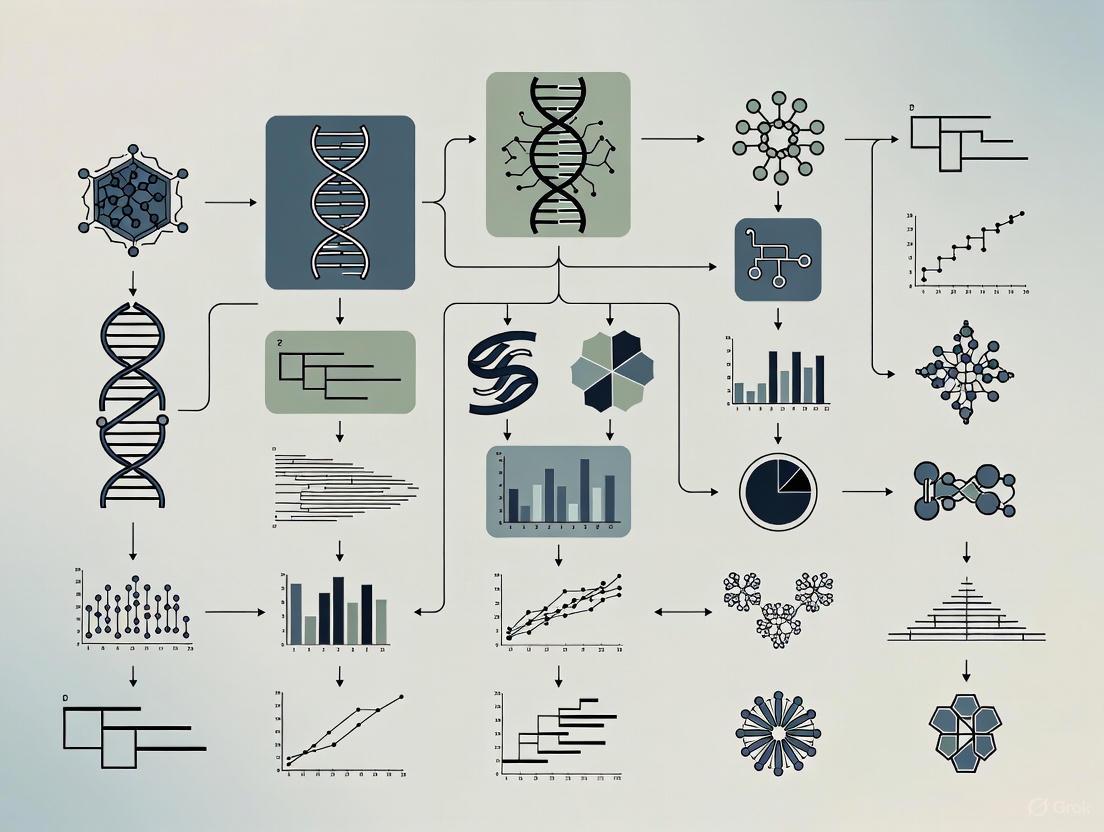
Phylogenetic comparative methods (PCMs) are a suite of statistical tools that combine evolutionary trees (phylogenies) with species' trait data to test evolutionary hypotheses and understand diversification patterns.
Phylogenetic Comparative Methods: A Statistical Framework for Evolutionary Biology and Drug Discovery
Abstract
Phylogenetic comparative methods (PCMs) are a suite of statistical tools that combine evolutionary trees (phylogenies) with species' trait data to test evolutionary hypotheses and understand diversification patterns. This article provides a comprehensive overview for researchers and drug development professionals, covering foundational concepts, core methodologies like Independent Contrasts and PGLS, and practical applications from identifying evolutionary adaptations to pinpointing novel drug targets. We explore computational best practices, address common analytical challenges, and validate the power of a phylogenetically-aware approach against traditional comparative studies. The synthesis underscores the transformative potential of PCMs in generating robust, evolutionarily-grounded insights for both basic biology and translational research.
The Roots and Core Principles of Phylogenetic Comparative Analysis
Phylogenetic comparative methods (PCMs) represent a statistical toolkit used to study the history of organismal evolution and diversification by combining piecemeal information, primarily an estimate of species relatedness and contemporary trait values of extant organisms [1]. It is crucial to distinguish PCMs from the field of phylogenetics itself; while phylogenetics is concerned with reconstructing the evolutionary relationships among species, PCMs use an already estimated phylogenetic tree to make secondary inferences about trait evolution, diversification dynamics, biogeography, and other evolutionary processes [1] [2]. These methods account for the shared evolutionary history of species, thereby preventing pseudoreplication and spurious trait correlations that can arise when treating species as independent data points [3]. PCMs enable researchers to address fundamental questions about how traits evolved through time, what factors influenced speciation and extinction, and whether trait shifts are correlated with historical or environmental factors [3] [1].
Statistical Foundations and Evolutionary Models
Core Statistical Framework
The foundation of many PCMs lies in quantifying the expected trait variances and covariances among species based on their phylogenetic relationships. This is typically represented by a phylogenetic variance-covariance matrix, often denoted C [3]. This matrix incorporates the phylogenetic tree structure, with diagonal elements containing the expected trait variances for each species and off-diagonal elements containing the expected trait covariances between species pairs, which arise from shared internal branches in the phylogeny [3]. The comparative method allows for testing evolutionary hypotheses by evaluating how well different models of trait evolution explain the observed distribution of traits across species.
Models of Trait Evolution
Various statistical models have been developed to describe different patterns and processes of trait evolution. These models serve as hypotheses about how traits change over evolutionary time and can be tested against empirical data.
Table 1: Major Models of Trait Evolution Used in Phylogenetic Comparative Methods
| Model | Mathematical Principle | Biological Interpretation | Key Parameters |
|---|---|---|---|
| Brownian Motion (BM) | Random walk through trait space [4] | Neutral drift evolution or evolution toward randomly fluctuating selective optima [4] | Rate parameter (σ²) describing the variance of the random walk [3] |
| Ornstein-Uhlenbeck (OU) | Random walk with an attracting force toward one or more selective optima [4] | Evolution under stabilizing selection [4] | Selection strength (α), optimal trait value (θ) |
| Pagel's Delta (δ) | Branch length transformation: raises node depths to power δ [4] | Changing rates of evolution through time (δ < 1: early rapid change; δ > 1: increasing rate) [4] | Delta (δ) transformation parameter |
| Pagel's Lambda (λ) | Internal branch lengths multiplied by λ [4] | Degree of phylogenetic signal in the data [4] | Lambda (λ) scaling parameter (0-1) |
| Pagel's Kappa (κ) | Branch lengths raised to power κ [4] | Punctuated evolution (κ = 0) versus gradual evolution (κ = 1) [4] | Kappa (κ) transformation parameter |
The Brownian motion model serves as a fundamental null model in comparative analysis, proposing that trait evolution proceeds as a random walk through trait space, with the expected phenotypic difference between species growing proportionally to the time since they shared a common ancestor [4]. The Blomberg's K statistic is used to test whether observed trait distributions exhibit more or less divergence than expected under Brownian motion, with K = 1 indicating Brownian motion evolution, K > 1 indicating that close relatives are more similar than expected, and K < 1 indicating more divergence between taxa than expected [4].
Methodological Approaches and Recent Innovations
Accounting for Gene Tree Discordance
Modern phylogenomic analyses have revealed that genomes are often composed of mosaic histories that can disagree both with the species tree and with each other—a phenomenon known as gene tree discordance [3]. This discordance arises primarily from biological processes such as incomplete lineage sorting (ILS) and introgression (historical hybridization) [3]. When unaccounted for, discordant gene trees can mislead standard PCMs, particularly by resulting in overestimates of the number of trait transitions or the rate of trait evolution—an effect termed "hemiplasy" [3].
Recent methodological innovations have developed approaches to incorporate gene tree histories into comparative methods:
Updated Variance-Covariance Matrix (C*): This approach constructs a modified phylogenetic variance-covariance matrix that includes covariances introduced by discordant gene trees, providing more accurate estimates of evolutionary rates [3]. The R package seastaR implements this method, either from a list of gene trees or from a species tree in coalescent units [3].
Pruning Algorithm Across Gene Trees: This method applies Felsenstein's pruning algorithm over a set of gene trees to calculate trait histories and likelihoods, enabling more accurate inference of lineage-specific rate shifts and ancestral states [3].
Methodological Workflow
The general workflow for phylogenetic comparative analysis involves multiple steps, from data acquisition to hypothesis testing. The following diagram illustrates a standard PCM workflow, highlighting the distinction between tree reconstruction and comparative analysis:
Advanced and Emerging Approaches
Contemporary PCMs have expanded to include sophisticated analytical techniques:
- Phylogenetic Generalized Least Squares (PGLS): A regression framework that incorporates phylogenetic non-independence [3].
- Stochastic Character Mapping: Methods for reconstructing ancestral states and visualizing the evolution of discrete characters on phylogenies [2].
- Trait-Dependent Diversification Models: Including BiSSE (Binary State Speciation and Extinction) and MuSSE (Multi-State Speciation and Extinction) that test whether speciation and extinction rates depend on character states [4].
- Integrated Phylogenomic Frameworks: Tools like Read2Tree that directly process raw sequencing reads into phylogenetic analyses, bypassing traditional steps of genome assembly and annotation [5].
Practical Implementation and Research Tools
Computational Ecosystems and Software
The scientific computing environment R has become a central platform for phylogenetic comparative analysis, largely through contributed packages that build upon the core functionality [2]. These packages form an interconnected ecosystem that supports the entire workflow of comparative analysis.
Table 2: Essential Research Reagents and Computational Tools for Phylogenetic Comparative Methods
| Tool/Category | Specific Examples | Function/Purpose | Application Context |
|---|---|---|---|
| Core R Packages | ape, geiger, phangorn [2] | Phylogenetic data handling, tree manipulation, basic comparative analyses | Foundation for nearly all R-based phylogenetic analyses |
| Comparative Methods Packages | phytools [2], seastaR [3], diversitree [4] | Specialized comparative methods: trait evolution, diversification, accounting for discordance | Specific analytical needs depending on research question |
| Tree Inference Software | IQ-TREE [5], RAxML, MrBayes, BEAST [4] | Phylogenetic tree construction from molecular data | Generating input trees for comparative analyses |
| Evolutionary Models | fitMk, fitPagel, fitHRM (in phytools) [2] | Fitting discrete and continuous character evolution models | Testing hypotheses about trait evolution |
| Sequence Processing | Read2Tree [5], Mafft [5], Clustal [4] | Alignment and direct processing of raw sequencing reads | Data preparation and tree construction |
Workflow for Accounting for Gene Tree Discordance
The following diagram illustrates the specialized workflow for implementing phylogenomic comparative methods that account for gene tree discordance:
Applications in Evolutionary Biology and Beyond
Phylogenetic comparative methods have traditionally been applied to study evolutionary questions in organismal biology, but their use has expanded dramatically into other fields:
- Evolutionary Biology: Studying rates of phenotypic evolution, adaptive radiations, biogeographic history, and the relationship between traits and diversification [2] [4].
- Infectious Disease Epidemiology: Tracking pathogen evolution, understanding transmission dynamics, and identifying virulence factors [2] [5].
- Cancer Biology: Reconstructing tumor progression trees and understanding cancer evolution [5].
- Anthropology and Linguistics: Studying cultural evolution and language diversification [2].
- Drug Development: Understanding the evolution of drug resistance in pathogens and identifying conserved therapeutic targets [5].
The application of PCMs to large datasets, such as the entire mammal clade with nearly 4000 species or transmission trees from large epidemic outbreaks, presents both computational challenges and opportunities for new biological insights [6].
Phylogenetic comparative methods have evolved from simple approaches that assume a single species tree into sophisticated frameworks that incorporate the complex realities of genomic evolution, including gene tree discordance. By moving beyond simple tree reconstruction to explicitly model evolutionary processes, PCMs provide powerful statistical tools for testing hypotheses about trait evolution, diversification, and adaptation. The ongoing development of computational tools, particularly within the R ecosystem, continues to expand the range of questions that can be addressed using these methods. As genomic datasets grow in size and complexity, the integration of phylogenomic insights into comparative frameworks will remain essential for accurate evolutionary inference across biological disciplines.
In evolutionary biology, ecology, and drug development research, comparing traits across different species is a fundamental approach to understanding adaptation, disease mechanisms, and physiological processes. However, a critical statistical problem arises because species are not independent data points; they are connected through shared evolutionary history represented by phylogenetic trees. This phylogenetic relatedness means that trait similarity between species may reflect common ancestry rather than independent evolutionary events, creating what statisticians call phylogenetic non-independence. When researchers perform standard statistical tests (e.g., regression, ANOVA) that assume data independence, they violate a core assumption, potentially inflating Type I error rates (false positives) and producing misleading biological conclusions [7] [8] [9].
The need to control for this non-independence is particularly crucial in pharmaceutical and medical research that utilizes comparative approaches across species. For instance, when studying drug target conservation, disease susceptibility, or physiological responses across animal models, failing to account for evolutionary relationships may lead to flawed inferences about therapeutic mechanisms and efficacy.
The Statistical Consequences of Ignoring Phylogeny
How Phylogenetic Structure Inflates Type I Error
Phylogenetic non-independence creates autocorrelation in trait data, meaning that traits of closely related species tend to be more similar than those of distantly related species. This phenomenon, known as phylogenetic signal, represents the statistical dependence among species' trait values resulting from their phylogenetic relationships [10] [11]. When this autocorrelation is ignored in conventional statistical tests, the effective sample size is artificially inflated because related species provide redundant rather than independent information.
The consequences are statistically serious: simulations demonstrate that analyses ignoring phylogenetic relationships can produce Type I error rates exceeding 50% when the true rate should be 5% [8] [9]. This occurs because standard tests underestimate true variance in the data when observations are non-independent, making relationships appear statistically significant when they are not. For example, a regression analysis might suggest a significant relationship between two traits across species due solely to shared evolutionary history rather than functional correlation.
The Evolutionary Models Underlying Non-Independence
The expected degree of trait similarity among related species is typically modeled using evolutionary processes, most commonly the Brownian motion model. This model assumes that trait evolution resembles a random walk, where trait values change through time with equal probability of increasing or decreasing, and variance accumulates proportionally with time since divergence [9] [12]. Under this model, the expected covariance between species is directly proportional to their shared evolutionary branch length on a phylogenetic tree [7].
Table 1: Evolutionary Models Used in Phylogenetic Comparative Methods
| Model | Mathematical Structure | Biological Interpretation | Appropriate Use Cases |
|---|---|---|---|
| Brownian Motion (BM) | Variance accumulates linearly with time | Genetic drift or random evolutionary change | Neutral evolution; unknown selective regimes |
| Ornstein-Uhlenbeck (OU) | Traits evolve with a central tendency | Stabilizing selection toward an optimum | Adaptation to specific niches; constrained evolution |
| Pagel's λ | BM-like with parameter (0-1) scaling phylogenetic signal | Varying strength of phylogenetic dependence | Testing degree of phylogenetic signal in traits |
Alternative models include the Ornstein-Uhlenbeck process, which incorporates stabilizing selection that pulls traits toward an optimum value, and Pagel's λ, which scales the expected covariance structure to measure the strength of phylogenetic signal [9] [12]. Each model makes different assumptions about the evolutionary process and generates different expected covariance structures among species.
Methodological Solutions: Phylogenetic Comparative Methods
Phylogenetically Independent Contrasts (PIC)
Phylogenetically Independent Contrasts (PIC), introduced by Felsenstein in 1985, was the first general statistical method to explicitly account for phylogenetic non-independence [8] [12]. The method transforms species data into statistically independent comparisons using the following protocol:
- Input Requirements: A fully resolved phylogenetic tree with branch lengths and trait data for extant species at the tips
- Algorithm: Computes differences (contrasts) in trait values between pairs of sister taxa or nodes at each internal node of the phylogeny
- Scaling: Contrasts are standardized by their expected variance, which is proportional to branch length under a Brownian motion model
- Analysis: Transformed contrasts are used in subsequent statistical analyses (e.g., regression through the origin)
The PIC method effectively converts non-independent tip data into n-1 independent contrasts for a phylogeny with n tips, satisfying the independence assumption of standard statistical tests [7] [8]. The method is mathematically equivalent to phylogenetic generalized least squares (PGLS) under a Brownian motion model of evolution [12].
Phylogenetic Generalized Least Squares (PGLS)
Phylogenetic Generalized Least Squares (PGLS) extends the general linear model framework to incorporate phylogenetic non-independence through the variance-covariance matrix of residuals [12]. The methodology follows this workflow:
- Model Specification: Define the linear model Y = Xβ + ε, where ε ~ N(0,σ²V)
- Matrix Construction: The V matrix encodes expected covariances between species based on phylogeny and an evolutionary model
- Parameter Estimation: β coefficients are estimated using GLS: β = (XᵀV⁻¹X)⁻¹XᵀV⁻¹Y
- Hypothesis Testing: Standard errors and significance tests account for the phylogenetic structure
PGLS can incorporate different evolutionary models (Brownian motion, Ornstein-Uhlenbeck, etc.) by modifying the structure of V, providing flexibility for different evolutionary scenarios [12]. This approach maintains the full phylogenetic information while providing unbiased parameter estimates.
Model Testing and Assumption Verification
All phylogenetic comparative methods carry important assumptions that must be verified for valid inference:
- Phylogenetic Accuracy: The tree topology and branch lengths should accurately reflect evolutionary relationships [9]
- Evolutionary Model Appropriateness: The chosen model (BM, OU, etc.) should adequately describe the trait evolutionary process
- Adequate Model Fit: Residuals should show no phylogenetic signal after accounting for phylogenetic structure
Diagnostic tests include examining relationships between standardized contrasts and their standard deviations, testing for phylogenetic signal in residuals, and comparing alternative models using information criteria [9]. For PIC, contrasts should be uncorrelated with their standard deviations, and for PGLS, residuals should show no significant phylogenetic signal.
Conceptual Framework: Visualizing Phylogenetic Non-Independence
The following diagram illustrates the conceptual relationship between phylogenetic structure and statistical non-independence, showing how comparative data deviates from the independence assumption of standard statistical tests:
Conceptual Framework of Phylogenetic Non-Independence
Table 2: Key Research Reagents and Computational Tools for Phylogenetic Comparative Methods
| Tool/Resource | Type | Primary Function | Application Context |
|---|---|---|---|
| R Statistical Environment | Software Platform | General statistical computing and analysis | Data manipulation, statistical testing, visualization |
| ape Package | R Library | Phylogenetic analysis and evolution | Reading, plotting, manipulating phylogenetic trees |
| phytools Package | R Library | Phylogenetic comparative methods | Fitting evolutionary models, PIC, phylogenetic signal |
| caper Package | R Library | Comparative analyses | Phylogenetic independent contrasts, PGLS |
| geiger Package | R Library | Evolutionary diversification analysis | Model fitting, tree manipulation, rate estimation |
| Molecular Sequence Data | Biological Data | Phylogenetic tree reconstruction | Inferring evolutionary relationships among taxa |
| Fossil Calibrations | Paleontological Data | Establishing evolutionary timescales | Assigning absolute time to phylogenetic branch lengths |
Advanced Considerations and Future Directions
Extensions to Complex Data Types
Recent methodological advances have expanded phylogenetic comparative methods beyond continuous traits to include:
- Discrete Traits: New statistics (D statistic, δ statistic) test phylogenetic signal in binary and categorical characters [10] [11]
- Multivariate Phenotypes: Methods like phylogenetic PCA accommodate multiple correlated traits [10]
- Gene Expression Data: Phylogenetic methods now analyze transcriptomic and proteomic data across species
- Geometric Morphometrics: Shape data can be incorporated while accounting for phylogeny
The recently developed M statistic provides a unified framework for detecting phylogenetic signals in continuous traits, discrete traits, and multiple trait combinations using Gower's distance, enhancing comparability across different data types [10].
Limitations and Ongoing Challenges
Despite substantial advances, important limitations persist in phylogenetic comparative methods:
- Phylogenetic Uncertainty: Most methods treat the phylogeny as known, ignoring error in tree estimation
- Model Misspecification: Results are sensitive to evolutionary model choice, with poor biological interpretation when models fit poorly [9]
- Data Limitations: Methods perform poorly with small sample sizes (few species) or limited phylogenetic diversity [9]
- Computational Complexity: Complex models require substantial computational resources for large phylogenies
Future methodological development focuses on integrating comparative methods with population genetics, paleontology, and developmental biology to create more comprehensive frameworks for studying evolutionary processes across timescales and biological hierarchies [13].
Phylogenetic non-independence represents a fundamental challenge in comparative biology that cannot be ignored without risking severe statistical errors. Phylogenetic comparative methods provide essential solutions by explicitly modeling evolutionary relationships, thereby distinguishing true functional correlations from spurious similarities due to shared ancestry. As these methods continue to develop and become more accessible through user-friendly software implementations, they offer increasingly powerful approaches for testing evolutionary hypotheses across the tree of life, with critical applications in basic evolutionary research, conservation biology, and comparative medicine.
Phylogenetic comparative methods (PCMs) are statistical tools that use information on the historical relationships of lineages (phylogenies) to test evolutionary hypotheses. These methods were developed to address a fundamental problem in evolutionary biology: the statistical non-independence of species due to their shared evolutionary history. Closely related lineages share many traits as a result of descent with modification, violating the independence assumption of standard statistical tests. PCMs provide a framework for investigating evolutionary patterns and processes by explicitly incorporating phylogenetic relationships, enabling researchers to distinguish between similarities resulting from common ancestry and those arising from independent evolution [12] [9].
The foundation of modern PCMs lies in recognizing that species cannot be treated as independent data points in statistical analyses. Charles Darwin himself used differences and similarities between species as major evidence in "The Origin of Species," but without methods to account for phylogenetic non-independence. This realization inspired the development of explicitly phylogenetic comparative methods, initially to control for phylogenetic history when testing for adaptation, though the term has since broadened to include any use of phylogenies in statistical tests [12]. These methods now complement other approaches to studying adaptation, including studies of natural populations, experimental studies, and mathematical models [12].
The Foundational Method: Phylogenetic Independent Contrasts
Conceptual Breakthrough and Algorithm
In 1985, Joseph Felsenstein proposed the first general statistical method for incorporating phylogenetic information—Phylogenetic Independent Contrasts (PIC)—that could use any arbitrary topology (branching order) and a specified set of branch lengths [12]. This method represented a fundamental breakthrough that addressed the problem of phylogenetic non-independence in comparative studies.
The logic of the independent contrasts method is to use phylogenetic information (under an assumed Brownian motion model of trait evolution) to transform original tip data (mean values for species) into values that are statistically independent and identically distributed [12]. The algorithm computes differences (contrasts) between sister taxa or nodes at each level of the phylogeny, standardized by their branch lengths and the expected variance. These contrasts can then be used in standard statistical analyses without violating the assumption of independence [12].
Figure 1: The Independent Contrasts Algorithm transforms species trait values into phylogenetically independent comparisons at each node level.
Methodological Implementation and Assumptions
The implementation of phylogenetic independent contrasts requires several critical assumptions that must be satisfied for valid inference. First, the topology of the phylogeny must be accurately known. Second, the branch lengths of the phylogeny must be correct. Third, traits must evolve according to a Brownian motion model, where trait variance accrues as a linear function of time [9]. Brownian motion represents a simple model of trait evolution where changes accumulate randomly over time with constant variance.
Several diagnostic tests have been developed to assess whether these assumptions are met. These include examining relationships among standardized contrasts and node heights, analyzing absolute values of standardized contrasts and their standard deviations, and checking for heteroscedasticity in model residuals [9]. These diagnostics are implemented in software packages such as CAIC and the caper R package, allowing researchers to verify whether their data meet the method's assumptions before drawing biological conclusions [9].
Table 1: Core Assumptions of Phylogenetic Independent Contrasts and Diagnostic Approaches
| Assumption | Biological Interpretation | Diagnostic Tests | Software Implementation |
|---|---|---|---|
| Accurate Topology | The phylogenetic tree correctly represents evolutionary relationships | Compare alternative topologies; assess robustness to uncertainty | CAIC, caper R package |
| Correct Branch Lengths | Branch lengths accurately represent time or molecular change | Examine correlation between contrasts and standard deviations | CAIC, caper R package |
| Brownian Motion Evolution | Traits evolve randomly with constant variance through time | Check relationship between contrasts and node heights | CAIC, caper R package |
The Modeling Revolution: From Contrasts to Generalized Least Squares
Phylogenetic Generalized Least Squares (PGLS)
The phylogenetic comparative methods landscape transformed with the development of Phylogenetic Generalized Least Squares (PGLS), which has become the most commonly used PCM today [12]. PGLS is a special case of generalized least squares that incorporates phylogenetic structure directly into the error term of the statistical model. While standard least squares assumes that residual errors are independent and identically distributed, PGLS models the errors as following a multivariate normal distribution with a variance-covariance matrix V that reflects the phylogenetic relationships among species [12].
The fundamental PGLS model structure can be represented as follows. In standard regression, errors are assumed to be distributed as ε∣X ~ N(0,σ²Iₙ), where Iₙ is the identity matrix, indicating independent errors with constant variance. In PGLS, this assumption is relaxed to ε∣X ~ N(0,V), where V is a matrix of expected variances and covariances of residuals given an evolutionary model and phylogenetic tree [12]. This structure explicitly models the phylogenetic signal in the residual errors rather than in the variables themselves.
Evolutionary Models in PGLS
Several evolutionary models have been proposed for defining the structure of the V matrix in PGLS analyses. The Brownian motion model, the simplest approach, assumes that trait variance accumulates proportionally with time, making it equivalent to the independent contrasts method when the same model is used [12]. The Ornstein-Uhlenbeck (OU) model incorporates a stabilizing selection component, with a parameter (α) measuring the strength of return toward a theoretical optimum [9]. Pagel's λ model provides a flexible way to measure and incorporate phylogenetic signal, with λ ranging from 0 (no phylogenetic signal) to 1 (strong signal consistent with Brownian motion) [12].
Table 2: Evolutionary Models Used in Phylogenetic Comparative Methods
| Model | Key Parameters | Biological Interpretation | Best Applications |
|---|---|---|---|
| Brownian Motion | Rate parameter (σ²) | Random walk; neutral evolution | Baseline model; traits under neutral evolution |
| Ornstein-Uhlenbeck (OU) | Selection strength (α), optimum (θ) | Stabilizing selection toward an optimum | Constrained evolution; niche-filling |
| Pagel's λ | Scaling parameter (λ) | Phylogenetic signal strength | Testing degree of phylogenetic signal |
| Early Burst | Rate parameter (r) | Rapid initial diversification followed by slowdown | Adaptive radiations |
Expansion and Specialization: The Modern PCM Toolkit
Methods for Diversification Analysis
Modern phylogenetic comparative methods have expanded beyond trait evolution to include models for analyzing diversification rates—how speciation and extinction rates vary across clades and through time. The Binary State Speciation and Extinction (BiSSE) model and related methods test whether particular traits are associated with differences in diversification rates, potentially explaining why some clades become more diverse than others [9]. These methods can provide insight into how specific traits might promote or inhibit diversification.
However, these methods have important limitations that researchers must consider. Recent work has shown that a strong correlation between a trait and diversification rate can be inferred from a single diversification rate shift within a tree, even if the shift is unrelated to the trait of interest [9]. This highlights the importance of careful model testing and consideration of alternative explanations when interpreting results from trait-dependent diversification analyses.
Bayesian Approaches and Computational Advances
Bayesian inference methods have become increasingly important in phylogenetic comparative analyses, offering a powerful framework for incorporating uncertainty and prior knowledge. Bayesian approaches use Markov chain Monte Carlo (MCMC) sampling to approximate the posterior distribution of model parameters, allowing for robust parameter estimation and model comparison [14]. These methods are particularly valuable for complex models where likelihood-based inference may be computationally challenging.
The development of sophisticated computational tools, particularly in the R programming language, has dramatically increased the accessibility and application of phylogenetic comparative methods. Packages such as ape, geiger, phytools, and caper provide implementations of a wide range of PCMs, from basic independent contrasts to complex multivariate models [14]. This has enabled researchers to apply these methods to diverse questions across evolutionary biology, ecology, and conservation.
Methodological Workflow and Experimental Protocols
Standard Protocol for Phylogenetic Comparative Analysis
A robust phylogenetic comparative analysis follows a systematic workflow to ensure appropriate methodology and interpretation. The general process begins with sequence collection from public databases or original research, proceeds through sequence alignment and trimming, then selects appropriate evolutionary models before finally conducting tree inference and evaluation [14]. Each step requires careful consideration to avoid introducing biases or artifacts into the analysis.
Figure 2: Standard Workflow for constructing phylogenetic trees and conducting comparative analyses.
Tree Construction Methods
Different methodological approaches are available for constructing phylogenetic trees, each with distinct strengths and limitations. Distance-based methods, such as neighbor-joining (NJ), transform sequence data into a distance matrix and use clustering algorithms to infer relationships [14]. Character-based methods, including maximum parsimony (MP), maximum likelihood (ML), and Bayesian inference (BI), use the raw character data directly to find trees that best explain the observed patterns under specific optimality criteria [14].
Table 3: Comparison of Phylogenetic Tree Construction Methods
| Method | Principle | Assumptions | Advantages | Limitations |
|---|---|---|---|---|
| Neighbor-Joining (NJ) | Minimal evolution: minimizes total branch length | BME branch length estimation model | Fast; good for large datasets; allows different branch lengths | Loss of character information; sensitive to divergence |
| Maximum Parsimony (MP) | Minimizes evolutionary steps required | No explicit model | Intuitive; no model specification needed | Long-branch attraction; poor with divergent sequences |
| Maximum Likelihood (ML) | Maximizes probability of data given tree | Sites evolve independently; different branch rates | Statistical framework; model-based; handles uncertainty | Computationally intensive; model misspecification risk |
| Bayesian Inference (BI) | Bayes' theorem; posterior probability | Markov substitution model | Incorporates prior knowledge; quantifies uncertainty | Computationally intensive; prior specification |
The Scientist's Toolkit: Essential Research Reagents
Table 4: Essential Computational Tools and Packages for Phylogenetic Comparative Analysis
| Tool/Package | Primary Function | Key Features | Implementation |
|---|---|---|---|
| CAIC/caper | Phylogenetic independent contrasts | Diagnostic plots; assumption testing | R package |
| ape | General phylogenetic analysis | Tree manipulation; basic comparative methods | R package |
| geiger | Comparative method integration | Model fitting; diversification analysis | R package |
| phytools | Phylogenetic tools for comparative biology | Diverse PCMs; visualization | R package |
| RevBayes | Bayesian phylogenetic inference | Flexible model specification; MCMC | Standalone software |
Challenges and Future Directions
Despite their power and popularity, phylogenetic comparative methods have limitations that researchers must acknowledge. Many methods suffer from biases and make assumptions that, if violated, can lead to misleading results [9]. There is often a communication gap between method developers and end-users, leading to inadequate assessment of assumptions and poor model fits in empirical studies [9]. Commonly used methods like phylogenetic independent contrasts, Ornstein-Uhlenbeck models, and trait-dependent diversification analyses all have caveats that are frequently overlooked in applied research.
Future developments in phylogenetic comparative methods will likely focus on several key areas. First, there is increasing emphasis on improving model diagnostics and developing more user-friendly tools for assessing model fit. Second, methods that integrate across different data types, including fossil information and ecological data, are becoming more sophisticated [12]. Third, there is growing recognition of the importance of accounting for phylogenetic uncertainty rather than treating estimated trees as known without error. Finally, the field is shifting from publishing purely novel methods to publishing improvements to existing methods and better ways of detecting biases [9]. These advances will continue to enhance the utility of phylogenetic comparative methods for testing evolutionary hypotheses and understanding the history of life.
Phylogenetic comparative methods (PCMs) provide a powerful statistical framework for testing evolutionary hypotheses across species. The accuracy and power of these analyses hinge on three fundamental data inputs: the phylogenetic tree itself, contemporary trait measurements from extant taxa, and paleontological data that provides a temporal dimension. This whitepaper offers an in-depth technical guide to the acquisition, processing, and integration of these core data types. It details established and emerging experimental protocols, provides standardized workflows for data handling, and introduces key software solutions, with the aim of equipping researchers with the practical knowledge necessary to conduct robust comparative analyses in fields ranging from evolutionary biology to drug development.
Phylogenetic comparative methods form the cornerstone of modern evolutionary biology, allowing researchers to move beyond simple comparisons to statistically rigorous tests of hypotheses concerning adaptation, speciation, and trait evolution [15]. These methods explicitly account for the shared evolutionary history of species, which creates statistical non-independence in trait data—a problem that can lead to inflated Type I errors if ignored. The foundational inputs for any PCM study are the phylogeny, which models the evolutionary relationships and distances between taxa; contemporary traits, which are the phenotypic or genotypic measurements from extant organisms; and fossil data, which provides critical information from extinct lineages for calibrating evolutionary timescales and understanding deep-time processes. The integration of these data sources enables a comprehensive view of evolutionary dynamics, bridging the gap between microevolutionary processes and macroevolutionary patterns.
Phylogenies: The Evolutionary Framework
Data Structures and File Formats
A phylogeny is most commonly represented as a tree, a connected graph without cycles. In biological terms, this tree consists of nodes (representing taxonomic units, speciation events, or common ancestors) and edges or branches (representing evolutionary lineages with a length proportional to the amount of evolutionary change or time). A rooted tree has a single node identified as the most recent common ancestor of all entities in the tree, while an unrooted tree only illustrates relatedness without specifying ancestry. Trees can be visualized as cladograms (where branch lengths are not proportional to change) or phylograms (where branch lengths are) [16].
To facilitate data exchange and software interoperability, several standard file formats have been established:
- Newick Format: A widely adopted format using parentheses and commas to represent tree topology and branch lengths (e.g.,
(A:0.1,B:0.2,(C:0.3,D:0.4):0.5);). - Nexus Format: A more extensive format that can include the tree structure, along with associated character data, genetic sequences, and evolutionary models.
Construction Methodologies and Protocols
The construction of a reliable phylogeny involves a multi-step process, from data collection to tree inference, with the choice of method heavily dependent on the data type and research question.
Table 1: Core Phylogenetic Inference Methods
| Method | Underlying Principle | Typical Data Input | Key Software |
|---|---|---|---|
| Maximum Parsimony | Minimizes the total number of evolutionary changes required. | Morphological character matrices; Molecular sequences. | TNT, PAUP* |
| Maximum Likelihood | Finds the tree topology and parameters that make the observed data most probable under a specified model of evolution. | Molecular sequences (often aligned). | RAxML, IQ-TREE |
| Bayesian Inference | Estimates the posterior probability of tree topologies and parameters by combining the likelihood of the data with prior beliefs. | Molecular sequences; Morphological data; Fossil calibration points. | MrBayes, BEAST2 [17] |
Protocol 1: Bayesian Phylogenetic Analysis with BEAST2
This protocol is commonly used for dating evolutionary divergences.
- Data Alignment and Partitioning: Input molecular sequences (e.g., DNA, amino acids) are aligned using tools like MAFFT or ClustalW. For multi-gene datasets, define data partitions.
- Model Selection: For each partition, select a suitable substitution model (e.g., HKY, GTR) using model-testing programs like ModelTest-NG.
- Prior Specification:
- Set the tree prior. The Fossilized Birth-Death (FBD) model is increasingly used as it incorporates fossil sampling rates directly into the tree inference [17].
- Specify priors for other parameters (e.g., clock models, demographic priors).
- MCMC Execution: Run a Markov Chain Monte Carlo (MCMC) analysis for a sufficient number of generations to ensure convergence, typically tens to hundreds of millions. Convergence is assessed using tools like Tracer to check that Effective Sample Size (ESS) values are >200.
- Tree Summarization: After discarding an appropriate burn-in (e.g., 10%), summarize the posterior sample of trees into a single target tree, such as a Maximum Clade Credibility tree, using TreeAnnotator.
Figure 1: Workflow for Bayesian phylogenetic analysis, highlighting key steps from data input to a time-calibrated tree output.
Contemporary Traits: Phenotypic and Genomic Data
Contemporary trait data encompasses a wide range of measurements taken from living organisms. These can be broadly categorized for practical analysis.
Table 2: Categories of Contemporary Trait Data
| Trait Category | Description | Measurement Examples |
|---|---|---|
| Morphological | Quantifiable physical characteristics and anatomical structures. | Body mass, bone lengths, leaf area, floral morphology. |
| Physiological | Functional properties of organisms and their systems. | Metabolic rate, photosynthetic capacity, hormone levels. |
| Ecological | Traits relating to the organism's interaction with its environment. | Habitat preference, dietary niche, home range size. |
| Behavioral | Observable actions and responses of organisms. | Mating displays, foraging tactics, social structure. |
| Molecular | Genomic and gene expression data used as traits. | Gene presence/absence, dN/dS ratios, epigenetic markers. |
Protocols for Data Collection and Curation
The methodology for trait collection is highly trait-specific, but overarching principles ensure data quality and comparability.
Protocol 2: Standardized Morphometric Data Collection
This protocol is applicable to a wide range of morphological studies.
- Specimen Selection: Define clear criteria for specimen inclusion (e.g., adult individuals only, specific sex) to minimize confounding variation.
- Trait Operationalization: Precisely define each trait and its measurement protocol. For example, "body length" should specify anatomical landmarks (e.g., snout to vent).
- Instrumentation and Calibration: Use calibrated instruments (calipers, scales). For 2D or 3D morphometric data, use standardized imaging setups.
- Replication: Measure each trait multiple times by the same and/or different researchers to estimate and account for measurement error.
- Data Recording: Record data directly into a structured database (e.g., CSV file) with consistent units. Include metadata such as specimen ID, collector, and date.
Protocol 3: Calculating Evolutionary Rates from Genomic Data (dN/dS)
The ratio of non-synonymous (dN) to synonymous (dS) substitutions is a key metric for detecting selection.
- Sequence Alignment: Obtain and align coding sequences (CDS) for orthologous genes across the study species.
- Tree Input: Use a fixed, well-supported species tree or gene tree.
- Model Selection and Execution: Use software like PAML (CodeML) or HyPhy to fit models of codon evolution. A common approach is the Branch Model, which tests if the dN/dS ratio (ω) differs between a pre-specified foreground branch (e.g., a lineage of interest) and the background branches.
- Hypothesis Testing: Compare the likelihood of a model where ω is fixed for all branches to a model where the foreground branch has a different ω. A significant likelihood ratio test suggests divergent evolutionary pressures.
The Role of Fossil Data
Types and Utility of Fossil Data
Fossil data provides the temporal context that is often absent from analyses of only contemporary species. It is indispensable for calibrating molecular clocks, breaking up long branches, and understanding the sequential evolution of traits. The primary data types include:
- Morphological Character Data: Fossil specimens are scored for the same discrete or continuous morphological characters as extant taxa, allowing them to be placed directly within the phylogenetic tree [18] [17].
- Stratigraphic Range Data: The first and last appearance dates of a taxon in the fossil record, which provide minimum age constraints for its lineage.
- Calibration Priors: Probabilistic distributions (e.g., uniform, lognormal) used in Bayesian dating analyses to incorporate uncertainty about node ages based on fossil evidence.
Protocols for Fossil Integration
Protocol 4: Total-Evidence Dating with the Fossilized Birth-Death (FBD) Model
This state-of-the-art method integrates morphological data from fossils and extant taxa with molecular data from extant taxa into a single Bayesian analysis [17].
- Data Compilation:
- Molecular Matrix: Sequence data for extant taxa.
- Morphological Matrix: Discrete morphological character data for both extant and fossil taxa (e.g., presence/absence of skeletal features).
- Fossil Age Priors: For each fossil, define a prior distribution for its age based on its stratigraphic occurrence.
- Model Configuration in BEAST2:
- Apply a substitution model for the molecular data.
- Apply a morphological evolution model (e.g., the Mk model) for the morphological data.
- Set the tree prior to the FBD model. This model treats fossils as samples from the evolving lineage, coherently modeling speciation, extinction, and fossil recovery rates.
- Analysis and Output: Run the MCMC analysis as in Protocol 1. The output is a time-calibrated phylogeny that includes both living and fossil species as tips, with divergence times estimated directly from the combined data.
Figure 2: The total-evidence dating approach, showing how different data sources are integrated under the FBD model.
Successful phylogenetic comparative research relies on a suite of software, databases, and reagents.
Table 3: Research Reagent Solutions and Essential Tools
| Item / Resource | Category | Function / Purpose |
|---|---|---|
| BEAST2 | Software Package | A versatile platform for Bayesian evolutionary analysis, supporting molecular dating, phylogeography, and the FBD model [17]. |
| ggtree (R package) | Software Package | A powerful tool for visualizing and annotating phylogenetic trees, enabling the integration of diverse associated data [19] [20]. |
| PAML | Software Package | A package of programs for phylogenetic analysis of molecular data, including codon model (CodeML) analysis for detecting selection. |
| MrBayes | Software Package | Software for Bayesian inference of phylogeny using molecular or morphological data [17]. |
| Morphobank | Web Platform | A web-based platform for collaborative scoring of morphological character matrices for phylogenetic analysis. |
| Paleobiology Database | Database | A public resource for the fossil record, providing stratigraphic and taxonomic data for calibration. |
| Orthologous Gene Sets | Research Reagent | Curated sets of genes shared across species due to common descent, essential for constructing accurate gene trees and calculating dN/dS. |
The rigor of phylogenetic comparative methods is directly dependent on the quality and comprehensive nature of its core data inputs. Phylogenies constructed with robust statistical methods, carefully measured contemporary traits, and strategically incorporated fossil data together create a powerful framework for interrogating evolutionary history. The ongoing development of more complex models, such as the Fossilized Birth-Death process, and sophisticated software tools is pushing the field toward ever more integrated and realistic analyses. By adhering to detailed protocols for data handling and leveraging the growing toolkit of resources, researchers can effectively harness these data to uncover the processes that have shaped the diversity of life.
Phylogenetic Comparative Methods (PCMs) constitute a foundational research program in evolutionary biology, providing the statistical framework to connect patterns observed across species (macroevolution) with the processes that generate them (microevolution). By explicitly accounting for the shared evolutionary history of species, PCMs transform the cross-species comparative approach from a potentially flawed enterprise into a powerful, model-based inference tool for testing evolutionary hypotheses [12] [9]. This in-depth guide explores the core principles, applications, and methodologies of this research program.
# Core Principles and Evolutionary Framework
The fundamental challenge PCMs address is phylogenetic non-independence. Species are related in a nested hierarchy of common ancestry, meaning their traits are not statistically independent data points. Closely related species often resemble each other simply because they have inherited traits from a recent common ancestor [12] [9]. PCMs integrate phylogenetic trees—hypotheses of evolutionary relationships—into statistical analyses to control for this historical constraint, allowing researchers to distinguish between similarity due to common descent and similarity due to independent adaptation [12].
PCMs operate by applying models of trait evolution to a phylogenetic tree. These models represent different evolutionary processes that might have shaped trait data over macroevolutionary timescales [4].
Table 1: Core Models of Trait Evolution in PCMs
| Model | Core Principle | Biological Interpretation | Key Parameters |
|---|---|---|---|
| Brownian Motion (BM) [9] [4] | Trait evolution as an unbiased random walk. | Neutral evolution; or adaptation to a randomly fluctuating environment. | Rate of trait variance accumulation (σ²) |
| Ornstein-Uhlenbeck (OU) [9] [4] | Random walk with a central restoring force. | Stabilizing selection towards a specific optimal trait value. | Optimum (θ), strength of selection (α), and variance (σ²) |
| Early Burst (EB) / Pagel's Delta [4] | Rate of trait evolution accelerates or decelerates through time. | Adaptive radiation (decelerating rate) or increasing selective pressure (accelerating rate). | Rate change parameter (δ) |
| Pagel's Lambda [4] | Scales the internal branches of the phylogeny, measuring the "phylogenetic signal". | Tests the degree to which trait covariation matches phylogenetic relatedness. | Phylogenetic signal (λ) |
The following diagram illustrates the logical workflow and core relationships in a PCM-based research program.
# Key Methodological Approaches and Applications
PCMs encompass a diverse toolkit of statistical methods, each designed to answer specific evolutionary questions.
Phylogenetic Regression and Generalizations
The most common application is testing for relationships between traits while accounting for phylogeny. Phylogenetically Independent Contrasts (PIC), the first general PCM, transforms species data into differences (contrasts) at nodes that are statistically independent and identically distributed under a Brownian motion model [12] [9]. Phylogenetic Generalized Least Squares (PGLS) is a more flexible and widely used generalization of PIC [12]. PGLS incorporates the phylogenetic non-independence directly into the error structure of a linear model, allowing the use of different evolutionary models (e.g., Brownian motion, Ornstein-Uhlenbeck) and is unbiased, consistent, and efficient [12]. Recent advances show that robust regression techniques can mitigate the sensitivity of PGLS to misspecification of the phylogenetic tree, a critical consideration for modern analyses of complex traits [21].
Ancestral State Reconstruction
PCMs enable the estimation of trait values for ancestral species (internal nodes on a phylogeny). This is powerful for testing hypotheses about the sequence and timing of key evolutionary innovations [12] [4]. For example, researchers have used ancestral state reconstruction to investigate the evolution of endothermy in mammals and the number of transitions between C3 and C4 photosynthesis in plants [12] [4].
Analyzing Diversification Rates
A distinct class of PCMs tests whether the evolution of a particular trait has influenced rates of speciation and extinction (trait-dependent diversification). Methods like BiSSE (Binary State Speciation and Extinction) model these processes for binary traits [9] [4]. However, these methods have caveats; they can infer a spurious correlation between a trait and diversification if there is underlying rate heterogeneity in the tree unrelated to the trait [9].
Table 2: Core Phylogenetic Comparative Methods and Their Applications
| Method | Primary Function | Example Research Question |
|---|---|---|
| Phylogenetic Independent Contrasts (PIC) [12] [9] | Test for correlation between continuous traits. | Is there a relationship between brain mass and body mass across carnivores? |
| Phylogenetic Generalized Least Squares (PGLS) [12] [21] | Test for correlation between continuous traits under flexible evolutionary models. | Do carnivores have larger home ranges than herbivores, after accounting for body size? |
| Ancestral State Reconstruction [12] [4] | Infer trait values of extinct ancestors. | Was the ancestral state of a plant clade C3 or C4 photosynthesis? |
| Ornstein-Uhlenbeck (OU) Models [9] [4] | Test hypothesis of stabilizing selection or adaptation to discrete niches. | Have different lizard lineages evolved different body sizes adapted to specific microhabitats? |
| BiSSE/MuSSE [9] [4] | Test for trait-dependent speciation and extinction rates. | Does the evolution of a parasitic lifestyle increase the net diversification rate in insects? |
| Phylogenetic Signal Estimation (e.g., Blomberg's K, Pagel's λ) [4] | Quantify how closely trait variation follows phylogeny. | Are behavioral traits more evolutionarily labile than morphological traits? |
# Experimental Protocols and Workflows
A robust PCM analysis follows a structured workflow, from data acquisition to biological interpretation. The methodology below, inspired by a study on the evolution of migration in nightingale-thrushes, exemplifies this process [22].
Protocol: Analyzing the Evolution of a Functional Trait Complex
1. Phylogenetic Hypothesis Building:
- Data Acquisition: Assemble a genomic-scale dataset (e.g., Ultraconserved Elements - UCEs, whole genomes) for all study taxa [22].
- Sequence Alignment & Phylogenetic Inference: Use alignment tools (e.g., Clustal) and phylogenetic programs (e.g., RAxML for maximum likelihood, MrBayes for Bayesian inference) to reconstruct the species tree [4] [22]. For comparative methods, branch lengths should be proportional to time (chronogram), which can be estimated using programs like BEAST with fossil calibrations [4].
2. Phenotypic Data Collection:
- Trait Measurement: Collect quantitative morphological data from museum specimens or living organisms. In the thrush study, this included wing length, tarsus (leg) length, and body mass [22].
- Data Curation: Account for sexual dimorphism and measurement error. Use large sample sizes to ensure robust species-level mean estimates [22].
3. Modeling Trait Evolution and Ancestral State Reconstruction:
- Model Fitting: Fit different models of trait evolution (e.g., Brownian Motion, Ornstein-Uhlenbeck) to the trait data on the phylogeny using R packages like
geigerorouch[4]. - Statistical Comparison: Use likelihood ratio tests or information criteria (AIC) to identify the best-fitting model [4] [22].
- Ancestral Reconstruction: Reconstruct ancestral states for key nodes under the best-fitting model to infer the evolutionary history of the trait [22].
The workflow for this protocol is visualized below.
# The Scientist's Toolkit: Essential Research Reagents
Successful PCM research relies on a suite of computational tools and data resources. The table below details key "research reagents" for the field.
Table 3: Essential Toolkit for Phylogenetic Comparative Analysis
| Tool / Resource | Type | Primary Function | Relevance to PCM Research Program |
|---|---|---|---|
| R Statistical Environment [4] | Software Platform | Core computing environment for statistical analysis and visualization. | The central hub for PCM analysis, integrating data management, analysis, and plotting. |
| CRAN Phylogenetics Task View [4] | Software Repository | Curated list of R packages for phylogenetics. | The definitive guide to finding and learning about PCM-related R packages (e.g., ape, phytools, geiger). |
| BEAST [4] | Software | Bayesian evolutionary analysis and divergence time estimation. | Generates time-calibrated phylogenetic trees (chronograms) essential for many PCMs. |
| GenBank / GTDB [23] [4] | Database | Repository of genetic sequence data and genome-derived taxonomy. | Source of molecular data for phylogenetic tree estimation and taxonomic context. |
| Phylogenetic Tree | Data Structure | Hypothesis of evolutionary relationships with branch lengths. | The fundamental input for all PCMs; represents the assumed evolutionary history. |
| PGLS & PIC Algorithms [12] | Statistical Method | Implement phylogenetic regression in R (e.g., nlme::gls, ape::pic). |
Core analytical engines for testing correlated trait evolution. |
| Model of Trait Evolution (e.g., OU) [4] | Statistical Model | Mathematical description of an evolutionary process. | The explicit hypothesis about how a trait has evolved, which is tested against data. |
# Critical Assumptions, Limitations, and the "Dark Side"
The power of PCMs comes with critical responsibilities. Researchers must be aware of the "dark side" of these methods: their inherent assumptions and biases, which, if unaddressed, can lead to misinterpreted results [9].
- Tree Quality: PCMs assume the provided phylogeny is correct in both its topology (relationships) and branch lengths. Errors in the tree can propagate into errors in comparative inferences [9] [21].
- Evolutionary Model Adequacy: Methods like PIC assume traits evolve via a Brownian motion process. PGLS allows for other models, but the chosen model must be a reasonable fit to the data. Using an overly complex model (e.g., OU) on small datasets can lead to false confidence [9].
- Diagnostic Checks: For PIC, diagnostic plots (e.g., examining contrasts versus their variances) should be used to verify assumptions [9]. Similarly, model fit for PGLS and other methods must be assessed.
- Biological Interpretation: A good statistical fit does not guarantee a correct biological explanation. For instance, an OU model fit can be evidence of stabilizing selection but also of other processes like biased gene flow [9].
The PCM research program is dynamically evolving. Current frontiers include the development of methods to handle phylogenetic uncertainty by integrating over multiple possible trees, the creation of more complex models that better reflect realistic biological processes, and the incorporation of genomic-scale data directly into comparative frameworks [9] [21]. Furthermore, new visualization tools like Context-Aware Phylogenetic Trees (CAPT) are being developed to interactively explore and validate the connection between phylogeny and taxonomy [23].
In conclusion, the Phylogenetic Comparative Methods research program provides an essential, model-based statistical framework for evolutionary biology. By rigorously connecting the microevolutionary processes that occur within lineages to the macroevolutionary patterns observed across the tree of life, PCMs allow scientists to move beyond mere description to strong inference about the evolutionary history and adaptation of life on Earth.
Core PCM Techniques and Their Transformative Applications in Research
Phylogenetically Independent Contrasts (PIC) represents a foundational algorithm in the field of phylogenetic comparative methods (PCMs), which encompasses statistical techniques for analyzing data from different species while accounting for their evolutionary relationships [24]. Developed by Joseph Felsenstein in his seminal 1985 paper, PIC provided the first statistically robust solution to a long-standing problem in comparative biology: the non-independence of species data due to shared evolutionary history [25]. Prior to Felsenstein's work, researchers typically analyzed comparative data using standard statistical methods like ANOVA and linear regression that assume independent data points, despite the fact that species exhibit hierarchical, nested relationships due to their phylogenetic history [25].
The core insight of PIC is that evolutionary relationships, represented by phylogenetic trees, create statistical non-independence among species traits [25]. When species share a recent common ancestor, their traits are likely more similar due to this shared history rather than independent evolution. This phylogenetic inertia means that treating species as independent data points violates fundamental statistical assumptions and can increase Type I error rates (false positives) in hypothesis testing [25]. Felsenstein's method, which has been cited over ten thousand times as of 2024, revolutionized comparative biology by providing a way to account for these phylogenetic relationships in statistical analyses [25].
PIC operates on the principle that a phylogeny can be used to structure comparisons between evolutionary independent events, specifically between pairs of sister taxa or lineages that diverged from a common ancestor [24]. By focusing on differences between these recently diverged lineages, PIC effectively extracts independent evolutionary events from phylogenetic data, creating transformed data points that satisfy the independence assumption of standard statistical methods [25] [24].
Theoretical Foundation and Mathematical Formulation
The Brownian Motion Model of Evolution
PIC is based on the Brownian motion (or random walk) model of evolution, which serves as a null model for trait evolution [26] [27]. Under this model, traits evolve randomly along phylogenetic lineages with constant variance per unit time. The model makes several key assumptions:
- Incremental changes: Traits evolve through small, random increments in each infinitesimal time period.
- Directional neutrality: Changes are equally likely to be positive or negative (no consistent directional trend).
- Rate consistency: The variance of change is proportional to time.
The Brownian motion model implies that the variance of trait differences between species increases linearly with their evolutionary distance (time since divergence). This mathematical property enables the calculation of phylogenetically independent contrasts that are both independent and identically distributed under the model.
Algorithmic Steps for Calculating Contrasts
The PIC algorithm transforms original trait values into independent contrasts through a series of structured calculations:
- Tree traversal: Begin at the tips and move toward the root, calculating contrasts at each internal node.
- Contrast calculation: For each pair of sister lineages (nodes or tips) i and j descending from common ancestor k, calculate the raw contrast:
- Ck = Xi - Xj Where Xi and X_j are the trait values for the two sister lineages.
- Variance weighting: Each contrast is standardized by its expected variance under Brownian motion:
- Var(Ck) = vi + vj Where vi and v_j are the branch lengths leading to lineages i and j.
- Ancestral state reconstruction: Calculate the value for the ancestral node k as a weighted average:
- Xk = (Xi/vi + Xj/vj) / (1/vi + 1/v_j)
- Iteration: Repeat the process up to the root, creating n-1 contrasts for n species.
The following DOT script visualizes this contrast calculation process:
Diagram 1: Phylogenetically Independent Contrasts Calculation Workflow
Mathematical Framework and Equations
The PIC method can be expressed through a series of mathematical operations that transform correlated trait data into independent contrasts. The complete transformation can be represented as:
Contrast Calculation Matrix:
- C = T × X
- Where C is the vector of contrasts, X is the vector of trait values at tips, and T is a transformation matrix derived from the phylogenetic tree structure.
Variance-Covariance of Contrasts:
- Var(C) = T × V × Tᵀ = D
- Where V is the variance-covariance matrix expected under Brownian motion (with elements vij = tij, the shared evolutionary time between species i and j), and D is a diagonal matrix containing the variances of each contrast.
This mathematical formulation shows that the contrasts are statistically independent (covariance = 0) and have known variances (the diagonal elements of D), making them suitable for standard statistical analyses that assume independent, identically distributed data points.
Table 1: Core Mathematical Components of the PIC Algorithm
| Component | Mathematical Representation | Biological Interpretation |
|---|---|---|
| Phylogenetic Tree | Branch lengths representing evolutionary time | Historical relationships and divergence times between species |
| Trait Data | Vector X = [X₁, X₂, ..., Xₙ]ᵀ | Measured characteristics for n species |
| Variance-Covariance Matrix | V, where v_ij = shared evolutionary time between i and j | Expected covariance under Brownian motion evolution |
| Contrast Transformation | C = T × X | Matrix operation extracting independent evolutionary events |
| Contrast Variance | Diagonal matrix D | Expected variance of each contrast under Brownian motion |
Computational Implementation
Software Implementation in R
The PIC algorithm is implemented in the R statistical environment primarily through the pic() function in the ape package (Analyses of Phylogenetics and Evolution) [27]. This function computes phylogenetically independent contrasts using the method described by Felsenstein (1985) and has the following syntax:
Parameters:
x: A numeric vector of trait values for speciesphy: An object of class "phylo" representing the phylogenetic treescaled: Logical indicating whether contrasts should be scaled by their expected variances (default: TRUE)var.contrasts: Logical indicating whether to return expected variances of contrasts (default: FALSE)rescaled.tree: Logical indicating whether to return the rescaled tree (default: FALSE)
The function returns either a vector of phylogenetically independent contrasts (if var.contrasts = FALSE) or a two-column matrix with contrasts and their expected variances (if var.contrasts = TRUE).
Workflow Example: Primate Trait Analysis
The following example demonstrates a complete PIC analysis using the classic primate dataset from Felsenstein's original work:
This analysis tests the evolutionary correlation between two traits while accounting for phylogenetic relationships, with the regressions forced through the origin as required by the PIC methodology [27].
Table 2: Research Reagent Solutions for PIC Analysis
| Tool/Resource | Function | Implementation |
|---|---|---|
| ape R Package | Phylogenetic tree manipulation and PIC calculation | pic() function for contrast calculation [27] |
| phytools R Package | Extended phylogenetic comparative methods | Visualization, simulation, and advanced PCMs [2] |
| Brownian Motion Model | Evolutionary null model | Assumption of trait evolution with constant variance per unit time [26] |
| Phylogenetic Tree | Evolutionary relationships framework | Newick format with branch lengths proportional to time [27] |
| Trait Data | Measured species characteristics | Numeric vectors with species names matching tree tips [27] |
Applications and Methodological Relationships
Biological and Medical Applications
PIC and related phylogenetic comparative methods have expanded beyond their traditional domain in evolutionary biology to numerous applied fields:
- Infectious Disease Epidemiology: Studying pathogen evolution and trait heritability in large outbreaks, such as analyzing set-point viral load heritability in HIV across thousands of patients [6]
- Drug Development and Virology: Understanding the evolution of drug resistance and virulence factors in pathogens [2]
- Cancer Biology: Analyzing the evolutionary relationships between cancer cell lineages within tumors [2]
- Microbiome Research: Studying co-evolution of host and microbial traits [2]
These applications demonstrate how accounting for phylogenetic relationships is crucial whenever analyzing data with hierarchical structure due to shared evolutionary history.
Relationship to Other Comparative Methods
PIC is fundamentally related to other phylogenetic comparative methods, particularly Phylogenetic Generalized Least Squares (PGLS). As Rohlf (2001) demonstrated, PIC is actually a special case of PGLS [26]. When PGLS includes an intercept in the model, the uncentered correlations and regressions through the origin using PIC are identical to those obtained using PGLS [26].
The following DOT script illustrates the methodological relationships in phylogenetic comparative analysis:
Diagram 2: Relationship Between Phylogenetic Comparative Methods
Assumptions, Limitations, and Modern Extensions
While revolutionary, PIC has several important assumptions and limitations:
- Brownian Motion Assumption: PIC assumes traits evolve under a Brownian motion model, which may not always be biologically realistic [26]
- Tree Quality: The method is sensitive to errors in phylogenetic topology and branch length estimation [24]
- Model Misspecification: Using an incorrect evolutionary model can lead to biased results [24]
- Hard Polytomies: The treatment of unresolved nodes (polytomies) presents both algorithmic and statistical challenges [26]
Modern comparative methods have addressed many limitations through various extensions:
- Multi-trait Gaussian Models: Implemented in packages like PCMBase for analyzing multiple traits simultaneously [6]
- Hidden Rates Models: Allowing different rates of evolution in different parts of the tree [2]
- Bayesian Approaches: Incorporating phylogenetic uncertainty into comparative analyses [24]
- High-Performance Computing: Using algorithms like those in the SPLITT C++ library for fast analysis of large trees with thousands of species [6]
Phylogenetically Independent Contrasts remains a foundational algorithm in evolutionary biology and related fields four decades after its introduction. While newer methods have expanded the toolkit available for phylogenetic comparative analysis, PIC's core insight—that evolutionary independence can be extracted from phylogenetic trees through structured comparisons—continues to influence methodological development. The transfer of PCMs to large-scale genomic data and biomedical applications demonstrates the enduring utility of Felsenstein's original approach, even as contemporary implementations address its limitations through more sophisticated models and computational frameworks [6]. As phylogenetic comparative methods continue to evolve, PIC serves as both a practical tool and a conceptual milestone in the history of analytical biology.
Phylogenetic comparative methods are essential tools for testing hypotheses about evolutionary correlations between traits across different species. A fundamental challenge in such analyses is that species cannot be treated as independent data points in statistical analyses due to their shared evolutionary history; closely related species tend to be similar because they inherit traits from common ancestors [15]. Phylogenetic Generalized Least Squares (PGLS) has emerged as a highly flexible framework that addresses this problem of phylogenetic non-independence by incorporating evolutionary relationships directly into regression analyses [28]. This method extends standard regression techniques by using the phylogenetic covariance matrix to model the expected covariance among species under specified models of trait evolution, thereby providing statistically robust estimates of trait relationships while accounting for evolutionary history.
The Mathematical Foundation of PGLS
Core Statistical Framework
The PGLS approach models trait relationships using a generalized least squares framework where the residual errors incorporate phylogenetic structure. The fundamental regression equation takes the form:
Y = a + βX + ε
Where the residual error ε follows a multivariate normal distribution with a variance-covariance structure proportional to the phylogenetic relationship matrix: ε ~ N(0, σ²Σ). In this formulation, Σ represents the n × n phylogenetic covariance matrix (where n is the number of species) that encodes evolutionary relationships, with diagonal elements representing the total branch length from each tip to the root, and off-diagonal elements representing shared evolutionary time between species pairs [28]. The parameter σ² represents the evolutionary rate under a Brownian Motion model of evolution.
Evolutionary Models in PGLS
PGLS can incorporate different models of evolution through the structure of the variance-covariance matrix:
Table: Evolutionary Models Implementable in PGLS
| Model | Description | Key Parameters | Biological Interpretation |
|---|---|---|---|
| Brownian Motion (BM) | Random trait evolution with constant rate | σ² (evolutionary rate) | Neutral evolution or random drift |
| Ornstein-Uhlenbeck (OU) | Constrained evolution with stabilizing selection | α (selection strength), θ (optimum) | Adaptation toward optimal trait values |
| Pagel's Lambda (λ) | Scales phylogenetic signal | λ (0-1, phylogenetic dependence) | Measures phylogenetic signal in trait data |
| Martins' Delta (Δ) | Models early/late trait diversification | Δ (rate acceleration) | Adaptive radiations or changing evolutionary rates |
The Brownian Motion model represents the simplest case, where trait evolution follows a random walk with variance accumulating proportionally to time. The Ornstein-Uhlenbeck model incorporates stabilizing selection through an additional parameter (α) that pulls traits toward an optimum value (θ). Pagel's Lambda transforms the phylogenetic tree by multiplying internal branches by a parameter λ, which tests the degree of phylogenetic signal in the data [28].
Methodological Implementation
Experimental Workflow and Data Requirements
Implementing PGLS requires several key components: a phylogenetic tree, trait measurements for the terminal taxa, and appropriate statistical software. The standard workflow involves:
- Data Preparation: Matching trait data to terminal nodes in the phylogeny
- Model Specification: Choosing appropriate evolutionary models for analysis
- Parameter Estimation: Fitting models using maximum likelihood or Bayesian methods
- Model Comparison: Evaluating fit using information criteria (AIC, BIC)
- Result Interpretation: Accounting for phylogenetic structure in trait relationships
A critical first step involves verifying that species names match between the trait dataset and the phylogenetic tree, which can be accomplished using the name.check() function in R's geiger package [29].
Computational Implementation in R
The following code demonstrates a basic PGLS implementation using the gls() function from the nlme package in R:
For more complex evolutionary models, researchers can implement alternative correlation structures:
Note that convergence issues may arise with certain models, particularly when branch lengths are very short. Rescaling the tree by multiplying branch lengths by a constant factor (e.g., 100) can often resolve these issues without affecting the biological interpretation of results [29].
Workflow Visualization
The following diagram illustrates the complete PGLS analytical workflow:
Advanced PGLS Applications
Complex Model Formulations
PGLS can be extended beyond simple bivariate regression to include multiple predictors, categorical variables, and interaction terms. For example:
These complex formulations allow researchers to test sophisticated evolutionary hypotheses about how different factors interact to shape trait evolution across phylogenies [29].
Addressing Heterogeneous Evolution
Traditional PGLS implementations assume a homogeneous evolutionary process across the entire phylogeny, but real evolutionary patterns often show substantial heterogeneity across clades. Violations of this homogeneity assumption can lead to inflated Type I error rates (falsely rejecting true null hypotheses) [28]. Recent methodological advances address this limitation:
- Heterogeneous Brownian Motion: Allows evolutionary rates (σ²) to vary across different branches of the phylogenetic tree
- Multi-optima OU models: Incorporates different adaptive optima for different clades
- Bayesian approaches: Incorporate uncertainty about phylogeny, evolutionary regimes, and other parameters
A Bayesian extension of PGLS has been developed that can incorporate uncertainty from multiple sources while relaxing the homogeneous rate assumption, making it particularly valuable for analyzing complex evolutionary patterns [30].
Statistical Performance Under Model Misspecification
Simulation studies have evaluated PGLS performance under various evolutionary scenarios:
Table: Statistical Performance of PGLS Under Different Evolutionary Models
| Evolutionary Scenario | Type I Error Rate | Statistical Power | Recommended Approach |
|---|---|---|---|
| Homogeneous BM | Appropriate (~5%) | High | Standard PGLS |
| Heterogeneous BM | Inflated (>15%) | Moderate | Heterogeneous rates models |
| OU Process | Varies with α | High | OU-based PGLS |
| Mixed Models | Highly inflated (>20%) | Reduced | Bayesian approaches |
These findings demonstrate that while PGLS has good statistical power, Type I error rates can become unacceptably high when the evolutionary process is heterogeneous [28]. This is particularly problematic for large phylogenetic trees where heterogeneous evolution is likely common. Researchers should therefore consider model diagnostics and potentially implement heterogeneous models when analyzing large comparative datasets.
The Researcher's Toolkit
Essential Software and Packages
Table: Research Reagent Solutions for PGLS Implementation
| Tool/Package | Function | Application Context |
|---|---|---|
| R Statistical Environment | Primary platform for analysis | Data manipulation, statistical analysis, visualization |
| ape package | Phylogenetic analysis | Reading, writing, manipulating phylogenetic trees |
| nlme package | Generalized least squares | Fitting PGLS models with correlation structures |
| geiger package | Comparative methods | Data-tree matching, model fitting |
| phytools package | Phylogenetic tools | Simulation, visualization, specialized analyses |
| JAGS | Bayesian analysis | Fitting Bayesian models with MCMC sampling |
| rjags package | R-JAGS interface | Connecting R to JAGS for Bayesian PGLS |
Data Requirements and Preparation
Successful PGLS implementation requires careful data preparation:
- Phylogenetic trees: Must be ultrametric (for time-based models) with proper branch length specification
- Trait data: Should be continuous for standard PGLS, though extensions exist for discrete characters
- Data-tree matching: Species names must match exactly between trait datasets and tree tip labels
- Missing data: Most implementations require complete cases without missing values
The worked example analyzing limb coevolution in Carnivora demonstrates proper data structure, with phenotypic data (third metacarpal length, phalanx length, and posture) matched to a posterior distribution of 1000 dated trees [30].
The field of phylogenetic comparative methods continues to evolve rapidly. Future developments in PGLS methodology will likely focus on:
- Integration with genomic data: Combining phylogenetic comparative methods with genome-scale datasets [15]
- More complex models of evolution: Developing computationally efficient implementations of heterogeneous multi-regime models
- Bayesian approaches: Expanding Bayesian implementations that incorporate uncertainty from multiple sources [30]
- High-performance computing: Enabling analysis of extremely large phylogenetic trees with thousands of tips
PGLS remains a cornerstone method in evolutionary biology, ecology, and comparative genomics due to its flexibility and strong statistical foundation. As the availability of large phylogenetic trees and corresponding trait datasets continues to grow, PGLS and its extensions will play an increasingly important role in testing hypotheses about evolutionary processes and trait relationships across the tree of life.
Phylogenetic comparative methods (PCMs) are statistical approaches that use phylogenetic trees to test hypotheses about evolutionary processes. These methods account for the non-independence of species data due to shared evolutionary history, preventing false conclusions that could arise from treating related species as independent data points [15]. A fundamental application of PCMs involves modeling how continuous traits, such as body size or physiological characteristics, evolve over time across a phylogeny. By fitting different mathematical models of trait evolution to empirical data, researchers can infer evolutionary rates, patterns, and the potential roles of different evolutionary forces such as drift and selection [31] [32]. This guide focuses on three core models in the PCM toolkit: Brownian Motion, the Ornstein-Uhlenbeck process, and the Pagel's λ transformation.
Brownian Motion Model
Theoretical Foundations
Brownian motion (BM) is a stochastic process that serves as a foundational model for continuous trait evolution in phylogenetic comparative biology. Originally developed to describe the random motion of particles in a fluid, it was adapted to model evolutionary change by Cavalli-Sforza and Edwards [33]. In an evolutionary context, Brownian motion models trait change as a random walk where the trait value accumulates random, independent increments over time [31]. The core idea is that the motion of the trait value is due to the sum of a large number of very small, random forces, analogous to the way a ball moves over a crowd as people push it from many directions [31].
The Brownian motion process is completely described by two parameters: the starting value of the population mean trait, $\bar{z}(0)$, and the evolutionary rate parameter, $\sigma^2$ [31]. Changes in trait values over any time interval are drawn from a normal distribution with a mean of 0 and a variance proportional to the evolutionary rate and the length of time (variance = $\sigma^2t$) [31]. This results in three key properties:
- Expected Value: $E[\bar{z}(t)] = \bar{z}(0)$, meaning the expected trait value at any time equals the starting value.
- Independent Increments: Changes over non-overlapping time intervals are statistically independent.
- Normal Distribution: $\bar{z}(t) \sim N(\bar{z}(0),\sigma^2 t)$, meaning trait values follow a normal distribution with variance increasing linearly with time [31].
Biological Interpretation and Applications
Brownian motion is best suited to model evolution under neutral drift, where trait changes occur randomly without directional selection [33]. In this scenario, the value of a trait evolves across a phylogenetic tree by accruing incremental changes drawn from a random distribution with zero mean and constant finite variance [33]. However, Brownian motion can also result from other evolutionary scenarios, such as when the strength and direction of selection vary randomly through time [32]. Therefore, finding that a trait follows a Brownian motion pattern does not necessarily indicate the absence of selection [32].
The model leads to the expectation that trait values at the tips of a phylogeny will have a multivariate normal distribution with a variance-covariance matrix proportional to the shared evolutionary history between species [34]. This property makes it mathematically tractable and useful for various applications, including ancestral state reconstruction and phylogenetic regression [33].
Experimental Implementation
Implementing a Brownian motion analysis requires a phylogenetic tree and continuous trait measurements for the species at the tips. The likelihood for a set of trait values under Brownian motion is given by:
[ L(X,\sigma;T)=\prodb \varphi(b2-b1;tb\sigma^2) ]
where $\varphi$ is the normal probability density function, $b2$ and $b1$ represent trait values at the end and beginning of branch $b$, and $t_b$ is the branch length [33].
For a multivariate case with $n$ species, the trait vector has a multivariate normal distribution with mean equal to the root value and variance-covariance matrix $\sigma^2C$, where $C$ is an $n \times n$ matrix with elements $C_{i,j}$ representing the shared path length from the root to the common ancestor of species $i$ and $j$ [34]. The log-likelihood can be calculated as:
[ L=-(\mathbf{x}-\mathbf{1}x0)'(\sigma^2C)^{-1}(\mathbf{x}-\mathbf{1}x0)/2-\log(|\sigma^2C|)/2-\log(2\pi^n)/2 ]
where $\mathbf{x}$ is the vector of trait values, $\mathbf{1}$ is a vector of ones, and $x_0$ is the root state [34].
Table 1: Key Parameters of the Brownian Motion Model
| Parameter | Symbol | Biological Interpretation | Estimation Method |
|---|---|---|---|
| Initial Trait Value | $\bar{z}(0)$ | Ancestral state at root | Maximum Likelihood |
| Evolutionary Rate | $\sigma^2$ | Instantaneous variance; rate of increase in variance | Maximum Likelihood |
| Branch Lengths | $t$ | Evolutionary time | Typically fixed from phylogeny |
Ornstein-Uhlenbeck Model
Theoretical Foundations
The Ornstein-Uhlenbeck (OU) process extends Brownian motion by adding a stabilizing force that pulls the trait value toward an optimum [35] [36]. This model is particularly useful for modeling evolution under stabilizing selection, where traits are constrained to fluctuate around an optimal value. The OU process is described by the stochastic differential equation:
[ dxt = \theta(\mu - xt)dt + \sigma dW_t ]
where:
- $\theta$ (or $\alpha$ in some parameterizations) > 0 represents the strength of selection,
- $\mu$ is the optimal trait value,
- $\sigma$ determines the intensity of random fluctuations,
- $dW_t$ is the Wiener process (Brownian motion) [36].
The parameter $\alpha$ is sometimes referred to as a "rubber band" parameter because it determines how strongly the trait is pulled back toward the optimum $\theta$ as it moves away [35]. When $\alpha = 0$, the OU model collapses to the Brownian motion model [35].
Biological Interpretation and Applications
The OU process models adaptive evolution toward a specific optimum, making it suitable for traits under stabilizing selection [35]. In this model, a character evolves stochastically but is pulled toward an optimal value, $\theta$, with the rate of adaptation determined by $\alpha$ [35]. Larger values of $\alpha$ indicate that the character is pulled more strongly toward $\theta$ [35].
The OU process has several important biological applications:
- Modeling Stabilizing Selection: When traits are subject to constraints that maintain them around optimal values.
- Accounting for Species Interactions: Modified OU processes can incorporate migration and ecological interactions between species [37].
- Comparative Hypotheses Testing: Allows testing whether different selective regimes (optima) apply to different clades.
For a trait evolving under the OU process, the expected value and covariance are:
[ E(xt|x0) = x0e^{-\theta t} + \mu(1-e^{-\theta t}) ] [ cov(xs,x_t) = \frac{\sigma^2}{2\theta}(e^{-\theta|t-s|} - e^{-\theta(t+s)}) ]
For the stationary (unconditioned) process, the mean of $xt$ is $\mu$, and the covariance between $xs$ and $x_t$ is $\frac{\sigma^2}{2\theta}e^{-\theta|t-s|}$ [36].
Experimental Implementation
Implementing an OU analysis involves estimating parameters $\alpha$, $\sigma^2$, and $\theta$ from phylogenetic and trait data. The following protocol outlines a Bayesian implementation using RevBayes [35]:
- Specify the Phylogenetic Tree: Read the time-calibrated phylogeny.
- Load Trait Data: Read continuous character data for the tips.
- Specify Model Parameters:
- $\sigma^2$: Draw from a loguniform prior (e.g.,
dnLoguniform(1e-3, 1)) - $\alpha$: Draw from an exponential prior (e.g.,
dnExponential(abs(root_age / 2.0 / ln(2.0)))) - $\theta$: Draw from a vague uniform prior (e.g.,
dnUniform(-10, 10))
- $\sigma^2$: Draw from a loguniform prior (e.g.,
- Define the OU Model: Use
dnPhyloOrnsteinUhlenbeckREML(tree, alpha, theta, sigma2^0.5, rootStates=theta) - Clamp the Data: Associate the observed trait data with the model.
- Run MCMC Analysis: Set up monitors and run the Markov chain for sufficient generations.
Two useful derived parameters are:
- Phylogenetic Half-life: $t_{1/2} = \ln(2)/\alpha$, representing the expected time for a trait to cover half the distance between the root state and the selective optimum.
- Percent Decrease in Variance: $p_{th} = 1 - (1 - \exp(-2.0\alpha t))/(2.0\alpha t)$, measuring how much selection has reduced trait variance compared to pure drift [35].
Table 2: Key Parameters of the Ornstein-Uhlenbeck Model
| Parameter | Symbol | Biological Interpretation | Mathematical Meaning |
|---|---|---|---|
| Optimal Value | $\theta$ or $\mu$ | Trait value favored by stabilizing selection | Long-term mean of the process |
| Selection Strength | $\alpha$ or $\theta$ | Rate of adaptation; strength of pull toward optimum | Mean-reversion parameter |
| Random Force | $\sigma$ | Intensity of random perturbations | Diffusion parameter |
| Phylogenetic Half-life | $t_{1/2}$ | Time to move halfway from ancestral state to optimum | $\ln(2)/\alpha$ |
Pagel's λ Model
Theoretical Foundations
Pagel's λ is a branch-length transformation used to measure and account for phylogenetic signal in comparative data [38]. Unlike Brownian motion and OU processes which model evolutionary mechanisms directly, Pagel's λ modifies the phylogenetic tree structure to test hypotheses about the pattern of evolution. The λ statistic is defined by transforming all internal branches of a phylogenetic tree by multiplying them by λ, while tip branches remain unchanged [38].
The transformation operates as follows:
- When $\lambda = 1$, the tree is unchanged and the model is equivalent to Brownian motion.
- When $\lambda = 0$, the tree becomes a star phylogeny with no hierarchical structure, equivalent to independent evolution.
- Values $0 < \lambda < 1$ represent intermediate cases where phylogenetic correlations are weaker than expected under Brownian motion [38].
Biological Interpretation and Applications
Pagel's λ is primarily used as a measure of "phylogenetic signal" - the extent to which closely related species resemble each other due to shared evolutionary history [38]. A λ value of 1 suggests that trait evolution follows a Brownian motion model along the given phylogeny, while λ < 1 indicates that traits are less similar among relatives than expected under Brownian motion.
However, Pagel's λ has several limitations:
- Biological Interpretation: The model treats evolution along "tips" as special compared to internal branches, which lacks biological justification [38].
- Sensitivity to Taxonomy: λ estimates can depend heavily on whether all sister species are included in the analysis [38].
- Timescale Ignorance: λ has no inherent timescale, unlike the α parameter in OU models which measures how quickly phylogenetic signal decays [38].
Despite these limitations, Pagel's λ remains popular for testing phylogenetic signal and adjusting for phylogeny in comparative analyses.
Experimental Implementation
Implementing Pagel's λ involves transforming the phylogenetic variance-covariance matrix and comparing model fits. The key steps are:
- Calculate the Transformed Variance-Covariance Matrix: Multiply all internal branch lengths by λ while keeping tip branches unchanged.
- Fit the Model: Estimate parameters using maximum likelihood or Bayesian methods with the transformed matrix.
- Compare Models: Test whether models with different λ values provide significantly better fit to the data.
The likelihood function for Pagel's λ is similar to the Brownian motion likelihood but uses the transformed covariance matrix $C(\lambda)$:
[ L(\lambda, \sigma^2, x0|\mathbf{x}, C) = -\frac{1}{2}(\mathbf{x}-\mathbf{1}x0)'(\sigma^2C(\lambda))^{-1}(\mathbf{x}-\mathbf{1}x_0) - \frac{1}{2}\log|\sigma^2C(\lambda)| - \frac{n}{2}\log(2\pi) ]
Alternative statistics include Pagel's δ, which transforms node depths, and Pagel's κ, which raises all branch lengths to a power [38]. However, these face similar interpretational challenges as λ.
Comparative Analysis of Models
Model Selection Criteria
Choosing among Brownian motion, OU, and Pagel's λ models requires careful model selection based on statistical evidence and biological plausibility. Standard approaches include:
- Information Criteria: Akaike Information Criterion (AIC) or Bayesian Information Criterion (BIC) to compare model fit with penalty for complexity.
- Likelihood Ratio Tests: For nested models (e.g., OU vs. BM when α = 0).
- Posterior Model Probabilities: In Bayesian frameworks, using reversible-jump MCMC to directly compare non-nested models.
Simulation studies suggest that the stable model (a generalization of Brownian motion) outperforms both Brownian and OU approaches when traits evolve with occasional large "jumps" in value, but does not perform markedly worse for traits evolving under a truly Brownian process [33].
Biological Scenarios and Model Fit
Each model corresponds to different biological scenarios:
- Brownian Motion: Suitable for neutral evolution, random genetic drift, or tracking an optimum that itself drifts randomly [33].
- Ornstein-Uhlenbeck: Appropriate for stabilizing selection with a fixed optimum, adaptation to specific niches, or constrained evolution.
- Pagel's λ: Useful for assessing phylogenetic signal or when the pattern of evolution differs from Brownian expectations but without a specific alternative mechanism.
Table 3: Comparison of Trait Evolution Models
| Model Characteristic | Brownian Motion | Ornstein-Uhlenbeck | Pagel's λ |
|---|---|---|---|
| Core Parameters | $\sigma^2$, $x_0$ | $\alpha$, $\theta$, $\sigma^2$ | $\lambda$, $\sigma^2$, $x_0$ |
| Biological Interpretation | Neutral drift; randomly changing selection | Stabilizing selection; adaptation | Phylogenetic signal measurement |
| Expected Pattern | Variance increases linearly with time | Bounded fluctuation around optimum | Weakened phylogenetic correlations |
| Computational Complexity | Low | Moderate | Low |
| Key Limitations | Unbounded variance; no constraints | Stationary optimum; single peak | Biologically unrealistic transformation |
Software and Computational Tools
Table 4: Essential Software Tools for Phylogenetic Comparative Analysis
| Tool/Software | Primary Function | Key Features | Implementation |
|---|---|---|---|
| RevBayes [35] | Bayesian phylogenetic analysis | MCMC for OU and BM models; flexible model specification | mcmc_OU.Rev tutorial available |
| R phytools package [34] | PCM analysis in R | multirateBM for variable-rate BM; diverse visualization tools |
R command line interface |
| Custom Stable Model Code [33] | Heavy-tailed trait evolution | MCMC for stable distribution models | Specialized implementation |
Methodological Protocols
Data Preparation Protocol:
- Obtain time-calibrated phylogeny with branch lengths
- Collect continuous trait measurements for tip species
- Check for measurement errors and phylogenetic coverage
Model Fitting Protocol:
- Begin with Brownian motion as a null model
- Test OU models with different selective regimes
- Assess phylogenetic signal using Pagel's λ
- Compare models using AIC/BIC or Bayes factors
Model Checking Protocol:
- Examine residuals for patterns
- Conduct posterior predictive simulations
- Test for rate heterogeneity across the tree
Advanced Extensions and Future Directions
Model Generalizations
Recent research has developed several generalizations of the standard models:
Stable Model: Generalizes Brownian motion by allowing increments from heavy-tailed stable distributions, better accommodating evolutionary "jumps" [33]. The model uses symmetrical stable distributions parameterized by stability index α and scale c, with Brownian motion as the special case when α=2.
Variable-Rate Brownian Motion: Allows the evolutionary rate σ² to vary across branches according to a geometric Brownian motion process [34]. Implemented via penalized likelihood with smoothing parameter λ controlling rate variation.
OU with Migration: Extends OU processes to incorporate species interactions and gene flow [37]. Particularly useful for studying local adaptation among populations within species.
Methodological Considerations
When applying these models, several methodological considerations emerge:
- Parameter Identifiability: In OU models, σ² and α can be correlated when branches are long, since both influence long-term variance [35].
- Computational Efficiency: REML algorithms can improve efficiency for OU model fitting [35].
- Model Misspecification: No single model captures all evolutionary scenarios; multi-model inference approaches are often preferable.
The field continues to develop more realistic models that incorporate additional biological complexity while maintaining computational tractability, promising enhanced insights into evolutionary processes across diverse taxonomic groups.
Ancestral State Reconstruction (ASR) represents a cornerstone of phylogenetic comparative methods (PCMs), a suite of analytical techniques designed to study the evolution of biological species by comparing phenotypic and molecular data across phylogenetically related organisms [6]. These methods operate on the fundamental premise that contemporary species are not independent data points but rather connected through evolutionary history, as represented by phylogenetic trees. ASR specifically addresses the challenge of inferring the characteristics of ancestral species that are no longer observable, providing a window into evolutionary processes that have shaped biological diversity over millennia. The rise of large-scale genome sequencing has dramatically expanded the scope of PCMs, enabling the inference of extensive phylogenetic trees encompassing thousands of species and pushing the development of computational methods capable of handling these massive datasets [6].
Within the broader thesis of phylogenetic comparative methods research, ASR provides the critical historical context necessary for testing evolutionary hypotheses. It moves beyond simple correlation to reconstruct historical sequences of evolutionary change, allowing researchers to identify when specific traits originated, how frequently they have changed, and what patterns characterize their evolution across lineages. By reconstructing phenotypes, ecological preferences, or even biogeographic distributions of ancestors, scientists can formulate and test hypotheses about adaptation, convergent evolution, and evolutionary constraints in ways that would be impossible using only data from extant species.
Core Methodological Frameworks for Ancestral State Reconstruction
The technical execution of ASR requires the integration of two primary components: a phylogenetic tree representing the evolutionary relationships among taxa, and the distribution of character states in the observed terminal taxa [39]. The phylogenetic tree provides the historical roadmap, while the character state data from extant species offers the observable outcomes of evolutionary processes. Three principal statistical frameworks have been developed to infer ancestral states from this information, each with distinct philosophical underpinnings and computational approaches.
Parsimony-Based Reconstruction
The parsimony principle seeks to find the evolutionary scenario requiring the fewest character state changes across the phylogeny. This method reconstructs ancestral states by minimizing the total number of evolutionary transitions, operating on the logical principle that the simplest explanation (requiring the fewest assumed changes) is preferred. Mathematically, parsimony algorithms traverse the phylogenetic tree, assigning character states to internal nodes that minimize the number of steps (state changes) over the entire tree. While computationally efficient and intuitively straightforward, parsimony can be misled when evolutionary rates are high or when multiple changes in the same character are likely, as it does not explicitly incorporate branch length information or evolutionary models.
Likelihood-Based Methods
Maximum likelihood approaches to ASR incorporate explicit models of character evolution and utilize branch length information from the phylogenetic tree [39]. Unlike parsimony, likelihood methods calculate the probability of observing the character states in terminal taxa given a specific model of evolution and proposed ancestral states. The core computational task involves calculating the joint likelihood of the data and ancestral states using a pruning algorithm that traverses the tree from tips to root, combining probabilities at each node. For a continuous trait evolving under a Brownian motion model, the likelihood calculation incorporates the variance-covariance matrix derived from the phylogeny's branch lengths [40]. The states at internal nodes are typically estimated using a two-pass algorithm: first calculating conditional likelihoods from tips to root, then sampling ancestral states from the posterior distribution while moving from root to tips. Modern implementations, such as those in the R-package PCMBase, provide computationally efficient likelihood calculation for multi-trait Gaussian phylogenetic models, resolving a principal bottleneck in applying these methods to large phylogenetic trees [6].
Bayesian Stochastic Mapping
Bayesian approaches to ASR incorporate prior knowledge about evolutionary processes and provide a posterior distribution of ancestral states rather than a single point estimate [39]. This framework is particularly valuable for quantifying uncertainty in reconstructions. The technique of stochastic character mapping generates multiple possible histories of character evolution across the tree, each consistent with both the observed data and the specified evolutionary model. By sampling from the posterior distribution of ancestral state reconstructions, researchers can assess which conclusions are robust to uncertainty in both the tree topology and the evolutionary process. For reconstruction methods that allow for multiple mappings of character reconstruction (such as multiple Most Parsimonious Reconstructions for parsimony), each mapping contributes to frequency calculations, providing a comprehensive view of the range of plausible evolutionary histories [39].
Table 1: Comparison of Primary Ancestral State Reconstruction Methods
| Method | Underlying Principle | Key Advantages | Key Limitations |
|---|---|---|---|
| Parsimony | Minimizes total character state changes | Computationally efficient; intuitively simple; no model assumptions | Sensitive to homoplasy; ignores branch length information; can be statistically inconsistent |
| Maximum Likelihood | Maximizes probability of observed data given evolutionary model | Incorporates branch lengths and explicit evolutionary models; provides probabilistic support | Computationally intensive for large trees; dependent on model specification |
| Bayesian Stochastic Mapping | Samples from posterior distribution given model, data, and priors | Quantifies uncertainty comprehensively; incorporates prior knowledge | Computationally most intensive; results sensitive to prior specification |
Quantitative Frameworks for Trait Evolution Modeling
The statistical models underlying ASR methods formalize explicit hypotheses about how traits evolve. For continuous traits (such as body size or gene expression levels), the Brownian motion model serves as a foundational null hypothesis, portraying trait evolution as a random walk through phenotypic space where variance accumulates proportionally with time [40]. The Ornstein-Uhlenbeck process extends this framework by incorporating stabilizing selection through a parameter that pulls traits toward an optimal value, making it particularly useful for modeling adaptation and trade-offs [40]. For discrete traits (such as presence/absence of a morphological feature or specific genetic variant), Markov chain models describe transition rates between states, with symmetrical (F81-like) or asymmetrical (GTR-like) rate matrices capturing different evolutionary dynamics.
When analyzing multiple traits simultaneously, multivariate phylogenetic comparative methods become essential. These approaches model the evolution of trait covariance structures, allowing researchers to test hypotheses about evolutionary correlations, allometry, or coordinated evolution [40]. A significant methodological challenge in these analyses is accounting for measurement error, which if neglected can introduce bias into parameter estimates, particularly in regression studies of comparative data [40]. Formal corrections for this bias have been developed, with accompanying criteria to determine when such correction is statistically beneficial based on the observed data [40].
Table 2: Mathematical Models for Trait Evolution in Ancestral State Reconstruction
| Model Type | Mathematical Formulation | Biological Interpretation | Typical Applications |
|---|---|---|---|
| Brownian Motion (BM) | ( dX(t) = \sigma dW(t) ) | Random walk evolution; traits diverge unpredictably through time | Neutral evolution; genetic drift; null model testing |
| Ornstein-Uhlenbeck (OU) | ( dX(t) = \alpha[\theta - X(t)]dt + \sigma dW(t) ) | Stabilizing selection toward an optimum value θ with strength α | Adaptation to stable environments; tracking of optimum |
| Multivariate OU | ( dX(t) = A[\theta - X(t)]dt + \Sigma dW(t) ) | Multiple traits evolving under correlated selection and drift | Studying evolutionary trade-offs; genetic constraints; allometry |
Practical Implementation and Workflow
Software and Computational Tools
Implementing ASR requires specialized software that can handle phylogenetic trees, character data, and the complex calculations underlying reconstruction methods. The Mesquite project provides a comprehensive platform for ASR, offering implementations of parsimony, likelihood, and Bayesian methods with multiple visualization options [39]. For likelihood reconstructions, Mesquite recommends the "Balls&Sticks" tree drawing style with "Square" line style to effectively display relative likelihoods and branch lengths [39]. For stochastic character mapping, the "Square Tree" style is recommended to visualize changes within branches [39].
The R statistical environment hosts numerous packages for ASR, with PCMBase representing a significant advancement for fitting multivariate Gaussian phylogenetic models to large trees [6]. This package addresses the computational bottleneck of likelihood calculation through efficient algorithms, enabling application to extensive phylogenies such as the complete mammal clade with nearly 4000 species [6]. For Bayesian approaches, tools like SPLITT (a C++ library for parallel traversal of phylogenetic trees) provide the computational backbone for high-performance implementations, dramatically accelerating analyses on large datasets [6].
Accounting for Phylogenetic and Model Uncertainty
Robust ASR requires acknowledging and quantifying multiple sources of uncertainty. Phylogenetic uncertainty arises from imperfect knowledge of evolutionary relationships, while model uncertainty reflects our imperfect understanding of evolutionary processes. The Trace Character Over Trees facility in Mesquite addresses phylogenetic uncertainty by summarizing ancestral state reconstructions across a series of trees (e.g., from Bayesian posterior distributions or bootstrap analyses) [39]. This approach quantifies how reconstructions vary when tree topology changes, with visualization tools such as pie charts at nodes showing the frequency of different ancestral states across trees [39].
For assessing uncertainty in evolutionary model specification, model averaging approaches provide a framework for weighting inferences by model adequacy. The development of methods that jointly infer multiple evolutionary models across different tree regions represents an active research frontier, addressing the recognized limitation that present-day PCMs often fail to model heterogeneity in evolutionary processes across clades [6].
Advanced Applications and Research Protocols
Analyzing Evolutionary Patterns Across Tree Clades
Advanced ASR applications involve identifying and modeling heterogeneous evolutionary processes across different lineages. A research protocol for such analysis might include:
Data Compilation: Gather a comprehensive phylogenetic tree with branch lengths and trait measurements for terminal taxa. Large-scale applications might involve trees with thousands of species, such as the complete mammal phylogeny with brain and body mass measurements [6].
Initial Whole-Tree Modeling: Fit a single evolutionary model (e.g., Brownian motion or OU process) to the entire tree to establish a baseline.
Detection of Rate Shifts: Use automated methods to identify lineages or clades exhibiting significantly different evolutionary rates or modes.
Multi-Model Fitting: Implement methods that jointly infer different evolutionary models in different tree partitions, as proposed in recent methodological advances [6].
Uncertainty Assessment: Employ "Trace Character Over Trees" or Bayesian model averaging to quantify how conclusions depend on phylogenetic and model uncertainty [39].
Heritability Estimation in Pathogen Evolution
ASR protocols extend to specialized domains such as pathogen evolution, where within-host evolutionary processes create complex phylogenetic patterns. A detailed protocol for estimating trait heritability in pathogens would involve:
Phylogenetic Tree Estimation: Construct transmission trees from molecular sequence data, potentially involving thousands to hundreds of thousands of infections in large outbreaks [6].
Trait Mapping: Associate phenotypic traits (e.g., viral load, drug resistance) with terminal taxa in the phylogeny.
Model Specification: Develop phylogenetic models that explicitly account for within-host evolution, which if neglected can cause substantial bias in heritability estimates [6].
Parameter Estimation: Use comparative methods to estimate the phylogenetic heritability of traits while accounting for the hierarchical structure of between-host and within-host evolution.
Model Validation: Compare estimates with simulations to verify that methodological artifacts do not drive apparent biological signals.
Figure 1: Ancestral State Reconstruction Workflow
The Scientist's Toolkit: Essential Research Reagents
Table 3: Essential Tools and Software for Ancestral State Reconstruction Research
| Tool/Software | Primary Function | Key Features | Implementation |
|---|---|---|---|
| Mesquite | Phylogenetic analysis platform | Graphical interface for parsimony, likelihood, and Bayesian ASR; "Trace Character History" visualization; "Trace Over Trees" for uncertainty assessment [39] | Standalone application with modular architecture |
| PCMBase | Likelihood calculation for multivariate Gaussian models | Efficient computation for large trees; support for non-ultrametric trees and polytomies; broad model family [6] | R package |
| SPLITT | Parallel tree traversal | Fast C++ backend for phylogenetic computations; enables scalable analyses on massive trees [6] | C++ library with R interface |
| Custom OU Models | Multivariate Ornstein-Uhlenbeck process estimation | Flexible parameterization for studying multiple interacting traits; correction for measurement error bias [40] | R programs accompanying research |
Future Directions and Conceptual Challenges
The era of big data in phylogenetics presents both opportunities and challenges for ASR. Large-scale phylogenetic trees encompassing thousands of species reveal limitations in current PCMs, particularly their inability to adequately model heterogeneity in evolutionary processes across different clades [6]. Future methodological developments will likely focus on heterogeneous models that can accommodate different evolutionary regimes in different lineages without a priori specification of shift points. Such methods would automatically detect and model changes in evolutionary rates or processes across the tree.
Conceptual challenges in ASR extend beyond technical implementation. In studies of pathogen evolution, for instance, the distinction between epidemic transmission trees and population trees of sexually reproducing organisms creates fundamental differences in how trait heritability should be estimated [6]. Similarly, the interpretation of reconstructed ancestral states requires careful consideration of the limitations of the underlying models and data. As ASR methods continue to evolve, they will undoubtedly expand their integration with other biological data types, including genomics, ecology, and paleontology, providing increasingly powerful tools for reconstructing the phenotypic past and understanding the processes that have shaped biological diversity.
The integration of phylogenetic comparative methods (PCMs) into drug discovery represents a paradigm shift in how researchers identify and validate therapeutic targets. These statistical techniques analyze data from different species or populations while accounting for their evolutionary relationships, correcting for phylogenetic non-independence that could otherwise skew biological interpretations [24]. The foundational insight driving this approach is that evolutionary conservation serves as a powerful filter for identifying biologically essential genes and proteins. By analyzing pathogen evolution and host-pathogen co-evolution, researchers can pinpoint conserved targets less likely to develop drug resistance and prioritize vulnerabilities critical for pathogen survival.
This guide details how phylogenetic methods are revolutionizing drug discovery, from identifying conserved viral targets for broad-spectrum antivirals to understanding the evolutionary constraints that make certain targets particularly vulnerable to therapeutic intervention. The application of these methods is particularly valuable for addressing emerging viral threats, where rapid characterization of novel pathogens and prediction of resistance mutations can accelerate therapeutic development [41]. The framework of evolutionary biology provides a principled approach to combat the inevitable emergence of drug resistance by targeting regions of the genome or proteome under strong functional constraints.
Phylogenetic Foundations for Drug Discovery
Core Phylogenetic Concepts
Phylogenetic comparative methods rely on several foundational concepts essential for their proper application in drug discovery. Phylogenetic trees form the basic framework, representing hypothesized evolutionary relationships among species, populations, or genes. These trees consist of components including tips (extant taxa), nodes (common ancestors), and branches (evolutionary lineages) [42]. The accuracy of downstream analyses depends heavily on the quality of tree reconstruction, which can be accomplished through methods such as Maximum Likelihood (ML), which finds the tree that maximizes the probability of observing the data, and Bayesian Inference (BI), which uses Bayesian statistics to infer the posterior distribution of trees [24].
A critical concept in applying PCMs to drug target identification is phylogenetic signal – the statistical dependence among species' trait values due to their phylogenetic relationships [24]. Strong phylogenetic signal indicates that closely related species share similar traits due to common ancestry, which must be accounted for in comparative analyses. For drug discovery, this means that target properties (e.g., binding site conservation, essentiality) may exhibit phylogenetic structure across related pathogens, informing target prioritization across viral or bacterial families.
Methodological Workflow
The standard workflow for applying phylogenetic methods to drug discovery involves sequential steps that transform raw genomic data into therapeutic insights. The following diagram illustrates this integrated pipeline:
Diagram 1: Integrated workflow for applying phylogenetic methods to drug discovery, showing the progression from genomic data to therapeutic development.
This workflow begins with data collection of genomic sequences from diverse pathogen strains or related species, followed by sequence alignment to identify homologous regions. Model selection determines the most appropriate evolutionary model for the data, which is critical for accurate tree reconstruction [24]. The resulting phylogenetic framework then enables various evolutionary analyses to identify conservation patterns and evolutionary constraints, leading to target identification of conserved regions. Finally, promising targets proceed to experimental validation and therapeutic development.
Identifying Conserved Drug Targets
Evolutionary Conservation as a Target Selection Filter
Comparative genomic analyses have consistently demonstrated that drug target genes exhibit distinctive evolutionary characteristics compared to non-target genes. A comprehensive study analyzing human drug target genes revealed they display significantly higher evolutionary conservation across multiple metrics, establishing evolutionary conservation as a general principle for target selection [43].
Table 1: Evolutionary Conservation Metrics of Drug Target Genes Versus Non-Target Genes [43]
| Evolutionary Metric | Drug Target Genes | Non-Target Genes | Statistical Significance |
|---|---|---|---|
| Evolutionary Rate (dN/dS) | Significantly lower | Higher | P = 6.41E−05 |
| Conservation Score | Significantly higher | Lower | P = 6.40E−05 |
| Percentage of Orthologous Genes | Higher | Lower | Significant across 21 species |
| Protein Sequence Identity | Higher | Lower | P < 0.001 for all 21 species |
The biological rationale for targeting conserved genes is that they typically encode proteins with fundamental physiological functions, making them less tolerant to mutations that would compromise function. For infectious disease therapeutics, targeting conserved pathogen proteins creates a higher evolutionary barrier for resistance development, as mutations in these regions often come with fitness costs that impair pathogen replication or transmission [44].
Practical Application to Viral Families
The practical application of this approach is particularly evident in antiviral drug development, where targeting conserved regions within viral families enables broader-spectrum therapeutics. For example, within the Coronaviridae family, comparative genomic analyses have identified highly conserved regions in key viral proteins such as the main protease (Mpro) and RNA-dependent RNA polymerase (RdRp) [44]. These conserved structural motifs represent promising targets for pan-coronavirus inhibitors that could remain effective against future emergent coronaviruses.
Similarly, analysis of influenza virus families has identified conserved epitopes in the hemagglutinin stem region and polymerase subunits that are broadly shared across strains and subtypes. Therapeutic antibodies and small molecules targeting these conserved regions offer the potential for universal influenza protection, overcoming the limitations of strain-specific vaccines and therapeutics. The strategic focus on homologous targets within single viral families represents a pragmatic middle ground between narrow-spectrum agents and the elusive pan-viral therapeutic, balancing feasibility with breadth of coverage [44].
Experimental Protocols for Phylogenetic Target Identification
Genomic Data Collection and Alignment
The initial phase of phylogenetic target identification requires systematic data collection and processing. Researchers should gather complete genomic sequences or specific gene/protein sequences of interest from publicly available databases such as GenBank, RefSeq, or specialized pathogen databases [15]. For comprehensive analysis, sequences should represent diverse isolates across the phylogenetic breadth of the pathogen group, including:
- Clinical isolates from different geographical regions
- Historical reference strains
- Representative strains from potential animal reservoirs
Sequence alignment is performed using tools such as MAFFT, MUSCLE, or Clustal Omega, with alignment method selection dependent on data type (nucleotide vs. amino acid) and sequence diversity. For highly divergent sequences, progressive alignment methods with iterative refinement generally yield superior results. The alignment should be manually inspected and refined to ensure biological validity, particularly in regions of low complexity or containing indels.
Phylogenetic Reconstruction and Conservation Analysis
Following alignment, phylogenetic reconstruction proceeds through model selection, tree building, and conservation analysis:
Model Selection: Using tools like ModelTest (for nucleotides) or ProtTest (for proteins), identify the best-fitting substitution model based on statistical criteria such as Akaike Information Criterion (AIC) or Bayesian Information Criterion (BIC). This step is critical as model misspecification can lead to incorrect tree topologies and biased evolutionary inferences [24].
Tree Reconstruction: Apply both Maximum Likelihood (e.g., using RAxML or IQ-TREE) and Bayesian methods (e.g., using MrBayes or BEAST2) to reconstruct phylogenetic trees. Comparison of results from multiple methods provides robustness to the analysis. For dating analysis and rate estimation, Bayesian methods with relaxed clock models are particularly valuable [24].
Conservation Mapping: Map conservation metrics onto the phylogenetic tree using tools such as Rate4Site or ConSurf, which calculate evolutionary rates or conservation scores for each position in the alignment. Regions with the strongest conservation across the phylogeny represent candidate targets for therapeutic intervention.
Table 2: Key Analytical Tools for Phylogenetic Target Identification
| Analysis Type | Software/Tool | Primary Function | Key Outputs |
|---|---|---|---|
| Sequence Alignment | MAFFT, MUSCLE | Multiple sequence alignment | Aligned sequences for analysis |
| Model Selection | ModelTest, ProtTest | Identify best evolutionary model | Selected substitution model parameters |
| Tree Building (ML) | RAxML, IQ-TREE | Maximum likelihood phylogenetics | ML tree with branch support |
| Tree Building (Bayesian) | MrBayes, BEAST2 | Bayesian phylogenetic inference | Dated trees with posterior probabilities |
| Conservation Analysis | Rate4Site, ConSurf | Calculate evolutionary conservation | Conservation scores per site |
Functional Validation of Conserved Targets
Following computational identification of conserved regions, experimental validation is essential to confirm target vulnerability. This typically involves:
Site-Directed Mutagenesis: Systematically introduce mutations into conserved regions and assess impact on protein function and pathogen fitness. Targets with significant fitness costs when mutated represent particularly promising candidates.
Enzyme Inhibition Assays: For enzymatic targets, measure activity and inhibition kinetics of wild-type and mutant versions to confirm functional importance of conserved residues.
Structural Biology Approaches: Determine high-resolution structures of target proteins with and without bound inhibitors using X-ray crystallography or cryo-EM to visualize how conserved residues participate in ligand binding.
Cell-Based Antiviral Assays: Evaluate compounds targeting conserved regions in cellular models of infection, monitoring both potency and the genetic barrier to resistance.
Successful implementation of phylogenetic approaches to drug discovery requires specialized reagents and computational resources. The following table summarizes essential components of the research toolkit:
Table 3: Research Reagent Solutions for Phylogenetic Target Identification
| Reagent/Resource | Function | Examples/Specifications |
|---|---|---|
| Sequence Databases | Source of genomic data for analysis | GenBank, RefSeq, GISAID, GDRP |
| Alignment Software | Multiple sequence alignment | MAFFT, MUSCLE, Clustal Omega |
| Phylogenetic Software | Tree reconstruction and analysis | RAxML, MrBayes, BEAST2, PhyML |
| Conservation Analysis Tools | Calculate evolutionary metrics | Rate4Site, ConSurf, MView |
| Structural Biology Platforms | Experimental structure determination | X-ray crystallography, Cryo-EM |
| Antiviral Screening Assays | Functional validation of targets | Plaque reduction, CPE inhibition |
| Reverse Genetics Systems | Manipulation of pathogen genomes | Infectious clones, CRISPR systems |
Understanding Pathogen Evolution for Drug Resistance Management
Phylodynamic Analysis of Resistance Emergence
Phylodynamics, defined as the study of the interaction between epidemiological and pathogen evolutionary processes, provides powerful tools for understanding and predicting drug resistance [41]. By integrating phylogenetic trees with epidemiological data, researchers can reconstruct the temporal and spatial dynamics of resistance emergence and spread. This approach has been successfully applied to pathogens such as HIV, influenza, and SARS-CoV-2 to identify factors driving resistance and forecast future resistance trends.
The phylodynamic framework enables researchers to answer critical questions about resistance evolution:
- What mutational pathways lead to resistance while maintaining viral fitness?
- How do transmission dynamics influence the spread of resistant variants?
- What selective pressures (drug exposure, immune responses) drive resistance emergence?
The following diagram illustrates the integration of phylogenetic and epidemiological data in phylodynamic analysis:
Diagram 2: Phylodynamic framework integrating genomic and epidemiological data to forecast drug resistance risk.
Clinical and Public Health Applications
The insights gained from phylodynamic analyses directly inform clinical practice and public health responses to emerging resistance. During the COVID-19 pandemic, phylodynamic tools were used to track the global spread of SARS-CoV-2 variants with implications for vaccine efficacy and therapeutic effectiveness [45]. Real-time phylogenetic analysis enabled public health officials to identify emerging variants of concern and adjust countermeasures accordingly.
Key applications include:
- Informing Antiviral Deployment Strategies: Phylodynamic models can identify populations where resistance is most likely to emerge, guiding targeted use of therapies to minimize selective pressure.
- Guiding Combination Therapy Design: Understanding the genetic constraints and evolutionary pathways available to pathogens informs rational design of combination therapies that create higher genetic barriers to resistance.
- Supporting Diagnostic Development: Identifying conserved regions and mutation hotspots guides the development of molecular diagnostics for rapid detection of resistant variants.
Expert qualitative analysis of phylodynamic applications during COVID-19 highlighted critical success factors, including strong academic-public health partnerships, interoperability standards in data sharing, and careful communication to prevent misinterpretation of results [45]. These implementation considerations are as crucial as the methodological aspects for successful application of phylogenetic approaches to public health challenges.
The integration of phylogenetic comparative methods into drug discovery will continue to evolve with advancing technologies and expanding datasets. Several emerging trends are particularly promising:
Phylogenomics and Big Data: The rapidly expanding databases of pathogen genomes, such as the Darwin Tree of Life Project and other large-scale sequencing initiatives, provide unprecedented material for phylogenetic analysis [15]. The integration of whole-genome sequencing with phylogenetic methods enables more comprehensive identification of conserved targets and more accurate reconstruction of evolutionary histories.
Machine Learning Integration: Artificial intelligence and machine learning approaches are being combined with phylogenetic methods to improve prediction of emergent resistance and identification of conserved functional domains [24]. These approaches can identify complex patterns in high-dimensional data that may not be apparent through traditional phylogenetic methods alone.
Structural Phylogenetics: The integration of phylogenetic conservation analysis with structural biology and computational chemistry enables rational design of inhibitors targeting conserved binding pockets. This approach leverages evolutionary constraints to design compounds with higher genetic barriers to resistance.
In conclusion, phylogenetic comparative methods provide a powerful framework for identifying conserved drug targets and understanding pathogen evolution. By applying evolutionary principles to therapeutic development, researchers can prioritize targets with higher barriers to resistance and develop more durable interventions against infectious diseases. As genomic technologies continue to advance and phylogenetic methods become more sophisticated, this evolutionary approach will play an increasingly central role in preparing for future pandemic threats and addressing the ongoing challenge of antimicrobial resistance.
Phylogenetic comparative methods (PCMs) constitute a collection of statistical techniques designed to study the history of organismal evolution and diversification by analyzing contemporary data within an evolutionary framework [1]. These methods are not used to reconstruct evolutionary relationships themselves—that is the domain of phylogenetics—but rather to address fundamental questions about how organismal characteristics evolved through time and what factors influenced speciation and extinction [1]. PCMs primarily combine two types of data: estimates of species relatedness (usually based on genetic information) and contemporary trait values of extant organisms [1]. By accounting for shared evolutionary history, PCMs allow researchers to infer evolutionary processes from patterns observed in modern species, avoiding the statistical non-independence that arises from common ancestry.
The field has evolved significantly from early models based on Brownian motion to increasingly sophisticated frameworks that incorporate complex evolutionary dynamics. Modern PCMs enable researchers to test hypotheses about adaptation, constraint, and the relationship between trait evolution and diversification rates. These methods have become indispensable in evolutionary biology, ecology, and paleontology for understanding how biodiversity develops over deep timescales. Recent advances have integrated paleontological data with phylogenetic comparative approaches, enabling more accurate reconstructions of ancestral states and correlated evolution while providing valuable insights into trait evolution over extended evolutionary periods [46].
Mathematical Foundations of PCMs
Stochastic Frameworks for Trait Evolution
Stochastic processes provide the mathematical foundation for modeling trait evolution in PCMs, offering powerful tools to capture the randomness and variability inherent in evolutionary processes [46]. These methodologies, fine-tuned for biological systems, enable researchers to simulate and analyze evolutionary dynamics while accounting for inherent uncertainties. The use of stochastic differential equations (SDEs) in evolutionary modeling offers a particularly versatile approach to describing the temporal evolution of traits across related species evolving along a phylogenetic tree [46].
The general form of an SDE for trait evolution is expressed as:
[ dyt = \mu(yt, t; \Theta1)dt + \sigma(yt, t; \Theta2)dWt ]
Where:
- ( y_t ) represents the state of the system (trait value) at time ( t )
- ( \mu(yt, t; \Theta1) ) is the drift term parameterized by ( \Theta_1 ), capturing deterministic trends
- ( \sigma(yt, t; \Theta2) ) is the diffusion term parameterized by ( \Theta_2 ), modeling stochastic variability
- ( W_t ) is a Wiener process (standard Brownian motion) [46]
This flexible framework allows researchers to model various evolutionary scenarios by specifying different forms for the drift and diffusion terms, corresponding to different evolutionary processes and selective regimes.
Key Evolutionary Models
PCMs incorporate several foundational models that represent different evolutionary processes, each with distinct mathematical formulations and biological interpretations. The table below summarizes the three primary models used in phylogenetic comparative analyses:
Table 1: Fundamental Models of Trait Evolution in Phylogenetic Comparative Methods
| Model | Mathematical Formulation | Biological Interpretation | Key Parameters |
|---|---|---|---|
| Brownian Motion (BM) | ( dyt = \sigma dWt ) | Neutral evolution; genetic drift; random walk | ( \sigma^2 ): evolutionary rate [46] |
| Ornstein-Uhlenbeck (OU) | ( dyt = \alpha(\theta - yt)dt + \sigma dW_t ) | Stabilizing selection toward an optimal trait value | ( \alpha ): strength of selection; ( \theta ): optimal trait value [46] |
| Early Burst (EB) | ( \sigma^2(t) = \sigma_0^2 \cdot e^{rt} ) | Adaptive radiation; rapid diversification followed by slowdown | ( r ): rate of decay of evolutionary rate [46] |
These models serve as the building blocks for more complex evolutionary scenarios. The Brownian motion model represents a neutral baseline where traits evolve randomly without directional selection [46]. The Ornstein-Uhlenbeck process incorporates stabilizing selection through a mean-reverting term that pulls traits toward an optimal value [46]. The early burst model captures scenarios where evolutionary rates are highest near the root of the phylogenetic tree and decrease exponentially through time, consistent with patterns of adaptive radiation [46].
Methodological Approaches and Experimental Protocols
Phylogenetic Tree Construction and Interpretation
A phylogenetic tree (( T )) with branch set ( {bi}{i=1}^m ) provides the essential framework for all phylogenetic comparative analyses, representing evolutionary relationships among species through both branching patterns and branch lengths [46]. The branching structure reflects the hierarchical divergence of lineages over time, while branch lengths convey evolutionary time or genetic change—effectively serving as a molecular clock [46]. Longer branches indicate more extended periods of evolution or greater amounts of accumulated change, while shorter branches suggest more recent divergence or slower evolutionary rates [46]. This temporal scaling enables researchers to correlate trait evolution with specific periods in evolutionary history, providing insights into how long lineages have evolved independently.
Table 2: Key Components of Phylogenetic Trees in Comparative Analyses
| Component | Interpretation | Role in PCMs |
|---|---|---|
| Topology | Branching pattern representing evolutionary relationships | Provides the covariance structure for trait evolution models |
| Branch Lengths | Measures of evolutionary time or genetic change | Scales the expected variance of trait evolution along branches |
| Root Node | Most recent common ancestor of all taxa in the tree | Reference point for ancestral state reconstruction |
| Internal Nodes | Represent divergence events and common ancestors | Points where evolutionary regimes may shift |
| Tip Values | Trait measurements from extant species | Observed data for parameter estimation and hypothesis testing |
Implementing Stochastic Models in Comparative Analyses
The implementation of stochastic models in PCMs follows a systematic workflow that integrates phylogenetic information with trait data to estimate evolutionary parameters and test biological hypotheses. The following diagram illustrates the logical workflow for phylogenetic comparative analysis using stochastic models:
Figure 1: Workflow for phylogenetic comparative analysis
Data Collection Protocol: The initial phase involves gathering two primary data types: (1) molecular sequence data (DNA, RNA, or amino acid sequences) for phylogenetic tree construction, and (2) phenotypic trait measurements for the terminal taxa. For allometric studies, researchers typically collect morphometric data using digital calipers or imaging software, ensuring measurements are comparable across species. Genomic data should include sufficient informative sites to resolve phylogenetic relationships with confidence.
Phylogenetic Tree Estimation: Construct phylogenetic trees using established methods such as maximum likelihood, Bayesian inference, or neighbor-joining. Multiple sequence alignment should be performed using appropriate algorithms (e.g., MAFFT, MUSCLE), with careful consideration of alignment parameters. Branch lengths should be estimated using molecular clock methods (strict or relaxed) when temporal calibration is required.
Evolutionary Model Selection: Select appropriate evolutionary models for trait evolution using model selection criteria such as Akaike Information Criterion (AIC) or Bayesian Information Criterion (BIC). The protocol involves:
- Fitting candidate models (BM, OU, EB, etc.) to the trait data
- Comparing model fit using information criteria or likelihood ratio tests
- Assessing model adequacy through residual analysis and simulation-based diagnostics
Parameter Estimation: Estimate model parameters using maximum likelihood or Bayesian methods. For complex models such as the multivariate OU process, Bayesian approaches using Markov Chain Monte Carlo (MCMC) sampling are often necessary. Run multiple chains to assess convergence using statistics like Gelman-Rubin diagnostic.
Hypothesis Testing: Formulate specific biological hypotheses as statistical contrasts between nested models. For example, test for the presence of adaptive evolution by comparing OU models with different selective regimes or test for evolutionary rate variation using early burst models.
Advanced Modeling Approaches
Multivariate Normal Models: Multivariate extensions of standard models, particularly those founded on the Ornstein-Uhlenbeck (OU) process, provide a powerful framework for describing continuous trait evolution under stabilizing selection for multiple correlated traits [46]. In such models, the joint distribution of trait values at any time point is multivariate normal, fully characterized by its mean and covariance structures across the phylogeny [46].
The SDE for a multivariate OU process is:
[ d\vec{Y}(t) = -A(\vec{Y}(t) - \vec{\Theta}(t))dt + \Sigma d\vec{W}(t) ]
Where:
- ( \vec{Y}(t) ) is the vector of traits at time ( t )
- ( A ) (the drift matrix) describes how traits adapt toward their optima
- ( \vec{\Theta}(t) ) represents time-varying optimal trait values (selective regimes)
- ( \Sigma ) is the diffusion matrix controlling stochastic perturbations [46]
Bayesian Approaches for Complex Models: Bayesian methods have proven particularly valuable for estimating parameters of complex evolutionary models [46]. These approaches incorporate prior knowledge, accommodate parameter uncertainty, and enable inference on complex model structures that may be intractable with frequentist methods. Advanced Bayesian techniques, such as approximate Bayesian computation (ABC), have been developed for flexible phylogenetic modeling of optimal adaptive trait evolution, allowing for diverse functional relationships between trait variables and their covariates [46].
Analytical Framework for Evolutionary Trends
Analyzing Allometric Relationships
Allometry—the study of proportional changes in traits with size—represents a fundamental application of PCMs. The analysis of allometric relationships requires careful consideration of phylogenetic non-independence, as closely related species often share similar allometric coefficients due to common ancestry. The standard protocol for phylogenetic allometric analysis involves:
Trait Transformation: Log-transform both body size and trait measurements to linearize allometric relationships. The allometric equation ( y = ax^b ) becomes ( \log(y) = \log(a) + b\log(x) ) after transformation.
Phylogenetic Generalized Least Squares (PGLS): Implement PGLS to estimate allometric coefficients while accounting for phylogenetic structure. The model takes the form:
[ \vec{y} = X\vec{\beta} + \vec{\epsilon}, \quad \vec{\epsilon} \sim N(0, \sigma^2V) ]
Where ( V ) is a variance-covariance matrix derived from the phylogenetic tree under a specified evolutionary model (typically Brownian motion or Ornstein-Uhlenbeck).
Model Comparison: Compare phylogenetic allometric models with non-phylogenetic models using AIC to determine whether phylogenetic correction improves model fit.
Visualization: Create phylomorphospace plots that combine phylogenetic relationships with morphometric data to visualize evolutionary trajectories in trait space.
Assessing Adaptation and Selective Regimes
PCMs provide powerful tools for identifying adaptation and shifts in selective regimes across phylogenetic trees. The Ornstein-Uhlenbeck process serves as the cornerstone for modeling adaptive evolution and stabilizing selection [46]. The following diagram illustrates the conceptual framework for modeling adaptation using OU processes:
Figure 2: Modeling adaptation with OU processes
Selective Regime Detection: Identify shifts in selective regimes using methods such as:
- OUwie: Implements OU models with multiple selective regimes
- bayou: Bayesian approach for detecting adaptive peak shifts
- l1ou: Uses LASSO regularization to identify regime shifts
Adaptive Landscape Reconstruction: Model the adaptive landscape using OU processes with time-varying or branch-specific optima (( \theta )). The generalized OU model for adaptive trait evolution is:
[ dyt = \alphay(\thetat^y - yt)dt + \sigmaydWt^y ]
Where ( \thetat^y ) represents the optimal trait value at time ( t ), which can be related to environmental covariates through ( \thetat^y = f(\beta, x_t) ) [46].
Performance Assessment: Evaluate model fit using information criteria and posterior predictive simulations. Compare the support for adaptive versus neutral models to determine whether trait evolution shows signatures of selection.
Estimating Diversification Rates
Analyzing diversification rates—the balance between speciation and extinction—is essential for understanding macroevolutionary patterns. PCMs provide several approaches for estimating diversification rates from phylogenetic trees:
Birth-Death Models: Fit birth-death processes to phylogenetic trees to estimate speciation (( \lambda )) and extinction (( \mu )) rates. These models can be extended to incorporate time-dependent or diversity-dependent parameters.
State-Dependent Speciation and Extinction (SSE) Models: Test whether trait values influence diversification rates using SSE models such as BiSSE (Binary State Speciation and Extinction), MuSSE (Multiple State Speciation and Extinction), and HiSSE (Hidden State Speciation and Extinction). These models require:
- A fully resolved phylogenetic tree with branch lengths
- Trait data for terminal taxa
- Careful model selection to avoid false positives
Time-Varying Diversification Rates: Detect temporal shifts in diversification rates using methods like BAMM (Bayesian Analysis of Macroevolutionary Mixtures) or RPANDA. These approaches can identify periods of accelerated speciation or extinction without a priori hypotheses about the timing of rate shifts.
Research Reagent Solutions and Computational Tools
The implementation of phylogenetic comparative methods requires both laboratory reagents for data generation and computational tools for analysis. The following table details essential resources for conducting PCM research:
Table 3: Research Reagent Solutions and Computational Tools for PCMs
| Category | Specific Tools/Reagents | Function/Purpose |
|---|---|---|
| DNA Sequencing | Illumina NovaSeq, PacBio Sequel, Oxford Nanopore | Generate molecular data for phylogenetic tree construction |
| Sequence Alignment | MAFFT, MUSCLE, Clustal Omega | Align molecular sequences for phylogenetic analysis |
| Tree Building | RAxML, MrBayes, BEAST2, IQ-TREE | Construct phylogenetic trees from molecular data |
| Comparative Analysis | R packages: phylolm, nlme, geiger, phytools | Implement phylogenetic comparative methods |
| OU Model Implementation | R packages: OUwie, bayou, l1ou, mvMORPH | Fit Ornstein-Uhlenbeck models with multiple selective regimes |
| Diversification Analysis | R packages: diversitree, BAMM, RPANDA | Estimate speciation and extinction rates |
| Visualization | R packages: ggtree, phytools, ape | Visualize phylogenetic trees and comparative data |
Case Study: Analyzing Antibiotic Resistance Evolution
A recent application of advanced evolutionary methods demonstrates the power of these approaches for addressing practical challenges in drug development and antimicrobial resistance. Researchers at Scripps Research Institute developed T7-ORACLE, a synthetic biology platform that accelerates protein evolution, enabling the evolution of proteins with useful properties thousands of times faster than nature [47]. This system represents a breakthrough in how researchers can engineer therapeutic proteins and study evolutionary processes relevant to drug development.
Experimental Protocol:
- System Design: Engineered E. coli bacteria to host an artificial DNA replication system derived from bacteriophage T7, creating an orthogonal replication system that operates separately from the cell's own machinery [47].
Hypermutation Mechanism: Engineered T7 DNA polymerase to be error-prone, introducing mutations into target genes at a rate 100,000 times higher than normal without damaging the host cells [47].
Selection Protocol: Inserted a common antibiotic resistance gene (TEM-1 β-lactamase) into the system and exposed the E. coli cells to escalating doses of various antibiotics [47].
Variant Analysis: Sequenced evolved gene variants and compared mutations to known clinical resistance patterns to validate the system's biological relevance [47].
Results and Interpretation: In less than a week, the system evolved versions of the enzyme that could resist antibiotic levels up to 5,000 times higher than the original [47]. The mutations observed closely matched real-world resistance mutations found in clinical settings, with some new combinations performing even better than naturally occurring variants [47]. This approach demonstrates how directed evolution combined with phylogenetic analysis can predict resistance mutations across many disease areas, offering powerful applications for drug development and resistance management.
Future Directions and Integration with Emerging Technologies
The field of phylogenetic comparative methods continues to evolve rapidly, with several emerging trends shaping its future development. The integration of PCMs with cutting-edge biotechnologies and computational approaches promises to dramatically expand our understanding of evolutionary processes:
AI-Powered Evolutionary Analysis: Artificial intelligence is revolutionizing evolutionary biology, with AI-powered platforms enabling rapid analysis of complex evolutionary patterns [48] [49]. Machine learning approaches are being developed to identify complex, non-linear patterns in trait evolution that may be missed by traditional parametric models. Deep learning architectures can model high-dimensional evolutionary processes and detect subtle signatures of selection in large phylogenetic datasets.
Integration with High-Throughput Technologies: The combination of CRISPR-based genome editing with high-throughput screening enables genome-wide functional studies of evolutionary processes [48]. CRISPR screening at scale allows researchers to systematically manipulate genes and observe their effects on phenotypic evolution, providing unprecedented insights into the genetic basis of adaptation [48].
Single-Cell Phylogenetics: Advances in single-cell sequencing technologies are enabling phylogenetic analysis at cellular resolution, particularly valuable for studying cancer evolution and developmental processes [48]. These approaches allow researchers to create detailed maps of cellular ecosystems and evolutionary trajectories within tissues and tumors.
Multi-Omics Integration: The integration of genomics, transcriptomics, proteomics, and metabolomics data within phylogenetic frameworks provides a more comprehensive understanding of evolutionary processes [50]. Multi-omics approaches reveal how evolutionary changes at different biological levels interact to shape phenotypic diversity.
Expanded Biological Applications: PCMs are increasingly being applied to new domains, including cultural evolution, where researchers are theorizing that human beings may be in the midst of a major evolutionary shift driven not by genes, but by culture [51]. This expansion into new domains demonstrates the versatility and growing importance of phylogenetic comparative approaches for understanding diverse evolutionary processes.
Navigating Analytical Challenges and Computational Best Practices
Phylogenetic comparative methods (PCMs) are a suite of statistical tools used to investigate evolutionary patterns and processes by accounting for the shared evolutionary history of species [9]. These methods, now fundamental in evolutionary biology, genomics, and even linguistic typology [52], were developed primarily to deal with the statistical non-independence of species data due to common descent [9]. As the field enters the era of big data, with phylogenies expanding to include thousands of species [6], the proper application of PCMs has never been more critical. However, their increasing sophistication and accessibility have also created a significant communication gap between method developers and end-users [9]. This often leads to two pervasive and interrelated pitfalls: the use of inadequate sample sizes and the misinterpretation of phylogenetic signal. These issues can compromise the validity of evolutionary inferences, from studies of trait evolution to assessments of trait-dependent diversification.
The Problem of Inadequate Sample Size
Consequences and Manifestations in Different PCMs
Inadequate sample size, referring to an insufficient number of taxa in a phylogenetic study, remains a fundamental problem. Its impact varies across different types of phylogenetic analyses, but it consistently leads to a reduction in statistical power and an increase in the risk of inferring incorrect evolutionary relationships or parameters [9].
- Ornstein-Uhlenbeck (OU) Models: OU models, which model trait evolution under a stabilizing selection constraint, are particularly vulnerable to small sample sizes. A study analyzing empirical papers found that the median number of taxa used in OU studies is only 58 [9]. With such small samples, likelihood ratio tests frequently and incorrectly favor the more complex OU model over simpler models (like Brownian motion), not due to a true biological signal but due to the model's inherent flexibility and limited power for discrimination [9].
- Trait-Dependent Diversification Analyses: Methods like Binary State Speciation and Extinction (BiSSE) are used to test whether a specific trait influences speciation or extinction rates. With insufficient taxon sampling, these models are highly susceptible to false positives. For instance, a single diversification rate shift anywhere in the phylogeny can create a spurious signal of correlation with an unrelated trait if the sample size is not large enough to provide the necessary context and statistical power [9].
- General Phylogenetic Inference: Beyond comparative methods, the accuracy of the underlying phylogenetic tree itself is compromised by small samples. Inadequate sampling can exacerbate systematic errors like long-branch attraction, where rapidly evolving lineages or those with few close relatives are incorrectly grouped together due to chance similarities, leading to a highly supported but erroneous topology [53].
Table 1: Impact of Inadequate Sample Size on Common Phylogenetic Comparative Methods
| Phylogenetic Method | Common Median/Reported Sample Size | Primary Consequence of Inadequacy | Underlying Reason |
|---|---|---|---|
| Ornstein-Uhlenbeck (OU) Models | 58 taxa [9] | Incorrect favorability over Brownian motion | Low power in likelihood ratio tests; model over-fitting [9] |
| Trait-Dependent Diversification (BiSSE) | Not specified, but often low | Spurious inference of trait-dependent diversification | Confounding from unaccounted rate heterogeneity [9] |
| Phylogenetic Independent Contrasts | Widely used (Over 6000 citations [9]) | Invalid regression estimates | Violation of Brownian motion assumption undetected [9] |
| General Tree Inference (e.g., ML, BI) | Varies widely | Long-branch attraction & incorrect topology | Increased susceptibility to systematic error [53] |
Misinterpreting Phylogenetic Signal
Defining and Quantifying Phylogenetic Signal
Phylogenetic signal is the tendency for related species to resemble each other more than they resemble species drawn at random from the phylogeny [52]. It is a measure of the statistical non-independence of species data due to their shared genealogy. While often quantified using metrics like Blomberg's K or Pagel's λ, the interpretation of a strong or weak signal requires caution.
A strong phylogenetic signal is frequently interpreted as evidence of "phylogenetic conservatism" or stabilizing selection. However, this interpretation is not always valid. The signal itself is a pattern that can arise from multiple evolutionary processes, and misattributing its cause is a common pitfall.
- Conflating Pattern with Process: Finding a significant phylogenetic signal is often just the first step. A strong signal can be generated by neutral evolution (Brownian motion) under a constant rate, or by natural selection acting in a stabilizing or fluctuating manner. Distinguishing between these processes requires fitting and comparing different evolutionary models, not simply measuring the signal strength [9].
- Model Misspecification and Artefacts:
- Ornstein-Uhlenbeck Model Misuse: The OU model is often described as a model of stabilizing selection. However, a good fit to an OU model can also be caused by other factors, such as very small amounts of measurement error in the dataset, which the model can accommodate by increasing its attraction parameter [9]. Interpreting this as evidence for strong stabilizing selection across a clade is therefore often biologically misleading.
- Ignoring Branch Length Heterogeneity: Violations of the assumed evolutionary model can create misleading signals. For example, branch length heterogeneity (or long-branch attraction) occurs when taxa with long branches (representing many changes) are artificially grouped together in a tree not because they are closely related, but because their numerous changes include chance similarities [53]. This is a classic systematic error that produces a strong but false phylogenetic signal.
- Compositional Heterogeneity: Phylogenetic models often assume that the base composition of sequences (e.g., GC-content) is broadly similar across the tree. When this assumption is violated, it can cause distantly related taxa with similar base compositions to cluster together, generating an incongruent and potentially misleading signal [53].
Methodological Framework and Experimental Protocols
A Workflow for Robust PCM Analysis
To mitigate the pitfalls of sample size and signal misinterpretation, a rigorous methodological workflow is essential. The following protocol outlines key steps for a robust analysis.
Detailed Experimental Protocols
Protocol 1: Power Analysis for Phylogenetic Comparative Methods
- Define Effect Size: Determine the minimum biological effect of interest (e.g., a specific difference in trait mean between groups, or a particular strength of correlation).
- Simulate Data: Using an existing phylogeny (or a simulated one with similar properties), simulate trait data under two evolutionary models: a null model (e.g., Brownian motion) and an alternative model containing the effect of interest.
- Run Analyses: Apply the planned PCM (e.g., OU model, PGLS) to each simulated dataset and record how often the correct model is identified (power).
- Vary Sample Size: Repeat the simulation and analysis across a range of taxon sample sizes (e.g., 50, 100, 200, 500).
- Determine Required N: Identify the smallest sample size that yields a statistical power of at least 0.80 (a standard threshold) to detect the defined effect size.
Protocol 2: Diagnosing Phylogenetic Signal and Model Violations
- Measure Phylogenetic Signal: Calculate metrics like Pagel's λ or Blomberg's K to quantify the degree of trait phylogenetic dependence.
- Test for Compositional Heterogeneity:
- Use software such as BaCoCa or PhiPack to test for significant differences in nucleotide or amino acid composition across taxa in the alignment [53].
- Visually inspect sequence composition plots.
- Test for Branch Length Heterogeneity (LBA risk):
- Use likelihood mapping to assess tree stability or perform quartet sampling to identify regions of the tree with weak support potentially caused by LBA [53].
- Visually inspect the phylogeny for exceptionally long branches, especially those that are adjacent or grouped together.
- Test for Site Saturation: Plot the number of transitions and transversions against genetic distance. A plateau in this plot indicates that multiple substitutions have occurred at the same site, obscuring the phylogenetic signal [53].
Table 2: Key Software Tools for Addressing Sample Size and Signal Pitfalls
| Tool Name | Primary Function | Application in Addressing Pitfalls |
|---|---|---|
| Modeltest-NG / Modelfinder [53] | Statistical selection of best-fit nucleotide substitution model | Reduces model violation by identifying the model that best fits the data, lessening the risk of misinterpretation. |
| SPLITT / PCMBase [6] | High-performance computing library for fast likelihood calculation on large trees | Enables analysis of very large phylogenies (big data), directly mitigating the sample size problem. |
| PhyloScape [54] | Interactive and scalable phylogenetic tree visualization | Allows visualization of large trees and integration of metadata (e.g., traits, composition) to help diagnose artefacts and inspect signal. |
CAIC / caper R package [9] |
Implementation of phylogenetic independent contrasts and diagnostics | Provides built-in functions to test the key assumptions of the comparative method, such as checking for relationships between contrasts and node heights. |
| BaCoCa [53] | Analysis of compositional heterogeneity in sequence alignments | Diagnoses a key model violation that can lead to systematic error and misinterpretation of phylogenetic signal. |
The power of phylogenetic comparative methods to uncover evolutionary history is undeniable, but this power is contingent on a rigorous and critical approach. The pitfalls of inadequate sample size and misinterpretation of phylogenetic signal are not merely theoretical concerns; they have been shown to affect a substantial portion of empirical studies, leading to poor model fits and biologically spurious conclusions [9] [53]. Navigating these challenges requires a commitment to thorough power analysis, comprehensive model checking, and a cautious interpretation of results that acknowledges the limitations of both data and methods. As phylogenies continue to grow in size and complexity [6], embracing these rigorous practices will be essential for ensuring that the conclusions we draw about the tree of life are both robust and meaningful.
The fields of evolutionary biology and biomedical research are increasingly converging on a common challenge: the integration of diverse, large-scale omics datasets within a phylogenetic framework. Phylogenetic comparative methods, which use evolutionary trees to test hypotheses about the processes of evolution, traditionally operated on morphological traits or single gene sequences [15]. However, the advent of high-throughput technologies has generated a deluge of omics data—genomic, transcriptomic, proteomic, epigenomic, and metabolomic—from which researchers seek to extract evolutionary insights. This integration aims to reveal how molecular variations across different biological levels contribute to phenotypic diversity and disease susceptibility across species and populations [55] [56].
The fundamental hurdle lies in the inherent discordance between the data structures and evolutionary scales of omics datasets and phylogenetic methods. Omics data provides snapshots of molecular states across potentially thousands of features in multiple individuals or species, while phylogenetic trees represent evolutionary relationships and histories. Combining these domains requires addressing significant computational, statistical, and conceptual challenges, including data heterogeneity, phylogenetic non-independence, and the need for specialized bioinformatic tools [15] [57]. This technical guide examines these hurdles in detail and provides frameworks for their resolution within the context of phylogenetic comparative methods research.
Fundamental Challenges in Data Integration
The Problem of Phylogenetic Non-Independence
A foundational challenge in comparative genomics is the statistical non-independence of species data due to shared evolutionary history. Closely related species tend to be similar not necessarily because of independent adaptations but because they inherit similarities from their common ancestors [15]. This phylogenetic inertia violates the standard statistical assumption of independent data points. When analyzing multi-omics data across species without accounting for these relationships, researchers risk identifying spurious correlations and drawing incorrect biological inferences. Phylogenetic comparative methods explicitly model these evolutionary relationships to distinguish true associations from those arising from shared ancestry [15].
Technical Hurdles in Multi-Omics Integration
Beyond phylogenetic challenges, integrating multiple omics modalities presents substantial technical obstacles that compound when attempted within a phylogenetic framework:
- Data Heterogeneity: Omics datasets exhibit vastly different scales, noise profiles, and statistical properties. For example, transcriptomic data may profile thousands of genes, while proteomic methods might capture only hundreds of proteins, creating feature imbalance that complicates integration [57].
- Missing Data: Comprehensive multi-omics profiling is rarely achieved across all biological levels for the same set of species or individuals. This results in datasets with different missingness patterns across taxa and omics layers [57].
- Disconnect Between Correlated Layers: Biological conventions suggesting correlation between omics layers (e.g., open chromatin accessibility with active transcription) do not always hold true. Similarly, abundant proteins may not correlate with high gene expression levels, creating challenges for modeling expected relationships across evolutionary timescales [57].
Table 1: Key Challenges in Phylogenetic-Omics Integration
| Challenge Category | Specific Issue | Impact on Integration |
|---|---|---|
| Phylogenetic | Non-independence of species | Violates statistical assumptions, risks false correlations |
| Technical | Data scale heterogeneity | Difficulty in weighting different omics modalities appropriately |
| Technical | Missing data across taxa and omics | Reduces number of species that can be included in analyses |
| Biological | Evolutionary rate variation | Different molecular clocks across genes and omics layers |
| Methodological | Limited specialized tools | Few pipelines designed for both omics and phylogenetic analysis |
Computational Frameworks and Integration Strategies
Phylogenetic-Aware Omics Integration Approaches
To overcome the challenges of phylogenetic non-independence, researchers have developed several computational frameworks that explicitly incorporate evolutionary relationships into multi-omics analyses:
- Phylogenetic Comparative Methods: These methods use evolutionary trees to model trait evolution across species, with recent extensions enabling the incorporation of high-dimensional omics data as traits. By accounting for shared ancestry, these methods allow researchers to test hypotheses about molecular evolution while controlling for phylogenetic relationships [15].
- Phylogenetic Regression Models: Techniques such as phylogenetic generalized least squares (PGLS) can be adapted to test associations between omics features and ecological variables or other phenotypes while accounting for evolutionary relationships.
- Phylogenetic Principal Components Analysis: This approach transforms omics data to remove phylogenetic covariance structure, enabling standard statistical methods to be applied to the transformed data.
Multi-Omics Integration Methodologies
Independent of phylogenetic considerations, several computational strategies have emerged for integrating multiple omics datasets from the same set of samples or species:
- Vertical Integration: Also called matched integration, this approach combines different omics data (e.g., genome, transcriptome, proteome) from the same set of samples or species. The samples themselves serve as anchors for integration. Tools implementing this approach include MOFA+, which uses factor analysis to identify latent factors across omics modalities, and Seurat v4, which employs weighted nearest-neighbor methods [57].
- Horizontal Integration: This strategy combines the same type of omics data across different datasets or studies, such as merging transcriptomic datasets from multiple experiments. While technically simpler, this approach must address batch effects and technical variation across studies [58].
- Diagonal Integration: The most challenging form, diagonal integration combines different omics data from different sets of samples or species. Without shared samples as anchors, integration relies on computational methods to project cells or samples into a shared embedded space where commonalities can be identified. Tools like GLUE (Graph-Linked Unified Embedding) use graph-based variational autoencoders and prior biological knowledge to link different omics modalities [57].
Table 2: Computational Tools for Multi-Omics Integration
| Tool Name | Year | Methodology | Integration Type | Applicable Omics |
|---|---|---|---|---|
| Read2Tree [5] | 2024 | Direct read mapping to reference genes | Phylogenomic | Genomics, Transcriptomics |
| MOFA+ [57] | 2020 | Factor analysis | Vertical (Matched) | mRNA, DNA methylation, Chromatin accessibility |
| GLUE [57] | 2022 | Graph variational autoencoder | Diagonal (Unmatched) | Chromatin accessibility, DNA methylation, mRNA |
| Seurat v4 [57] | 2020 | Weighted nearest-neighbor | Vertical (Matched) | mRNA, proteins, chromatin accessibility |
| Frin [55] [59] | 2020 | Phylogenetic networks | Phylogenomic | Genomic sequences |
Experimental Protocols and Workflows
Phylogenomic Pipeline Using Read2Tree
The Read2Tree pipeline represents an innovative approach that bypasses many traditional bottlenecks in phylogenomic analysis [5]. Unlike conventional methods that require complete genome assembly and annotation before phylogenetic inference, Read2Tree directly processes raw sequencing reads into phylogenetic markers.
Protocol Steps:
- Input Preparation: Collect raw sequencing reads (short-read, long-read, or RNA-seq) from the taxa of interest.
- Reference Orthologous Groups (OGs) Selection: Curate a set of reference protein sequences from orthologous groups. The default implementation uses OGs from the Orthologous Matrix (OMA) resource based on 2,500 diverse genomes [5].
- Read Mapping: Align raw reads to nucleotide sequences derived from reference OGs using Mafft as the default aligner [5].
- Sequence Reconstruction: Within each OG, reconstruct protein sequences from reads aligned to reference sequences.
- Consensus Selection: Retain the best reference-guided reconstructed sequence using the number of reconstructed nucleotide bases as the primary criterion.
- Multiple Sequence Alignment: Add selected consensus sequences to the OG's multiple sequence alignment.
- Tree Inference: Perform phylogenetic tree inference using standard methods (IQ-TREE is the default) on the concatenated or coalescent-based alignments [5].
Advantages and Limitations: Read2Tree achieves significant speed improvements (10-100× faster than assembly-based approaches) while maintaining or improving accuracy in most scenarios [5]. The method performs particularly well with low-coverage datasets (as low as 0.2× coverage) and is versatile across sequencing technologies (Illumina, PacBio, ONT) and data types (DNA or RNA). However, accuracy decreases when sequencing coverage is high and reference species are very distant, making traditional assembly-based approaches preferable in these specific scenarios [5].
Multi-Omics Integration with Reference Materials
The Quartet Project provides a robust framework for quality control in multi-omics studies through the use of reference materials from a family pedigree [58]. This approach facilitates both horizontal and vertical integration of omics data.
Protocol Steps:
- Reference Material Preparation: Obtain DNA, RNA, protein, and metabolite reference materials from B-lymphoblastoid cell lines of the Quartet family (parents and monozygotic twin daughters).
- Experimental Design: Include reference materials in each batch of omics profiling to enable ratio-based quantification.
- Ratio-Based Profiling: For each feature (gene, protein, metabolite), calculate ratios between study samples and the common reference sample (e.g., one of the monozygotic twins) to minimize batch effects [58].
- Data Integration: Apply integration tools (e.g., MOFA+, Seurat) to the ratio-normalized data matrices.
- Quality Assessment: Use built-in truth defined by pedigree relationships (Mendelian inheritance patterns) and the central dogma of molecular biology (information flow from DNA to RNA to protein) to validate integration quality [58].
Key Insights: The Quartet Project demonstrates that ratio-based profiling with common reference materials significantly improves reproducibility and comparability across batches, laboratories, and analytical platforms [58]. This approach addresses the fundamental challenge that "absolute" feature quantification is a root cause of irreproducibility in multi-omics measurements.
Visualization and Interpretation
Phylogenetic Tree Visualization with ggtree
Effective visualization is essential for interpreting integrated phylogenomic data. The ggtree package for R provides a comprehensive solution for annotating phylogenetic trees with diverse associated data [20].
Capabilities:
- Multiple Layouts: Supports rectangular, circular, slanted, fan, and unrooted layouts to best display different aspects of phylogenetic relationships.
- Data Integration: Enables mapping of omics data (e.g., gene expression, epigenetic modifications) to tree tips, nodes, and branches.
- Layered Annotations: Uses ggplot2's layered grammar of graphics to progressively add annotations, including heatmaps, bar charts, and sequence logos [20].
- Complex Data Integration: Facilitates combining trees with associated data from various sources, including evolutionary rates, ancestral sequences, and geographical information.
Implementation Example:
Workflow Visualization: Traditional vs. Read2Tree Pipelines
The following diagram compares the traditional phylogenomics pipeline with the Read2Tree approach, highlighting key differences in complexity and processing time:
Multi-Omics Integration Relationships
This diagram illustrates the relationships between different omics integration strategies and their appropriate use cases:
Table 3: Key Research Reagents and Computational Tools for Phylogenetic-Omics Integration
| Resource Name | Type | Function | Application Context |
|---|---|---|---|
| Quartet Reference Materials [58] | Biological | Multi-omics reference materials from family quartet | Quality control and batch effect correction |
| OMA Orthologous Groups [5] | Computational | Database of orthologous genes | Reference for orthology assignment in Read2Tree |
| ggtree [20] | Software | Phylogenetic tree visualization | Annotating trees with omics data |
| TCGA/ICGC Data [56] | Data Repository | Multi-omics data from cancer samples | Source of human disease omics data |
| MOFA+ [57] | Software | Factor analysis for multi-omics | Vertical integration of matched multi-omics data |
| GLUE [57] | Software | Graph-linked unified embedding | Diagonal integration of unmatched multi-omics data |
Integrating omics datasets with phylogenetic trees represents both a formidable challenge and tremendous opportunity for advancing evolutionary biology and translational research. The hurdles—including phylogenetic non-independence, data heterogeneity, and methodological limitations—are substantial but not insurmountable. Emerging approaches like Read2Tree for streamlined phylogenomics [5] and ratio-based quantification with reference materials for multi-omics integration [58] demonstrate promising pathways forward.
Future progress will likely come from several directions: improved computational methods that natively incorporate phylogenetic structure into multi-omics analyses, enhanced reference materials spanning more diverse taxonomic groups, and continued development of visualization tools capable of representing complex evolutionary patterns across multiple biological layers. Furthermore, as single-cell and spatial omics technologies mature, integrating these high-resolution data with phylogenetic frameworks will open new frontiers for understanding cellular evolution in development, disease, and across the tree of life.
As these fields continue to converge, researchers must maintain rigorous standards for phylogenetic control and data integration quality. By doing so, we can ensure that the resulting insights accurately reflect evolutionary history and biological mechanism rather than technical artifacts or phylogenetic confounding. The integration of omics data with phylogenetic comparative methods represents a powerful synthesis that will continue to yield profound insights into the patterns and processes of evolution across biological scales.
Phylogenetic comparative methods (PCMs) are essential for testing evolutionary hypotheses by accounting for the shared ancestry of species. The core challenge these methods address is non-independence; closely related species tend to be similar because they share genes and traits through common descent, which must be statistically controlled for in analyses [15]. As genomic datasets expand exponentially, traditional analytical techniques face severe computational limitations. The combination of rapidly growing datasets and sophisticated phylogenetic comparative methods is poised to revolutionize biological research, but this potential is contingent on overcoming significant computational hurdles related to data scale, model complexity, and processing requirements [15]. This whitepaper examines these constraints and outlines the advanced computing strategies and infrastructures necessary to advance phylogenetic research in the era of big data.
Core Computational Bottlenecks
Data-Intensive Challenges
The scale of data in modern comparative genomics presents the primary computational constraint. Research now regularly involves comparing dozens of high-quality genomes, with initiatives like the Darwin Tree of Life Project aiming to sequence all eukaryotic species in a given biome [15]. A single reference genome database at NCBI contains a massive and growing collection of sequenced organisms [15]. This expansion creates critical bottlenecks:
- Storage and Memory Requirements: Whole-genome datasets demand terabytes of storage, with entire datasets needing to be loaded into memory for certain phylogenetic analyses, exceeding the capacity of standard computing hardware.
- Data Preprocessing Overhead: The computational cost of aligning multiple whole genomes or extensive gene families dwarfs that of traditional single-gene analyses, requiring weeks of processing time without specialized hardware acceleration.
- Input/Output (I/O) Limitations: Reading and writing massive sequence alignments and tree files creates significant I/O bottlenecks that can idle high-performance processors while waiting for data transfers.
Model Complexity and Analytical Limitations
Phylogenetic models have evolved from simple representations of trait evolution to highly parameterized frameworks that test specific biological hypotheses, creating substantial computational burdens:
- High-Parameter Models: Complex models incorporating gene flow, selection heterogeneity, and biogeographic processes require estimating hundreds to thousands of parameters, dramatically increasing computational time.
- Likelihood Calculation Overhead: Evaluating the likelihood of a phylogenetic tree for large genomic datasets involves intensive recursive calculations across all sites in the alignment and all branches of the tree, a process that scales poorly with increasing data.
- Tree Space Exploration Challenges: The number of possible tree topologies grows super-exponentially with the number of taxa, making exhaustive searches impossible for datasets exceeding a few dozen species and necessitating heuristic approaches that may miss optimal solutions.
High-Performance Computing Solutions
Advanced Computing Infrastructure
Addressing computational limitations requires specialized hardware architectures that transcend traditional computing environments:
GPU Cluster Computing: Graphics Processing Unit (GPU) clusters provide a transformative solution for phylogenetic analysis, with interconnected computers equipped with specialized processing units that work together as a single system [60]. These clusters can process massive datasets and run sophisticated models that would take typical laptops weeks or months to complete [60]. At the University of Chicago, researchers utilize a DSI computing cluster capable of performing approximately two quadrillion 64-bit floating-point operations per second, with each 64-bit number carrying about 16 decimal digits of precision [60].
Parallel Processing Architectures: High-performance computing (HPC) systems enable parallel processing across multiple nodes, allowing researchers to distribute computational workloads. This approach is particularly valuable for bootstrapping analyses and Bayesian MCMC runs that can be executed simultaneously across hundreds of cores, reducing computation time from months to days.
Scalable Cloud Infrastructure: Cloud-based platforms built on services like Amazon Web Services (AWS) provide scalable resources that can be provisioned on-demand for intensive computational periods, then scaled down during analysis and writing phases, optimizing cost-efficiency for research groups without dedicated local clusters [61].
Algorithmic and Workflow Optimizations
Beyond hardware solutions, strategic computational workflows maximize efficiency and resource utilization:
Model-Informed Drug Development (MIDD): The "fit-for-purpose" approach from MIDD provides a valuable framework for phylogenetic analysis, emphasizing the alignment of computational tools with specific scientific questions and contexts of use [62]. This strategy prevents unnecessary computational overhead from overly complex models when simpler approaches would suffice.
Approximation Algorithms: For massively large datasets, approximate likelihood methods and summary statistics can provide reasonable inferences with substantially reduced computational requirements, enabling analyses that would otherwise be intractable.
Workflow Containerization: Using container platforms like Docker and Singularity ensures computational reproducibility and simplifies deployment of complex phylogenetic software stacks across different HPC environments, reducing configuration overhead and enhancing research efficiency.
Experimental Protocols and Methodologies
Protocol for Large-Scale Phylogenomic Analysis
Objective: Reconstruct phylogenetic relationships from whole-genome data for 200 eukaryotic species.
Computational Requirements:
- Initial Data Processing:
- Quality control and filtering of raw sequencing reads using FastP or Trimmomatic.
- Genome assembly using hierarchical genome assembly process (HGAP) or similar workflows.
- Ortholog identification through reciprocal BLAST searches and clustering algorithms.
Sequence Alignment:
- Use of multiple sequence alignment tools such as MAFFT or PRANK with parallel processing options enabled.
- Guidance for alignment quality assessment and filtering of poorly aligned regions.
Model Selection and Tree Inference:
- Implement ModelTest-NG or similar for parallelized model selection.
- Execute maximum likelihood analysis using IQ-TREE or RAxML-NG with support for MPI parallelization.
- Conduct Bayesian phylogenetic inference using ExaBayes or BEAST2 with Markov Chain Monte Carlo (MCMC) parameters adjusted for large datasets.
Validation and Support Assessment:
- Perform rapid bootstrapping (1000 replicates) using ultrafast bootstrap approximation with parallel execution.
- Execute posterior predictive checks for Bayesian analyses to assess model adequacy.
- Calculate additional support metrics such as aBayes and SH-aLRT where computationally feasible.
High-Performance Computing Implementation
Hardware Specifications:
- Compute Nodes: 10 nodes, each with 32 CPU cores and 512GB RAM.
- GPU Acceleration: 4 nodes with NVIDIA A100 GPUs for alignment and likelihood calculations.
- Storage: Parallel file system with 1PB capacity and high I/O throughput.
- Network: InfiniBand interconnect for low-latency communication between nodes.
Software Stack:
- Job Scheduler: SLURM for workload management and resource allocation.
- Container Platform: Singularity for reproducible software environments.
- Monitoring: Custom scripts for tracking resource utilization and job progress.
Expected Outputs:
- Time-calibrated phylogenetic trees with node support values.
- Model parameter estimates for evolutionary rates and selection pressures.
- Diagnostic assessments of convergence and effective sample sizes for Bayesian analyses.
Visualization of Computational Workflows
Phylogenomic Analysis Pipeline
HPC Infrastructure for Large Dataset Analysis
Research Reagent Solutions: Computational Tools
Table 1: Essential Computational Tools for Phylogenetic Comparative Methods
| Tool Category | Specific Software/Platform | Primary Function | Computational Requirements |
|---|---|---|---|
| Sequence Alignment | MAFFT, PRANK, Clustal-Omega | Multiple sequence alignment for large datasets | High memory (64GB+), optional GPU acceleration |
| Phylogenetic Inference | IQ-TREE, RAxML-NG, BEAST2, ExaBayes | Tree building under maximum likelihood or Bayesian frameworks | Multi-core CPUs (16+ cores), 128GB+ RAM for large analyses |
| Comparative Methods | RevBayes, PHYLIP, ape (R package) | Implementation of phylogenetic comparative models | Varies by analysis; Bayesian methods require extensive computation |
| High-Performance Computing | SLURM, Docker/Singularity, AWS Batch | Workload management and containerization for reproducible research | Access to HPC cluster or cloud computing resources |
| Data Visualization | ITOL, ggtree, DensiTree | Visualization of phylogenetic trees and comparative data | Moderate (8GB RAM); web-based or desktop applications |
Emerging Solutions and Future Directions
Artificial Intelligence Integration
Artificial intelligence (AI) is emerging as a transformative solution to computational limitations in phylogenetic research. The AI for Science (AI4S) paradigm represents a fundamental shift from traditional research methods, integrating data-driven modeling with prior knowledge to automate hypothesis generation and validation [63]. Specific applications include:
Knowledge-Guided Deep Learning: Approaches like physics-informed neural networks embed prior biological knowledge into deep learning architectures, significantly enhancing generalization and interpretability while reducing the data requirements for training accurate models [63].
Automated Experimental Design: AI-driven robotics and automated experimental systems can optimize parameters and workflows in real-time, accelerating the validation cycle for phylogenetic hypotheses derived from computational analyses [63].
Cross-Disciplinary Integration: AI excels at integrating data and knowledge across traditionally separate fields, enabling deeper insights into complex evolutionary questions through approaches like interdisciplinary knowledge graphs and reinforcement learning-driven closed-loop systems [63].
Strategic Implementation Recommendations
Successfully navigating computational limitations requires both technical solutions and strategic approaches:
Workflow Prioritization: Implement the Model-Informed Drug Development (MIDD) "fit-for-purpose" principle [62], matching computational complexity to scientific questions rather than defaulting to the most complex models available.
Resource Allocation Planning: Budget for cloud computing costs or HPC access in research proposals, recognizing that computational resources have become as essential as laboratory equipment for comparative genomic studies.
Hybrid Computing Approaches: Deploy flexible workflows that can leverage local resources for development and testing while scaling to cloud or cluster environments for production analyses.
Reproducibility Frameworks: Implement containerization and workflow management systems from project inception to ensure computational reproducibility and more efficient resource utilization over time.
The rapid advancement of computational methods, particularly through AI integration and HPC infrastructures, is transforming phylogenetic comparative methods from statistical tools limited by data scale to powerful frameworks capable of uncovering fundamental evolutionary principles across the tree of life.
Phylogenetic comparative methods represent a cornerstone of modern evolutionary biology, enabling researchers to test hypotheses by comparing species while accounting for their shared evolutionary history. However, two significant challenges consistently threaten the robustness of these analyses: phylogenetic uncertainty and incomplete data. Phylogenetic uncertainty arises because the true evolutionary tree is never known with absolute certainty; it must be inferred from often limited molecular, morphological, or fossil data. Simultaneously, incomplete data—missing trait values, sequence information, or demographic parameters—can introduce substantial biases and reduce statistical power.
The scale of these problems is substantial. Research on tetrapods reveals that comprehensive demographic data (birth and death rates) are available for only 1.3% of described species, with no demographic measures whatsoever for 65% of threatened species [64]. Meanwhile, traditional methods for quantifying phylogenetic confidence, such as Felsenstein's bootstrap, have proven computationally intractable for the millions of genomes analyzed during pandemic-scale investigations [65]. This technical guide addresses these critical limitations by presenting modern methodological solutions that enhance analytical robustness within phylogenetic comparative frameworks.
Theoretical Foundations: Quantifying Uncertainty and Data Incompleteness
The Nature of Phylogenetic Uncertainty
Phylogenetic uncertainty stems from several sources, including stochastic error in evolutionary models, limited phylogenetic signal in genetic data, and conflicting signals across different genomic regions. Traditional approaches like Felsenstein's bootstrap (1985) measure support by resampling sites from sequence alignments and repeating phylogenetic inference. While valuable, this method becomes computationally prohibitive with massive datasets, creating a critical bottleneck during rapid outbreak responses where millions of viral genomes require analysis [65].
This uncertainty manifests differently across biological questions. In comparative genomics, failure to account for phylogenetic non-independence can drastically alter study conclusions because closely related species share traits through common descent rather than independent evolution [15]. In conservation, the absence of basic demographic data for most threatened species hinders evidence-based policy-making and extinction risk assessments [64].
The Landscape of Data Incompleteness
The Demographic Species Knowledge Index, developed from 22 demographic data repositories, quantifies the severe data gaps across tetrapods. Table 1 summarizes the distribution of demographic knowledge across major tetrapod groups and threat categories, illustrating how data deficiency disproportionately affects already vulnerable taxa.
Table 1: Demographic Knowledge Across Tetrapod Species by IUCN Red List Category [64]
| Demographic Knowledge Index | LC | NT | VU | EN | CR | Total Species |
|---|---|---|---|---|---|---|
| No survival or fertility data | 6,609 | 977 | 1,220 | 1,331 | 771 | 17,615 |
| Low fertility data only | 5,306 | 394 | 363 | 278 | 107 | 7,981 |
| Comprehensive birth/death data | 305 | 31 | 31 | 20 | 8 | 453 |
LC = Least Concern, NT = Near Threatened, VU = Vulnerable, EN = Endangered, CR = Critically Endangered
This data incompleteness problem extends beyond demography to include missing sequence data, trait values, and geographic information. Each gap potentially introduces biases, particularly when data isn't missing completely at random but correlates with biological traits, taxonomy, or accessibility.
Modern Methods for Assessing Phylogenetic Confidence
SPRTA: A Scalable Solution for Phylogenetic Uncertainty
The Subtree Prune and Regraft Tree Assessment (SPRTA) method represents a paradigm shift in quantifying phylogenetic confidence. Developed collaboratively by EMBL-EBI and Australian National University researchers, SPRTA addresses the scalability limitations of traditional bootstrapping while providing more interpretable confidence scores [65].
Unlike bootstrap methods that focus on clade support, SPRTA evaluates the probability that a virus strain descends from a particular ancestor and identifies plausible alternative evolutionary paths. The method works by virtually rearranging phylogenetic tree branches and comparing how well each rearrangement fits the genomic data, assigning simple probability scores to each branch connection [65]. This approach has demonstrated practical utility with over two million SARS-CoV-2 genomes, efficiently identifying reliable tree regions, flagging uncertain sample placements, and revealing credible alternative evolutionary origins.
SPRTA integrates with established bioinformatics tools, including MAPLE (for building massive phylogenetic trees) and IQ-TREE (one of the most widely used phylogenetic software packages), making it readily accessible to researchers worldwide for outbreak tracking, genomic surveillance, and evolutionary studies [65].
Experimental Protocol: Implementing SPRTA Analysis
Objective: Quantify branch-level support in large phylogenetic trees using SPRTA methodology.
Workflow Overview:
Step-by-Step Procedure:
Input Preparation: Compile a sequence alignment in standard formats (FASTA, Phylip). For large datasets (>10,000 sequences), consider preliminary filtering to remove low-quality sequences.
Initial Tree Inference: Construct a starting phylogenetic tree using maximum likelihood or Bayesian methods. For pandemic-scale datasets, use tools like MAPLE optimized for large trees.
SPRTA Analysis Execution:
- For each branch in the initial tree, SPRTA generates alternative topologies through Subtree Prune and Regraft (SPR) operations.
- The method computes the likelihood score for each alternative topology given the sequence data.
- Compare likelihood scores between the original and alternative topologies using appropriate statistical tests.
Support Calculation: Calculate branch support probabilities based on the fraction of alternative topologies that are significantly worse than the original branch arrangement.
Output Interpretation: The final output is an annotated tree where each branch carries a probability score (0-1) indicating confidence. Researchers can filter trees to retain only highly supported branches (e.g., >0.95 probability) for downstream analyses.
Technical Notes: SPRTA implementation in IQ-TREE uses command: iqtree -s alignment.fasta -m TEST -sprta 1000 -nt AUTO where -sprta 1000 specifies 1000 SPR rearrangements per branch and -nt AUTO enables parallel processing [65].
Strategies for Addressing Incomplete Data
The Demographic Species Knowledge Index Framework
The Demographic Species Knowledge Index provides a structured approach to quantify and address data gaps across species. This framework classifies demographic information into categories based on data completeness, enabling targeted efforts to fill the most critical gaps [64].
The index evaluates two fundamental demographic components:
- Survival data: Information on mortality rates, age-specific survival, or maximum life span
- Fertility data: Information on birth rates, age at first reproduction, litter/clutch size, or fecundity schedules
Species are scored based on data availability, with the highest scores assigned to those with comprehensive age- or stage-structured birth and death rates (life tables or population matrices) [64].
Protocol for Data Imputation and Integration
Objective: Implement strategies to overcome data incompleteness in comparative analyses.
Workflow Overview:
Methodological Approaches:
Data Digitalization: Extract and standardize existing demographic information from scattered literature, museum collections, and historical records. Natural language processing tools can accelerate this process for large textual corpora.
Phylogenetic Imputation: Use information from related species with similar life histories to estimate missing values. Implement phylogenetic generalized linear mixed models that incorporate evolutionary relationships to improve imputation accuracy.
Captive Population Data Integration: Leverage demographic data from zoos, aquariums, and breeding facilities (e.g., Species360 network) to fill gaps for threatened species. This approach can provide an almost eightfold gain in demographic knowledge [64].
Validation Framework: Assess imputation accuracy through cross-validation, where known values are artificially removed and then predicted. Report confidence intervals around imputed values to properly represent uncertainty in downstream analyses.
Technical Implementation: For phylogenetic imputation, use R packages like phyr or brms that implement phylogenetic models with built-in handling for missing data. Always conduct sensitivity analyses to determine how imputed values influence final conclusions.
Integrated Workflow: Combining Uncertainty Assessment with Missing Data Solutions
For robust phylogenetic comparative analyses, researchers should implement both confidence assessment and data gap strategies in a unified workflow. Figure 1 illustrates this integrated approach, which combines SPRTA for topological uncertainty with the Demographic Knowledge Index for addressing missing data.
Table 2: Research Reagent Solutions for Phylogenetic Uncertainty and Incomplete Data Studies
| Reagent/Tool | Primary Function | Application Context | Key Features |
|---|---|---|---|
| SPRTA Algorithm | Branch support calculation | Large-scale phylogenetic trees | Scalable to millions of sequences; Probability scores (0-1) |
| MAPLE | Massive phylogenetic tree construction | Pandemic-scale genome analysis | Integrated SPRTA implementation; Efficient memory usage |
| IQ-TREE | Phylogenetic inference | General comparative studies | SPRTA integration; Model testing; High performance |
| Demographic Species Knowledge Index | Data gap assessment | Conservation prioritization | Tetrapod coverage; Survival/fertility metrics |
| Species360 Database | Captive population data | Demographic data imputation | Zoo/aquarium network; Standardized vital records |
| AnAge Database | Longevity and life-history data | Comparative biodemography | >3,000 species; Maximum lifespan; Growth rates |
Addressing phylogenetic uncertainty and incomplete data requires both sophisticated computational methods and strategic data collection frameworks. SPRTA provides a scalable solution for quantifying confidence in evolutionary trees, particularly valuable in era of large-scale genomic surveillance. Simultaneously, the Demographic Species Knowledge Index offers a structured approach to prioritizing data collection efforts for the most poorly known species.
Integrating these approaches enables more robust comparative analyses that properly account for both topological uncertainty and missing data biases. As genomic datasets continue expanding, these methodologies will become increasingly essential for drawing reliable biological inferences across evolutionary, ecological, and conservation disciplines.
Phylogenetic Comparative Methods (PCM) are a suite of statistical techniques that use phylogenetic trees to test evolutionary hypotheses across different species. The core challenge that PCM addresses is non-independence of species data; species cannot be treated as independent data points in statistical analyses because they share portions of their evolutionary history through common descent. Closely related species tend to be similar because they inherit traits from their recent common ancestors, violating the key assumption of independence in standard statistical tests. PCMs explicitly incorporate the phylogenetic relationships to control for this shared history, allowing researchers to distinguish between similarities due to common ancestry and those due to adaptive evolution [15].
The application of PCM has become fundamental to modern comparative genomics, with the potential to address broad and fundamental questions at the intersection of genetics and evolution. The combination of rapidly expanding genomic datasets and sophisticated phylogenetic comparative methods is set to revolutionize the biological insights possible from comparative genomic studies. These methods provide a powerful framework for testing causal hypotheses about evolutionary processes, from molecular adaptations to morphological shifts [15]. This guide provides a technical overview of the R packages and workflows that enable researchers to implement these powerful methods effectively.
Essential R Packages for Phylogenetic Comparative Analysis
The R ecosystem offers a rich collection of packages for phylogenetic comparative methods. The following table summarizes key packages available in 2025, highlighting their primary functions.
Table 1: Essential R Packages for Phylogenetic Comparative Methods
| Package Name | Primary Function | Key Features |
|---|---|---|
RRmorph [66] |
Investigates evolutionary rates & morphological convergence | Analyzes phenotypic effects of evolutionary rates and morphological convergence [66]. |
inphr [67] |
Null hypothesis testing on persistence diagrams | Performs permutation-based tests on samples of persistence diagrams using Bottleneck or Wasserstein distances [67]. |
QuAnTeTrack [66] |
Analyzes trackway data for paleoecology | Provides a structured workflow for data digitization, statistical testing, simulation, and clustering of trackways [66]. |
geospatialsuite [67] |
Geospatial & temporal analysis | Features 60+ vegetation indices, water quality analysis, CDL crop analysis, and terrain analysis [67]. |
ConSciR [67] |
Data science tools for conservation | Includes methods for environmental data analysis, humidity calculations, sustainability metrics, and data visualization [67]. |
HTGM3D [66] |
Visualizes the three Gene Ontologies | Provides tools for working with and visualizing gene ontologies (Biological Process, Molecular Function, Cellular Component) [66]. |
GencoDymo2 [66] |
Analyzes GENCODE genomic annotations | Facilitates extraction, filtering, and analysis of annotation features (genes, transcripts, exons, introns) across GENCODE releases [66]. |
Specialized Methodological Packages
Beyond the broad categories above, several new packages offer innovative solutions for specific methodological challenges. The inphr package implements novel statistical techniques for topological data analysis, using the theory of permutations to perform null hypothesis testing on samples of persistence diagrams. Inputs can be the persistence diagrams themselves, which are embedded in a metric space using either the Bottleneck or Wasserstein distance, or vectorizations of the diagrams, which transform the persistence data into functional data [67]. For researchers studying functional traits, the RRmorph package provides a dedicated toolkit for investigating the effects of evolutionary rates and morphological convergence on phenotypes, as detailed in Melchionna et al. (2024) [66].
Integrated Workflow for Phylogenetic Comparative Genomics
A robust PCM analysis follows a structured workflow that integrates data from various sources, employs appropriate comparative methods, and culminates in visualization and interpretation. The following diagram outlines the key stages in a standard phylogenetic comparative genomics pipeline.
Diagram 1: A standard workflow for phylogenetic comparative genomics analysis.
Data Acquisition and Phylogenetic Framework
The initial stage involves gathering high-quality genomic, phenotypic, or ecological data for the taxa of interest. Public databases such as RefSeq and initiatives like the Darwin Tree of Life Project are invaluable sources for genomic data [15]. Concurrently, a phylogenetic tree representing the evolutionary relationships among the studied taxa must be acquired or reconstructed. This tree serves as the essential statistical framework for all subsequent comparative analyses, explicitly modeling the non-independence of species due to shared evolutionary history [15]. The GencoDymo2 package provides helper functions to facilitate the analysis of genomic annotations from the GENCODE database, supporting both human and mouse genomes, which can be crucial for structuring genomic data within a phylogenetic context [66].
Method Selection and Statistical Implementation
The core of the workflow involves selecting and applying appropriate comparative methods based on the biological question. The RRmorph package, for instance, is specifically designed to investigate the effects of evolutionary rates and morphological convergence on phenotypes [66]. For geospatial analysis tied to species distributions, the geospatialsuite package offers a toolkit for geospatio-temporal analysis, featuring over 60 vegetation indices, water quality analysis, and terrain analysis, which can be critical for eco-phylogenetic studies [67]. All analyses must include rigorous statistical testing and uncertainty assessment, such as bootstrapping or Bayesian inference, to ensure the robustness of the evolutionary inferences drawn.
The Scientist's Toolkit: Essential Research Reagents
Successful implementation of PCM requires both computational tools and conceptual frameworks. The following table lists key "research reagents" — essential datasets, software, and analytical components — for a well-equipped comparative genomics study.
Table 2: Key Research Reagent Solutions for Phylogenetic Comparative Genomics
| Item | Function | Example Sources/Tools |
|---|---|---|
| Reference Genomes | Baseline for genomic comparisons & identifying homologous sequences. | RefSeq Database, Darwin Tree of Life Project [15] |
| Annotated Phylogenies | Evolutionary framework for correcting non-independence in statistical tests. | Open Tree of Life, RRmorph package [66] [15] |
| Phenotypic/Trait Datasets | Measured characteristics for testing evolutionary correlations & adaptations. | QuAnTeTrack (for trackway data) [66] |
| Gene Ontology (GO) Tools | Functional contextualization of genomic results using standardized terms. | HTGM3D package [66] |
| Spatial Environmental Data | Linking environmental variables to evolutionary patterns (Landscape Genetics). | geospatialsuite package [67] |
| Statistical Power Tools | Ensuring robustness of comparative inferences and hypothesis tests. | inphr package (for permutation tests) [67] |
Advanced Applications and Future Directions
The field of PCM is rapidly advancing, with new methodologies expanding the questions that can be addressed. A significant trend is the move towards more complex model-based approaches that can simultaneously account for phylogenetic history, trait evolution, and genomic constraints. The inphr package, for example, represents an advanced application of permutation-based null hypothesis testing for persistence diagrams, which can be used to analyze topological features in data landscapes, bridging a gap between traditional PCM and topological data analysis [67].
Another frontier is the integration of high-dimensional genomic data with phylogenetic comparative methods. Packages like HTGM3D, which provides tools for working with and visualizing the three gene ontologies, are essential for making biological sense of the patterns uncovered in genomic datasets [66]. As genomic datasets continue to grow in both size and complexity, the development and application of robust PCMs that can handle this data deluge will be critical for unlocking new insights into the evolutionary process. The combination of these expanding genomic resources with sophisticated phylogenetic comparative methods is poised to revolutionize evolutionary biology [15].
Validating Evolutionary Hypotheses and Comparing Methodological Power
Phylogenetic comparative methods (PCMs) constitute a foundational framework in evolutionary biology, enabling researchers to test hypotheses by explicitly accounting for the shared evolutionary history of species. The core principle recognizing that species cannot be treated as independent data points in statistical analyses due to their genealogical relationships [15]. This non-independence, if ignored, can lead to severely flawed biological conclusions because closely related species tend to be similar simply through common descent rather than through independent evolutionary processes. The integration of phylogeny into comparative analysis has transformed how researchers investigate adaptation, convergence, character evolution, and the tempo and mode of evolutionary change across the tree of life.
The field has evolved substantially from early morphological comparisons to modern phylogenomics, which utilizes genome-scale data to infer evolutionary relationships [68]. Despite technological advances in sequencing, phylogenetic inference remains challenging, with studies often producing highly incongruent findings even when using considerable sequence data [68]. This underscores that merely adding more sequences is insufficient to resolve evolutionary inconsistencies, highlighting the need for sophisticated analytical methods that can distinguish true phylogenetic signal from various artifacts and non-phylogenetic signals.
Theoretical Foundation: Why Phylogeny Matters
The Problem of Non-Independence in Comparative Biology
The fundamental challenge addressed by phylogenetic comparative methods stems from the hierarchical structure of evolutionary descent. Species share traits for two primary reasons: either they inherited them from a common ancestor (homology) or they evolved them independently (homoplasy) [69]. Without a phylogenetic framework, these fundamentally different processes are indistinguishable. For example, two species might share a similar molecular pathway not because of convergent adaptation but simply because they inherited it from a recent common ancestor. Phylogenetic methods provide the statistical machinery to disentangle these effects, allowing researchers to make valid inferences about evolutionary processes.
The non-independence problem is particularly acute in genomics, where comparisons across multiple genes or genomes can be severely confounded by shared ancestry [15]. This problem may be exacerbated when examining genomes or genes but can be addressed by applying phylogeny-based methods to comparative genomic analyses. The combination of rapidly expanding genomic datasets and phylogenetic comparative methods is set to revolutionize the biological insights possible from comparative genomic studies.
Key Conceptual Framework
Understanding phylogenetic inference requires familiarity with several core concepts:
- Monophyly: A monophyletic group (or clade) consists of an ancestral species and all of its descendants. Such groups are essential for evolutionary explanation because they reflect shared history [69].
- Homology vs. Homoplasy: Homologous traits are similar due to shared ancestry, while homoplastic traits arise independently through convergent evolution or evolutionary reversal [68] [69].
- Phylogenetic Signal: The substitutions occurring along a given branch of the evolutionary tree that provide information about relationships [68].
- Non-Phylogenetic Signal: Structured noise (e.g., undetected homoplasies) that competes with genuine phylogenetic signal during tree reconstruction [68].
Table 1: Glossary of Essential Phylogenetic Terms
| Term | Definition | Biological Significance |
|---|---|---|
| Homology | Similarity due to common ancestry | Provides evidence for evolutionary relationships and shared history |
| Homoplasy | Spurious similarity due to convergence or reversion | Can mislead phylogenetic inference if not properly accounted for |
| Monophyly | Group including an ancestor and all descendants | Natural grouping for evolutionary studies |
| Orthology | Genes diverged through a speciation event | Essential for accurate phylogenetic reconstruction using molecular data |
| Paralogy | Genes originating by duplication within a lineage | Can confound phylogenetic inference if not identified |
| Long Branch Attraction (LBA) | Artifact where lineages with long branches group together irrespective of true relationships | Common source of error in phylogenetic analysis |
Case Studies: Phylogeny Strengthening Biological Inferences
Resolving Deep Animal Relationships
One of the most significant applications of phylogenomics has been in elucidating the deep evolutionary history of animals. Early molecular studies produced conflicting results regarding the relationships between key animal groups such as sponges, ctenophores, cnidarians, and bilaterians. These relationships have profound implications for understanding the evolution of complex traits like nervous systems, digestive systems, and muscle cells.
A pivotal analysis by Philippe et al. (2011) demonstrated how improved methodological approaches could resolve these conflicts [68]. Their phylogeny supported a scenario compatible with a simple metazoan ancestor and later emergence of complex characters only once, in the lineage leading to the common ancestor of coelenterates (cnidarians+ctenophores) and bilaterians. This finding was more congruent with morphological characters than alternative phylogenetic hypotheses and was achieved through the application of site-heterogeneous models that better account for variation in evolutionary processes across different sequence positions.
The methodological innovation in this case was crucial: "Site-heterogeneous models assume that the evolutionary process varies widely across sites, in particular the set of acceptable amino acids (e.g., in the CAT model). A number of studies have demonstrated that site-heterogeneous models provide a better fit to phylogenomic datasets and tend to reduce the sensitivity to tree reconstruction artifacts (e.g., LBA)" [68]. This case illustrates how appropriate model selection, not merely more data, strengthens phylogenetic inference.
Phylogenetic Approaches to COVID-19 Epidemiology
During the COVID-19 pandemic, phylogenetic tools were deployed to track viral transmission patterns and understand the origins of outbreaks. Lemieux et al. (2021) used phylogenetic methods to reconstruct the spread of SARS-CoV-2, providing crucial insights for public health interventions [69]. By sequencing viral genomes from different patients and building phylogenetic trees, researchers could identify clusters of transmission and determine whether cases were linked through local transmission or independent introductions.
This application demonstrates how phylogenetic methods can transform epidemiological investigation from mere descriptive tracking to hypothesis testing about transmission dynamics. The phylogenetic approach allowed researchers to reject certain transmission scenarios while supporting others, ultimately strengthening inferences about how the virus was spreading through communities and across geographic boundaries. This real-world application underscores the value of phylogenetic thinking beyond traditional evolutionary biology, extending into public health and disease surveillance.
Case Studies: How Ignoring Phylogeny Weakens Inferences
The Long Branch Attraction Artifact in Animal Evolution
The incongruence between early large-scale phylogenomic analyses of animal relationships provides a compelling case study of weakened inferences when phylogenetic artifacts are not adequately addressed. As noted in the literature: "Mesmerized by the sustained increase in sequencing throughput, many phylogeneticists entertained the hope that the incongruence frequently observed in studies using single or a few genes would come to an end with the generation of large multigene datasets. Yet, as so often happens, reality has turned out to be far more complex" [68].
Three contemporary large-scale analyses dealing with the early diversification of animals produced highly incongruent findings despite using considerable sequence data [68]. For instance, the studies by Schierwater et al., Dunn et al., and Philippe et al. presented conflicting hypotheses about whether ctenophores or sponges represent the earliest-branching animal lineage—a question with profound implications for understanding the evolution of neural systems and other complex traits.
The primary cause of this inconsistency was identified as Long Branch Attraction (LBA), a known artifact where "when two (or more) lineages have much longer branches than the others, they tend to group together irrespective of their true relationships" [68]. This artifact was exacerbated by the use of oversimplified models of sequence evolution that failed to account for the complex nature of molecular evolution, particularly at deep evolutionary timescales. This case demonstrates that without proper model selection and artifact detection, even massive genomic datasets can produce misleading results.
Challenges in Phylogenomic Analysis
Several specific hurdles complicate phylogenetic inference:
- Insufficient Phylogenetic Signal: When speciation events are closely spaced in time, the amount of phylogenetic signal is often small, leading to short internal tree branches that are difficult to resolve [68].
- Multiple Substitutions: For ancient events, terminal branches tend to be long and replete with multiple substitutions occurring at the same position (homoplasy) [68].
- Model Inadequacy: Simple models of sequence evolution fail to capture the complexity of molecular evolution, generating spurious phylogenetic signals [68].
Table 2: Common Phylogenetic Artifacts and Solutions
| Artifact | Cause | Impact on Inference | Solutions |
|---|---|---|---|
| Long Branch Attraction (LBA) | Fast-evolving sequences with high homoplasy | False grouping of unrelated long branches | Site-heterogeneous models; taxon sampling; removal of fast-evolving sites |
| Incomplete Lineage Sorting | Retention of ancestral polymorphisms across rapid speciations | Incorrect species tree estimation despite accurate gene trees | Coalescent-based methods; multi-locus datasets |
| Horizontal Gene Transfer | Lateral exchange of genetic material between lineages | Incongruence between gene trees and species trees | Identify and exclude xenologs; network approaches |
| Compositional Heterogeneity | Lineage-specific shifts in nucleotide/amino acid composition | Artificial grouping based on composition rather than history | Composition-heterogeneous models; recoding approaches |
Methodological Protocols for Robust Phylogenetic Inference
Experimental Workflow for Phylogenomic Analysis
The following workflow outlines a robust protocol for phylogenomic analysis, incorporating best practices to avoid common artifacts:
Detailed Methodological Considerations
Taxon and Gene Sampling Strategies
Effective phylogenetic inference requires careful consideration of both taxon sampling and gene sampling. Dense taxon sampling helps break up long branches, reducing the risk of Long Branch Attraction, while judicious gene selection focuses on markers with appropriate evolutionary rates for the phylogenetic question. For deep evolutionary questions, slower-evolving genes and proteins are generally preferable, as they suffer less from multiple substitutions. The selection of orthologous genes is critical, as using paralogous genes can severely confound phylogenetic inference [68].
Sequence Alignment and Quality Control
Multiple sequence alignment represents a crucial step where errors can propagate through subsequent analyses. Modern approaches often employ iterative alignment methods that balance accuracy with computational efficiency. Following alignment, quality control steps should include the identification and potential removal of ambiguously aligned regions, which can introduce noise rather than signal. For coding sequences, it is often beneficial to analyze amino acid sequences rather than nucleotides for deep divergences, as the larger state space (20 amino acids vs. 4 nucleotides) reduces the problem of saturation [68].
Model Selection and Phylogenetic Inference
Choosing an appropriate model of sequence evolution is arguably the most critical step in phylogenetic analysis. The field has moved beyond simple site-homogeneous models toward more biologically realistic site-heterogeneous models such as the CAT model, which account for variation in evolutionary pressures across sites in a sequence [68]. As noted in the literature: "Site-heterogeneous models assume that the evolutionary process varies widely across sites, in particular the set of acceptable amino acids (e.g., in the CAT model). A number of studies have demonstrated that site-heterogeneous models provide a better fit to phylogenomic datasets and tend to reduce the sensitivity to tree reconstruction artifacts" [68].
For tree inference itself, both Maximum Likelihood and Bayesian approaches are widely used probabilistic methods that incorporate explicit models of sequence evolution [68]. These methods are computationally demanding but generally provide the most accurate results, especially with complex models and large datasets.
Computational Tools and Software
Table 3: Essential Computational Tools for Phylogenomic Analysis
| Tool/Resource | Function | Application Context |
|---|---|---|
| Orthology Prediction (OrthoFinder, BUSCO) | Identifies orthologous genes across species | Essential for dataset construction; avoids paralogy contamination |
| Multiple Sequence Aligner (MAFFT, MUSCLE) | Aligns homologous sequences | Foundation for all subsequent analyses; alignment quality critical |
| Model Testing (ModelTest, PartitionFinder) | Selects best-fit model of evolution | Prevents model misspecification artifacts |
| Site-Heterogeneous Models (CAT, LG+C60) | Accounts for site-specific variation in evolutionary pressures | Reduces LBA artifacts; essential for deep phylogeny |
| Tree Inference (RAxML, IQ-TREE, MrBayes) | Constructs phylogenetic trees | ML and Bayesian implementations with different strengths |
| Tree Visualization (FigTree, iTOL) | Displays and annotates phylogenetic trees | Critical for interpretation and communication of results |
Analytical Frameworks and Best Practices
Beyond specific software, several analytical frameworks represent essential components of the phylogenetics toolkit:
- Experimental Design Principles: Statistical power in phylogenetic analysis depends on both the number of sites (characters) and the number of taxa. Well-designed studies balance these factors within practical constraints, with dense taxon sampling often providing more benefits than simply adding more genes [68].
- Artifact Detection Methods: Techniques such as leaf-stability analysis, site-specific likelihood scoring, and quartet-based methods help identify potential artifacts in phylogenetic reconstructions before they mislead biological interpretations.
- Comparative Method Frameworks: Once a robust phylogeny is established, tools such as ancestral state reconstruction, phylogenetic regression, and diversification rate analysis enable researchers to test evolutionary hypotheses while accounting for phylogenetic non-independence [15] [69].
Phylogenetic comparative methods represent an indispensable framework for modern evolutionary biology, genomics, and related fields. The case studies presented here demonstrate that robust phylogenetic inference requires not only substantial data but also appropriate methodological sophistication. When executed with careful attention to potential artifacts and model adequacy, phylogenetic analysis can provide powerful insights into evolutionary history and processes. Conversely, when these factors are neglected, even the largest genomic datasets can produce misleading results.
The future of phylogenetic comparative methods lies in the development of increasingly realistic models of evolution, improved computational efficiency for handling massive datasets, and broader integration across biological disciplines. As genomic data continue to accumulate exponentially, the critical importance of phylogeny for biological inference will only grow, solidifying its role as an essential analytical framework for understanding the history and patterns of life on Earth.
Phylogenetic comparative methods (PCMs) are foundational analytical tools in evolutionary biology that use phylogenetic trees to test hypotheses about the processes driving phenotypic trait evolution. These methods account for the non-independence of species data due to shared evolutionary history, allowing researchers to distinguish true evolutionary correlations from those arising from common ancestry. Traditional PCMs often rely on mathematically tractable models like Brownian motion (representing genetic drift) and the Ornstein-Uhlenbeck process (representing stabilizing selection) due to their analytical convenience. However, many complex evolutionary scenarios, such as branch-specific directional selection or rapidly changing selective regimes, are not easily captured by these standard models because their likelihood functions are difficult or impossible to derive analytically [70].
Simulation-based validation has emerged as a powerful alternative framework for creating phylogenetically informed null distributions when analytical solutions are infeasible. By incorporating a population genetics perspective into PCMs, researchers can employ simulation-based likelihood computations to test complex evolutionary hypotheses. This approach uses numerical simulations to generate expected trait distributions under specific evolutionary models and phylogenetic structures, creating null distributions against which empirical data can be compared [70]. The method provides a flexible and comprehensive framework for estimating evolutionary parameters without requiring analytic likelihood computations, enabling researchers to use any evolutionary model for which simulation is possible.
This technical guide details the methodology for implementing simulation-based validation in phylogenetic comparative studies, with specific applications for drug development professionals investigating evolutionary patterns in pathogen resistance, cancer lineages, or protein family evolution. By moving beyond the constraints of traditional analytical models, simulation approaches offer unprecedented flexibility for modeling complex evolutionary scenarios relevant to biomedical research.
Theoretical Foundation
Phylogenetic Comparative Methods Framework
Phylogenetic comparative methods operate on the fundamental principle that species sharing recent common ancestry are likely to resemble each other more than distantly related species due to shared evolutionary history. This phylogenetic non-independence must be accounted for when testing evolutionary hypotheses. The standard PCM framework incorporates:
- Phylogenetic Trees: Binary branching structures representing evolutionary relationships with branch lengths proportional to time or genetic divergence.
- Trait Evolution Models: Mathematical descriptions of how traits change along phylogenetic branches.
- Comparative Data: Measurements of phenotypic traits or molecular characteristics across extant species.
The most commonly implemented models in traditional PCMs include:
- Brownian Motion (BM): Models random trait evolution analogous to genetic drift, where trait variance increases proportionally with time.
- Ornstein-Uhlenbeck (OU): Models constrained evolution toward an optimal trait value, simulating stabilizing selection.
- Early Burst (EB): Models decreasing evolutionary rates through time, representing adaptive radiation.
While these standard models provide valuable insights, they represent simplified approximations of complex evolutionary processes and may inadequately capture scenarios like branch-specific directional selection or rapidly changing selective regimes.
The Simulation-Based Likelihood Approach
The simulation-based likelihood approach addresses limitations of traditional PCMs by replacing analytical likelihood calculations with numerical simulations. This method incorporates a population genetics framework into phylogenetic comparative analysis, enabling researchers to model more complex evolutionary scenarios. The key advantage of this approach is that evolutionary models can be used as long as simulation is possible, regardless of mathematical tractability [70].
This methodology offers several significant advantages over traditional approaches:
- Model Flexibility: Incorporates different evolutionary modes for phenotypes across phylogeny, including branch-specific directional selection and complex selective regimes.
- Intraspecific Variation: Accounts for population-level variation within species rather than assuming species mean values.
- Full Likelihood Evaluation: Utilizes complete likelihood assessments instead of relying on summary statistics.
- Ancestral State Reconstruction: Provides robust estimation of ancestral traits through simulation-based inference.
- Approximate Bayesian Computation Compatibility: Can be implemented within computationally efficient ABC frameworks to enhance practicality [70].
The approach is particularly valuable for modeling evolutionary processes in biomedical contexts, such as pathogen evolution under drug pressure or cancer cell lineage diversification, where complex selective regimes operate on specific phylogenetic branches.
Methodology
Core Algorithm and Workflow
The simulation-based validation method employs a structured workflow to generate phylogenetically informed null distributions. The core algorithm proceeds through the following stages:
Parameter Estimation from Empirical Data: Use maximum likelihood or Bayesian methods to estimate parameters of interest from the empirical dataset under a simple baseline model (e.g., Brownian motion).
Evolutionary Model Specification: Define the evolutionary model to be tested, including parameters for selection, drift, and branch-specific effects.
Simulation of Trait Data: Generate synthetic trait datasets along the empirical phylogeny using the specified model and parameters.
Null Distribution Construction: Calculate test statistics from simulated datasets to build the null distribution.
Hypothesis Testing: Compare empirical test statistics against the null distribution to calculate p-values and effect sizes.
Model Validation: Assess model fit using posterior predictive checks or cross-validation techniques.
This workflow enables researchers to test complex evolutionary hypotheses that cannot be evaluated using standard comparative methods, such whether specific phylogenetic branches exhibit significantly different evolutionary rates compared to background patterns.
Implementation Protocols
Standard Experimental Protocol for Simulation-Based Validation
Objective: Test whether a trait exhibits evidence of branch-specific directional selection on a specified phylogenetic branch.
Input Requirements:
- Time-calibrated phylogenetic tree with N taxa
- Continuous trait measurements for all N taxa
- Identification of focal branch for testing
Procedure:
Fit Baseline Model:
- Estimate the rate of evolution (σ²) and ancestral state (θ) under a Brownian motion model using maximum likelihood estimation.
- Calculate the log-likelihood of the empirical data under this model: log Lbase
Specify Alternative Model:
- Define a branch-specific directional selection model with additional parameters for the focal branch:
- Selection strength (α)
- Optimal trait value (θopt)
- Duration of selection event (t)
- Define a branch-specific directional selection model with additional parameters for the focal branch:
Parameter Estimation under Alternative Model:
- Use numerical optimization to find parameter values that maximize the likelihood of the empirical data under the alternative model.
- Calculate log-likelihood: log Lalt
Likelihood Ratio Test:
- Compute test statistic: Δ = -2 × (log Lbase - log Lalt)
- Generate null distribution for Δ by simulating 10,000 datasets under the Brownian motion model using the estimated parameters from step 1.
- For each simulation, repeat steps 1-3 and calculate Δsim
- Calculate p-value as the proportion of Δsim values exceeding the empirical Δ
Effect Size Estimation:
- Compute the standardized effect size for the selection parameter: SES = (α - mean(αsim)) / sd(αsim)
- Values exceeding ±1.96 indicate statistically significant effects at α = 0.05
Interpretation: A significant likelihood ratio test with large effect size provides evidence for branch-specific directional selection on the focal branch.
Protocol for G Matrix Comparison
Objective: Test whether the genetic variance-covariance structure (G matrix) differs significantly between two populations or species.
Input Requirements:
- Estimated G matrices for two populations
- Pedigree information or relatedness matrix
- Phenotypic measurements for multiple traits
Procedure:
Compute Test Statistic:
- Calculate the Krzanowski subspace comparison statistic or the Flury hierarchy log-likelihood ratio between the two G matrices
Original Null Simulation (Anti-Conservative):
- Simulate breeding values from a multivariate normal distribution with mean 0 and covariance equal to the pooled G matrix
- Randomly assign simulated breeding values to both populations
- Recalculate G matrices directly from the randomized breeding values
- Compute the test statistic for each randomization
- Note: This approach is anti-conservative as it neglects uncertainty in G matrix estimation [71]
Modified Null Simulation (Recommended):
- Incorporate uncertainty in G matrix estimation by:
- Sampling posterior distributions of G matrices using MCMC methods
- For each posterior sample, simulate breeding values
- Randomize breeding values between populations
- Reestimate G matrices from randomized data using the same method as for empirical data
- Compute test statistic for each iteration
- Alternative approach: Use parametric bootstrap to account for estimation error
- Incorporate uncertainty in G matrix estimation by:
Hypothesis Testing:
- Compare empirical test statistic to the null distribution generated from the modified simulation
- Calculate two-tailed p-value
Interpretation: Significant difference in G matrices suggests divergent evolutionary constraints between populations, which could impact response to selection in different environments or selective regimes [71].
Technical Implementation
Implementation of simulation-based validation requires careful attention to computational efficiency and statistical robustness. Key considerations include:
- Computational Optimization: Utilize parallel processing for simulation iterations; implement efficient matrix operations for likelihood calculations.
- Convergence Assessment: For iterative methods, monitor convergence using Gelman-Rubin statistics or effective sample size measures.
- Bias Correction: Apply small-sample corrections to test statistics when working with limited taxonomic sampling.
- Multiple Testing: Control family-wise error rate using Bonferroni correction or false discovery rate procedures when testing multiple branches or traits.
The following Dot language script visualizes the complete workflow for simulation-based validation:
Figure 1: Simulation-Based Validation Workflow
Data Presentation
Quantitative Models in Phylogenetic Comparative Methods
Table 1: Evolutionary Models for Simulation-Based Validation
| Model | Key Parameters | Biological Interpretation | Application Context |
|---|---|---|---|
| Brownian Motion (BM) | σ² (evolutionary rate) | Genetic drift or random walk | Neutral evolution baseline |
| Ornstein-Uhlenbeck (OU) | θ (optimum), α (strength of selection), σ² (rate) | Stabilizing selection around an optimum | Constrained trait evolution |
| Branch-Specific Directional Selection | αbranch (selection strength), θopt (optimal value) | Directional selection on specific lineage | Adaptation to new environment |
| Multi-OU | θi (multiple optima), α (selection strength) | Shifting selective regimes | Adaptive radiation |
| Early Burst (EB) | r (rate decay parameter) | Decreasing evolution rate through time | Ecological opportunity filling |
Simulation Parameters and Specifications
Table 2: Critical Parameters for Simulation-Based Validation
| Parameter Category | Specific Parameters | Estimation Method | Effect on Null Distribution |
|---|---|---|---|
| Evolutionary Rate | σ² (Brownian rate), r (EB decay) | Maximum likelihood, REML | Determines variance in null model |
| Selection Parameters | α (selection strength), θ (optimum) | Numerical optimization, Bayesian inference | Defines alternative hypothesis |
| Tree Properties | Number of tips, tree balance, branch lengths | Empirical phylogeny | Affects statistical power |
| Trait Properties | Number of traits, covariance structure | Empirical data | Influences multivariate tests |
| Study Design | Number of simulations, convergence threshold | Researcher decision | Impacts precision and accuracy |
The Scientist's Toolkit
Research Reagent Solutions
Table 3: Essential Computational Tools for Simulation-Based Validation
| Tool/Resource | Function | Implementation Considerations |
|---|---|---|
| R/phytools package | Implements simulation-based methods for phylogenetic comparative analysis | Requires phylogenetic tree in Newick format; handles continuous and discrete traits |
| Bayesian MCMC samplers (Stan, BEAST) | Estimates parameters for complex evolutionary models | Computationally intensive; requires convergence diagnostics |
| Approximate Bayesian Computation (ABC) | Likelihood-free inference for complex models | Reduces computational burden; requires careful summary statistic selection |
| GEIGER R package | Simulates phylogenetic trees and trait data under various models | Flexible tree simulation; integrates with diversification rate analyses |
| Custom simulation scripts (R, Python) | Implements novel evolutionary models not in standard packages | Maximum flexibility; requires validation against known cases |
| High-performance computing clusters | Parallelizes simulation iterations | Essential for large datasets (100+ taxa) or complex models |
Application in Evolutionary Hypothesis Testing
Case Study: Primate Brain Size Evolution
Kutsukake et al. (2013) successfully applied simulation-based likelihood methods to study brain size evolution in primates [70]. The research team tested competing hypotheses about the evolutionary forces shaping variation in brain size across primate species:
Implemented Models:
- Brownian motion (neutral evolution)
- Ornstein-Uhlenbeck (stabilizing selection)
- Branch-specific directional selection on particular lineages
Methodology:
- Used simulation-based likelihood computations to compare model fit
- Incorporated intraspecific variation in brain size measurements
- Estimated ancestral states for key nodes in the primate phylogeny
Findings:
- Identified significant branch-specific evolutionary patterns
- Demonstrated superior performance of complex models over standard Brownian motion
- Provided robust estimates of ancestral brain sizes using full likelihood assessment
This case study illustrates how simulation-based approaches can reveal evolutionary processes that remain hidden under traditional comparative methods, particularly when evolutionary regimes shift across a phylogeny.
Advanced Methodological Considerations
Correcting Anti-Conservative Bias in Null Distributions
A critical consideration in simulation-based validation is ensuring that null distributions properly account for all sources of statistical uncertainty. Morrissey et al. (2019) identified a significant issue in null distribution simulation for G matrix comparisons [71]. The original method produced anti-conservative null distributions (too narrow) because it:
- Treated predicted breeding values as directly measurable quantities
- Neglected the uncertainty inherent in estimating G matrices from relatedness data
- Failed to propagate error through the randomization procedure
The modified method addresses these limitations by:
Incorporating Estimation Uncertainty:
- Using posterior distributions of G matrices from MCMC sampling
- Applying parametric bootstrap approaches that account for estimation error
- Propagating uncertainty through the entire simulation process
Proper Randomization Procedures:
- Randomizing at the level of raw data rather than estimated breeding values
- Reestimating G matrices for each randomized dataset using the same procedures as for empirical data
- Maintaining the hierarchical structure of the data throughout the process
This correction ensures that hypothesis tests maintain proper Type I error rates and prevents inflated false positive findings in evolutionary comparisons [71].
Workflow for Robust Null Distribution Creation
The following Dot language script illustrates the recommended workflow for creating robust null distributions that account for estimation uncertainty:
Figure 2: Robust Null Distribution Workflow
Simulation-based validation represents a powerful methodological advancement in phylogenetic comparative biology, enabling researchers to test complex evolutionary hypotheses that extend beyond the limitations of traditional analytical models. By creating phylogenetically informed null distributions through computational simulation, this approach provides unprecedented flexibility for modeling diverse evolutionary scenarios including branch-specific selection, changing selective regimes, and complex genetic constraints.
The methodology's capacity to incorporate population genetics principles into comparative analysis, account for intraspecific variation, and utilize full likelihood assessments makes it particularly valuable for addressing sophisticated questions in evolutionary biology and related fields like pharmaceutical research. When implementing these methods, researchers must pay careful attention to statistical nuances such as incorporating estimation uncertainty and correcting for anti-conservative biases to ensure robust hypothesis testing.
As computational power continues to increase and methods like approximate Bayesian computation become more refined, simulation-based approaches are poised to become standard tools in the phylogenetic comparative toolkit, enabling increasingly sophisticated investigations into the patterns and processes of evolution across biological scales from proteins to populations.
Phylogenetic Comparative Methods (PCMs) represent a fundamental shift in how biologists analyze trait evolution across species. These methods explicitly account for evolutionary relationships, recognizing that species are not independent data points due to their shared ancestry [72]. A core challenge in evolutionary biology has been connecting microevolutionary processes observable over few generations with macroevolutionary patterns visible in the tree of life [72]. PCMs address this challenge by combining biology, mathematics, and computer science to reconstruct evolutionary histories using phylogenetic trees and associated data [72].
The field has deep roots in three disciplines: (1) population and quantitative genetics, which provides models for how traits change over time; (2) paleontology, which offers models for species formation and extinction across deep time; and (3) phylogenetics, which provides the tree-thinking framework [72]. The foundational modern synthesis emerged from Felsenstein's (1985) introduction of phylogenetic independent contrasts, which offered both computational practicality and a mathematical bridge between these previously separate domains [72].
Fundamental Divergences: PCMs vs. Traditional Statistical Analyses
Traditional statistical methods assume data independence, an assumption violated in comparative biology because closely related species resemble each other more than distant relatives due to shared ancestry. This non-independence creates fundamental divergences in results between PCMs and traditional approaches.
Table 1: Core Methodological Differences Between Traditional Statistics and PCMs
| Analytical Aspect | Traditional Statistical Methods | Phylogenetic Comparative Methods |
|---|---|---|
| Data Independence Assumption | Assumes species data points are independent | Explicitly models non-independence due to shared evolutionary history |
| Underlying Model | Typically linear models, ANOVA, correlation | Brownian motion, Ornstein-Uhlenbeck, birth-death models |
| Evolutionary Time | Ignores evolutionary time and branching patterns | Incorporates branch lengths and divergence times |
| Handling of Relatedness | No correction for phylogenetic relationships | Uses phylogenetic trees to structure analyses |
| Information Source | Analyzes only tip data (extant species) | Leverages both tip data and phylogenetic structure |
The most significant divergence occurs when analyzing traits with phylogenetic signal - the tendency for related species to resemble each other. Traditional methods incorrectly inflate sample size and significance levels when phylogenetic signal is present, potentially identifying spurious relationships [72]. PCMs correctly attribute trait similarity to either shared ancestry or independent evolution, providing more biologically accurate interpretations.
Statistical frameworks underlying PCMs include:
- Brownian Motion Models: Describe random trait evolution over time, serving as a null model for many comparative analyses [72].
- Ornstein-Uhlenbeck Models: Incorporate stabilizing selection around an optimal trait value [72].
- Birth-Death Models: Model speciation and extinction rates, originally developed in paleobiology [72].
Methodological Framework: Key PCM Experiments and Protocols
Phylogenetic Independent Contrasts Protocol
The method of phylogenetic independent contrasts (PIC), introduced by Felsenstein (1985), remains a foundational PCM approach for continuous trait analysis [72].
Experimental Protocol:
- Tree Acquisition: Obtain a fully resolved, time-calibrated phylogenetic tree for the taxa of interest.
- Trait Data Collection: Assemble continuous trait measurements for all terminal taxa.
- Model Specification: Assume a Brownian motion model of evolution where trait variance increases proportionally with time.
- Contrast Calculation: Compute differences between sister taxa or nodes at each bifurcation in the tree, standardized by branch lengths and evolutionary rates.
- Statistical Analysis: Regress contrasts through the origin to test evolutionary hypotheses without phylogenetic non-independence.
Key Mathematical Relationship: Contrasts are calculated as: ( C = (X1 - X2) / \sqrt{t1 + t2} ) Where ( X1 ) and ( X2 ) are trait values and ( t1 ) and ( t2 ) are branch lengths.
Phylogenetic Generalized Least Squares (PGLS) Protocol
PGLS extends linear models to incorporate phylogenetic non-independence through a variance-covariance matrix based on the phylogenetic tree.
Experimental Protocol:
- Matrix Construction: Build a variance-covariance matrix from the phylogenetic tree, where diagonal elements represent total evolutionary time from root to each taxon, and off-diagonal elements represent shared evolutionary time.
- Model Specification: Define the linear model ( Y = Xβ + ε ), where the error structure follows a phylogenetic correlation matrix.
- Parameter Estimation: Use maximum likelihood or restricted maximum likelihood to estimate parameters and phylogenetic signal (λ).
- Hypothesis Testing: Evaluate statistical significance using likelihood ratio tests or AIC model comparison.
Ancral State Reconstruction Protocol
This method estimates trait values for ancestral nodes in the phylogeny, enabling hypotheses about evolutionary history.
Experimental Protocol:
- Tree and Trait Data: As with PIC and PGLS protocols.
- Model Selection: Choose an evolutionary model (Brownian motion, Ornstein-Uhlenbeck, etc.) using model fit criteria (AIC, BIC).
- Likelihood Calculation: Compute the likelihood of observed tip data given the model and tree structure.
- Reconstruction: Estimate ancestral states using maximum likelihood or Bayesian approaches.
- Uncertainty Quantification: Calculate confidence intervals for ancestral state estimates.
When and Why Results Diverge: Case Studies and Quantitative Comparisons
Case Study: Trait Correlation Analysis
A landmark study examining the relationship between brain size and group size in primates demonstrated how PCMs and traditional methods produce divergent results. Traditional correlation analysis incorrectly suggested a strong positive relationship (r = 0.76, p < 0.001), while phylogenetic independent contrasts revealed a much weaker, non-significant relationship (r = 0.28, p = 0.12) after accounting for shared evolutionary history.
Table 2: Quantitative Comparison of Traditional vs. Phylogenetic Methods in Trait Correlation Analysis
| Analytical Method | Correlation Coefficient | P-value | Statistical Significance | Biological Interpretation |
|---|---|---|---|---|
| Traditional Pearson Correlation | 0.76 | < 0.001 | Significant | False positive: suggests strong evolutionary relationship |
| Phylogenetic Independent Contrasts | 0.28 | 0.12 | Not significant | Correct: little evidence for correlated evolution |
Case Study: Evolutionary Rate Analysis
Research on Darwin's finches demonstrated how traditional analyses misrepresent evolutionary rates. Lynch (1990) showed that observed divergence among species was less than expected from quantitative genetic predictions based on drift alone - a pattern only detectable using phylogenetic methods [72].
Mechanism of Divergence: Traditional methods assume constant evolutionary rates across lineages, while PCMs allow for lineage-specific rates. When heterogeneity in evolutionary rates exists, traditional methods produce misleading averages, while PCMs can detect and quantify this variation.
Case Study: Multivariate Evolution
Analysis of morphological integration in mammalian skeletons revealed dramatic divergences. Traditional principal components analysis suggested integrated evolution of skull and limb elements, while phylogenetic comparative methods revealed these patterns emerged from shared ancestry rather than functional integration.
Successful implementation of PCMs requires specialized computational tools and resources. The field has evolved from early standalone algorithms to sophisticated software platforms and programming libraries.
Table 3: Essential Computational Tools for Phylogenetic Comparative Methods
| Tool/Resource | Type | Primary Function | Application Context |
|---|---|---|---|
| R with ape, phangorn, phytools | Programming Library | Comprehensive PCM implementation | Flexible, customizable analyses for experienced users |
| BEAST | Software Platform | Bayesian evolutionary analysis | Divergence time estimation, ancestral reconstruction |
| MrBayes | Software Platform | Bayesian phylogenetic inference | Tree building with uncertainty quantification |
| RevBayes | Programming Library | Probabilistic graphical models | Custom model development for complex hypotheses |
| PAUP* | Software Platform | Phylogenetic analysis using parsimony | Tree inference, model testing |
| Cytoscape | Visualization Tool | Network visualization and analysis | Integration of network and phylogenetic approaches [73] [74] |
| Gephi | Visualization Tool | Graph visualization and exploration | Large network visualization and clustering analysis [73] [74] |
| PhyloParser | Data Tool | Phylogenetic tree parsing and manipulation | Data preprocessing and format conversion |
Emerging Methodologies:
- Comparative Phylogenomic Approaches: Integrating genome-scale data with comparative methods.
- Phylogenetic Machine Learning: Combining phylogenetic frameworks with pattern recognition algorithms.
- Cross-Platform Pipelines: Workflows that integrate multiple specialized tools for complex analyses.
Advanced Applications: Phylogenetic Comparative Methods in Drug Discovery and Functional Genomics
PCMs have expanded beyond evolutionary biology into pharmaceutical research and functional genomics. Crown Bioscience and other organizations leverage phylogenetic approaches to identify essential genes, uncover novel drug targets, and optimize combination therapy strategies [75].
CRISPR Screening Integration:
- Evolutionary Context: PCMs provide evolutionary context for CRISPR screening results by identifying conserved versus lineage-specific genetic dependencies [75].
- Target Prioritization: Genes with specific evolutionary patterns (e.g., high conservation with rapid recent evolution) may represent promising drug targets.
- Toxicity Prediction: Phylogenetic analysis helps identify potential off-target effects by revealing evolutionary relationships between target and non-target genes.
Case Study Application:
- Phylogenetic Analysis: Construct phylogeny of gene families relevant to disease mechanism.
- CRISPR Screening: Perform high-throughput functional genomics screens [75].
- Integration: Map screening results onto phylogenetic framework to identify evolutionarily conserved essential genes.
- Target Validation: Prioritize targets with appropriate evolutionary patterns for therapeutic development.
Future Directions and Methodological Innovations
The field of phylogenetic comparative methods continues to evolve with several promising frontiers:
Integration with Other 'Omics Technologies:
- Phylogenetic Transcriptomics: Analyzing gene expression evolution across species.
- Comparative Proteomics: Understanding protein evolution in phylogenetic context.
- Phylogenetic Metabolomics: Tracing metabolic pathway evolution across lineages.
Computational and Statistical Advances:
- High-Performance Computing: Enabling analysis of extremely large phylogenies with thousands of taxa.
- Complex Model Development: Creating more biologically realistic models of trait evolution.
- Bayesian Nonparametrics: Flexible models that better capture evolutionary complexity.
Biological Frontier Applications:
- Microbiome Evolution: Understanding co-evolution of hosts and their microbiomes.
- Cancer Phylogenetics: Tracing evolutionary trajectories within tumors.
- Cultural Evolution: Applying phylogenetic thinking to human cultural traits.
As these innovations mature, the divergence between traditional statistical approaches and phylogenetic comparative methods will likely widen, while simultaneously creating new opportunities for biological discovery through more sophisticated integration of evolutionary history into biological analysis.
Phylogenetic comparative methods form an essential framework for testing evolutionary and ecological hypotheses across species. A foundational concept within this framework is the phylogenetic signal, which measures the statistical dependence among species' traits resulting from their shared evolutionary history [10]. In statistical terms, this phenomenon is defined as the "tendency for related species to resemble each other more than they resemble species drawn at random from the tree" [10]. Quantifying this signal is a critical first step in many analyses, as significant phylogenetic non-independence invalidates the standard statistical assumption that data points are independent. Ignoring this dependence can lead to inflated Type I error rates and incorrect biological conclusions [76]. The growth of large-scale genomic datasets has further increased the importance of robust phylogenetic signal assessment, enabling researchers to test causal hypotheses about trait evolution, gene function, and disease mechanisms while accounting for evolutionary relationships [54] [76].
Key Metrics for Quantifying Phylogenetic Signal
Various metrics have been developed to quantify phylogenetic signal, each with distinct methodological approaches, strengths, and ideal use cases.
Established Metrics for Continuous Traits
Early and widely adopted metrics were primarily designed for continuous trait data, often modeling trait evolution under specific evolutionary models like Brownian motion.
Table 1: Established Phylogenetic Signal Metrics for Continuous Traits
| Metric | Underlying Principle | Value Interpretation | Key References |
|---|---|---|---|
| Blomberg's K | Compares observed trait variance among relatives to expectation under Brownian motion | K = 1: Brownian motion; K < 1: less signal than BM; K > 1: more signal than BM | Blomberg et al., 2003 [10] |
| Pagel's λ | Measures the fit of trait data to a transformed phylogeny (multiplies internal branch lengths by λ) | λ = 0: no signal; λ = 1: Brownian motion; 0 < λ < 1: intermediate signal | Pagel, 1999 [10] |
| Moran's I | Adapted from spatial autocorrelation; correlates trait values with phylogenetic connectivity | I > 0: positive autocorrelation (signal); I ≈ 0: random distribution; I < 0: overdispersion | Nabout et al., 2010 [10] |
| Abouheif's Cmean | Uses phylogenetic proximity based on Abouheif's test to measure autocorrelation | Cmean > 0: presence of phylogenetic signal | Abouheif, 1999 [10] |
Metrics for Discrete and Mixed Traits
The need to analyze binary and multi-state traits led to the development of specialized metrics.
- D Statistic: Designed specifically for binary traits and assumes evolution follows a Brownian threshold model. It assesses the concentration of trait changes on the phylogeny, where values significantly less than 1 indicate phylogenetic signal [10].
- δ Statistic: Based on Shannon entropy, this metric is theoretically applicable to any discrete trait without constraints on the number of states or specific evolutionary patterns [10].
The M Statistic: A Unified Approach
A recently developed unified method, the M statistic, detects phylogenetic signals for continuous traits, discrete traits, and multiple trait combinations using a single, coherent framework [10]. This method strictly adheres to the standard definition of phylogenetic signal by comparing pairwise distances derived from traits with those derived from phylogeny.
The method's versatility comes from using Gower's distance to calculate dissimilarity matrices from various data types (continuous, discrete, or mixed) [10]. The M statistic itself is calculated by comparing these trait-based Gower distances to phylogenetic distances. The significance of the M statistic is assessed via permutation tests, where the tip labels on the phylogeny are randomly shuffled to create a null distribution of the statistic under the hypothesis of no phylogenetic signal [10]. Performance evaluation using simulated data shows the M statistic performs equivalently to established methods for single continuous or discrete traits while providing the unique capability to analyze multiple trait combinations [10]. An R package called phylosignalDB has been developed to facilitate all calculations related to this new method [10].
Detailed Experimental Protocols for Signal Assessment
This section provides step-by-step methodologies for conducting phylogenetic signal analysis using both established and unified protocols.
General Workflow for Phylogenetic Signal Analysis
The following diagram illustrates the core decision-making workflow and procedural steps for a comprehensive phylogenetic signal assessment.
Protocol 1: Assessing Signal with Blomberg's K and Pagel's λ
Objective: To quantify phylogenetic signal in a continuous trait using model-based approaches.
Materials:
- Phylogenetic tree: An ultrametric or dated phylogeny for the study taxa.
- Trait data: A vector of continuous trait values for each tip in the phylogeny.
- Software: R packages
picante(for K) orphytools/ape(for λ) [10].
Procedure:
- Data Preparation: Ensure trait data and phylogeny tip labels match. Prune the tree and sort trait data to include only shared taxa.
- Blomberg's K Calculation:
- Use the
phylosignal()function from thepicantepackage or equivalent. - The function computes the observed mean squared error of tip data relative to the phylogenetic mean and compares it to the expectation under Brownian motion.
- Use the
- Pagel's λ Estimation:
- Use the
phylosig()function inphytoolsorfitContinuous()ingeiger. - The method uses maximum likelihood to estimate the λ transformation parameter that best fits the trait data to the phylogeny.
- Use the
- Significance Testing:
- For K, a permutation test (typically 1,000 randomizations) shuffles trait data across tips to generate a null distribution.
- For λ, a likelihood ratio test compares the model with an estimated λ to a model where λ is fixed at zero.
Interpretation: A significant K value (p < 0.05) indicates phylogenetic signal. K = 1 suggests Brownian motion evolution, K < 1 suggests traits are less similar among relatives than expected, and K > 1 suggests strong conservatism. For λ, a value of 0 indicates no signal, while 1 indicates evolution consistent with Brownian motion. A significantly better fit of the model with estimated λ versus λ=0 confirms signal presence.
Protocol 2: Assessing Signal for Discrete Traits using D and δ Statistics
Objective: To test for phylogenetic signal in binary or multi-state categorical traits.
Materials:
- Phylogenetic tree: As in Protocol 1.
- Trait data: A vector of binary (0/1) or multi-state factor values for each taxon.
- Software: R packages
caper(for D) orphylosignalDB/specialized functions (for δ).
Procedure:
- Data Preparation: Match and sort trait data to tree tips as in Protocol 1.
- D Statistic Calculation:
- Use the
phylo.d()function in thecaperpackage. - The function compares the sum of changes in the observed trait on the phylogeny to the distribution of sums obtained from simulated random and Brownian threshold models.
- Use the
- δ Statistic Calculation:
- Use the
phylosignalDBpackage or custom implementation based on Shannon entropy [10]. - The metric calculates the uncertainty in trait state distribution relative to the phylogenetic tree structure.
- Use the
- Significance Testing:
- For D, the function provides an empirical p-value against the null hypotheses of random association and Brownian motion.
- For δ, significance is typically assessed via permutation tests, randomizing states across tips.
Interpretation: For the D statistic, a value of 1 suggests random trait distribution, while values significantly less than 1 indicate phylogenetic signal (clustering of similar states). For the δ statistic, lower values indicate greater phylogenetic structure (signal) in the discrete trait distribution.
Protocol 3: Unified Assessment Using the M Statistic
Objective: To test for phylogenetic signal in a combination of multiple continuous and/or discrete traits.
Materials:
- Phylogenetic tree: As in previous protocols.
- Trait data: A data frame containing multiple trait columns of mixed types.
- Software: R package
phylosignalDB[10].
Procedure:
- Data Preparation: Format the trait data frame with taxa as rows and traits as columns. Ensure row names match tree tip labels.
- Compute Gower's Distance:
- The algorithm within
phylosignalDBautomatically calculates a pairwise dissimilarity matrix using Gower's coefficient, which handles mixed data types by standardizing differences [10].
- The algorithm within
- Compute Phylogenetic Distance:
- Calculate the pairwise cophenetic distance matrix from the phylogenetic tree.
- Calculate M Statistic:
- The function compares the trait-derived Gower distance matrix to the phylogenetic distance matrix, formulating an index that strictly adheres to the definition of phylogenetic signal [10].
- Significance Testing:
- Perform a permutation test (e.g., 1,000 permutations) where tip labels are randomly shuffled on the tree, recalculating the M statistic for each permutation to generate a null distribution.
Interpretation: A significant M statistic (p < 0.05) indicates that the multivariate trait combination exhibits a significant phylogenetic signal, meaning that closely related species are more similar in their overall trait profiles than distant relatives. The workflow of this unified method is illustrated below.
Successful phylogenetic signal analysis requires a suite of computational tools and software packages. The following table catalogs key resources.
Table 2: Essential Software Tools for Phylogenetic Signal Analysis
| Tool/Package | Primary Function | Key Features | Applicable Metrics |
|---|---|---|---|
phylosignalDB |
Phylogenetic signal detection | Implements the unified M statistic for single or multiple traits of any type. | M statistic [10] |
phytools |
Phylogenetic comparative methods | Comprehensive toolset for evolutionary biology; fits various models. | Pagel's λ, Blomberg's K [10] [77] |
picante |
Community phylogenetics & analysis | Integrates phylogenies, traits, and community data. | Blomberg's K, Moran's I [10] |
ape |
Phylogenetic analysis | Core package for reading, writing, and manipulating trees. | Abouheif's Cmean, Moran's I [10] |
caper |
Comparative analyses | Implements phylogenetic regression and tests for discrete traits. | D statistic [10] |
ggtree/treeio |
Tree visualization & data integration | Powerful, flexible visualization and annotation of phylogenetic trees. | Data presentation and integration [77] |
PhyloScape |
Web-based tree visualization | Interactive, scalable platform for visualizing large trees with metadata. | Visualization for specific scenarios [54] |
Quantifying how traits "follow phylogeny" through the assessment of phylogenetic signal is a cornerstone of modern comparative biology. The existing suite of metrics, including Blomberg's K, Pagel's λ for continuous traits, and D and δ statistics for discrete traits, provides robust tools for analyzing single traits. The recent development of the unified M statistic addresses a critical gap by enabling the detection of phylogenetic signals in combinations of multiple traits of different types, offering a cohesive framework for complex trait analysis. As genomic and phenomic datasets continue to expand, the rigorous application of these methods will remain vital for drawing accurate evolutionary inferences, identifying genetic functions, and informing applied fields such as drug discovery and conservation biology.
The field of toxinology, which explores the complex composition and function of animal venoms and poisons, has generated a vast and insightful body of literature. Traditionally, research in this domain has focused extensively on describing the biochemical components of these toxic substances and elucidating their mechanisms of action. While such descriptive studies are fundamental, the field has often lacked a rigorous evolutionary and ecological framework, limiting our ability to derive general principles about the evolution of toxic weaponry. This article presents evidence from a systematic field survey, demonstrating that much of contemporary toxinology research remains inadequately grounded in formal phylogenetic comparative methods (PCMs), despite the powerful analytical framework these methods provide for testing evolutionary hypotheses.
Phylogenetic comparative methods are statistical approaches that explicitly account for the shared evolutionary history among species when testing hypotheses about trait evolution. The fundamental principle underlying these methods is that species cannot be treated as independent data points in statistical analyses due to their phylogenetic relationships—more closely related species are likely to be more similar in their traits simply through shared ancestry rather than through independent evolution [78]. Ignoring this phylogenetic non-independence can lead to inflated Type I error rates (false positives) and potentially spurious conclusions about evolutionary relationships [78] [21]. PCMs provide a robust statistical framework to account for these relationships, allowing researchers to distinguish true evolutionary correlations from similarities due to shared ancestry.
Field Survey Methodology: Assessing Current Practices in Evolutionary Toxinology
To quantitatively assess the current state of evolutionary research in toxinology, we conducted a systematic survey of recent literature. The survey methodology was designed to evaluate how frequently phylogenetic comparative methods are incorporated into studies that make evolutionary inferences about animal venoms.
Article Selection and Classification
We surveyed all research articles published in the 'Animal Venoms' section of the journal Toxins between 2012 and October 27, 2018 [78]. This timeframe and journal were selected because Toxins is a prominent venue for toxinology research and its 'Animal Venoms' section specifically focuses on evolutionary and ecological questions relevant to venomous animals. The survey excluded other article types such as reviews, commentaries, and articles focusing solely on microbial toxins.
Each research article was classified according to the following criteria:
- Single-species vs. multi-species focus: Whether the study concentrated on a single species (typically compared to reference species) or explicitly compared multiple species to address evolutionary questions.
- Phylogenetic framework: Whether the study presented species phylogenies, toxin gene trees only, or no phylogenetic information.
- Use of comparative methods: Whether the study employed formal phylogenetic comparative methods in its analyses.
- Sample size: The number of species included in multi-species studies.
Analytical Framework
Articles were evaluated based on their adherence to fundamental principles of comparative biology, particularly whether they accounted for phylogenetic non-independence when making evolutionary inferences from multi-species data. The survey specifically examined whether studies using multi-species datasets employed appropriate statistical methods that control for phylogenetic relationships, or whether they treated each species as an independent data point—a practice known to produce statistically unreliable results in evolutionary biology [78] [21].
Results: Quantitative Evidence of Methodological Gaps
The systematic survey revealed significant gaps in the application of formal comparative approaches in toxinology research. The quantitative findings demonstrate a substantial disconnect between the questions being asked and the methods employed to answer them.
Prevalence of Multi-Species Studies
Of all research articles published in the 'Animal Venoms' section during the survey period, 18% were focused on multiple species rather than on a single species [78]. This substantial proportion indicates significant research interest in evolutionary and ecological questions that inherently require comparisons across species. These multi-species studies represent the subset of toxinology research that could most directly benefit from the application of phylogenetic comparative methods.
Utilization of Phylogenetic Information
Despite the prevalence of multi-species studies, the incorporation of phylogenetic information was remarkably limited:
- 70% of multi-species studies did not use phylogenies in any way [78]
- When the author's own publications were excluded, this figure rose to 76% of studies conducted without phylogenetic frameworks [78]
- Only a small minority of studies presented species phylogenies to contextualize their comparative analyses
Table 1: Utilization of Phylogenetic Frameworks in Multi-Species Toxinology Studies
| Category | Percentage of Studies | Implication for Evolutionary Inference |
|---|---|---|
| No phylogenetic framework | 70-76% | Evolutionary inferences statistically problematic due to non-independence of species data |
| Toxin gene trees only | 16% | Provides molecular evolutionary context but limited for organismal-level evolutionary questions |
| Species phylogenies presented | <14% | Appropriate evolutionary context but often not integrated into analytical framework |
| Formal comparative methods used | 14% (6% excluding author's studies) | Statistically robust evolutionary inferences |
Application of Formal Comparative Methods
The most striking finding was the exceptionally low utilization of formal phylogenetic comparative methods:
- Only 14% of multi-species studies used formal comparative methods in their analyses [78]
- When excluding the author's own publications, this percentage dropped to just 6% of multi-species studies [78]
- This indicates that the vast majority of studies making evolutionary inferences from cross-species data are doing so without appropriate statistical methods that account for phylogenetic relationships
Sample Size Considerations in Comparative Studies
The survey also revealed concerns regarding statistical power in existing comparative studies:
- Approximately a quarter of multi-species studies included only 2 species [78]
- Studies with only 2 species represent N = 1 comparisons, which provide extremely limited statistical power for testing evolutionary hypotheses [78]
- This sample size issue compounds the methodological concerns, as even proper comparative methods require adequate sampling across phylogenetically independent lineages to detect evolutionary patterns reliably
The Critical Importance of Phylogenetic Comparative Methods
The results of our field survey highlight a significant methodological gap in toxinology research. This section explains why the underutilization of PCMs represents a substantial problem for the field and outlines the fundamental principles that make these methods essential for robust evolutionary inference.
The Problem of Phylogenetic Non-Independence
Species are related through shared evolutionary history, creating a hierarchical structure of relatedness across the tree of life. This relatedness means that traits—including venom composition and function—are not independent across species. Closely related species often share similar traits not because of independent evolution but because they inherited these traits from a common ancestor [78]. Standard statistical tests assume independent data points, and when this assumption is violated (as occurs with cross-species data), the risk of false positives increases substantially [78] [21]. Phylogenetic comparative methods explicitly model this evolutionary relatedness, effectively accounting for the non-independence of species data and providing statistically robust tests of evolutionary hypotheses.
Consequences of Ignoring Phylogeny
Simulation studies have demonstrated that ignoring phylogenetic relationships in comparative analyses can have severe consequences:
- False positive rates can soar to nearly 100% under certain conditions when incorrect trees are assumed or phylogeny is ignored [21]
- Adding more data (more species or more traits) can exacerbate rather than mitigate this problem when phylogenetic non-independence is not accounted for [21]
- Incorrect tree choices can lead to dramatically different conclusions, highlighting the sensitivity of comparative analyses to phylogenetic accuracy [21]
Table 2: Impact of Tree Misspecification on False Positive Rates in Phylogenetic Regression
| Scenario | Description | False Positive Rate with Conventional Methods | False Positive Rate with Robust Methods |
|---|---|---|---|
| GG | Trait evolved along gene tree, gene tree assumed | <5% (acceptable) | <5% (acceptable) |
| SS | Trait evolved along species tree, species tree assumed | <5% (acceptable) | <5% (acceptable) |
| GS | Trait evolved along gene tree, species tree assumed | 56-80% (unacceptable) | 7-18% (substantial improvement) |
| RandTree | Random tree assumed | Highest among all scenarios | Most substantial improvement |
| NoTree | Phylogeny ignored entirely | High, but often better than RandTree | Moderate improvement |
Range of Questions Addressable with PCMs
Phylogenetic comparative methods enable toxinology researchers to address a much broader range of evolutionary questions than would otherwise be possible, including:
- Trait evolution: How have venom composition and delivery mechanisms evolved across lineages?
- Correlated evolution: Are changes in venom profiles correlated with changes in diet, habitat, or other ecological factors?
- Adaptive radiation: How has venom diversification contributed to lineage diversification?
- Convergent evolution: Have similar venom characteristics evolved independently in distantly related lineages facing similar ecological challenges?
- Tempo and mode of evolution: Have venom traits evolved gradually or in rapid bursts? Have there been constraints on certain types of venom evolution?
Case Study: Implementing PCMs in Venom Research
To illustrate the practical application of phylogenetic comparative methods in toxinology, we present a detailed experimental protocol for a study investigating the relationship between venom complexity and ecological factors.
Experimental Protocol: Venom Complexity and Dietary Breadth
Research Question: Is venom complexity correlated with dietary breadth in venomous snakes?
Sample Collection Phase:
- Collect venom samples from 40 species of venomous snakes representing diverse phylogenetic lineages and ecological niches
- Record ecological data for each species: primary diet items, habitat type, geographic distribution
- Secure tissue samples for genetic analysis from each specimen
Venom Proteomics Analysis:
- Separate venom components using 2D gel electrophoresis
- Identify individual venom proteins using liquid chromatography-tandem mass spectrometry (LC-MS/MS)
- Quantify relative abundance of different toxin families (e.g., metalloproteinases, phospholipases, three-finger toxins)
- Calculate venom complexity metrics: number of distinct toxin families, Shannon diversity index of venom components
Phylogenetic Framework Construction:
- Extract genomic DNA from tissue samples
- Sequence ultra-conserved elements (UCEs) or use targeted sequence capture of phylogenetic markers
- Generate species phylogeny using maximum likelihood and Bayesian inference methods
- Estimate divergence times using fossil calibrations
Comparative Analysis:
- Code dietary breadth as continuous variable (number of major prey types)
- Test for phylogenetic signal in both venom complexity and dietary breadth using Pagel's λ and Blomberg's K
- Analyze relationship between venom complexity and dietary breadth using phylogenetic generalized least squares (PGLS)
- Account for phylogenetic uncertainty by repeating analyses across a sample of trees from the posterior distribution
Experimental Workflow Diagram
Diagram Title: Phylogenetic Comparative Workflow
Research Reagent Solutions
Table 3: Essential Research Reagents and Tools for Comparative Toxinology
| Reagent/Tool | Function | Application in Comparative Toxinology |
|---|---|---|
| UCE Probe Set | Targeted sequence capture of ultra-conserved elements | Phylogenomic reconstruction across diverse taxa |
| LC-MS/MS System | High-resolution mass spectrometry | Venom proteomic characterization and quantification |
| Phylogenetic Software (e.g., BEAST2, RAxML) | Phylogenetic tree inference | Building robust phylogenetic frameworks for comparative analyses |
| Comparative Method Packages (e.g., phytools, caper) | Implementation of PCMs | Statistical analyses accounting for phylogenetic relationships |
| Toxin-Specific Antibodies | Immunological detection of venom components | Quantifying relative abundance of specific toxin families |
Practical Implementation of PCMs
For researchers seeking to incorporate phylogenetic comparative methods into their toxinology studies, this section provides specific guidance on method selection and implementation.
Choosing Appropriate Comparative Methods
Different evolutionary questions require different comparative approaches:
- Phylogenetic Generalized Least Squares (PGLS): For testing relationships between continuous traits (e.g., venom toxicity and prey size) [21]
- Phylogenetic ANOVA: For comparing trait means across categories (e.g., venom composition across habitat types)
- Ancestral State Reconstruction: For inferring characteristics of ancestral species (e.g., ancestral venom composition)
- Phylogenetic Signal Tests: For quantifying how strongly traits reflect phylogenetic history (e.g., whether venom phenotypes are conserved within lineages)
Addressing Tree Uncertainty
Since the true phylogeny is never known with certainty, robust comparative approaches should:
- Incorporate phylogenetic uncertainty by repeating analyses across multiple plausible trees (e.g., from Bayesian posterior distributions)
- Use robust regression methods that can mitigate the effects of tree misspecification [21]
- Consider multi-tree approaches that explicitly model the potential for different traits to have different underlying phylogenies [21]
Software and Computational Tools
Several specialized software packages facilitate the implementation of PCMs:
- R packages:
phytools,caper,ape,geigerprovide comprehensive PCM implementations [78] - Bayesian evolutionary analysis: BEAST2 for phylogenetic reconstruction with divergence time estimation
- Bioinformatics pipelines: Custom workflows for integrating genomic, transcriptomic, and proteomic data within a phylogenetic framework
The systematic survey presented in this article provides compelling evidence that toxinology research has largely failed to adopt formal phylogenetic comparative methods, despite the inherently comparative nature of evolutionary questions about venom evolution. With approximately 70-76% of multi-species studies conducted without any phylogenetic framework and only 6-14% employing appropriate comparative methods, the field is missing critical opportunities for robust evolutionary inference and is potentially drawing unreliable conclusions about evolutionary patterns.
The integration of phylogenetic comparative methods into toxinology represents not merely a statistical refinement but a fundamental shift in how we approach evolutionary questions in the field. By properly accounting for the hierarchical structure of evolutionary relationships, these methods allow researchers to distinguish true evolutionary correlations from similarities due to shared ancestry, test long-standing hypotheses about venom evolution, and explore new questions about the evolutionary drivers of venom diversity. As the field moves forward, embracing these powerful analytical frameworks will be essential for building a more rigorous, predictive science of venom evolution that can fully exploit the rich comparative data generated by modern toxinology.
Conclusion
Phylogenetic comparative methods provide an indispensable statistical framework for moving beyond descriptive comparisons to robust, model-based tests of evolutionary hypotheses. By explicitly accounting for the shared evolutionary history among species, PCMs prevent spurious conclusions and unlock a deeper understanding of macroevolutionary patterns, from trait evolution to diversification. For biomedical research and drug discovery, the implications are profound. These methods enable the identification of evolutionarily conserved drug targets, illuminate the evolutionary pathways of pathogens and resistance mechanisms, and provide a predictive framework for exploring natural product diversity. Future progress hinges on better integration with multi-omics data, development of more computationally efficient algorithms, and wider adoption of these powerful methods by scientists across biological disciplines to fully leverage the evolutionary history encoded in the tree of life.
References
- 1. Primer Phylogenetic comparative methods [https://www.sciencedirect.com/science/article/pii/S0960982217303482]
- 2. phytools 2.0: an updated R ecosystem for phylogenetic comparative methods (and other things) - PMC [https://pmc.ncbi.nlm.nih.gov/articles/PMC10773453/]
- 3. Phylogenomic comparative methods: Accurate evolutionary inferences in the presence of gene tree discordance - PMC [https://pmc.ncbi.nlm.nih.gov/articles/PMC10235958/]
- 4. Evolutionary (phylogenetic) methods – PROMETHEUS [https://prometheusprotocols.net/experimental-design-and-analysis/statistics/evolutionary-phylogenetic-methods/]
- 5. Inference of phylogenetic trees directly from raw sequencing reads using Read2Tree | Nature Biotechnology [https://www.nature.com/articles/s41587-023-01753-4]
- 6. Phylogenetic Comparative Methods in the Era of Big Data [https://venelin.github.io/publications/theses/mitov-phd-thesis/]
- 7. Controlling for non-independence in comparative analysis of ... [https://pmc.ncbi.nlm.nih.gov/articles/PMC3081573/]
- 8. 20.12: Phylogenetically independent contrasts [https://stats.libretexts.org/Bookshelves/Applied_Statistics/Mikes_Biostatistics_Book_(Dohm)/20%3A_Additional_Topics/20.12%3A_Phylogenetically_independent_contrasts]
- 9. Shedding light on the 'dark side' of phylogenetic ... [https://pmc.ncbi.nlm.nih.gov/articles/PMC4957270/]
- 10. A Unified Method for Detecting Phylogenetic Signals in ... [https://pmc.ncbi.nlm.nih.gov/articles/PMC11925719/]
- 11. Phylogenetic signal [https://en.wikipedia.org/wiki/Phylogenetic_signal]
- 12. Phylogenetic comparative methods [https://en.wikipedia.org/wiki/Phylogenetic_comparative_methods]
- 13. How empiricists use phylogenetic comparative methods to ... [https://www.imsi.institute/videos/how-empiricists-use-phylogenetic-comparative-methods-to-study-trait-evolution/]
- 14. Common Methods for Phylogenetic Tree Construction and ... [https://pmc.ncbi.nlm.nih.gov/articles/PMC11117635/]
- 15. A phylogenetic approach to comparative genomics [https://pubmed.ncbi.nlm.nih.gov/39779997/]
- 16. A reference guide for tree analysis and visualization - PMC [https://pmc.ncbi.nlm.nih.gov/articles/PMC2844399/]
- 17. From fossils to phylogenies: exploring the integration of ... [https://www.cambridge.org/core/journals/paleobiology/article/from-fossils-to-phylogenies-exploring-the-integration-of-paleontological-data-into-bayesian-phylogenetic-inference/BF7DB160A01BDD5183252BFB89A9699F]
- 18. Morphological Phylogenetics Evaluated Using Novel ... [https://pmc.ncbi.nlm.nih.gov/articles/PMC7440746/]
- 19. 4 Visualization and annotation of phylogenetic trees: ggtree [https://guangchuangyu.github.io/ggtree-book/chapter-ggtree.html]
- 20. Chapter 4 Phylogenetic Tree Visualization [https://yulab-smu.top/treedata-book/chapter4.html]
- 21. Robust regression rescues poor phylogenetic decisions [https://bmcecolevol.biomedcentral.com/articles/10.1186/s12862-025-02451-2]
- 22. Phylogenetic comparative analysis of functional ... [https://www.nature.com/articles/s41598-025-11396-x]
- 23. Context-Aware Phylogenetic Trees for Phylogeny-Based ... [https://pmc.ncbi.nlm.nih.gov/articles/PMC9158481/]
- 24. Unlocking Phylogenetic Secrets [https://www.numberanalytics.com/blog/phylogenetic-comparative-methods-population-genetics]
- 25. 20.12 - Phylogenetically independent contrasts [https://biostatistics.letgen.org/mikes-biostatistics-book/additional-topics/phylogenetically-independent-contrasts/]
- 26. Comparative methods for the analysis of continuous variables... [https://pubmed.ncbi.nlm.nih.gov/11794776/]
- 27. : pic in ape: Analyses of... Phylogenetically Independent Contrasts [https://rdrr.io/cran/ape/man/pic.html]
- 28. Improving phylogenetic regression under complex ... [https://pmc.ncbi.nlm.nih.gov/articles/PMC5486445/]
- 29. Phylogenetic Generalized Least Squares (PGLS) [https://lukejharmon.github.io/ilhabela/instruction/2015/07/03/PGLS/]
- 30. A Bayesian extension of phylogenetic generalized least ... [https://datadryad.org/dataset/doi:10.5061/dryad.9kd51c5ct]
- 31. Brownian motion · Phylogenetic Comparative Methods [https://lukejharmon.github.io/pcm/chapter3_bmintro/]
- 32. 3: Introduction to Brownian Motion [https://bio.libretexts.org/Bookshelves/Evolutionary_Developmental_Biology/Phylogenetic_Comparative_Methods_(Harmon)/03%3A_Introduction_to_Brownian_Motion]
- 33. Inferring ancestral states without assuming neutrality or ... [https://bmcecolevol.biomedcentral.com/articles/10.1186/s12862-014-0226-8]
- 34. A variable-rate quantitative trait evolution model using ... [https://pmc.ncbi.nlm.nih.gov/articles/PMC8378339/]
- 35. Simple Ornstein-Uhlenbeck Models - RevBayes [https://revbayes.github.io/tutorials/cont_traits/simple_ou.html]
- 36. Ornstein–Uhlenbeck process [https://en.wikipedia.org/wiki/Ornstein%E2%80%93Uhlenbeck_process]
- 37. Using the Ornstein-Uhlenbeck process to model ... [https://pubmed.ncbi.nlm.nih.gov/28619246/]
- 38. Is it time to retire Pagel's lambda? - Carl Boettiger [https://www.carlboettiger.info/2013/10/11/is-it-time-to-retire-pagels-lambda.html]
- 39. Ancestral States [https://www.mesquiteproject.org/Ancestral%20States.html]
- 40. Multivariate Aspects of Phylogenetic Comparative Methods [https://arxiv.org/abs/2412.09325]
- 41. Phylodynamic applications in 21st century global infectious ... [https://pmc.ncbi.nlm.nih.gov/articles/PMC5683535/]
- 42. Mastering Phylogenetic Analysis in 2025 [https://www.linkedin.com/pulse/mastering-phylogenetic-analysis-2025-djy5e]
- 43. The drug target genes show higher evolutionary conservation ... [https://pmc.ncbi.nlm.nih.gov/articles/PMC4826257/]
- 44. Challenges of broad-spectrum antiviral drug discovery and ... [https://www.sciencedirect.com/science/article/abs/pii/S1359644625001990]
- 45. Application of Phylodynamic Tools to Inform the Public Health ... [https://formative.jmir.org/2023/1/e39409]
- 46. A Literature Review of Stochastic Modeling for ... [https://www.mdpi.com/2227-7390/13/3/361]
- 47. New “evolution engine” creates super-proteins ... [https://www.sciencedaily.com/releases/2025/08/250807233038.htm]
- 48. 2025 Trends in Biotech and Life Sciences Research | Blog [https://go.zageno.com/blog/2025-trends-in-biotech-and-life-sciences-research]
- 49. BioTech 2025: Key Trends, Innovations, and Challenges ... [https://biotechbreakthroughawards.com/biotech-2025-key-trends-innovations-and-challenges-shaping-the-future/]
- 50. 10 Life Science and Biotech Trends to Watch in 2025 [https://www.thermofisher.com/blog/life-in-the-lab/10-life-science-trends-to-watch-in-2024/]
- 51. Culture is driving a major shift in human evolution, new ... [https://umaine.edu/news/blog/2025/09/15/culture-is-driving-a-major-shift-in-human-evolution-new-theory-proposes/]
- 52. Challenges of sampling and how phylogenetic ... [https://www.degruyterbrill.com/document/doi/10.1515/lingty-2021-0025/html?srsltid=AfmBOoo7nn9dLBY4TnQ0018Jz5W3gHtxoVdpRREuTNOSna1WHYwOwsWJ]
- 53. Identifying and addressing methodological incongruence ... [https://pmc.ncbi.nlm.nih.gov/articles/PMC10286231/]
- 54. PhyloScape: interactive and scalable visualization platform for ... [https://bmcbioinformatics.biomedcentral.com/articles/10.1186/s12859-025-06203-3]
- 55. System Biology Methods and Tools for Integrating Omics ... [https://pmc.ncbi.nlm.nih.gov/articles/PMC7689002/]
- 56. Multi-omics Data Integration, Interpretation, and Its Application [https://pmc.ncbi.nlm.nih.gov/articles/PMC7003173/]
- 57. A Guide to Multi-omics Integration Strategies [https://frontlinegenomics.com/a-guide-to-multi-omics-integration-strategies/]
- 58. Multi-omics data integration using ratio-based quantitative ... [https://www.nature.com/articles/s41587-023-01934-1]
- 59. Frontiers | Editorial: System Biology Methods and Tools for Integrating ... [https://www.frontiersin.org/journals/genetics/articles/10.3389/fgene.2020.563108/full]
- 60. How Advanced Computing is Transforming Research ... [https://datascience.uchicago.edu/news/powering-discovery-how-advanced-computing-is-transforming-research-across-disciplines/]
- 61. Leading AI-Driven Drug Discovery Platforms [https://www.sciencedirect.com/science/article/abs/pii/S0031699725075118]
- 62. Advancing drug development with “Fit-for-Purpose” modeling ... [https://pmc.ncbi.nlm.nih.gov/articles/PMC12436579/]
- 63. AI for Science 2025 [https://www.nature.com/articles/d42473-025-00161-3]
- 64. Data gaps and opportunities for comparative and conservation ... [https://pmc.ncbi.nlm.nih.gov/articles/PMC6511006/]
- 65. SPRTA: a smarter way to measure evolution uncertainty [https://www.embl.org/news/science-technology/sprta-a-smarter-way-to-measure-evolution-uncertainty/]
- 66. May 2025 Top 40 New CRAN Packages - R Works [https://rworks.dev/posts/may-2025-top-40-new-cran-packages/]
- 67. September 2025 Top 40 New CRAN Packages [https://www.r-bloggers.com/2025/10/september-2025-top-40-new-cran-packages/]
- 68. Resolving Difficult Phylogenetic Questions: Why More ... [https://pmc.ncbi.nlm.nih.gov/articles/PMC3057953/]
- 69. Phylogenetic Inference - Stanford Encyclopedia of Philosophy [https://plato.stanford.edu/entries/phylogenetic-inference/]
- 70. Simulation-based likelihood approach for evolutionary ... [https://pubmed.ncbi.nlm.nih.gov/23356609/]
- 71. A note on simulating null distributions for G matrix ... [https://pubmed.ncbi.nlm.nih.gov/31502676/]
- 72. Introduction · Phylogenetic Comparative Methods [https://lukejharmon.github.io/pcm/chapter1_introduction/]
- 73. Network Visualization - Data Visualization [https://guides.library.jhu.edu/datavisualization/network]
- 74. Network Graph Visualization: The Key to Effective Data ... [https://bitimpulse.com/en/vizualizacziyi-merezhevyh-grafiv/]
- 75. Gene Editing Platforms: CRISPR Comparing . vs Traditional Methods [https://blog.crownbio.com/comparing-gene-editing-platforms-crispr-vs-traditional-methods]
- 76. A phylogenetic approach to comparative genomics - ORA [https://ora.ox.ac.uk/objects/uuid:bb314727-875f-42f7-97bd-e958dda8baa8]
- 77. Preface | Data Integration, Manipulation and Visualization ... [https://yulab-smu.top/treedata-book/]
- 78. Phylogenetic Comparative Methods can Provide Important ... [https://pmc.ncbi.nlm.nih.gov/articles/PMC6315408/]