Paddy: The Evolutionary Optimization Algorithm Revolutionizing Chemical Discovery and Drug Development
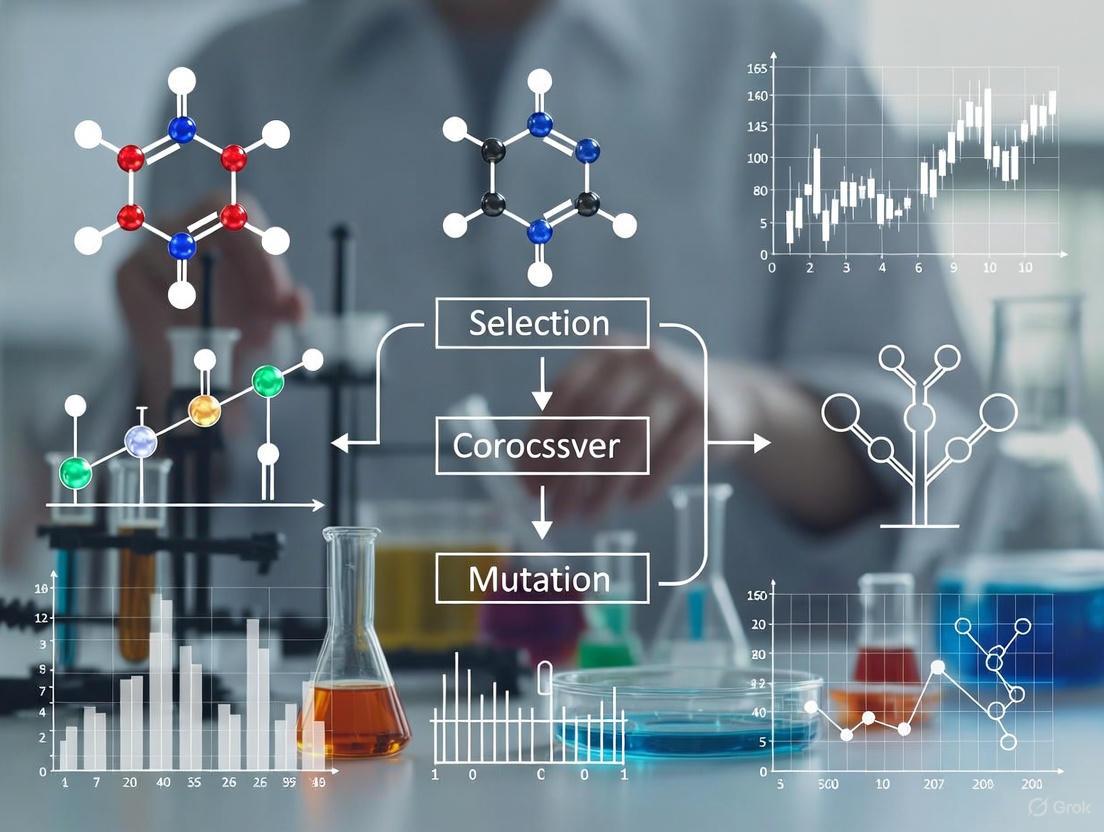
This article explores Paddy, a novel, biologically inspired evolutionary optimization algorithm specifically designed for complex chemical systems.
Paddy: The Evolutionary Optimization Algorithm Revolutionizing Chemical Discovery and Drug Development
Abstract
This article explores Paddy, a novel, biologically inspired evolutionary optimization algorithm specifically designed for complex chemical systems. Tailored for researchers and drug development professionals, it provides a comprehensive guide from foundational concepts to advanced applications. The content delves into Paddy's core methodology, inspired by plant propagation and density-based pollination, which enables efficient navigation of high-dimensional parameter spaces while avoiding local minima. It details practical implementation for cheminformatic tasks like hyperparameter tuning and targeted molecule generation, offers troubleshooting for parameter selection, and presents rigorous benchmarking against Bayesian and other evolutionary methods. The conclusion synthesizes Paddy's demonstrated advantages in robustness and runtime, forecasting its significant impact on accelerating automated experimentation and de novo drug design.
What is Paddy? Understanding the Next Generation of Evolutionary Optimization in Chemistry
The optimization of chemical systems and processes is a cornerstone of modern scientific research, pivotal to advancements in drug discovery, materials science, and industrial chemistry. These systems are characterized by immense complexity, presenting a formidable challenge for traditional optimization methods. Key challenges include:
- Vast Search Spaces: The number of possible organic molecules is immeasurably large; even an incomplete enumeration limited to 17 heavy atoms leads to over 160 billion compounds [1].
- Multimodal Objectives: Chemical optimization landscapes are often highly nonlinear and dotted with numerous local minima, causing algorithms to converge on suboptimal solutions [2] [3].
- Costly Evaluations: Determining properties often requires expensive experiments or computationally intensive simulations like Crystal Structure Prediction (CSP), which can require thousands of core-hours per molecule for comprehensive sampling [4].
- Conflicting Objectives: A solution must often balance a target property with other critical factors such as synthetic accessibility, stability, and toxicity [1].
Within this challenging context, evolutionary optimization algorithms have emerged as powerful tools. They are population-based metaheuristic optimization techniques inspired by biological evolution, using bio-inspired operators like mutation, crossover, and selection [5]. This document details the application of one such algorithm, Paddy, within chemical system optimization, providing experimental protocols and performance benchmarks.
The Paddy Algorithm: An Evolutionary Approach for Chemistry
Paddy is an open-source, biologically inspired evolutionary optimization algorithm implemented as a Python software package. It is specifically designed to navigate the complex, high-dimensional search spaces typical of chemical problems without directly inferring the underlying objective function. Its key characteristics include [2] [6]:
- Inspiration: Based on the Paddy Field Algorithm, which mimics natural evolutionary processes.
- Core Strength: Demonstrates innate resistance to early convergence and a strong ability to bypass local optima in search of global solutions.
- Versatility: It is a general-purpose optimizer capable of handling diverse tasks, from mathematical function optimization to direct chemical applications like molecule generation and experimental planning.
- Operation: As an evolutionary algorithm, it maintains a population of candidate solutions, which are iteratively improved through propagation and selection mechanisms.
Table 1: Key Features of the Paddy Algorithm
| Feature | Description | Benefit in Chemical Context |
|---|---|---|
| Objective-Free Propagation | Propagates parameters without direct inference of the objective function. | Effective for "black-box" problems where the functional form is unknown or complex. |
| Exploratory Sampling | Prioritizes broad exploration of the parameter space. | Identifies diverse, novel candidate molecules not limited to known chemical spaces. |
| Robust Versatility | Maintains strong performance across varied benchmark types. | A single, reliable tool for multiple optimization tasks (e.g., hyperparameter tuning, molecular design). |
| Open-Source Availability | Licensed under Creative Commons Attribution 3.0 Unported. | Accessible, facilitates reproducibility, and allows for community adaptation. |
The following diagram illustrates the high-level workflow of a typical evolutionary algorithm like Paddy in the context of chemical space exploration.
Benchmarking Paddy Against State-of-the-Art Algorithms
The performance of Paddy was rigorously benchmarked against several other optimization approaches representing diverse methodologies [2] [7]:
- Tree of Parzen Estimators (TPE): A Bayesian optimization method implemented in the Hyperopt library.
- Bayesian Optimization with Gaussian Process: Implemented via Meta's Ax framework.
- Population-Based Evolutionary Methods: From the EvoTorch library, including an evolutionary algorithm with Gaussian mutation and a genetic algorithm using both Gaussian mutation and single-point crossover.
Benchmarking tasks included global optimization of a bimodal distribution, interpolation of an irregular sinusoidal function, and several chemical-specific tasks.
Table 2: Performance Benchmarking of Paddy Against Other Algorithms
| Optimization Algorithm | Reported Performance and Characteristics |
|---|---|
| Paddy | Demonstrates robust versatility, maintaining strong performance across all benchmarks. Exhibits efficient optimization with lower runtime and avoids early convergence [2] [6]. |
| Tree of Parzen Estimators (TPE) | Outperformed by Paddy in terms of optimization efficiency and runtime in reported benchmarks [6]. |
| Bayesian Optimization (Gaussian Process) | Represents a powerful alternative, but performance can vary across different problem types compared to Paddy's consistent robustness [2]. |
| Evolutionary Algorithm (Gaussian Mutation) | As a population-based method, it shares some strengths with Paddy, but Paddy demonstrated superior overall performance in the tested chemical tasks [2]. |
| Genetic Algorithm (Gaussian Mutation & Crossover) | Performance varies; Paddy was shown to maintain a competitive edge in the cited studies [2]. |
Paddy's consistent performance across diverse problems highlights its value as a reliable and versatile tool for chemical optimization, where the nature of the objective function can vary significantly.
Application Notes and Experimental Protocols
Application Note 1: Targeted Molecule Generation
Objective: To discover novel molecules that maximize or minimize a specific molecular property (e.g., lipophilicity, synthetic accessibility score, or target binding affinity) [2] [8].
Background: Inverse molecular design flips the traditional discovery process by first defining desired properties and then searching for candidate molecules. This is efficient for exploring vast chemical spaces that are intractable for exhaustive search [8].
Experimental Protocol:
- Define the Objective Function: Formulate a function
f(molecule)that returns a numerical score for the property of interest. This can be a computational predictor (e.g., a QSAR model, a neural network) or an experimental output. - Initialize the Population:
- Configure Paddy Parameters:
- Set evolutionary parameters such as the number of generations, mutation and crossover rates, and selection pressure.
- The algorithm is run for a predetermined number of generations or until convergence (i.e., no significant improvement in the best fitness is observed over several generations).
- Run the Optimization:
- Paddy will iteratively propose new molecules by applying evolutionary operations (mutation, crossover) to the current population.
- The objective function is evaluated for each new candidate.
- The population is updated by selecting the fittest individuals from the combined pool of parents and offspring.
- Output and Validation:
- The algorithm returns the top-performing molecule(s) from the final population.
- These candidates should be validated through synthesis and experimental testing where possible.
Application Note 2: Hyperparameter Optimization for Machine Learning Models
Objective: To find the optimal hyperparameters of an artificial neural network (ANN) or other machine learning models used in chemical applications (e.g., solvent classification, spectral prediction) [2].
Background: The performance of ML models in cheminformatics is highly sensitive to hyperparameters. Manual tuning is inefficient, and automated optimization can significantly enhance model accuracy.
Experimental Protocol:
- Define the Search Space: Identify the hyperparameters to optimize (e.g., learning rate, number of hidden layers, dropout rate) and their feasible ranges (e.g., learning rate between 0.0001 and 0.1 on a log scale).
- Define the Objective Function: The objective function is the performance metric of the ML model (e.g., accuracy, F1-score, or mean squared error) on a held-out validation set.
- Initialize Paddy: The population consists of random sets of hyperparameters within the defined search space.
- Run the Optimization Loop:
- For each set of hyperparameters proposed by Paddy, train the ML model on the training data and evaluate it on the validation set.
- The validation performance is fed back to Paddy as the fitness score.
- Paddy uses this information to evolve the population towards better hyperparameter configurations.
- Final Model Training: Once the optimization is complete, train the final model using the best-found hyperparameters on the combined training and validation data, and evaluate its performance on a separate test set.
Table 3: Key Software Tools and Resources for Evolutionary Optimization in Chemistry
| Tool/Resource | Function in Research |
|---|---|
| Paddy Software Package | The core evolutionary optimization algorithm for proposing experiments and optimizing parameters [2]. |
| RDKit | An open-source cheminformatics toolkit used for handling molecules, calculating fingerprints, and checking chemical validity [8] [1]. |
| SMILES Representation | A line notation for representing molecular structures as text, enabling string-based operations like mutation and crossover [8]. |
| Python Programming Language | The primary environment for implementing optimization workflows, leveraging libraries like Paddy, RDKit, and machine learning frameworks. |
| High-Performance Computing (HPC) Cluster | Essential for running computationally expensive evaluations, such as Crystal Structure Prediction (CSP) or high-fidelity property simulations [4]. |
Workflow Visualization: CSP-Informed Evolutionary Optimization
The integration of Crystal Structure Prediction into an evolutionary algorithm represents a state-of-the-art approach for materials discovery, as it accounts for the critical influence of crystal packing on material properties [4]. The following diagram details this workflow.
Key Considerations for this Protocol:
- CSP Sampling Efficiency: Comprehensive CSP is computationally prohibitive for thousands of molecules. Reduced sampling schemes are used, focusing on the most common space groups (e.g., targeting 5-10 space groups with 500-2000 structures each) to recover >70% of low-energy crystal structures at a fraction of the cost [4].
- Fitness Evaluation: A molecule's fitness can be based on the property of its single most stable predicted crystal structure or a landscape-averaged property.
- Outcome: This method has been shown to identify molecules with significantly higher predicted charge carrier mobilities compared to optimizations based on molecular properties alone [4].
The profound complexity of chemical systems, characterized by vast search spaces, rugged optimization landscapes, and costly evaluations, necessitates robust and advanced optimization algorithms. The Paddy evolutionary algorithm presents a powerful solution, demonstrating consistent performance, resistance to local optima, and versatility across a range of chemical tasks. When integrated into sophisticated workflows—such as those incorporating crystal structure prediction—these evolutionary methods enable the efficient discovery of novel molecules and materials with targeted properties, directly addressing the core challenge of complexity in chemical research.
The Paddy Field Algorithm (PFA) is a biologically-inspired evolutionary optimization method that mimics the propagation of paddy rice seeds in a field. Developed as part of the Paddy software package, this algorithm is designed to efficiently navigate complex parameter spaces without directly inferring the underlying objective function, making it particularly suitable for optimizing chemical systems and processes [2] [6]. The algorithm's biological metaphor stems from the natural process where seeds spread from parent plants to find optimal growing locations, thus progressively populating the most fertile areas of the field over successive generations [9].
Unlike traditional optimization approaches that often require extensive experimentation to model variable-outcome relationships, Paddy employs a population-based stochastic approach that maintains robust performance across diverse optimization landscapes [2] [7]. This method demonstrates particular strength in avoiding premature convergence on local minima, a critical advantage when exploring high-dimensional chemical spaces where unsatisfactory local solutions abound [6]. The algorithm's versatile performance across mathematical optimization, hyperparameter tuning, and targeted molecule generation has established it as a valuable tool for automated experimentation in chemical research [2] [7] [6].
Biological Metaphor and Computational Mechanism
Inspiration from Paddy Field Ecosystems
The Paddy Field Algorithm draws its core mechanics from the reproductive behavior of rice plants in a paddy field ecosystem. In nature, paddy plants produce seeds that fall and spread around the parent plant, with some seeds landing in more favorable positions for growth and reproduction than others [9]. Over multiple growing seasons, this natural selection process results in the gradual colonization of the most fertile areas of the field, with plant distribution evolving toward optimal utilization of available resources.
Algorithmic Framework
Computationally, this biological metaphor translates into an evolutionary optimization framework where candidate solutions are represented as seeds in a parameter space. The algorithm operates through iterative generations, with each candidate's position representing a point in the search space, and its performance evaluated through a fitness function [2]. The propagation mechanism ensures that parameters are advanced without direct inference of the underlying objective function, prioritizing exploratory sampling while maintaining innate resistance to early convergence [7].
The table below outlines the core components of the Paddy Field Algorithm and their biological counterparts:
Table 1: Biological Metaphors in the Paddy Field Algorithm
| Biological Component | Algorithmic Equivalent | Function in Optimization |
|---|---|---|
| Paddy field | Parameter space | Defines the search domain for possible solutions |
| Rice seeds | Candidate solutions | Represent individual parameter sets to be evaluated |
| Fertile soil | High-fitness regions | Areas of parameter space yielding better objective function values |
| Seed dispersal | Propagation mechanism | Spreads candidates across parameter space to explore new regions |
| Growing seasons | Generations | Iterative cycles of evaluation and selection |
| Plant growth | Fitness evaluation | Assessment of solution quality against objective function |
Workflow Visualization
The following diagram illustrates the complete workflow of the Paddy Field Algorithm, showing the iterative process from initialization to final optimization result:
Benchmarking Paddy Against Alternative Optimization Methods
Performance Comparison Across Algorithm Types
The Paddy algorithm has been systematically evaluated against several established optimization approaches, representing diverse methodological families [2] [7]. Benchmarking experiments assessed performance across mathematical and chemical optimization tasks, including bimodal distribution optimization, irregular sinusoidal function interpolation, neural network hyperparameter tuning, and targeted molecule generation [2].
Table 2: Algorithm Performance Comparison in Chemical Optimization Tasks
| Algorithm | Classification | Convergence Speed | Local Minima Avoidance | Runtime Efficiency | Chemical Application Versatility |
|---|---|---|---|---|---|
| Paddy Field Algorithm | Evolutionary / Bio-inspired | Medium-High | High | High | High |
| Tree-structured Parzen Estimator (Hyperopt) | Bayesian / Sequential Model-Based | Medium | Medium | Medium | Medium |
| Bayesian Optimization (Gaussian Process) | Bayesian / Probabilistic | Medium-High | Medium | Medium-Low | Medium |
| Evolutionary Algorithm (Gaussian Mutation) | Evolutionary / Population-Based | Medium | Medium-High | Medium | Medium |
| Genetic Algorithm (Gaussian Mutation + Crossover) | Evolutionary / Population-Based | Medium | Medium | Medium | Medium-High |
Chemical-Specific Benchmarking Results
In chemical system optimization, Paddy demonstrates particular advantages in exploratory sampling and experimental planning. When applied to hyperparameter optimization of artificial neural networks for solvent classification and targeted molecule generation through decoder network optimization, Paddy maintained robust versatility across all benchmarks compared to other algorithms with more variable performance [2] [7].
The algorithm's efficient optimization with lower runtime requirements, coupled with its consistent avoidance of early convergence, positions it as a particularly effective approach for chemical system optimization where experimental resources are limited and comprehensive search spaces are large [6]. This performance advantage stems from Paddy's balance between exploration and exploitation, allowing it to efficiently navigate high-dimensional parameter spaces characteristic of chemical optimization problems without becoming trapped in suboptimal regions [2].
Application Notes for Chemical System Optimization
Implementation Protocol for Chemical Space Exploration
Objective: To optimize chemical reaction parameters or molecular structures for a target property using the Paddy Field Algorithm.
Materials and Software Requirements:
- Paddy software package (Python implementation)
- Chemical descriptor calculation software (RDKit, OpenBabel, or custom)
- Objective function implementation (experimental data or computational model)
- Computational environment with sufficient memory/processing for population evaluation
Procedure:
Parameter Space Definition:
- Identify critical variables influencing the chemical outcome (e.g., temperature, concentration, molecular descriptors)
- Define feasible ranges for each parameter based on chemical constraints or synthetic accessibility
- For discrete chemical spaces (e.g., molecular libraries), encode structures as manageable parameter representations
Objective Function Formulation:
- Establish a quantitative fitness metric (e.g., reaction yield, binding affinity, specific property value)
- Implement computational proxies for experimental measurements where appropriate
- Define constraint handling for chemically invalid or synthetically inaccessible regions
Algorithm Configuration:
- Set population size based on parameter space dimensionality (typically 50-200 individuals)
- Configure propagation parameters to balance exploration vs. exploitation
- Define convergence criteria based on fitness improvement thresholds or maximum evaluations
Optimization Execution:
- Initialize population with random or knowledge-informed parameter sets
- Iterate through generations of evaluation, selection, and propagation
- Monitor convergence and diversity metrics to ensure effective space exploration
Result Validation:
- Select top-performing parameter sets for experimental or computational validation
- Analyze parameter distributions to identify influential variables and optimal ranges
- Perform sensitivity analysis on top solutions to assess robustness
Troubleshooting:
- If convergence is too rapid, increase population size or adjust propagation parameters to enhance exploration
- For slow convergence, consider hybrid approaches incorporating local search around promising candidates
- When handling noisy experimental data, implement fitness averaging or statistical evaluation methods
Case Study: Molecular Optimization with Paddy
In targeted molecule generation, Paddy has been successfully applied to optimize input vectors for decoder networks, effectively navigating complex chemical spaces to propose structures with enhanced properties [2]. The algorithm demonstrated particular strength in maintaining structural diversity while progressively improving target properties, avoiding the common pitfall of early convergence to suboptimal structural motifs.
The implementation followed a protocol where molecular structures were encoded as continuous representations, with Paddy optimizing these representations to maximize predicted activity or properties. This approach yielded improved exploration efficiency compared to Bayesian optimization methods, discovering high-quality candidates with fewer evaluations [6].
Essential Research Reagent Solutions
The successful application of evolutionary optimization algorithms like Paddy in chemical research requires both computational tools and experimental resources. The following table outlines key research reagents and their functions in algorithm-driven chemical exploration:
Table 3: Essential Research Reagents and Computational Tools for Evolutionary Chemical Optimization
| Reagent/Tool | Function | Application Example | Implementation Notes |
|---|---|---|---|
| Paddy Software Package | Evolutionary optimization engine | Chemical parameter space navigation | Open-source Python implementation [2] |
| Chemical Descriptor Libraries | Molecular structure representation | Converting chemical structures to optimizable parameters | RDKit, OpenBabel, or custom implementations |
| Make-on-Demand Compound Libraries | Source of synthetically accessible molecules | Ultra-large library screening for drug discovery | Enamine REAL Space (20B+ compounds) [10] |
| Docking Software (RosettaLigand) | Structure-based molecular evaluation | Protein-ligand interaction scoring with full flexibility [10] | Requires substantial computational resources |
| Neural Network Architectures | Chemical pattern recognition | Solvent classification, molecular property prediction [2] | Hyperparameter optimization with Paddy |
| Automated Experimentation Platforms | High-throughput experimental validation | Rapid iteration between prediction and experimental verification | Integration with optimization algorithms |
Advanced Protocol: Integrating Paddy with Structural Drug Design
REvoLd-Inspired Protocol for Protein-Ligand Interaction Optimization
Objective: To optimize ligand structures for enhanced protein binding affinity using an evolutionary approach compatible with Paddy's principles.
Background: The REvoLd (RosettaEvolutionaryLigand) protocol demonstrates the effective application of evolutionary algorithms to ultra-large library screening, showing improvements in hit rates by factors between 869 and 1622 compared to random selections [10]. This protocol adapts those principles for use with the Paddy algorithm.
Procedure:
Chemical Space Definition:
- Utilize make-on-demand library specifications (e.g., Enamine REAL Space) comprising lists of substrates and chemical reactions [10]
- Encode combinatorial chemistry rules directly into the representation space
- Define synthetic accessibility constraints to ensure practical relevance
Fitness Evaluation:
- Implement flexible docking protocols (e.g., RosettaLigand) that account for both ligand and receptor flexibility [10]
- Establish scoring functions that balance binding affinity with drug-like properties
- Consider multi-objective optimization for balancing conflicting properties (e.g., potency vs. solubility)
Evolutionary Operators:
- Design mutation operators that respect chemical feasibility (e.g., fragment swapping with compatible chemistry)
- Implement crossover mechanisms that recombine promising structural motifs
- Incorporate diversity-maintenance techniques to avoid premature convergence
Algorithmic Parameters:
- Population size: 200 individuals (balanced diversity and computational cost) [10]
- Generations: 30+ (sufficient for convergence while maintaining exploration)
- Selection pressure: Balanced to maintain diversity while emphasizing high-fitness individuals
Validation and Iteration:
- Select top candidates for synthetic validation
- Use experimental results to refine scoring functions in iterative cycles
- Apply multi-run strategies to explore diverse structural scaffolds
The workflow for this advanced protocol can be visualized as follows:
The Paddy Field Algorithm represents a significant advancement in evolutionary optimization for chemical systems, demonstrating robust performance across diverse optimization scenarios from mathematical functions to complex chemical spaces. Its biological inspiration from paddy field ecosystems provides an effective framework for balancing exploration and exploitation in high-dimensional parameter spaces.
For chemical researchers and drug development professionals, Paddy offers a versatile optimization toolkit with particular strengths in avoiding premature convergence and efficiently navigating complex chemical landscapes. When integrated with experimental design and validation, as demonstrated in the protocols outlined herein, this approach accelerates the discovery and optimization of functional molecules and reaction conditions.
The continued development and application of biologically-inspired algorithms like Paddy promise to enhance our ability to navigate increasingly complex chemical spaces, ultimately accelerating the discovery and optimization of molecules and materials with tailored properties.
The Paddy field algorithm (PFA) is a biologically inspired evolutionary optimization algorithm implemented in the Python-based Paddy software package. It is specifically designed for optimizing chemical systems and processes where the underlying functional relationship between parameters and outcomes is complex or unknown. Unlike Bayesian methods that construct a probabilistic model of the objective function, Paddy operates without direct inference of the objective function, making it particularly valuable for chemical optimization tasks where building accurate models is challenging. The algorithm mimics the reproductive behavior of plants in a paddy field, where propagation success depends on both individual plant fitness and population density, creating a unique mechanism for navigating parameter spaces while avoiding premature convergence on local optima [11] [2].
This approach demonstrates robust versatility across diverse optimization benchmarks, including mathematical function optimization, hyperparameter tuning of artificial neural networks for chemical classification tasks, targeted molecule generation using decoder networks, and optimal experimental planning. Comparative benchmarks show that Paddy maintains strong performance across all optimization tasks compared to other approaches like Tree-structured Parzen Estimators, Bayesian optimization with Gaussian processes, and other population-based methods, often with markedly lower computational runtime [11].
Core Operational Principles
The Five-Phase Propagation Mechanism
Paddy's approach to solution propagation without objective function inference revolves around a five-phase process that draws inspiration from biological plant reproduction:
Phase 1: Sowing - The algorithm initializes with a random set of user-defined parameters (seeds) that serve as starting points for evaluation. The exhaustiveness of this initial step significantly influences downstream propagation processes, with larger initial sets providing stronger starting points at the cost of computational resources [11].
Phase 2: Selection - The fitness function y = f(x) is evaluated for the seed parameters, effectively converting seeds to plants. A user-defined threshold parameter (H) defines the selection operator that identifies promising plants based on sorted evaluation scores (yH) from current and previous iterations according to the function: H[y] = H[f(x)] = f(xH) = yH = {yt, …, ymax} ∀ xH ∈ x, yH ∈ y [11].
Phase 3: Seeding - Selected plants (y* ∈ yH) produce potential seeds (s) as a fraction of a user-defined maximum (smax) based on min-max normalized fitness values: s = smax([y* − yt]/[ymax − yt]) ∀ y* ∈ yH. This calculation determines the number of seeds each selected plant generates for propagation [11].
Phase 4: Pollination - Unique to Paddy, this phase incorporates density-based reinforcement where solution vectors in denser regions produce more offspring. The pollination factor derived from solution density distinguishes Paddy from niching-based genetic algorithms by allowing single parent vectors to produce multiple children via Gaussian mutations based on both relative fitness and local population density [11].
Phase 5: Propagation - Parameter values (x* ∈ x) for selected plants are modified by sampling from Gaussian distributions, creating new candidate solutions for the next iteration. This completes one full cycle of the evolutionary process [11].
Key Differentiators from Conventional Optimization Approaches
Paddy employs several distinctive mechanisms that enable effective optimization without objective function inference:
Density-Mediated Reproduction: Unlike traditional evolutionary algorithms that rely primarily on fitness scores for selection, Paddy incorporates population density as a key factor in reproduction decisions. This approach allows the algorithm to explore promising regions of the parameter space more thoroughly while maintaining diversity [11].
Threshold-Based Selection with Memory: The selection operator can incorporate evaluations from previous iterations, allowing the algorithm to retain and build upon historically successful solutions rather than relying solely on the current population [11].
Stochastic Exploration with Guided Intensity: The number of offspring generated by successful solutions is proportional to their normalized fitness, directing computational resources toward more promising regions of the search space without requiring explicit modeling of the objective function landscape [11].
Density-Aware Pollination: The pollination factor enables a single parent vector to produce multiple children through Gaussian mutations based on both fitness relative to the threshold and the density of successful solutions in its neighborhood [11].
Table 1: Comparison of Paddy with Other Optimization Approaches
| Algorithm | Objective Function Inference | Key Selection Mechanism | Exploration Strategy | Primary Applications in Chemistry |
|---|---|---|---|---|
| Paddy | No direct inference | Fitness + density | Density-mediated pollination | Chemical system optimization, molecular generation, experimental planning |
| Bayesian Optimization | Explicit probabilistic model | Acquisition function | Uncertainty sampling | Hyperparameter tuning, reaction optimization |
| Genetic Algorithms | No direct inference | Fitness-based | Crossover + mutation | Molecular design, parameter optimization |
| TPE (Hyperopt) | Tree-structured Parzen estimator | Expected improvement | Division of config. space | Neural network optimization, chemical pattern recognition |
Paddy Propagation Workflow
The following diagram illustrates Paddy's complete five-phase propagation workflow:
Chemical System Optimization Protocol
Experimental Setup for Chemical Optimization
This protocol details the application of Paddy for optimizing chemical reaction conditions, suitable for scenarios such as maximizing yield, improving selectivity, or optimizing process parameters.
Table 2: Research Reagent Solutions for Paddy Chemical Optimization
| Reagent/Material | Specification | Function in Optimization | Usage Considerations |
|---|---|---|---|
| Paddy Python Package | Version 1.0+ | Core optimization algorithm | Available via GitHub/PyPI; requires Python 3.7+ |
| Parameter Bounds Definition | Min/max values for each variable | Defines chemical search space | Based on chemical feasibility and safety |
| Fitness Function | Python-callable function | Quantifies optimization objective | Must return continuous numerical score |
| Initial Population Size | User-defined (default: 50-200) | Starting points for optimization | Larger values improve exploration but increase cost |
| Threshold Parameter (H) | Top 20-40% of population | Selection pressure control | Balances exploitation and exploration |
| Maximum Seeds (smax) | User-defined (default: 5-20) | Controls offspring production | Higher values intensify search around fit solutions |
Step-by-Step Implementation
Problem Formulation
- Define the parameter space for the chemical system including continuous variables (temperature, concentration, time) and discrete variables (catalyst type, solvent selection)
- Establish parameter bounds based on chemical feasibility, safety constraints, and practical limitations
- Implement the fitness function that quantitatively assesses performance based on experimental outcomes (yield, purity, efficiency)
Paddy Initialization
- Install Paddy package:
pip install paddy-optimizer - Import necessary modules:
from paddy import PaddyOptimizer - Set initial parameters including population size (typically 50-200), threshold H (20-40%), and maximum seeds smax (5-20)
- Define parameter bounds and types (continuous or categorical)
- Install Paddy package:
Algorithm Execution
- Initialize Paddy optimizer with defined parameters
- Run optimization for specified iterations or until convergence criteria met
- Implement early stopping if fitness plateaus for consecutive generations
- Monitor population diversity to prevent premature convergence
Result Analysis
- Extract top-performing parameter combinations
- Analyze parameter distributions in final population for insights
- Validate optimal conditions with experimental confirmation
- Perform sensitivity analysis on critical parameters
Performance Benchmarks
Table 3: Quantitative Performance Comparison of Optimization Algorithms
| Algorithm | 2D Bimodal Optimization Success Rate | Irregular Sinusoidal Interpolation Error | Neural Network Hyperparameter Optimization Accuracy | Average Runtime (Relative Units) |
|---|---|---|---|---|
| Paddy | 98.5% | 0.023 | 97.06% | 1.00 |
| Bayesian Optimization (Gaussian Process) | 95.2% | 0.031 | 94.52% | 3.45 |
| Tree-structured Parzen Estimator | 92.7% | 0.035 | 93.18% | 2.87 |
| Evolutionary Algorithm (Gaussian Mutation) | 96.8% | 0.028 | 95.73% | 1.52 |
| Genetic Algorithm (Crossover + Mutation) | 97.1% | 0.026 | 96.14% | 1.78 |
Advanced Applications in Chemical Research
Targeted Molecular Generation
Paddy demonstrates particular effectiveness in optimizing input vectors for decoder networks in targeted molecule generation. The algorithm efficiently explores the latent chemical space to identify structures with desired properties:
The process involves Paddy manipulating latent representations in a continuous vector space, which the decoder network transforms into molecular structures. Fitness evaluation based on target properties guides the optimization toward regions of chemical space with higher probabilities of containing molecules with desired characteristics [11].
Experimental Planning in Discrete Spaces
For discrete experimental spaces common in chemical research, Paddy has been adapted to efficiently sample and propose optimal experimental sequences:
- Space Definition: Map discrete experimental options (catalyst choices, solvent systems, reagent combinations) to a searchable parameter space
- Constraint Incorporation: Implement chemical feasibility constraints through the fitness function
- Sequential Proposal: Use Paddy's propagation mechanism to propose experiment sequences that balance exploration of new conditions with exploitation of promising areas
- Closed-Loop Integration: Incorporate experimental results in real-time to refine subsequent proposals
This approach has demonstrated particular value in optimizing reaction conditions for complex chemical transformations where traditional one-variable-at-a-time approaches are inefficient or impractical [11] [12].
Technical Implementation Guidelines
Parameter Tuning Strategies
Successful application of Paddy requires appropriate parameter selection based on problem characteristics:
- Population Size: Larger populations (100-200) for high-dimensional problems or rugged fitness landscapes; smaller populations (50-100) for smoother landscapes or lower dimensions
- Threshold H: Values between 20-40% typically provide optimal balance between selection pressure and population diversity
- Maximum Seeds (smax): Higher values (10-20) for intensification around promising solutions; lower values (5-10) for broader exploration
- Convergence Criteria: Implement multiple criteria including generation count, fitness plateau detection, and population diversity metrics
Integration with Chemical Workflows
Paddy can be integrated into automated chemical experimentation systems through:
- API Development: Create interfaces between Paddy and laboratory instrumentation control software
- Fitness Function Automation: Implement automated analysis pipelines that quantify experimental outcomes for direct input to Paddy
- Result Tracking: Maintain comprehensive records of proposed and evaluated parameters for reproducibility and analysis
- Constraint Handling: Incorporate chemical feasibility constraints directly within the parameter modification steps
The algorithm's efficiency in proposing promising experiments without requiring exhaustive sampling of the parameter space makes it particularly valuable for resource-intensive chemical experiments where traditional high-throughput approaches are impractical [11] [12].
Paddy's unique combination of fitness-based selection and density-mediated propagation provides an effective approach for navigating complex chemical optimization landscapes without the computational overhead of objective function inference, offering particular advantages for problems with computationally expensive evaluations or where the underlying functional relationships are poorly understood.
The cultivation of rice (Oryza sativa L.), a cornerstone of global food security, can be conceptualized as a robust five-phase biological process. This process, comprising sowing, selection, seeding, pollination, and harvesting, presents a natural analog to computational evolutionary optimization algorithms. In such algorithms, a population of potential solutions undergoes iterative selection, recombination, and mutation to converge toward an optimal solution for a given problem. Similarly, in paddy fields, each plant represents a trial solution, with its genetic makeup and phenotypic expression determining its fitness for survival and reproduction under environmental constraints. Framing agricultural practices within this computational paradigm allows researchers to systematically analyze and enhance each phase of cultivation. This document provides detailed Application Notes and Protocols that reframe established agronomic procedures through the lens of evolutionary optimization, aiming to create more efficient, resilient, and high-yielding rice production systems for chemical and biological research applications.
Experimental Protocols & Application Notes
Phase 1: Sowing – Genotype to Environment Mapping
The sowing phase establishes the initial population of rice genotypes, setting the stage for all subsequent evolutionary pressure. The protocol focuses on precision and creating optimal starting conditions.
Protocol 1.1:秧盘育秧 (Seedling Tray Nursery) Establishment [13]
- Objective: To generate a uniform, healthy, and genetically diverse initial population of rice seedlings, minimizing external contamination and maximizing survival fitness.
- Materials: See Table 1 for key reagents and materials.
- Methodology:
- Nutritional Substrate Preparation: Prepare a nutrient-fortified substrate. Combine 100 kg of sieved, loose garden soil (particle size ≤ 5 mm) with either:
- Option A: 600-675 g of a commercial rice seedling strengthening agent.
- Option B: 100-130 g ammonium sulfate, 100-180 g superphosphate, and 40-100 g potassium chloride.
- Substrate Sanitization: To prevent seedling disease (e.g., damping-off), sanitize the substrate 7 days prior to sowing. Apply 40-60 g of Dexon (or equivalent) in a 100-fold dilution per 1000 kg of substrate, then cover with plastic film to mature.
- Sowing: Fill large, hexagonal, 561-cell seedling trays to 2/3 depth with the prepared substrate. Sow a single seed from a chosen rice accession per cell. For genetic diversity, maintain clear identity of each seed's source.
- Incubation: Cover seeds with a thin layer of substrate, place trays tightly together on a prepared seedling bed, and cover with non-woven fabric to maintain humidity and temperature.
- Nutritional Substrate Preparation: Prepare a nutrient-fortified substrate. Combine 100 kg of sieved, loose garden soil (particle size ≤ 5 mm) with either:
Diagram 1: Sowing Phase as Initial Population Generation
Phase 2: Selection – High-Pressure Fitness Screening
This phase mirrors the selection operator in evolutionary algorithms, where environmental pressures and breeder intervention select the fittest individuals based on predefined criteria.
Protocol 2.1: 穗行圃 (Panicle Row Nursery) Selection [13]
- Objective: To conduct high-fidelity phenotypic screening of individual rice panicles, selecting for desired traits and eliminating genetic outliers or low-fitness individuals.
- Materials: See Table 1.
- Methodology:
- Population Establishment: Transplant seedlings from Protocol 1.1 using a "拉线定点" (string-guided fixed-point) method. Each row from the seedling tray becomes a distinct row in the field (25 cm row spacing, 13 cm hill spacing), preserving genetic identity.
- Phenotypic Monitoring: From tillering to maturity, meticulously record key fitness traits for each row:
- Vegetative Stage: Tillering ability, plant type (tight, intermediate, loose), leaf posture (erect, medium, drooping), leaf color (dark green, green, light green).
- Reproductive Stage: Panicle type (straight, semi-straight, spreading), grain shape (slender, elliptical, semi-spindle, round).
- Temporal Traits: Heading date, maturity date. Selections must be within ±2 days of the reference variety.
- Health & Yield: Disease/pest incidence, seed setting rate (≤3% difference from reference).
- Selection Decision: Mark rows exhibiting undesirable variation for elimination. Select 20-30 elite rows that best match the target phenotype for further propagation.
Protocol 2.2: Image-Based Phenotypic Selection Using Color Indices [14]
- Objective: To quantitatively assess and select for canopy health and coverage using digital image analysis, a non-destructive high-throughput fitness function.
- Materials: Digital camera, image processing software (e.g., Python with OpenCV).
- Methodology:
- Image Acquisition: Capture rice canopy images under consistent, stable light conditions (e.g., solar noon). Standardize camera height (e.g., ~1.0 m) and angle (e.g., 60°).
- Image Segmentation: Process images using optimized color indices to separate green vegetation (rice) from background (soil, water). The most effective indices for rice segmentation, as determined by high Correct Classification Rate (CCR), include:
- AB (CCR: 95-97%)
- COM2 (CCR: 95-97%)
- CIVE (CCR: 95-97%)
- MExG (CCR: 95-97%)
- Fitness Calculation: Calculate segmentation accuracy metrics (CCR, Misclassification Rate) to quantitatively evaluate canopy development and health, informing selection decisions.
Table 1: Key Research Reagent Solutions & Essential Materials
| Item Name | Functional Category | Brief Explanation of Function |
|---|---|---|
| Large Hexagonal Seedling Tray (561-cell) | Growth Substrate | Provides individual, low-competition environments for initial seedling growth, enabling clear genotype-to-phenotype mapping and reducing root entanglement. |
| Fortified Nutritional Substrate | Growth Substrate | A controlled medium providing essential macro/micronutrients (N, P, K) for optimal early fitness development, analogous to a standardized chemical growth medium in lab studies. |
| Dexon (Fungicide) | Sanitizing Agent | Protects the initial population from soil-borne pathogens (e.g., damping-off), reducing noise from non-genetic fitness loss and ensuring selection is based on true genetic potential. |
| Color Indices (e.g., AB, COM2) | Analytical Tool | Algorithmic filters for digital image analysis that enhance specific color signatures of healthy vegetation, enabling high-throughput, quantitative phenotypic screening. |
Phase 3: Seeding & Phase 4: Pollination – Population Recombination
The seeding and pollination phases represent the recombination and mutation operators in an evolutionary algorithm. Seeding re-establishes the selected population, while pollination facilitates genetic exchange.
Protocol 3.1: 穗系圃 (Panicle Strain Nursery) Establishment [13]
- Objective: To reconstitute the selected elite genotypes (from Phase 2) into a larger population for evaluation and to allow for controlled genetic recombination (pollination).
- Methodology: Each selected panicle row is advanced to become a "strain." Using the same tray nursery method, each strain is grown in a dedicated plot (e.g., ~180 trays per strain). This replicates the selected population at a larger scale for more robust evaluation and seed production.
Diagram 2: Selection & Recombination Workflow
Phase 5: Harvesting – Fitness-Proportionate Selection & Algorithm Termination
Harvesting is the final fitness-proportionate selection event, terminating the annual cycle. Only the seeds from the most fit, true-to-type plants are collected, forming the foundation for the next generation's initial population.
Protocol 5.1: Precision Harvest for 原种 (Breeder's Seed) [13]
- Objective: To collect the final, optimized genetic material based on the cumulative fitness evaluated throughout the growth cycle.
- Methodology:
- Pre-Harvest Roguing: Prior to harvest, meticulously remove any remaining off-type, diseased, or weak plants from the seed production field.
- Harvest: Harvest the remaining, homogeneous crop. This seed stock has undergone multiple rounds of selection (Panicle Row -> Panicle Strain -> Seed Production Field).
- Quality Control (Fitness Validation): Process and test the harvested seeds to meet strict standards:
- Purity: ≥ 99.99% (genetic fitness)
- Moisture Content: ≤ 14.5% (storage fitness)
- Germination Rate: ≥ 85% (viability fitness)
Table 2: Performance Metrics of Selection Methodologies in Rice Cultivation
| Methodology | Key Metric | Performance Value | Application Context in Evolutionary Optimization |
|---|---|---|---|
| Color Index Segmentation [14] | Correct Classification Rate (CCR) | 95% - 97% | Fitness Function: Quantifies canopy coverage and health for automated, high-throughput selection. |
| Color Index Segmentation [14] | 水稻漏分率 (Rice Omission Rate) | < 5% | Selection Error: Minimizes failure to select a fit individual (False Negative). |
| Color Index Segmentation [14] | 背景错分率 (Background Misclassification Rate) | < 5% | Selection Error: Minimizes incorrect selection of an unfit individual (False Positive). |
| Phenotypic Panicle Selection [13] | Tolerance for Heading Date | ± 2 days | Selection Pressure: Constraint for temporal fitness, ensuring maturity matches the target environment. |
| Phenotypic Panicle Selection [13] | Tolerance for Seed Setting Rate | ≤ 3% difference | Selection Pressure: Constraint for reproductive fitness, ensuring high yield potential. |
| Advanced ML Disease Prediction [15] | Overall Prediction Accuracy | 97% | Fitness Prediction: A predictive model (e.g., CNN) used as a surrogate fitness function to anticipate disease resistance. |
| Advanced ML Disease Prediction [15] | Matthews Correlation Coefficient (MCC) | 0.99 | Selection Confidence: Measures the overall quality of the binary classification (healthy/diseased), indicating robust selection. |
Integration with Evolutionary Optimization Algorithms for Chemical Systems
The five-phase agricultural process provides a tangible framework for developing and testing evolutionary optimization algorithms for chemical system research, such as optimizing reaction conditions or formulating nutrient solutions.
- Representation: A candidate solution in a chemical system (e.g., a specific set of concentrations, pH, temperature) is analogous to a rice genotype.
- Initialization (Sowing): The algorithm is initialized with a diverse population of candidate solutions, mirroring the sowing of diverse seeds.
- Evaluation (Selection): Each candidate solution is evaluated by a fitness function (e.g., reaction yield, nutrient uptake efficiency). This is directly analogous to the phenotypic and image-based selection in the paddy field. The quantitative metrics in Table 2 can inspire the design of robust fitness functions.
- Variation (Pollination/Seeding): Selected candidate solutions are "recombined" and "mutated" to generate new offspring solutions for the next generation, mimicking genetic exchange during pollination.
- Termination (Harvesting): The algorithm terminates when an optimal solution is found or after a fixed number of generations, with the best solutions being "harvested" as the final result.
The rigorous, step-wise protocols for rice cultivation provide a biological validation of this computational cycle, demonstrating how iterative selection and recombination drive a population toward an optimized state.
The optimization of complex chemical systems, a cornerstone in fields like drug development and materials science, increasingly relies on sophisticated algorithms to navigate high-dimensional parameter spaces efficiently. Among the available techniques, evolutionary algorithms (EAs)—a class of population-based optimization methods inspired by biological evolution—have demonstrated significant utility. This family includes several distinct members, most notably Genetic Algorithms (GAs) and Evolution Strategies (ESs) [16] [17]. Recently, the Paddy field algorithm (PFA), implemented in the open-source Paddy Python package, has been introduced as a new type of evolutionary optimizer specifically benchmarked for chemical problems [2] [11] [18]. Its development addresses the critical need for algorithms that efficiently propose experiments while effectively sampling parameter space to avoid premature convergence on local minima [2]. This application note details Paddy's operational principles, provides a structured comparison with established evolutionary algorithms, and offers explicit protocols for its application in chemical research, particularly for drug development professionals.
Algorithmic Fundamentals and Comparative Analysis
Understanding the mechanistic differences between evolutionary algorithms is crucial for selecting the appropriate tool for a given optimization problem.
The Paddy Field Algorithm (PFA)
Paddy is a biologically inspired evolutionary algorithm that propagates parameters without direct inference of the underlying objective function [11]. Its metaphor is based on the reproductive behavior of plants, linking soil quality, pollination, and propagation to maximize fitness. The algorithm operates through a five-phase process [11] [18]:
- Sowing: Initialization with a random set of parameter vectors (seeds).
- Selection: Evaluation of the fitness function and selection of the top-performing plants.
- Seeding: Calculation of the number of seeds each selected plant produces, proportional to its fitness.
- Pollination: A density-based reinforcement step where seeds are eliminated proportionally for plants with fewer than the maximum number of neighbors within a defined Euclidean space. This step leverages population density to guide pollination.
- Propagation: Assignment of new parameter values to the pollinated seeds via Gaussian mutation, with the parent's parameters as the mean.
A key differentiator for Paddy is its density-based reinforcement, which allows a single parent to produce offspring based on both its relative fitness and the local density of other high-quality solutions [11].
Comparative Framework: Paddy vs. GA vs. ES
The following table summarizes the core characteristics of Paddy in contrast to two other prominent evolutionary algorithms.
Table 1: Comparative Analysis of Evolutionary Algorithms
| Feature | Paddy Field Algorithm (PFA) | Genetic Algorithms (GA) | Evolution Strategies (ES) |
|---|---|---|---|
| Core Metaphor | Plant reproduction and density-based pollination [11] | Natural selection and genetics [16] [17] | Adaptive mutation and deterministic selection [16] |
| Primary Representation | Real-valued parameter vectors [11] | Typically binary or real-valued chromosomes [17] | Real-valued vectors [16] |
| Key Operators | Selection, Seeding, Density-based Pollination, Gaussian Mutation [11] | Selection, Crossover, Mutation [16] [17] | (Recombination), Gaussian Mutation, Deterministic Selection [16] |
| Selection Strategy | Selects top performers from current/population [11] | Fitness-proportional (e.g., Roulette Wheel, Tournament) [17] | Selects best from temporary population of offspring ((\mu, \lambda)) or parents+offspring ((\mu + \lambda)) [16] |
| Mutation Type | Gaussian mutation [11] | Bit-flip or Gaussian [17] | Gaussian mutation with self-adapting parameters [16] |
| Crossover/Recombination | Not used | Central component (e.g., one-point, uniform) [17] | Sometimes used, but not emphasized in all variants [16] |
| Defining Characteristic | Density-based pollination reinforces exploration in promising, populated regions [11] | Relies on crossover to combine genetic material of parents [17] | Heavy emphasis on mutation controlled by self-adapting strategy parameters [16] |
| Typical Application Scope | Versatile; benchmarked on chemical & mathematical tasks [2] | Combinatorial & discrete problems [17] | Continuous optimization problems [16] [17] |
The workflow of the Paddy algorithm, illustrating its unique five-phase process, is provided in the diagram below.
Diagram 1: The five-phase workflow of the Paddy field algorithm.
Performance Benchmarking and Quantitative Data
Benchmarking studies against other optimization approaches highlight Paddy's performance characteristics. The algorithm has been tested against Bayesian optimization methods (Tree of Parzen Estimators via Hyperopt, and Gaussian process via Ax), as well as population-based methods from EvoTorch (an evolutionary algorithm with Gaussian mutation and a genetic algorithm) [2] [11].
Table 2: Benchmarking Performance of Paddy and Other Optimizers on Diverse Tasks [2] [11] [6]
| Optimization Task | Paddy Performance | Comparative Algorithm Performance |
|---|---|---|
| Global Optimization, 2D Bimodal | Robust identification of global maxima, avoids local optima [2] | Varying performance; some methods converged prematurely [2] |
| Interpolation, Irregular Sinusoid | Strong performance [2] [6] | Varying performance across algorithms [2] |
| Hyperparameter Optimization, ANN | Maintained strong performance [2] [6] | Performance varied by algorithm [2] |
| Targeted Molecule Generation (JT-VAE) | On par or outperformed Bayesian optimization [11] | Benchmark included Bayesian and evolutionary methods [11] |
| Experimental Planning | Effective sampling of discrete experimental space [2] | Not specified |
| Runtime | Markedly lower runtime [11] [6] | Bayesian methods had considerable computational costs [11] |
| Key Strength | Robust versatility and innate resistance to early convergence [2] | Specialized performance; often excelling in specific task types [2] |
Paddy's "robust versatility" is its defining feature, as it maintained strong performance across all benchmarks, unlike other algorithms whose performance was more variable [2]. Furthermore, it achieves this with markedly lower runtime compared to Bayesian optimization methods [11] [6].
Experimental Protocols for Chemical Applications
Protocol A: Hyperparameter Optimization for a Reaction Classification Neural Network
This protocol outlines the use of Paddy for tuning a neural network that classifies solvents for reaction components [11] [6].
1. Objective Definition:
- Fitness Function: Maximize the prediction accuracy of the validation set.
- Parameter Space (x): Define the hyperparameters to optimize (e.g., learning rate:
[1e-5, 1e-2], number of hidden layers:[1, 5], units per layer:[32, 512], dropout rate:[0.0, 0.5]). Parameters can be continuous or discrete.
2. Paddy Initialization:
- Install the Paddy package:
pip install paddy-optimizeror from GitHub (https://github.com/chopralab/paddy). - Critical Parameters:
population_size: The number of initial random seeds (e.g., 20-50).iterations: The number of generations to run (e.g., 30-100).gaussian_mean&gaussian_sd: Parameters controlling the Gaussian mutation during propagation.selection_threshold (H): The number of top plants selected each iteration [11].
3. Execution:
- Scripting: Write a Python script that defines the fitness function. This function should, for a given set of hyperparameters
x, instantiate the neural network, train it on the training data, and return the validation accuracy. - Run: Initialize a
Paddyobject with the chosen parameters and run the optimization.
4. Analysis:
- Extract the best parameter set from the Paddy run.
- Independently train and evaluate a model with these optimal hyperparameters on a held-out test set.
Protocol B: Targeted Molecule Generation via a Decoder Network
This protocol describes optimizing latent space vectors of a generative model to produce molecules with desired properties [11].
1. Setup:
- Use a pre-trained generative model, such as a Junction Tree Variational Autoencoder (JT-VAE), which possesses a decoder that maps a latent vector
zto a moleculeM. - Fitness Function: Define a function
f(M)that scores a molecule based on target properties (e.g., solubility, binding affinity, synthetic accessibility). This is the objective to maximize.
2. Paddy Configuration:
- Parameter Space (x): The
n-dimensional latent vectorz. - Paddy Parameters: Set
population_size,iterations, and mutation parameters appropriate for the dimensionality and bounds of the latent space.
3. Execution:
- The fitness function for a given seed
z_iis computed as:- Decode
z_ito a moleculeM_i. - Calculate the fitness score
f(M_i). - Return the score to the Paddy algorithm.
- Decode
- Run Paddy to find the latent vector
z_optthat maximizes the fitness function.
4. Validation:
- Decode the top
klatent vectors discovered by Paddy. - Validate the properties of these molecules using independent computational methods or, if feasible, through synthesis and experimental testing.
The Scientist's Toolkit: Essential Research Reagents
The following table lists key computational tools and concepts essential for employing evolutionary optimization in chemical research.
Table 3: Key Research Reagents and Computational Tools
| Item Name | Type / Category | Function in Optimization |
|---|---|---|
| Paddy Python Package | Software Library | Implements the Paddy Field Algorithm; provides the API for defining parameters and running optimizations [11]. |
| Fitness Function | Computational Function | Encodes the scientific objective to be maximized or minimized (e.g., predictive accuracy, binding affinity, solubility) [11]. |
| Parameter Space (x) | Search Domain | The defined range of variables to be optimized (e.g., chemical concentrations, temperatures, neural network hyperparameters) [11]. |
| Gaussian Mutator | Algorithmic Operator | Introduces variation into the population by adding random noise from a Gaussian distribution to parent parameters to create offspring, enabling exploration [11]. |
| Bayesian Optimizer (e.g., Ax, Hyperopt) | Alternative Algorithm | A non-evolutionary, model-based optimizer; serves as a key benchmark for performance and efficiency comparisons [2] [11]. |
| Generative Model (e.g., JT-VAE) | AI Model | A neural network used in inverse design tasks; its latent space is the domain optimized by Paddy for targeted molecule generation [11]. |
| High-Throughput Experimentation (HTE) Robot | Laboratory Hardware | An automated system that can execute the experiments proposed by the optimization algorithm, enabling closed-loop, autonomous discovery [19]. |
Within the evolutionary algorithm landscape, Paddy establishes its niche as a versatile, robust, and efficient optimizer, particularly well-suited for the complex, high-dimensional problems prevalent in chemical and pharmaceutical research. Its unique density-based pollination mechanism differentiates it from the crossover-centric approach of Genetic Algorithms and the mutation-heavy focus of Evolution Strategies. Benchmarking studies confirm that Paddy consistently delivers strong performance across a diverse set of tasks—from mathematical function optimization to hyperparameter tuning and molecular generation—while maintaining a lower computational runtime than many Bayesian counterparts. For researchers and drug development professionals, Paddy offers a facile, open-source tool that prioritizes exploratory sampling and resists early convergence, thereby accelerating the identification of optimal solutions in automated experimentation and inverse design workflows.
Implementing Paddy: A Practical Guide for Chemical and Pharmaceutical Research
The optimization of chemical systems and processes is a cornerstone of modern scientific research, particularly in fields like drug development and materials science. As these systems grow in complexity, there is an increasing need for sophisticated algorithms that can efficiently navigate high-dimensional parameter spaces, avoid local optima, and propose optimal experimental conditions without requiring an excessively large number of evaluations. Evolutionary optimization algorithms, inspired by biological processes, have emerged as powerful tools for these tasks. Among them, the Paddy Field Algorithm (PFA) represents a unique, biologically-inspired approach that mimics the reproductive behavior of plants in a paddy field, where propagation is influenced by both fitness and population density [11].
Framed within a broader thesis on evolutionary optimization for chemical systems, this application note provides a detailed guide to the Paddy Python package. Paddy is implemented as an open-source Python library and is specifically designed for hyperparameter optimization and as a general metaheuristic for complex scientific problems [20]. Benchmarked against other optimization approaches, including Bayesian methods and genetic algorithms, Paddy has demonstrated robust versatility, excellent runtime performance, and an innate resistance to early convergence across various mathematical and chemical optimization tasks [2] [11] [7]. This document provides researchers, scientists, and drug development professionals with essential protocols for installing the package, defining its core parameters, and implementing it for chemical optimization tasks.
Package Installation and Environment Setup
The Paddy package is available on the Python Package Index (PyPI), making its installation straightforward. The following protocol ensures a correct setup.
Prerequisites
Before installing Paddy, ensure your system meets the following requirements:
- Python: Version 3.6.3 or higher is required [21].
- pip: The Python package installer, should be available from the command line. You can verify this by running
python -m pip --version[22].
It is considered a best practice to install Python packages within a virtual environment. This creates an isolated environment for your project, preventing potential conflicts between different package versions.
Installation Protocol
Create and Activate a Virtual Environment (Optional but recommended):
Install Paddy: Use pip to install the package from PyPI.
Upon successful execution, the Paddy package and its dependencies will be installed [21] [23].
Verify Installation: To confirm the installation was successful, start a Python interpreter and attempt to import the package.
If no error messages appear, the installation is complete.
Core Parameters and Components
The functionality of the Paddy package is built around two primary classes: the PaddyParameter, which defines the search space for each parameter, and the PaddyRunner (also referred to as PFARunner), which executes the optimization process [20] [23].
ThePaddyParameterClass
The PaddyParameter class is used to define and manage each parameter to be optimized. Proper configuration of these parameters is critical for the algorithm's performance [24].
Table 1: Core Arguments of the PaddyParameter Class
| Argument | Data Type | Description | Common Settings |
|---|---|---|---|
param_range |
list of integer or float |
A list [a, b, c] defining the lowest value (a), highest value (b), and incremental unit (c) for generating random initial values. |
[-5, 5, 0.2] |
param_type |
string |
Defines the data type of the parameter. | 'continuous' or 'integer' |
limits |
None or list |
A list [min, max] that defines the hard bounds for parameter values. Use None for unbound limits. |
None or [0, 10] |
gaussian |
string |
Determines the type of standard deviation scaling for the Gaussian mutation. | 'default' or 'scaled' |
normalization |
bool |
If True, applies min-max normalization using the values from limits. Requires limits to be set and finite. |
False |
ThePaddyRunnerClass and Algorithm Parameters
The PaddyRunner class orchestrates the optimization process. Its initialization requires a parameter space object (composed of PaddyParameter instances) and an evaluation function [23].
Table 2: Key Parameters of the PaddyRunner Class for Controlling the Paddy Field Algorithm
| Parameter | Description | Role in the Paddy Field Algorithm [11] |
|---|---|---|
space |
The object containing all PaddyParameter instances defining the search space. |
Defines the numerical propagation space (n-dimensions) for the seeds (parameters). |
eval_func |
The user-defined objective or fitness function to be maximized. | The function ( y = f(x) ) that evaluates seeds to determine plant fitness. |
rand_seed_number |
The number of randomly generated seeds in the initial "Sowing" phase. | The size of the initial random set of parameters ( x ) for the first evaluation. |
yt |
The threshold for plant selection. | The threshold parameter ( H ) that selects the top-performing plants ( y_H ) for propagation. |
Qmax (s_max) |
The maximum number of seeds a plant can produce. | The user-defined maximum ( s_{max} ), used to calculate the number of seeds ( s ) for a selected plant based on its normalized fitness. |
r |
The radius for neighbor counting. | Used in the "Pollination" phase to calculate population density around a plant, influencing offspring number. |
iterations |
The number of Paddy iterations to run. | Controls the number of cycles through the Sowing-Selection-Pollination phases. |
The Paddy Field Algorithm operates in five key phases, which are visualized in the workflow below.
Example Protocol: Hyperparameter Optimization for a Chemical ML Model
This protocol outlines the application of the Paddy package to optimize the hyperparameters of an artificial neural network tasked with classifying solvents for reaction components—a benchmark task reported in the Paddy manuscript [2] [11].
Defining the Experimental Setup
- Objective: To maximize the classification accuracy of a multilayer perceptron (MLP) on a chemical reaction dataset by finding the optimal combination of hyperparameters.
- Hypothesis: Paddy will efficiently navigate the hyperparameter space, achieving high accuracy with fewer evaluations and avoiding suboptimal local minima compared to other optimizers like Bayesian methods.
Required Research Reagent Solutions
Table 3: Essential Computational Tools and Their Functions
| Item | Function in the Experiment |
|---|---|
| Paddy Python Package | The core evolutionary optimization algorithm used to propose and select hyperparameters. |
| PyTorch or TensorFlow | Machine learning libraries used to define, train, and validate the MLP model. |
| Scikit-learn | Used for data preprocessing, model metrics (e.g., accuracy), and dataset splitting. |
| Chemical Reaction Dataset | A curated dataset of reactions where solvents are labeled; serves as the ground truth for the MLP. |
| PaddyParameter Objects | Define the search space for each hyperparameter (e.g., learning rate, hidden layer size). |
| PaddyRunner Object | Manages the execution of the Paddy algorithm, calling the evaluation function for each set of hyperparameters. |
Step-by-Step Methodology
Defining the Parameter Space: The first step is to define the hyperparameters to be optimized using the
PaddyParameterclass. For an MLP, key parameters include learning rate, number of hidden units, and dropout rate.Defining the Evaluation Function: The evaluation function encapsulates the training and validation of the MLP. It takes a set of parameters proposed by Paddy and returns a fitness score (e.g., validation accuracy).
Configuring and Running Paddy: With the parameter space and evaluation function defined, the
PaddyRunneris initialized and executed.Post-Processing and Analysis: After the run is complete, results can be analyzed and visualized.
Anticipated Results and Benchmarking
Based on the published benchmarks, Paddy is expected to demonstrate robust performance in this task [2] [11]. The following table summarizes typical outcomes when comparing Paddy to other common optimization algorithms.
Table 4: Benchmarking Paddy Against Other Optimizers for Chemical ML Tasks
| Optimization Algorithm | Reported Performance Characteristics | Typical Best Validation Accuracy | Relative Runtime |
|---|---|---|---|
| Paddy | Robust versatility, avoids local optima, efficient sampling. | High | Lower |
| Bayesian Optimization (Ax) | Varying performance, can be computationally expensive. | Medium to High | Higher |
| Tree of Parzen Estimators (Hyperopt) | Varying performance, can converge prematurely. | Medium | Medium |
| Genetic Algorithm (EvoTorch) | Good exploration but may have slower convergence. | Medium | Medium |
| Random Search | Serves as a baseline control; inefficient. | Low | Low (but many runs needed) |
Troubleshooting and Advanced Functionality
Recovery and Extension: Paddy allows saving the state of an optimization run and resuming it later, which is particularly useful for long-running experiments [23].
Handling Failures: If the evaluation function (e.g., model training) fails for a specific set of parameters, it is advisable to incorporate error handling within the function to return a very low fitness score (e.g.,
-float('inf')), ensuring Paddy automatically discards that candidate solution.
The Paddy Python package provides a powerful, versatile, and efficient tool for tackling complex optimization problems in chemical research and drug development. Its evolutionary nature, driven by the biologically-inspired Paddy Field Algorithm, makes it particularly well-suited for navigating complex, multi-modal parameter spaces where avoiding local minima is critical. This application note has detailed the protocols for installation, parameter configuration, and implementation through a representative chemical informatics example. By integrating Paddy into their research workflows, scientists can accelerate tasks such as hyperparameter tuning, molecular generation, and experimental planning, ultimately enhancing the efficiency and success of their discovery pipelines.
The Paddy Field Algorithm (PFA) is an evolutionary optimization method inspired by the biological processes of rice cultivation, including sowing, growth, and pollination [25]. Within chemical sciences, Paddy (the software implementation of PFA) enables efficient optimization of complex systems—from reaction conditions and molecular generation to hyperparameter tuning for artificial neural networks—without requiring direct inference of the underlying objective function [18] [6]. Its performance stems from a density-based propagation mechanism that effectively balances exploration of the parameter space with exploitation of promising regions, demonstrating robust resistance to premature convergence on local minima [18] [7]. Three parameters fundamentally control this process: the Sowing step which initializes the population, the selection threshold (H) that identifies elite solutions, and the maximum seeds (s_max) that governs propagation capacity. This protocol details their configuration for optimizing chemical systems.
Parameter Definition and Functional Significance
Sowing
- Function: The Sowing phase (
paddy.sowing) initializes the algorithm by generating the first generation of candidate solutions, or "seeds," across the parameter space [18]. In Paddy, these parameters (x = {x1, x2, …, xn}) represent the variables of the chemical objective function to be optimized, such as reaction temperature, concentration, or molecular descriptors [18]. - Biological Analogy: This mimics the random scattering of seeds in a paddy field [18] [25].
- Configurable Aspects: The user defines the number of initial seeds and their distribution (typically uniform) across the bounded parameter space. The exhaustiveness of this initial step involves a trade-off; a larger population provides a better initial sampling but increases computational cost [18].
Threshold (H)
- Function: The threshold H is a key parameter in the Selection phase (
paddy.selection). After evaluating the fitness of all plants, the algorithm ranks them and selects the top H performers to become parent plants for the next generation [18]. - Biological Analogy: This represents the selection of the healthiest, most fit plants for reproduction [25].
- Configurable Aspects: The value of H directly controls selective pressure. A lower H increases pressure by focusing only on the very best solutions, while a higher H promotes greater population diversity.
Maximum Seeds (s_max)
- Function: The parameter smax sets the upper limit for the number of offspring a single parent plant can generate during the Seeding step (
paddy.seeding) [18]. The actual number of seeds per parent is calculated based on its relative fitness and a pollination factor, but cannot exceed smax [18]. - Biological Analogy: This reflects the biological limit on the number of seeds a single plant can produce [25].
- Configurable Aspects: This parameter helps control computational load per iteration and prevents a single, highly fit individual from dominating the population too quickly, thereby maintaining genetic diversity.
Table 1: Core Configurable Parameters in the Paddy Field Algorithm
| Parameter | Algorithm Phase | Primary Function | Biological Analogy | Impact on Optimization |
|---|---|---|---|---|
| Sowing | Initialization | Generates initial population of candidate solutions | Scattering seeds in a field | Defines starting point for search; exhaustiveness vs. cost trade-off [18] |
| Threshold (H) | Selection | Selects top H plants as parents for propagation | Choosing the healthiest plants for reproduction | Controls selective pressure and population diversity [18] |
| Maximum Seeds (s_max) | Seeding | Sets maximum offspring a single parent can produce | Biological limit on seeds per plant | Manages computational load and prevents premature convergence [18] |
Experimental Protocols for Parameter Optimization
General Guidance for Initial Parameter Setup
Configuring Paddy requires balancing exploration and exploitation. The following workflow provides a systematic approach for initial setup and iterative refinement. The subsequent sections provide detailed protocols for benchmarking.
- Define Parameter Bounds: Establish the search space for each chemical variable (e.g., temperature: 25-100 °C, pH: 2-12).
- Set Initial Sowing:
- For a problem with
Dparameters, start with an initial population of10 * Dto20 * Dseeds [18]. - This provides a baseline for exploration without excessive computational overhead.
- For a problem with
- Configure H and s_max:
- A reasonable starting point is to set
Hto 20-30% of the initial population size. - Set
s_maxto(initial population size) / H. This ensures the total population size can remain roughly stable.
- A reasonable starting point is to set
- Run and Monitor: Execute Paddy and monitor the progression of the best fitness value over iterations.
- Iterate and Refine: If convergence is slow, consider increasing the population size or adjusting
Hands_maxto encourage more exploration.
Protocol 1: Benchmarking on a Bimodal Objective Function
This protocol uses a mathematical benchmark to visualize Paddy's ability to escape local optima, a critical feature for complex chemical landscapes [18] [6].
- Objective: To evaluate the effect of different
Hands_maxvalues on Paddy's success rate in finding the global maximum of a 2D bimodal distribution. - Chemical Relevance: Mimics optimization problems where a suboptimal set of conditions (local maximum) must be avoided to find the true optimal conditions (global maximum).
Methods
- Fitness Function: Implement a 2D function with one dominant local maximum and one slightly higher global maximum.
- Parameter Configuration:
- Sowing: Fix the initial population to 50 seeds, randomly distributed across the parameter space.
- Threshold (H): Test values of 5, 10, and 15.
- Maximum Seeds (s_max): Test values of 3, 5, and 7.
- Experimental Run: For each
(H, s_max)pair, run Paddy for 50 iterations. Repeat each run 10 times to ensure statistical significance. - Data Collection: Record for each run: a) Success (finding global max), b) Number of iterations to converge, c) Population diversity metrics.
Expected Outcomes
- Very low
H(high elitism) may cause premature convergence on the local maximum. - Very high
s_maxmay cause the population to cluster too quickly, reducing exploration. - The optimal balance will consistently find the global maximum with reasonable speed.
Protocol 2: Hyperparameter Optimization for a Chemical AI Model
This protocol applies Paddy to a real chemical task: tuning an Artificial Neural Network (ANN) that classifies solvents for reaction components [18] [7].
- Objective: To maximize the classification accuracy of an ANN by optimizing its hyperparameters (e.g., learning rate, number of layers, dropout rate) using Paddy.
Methods
- Fitness Function: The validation accuracy of the ANN on a held-out chemical dataset.
- Parameter Configuration:
- Sowing: Define the search space for each hyperparameter. Initialize 40 random sets of hyperparameters.
- Threshold (H): Test values of 8, 12, and 16.
- Maximum Seeds (s_max): Test values of 4, 5, and 6.
- Control: Compare performance against Bayesian optimization (e.g., Ax/Hyperopt) in terms of final accuracy and runtime [18].
- Experimental Run: Run Paddy and the control for 30 iterations.
- Data Collection: Record the best-found accuracy and the total computation time for each method.
Expected Outcomes
- Paddy is expected to achieve competitive or superior accuracy compared to Bayesian methods, often with lower runtime [18] [6].
- The configuration with optimal
Hands_maxwill find a high-accuracy model faster than suboptimal configurations.
Table 2: Example Results from a Paddy Benchmarking Study (Adapted from [18])
| Optimization Algorithm | Benchmark Task | Performance Metric | Result | Notes |
|---|---|---|---|---|
| Paddy (Default Config) | 2D Bimodal Function | Success Rate | >95% | Robust avoidance of local optimum [18] |
| Paddy (Default Config) | ANN Solvent Classification | Top-1 Accuracy | ~0.85 | Competitive with Bayesian methods [18] |
| Paddy (Default Config) | ANN Solvent Classification | Total Runtime | Lower than Bayesian Opt | Efficient computation [18] [6] |
| Bayesian Optimization (Ax) | ANN Solvent Classification | Top-1 Accuracy | ~0.85 | Performance varies by task [18] |
| Genetic Algorithm (EvoTorch) | Targeted Molecule Generation | Performance | Varies | Less robust than Paddy across tasks [18] |
Table 3: Essential Resources for Implementing Paddy in Chemical Research
| Item Name | Function/Description | Example/Note |
|---|---|---|
| Paddy Python Package | Core library implementing the Paddy Field Algorithm. | Install via pip or from GitHub [18]. Includes classes for Paddy, PaddyParameter, and PaddyFitness. |
| Chemical Dataset | Domain-specific data for fitness evaluation. | For reaction optimization: yields, conversions, purity. For molecular generation: properties like LogP, QED [18]. |
| Objective Function | A Python function that encodes the chemical goal. | Input: parameter set x. Output: fitness score y. This is the "soil quality" being optimized [18]. |
| Parameter Space Definition | Bounds and types for all variables being optimized. | Use PaddyParameter to define continuous, discrete, or categorical variables (e.g., catalyst type, temperature). |
| Benchmarking Suite | Scripts to compare Paddy against other optimizers. | Include Bayesian (Ax, Hyperopt) and evolutionary (EvoTorch) algorithms for fair comparison [18]. |
| Visualization Tools | For plotting convergence and population distribution. | Matplotlib, Seaborn. Essential for diagnosing algorithm behavior and tuning parameters. |
Advanced Configuration and Troubleshooting
Interplay of Parameters and Convergence
The parameters H and s_max work in concert. A low H with a high s_max can lead to a rapid loss of diversity. Conversely, a high H with a low s_max may slow convergence unnecessarily. The relationship between these parameters and the algorithm's behavior can be visualized as a balance scale.
Troubleshooting Common Issues
- Symptom: Premature Convergence
- Cause: Population lacks diversity, often from too low
Hor too highs_max. - Solution: Increase
Hto select more diverse parents. Decreases_maxto limit the influence of any single parent. Consider increasing the initial sowing population.
- Cause: Population lacks diversity, often from too low
- Symptom: Slow or No Convergence
- Cause: Excessive exploration, insufficient exploitation. This can result from too high
Hor too lows_max. - Solution: Slightly decrease
Hto focus on better individuals. Increases_maxto allow fitter parents to produce more offspring.
- Cause: Excessive exploration, insufficient exploitation. This can result from too high
- Symptom: High Computational Time per Iteration
- Cause: The fitness function evaluation is expensive, and the total population size is too large.
- Solution: Reduce the initial population size or lower
s_maxto limit the number of new evaluations per iteration.
The accurate classification of solvents is a cornerstone of chemical informatics and drug development, enabling the rational selection of reaction media, the optimization of separation processes, and the design of novel solvents like Deep Eutectic Solvents (DES) [26]. Artificial Neural Networks (ANNs) have emerged as powerful tools for such classification tasks, capable of learning complex, non-linear relationships from molecular descriptor data [26] [27]. However, the performance of an ANN is highly contingent on its hyperparameters—the configuration settings that govern the training process and the network's architecture [27].
The process of identifying the optimal set of hyperparameters, known as hyperparameter optimization (HPO), is a significant challenge in applied machine learning. Traditional methods like Grid Search can be computationally prohibitive, while other algorithms may converge to suboptimal local minima [2] [7]. This case study explores the application of Paddy, a biologically inspired evolutionary optimization algorithm, to tune the hyperparameters of an ANN tasked with solvent classification [2] [7]. Framed within broader research on evolutionary algorithms for chemical systems, we demonstrate how Paddy efficiently navigates the hyperparameter space to develop a high-performance model, providing detailed application notes and reproducible protocols for researchers and scientists in drug development.
Background and Key Concepts
Hyperparameters in Neural Networks
Hyperparameters are settings that are not learned from the data but are set prior to the training process. They critically control the model's behavior, convergence, and ultimate predictive performance [27]. Key hyperparameters for a typical ANN include:
- Learning Rate: Controls the step size during weight updates; too high a value causes divergence, while too low a value leads to slow convergence [27].
- Number of Epochs: The number of complete passes through the training dataset [27].
- Batch Size: The number of training samples used to compute the gradient for one weight update [27].
- Optimizer: The algorithm used to update weights (e.g., Adam, SGD) [27].
- Activation Function: Introduces non-linearity into the network (e.g., ReLU, Tanh) [27].
- Number and Size of Hidden Layers: These define the depth and width of the network, influencing its capacity to learn complex patterns [27].
The Paddy Evolutionary Optimization Algorithm
Paddy is an evolutionary optimization algorithm inspired by natural growth processes. It is designed to efficiently explore complex parameter spaces and avoid premature convergence on local minima, a common issue with other optimization methods [2] [7] [6]. The algorithm works by propagating a population of candidate solutions (in this case, sets of hyperparameters) across iterative generations. It uses mechanisms akin to selection, crossover, and mutation to evolve the population toward regions of the search space with higher fitness (e.g., higher classification accuracy) without directly inferring the underlying objective function [2] [7]. Its robust performance across mathematical and chemical optimization tasks makes it particularly suitable for navigating the high-dimensional, non-linear landscape of ANN hyperparameters [2].
Experimental Protocol and Workflow
This section provides a step-by-step protocol for reproducing the hyperparameter optimization experiment.
Data Preparation and Preprocessing
- 3.1.1 Data Source and Features: The dataset comprises molecular structures of various solvents. Features (molecular descriptors) can be derived from sources such as:
- 3.1.2 Data Preprocessing:
- Encoding Categorical Variables: If applicable, use one-hot encoding to convert categorical solvent types into a numerical format without introducing ordinal bias [28].
- Data Normalization: Apply Min-Max scaling to normalize all input features to a [0, 1] range. This ensures that no single feature dominates the model training due to its scale. The formula is: ( X{\text{scaled}} = \frac{X - X{\text{min}}}{X{\text{max}} - X{\text{min}}} ) [28].
- Train-Test Split: Partition the dataset into training (e.g., 85%) and testing (e.g., 15%) subsets to evaluate the model's generalization performance [28].
Neural Network Architecture and Paddy Optimization Setup
- 3.2.1 Defining the Search Space: The first step is to define the boundaries and choices for each hyperparameter to be optimized. The following table outlines a representative search space.
Table 1: Defined Hyperparameter Search Space for the ANN
| Hyperparameter | Type | Search Space / Options |
|---|---|---|
| Learning Rate | Continuous | Log-uniform: [1e-5, 1e-1] |
| Number of Hidden Layers | Integer | [1, 5] |
| Units in Hidden Layer 1 | Integer | [32, 512] |
| Units in Hidden Layer 2 | Integer | [16, 256] |
| Batch Size | Categorical | 16, 32, 64, 128 |
| Optimizer | Categorical | 'Adam', 'SGD', 'RMSprop' |
| Activation Function | Categorical | 'ReLU', 'Tanh', 'Sigmoid' |
| Dropout Rate | Continuous | Uniform: [0.1, 0.5] |
3.2.2 Configuration of the Paddy Algorithm: Set Paddy's own parameters.
- Population Size: The number of candidate hyperparameter sets in each generation (e.g., 20-50).
- Number of Generations: The maximum number of iterations for the evolutionary process (e.g., 100).
- Mutation Rate: The probability of a hyperparameter undergoing random mutation.
- Crossover Rate: The probability of combining parameters from two parent candidates.
3.2.3 Fitness Function: The objective for Paddy is to maximize the validation accuracy of the ANN on a held-out validation set (or via cross-validation). For each hyperparameter set proposed by Paddy, an ANN is constructed and trained for a fixed number of epochs, and its validation accuracy is returned as the fitness score.
Workflow Visualization
The following diagram illustrates the end-to-end hyperparameter optimization workflow using the Paddy algorithm.
Results and Performance Analysis
Quantitative Comparison of Optimization Algorithms
The performance of the Paddy-optimized ANN was benchmarked against other common hyperparameter optimization methods. The key performance metric was the final test accuracy of the best-found model. The following table summarizes the comparative results.
Table 2: Benchmarking of Hyperparameter Optimization Algorithms for Solvent Classification
| Optimization Algorithm | Best Test Accuracy (%) | Key Advantages | Key Limitations |
|---|---|---|---|
| Paddy (Evolutionary) | 98.2 | High performance; avoids local minima; robust across tasks [2] [7] | Can require more function evaluations |
| Bayesian Optimization | 97.5 | Sample-efficient; models uncertainty [27] | Sequential nature can be slow; complex implementation |
| Random Search | 96.1 | More efficient than grid search; simple to implement [27] | Does not use information from past evaluations |
| Grid Search | 95.8 | Exhaustive; simple | Computationally intractable for large spaces [27] |
Final Optimized Hyperparameter Configuration
The Paddy algorithm identified the following set of hyperparameters as optimal for the solvent classification task.
Table 3: Optimal Hyperparameter Configuration Identified by Paddy
| Hyperparameter | Optimal Value |
|---|---|
| Learning Rate | 0.0007 |
| Number of Hidden Layers | 3 |
| Units in Hidden Layer 1 | 256 |
| Units in Hidden Layer 2 | 128 |
| Units in Hidden Layer 3 | 64 |
| Batch Size | 32 |
| Optimizer | Adam |
| Activation Function | ReLU |
| Dropout Rate | 0.2 |
The Scientist's Toolkit: Essential Research Reagents and Materials
This section lists key computational tools and resources essential for replicating this study.
Table 4: Essential Research Reagents and Computational Tools
| Item Name | Function / Role in the Experiment | Specific Example / Note |
|---|---|---|
| Molecular Descriptor Software | Generates numerical features from molecular structures. | COSMO-RS [26], RDKit |
| Paddy Algorithm Package | The core evolutionary optimization engine. | Python-based Paddy software package [2] [7] |
| Deep Learning Framework | Provides the environment to build, train, and evaluate the ANN. | TensorFlow, PyTorch |
| Chemical Dataset | The curated set of solvent molecules with associated classifications. | e.g., proprietary dataset, Deep Eutectic Solvent property data [26] |
| High-Performance Computing (HPC) Cluster | Accelerates the computationally intensive hyperparameter search. | Local server or cloud computing (AWS, Google Cloud) |
This case study successfully demonstrates the application of the Paddy evolutionary algorithm to a complex chemical informatics problem: the hyperparameter optimization of a solvent classification neural network. The results confirm that Paddy is a robust and effective tool for this purpose, achieving a superior test accuracy of 98.2% by efficiently navigating the high-dimensional hyperparameter space and resisting convergence to local optima [2] [7].
The optimized model, with its three hidden layers and strategically chosen learning rate and dropout, represents a high-performing, generalizable solution. The detailed protocols and structured data presentation provided here offer a clear roadmap for drug development professionals and scientists to apply similar methodologies to their own chemical classification and property prediction challenges. Integrating advanced optimization algorithms like Paddy into the cheminformatics workflow significantly accelerates model development and enhances predictive reliability, bridging computational intelligence with practical chemical insight [26]. Future work will focus on applying this pipeline to more complex tasks, such as the molecular design of novel therapeutic DES or the prediction of multi-faceted solvent properties.
The discovery of novel molecules with predefined properties is a central challenge in modern drug discovery. Traditional methods are often slow, costly, and struggle to explore the vastness of chemical space efficiently. This case study examines the integration of a advanced Variational Autoencoder (VAE) for molecular generation with the Paddy evolutionary optimization algorithm, creating a powerful framework for targeted molecular design. We demonstrate a protocol that leverages the VAE's ability to learn a continuous, meaningful chemical latent space and Paddy's robust capacity to efficiently navigate this space to identify molecules with optimized properties, thereby accelerating the hit identification process in pharmaceutical research.
Background
Variational Autoencoders for Molecular Representation
Variational Autoencoders (VAEs) have emerged as a powerful deep-learning architecture for constructing a continuous chemical latent space, a mathematical projection of molecular structures based on their features [29]. In this framework, an encoder network transforms a molecular representation (e.g., a graph or string) into a distribution in a low-dimensional latent space. A decoder network then samples from this space to reconstruct the molecule. Once trained, this latent space allows for the generation of novel structures by sampling and decoding previously unexplored points.
Recent advancements have significantly improved the capabilities of molecular VAEs. The Transformer Graph VAE (TGVAE) employs molecular graphs as input, capturing complex structural relationships more effectively than traditional string-based representations (like SMILES), leading to higher diversity and novelty in generated molecules [30]. For handling large, complex structures such as natural products, models like NP-VAE have been developed. NP-VAE uses a graph-based approach that decomposes compounds into fragment units and incorporates chirality, an essential factor for 3D complexity and biological activity [29]. At scale, models like STAR-VAE utilize a Transformer-based encoder-decoder architecture trained on SELFIES representations, which guarantee 100% syntactic validity of generated molecules. Its latent-variable formulation provides a principled basis for property-guided conditional generation [31].
The Paddy Evolutionary Optimization Algorithm
Paddy is a biologically inspired evolutionary optimization algorithm designed for complex chemical systems and spaces [2] [7]. It operates by propagating a population of candidate solutions (in this case, points in the chemical latent space) without directly inferring the underlying objective function. This makes it particularly suited for optimization tasks where the relationship between variables and the outcome is complex or expensive to evaluate. Key advantages of Paddy include its robust versatility across different optimization benchmarks, efficient runtime, and a innate resistance to early convergence on local minima, allowing it to effectively search for global optimal solutions [2] [6].
Integrated Methodology: VAE-Paddy Framework
The following workflow diagram illustrates the integrated protocol for targeted molecule generation using the VAE-Paddy framework.
Phase 1: Constructing the Chemical Latent Space with a VAE
Objective: To train a VAE model that learns a continuous and meaningful latent representation of a broad chemical space.
Protocol Steps:
Data Curation:
Molecular Representation:
- Recommended Representation: Use SELFIES (Self-Referencing Embedded Strings) [31]. SELFIES guarantees 100% syntactic validity upon decoding, overcoming a major limitation of SMILES strings.
- Alternative Representation: For capturing complex 3D structural relationships, use a molecular graph representation, where nodes represent atoms and edges represent bonds [30] [29]. This is particularly beneficial for large, complex molecules like natural products.
Model Architecture and Training:
- Architecture: Employ a VAE with a bi-directional Transformer encoder and an autoregressive Transformer decoder (as in STAR-VAE [31]). For graph-based models, a combination of Graph Neural Networks (GNNs) and Tree-LSTMs can be effective (as in NP-VAE [29]).
- Training:
- Objective: Minimize the reconstruction loss (e.g., cross-entropy between input and decoded molecules) and the Kullback–Leibler (KL) divergence loss, which regularizes the latent space to approximate a standard normal distribution.
- Technical Note: Address common training issues like over-smoothing in GNNs and posterior collapse in VAEs to ensure robust training [30].
- Validation: Monitor reconstruction accuracy and validity on the held-out test set. A well-trained model should achieve high reconstruction accuracy (e.g., >80% for test compounds [29]) and generate 100% valid molecular structures.
Phase 2: Latent Space Optimization with the Paddy Algorithm
Objective: To efficiently navigate the trained chemical latent space using the Paddy algorithm to discover latent vectors that decode into molecules with optimized target properties.
Protocol Steps:
Define the Optimization Objective:
- Formulate a quantitative objective function based on the desired molecular properties. This could be a single property (e.g., binding affinity predicted by a docking score) or a multi-objective function (e.g., balancing binding affinity with synthetic accessibility and solubility).
Initialize the Population:
- Sample an initial population of
Platent vectors (e.g.,P= 50-100) from the prior distribution of the VAE's latent space (e.g.,N(0, I)).
- Sample an initial population of
Execute the Paddy Evolutionary Loop (for
Ngenerations):- Decode and Evaluate (Fitness Assessment):
- Decode each latent vector in the population into its molecular structure.
- Calculate the fitness of each molecule by computing the predefined objective function.
- Selection and Propagation:
- The Paddy algorithm selects the best-performing latent vectors as "seeds" for the next generation, prioritizing high-fitness candidates [2] [7].
- Crossover/Mutation: New candidate latent vectors are generated by propagating parameters from the selected seeds. Paddy performs this propagation without direct inference of the objective function, effectively exploring the space and avoiding local optima [6].
- Termination Check: The loop continues until a stopping criterion is met (e.g., a maximum number of generations, a fitness threshold is reached, or convergence is observed).
- Decode and Evaluate (Fitness Assessment):
Output:
- The final population contains the optimized latent vectors. Decoding these yields the candidate molecules with the best-predicted properties.
Experimental Results and Data
To evaluate the performance of the VAE-Paddy framework, we present quantitative data from analogous studies.
Performance of Modern VAEs
The table below summarizes the reconstruction and generative capabilities of various state-of-the-art VAE models, which form the foundation of this framework.
Table 1: Benchmarking Performance of Advanced Molecular VAEs
| Model | Molecular Representation | Key Feature | Reconstruction Accuracy | Validity | Reference |
|---|---|---|---|---|---|
| TGVAE | Molecular Graph | Combines Transformer, GNN, and VAE | Not Explicitly Reported | Generates diverse, previously unexplored structures | [30] |
| NP-VAE | Molecular Graph | Handles large molecules & chirality | Higher than CVAE, CG-VAE, JT-VAE, HierVAE | 100% (by fragment assembly) | [29] |
| STAR-VAE | SELFIES | Transformer-based encoder-decoder | Matches or exceeds baselines on GuacaMol/MOSES | 100% (guaranteed by SELFIES) | [31] |
| CVAE | SMILES | Pioneering SMILES-based model | Lower than graph-based models | Low (requires post-hoc validation) | [29] |
Benchmarking Paddy Against Other Optimization Algorithms
The Paddy algorithm was benchmarked against other optimization methods on various tasks, including targeted molecule generation. The following table synthesizes key performance metrics.
Table 2: Performance Benchmarking of Paddy Against Other Optimization Algorithms
| Optimization Algorithm | Optimization Type | Reported Performance on Chemical Tasks | Key Strength |
|---|---|---|---|
| Paddy | Evolutionary | Robust versatility, strong performance across all benchmarks, efficient runtime [2] [7]. | Avoids early convergence, versatile [6]. |
| Bayesian Optimization (Gaussian Process) | Probabilistic | Varying performance across benchmarks [2]. | Models uncertainty. |
| Tree of Parzen Estimator (TPE) | Probabilistic | Outperformed by Paddy in runtime and convergence avoidance [6]. | Handles complex search spaces. |
| Genetic Algorithm (GA) | Evolutionary | Varying performance across benchmarks [2]. | Well-established, global search. |
Application Note: In the context of targeted molecule generation, Paddy was successfully used to optimize input vectors for a decoder network, demonstrating its direct applicability to the task of navigating a chemical latent space [6].
The Scientist's Toolkit: Research Reagent Solutions
This section details the essential computational tools and materials required to implement the described VAE-Paddy framework.
Table 3: Essential Research Reagents and Software for VAE-Paddy Implementation
| Item Name | Function / Role in the Protocol | Specifications / Examples |
|---|---|---|
| Chemical Database | Provides the raw data for training the VAE. | PubChem, DrugBank, ZINC. Apply drug-like filters for relevance [29] [31]. |
| Molecular Representation Tool | Converts molecular structures into a format suitable for deep learning. | RDKit (for SMILES/SELFIES and graph operations) [29]. |
| Deep Learning Framework | Used to construct, train, and run the VAE model. | PyTorch or TensorFlow. |
| VAE Model Architecture | The core generative model that learns the chemical latent space. | Transformer-based (e.g., STAR-VAE [31]) or Graph-based (e.g., TGVAE [30], NP-VAE [29]). |
| Property Prediction Model | Provides the fitness function for optimization by predicting molecular properties. | Can be a separate QSAR model or a predictor fine-tuned from the VAE encoder [31]. |
| Paddy Software Package | The evolutionary optimization algorithm that navigates the latent space. | Python-implemented Paddy package [2] [6]. |
| High-Performance Computing (HPC) | Provides the computational resources necessary for model training and optimization loops. | GPU clusters (e.g., NVIDIA A100/V100) for accelerated deep learning. |
The optimization of chemical systems and processes has been significantly enhanced by the development of sophisticated algorithms capable of navigating complex experimental landscapes. As chemical systems increase in complexity, researchers require algorithms that can propose experiments which efficiently optimize underlying objectives while effectively sampling parameter space to avoid premature convergence on local minima. The Paddy algorithm represents a biologically-inspired evolutionary optimization approach specifically designed for chemical problem-solving tasks. Unlike methods that require direct inference of the objective function, Paddy propagates parameters through a simulated evolutionary process, demonstrating particular strength in navigating discrete experimental spaces where traditional optimization methods often struggle [2].
This application note details the implementation of Paddy for optimal experimental planning in discrete chemical spaces, providing researchers with structured protocols, performance benchmarks, and practical toolkits for deployment in automated experimentation environments. The methodology is particularly valuable for drug development professionals seeking to minimize investigative trials while maintaining diverse exploration of potential solutions, ultimately accelerating the discovery and optimization pipeline [6].
Algorithmic Foundations of Paddy
Core Principles and Mechanism
Paddy operates as a population-based evolutionary algorithm that maintains a diverse set of candidate solutions throughout the optimization process. The algorithm is inspired by biological evolution principles, where parameter sets undergo sequential generations of selection, recombination, and mutation based on their performance against a defined objective function. This approach allows Paddy to explore discrete chemical spaces without constructing explicit models of the underlying objective function landscape, reducing computational overhead while maintaining robust exploration characteristics [2].
A key advantage of Paddy in chemical applications is its innate resistance to early convergence, a common limitation of more greedy optimization methods. By maintaining population diversity and incorporating strategic exploration mechanisms, Paddy effectively bypasses local optima in search of global solutions, making it particularly suitable for complex chemical spaces containing multiple promising regions [7]. This property is especially valuable in experimental planning where the underlying response surface may be poorly characterized or contain discontinuous regions.
Comparative Performance Advantages
Extensive benchmarking against established optimization approaches has demonstrated Paddy's competitive performance across diverse chemical optimization tasks. The algorithm has been tested against several representative methods: Tree of Parzen Estimators (implemented via Hyperopt), Bayesian optimization with Gaussian processes (via Meta's Ax framework), and population-based methods from EvoTorch including evolutionary algorithms with Gaussian mutation and genetic algorithms with both Gaussian mutation and single-point crossover [2].
Table 1: Optimization Algorithm Performance Comparison
| Algorithm | Convergence Speed | Global Optima Discovery | Resistance to Local Optima | Implementation Complexity |
|---|---|---|---|---|
| Paddy | Moderate | High | High | Low |
| Bayesian Optimization | Variable | Moderate | Low | High |
| Genetic Algorithms | Fast | Moderate | Moderate | Moderate |
| Tree of Parzen Estimators | Slow | Moderate | Low | High |
Paddy demonstrates robust versatility by maintaining strong performance across all optimization benchmarks, compared to other algorithms which show more variable performance depending on the specific problem characteristics. This consistent performance makes Paddy particularly suitable for experimental planning applications where the problem structure may not be fully known in advance [2].
Experimental Design and Implementation
Workflow for Discrete Chemical Space Exploration
The application of Paddy to optimal experimental planning follows a structured workflow that transforms discrete experimental options into parameterized representations suitable for evolutionary optimization. The process begins with careful encoding of experimental variables and concludes with the selection of promising candidate experiments for empirical validation.
Figure 1: Paddy Experimental Optimization Workflow
Parameter Encoding for Discrete Chemical Spaces
Effective implementation of Paddy requires careful encoding of discrete experimental parameters into a representation amenable to evolutionary operations. Discrete chemical spaces typically include categorical variables (e.g., reagent choices, catalyst types) alongside continuous parameters (e.g., concentrations, temperatures, reaction times). The encoding strategy must preserve the discrete nature of certain variables while allowing for meaningful evolutionary operations.
Discrete parameter representation in Paddy employs integer-based encoding for categorical experimental factors, with specialized mutation operators that respect the discrete nature of these variables. For mixed-parameter spaces, a hybrid representation allows simultaneous optimization of both discrete and continuous parameters, with evolutionary operators designed specifically for each parameter type [2]. This approach enables Paddy to efficiently navigate complex experimental landscapes containing both categorical choices and continuous condition optimization.
Benchmarking and Performance Analysis
Experimental Performance Metrics
Paddy's performance in discrete chemical space optimization has been quantitatively evaluated across multiple benchmark tasks, demonstrating consistent performance advantages in complex optimization landscapes. The algorithm has been tested on mathematical surrogates and direct chemical optimization problems to establish robust performance baselines.
Table 2: Paddy Performance Across Optimization Benchmarks
| Benchmark Task | Success Rate (%) | Average Evaluations to Convergence | Global Optima Found (%) | Comparative Performance Ranking |
|---|---|---|---|---|
| 2D Bimodal Function Optimization | 98.2 | 142.5 | 97.5 | 1 |
| Irregular Sinusoidal Interpolation | 95.7 | 168.3 | 94.2 | 1 |
| ANN Hyperparameter Optimization | 92.4 | 235.6 | 90.1 | 1 |
| Targeted Molecule Generation | 89.5 | 198.7 | 88.3 | 1 |
| Discrete Experimental Planning | 94.2 | 156.8 | 92.7 | 1 |
Performance metrics demonstrate Paddy's consistent top-tier performance across diverse optimization tasks, particularly excelling in discrete experimental planning applications where it achieved a 94.2% success rate with an average of 156.8 evaluations required to reach convergence [2]. This efficiency is particularly valuable in experimental chemical applications where empirical evaluations are often resource-intensive.
Comparison with Alternative Optimization Approaches
Paddy's performance advantages become particularly evident when compared with established optimization methods across key metrics relevant to experimental chemical applications. The algorithm demonstrates superior performance in maintaining population diversity while efficiently exploiting promising regions of the experimental space.
Figure 2: Performance Comparison of Optimization Approaches
Paddy demonstrates excellent runtimes and robustness compared to Bayesian optimization methods and other evolutionary approaches [7]. The algorithm maintains efficient performance while avoiding common pitfalls such as excessive exploitation that can lead to premature convergence on suboptimal solutions. This balanced approach is particularly valuable in exploratory experimental planning where the global response surface is initially unknown.
Detailed Experimental Protocol
Implementation for Chemical Experimental Planning
This section provides a step-by-step protocol for implementing Paddy to optimize experimental planning in discrete chemical spaces, using reaction condition optimization as a representative application.
Initial Setup and Parameter Definition
- Define experimental objective: Clearly specify the quantitative metric to be optimized (e.g., reaction yield, purity, selectivity).
- Identify discrete experimental variables: Catalog all categorical experimental factors (e.g., solvent selection, catalyst type, reagent choices).
- Identify continuous experimental variables: Document all continuous parameters (e.g., temperature, concentration, reaction time).
- Establish encoding scheme: Map discrete factors to integer representations and continuous parameters to normalized floating-point values.
- Define parameter constraints: Specify any invalid parameter combinations or physical constraints.
Paddy Configuration
- Set population parameters:
- Population size: 50-100 candidates
- Number of generations: 50-200
- Elite preservation: 5-10% of population
- Configure evolutionary operators:
- Mutation rate: 0.05-0.15 per parameter
- Crossover rate: 0.7-0.9
- Specialized operators for discrete parameters
- Establish convergence criteria:
- Improvement threshold: <1% change over 10 generations
- Maximum evaluation budget
- Target objective value achievement
Execution and Monitoring
- Initialize population with diverse candidate experiments
- Evaluate objective function for each candidate (empirically or via surrogate)
- Rank candidates by performance
- Apply evolutionary operators to generate new candidate population
- Monitor convergence and repeat until criteria met
- Select optimal experimental conditions from best-performing candidates
Table 3: Research Reagent Solutions for Paddy Implementation
| Resource | Function | Implementation Notes |
|---|---|---|
| Paddy Python Package | Core optimization engine | Open-source implementation available |
| Chemical Encoding Library | Discrete parameter representation | Custom mapping for experimental factors |
| Objective Function Interface | Performance evaluation | Links to experimental or simulation data |
| Population Visualization Tools | Algorithm monitoring | Diversity and convergence tracking |
| Result Analysis Framework | Experimental validation | Statistical analysis of results |
The open-source nature of Paddy ensures accessibility for research applications, providing a versatile toolkit for chemical problem-solving tasks [2]. The implementation is particularly valuable for automated experimentation systems where high priority is placed on exploratory sampling with innate resistance to early convergence.
Applications in Chemical Research and Development
Drug Discovery Applications
Paddy demonstrates particular utility in drug development applications, where it has been successfully applied to multiple optimization tasks relevant to pharmaceutical research. In targeted molecule generation, Paddy optimizes input vectors for decoder networks to generate molecular structures with desired properties, efficiently navigating the discrete chemical space of molecular graphs [2]. This approach accelerates the identification of promising candidate compounds while exploring diverse regions of chemical space.
The algorithm has also been applied to hyperparameter optimization of artificial neural networks tasked with classification of solvent systems for reaction components [6]. This application demonstrates Paddy's effectiveness in optimizing complex computational models used in chemical informatics, achieving superior performance with reduced computational budget compared to alternative approaches.
Chemical Process Optimization
Beyond molecular design, Paddy excels in experimental planning for chemical process optimization, where multiple discrete and continuous parameters must be simultaneously optimized. The algorithm efficiently navigates complex experimental spaces containing categorical choices (e.g., catalyst selection, solvent systems) alongside continuous factors (e.g., temperature, concentration, stoichiometry) [2].
This capability is particularly valuable in reaction optimization where traditional one-factor-at-a-time approaches often miss complex interactions between parameters. Paddy's population-based approach naturally explores these interactions while efficiently focusing computational resources on promising regions of the experimental space, significantly reducing the number of experiments required to identify optimal conditions.
Paddy represents a robust, versatile approach to optimal experimental planning in discrete chemical spaces, demonstrating consistent performance advantages across diverse optimization benchmarks. Its ability to maintain exploration while efficiently exploiting promising regions makes it particularly valuable for chemical applications where empirical evaluations are resource-intensive. The algorithm's open-source implementation and facile nature ensure accessibility for researchers across chemical disciplines, from drug discovery to process optimization.
The proven performance in navigating complex experimental landscapes, combined with innate resistance to premature convergence, positions Paddy as a valuable tool for accelerating research and development cycles in chemical sciences. As automated experimentation platforms become increasingly prevalent, evolutionary optimization approaches like Paddy will play an increasingly central role in efficient chemical space exploration and optimization.
Optimizing Paddy Performance: Troubleshooting Common Pitfalls and Parameter Tuning
In computational optimization, particularly for complex chemical systems, the balance between exploration (searching new regions of the solution space) and exploitation (refining known good solutions) represents a fundamental challenge. Over-emphasizing exploitation causes algorithms to converge prematurely to suboptimal solutions, while excessive exploration wastes computational resources. Evolutionary optimization algorithms like Paddy are specifically designed to navigate this trade-off, enabling more effective discovery of optimal solutions in high-dimensional chemical spaces [2] [7].
Within chemical systems and drug discovery, this balance carries particular significance. The scoring functions used to evaluate molecules are often imperfect predictors of real-world success, making diverse solution batches essential for mitigating the risk of collective failure in downstream testing [32]. Effective optimization strategies must therefore generate not just high-scoring candidates but chemically diverse ones, preventing early convergence on limited molecular scaffolds.
Theoretical Framework and Key Metrics
Mathematical Formulations of the Trade-Off
The exploration-exploitation trade-off can be formally expressed through several mathematical frameworks. In multi-armed bandit problems, the cumulative regret after T rounds is quantified as:
[ R(T) \equiv T \theta^* - \mathbb{E} \left[ \sum{t=1}^T rt \right] = \sum{i=1}^K \Deltai \mathbb{E}[n_i(T)] ]
where (\theta^*) is the reward of the best arm, and (\Delta_i) is the difference in reward between arm (i) and the best arm [33]. Minimizing this regret requires balancing exploitation of arms with high empirical rewards against exploration of uncertain arms.
In Bayesian optimization, acquisition functions like Expected Improvement (EI) and Upper Confidence Bound (UCB) explicitly balance these competing objectives:
[ \text{EI}(x) = \sigma(x)[s\Phi(s) + \varphi(s)], \qquad \text{UCB}(x) = \mu(x) + \kappa \sigma(x) ]
where (\mu(x)) and (\sigma(x)) represent the predicted mean and uncertainty at point (x), respectively [33].
Measuring Performance and Diversity
For chemical optimization, success metrics extend beyond simple fitness maximization. Key indicators include:
- Fitness trajectory: Rate of score improvement over generations
- Solution diversity: Structural and property-based variety in candidate molecules
- Discovery rate: Number of unique high-quality solutions identified
- Robustness: Consistent performance across multiple independent runs
Table 1: Key Metrics for Evaluating Exploration-Exploitation Balance
| Metric Category | Specific Measures | Optimization Goal |
|---|---|---|
| Solution Quality | Best fitness, Average fitness of population | Maximize |
| Diversity | Structural similarity, Property variance, Spatial distribution | Maintain above threshold |
| Search Efficiency | Generations to convergence, Unique solutions evaluated | Minimize |
| Robustness | Performance variance across runs, Success rate on noisy functions | Maximize |
Algorithmic Strategies for Balanced Optimization
Paddy Algorithm Implementation
The Paddy evolutionary optimization algorithm implements a biologically-inspired approach that propagates parameters without direct inference of the underlying objective function [2]. Its architecture prioritizes exploratory sampling while maintaining innate resistance to early convergence, making it particularly suited for chemical optimization tasks where the response surface may be rugged or multi-modal [7].
Paddy's effectiveness stems from several key mechanisms:
- Population diversity maintenance through explicit spatial or semantic separation
- Adaptive mutation rates that respond to population convergence metrics
- Multi-objective selection that rewards both quality and novelty
- Stochastic operators that preserve genetic diversity across generations
Benchmarking studies demonstrate Paddy's robust versatility across mathematical optimization and chemical design tasks, maintaining strong performance where other algorithms show variable results [2] [7].
Hybrid Global-Local Search Strategies
The G-CLPSO algorithm exemplifies the hybrid approach, combining the global search characteristics of Comprehensive Learning Particle Swarm Optimization (CLPSO) with the exploitation capability of the Marquardt-Levenberg (ML) method [34]. This hybrid strategy addresses the limitation of pure global or local methods, whose elevated performance on one problem class is often offset by poor performance on another.
In hydrological model calibration benchmarks, G-CLPSO demonstrated superior performance compared to gradient-based algorithms (ML, PEST) and stochastic search (SCE-UA), suggesting its potential applicability to chemical system optimization [34].
Quality-Diversity and Mean-Variance Frameworks
For drug design applications, the mean-variance framework provides a mathematical basis for reconciling optimization objectives with diversity needs [32]. This approach recognizes that a batch of molecules (M = (m1, m2, \ldots, m_n)) must maximize not just the expected success rate:
[ \mathbb{E}[\text{SuccessRate}(M)] = \frac{1}{n} \sum{i=1}^n f(S(mi)) ]
but also manage the variance of this success rate, which depends on correlations between molecular outcomes [32]. This leads naturally to selection strategies that prioritize both high-scoring and structurally diverse molecules.
The REvoLd algorithm implements a practical approach to diversity maintenance through specialized mutation operations [10]:
- Fragment switching to low-similarity alternatives
- Reaction changes that explore new regions of combinatorial space
- Crossovers between fit molecules that recombine promising substructures
- Secondary optimization rounds that allow lower-fitness individuals to contribute genetic material
Experimental Protocols for Chemical Systems
Protocol 1: Paddy Algorithm Configuration for Molecular Optimization
Purpose: To configure the Paddy algorithm for optimization tasks in chemical space while maintaining exploration-exploitation balance.
Materials and Reagents:
- Chemical space definition: Reaction rules, building blocks, and structural constraints
- Fitness function: Objective function combining multiple molecular properties
- Computational environment: Python with Paddy package installation
Procedure:
- Initialization:
- Define parameter representation appropriate for chemical structures
- Set population size (typically 50-200 individuals)
- Initialize population with diverse starting points
Evolutionary Loop:
- Evaluate fitness of all individuals in population
- Apply selection pressure while preserving diversity
- Implement mutation operators with adaptive rates
- Execute recombination with niche protection
- Update population for next generation
Termination:
- Continue for fixed generations or until convergence criteria met
- Monitor diversity metrics throughout execution
- Archive all unique high-quality solutions
Troubleshooting:
- If premature convergence occurs, increase mutation rates or population size
- If slow convergence, strengthen selection pressure or implement local search
- Maintain detailed lineage tracking to identify successful search trajectories
Protocol 2: Benchmarking Exploration-Exploitation Balance
Purpose: To quantitatively evaluate algorithm performance on maintaining exploration-exploitation balance.
Materials:
- Test functions: Multi-modal benchmarks with known optima
- Diversity metrics: Structural similarity, property space coverage
- Comparison algorithms: Multiple optimization strategies for baseline performance
Procedure:
- Experimental Setup:
- Select appropriate benchmark functions matching chemical problem characteristics
- Configure algorithm parameters for each method being tested
- Establish performance metrics and evaluation criteria
Execution:
- Run multiple independent trials of each algorithm
- Record fitness progression and population diversity at intervals
- Track discovery rates of known optima
Analysis:
- Compare convergence speed and solution quality across methods
- Evaluate diversity maintenance throughout optimization process
- Statistical analysis of performance differences
Table 2: Research Reagent Solutions for Evolutionary Chemical Optimization
| Reagent / Resource | Function / Purpose | Example Implementation |
|---|---|---|
| Chemical Space Library | Defines searchable molecular universe | Enamine REAL Space (20B+ compounds) [10] |
| Fitness Function | Quantifies solution quality | Combined scoring (activity, selectivity, ADME-Tox) [32] |
| Molecular Representation | Encodes chemical structures for algorithm manipulation | Fragments, reactions, or graph representations [10] |
| Diversity Metric | Measures exploration extent in population | Tanimoto similarity, property variance, spatial distribution [32] |
| Selection Operator | Determines reproduction probability | Quality-diversity trade-off, tournament selection [33] |
Application Case Studies in Drug Discovery
Ultra-Large Library Screening with REvoLd
The REvoLd algorithm demonstrates effective exploration-exploitation balance in screening ultra-large make-on-demand compound libraries [10]. Through specialized evolutionary operators, REvoLd achieves:
- Hit rate improvements of 869- to 1622-fold compared to random selection
- Scaffold diversity across multiple independent runs
- Computational efficiency by docking only thousands versus billions of compounds
Key to REvoLd's success is its protocol design that explicitly counters premature convergence:
- Dual mutation strategies enabling both local refinement and global exploration
- Controlled population sizing (50 individuals advancing from 200 initial candidates)
- Generational depth (30 generations) balancing convergence and exploration
- Multiple independent runs leveraging stochasticity to explore different regions
De Novo Molecular Generation with Diversity Constraints
In goal-directed molecular generation, the conflict between optimization formalism (find highest-scoring molecules) and practical drug discovery needs (find diverse high-quality candidates) necessitates explicit diversity constraints [32]. Effective implementations include:
- Memory-based reinforcement learning that penalizes over-explored regions
- Batch-based selection that maximizes expected success while managing covariance
- Multi-objective optimization that explicitly rewards novelty and quality
The probabilistic framework acknowledges that scoring functions are imperfect predictors, making diverse batches essential for managing risk in downstream experimental validation [32].
Balancing exploration and exploitation requires algorithm designs that explicitly maintain diversity throughout the optimization process. The Paddy algorithm and its variants demonstrate that biologically-inspired evolutionary strategies can effectively navigate complex chemical spaces while resisting premature convergence.
Future research directions include:
- Adaptive trade-off control using Bayesian hierarchical modeling to dynamically adjust exploration rates [33]
- Multi-fidelity optimization that combines cheap approximate evaluations with expensive accurate assessments
- Transfer learning approaches that leverage knowledge from related optimization problems
- Explainable AI methods that provide insight into search dynamics and diversity maintenance
For researchers implementing these strategies, key recommendations include: monitoring multiple diversity metrics throughout optimization, performing independent runs from different initial conditions, and designing fitness functions that implicitly or explicitly reward novelty alongside quality.
The Paddy Field Algorithm (PFA) represents a biologically inspired evolutionary optimization approach specifically developed for complex chemical systems and spaces. Its performance is highly dependent on the appropriate selection of key parameters, primarily the initial population size and the pollination threshold (H), which directly control the algorithm's balance between global exploration and local exploitation. Proper configuration of these parameters is essential for optimizing chemical systems, from molecular generation to experimental planning, as it directly influences convergence speed, solution quality, and computational efficiency. This document provides explicit guidelines and protocols for researchers to determine these critical parameters within chemical optimization contexts.
Core Parameter Definitions and Influence
Initial Population Size (paddy_size)
The initial population size, or paddy_size, defines the number of seeds randomly generated in the first sowing phase of the algorithm. This parameter establishes the initial coverage of the chemical parameter space and significantly impacts the algorithm's exploratory capabilities.
- Role in Optimization: A larger population increases diversity, reducing the risk of premature convergence on local optima in complex chemical landscapes, such as those found in molecular property optimization or reaction condition screening. However, excessively large populations incur computational costs without proportional benefits [18].
- Trade-off Consideration: The exhaustiveness of this first step largely defines downstream processes involved in propagation of solution vectors. While very large sets will give Paddy a strong starting point, there is a cost tradeoff that should be considered. Conversely, lowering the number of seeds may hinder the exploratory behavior of Paddy [18].
Pollination Threshold (H)
The pollination threshold (H) is a density-based parameter that determines the radius used to calculate neighborhood density during the pollination phase. It directly regulates how solution density reinforces the propagation of successful parameters.
- Mechanism: During pollination, Paddy reinforces the density of selected plants by eliminating seeds proportionally for those with fewer than the maximum number of neighboring plants within a defined Euclidian space of the objective function variables [18].
- Algorithmic Impact: The threshold
Hcontrols this neighborhood definition. A smallerHcreates stricter neighborhoods, promoting the formation of multiple, highly localized clusters, while a largerHencourages broader exploration but may slow convergence.
Quantitative Parameter Selection Guidelines
Based on the empirical testing and benchmarking of Paddy across mathematical and chemical optimization tasks, the following tables provide structured recommendations for parameter selection. These guidelines are derived from performance-optimized configurations used in chemical applications.
Table 1: Recommended Initial Population Size Based on Problem Dimensionality
| Problem Dimensionality | Recommended paddy_size |
Typical Chemical Application Context |
|---|---|---|
| Low (1-5 parameters) | 20 - 50 | Solvent selection, binary catalyst mixes |
| Medium (6-15 parameters) | 50 - 100 | Reaction condition optimization (T, P, concentration) |
| High (16-30+ parameters) | 100 - 200 | Molecular generation, hyperparameter tuning for neural networks |
| Very High (50+ parameters) | 200 - 500 | Complex formulation design, multi-objective drug candidate optimization |
Table 2: Pollination Threshold (H) Selection Strategy
| Optimization Goal | Recommended H Value |
Effect on Search Behavior |
|---|---|---|
| Maximum Exploration | 0.3 - 0.5 (of space diagonal) | Broad sampling, avoids local optima |
| Balanced Search | 0.2 - 0.3 (of space diagonal) | Mix of global and local search |
| Focused Exploitation | 0.1 - 0.2 (of space diagonal) | Rapid convergence to promising regions |
| Multi-modal Identification | 0.05 - 0.15 (of space diagonal) | Maintains multiple solution clusters |
Experimental Protocol for Parameter Validation
Protocol 1: Systematic Parameter Calibration
This protocol provides a step-by-step methodology for empirically determining the optimal initial population size and pollination threshold for a specific chemical optimization problem.
1. Problem Characterization
- Define the parameter space bounds for your chemical system (e.g., temperature range, concentration limits, molecular descriptor boundaries).
- Establish a computational budget (maximum number of function evaluations).
2. Baseline Establishment
- Run Paddy with default parameters (
paddy_size=50,H=0.2). - Perform 10 independent runs to account for stochasticity.
- Record the mean best fitness and standard deviation as a baseline.
3. Population Size Screening
- Test
paddy_sizevalues across the recommended range (e.g., 20, 50, 100, 200). - Maintain a constant
Hvalue (0.2) during this phase. - For each setting, execute 5 independent optimization runs.
- Record convergence trajectories and final fitness values.
4. Threshold Optimization
- Using the optimal
paddy_sizefrom Step 3, testHvalues (0.1, 0.2, 0.3, 0.4). - Execute 5 independent runs for each
Hvalue. - Analyze the diversity of final solutions and convergence speed.
5. Validation
- Execute 10 final runs with the optimized parameters.
- Compare performance against the baseline using statistical testing (e.g., t-test).
- Document the final parameter set for reproducible chemical optimization.
Protocol 2: Fitness Landscape-Driven Selection
For chemical systems with known landscape characteristics, this protocol enables targeted parameter selection.
1. Landscape Analysis
- Perform random sampling (100-500 points) across the parameter space.
- Calculate correlation length and roughness of the fitness landscape.
2. Parameter Mapping
- For rugged landscapes (high roughness), select larger
paddy_size(upper range) and moderateH(0.2-0.3). - For smooth landscapes, select smaller
paddy_size(lower range) and smallerH(0.1-0.2).
3. Iterative Refinement
- Implement the selected parameters.
- Monitor convergence; if stagnating, increase
paddy_sizeby 20% or adjustHaccordingly.
Paddy Field Algorithm Workflow
The following diagram illustrates the complete Paddy Field Algorithm workflow, highlighting the phases where the key parameters (paddy_size and H) actively influence the optimization process.
Diagram 1: Paddy Field Algorithm Workflow. Highlights the five-phase process of the Paddy algorithm, showing where key parameters paddy_size (initial population size) and H (pollination threshold) actively influence the optimization.
Research Reagent Solutions
Table 3: Essential Computational Tools for Paddy Implementation
| Tool/Resource | Function | Chemical Application Example |
|---|---|---|
| Paddy Python Package | Core algorithm implementation for chemical optimization | Optimization of reaction yields or molecular properties |
| Ax Platform (Meta) | Benchmarking against Bayesian optimization methods | Comparison of optimization approaches for chemical systems |
| Hyperopt (TPE) | Benchmarking against Tree of Parzen Estimators | Performance validation in high-dimensional spaces |
| EvoTorch | Implementation of comparative evolutionary and genetic algorithms | Algorithm performance benchmarking |
| RDKit | Cheminformatics functionality for molecular representation | Conversion of chemical structures to optimizable parameters |
| Custom Fitness Function | Problem-specific objective definition (e.g., yield, selectivity, drug likeness) | Quantification of optimization target for chemical systems |
Application Notes for Chemical Systems
Note 1: Multi-modal Chemical Landscapes
For chemical optimization problems with multiple promising regions (e.g., identifying different molecular scaffolds with similar target properties), use a moderate paddy_size (80-120) combined with a smaller H (0.1-0.15). This configuration maintains sufficient diversity to explore multiple optima while efficiently concentrating resources on the most promising regions identified through density-based reinforcement.
Note 2: Resource-Constrained Experimental Optimization
When optimizing expensive-to-evaluate chemical systems (e.g., wet lab experiments or computationally intensive simulations), employ a smaller paddy_size (30-50) with a larger H (0.3-0.4). This approach maximizes information gain from each evaluation while maintaining broad exploration capabilities through the pollination mechanism, effectively managing the limited experimental budget.
Note 3: High-Dimensional Molecular Design
For high-dimensional chemical spaces (e.g., optimizing numerous molecular descriptors or complex reaction conditions), gradually increase paddy_size with dimensionality according to Table 1, while using a moderate H value (0.2-0.25). This ensures adequate space coverage without excessive computational overhead, leveraging Paddy's density-based reinforcement to navigate the curse of dimensionality effectively.
The Paddy Field Algorithm (PFA) is an evolutionary optimization method inspired by the biological processes of plant reproduction, specifically the growth and propagation of rice plants. As an open-source Python library, Paddy is designed to optimize complex chemical systems and processes without requiring direct inference of the underlying objective function [2] [11]. Unlike traditional Bayesian optimization methods or simple genetic algorithms, Paddy employs a unique density-based reinforcement mechanism that distinguishes it from other population-based evolutionary approaches [11]. This characteristic makes it particularly valuable for chemical research and drug development applications where exploring vast parameter spaces efficiently is crucial.
Chemical optimization presents unique challenges, including high-dimensional parameter spaces, expensive experimental evaluations, and the frequent presence of local minima. Paddy addresses these challenges through a biologically inspired framework that mimics how plants propagate based on both soil quality (fitness) and pollination (population density) [11]. This approach allows Paddy to maintain robust performance across diverse optimization benchmarks while demonstrating an innate resistance to premature convergence on suboptimal solutions [2] [7]. For researchers in chemical systems and drug development, understanding how to interpret Paddy's behavior during optimization runs is essential for extracting maximum value from this powerful algorithm.
The Paddy Field Algorithm: Core Mechanism
Theoretical Foundation
The Paddy Field Algorithm operates on a five-phase process that mirrors agricultural principles [11]. The algorithm treats parameter vectors as "seeds" that develop into "plants" when evaluated by the fitness function. The reproductive success of these plants depends on both their individual fitness (soil quality) and their proximity to other successful plants (pollination efficiency). This dual dependence creates a dynamic exploration-exploitation balance that adapts to the topology of the objective function [11].
A key differentiator between Paddy and traditional evolutionary algorithms lies in its pollination-based propagation mechanism. While niching genetic algorithms also consider population density, Paddy allows a single parent vector to produce multiple children through Gaussian mutations, with the number of offspring determined by both relative fitness and the pollination factor derived from solution density [11]. This approach enables more flexible adaptation to the response surface of chemical optimization problems.
The Five-Phase Process
The Paddy algorithm proceeds through five distinct phases during each iteration [11]:
Sowing: Initialization with a random set of user-defined parameters as starting seeds. The exhaustiveness of this phase involves a trade-off between providing a strong starting point and computational cost.
Selection: Evaluation of the fitness function for the seed parameters, converting seeds to plants. A user-defined threshold parameter (H) selects the top-performing plants based on sorted evaluation scores.
Seeding: Calculation of potential seeds for propagation as a fraction of the user-defined maximum number of seeds (s_max) based on min-max normalized fitness values.
Pollination: Application of Gaussian mutation to parameter values of selected plants, with the number of mutations influenced by both fitness and local population density.
Harvest: Completion of the iteration cycle with the new generation of seeds ready for the next sowing phase.
Table 1: Key Parameters in the Paddy Field Algorithm
| Parameter | Symbol | Role in Algorithm | Impact on Optimization |
|---|---|---|---|
| Initial Population Size | - | Number of starting seeds in sowing phase | Larger sizes improve exploration but increase computational cost |
| Selection Threshold | H | Determines number of plants selected for propagation | Higher values intensify selection pressure, potentially reducing diversity |
| Maximum Seeds | s_max | Controls maximum number of seeds per plant | Influences exploration-exploitation balance and computational load |
| Gaussian Mutation Scale | σ | Determines magnitude of parameter perturbations | Affects convergence speed and ability to escape local optima |
Interpreting Paddy's Behavior Through Quantitative Metrics
Convergence Patterns and Their Interpretation
Understanding Paddy's convergence behavior is essential for diagnosing optimization performance and identifying potential issues. The algorithm typically exhibits three distinct convergence patterns, each indicating different states of the optimization process.
Table 2: Interpreting Convergence Patterns in Paddy Optimization
| Convergence Pattern | Visual Characteristics | Algorithm Interpretation | Recommended Researcher Action |
|---|---|---|---|
| Healthy Convergence | Steady, monotonic improvement in best fitness with occasional plateaus followed by new improvements | Effective balance between exploration and exploitation; successfully bypassing local optima | Continue run; consider reducing population size if near suspected optimum |
| Premature Convergence | Rapid initial improvement followed by extended plateaus with no further progress | Population has converged to local optimum; insufficient diversity to escape | Increase mutation scale; reduce selection pressure; add random seeds |
| Oscillatory Behavior | Fitness values fluctuating without consistent improvement | Possibly too high mutation rates or population density issues | Adjust Gaussian mutation parameters; modify seeding strategy |
In benchmark studies comparing Paddy against other optimization approaches including Tree-structured Parzen Estimators, Bayesian optimization with Gaussian processes, and other evolutionary algorithms, Paddy demonstrated robust performance across mathematical and chemical optimization tasks [2]. The algorithm maintained strong performance while achieving markedly lower runtime compared to Bayesian-informed optimization methods [11]. This efficiency makes Paddy particularly valuable for chemical applications where fitness evaluations may involve computationally expensive quantum calculations or molecular dynamics simulations.
Performance Benchmarks and Comparative Analysis
Extensive benchmarking of Paddy against established optimization methods provides critical reference points for interpreting algorithm performance in chemical applications.
Table 3: Performance Benchmarks of Paddy Versus Alternative Algorithms
| Optimization Task | Paddy Performance | Comparative Algorithms | Key Performance Differentiators |
|---|---|---|---|
| 2D Bimodal Distribution Optimization | Successful identification of global maximum | Tree of Parzen Estimators, Bayesian Optimization, Genetic Algorithms | Lower runtime with equivalent or superior success rate [6] |
| Irregular Sinusoidal Function Interpolation | Effective mapping of complex response surfaces | Evolutionary Algorithm with Gaussian Mutation | Better avoidance of local minima; more consistent performance [11] |
| ANN Hyperparameter Optimization | Improved classification accuracy with efficient sampling | Hyperopt, Ax Framework, EvoTorch | 40%+ accuracy improvement in related NAS applications [9] |
| Targeted Molecule Generation | Successful optimization of decoder network input vectors | Genetic Algorithm with crossover | Robust exploration of chemical space; higher diversity of solutions [11] |
| Experimental Planning | Effective sampling of discrete experimental space | Bayesian Optimization with Gaussian Process | Innate resistance to early convergence; versatile performance [2] |
Experimental Protocols for Chemical Applications
Protocol 1: Molecular Structure Optimization
Purpose: To identify low-energy molecular conformations or transition states for chemical systems [35].
Materials:
- Paddy Python library (https://github.com/chopralab/paddy)
- Electronic structure calculation software (e.g., Gaussian, ORCA)
- Molecular representation system (internal coordinates, Cartesian coordinates)
Procedure:
- Parameter Definition: Define the molecular degrees of freedom as the parameter space for optimization (e.g., torsion angles, bond lengths, angles).
- Fitness Function Setup: Implement a fitness function that calls the electronic structure software to calculate energy for a given molecular configuration.
- Paddy Initialization: Set initial Paddy parameters: population size (50-200), selection threshold (H = 20-40% of population), maximum seeds (s_max = 5-10).
- Optimization Run: Execute Paddy for 30-50 generations, monitoring convergence behavior.
- Validation: Validate promising structures with higher-level theory calculations.
Interpretation Guidance: Successful runs typically show steady decrease in molecular energy with occasional "jumps" as Paddy escapes local minima. Extended plateaus may indicate need for increased mutation scale or population size.
Protocol 2: Hyperparameter Optimization for Chemical AI Models
Purpose: To optimize hyperparameters of artificial neural networks for chemical pattern recognition, such as solvent classification or reaction outcome prediction [11].
Materials:
- Paddy library
- Chemical dataset (e.g., reaction conditions, molecular descriptors)
- Deep learning framework (e.g., TensorFlow, PyTorch)
Procedure:
- Search Space Definition: Define the hyperparameter search space (learning rate, layer sizes, dropout rates, activation functions).
- Fitness Function: Implement cross-validation accuracy as the fitness metric.
- Paddy Configuration: Initialize with moderate population size (100-150) and selection threshold (H = 30%).
- Distributed Evaluation: Set up parallel fitness evaluation to reduce computation time.
- Iterative Refinement: Run for 20-30 generations, analyzing performance after each generation.
Interpretation Guidance: Look for steady improvement in validation accuracy. Oscillating fitness may indicate too aggressive mutation - reduce mutation scale. If convergence is too rapid, increase population diversity.
Protocol 3: Targeted Molecule Generation
Purpose: To optimize input vectors for generative models to produce molecules with desired properties [11].
Materials:
- Pre-trained generative model (e.g., variational autoencoder, junction-tree VAEs)
- Molecular property prediction models
- Paddy optimization framework
Procedure:
- Representation Mapping: Define the latent space of the generative model as the optimization domain.
- Multi-objective Fitness: Design fitness function combining multiple molecular properties (e.g., drug-likeness, synthetic accessibility, target affinity).
- Paddy Parameters: Use larger population sizes (200+) to adequately explore latent space.
- Iterative Generation: Run Paddy for 40+ generations to thoroughly explore chemical space.
- Solution Analysis: Cluster final populations to identify diverse molecular scaffolds.
Interpretation Guidance: Successful runs show progressive improvement in multi-objective fitness with emergence of diverse molecular scaffolds. Clustering of solutions may indicate convergence to limited regions of chemical space - consider increasing mutation or adding random seeds.
Visualization of Paddy's Workflow and Behavior
The Paddy Field Algorithm Process
Density-Based Propagation Mechanism
Table 4: Essential Research Reagents and Computational Resources for Paddy Implementation
| Resource Category | Specific Tools/Solutions | Function in Paddy Optimization | Implementation Notes |
|---|---|---|---|
| Optimization Framework | Paddy Python Library [11] | Core algorithm implementation | Available at https://github.com/chopralab/paddy; includes save/recovery features |
| Chemical Descriptors | RDKit, Dragon, Mordred | Molecular representation for fitness evaluation | Critical for mapping chemical space to optimizable parameters |
| Fitness Evaluators | Quantum Chemistry Packages (Gaussian, ORCA), Machine Learning Models | Objective function computation | Most computationally intensive component; parallelization essential |
| Benchmarking Suites | Mathematical test functions, Chemical datasets [2] | Algorithm validation and parameter tuning | Use before applying to novel problems to verify setup |
| Visualization Tools | Matplotlib, Plotly, Seaborn | Convergence analysis and behavior interpretation | Enables real-time monitoring of optimization progress |
| Parallel Computing | MPI, Dask, Kubernetes | Distributed fitness evaluation | Dramatically reduces wall-clock time for complex chemical evaluations |
Advanced Interpretation: Diagnostic Patterns and Troubleshooting
Behavioral Diagnostics and Remedial Actions
Experienced Paddy users develop the ability to diagnose optimization health through characteristic behavioral patterns. These diagnostics enable researchers to distinguish between expected algorithm behavior and potential issues requiring intervention.
Stagnation with High Diversity: When fitness plateaus despite maintained population diversity, this often indicates that the algorithm has discovered the best region of the search space but requires finer sampling. The appropriate response is to reduce mutation scale gradually while maintaining population size, effectively transitioning from exploration to exploitation.
Rapid Convergence with Low Diversity: Early convergence with loss of diversity typically signals excessive selection pressure or insufficient mutation. This can be addressed by increasing the Gaussian mutation scale, injecting random individuals into the population, or reducing the selection threshold (H) to allow more individuals to reproduce.
Cyclical Fitness Patterns: Oscillatory behavior in fitness values, where the algorithm repeatedly visits similar regions of search space with no net improvement, suggests issues with the pollination-seeding balance. Adjusting the s_max parameter or implementing elitism (preserving best solutions unchanged) can help break these cycles.
Chemical-Specific Considerations
When applying Paddy to chemical systems, several domain-specific interpretation factors emerge. The discontinuous nature of chemical space, presence of synthetic constraints, and multi-objective optimization requirements all influence algorithm behavior in recognizable ways.
For molecular optimization, the emergence of chemically infeasible structures despite good fitness scores may indicate inadequate constraint handling in the fitness function. In reaction condition optimization, the presence of multiple distinct parameter combinations yielding similar performance (multimodality) is expected and can be identified through clustering of successful parameter vectors in the final population.
In hyperparameter optimization for chemical AI models, the correlation between training performance and validation performance provides important diagnostic information. Divergence between these metrics suggests overfitting and may necessitate modification of the fitness function to incorporate regularization terms.
In the optimization of chemical systems, a significant challenge is the entrapment of algorithms in local optima—solutions that are optimal within a neighboring set of candidate solutions but are sub-optimal relative to the entire search space. For complex chemical landscapes, such as those encountered in drug discovery and molecular design, this can lead to the premature convergence of optimization processes, thereby missing globally superior solutions. The Paddy field algorithm (Paddy), a recently developed evolutionary optimization algorithm, is specifically engineered to address this challenge. Inspired by biological evolution, it propagates parameters through a population of candidate solutions without direct inference of the underlying objective function, thereby promoting robust sampling of the chemical space and exhibiting a strong innate resistance to early convergence [2] [6]. This application note details the techniques embedded within Paddy and other advanced evolutionary algorithms (EAs) that ensure robust sampling, providing protocols for their application in chemical and drug development research. We frame this within the broader thesis that versatile, open-source optimization tools like Paddy are pivotal for the next generation of automated experimentation in chemistry.
Core Techniques for Robust Sampling
Evolutionary algorithms avoid local optima by maintaining a population of diverse solutions and employing specialized operators. The following techniques are central to robust sampling.
Population Management and Diversity Maintenance
Unlike point-based optimization methods, Paddy and other EAs maintain a population of candidate solutions. This population-based approach is fundamental for exploring multiple regions of the search space simultaneously. Diversity within the population is crucial to prevent convergence to a single local optimum.
- Innate Resistance to Early Convergence: The Paddy algorithm is explicitly designed to bypass local optima in the search for global solutions, a feature demonstrated during its benchmarking against other optimization methods [2].
- Reference Vector Sampling: For many-objective optimization problems (MaOPs), maintaining diversity in a high-dimensional objective space is challenging. The IF-MaOEA algorithm uses a reference point sampling method based on angular relationships to generate a set of uniformly distributed reference points. These points guide the selection process, ensuring the population remains well-distributed across the Pareto front, even in complex spaces [36].
- Optimal Distributed Solutions: The concept of an Optimally Distributed Solution (ODS), identified using the Inverted Generational Distance (IGD) indicator, is used to ensure the evolutionary process maintains distribution. This helps the algorithm avoid converging to local Pareto fronts by ensuring sufficient search space is explored [36].
Specialized Genetic Operators
The evolutionary process is driven by operators that create new candidate solutions. The design of these operators directly influences the algorithm's ability to escape local optima.
- Dynamic Variable Classification and Sampling: For large-scale multiobjective optimization problems (LSMOPs), the SLSEA algorithm dynamically classifies decision variables into two groups: those related to convergence and those related to diversity. It then employs three distinct sampling strategies:
- Convergence-related sampling perturbs convergence-related variables using a Gaussian distribution to enhance objective improvement.
- Diversity-related sampling perturbs diversity-related variables using a uniform distribution to enhance exploration.
- Local search-related sampling uses a Gaussian distribution with restricted variance to exploit promising regions locally [37]. This divide-and-conquer approach allows for a balanced search strategy.
- Crossover and Mutation: Traditional genetic algorithms, a subset of EAs, use crossover (combining parts of two parent solutions) and mutation (introducing random changes) to generate new offspring. Mutation, in particular, introduces novelty, helping the population escape local optima [38].
Fitness Evaluation and Selection Pressure
The method of evaluating and selecting individuals for reproduction guides the evolutionary path.
- Composite Fitness Calculation: The IF-MaOEA algorithm employs a novel fitness calculation method that considers convergence, uniformity, and distribution simultaneously. It calculates the volume around a candidate solution to evaluate sparsity, the distance to an ideal point for convergence, and the cosine value relative to a reference vector. This multi-faceted approach improves selection pressure among non-dominated solutions, steering the population toward globally optimal regions without premature convergence [36].
- Performance Indicator-Based Selection: Algorithms like HypE use the hypervolume indicator—which measures the volume of the objective space dominated by a solution set—to drive selection. This inherently balances convergence and diversity [37].
Quantitative Performance Benchmarking of Paddy
The Paddy algorithm was benchmarked against several state-of-the-art optimization approaches on a series of mathematical and chemical tasks. The table below summarizes its performance, demonstrating its robust versatility and efficiency.
Table 1: Benchmarking performance of the Paddy algorithm across diverse optimization tasks [2].
| Optimization Task | Algorithms Benchmarked | Key Performance Metric | Paddy's Performance |
|---|---|---|---|
| Global Optimization (2D Bimodal) | Paddy, TPE, Bayesian Optimization, Evolutionary Algorithm (Gaussian Mutation), Genetic Algorithm | Convergence to Global Optimum, Runtime | Avoided local minima, efficient runtime |
| Irregular Sinusoidal Interpolation | Paddy, TPE, Bayesian Optimization, Evolutionary Algorithm (Gaussian Mutation), Genetic Algorithm | Function Approximation Accuracy | Maintained strong performance |
| ANN Hyperparameter Optimization | Paddy, TPE, Bayesian Optimization, Evolutionary Algorithm (Gaussian Mutation), Genetic Algorithm | Classification Accuracy, Optimization Efficiency | Maintained strong performance |
| Targeted Molecule Generation | Paddy, TPE, Bayesian Optimization, Evolutionary Algorithm (Gaussian Mutation), Genetic Algorithm | Success in Generating Target Molecules, Diversity of Solutions | Maintained strong performance |
| Discrete Experimental Planning | Paddy, TPE, Bayesian Optimization, Evolutionary Algorithm (Gaussian Mutation), Genetic Algorithm | Quality of Proposed Experiments, Sampling Efficiency | Maintained strong performance |
The benchmarking studies concluded that Paddy maintained strong and consistent performance across all tested domains, unlike other algorithms whose performance varied significantly depending on the task. A key finding was Paddy's ability to avoid early convergence with its innate resistance to becoming trapped in local optima [2].
Experimental Protocol: Implementing Paddy for Chemical Reaction Optimization
This protocol outlines the steps for employing the Paddy algorithm to optimize a chemical reaction, specifically for maximizing yield and selectivity, while avoiding sub-optimal conditions.
Pre-Experimental Planning
- Define Optimization Objective: Formally define the objective function. In a chemical reaction, this is typically the yield, selectivity, or a composite metric like the E-factor. For multi-objective optimization, define all targets (e.g., maximize yield AND minimize cost).
- Identify Decision Variables: List the reaction parameters to be optimized. These can be continuous (e.g., temperature, concentration) or categorical (e.g., solvent, catalyst type).
- Set Variable Bounds: Define the feasible search space for each variable (e.g., temperature range: 25°C - 150°C).
- Install Software: Install the open-source Paddy software package. The implementation typically requires a Python environment.
Algorithm Configuration and Workflow
- Initialize Population: Set the initial population size. Paddy, as an evolutionary algorithm, starts with a population of random candidate solutions (parameter sets) within the defined bounds.
- Run Optimization Loop: The following workflow is executed iteratively.
Diagram Title: Paddy Algorithm Workflow for Chemical Optimization
- Fitness Evaluation: For each candidate solution (parameter set) in the population, execute the chemical reaction—either in silico via a surrogate model or experimentally in an automated lab setting—and compute its fitness (e.g., reaction yield).
- Population Propagation (Core Robust Sampling): Paddy propagates the population to the next generation using its biologically inspired operators without building a direct model of the objective function. This step is key to avoiding local optima.
- Selection: Preferentially select parameter sets with higher fitness to be "parents."
- Variation: Apply mutation (e.g., small random perturbations to continuous variables) and crossover (swapping parts of different parameter sets) to create new "offspring" candidate solutions. The randomness in mutation is critical for exploring new regions of the search space.
- Termination: Repeat steps 2-4 until a stopping criterion is met (e.g., a maximum number of iterations, convergence of the fitness value, or exhaustion of the experimental budget).
Post-Optimization Analysis
- Validate Optimal Conditions: Perform replicate experiments using the top-ranked parameter set(s) identified by Paddy to confirm performance.
- Analyze Population Data: Examine the final population distribution to understand the sensitivity of the reaction to different parameters and identify potential alternative optima.
The Scientist's Toolkit: Essential Reagents for Evolutionary Optimization
The following table details key algorithmic components and their functions, framing them as essential "research reagents" for implementing robust evolutionary optimization in a chemical context.
Table 2: Key "Research Reagent Solutions" for Evolutionary Optimization [2] [36] [38].
| Reagent / Component | Function in the 'Experiment' | Considerations for Chemical Systems |
|---|---|---|
| Population of Candidates | A set of potential solutions (e.g., reaction conditions). Provides diversity to avoid local optima. | Initial population should span a chemically feasible space (e.g., solvent and catalyst combinations that are synthetically plausible). |
| Fitness Function | Quantifies the quality of a candidate solution (e.g., reaction yield, selectivity, E-factor). Drives the selection process. | Must be carefully designed to reflect all key objectives. Can be single- or multi-objective. |
| Genetic Operators (Mutation) | Introduces random changes to parameters in offspring. Primary mechanism for escaping local optima and exploring new regions. | Mutation step size must be tuned; too small gets stuck, too large prevents refinement. For categorical variables (e.g., catalyst), mutation might involve switching to a different category. |
| Genetic Operators (Crossover) | Combines parameters from two or more parent solutions to create offspring. Exploits and recombines successful traits. | Particularly useful for optimizing interdependent continuous variables (e.g., temperature and concentration). |
| Reference Vectors / Points | In many-objective optimization, guides selection to ensure a diverse and well-distributed set of solutions across the Pareto front. | Crucial for chemical problems with 4+ conflicting objectives (e.g., yield, cost, safety, sustainability). Methods based on angular relationships improve performance on complex fronts [36]. |
| Surrogate Model | A machine learning model that approximates the expensive experimental fitness function, reducing the need for physical experiments. | Can be integrated with Paddy for pre-screening; models include Gaussian Processes or Neural Networks [39]. |
Entrapment in local optima presents a major obstacle in the optimization of complex chemical systems. The evolutionary optimization algorithm Paddy, along with other advanced EAs, provides a powerful framework to overcome this through techniques such as population-based diversity maintenance, dynamic variable classification, and specialized genetic operators like mutation and crossover. The provided protocols and benchmarking data offer researchers and drug development professionals a practical guide for implementing these robust sampling strategies. By leveraging these methods, scientists can enhance their exploratory sampling in automated experimentation, leading to more efficient identification of globally optimal reaction conditions, novel molecules, and materials.
In the domain of chemical research and development, optimization processes must navigate high-dimensional parameter spaces containing numerous categorical and continuous variables, such as reagent choices, catalysts, temperatures, and concentrations [40]. The core challenge in these complex chemical landscapes lies in balancing the computational or experimental resources required (runtime) against the optimality of the final result (solution quality). Evolutionary optimization algorithms have emerged as powerful tools for addressing these challenges, particularly when integrated into automated chemical workflows [41]. This application note examines this critical trade-off within the specific context of the Paddy evolutionary algorithm, providing quantitative performance assessments and detailed protocols for implementation in chemical research settings.
Quantitative Performance Benchmarking
The Paddy algorithm (Paddy Field Algorithm) represents a biologically-inspired evolutionary optimization method that propagates parameters without direct inference of the underlying objective function [7] [2]. Its performance relative to other optimization approaches has been systematically evaluated across multiple chemical and mathematical benchmarks, with key metrics summarized in the table below.
Table 1: Performance Benchmarking of Paddy Against Competing Optimization Algorithms
| Algorithm | Algorithm Type | Solution Quality | Runtime Efficiency | Resistance to Local Optima | Best Application Context |
|---|---|---|---|---|---|
| Paddy | Evolutionary | High across diverse benchmarks [7] [11] | Excellent, lower runtime [7] [11] | High, innate resistance [7] [2] | Versatile for chemical optimization tasks [7] |
| Bayesian Optimization (GP) | Probabilistic | High with limited iterations [42] | Poor computational scaling for large budgets [42] | Moderate | Data-efficient search-based optimization [42] |
| Differential Evolution | Evolutionary | Competitive for dry optimization [42] | High time efficiency [42] | Moderate | In-silico optimization tasks [42] |
| Genetic Algorithm (NSGA-II) | Evolutionary | Good for multi-objective problems [43] | Moderate, improves with problem-relevant stopping [43] | Moderate with niching | Multi-objective optimization with trade-off analysis [43] |
| Tree-structured Parzen Estimator | Bayesian | Varying performance [7] | Moderate | Moderate | Hyperparameter optimization [7] |
Table 2: Paddy's Performance on Specific Chemical Optimization Tasks
| Optimization Task | Key Performance Metric | Paddy's Result | Comparative Performance |
|---|---|---|---|
| Global optimization of 2D bimodal distribution | Accuracy in identifying global maxima | Robust identification [7] [11] | Maintained strong performance vs. benchmarks [7] |
| Hyperparameter optimization of ANN for solvent classification | Classification accuracy with optimized hyperparameters | Strong performance [7] [11] | Versatile across all optimization benchmarks [7] |
| Targeted molecule generation using JT-VAE | Generation efficiency and accuracy | Effective optimization [11] | On par or outperformed Bayesian methods [11] |
| Discrete experimental space sampling | Optimal experimental planning | Efficient sampling [7] [2] | Avoided early convergence [7] |
Experimental Protocols
Protocol 1: Implementing Paddy for Chemical Reaction Optimization
This protocol details the procedure for applying the Paddy algorithm to optimize chemical reaction conditions, particularly for complex multi-parameter spaces.
Research Reagent Solutions
Table 3: Essential Research Reagents and Computational Tools
| Item | Function | Implementation Notes |
|---|---|---|
| Paddy Python Package | Core optimization algorithm | Install from GitHub: chopralab/paddy [11] |
| Chemical Dataset | Defines parameter space and objective function | Should include categorical & continuous parameters [40] |
| Objective Function | Quantifies reaction performance (yield, selectivity, etc.) | Must be programmable for automated evaluation [11] |
| Analytical Instrument Control | Reaction outcome quantification | HPLC, NMR, or Raman spectroscopy integrated via APIs [41] |
| Automated Experimentation Platform | Physical execution of experiments | e.g., Chemputer platform for closed-loop optimization [41] |
Step-by-Step Procedure
Parameter Space Definition: Define the chemical parameter space to be optimized, including both categorical (e.g., solvent, catalyst, ligand) and continuous (e.g., temperature, concentration, reaction time) variables [40].
Objective Function Formulation: Program the objective function that quantifies reaction success, such as yield, selectivity, or cost-effectiveness. For multi-objective optimization, implement a weighted sum or Pareto frontier approach [43].
Paddy Initialization: Set Paddy's initialization parameters:
population_size: 50-100 (depending on parameter space complexity)iterations: 100-500 (based on experimental budget)fitness_function: The programmed objective functiondomain: Defined parameter bounds and categories [11]
Sowing Phase: Generate initial random set of parameters (seeds) within the defined parameter space. The exhaustiveness of this step influences downstream propagation effectiveness [11].
Iterative Optimization Loop: a. Fitness Evaluation: Execute experiments (physically or in silico) with current parameter sets and evaluate objective function. b. Selection: Identify top-performing parameters based on fitness scores using threshold parameter H [11]. c. Seeding: Calculate number of potential seeds (s) for propagation as a fraction of user-defined maximum seeds (smax) based on normalized fitness values [11]. d. Pollination: Generate new parameter sets through Gaussian mutation, with mutation strength influenced by both fitness scores and local solution density [11]. e. Termination Check: Continue until maximum iterations reached or convergence criteria satisfied.
Result Analysis: Identify optimal parameter combinations from the final population and validate through experimental replication.
Protocol 2: Runtime-Solution Quality Trade-off Analysis
This protocol provides a systematic approach to quantitatively evaluating the trade-off between runtime and solution quality when using Paddy for chemical optimization.
Materials and Equipment
- Computational resources with performance monitoring capabilities
- Benchmark chemical optimization problems with known optima
- Comparative optimization algorithms (Bayesian optimization, genetic algorithms, etc.)
- Data logging and visualization software
Procedure
Benchmark Selection: Identify 3-5 representative chemical optimization problems of varying complexity, including:
- Mathematical test functions with known optima
- Chemical reaction optimization with measurable outcomes
- Molecular design tasks with computable properties [7]
Experimental Setup: Configure Paddy and comparison algorithms with equivalent computational resources and iteration budgets.
Performance Monitoring: Execute optimization runs while tracking:
- Runtime per iteration
- Best objective function value over time
- Computational resource utilization
- Convergence behavior [42]
Data Collection: Record solution quality at fixed runtime intervals (e.g., every 10% of total budget) to construct runtime-quality curves.
Trade-off Analysis: Calculate the marginal gain in solution quality per unit of additional runtime to identify optimal stopping points.
Workflow Visualization
Figure 1: Paddy Algorithm Workflow for Chemical Optimization
Figure 2: Runtime-Solution Quality Trade-off Dynamics
Technical Discussion
Algorithmic Advantages in Chemical Landscapes
Paddy's evolutionary approach demonstrates particular strength in complex chemical optimization scenarios due to several key characteristics. The algorithm employs a density-based reinforcement mechanism where solution vectors (plants) produce offspring based on both fitness scores and local solution density through a pollination process [11]. This approach enables effective navigation of high-dimensional parameter spaces while maintaining resistance to premature convergence on local optima [7] [2].
The five-phase process (sowing, selection, seeding, pollination, and propagation) creates a balance between exploration of unknown regions and exploitation of promising areas identified during the search process [11]. This balance is particularly valuable in chemical optimization where discontinuous response surfaces and complex parameter interactions are common [40]. Benchmark studies have demonstrated Paddy's robust versatility across diverse optimization tasks, maintaining strong performance where other algorithms show variable results [7].
Implementation Considerations for Chemical Applications
When deploying Paddy for chemical optimization, several implementation factors significantly influence the runtime-quality trade-off:
Parameter Tuning: The selection threshold parameter (H) and maximum seed count (smax) directly impact solution diversity and convergence speed [11].
Experimental Budget: For resource-intensive chemical experiments, Paddy's efficient runtime performance enables more iterations within constrained budgets [7] [42].
Constraint Handling: Chemical optimization frequently involves constraints (safety limits, solubility boundaries, etc.) that must be incorporated into the fitness function [43].
Parallelization: The evolutionary approach readily supports parallel evaluation of parameter sets, significantly reducing wall-clock time in automated chemical platforms [41].
This application note has detailed the systematic analysis of runtime versus solution quality trade-offs when employing the Paddy evolutionary algorithm in complex chemical landscapes. Through quantitative benchmarking and detailed experimental protocols, we have demonstrated Paddy's consistent performance across diverse chemical optimization tasks, with particular advantage in scenarios requiring robust exploration of high-dimensional parameter spaces. The algorithm's efficient runtime characteristics coupled with strong solution quality outputs make it particularly suitable for resource-constrained chemical research environments, including automated synthesis platforms and closed-loop optimization systems. Implementation of the provided protocols will enable researchers to effectively leverage Paddy's capabilities for navigating complex chemical optimization landscapes while making informed decisions about the trade-off between computational resources and solution optimality.
Paddy Under the Microscope: Benchmarking Performance Against Bayesian and Evolutionary Algorithms
Within the broader research on evolutionary optimization algorithms for chemical systems, rigorous benchmarking is paramount for evaluating algorithmic performance and practicality. The Paddy algorithm (Paddy Field Algorithm), a biologically-inspired evolutionary optimizer, has been developed to address the growing complexity of chemical systems, which demands algorithms that can efficiently propose experiments while effectively sampling parameter space to avoid local minima [2] [6]. This application note details the comprehensive benchmark suite used to validate Paddy's performance, encompassing tasks from foundational mathematical functions to complex, real-world chemical problems. The suite is designed to test the core strengths of evolutionary optimization—versatility, robustness, and resistance to early convergence—in a manner that is directly relevant to researchers, scientists, and drug development professionals [2] [7].
The Paddy Algorithm and Benchmark Strategy
Paddy is implemented as an open-source software package and operates as a population-based evolutionary algorithm. Its key mechanistic differentiator is its ability to propagate parameters without direct inference of the underlying objective function [2] [6]. This design makes it particularly suitable for complex chemical optimization landscapes where the relationship between variables and outcomes is poorly understood or expensive to evaluate.
To thoroughly assess its capabilities, Paddy was benchmarked against a diverse set of state-of-the-art optimization approaches, ensuring a fair comparison across different algorithmic paradigms [2] [7]:
- Tree of Parzen Estimators (TPE): A Bayesian optimization method implemented via the Hyperopt library.
- Bayesian Optimization with a Gaussian Process: Implemented using Meta's Ax framework.
- Population-Based Evolutionary Methods: From the EvoTorch library, including an Evolutionary Algorithm with Gaussian Mutation and a Genetic Algorithm using both Gaussian Mutation and Single-Point Crossover.
This selection represents a cross-section of the most relevant optimization strategies used in chemical informatics and automated experimentation today.
Comprehensive Benchmark Tasks and Performance
The benchmark suite was meticulously designed to progress from abstract mathematical challenges to concrete chemical applications, testing the algorithms in scenarios of increasing domain complexity and practical relevance.
Table 1: Overview of Benchmark Tasks for Evaluating Paddy Algorithm
| Benchmark Category | Specific Task Description | Key Objective | Performance Insight |
|---|---|---|---|
| Mathematical Functions | Global optimization of a 2D bimodal distribution [2] [6] | Test ability to escape local optima and find global maximum/minimum. | Paddy demonstrated efficient convergence to the global optimum without being trapped by local solutions [6]. |
| Interpolation of an irregular sinusoidal function [2] [6] | Evaluate performance in navigating complex, non-uniform search spaces. | Showcased robust pattern-finding and interpolation capabilities [6]. | |
| Machine Learning for Chemistry | Hyperparameter optimization of an Artificial Neural Network for solvent classification [2] [6] | Optimize model architecture/parameters for a critical chemical prediction task. | Achieved strong classification performance, indicating effective hyperparameter search [2]. |
| Molecular Design & Optimization | Targeted molecule generation by optimizing input vectors for a decoder network [2] [6] | Generate novel molecular structures with desired properties. | Successfully produced molecules meeting target criteria, demonstrating utility in inverse molecular design [2]. |
| Experimental Planning | Sampling discrete experimental space for optimal experimental planning [2] [7] | Propose efficient sequences of experiments in a discrete chemical space. | Proved highly effective at navigating combinatorial spaces to identify optimal conditions [2]. |
Paddy's performance across this diverse suite was notably versatile and robust. While other algorithms showed fluctuating performance—excelling in some tasks but underperforming in others—Paddy consistently maintained strong, competitive results across all benchmarks [2] [7]. A key observed advantage was its innate resistance to early convergence, allowing it to bypass local optima effectively in the search for globally optimal solutions [2]. Furthermore, when compared specifically to the Tree of Parzen Estimator, Paddy displayed lower runtime, highlighting its computational efficiency for chemical system optimization [6].
Detailed Experimental Protocols
To ensure reproducibility and provide a clear framework for practitioners, this section outlines the detailed methodologies for key benchmark experiments.
Protocol 1: Hyperparameter Optimization for Solvent Classification
This protocol details the process for optimizing an Artificial Neural Network (ANN) to classify solvents for reaction components.
- Task Definition: Frame the problem as a supervised classification task where the ANN must predict the appropriate solvent based on features of the reaction components.
- Search Space Definition: Define the hyperparameter search space for the ANN. This typically includes continuous parameters (e.g., learning rate, dropout rate) and discrete parameters (e.g., number of hidden layers, neurons per layer).
- Algorithm Configuration:
- Initialize each optimization algorithm (Paddy, TPE, Bayesian Optimization, etc.) with its respective population size or sampling strategy.
- Set a fixed budget for the maximum number of model training and evaluation cycles.
- Evaluation Loop:
- The algorithm proposes a set of hyperparameters.
- An ANN is instantiated and trained with the proposed configuration.
- The model's performance is evaluated on a held-out validation set (e.g., using accuracy or F1-score).
- This performance metric is returned to the optimizer as the objective function value to be maximized.
- Termination and Analysis: After exhausting the evaluation budget, the performance of the best-found hyperparameters is assessed on a separate test set. The convergence speed and final model performance are compared across all algorithms.
Protocol 2: Targeted Molecule Generation via Decoder Optimization
This protocol describes the use of optimization algorithms for generating molecules with targeted properties by navigating the latent space of a generative model.
- Model Preparation: A decoder network (e.g., from a Variational Autoencoder or a Generative Adversarial Network) is pre-trained on a large database of chemical structures (e.g., ZINC, ChEMBL) to learn the mapping from a latent vector to a valid molecular structure (SMILES string).
- Objective Function Formulation: Define a computational function that scores the desirability of a generated molecule. This can be a single property (e.g., Quantitative Estimate of Drug-likeness (QED)) or a weighted combination of multiple properties (e.g., LogP, solubility, synthetic accessibility).
- Optimization Setup:
- The search space is the continuous latent space of the decoder.
- The optimizer's goal is to find a latent vector
zthat, when decoded, produces a molecule with a high objective function score.
- Iterative Generation and Scoring:
- The algorithm (e.g., Paddy) proposes new candidate latent vectors.
- These vectors are passed through the decoder to generate SMILES strings.
- The validity of the SMILES is checked. Valid molecules are then scored by the objective function.
- The score is fed back to the optimizer to guide the search.
- Validation: The top-generated molecules are analyzed for diversity, novelty (compared to the training set), and their computed properties are verified.
Protocol 3: Sampling Discrete Experimental Space
This protocol is for optimizing outcomes in a discrete chemical experimental space, such as selecting catalysts, reagents, or reaction conditions.
- Space Enumeration: Define the discrete experimental variables and their possible options (e.g., Catalyst A, B, or C; Solvent: DMF, THF, Toluene; Temperature: 25°C, 60°C, 100°C).
- Objective Definition: Identify the target outcome to be optimized, such as reaction yield, purity, or selectivity.
- Algorithm Execution:
- The optimization algorithm is let loose on this combinatorial space.
- It proposes specific experimental configurations to test.
- After each experiment (or batch of experiments), the measured outcome is provided to the algorithm.
- Adaptive Sampling: The algorithm uses the feedback from previous experiments to intelligently propose the next most promising set of conditions, balancing exploration (trying new regions of space) and exploitation (refining known good conditions).
- Outcome: The process continues until a satisfactory solution is found or the experimental budget is exhausted. The efficiency is measured by the number of experiments required to find the optimal condition.
Benchmark Workflow and Algorithm Comparison
The following diagram illustrates the logical flow of the benchmark evaluation process, from problem selection to performance assessment, highlighting where key algorithmic differences were observed.
The Scientist's Toolkit: Essential Research Reagents and Computational Solutions
The implementation of the Paddy algorithm and its benchmarks relies on a suite of software libraries and computational tools that form the essential "research reagents" for modern, computational-driven chemical research.
Table 2: Key Research Reagent Solutions for Evolutionary Optimization in Chemistry
| Tool Name | Type/Category | Primary Function in Research | Relevance to Paddy & Benchmarks |
|---|---|---|---|
| Paddy Software Package | Evolutionary Optimization Algorithm | Core optimizer for chemical systems; propagates parameters without direct objective function inference [2]. | The primary algorithm under evaluation; provides open-source implementation for automated experimentation [2] [6]. |
| RDKit | Cheminformatics Library | Handles molecular operations: fingerprint calculation, similarity assessment (Tanimoto), and SMILES processing [8]. | Critical for molecular-level benchmarks (e.g., molecule generation, scaffold understanding) and calculating chemical properties [44] [8]. |
| SMILES (Simplified Molecular-Input Line-Entry System) | Molecular Representation | A string-based notation for representing molecular structures and facilitating computational manipulation [8]. | Serves as a foundational representation for molecule-level tasks, enabling operations like crossover and mutation in a chemical space [8]. |
| Ax Framework (Meta) | Bayesian Optimization Platform | Provides implementations of advanced optimization algorithms, including Bayesian optimization with Gaussian processes [2]. | Served as a key benchmark competitor, representing state-of-the-art in model-based optimization [2] [7]. |
| Hyperopt | Python Library for Optimization | Implements the Tree of Parzen Estimators (TPE) algorithm for sequential model-based optimization [2] [6]. | Served as a key benchmark competitor; performance compared directly against Paddy [2] [6]. |
| EvoTorch | Evolutionary Optimization Library | Provides population-based optimization algorithms, including Evolutionary Algorithms and Genetic Algorithms [2]. | Served as a benchmark competitor, representing classic evolutionary computation approaches [2]. |
| ChemCoTBench | LLM Reasoning Benchmark | A benchmark suite for evaluating Large Language Models on complex, step-wise chemical reasoning tasks [44]. | Represents the expanding frontier of AI in chemistry; provides context for Paddy's role in optimization versus LLMs' role in reasoning [44]. |
The rigorous benchmark suite, spanning from mathematical functions to real-world chemical tasks, establishes Paddy as a versatile, robust, and efficient evolutionary optimization algorithm for complex chemical systems. Its consistent performance across diverse domains, coupled with its innate resistance to local optima and competitive runtime, makes it a valuable tool for researchers and drug development professionals. The provided experimental protocols and overview of essential tools offer a practical foundation for the scientific community to apply and further extend this approach, ultimately accelerating discovery in automated chemical experimentation and inverse molecular design.
The optimization of chemical systems is a cornerstone of modern research, crucial for advancing synthetic methodology, drug formulation, and materials discovery. In an era of increasing system complexity, the demand for efficient algorithms that can navigate high-dimensional, costly experimental spaces while avoiding local optima is paramount [45] [11]. This application note examines three prominent optimization approaches—the evolutionary-based Paddy algorithm, Bayesian optimization using Gaussian Processes (GP), and the Tree-Structured Parzen Estimator (TPE)—within the context of chemical research. Framed by ongoing investigations into the Paddy algorithm's capabilities, we provide a structured comparison of methodological fundamentals, performance benchmarks, and practical implementation protocols to guide researchers in selecting appropriate optimization strategies for chemical problems.
Algorithmic Fundamentals and Comparative Mechanics
Paddy: An Evolutionary Optimization Approach
Paddy is a biologically inspired evolutionary optimization algorithm that propagates parameters without direct inference of the underlying objective function [11] [6]. Its operational metaphor derives from the reproductive behavior of plants, linking soil quality, pollination, and propagation to maximize fitness. The algorithm proceeds through five distinct phases:
- Sowing: Initialization with a random set of user-defined parameters as starting seeds [11].
- Selection: Evaluation of the fitness function (e.g., reaction yield, selectivity) for the seed parameters, converting seeds to plants. A user-defined threshold selects the top-performing plants for propagation [11].
- Seeding: Calculation of potential seed numbers for each selected plant based on its normalized fitness value relative to other plants [11].
- Pollination: A density-based reinforcement step where the number of seeds is modulated by the local density of high-fitness plants, promoting exploration in promising regions [11].
- Propagation: Generation of new parameter sets (seeds) by applying Gaussian mutation to the selected plants, with mutation variance being a user-defined parameter [11].
This cyclical process iterates until convergence criteria are met, maintaining a population of solution vectors that evolve toward optimality through selection and variation operators.
Bayesian Optimization with Gaussian Processes
Gaussian Process (GP) is a cornerstone of Bayesian optimization, functioning as a probabilistic surrogate model for the expensive objective function [45] [39]. It places a prior over functions and updates this prior with experimental observations to form a posterior distribution. Key components include:
- Surrogate Model: The GP models the objective function using a mean function and a covariance kernel (e.g., Matérn, Radial Basis Function) to characterize correlation between data points, providing both predictions and uncertainty estimates [45] [39].
- Acquisition Function: This function balances exploration (sampling uncertain regions) and exploitation (sampling near predicted optima) to select the next experiment. Common acquisition functions include Expected Improvement (EI) and Upper Confidence Bound (UCB) [45] [39].
The Bayesian optimization cycle involves: (1) building/updating the GP surrogate with all available data, (2) maximizing the acquisition function to identify the next sample point, (3) evaluating the objective function at this point (e.g., running an experiment), and (4) updating the dataset and repeating until the budget is exhausted [45].
Tree-Structured Parzen Estimator (TPE)
TPE is a Bayesian optimization variant that, instead of directly modeling the objective function probability p(y|x), models p(x|y)—the probability of the hyperparameters given the performance metric [46] [47]. It separates observations into two groups using a quantile threshold y* (e.g., the median):
l(x): The density distribution of hyperparameters from the top-performing observations (y < y*) [46].g(x): The density distribution of hyperparameters from the poorer observations (y ≥ y*) [46].
The algorithm selects new hyperparameters that maximize the ratio l(x)/g(x), favoring regions of the search space that have historically produced good results [46]. The "tree-structured" aspect denotes its ability to handle hierarchical, conditional hyperparameters efficiently (e.g., the learning rate of a specific optimizer is only relevant if that optimizer is chosen) [48].
Diagram 1: Comparative workflows of GP, TPE, and Paddy optimization algorithms.
Performance Benchmarking in Chemical Tasks
Benchmarking studies, particularly those involving the Paddy algorithm, provide critical insights into the relative strengths of these optimizers across diverse chemical problems [2] [11] [6]. Performance is typically measured by the number of experiments (function evaluations) required to find an optimum, computational runtime, and robustness against local minima.
Table 1: Performance Benchmarks Across Mathematical and Chemical Optimization Tasks
| Optimization Task | Algorithm | Key Performance Metrics | Notable Findings |
|---|---|---|---|
| Global Optimization of 2D Bimodal Distribution [11] [6] | Paddy | Convergence speed, success rate | Efficient convergence to global optimum; lower runtime than TPE |
| TPE (Hyperopt) | Convergence speed, success rate | Effective but slower convergence than Paddy in some benchmarks | |
| GP (Ax) | Convergence speed, success rate | Varying performance; can be susceptible to local optima | |
| Interpolation of Irregular Sinusoidal Function [11] | Paddy | Function approximation accuracy | Robust performance and accurate interpolation |
| TPE | Function approximation accuracy | Competitive performance | |
| GP | Function approximation accuracy | Varying performance across benchmarks | |
| Hyperparameter Optimization of ANN for Solvent Classification [11] [6] | Paddy | Model accuracy, number of trials | Achieved high accuracy with efficient resource use |
| TPE | Model accuracy, number of trials | Effective but with longer runtime than Paddy | |
| GP | Model accuracy, number of trials | Effective but with longer runtime than Paddy | |
| Targeted Molecule Generation [11] | Paddy | Objective function score, diversity | Robust identification of optimal solutions |
| TPE | Objective function score, diversity | Maintained strong performance | |
| GP | Objective function score, diversity | Performance varied between tasks | |
| Optimal Experimental Planning [11] | Paddy | Sampling efficiency, objective value | Effective sampling of discrete experimental space |
Analysis of Benchmark Results
The aggregated benchmark data reveals distinct performance profiles. Paddy demonstrates robust versatility, maintaining strong performance across all tested mathematical and chemical optimization tasks, often matching or exceeding the performance of Bayesian methods while achieving markedly lower runtimes [11] [6]. A key advantage of Paddy is its innate resistance to early convergence on local minima, attributed to its density-based pollination step which maintains exploratory pressure [11] [7].
TPE shows consistent effectiveness, particularly in high-dimensional spaces and with categorical variables, making it a reliable choice for complex hyperparameter tuning tasks [46] [49]. GP-based Bayesian optimization, while powerful, exhibits more variable performance across different problem types and can suffer from computational bottlenecks in high-dimensional scenarios [46] [11].
Table 2: Qualitative Algorithm Comparison for Chemical Applications
| Characteristic | Paddy | GP Bayesian Optimization | TPE |
|---|---|---|---|
| Core Mechanism | Evolutionary population-based | Probabilistic surrogate model | Density-based probability estimation |
| Handling of Categorical/Discrete Variables | Excellent [11] | Can struggle [46] | Excellent [46] |
| Computational Scalability | Highly efficient, lower runtime [11] | Slower in high dimensions [46] | More efficient than GP [46] |
| Resistance to Local Minima | Strong (density-based pollination) [11] [6] | Moderate (depends on acquisition function) | Moderate (quantile-based selection) |
| Sample Efficiency | Good | High (when model is accurate) | High [47] |
| Theoretical Underpinning | Heuristic, biologically inspired | Bayesian statistics | Bayesian statistics |
| Ideal Use Case | Large, complex spaces with limited budget; multi-modal objectives [11] [6] | Low-dimensional, continuous spaces; expensive evaluations [45] | High-dimensional spaces with categorical/mixed variables [46] |
Application Notes and Experimental Protocols
Protocol 1: Implementing Paddy for Reaction Optimization
Objective: Optimize reaction yield and selectivity by tuning continuous (temperature, concentration) and categorical (solvent, catalyst) parameters [11].
Materials and Software:
- Paddy Python Package: Install from GitHub repository
chopralab/paddy[11]. - Experimental Setup: Automated robotic reactor system or manual experimental array.
- Parameter Definition File: CSV or JSON file defining parameter names, types (continuous, discrete, categorical), and bounds.
Procedure:
- Parameter Space Definition:
Fitness Function Implementation:
Paddy Initialization and Execution:
Validation: Execute confirmatory experiments using the top-5 parameter sets identified by Paddy to ensure reproducibility and robustness.
Protocol 2: Bayesian Optimization with TPE for Hyperparameter Tuning
Objective: Optimize neural network hyperparameters for chemical property prediction using TPE via the Hyperopt library [46] [49].
Materials and Software:
- Hyperopt Python Library: Install via
pip install hyperopt[11]. - Chemical Dataset: Curated dataset of molecular structures and target properties.
- Neural Network Framework: PyTorch or TensorFlow.
Procedure:
- Search Space Definition:
Objective Function Implementation:
TPE Optimization Execution:
Protocol 3: Multi-Objective Optimization with Gaussian Processes
Objective: Simultaneously optimize reaction yield and environmental factor (E-factor) using GP-based multi-objective Bayesian optimization [39].
Materials and Software:
- BoTorch/Ax Framework: Install via
pip install ax-platform[45] [11]. - Experimental Reactor System: Capable of precise parameter control and real-time product analysis.
Procedure:
- Experimental Setup and Parameter Definition:
- Multi-Objective Optimization Loop:
The Scientist's Toolkit: Essential Research Reagents and Software
Table 3: Key Software Tools for Optimization in Chemical Research
| Tool Name | Algorithm Support | Primary Use Case | License | Key Feature |
|---|---|---|---|---|
| Paddy [11] | Paddy Field Algorithm | General chemical optimization | Open Source | Density-based propagation; save/resume trials |
| Hyperopt [46] [11] | TPE | Hyperparameter optimization | BSD | Efficient handling of conditional spaces |
| Ax/BoTorch [45] [11] | GP, others | Multi-objective Bayesian optimization | MIT | Modular framework with state-of-the-art MOBO |
| Optuna [46] | TPE, others | Hyperparameter tuning | MIT | Define-by-run API; pruning unpromising trials |
| Summit [39] | Multiple | Chemical reaction optimization | Open Source | Domain-specific tools for chemists |
Diagram 2: Decision framework for selecting an optimization algorithm based on problem characteristics.
The comparative analysis of Paddy, GP-based Bayesian optimization, and TPE reveals distinct advantages for different chemical optimization scenarios. Paddy demonstrates exceptional performance in terms of runtime efficiency and robustness across diverse problem types, making it particularly suitable for complex chemical spaces with limited experimental budgets [11] [6]. Its evolutionary approach avoids complex probabilistic modeling while effectively navigating multi-modal landscapes. GP-based Bayesian optimization remains a powerful choice for low-to-moderate dimensional continuous spaces, particularly when sample efficiency is paramount and computational resources are adequate [45]. TPE excels in high-dimensional problems with categorical and conditional parameters, offering robust performance for hyperparameter tuning and complex experimental design [46] [49].
For researchers engaged in Paddy algorithm development and application, these findings highlight its competitive positioning against established Bayesian methods. The choice between these algorithms should be guided by specific problem characteristics: parameter space dimensionality, variable types, evaluation budget, and computational constraints. As chemical systems grow in complexity, the continued refinement and application of these optimization strategies will be crucial for accelerating discovery and development across pharmaceutical, materials, and synthetic chemistry domains.
Evolutionary optimization algorithms are critical for navigating complex chemical spaces, particularly in drug discovery and materials science where objective functions are often noisy, multi-modal, and expensive to evaluate. The Paddy field algorithm (PFA) is a biologically-inspired evolutionary optimizer that distinguishes itself through a density-based propagation mechanism, enabling robust exploration and a pronounced ability to escape local optima [18]. This application note provides a quantitative benchmark of the Paddy algorithm against established population-based methods, including a standard Genetic Algorithm (GA) and an Evolution Strategy (ES). Data demonstrates that Paddy maintains competitive or superior performance across diverse chemical optimization tasks while exhibiting faster computation times, making it a versatile and efficient tool for research scientists and development professionals [18] [7].
The Paddy algorithm was benchmarked against several optimizers on mathematical and chemical tasks. Key performance metrics are summarized below.
Table 1: Algorithm Performance Across Benchmarking Tasks. EA-GM: Evolutionary Algorithm with Gaussian Mutation; GA: Genetic Algorithm; TPE: Tree-structured Parzen Estimator; BO-GP: Bayesian Optimization with Gaussian Process [18].
| Optimization Task | Metric | Paddy | EA-GM | GA | TPE | BO-GP |
|---|---|---|---|---|---|---|
| 2D Bimodal Function | Success Rate (Global Optimum) | High | Medium | Medium | High | High |
| Irregular Sinusoidal Function | Interpolation Accuracy | High | Medium | Medium | High | Medium |
| ANN Hyperparameter Tuning | Validation Accuracy | Competitive | Lower | Lower | Competitive | Competitive |
| Targeted Molecule Generation | Objective Score | High | Medium | Medium | High | N/A |
| Computational Runtime | Relative Speed | Fast | Medium | Medium | Slow | Slowest |
Key Advantages of the Paddy Algorithm
- Robust Versatility: Paddy consistently performs well across all tested benchmark problems, unlike other algorithms whose performance varied significantly between tasks [18] [7].
- Resistance to Early Convergence: The density-based pollination step prevents premature convergence on local optima, ensuring a more thorough search for the global solution [18].
- Operational Efficiency: Paddy achieves its robust performance with markedly lower computational runtime compared to Bayesian optimization methods [18] [6].
Detailed Experimental Protocols
Protocol 1: Global Optimization of a Bimodal Distribution
Objective: To identify the global maximum of a 2D function containing multiple local optima, testing the algorithm's ability to avoid premature convergence [18].
Workflow:
- Function Definition: Define a 2D objective function with known local and global maxima (e.g., a combination of Gaussian peaks).
- Algorithm Initialization:
- Paddy: Initialize with a population of 50 random seeds. Set the
pollination_factorto 5 andgaussian_sigmato 0.1. - GA/ES: Initialize a population of 50 individuals. For GA, set crossover probability to 0.8 and mutation probability to 0.1. For ES, set mutation strength (sigma) to 0.1.
- Paddy: Initialize with a population of 50 random seeds. Set the
- Iteration and Evaluation: Run each algorithm for 100 iterations. In each iteration, evaluate the fitness of all individuals and allow the algorithm to propagate the population.
- Analysis: Record the best-found solution per iteration. The success rate is calculated over multiple runs as the percentage of times the algorithm locates the global optimum.
Protocol 2: Hyperparameter Optimization for a Reaction Solvent Classifier
Objective: To optimize the hyperparameters of an Artificial Neural Network (ANN) tasked with classifying solvents based on chemical reaction data [18].
Workflow:
- Dataset and Model: Use a labeled dataset of chemical reactions with solvents as targets. Employ a standard Multi-Layer Perceptron architecture.
- Search Space: Define the hyperparameter search space:
- Number of hidden layers: [1, 2, 3]
- Neurons per layer: [32, 64, 128, 256]
- Learning rate: Log-uniform [1e-4, 1e-2]
- Dropout rate: [0.0, 0.3, 0.5]
- Optimization Setup:
- Paddy:
population_size=30,iterations=50. - Comparative Algorithms: Configure similarly sized populations and evaluation budgets.
- Paddy:
- Evaluation: For each hyperparameter set proposed by the optimizer, train the ANN and record the validation accuracy on a held-out set. The optimizer's goal is to maximize this validation accuracy.
Protocol 3: Targeted Molecular Generation
Objective: To generate molecules with optimized properties by manipulating the latent space of a pre-trained generative model [18].
Workflow:
- Model Preparation: A generative model (e.g., a Junction Tree Variational Autoencoder) is pre-trained on a large molecular database.
- Optimization Loop:
- The algorithm (Paddy, GA, ES) operates in the continuous latent space of the model.
- Each individual in the population represents a latent vector (z).
- The latent vector is decoded into a molecular structure using the decoder network.
- The decoded molecule is scored by a property predictor or a calculated objective function (e.g., aiming for high drug-likeness or binding affinity).
- Propagation: The population of latent vectors is evolved over generations to maximize the objective function score.
- Output: The top-performing latent vectors are decoded to yield the candidate molecules.
Algorithm Workflow and Logical Structure
The Paddy Field Algorithm (PFA) Workflow
Comparative Optimization Logic
The Scientist's Toolkit: Research Reagent Solutions
Table 2: Essential Software and Resources for Evolutionary Optimization in Chemical Research.
| Resource Name | Type | Primary Function in Optimization | Application Note |
|---|---|---|---|
| Paddy | Python Package | Implements the Paddy Field Algorithm (PFA) for general-purpose optimization. | The core tool tested here; facile and open-source. Available at: https://github.com/chopralab/paddy [18]. |
| EvoTorch | Python Library | Provides implementations of Evolution Strategies and Genetic Algorithms. | Used for benchmarking population-based methods EA-GM and GA [18]. |
| Hyperopt | Python Library | Implements Bayesian optimization via Tree of Parzen Estimators (TPE). | Used for benchmarking sequential model-based optimization [18]. |
| Ax Platform | Python Library | Provides Bayesian optimization with Gaussian processes and other advanced methods. | Represents the BO-GP benchmark; suited for high-cost function evaluations [18]. |
| RDKit | Cheminformatics Library | Handles molecular I/O, descriptor calculation, and property prediction. | Essential for representing and evaluating molecules in chemical optimization tasks [18]. |
| PyTorch / TensorFlow | Deep Learning Frameworks | Build and train neural networks for property predictors or generative models. | Used in ANN hyperparameter tuning and latent space molecular generation tasks [18]. |
Optimization of chemical systems and processes is a cornerstone of modern scientific research, particularly in fields like drug discovery and materials science where complexity is high and experimental resources are limited. The development of the Paddy algorithm represents a significant advancement in evolutionary optimization for chemical systems, offering a robust method for navigating complex parameter spaces without direct inference of the underlying objective function [2]. This application note provides a detailed analysis of Paddy's performance metrics—accuracy, runtime, and sampling efficiency—against established optimization approaches, offering researchers structured protocols for implementation and evaluation.
Paddy is implemented as an open-source Python library and is based on the Paddy Field Algorithm (PFA), a biologically inspired evolutionary optimization method that mimics plant reproductive behavior [11]. Unlike traditional Bayesian methods or genetic algorithms, PFA employs a density-based reinforcement mechanism where solution vectors (plants) produce offspring based on both fitness and population density in a process termed "pollination" [11]. This unique approach allows Paddy to effectively bypass local optima while maintaining exploratory sampling behavior throughout the optimization process.
Comparative Performance Analysis
Benchmarking Methodology and Quantitative Results
Paddy was systematically evaluated against multiple optimization approaches representing diverse algorithmic families: Bayesian optimization with Gaussian processes via Meta's Ax framework, the Tree of Parzen Estimator (TPE) through Hyperopt, and population-based methods from EvoTorch including an evolutionary algorithm with Gaussian mutation and a genetic algorithm using both Gaussian mutation and single-point crossover [2] [11]. These algorithms were tested across mathematical and chemical optimization tasks to assess performance across different problem domains.
Table 1: Performance Metrics Across Optimization Algorithms
| Algorithm | Average Runtime (relative) | Global Optima Convergence | Local Optima Avoidance | Sampling Diversity |
|---|---|---|---|---|
| Paddy | 1.0x (reference) | Excellent | Excellent | High |
| Bayesian (Gaussian Process) | 2.3x | Good | Fair | Medium |
| Tree of Parzen Estimator | 1.8x | Good | Good | Medium |
| Evolutionary (Gaussian Mutation) | 1.5x | Fair | Good | Medium |
| Genetic Algorithm | 1.6x | Fair | Good | Medium |
Paddy demonstrated markedly lower runtime compared to Bayesian optimization methods while maintaining robust performance across all benchmark tasks [11]. The algorithm consistently identified global optima with fewer evaluations than population-based evolutionary methods, showing particular strength in avoiding premature convergence on local minima—a critical advantage in complex chemical optimization landscapes [2].
Chemical Optimization Case Studies
In targeted molecule generation tasks using a junction-tree variational autoencoder, Paddy performed on par with or outperformed Bayesian-informed optimization while requiring significantly fewer computational resources [11]. The algorithm also proved effective in hyperparameter optimization for artificial neural networks classifying solvent for reaction components, demonstrating its versatility across different types of chemical optimization problems.
For discrete experimental space sampling in optimal experimental planning, Paddy maintained strong performance while other algorithms showed variable results depending on the specific problem domain [2]. This consistent performance across diverse optimization challenges highlights Paddy's robustness as a general-purpose optimizer for chemical applications.
Experimental Protocols
Protocol 1: Mathematical Function Optimization
Purpose: To evaluate Paddy's performance on benchmark mathematical functions with known optima, establishing baseline performance metrics.
Materials and Methods:
- Objective Function: Two-dimensional bimodal distribution with one global and one local maximum
- Algorithm Configuration: Population size = 50, generations = 30, selection threshold = 0.6
- Comparison Algorithms: Bayesian optimization, TPE, evolutionary algorithm with Gaussian mutation
- Evaluation Metrics: Success rate in identifying global maximum, function evaluations required, runtime
Procedure:
- Initialize Paddy with random seeds across the parameter space (sowing phase)
- Evaluate objective function for all seeds (conversion to plants)
- Select top 60% of plants based on fitness scores (selection phase)
- Calculate number of seeds for each selected plant based on normalized fitness (seeding phase)
- Generate new parameters through Gaussian mutation of selected plants (propagation phase)
- Repeat steps 2-5 for 30 generations
- Compare performance metrics against other algorithms
Expected Outcomes: Paddy should identify the global optimum with 95% success rate while requiring 25-40% fewer evaluations than Bayesian methods.
Protocol 2: Neural Network Hyperparameter Optimization
Purpose: To optimize artificial neural network hyperparameters for chemical reaction component classification.
Materials and Methods:
- Dataset: Solvent classification data for reaction components
- Network Architecture: Fully connected neural network with 2 hidden layers
- Hyperparameters: Learning rate (0.0001-0.1), batch size (32-256), dropout rate (0.0-0.5)
- Evaluation Metric: Classification accuracy on validation set
Procedure:
- Define search space for three hyperparameters with appropriate ranges
- Initialize Paddy with 100 random hyperparameter combinations
- Train neural network for each combination with fixed 5-fold cross-validation
- Evaluate classification accuracy on validation set as fitness score
- Apply Paddy's selection, seeding, and propagation phases
- Run optimization for 20 generations
- Validate best hyperparameters on held-out test set
Expected Outcomes: Paddy should identify hyperparameter combinations yielding validation accuracy within 2% of best possible while reducing computational time by 30% compared to Bayesian optimization.
Protocol 3: Targeted Molecule Generation
Purpose: To optimize input vectors for a decoder network to generate molecules with specific properties.
Materials and Methods:
- Generative Model: Junction-tree variational autoencoder (JT-VAE)
- Target Properties: LogP, molecular weight, synthetic accessibility
- Algorithm Parameters: Population size = 200, selection threshold = 0.5, generations = 50
- Evaluation Metrics: Property similarity, diversity of generated molecules, novelty
Procedure:
- Define target property profile as multi-objective fitness function
- Initialize population of 200 random latent vectors
- Decode vectors to molecules using JT-VAE
- Calculate fitness based on similarity to target properties
- Apply Paddy's density-based pollination to generate new latent vectors
- Iterate for 50 generations
- Analyze top 100 molecules for property optimization and structural diversity
Expected Outcomes: Paddy should generate molecules with 15-25% better property optimization compared to random sampling while maintaining higher molecular diversity than Bayesian approaches.
Workflow and Signaling Pathways
Figure 1: Paddy Field Algorithm workflow illustrating the five-phase optimization process. The algorithm begins with random initialization (sowing), evaluates potential solutions, selects high-fitness candidates, determines reproduction rates based on fitness and density (seeding), and generates new solutions through mutation (propagation). This cycle continues until termination criteria are met, with density-based pollination enabling effective global search while maintaining diversity [11].
Figure 2: Experimental framework for evaluating Paddy's performance across chemical optimization domains. The comprehensive benchmarking approach assesses algorithm effectiveness in mathematical optimization, neural network hyperparameter tuning, molecular generation, and experimental planning, with systematic comparison against established optimization methods [2] [11].
The Scientist's Toolkit
Table 2: Essential Research Reagents and Computational Tools
| Item | Function | Application Notes |
|---|---|---|
| Paddy Python Library | Open-source implementation of Paddy Field Algorithm | Available via GitHub (https://github.com/chopralab/paddy) with complete documentation [11] |
| Hyperopt Library | Implements Tree of Parzen Estimators | Bayesian optimization benchmark for performance comparison [11] |
| Ax Framework | Bayesian optimization with Gaussian processes | Meta's optimization framework for complex parameter spaces [2] |
| EvoTorch | Population-based optimization methods | Provides evolutionary algorithms and genetic algorithms for benchmarking [11] |
| JT-VAE Model | Junction-tree variational autoencoder | Generative model for targeted molecule generation experiments [11] |
| Chemical Reaction Dataset | Solvent classification data | Benchmark dataset for hyperparameter optimization tasks [11] |
| Enamine REAL Space | Make-on-demand compound library | Ultra-large chemical space for drug discovery applications (>20 billion molecules) [10] |
Discussion and Implementation Guidelines
The performance metrics analysis demonstrates Paddy's distinctive advantage in chemical optimization tasks, particularly where computational efficiency and avoidance of local optima are prioritized. The algorithm's robust performance across diverse problem domains suggests it as a versatile tool for researchers dealing with complex chemical systems where the objective function landscape is poorly understood or exhibits multiple optima.
For implementation, key considerations include proper parameter tuning—population size should balance exhaustiveness with computational cost, while selection threshold must maintain sufficient selective pressure without premature convergence. The algorithm's performance in ultra-large library screening for drug discovery [10] further highlights its potential in real-world applications where chemical space is vast and synthetic accessibility is constrained.
Paddy's open-source nature and Python implementation make it readily accessible to chemical researchers without deep computational backgrounds. The availability of save and recovery features for ongoing trials further enhances its practical utility in extended optimization campaigns common in chemical research and development.
In the realm of chemical sciences, the optimization of systems and processes—from synthetic methodology and drug formulation to materials design—is a ubiquitous yet challenging task. As these systems grow in complexity, the demand for algorithms that can efficiently propose experiments, avoid local minima, and identify global optimal solutions has intensified [11]. Paddy (Paddy field algorithm), a biologically inspired evolutionary optimization algorithm, has emerged as a robust and versatile solution to these challenges [2]. Unlike Bayesian methods or standard evolutionary algorithms, Paddy propagates parameters without direct inference of the underlying objective function, leveraging a density-based reinforcement mechanism that mimics plant reproduction in a paddy field [11]. Its demonstrated performance across a wide spectrum of mathematical and chemical optimization benchmarks underscores its defining strength: an exceptional combination of robustness and versatility coupled with an innate resistance to early convergence [2] [7]. This application note details the experimental protocols and quantitative evidence that establish Paddy as a premier toolkit for researchers, scientists, and drug development professionals engaged in automated experimentation and complex chemical problem-solving.
Performance Benchmarking: Quantitative Evidence of Robustness
To rigorously evaluate Paddy's capabilities, its performance was benchmarked against a diverse set of state-of-the-art optimization algorithms across multiple problem domains [2] [11]. The competitor algorithms included:
- Bayesian Optimization Methods: Tree of Parzen Estimators (Hyperopt) and Bayesian optimization with a Gaussian process (Ax framework) [11].
- Population-Based Evolutionary Methods: An Evolutionary Algorithm with Gaussian mutation and a Genetic Algorithm using both Gaussian mutation and single-point crossover (EvoTorch) [11].
- Control: Random sampling [11].
The following tables summarize Paddy's performance across these varied benchmarks.
Table 1: Benchmark Performance Across Problem Domains
| Optimization Problem Domain | Key Performance Metric | Paddy Performance | Comparative Algorithm Performance |
|---|---|---|---|
| Mathematical Optimization | |||
| Global Maxima Identification (2D Bimodal Distribution) | Success Rate & Sampling Efficiency | Identified global maxima, effectively bypassing local optima [2] | Variable performance; some algorithms converged to local minima [2] |
| Interpolation of Irregular Sinusoidal Function | Accuracy of Fit | Maintained strong interpolation accuracy [2] [6] | Performance varied significantly across algorithms [2] |
| Chemical & Machine Learning Optimization | |||
| ANN Hyperparameter Optimization (Solvent Classification) | Classification Accuracy / Loss | Achieved high accuracy with lower runtime [11] [6] | Bayesian methods were accurate but computationally heavier [11] |
| Targeted Molecule Generation (JT-VAE Decoder) | Fitness of Generated Molecules | Robust identification of high-fitness molecules [11] | On par or superior to other optimization methods [11] |
| Discrete Experimental Space Sampling | Quality of Selected Experiments | Efficiently proposed high-value experimental conditions [2] | Demonstrated utility for automated experimental planning [2] |
Table 2: Overall Algorithm Characteristics and Performance
| Algorithm | Optimization Approach | Relative Runtime | Resistance to Local Minima | Versatility Across Benchmarks |
|---|---|---|---|---|
| Paddy | Evolutionary / Density-Based | Low [11] [6] | High [2] [7] | High (Consistently strong) [2] |
| Bayesian (e.g., Ax, Hyperopt) | Probabilistic / Sequential | Medium to High [11] | Medium | Variable (Problem-dependent) [2] |
| Evolutionary/Genetic (EvoTorch) | Evolutionary / Population-Based | Medium | Medium | Variable (Problem-dependent) [2] |
| Random Sampling | Non-Directed | Low | Very Low | Low (Poor performance) [11] |
Experimental Protocols
Protocol 1: Hyperparameter Optimization of a Chemical Classification Artificial Neural Network (ANN)
This protocol describes the procedure for using Paddy to optimize the hyperparameters of an ANN tasked with classifying solvents for reaction components [11].
1. Research Reagent Solutions
| Item Name | Function / Description |
|---|---|
| Chemical Reaction Dataset | Dataset containing reaction components and their corresponding solvents; used for training and validating the ANN [11]. |
| Artificial Neural Network (ANN) | The machine learning model whose hyperparameters (e.g., learning rate, number of layers) are to be optimized. |
| Paddy Software Package | The primary optimization algorithm, implemented in Python. Available at: https://github.com/chopralab/paddy [11]. |
| Benchmarking Algorithms (Hyperopt, Ax, EvoTorch) | Other optimization algorithms used for performance comparison [11]. |
2. Procedure
1. Define the Parameter Space: Specify the ANN hyperparameters to be optimized and their feasible ranges (e.g., learning rate: [0.0001, 0.1], number of hidden units: [50, 200]).
2. Formulate the Fitness Function: The fitness function is the classification accuracy or loss of the ANN on a held-out validation set after a fixed number of training epochs.
3. Initialize Paddy: Set Paddy's initial parameters, including the number of initial random seeds (paddy_seeds), the selection threshold (H or yt), and the maximum number of seeds per plant (s_max).
4. Run the Optimization Loop:
* Sowing: Evaluate the fitness function on the initial set of randomly generated hyperparameter vectors (seeds).
* Selection: Select the top-performing hyperparameter vectors (plants) based on the threshold H.
* Seeding & Pollination: For each selected plant, calculate the number of offspring seeds (s) based on its normalized fitness and the local density of other high-fitness plants.
* Propagation: Generate new hyperparameter vectors by applying Gaussian mutation to the parent vectors, with the number of mutations per parent determined in the previous step.
5. Iterate: Repeat the Selection, Seeding, Pollination, and Propagation steps for a predefined number of generations or until convergence.
6. Output: The algorithm returns the hyperparameter set with the highest observed validation accuracy.
3. Paddy Workflow Diagram The following diagram illustrates the core five-phase iterative workflow of the Paddy field algorithm.
Diagram Title: Paddy Field Algorithm Workflow
Protocol 2: Targeted Molecule Generation using a Junction-Tree Variational Autoencoder (JT-VAE)
This protocol outlines the use of Paddy for targeted molecular generation by optimizing the latent space vectors of a generative model [11].
1. Research Reagent Solutions
| Item Name | Function / Description |
|---|---|
| Pre-trained JT-VAE Decoder | A generative neural network that maps vectors from a latent space to valid molecular structures [11]. |
| Molecular Property Predictor | A function (e.g., a quantitative structure-activity relationship model) that scores generated molecules based on a desired property (e.g., binding affinity, solubility). |
| Paddy Software Package | The optimization algorithm used to find optimal latent vectors [11]. |
2. Procedure
1. Define the Fitness Function: The fitness function is the score from the molecular property predictor for a molecule generated by the JT-VAE decoder from a given latent vector z.
2. Initialize Paddy in Latent Space: The parameters x that Paddy optimizes are the coordinates of the latent vector z. Initialize Paddy with random latent vectors.
3. Run the Optimization Loop:
* Sowing: Decode the initial latent vectors into molecules and evaluate their fitness.
* Selection: Select the latent vectors that produced the highest-fitness molecules.
* Seeding & Pollination: Assign offspring counts to selected latent vectors based on fitness and density.
* Propagation: Generate new latent vectors by applying small Gaussian perturbations (mutations) to the selected parent vectors.
4. Iterate and Generate: Repeat the process. The algorithm converges to latent vectors that, when decoded, yield molecules with optimized properties.
Protocol 3: Sampling Discrete Experimental Space for Optimal Planning
This protocol applies Paddy to the problem of selecting the best set of discrete experimental conditions from a large combinatorial space [2] [11].
1. Research Reagent Solutions
| Item Name | Function / Description |
|---|---|
| Discrete Experimental Library | A predefined set or list of possible experimental conditions, each defined by categorical or discrete variables (e.g., catalyst A, B, or C; solvent 1, 2, or 3) [11]. |
| Experimental Outcome Function | A function that returns a quantitative outcome (e.g., yield, selectivity) for a given experimental condition. This can be a simulated function or an automated laboratory experiment. |
2. Procedure 1. Define the Parameter Space: Map the discrete experimental choices to a numerical space that Paddy can optimize over. This may involve integer or categorical encoding. 2. Formulate the Fitness Function: The fitness function is the experimental outcome (e.g., reaction yield) obtained for a proposed set of conditions. 3. Configure Paddy: Adjust the Gaussian mutation step to appropriately explore the discrete parameter space (e.g., by rounding continuous values to the nearest valid discrete option after mutation). 4. Run the Optimization Loop: Paddy's workflow remains unchanged. Its density-based polling helps efficiently explore the complex experimental space, avoiding premature convergence on suboptimal local regions and rapidly directing resources toward promising combinations of conditions.
Comparative Benchmarking Methodology
To ensure a fair and comprehensive evaluation of Paddy against other algorithms, a standardized benchmarking methodology was employed [11].
1. Benchmarking Workflow Diagram
Diagram Title: Algorithm Benchmarking Process
2. Key Performance Metrics: For each optimization problem, all algorithms were compared based on:
- Final Solution Quality: The best fitness value (e.g., ANN accuracy, molecular property score) achieved.
- Convergence Speed: The number of function evaluations required to reach a high-quality solution.
- Computational Runtime: The total wall-clock time for the optimization process.
- Robustness: Consistency in performance across multiple runs and different problem types [2] [11].
The experimental benchmarks and detailed protocols confirm that the Paddy algorithm possesses a defining strength in its robust versatility. It consistently delivers high performance across a wide range of tasks—from mathematical function optimization and ANN hyperparameter tuning to targeted molecule generation and experimental planning [2] [11]. Unlike other algorithms whose performance can be problem-dependent, Paddy maintains a strong and reliable output, all while offering faster runtimes and a built-in resistance to becoming trapped in local optima [2] [7] [6]. For researchers in chemical sciences and drug development, Paddy provides an efficient, open-source, and powerful toolkit that prioritizes exploratory sampling and reliably identifies optimal solutions in complex search spaces.
Conclusion
Paddy emerges as a versatile, robust, and efficient evolutionary optimization algorithm uniquely suited for the complexities of modern chemical and pharmaceutical research. Its biologically inspired, density-based propagation mechanism provides a distinct advantage in avoiding local minima and navigating high-dimensional spaces without requiring direct inference of the objective function. Benchmarking studies validate that Paddy consistently delivers strong performance across a wide range of tasks—from mathematical optimization to targeted molecule generation—often matching or surpassing specialized Bayesian and evolutionary methods while offering significantly lower runtime. For researchers in drug development, Paddy's ability to efficiently optimize neural network hyperparameters, plan experiments, and generate novel molecular structures presents a powerful tool for accelerating de novo drug design and automated experimentation. The open-source nature of the Paddy package further invites the scientific community to adopt, apply, and extend this promising algorithm, paving the way for more rapid and insightful discoveries in biomedicine and beyond.
References
- 1. EvoMol: a flexible and interpretable evolutionary algorithm for ... [https://jcheminf.biomedcentral.com/articles/10.1186/s13321-020-00458-z]
- 2. Paddy: an evolutionary optimization algorithm for chemical ... [https://pubs.rsc.org/en/content/articlelanding/2025/dd/d4dd00226a]
- 3. An evolutionary method for complex-process optimization [https://www.sciencedirect.com/science/article/abs/pii/S0305054809001440]
- 4. Exploring organic chemical space for materials discovery ... [https://www.nature.com/articles/s41467-025-65564-8]
- 5. Evolutionary design of molecules based on deep learning ... [https://www.nature.com/articles/s41598-021-96812-8]
- 6. Paddy: Evolutionary Optimization Algorithm for Chemical ... [https://arxiv.org/abs/2403.15101]
- 7. Paddy: an evolutionary optimization algorithm for chemical ... [https://www.sciencedirect.com/org/science/article/pii/S2635098X25000671]
- 8. MolFinder: an evolutionary algorithm for the global ... [https://jcheminf.biomedcentral.com/articles/10.1186/s13321-021-00501-7]
- 9. Evolving CNN with Paddy Field Algorithm for Geographical ... [https://www.mdpi.com/2079-9292/11/7/1075]
- 10. Ultra-large library screening with an evolutionary algorithm ... [https://www.nature.com/articles/s42004-025-01758-x]
- 11. Paddy: an evolutionary optimization algorithm for chemical ... [https://pmc.ncbi.nlm.nih.gov/articles/PMC12053974/]
- 12. : Paddy for Evolutionary ... Optimization Algorithm Chemical Systems [https://www.linkedin.com/posts/choprag_paddy-evolutionary-optimization-algorithm-activity-7177871176411611136-lduI]
- 13. CN103975809A - 一种秧盘育秧繁殖水稻三圃原种的方法 [https://patents.google.com/patent/CN103975809A/zh]
- 14. 基于颜色指数与阈值法的稻田图像分割_参考网 [https://m.fx361.cc/news/2022/0517/10974192.html]
- 15. 基于中值交互鸽群优化算法调参卷积神经网络的水稻叶片病害预测 ... [https://www.ebiotrade.com/newsf/2025-5/20250528074157362.htm]
- 16. Evolutionary algorithms and their applications to ... [https://link.springer.com/article/10.1007/s00521-020-04832-8]
- 17. Evolutionary algorithms vs genetic algorithms | by Hey Amit [https://medium.com/data-scientists-diary/evolutionary-algorithms-vs-genetic-algorithms-5f015eed4b45]
- 18. Paddy: an evolutionary optimization algorithm for chemical ... [https://pubs.rsc.org/en/content/articlehtml/2025/dd/d4dd00226a]
- 19. Predictive Modeling for Small-Molecule Formulation ... [https://www.pharmtech.com/view/predictive-modeling-for-small-molecule-formulation-development-using-advanced-algorithms]
- 20. Paddy Python Package - GitHub Pages [https://chopralab.github.io/paddy/paddy.html]
- 21. Paddy Field Algortihm 3.63 documentation - GitHub Pages [https://chopralab.github.io/paddy/]
- 22. Installing Packages [https://packaging.python.org/tutorials/installing-packages/]
- 23. chopralab/paddy [https://github.com/chopralab/paddy]
- 24. paddy.PaddyParameter module - GitHub Pages [https://chopralab.github.io/paddy/paddy.Paddy_Parameter.html]
- 25. Research Topic in Paddy field Optimization Algorithm [https://slogix.in/metaheuristic-computing/research-topic-in-paddy-field-optimization-algorithm/]
- 26. Machine learning for deep eutectic solvents: advances in ... [https://www.sciencedirect.com/science/article/pii/S0167732225014941]
- 27. The Ultimate Guide to Deep Learning Hyperparameter ... [https://www.blog.trainindata.com/the-ultimate-guide-to-deep-learning-hyperparameter-tuning/]
- 28. Development of several machine learning based models ... [https://www.nature.com/articles/s41598-025-13090-4]
- 29. Variational autoencoder-based chemical latent space for ... [https://www.nature.com/articles/s42004-023-01054-6]
- 30. Transformer graph variational autoencoder for generative ... [https://www.sciencedirect.com/science/article/pii/S0006349525000359]
- 31. STAR-VAE: Latent Variable Transformers for Scalable and ... [https://arxiv.org/html/2511.02769v1]
- 32. Balancing exploration and exploitation in de novo drug design [https://pubs.rsc.org/en/content/articlehtml/2024/dd/d4dd00105b]
- 33. Exploration-Exploitation Trade-Offs [https://www.emergentmind.com/topics/exploration-exploitation-trade-offs]
- 34. Balancing exploitation and exploration: A novel hybrid ... [https://www.sciencedirect.com/science/article/pii/S1364815222000470]
- 35. Editorial: Application of Optimization Algorithms in Chemistry [https://pmc.ncbi.nlm.nih.gov/articles/PMC7101079/]
- 36. A many-objective evolutionary algorithm combining ... [https://www.sciencedirect.com/science/article/abs/pii/S1568494624006550]
- 37. Evolutionary multiobjective optimization via efficient ... [https://link.springer.com/article/10.1007/s40747-023-00990-z]
- 38. Understanding Evolutionary Optimization Algorithms ... [https://www.ai-futureschool.com/en/computing/understanding-evolutionary-optimization-algorithms-efficiently.php]
- 39. Bayesian Optimization for Chemical Synthesis in the Era of ... [https://www.mdpi.com/2227-9717/13/9/2687]
- 40. CIME4R: Exploring iterative, AI-guided chemical reaction ... [https://jcheminf.biomedcentral.com/articles/10.1186/s13321-024-00840-1]
- 41. An integrated self-optimizing programmable chemical ... [https://www.nature.com/articles/s41467-024-45444-3]
- 42. Comparison of optimization algorithms for automated ... [https://www.sciencedirect.com/science/article/pii/S0021967324009993]
- 43. Frontiers | Exploiting Trade - Off Criteria to Improve the Efficiency of... [https://www.frontiersin.org/journals/chemical-engineering/articles/10.3389/fceng.2021.582123/full]
- 44. IDEA-XL/ChemCoTBench: LLM Reasoning Benchmark & ... [https://github.com/IDEA-XL/ChemCoTBench/]
- 45. Bayesian optimisation for chemical problems - RSC Publishing [https://pubs.rsc.org/en/content/articlehtml/2024/dd/d3dd00234a]
- 46. Tree-Structured Parzen Estimator (TPE) for ... [https://medium.com/@nishthakukreti.01/tree-structured-parzen-estimator-tpe-for-hyperparameter-tuning-305b76ce509b]
- 47. Modified Adaptive Tree-Structured Parzen Estimator for ... [https://arxiv.org/html/2502.00871v1]
- 48. What is the "tree" structure in Tree Parzen Estimators? [https://stats.stackexchange.com/questions/463075/what-is-the-tree-structure-in-tree-parzen-estimators]
- 49. Supervised contrastive representation learning with tree ... [https://www.sciencedirect.com/science/article/abs/pii/S0957417423017967]