Information Maximization in Drosophila Gene Regulatory Networks: From Optimization Principles to Biomedical Applications
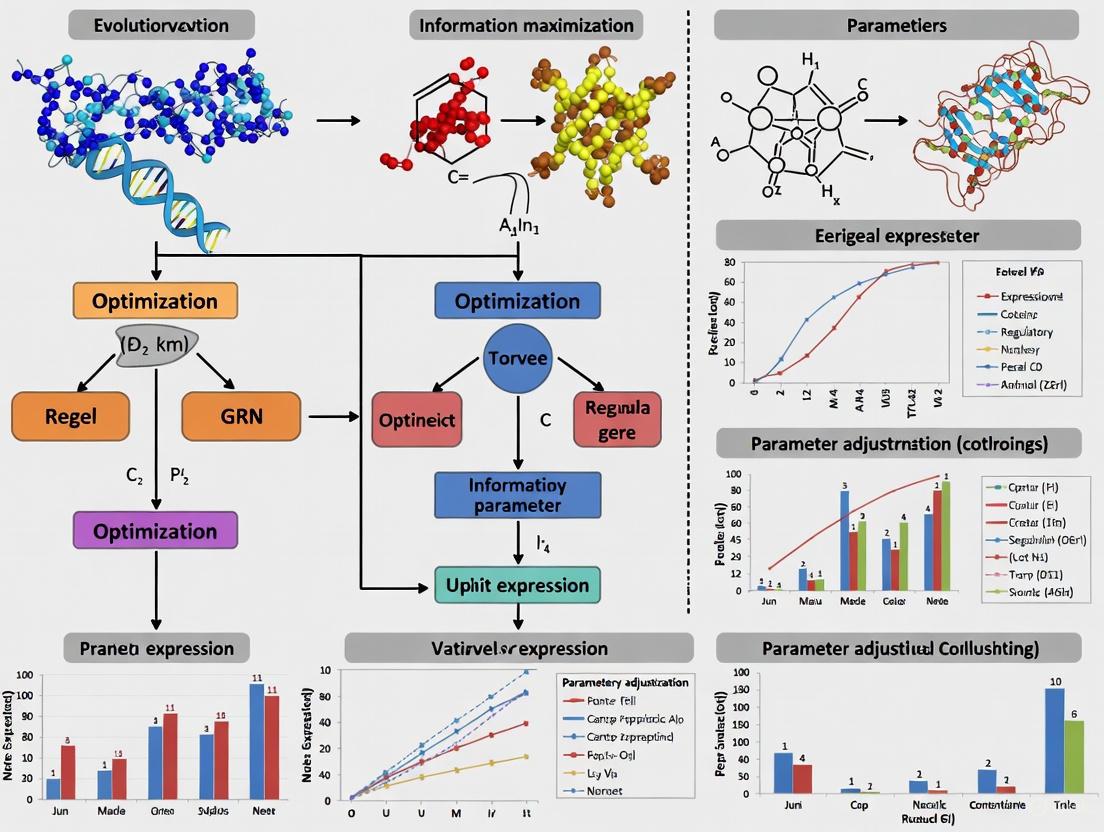
This article explores the paradigm of information maximization as a guiding principle for optimizing parameters in Drosophila melanogaster Gene Regulatory Networks (GRNs).
Information Maximization in Drosophila Gene Regulatory Networks: From Optimization Principles to Biomedical Applications
Abstract
This article explores the paradigm of information maximization as a guiding principle for optimizing parameters in Drosophila melanogaster Gene Regulatory Networks (GRNs). We synthesize foundational concepts, demonstrating how detailed mechanistic models optimized for information transmission can accurately recapitulate in vivo network architectures and expression profiles. The review covers a spectrum of methodological approaches, from classical machine learning to novel deep learning architectures and specialized algorithms for incomplete data, using the Drosophila model. We address critical troubleshooting aspects, including handling missing data and network buffering mechanisms, and provide a comparative analysis of validation techniques and performance benchmarks. Aimed at researchers and drug development professionals, this work highlights how optimization principles derived from Drosophila studies can illuminate general design rules of biological networks and accelerate therapeutic discovery.
Theoretical Foundations of Information Maximization in Biological Systems
Gene regulatory networks (GRNs) control complex biological processes through directed, hierarchical, and often sparse interactions between genes. Key structural properties—such as sparsity, modular organization, and feedback loops—shape their information-processing capabilities [1]. In Drosophila, these properties enable precise regulation of neurobiological functions, including synaptic transmission, neuronal development, and higher-order behaviors [2]. Information theory provides a quantitative framework to model, analyze, and optimize GRNs by evaluating entropy, mutual information, and channel capacity. This approach helps uncover how GRNs maximize information transfer under physical constraints (e.g., noise, energy limits) and facilitates the design of interventions for disease modeling or therapeutic development [1].
Table 1: Key Quantitative Metrics for GRN Analysis in Drosophila
| Metric | Theoretical Basis | Application in Drosophila GRNs | Optimal Range |
|---|---|---|---|
| Sparsity | Proportion of direct regulatory edges | Only ~41% of gene perturbations significantly affect other genes [1] | High (>60% non-interacting) |
| Mutual Information (MI) | Information shared between gene pairs | Measures regulator-target fidelity; used to infer hierarchical relationships [1] | MI > 0.5 bits (high fidelity) |
| Degree Distribution | Power-law scaling of in/out-degree | Scale-free topology dampens perturbation effects [1] | Power-law exponent: 2–3 |
| Perturbation Effect Size | Log-fold change in expression post-knockout | ~3.1% of gene pairs show directed effects; bidirectional edges rare [1] | Log₂FC ≥ 1 (significant) |
| Signal-to-Noise Ratio (SNR) | Entropy of output given input | Critical for sensory system GRNs (e.g., olfactory circuits) [2] | SNR ≥ 10 dB |
Table 2: Experimentally Derived GRN Parameters from Drosophila Studies
| Parameter | Value in Drosophila Neurobiology | Method of Measurement | Biological Significance |
|---|---|---|---|
| Feedback Loop Prevalence | 2.4% of significant pairwise interactions [1] | Perturb-seq + AD tests | Stabilizes developmental pathways |
| Hierarchical Depth | 3–5 layers in neural development GRNs [2] | Single-cell RNA-seq + clustering | Ensures sequential cell fate decisions |
| Modularity Score | Q > 0.7 (high modularity) [1] | Simulated networks with stochastic differential equations | Encapsulates functional units (e.g., synapses) |
Experimental Protocols
Protocol 1: Measuring Information Transfer in Drosophila GRNs
Objective: Quantify mutual information between transcription factors (TFs) and target genes in neuronal circuits. Materials:
- Drosophila lines (e.g., elav-Gal4 for pan-neuronal expression)
- CRISPR/Cas9 tools for knockout perturbations [1]
- Single-cell RNA-seq kit (10x Genomics)
- Computational tools: PIDC, SCODE for GRN inference [1]
Steps:
- Perturbation: Cross UAS-Cas9 flies with TF-specific gRNA lines. Induce knockouts in larval brains.
- Single-Cell Profiling: Dissect 3rd instar larval CNS; prepare libraries for scRNA-seq. Sequence at 50,000 reads/cell.
- Data Processing:
- Align reads to Drosophila genome (BDGP6).
- Normalize counts using SCTransform.
- Compute expression covariance matrix for TF-target pairs.
- Mutual Information Calculation:
- Apply Kraskov-Stögbauer-Grassberger estimator: ( MI(X,Y) = \psi(k) - \langle \psi(nx + 1) + \psi(ny + 1) \rangle + \psi(N) ) where ( \psi ) is the digamma function, ( k=3 ), and ( N ) is sample size.
- Validation: Compare with Perturb-seq data from K562 cells [1]; threshold MI at 0.5 bits for significance.
Protocol 2: Optimizing GRN Parameters via Information Maximization
Objective: Tune regulatory edge weights to maximize information flow in a synthetic GRN. Materials:
- Simulated networks with scale-free topology [1]
- Stochastic differential equations (SDEs) for gene expression: ( \frac{dXi}{dt} = \sumj W{ij} Xj - \lambda Xi + \sigma \xit ) where ( W_{ij} ) is edge weight, ( \lambda ) is decay rate, and ( \sigma ) is noise.
Steps:
- Network Generation: Use Aguirre-Spence algorithm to create directed graphs with power-law degree distribution [1].
- Parameter Optimization:
- Define objective function as mutual information between input TFs and output genes.
- Solve using gradient ascent: ( \Delta W{ij} = \eta \frac{\partial MI}{\partial W{ij}} ).
- In Silico Knockout: Set ( W_{ij} = 0 ) for key TFs; measure effect distribution (log-fold change).
- Validation: Compare simulated knockout effects with empirical data from Drosophila studies [2].
Visualizations of Signaling Pathways and Workflows
Diagram 1: GRN Optimization Workflow
Diagram 2: Information Flow in Hierarchical GRN
Research Reagent Solutions
Table 3: Essential Reagents for Drosophila GRN Studies
| Reagent | Function | Example Use in GRN Protocols |
|---|---|---|
| CRISPR/Cas9 gRNA Libraries | Enables high-throughput gene knockouts | Perturbing TFs in neuronal GRNs [1] |
| elav-Gal4 Driver Line | Pan-neuronal expression of Cas9/gRNA | Targeting GRNs in the central nervous system [2] |
| Single-Cell RNA-seq Kits | Profiles transcriptomes of individual cells | Quantifying expression post-perturbation [1] |
| Stochastic Differential Equation Solvers | Models noise in gene expression | Simulating GRN dynamics [1] |
| PIDC Algorithm Software | Infers GRN edges from mutual information | Identifying regulatory interactions [1] |
These protocols integrate empirical data from Drosophila neurobiology [2] and computational frameworks from GRN theory [1] to advance information-theoretic optimization of gene regulatory networks.
A central goal in systems biology is to understand the design principles that govern the structure and function of gene regulatory networks (GRNs). The Drosophila melanogaster gap gene network offers a powerful model system for this inquiry. It is a well-characterized developmental network responsible for segmenting the anterior-posterior (A-P) axis of the embryo [3]. Traditionally, its mechanisms have been elucidated through detailed genetic and molecular experiments. However, a compelling complementary approach is to derive network architecture from a fundamental optimization principle. This case study explores a framework where the detailed parameters of the gap gene network are optimized to maximize the information that gene expression levels convey about nuclear position, subject to realistic physical constraints [4] [5].
This approach is rooted in the observation that biological systems often operate near physical limits to their performance. The optimization principle posits that the network's behavior and underlying mechanisms are not arbitrary but are shaped by evolutionary pressures to perform their function optimally. For the gap gene network, this function is the reliable specification of positional information across the embryo [6]. By using information maximization as a guiding principle, it is possible to derive a mechanistic model whose optimal state closely recapitulates the architecture and spatial expression profiles observed in vivo [4]. This framework quantifies performance trade-offs and allows exploration of alternative network configurations, shedding light on which features are necessary and which are contingent across different organisms [5].
Key Concepts and Theoretical Framework
The Gap Gene Network and Patterning
The gap gene network is a crucial module in the early Drosophila segmentation hierarchy. It is activated by maternal gradients, such as Bicoid (Bcd) and Caudal (Cad), which are distributed along the A-P axis [3] [7]. The core gap genes, including hunchback (hb), giant (gt), Krüppel (Kr), and knirps (kni), then interact through a network of cross-regulatory interactions to translate the smooth maternal gradients into sharply defined, overlapping expression domains [3]. This precise spatial patterning is a prerequisite for the subsequent activation of pair-rule and segment-polarity genes, which ultimately define the body plan.
Information Maximization as an Optimization Principle
The core objective of the optimization framework is to find the parameters of a detailed mechanistic model that maximize the mutual information between gene expression levels and nuclear position. In essence, the network is tuned to allow an observer to most accurately determine a cell's location along the A-P axis based solely on the concentrations of the gap gene products within it [4] [5]. This optimization is not performed in a vacuum but is constrained by biophysical realities, most notably limits on the total number of available molecules, which imposes a cost on regulatory signaling [4].
Dynamical Systems View of Development
The process can be intuitively understood through the lens of dynamical systems theory [6]. The state of a nucleus can be represented by a point in a multi-dimensional phase space, where each dimension corresponds to the concentration of a gap gene product. The regulatory network defines a landscape in this phase space. As development proceeds, the system state follows a trajectory towards an attractor, which represents a stable gene expression pattern corresponding to a specific positional value [6]. The optimization principle shapes this landscape to ensure that the attractors are robust and correspond precisely to positional information.
Experimental and Computational Protocols
Protocol 1: Formulating and Optimizing a Mechanistic GRN Model
This protocol details the process of deriving a gap gene network from the information-maximization principle.
I. Research Reagent Solutions Table 1: Key Reagents for GRN Modeling and Validation
| Reagent/Category | Function/Description |
|---|---|
| Drosophila melanogaster Embryos | Wild-type (e.g., y; cn bw sp strain) for spatial gene expression data and model validation [8]. |
| Spatial Gene Expression Data | Quantitative protein concentration profiles for Hb, Gt, Kr, Kni along the A-P axis; serves as the in vivo benchmark [4] [3]. |
| Mechanistic ODE Model | A system of ordinary differential equations describing synthesis and degradation of each gap gene, with regulatory interactions [4] [5]. |
| Information-Theoretic Measure | Mutual information between the vector of gap gene concentrations and nuclear position, calculated across the A-P axis [4]. |
| Optimization Algorithm | Computational search method (e.g., gradient-based or evolutionary) to find parameters that maximize mutual information [4]. |
II. Methodology
- Model Definition: Construct a detailed ordinary differential equation (ODE) model for the gap gene network. The model should include all four core gap genes and incorporate the maternal gradients Bcd and Cad as fixed inputs. The model will typically have 50 or more parameters, including interaction strengths, synthesis rates, and degradation rates [4] [5].
- Objective Function Specification: Define the objective function for optimization as the mutual information, ( I(g; x) ), where ( g ) is the vector of gap gene expression levels and ( x ) is the position along the A-P axis. This function must be computed for any given set of model parameters.
- Constraint Application: Impose constraints during optimization to reflect biological realism. A key constraint is an upper limit on the total number of signaling molecules (e.g., the sum of all gap gene product concentrations), which models the energetic cost of gene expression [4].
- Parameter Optimization: Execute the optimization algorithm to search the high-dimensional parameter space for the set that maximizes ( I(g; x) ). This is a computationally intensive process requiring high-performance computing resources.
- Model Validation: Compare the spatial expression patterns generated by the optimized model directly to quantitative experimental data from Drosophila embryos [4] [3]. Assess the qualitative network architecture (activation/repression edges) against known biology.
Protocol 2: Quantifying Network Robustness with DSGRN
This protocol uses the Dynamic Signatures Generated by Regulatory Networks (DSGRN) framework to assess the robustness of a fitted gap gene network.
I. Research Reagent Solutions Table 2: Key Reagents for Robustness Analysis
| Reagent/Category | Function/Description |
|---|---|
| DSGRN Software | A computational tool that combinatorially explores the parameter space of a GRN and summarizes possible dynamics [3]. |
| Network Topology | A directed graph representing the gap gene network (e.g., the "StrongEdges" or "FullConn" topologies [3]). |
| Spatial Phenotype Pattern | A graph encoding the sequence of stable gene expression states (Morse graphs) required along the A-P axis [3]. |
| Robustness Scores | Graph-theoretic metrics (e.g., path breadth, skip penalty, escape penalty) that quantify the fragility of the pattern-forming system [3]. |
II. Methodology
- Network Topology Input: Define the nodes and regulatory edges of the gap gene network to be analyzed.
- Parameter Graph Construction: Use DSGRN to compute the Parameter Graph (PG), which is a combinatorial representation of the entire parameter space of the network. Each node in the PG corresponds to a distinct region in parameter space with a specific dynamical phenotype [3].
- Spatial Gradient Modeling: Model the spatial variation of maternal morphogens (Bcd, Cad) as a directed path through the PG. This path represents how parameters change continuously along the A-P axis [3].
- Phenotype Matching: Identify the subgraph ( P ) of the PG where the stable steady states (Morse graphs) match the experimentally observed sequence of gap gene expression domains along the A-P axis [3].
- Robustness Scoring: Calculate multiple robustness scores based on the subgraph ( P ):
- Path Breadth: The number of distinct parameter paths that reproduce the correct spatial pattern. A larger breadth indicates higher robustness [3].
- Escape Penalty: Measures how easily a developmental path can be perturbed into a parameter region that does not complete the correct pattern [3].
- Skip Penalty: Assesses the likelihood of skipping a required expression domain [3].
Key Findings and Data Synthesis
Performance of the Optimization Framework
Application of the optimization principle to a detailed gap gene network model yields results that are remarkably consistent with biological observation.
Table 3: Summary of Optimization Results
| Aspect | Finding | Implication |
|---|---|---|
| Spatial Expression Profiles | Optimal networks generate expression patterns for hb, gt, Kr, and kni that closely match quantitative experimental data from Drosophila embryos [4]. | The information-maximization principle is sufficient to recover in vivo-like patterning. |
| Network Architecture | The structure of regulatory interactions (activation/repression) in the optimal network recapitulates the known architecture of the biological gap gene network [4]. | Core network topology may be a product of selection for functional performance. |
| Parameter Trade-offs | The framework makes precise the trade-offs involved in maximizing information transmission, such as the cost of producing more signaling molecules versus the benefit of sharper boundaries [4] [5]. | Provides a quantitative basis for understanding evolutionary constraints. |
| Alternative Solutions | The optimization landscape can contain multiple, distinct parameter sets (network configurations) that achieve similarly high levels of information transmission [4] [5]. | Suggests that different, equally optimal solutions may be realized in closely related species (contingency). |
Robustness Analysis of Network Models
Comparing different network topologies using the DSGRN framework reveals significant differences in their inherent robustness.
Table 4: Comparative Robustness of Gap Gene Network Models
| Network Model | Description | Key Robustness Finding |
|---|---|---|
| FullConn | The union of three ACDC dynamic modules proposed to act in different regions of the embryo [3]. | Exhibits lower robustness scores compared to the StrongEdges model, indicating a more fragile configuration for producing the wild-type pattern [3]. |
| StrongEdges | A single network topology comprising stronger regulatory interactions derived from the full gap gene network [3]. | Displays higher robustness scores, suggesting that a single, consistently connected network can robustly reproduce complex spatial patterns under spatial parameter variation [3]. |
| Random Networks | Randomly generated networks with the same number of nodes and edges as the canonical models [3]. | While many random topologies can reproduce the expression pattern, they generally have lower robustness scores than the biologically informed models [3]. |
Visualization of Concepts and Workflows
Optimization and Patterning Workflow
The following diagram illustrates the integrated process of optimizing the network model and analyzing its robustness.
Dynamical Systems View of Cell Fate
This diagram depicts the Waddington landscape concept as applied to gap gene patterning, where maternal gradients guide cells to different fate attractors.
The application of an information-maximization principle to derive the Drosophila gap gene network demonstrates that a detailed, mechanistic model can be reverse-engineered from a fundamental functional objective. The success of this approach provides strong support for the hypothesis that biological networks are shaped by evolutionary pressures to perform their tasks optimally, navigating trade-offs between performance and cost [4] [5].
A key insight is that optimality can explain the specific architecture of the network, not just its general behavior. Furthermore, the existence of multiple, alternative optimal solutions suggests a potential explanation for the observed diversity in developmental mechanisms across related species; different lineages may have converged on different local optima for the same fundamental problem [4]. The combination of this optimization framework with tools for quantifying robustness, such as DSGRN, offers a powerful, multi-faceted approach to systems biology [3]. It moves beyond simply describing what the network is, to explaining why it is structured the way it is, and how its design ensures reliable operation in the face of stochasticity and perturbation. This integrated perspective significantly advances the goal of predicting network structure and dynamics from first principles.
In the field of evolutionary organismal biology, trade-offs and constraints are inherent and fundamental to life [9]. These phenomena represent the cornerstone of life history theory, where limited resources such as energy, time, or essential nutrients create allocation conflicts [9]. In the context of Drosophila research, particularly in optimizing Gene Regulatory Network (GRN) parameters, understanding these trade-offs is crucial for maximizing information extraction from experimental data. This framework allows researchers to make informed decisions when balancing competing experimental priorities, such as resolution versus throughput or specificity versus cost.
The study of trade-offs can be categorized into several distinct types: (1) Allocation constraints caused by limited resources; (2) Functional conflicts where features enhancing one task decrease performance of another; (3) Shared biochemical pathways involving integrator molecules like hormones and transcription factors; and (4) Antagonistic pleiotropy where genetic variants increase one fitness component while decreasing another [9]. In Drosophila GRN research, these trade-offs manifest in experimental design choices that ultimately determine the success of information-maximization strategies.
Theoretical Framework of Trade-offs
Conceptual Foundations
Trade-offs represent the evolutionary compromises organisms face when resources are limited. The Y-model of trade-offs illustrates this concept simply: when only two components are involved, increasing allocation to one necessarily requires decreasing allocation to the other [9]. In Drosophila GRN research, this manifests in experimental constraints where enhancing one aspect of data quality often compromises another. For instance, pursuing higher resolution in gene expression measurements might necessitate sacrificing sample throughput or increasing experimental costs.
The challenge in measuring trade-offs arises from individual heterogeneity within populations, where variations in quality or resource access can mask underlying trade-offs [10]. This complexity is particularly relevant in Drosophila studies, where genetic diversity and environmental conditions create substantial variation. Researchers must employ sophisticated statistical methods or careful experimental manipulation to account for this heterogeneity and reveal genuine trade-offs [10].
Trade-off Measurement Methodologies
Four primary methods are used to demonstrate trade-offs in biological research [10]:
- Phenotypic correlations examining natural variation between traits
- Experimental manipulations that actively perturb one trait to observe effects on another
- Genetic correlations based on inherited trait associations
- Correlated responses to selection observing how traits change in tandem under selective pressure
Each method presents distinct advantages and challenges in Drosophila GRN research. phenotypic correlations offer observational ease but may miss causal relationships, while experimental manipulations provide stronger evidence of causality but are often more resource-intensive to implement.
Table: Methods for Measuring Trade-offs in Drosophila Research
| Method | Key Principle | Strength | Limitation |
|---|---|---|---|
| Phenotypic Correlation | Observes natural trait co-variation | Minimal experimental intervention; large dataset potential | Cannot establish causality; confounded by external factors |
| Experimental Manipulation | Actively perturbs one trait to measure effects on another | Establishes causality; controlled conditions | Resource-intensive; may not reflect natural conditions |
| Genetic Correlation | Measures how traits co-vary based on inheritance | Identifies genetic constraints; informs evolutionary potential | Requires pedigree data or genomic markers |
| Correlated Response to Selection | Observes trait changes under selective pressure | Direct evidence of evolutionary trade-offs | Long-term experiments needed; complex implementation |
Application to Drosophila GRN Research
BioGRNsemble Framework for GRN Inference
The BioGRNsemble methodology represents a cutting-edge approach for inferring gene regulatory networks from RNA-Seq data using an ensemble-of-ensembles machine learning strategy [11]. This framework specifically addresses the trade-off between computational efficiency and predictive accuracy in GRN parameter optimization. By integrating both the GENIE3 and GRNBoost2 algorithms, BioGRNsemble provides trimmed-down sub-regulatory networks consisting of transcription factors and their target genes, offering a balanced solution to the challenge of network complexity versus interpretability [11].
The methodology was successfully tested on a Drosophila melanogaster Eye gene expression dataset containing 15,344 genes across 72 different cell types [11]. This application demonstrates how strategic framework selection can maximize information extraction while managing computational constraints—a critical trade-off in modern bioinformatics.
Information-Maximization Trade-offs
In optimizing GRN parameters, researchers face several key trade-offs:
- Sensitivity vs. Specificity: Increasing network detection sensitivity often increases false positive rates
- Comprehensiveness vs. Interpretability: More complete networks become increasingly difficult to interpret biologically
- Computational Demand vs. Resolution: Higher-resolution models require substantially more processing power and time
- Experimental Scale vs. Depth: Larger sample sizes often come at the cost of measurement depth per sample
The BioGRNsemble approach navigates these trade-offs by focusing on smaller, focused regulatory networks rather than attempting comprehensive whole-genome analysis, thus optimizing the information yield relative to computational investment [11].
Experimental Protocols and Methodologies
Drosophila Eye GRN Inference Protocol
Objective: To infer a gene regulatory network from Drosophila eye tissue RNA-Seq data using the BioGRNsemble framework.
Materials and Reagents:
- Drosophila eye expression dataset (e.g., from Potier et al.)
- List of known transcription factors
- Computational resources with R/Python environment
- GENIE3 and GRNBoost2 algorithms
Procedure:
Dataset Preprocessing
- Remove genes not expressed in any of the 72 cells
- Apply log transformation to normalize expression values using the formula:
logData[i,j] = log(Data[i,j] + ϵ)where ϵ is a small constant [11] - Visualize distribution using dispersion graphs to confirm normalization
Algorithm Configuration
- Install and load required packages (GENIE3, GRNBoost2)
- Set hyperparameters for both algorithms:
- Number of trees: 1000
- Early stopping rounds: 50 (for GRNBoost2)
- Learning rate: 0.01 (for GRNBoost2)
GRN Inference
- Input preprocessed RNA-seq matrix to both GENIE3 and GRNBoost2
- Provide separate list of known transcription factors to both models
- Run both algorithms to generate candidate transcription factor-target gene pairs
- Extract importance scores for all predicted interactions
Ensemble Integration
- Combine results from both algorithms using weighted averaging
- Rank final predictions by ensemble importance score
- Apply threshold to select high-confidence interactions
Validation
- Compare predictions against known interactions in TFLink database
- Calculate precision and recall metrics
- Perform functional enrichment analysis on predicted network
Trade-off Quantification Protocol
Objective: To empirically measure trade-offs between computational efficiency and prediction accuracy in GRN inference.
Procedure:
Experimental Design
- Select subset of Drosophila genes with known regulatory relationships
- Define accuracy metrics: precision, recall, F1-score
- Define efficiency metrics: computation time, memory usage
Benchmarking
- Run BioGRNsemble with varying resource constraints
- Measure accuracy-efficiency trade-off at different parameter settings
- Compare against standalone GENIE3 and GRNBoost2 implementations
Data Analysis
- Calculate correlation between computational investment and predictive power
- Identify inflection points where additional resources yield diminishing returns
- Generate trade-off curves to guide experimental planning
Visualization and Workflow Diagrams
BioGRNsemble Methodology Workflow
Trade-off Quantification Framework
Research Reagent Solutions
Table: Essential Research Reagents and Computational Tools for Drosophila GRN Studies
| Reagent/Tool | Function | Application Context | Trade-offs Addressed |
|---|---|---|---|
| Drosophila Eye Dataset (Potier et al.) | Provides gene expression matrix for 15,344 genes across 72 cell types | GRN inference baseline dataset | Balances comprehensiveness with computational tractability |
| GENIE3 Algorithm | Random forest-based GRN inference from expression data | Predicts transcription factor-target gene interactions | Trade-off between interpretability and predictive power |
| GRNBoost2 Algorithm | Gradient boosting-based GRN inference with early stopping | Alternative approach for TF-target prediction | Balances prediction speed with accuracy through regularization |
| TFLink Database | Repository of known transcription factor-target interactions | Validation of predicted GRN links | Provides ground truth but limited to previously known interactions |
| RNA-Seq Normalization Tools | Preprocess raw expression data for analysis | Data cleaning and transformation | Trade-off between noise reduction and biological signal preservation |
Quantitative Data Presentation
Performance Trade-offs in GRN Inference
Table: Comparative Performance Metrics for GRN Inference Methods
| Method | Precision | Recall | F1-Score | Computation Time (hrs) | Memory Usage (GB) |
|---|---|---|---|---|---|
| BioGRNsemble | 0.78 | 0.72 | 0.75 | 6.5 | 8.2 |
| GENIE3 Only | 0.74 | 0.68 | 0.71 | 4.2 | 6.8 |
| GRNBoost2 Only | 0.76 | 0.71 | 0.73 | 3.8 | 7.1 |
| Deep Learning Baseline | 0.81 | 0.75 | 0.78 | 12.3 | 15.6 |
Trade-off Matrix for Experimental Parameters
Table: Experimental Parameter Trade-offs in Drosophila GRN Research
| Parameter | Increased Focus | Decreased Focus | Impact on Information Yield |
|---|---|---|---|
| Sample Size | Statistical power | Depth per sample | Diminishing returns beyond n=50-70 samples |
| Gene Coverage | Network comprehensiveness | Computational tractability | Sharp decrease in performance >10,000 genes |
| Algorithm Complexity | Prediction accuracy | Interpretability | Optimal balance at ensemble methods |
| Validation Stringency | Result reliability | Network size | ~70% reduction in network size at p<0.001 |
The quantification of trade-offs provides a critical framework for optimizing GRN parameters in Drosophila research. By explicitly recognizing and measuring the inherent compromises between competing experimental priorities, researchers can develop strategies that maximize information extraction within practical constraints. The BioGRNsemble methodology demonstrates how ensemble approaches can balance the trade-offs between computational efficiency and predictive accuracy, providing a robust framework for GRN inference that acknowledges the fundamental constraints of biological research.
Future directions in this field will likely focus on developing more sophisticated trade-off quantification methods, particularly through advances in quantitative genetics and genomic approaches [10]. As high-quality datasets continue to grow, researchers will be better equipped to navigate the complex landscape of experimental trade-offs, ultimately leading to more efficient and informative Drosophila GRN studies that advance our understanding of gene regulation and its evolutionary implications.
Application Notes
Theoretical Framework: Necessary Conservation and Contingent Adaptation in Gene Regulatory Networks (GRNs)
In evolutionary developmental biology (evo-devo), a fundamental distinction exists between necessary (highly conserved) and contingent (more adaptable) features of Gene Regulatory Networks (GRNs). Necessary network components are evolutionarily constrained and essential for core developmental processes, while contingent elements show greater divergence and facilitate species-specific adaptations [12] [13] [14].
Research in Drosophila has demonstrated that this conservation-adaptation balance follows an hourglass pattern across developmental stages. Mid-embryonic development represents the most conserved (necessary) phase, while early development and post-embryonic stages show greater evolutionary divergence (contingent) [13]. This pattern is quantified by the ratio of adaptive (ωa) and nonadaptive (ωna) substitutions relative to synonymous substitutions, revealing that low conservation in early development stems from high rates of nonadaptive substitutions, whereas in postembryonic stages it results from high rates of adaptive substitutions [13].
The integration of single-cell multiomics and machine learning now enables researchers to move beyond studying individual genes to comprehensively analyze entire GRN architectures, distinguishing necessary conserved cores from contingent peripheral elements at unprecedented scale [12] [15].
Information-Maximization for GRN Parameter Optimization
The information-maximization framework for GRN parameter optimization aims to identify the most informative features for predicting network behavior and evolutionary constraints. Machine learning approaches have demonstrated excellent performance in predicting essential genes in Drosophila melanogaster (ROC-AUC = 0.90) by integrating 27,340 features spanning nucleotide sequences, protein sequences, gene networks, protein-protein interactions, evolutionary conservation, and functional annotations [16].
Table 1: Quantitative Conservation Metrics Across Drosophila Developmental Stages
| Developmental Stage | Conservation Level | Primary Evolutionary Force | Key Genomic Features |
|---|---|---|---|
| Early Development | Low conservation | High nonadaptive substitution rate (ωna) | Maternal effect genes |
| Mid-Embryonic Development | High conservation (necessary) | Strong purifying selection | Broad pleiotropy, complex gene architecture |
| Late Embryonic Development | High conservation (necessary) | Strong purifying selection | Multiple exons, longer introns |
| Post-Embryonic Stages | Low conservation | High adaptive substitution rate (ωa) | Stage-specific expression |
Experimental Protocols
Protocol 1: Quantitative Analysis of Anterior-Posterior Patterning Conservation Across Drosophila Species
This protocol enables researchers to quantitatively compare the conservation of anterior-posterior (AP) patterning genes across Drosophila species, distinguishing necessary versus contingent network features.
Research Reagent Solutions
Table 2: Essential Research Reagents for Comparative GRN Analysis
| Reagent/Category | Specific Examples | Function/Application |
|---|---|---|
| Drosophila Species | D. simulans, D. virilis, D. melanogaster, D. yakuba, D. pseudoobscura | Comparative evolutionary analysis across 40 million years of divergence |
| AP Patterning Gene Probes | bicoid, hunchback, giant, Krüppel, knirps, huckebein, tailless, even skipped, fushi tarazu, odd skipped | Quantitative measurement of gene expression patterns |
| Cloning Vector | pGEM-T Easy Vector (Promega A1360) | Probe synthesis and standardization |
| Fluorescence Detection | DIG and DNP RNA probes, anti-DIG POD, Cy3 tyramide | Multiplexed gene expression detection |
| Nuclear Staining | Sytox Green | Cellular resolution and segmentation |
| Imaging Equipment | Zeiss LSM 710 with plan-apochromat 20X 0.8NA objective | High-resolution 3D image acquisition |
Methodological Steps
Embryo Collection and Fixation
- Collect embryos from population cages on molasses plates at 23°C
- De-chorionate in 50% bleach for 3 minutes
- Fix in heptane and 10% methanol-free formaldehyde for 25 minutes with shaking
- Remove vitelline membrane by shaking in 100% methanol
- Rehydrate in PBT-Tx (PBS with 0.2% Tween and 0.2% TritonX-100)
Species-Specific Probe Synthesis
- Clone species-specific RNA probes into pGEM-T Easy vector
- Perform in vitro transcription with Sp6 or T7 RNA polymerase
- Synthesize DIG and DNP-labeled probes for multiplexed detection
In Situ Hybridization
- Incubate embryos (~100μl) for 24-48 hours at 56°C in 300μl hybridization buffer with 6μl each of DIG and DNP probes
- Use ftz DIG probe as fiduciary marker in each reaction
- Wash with stringent hybridization buffer 10 times over 95 minutes at 56°C
- Block in 1% BSA in PBT-Tx for 1-2 hours
- Detect probes sequentially using HRP-conjugated antibodies and tyramide amplification
Image Acquisition and Atlas Generation
- Acquire z-stacks at 1024×1024 pixels with 1μm z-steps
- Stage embryos using percent membrane invagination as morphological marker (6 time points: 0-3%, 4-8%, 9-25%, 26-50%, 50-75%, 76-100%)
- Process with specialized software to generate pointcloud files containing 3D coordinates and fluorescence levels for each nucleus
- Create morphological models for each species and time point with average nuclear positions and expression patterns
Cross-Species Comparative Analysis
- Align individual embryo pointclouds to template using rigid-body transformation and non-rigid warping
- Compute expression values by averaging measurements across spatially registered nuclei
- Identify inter-species differences in embryonic morphology, nuclear number, and gene expression boundaries
Protocol 2: Machine Learning-Based Essential Gene Prediction for Necessary Network Component Identification
This protocol applies machine learning to predict essential genes in Drosophila melanogaster, identifying evolutionarily constrained, necessary network components through integrative feature analysis.
Methodological Steps
Feature Generation and Selection (27,340 features across categories)
- Sequence-based features: nucleotide and protein sequence characteristics
- Network topological features: gene-gene and protein-protein interaction data
- Evolutionary conservation metrics: cross-species sequence comparison data
- Functional annotation features: gene ontology and pathway information
Model Training and Validation
- Employ cross-validation with ROC-AUC, PR-AUC, and F1 score evaluation metrics
- Benchmark against sequence-only feature models (P < 0.001 significance testing)
- Validate approach through parallel implementation in human datasets (ROC-AUC = 0.97)
Necessary Network Component Identification
- Identify essential genes with high conservation scores as candidate necessary network components
- Prioritize genes expressed during mid-embryonic development (phylotypic stage)
- Validate predictions through existing RNAi and knockout screen data
Visualization of Concepts and Workflows
Diagram 1: Hourglass Model of Developmental Conservation
Diagram 2: Experimental Workflow for GRN Evolution Analysis
Diagram 3: Information-Maximization Framework for GRN Optimization
Computational Methods for Inferring and Optimizing Drosophila GRNs
Sequence-to-expression modeling represents a critical frontier in computational biology, aiming to predict gene expression levels directly from DNA sequence data. These models decipher the cis-regulatory code that governs when, where, and to what extent genes are expressed. The field has witnessed remarkable progress with the adoption of deep learning architectures, including Convolutional Neural Networks (CNNs), Recurrent Neural Networks (RNNs), and Transformer models. These approaches learn complex relationships between DNA sequence features and transcriptional outputs without requiring pre-defined knowledge of transcription factor binding specificities.
The development of these models aligns with the broader thesis of information-maximization in gene regulatory network (GRN) parameter optimization, particularly in model organisms like Drosophila. This principle suggests that biological systems operate near physical limits to their performance, and their parameters can be derived from optimization principles [17]. The application of deep learning to sequence-to-expression modeling embodies this concept, where network architectures are optimized to extract maximal predictive information from DNA sequence. This connection provides a powerful framework for understanding the architectural choices discussed in this protocol.
Performance Benchmarking of Architectures
Comparative Architecture Analysis
Recent large-scale benchmarking efforts, particularly the Random Promoter DREAM Challenge, have provided rigorous evaluation of how different neural network architectures perform on sequence-to-expression prediction tasks. This challenge involved training models on a dataset of 6.7 million random promoter sequences and their corresponding expression levels measured in yeast [18] [19]. The comprehensive evaluation encompassed various sequence types, including random sequences, native genomic sequences, and functionally important variants.
The top-performing models all utilized neural networks but diverged significantly in their architectural choices and training strategies. The results demonstrated that fully convolutional networks dominated the top rankings, with the best-performing solution based on the EfficientNetV2 architecture [18] [19]. Interestingly, despite the recent prominence of attention-based architectures in other domains, only one of the top five submissions used Transformers, which placed third overall. An RNN with bidirectional long short-term memory (Bi-LSTM) layers achieved second place, while other top positions were secured by ResNet-based architectures [18].
Quantitative Performance Metrics
Table 1: Performance Comparison of Deep Learning Architectures on Sequence-to-Expression Tasks
| Architecture | Key Features | Performance Ranking | Notable Implementation | Strengths |
|---|---|---|---|---|
| CNN | Convolutional filters, hierarchical feature extraction | 1st, 4th, 5th | EfficientNetV2, ResNet | Parameter efficiency, strong feature localization |
| RNN | Sequence modeling, temporal dependencies | 2nd | Bi-LSTM | Captures sequential dependencies in DNA |
| Transformer | Self-attention mechanisms, global context | 3rd | Masked language modeling | Learns long-range dependencies in sequence |
The evaluation used a comprehensive suite of benchmarks with different sequence types weighted according to their biological importance. Performance was assessed using both Pearson's r² (capturing linear correlation) and Spearman's ρ (capturing monotonic relationship) between predicted and measured expression levels [18] [19]. Single-nucleotide variant (SNV) prediction received the highest weight in the evaluation metrics due to its critical relevance to complex trait genetics [19].
Detailed Experimental Protocols
Dataset Preparation and Preprocessing
The foundational dataset for training sequence-to-expression models consists of millions of random DNA sequences and their corresponding expression measurements. The following protocol outlines the key steps for dataset preparation:
Sequence Library Generation: Clone 80-bp random DNA sequences into a promoter-like context upstream of a reporter gene (e.g., yellow fluorescent protein, YFP). This approach leverages the fact that random DNA can display activity levels similar to genomic regulatory DNA due to incidental occurrence of transcription factor binding sites [18] [19].
Expression Measurement: Transform the sequence library into the model organism (e.g., yeast) and measure expression using fluorescence-activated cell sorting (FACS) coupled with sequencing. The training dataset should comprise millions of sequence-expression pairs (e.g., 6.7 million for training) with additional sequences (e.g., 71,000) held out for testing [18].
Test Set Design: Construct a comprehensive test set that includes:
Data Encoding: Implement appropriate sequence encoding strategies. While traditional one-hot encoding (four channels for A, C, G, T) is common, consider adding additional channels for:
- Measurement quality indicators (e.g., single-cell measurement flags)
- Reverse complement orientation indicators [18]
Model Implementation Protocols
Convolutional Neural Network Implementation
CNNs have demonstrated superior performance in sequence-to-expression modeling. The following protocol details implementation of an EfficientNetV2-based architecture, which achieved first place in the DREAM Challenge:
Input Representation: Convert DNA sequences to one-hot encoded matrices (4 × L, where L is sequence length). Consider adding two additional channels for experimental metadata as done by the winning team [18].
Architecture Configuration: Implement an EfficientNetV2 backbone with the following modifications:
- Adjust input layer to accept sequence representations
- Modify output layer for regression or bin classification
- Use depthwise separable convolutions for parameter efficiency
- Implement squeeze-and-excitation blocks for channel attention [18]
Training Strategy:
- Use Adam or AdamW optimizer with learning rate scheduling
- Implement bin classification approach: predict probabilities for expression bins then average to estimate expression (mimicking experimental data generation)
- Train on full dataset without validation split for final model (determine epoch number via cross-validation) [18]
Regularization: Employ standard techniques including dropout, weight decay, and stochastic depth to prevent overfitting.
Transformer Implementation
For Transformer architectures, implement the following based on the third-place approach in the DREAM Challenge:
Sequence Processing: Divide input sequences into patches or use individual nucleotides as tokens. Generate embedding vectors for each position, potentially using methods like GloVe [18].
Masked Training: Implement masked language modeling by randomly masking 5% of input sequence and training the model to predict both masked nucleotides and gene expression. This acts as a regularizer by adding reconstruction loss to the objective function [18].
Attention Mechanism: Employ standard multi-head self-attention to capture dependencies across the entire sequence. Use relative position encodings to incorporate sequence position information.
Output Head: Use a standard regression head or adopt the bin classification approach used by the winning CNN team.
RNN with Bi-LSTM Implementation
For the RNN architecture that secured second place, implement the following:
Sequence Modeling: Process DNA sequences sequentially using bidirectional LSTM layers to capture dependencies in both directions [18].
Hierarchical Feature Extraction: Combine convolutional layers for local feature extraction with Bi-LSTM layers for sequence modeling, as all top teams used convolutional layers as their starting point [18].
Training: Use standard regression loss functions or explore the bin classification approach. Implement gradient clipping to handle vanishing/exploding gradients common in RNNs.
Model Interpretation and Validation
After training sequence-to-expression models, apply interpretation methods to extract biological insights and validate predictions:
Saliency Methods: Compute input gradients (saliency maps) to identify nucleotides important for model predictions. Use integrated gradients or DeepLIFT for more robust attributions [20].
In Silico Mutagenesis: Systematically mutate each position in input sequences and quantify prediction changes to identify critical regulatory elements [20].
Motif Analysis: Extract and visualize convolutional filters, then compare discovered motifs to known transcription factor binding sites using tools like TF-MoDISco [20].
Functional Validation: Design perturbation experiments based on model predictions:
- CRISPR-mediated knockout of predicted regulatory TFs
- Validate tissue-specific expression patterns via smFISH [21]
- Test enhancer activity through reporter assays
The Scientist's Toolkit: Research Reagent Solutions
Table 2: Essential Research Reagents for Sequence-to-Expression Modeling
| Reagent/Resource | Function | Example Application | Implementation Notes |
|---|---|---|---|
| gReLU Framework | Unified software for sequence modeling | Data preprocessing, model training, interpretation | Supports CNNs, Transformers, profile models; enables variant effect prediction and sequence design [20] |
| DREAM Challenge Models | Pre-trained sequence-to-expression models | Benchmarking, transfer learning, feature extraction | Available in accessible format; proven superior performance on Drosophila and human datasets [18] |
| SCENIC+ | Regulatory network inference from multi-omics | Inference of cell type-specific enhancer-gene regulons | Identifies co-regulated gene sets; validates TF binding [21] |
| Model Zoos | Repository of pre-trained models | Model fine-tuning, comparative analysis | gReLU includes model zoo with Enformer, Borzoi hosted on Weights & Biases [20] |
| Prix Fixe Framework | Modular model architecture testing | Optimizing architectural components | Systematically tests building blocks; improved top DREAM models [18] |
Integration with Drosophila GRN Research
The principles of information-maximization in gene regulatory networks find particular relevance in Drosophila research, where detailed mechanistic models of gap gene networks have been optimized to maximize the information that gene expression levels provide about nuclear positions [17]. This approach demonstrates how optimization under realistic constraints (e.g., limited molecules) can yield networks matching biological observations.
Sequence-to-expression models can be integrated with Drosophila GRN studies through:
Multi-omic Data Integration: Combine single-nucleus RNA-seq and ATAC-seq from Drosophila testis apical tip cells to map enhancer-gene regulons across developmental trajectories [21]. This approach has identified novel TF roles (e.g., ovo, klumpfuss) in germline stem cell regulation.
Cross-species Validation: Apply models trained on yeast or human data to Drosophila sequences to test evolutionary conservation of regulatory principles. DREAM Challenge models consistently surpassed existing benchmarks on Drosophila datasets [18].
Enhancer Logic Decoding: Use gReLU's sequence manipulation tools to simulate tiled mutations across enhancers and predict effects on expression, then validate with experimental data like Variant-FlowFISH [20].
Advanced Analysis and Design Applications
Variant Effect Prediction
Sequence-to-expression models enable high-throughput prediction of non-coding variant effects:
Variant Scoring: Extract reference and alternate allele sequences, then compute prediction differences. gReLU implements robust effect size calculation with data augmentation and statistical testing [20].
Mechanistic Interpretation: Combine saliency maps with PWM scanning to identify motifs created or disrupted by variants. dsQTLs show significant enrichment for overlapping TF motifs (OR=20, p<2.2×10⁻¹⁶) [20].
Benchmarking: Evaluate predictions against experimental QTL data. gReLU facilitated comparison between convolutional models and Enformer, with the latter achieving AUPRC=0.60 on dsQTL classification [20].
Regulatory Sequence Design
Deep learning models enable rational design of regulatory sequences with desired expression patterns:
Directed Evolution: Use iterative in silico mutagenesis to optimize sequences for specific expression profiles. gReLU's directed evolution with prediction transform functions achieved 41.76% increase in monocyte-specific expression with only 20 base edits [20].
Gradient-Based Design: Leverage model gradients to efficiently navigate sequence space toward desired expression patterns while constraining editable positions and discouraging unwanted motifs [20].
Specificity Engineering: Design enhancers with cell-type specific activity by maximizing expression differences between cell states using prediction transform layers [20].
Through systematic implementation of these protocols and integration with the broader information-maximization framework, researchers can leverage deep learning architectures to advance sequence-to-expression modeling and its applications in functional genomics and therapeutic development.
Inferring Gene Regulatory Networks (GRNs) from gene expression data is a cornerstone of computational biology, essential for understanding developmental processes and disease mechanisms. A significant and common challenge in this field is the prevalence of incomplete data, where missing values in gene expression datasets can severely compromise the accuracy of the reconstructed networks. The Genetic Algorithm based Expectation-Maximization (GAEM) algorithm represents a significant methodological advancement by unifying the imputation of missing values and GRN inference into a single, iterative optimization process [22]. Traditional approaches, which perform data imputation as a separate preprocessing step before network inference, are inherently limited. In contrast, GAEM jointly estimates the missing data and the network structure, allowing each process to inform and refine the other until convergence is achieved [22]. This application note details the protocol for applying GAEM within the context of Drosophila research, framing its operation under the overarching principle of information-maximization for optimizing GRN parameters.
Theoretical Foundations: GAEM and Information-Maximization
The GAEM algorithm is conceptually grounded in a framework that seeks an optimal balance between model complexity and functional performance, a principle that aligns with information-theoretic approaches to GRN modeling. While GAEM directly handles the practical issue of missing data, its iterative refinement of the network can be viewed as a search for a parsimonious model that best explains the observed expression data. This connects to a broader thesis that biological systems, including GRNs, may operate near physical limits to their performance. A recent study on the Drosophila gap gene network demonstrated that its structure and expression patterns could be derived from an optimization principle aimed at maximizing the information that gene expression levels provide about nuclear position, all under realistic biochemical constraints [23]. Although GAEM is not explicitly an information-maximization algorithm, its hybrid approach—using a Genetic Algorithm (GA) for global search and Expectation-Maximization (EM) for probabilistic inference—mirrors this philosophy. It seeks a network configuration that is most consistent with the incomplete data, effectively striving to maximize the information extracted from an imperfect dataset [22] [23].
The algorithm's workflow, which integrates discrete and probabilistic components, is outlined below.
Detailed GAEM Methodology and Protocol
Algorithm Workflow and Components
The GAEM algorithm is an iterative process that refines both the GRN structure and the imputed missing values. The following table summarizes its core components.
Table 1: Core Components of the GAEM Algorithm
| Component | Function | Role in GAEM |
|---|---|---|
| Genetic Algorithm (GA) | A global search heuristic inspired by natural selection. | Explores the space of possible GRN network structures (skeletons). |
| Expectation-Maximization (EM) | An iterative method for finding maximum likelihood estimates. | Estimates missing expression values (E-step) and updates network parameters (M-step). |
| PCA-CMI | Path Consistency Algorithm based on Conditional Mutual Information. | Used by the GA to evaluate the quality of candidate network structures. |
The protocol proceeds as follows. First, the incomplete gene expression matrix is initialized, often through simple random or mean imputation. In each subsequent iteration, the Genetic Algorithm operates on a population of candidate GRN structures. Each network is evaluated using a fitness function based on the Path Consistency Algorithm based on Conditional Mutual Information (PCA-CMI), which measures how well the structure explains the current imputed dataset. The fittest networks are selected for "reproduction" using crossover and mutation operators to generate a new population of candidate GRNs. Following the GA, the Expectation-Maximization component takes the best network structure from the GA. In the E-step, it computes probabilistic estimates for the missing expression values conditional on the observed data and the current network model. In the M-step, it updates the parameters of the GRN model to maximize the likelihood of the newly imputed dataset. This cyclic process continues until a convergence criterion is met, such as a minimal change in the network structure or the imputed values between iterations [22].
Experimental Setup for Performance Validation
The original performance evaluation of GAEM provides a template for rigorous validation. The algorithm was tested on the DREAM3 benchmark dataset, which is widely used for assessing GRN inference methods. The experimental protocol involved introducing missing values into the complete dataset under different conditions to systematically evaluate GAEM's robustness [22].
Table 2: GAEM Performance Evaluation Matrix on DREAM3 Data
| Missingness Mechanism | Missing Percentage | Network Size | Key Performance Finding |
|---|---|---|---|
| Ignorable (Missing at Random) | 5%, 15%, 40% | Various (e.g., 10, 50, 100 genes) | Reliable performance across all percentages. |
| Non-Ignorable (Not Missing at Random) | 5%, 15%, 40% | Various (e.g., 10, 50, 100 genes) | Effective handling of more challenging missing data. |
| All | All | Smaller Networks | Outperformed traditional two-step methods most significantly. |
The core comparison was between GAEM's integrated approach and the traditional two-step method, where data is imputed first (using methods like K-Nearest Neighbors or matrix completion) and then a GRN is inferred from the complete dataset (using an algorithm like PCA-CMI). The results demonstrated that GAEM provided a more reliable inference, particularly for smaller network sizes and higher percentages of missing data [22].
Application Notes for Drosophila Research
Protocol: Applying GAEM to Drosophila Gene Expression Data
This protocol is designed for researchers aiming to infer GRNs from Drosophila gene expression data with missing values.
Input Data Preparation
- Data Format: Prepare your gene expression data as a matrix (rows: genes, columns: cells/samples). The data can be from bulk RNA-seq, single-cell RNA-seq (scRNA-seq), or microarray platforms.
- Data Preprocessing: Perform standard normalization and log-transformation on the observed expression values to reduce technical noise [11].
- Masking Missing Data: Clearly identify and mark missing values within the matrix (e.g., as
NA).
GAEM Initialization and Execution
- Software Installation: Install the
GAEMR package from its GitHub repository:https://github.com/parniSDU/GAEM[22]. - Parameter Configuration: Set the GA and EM control parameters. Key parameters include population size and number of generations for the GA, and convergence tolerance for the main loop. The algorithm can be run with default settings initially.
- Execution: Run the GAEM function, providing the incomplete gene expression matrix as the primary input.
- Software Installation: Install the
Output and Validation
- Output: The algorithm returns the inferred GRN structure, typically as an adjacency list or matrix, and the complete, imputed gene expression dataset.
- Biological Validation: For Drosophila, leverage established gene interaction databases like TFLink to validate predicted transcription factor-target gene relationships [11]. For example, a study on the Drosophila eye GRN used TFLink to validate 3,703 out of 534,843 predicted links [11].
- Functional Validation: The information-maximization framework suggests that performant GRNs are robust to perturbation [23]. Use the inferred GRN to perform in-silico knockout experiments (e.g., setting a TF's expression to zero) and analyze if the predicted effects align with known Drosophila mutant phenotypes [21] [23].
Integration with Single-Cell Multi-Omics in Drosophila
GAEM's utility is enhanced when combined with modern multi-omic approaches. A recent study on Drosophila spermatogenesis generated a single-nucleus multi-ome atlas, jointly profiling gene expression (snRNA-seq) and chromatin accessibility (snATAC-seq) from over 10,000 testis cells [21]. This data can be a powerful input for GAEM. The chromatin accessibility data from snATAC-seq can be used to define a candidate set of biologically plausible regulatory interactions, thereby constraining the search space for the Genetic Algorithm in GAEM and improving inference accuracy. Furthermore, the cell type labels obtained from clustering the single-cell data allow for the inference of cell type-specific GRNs, providing a dynamic view of regulation across germline stem cells (GSCs), cyst stem cells (CySCs), and their progeny [21]. The diagram below illustrates this integrated pipeline.
Table 3: Key Research Reagents and Computational Tools for GRN Inference in Drosophila
| Item / Resource | Type | Function in GRN Analysis |
|---|---|---|
| GAEM R Package | Software Tool | Implements the core GAEM algorithm for inferring GRNs from incomplete data [22]. |
| SCENIC+ | Computational Method | Infers enhancer-driven regulatory networks (eRegulons) from single-cell multi-omics data; complementary to GAEM [21]. |
| Drosophila Genome Annotation (e.g., FlyBase) | Database | Provides the definitive gene set, transcription factor list, and known regulatory elements for the organism. |
| TFLink Database | Database | A repository of experimentally verified TF-target gene interactions for validation of predicted network edges [11]. |
| BEELINE 2.0 Framework | Benchmarking Software | A pipeline for rigorously evaluating and benchmarking the performance of different GRN inference algorithms [24]. |
| GRouNdGAN | Simulation Software | A causal generative model that uses a GRN to simulate single-cell RNA-seq data, useful for benchmarking and in-silico knockout experiments [25]. |
The GAEM algorithm provides a robust and principled solution to the pervasive problem of missing data in GRN inference. By integrating imputation and network learning into a cohesive iterative framework, it avoids the pitfalls of traditional two-step methods and allows researchers to extract more reliable information from their imperfect datasets. When applied to the powerful model system of Drosophila, and particularly when integrated with multi-omic data, GAEM offers a potent tool for reverse-engineering the regulatory logic that controls development, stem cell maintenance, and disease. Its conceptual alignment with information-maximization principles further strengthens its position as a state-of-the-art method for optimizing GRN parameters from real-world biological data.
Gene Regulatory Networks (GRNs) represent the complex web of interactions where transcription factors regulate the expression of target genes, which is fundamental to understanding organismal development, stability, and disease mechanisms [11]. Ensemble-of-ensembles approaches represent a paradigm shift in computational biology, moving away from single, monolithic models towards aggregated predictions that enhance robustness and accuracy. In the context of Drosophila research, these methods are particularly valuable for maximizing information extraction from often limited and noisy genomic datasets. The BioGRNsemble methodology exemplifies this strategy, providing a structured framework for inferring focused, biologically relevant sub-networks without the extensive data and computational demands of deep learning models [11]. This application note details the implementation, validation, and practical application of ensemble-of-ensembles approaches for GRN inference within a thesis research program focused on information-maximization for optimizing GRN parameters.
Background & Biological Context
The fruit fly, Drosophila melanogaster, serves as a premier model organism for GRN research due to its low maintenance cost, high reproductive rate, and approximately 75% genetic resemblance to humans [11]. This conservation makes it an ideal system for studying fundamental genetic principles and disease mechanisms, particularly in well-characterized tissues like the eye. Research by Potier et al. highlighted the complexity of the larval eye-antennal imaginal disc, which contains diverse cell types whose gene expression profiles are critical for understanding developmental patterning [11].
Traditional GRN inference methods, including many deep learning models, often require massive, multi-dimensional datasets and significant computational resources. However, many biological research questions focus on specific tissues, developmental stages, or signaling pathways, necessitating methods that can generate accurate insights from more focused datasets. Ensemble-of-ensembles approaches address this need by combining the strengths of multiple machine learning algorithms to produce more reliable and interpretable network models from RNA-Seq data [11].
The BioGRNsemble Methodology: Core Components
The BioGRNsemble framework integrates two powerful machine learning algorithms—GENIE3 and GRNBoost2—in a parallel implementation structure. This ensemble-of-ensembles design balances prediction robustness with computational efficiency.
Integrated Machine Learning Algorithms
GENIE3 (GEne Network Inference with Ensemble of trees)
- Algorithmic Foundation: Based on Random Forest regression, GENIE3 operates on the principle that the expression pattern of each gene can be predicted using the expression patterns of other genes, particularly transcription factors [11].
- Operational Mechanism: The algorithm treats each gene sequentially as a "learning sample," using multiple decision trees to identify the likeliest regulatory relationships based on RNA expression values [11].
- Performance Heritage: GENIE3 established its prominence by outperforming competitors in the DREAM4 and DREAM5 E. coli GRN prediction challenges, establishing itself as a benchmark in the field [11].
GRNBoost2
- Algorithmic Foundation: Also rooted in random forest regression, GRNBoost2 represents an optimized variant designed to exceed GENIE3 in both performance and computational speed [11].
- Key Innovation: Incorporates an "early stopping" feature that halts the prediction process when improvement plateaus, preventing unnecessary computation [11].
- Learning Optimization: Uses an additive model where each successive decision tree addresses the mispredictions of previous trees, gradually optimizing the loss function through a controlled "learning rate" hyperparameter [11].
Workflow Architecture
The following diagram illustrates the integrated workflow of the BioGRNsemble approach:
Conceptual Framework for Information Maximization
The ensemble-of-ensembles approach aligns with information-maximization principles through several key mechanisms:
- Complementary Algorithmic Perspectives: GENIE3 and GRNBoost2 employ distinct but related mathematical approaches to extract regulatory signals from expression data, capturing different aspects of the underlying biological relationships [11].
- Variance Reduction: By aggregating predictions across multiple models, the approach minimizes the influence of stochastic variations and algorithm-specific biases in the final network model.
- Information Preservation: The methodology focuses on maintaining the most robust regulatory relationships through consensus prediction, effectively filtering noise while preserving biologically meaningful interactions.
Experimental Protocol: Implementation for Drosophila Eye GRN Inference
This section provides a detailed, step-by-step protocol for implementing the BioGRNsemble approach to infer GRNs from Drosophila RNA-Seq data.
Dataset Acquisition and Preprocessing
Data Source and Characteristics
- Source: Obtain the Drosophila eye expression dataset compiled by Potier et al. through microarray experiments [11].
- Initial Characteristics: The raw dataset consists of a 15,344 (genes) × 72 (cell types) expression matrix with values representing RNA-seq measurements [11].
Preprocessing Steps
- Remove Unexpressed Genes: Filter out genes with zero expression across all 72 cell types [11].
- Log Transformation: Apply log transformation to normalize the data distribution using the formula: ( \text{logData}{i,j} = \log(\text{Data}{i,j} + \epsilon) ) where ( \epsilon ) is a small constant added to each data point to handle zero values [11].
- Visual Quality Control: Generate dispersion graphs to visualize gene expression distribution before and after normalization to confirm balanced data distribution.
BioGRNsemble Implementation
Algorithm Configuration
- Software Environment: Implement in Python or R using available implementations of GENIE3 and GRNBoost2.
- Hyperparameter Settings: Use similar hyperparameter settings for both algorithms to ensure comparable output structures [11].
- Transcription Factor Input: Provide a curated list of known Drosophila transcription factors to both algorithms to focus predictions on biologically plausible regulatory relationships.
Execution and Integration
- Parallel Execution: Run GENIE3 and GRNBoost2 independently on the preprocessed RNA-Seq data.
- Output Generation: Each algorithm produces a ranked list of transcription factor-target gene pairs with associated importance scores [11].
- Ensemble Aggregation: Combine results through averaging or consensus approaches to generate a unified ranked list of regulatory interactions.
Validation and Interpretation
Database Validation
- Reference Database: Use the TFLink online database of known transcription factor-target relationships for validation [11].
- Validation Metric: Calculate the proportion of predicted links that correspond to verified interactions in the database.
Biological Interpretation
- Sub-network Extraction: Focus on top-ranked interactions and tissue-relevant transcription factors to construct focused regulatory sub-networks.
- Functional Annotation: Integrate gene ontology and pathway information to interpret the biological significance of predicted regulatory relationships.
Performance Analysis and Validation
Implementation of BioGRNsemble on the Drosophila eye dataset demonstrates both capabilities and limitations of the ensemble approach.
Quantitative Performance Metrics
Table 1: BioGRNsemble Performance on Drosophila Eye Dataset
| Metric | Value | Context |
|---|---|---|
| Total Predictions | 534,843 | Complete output from the ensemble model |
| Verified Predictions | 3,703 | Interactions confirmed in TFLink database |
| Verification Rate | ~0.69% | Proportion of total predictions verified |
| Computational Efficiency | High | Compared to deep learning alternatives |
| Dataset Size | 15,344 genes × 72 cells | Input data dimensions |
Advantages and Limitations
Advantages
- Computational Efficiency: Requires significantly less computational resources than deep learning approaches [11].
- Focus Capability: Effectively infers smaller, biologically focused sub-networks rather than only genome-scale networks [11].
- Interpretability: Produces transparent, ranked lists of regulatory relationships with importance scores.
- Modularity: Flexible framework that can incorporate additional algorithms beyond GENIE3 and GRNBoost2.
Limitations and Challenges
- Prediction Bias: May exhibit algorithm-specific biases that influence the final ensemble output [11].
- Validation Difficulties: Limited to available experimentally verified interactions for validation [11].
- Potential Exclusion: Might miss broader regulatory interactions outside the focused transcription factor-target paradigm [11].
- Sensitivity: Performance can be sensitive to hyperparameter settings and requires careful tuning [11].
Table 2: Key Research Reagent Solutions for Ensemble GRN Inference
| Resource Category | Specific Examples | Function/Purpose |
|---|---|---|
| Computational Algorithms | GENIE3, GRNBoost2 | Core machine learning engines for regulatory relationship prediction |
| Validation Databases | TFLink | Repository of verified transcription factor-target interactions for validation |
| Data Sources | Drosophila Eye Dataset (Potier et al.) | Standardized gene expression data for method development and testing |
| Implementation Frameworks | Python/R Libraries | Programming environments with bioinformatics packages for algorithm implementation |
| Visualization Tools | Graphviz, Cytoscape | Network visualization and interpretation of inferred GRNs |
Advanced Methodological Extensions
Integration with Thermodynamic Ensemble Modeling
Beyond machine learning ensembles, thermodynamic ensemble approaches provide complementary insights into GRN parameter optimization. The GEMSTAT model exemplifies this approach, systematically exploring parameter space to identify all quantitative models consistent with wild-type expression data rather than seeking a single optimal solution [26].
- Ensemble Generation: Creates multiple mechanistically distinct models that all fit available wild-type data [26].
- Biological Constraint Application: Uses perturbation experiments to refine the ensemble, eliminating mechanistically implausible models [26].
- Predictive Validation: Surviving models generate testable predictions about gene expression responses to specific perturbations [26].
Information Maximization Strategies
The conceptual framework below illustrates how information-maximization principles can be integrated with ensemble approaches for GRN parameter optimization:
Future Directions and Optimization Strategies
Enhancing ensemble-of-ensembles approaches requires addressing current limitations while leveraging emerging computational and biological resources.
Methodological Improvements
- Hyperparameter Optimization: Implement systematic hyperparameter tuning to enhance prediction accuracy and reduce bias [11].
- Alternative Scoring Mechanisms: Develop improved consensus mechanisms that weight algorithm contributions based on their demonstrated performance for specific biological contexts [11].
- Multi-modal Data Integration: Incorporate additional data types beyond RNA-Seq, including chromatin accessibility and protein-DNA binding information.
Biological Validation Enhancements
- Expanded Validation Sets: Curate more comprehensive databases of verified regulatory interactions specific to Drosophila developmental processes.
- Experimental Testing: Design targeted experimental validations of novel predictions generated by the ensemble models, particularly for previously uncharacterized regulatory relationships.
Ensemble-of-ensembles approaches like BioGRNsemble represent powerful, computationally efficient strategies for inferring focused gene regulatory networks from transcriptomic data. When applied to Drosophila eye development, this methodology demonstrates capability to identify thousands of biologically plausible regulatory relationships while maintaining computational accessibility. The integration of multiple algorithmic perspectives through ensemble frameworks aligns with information-maximization principles essential for optimizing GRN parameters from complex biological data. Future methodological refinements focusing on hyperparameter optimization, alternative scoring mechanisms, and expanded biological validation will further enhance the accuracy and utility of these approaches for developmental biology and disease modeling research.
Inferring accurate and biologically-relevant Gene Regulatory Networks (GRNs) is a fundamental challenge in systems biology. The task is particularly complex in developmental models such as Drosophila melanogaster, where dynamic spatio-temporal gene expression patterns are controlled by intricate regulatory interactions. Traditional GRN inference methods relying on single data types (e.g., RNA-seq) often yield networks that are quantitatively accurate but biologically implausible, suffering from overfitting and an inability to resolve causal relationships [27] [28]. The integration of multi-modal data—including Transcription Factor Binding Sites (TFBS) from ChIP-seq, gene expression from RNA-seq, and prior knowledge from literature and databases—represents a paradigm shift. This integrated approach maximizes information capture, constraining the inference process to produce networks that are not only predictive but also mechanistically interpretable and robust [29]. This Application Note details protocols for such an integrative analysis, framed within a thesis focused on information-maximization for optimizing GRN parameters in Drosophila research.
Theoretical Foundations and Key Concepts
The core principle of multi-modal GRN inference is that each data type provides complementary evidence, and their synthesis offers a more complete picture of the regulatory landscape.
- ChIP-seq for TFBS: Identifies precise genomic locations where transcription factors (TFs) physically interact with DNA, providing direct, causal evidence for potential regulatory relationships. This serves as a powerful filter to prioritize interactions from expression-based analyses.
- RNA-seq (Bulk and Single-Cell): Reveals the transcriptional outcomes of regulation. Bulk RNA-seq measures population averages, while scRNA-seq captures cellular heterogeneity and enables the inference of dynamic processes like differentiation [30].
- Prior Knowledge: Incorporates established regulatory interactions from curated databases and literature, providing a scaffold to guide and validate computational predictions, thereby reducing the solution space of possible networks.
Modern computational methods leverage diverse mathematical frameworks to integrate these data, including deep generative models [31], directed graph neural networks [32], and dynamical systems models [28]. The choice of method depends on the biological question, data availability, and desired interpretability.
Application Notes & Integrated Experimental Protocol
This protocol outlines a workflow for inferring a robust GRN for the Drosophila gap gene network by integrating ChIP-seq, RNA-seq, and prior knowledge.
Stage 1: Experimental Data Generation and Preprocessing
Objective: Generate high-quality, quantitative data for network inference and validation.
Table 1: Key Research Reagents and Solutions for Data Generation
| Reagent/Solution | Function in Protocol | Key Consideration |
|---|---|---|
| Drosophila Embryos (precise staging) | Source of biological material for all omics assays. | Precise developmental staging (e.g., nuclear cycle 14) is critical for temporal alignment of data. |
| ChIP-seq Grade Anti-TF Antibodies | Immunoprecipitation of TF-DNA complexes for ChIP-seq. | Antibody specificity is paramount; validate for the TFs of interest (e.g., Bcd, Hb, Kr, Gt). |
| scRNA-seq Kit (e.g., 10x Genomics) | Single-cell encapsulation, barcoding, and library prep. | Optimize embryo dissociation to maintain cell viability and minimize stress-induced expression changes. |
| FlyBase (flybase.org) | Primary database for prior knowledge (e.g., known TF-target links). | Use Application Programming Interface (API) for programmatic access to ensure reproducibility. |
| D. melanogaster Reference Genome (BDGP6) | Genomic alignment for all sequencing-based data. | Ensure consistency of genome version across all analysis steps. |
Step 1.1: Generate scRNA-seq Data from Embryos.
- Collect and precisely stage Drosophila embryos at the desired developmental stages (e.g., every 20 minutes during cleavage cycle 14).
- Dissociate embryos into a single-cell suspension using validated enzymatic and mechanical dissociation protocols.
- Proceed with scRNA-seq library preparation using a high-throughput platform (e.g., 10x Genomics) according to the manufacturer's instructions. This captures the heterogeneity and dynamics of gap gene expression [30].
- Sequence the libraries to a sufficient depth (e.g., 50,000 reads per cell).
Step 1.2: Generate TFBS Data via ChIP-seq.
- For key transcription factors (e.g., Bicoid, Hunchback), perform ChIP-seq on staged embryo collections using validated, specific antibodies.
- Include appropriate controls (e.g., Input DNA).
- Sequence the immunoprecipitated DNA and identify significant peaks of TF binding using peak-callers like MACS2 [33].
Step 1.3: Data Preprocessing and Quality Control.
- scRNA-seq: Process raw sequencing data (FASTQ files) using pipelines like Cell Ranger (10x Genomics) to generate gene expression count matrices. Perform rigorous quality control: filter out low-quality cells and doublets, and normalize counts [30] [33].
- ChIP-seq: Map reads to the reference genome, call peaks, and generate a binary matrix or score representing TF binding events near gene promoters and enhancers.
Stage 2: Computational Integration and Network Inference
Objective: Integrate the preprocessed multi-modal data to infer a consensus, robust GRN.
Table 2: Computational Tools for Multi-Modal GRN Inference
| Tool Name | Methodological Category | Application in Integrated Workflow |
|---|---|---|
| scTFBridge [31] | Deep Generative Model (VAE) | Integrates paired scRNA-seq and scATAC-seq. Can be adapted to use ChIP-seq TFBS data as a prior to constrain the shared latent space representing TF activity. |
| GRDGNN [32] | Directed Graph Neural Network | Uses an initial network (e.g., from correlation of RNA-seq data) and refines it using a graph multi-classification task. Prior knowledge from ChIP-seq can be used to seed this initial network. |
| HyperG-VAE [34] | Hypergraph Generative Model | Models complex cell and gene relationships in scRNA-seq data. Incorporation of ChIP-seq data can help define hyperedges connecting TFs to their bound target genes. |
| SCENIC+ [31] | Multi-omics GRN Inference | Designed for paired scRNA-seq and scATAC-seq. Its principles can be extended to integrate ChIP-seq peaks as highly confident cis-regulatory elements. |
Step 2.1: Construct a Prior Knowledge Network.
- Compile a list of known TF-target interactions for Drosophila gap genes from FlyBase and literature.
- Integrate the ChIP-seq binding data by creating a directed edge from a TF to a gene if a ChIP-seq peak is located within a defined regulatory window (e.g., ±5 kb from the transcription start site) of that gene.
- This combined information forms a prior knowledge network (PKN), a binary or probabilistic matrix that will guide subsequent inference.
Step 2.2: Infer an Initial GRN from Expression Data.
- Using the scRNA-seq expression matrix, infer an initial GRN using a method capable of handling single-cell data. This could be a correlation-based method (e.g., GENIE3 [29]) or a more complex model.
- The output is a weighted adjacency matrix where weights represent the confidence or strength of each predicted regulatory interaction.
Step 2.3: Multi-Modal Network Filtering and Refinement.
- Filter by Prior Knowledge: Compare the initial GRN from Step 2.2 against the PKN from Step 2.1. Retain interactions that are supported by the PKN, and deprioritize those that are not. This step directly addresses the non-uniqueness problem observed in gap gene network inference [27].
- Refine with Advanced Integrative Models: Use a sophisticated framework like scTFBridge [31] or GRDGNN [32] to perform a more nuanced integration. For example:
- In scTFBridge, the ChIP-seq-derived PKN can be used to biologically constrain the model's decoder, ensuring that the learned latent TF activities are aligned with physical binding evidence.
- In GRDGNN, the PKN can be used to construct a more informative initial directed graph for the neural network to refine.
The following diagram illustrates the core logical workflow of this integrative process:
Stage 3: Model Validation and Robustness Analysis
Objective: Ensure the inferred network is robust and biologically valid, moving beyond mere quantitative fit.
Step 3.1: Parameter Sensitivity and Perturbation Analysis.
- Systematically perturb the parameters of the inferred network (e.g., regulatory weights, production rates) and observe the impact on the simulated gene expression patterns [28].
- Circuits that are highly sensitive to minor parameter changes are less likely to be biologically realistic. Prioritize circuits that show robust performance under perturbation.
Step 3.2: Long-Term Dynamics and Stability Analysis.
- Simulate the inferred GRN beyond the fitted time window to analyze its long-term behavior (attractors: stable states, oscillations) [27].
- Compare this to known biological behavior. For example, a realistic gap gene network should resolve to stable domains and not exhibit sustained oscillations after gastrulation.
Step 3.3: Functional Enrichment and Benchmarking.
- Perform Gene Ontology (GO) and pathway enrichment analysis on the modules of genes within the inferred network to check for biological coherence.
- Benchmark the network's predictions against a held-out validation dataset or known genetic interactions not used in the inference process.
scTFBridge Workflow for Multi-Omic Integration
For implementations utilizing the scTFBridge model [31], the architecture and data flow can be visualized as follows. This model exemplifies the deep learning approach to disentangling shared and private information across modalities.
Troubleshooting and Technical Notes
- Challenge: Modality Gap. Intrinsic heterogeneity between different omics layers can hinder integration [31].
- Solution: Employ methods like contrastive learning (used in scTFBridge) to align the latent representations of different modalities in a shared space.
- Challenge: Network Non-Uniqueness. Multiple circuit topologies can simulate the same expression patterns [27] [28].
- Solution: Implement multi-objective optimization that considers not only fit-to-data but also robustness to parameter perturbation and stability of long-term dynamics.
- Challenge: Scalability. Integrating genome-wide data can be computationally intensive.
- Solution: Utilize efficient graph neural network frameworks (e.g., GRDGNN [32]) and consider analyzing focused gene modules of interest initially.
The integration of ChIP-seq TFBS data, RNA-seq, and prior knowledge is no longer optional for inferring biologically robust GRNs; it is a necessity. The protocols outlined here provide a roadmap for leveraging information-maximization principles to overcome the limitations of single-data-type approaches, explicitly addressing the challenges of non-uniqueness and overfitting documented in Drosophila research [27] [28]. By adopting these multi-modal, computationally sophisticated frameworks, researchers can move from generating networks that simply fit the data to uncovering the causal, mechanistic underpinnings of gene regulation in development and disease.
Overcoming Practical Challenges in GRN Parameterization and Robustness
In gene expression analysis, missing data is a frequent challenge that can compromise the validity of downstream analyses, including the parameter optimization of Gene Regulatory Networks (GRNs). The mechanism by which data becomes missing—classified as Missing Completely at Random (MCAR), Missing at Random (MAR), or Missing Not at Random (MNAR)—directly influences the selection of an appropriate handling strategy [35] [36]. Understanding these mechanisms is paramount in advanced research contexts, such as deriving information-maximizing parameters for GRNs in Drosophila melanogaster, where the goal is to extract the maximum possible positional information from limited molecular counts [37].
Ignoring the nature of missing data can introduce severe bias. While MCAR, where missingness is unrelated to any observed or unobserved data, is the simplest scenario, it is often unrealistic in biological experiments [35]. This application note focuses on the more complex and prevalent mechanisms of MAR and MNAR, providing structured protocols to identify and address them within gene expression datasets.
Theoretical Foundations: Classifying Missingness
Defining the Mechanisms
The following table summarizes the core definitions and implications of the three missing data mechanisms for statistical analysis.
Table 1: Classification of Missing Data Mechanisms
| Mechanism | Full Name & Acronym | Formal Definition | Key Implication for Analysis |
|---|---|---|---|
| MCAR | Missing Completely at Random [35] | The probability of data being missing is independent of both observed and unobserved values. | Simple deletion or imputation may not introduce bias, though power is lost. |
| MAR | Missing at Random [35] | The probability of data being missing depends on observed data but not on unobserved values. | Methods like multiple imputation can produce unbiased estimates if the model correctly accounts for the observed data driving the missingness. |
| MNAR | Missing Not at Random [35] | The probability of data being missing depends on the unobserved value itself. | Standard imputation methods fail; sensitivity analyses and specialized models are required. |
Biological Examples in Gene Expression
- MAR Example: In a time-series qPCR experiment, older laboratory equipment might have a higher failure rate for high-cycling samples. If the cycle threshold (CT) value is partially missing because the run was stopped before low-abundance transcripts (high CT) could be detected, and this stopping decision is logged, the missingness is MAR. The missingness is related to the observed "equipment type" and "stopping cycle," but not to the unobserved true CT value itself [35] [36].
- MNAR Example: In RNA-seq or microarray data, very lowly expressed genes might fall below the detection threshold of the technology. The data is MNAR because the likelihood of a value being missing (undetected) is directly related to its own unobserved, low expression level [35] [36]. Another example is when participants in a clinical transcriptomic study with severe side effects drop out, causing their post-dropout gene expression data to be missing in a way related to the unobserved severity.
A Diagnostic Protocol for Identifying Missing Data Mechanisms
Distinguishing between MAR and MNAR is often not possible through statistical tests alone, as it requires knowledge about the unobserved data. However, a systematic investigative workflow can strongly inform the diagnosis.
Diagram 1: Diagnostic workflow for identifying the missing data mechanism.
Protocol Steps
- Initial Pattern Assessment: Visually inspect patterns of missingness using tools like missing data heatmaps. A seemingly random scatter of missing values suggests MCAR, while structured patterns (e.g., all missing in a specific sample group or for high-value measurements) indicate MAR or MNAR.
- Statistical Testing: Employ tests like Little's MCAR test to formally reject the hypothesis that data is MCAR. A significant p-value suggests data is either MAR or MNAR.
- Correlational Analysis: Check for correlations between missingness indicators (a binary variable marking missing data) and other observed variables in the dataset. A significant correlation with an observed variable (e.g., "sample source" or "sequencing batch") is evidence for MAR.
- Experimental Process Investigation: This is the most critical step for diagnosing MNAR. Consult laboratory notebooks and standard operating procedures (SOPs) to understand how data was generated.
- Was a specific detection threshold used (e.g., CT > 35 in qPCR is set to missing)?
- Could sample degradation have occurred in a way related to the analyte's intrinsic stability?
- Did subject dropout in a clinical study correlate with treatment toxicity? This investigation provides the domain knowledge to assess the plausibility of MNAR.
Handling Strategies and Experimental Protocols
Strategy for MAR: Multiple Imputation
Under MAR, multiple imputation is a robust and highly recommended approach. It involves creating multiple copies of the dataset, each with plausible values imputed for the missing data, reflecting the uncertainty about the missing values.
Diagram 2: The three-step workflow of Multiple Imputation.
Detailed Protocol: Multiple Imputation for qPCR Data
Objective: To impute missing CT values where the missingness is believed to be MAR (e.g., dependent on the observed "RNA Integrity Number" or "cDNA synthesis batch").
Materials and Reagents: Table 2: Research Reagent Solutions for qPCR and Data Imputation
| Item Name | Function/Description | Example/Criteria |
|---|---|---|
| High-Quality RNA | Template for cDNA synthesis; minimizes missingness from degraded samples. | RIN (RNA Integrity Number) > 8.5. |
| Reverse Transcriptase | Enzyme for synthesizing cDNA from RNA template. | Must have high processivity and fidelity. |
| qPCR Master Mix | Contains polymerase, dNTPs, buffer, and fluorescenent dye/probe for amplification. | SYBR Green or TaqMan chemistry [38]. |
| Validated Primer Assays | For specific amplification of target and reference genes. | Amplification efficiency between 90–110% [38]. |
| Statistical Software | Platform capable of performing multiple imputation. | R with 'mice' package; Python with 'sklearn.impute.IterativeImputer'. |
Procedure:
- Data Preparation: Compile a dataset containing the observed CT values, alongside the potential auxiliary variables that may explain missingness (e.g., RIN, sample concentration, batch ID, and expression levels of other, non-missing genes).
- Imputation Model: Use a flexible imputation model such as Multiple Imputation by Chained Equations (MICE). This model iteratively imputes missing values for each variable using the other variables in the dataset as predictors.
- Imputation Execution: Generate a sufficient number of imputed datasets (typically m=5 to 50) to account for imputation uncertainty.
- Downstream Analysis: Perform the intended statistical analysis (e.g., differential expression analysis using the ΔΔCT method [38]) on each of the 'm' imputed datasets.
- Result Pooling: Combine the parameter estimates (e.g., fold-change) and their standard errors from the 'm' analyses using Rubin's rules. This yields a single, final estimate with a confidence interval that accurately reflects the uncertainty due to the missing data.
Strategy for MNAR: Sensitivity Analysis
For MNAR, there is no definitive statistical solution. The recommended approach is to perform a sensitivity analysis to assess how the study's conclusions change under different plausible scenarios for the missing data.
Detailed Protocol: Sensitivity Analysis for Undetected Expression
Objective: To evaluate the robustness of a GRN model's parameters to the assumption that low-expression values missing below a detection threshold are MNAR.
Materials: The primary analysis results and a statistical software capable of modeling selection models or pattern-mixture models.
Procedure:
- Define a Selection Model: Formulate a model that explicitly describes how the probability of a value being missing depends on its own unobserved value. For example, a logistic model can be used:
logit(P(CT is missing)) = β₀ + β₁ * (True CT value). - Vary the MNAR Mechanism: The key parameter is
β₁, which governs the strength of the MNAR mechanism. Ifβ₁ = 0, the data is MAR. Ifβ₁ > 0, the higher the true CT (lower expression), the more likely it is to be missing. - Re-fit the GRN Model: Across a range of plausible
β₁values, re-impute the missing data and re-optimize the GRN parameters for maximum positional information [37]. - Assess Sensitivity: Monitor how key outputs change. For example:
- How much does the estimated regulatory strength between two gap genes (e.g., Hunchback and Krüppel) vary?
- Does the overall positional information (in bits) drop significantly under stronger MNAR assumptions?
- Report Findings: Present a table or plot showing the stability of core conclusions. If results are consistent across a wide range of
β₁values, the findings are robust. If they change dramatically, conclusions must be tempered, stating their dependence on unverifiable assumptions about the missing data.
Application in Drosophila GRN Parameter Optimization
In the context of optimizing a Drosophila gap gene network for information-maximization, missing data in quantitative spatial expression profiles can be a significant confounder [37] [28]. The network's task is to encode precise positional information using a limited number of molecules, and biased data due to improper handling of missing values can lead to incorrect estimates of regulatory parameters.
- Integration with Workflow: The diagnostic workflow (Diagram 1) should be applied to the spatial gene expression data (e.g., from immunofluorescence or FISH) before parameter optimization. If MAR is suspected, multiple imputation should be used to create complete spatial datasets for optimization. If MNAR is a concern (e.g., due to antibody staining thresholds), a sensitivity analysis must be conducted to ensure the inferred network architecture and its information-maximizing properties are not artifacts of missing data.
By rigorously addressing missing data through these protocols, researchers can increase the reliability and biological validity of the optimized GRN models, ensuring that the derived parameters truly reflect the network's information-processing capacity.
Gene Regulatory Networks (GRNs) achieve remarkable robustness, maintaining stable phenotypic outputs despite genetic and environmental perturbations. A key mechanism underlying this stability is network buffering, where compensatory changes in regulatory elements maintain expression levels. In Drosophila, a fundamental buffering interaction occurs between cis- and trans- regulatory elements. cis-regulatory mutations are often compensated by trans-regulatory mechanisms, creating a negative association that stabilizes transcript abundance [39]. This compensatory relationship is not merely a passive effect but appears to be a widespread feature of GRNs, with studies indicating that approximately 85% of examined exons show a negative correlation between cis- and trans-effects [39]. Understanding these mechanisms is crucial for dissecting the principles of information maximization in biological systems, where networks evolve to reliably transmit regulatory signals despite molecular noise and variation.
Quantitative Evidence for cis-trans Compensation
Key Statistical Findings
Recent genome-wide analyses in Drosophila provide compelling quantitative evidence for compensatory cis-trans evolution. The table below summarizes the core findings from a population study of allelic imbalance (AI) in mated versus virgin flies [39].
Table 1: Quantitative Evidence of cis-trans Compensation from Drosophila Allelic Imbalance Studies
| Regulatory Parameter | Average Measured Value | Biological Significance |
|---|---|---|
| Genes with AI (within a cross) | 34% | Indicates widespread genetic regulation of transcription. |
| Genes with AI (across all genes) | 54% | Highlights the extent of transcriptional variation. |
| Variance explained by cis-effects | 63% | cis-variation is the dominant component of expression variation. |
| Variance explained by trans-effects | 8% | trans-effects contribute a smaller, but significant, portion of variance. |
| Variance explained by cis-trans interaction | 11% | Indicates a non-additive relationship between the two types of effects. |
| Exons with negative cis-trans association | 85% | Strong evidence for genome-wide compensatory evolution. |
These findings are consistent with a model of stabilizing selection, where gene expression is maintained at an optimal level. Compensatory cis-trans pairs, where a cis-effect that increases expression is paired with a trans-effect that decreases it (or vice-versa), appear in excess across the genome [40]. This suggests that such compensation is a primary mechanism for buffering genetic variation and stabilizing phenotypic outputs.
Information-Theoretic Perspective
From an information-maximization viewpoint, regulatory elements function as communication channels with limited information capacity due to intrinsic biochemical noise. Simple regulatory elements with realistic parameters can achieve a channel capacity greater than one bit, enabling more than simple on/off control [41]. The compensatory cis-trans mechanism can be interpreted as a biological strategy to maximize the fidelity of information transmission—in this case, the accurate specification of gene expression levels—despite noisy genetic variation. This aligns with the concept that GRNs are optimized to provide reliable responses, a principle successfully used to derive realistic network architectures from first principles [17].
Experimental Protocols for Analyzing cis- and trans-Regulatory Variation
Protocol 1: Measuring Allelic Imbalance via RNA-seq
This protocol details the steps for identifying cis-regulatory variation through Allelic Imbalance (AI) analysis in F1 hybrids, a key method referenced in the foundational studies [39].
Principle: In F1 hybrids from two genetically distinct lines, both alleles of a gene are present in a common trans-regulatory environment. A significant difference in the expression of the two alleles (AI) indicates the action of cis-regulatory differences.
Workflow Diagram: Allelic Imbalance Analysis Using RNA-seq
Materials & Reagents:
- Biological Material: Parental Drosophila lines (e.g., from the Drosophila Genetic Reference Panel), common tester line.
- RNA Extraction Kit: High-quality kit for intact RNA from head tissue or other relevant tissues (e.g., TRIzol).
- Library Prep Kit: Strand-specific RNA-seq library preparation kit.
- Sequencing Platform: Illumina NovaSeq or HiSeq for high-depth sequencing.
- Alignment Software: STAR or HISAT2, with a bias-corrected reference genome [39].
- AI Analysis Software: Custom Bayesian models (e.g., as in [39]) or tools like DESeq2 for differential expression.
Procedure:
- Cross Design: Cross multiple individuals from a panel of genetically diverse lines to a common tester line to generate F1 hybrids.
- Tissue Collection & RNA Extraction: For the environment of interest (e.g., mated vs. virgin), collect target tissue (e.g., female heads) under controlled conditions. Extract total RNA and assess quality (RIN > 8).
- Library Preparation & Sequencing: Prepare stranded RNA-seq libraries and sequence to a sufficient depth (recommended > 30 million reads per sample) to allow for robust allele-specific read counting.
- Read Mapping & Counting: a. Map reads to a reference genome that incorporates known variants from both parental lines or use personal genomes to minimize mapping bias [39]. b. For each heterozygous SNP in the F1 hybrids, count reads that originate from each allele using tools like ASEReadCounter or QTLtools.
- Bias Correction & Statistical Analysis: a. Use DNA sequencing data from the same F1 hybrids as a control to correct for technical biases in allelic mapping [39]. b. Apply a statistical model (e.g., a Bayesian hierarchical model) to test for significant deviation from the expected 1:1 allelic ratio for each gene. Control for false discovery rate (FDR < 0.05).
Protocol 2: Estimating trans-Regulatory Effects
Principle: trans-regulatory effects are estimated by comparing the expression of the same allele across different F1 hybrid genotypes or environmental conditions.
Workflow Diagram: Estimating trans-Regulatory Variation
Procedure:
- Generate Multiple F1 Hybrids: Follow Protocol 1 to create F1 hybrids from crossing multiple parental lines to the common tester.
- Standardized Expression Measurement: Process all hybrids through RNA-seq under identical conditions as described in Protocol 1.
- Data Normalization: Normalize expression data to account for technical variation (e.g., using TMM normalization).
- Analysis of trans-Effects: For a given allele from the common tester, compare its expression level across the different F1 hybrid genotypes (which provide different trans-regulatory backgrounds). A significant difference in the expression of this shared allele indicates the action of trans-regulatory variation originating from the diverse parental lines.
A Computational Framework for Information-Maximization in GRNs
The empirical observation of buffering aligns with a theoretical framework where GRNs are optimized for performance. A powerful approach is to derive network parameters by maximizing the information that gene expression levels provide about a biological variable, such as nuclear position in a developing embryo [17].
Workflow Diagram: Optimizing GRN Parameters via Information Maximization
Protocol: Parameter Optimization for a Drosophila Gap Gene Network
This protocol is based on the work of Sokolowski et al. [17], which demonstrated that optimizing a detailed model for information transmission can recapitulate the real Drosophila gap gene network.
Materials & Computational Tools:
- Model Formulation: A system of differential equations or a Boolean network model representing the interactions of key genes (e.g., Hunchback, Kruppel, Knirps, Giant).
- Objective Function: The mutual information ( I(I;O) ) between input (e.g., maternal morphogen concentration, interpreted as nuclear position) and output (gap gene expression pattern) [41].
- Constraints: Realistic biological limits, such as the maximum number of transcription factor molecules per nucleus and the cost of producing signaling molecules [41] [17].
- Optimization Algorithm: A genetic algorithm or gradient-based method to search the high-dimensional parameter space.
- Validation Data: Quantitative spatio-temporal gene expression data from wild-type and mutant Drosophila embryos for model comparison.
Procedure:
- Define the Information Task: Formally define the input (e.g., position along the anterior-posterior axis) and the output (the expression levels of the gap genes at a specific developmental time).
- Construct the Mathematical Model: Implement a mechanistic model of the GRN with all tunable parameters (e.g., transcription rates, decay rates, interaction strengths).
- Implement the Optimization: Use the chosen algorithm to adjust the model's parameters to maximize the mutual information ( I(I;O) ) between the input and output, subject to the defined constraints.
- Validate and Analyze: Compare the optimized model's predictions—including spatial expression patterns and network architecture—to empirical data. The close match in [17] validates that information-maximization under constraint is a core principle shaping the evolution of this GRN. This framework allows researchers to ask which network features are necessary for performance and which are contingent historical accidents.
The Scientist's Toolkit: Research Reagent Solutions
Table 2: Essential Research Reagents and Computational Tools for cis-trans Analysis
| Reagent / Tool Name | Category | Function / Application | Key Consideration |
|---|---|---|---|
| Drosophila Genetic Reference Panel (DGRP) | Biological Model | A community resource of fully sequenced, inbred wild-derived Drosophila lines for genome-wide association studies. | Provides naturally occurring genetic variation for mapping cis- and trans-effects. |
| Bayesian AI Model | Analytical Software | A statistical model for detecting allelic imbalance from RNA-seq data while controlling for technical bias and type I error [39]. | Critical to use DNA controls to correct for mapping bias and avoid false positives. |
| Personalized Genome Alignment | Computational Method | Mapping sequencing reads to a reference that includes parental variants, rather than a standard reference genome. | Drastically reduces alignment bias in AI analysis [39]. |
| Information-Theoretic Optimization | Computational Framework | Deriving GRN parameters by maximizing mutual information between inputs and outputs under constraint [17]. | Reveals which network features are essential for functional performance. |
| Viz Palette Tool | Visualization Aid | An online tool to test and ensure that color palettes for data visualization are accessible to those with color vision deficiencies [42]. | Ensures scientific figures are interpretable by the entire audience. |
Urban Institute R Theme (urbnthemes) |
Visualization Aid | An R package that applies consistent, accessible styling to graphs generated with ggplot2 [43]. |
Promotes clarity and professional presentation of quantitative data. |
A fundamental challenge in modern systems biology is the accurate reconstruction of Gene Regulatory Networks (GRNs) that govern cellular processes. This challenge is particularly acute in Drosophila research, where the precise mapping of regulatory interactions can reveal core principles of development and disease. The principle of information-maximization has emerged as a powerful optimization criterion for deriving GRN parameters, suggesting that biological systems themselves operate near physical limits to their performance [17]. This approach posits that optimal networks maximize the information that gene expression levels provide about their biological context, such as spatial positioning in a developing embryo [17].
However, applying this principle to computational models introduces a critical trilemma: balancing model complexity, data requirements, and computational resources. As models grow more sophisticated to capture biological reality, they typically demand larger datasets and greater computational power. This Application Note provides a structured framework for navigating these constraints, with specific methodologies and protocols tailored for GRN parameter optimization in Drosophila research.
Quantitative Landscape: Performance of Modern GRN Inference Methods
The table below summarizes the core characteristics, data requirements, and computational profiles of major GRN inference approaches, providing a basis for informed method selection.
Table 1: Comparative Analysis of GRN Inference Methodologies
| Method Category | Key Principle | Typical Data Requirements | Scalability | Best-Suited Application | Notable Performance |
|---|---|---|---|---|---|
| Deep Learning (Sequence-based) [18] | Neural networks map DNA sequence to expression output. | Very High (Millions of sequences) | Computationally intensive; requires GPUs. | Predicting expression from cis-regulatory sequences. | State-of-the-art on Drosophila and human benchmarks. |
| Mechanistic / Optimization-Based [17] | Parameters optimized to maximize information from expression data. | Medium (Spatial gene expression profiles) | Moderate; depends on parameter space. | Uncovering core, evolutionarily constrained network architectures. | Derives networks matching in vivo expression profiles. |
| Single-Cell Multi-omic Integration [29] | Correlation/regression on paired scRNA-seq and scATAC-seq. | Medium-High (Thousands of cells) | Varies; can be computationally challenging. | Inferring cell-type/state-specific networks. | Leverages natural cell-to-cell variation. |
| Correlation-Based Inference [44] | Guilt-by-association via co-expression. | Low-Moderate (Tens to hundreds of samples) | High for large networks. | Initial, high-level network hypothesis generation. | Prone to false positives from indirect regulation. |
Experimental Protocols
Protocol: Deep Learning Model Optimization forCis-Regulatory Prediction
This protocol is adapted from the DREAM Challenge [18] and is designed for training models that predict gene expression from DNA sequence, a key step in deciphering GRNs.
1. Experimental Data Generation (Training Data)
- Cloning: Clone 80-bp random DNA sequences into a promoter context upstream of a reporter gene (e.g., YFP) [18].
- Transformation & Culture: Transform the library into your model system (e.g., yeast) and culture under defined conditions (e.g., Chardonnay grape must for yeast) [18].
- Expression Measurement: Use Fluorescence-Activated Cell Sorting (FACS) followed by sequencing to quantitatively measure the expression level corresponding to each DNA sequence in the library. This generates a dataset of sequence-expression pairs [18].
2. Computational Model Training & Optimization
- Objective: Train a model that receives a DNA sequence as input and predicts its corresponding expression value [18].
- Data Encoding: Convert DNA sequences into a numerical format. While one-hot encoding (OHE) is standard, consider adding informative channels (e.g., for reverse-complement orientation) [18].
- Model Architecture Selection:
- Top Performers: Convolutional Neural Networks (CNNs) like EfficientNetV2 and ResNet have shown top performance [18].
- Innovative Strategies:
- Soft-Classification: Train the network to predict a vector of expression bin probabilities, then average to obtain a continuous expression value, mimicking experimental data generation [18].
- Regularization by Reconstruction: Randomly mask 5% of the input sequence and task the model with predicting both the masked nucleotides and the gene expression. This adds a reconstruction loss that stabilizes training [18].
- Training: Use standard optimizers (e.g., Adam/AdamW) and train on the entire dataset for a pre-determined number of epochs identified via cross-validation [18].
3. Model Evaluation on Specialized Benchmarks
- Test Sets: Evaluate models on a diverse suite of sequences not seen during training [18].
- Natural Genomic Sequences: Assess performance on evolved promoter sequences from the organism of interest (e.g., Drosophila).
- Perturbation-Based Sets: Test the model's ability to predict the effect of Single-Nucleotide Variants (SNVs), transcription factor binding site (TFBS) perturbations, and tiled TFBS across backgrounds [18].
- Metrics: Use a weighted composite score based on Pearson's ( r^2 ) and Spearman's ( \rho ) across all test subsets, with higher weight given to critical tasks like SNV effect prediction [18].
Protocol: Parameter Optimization for Mechanistic GRN Models
This protocol outlines a strategy for optimizing parameters of a detailed, mechanistic model of a GRN, such as the Drosophila gap gene network, based on an information-maximization principle [17].
1. Define the Mechanistic Model and Objective Function
- Network Structure: Define a model with realistic biochemical interactions, incorporating ~50 or more parameters representing reaction rates, binding affinities, etc. [17].
- Optimization Objective: Formulate an objective function that quantifies how much information the model's output (gene expression patterns) provides about a relevant biological variable (e.g., nuclear position in an embryo). The goal is to maximize this information [17].
2. Implement Realistic Biological Constraints
- Incorporate fundamental physical and biological limits, such as constraints on the total number of available signaling molecules (e.g., transcription factors) [17]. This prevents the optimization from converging on biologically impossible solutions.
3. Execute Parameter Optimization and Validation
- Optimization Algorithm: Employ numerical optimization techniques to find the parameter set that maximizes the objective function under the defined constraints [17].
- Validation: Compare the spatial gene expression profiles generated by the optimal model to the profiles observed in vivo in the real organism (e.g., Drosophila embryo) [17].
- Exploration of Alternatives: Use the optimized framework to explore "contingent" network features by identifying alternative parameter sets that achieve nearly the same performance, providing insight into network evolution and robustness [17].
Visualizing Workflows
The following diagrams, defined in the DOT language, illustrate the core experimental and computational workflows described in the protocols. The color palette and contrast adhere to the specified accessibility guidelines.
Deep Learning GRN Inference
Mechanistic Model Optimization
The Scientist's Toolkit: Research Reagent Solutions
Table 2: Essential Research Reagents and Platforms for GRN Optimization
| Reagent / Platform | Function / Description | Application in GRN Optimization |
|---|---|---|
| Dual RNA-Seq [44] | Simultaneous sequencing of transcriptomes from two interacting species from the same sample. | Studies pathogen-host GRN interactions without physical separation of cells/RNA. |
| Single-Cell Multi-ome (10x Multiome, SHARE-seq) [29] | Platforms that simultaneously profile RNA expression (scRNA-seq) and chromatin accessibility (scATAC-seq) in the same single cell. | Inferring cell-type-specific GRNs by linking open chromatin to target gene expression. |
| Random Promoter Libraries [18] | Synthetic libraries of millions of random DNA sequences cloned into a promoter context. | Provides massive, unbiased training data for sequence-to-expression deep learning models. |
| FACS-Sequencing [18] | Coupling Fluorescence-Activated Cell Sorting (FACS) with next-generation sequencing. | Quantitatively measuring the expression output of millions of genetic variants (e.g., random promoters) in a high-throughput manner. |
| Prix Fixe Framework [18] | A modular computational framework that divides a model into building blocks for combinatorial testing. | Systematically dissecting how architectural and training choices impact model performance. |
| DREAM Challenges [18] | Community-wide competitions to assess and improve computational methods on standardized datasets. | Crowdsourced benchmarking and development of state-of-the-art GRN inference and prediction models. |
The Prix Fixe framework is a systematic methodology developed to deconstruct complex deep learning models into modular building blocks, enabling researchers to dissect and understand how individual architectural and training choices impact model performance [18]. This approach addresses a critical challenge in genomics and computational biology: determining whether improved model performance stems from superior architecture, better training data, or more effective training strategies.
Within the context of information-maximization for optimizing gene regulatory network (GRN) parameters in Drosophila research, this modular analysis framework provides a powerful tool for deriving optimal network configurations from first principles. The framework allows scientists to test all possible combinations of components from top-performing models, often resulting in further performance improvements that surpass existing benchmarks [18].
Theoretical Foundation: Information-Maximization in Gene Regulatory Networks
The Prix Fixe framework finds particular relevance in GRN optimization, where the goal is to identify parameter sets that maximize the information that gene expression levels provide about biological outcomes. In Drosophila research, this approach has been successfully applied to optimize the gap gene network, which patterns the anterior-posterior axis of the developing embryo [37].
Optimization Principle for GRN Parameters
Constrained optimization principles can quantitatively predict the behavior of complex molecular systems when correctly formulated. For the Drosophila gap gene network, this involves searching for parameters that maximize positional information—the information, in bits, that local gene expression levels provide about cell position along the embryo's anterior-posterior axis [37].
The optimization is conducted under realistic biological constraints, including:
- Limits on the numbers of available mRNA and protein molecules
- Geometrical constraints of the embryo
- Known temporal schedule of nuclear divisions
- Established maternal input properties
This approach has demonstrated that optimal networks derived through information-maximization closely match the architecture and spatial gene expression profiles observed in real organisms [37].
Quantitative Results from Modular Analysis
The application of the Prix Fixe framework to sequence-based deep learning models in genomics has yielded significant performance improvements across multiple benchmarks.
Table 1: Performance Comparison of Model Architectures from DREAM Challenge [18]
| Model Architecture | Key Features | Training Strategy Innovations | Performance Ranking | Parameter Count |
|---|---|---|---|---|
| EfficientNetV2-based | Fully convolutional; Soft-classification output; Additional data channels | Trained on full dataset without validation holdout; Expression bin probability prediction | 1st | ~2 million |
| Bi-LSTM RNN | Bidirectional long short-term memory layers | Not specified in detail | 2nd | Not specified |
| Transformer | Attention-based architecture; Random sequence masking | Masked nucleotide prediction as regularizer; Reconstruction loss stabilization | 3rd | Not specified |
| ResNet-based | Fully convolutional; GloVe embeddings | Traditional one-hot encoding with additional channels | 4th & 5th | Higher than top model |
Table 2: Benchmark Performance Across Genomic Datasets [18]
| Test Dataset | Sequence Types | Key Evaluation Metrics | Performance Relative to State-of-the-Art |
|---|---|---|---|
| Yeast | Random promoters; Genomic sequences; High/low-expression extremes | Pearson's r²; Spearman's ρ | Substantially better than reference model |
| Yeast SNV Subset | Single-nucleotide variants | Prediction of expression changes from SNVs | Highest weighted score in evaluation |
| Drosophila | Genomic sequences; Expression prediction | Pearson's r²; Spearman's ρ | Consistently surpassed existing benchmarks |
| Human | Genomic sequences; Open chromatin prediction | Pearson's r²; Spearman's ρ | Consistently surpassed existing benchmarks |
Experimental Protocols
Protocol 1: Implementing the Prix Fixe Framework for Model Analysis
Purpose: To systematically evaluate how individual model components contribute to overall performance through modular swapping and recombination.
Materials:
- Pre-trained models with documented architectures
- Standardized evaluation dataset (e.g., Drosophila genomic sequences)
- Computational resources (GPU clusters recommended)
- Evaluation metrics pipeline (Pearson's r², Spearman's ρ)
Procedure:
- Model Deconstruction: Dissect top-performing models into discrete modular components:
- Input encoding layers
- Architectural blocks (convolutional, attention, recurrent)
- Output heads and loss functions
- Training strategy components
Combinatorial Testing: Systematically test all possible combinations of components from different models while maintaining functional compatibility.
Cross-Dataset Validation: Evaluate all combinations on standardized benchmarks including:
- Random promoter sequences
- Naturally evolved genomic sequences
- Single-nucleotide variant pairs
- Extreme expression sequences
Performance Quantification: Measure performance using weighted scores that prioritize biologically relevant challenges, with particular emphasis on predicting effects of SNVs due to their relevance to complex trait genetics [18].
Iterative Refinement: Identify highest-performing component combinations and use these insights to guide further model development.
Expected Outcomes: Identification of optimal component configurations that outperform the original parent models, with typical performance improvements of 5-15% on key metrics.
Protocol 2: Information-Maximization for GRN Parameter Optimization
Purpose: To derive optimal parameters for gene regulatory networks that maximize positional information in developing Drosophila embryos.
Materials:
- Quantitative spatial gene expression data (e.g., from transverse plane imaging [45])
- Detailed spatial-stochastic model of gap gene regulation
- Molecular count constraints from experimental data
- Optimization computational framework
Procedure:
- Model Formulation: Develop a detailed mechanistic model incorporating:
- Regulation by maternal morphogens (Bicoid, Nanos, Torso-like)
- Cross-regulation among gap genes (hunchback, Krüppel, giant, knirps)
- Nuclear divisions and cell geometry
- Transcription, translation, degradation processes
- Diffusion of gene products
Constraint Definition: Establish realistic biological constraints:
- Maximal mRNA production rates (ρmax) to reproduce observed mRNA counts
- Protein production bursts with experimentally constrained burst sizes (β)
- Effective diffusion constants (D) representing cytoplasmic transport
- Fixed temporal schedule of nuclear cycles
Information Quantification: At each parameter setting, estimate positional information using the mathematical framework that measures how much gene expression levels reveal about nuclear position along the AP axis [37].
Parameter Space Exploration: Systematically search the high-dimensional parameter space (50+ parameters) for configurations that maximize positional information under the defined constraints.
Validation: Compare optimal network configurations against experimentally observed:
- Spatial expression patterns
- Noise levels
- Dynamics
- Regulatory interactions
Expected Outcomes: Derived network parameters that quantitatively recapitulate features of the real Drosophila gap gene network, providing insights into evolutionary constraints and functional requirements.
Visualization of Methodologies
Figure 1: The Prix Fixe Framework for Modular Model Analysis
Figure 2: Information-Maximization Framework for GRN Optimization
Research Reagent Solutions
Table 3: Essential Research Reagents and Computational Tools
| Item | Function/Application | Specifications/Requirements |
|---|---|---|
| Drosophila Embryo Imaging System | Quantitative analysis of spatial gene expression patterns | Transverse-plane confocal microscopy; 512×512 pixel resolution; Fluorescence signal capture [45] |
| Auxodrome Platform | Long-term imaging of Drosophila larvae for growth and movement analysis | 96-individual housing capacity; Automated monitoring from hatching to larval-pupa transition [46] |
| Spatial-Stochastic Modeling Framework | Simulation of gap gene network dynamics with molecular noise | Incorporates nuclear divisions, transcription, translation, degradation, diffusion; MWC-inspired regulation functions [37] |
| Single-Cell Multi-Omics Atlas | Spatiotemporal characterization of tissue development | Flysta3D-v2 database; 3D single-cell spatial transcriptomic, transcriptomic, and chromatin accessibility data [47] |
| Computational Image Analysis Pipeline | Automated processing of transverse-plane embryo images | Six main tasks: preprocessing, nuclei segmentation, cytoplasm detection, quantification, axis detection, profile extraction [45] |
| Deep Learning Model Architectures | Sequence-to-expression prediction from DNA sequences | EfficientNetV2, ResNet, Transformer, Bi-LSTM variants; Modular components for Prix Fixe analysis [18] |
Validation Frameworks and Cross-Species Performance Benchmarks
This application note provides a framework for the gold-standard validation of quantitative gene expression measures in Drosophila melanogaster embryonic research. We detail specific protocols for quantifying transcriptional bursting parameters and aligning these measurements with the in vivo V3 validation framework to maximize information extraction from gene regulatory networks (GRNs). The approaches outlined enable rigorous comparison of experimental models to endogenous embryonic expression patterns, enhancing the reliability and translational potential of findings in drug development pipelines.
The pursuit of information-maximization in GRN parameter optimization requires robust validation frameworks that bridge theoretical models and empirical in vivo data. The in vivo V3 Framework, adapted from clinical digital medicine, provides a structured approach to this validation through three pillars: Verification (accurate data capture), Analytical Validation (precision of algorithms generating biological metrics), and Clinical Validation (biological relevance in the animal model) [48]. In parallel, information-theoretic principles demonstrate that cells maximize information transmission under physical constraints, such as limited molecule numbers, to achieve precise control of gene expression [49].
Drosophila melanogaster serves as a premier model for this work due to its simplified genetic networks, lower genetic redundancy compared to vertebrate models, and high evolutionary conservation of cardiac and developmental gene networks [50] [51]. The early Drosophila embryo presents a unique system for quantifying information flow, as it exhibits precise spatial patterning despite underlying transcriptional bursting [52]. This note details protocols for measuring these fundamental parameters and validating them against a gold-standard framework.
Quantitative Profiling of Transcriptional Dynamics in the Early Embryo
A critical step in model validation is the quantitative description of endogenous gene expression dynamics. Recent studies of key patterning genes (e.g., eve, Kr, rho) during nuclear cycle 14 (NC14) have revealed fundamental principles governing transcriptional activity.
Key Quantitative Parameters of Transcriptional Bursting
Live imaging using the MS2/MCP system allows for tracking of nascent mRNA transcripts with single-cell resolution in living embryos [52]. The following parameters are derived from fluorescence trajectories and provide a quantitative basis for model comparison:
- Burst Duration (τON): The average period of promoter activity during a single burst. For genes like rho and Kr, this remains remarkably constant at approximately 1 minute across the expression domain [52].
- Interburst Timing (τOFF): The average time between successive bursts. Measurements show consistent values around 3 minutes for patterning genes, exhibiting spatial invariance [52].
- Activity Time: The span from the first burst to the last burst during NC14. This parameter shows significant spatial variation and serves as a primary regulator of expression gradients [52].
- Loading Rate (λ*): The rate of signal increase during the active state, specific to each cell and proportional to the transcription rate [52].
Table 1: Experimentally Measured Bursting Parameters for Drosophila Patterning Genes
| Gene/Enhancer | Mean τON (min) | Mean τOFF (min) | Spatial Patterning | Key Regulatory Parameter |
|---|---|---|---|---|
| rho NEE | 1.0 | 3.0 | Dorsoventral gradient | Activity time |
| Kr CD2 | 1.0 | 3.0 | Anterior-posterior gradient | Activity time |
| sna shadow | Variable | Variable | Ventral domain | Burst duration |
| sna proximal | Variable | Variable | Ventral domain | Interburst timing variance |
| Endogenous eve | Homogeneous | Spatially varied | Seven-stripe pattern | Activity time & τOFF |
Protocol: MS2/MCP Live Imaging and Burst Analysis
Purpose: To quantify transcriptional bursting parameters of a gene of interest in living Drosophila embryos.
Materials:
- MS2 Reporter Construct: Transgenic fly line with 24x MS2 repeats incorporated into the gene of interest
- MCP-GFP: Transgenic fly line expressing MS2 coat protein fused to GFP
- Confocal Microscope with temperature control (18°C) and time-lapse capability
- Image Analysis Software: (e.g., FIJI, custom algorithms for trajectory analysis)
Procedure:
- Sample Preparation: Cross MS2 reporter flies with MCP-GFP flies to generate embryos for imaging. Collect 0-3 hour old embryos and mount on appropriate imaging chambers.
- Time-Lapse Imaging: Acquire confocal images of the early embryo (NC14) every 10-30 seconds for 20-60 minutes, capturing the entire expression domain.
- Single-Cell Tracking: Use tracking software to follow individual nuclei through the time series and extract fluorescence intensity trajectories.
- Promoter State Inference: Apply burst detection algorithm to classify each time point as ON or OFF state based on fluorescence accumulation and decay:
- Calculate the first derivative of the fluorescence signal
- Set thresholds for significant increase (ON transition) and decrease (OFF transition)
- Validate with control trajectories lacking MS2 repeats
- Parameter Calculation: For each nucleus, calculate:
- Mean τON and τOFF across all bursts in NC14
- Total activity time (first to last burst)
- Loading rate from slope of fluorescence increase during ON periods
- Spatial Mapping: Correlate bursting parameters with nuclear position along relevant embryonic axes.
The In Vivo V3 Validation Framework for Drosophila Models
Adapting the clinical V3 framework ensures rigorous validation of digital measures in preclinical research [48]. The table below outlines application of this framework to Drosophila embryonic gene expression studies.
Table 2: In Vivo V3 Validation Framework for Drosophila Gene Expression Measures
| Validation Phase | Definition | Application to Drosophila Embryonic Expression | Key Performance Metrics |
|---|---|---|---|
| Verification | Ensures digital technologies accurately capture and store raw data | Validation of MS2/MCP imaging system performance | Signal-to-noise ratio, temporal resolution, bleaching kinetics, detection sensitivity |
| Analytical Validation | Assesses precision/accuracy of algorithms transforming raw data to biological metrics | Validation of burst detection algorithms and parameter estimation | Sensitivity/specificity of ON/OFF classification, precision of τON/τOFF estimates, reproducibility across embryos |
| Clinical Validation | Confirms measures accurately reflect biological states in animal models | Correlation of bursting parameters with functional developmental outcomes | Predictive value for morphological defects, genetic interaction tests, conservation with mammalian models |
Protocol: Analytical Validation of Burst Detection Algorithms
Purpose: To validate the performance of algorithms used to infer transcriptional bursting parameters from live imaging data.
Materials:
- Ground Truth Datasets: Simulated fluorescence trajectories with known ON/OFF states
- Experimental Negative Controls: Embryos without MS2 repeats or with mutated promoters
- Multiple Algorithm Approaches: Different thresholding or machine learning methods
Procedure:
- Generate Synthetic Data: Create simulated fluorescence trajectories with known burst parameters, incorporating realistic noise models based on experimental controls.
- Algorithm Benchmarking: Apply burst detection algorithm to synthetic data and calculate:
- Precision and recall for ON/OFF state classification
- Accuracy of τON and τOFF estimation compared to known values
- Robustness to varying signal-to-noise ratios
- Experimental Controls: Process negative control embryos to determine false positive rate.
- Method Comparison: Compare parameter estimates across multiple analysis approaches.
- Parameter Sensitivity Analysis: Test how algorithm parameters (e.g., threshold values) affect output stability.
Research Reagent Solutions for Drosophila Embryonic Studies
Table 3: Essential Research Reagents for Drosophila Embryonic Gene Expression Studies
| Reagent/Tool | Function | Example Application | Key Considerations |
|---|---|---|---|
| MS2/MCP System | Live imaging of nascent mRNA transcription | Quantifying transcriptional bursting dynamics | Requires two transgenic components; may need optimization of MS2 stem-loop copies |
| Tissue-Specific GAL4/UAS | Targeted gene expression | Manipulating gene function in specific tissues | Potential leakiness; temporal control available with GAL80ts |
| CRISPR/Cas9 Gene Editing | Precise genome modification | Generating patient-specific point mutations in fly orthologs | Verify off-target effects; use isoform-specific strategies when needed |
| POLG Mutant Models | Modeling mitochondrial disease | Studying mtDNA depletion syndromes | Drosophila POLG models recapitulate molecular features of human disease [53] |
| Total RNA Sequencing | Transcriptome-wide expression profiling | Identifying differentially expressed genes during MZT | Requires careful timing of embryo collection; single-embryo protocols available |
| Quantitative Mass Spectrometry | Proteome-wide protein quantification | Measuring protein expression changes during development | TMT multiplexing enables high-temporal resolution; requires sufficient biological material |
Integration with Information Maximization Principles
The measured bursting parameters provide empirical constraints for models optimizing information flow in genetic networks. Theoretical work shows that to maximize information transmission with limited molecular resources, regulatory systems must match their input/output relationships to the statistics of environmental inputs [49].
In the context of Drosophila embryonic patterning, the observed spatial invariance of τON and τOFF coupled with modulation of activity time represents a potential solution to this optimization problem. This strategy allows consistent bursting dynamics across the embryo while enabling graded responses through temporal control.
Protocol: Model Optimization Using Empirical Burst Parameters
Purpose: To optimize GRN parameters using information-theoretic principles constrained by empirical bursting data.
Materials:
- Empirical Parameter Distributions from MS2/MCP imaging
- Theoretical Framework for information maximization in genetic networks
- Computational Resources for model simulation and optimization
Procedure:
- Define Constraints: Use measured values of τON, τOFF, and molecule numbers from experimental data as fixed constraints.
- Formulate Objective Function: Define mutual information between input transcription factor concentration and output expression levels as the quantity to be maximized.
- Parameter Optimization: Adjust remaining free parameters (e.g., binding affinities, cooperation coefficients) to maximize information transmission.
- Model Validation: Test predictions of optimized models against independent experimental data (e.g., spatial patterns in mutant backgrounds).
- Experimental Testing: Design perturbations predicted to specifically alter information capacity and test experimentally.
Visualizing Experimental and Analytical Workflows
Workflow for Gold-Standard Validation
Information Flow in Transcriptional Regulation
This application note outlines a comprehensive framework for gold-standard validation of gene expression models in Drosophila embryonic research. By integrating quantitative measurements of transcriptional bursting with the structured in vivo V3 validation approach and information-theoretic optimization principles, researchers can establish rigorously validated models with enhanced predictive power. The protocols and reagents detailed here provide a pathway for aligning experimental models with endogenous expression patterns, ultimately strengthening the translational potential of Drosophila research in drug development pipelines.
Future directions should focus on expanding these approaches to multi-gene regulatory networks, incorporating the role of 3D chromatin architecture, and developing more sophisticated computational models that can predict the functional consequences of perturbing optimized network parameters.
DREAM Challenges represent a community-driven framework designed to objectively assess and advance computational models in biology through rigorous, independent evaluation [18]. These challenges address a critical gap in the field of computational biology, where models developed for specific datasets often lack standardized benchmarks for direct performance comparison. The paradigm operates on a core principle: by providing participants with common training datasets and evaluating model predictions on held-out test data, the community can identify the most effective algorithms and modeling strategies [18]. This approach has proven particularly impactful in the field of gene regulatory network (GRN) inference, where the integration of quantitative models with experimental data is essential for understanding complex biological systems.
The foundational structure of a DREAM Challenge involves several key components: standardized datasets partitioned into training and test subsets, clearly defined evaluation metrics, and a blinded assessment phase where participant models are evaluated on sequestered data. This methodology ensures objective comparison of model performance while preventing overfitting to the test data [18]. For GRN research, this framework provides an unprecedented opportunity to move beyond ad hoc model development toward systematically optimized network architectures and parameter estimation strategies.
Information-Maximization in Drosophila GRN Optimization
The application of information-theoretic principles to GRN optimization represents a significant advancement in computational biology, particularly for understanding pattern formation in Drosophila embryogenesis. Recent research has demonstrated that key biological systems, including the gap gene network in Drosophila embryos, operate near physical limits to their performance [37]. This observation suggests that network behavior and underlying mechanisms could be derived from optimization principles, specifically through information maximization frameworks.
The information-maximization approach applies to a detailed mechanistic model of the gap gene network, optimizing its 50+ parameters to maximize the information that gene expression levels provide about nuclear positions along the anterior-posterior (AP) axis [37]. This optimization is conducted under realistic biological constraints, most notably limits on the number of available molecules. The mathematical formulation seeks to identify network parameters that "squeeze as much information as possible out of a limited number of molecules" [37], effectively treating the GRN as an information processing system subject to physical and evolutionary constraints.
In practice, this involves maximizing positional information—quantified in bits—that local gene expression levels convey about cellular location within the embryo [37]. At a critical developmental stage, the combination of four gap gene expression levels encodes approximately 4.3 ± 0.1 bits of information about position along the AP axis, sufficient for specifying positions with a precision of about 1% of embryo length [37]. This precision matches downstream developmental events, suggesting that information flow may operate near optimal efficiency given molecular constraints.
Table 1: Key Constraints in Drosophila Gap Gene Network Optimization
| Constraint Type | Specific Parameters | Biological Basis |
|---|---|---|
| Molecular Resources | Max mRNA count: ~500/nucleus; Max protein count: ~6,000/nucleus | Limited by transcriptional/translational capacity and energy resources [37] |
| Temporal Dynamics | mRNA lifetime: 20min; Protein lifetime: 10min | Determined by measured degradation rates [37] |
| Spatial Organization | 70 nuclei along AP axis; Nuclear spacing: 8.5μm | Embryo geometry and nuclear density [37] |
| Signaling Mechanisms | Effective diffusion constant: 0.5μm²/s | Accounts for cytoplasmic diffusion and nuclear transport [37] |
Protocol: Implementing a DREAM Challenge for GRN Inference
Challenge Design and Dataset Preparation
The implementation of a DREAM Challenge for GRN inference begins with the careful design of training and evaluation datasets. For the Random Promoter DREAM Challenge, organizers generated a comprehensive dataset through high-throughput experimental measurements of regulatory effects from millions of random DNA sequences [18]. The experimental workflow involved:
- Library Construction: 80-base pair random DNA sequences were cloned into a promoter-like context upstream of a yellow fluorescent protein (YFP) reporter gene.
- Transformation and Culture: The resulting library was transformed into yeast, which was grown in Chardonnay grape must to provide natural metabolic variation.
- Expression Measurement: Expression levels were quantified via fluorescence-activated cell sorting (FACS) and sequencing, resulting in a training dataset of 6,739,258 random promoter sequences with corresponding mean expression values [18].
The test set design is critical for robust model evaluation and should include diverse sequence types to probe different aspects of predictive performance. For the Random Promoter DREAM Challenge, the test set of 71,103 sequences included: (1) random sequences; (2) sequences from the yeast genome; (3) sequences designed to capture high-expression and low-expression extremes; (4) sequences maximizing disagreement between previous models; and (5) sequence variants including single-nucleotide variants (SNVs), perturbations of specific TFBSs, and tiling of TFBSs across background sequences [18].
Model Training and Evaluation Protocol
Participants in a DREAM Challenge for GRN inference must adhere to specific training and submission protocols:
Training Phase:
- Models are trained exclusively on provided datasets; external data sources are prohibited to ensure fair comparison.
- Model architectures are not restricted, but detailed documentation must be provided for reproducibility.
- Ensemble predictions are typically disallowed to identify the best individual model architectures [18].
Evaluation Phase:
- The challenge employs a two-stage evaluation process: public leaderboard phase and private evaluation phase.
- During the public leaderboard phase (6 weeks), participants submit up to 20 predictions per week, evaluated on 13% of test data.
- Final evaluation uses the remaining 87% of test data to prevent overfitting to the leaderboard subset [18].
- Models are evaluated using weighted scoring across test subsets, with higher weights assigned to biologically critical challenges like predicting SNV effects.
Performance Metrics:
- Primary metrics include Pearson's r² and Spearman's ρ, calculated for each test subset.
- Weighted sums of these metrics across test subsets yield final Pearson and Spearman scores [18].
- Evaluation emphasizes both linear correlation (Pearson's r²) and monotonic relationships (Spearman's ρ) between predicted and measured expression.
Application Notes: DREAM Challenge Outcomes and GRN Optimization
Performance Benchmarking of Model Architectures
The Random Promoter DREAM Challenge revealed significant insights into optimal model architectures for GRN inference. Contrary to expectations from other domains, attention-based transformer architectures were outperformed by convolutional networks in this biological context. The top-performing solutions included:
EfficientNetV2-based Architecture (1st place): Utilized soft-classification predicting expression bin probabilities, mirroring experimental data generation processes. Incorporated additional input channels beyond standard one-hot encoding, including indicators for single-cell measurement and reverse-complement orientation. Achieved state-of-the-art performance with only 2 million parameters [18].
Bi-LSTM Architecture (2nd place): Employed bidirectional long short-term memory layers to capture sequence dependencies, demonstrating the viability of recurrent approaches for regulatory sequence modeling [18].
Transformer with Masked Prediction (3rd place): Implemented random masking of 5% of input DNA sequence with dual prediction of masked nucleotides and gene expression, using reconstruction loss as regularization [18].
ResNet-based Architectures (4th & 5th place): Adapted residual network structures with convolutional layers, with one implementation using GloVe embeddings for position representation [18].
Table 2: Model Architecture Comparison from Random Promoter DREAM Challenge
| Rank | Architecture | Key Innovations | Parameter Count | Performance Highlights |
|---|---|---|---|---|
| 1 | EfficientNetV2 | Soft-classification, additional input channels | ~2 million | Highest overall score, efficient design [18] |
| 2 | Bi-LSTM | Bidirectional sequence modeling | Not specified | Effective capture of sequence dependencies [18] |
| 3 | Transformer | Masked nucleotide prediction as regularization | Not specified | Enhanced training stability [18] |
| 4/5 | ResNet-based | Traditional one-hot encoding or GloVe embeddings | Not specified | Strong performance with established architecture [18] |
| Reference | CNN (Vaishnav et al.) | Previous state-of-the-art | Not specified | Outperformed by all top DREAM models [18] |
Information Maximization for Drosophila Gap Gene Networks
The application of information-maximization principles to Drosophila gap gene networks employs a detailed spatial-stochastic model with specific biological constraints. The optimization protocol involves:
Model Formulation:
- Genes included: hunchback, Krüppel, giant, knirps with maternal inputs (Bicoid, Nanos, Torso-like) [37].
- Regulation follows Monod-Wyman-Changeux (MWC) model with switching between active and inactive states [37].
- Regulatory function: where HGαζ and HMακ represent regulatory strengths by gap genes and maternal inputs, respectively [37].
Optimization Implementation:
- Parameters optimized: 50+ parameters including regulatory strengths, dissociation constants, and basal expression.
- Constraints: Fixed mean numbers of molecules (mRNAs and proteins) based on experimental observations.
- Optimization criterion: Maximization of positional information between gene expression levels and nuclear position.
- Technical approach: Parameter space exploration with positional information estimation at each setting [37].
The successful application of this optimization framework demonstrates that optimal networks recapitulate key features of the actual Drosophila gap gene network, including spatial expression patterns and regulatory architecture [37]. This suggests that information maximization under physical constraints can predict biological network organization.
The Scientist's Toolkit: Research Reagent Solutions
Table 3: Essential Research Reagents for DREAM Challenge-Style GRN Inference
| Reagent/Resource | Function/Application | Example Implementation |
|---|---|---|
| Random Promoter Library | 80bp random DNA sequences for training data | 6.7 million sequences for expression profiling [18] |
| Yeast Expression System | High-throughput expression measurement | Yellow fluorescent protein (YFP) reporter in S. cerevisiae [18] |
| FACS Sequencing | Quantitative expression measurement | Fluorescence-activated cell sorting with sequencing readout [18] |
| One-Hot Encoding | Standard DNA sequence representation | Four-channel binary matrix [18] |
| Extended Sequence Encoding | Enhanced sequence representation | Additional channels for single-cell measurement and orientation [18] |
| GloVe Embeddings | Alternative sequence representation | Position-based embedding vectors [18] |
| Prix Fixe Framework | Modular model component testing | Systematic evaluation of architectural choices [18] |
| Spatial-Stochastic Model | Drosophila gap gene network modeling | Includes nuclear divisions, diffusion, molecular noise [37] |
| Monod-Wyman-Changeux Regulation | Regulatory function formulation | Switching between active/inactive states based on inputs [37] |
Advanced Analysis: Model Interpretation and Robustness Assessment
Sensitivity and Robustness Analysis for GRN Inference
Beyond initial parameter estimation and model training, comprehensive validation of inferred GRNs requires sensitivity analysis and robustness assessment. Parameter sensitivity analysis allows discrimination between circuits exhibiting similar quantitative behavior but with significant parameter differences [28]. This approach is particularly valuable for Drosophila gap gene networks, where reverse engineering might yield multiple circuits reproducing observed expression patterns despite different connectivity.
Robustness assessment should evaluate model performance under two key scenarios:
Quantitative robustness to internal fluctuations: Introducing molecular noise to expression levels tests stability under biologically realistic stochastic conditions [28]. For the Drosophila gap gene network, this involves analyzing pattern maintenance under simulated noise in transcription, translation, and diffusion processes.
Parameter perturbation analysis: Systematic variation of parameters identifies which have the most significant influence on model output and distinguishes circuits less sensitive to overall perturbation [28].
The combination of these analyses provides critical insights into network properties, with evidence suggesting that robustness to noise depends more on network structure than specific parameter settings [28]. This structural robustness appears to be modular rather than global within the network organization.
Cross-Species Validation and Performance Generalization
A crucial validation of models derived from DREAM Challenges is their performance across species and experimental conditions. The top-performing models from the Random Promoter DREAM Challenge were benchmarked on Drosophila and human genomic datasets, where they consistently surpassed existing state-of-the-art model performances [18]. This cross-species generalization demonstrates that the architectural innovations identified through the challenge framework capture fundamental aspects of gene regulation rather than dataset-specific artifacts.
The information-maximization approach for Drosophila gap gene networks also provides insights into evolutionary constraints on GRN architecture. The framework enables exploration of whether specific network components are evolutionary necessities or historical contingencies by systematically adding or removing components and reoptimizing parameters [37]. This analysis reveals that features which might appear accidental or redundant are often necessary for maintaining network function under physical constraints.
The application of deep learning to genomics has revolutionized the prediction of gene expression from DNA sequence. A significant challenge in the field has been the development of models that not only perform well on their training data but can also generalize across different species. This ability is crucial for translating findings from model organisms to humans, with profound implications for understanding gene regulation and accelerating drug development. Framed within the broader thesis that genetic regulatory networks (GRNs) can be optimized through information-maximization principles [54], this application note explores the experimental evidence and methodologies for assessing the cross-species performance of genomics models, particularly those benchmarked on Drosophila and applied to human datasets.
The core premise is that a model capturing the fundamental biophysical principles of gene regulation should transcend species-specific sequence patterns. Recent research, driven by community-wide efforts like the Random Promoter DREAM Challenge, demonstrates that models trained on large-scale, standardized datasets can achieve exactly this, consistently surpassing state-of-the-art performance on human genomic tasks [18].
Key Evidence and Quantitative Benchmarks
A systematic evaluation conducted as part of the DREAM Challenge revealed that top-performing models, when benchmarked on comprehensive datasets from Drosophila and humans, consistently exceeded the performance of existing models. The models were initially trained on a vast dataset of 6.7 million random promoter sequences and their corresponding expression levels measured in yeast [18]. This standardized training ensured that all models were evaluated on an equal footing.
The subsequent cross-species benchmarking was a critical component of the evaluation suite. The top models from the challenge were tested on their ability to predict expression and open chromatin from DNA sequence in both Drosophila and humans. The results demonstrated that these models, which included sophisticated convolutional and transformer architectures, "consistently surpassed existing benchmarks on Drosophila and human genomic datasets" [18]. This indicates a robust capture of general regulatory logic rather than species-specific overfitting.
Table 1: Performance Benchmarks of DREAM Models on Cross-Species Tasks
| Test Dataset | Biological Task | Model Performance vs. Previous Benchmarks |
|---|---|---|
| Drosophila Genomic Sequences | Gene Expression Prediction | Surpassed existing state-of-the-art models [18] |
| Human Genomic Sequences | Gene Expression Prediction | Surpassed existing state-of-the-art models [18] |
| Human Genomic Sequences | Open Chromatin Prediction | Surpassed existing state-of-the-art models [18] |
Underlying Principles: Information-Maximization in Gene Networks
The impressive cross-species generalization of these models can be theoretically framed within an optimization principle. Independent research on the gap gene network in the Drosophila embryo explores the idea that GRNs are tuned to maximize the information that gene expression levels convey about biological signals, subject to physical constraints [54].
In this context, the parameters of a detailed model for the gap gene network were optimized to maximize the information that gene expression levels convey about nuclear positions within the embryo, all while being constrained by the limited number of available molecules [54]. The resulting optimal networks quantitatively recapitulated the architecture and spatial gene expression profiles observed in the real organism [54]. This suggests that the fundamental objective of information-transfer efficiency, rather than arbitrary historical contingencies, may shape GRNs. A deep learning model that successfully internalizes this principle from data would inherently be well-equipped to generalize its predictive power across different species, as the core computational problem remains the same.
Experimental Protocols for Cross-Species Validation
Model Training Protocol (Pre-requisite)
- Training Data Curation: The initial training dataset consisted of 6,739,258 random 80-bp DNA promoter sequences. The corresponding gene expression (mean expression values) was measured experimentally in yeast using fluorescence-activated cell sorting (FACS) and sequencing [18].
- Model Architecture Selection: Competitors employed various neural network architectures. The top performers included:
- EfficientNetV2-based: A fully convolutional network that won the challenge [18].
- ResNet-based: Fully convolutional networks that placed fourth and fifth [18].
- Transformer-based: An attention-based architecture that placed third [18].
- Bi-LSTM RNN: A recurrent network with bidirectional long short-term memory layers that placed second [18].
- Input Encoding: While traditional one-hot encoding (OHE) was common, innovative methods included:
- Training Strategy:
- Loss Function: Standard regression (mean squared error) was used. Some teams incorporated auxiliary loss terms, such as masked nucleotide prediction, to act as a regularizer [18].
- Optimizer: Most top teams used Adam or AdamW optimizers [18].
- Validation: Models were typically trained with a held-out validation set. Some teams (e.g., Autosome.org, BHI) later trained their final model on the entire dataset for a pre-determined number of epochs [18].
Cross-Species Benchmarking Protocol
- Benchmark Dataset Preparation:
- Obtain independent genomic datasets for Drosophila and human. These datasets must contain DNA sequences and corresponding experimentally measured functional outputs [18].
- For this study, the benchmark tasks included predicting gene expression and open chromatin states from DNA sequence in both species [18].
- Model Inference and Evaluation:
- Prediction: Input the Drosophila and human sequences into the pre-trained model (from Protocol 4.1) to generate predictions.
- Performance Metrics: Calculate the correlation between the model's predictions and the ground-truth experimental measurements. The DREAM Challenge used Pearson’s r² (linear correlation) and Spearman’s ρ (monotonic relationship) [18].
- Comparison: Compare the model's performance on these benchmarks against the performance of previously published state-of-the-art models for the same tasks and datasets [18].
The Scientist's Toolkit: Research Reagent Solutions
Table 2: Essential Research Materials and Reagents for Model Training and Validation
| Item Name | Function/Description | Relevance in Protocol |
|---|---|---|
| Random Promoter Library | A synthetic DNA library containing millions of random 80-bp sequences. | Serves as the primary training data to teach the model the sequence-to-expression mapping without evolutionary biases [18]. |
| Yeast Expression System | A high-throughput platform using yeast to measure promoter activity. | Used to generate the ground-truth expression values for each sequence in the training library via FACS and sequencing [18]. |
| Drosophila Genomic Dataset | Curated datasets from fly with sequences and associated functional genomics data (e.g., expression, chromatin accessibility). | Provides the first benchmark for evaluating model performance outside the training domain (yeast) [18]. |
| Human Genomic Dataset | Curated datasets from human cells with sequences and associated functional genomics data. | Provides the critical benchmark for assessing translational potential to human biology [18]. |
| Auxiliary Loss Modules | Software components for tasks like masked nucleotide prediction or mutation detection. | Used during training as a regularizer to improve model robustness and generalization, as demonstrated by teams like Unlock_DNA and BUGF [18]. |
Visualizing Model Architecture and Optimization Principle
A foundational goal in modern systems biology is to move beyond the simple identification of gene regulatory network (GRN) components to a functional understanding of how their dynamics shape complex phenotypes. In Drosophila research, this is increasingly being guided by an information-maximization principle, which posits that biological networks are often optimized by evolution to transmit the maximum amount of information about critical signals, such as morphogen gradients, under physical and metabolic constraints [17]. Validating GRNs predicted by such optimization principles requires a rigorous, multi-stage protocol to experimentally link network architecture to measurable behaviors like mating duration and foraging. This application note provides detailed methodologies for this functional validation, using the well-characterized foraging (for) gene and its associated phenotypes as a central example.
Core Computational & Theoretical Protocol: Deriving an Optimized GRN
This initial phase involves reconstructing a predictive GRN model from gene expression data using an optimization framework.
Protocol 2.1: Information-Theoretic Optimization of GRN Parameters
This protocol is adapted from the approach of Sokolowski et al. (2025) for deriving GRN parameters from an optimization principle [17].
- Objective: To determine the parameters of a mechanistic GRN model by maximizing the mutual information between gene expression patterns and positional information in the Drosophila embryo.
- Materials & Input Data:
- Spatial Gene Expression Data: Quantitative mRNA expression counts for key genes (e.g., gap genes) across many individual embryos, obtained via single-molecule fluorescence in situ hybridization (smFISH) or similar techniques.
- Prior Network Knowledge: A list of suspected transcription factors (TFs) and their potential target genes, curated from literature or databases like FlyBase.
- Procedure:
- Formulate the Mechanistic Model: Define a set of differential equations that describe the production and degradation of each mRNA species. The production term for each gene should be a function of the concentrations of its regulatory TFs, typically modeled using a Hill function formalism to capture activation and repression.
- Define the Information Objective Function: Calculate the mutual information, I(g; x), between the vector of gene expression levels, g, and the nuclear position, x. This quantifies how much uncertainty about a cell's position is reduced by measuring its gene expression.
- Implement Biophysical Constraints: Introduce constraints into the optimization problem to reflect biological reality. These include:
- Molecular Noise: Intrinsic noise from stochastic gene expression.
- Energetic Costs: Limits on the total number of mRNA molecules that can be produced.
- Parameter Optimization: Use numerical optimization algorithms (e.g., gradient descent, evolutionary algorithms) to adjust the ~50+ parameters of the model (e.g., Hill coefficients, dissociation constants, decay rates) to maximize the objective function I(g; x) under the defined constraints.
- Validation of the Optimal Network: Compare the spatial gene expression patterns predicted by the optimized model to held-out experimental data not used in the training process.
Table 1: Key Parameters for Information-Maximization GRN Inference
| Parameter Category | Specific Examples | Biological Interpretation | Optimization Constraint |
|---|---|---|---|
| Interaction Strengths | Hill coefficient (n), dissociation constant (K) | Strength and cooperativity of TF-DNA binding | Maximum production rate per gene |
| Network Topology | Presence/absence of regulatory edges | Causal links between TFs and target genes | Sparsity (favoring minimal necessary connections) |
| Dynamics | mRNA decay rates, delay times | Timing and stability of gene expression responses | Limited total molecular output |
Protocol 2.2: Supervised GRN Inference with Graph Neural Networks
For contexts where large datasets of known interactions are available, supervised methods like GAEDGRN can be employed [55].
- Objective: To infer a high-resolution, directed GRN from single-cell RNA sequencing (scRNA-seq) data.
- Workflow: The GAEDGRN framework uses a Gravity-Inspired Graph Autoencoder (GIGAE) to learn directed network topology and a PageRank* algorithm to identify and weight the importance of hub genes during the inference process [55].
Figure 1: Computational workflow for supervised GRN inference.
Experimental Validation Protocol: From Network to Phenotype
Once a GRN is predicted, its functional impact must be tested in vivo.
Protocol 3.1: Functional Perturbation of the for Gene Network
This protocol outlines the steps to validate the role of a predicted network, using the foraging (for) gene as a node, on a complex phenotype like mating duration.
- Objective: To test the causal relationship between perturbation of the for GRN and alterations in male mating duration behavior.
- Materials:
- Drosophila Lines: for loss-of-function mutants (e.g., for^s), for overexpression lines (UAS-for), and appropriate GAL4 driver lines (e.g., pan-neuronal elav-GAL4).
- Reagents: Equipment for video recording and automated behavioral tracking (e.g., EthoVision, DART).
- Procedure:
- Generate Experimental Groups:
- Group 1: Control (w^{1118} or similar).
- Group 2: for mutant.
- Group 3: for overexpression (e.g., elav-GAL4 > UAS-for).
- Behavioral Assay:
- House male and female flies separately for 3-5 days post-eclosion.
- Gently aspirate one male and one virgin female into a fresh mating chamber.
- Record interactions for a minimum of 60 minutes or until the completion of mating.
- A minimum sample size of N=50 pairs per genotype is recommended.
- Data Analysis:
- Measure the latency to copulation (time from introduction to mating initiation) and mating duration (time from initiation to termination).
- Use statistical tests (e.g., ANOVA followed by post-hoc tests) to compare the means across genotypes.
- Generate Experimental Groups:
Table 2: Research Reagent Solutions for Functional Validation
| Research Reagent / Tool | Function in Validation Pipeline | Example Use Case |
|---|---|---|
| UAS/GAL4 System | Enables cell-type-specific overexpression or knockdown of predicted network genes. | Driving RNAi against a transcription factor in specific neuronal subsets to test its role in behavior. |
| CRISPR/Cas9 | Creates precise loss-of-function mutations or introduces tags into nodes of the predicted network. | Generating a null mutant of a predicted hub gene to observe phenotypic consequences. |
| Single-cell RNA-seq | Provides high-resolution input data for GRN inference and validates cell-type-specific expression of network components. | Profiling gene expression in dopaminergic neurons to refine a network predicted to govern mating. |
| Automated Behavioral Tracking | Quantifies subtle changes in complex phenotypes with high throughput and objectivity. | Precisely measuring changes in locomotor activity and mating duration in for pathway mutants. |
Integrated Analysis: Correlating Network State with Phenotypic Output
The final step is to directly link changes in the GRN's transcriptional state to the behavioral phenotype.
Protocol 4.1: Transcriptional Profiling of Behaviorally Characterized Neurons
- Objective: To isolate and sequence specific neuronal populations from behaviorally characterized flies to identify coordinated gene expression changes.
- Procedure:
- Behavioral Stratification: Perform behavioral assays (as in Protocol 3.1) and immediately flash-freeze flies.
- Fluorescence-Activated Cell Sorting (FACS): Dissociate brain tissues from flies of different genotypes and use FACS to isolate specific, labeled neuronal populations (e.g., PPL1 γ neurons).
- scRNA-seq Library Prep & Sequencing: Prepare libraries from the isolated cells and sequence.
- Differential Expression & Network Analysis: Identify differentially expressed genes and reconstruct the coregulated network modules using tools like weighted gene co-expression network analysis (WGCNA).
Figure 2: Integrated analysis linking GRN state to phenotype.
This integrated approach, moving from an information-theoretic optimization principle to detailed in vivo functional assays, provides a robust framework for validating that a predicted GRN is not merely correlative but is a causal driver of the complex phenotypes central to Drosophila biology.
Conclusion
The principle of information maximization provides a powerful and unifying framework for understanding and optimizing the parameters of Gene Regulatory Networks in Drosophila melanogaster. Synthesizing insights from foundational theory, diverse computational methodologies, troubleshooting of inherent challenges, and rigorous validation reveals that networks optimized for information transmission closely mirror biologically evolved systems. This convergence suggests that fundamental physical and information-theoretic constraints shape GRN architecture. Future research must focus on integrating ever-larger multi-omics datasets, refining models to capture dynamic and cell-type-specific regulation, and further exploring the evolutionary landscape of optimal networks. For biomedical research, the methodologies and principles derived from the highly tractable Drosophila model offer a direct pipeline for prioritizing drug targets, understanding the regulatory basis of human diseases, and accelerating the development of novel therapeutics, thereby transforming our approach to personalized medicine.
References
- 1. Gene regulatory network structure informs the distribution of ... [https://journals.plos.org/ploscompbiol/article?id=10.1371/journal.pcbi.1013387]
- 2. Neurobiology of Drosophila 2025 - CSHL Meetings [https://meetings.cshl.edu/meetings.aspx?meet=DROS]
- 3. Quantifying robustness of the gap gene network [https://www.sciencedirect.com/science/article/abs/pii/S0022519324000018]
- 4. Deriving a genetic regulatory network from an optimization ... [https://pubmed.ncbi.nlm.nih.gov/39752518/]
- 5. Deriving a genetic regulatory network from an optimization ... [https://arxiv.org/abs/2302.05680]
- 6. From genes to patterns: five key dynamical systems concepts ... [https://pmc.ncbi.nlm.nih.gov/articles/PMC12377817/]
- 7. The developmental expression dynamics of Drosophila ... [https://genomebiology.biomedcentral.com/articles/10.1186/gb-2010-11-4-r40]
- 8. Identification of Functional Elements and Regulatory ... [https://pmc.ncbi.nlm.nih.gov/articles/PMC3192495/]
- 9. Trade-Offs (and Constraints) in Organismal Biology [https://pubmed.ncbi.nlm.nih.gov/34905443/]
- 10. The challenge of measuring trade-offs in human life history ... [https://www.sciencedirect.com/science/article/pii/S1090513820301185]
- 11. Drosophila Eye Gene Regulatory Network Inference Using ... [https://www.mdpi.com/2673-7426/4/4/117]
- 12. Review Evolution of gene regulatory networks in insects [https://www.sciencedirect.com/science/article/abs/pii/S2214574525000355]
- 13. Adaptation and Conservation throughout the Drosophila ... [https://pmc.ncbi.nlm.nih.gov/articles/PMC6535812/]
- 14. Development necessitates evolutionarily conserved factors [https://www.nature.com/articles/s41598-025-92541-4]
- 15. Evolution of gene regulatory networks in insects [https://pubmed.ncbi.nlm.nih.gov/40348447/]
- 16. Essential gene prediction in Drosophila melanogaster ... [https://www.sciencedirect.com/science/article/pii/S2001037019305628]
- 17. Sokolowski et al., 2025, Proc. Natl. Acad. Sci. U.S.A. 122(1) [https://flybase.org/reports/FBrf0261268.html]
- 18. A community effort to optimize sequence-based deep ... [https://www.nature.com/articles/s41587-024-02414-w]
- 19. Evaluation and optimization of sequence-based gene ... [https://pmc.ncbi.nlm.nih.gov/articles/PMC10888977/]
- 20. gReLU: a comprehensive framework for DNA sequence ... [https://www.nature.com/articles/s41592-025-02868-z]
- 21. Dissecting the enhancer gene regulatory network in early ... [https://www.nature.com/articles/s41467-025-62046-9]
- 22. : Genetic GAEM based Expectation-Maximization for... Algorithm [https://pubmed.ncbi.nlm.nih.gov/39426072/]
- 23. Deriving a genetic regulatory network from an optimization ... [https://research-explorer.ista.ac.at/record/18849]
- 24. Integration of GRN using single cell multi-omics... inference algorithms [https://github.com/nrnb/GoogleSummerOfCode/issues/240]
- 25. GRouNdGAN: GRN -guided simulation of single-cell... | Broad Institute [https://www.broadinstitute.org/talks/groundgan-grn-guided-simulation-single-cell-rna-seq-data-using-causal-generative-adversarial]
- 26. A systematic ensemble approach to thermodynamic modeling ... [https://pmc.ncbi.nlm.nih.gov/articles/PMC5094195/]
- 27. Inferring Drosophila gap gene : pattern analysis of... regulatory network [https://pmc.ncbi.nlm.nih.gov/articles/PMC2808311/]
- 28. Inferring Drosophila gap gene : a parameter... regulatory network [https://bmcsystbiol.biomedcentral.com/articles/10.1186/1752-0509-3-94]
- 29. harnessing the power of single-cell multi-omic data [https://www.nature.com/articles/s41540-023-00312-6]
- 30. Single-cell sequencing to multi-omics - PubMed Central - NIH [https://pmc.ncbi.nlm.nih.gov/articles/PMC11438019/]
- 31. scTFBridge: a disentangled deep generative model informed ... [https://pmc.ncbi.nlm.nih.gov/articles/PMC12528484/]
- 32. GRDGNN: A Directed Graph Neural Network Framework ... [https://www.sciencedirect.com/science/article/abs/pii/S0957417425034426]
- 33. Single-cell multi-omics analysis reveals cancer regulatory ... [https://www.nature.com/articles/s41419-025-08060-7]
- 34. Inferring gene regulatory networks by hypergraph ... [https://www.sciencedirect.com/science/article/pii/S2667237525000621]
- 35. 1.2 Concepts of MCAR, MAR and MNAR [https://stefvanbuuren.name/fimd/sec-MCAR.html]
- 36. Understanding Missing Data Mechanisms: Types and ... [https://ydata.ai/resources/understanding-missing-data-mechanisms.html]
- 37. Deriving a genetic regulatory network from an optimization ... [https://pmc.ncbi.nlm.nih.gov/articles/PMC11725783/]
- 38. Introduction to Quantitative PCR (qPCR) Gene Expression ... [https://www.thermofisher.com/us/en/home/life-science/pcr/real-time-pcr/real-time-pcr-learning-center/gene-expression-analysis-real-time-pcr-information/introduction-gene-expression.html]
- 39. Buffering of Genetic Regulatory Networks in Drosophila ... [https://pmc.ncbi.nlm.nih.gov/articles/PMC4937466/]
- 40. Review The Evolution of Gene Expression in cis and trans [https://www.sciencedirect.com/science/article/abs/pii/S0168952518300623]
- 41. Information capacity of genetic regulatory elements - PMC [https://pmc.ncbi.nlm.nih.gov/articles/PMC2937170/]
- 42. Best Color Palettes for Scientific Figures and Data ... [https://www.simplifiedsciencepublishing.com/resources/best-color-palettes-for-scientific-figures-and-data-visualizations]
- 43. Urban Institute Data Visualization style guide - GitHub Pages [http://urbaninstitute.github.io/graphics-styleguide/]
- 44. Data- and knowledge-based modeling of gene regulatory ... [https://pmc.ncbi.nlm.nih.gov/articles/PMC4817425/]
- 45. Computational Image Analysis from the Transverse Plane ... [https://www.sciencedirect.com/science/article/abs/pii/S0303264725002667]
- 46. Laboratory Learning Program 2025 - Training the Auxodrome ... [https://scienceoutreach.princeton.edu/laboratory-learning-program-2025-training-auxodrome-automated-segmentation-drosophila-larvae-lsi-01]
- 47. A Drosophila single-cell 3D spatiotemporal multi-omics ... [https://www.sciencedirect.com/science/article/pii/S0092867425006294]
- 48. Validation framework for in vivo digital measures - PMC [https://pmc.ncbi.nlm.nih.gov/articles/PMC11751004/]
- 49. Optimizing information flow in small genetic networks - PMC [https://pmc.ncbi.nlm.nih.gov/articles/PMC2928077/]
- 50. In Vivo Models of Cardiovascular Disease: Drosophila ... [https://www.mdpi.com/2227-9059/13/10/2569]
- 51. Animal models in biomedical research: Relevance of ... [https://www.sciencedirect.com/science/article/pii/S2405844024176360]
- 52. Regulation of Transcriptional Bursting and Spatial ... [https://elifesciences.org/reviewed-preprints/107610]
- 53. Model systems informing mechanisms and drug discovery [https://pmc.ncbi.nlm.nih.gov/articles/PMC12586980/]
- 54. Deriving a genetic regulatory network from an optimization ... [https://tglab.princeton.edu/publications/deriving-a-genetic-regulatory-network-from-an-optimization-principle/]
- 55. GAEDGRN: reconstruction of gene regulatory networks ... [https://pmc.ncbi.nlm.nih.gov/articles/PMC12104625/]