Gene Regulatory Network Evolution: From Body Plan Architecture to Therapeutic Discovery
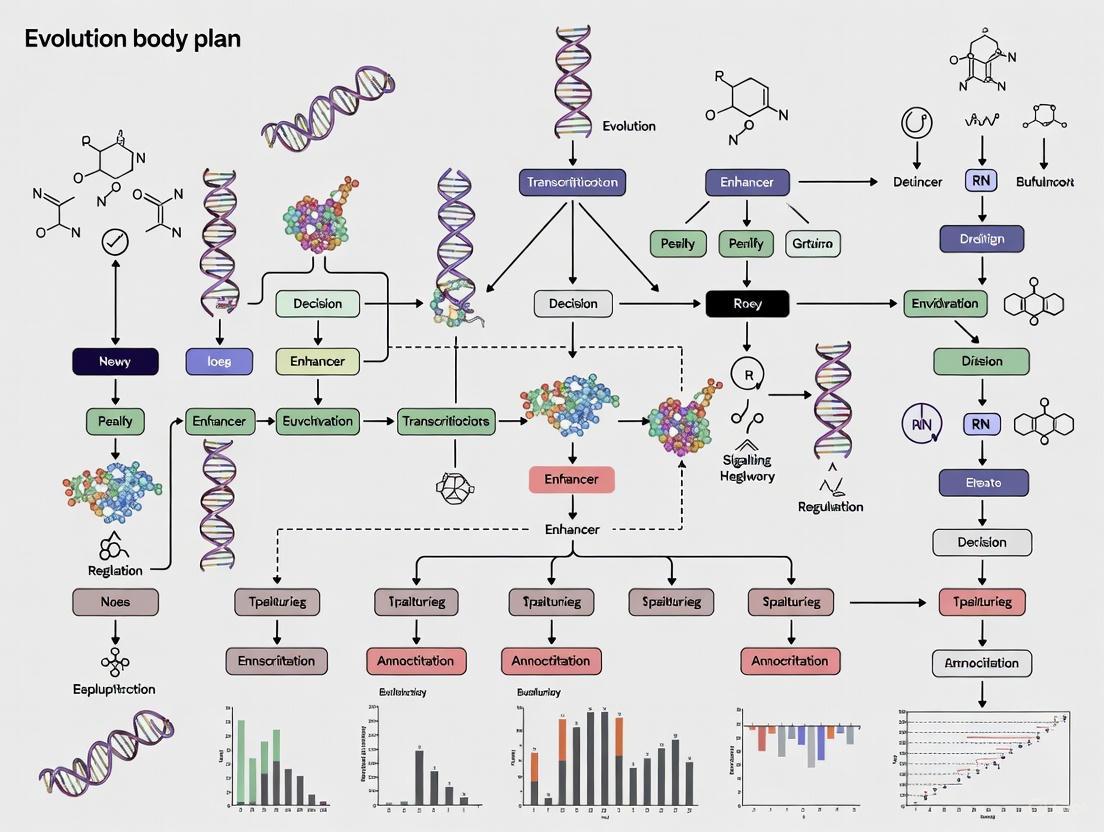
This article explores the pivotal role of Gene Regulatory Networks (GRNs) in shaping animal body plans and their implications for evolutionary biology and clinical research.
Gene Regulatory Network Evolution: From Body Plan Architecture to Therapeutic Discovery
Abstract
This article explores the pivotal role of Gene Regulatory Networks (GRNs) in shaping animal body plans and their implications for evolutionary biology and clinical research. We first establish the foundational principles of GRN architecture and its control over morphological development, drawing on key evo-devo concepts. The discussion then progresses to modern methodologies, including AI and deep learning, that are revolutionizing our ability to model GRNs and apply this knowledge to drug target discovery. A critical examination of the challenges and constraints in GRN evolution, such as network robustness and developmental constraints, provides a troubleshooting framework. Finally, we assess validation strategies through comparative analysis of GRN rewiring in model organisms and the use of causal inference in biomedicine. This synthesis offers researchers and drug development professionals a comprehensive resource bridging fundamental evolutionary concepts with cutting-edge therapeutic applications.
The Blueprint of Life: Understanding GRN Architecture and Body Plan Control
A central objective in evolutionary developmental biology is to explain the origin and diversification of animal body plans. A pivotal framework, established by Eric Davidson and colleagues, posits that the development and evolution of animal body plans are controlled by large gene regulatory networks (GRNs)—complex, hierarchical systems of genes and their regulatory interactions that orchestrate embryonic development [1] [2]. These networks are directly encoded in the genome and provide a causal explanation for the unfolding of developmental processes [3]. The architecture of these GRNs is modular, comprising different classes of subcircuits with distinct evolutionary constraints and consequences [4] [2]. A profound observation in the paleontological record is the establishment of nearly all known phylum-level body plans by the Early Cambrian period. The conservation of these body plans over hundreds of millions of years is attributed to the extreme evolutionary stability of specific, core components of the developmental GRN, known as "kernels" [1]. This article provides a technical guide to the GRN framework for body plan definition, detailing its historical foundations, core principles, and the modern experimental and computational tools used to decipher it.
Historical Foundation and the GRN Hypothesis
The historical conceptualization of the body plan is deeply rooted in comparative anatomy and embryology. However, the modern synthesis emerged with the ability to map the genomic regulatory code that directs developmental processes. The seminal 2006 paper, "Gene regulatory networks and the evolution of animal body plans," crystallized this paradigm [1] [2]. It argued that the stability of animal body plans since the Cambrian is due to the retention of highly conserved GRN kernels—subcircuits that execute essential upstream functions for the specification of major body parts [2]. These kernels are resistant to evolutionary change, and alterations in their architecture underlie the emergence of significant new morphological features. This framework shifted the focus of evolutionary developmental biology from the study of individual genes to the structure of the entire regulatory network in which they are embedded.
The Hierarchical Architecture of Developmental GRNs
Developmental GRNs are not flat structures; they possess a distinct hierarchical organization that inversely correlates with their evolutionary flexibility. This hierarchy is organized from core, immutable circuits to peripheral, adaptable components [4] [2].
Core Components and Their Evolutionary Constraints
The following table summarizes the key hierarchical components of a developmental GRN and their respective evolutionary roles:
Table 1: Hierarchical Components of Developmental Gene Regulatory Networks
| Component | Function in Development | Evolutionary Property | Phenotypic Impact of Change |
|---|---|---|---|
| Kernels | Execute essential upstream functions for body part specification; often involve interconnected transcription factors with positive feedback [2]. | Extraordinary conservation over hundreds of millions of years; resistant to evolutionary change [1] [2]. | Catastrophic; often non-viable; drives major body plan reorganization when it occurs [2]. |
| Plug-in Modules | Reusable units (e.g., signaling pathways) deployed in multiple GRNs for specific, localized functions [4]. | Independently evolved; can be co-opted into various GRNs without disrupting core functions [4]. | Significant but constrained; can lead to novel features without altering the fundamental body plan [4]. |
| I/O Switches | Act as interfaces, allowing external signals to regulate gene batteries [2]. | Labile; common sites for evolutionary tinkering. | Modulatory; can alter the spatial or temporal expression of traits [2]. |
| Differentiation Gene Batteries | Execute terminal cellular functions, producing specialized cell products like pigments or enzymes [4] [2]. | Highly flexible; free to diversify extensively [4]. | Minor; affects fine-tuning and specialization; basis for microevolutionary change [2]. |
This hierarchical structure imposes developmental constraints on evolution. The kernels, due to their essential role and internal structure (e.g., recursive wiring), are the most impervious to change, thereby conserving phyletic body plans. In contrast, changes in the more terminal differentiation gene batteries have minimal phenotypic impact, allowing for extensive diversification and speciation [4] [2].
Quantitative and Structural Properties of GRNs
Beyond the conceptual hierarchy, GRNs possess quantifiable structural properties that influence their function and evolution. Computational analyses, particularly of prokaryotic GRNs, have revealed that network complexity is subject to evolutionary constraints.
Constrained Network Properties
Studies on a large set of distinct prokaryotic GRNs have shown that global properties like network density (the fraction of possible interactions that actually exist) are constrained [5]. As the number of genes in a network increases, the density follows a power-law trend towards low values. This suggests an evolutionary bound on network complexity, which may be related to the May-Wigner stability theorem, positing that large, randomly connected systems can become unstable [5]. Furthermore, the number of regulator genes in a network is highly correlated with the total number of genes, typically constituting about 7% of the network on average in prokaryotes [5]. These constrained properties allow for predictions of the total number of interactions in a complete GRN, aiding in network curation and validation.
Table 2: Evolutionarily Constrained Structural Properties of GRNs
| Property | Description | Observed Trend | Biological Implication |
|---|---|---|---|
| Network Density | Ratio of existing interactions to all possible interactions. | Decreases as network size increases (power-law: d ~ n ^-1) [5]. | Constrains overall complexity for stability; allows prediction of total interactome size [5]. |
| Regulator Percentage | Fraction of genes in the network that act as transcriptional regulators. | Highly correlated with network size; ~7% on average in prokaryotes [5]. | Suggests a bounded "regulatory load" for a given genome size. |
| Sparsity | The property of having relatively few connections compared to the total possible. | A defining feature; most genes are directly regulated by only a small number of regulators [6]. | Enables modularity and reduces pleiotropic effects of mutations. |
| Node Degree Distribution | The distribution of the number of connections per node. | Follows a long-tailed, approximate power-law distribution (scale-free property) [6] [5]. | Existence of "hub" genes; resilience to random mutation but vulnerability to targeted attacks. |
Experimental and Computational Methodologies
Deciphering the architecture of developmental GRNs requires a combination of traditional molecular biology, modern high-throughput technologies, and sophisticated computational modeling.
Key Experimental Protocols
1. Protocol: Cis-Regulatory Module (CRM) Analysis This protocol identifies and characterizes the enhancers and other regulatory sequences that control the spatio-temporal expression of a gene [4].
- Methodology:
- Identification: Use comparative genomics to identify evolutionarily conserved non-coding sequences. Alternatively, use chromatin immunoprecipitation (ChIP) for histone modifications (e.g., H3K27ac) or transcription factor binding.
- Validation: Clone the putative CRM into a reporter construct (e.g., driving LacZ or GFP).
- Testing: Integrate the reporter construct into the model organism (e.g., Drosophila) via transgenesis and analyze the expression pattern in the embryo or adult.
- Mutagenesis: Systematically mutate predicted transcription factor binding sites within the CRM to determine their functional necessity [4].
- Application: This method has been extensively used to trace the evolutionary changes in CRMs of pigmentation genes like yellow in Drosophila, linking specific mutations to changes in melanin patterns [4].
2. Protocol: Network Inference from Perturbation Data (e.g., Perturb-seq) This method uses large-scale genetic perturbations to map causal regulatory relationships.
- Methodology:
- Perturbation: Use CRISPR-based methods to knock out or knock down individual genes in a high-throughput manner. In Perturb-seq, this is performed in pooled format with single-cell RNA sequencing readout [6].
- Profiling: Perform single-cell RNA sequencing on the perturbed cell population to capture the transcriptomic consequences of each perturbation.
- Inference: Employ computational models (e.g., linear models on directed graphs, regression-based methods) to infer the causal graph where a perturbed regulator affects the expression of target genes [6].
- Application: A genome-scale Perturb-seq study in K562 cells perturbed over 9,000 genes, revealing that only ~41% of transcript-targeting perturbations had significant effects on other genes, highlighting the sparsity of GRNs [6].
Computational Modeling and Visualization
1. Quantitative Dynamic Modeling with SSIO The Small-Sample Iterative Optimization (SSIO) algorithm is designed to quantitatively model GRNs with nonlinear regulatory relationships from limited gene expression data.
- Methodology:
- Input: Time-series gene expression data.
- Model Formulation: Gene regulations are modeled using sigmoid functions, which exhibit saturation characteristics, and mRNA degradation is assumed to follow first-order kinetics. The system is described by a set of Ordinary Differential Equations (ODEs).
- Parameter Estimation: SSIO utilizes techniques like Partial Least-Square Regression (PLS) for dimension reduction and an Expectation Maximization (EM) algorithm to handle unobserved values, iteratively optimizing the regulatory strengths (weights) between transcription factors and their targets [7].
- Validation: Models are evaluated using the Bayesian Information Criterion (BIC) and their ability to predict system responses to external signals and steady-states [7].
- Application: SSIO has been used to construct quantitative dynamic models for human and mouse adipocyte differentiation, revealing differences in regulatory efficiencies between species [7].
2. GRN Visualization with BioTapestry BioTapestry is a specialized, open-source tool for constructing, visualizing, and annotating GRN models [3].
- Key Features:
- Genome-Oriented Representation: Explicitly depicts genes and their cis-regulatory modules, showing transcription factor binding sites as inputs.
- Hierarchical Views:
- View from the Genome (VfG): A summary of all regulatory inputs for each gene.
- View from the Nucleus (VfN): Shows the active subnetwork in a specific cell type at a specific time [3].
- Bundled Links and Color Coding: Reduces visual clutter and helps trace connections from a source to its targets.
The following diagram illustrates a generic, simplified developmental GRN subcircuit, showcasing the type of regulatory logic that can be modeled and visualized with tools like BioTapestry.
Research into GRNs and body plans relies on a suite of key reagents and computational resources.
Table 3: Key Research Reagent Solutions for GRN/Body Plan Research
| Reagent / Resource | Function and Application | Specific Examples / Notes |
|---|---|---|
| Reporter Constructs (e.g., LacZ, GFP) | To visualize the activity of Cis-Regulatory Modules (CRMs) in vivo. | Used in transgenic models (e.g., Drosophila) to validate enhancer function and map expression patterns [4]. |
| CRISPR/Cas9 Systems | For targeted gene knockouts, knock-ins, and genome editing to test gene function. | Enables high-throughput perturbation screens (e.g., Perturb-seq) to map regulatory interactions [6]. |
| Specific Antibodies | For Chromatin Immunoprecipitation (ChIP) to map transcription factor binding sites and histone modifications. | Critical for identifying physical interactions between regulators and DNA [4]. |
| BioTapestry Software | Specialized computational tool for building, visualizing, and annotating GRN models. | Represents genes, CRMs, and their interactions in a genome-oriented, hierarchical manner [3]. |
| Cytoscape with stringApp | Open-source platform for network visualization and analysis, often used with expression data. | Used to retrieve protein-protein and genetic interaction networks from databases like STRING and overlay experimental data (e.g., log fold-change) [8]. |
| PRODIGEN Web Tool | Visualizes the probability landscape of stochastic gene regulatory networks. | Helps analyze the dynamics and stable states of stochastic network models, revealing multi-stability and rare events [9]. |
The framework of gene regulatory networks has provided a powerful mechanistic explanation for the definition and evolution of animal body plans. The hierarchical architecture of GRNs, with its evolutionarily stable kernels and labile peripheral components, elegantly accounts for both the profound conservation of phylum-level characters and the potential for morphological innovation. Contemporary research, powered by high-throughput perturbation technologies and sophisticated computational modeling, continues to dissect these networks at an accelerating pace. The integration of quantitative dynamic models, realistic network simulation frameworks that incorporate properties like sparsity and modularity [6], and advanced visualization tools is transforming our ability to move from static network maps to a dynamic, predictive understanding of how genomic information defines animal form.
Developmental Gene Regulatory Networks (dGRNs) are the complex, hierarchical systems of regulatory genes that control the progression of embryonic development from a single fertilized egg to a complete multicellular organism. These networks represent the functional interactions between transcription factors, signaling molecules, and their target cis-regulatory elements that determine the spatial and temporal expression of genes responsible for cell fate specification, patterning, and differentiation. The foundational work of Eric Davidson and colleagues established that dGRNs operate as logic processors that interpret maternally deposited initial conditions and transform them into the intricate spatial organization of the embryo through precisely timed transcriptional cascades [1] [10] [11]. The architecture of these networks is not random but is structured in a way that ensures both robustness and specific developmental outcomes, making their study essential for understanding both normal development and evolutionary processes.
Framed within evolutionary developmental biology ("evo-devo"), dGRNs provide the explanatory link between genetic information and the emergence of animal body plans. Research has demonstrated that the evolution of morphological structures occurs primarily through changes in the architecture of dGRNs, particularly alterations in the cis-regulatory modules that control gene expression, rather than through the invention of new protein-coding genes [10]. This review will detail the core structural principles of dGRNs, their evolutionary dynamics, and the experimental and computational methods used to decipher them, providing a comprehensive technical resource for researchers in the field.
Core Structural and Functional Principles of dGRNs
Hierarchical Organization
The most definitive structural characteristic of a dGRN is its deeply hierarchical organization. This hierarchy is typically conceptualized in three sequential layers of regulatory control, each with distinct functions and evolutionary properties.
- Kernel Subcircuits: Residing at the top of the hierarchy, kernels are recursively wired, functionally indivisible subcircuits that establish the initial territorial specifications of the embryo [1] [11]. They are responsible for initiating major regulatory cascades that define the fundamental axes and primary germ layers. Because of their extensive interconnectivity and foundational role, kernels are highly impervious to change; even minor perturbations typically result in catastrophic developmental failure, explaining their extreme evolutionary conservation since the pre-Cambrian era [1] [11].
- Plug-in Modules and I/O Switches: The middle layers of the hierarchy consist of reusable, modular subcircuits (plug-ins) and input/output switches. These modules are often co-opted for specific developmental roles, such as regulating processes like cell migration, adhesion, or differentiation in multiple contexts [11]. Switches act as logic gates that activate or deactivate specific subcircuits in response to signaling inputs, thereby directing developmental trajectories.
- Differentiation Gene Batteries: At the periphery of the network lie the effector genes that are directly responsible for bestowing specific cellular phenotypes. These batteries are controlled by the upstream regulatory layers and include genes encoding proteins for cell-type-specific functions, such as structural proteins, enzymes, and receptors [11]. This level exhibits the greatest genetic variation and is responsible for most phenotypic differences within and between species.
Key Topological Properties
Beyond the broad hierarchy, dGRNs and other GRNs share fundamental topological properties that shape their functional dynamics and evolutionary potential. Modern network theory, informed by large-scale perturbation data, has identified several critical features [12] [6] [13].
Table 1: Key Topological Properties of Gene Regulatory Networks
| Property | Description | Functional Implication |
|---|---|---|
| Sparsity | The typical gene is directly regulated by only a small number of transcription factors. | Limits the effects of single perturbations and enables modularity [6] [13]. |
| Directed Edges & Feedback | Regulatory relationships are directional (A→B), and feedback loops are pervasive. | Enables dynamic temporal control and stable state maintenance [13]. |
| Asymmetric Degree Distribution | The number of targets per regulator (out-degree) and regulators per target (in-degree) follows a heavy-tailed (power-law) distribution. | Existence of "master regulators" controls key processes; most genes have few connections [13]. |
| Modularity | Genes group into densely interconnected, functionally related communities. | Allows for the co-regulation of genes involved in a common biological process [13]. |
| Small-World Property | Most nodes are connected to each other by short paths. | Facilitates rapid propagation of information and coordinated responses [13]. |
The diagram below illustrates the hierarchical structure and key topological properties of a canonical dGRN.
dGRN Evolution and Body Plan Diversity
The structure of dGRNs directly informs the mechanisms and constraints of evolutionary change. The hierarchical and modular architecture dictates that alterations at different network levels produce phenotypic changes of vastly different magnitudes.
Evolutionary Mechanisms and Constraints
The kernel subcircuits at the top of the dGRN hierarchy are highly constrained. Their recursive wiring and foundational role mean that mutations affecting kernel genes or their core regulatory linkages are almost universally lethal, locking in the basic body plan established over geological time [1] [11]. This explains the phenomenon of the Cambrian explosion, where nearly all phylum-level body plans appeared rapidly in a geologically short period, after which the emergence of fundamentally new body plans ceased [1]. In contrast, evolutionary change that produces viable morphological diversity occurs primarily through alterations in the cis-regulatory modules controlling gene expression in the middle and peripheral layers of the dGRN [10]. These changes can alter the time, place, or level of gene expression without necessarily disrupting the core function of the protein product or the integrity of the entire network.
A Case Study: Rewiring of the Nodal Signaling Network
A compelling example of dGRN evolution is the rewiring of the Nodal signaling pathway, which controls dorsal-ventral and left-right axis patterning in deuterostomes, in the cephalochordate amphioxus [14]. The following diagram and case study detail this evolutionary event.
Experimental Evidence and Protocol: Research combined gene expression analysis, CRISPR/Cas9 mutagenesis, and transgenic reporter assays to trace this evolutionary event [14].
- Expression Analysis: In situ hybridization and RNA-seq revealed that the ancestral
Gdf1/3gene had lost its embryonic expression in amphioxus, while its duplicate,Gdf1/3-like, was zygotically expressed in a pattern mirroringLefty. - Functional Validation via Mutagenesis: CRISPR/Cas9 was used to generate knockout mutants.
Gdf1/3mutants showed no axis patterning defects, confirming its dissociation from the body plan dGRN.Gdf1/3-likemutants exhibited severe axial defects, demonstrating its functional takeover of the ancestralGdf1/3role.
- Identification of Regulatory Mechanism: Transgenic analysis showed that the intergenic region between the linked
Gdf1/3-likeandLeftygenes could drive reporter gene expression in both patterns, indicatingGdf1/3-likelikely hijackedLefty's enhancers.
This event demonstrates a stepwise evolutionary process: gene duplication, translocation, and enhancer hijacking led to the rewiring of a kernel-level network, compensated for by the co-option of Nodal as a maternal factor, all while preserving the overall signaling output and body plan [14].
Experimental and Computational Methods for dGRN Analysis
Deciphering the structure and logic of dGRNs requires a combination of high-throughput experimental assays and sophisticated computational inference tools.
Key Experimental Protocols
The gold standard for establishing causal regulatory relationships is through perturbation experiments. The following table details key reagents and methodologies.
Table 2: Key Research Reagents and Experimental Methods for dGRN Analysis
| Method/Reagent | Category | Primary Function |
|---|---|---|
| CRISPR/Cas9 Mutagenesis | Functional Perturbation | Generates knockout mutants to test gene function in vivo [14]. |
| Perturb-seq (CRISPR-seq) | Functional Genomics | Combines pooled CRISPR screens with single-cell RNA-seq to measure transcriptome-wide effects of many perturbations simultaneously [6] [13]. |
| In Situ Hybridization | Spatial Expression | Maps the precise spatial and temporal expression patterns of mRNAs in fixed embryos. |
| Transgenic Reporter Assays | Cis-Regulatory Analysis | Identifies and validates enhancer and promoter sequences by linking them to a reporter gene (e.g., GFP) and observing expression in vivo [14]. |
| ChIP-seq (Chromatin Immunoprecipitation) | Physical Binding | Identifies genome-wide binding sites for transcription factors and histone modifications. |
| Single-Cell RNA-seq (scRNA-seq) | Expression Profiling | Measures the transcriptome of individual cells, revealing cellular heterogeneity and developmental trajectories [13]. |
The workflow below outlines how these methods are integrated to reconstruct dGRN architecture.
Computational Network Inference and Forecasting
With the advent of large-scale perturbation data, computational methods have become indispensable for GRN inference. The process involves using algorithms to reconstruct the network architecture from observational and interventional expression data [15]. A major challenge is the benchmarking and validation of these methods, as the ground truth for most biological networks is unknown [15] [16].
Benchmarking Platforms: Initiatives like PEREGGRN have been developed to provide neutral evaluation of expression forecasting methods—computational tools that predict transcriptome-wide effects of novel genetic perturbations [16]. These platforms test methods on held-out perturbation conditions from diverse datasets, using metrics like Mean Absolute Error (MAE) and classification accuracy of cell fate. Findings indicate that while methods can predict expression changes, outperforming simple baselines remains challenging, highlighting the complexity of the task and the need for further method development [16].
Synthetic Network Modeling: To overcome the lack of ground truth, researchers develop algorithms to generate realistic synthetic GRNs with properties like sparsity, modularity, and scale-free topology [12] [6] [13]. These synthetic networks, coupled with differential equation models of gene expression, are used to simulate perturbation data (e.g., knockouts) in silico. This approach allows for the systematic study of how network structure influences the distribution and propagation of perturbation effects, providing critical intuition for interpreting real experimental data [13].
Developmental Gene Regulatory Networks represent the computational logic underlying embryogenesis. Their hierarchical, modular, and sparse structure, composed of evolutionarily rigid kernels and more flexible peripheral components, simultaneously ensures the robustness of the body plan and provides the substrate for morphological evolution. The continued integration of high-resolution perturbation experiments, such as Perturb-seq, with sophisticated computational models and benchmarking platforms is rapidly advancing our ability to map the architecture of these networks. A deeper understanding of dGRN principles is not only fundamental to evolutionary developmental biology but also holds great promise for applied fields, including regenerative medicine and drug development, where controlling cell fate is a primary objective.
The Cambrian Explosion represents the most significant diversification event in animal history, a period approximately 538–515 million years ago when essentially all major animal body plans first appeared in the fossil record [17]. This rapid emergence of morphological complexity stands as a macroevolutionary puzzle that has challenged biologists since Darwin's time. Research over recent decades has established that evolution of the animal body plan is fundamentally a systems-level problem, mediated through changes in the architecture of developmental Gene Regulatory Networks (GRNs) [1] [18]. These networks comprise interacting genes that control developmental processes, wherein transcription factors bind to cis-regulatory DNA elements to determine spatial and temporal gene expression patterns [18].
The hierarchical organization of GRNs provides a explanatory framework for understanding both the rapid diversification during the Cambrian and the subsequent stability of animal body plans. At their core, developmental GRNs operate through a logic encoded in cis-regulatory modules that determine how network nodes interact to execute developmental programs [18]. This regulatory architecture explains a crucial paradox: how profound morphological innovation could occur rapidly in the Cambrian, yet yield body plans that remained stable for hundreds of millions of years thereafter.
GRN Architecture and Evolutionary Mechanisms
The Hierarchical Structure of Developmental GRNs
Gene Regulatory Networks exhibit a multi-level hierarchical organization that directly impacts their evolutionary flexibility. At the highest level, GRNs establish specific regulatory states in spatial domains of the developing embryo, essentially mapping out the body plan design [18]. Subsequent network levels progressively refine these regional specifications through finer-scale patterning, ultimately activating differentiation gene batteries that execute tissue-specific functions [18]. This hierarchical structure creates distinct evolutionary compartments within the network, with profound implications for how developmental programs can evolve.
The regulatory linkages within GRNs are physically encoded in cis-regulatory DNA sequences, which determine the functional connections between transcription factors and their target genes [18]. These cis-regulatory modules integrate inputs from multiple transcription factors and transform them into precise spatial-temporal expression outputs. The evolutionary flexibility of GRN architecture stems largely from the fact that individual cis-regulatory modules can evolve independently, allowing specific aspects of development to be modified without disrupting the entire system [18].
Mechanisms of GRN Evolution
GRNs evolve primarily through changes to their cis-regulatory components, which can be categorized as internal sequence changes or contextual genomic changes [18]. The following table summarizes the primary mechanisms and their evolutionary consequences:
Table 1: Mechanisms of cis-Regulatory Evolution in GRNs
| Type of Change | Specific Mechanism | Potential Evolutionary Consequence |
|---|---|---|
| Internal sequence changes | Appearance of new transcription factor binding sites | Qualitative gain of function; co-option into new GRN contexts |
| Loss of existing binding sites | Loss of regulatory function or connectivity | |
| Changes in site number, spacing, or arrangement | Quantitative changes in expression output | |
| Contextual genomic changes | Translocation of modules via mobile elements | Co-optive redeployment to new developmental contexts |
| Module deletion | Loss of specific spatial-temporal expression domains | |
| Cis-regulatory duplication with subfunctionalization | Acquisition of novel expression domains while preserving original function |
A crucial feature of GRN evolution is the non-uniform conservation across network levels. Certain subcircuits, termed "kernels", exhibit extraordinary evolutionary stability [1]. These kernels constitute essential, conserved regulatory modules that control the development of major body parts and are remarkably resistant to evolutionary change [1]. Their stability explains the long-term conservation of fundamental anatomical organizations across vast evolutionary timescales.
Experimental Analysis of GRN Dynamics and Emergent Properties
Associative Conditioning in GRNs and Causal Emergence
Recent experimental work has revealed unexpected cognitive-like properties in Gene Regulatory Networks. A 2025 study analyzed 29 biological GRNs from the BioModels database, examining how associative conditioning—a form of learning—affects network integration [19]. Researchers adapted a Pavlovian conditioning paradigm to GRNs by identifying triplets of nodes that could serve as unconditioned stimulus (UCS), neutral stimulus (NS), and response (R) circuits [19].
Table 2: Causal Emergence Changes in GRNs After Associative Training
| Network Type | Number Tested | Pre-Training Causal Emergence | Post-Training Causal Emergence | Average Change | Networks Showing Increase |
|---|---|---|---|---|---|
| Biological GRNs | 19 (808 circuits) | Lower baseline | Significantly higher | +128.32% ± 81.31% | 17 of 19 networks |
| Random control networks | 145 | Higher baseline | Moderately higher | +56.25% ± 51.40% | Limited increase |
The experimental protocol involved several phases [19]:
- Pretesting: Identifying node triplets where UCS alone triggers R, NS alone does not trigger R
- Relaxation: Allowing networks to stabilize in initial state
- Training: Simultaneous stimulation of both UCS and NS nodes
- Testing: Verification that NS alone now regulates R, demonstrating associative memory
This associative conditioning paradigm induced a significant increase in causal emergence—a quantitative measure of how much the whole system provides information about future states that cannot be inferred from its individual components alone [19]. This suggests that learning experiences can strengthen the integrated, emergent properties of GRNs, making them function more as unified wholes rather than mere collections of parts.
Diagram 1: Associative Conditioning Protocol in GRNs
Methodological Framework for GRN Analysis
The quantitative analysis of causal emergence in GRNs employs sophisticated information-theoretic measures, particularly the Integrated Information Decomposition (ΦID) framework [19]. This approach quantifies the extent to which a system behaves as a collective whole rather than as a collection of independent components.
Key methodological aspects include:
- Dynamical Analysis: GRNs are modeled as Ordinary Differential Equations simulating gene expression dynamics
- Information Decomposition: ΦID exhaustively measures how macroscopic network features affect future states of network components
- Control Experiments: Comparison with randomly generated networks establishes biological specificity
- Persistence Testing: Long-term simulations verify stability of observed changes
The experimental findings demonstrate that biological networks exhibit distinctive evolutionary optimization—while random networks start with higher baseline emergence, biological networks show greater capacity to increase integration through experience-driven plasticity [19].
The Cambrian Explosion as a GRN Phenomenon
Patterns in the Fossil Record
The Cambrian Explosion manifests in the fossil record through three interrelated phenomena [17]:
- Biomineralization Pulse: Appearance of diverse skeletal elements across multiple lineages
- Morphological Disparity: Maximum morphological differences between phyla established early
- Ecological Complexity: Progressive increase in ecosystem structuring and trophic relationships
Notably, most phylum-level clades achieved their maximal morphological disparity during a narrow window close to their first appearance in the fossil record, though some groups like arthropods and chordates continued exploring morphospace throughout the Phanerozoic [17]. The overall envelope of metazoan morphospace occupation was already broad in the early Cambrian, challenging traditional models of gradual morphological expansion.
GRN Evolution and Developmental Innovation
The hierarchical organization of GRNs provides a compelling explanation for the Cambrian Explosion paradox—the simultaneous rapid innovation and subsequent stability. The conservation of network kernels established a stable foundation upon which evolutionary innovation could occur through changes to more peripheral network components [1]. This mosaic evolutionary pattern, where some subcircuits remain stable while others evolve flexibly, enables both body plan conservation and diversification.
The assembly of novel GRN architectures before and during the Cambrian likely occurred through multiple mechanisms [18]:
- Co-option: Redeployment of existing regulatory circuits to new developmental contexts
- Network Rewiring: Changes in cis-regulatory modules creating novel connections
- Module Duplication: Gene duplications followed by regulatory specialization
- Mobile Element Activity: Transposition of regulatory elements creating novel linkages
Diagram 2: Hierarchical GRN Organization and Evolutionary Flexibility
Contemporary Research Tools and Methodologies
Advanced GRN Inference and Analysis
Modern GRN research employs sophisticated computational tools to infer network architectures from expression data. The BIO-INSIGHT framework represents a state-of-the-art approach that optimizes consensus among multiple inference methods using biologically relevant objectives [20]. This many-objective evolutionary algorithm has demonstrated statistically significant improvements in both Area Under ROC Curve (AUROC) and Area Under Precision-Recall Curve (AUPR) across 106 benchmark networks compared to previous methods [20].
Key innovations in contemporary GRN analysis include:
- Consensus Inference: Integration of multiple inference methods to overcome individual limitations
- Biological Guidance: Incorporation of known biological constraints to improve accuracy
- Multi-objective Optimization: Simultaneous optimization of multiple network properties
- Clinical Applications: Translation to disease-specific network patterns for biomarker identification
Essential Research Reagents and Computational Tools
Table 3: Research Toolkit for GRN Investigation
| Tool/Reagent Category | Specific Examples | Primary Function |
|---|---|---|
| Network Inference Algorithms | BIO-INSIGHT, MO-GENECI | Inference of GRN topology from expression data |
| Dynamical Modeling Frameworks | ODE simulation, Boolean networks | Simulation of network dynamics and emergent properties |
| Information-theoretic Measures | ΦID, Causal Emergence metrics | Quantification of network integration and information flow |
| Experimental Validation Systems | CRISPR/Cas9, Reporter constructs | Verification of predicted regulatory interactions |
| Database Resources | BioModels, Gene Ontology | Access to curated network models and functional annotations |
The Gene Regulatory Network perspective provides a unified explanatory framework for understanding the Cambrian Explosion. The hierarchical organization of developmental GRNs, with stable kernels and flexible peripheral components, explains both the rapid morphological diversification and subsequent phylum-level stability [1] [18]. The recent discovery that GRNs can exhibit associative conditioning and increased causal emergence through experience demonstrates that these networks possess previously unappreciated capacities for integration and plasticity [19].
Future research directions include:
- Elucidating the specific cis-regulatory changes underlying key Cambrian innovations
- Developing more sophisticated multi-scale models of GRN evolution
- Exploring the relationship between network topology and evolutionary adaptability
- Translating insights from evolutionary GRN biology to biomedical applications
The Cambrian Explosion continues to inform our understanding of evolutionary processes, revealing how developmental system evolution, environmental triggers, and ecological relationships collectively shaped animal body plans [21] [17]. The GRN perspective provides a powerful explanatory framework that connects molecular mechanisms to macroevolutionary patterns, bridging disciplines from developmental biology to paleontology.
The evolution of animal body plans is fundamentally governed by changes in the genomic program that controls embryonic development. This program is encoded within developmental Gene Regulatory Networks (dGRNs), which are hierarchical assemblages of regulatory genes and their interactions that determine transcriptional activity in time and space [18]. Within these complex networks, certain components exhibit remarkable evolutionary stability. These are the kernels and subcircuits—highly conserved, canalized modules that execute core developmental functions. Their preservation across vast evolutionary timescales contrasts sharply with the more flexible terminal regions of dGRNs, and this mosaic structure explains major patterns in evolutionary biology, including hierarchical phylogeny and the observed discontinuities of paleontological change [18] [4]. Kernels are typically responsible for specifying essential developmental fields, such as the establishment of body axes or primary germ layers, and are characterized by their recursive, cross-regulatory structure and extreme resilience to change. Alterations to kernels are expected to have profound, often deleterious, pleiotropic consequences, leading to their deep conservation [4]. Understanding the properties and identification of these modules is crucial for research in evolutionary developmental biology and for interpreting the genetic basis of morphological innovation.
Defining Kernels and Subcircuits within the dGRN Hierarchy
The architecture of a dGRN is not flat; it is organized into a hierarchy of interconnected modules, each with distinct functional roles and evolutionary dynamics. This hierarchy can be broadly categorized into three main tiers, ranging from the most conserved to the most evolutionarily labile [4].
The dGRN Hierarchical Structure
Table 1: Tiers of the Developmental Gene Regulatory Network (dGRN) Hierarchy
| Tier Name | Functional Role | Evolutionary Lability | Key Characteristics |
|---|---|---|---|
| Kernels | Specifies essential developmental fields and body plan organization. | Very Low (Extremely Conserved) | Recursive, cross-regulatory subcircuits; resistant to change; alteration causes major pleiotropic effects. |
| Plug-in Modules | Performs specific, reusable functions across multiple GRNs. | Low (Conserved) | Often involves common signaling pathways (e.g., BMP, Nodal); can be co-opted into different networks. |
| Differentiation Gene Batteries | Directs expression of genes for terminal cell-type specific traits. | High (Very Labile) | Comprises genes encoding proteins for structural, metabolic, and phenotypic functions; extensive diversification. |
This hierarchical organization inversely correlates with developmental potential. The top-tier kernels establish the foundational regulatory states that map out the body plan, while the bottom-tier differentiation batteries execute cell-specific functions [18] [4]. The middle tier, the plug-in modules, consists of conserved sets of interactions, often involving widely used signaling pathways like BMP/TGF-β or Notch, which can be "plugged into" different GRNs to perform common tasks [4]. This modularity allows for evolutionary flexibility without destabilizing the core developmental process.
Kernel and Subcircuit Topology
The exceptional stability of kernels arises from their internal topology. They are typically composed of recursive, cross-regulatory linkages among a small set of core transcription factors. This structure creates a stable "lock-in" mechanism, where the subcircuit maintains its own regulatory state, making it resistant to perturbation. This canalization ensures the reliable execution of critical developmental events. Subcircuits at all levels are defined by their specific cis-regulatory modules (CRMs), which are the genomic sequences that hardwire the functional linkages between genes. Evolution of the body plan primarily occurs through alterations in these CRMs, which determine the network's topology [18].
Diagram 1: Hierarchical and Topological Structure of a dGRN. The diagram illustrates the three-tiered organization, showing the recursive, cross-regulatory nature of the core kernel (yellow) and its position atop the hierarchy, feeding into plug-in modules (red) and ultimately controlling differentiation gene batteries (blue). Dashed lines represent regulatory inputs from signaling pathways.
Evolutionary Dynamics: Conservation and Change in dGRNs
The mosaic structure of dGRNs, comprising both rigid and flexible parts, provides a powerful framework for understanding evolutionary process.
Mechanisms of Evolutionary Change
The primary mechanism for evolutionary change in dGRN structure is alteration of cis-regulatory modules (CRMs) [18]. These sequence changes can be qualitative, such as the gain or loss of transcription factor binding sites, or quantitative, affecting the timing or level of gene expression. More profound contextual changes, such as the translocation of entire CRMs via mobile genetic elements, can lead to the co-option of a subcircuit into a new developmental context [18]. The following table summarizes the types of cis-regulatory changes and their potential consequences for GRN function.
Table 2: Types of Cis-Regulatory Changes and Their Functional Consequences in GRN Evolution
| Type of Change | Specific Mechanism | Potential Functional Consequence |
|---|---|---|
| Internal Sequence Change | Appearance of new transcription factor binding site. | Gain of new regulatory input; co-optive redeployment. |
| Loss of existing transcription factor binding site. | Loss of a specific regulatory input. | |
| Change in number, spacing, or arrangement of sites. | Quantitative change in gene expression output. | |
| Contextual/Structural Change | Translocation of a CRM to a new genomic location (e.g., via mobile element). | Co-optive redeployment of a gene or subcircuit to a new GRN. |
| Deletion of an entire CRM. | Complete loss of a spatial/temporal expression domain. | |
| Gene duplication followed by subfunctionalization. | Specialization of function and a source of evolutionary novelty. |
A key insight is that the internal design of a CRM can be highly flexible. Research has shown that orthologous CRMs from distantly related species can produce identical expression patterns despite extreme differences in the order, number, and spacing of transcription factor binding sites, so long as the qualitative set of regulatory inputs is maintained [18].
Contrasting Evolutionary Patterns: Kernels vs. Differentiation Gene Batteries
The differential conservation across the dGRN hierarchy is evident in comparative studies. For example, the kernel governing endomesoderm specification is highly conserved between sea urchins and sea stars, despite their divergence over 500 million years ago [4]. In contrast, the differentiation gene batteries, such as those controlling insect pigmentation, are highly labile. In Drosophila, the yellow gene, a terminal differentiation gene involved in melanin production, is controlled by a set of tissue-specific CRMs (e.g., a "body element" and a "wing enhancer"). Evolutionary changes in these CRMs, such as the loss of an Abd-B binding site in Drosophila kikkawai, readily explain the loss of pigmentation traits with no other apparent pleiotropic effects [4]. This demonstrates the capacity for terminal networks to evolve rapidly and independently.
Experimental and Analytical Methodologies for dGRN Research
Mapping the structure of dGRNs and identifying their kernels requires a combination of perturbation experiments, transcriptional profiling, and computational modeling.
Key Experimental Protocols
Protocol 1: Interrogating dGRNs using Perturbation-Seq (e.g., CRISPR-based screens) This protocol is used to empirically discover regulatory relationships and infer network structure at scale [6] [13].
- Perturbation: In a relevant cell population (e.g., erythroid progenitor K562 cells or embryonic stem cells), perform CRISPR-based knockout or inhibition of a large set of transcription factor genes.
- Single-Cell RNA Sequencing: Use single-cell RNA-seq (e.g., Perturb-seq) to capture the transcriptome of each individual cell, linking each transcriptional profile to its specific genetic perturbation.
- Differential Expression Analysis: For each perturbation, identify all genes that show statistically significant changes in expression compared to unperturbed control cells.
- Network Inference: Construct a directed graph where an edge is drawn from Gene A to Gene B if perturbation of Gene A causes a significant change in the expression of Gene B. This reveals the local network structure around the perturbed genes [6].
Protocol 2: Quantitative Analysis of Transcriptome Dynamics During State Transitions This approach is ideal for tracing the dynamics of subcircuit operation as cells exit pluripotency and commit to specific lineages [22].
- System Setup: Use an experimentally tractable system like pluripotent animal pole cells (explants) from Xenopus blastula-stage embryos.
- Lineage Programming: Divide explants into cohorts and treat them with specific signaling factors to direct them toward distinct lineage states (e.g., Noggin for neural progenitor, BMP4/7 for ventral mesoderm, Activin for endoderm, or no factor for the default epidermal state).
- High-Resolution Time Series: Collect explant samples at multiple, closely spaced time points during the 7-hour transition from pluripotency to lineage restriction.
- Transcriptomic Analysis: Perform RNA-seq on all samples. This generates a quantitative time-series of gene expression dynamics for each lineage path.
- GRN Dynamics Modeling: Use computational methods to cluster genes with similar expression dynamics, infer causal relationships, and identify key regulatory genes and potential subcircuits that define each lineage decision [22].
Computational Modeling of GRN Structure and Function
To understand the properties of GRNs, researchers develop synthetic networks and model their function. A modern approach involves:
- Network Generation: Creating a directed graph using a generating algorithm that incorporates key biological properties like sparsity, hierarchical organization, modularity, and a power-law distribution of node connections (scale-free topology). Algorithms often use a preferential attachment model, biased to create group structure, to produce realistic networks [6] [13].
- Dynamical Systems Modeling: Simulating gene expression data from the network structure using a system of stochastic differential equations. This model accommodates feedback loops and molecular perturbations, allowing for in-silico knockout studies [13].
- Perturbation Effect Analysis: Systematically performing simulated knockouts and analyzing the distribution of effects. This helps determine how network properties like sparsity and modularity act to dampen or amplify perturbation effects, providing insight into the robustness of biological networks [6] [13].
Diagram 2: Integrated Workflow for dGRN Research. The diagram outlines the cyclic process of generating hypotheses via experimental perturbation and transcriptomics, inferring network structure, and validating findings using synthetic GRN models, which in turn inform new experiments.
Research into dGRN kernels and subcircuits relies on a suite of specialized reagents, datasets, and computational tools.
Table 3: Key Research Reagent Solutions for dGRN Analysis
| Tool / Resource Name | Type | Primary Function in dGRN Research |
|---|---|---|
| RegNetwork Database | Data Repository | An open-source, integrative repository of documented regulatory interactions (TFs, miRNAs, lncRNAs, genes) for human and mouse, providing a foundational network for comparative studies [23]. |
| Xenopus Animal Cap Explant System | Biological Model System | Provides a synchronous population of pluripotent vertebrate cells that can be directed to specific lineage states, allowing high-resolution analysis of GRN dynamics during developmental decision-making [22]. |
| Perturb-seq / CRISPR-screens | Experimental Method | Enables high-throughput mapping of causal regulatory relationships by linking single-cell transcriptomic readouts to specific gene knockouts [6] [13]. |
| BioTapestry | Computational Tool | A dedicated software platform for visualizing, modeling, and sharing developmental GRNs, allowing researchers to represent the hierarchical and temporal structure of network interactions [24]. |
| Synthetic GRN Simulators | Computational Model | Software (e.g., custom algorithms in R/Python) that generates realistic network structures with properties like sparsity and modularity, and models gene expression to run in-silico perturbation studies [13]. |
Kernels and subcircuits represent the deeply conserved, canalized core of developmental gene regulatory networks. Their hierarchical and recursive structure ensures the reliable execution of fundamental developmental processes underlying the animal body plan, while the more terminal parts of the network are free to diversify. This mosaic architecture of dGRNs, where stability and flexibility are strategically balanced, provides a powerful explanatory framework for understanding both the conservation of body plans across phyla and the mechanistic basis for the emergence of evolutionary novelty. Future research, powered by the integrative tools and protocols outlined here, will continue to decode the operational logic of these networks, with profound implications for evolutionary biology, developmental genetics, and the understanding of disease.
Gene Regulatory Networks (GRNs) represent the fundamental computational architecture of the genome, translating encoded genetic information into precise spatiotemporal patterns of gene expression that direct the formation of complex phenotypes. At their core, GRNs consist of interconnected genes and their regulatory interactions that control developmental processes through logical operations performed by cis-regulatory modules [25]. These networks possess an intrinsic capacity to buffer genetic and environmental perturbations while simultaneously executing constrained developmental programs that give rise to species-specific body plans. The hierarchical organization of GRNs enables them to integrate environmental cues with genetic information, allowing for both phenotypic stability and adaptive plasticity in evolving populations [26] [27]. Within evolutionary developmental biology, understanding GRN architecture provides crucial insights into how conserved kernel subcircuits can maintain phylum-level characteristics while peripheral network modifications enable diversification and innovation in morphological traits.
Architectural Principles of GRNs in Development
Core Components and Hierarchical Organization
The functional architecture of GRNs operates through a multi-layered hierarchical system that transforms genetic information into phenotypic outcomes. This organizational structure enables GRNs to process regulatory information with remarkable precision and robustness. The table below summarizes the core components and their functions in developmental GRNs:
Table 1: Core Components of Developmental Gene Regulatory Networks
| Component | Function | Role in Phenotype Determination |
|---|---|---|
| cis-Regulatory Modules | Receive and process regulatory inputs through transcription factor binding sites | Execute logical operations (AND, OR, NOT gates) that control spatial and temporal expression patterns |
| Transcription Factors | Recognize specific DNA sequence motifs and activate/repress target genes | Act as information processors that interpret cellular context and environmental signals |
| Signaling Pathways | Transduce extracellular and intercellular information | Mediate cross-talk between cells and tissues during morphogenesis |
| Epigenetic Regulators | Modify chromatin accessibility and DNA methylation states | Provide cellular memory and stabilize gene expression states across cell divisions |
Biological GRNs exhibit a nested hierarchical structure where master regulatory genes control broad developmental domains, while differentiation gene batteries execute tissue-specific functions [3]. This organization creates a logical progression from broadly expressed regulators to increasingly specialized effectors, with network kernels—highly conserved subcircuits—establishing the fundamental anatomical frameworks of body plans [28]. The hierarchical regulation enables developmental processes to be modular, with specific subcircuits operating semi-autonomously during different phases of embryogenesis and organogenesis.
Network-Level Properties that Enable Developmental Buffering
GRNs possess emergent properties that confer robustness to developmental processes, ensuring phenotypic stability despite genetic variation and environmental fluctuations:
- Redundancy and Distributed Control: Multiple transcription factors often regulate the same gene, creating backup systems that maintain functionality if one regulator is compromised [25]
- Feedback Loops: Positive and negative feedback structures stabilize gene expression states and create discrete developmental transitions
- Compensatory Mechanisms: Network rewiring can bypass disruptions through alternative regulatory paths, a property known as "system drift" [27]
- Scale-Free Topology: GRNs typically exhibit hub-based architecture where a few highly connected genes control many targets while most genes have few connections
These network properties enable canalization—the tendency for development to follow consistent trajectories despite perturbations. The buffering capacity of GRNs explains why many genetic mutations do not manifest in phenotypic changes, as the network compensates for altered components through its interconnected architecture [27].
GRN Operation in Phenotypic Plasticity and Evolution
Case Study: Diet-Induced Plasticity in Cichlid Fish Jaws
The lower pharyngeal jaw (LPJ) of the cichlid fish Astatoreochromis alluaudi provides a compelling example of how GRNs mediate environmentally responsive development while maintaining evolutionary flexibility. This species exhibits remarkable diet-induced phenotypic plasticity in its LPJ morphology [26]. When consuming soft food (e.g., insects), individuals develop a slender "papilliform" LPJ with numerous fine teeth. Conversely, hard-shelled molluscs induce a robust "molariform" LPJ with fewer, molar-like teeth—a clear example of how environmental inputs alter developmental trajectories through GRN modulation.
Schneider et al. (2014) conducted a comprehensive analysis of this system, tracking expression patterns of 19 candidate genes across eight months of development under different diet regimes [26]. Their investigation revealed dynamic temporal patterns: initially, 17 of 19 genes showed higher expression in soft-diet fish, but after three months, most genes displayed higher expression in hard-diet individuals. These genes fell into six functional categories related to bone and muscle formation, with specific expression modules showing time point-specific differences between morphs.
Table 2: Key Experimental Findings from Cichlid Jaw Plasticity Study
| Experimental Aspect | Methodology | Key Finding |
|---|---|---|
| Gene Expression Analysis | RNA-seq and qPCR across developmental time course | Identified 187 differentially expressed transcripts between adult LPJ morphs |
| Network Module Identification | Principal components analysis and hierarchical clustering | Revealed three co-expression modules with distinct temporal patterns |
| Regulatory Mechanism Analysis | Examination of putative transcription factor binding sites | Identified transcription factors regulating functional categories of genes |
| GRN Model Construction | Integration of expression data with binding site information | Formulated testable GRN explaining how different LPJ morphologies are diet-induced |
Through regulatory network analysis, researchers identified transcription factors that likely coordinate the expression of gene modules controlling jaw morphology [26]. This GRN perspective explains how mechanical strain from chewing different food types modulates gene expression to produce alternative phenotypic outcomes—demonstrating how environmental inputs interface with genetic programs during development.
Plasticity-Led Evolution and Genetic Assimilation
The cichlid jaw system exemplifies how phenotypic plasticity can facilitate evolutionary change through a process termed plasticity-led evolution [27]. This process follows a defined sequence:
- A novel adaptive phenotype is initially induced by environmental cues through existing plasticity mechanisms
- Previously cryptic genetic variation is uncovered as a result of the plastic response
- The phenotype undergoes changes in regulatory architecture
- Further adaptive refinement occurs under selection in the novel environment
Computational models of GRNs demonstrate that these behaviors emerge naturally from the properties of complex developmental systems [27]. When environmental changes persist, genetic accommodation can refine the initially plastic response, and in cases where the phenotype becomes constitutively expressed despite the environment, genetic assimilation occurs [26]. This process provides an evolutionary pathway for novel complex traits that originate as environmentally induced variants, potentially explaining rapid diversification events such as the cichlid adaptive radiation in East African lakes [26].
Methodologies for GRN Mapping and Analysis
Experimental Approaches for GRN Reconstruction
Mapping the architecture of GRNs requires sophisticated methodologies that can identify regulatory components and their interactions. The following experimental approaches form the foundation of GRN analysis:
Table 3: Key Methodologies for GRN Reconstruction and Analysis
| Method | Principle | Application in GRN Research |
|---|---|---|
| ChIP-chip/ChIP-seq | Genome-wide mapping of transcription factor binding sites using chromatin immunoprecipitation | Identifies direct regulatory targets of transcription factors; provides physical evidence of protein-DNA interactions [25] |
| Single-cell RNA-seq | High-resolution profiling of gene expression in individual cells | Enables reconstruction of cell-type-specific regulatory networks and developmental trajectories [29] |
| ATAC-seq | Assay for Transposase-Accessible Chromatin to map open chromatin regions | Identifies potentially active regulatory elements across the genome [28] |
| Perturbation Studies | Systematic disruption of network components (knockouts, knockdowns) | Tests functional requirements of specific genes and identifies regulatory relationships [29] |
Recent advances in single-cell technologies have revolutionized GRN analysis by enabling researchers to capture regulatory heterogeneity within tissues. The SCORPION algorithm represents a significant methodological innovation, using a message-passing approach to reconstruct comparable GRNs from single-cell RNA-seq data that are suitable for population-level comparisons [29]. This method outperforms 12 existing GRN reconstruction techniques in precision and sensitivity, demonstrating the importance of computational advances in extracting regulatory information from sparse single-cell data.
Visualization and Computational Modeling Tools
Specialized software tools are essential for representing and analyzing the complexity of GRNs. BioTapestry is an open-source computational tool specifically designed for GRN modeling that provides multiple hierarchical views of network architecture [3]:
- View from the Genome (VfG): Summarizes all regulatory inputs to each gene regardless of spatiotemporal context
- View from All Nuclei (VfA): Displays interactions present in different regions over the entire developmental time course
- View from the Nucleus (VfN): Represents the network state at a specific time and place, with inactive elements indicated in gray
This multi-level representation helps researchers understand how the same underlying GRN produces different outcomes across developmental contexts. BioTapestry's specialized notation explicitly represents cis-regulatory modules and their organization, enabling precise documentation of regulatory logic [3].
Diagram 1: Hierarchical organization of a developmental GRN
Advancing GRN research requires specialized reagents and computational resources. The following tools represent essential components of the modern GRN researcher's toolkit:
Table 4: Essential Research Reagents and Resources for GRN Studies
| Resource Category | Specific Examples | Function and Application |
|---|---|---|
| Genome Editing Tools | CRISPR/Cas9 systems, TALENs | Precise perturbation of cis-regulatory elements and transcription factor genes to test regulatory hypotheses |
| Library Construction Kits | 10x Genomics Single Cell RNA-seq, ATAC-seq kits | High-throughput preparation of sequencing libraries for regulatory element and gene expression profiling [29] |
| Bioinformatics Software | BioTapestry, SCORPION, PANDA | Reconstruction, visualization, and comparison of GRN models from experimental data [3] [29] |
| Database Resources | STRING, JASPAR, Cis-BP | Protein-protein interaction data, transcription factor binding motifs, and regulatory annotations [29] |
| Antibody Reagents | Validated ChIP-grade antibodies | Immunoprecipitation of transcription factors and chromatin modifications for binding site mapping [25] |
Gene Regulatory Networks represent the fundamental mechanistic link between genotype and phenotype, executing developmental programs through precise spatiotemporal control of gene expression while buffering against perturbations. Their hierarchical architecture, modular organization, and emergent properties enable both developmental stability and evolutionary flexibility. The integration of high-throughput experimental approaches with sophisticated computational modeling has transformed our ability to map GRN architecture and understand how network modifications drive phenotypic evolution. As research advances, the continued refinement of GRN models promises deeper insights into how evolutionary changes in regulatory networks generate the diversity of animal body plans observed in nature while maintaining essential phylogenetic constraints.
Decoding the Network: AI, Simulation, and Clinical Translation
Gene regulatory networks (GRNs) represent the complex molecular circuitry that controls cellular identity, developmental processes, and evolutionary change. Forward-time in silico evolution has emerged as a powerful computational approach to model how GRNs evolve under various evolutionary pressures. This whitepaper examines the EvoNET simulation framework and other key methodologies that enable researchers to simulate the interplay between genetic drift, natural selection, and network dynamics over generational timescales. By providing a technical guide to these approaches within the context of body plan evolution research, we aim to equip scientists with the knowledge to implement these methods for investigating fundamental questions in evolutionary developmental biology and for identifying potential therapeutic targets in disease contexts.
Gene regulatory networks constitute the fundamental control systems governing embryonic development, cellular differentiation, and the emergence of complex body plans. The evolution of organismal diversity is increasingly understood as a consequence of changes in GRN architecture and regulation rather than solely through the creation of new genes [30]. These networks exhibit non-linear relationships between genotype and phenotype, where the same phenotype can manifest through multiple genetic variations—a phenomenon known as phenotypic plasticity [31]. Understanding how GRNs evolve requires modeling approaches that can capture these complex dynamics across generational timescales.
Forward-time in silico evolution provides a computational framework to simulate GRN evolution by implementing evolutionary algorithms that subject virtual populations of networks to selection pressures, mutation, and genetic drift. Unlike reverse-time coalescent simulations, forward-time approaches model the actual propagation of genetic material from one generation to the next, allowing researchers to observe evolutionary dynamics as they unfold [31]. This methodology enables the testing of evolutionary hypotheses that would be difficult or impossible to investigate through experimental approaches alone, particularly when studying the deep evolutionary history of body plan organization.
Fundamental Principles of GRN Architecture
Structural Properties of Biological GRNs
Biological gene regulatory networks exhibit distinctive architectural properties that constrain their evolution and function. Understanding these properties is essential for creating realistic in silico models:
- Sparsity: Although gene expression is controlled by many variables, each gene is typically directly regulated by only a small number of transcription factors. In perturbation studies, only 41% of genes that produce primary transcripts significantly affect the expression of other genes [32].
- Directed edges and feedback loops: Regulatory relationships are inherently directional, with clear distinctions between regulators and targets. Feedback loops are pervasive, with approximately 2.4% of regulatory pairs exhibiting bidirectional effects [32].
- Scale-free topology: GRNs typically exhibit power-law distributions for node connectivity, with a few highly connected "hub" genes regulating many targets while most genes have few connections. This structure differs from random networks and has important implications for evolutionary dynamics [33] [34].
- Modularity and hierarchy: GRNs are organized into functionally specialized modules that execute specific biological processes. This modular organization corresponds to a hierarchical structure of regulatory relationships [32].
- Small-world properties: Most nodes in GRNs are connected by short paths, facilitating efficient information flow while maintaining specialized modules [33].
Network Representation Models
Table 1: Common GRN Representation Models in In Silico Evolution
| Model Type | Representation | Advantages | Limitations |
|---|---|---|---|
| Boolean Networks | Binary gene states (on/off) with logical update rules | Computational efficiency; intuitive dynamics | Oversimplifies continuous expression values |
| Linear Models | Coupled differential or difference equations | Captures quantitative relationships; more biological realism | Computationally intensive for large networks |
| Artificial Genome | Genome-like sequence encoding network structure | Models genotype-phenotype mapping more realistically | Complex implementation; computationally expensive |
| Bayesian Networks | Probabilistic graphical models | Handles uncertainty; integrates diverse data types | Requires significant data for parameter estimation |
The choice of representation model depends on the specific research questions, with Boolean networks offering computational advantages for large-scale evolutionary simulations, while linear models provide more biological realism at greater computational cost [34].
The EvoNET Framework: Core Architecture
Model Specifications and Individual Representation
EvoNET implements a forward-in-time simulation framework that extends Wagner's classical GRN model by explicitly implementing cis and trans regulatory regions [31]. In this model:
- Each individual in a population of N haploid organisms contains a set of genes with binary regulatory regions of length L.
- A cis-regulatory region (Ri,c) is defined upstream of each gene, where trans-regulatory regions from other genes can bind.
- Interaction strength and type between genes is determined by a function I(Ri,c,Rj,t) that returns a value in the range [-1,1], where negative values indicate suppression, positive values activation, and 0 represents no interaction.
- The absolute value of interaction strength is calculated as |I(Ri,c,Rj,t)| = pc(Ri,c[1:L-1] & Rj,t[1:L-1])/L, where pc is a popcount function that counts the number of common set bits (1's) in the two vectors [31].
This representation enables a more realistic modeling of regulatory evolution than earlier approaches, as single mutations in cis-regions can affect a gene's regulation by all other genes, while trans-region mutations affect how a gene regulates all its targets.
Interaction Matrix and Phenotypic Determination
The regulatory interactions between genes in EvoNET are stored in an n×n matrix M of real values in the [-1,1] range, where n represents the number of genes in the network [31]. The phenotypic outcome is determined through a maturation process:
- Each individual undergoes a maturation period where its GRN may reach equilibrium.
- Gene expression dynamics during this period determine the individual's phenotype.
- The fitness of each individual is evaluated by measuring the distance between its resulting phenotype and an optimal phenotype.
- Individuals then compete to produce the next generation based on their fitness values.
This approach allows the fitness effects of mutations to be non-constant and dependent on the network context, more accurately reflecting biological reality than models with fixed selection coefficients.
Inheritance and Recombination Model
EvoNET implements a novel recombination model where sets of genes with their cis and trans regulatory regions can recombine in different genetic backgrounds [31]. This approach:
- Allows individuals to have either one parent (asexual reproduction) or two parents (sexual reproduction with recombination).
- Models how recombination places genes with their regulatory regions into new network contexts, with consequent effects on their interactions with other genes.
- Enables the study of how recombination facilitates or constrains evolutionary innovation in GRN architecture.
Unlike Wagner's original model which considered cyclic equilibria lethal, EvoNET allows viable cyclic equilibria during the maturation period, resembling biological phenomena such as circadian regulatory alternations [31].
Alternative Simulation Approaches
CellOracle: In Silico Perturbation of GRNs
CellOracle represents a complementary approach that combines GRN inference with in silico perturbation to simulate how transcription factor perturbations alter cell identity [35]. The methodology involves:
- Base GRN Construction: Using single-cell chromatin accessibility data (scATAC-seq) to identify promoter and enhancer regions, then scanning these elements for TF-binding motifs to generate a "base GRN structure" of all potential regulatory interactions.
- Cell-Type-Specific GRN Inference: Applying regularized linear regression to scRNA-seq data to identify active connections in the base GRN for specific cell types or states.
- In Silico Perturbation: Simulating transcription factor knockout or overexpression by propagating signals through the GRN to estimate global downstream effects on gene expression.
- Cell Identity Transition Mapping: Converting simulated gene expression shifts into vectors representing transitions in cell identity within a low-dimensional space.
CellOracle has been successfully validated in several developmental contexts, including mouse and human hematopoiesis and zebrafish embryogenesis, where it correctly modeled reported phenotypic changes resulting from transcription factor perturbation [35].
Scale-Free Network Generation Algorithm
For simulating the evolution of GRN structures with biologically realistic properties, a network generation algorithm based on preferential attachment with modularity constraints has been developed [32]. This algorithm:
- Starts with a small initial graph and randomly adds nodes or directed edges until reaching a specified size.
- Incorporates preferential attachment where the probability of a new edge connecting to existing nodes increases with the number of connections those nodes already have.
- Generalizes the Bollobás et al. (2003) algorithm by assigning nodes to predefined groups and specifying a within-group affinity term that biases edges toward members of the same group.
Table 2: Parameters for Scale-Free Network Generation
| Parameter | Effect on Network Structure | Biological Interpretation |
|---|---|---|
| Sparsity (p) | Adjusts mean regulators per gene (~1/p) | Controls network connectivity density |
| Number of Groups (k) | Determines modular organization | Corresponds to functional modules |
| Modularity (w) | Controls fraction of within-group edges | Determines functional specialization |
| δin and δout | Control variance of in/out-degree distributions | Influences presence of master regulators |
This algorithm generates directed scale-free networks on n nodes with assigned group memberships, where parameters control specific network properties relevant to biological GRNs [32].
Experimental Protocols for In Silico Evolution
Implementing EvoNET Simulations
A standard protocol for implementing EvoNET-style forward-time evolution of GRNs involves the following steps:
Population Initialization:
- Create an initial population of N haploid individuals.
- For each individual, generate random binary sequences of length L for all cis and trans regulatory regions.
- Set the number of genes n based on the biological system being modeled.
Fitness Evaluation:
- For each individual, run the maturation process by allowing the GRN to reach equilibrium through iterative updates.
- Calculate the phenotypic output from the equilibrium gene expression values.
- Compute fitness as the inverse of the Euclidean distance between the phenotypic output and the target optimal phenotype.
Selection and Reproduction:
- Select individuals for reproduction with probability proportional to their fitness.
- Implement mutation at a specified rate by flipping bits in the regulatory sequences.
- For sexual reproduction, implement recombination by exchanging sets of genes between parental genomes.
- Create the next generation from the offspring.
Data Collection:
- Track population genetic statistics (diversity, allele frequencies) across generations.
- Monitor fitness trajectories and phenotypic evolution.
- Record network properties (connectivity, modularity, robustness) at specified intervals.
This protocol enables researchers to investigate questions about the evolution of robustness, the role of genetic drift, and the dynamics of adaptation in GRNs [31].
In Silico Perturbation with CellOracle
For perturbation-based analysis of existing GRNs, the CellOracle protocol provides an alternative approach:
Data Preprocessing:
- Obtain scRNA-seq data from the biological system of interest.
- If available, obtain scATAC-seq data for the same or similar system.
- Perform standard preprocessing including normalization, dimensionality reduction, and clustering.
Base GRN Construction:
- Identify promoter and enhancer regions from scATAC-seq data using Cicero or similar approaches.
- Scan regulatory elements for TF-binding motifs using position weight matrices.
- Construct a base GRN of all potential regulatory interactions.
GRN Inference:
- For each cell cluster, build regularized linear regression models to predict target gene expression from TF expression.
- Use Bayesian or bagging strategies to estimate connection certainty and remove weak connections.
- Generate cluster-specific GRN configurations.
In Silico Perturbation:
- Select transcription factors for in silico knockout or overexpression.
- Propagate perturbation signals through the GRN using the network model.
- Calculate global shifts in gene expression patterns.
- Convert expression shifts to cell identity transition vectors.
Validation:
- Compare predictions to known perturbation outcomes from literature.
- Compute perturbation scores that quantify how perturbations alter differentiation trajectories.
- Perform experimental validation of novel predictions when possible [35].
The Scientist's Toolkit: Research Reagent Solutions
Table 3: Essential Research Reagents and Computational Tools for GRN Evolution Studies
| Resource Category | Specific Examples | Function/Purpose |
|---|---|---|
| Simulation Software | EvoNET [31], CellOracle [35], BIO-INSIGHT [20] | Forward-time evolution simulations and GRN inference |
| Network Analysis | Cytoscape with MCDS plugin [36], SageMath ILP programs | Identification of key regulator genes and network analysis |
| Base GRN Resources | CellOracle promoter base GRNs [35], Mouse scATAC-seq atlas [35] | Pre-compiled regulatory information for multiple species |
| Perturbation Databases | ChIP-seq datasets [35], Perturb-seq data [32] | Ground-truth validation data for regulatory interactions |
| Benchmark Datasets | 106 academic GRN benchmarks [20], Experimental haematopoiesis atlas [35] | Standardized datasets for method validation and comparison |
Applications in Body Plan Evolution Research
In silico evolution of GRNs has provided significant insights into the evolutionary mechanisms underlying body plan diversity. Key applications include:
Evolution of Axial Patterning Systems
Studies of the Nodal signaling pathway, which governs body axis patterning in deuterostomes, demonstrate how GRN rewiring occurs through evolutionary time. Research in cephalochordate amphioxus revealed:
- The Gdf1/3-like gene has taken over the axial development role of the ancestral Gdf1/3 gene through what appears to be enhancer hijacking [14].
- This rewiring event involved translocation of a duplicated Gdf1/3 gene to the Lefty locus, enabling coregulation of these genes.
- Compensation for lost maternal Gdf1/3 expression occurred through Nodal becoming an indispensable maternal factor in amphioxus [14].
Such findings illustrate how in silico approaches can generate testable hypotheses about the stepwise evolutionary processes that reshape developmental GRNs.
Evolution of Segmentation Networks
The evolution of insect segmentation mechanisms provides another compelling case study. Computational models have shown:
- Primitive insects utilized short-germ band segmentation with sequential segment formation.
- Derived insects like Drosophila evolved long-germ band segmentation with simultaneous segment formation.
- This evolutionary transition likely occurred through cooption of new genes into the segmentation network, effectively doubling the number of genes involved to maintain regulatory accuracy in a condensed timeframe [30].
- Gene recruitment from other developmental contexts (such as neurogenesis) provided a reservoir of tested network components that could be incorporated into the evolving segmentation network [30].
Forward-time in silico evolution of GRNs represents a powerful methodology for investigating the fundamental principles of evolutionary developmental biology. The EvoNET framework, along with complementary approaches like CellOracle, enable researchers to simulate evolutionary processes that operate over timescales inaccessible to experimental observation. These methods have demonstrated that GRN evolution is characterized by:
- The emergence of robustness through redundant network configurations [31]
- Rewiring events that alter network topology while preserving phenotypic outcomes [14]
- Cooption of existing genes and network motifs into new developmental contexts [30]
- Interactions between random genetic drift and natural selection in shaping network architecture [31]
As these computational approaches continue to develop, they will increasingly integrate more realistic molecular details while maintaining the scalability needed to model genome-wide regulatory networks. The application of these methods to disease contexts, particularly cancer and developmental disorders, holds promise for identifying critical regulatory nodes that could serve as therapeutic targets. By combining in silico evolution with experimental validation in model organisms, researchers can unravel the complex evolutionary history encoded in developmental gene regulatory networks and elucidate the mechanisms that generate biological diversity.
The exponential growth of biomedical literature presents a formidable challenge for researchers investigating complex gene regulatory networks (GRNs) and their evolution. This whitepaper details how Large Language Models (LLMs), a transformative artificial intelligence technology, are revolutionizing biomedical text mining and drug target identification. We provide an in-depth technical examination of specialized LLM architectures like BioBERT and BioGPT, which demonstrate superior capabilities in processing biomedical semantics and syntax. The document outlines concrete methodologies for extracting prior knowledge on gene interactions from publications, methodologies directly applicable to inferring more accurate GRN models. By integrating these text-mined relationships into systems biology frameworks, researchers can gain unprecedented insights into the evolutionary dynamics that shape regulatory networks governing body plan development and other complex phenotypic outcomes.
Gene regulatory networks (GRNs) represent the complex, non-linear interactions between genes and their products that control cellular processes, development, and ultimately, phenotypic expression [31]. Understanding the evolution of these networks—how they diverge to create novel body plans or adapt to new environments—requires inferring network structures and their functional consequences. However, a significant bottleneck in reconstructing accurate GRNs is the scarcity of high-quality, structured prior knowledge about gene interactions. Manually curating this information from the nearly 30 million citations in PubMed is infeasible due to the sheer volume [37]. This is where LLMs offer a paradigm shift. Trained on massive text corpora, these models, particularly those fine-tuned on biomedical literature, can systematically parse and extract meaningful biological relationships at scale, transforming unstructured text into computable data for GRN inference and evolutionary modeling [38] [39].
LLM Architectures for Biomedical Text Mining
Large Language Models are deep learning algorithms based on the Transformer architecture, which uses a self-attention mechanism to weigh the importance of different words in a sequence, capturing long-range dependencies and complex contextual relationships in text [39]. In biomedical applications, two main categories of LLMs are employed, each with distinct advantages.
General-Purpose vs. Biomedical-Specific LLMs
General-Purpose LLMs (e.g., GPT-4, Claude) are trained on vast, diverse datasets including general web text, books, and scientific literature. Their strength lies in broad world knowledge and the ability to draw connections across disparate domains [39]. However, they can struggle with the precise semantics and complex terminology of specialized biomedical language.
Biomedical-Specific LLMs are pre-trained or fine-tuned on domain-specific corpora such as PubMed and PubMed Central (PMC), yielding a more nuanced understanding of biomedical language. Key models include:
- BioBERT: A BERT-derived model that outperforms its general counterpart in tasks like biomedical named entity recognition (NER) and relation extraction [38] [39].
- BioGPT: A GPT-derived model trained on biomedical literature, which excels in text generation and relation extraction, demonstrating state-of-the-art performance on multiple downstream tasks [39].
- PubMedBERT: A model trained from scratch on PubMed text, achieving top performance in understanding biomedical concepts [39].
Table 1: Comparison of Key LLMs for Biomedical Text Mining
| Model Name | Base Architecture | Training Corpus | Key Strengths | Primary Applications in Target ID |
|---|---|---|---|---|
| BioBERT | BERT | PubMed, PMC | Named Entity Recognition, Relation Extraction | Gene-protein interaction extraction, literature triage |
| BioGPT | GPT | PubMed | Text generation, question answering | Summarizing gene functions, generating hypotheses |
| PubMedBERT | BERT | PubMed (from scratch) | Biomedical concept understanding | Semantic relationship classification |
| Med-PaLM 2 | PaLM 2 | Medical QA datasets, literature | Medical knowledge, reasoning | Clinical decision support, target validation |
Technical Foundation: The Transformer Architecture
The core of these LLMs is the Transformer encoder-decoder structure or its variants. The encoder maps an input sequence (e.g., a sentence from a biomedical abstract) to a sequence of contextual embeddings. The self-attention mechanism within the Transformer allows each token in the sequence to interact with every other token, dynamically computing a weighted sum of values based on relevance. This is crucial for understanding complex biological relationships where the interaction between two gene mentions may depend on a verb or negation several words away. The model is typically trained using objectives like Masked Language Modeling (MLM), where it learns to predict randomly masked tokens in the input, forcing it to develop a deep, bidirectional understanding of language context [39].
Experimental Protocols: From Text to Gene Networks
This section details the methodologies for employing LLMs in the extraction of gene-gene interactions and the construction of prior knowledge networks for GRN inference.
Protocol 1: BioBERT-Based Relation Extraction for GRN Prior Knowledge
The PRESS (Prior Knowledge Enhanced S-system) methodology provides a robust framework for integrating text-mined data into GRN reconstruction [38].
1. Objective: To automatically extract regulatory gene interactions from biomedical literature to serve as biologically relevant constraints in S-system-based GRN model inference.
2. Materials and Inputs:
- Biomedical Literature Corpus: PubMed/Medline abstracts and full-text articles from PMC.
- Gene/Protein Dictionary: A comprehensive list of standardized gene symbols and names (e.g., from UniProtKB).
- Pre-trained BioBERT Model: Specifically, a model fine-tuned on relation extraction tasks.
3. Procedure:
- Step 1: Named Entity Recognition (NER). Process the raw text through the BioBERT-based NER module to identify and normalize all mentions of genes, proteins, and other relevant biological entities.
- Step 2: Relation Extraction. For sentences containing co-occurring gene entities, the fine-tuned BioBERT model classifies the semantic relationship between them (e.g., "activates," "inhibits," "binds"). This moves beyond simple co-occurrence to understand the specific interaction type.
- Step 3: Prior Knowledge Matrix Construction. The extracted relationships are aggregated and used to construct a prior knowledge matrix, P, where P_ij indicates the confidence or type of regulatory relationship from gene j to gene i based on literature evidence.
- Step 4: Integration into GRN Inference. The P matrix is incorporated into the S-system parameter estimation process. This is often achieved through a penalization strategy in the fitness function that favors network structures consistent with the prior knowledge, thereby reducing the parameter search space and false positives [38].
4. Validation: The reconstructed GRN is validated against benchmark datasets (e.g., E. coli sub-networks, SOS DNA repair network) using metrics like Area Under the Precision-Recall Curve (AUPR) to quantify the improvement in prediction accuracy over methods without prior knowledge.
Diagram 1: BioBERT-based prior knowledge extraction workflow.
Protocol 2: Semantic Relationship Mining with GIREM
The GIREM (Gene Interaction Rare Event Miner) framework offers a complementary, feature-engineered approach to text mining, emphasizing semantic and syntactic analysis [37].
1. Objective: To construct a gene-gene interaction network by identifying functionally related genes based on their co-occurrences in biomedical abstracts, enhanced by semantic analysis.
2. Materials:
- PubMed Abstracts: Retrieved via NCBI's E-utilities based on a curated list of human genes.
- Gene Ontology (GO) Annotations: From UniProtKB/Swiss-Prot.
- Dependency Parser: A syntactic parser to analyze sentence structure.
3. Procedure:
- Step 1: Data Acquisition. For a seed set of genes, retrieve all associated PubMed abstracts using NCBI's E-utilities (
esearchandefetch). - Step 2: Semantic Rule Application. For each sentence containing a pair of gene mentions, apply linguistic rules based on dependency parse trees to determine if a semantic relationship exists (e.g., a verb phrase connecting the two genes).
- Step 3: Feature Vector Construction. For each candidate gene pair, create a 9-dimensional feature vector. This vector captures:
- Co-occurrence frequencies of the two genes at the abstract, sentence, and semantic levels.
- Co-occurrence frequencies between the first gene and the GO terms annotated to the second gene.
- Co-occurrence frequencies between the second gene and the GO terms annotated to the first gene.
- Step 4: Classification. The feature vectors are fed into a Weighted Logistic Regression (WLR) classifier, which labels each pair as "related" or "un-related," effectively identifying high-confidence interactions for the genetic network [37].
Diagram 2: GIREM semantic relationship mining workflow.
The Scientist's Toolkit: Research Reagent Solutions
Table 2: Essential Research Reagents and Tools for LLM-Driven Target ID
| Reagent/Tool | Type | Function in Experiment | Example/Source |
|---|---|---|---|
| PubMed/PMC Corpus | Data Resource | Primary source of unstructured biomedical text for model training and mining. | National Center for Biotechnology Information (NCBI) |
| BioBERT Model Weights | Software/Model | Pre-trained parameters enabling immediate fine-tuning for NER and relation extraction. | GitHub repositories (e.g., dmis-lab/biobert) |
| UniProtKB/Swiss-Prot | Database | Provides high-quality, manually annotated gene/protein data for dictionary creation and validation. | UniProt Consortium |
| GO (Gene Ontology) | Ontology | Standardized vocabulary of biological processes, functions, and locations; used for feature enrichment. | Gene Ontology Resource |
| NCBI E-utilities | API | Computational interface for programmatic retrieval of PubMed records and associated data. | NCBI |
| S-system Modeling Framework | Mathematical Model | A non-linear differential equation system used for dynamic GRN reconstruction. | [38] |
Integration with Gene Regulatory Network Evolution Research
The prior knowledge extracted via LLMs is not merely a static list of interactions; it provides a critical input for studying the evolution of GRNs. Forward-in-time simulation frameworks like EvoNET model the evolution of GRNs in a population under forces like natural selection and genetic drift [31]. In these models, an individual's fitness is determined by the phenotype produced by its GRN, which is shaped by a matrix of regulatory interactions (M_ij).
LLM-mined data directly informs the structure and plausible constraints of this interaction matrix. For instance, if literature mining consistently reveals that Gene A suppresses Gene B across multiple species, this prior knowledge can be used to:
- Seed Initial Networks: Initialize more biologically realistic GRNs in evolutionary simulations.
- Define Evolutionary Constraints: Model the evolution of network robustness, where networks are buffered against mutations that disrupt these core, literature-supported interactions [31].
- Interpret Simulation Outcomes: Compare evolved networks in silico with known, literature-derived networks from real organisms to validate evolutionary hypotheses.
This integration allows researchers to move beyond simplistic models of selective sweeps on single genes and explore how selection acts on entire network configurations, including scenarios involving standing genetic variation, "soft" sweeps, and neutral exploration of genotype space that precedes evolutionary innovation [31]. By grounding computational models in empirical text-mined data, we can achieve a more principled understanding of the evolutionary dynamics that underlie the diversification of body plans.
The application of Large Language Models to biomedical text mining represents a fundamental shift in how we approach the complexity of biological systems. By transforming unstructured text into structured, computable knowledge, LLMs like BioBERT and BioGPT are empowering researchers to construct more accurate gene regulatory networks with greater efficiency. This capability is paramount for tackling profound questions in evolutionary developmental biology, such as how gene regulatory networks evolve to generate diverse body plans. The integration of text-derived prior knowledge with sophisticated mathematical models and evolutionary simulations creates a powerful, multi-disciplinary framework for deciphering the rules of life encoded in both our genome and our collective scientific knowledge.
The evolution of body plans represents one of biology's most profound mysteries, involving the transformation of genetic information into complex morphological structures through precise spatiotemporal regulation. Gene regulatory networks (GRNs)—complex webs of interactions between transcription factors, regulatory elements, and their target genes—sit at the center of this evolutionary process, directing the development of phenotypic patterns such as segments, organs, and markings [40]. Multi-omics integration has emerged as an indispensable approach for deciphering how these networks evolve and function, combining genomic, transcriptomic, and proteomic data to reveal connections across biological layers that remain invisible to single-omics approaches.
The fundamental challenge in understanding GRN evolution lies in bridging the gap between genetic variation and phenotypic innovation. As evolutionary developmental biology has revealed, diverse animal forms often arise not from entirely new genes but from rewiring of conserved GRNs [40]. Multi-omics approaches provide the necessary resolution to observe these rewiring events by simultaneously capturing information about genetic sequences, their transcriptional activity, and the resulting protein products that execute cellular functions. This integrated perspective is essential because, as recent studies demonstrate, the relationship between transcriptomic and proteomic data is often complex and non-linear due to post-transcriptional and post-translational regulation [41] [42].
Technological advances now enable researchers to move beyond correlative observations toward mechanistic understanding of how GRN evolution shapes body plans. By integrating multi-omics data within a network framework, scientists can identify key regulatory nodes whose modification drives evolutionary innovation, trace the historical sequence of network rewiring events, and even predict which types of genetic changes are most likely to produce specific phenotypic outcomes [40] [20]. This whitepaper provides both theoretical framework and practical methodologies for implementing multi-omics integration strategies to advance our understanding of GRN evolution, with particular emphasis on applications relevant to developmental biology and evolutionary research.
Computational Frameworks for Multi-Omics Data Integration
Categories of Integration Strategies
Integrating genomic, transcriptomic, and proteomic data requires sophisticated computational approaches that can handle the high dimensionality, technical noise, and biological complexity inherent in each data type. These methods generally fall into three main categories, each with distinct strengths and applications in GRN research [43].
Table 1: Categories of Multi-Omics Integration Approaches
| Approach | Key Methodology | Advantages | Limitations | GRN Evolution Applications |
|---|---|---|---|---|
| Combined Omics Integration | Simultaneous analysis of multiple omics datasets as independent layers | Preserves data structure; allows cross-validation between omics layers | May miss subtle cross-omics relationships | Identifying conserved regulatory modules across species |
| Correlation-Based Integration | Statistical correlations between different omics data types; network construction | Reveals direct gene-protein-metabolite relationships; intuitive visualization | Correlation does not imply causation; sensitive to technical variance | Detecting evolutionary rewiring of post-transcriptional regulation |
| Machine Learning Integration | Pattern recognition across omics layers using algorithms like ICA | Discovers latent patterns; predictive modeling; handles high dimensionality | Requires large training datasets; complex interpretation | Predicting evolutionary trajectories of GRN components |
Correlation-based approaches have proven particularly valuable for identifying relationships between transcriptomic and proteomic data, which often show surprisingly low correlation due to post-transcriptional regulation, different half-lives of molecules, and translational efficiency variations [41]. Methods such as Weighted Correlation Network Analysis (WGCNA) can identify co-expressed gene modules and link them to protein abundance patterns, revealing how transcriptional programs translate to functional outcomes [43]. Similarly, gene-metabolite networks constructed using correlation coefficients (e.g., Pearson correlation coefficient) can visualize interactions between genes and metabolites, helping identify key regulatory nodes in metabolic pathways that may be targets of evolutionary selection [43].
Machine learning methods represent a more advanced approach, with algorithms like Independent Component Analysis (ICA) showing particular promise for modularizing transcriptomes and proteomes into functionally coherent units. When applied to bacterial systems, ICA successfully decomposes transcriptomic data into "iModulons"—groups of independently modulated genes that often correspond to known regulons [42]. This approach has recently been extended to proteomic data, yielding "piModulons" that reveal how transcriptional signals propagate to the protein level. The comparison between transcriptomic iModulons (tiModulons) and proteomic iModulons (piModulons) provides unique insights into post-transcriptional regulatory mechanisms that may be important engines of GRN evolution [42].
Network-Based Integration Frameworks
Network-based approaches offer particularly powerful frameworks for studying GRN evolution because they explicitly model the regulatory interactions that control developmental processes. These methods use multi-omics data to reconstruct GRNs and then analyze their properties to understand evolutionary constraints and innovation mechanisms.
The BIO-INSIGHT framework represents a recent advancement in this area, implementing a biologically informed optimization approach that combines multiple GRN inference methods guided by evolutionary relevant objectives [20]. This parallel asynchronous many-objective evolutionary algorithm addresses a key challenge in GRN research: different inference techniques often produce disparate results with preferences for specific datasets. By optimizing consensus among multiple methods, BIO-INSIGHT generates more accurate and biologically feasible networks, as demonstrated by its superior performance (AUROC and AUPR) on 106 benchmark GRNs compared to existing methods [20].
Another innovative approach involves patient-specific GRN integration with multi-omic data, which has shown enhanced ability to predict clinical outcomes in cancer while revealing evolutionary principles [44]. This method constructs individual GRNs for each patient or sample, then integrates them with complementary omics data to identify how regulatory networks vary across individuals—a microcosm of evolutionary process. Applying this approach to liver cancer revealed dysregulation in fatty acid metabolism networks and identified JUND as a novel transcriptional regulator in cancer progression [44].
Table 2: Network-Based Multi-Omics Integration Tools
| Tool | Omics Types Supported | Network Methodology | Evolutionary Insights Generated | Reference |
|---|---|---|---|---|
| BIO-INSIGHT | Transcriptomics, Proteomics | Many-objective evolutionary algorithm | GRN consensus patterns; disease-specific network motifs | [20] |
| Patient-specific GRNs | Genomics, Transcriptomics, Proteomics | Individual network construction + integration | Personalized regulatory variations; evolutionary trajectories in cancer | [44] |
| ICA iModulons | Transcriptomics, Proteomics | Blind source separation | Modular organization of regulons; post-transcriptional regulatory evolution | [42] |
| Cytoscape with Omics Visualizer | All major omics types | General graph layout + data visualization | Network visualization of cross-omics relationships | [45] |
Experimental Design and Methodologies
Reference Materials and Data Quality Control
Robust multi-omics integration requires careful experimental design, beginning with appropriate reference materials and quality control procedures. The Quartet Project addresses this need by providing multi-omics reference materials derived from B-lymphoblastoid cell lines from a family quartet (parents and monozygotic twin daughters) [46]. These materials include matched DNA, RNA, protein, and metabolites, offering "built-in truth" defined by Mendelian relationships and central dogma information flow from DNA to RNA to protein.
A critical innovation from the Quartet Project is the ratio-based profiling approach, which scales absolute feature values of study samples relative to a concurrently measured common reference sample [46]. This method significantly improves reproducibility across batches, labs, platforms, and omics types by addressing the limitations of absolute feature quantification. For evolutionary studies comparing multiple species or experimental conditions, this approach enables more valid cross-group comparisons by controlling for technical variation.
Quality control metrics for multi-omics studies should include both technical and biological assessments. The Quartet Project proposes Mendelian concordance rates for genomic variant calls and signal-to-noise ratios (SNR) for quantitative omics profiling as standard quality metrics [46]. For evolutionary developmental studies, additional biological QC metrics might include conservation of known regulatory relationships or reproducibility of patterning phenotypes across biological replicates.
Protocol for Integrative Analysis of Transcriptomics and Proteomics Data
The following protocol outlines a standardized approach for integrating transcriptomic and proteomic data in evolutionary developmental studies, based on methodologies successfully applied in recent research [47]:
Sample Preparation and Experimental Design
- Apply experimental treatments (e.g., chemical perturbations, environmental stresses) to multiple biological replicates
- Include appropriate controls matched to experimental conditions
- For developmental studies, collect samples at multiple time points covering key developmental transitions
- Process samples for parallel transcriptomic and proteomic analysis
Transcriptomic Profiling Using RNA-Seq
- Extract total RNA using standardized kits with DNase treatment
- Assess RNA quality using Bioanalyzer or similar (RIN > 8.0 recommended)
- Prepare sequencing libraries using poly-A selection or ribosomal RNA depletion
- Sequence on appropriate platform (Illumina recommended for gene expression quantification)
- Process raw data: quality trimming, adapter removal, alignment to reference genome
- Quantify gene expression levels as counts or TPM values
Proteomic Profiling Using Tandem Mass Spectrometry
- Extract proteins using appropriate lysis buffers with protease inhibitors
- Digest proteins using trypsin or similar protease
- Desalt peptides using C18 columns
- Analyze using LC-MS/MS with appropriate replicates
- Identify proteins using database search algorithms (MaxQuant, Proteome Discoverer)
- Quantify using label-free (MaxLFQ) or isobaric labeling (TMT, iTRAQ) methods
Data Integration and Joint Analysis
- Normalize datasets using quantile normalization or similar approaches
- Impute missing values using appropriate methods (e.g., KNN imputation)
- Perform correlation analysis between transcript and protein abundances
- Identify discordant transcript-protein pairs for further investigation
- Conduct joint pathway analysis using integrated scores
- Construct gene-protein networks using correlation thresholds
This protocol was successfully implemented in a study of carbon nanomaterial effects on plant salt tolerance, revealing how transcriptomic and proteomic integration can identify restoration of expression patterns across omics levels [47].
Visualization and Interpretation of Multi-Omics Data
Visual Analytics for Multi-Omics Integration
Effective visualization is essential for interpreting complex multi-omics datasets and generating hypotheses about GRN evolution. Advanced tools now enable simultaneous visualization of up to four omics types on organism-scale metabolic network diagrams, painting different datasets onto distinct "visual channels" within the same network representation [45].
The Cellular Overview tool in Pathway Tools implements this approach, allowing transcriptomics data to be displayed as reaction arrow colors, proteomics data as arrow thickness, and metabolomics data as metabolite node colors or thicknesses [45]. This simultaneous visualization helps researchers identify coordinated changes across omics layers—for example, when increased transcription of enzyme genes corresponds with increased protein abundance and subsequent changes in metabolite levels. Such coordinated patterns may represent evolutionarily conserved regulatory modules, while discordant patterns may indicate recently evolved post-transcriptional regulation.
For evolutionary developmental studies, animation capabilities that display multiple time points or conditions are particularly valuable, as they can reveal the dynamics of GRN operation across developmental stages [45]. These dynamic visualizations can highlight how evolutionary changes alter the timing of gene expression (heterochrony) or spatial localization of gene products (heterotopy)—two major mechanisms for evolutionary innovation.
Signaling Pathway Diagrams for GRN Evolution
Visual representation of signaling pathways helps elucidate how multi-omics data reflects functional organization of GRNs. The following diagram illustrates a simplified MAPK signaling pathway identified as important in plant stress response evolution through integrated transcriptomic and proteomic analysis [47]:
This diagram illustrates how integrated omics analysis revealed conservation of MAPK signaling components across transcriptomic and proteomic layers in tomato plants exposed to carbon-based nanomaterials and salt stress [47]. The identification of such conserved pathways across omics layers suggests they represent evolutionarily robust regulatory modules.
A more complex diagram represents the relationship between transcriptomic and proteomic modularization discovered through independent component analysis of bacterial multi-omics data [42]:
This workflow illustrates how comparison between transcriptomic iModulons (tiModulons) and proteomic iModulons (piModulons) can reveal post-translational regulatory mechanisms that represent potential evolutionary adaptations [42]. In bacterial systems, such analyses have shown that proteomic modules often represent combinations of transcriptomic modules, reflecting integration of multiple regulatory signals at the protein level.
The Scientist's Toolkit: Essential Research Reagents and Materials
Successful multi-omics integration requires both wet-lab reagents and computational resources. The following table details essential tools for studying GRN evolution through multi-omics approaches:
Table 3: Research Reagent Solutions for Multi-Omics GRN Studies
| Category | Specific Product/Resource | Function/Application | Evolutionary Relevance |
|---|---|---|---|
| Reference Materials | Quartet Project Reference Materials (DNA, RNA, protein, metabolites) | Quality control and cross-platform normalization | Enables cross-species comparisons by standardizing measurements |
| Transcriptomics | RNA-Seq kits (Illumina TruSeq) | Comprehensive transcriptome profiling | Reveals evolutionary changes in gene expression patterns |
| Proteomics | Tandem Mass Spectrometry with LC-MS/MS | Protein identification and quantification | Identifies conservation of translational regulation |
| Multi-omics Databases | iModulonDB | Repository of transcriptomic iModulons | Provides evolutionary comparison of regulatory modules |
| Network Analysis | Cytoscape with Omics Visualizer | Network visualization and analysis | Maps evolutionary rewiring of regulatory interactions |
| GRN Inference | BIO-INSIGHT Python library | Biologically-informed GRN inference | Reconstructs ancestral regulatory networks |
Experimental Models for Evolutionary Developmental Studies
Different model organisms offer unique advantages for studying GRN evolution through multi-omics approaches:
- Drosophila species: Comparative analysis of segmentation networks across related species reveals evolutionary rewiring of developmental GRNs [40]
- Arabidopsis ecotypes: Natural variation in flowering time networks provides insights into adaptive evolution of regulatory circuits
- Teleost fish: Diverse pigmentation patterns emerge from modifications to conserved GRNs, ideal for studying pattern evolution
- Mammalian organ systems: Complex organs like the brain exhibit both conserved and divergent regulatory programs across species
The selection of appropriate model systems should consider factors such as genomic resources, experimental tractability, and relevance to evolutionary questions of interest.
Multi-omics integration has transformed our ability to study gene regulatory network evolution by providing simultaneous visibility into multiple layers of biological organization. By combining genomic, transcriptomic, and proteomic data within unified computational frameworks, researchers can now move beyond descriptive comparisons to mechanistic understanding of how regulatory networks evolve to produce new body plans and adaptive traits.
The field continues to advance rapidly, with several promising directions emerging. First, single-cell multi-omics technologies will enable reconstruction of GRN evolution at unprecedented resolution, revealing how regulatory changes create cellular diversity. Second, machine learning approaches will increasingly predict evolutionary outcomes from multi-omics data, potentially testing long-standing hypotheses about evolutionary predictability [40]. Finally, integration of epigenetic data will provide deeper understanding of how regulatory information encodes developmental programs and how this encoding evolves.
As these technologies mature, multi-omics integration will likely become the standard approach for studying GRN evolution, gradually replacing single-omics approaches that provide limited views of complex evolutionary processes. By adopting the methodologies and resources outlined in this whitepaper, researchers can contribute to this transformative period in evolutionary developmental biology, ultimately revealing how life's incredible diversity emerges from shared molecular components through the evolutionary rewiring of gene regulatory networks.
The discovery of new therapeutic interventions for complex diseases has long been hampered by high failure rates and the limitations of conventional single-target approaches. Traditional drug discovery paradigms, rooted in a "one-drug–one-gene" hypothesis, have demonstrated limited success for multifactorial diseases because they often fail to capture the interconnected nature of biological systems [48]. The pharmaceutical industry faces a critical need for innovative frameworks that can address disease complexity while reducing development timelines and costs.
The integration of causal inference methodologies with deep learning architectures represents a transformative approach that leverages the power of network biology and artificial intelligence. This paradigm shift moves beyond correlative relationships to identify causal drivers of disease pathology, enabling more effective therapeutic targeting [49]. Within the broader context of gene regulatory network evolution, this approach recognizes that biological systems operate through complex, multi-scale interactions where emergent properties arise from network dynamics rather than isolated components [19]. The evolution of body plans itself demonstrates how genetic programs and physical self-organization play complementary causal roles across cellular and supra-cellular length scales, providing a conceptual framework for understanding how interventions at the network level can produce therapeutic outcomes [50].
Artificial intelligence has revolutionized drug discovery by utilizing machine learning (ML), deep learning (DL), and natural language processing (NLP) to enhance various stages of drug development, including target identification, lead optimization, de novo drug design, and drug repurposing [51]. Success stories like Insilico Medicine's AI-designed molecule for idiopathic pulmonary fibrosis highlight AI's transformative potential in creating novel therapeutic candidates [51]. However, a significant limitation of conventional predictive models is their inability to distinguish correlation from causation, which is particularly problematic in biomedical applications where understanding mechanistic relationships is essential for designing effective interventions [49].
Theoretical Foundations: From Correlation to Causation in Biological Networks
The Fundamental Challenge: Correlation vs. Causation
A fundamental challenge in data science is the critical difference between prediction and causation. Predictive models excel at identifying statistical relationships in biomedical data but cannot explain why these relationships exist or whether altering a given component would meaningfully affect another [49]. Consider the example that coffee drinkers are more likely to be smokers, and smoking causes lung cancer. A predictive model might incorrectly suggest that coffee consumption predicts lung cancer risk, but an intervention limiting coffee would not affect cancer rates without addressing the actual causal factor of smoking [49].
This distinction becomes critically important in drug discovery, where understanding causal mechanisms is essential for designing successful therapeutics. A drug target correlated with a disease phenotype but lacking causal evidence is more likely to fail in clinical development. As noted by Patil (2024), "a correlated drug target with a causal effect on disease mechanisms is far more likely to be therapeutically successful" [49]. This understanding has driven the integration of causal inference into computational drug discovery pipelines.
Gene Regulatory Networks as Causal Frameworks
Gene regulatory networks (GRNs) provide a natural framework for modeling causal relationships in biological systems. These networks represent sets of gene products that up- or down-regulate each other's activity based on functional connectivity maps [19]. Recent research has demonstrated that GRNs can exhibit emergent integrative properties when analyzed through the lens of causal emergence, which quantifies the degree to which an integrated system is more than the sum of its parts [19].
The concept of causal emergence provides a quantitative framework for understanding how biological networks operate as coherent systems. Intuitively, higher causal emergence indicates stronger integration of a collective of components, where the whole system influences the future in ways not discernible by considering the parts only [19]. Fascinatingly, research has shown that associative conditioning in GRNs increases their integrative causal emergence, suggesting that learning processes can strengthen the unified, emergent properties of biological networks [19]. This has profound implications for understanding how therapeutic interventions might modify network behavior to achieve desired physiological outcomes.
Causal Invariance for Robust Target Prediction
Causal invariance refers to relationships that remain unchanged across different environments or interventions. In drug discovery, these represent the biological relations that consistently yield the same effect despite changes in the biological context [49]. Technical approaches to applying causal invariance involve creating multiple perturbed copies of biological networks where non-causal variables are altered differently in each copy during training. The model is then trained to produce consistent predictions across these variations, forcing it to rely on stable causal features rather than spurious correlations [49].
This approach addresses one of the most enduring challenges in computational target prediction: overfitting to historical drug-target interaction patterns without correctly modeling underlying biological causality. Models employing causal invariance principles capture fundamental biological processes rather than memorizing training examples, resulting in better generalization to novel drug compounds or targets [49].
Methodological Framework: An Integrated Pipeline
The integrated causal inference and deep learning framework for drug discovery comprises several interconnected methodological components, each addressing specific challenges in the therapeutic development pipeline. The overall approach transforms heterogeneous biological data into validated therapeutic candidates through a structured workflow that prioritizes causal relationships over mere associations.
Table 1: Key Stages in the Causal Drug Discovery Pipeline
| Stage | Primary Input | Methodological Components | Key Output |
|---|---|---|---|
| Network Construction | Transcriptomic data (e.g., RNA-seq) | Weighted Gene Co-expression Network Analysis (WGCNA) | Gene modules with shared expression patterns |
| Causal Inference | Correlated gene modules | Bidirectional mediation analysis (CWGCNA) | Candidate causal genes with statistical evidence |
| Deep Learning Screening | Causal gene signatures | DeepCE model & LINCS database | Small-molecule candidates with inverse correlation |
| Validation | Candidate compounds & genes | Machine learning models on independent cohorts | Biomarker performance & therapeutic potential |
Stage 1: Network Construction via WGCNA
The initial stage involves constructing gene co-expression networks from transcriptomic data using Weighted Gene Co-expression Network Analysis (WGCNA). This systematic approach identifies modules of highly correlated genes that may represent functional biological units [48].
Experimental Protocol: WGCNA Implementation
- Data Preparation: Obtain RNA-seq data from relevant tissues (e.g., whole lung tissues for pulmonary fibrosis studies). The dataset should include both disease and control samples with sufficient sample size (typically >100 per group) [48].
- Normalization: Normalize raw RNA-seq counts using the voom (variance modeling at the observational level) method to account for heteroscedasticity [48].
- Network Construction: Build a weighted gene network using a soft-thresholding power (typically β=8) to emphasize strong correlations while penalizing weak ones [48] [52].
- Module Identification: Identify co-expression modules using hierarchical clustering and dynamic tree cutting. Modules represent clusters of highly interconnected genes with similar expression patterns [48].
- Module-Phenotype Correlation: Correlate module eigengenes (first principal components) with clinical phenotypes of interest (e.g., disease status, severity metrics). Select significantly correlated modules (p-value < 0.05) for further analysis [48].
In the IPF case study, this approach identified sixteen non-overlapping gene modules from lung tissue transcriptomes, seven of which showed significant correlation with IPF status. The most significant module (greenyellow, containing 486 genes) was enriched for extracellular matrix organization and collagen fibril organization pathways - processes central to fibrotic disease pathology [48].
Stage 2: Causal Gene Identification via Mediation Analysis
The transition from correlated to causal genes represents the crucial innovation in this framework. While standard differential expression analysis identifies genes associated with disease status, mediation analysis distinguishes those that potentially drive disease progression.
Experimental Protocol: Bidirectional Mediation Analysis
- Confounder Assessment: Test potential confounding variables (age, gender, smoking status) using type-III ANOVA models. Adjust mediation models for statistically significant confounders [48].
- Bidirectional Mediation: Apply bidirectional mediation models for each candidate WGCNA module using the Causal WGCNA (CWGCNA) framework. This tests both directions of causality: module → gene → phenotype and phenotype → module → gene [48].
- Significance Thresholding: Identify significant mediator genes based on proportion mediated and confidence interval ranges. In the IPF study, this yielded 145 unique mediator genes with significant causal evidence [48].
- Druggability Assessment: Intersect causal genes with the druggable genome collection from sources like DrugBank, DGIDb, and CLUE-Drug repurposing hub to prioritize targets with therapeutic potential [48].
- External Validation: Validate candidate causal genes against independent datasets and known disease associations from resources like the Open Targets Platform [48].
This methodology identified several novel causal genes in IPF, including ITM2C, PRTFDC1, CRABP2, CPNE7, and NMNAT2, which were predictive of disease severity in independent cohorts [48]. Notably, 35 of the 145 causal genes belonged to the druggable genome, highlighting their potential as therapeutic targets.
Stage 3: Deep Learning-Based Compound Screening
With causal gene signatures established, the framework employs deep learning to identify small-molecule compounds that can modulate these pathological networks.
Experimental Protocol: DeepCE Compound Screening
- Signature Preparation: Use significant mediator genes as the phenotypic signature for compound screening. Compared to standard differentially expressed genes, causal signatures provide more effective targets for therapeutic intervention [48].
- Database Query: Screen against the Library of Integrated Network-Based Cellular Signatures (LINCS), which contains gene expression profiles from various cell lines perturbed with small molecules [48].
- DeepCE Implementation: Utilize the DeepCE model, which employs deep learning to predict gene expression profiles of unmeasured compounds and extrapolate beyond the LINCS database [48].
- Correlation Analysis: Identify compounds whose perturbation signatures show significant inverse correlation with the disease signature using Spearman correlation [48].
- Candidate Prioritization: Rank compounds based on correlation strength, then filter using additional criteria such as toxicity profiles, drug-likeness, and approval status [48].
In the IPF application, this approach identified several promising candidates including Telaglenastat (GLS1 inhibitor), Merestinib (MET kinase inhibitor), and Cilostazol (PDE3 inhibitor), all showing significant inverse correlation with the IPF-specific causal gene signature [48].
Diagram 1: Causal drug discovery workflow integrating network analysis and deep learning.
Case Study: Idiopathic Pulmonary Fibrosis
Application of the Integrated Framework
The practical implementation of this causal inference and deep learning framework is illustrated through its application to idiopathic pulmonary fibrosis (IPF), a severe fibrotic lung disease characterized by progressive scarring and destruction of lung parenchyma [48]. IPF represents an ideal case study due to its complex, multifactorial pathogenesis and the limited efficacy of current therapies (nintedanib and pirfenidone), which slow decline but do not cure the disease [48].
Dataset Characteristics The study utilized multiple RNA-seq datasets from lung tissues to ensure robust findings:
- Primary analysis: GSE150910 (103 IPF samples, 103 controls)
- Validation cohorts: GSE124685 (49 IPF, 35 controls with severity stratification) and GSE213001 (61 IPF, 40 controls) [48]
Network Analysis Results WGCNA applied to the GSE150910 dataset identified sixteen gene co-expression modules, seven of which showed significant correlation with IPF status. The most significant module (greenyellow) contained 486 genes enriched in extracellular matrix organization - a core pathological process in fibrosis [48]. Five of these seven correlated modules demonstrated strong associations with lung function measures (FVC and DLCO), establishing their clinical relevance [48].
Causal Gene Discovery Bidirectional mediation analysis of the seven correlated modules identified 145 unique mediator genes with significant causal evidence [48]. Among these:
- 114 genes were significantly upregulated in IPF (log₂FC > 0.58, adjusted p-value < 0.05)
- 101 genes were significantly associated with both FVC and DLCO lung function traits
- 35 genes belonged to the druggable genome
- 37 genes had prior known associations with IPF (per Open Targets Platform)
- 12 genes represented IPF lung single-cell markers (RAD51, CDKN3, TROAP, etc.) [48]
Spatial Localization in Pro-Fibrotic Niches Integration with spatial transcriptomics data revealed that certain causal genes (CRABP2, MKI67, PRDX4, PLPP5) localized to all three disease-associated niches identified in IPF tissues (fibrotic niche, airway macrophage niche, and immune niche) [48]. This spatial validation strengthens the biological plausibility of these candidates as disease drivers.
Table 2: Top Causal Genes Identified in IPF Case Study
| Gene Symbol | Log2FC | FVC Association | DLCO Association | Known IPF Association | Druggable |
|---|---|---|---|---|---|
| ITM2C | 0.72 | Significant (p<0.05) | Significant (p<0.05) | Novel | Yes |
| PRTFDC1 | 0.65 | Significant (p<0.05) | Significant (p<0.05) | Novel | No |
| CRABP2 | 0.81 | Significant (p<0.05) | Significant (p<0.05) | Known | Yes |
| CPNE7 | 0.69 | Significant (p<0.05) | Significant (p<0.05) | Novel | No |
| NMNAT2 | 0.63 | Significant (p<0.05) | Significant (p<0.05) | Novel | Yes |
Therapeutic Candidate Identification
Using the 145 causal genes as the IPF signature, DeepCE screening of the LINCS database identified several promising therapeutic candidates with significant inverse correlation to the disease signature [48]:
Top Candidates:
- Telaglenastat: Glutaminase (GLS1) inhibitor with potential relevance to metabolic reprogramming in fibrosis
- Merestinib: MET kinase inhibitor with anti-fibrotic properties
- Cilostazol: PDE3 inhibitor currently approved for peripheral artery disease
These candidates represent potentially repurposable drugs that could modulate the core causal networks driving IPF progression rather than just addressing downstream symptoms.
Computational Tools for Network Analysis
Successful implementation of the causal drug discovery pipeline requires specialized computational tools for network visualization, analysis, and modeling.
Table 3: Essential Research Reagent Solutions for Causal Drug Discovery
| Tool/Resource | Type | Primary Function | Application in Pipeline |
|---|---|---|---|
| WGCNA R Package | Software Package | Weighted correlation network analysis | Network construction from transcriptomic data |
| Cytoscape | Network Visualization | Biological network visualization and analysis | Module visualization and exploration |
| Gephi | Network Visualization | Graph data exploration and manipulation | Interactive network analysis |
| LINCS Database | Data Resource | Small-molecule perturbation signatures | Compound screening reference |
| DeepCE Model | Deep Learning Framework | Compound screening using gene signatures | Identification of therapeutic candidates |
| BioModels Database | Data Resource | Curated biological pathway models | Network validation and contextualization |
Network Visualization Tools Advanced network visualization tools enable researchers to explore and interpret complex biological networks identified through WGCNA. Cytoscape represents a particularly powerful platform as it extends beyond biological research to become a general platform for complex network analysis and visualization [53]. Its core distribution provides basic features for data integration, analysis, and visualization, with additional functionality available through apps developed using Cytoscape's open API [53].
Gephi offers complementary capabilities as a tool for data analysts and scientists to explore and understand graphs. Described as "Photoshop but for graph data," Gephi enables users to interact with network representations, manipulate structures, shapes, and colors to reveal hidden patterns [53]. The recently developed Gephi Lite provides a web-based, lighter version of Gephi for more accessible network visualization [53].
Accessibility Considerations When implementing network visualization tools, accessibility should be a core design consideration from the outset rather than an afterthought. Following W3C's Web Content Accessibility Guidelines (WCAG) ensures that tools work for users with diverse abilities [54]. Key considerations include:
- Keyboard navigation: Essential for users who cannot use a mouse
- Screen reader support: Making charts accessible to visually impaired users through ARIA labels and text alternatives
- Color and contrast: Providing colorblind-friendly modes and high-contrast options
- Animation safety: Avoiding flashing or flickering that could trigger seizures [54]
Best Practices for Network Visualization
Effective visualization of biological networks requires careful consideration of color, contrast, and layout to ensure interpretability:
Color Selection
- Control color luminance to maintain consistent perceived lightness across different hues
- Select colors with distinct hues when lightness must remain constant
- Provide multiple color schemes including colorblind-friendly options [55]
- Test color contrast using tools like Color Contrast Checker to ensure accessibility [54]
Edge Coloring Strategies When coloring edges based on node attributes:
- Consider whether source node, target node, or color mixing makes most sense biologically
- Randomize edge drawing order to avoid visual bias when order is arbitrary [55]
- Use mixed colors for mutual edges in bidirectional relationships [55]
Layout Prioritization
- Ensure nodes contrast sufficiently with background and edges
- Provide enough space for color to be perceptible (avoid coloring nodes alone when small)
- Balance edge prominence (needed for color perception) with layout clarity [55]
Diagram 2: Causal emergence in gene regulatory networks, showing macro-level influence on components.
Future Directions and Challenges
Advancing Causal Inference in Drug Discovery
The integration of causal inference with deep learning for drug discovery represents an emerging frontier with several promising directions for advancement:
Graph Neural Network Architectures Graph neural networks (GNNs) and related architectures show particular promise for causal drug target identification. These models naturally capture biological networks as graphs with entities (drugs, proteins, diseases) as nodes and their interactions as edges [49]. Advanced architectures like graph transformers and physics-informed neural networks can represent complex biological systems more realistically by incorporating molecular physics and biological constraints directly into model structures [49].
Multi-Modal Data Integration A promising frontier involves integrating diverse data sources including genomics, metabolomics, imaging, and clinical data into a shared causal framework. While technically challenging, this integration could provide unprecedented insights into disease mechanisms and therapeutic opportunities [49]. Such approaches would better capture the multi-scale nature of biological systems, from molecular interactions to tissue-level phenotypes.
Non-Linear Mediation Models Current mediation frameworks often rely on linear assumptions, while biological relationships frequently demonstrate non-linear dynamics. Developing and implementing non-linear mediation models would more accurately capture complex gene-phenotype relationships [52].
Addressing Methodological Limitations
While the causal inference framework shows significant promise, several methodological challenges require attention:
Confounder Adjustment Comprehensive adjustment for potential confounders remains challenging. While studies typically adjust for demographic variables like age and smoking status, other factors including sex, comorbidities, medication use, and batch effects may influence results [52]. More sophisticated approaches to confounder identification and adjustment are needed.
Experimental Validation Computational predictions require experimental validation to establish true causality. While beyond the scope of many computational studies, partnerships with experimental laboratories could enable necessary in vitro and in vivo validation of predicted causal relationships and therapeutic candidates [52].
Generalizability Across Contexts The performance of deep learning models like DeepCE outside their training data constraints requires further evaluation. How these models perform in primary cells, organoids, or specific tissue contexts remains an open question [52].
The integration of causal inference with deep learning represents a paradigm shift in drug discovery, moving beyond correlative relationships to identify causal drivers of disease pathology. The framework described herein - spanning network construction, causal gene identification, and deep learning-based compound screening - provides a systematic approach for addressing the complexity of biological systems and the limitations of conventional single-target therapies.
The IPF case study demonstrates how this pipeline can identify novel causal genes and therapeutic candidates with mechanistic relevance to disease processes. The identification of genes like ITM2C, CRABP2, and NMNAT2 as potential causal factors in IPF, along with repurposing candidates like Telaglenastat and Merestinib, illustrates the translational potential of this approach.
Looking forward, advances in graph neural networks, multi-modal data integration, and non-linear modeling will further strengthen causal inference in therapeutic development. Despite methodological challenges, this integrated framework offers a powerful strategy for identifying more effective therapeutics while reducing development timelines and costs. As our understanding of gene regulatory networks and their evolution continues to grow, so too will our ability to design targeted interventions that respect the complex, emergent nature of biological systems.
Idiopathic pulmonary fibrosis (IPF) is a progressive, age-related lung disease characterized by irreversible scarring and a median survival of only 2-4 years post-diagnosis [56]. Current standard-of-care therapies, nintedanib and pirfenidone, merely slow disease progression without reversing the degenerative course [56]. This clinical landscape presents a pressing need for novel therapeutic approaches that can restore lung function. Simultaneously, research in evolutionary developmental biology has revealed that drastic morphological innovations often arise not from entirely new genetic programs, but through the evolutionary repurposing of conserved gene regulatory networks [57]. This case study examines how artificial intelligence-driven target discovery identified TNIK (Traf2- and Nck-interacting kinase) as a novel therapeutic target for IPF, framing this discovery within the broader context of gene regulatory network evolution and its implications for complex disease pathogenesis.
AI Platform Architecture and Workflow
The discovery of TNIK as a therapeutic target for IPF was facilitated by Insilico Medicine's end-to-end AI platform, Pharma.AI, which integrates biological and chemical intelligence into a cohesive workflow [58] [59]. This platform consists of two core components that operate in sequence:
PandaOmics: AI-Powered Target Discovery
PandaOmics employs a multi-modal approach to target identification, combining deep feature synthesis, causality inference, and natural language processing (NLP) to prioritize therapeutic targets [58]. The system was trained on a comprehensive collection of omics and clinical datasets related to tissue fibrosis, annotated by age and sex [58]. Its NLP engine analyzes millions of data files—including research publications, patents, grants, and clinical trial databases—to assess target novelty and disease association [58]. For IPF specifically, the platform incorporated a "proteomic aging clock" based on protein data from over 55,000 UK Biobank participants, enabling researchers to investigate the relationship between IPF and accelerated aging [60].
Chemistry42: Generative Molecular Design
Following target identification, the Chemistry42 platform employs an ensemble of generative and scoring engines to design novel molecular structures with optimized drug-like properties [58]. This system utilizes generative adversarial networks (GANs) and other deep learning architectures to create molecules from low-dimensional representations such as SMILES strings and molecular graphs [58]. The platform optimizes compounds for target binding affinity, solubility, ADME properties, and cytochrome P inhibition profiles while maintaining nanomolar potency [58].
Target Identification: TNIK as a Regulatory Hub in Fibrosis
The AI-driven target discovery process identified TNIK as a critical regulator of IPF pathology based on its position within key biological networks. TNIK emerged from an initial list of 20 candidate targets through PandaOmics' analysis, which revealed its role as an orchestrator of multiple profibrotic and proinflammatory cellular programs [56] [61]. The selection criteria prioritized targets that were not only important regulators of fibrosis-implicated pathways but also significant in aging processes [58]. This dual requirement aligned with the established understanding of IPF as an age-related condition, with the AI model revealing that while IPF shares biological features with aging, it drives more damaging changes to lung structure and repair systems [60].
TNIK represents an example of evolutionary repurposing in disease pathogenesis—a concept well-established in developmental biology where conserved gene regulatory networks are co-opted for new functions. Research in bat wing development has demonstrated how existing genetic programs, typically restricted to proximal limb specification, can be repurposed in distal locations to generate novel tissues [57]. Similarly, TNIK appears to function as a regulatory hub whose normal physiological functions are pathologically repurposed in IPF to drive fibrotic signaling cascades.
Experimental Validation: From AI Discovery to Clinical Candidate
Preclinical Testing Protocols
Following the AI-driven identification of TNIK and design of inhibitory compounds, extensive preclinical validation was conducted:
In Vitro Biological Studies: The lead compound series (ISM001) demonstrated target inhibition with nanomolar (nM) IC50 values [58]. Optimized compounds showed improved solubility, favorable ADME properties, and CYP inhibition profiles while maintaining potency [59]. The compounds were further tested for their ability to improve myofibroblast activation, a key contributor to fibrosis development [59].
In Vivo Efficacy Studies: The ISM001 series was evaluated in a bleomycin-induced mouse lung fibrosis model, a well-established preclinical model of IPF [58]. Treated animals showed significant improvement in lung function and reduction in fibrotic pathology [58]. A 14-day repeated dose range-finding study in mice demonstrated a favorable safety profile [58].
IND-Enabling Studies: Comprehensive pharmacokinetic and safety studies were conducted with the final candidate, ISM001-055 (later named rentosertib), leading to its nomination as a preclinical drug candidate in December 2020 [58] [59].
Clinical Trial Design and Outcomes
Rentosertib advanced through clinical trials with the following key milestones:
Table 1: Clinical Trial Progression of Rentosertib
| Trial Phase | Design | Participants | Key Outcomes | Timeline |
|---|---|---|---|---|
| Phase 0/1 [58] | First-in-human microdose study | 8 healthy volunteers | Favorable PK and safety profile | Completed 2021 |
| Phase 1 [59] | Randomized, double-blind, placebo-controlled SAD/MAD | 78 healthy volunteers | No significant accumulation after 7 days; well-tolerated | Completed 2022 |
| Phase 2a [56] | Multicenter, randomized, double-blind, placebo-controlled | 71 IPF patients | Primary safety endpoint met; FVC improvement at highest dose | 12-week treatment |
The phase 2a trial specifically demonstrated rentosertib's impact on lung function, with the highest dosage group (60 mg QD) showing a mean improvement in forced vital capacity (FVC) of +98.4 mL from baseline, compared to a decline of -20.3 mL in the placebo group [56]. Additional improvements were observed in quality-of-life measures, including cough reduction and respiratory symptoms [61].
Table 2: Phase 2a Efficacy Endpoints for Rentosertib in IPF Patients
| Endpoint Category | Specific Measures | Results (60 mg QD vs. Placebo) |
|---|---|---|
| Primary Safety | Treatment-emergent adverse events | 83.3% vs. 70.6% |
| Lung Function | Forced Vital Capacity (FVC) | +98.4 mL vs. -20.3 mL |
| Quality of Life | Leicester Cough Questionnaire | Improvement at highest dose |
| Exercise Capacity | 6-minute walk distance | Monitored as secondary endpoint |
| Disease Progression | Acute exacerbations of IPF | Number and hospitalization duration recorded |
Research Reagent Solutions for Fibrosis and Network Biology
The experimental approaches described in this case study relied on several key research reagents and platforms that enable cutting-edge research in fibrosis biology and gene regulatory networks:
Table 3: Essential Research Reagents and Platforms
| Reagent/Platform | Application | Function in Research |
|---|---|---|
| PandaOmics AI Platform [58] | Target Discovery | Identifies and prioritizes novel therapeutic targets using multi-omics data and NLP |
| Chemistry42 AI Platform [58] | Compound Design | Generates novel molecular structures with optimized drug-like properties |
| Bleomycin-Induced Fibrosis Model [58] | In Vivo Efficacy Testing | Well-established animal model for evaluating anti-fibrotic compounds |
| Single-Cell RNA Sequencing [57] | Cellular Mapping | Resolves cell populations and gene expression patterns in developing and diseased tissues |
| Proteomic Aging Clocks [60] | Biological Age Assessment | AI models that measure biological age based on protein expression profiles |
| LysoTracker Staining [57] | Apoptosis Detection | Marks lysosomal activity to identify and visualize cell death processes |
| Cleaved Caspase-3 Staining [57] | Apoptosis Validation | Confirms apoptotic cell death via detection of activated caspase protein |
Evolutionary Perspectives on Gene Regulatory Networks in Fibrosis
The discovery of TNIK as a therapeutic target for IPF exemplifies how understanding the evolutionary principles of gene regulatory networks can inform modern drug discovery. Research in evolutionary developmental biology has revealed that extreme morphological innovations, such as bat wings, emerge through the repurposing of existing genetic programs rather than the evolution of entirely new genes [57]. In bat wing development, the chiropatagium (wing membrane) forms through the redeployment of a conserved gene regulatory network—including transcription factors MEIS2 and TBX3—typically restricted to proximal limb specification to distal limb regions [57].
This evolutionary principle of network repurposing appears relevant to understanding fibrotic pathogenesis. TNIK represents a kinase whose normal regulatory functions in tissue development and maintenance become pathologically activated in IPF, driving excessive extracellular matrix deposition and tissue remodeling. The AI-driven discovery process effectively identified this "repurposed" regulatory node without prior bias, demonstrating how computational approaches can detect evolutionarily significant networks that become dysregulated in disease.
Furthermore, evolutionary theory suggests that biological systems often have multiple optimal solutions for the same functional problem [62]. This principle manifests in the discovery of rentosertib, where the AI platform identified one of several potential optimal interventions in the complex regulatory network of pulmonary fibrosis. The finding that different sets of biophysical parameters can lead to systems with similar optimal properties [62] parallels the drug discovery challenge, where multiple targets and compounds might theoretically address the same disease process.
The successful AI-driven discovery of TNIK as a therapeutic target for IPF and the subsequent development of rentosertib represents a landmark achievement in computational drug discovery. This case study demonstrates how artificial intelligence can accelerate the identification of novel targets and compounds, compressing a process that traditionally requires 3-6 years into just 18 months from target identification to preclinical candidate nomination [58]. The clinical validation of this approach through positive phase 2a results provides compelling evidence for the efficacy of TNIK inhibition in IPF [56].
From an evolutionary developmental perspective, this work underscores the importance of understanding how conserved gene regulatory networks can be pathologically repurposed in disease states. Just as evolutionary innovations like bat wings emerge through the spatial and temporal redeployment of existing genetic programs [57], fibrotic diseases may involve the dysregulated activation of developmental pathways in adult tissues. This conceptual framework suggests that future target discovery efforts should prioritize nodes that function as evolutionary "hotspots"—regulatory elements with demonstrated versatility across multiple biological contexts.
The integration of AI platforms with evolving knowledge of gene regulatory network biology holds promise for identifying additional therapeutic targets not only for IPF but for other complex age-related diseases. As these technologies mature, they may fundamentally transform our approach to drug discovery, enabling the systematic identification of evolutionarily significant regulatory nodes whose modulation can reverse—rather than merely slow—the progression of degenerative diseases.
Constraints and Catastrophe: Navigating the Challenges of Evolving GRNs
Developmental Gene Regulatory Networks (dGRNs) are complex, hierarchical systems of genes that control the emergence of an organism's body plan during embryogenesis. These networks consist of transcription factors (TFs) and their regulatory DNA elements (such as enhancers and promoters) that work in coordinated circuits to determine the spatial and temporal expression of genes responsible for cell differentiation and morphological patterning [11]. The precise operation of dGRNs ensures that billions of cells differentiate and organize correctly into functional tissues and organs, despite potential genetic and environmental perturbations [63].
The robustness dilemma emerges from a critical paradox in evolutionary developmental biology: while dGRNs must be stable enough to ensure viable development across generations, this very stability creates a formidable barrier to evolutionary change. Mutations in core dGRN components—particularly those in upper hierarchical levels—are overwhelmingly deleterious because they disrupt tightly integrated genetic programs, typically leading to embryonic lethality rather than adaptive innovation [11] [64]. This article examines the architectural and functional basis of this dilemma and its profound implications for understanding evolutionary mechanisms and biomedical applications.
The Hierarchical Architecture of dGRNs
Structural Organization of dGRNs
Developmental Gene Regulatory Networks operate through a tightly constrained hierarchical structure that can be conceptually divided into three functional tiers [11]:
- Kernel Circuits: These top-level subcircuits constitute the foundational architecture of the dGRN. They are responsible for initiating major regulatory cascades and establishing the primary spatial domains in the early embryo. Kernels are characterized by extensive recursive wiring and are highly conserved across broad taxonomic groups.
- Plug-in Modules: These are small, reusable subcircuits that perform specific developmental functions (e.g., the Notch signaling pathway). They can be co-opted into various developmental contexts but operate under the control of kernel-level circuits.
- Differentiation Gene Batteries: These peripheral circuits control the expression of genes that execute terminal differentiation programs, producing cell-type-specific traits such as structural proteins, enzymes, and receptors.
This hierarchical organization explains why mutations at different levels have dramatically different consequences. As the late developmental biologist Eric Davidson emphasized, "The system of gene regulation that controls animal-body-plan development is exquisitely integrated, so that significant alterations in these gene regulatory networks inevitably damage or destroy the developing animal" [64].
Visualization of dGRN Hierarchy and Mutational Effects
The following diagram illustrates the hierarchical structure of a dGRN and the differential effects of mutations at various levels:
Mechanisms of dGRN Robustness
Molecular and Network Bases of Robustness
The robustness of dGRNs to perturbation arises from multiple interconnected biological mechanisms that ensure developmental stability:
- Transcriptional Flexibility: Transcription factors typically recognize and bind to multiple DNA sequences, allowing conserved regulatory function despite minor variations in binding sites [63]. This "genotype space" connectivity provides buffering capacity against point mutations in regulatory elements.
- Network Topology: The recursive wiring and redundancy within kernel circuits create distributed control systems where function can be maintained despite limited component failure [63] [65].
- Canalization: Waddington's concept of canalization describes how developmental processes are buffered against genetic and environmental perturbations, resulting in consistent phenotypic outcomes despite minor variations [63]. dGRNs are primary implementers of this canalization.
- Compensatory Interactions: Signaling pathways often incorporate incoherent feedforward and feedback loops that maintain boundary formation and cell fate specification even with fluctuating morphogen concentrations [63]. For example, Sonic Hedgehog (Shh) gradient patterning in the neural tube maintains robust cell type specification through such mechanisms.
Experimental Evidence of dGRN Robustness
Multiple experimental approaches have quantified the robustness of developmental networks:
Table 1: Experimental Measurements of Gene Network Robustness
| Measurement Type | Experimental Approach | Key Findings | Reference |
|---|---|---|---|
| Mutational Robustness | Systematic gene knockout/knockdown | Kernel-level perturbations cause embryonic lethality; peripheral changes yield viable phenotypic variation | [11] |
| Environmental Robustness | Exposure to temperature shifts, biochemical noise | Gene expression patterns maintained through feedback mechanisms | [63] |
| Expression Stability | Single-cell RNA sequencing across individuals | Human neurodevelopmental transcriptome shows high inter-individual robustness | [63] |
| Network Rewiring Analysis | Differential co-expression analysis (e.g., DRaCOoN) | Identifies condition-specific changes in gene-gene interaction networks | [66] |
Experimental Methodologies for dGRN Analysis
Gene Regulatory Network Reconstruction
Advanced computational methods have been developed to reconstruct and analyze dGRNs from transcriptomic data:
DRaCOoN (Differential Regulatory and Co-expression Networks) Algorithm [66]: This network-based differential co-expression analysis method examines changes in gene-gene associations across conditions (e.g., healthy vs. diseased). The methodology involves:
- Input Processing: RNA-seq or microarray expression data from multiple samples across two conditions.
- Association Calculation: Co-expression values between gene pairs under each condition using Pearson's correlation, Spearman's rank correlation, or entropy-based metrics.
- Differential Metric Computation: Calculation of either Absolute Difference in Co-expression (Δr = |ra - rb|) or Degree of Association Shift (s = rab - 2×(ra + rb)), where ra and rb are co-expression values under conditions A and B, and rab is co-expression across all samples.
- Significance Assessment: Permutation testing to evaluate the statistical significance of association changes.
- Network Reconstruction: Construction of Differential Gene Regulatory Networks (DGRNs) highlighting rewired regulatory relationships.
Cross-Species Foundation Models
Large-scale integration of transcriptomic data across species enables deeper understanding of conserved regulatory principles:
GeneCompass Framework [67]: This knowledge-informed foundation model analyzes universal gene regulatory mechanisms through:
- Dataset Construction: Compilation of over 120 million human and mouse single-cell transcriptomes from diverse organs and cell types.
- Prior Knowledge Integration: Incorporation of four biological knowledge types:
- Gene Regulatory Networks (transcription factor-target relationships)
- Promoter sequence information
- Gene family annotations
- Gene co-expression relationships
- Model Architecture: 12-layer transformer framework using masked language modeling to recover masked gene IDs and expression values.
- Validation: In silico gene deletion experiments to test predicted regulatory relationships (e.g., GATA4 and TBX5 in cardiomyocytes).
The following diagram illustrates the GeneCompass analytical workflow:
Research Reagent Solutions for dGRN Investigation
Table 2: Essential Research Tools for dGRN Analysis
| Research Tool | Function/Application | Examples/Specifications | |
|---|---|---|---|
| PANDA Algorithm | Reconstructs transcription factor-GRNs by integrating multiple data types | Used to identify regulatory changes in bipolar disorder through motif, PPI, and co-expression data integration | [68] |
| scGPT/Geneformer | Single-cell foundation models for transcriptome analysis | Pre-trained on millions of single-cell transcriptomes for cell type annotation and perturbation simulation | [67] |
| DRaCOoN Package | Python-based differential co-expression analysis | Identifies condition-specific changes in gene-gene associations; includes permutation testing | [66] |
| CLUEreg Tool | Drug repurposing based on network signatures | Matches differential network signatures to drug-induced expression patterns in GRAND database | [68] |
| In Silico Deletion | Computational gene perturbation analysis | Tests regulatory relationships by simulating gene knockout in foundation models like GeneCompass | [67] |
Evolutionary Implications of the Robustness Dilemma
Constraints on Evolutionary Innovation
The robustness of dGRNs creates a profound constraint on evolutionary innovation, particularly for the origin of novel body plans:
The Macroevolutionary Dilemma: While the sequence conservation of upper-level transcription factors across taxa might suggest common descent, this same conservation reflects extreme mutational intolerance that prevents major anatomical changes [11]. As Davidson noted, "Interference with expression of any [genes in the dGRN kernel] by mutation or experimental manipulation has severe effects on the phase of development that they initiate. This accentuates the selective conservation of the whole subcircuit, on pain of developmental catastrophe" [64].
The Viability-Adaptability Tradeoff: Research on sea urchin development demonstrates that "disarming any one of these subcircuits produces some development abnormalities" [11]. This creates a paradox where major changes are not viable, and viable changes are not major—presenting a fundamental challenge to gradualistic models of body plan evolution.
Developmental Constraints Principle: The more functionally integrated a system becomes, the more difficult it is to change any part without damaging or destroying the system as a whole [64]. Since dGRNs control body plan development in an exquisitely integrated fashion, they are particularly resistant to significant evolutionary modification.
Alternative Evolutionary Models
In response to these constraints, several alternative evolutionary scenarios have been proposed:
Ancient Lability Hypothesis: Some evolutionary developmental biologists propose that early dGRNs in Precambrian ancestors were "hierarchically shallow rather than deep" and had "polyfunctional rather than finely divided and functionally dedicated" subcircuits, making them more evolvable [64]. However, this hypothesis acknowledges that "no modern dGRN provides a model" for such ancestral networks, making it difficult to test empirically.
Robustness as an Evolvable Trait: Theoretical studies suggest that various robustness measurements can be treated as quantitative characters that evolve independently [65]. Simulations of gene network evolution demonstrate that robustness to genetic and environmental disturbances can be correlated yet mutationally variable in multiple dimensions, allowing differential evolution under direct selection.
Intelligent Design Interpretation: Proponents of intelligent design argue that the functional integration and mutational intolerance of dGRNs reflect engineering principles analogous to complex computer systems, where fundamental architecture is deliberately designed for stability rather than evolvability [11] [64].
Biomedical Applications and Therapeutic Insights
Drug Repurposing Through Network Analysis
The analysis of dGRN disruptions provides powerful opportunities for drug discovery and repurposing:
Bipolar Disorder Case Study [68]: Researchers applied GRN analysis to identify potential treatments for bipolar disorder through:
- Network Construction: Built co-expression-based GRNs from 216 post-mortem brain samples involving 15,271 genes and 405 transcription factors.
- Differential Analysis: Identified significant influences on immune response, energy metabolism, cell signalling, and cell adhesion pathways in bipolar disorder.
- Drug Matching: Used differential network signatures with CLUEreg tool to identify 10 repurposing candidates, including kaempferol and pramocaine.
- Target Validation: Proposed novel targets such as PARP1 and A2b for further investigation.
Clinical Implications of dGRN Properties
The robustness properties of dGRNs have significant clinical implications:
Neurodevelopmental Disorders: Robustness mechanisms in neural development buffer against genetic variation, but their failure can contribute to disorders when perturbations exceed system capacity [63]. Understanding these failure points helps identify critical regulatory vulnerabilities.
Therapeutic Target Identification: Genes with central positions in dGRNs represent potential therapeutic targets, as their perturbation has widespread effects on downstream processes. Foundation models like GeneCompass can prioritize these targets through in silico deletion analysis [67].
Personalized Medicine Approaches: Differential network analysis across individuals and conditions enables identification of patient-specific regulatory disruptions, potentially guiding targeted interventions based on individual network topology rather than just symptomatic manifestations [66] [68].
Developmental Gene Regulatory Networks represent both a masterpiece of biological engineering and a profound evolutionary dilemma. Their hierarchical architecture, recursive wiring, and functional integration provide the robustness necessary for reliable embryogenesis, but simultaneously create nearly insurmountable barriers to major evolutionary change. The experimental evidence consistently demonstrates that mutations in core dGRN components—particularly those in kernel circuits—produce catastrophic developmental failures rather than viable innovations.
This robustness dilemma has forced a re-evaluation of traditional evolutionary mechanisms and stimulated new approaches to understanding how developmental systems evolve while maintaining functionality. From a biomedical perspective, the very properties that constrain evolutionary change provide opportunities for therapeutic intervention, as the identification of critical network nodes allows targeted manipulation of pathological states. Continuing advances in single-cell technologies, foundation models, and network analysis methods will further illuminate both the fundamental principles of developmental robustness and their implications for treating human disease.
Developmental System Drift (DSD) describes the evolutionary phenomenon wherein the genetic underpinnings of a conserved phenotypic trait diverge over time while the trait itself remains unchanged [69]. First formally defined by True and Haag (2001), DSD represents a fundamental challenge to the assumption that homologous phenotypes necessarily imply conserved genetic architectures [69]. This process is particularly relevant to the evolution of gene regulatory networks (GRNs)—the interconnected sets of genes, transcription factors, and regulatory elements that orchestrate embryonic development and physiological processes. DSD provides a mechanistic explanation for how GRNs can be substantially rewired at the genetic level while still producing the same phenotypic output, a phenomenon with profound implications for evolutionary developmental biology, comparative genomics, and the use of model organisms in biomedical research [70] [69].
The recognition of DSD forces a reconsideration of one of the foundational principles of evolutionary developmental biology (evo-devo). While highly conserved genetic mechanisms have been identified for numerous cell types and developmental processes, there is mounting evidence that conserved traits can diverge in their genetic underpinnings over evolutionary time [69]. This divergence occurs through rewiring of regulatory relationships rather than changes in protein-coding sequences, highlighting the special role of regulatory evolution in generating diversity. When DSD has occurred, the genetic mechanism for a trait is not shared for homologous traits, and assuming otherwise leads to erroneous conclusions in comparative biology [69]. Understanding DSD is therefore crucially important for the practice of generalizing from model to non-model organisms and forms part of a broader effort to establish patterns of conservation and variability for conserved developmental traits and their underlying mechanisms [69].
Mechanisms of Developmental System Drift
Theoretical Foundations and Population Genetic Processes
DSD operates through two primary mechanistic pathways, which may operate independently or in concert: robustness in GRNs and compensatory evolution through natural selection [69]. Robust networks inherited from a common ancestor allow genetic changes to accumulate in descendant lineages while maintaining phenotypic output through buffering mechanisms. This robustness stems from the inherent properties of GRNs, including redundancy, distributed control, and feedback mechanisms that stabilize network function against perturbations [71]. Alternatively, compensatory evolution occurs when two developmental processes in the same organism are pleiotropically correlated, and adaptive change in one process disrupts the other, necessitating compensatory changes to restore the disrupted process [69]. This compensation can lead to complex and convoluted regulatory networks underlying conserved phenotypic outputs.
From a population genetics perspective, DSD is distinct from genetic drift, though drift may contribute to the process [69]. Genetic drift refers specifically to random fluctuations in allele frequencies due to finite population sampling, whereas DSD describes a genotype-phenotype relationship involving a conserved trait [69]. DSD can result from neutral processes, where mutations accumulate in robust networks without affecting phenotype, or from adaptive processes, where selection drives compensatory changes [69]. The concept of canalization, introduced by Conrad Waddington, provides a key framework for understanding how developmental processes become buffered against genetic and environmental perturbations, thereby enabling DSD [71]. Canalization allows genotypic variation to accumulate without phenotypic consequences, creating cryptic genetic variation that can be expressed when buffering mechanisms break down.
Molecular and Network-Level Mechanisms
At the molecular level, DSD manifests through specific alterations to GRN architecture. Empirical studies have revealed that DSD can be categorized as qualitative (involving changes in the identity of genes within a network) or quantitative (involving changes in gene expression levels or regulatory dynamics without changing gene identity) [69]. Synthetic biology approaches have demonstrated that numerous different GRN topologies can produce identical phenotypic outputs, creating "genotype networks"—connected sets of genotypes that share the same phenotype but differ in their specific architectures [72]. These genotype networks facilitate evolutionary exploration of genotype space while maintaining phenotypic stability.
Research on synthetic GRNs has revealed that both qualitative changes (alterations in network topology through gain or loss of regulatory interactions) and quantitative changes (modifications to interaction strengths through promoter modifications or guide RNA alterations) can maintain phenotypes while substantially rewiring underlying networks [72]. This principle extends to natural systems, where comparative studies have documented extensive rewiring of regulatory connections despite conservation of phenotypic outputs [70] [73]. The modular organization of GRNs facilitates this rewiring, as individual network components can evolve independently while maintaining overall system function [73].
Table 1: Molecular Mechanisms Underlying Developmental System Drift
| Mechanism | Description | Example |
|---|---|---|
| Enhancer Hijacking | Translocation of genes into new regulatory contexts | Amphioxus Gdf1/3-like gene hijacking Lefty enhancers [14] |
| Gene Duplication & Divergence | Paralog acquisition with subsequent regulatory or functional specialization | Acropora species-specific paralog expression in gastrulation [73] |
| Network Motif Rewiring | Changes in topological arrangements of regulatory interactions | Synthetic GRN topology variants producing identical stripe patterns [72] |
| Canalizing Logic | Implementation of regulatory logic buffered against perturbations | Nested canalizing functions in Boolean network models [71] |
| Compensatory Mutation | Sequential changes that counterbalance each other's effects | Nematode endoderm GRN signaling pathway redundancy [74] |
Experimental Evidence and Case Studies
Vertebrate Model Organisms and Human Disease Modeling
Comprehensive investigations into the evolutionary rewiring of regulatory relationships between humans and mice have provided compelling evidence for DSD's role in phenotypic divergence. Research demonstrates that orthologous genes with greater phenotypic divergence between species contain a higher proportion of species-specific regulatory elements and exhibit rewired regulatory connections [70]. This rewiring contributes to the frequent failure of mouse models to recapitulate human disease phenotypes exactly, despite conservation of gene sequences. Systematic analysis of regulatory networks has revealed that while transcription factor-to-transcription factor networks are nearly identical between humans and mice, the regulatory connections between transcription factors and their target genes have undergone substantial rewiring [70].
These findings have profound implications for biomedical research. The assumption that orthologous genes underlie conserved phenotypes across species—fundamental to mouse model engineering—is challenged by DSD [70]. Quantitative comparisons of gene expression profiles between humans and mice reveal that divergence in target gene expression levels, triggered by network rewiring, leads to phenotypic differences [70]. This explains why genetically modified mouse orthologs of human genes often fail to recapitulate human disease phenotypes, suggesting that careful consideration of evolutionary divergence in regulatory networks could inform new strategies for interpreting mouse phenotypes in human disease studies [70].
Invertebrate Systems and Evolutionary Diversification
Studies across nematode species reveal extensive DSD in the endoderm GRN despite conservation of gut morphology. In Caenorhabditis elegans, endoderm specification employs a well-characterized GRN involving SKN-1/Nrf activation of a cascade of GATA transcription factors (MED-1/2, END-1/3, ELT-2/7), with cell signaling inputs from the P2 cell polarizing the EMS blastomere [74]. However, comparative studies across nematode species reveal substantial variation in the signaling inputs that initiate this conserved endoderm GRN. Some species deploy regulative development while others exhibit mosaic development, yet all produce a morphologically similar gut [74]. This variation in upstream inputs with conserved downstream outputs exemplifies DSD at both interspecies and intraspecies levels.
Research on Acropora coral species demonstrates that even deeply conserved morphogenetic processes like gastrulation undergo DSD. Comparative transcriptomics during gastrulation in Acropora digitifera and Acropora tenuis—species that diverged approximately 50 million years ago—reveals significant temporal and modular expression divergence in orthologous genes, indicating GRN diversification rather than conservation [73]. Despite morphological similarity, each species uses divergent GRNs, supporting DSD. However, a subset of 370 differentially expressed genes were upregulated at the gastrula stage in both species, suggesting retention of a conserved regulatory "kernel" for this process alongside peripheral network rewiring [73].
Table 2: Quantitative Evidence for Developmental System Drift Across Taxonomic Groups
| Organism Group | Evolutionary Divergence Time | Phenotype Studied | Evidence for DSD |
|---|---|---|---|
| Humans vs. Mice [70] | ~100 million years | Disease phenotypes | Higher proportion of species-specific regulatory elements in orthologous genes with phenotypic divergence |
| Acropora corals [73] | ~50 million years | Gastrulation | Significant temporal and modular expression divergence in orthologous genes despite morphological conservation |
| Caenorhabditis nematodes [74] | Varies by comparison | Endoderm specification | Variation in signaling inputs initiating endoderm GRN across species with conserved gut morphology |
| Cephalochordates [14] | Lineage-specific | Body axis formation | Rewired Nodal signaling GRN with Gdf1/3-like replacing Gdf1/3 function |
Synthetic Biology and Experimental Evolution Approaches
Synthetic biology provides direct experimental evidence for DSD through construction of genotype networks. Researchers have created synthetic GRNs in Escherichia coli that produce distinct phenotypic outputs (GREEN-stripe, BLUE-stripe) and demonstrated that numerous network architectures can produce identical phenotypes [72]. These synthetic genotype networks consist of over twenty different GRN designs connected through single mutational steps, demonstrating that extensive rewiring can maintain phenotypic stability while enabling evolutionary exploration of genotype space [72]. This experimental system directly validates theoretical predictions about DSD and provides a platform for investigating the principles governing GRN evolvability.
The synthetic GRN system employed CRISPR interference (CRISPRi) technology to construct networks with three nodes regulating each other, governing expression of fluorescent reporters [72]. Researchers introduced both qualitative changes (gaining or losing repression interactions by adding/removing sgRNAs and target binding sites) and quantitative changes (modulating interaction strengths through promoter substitutions and sgRNA variants) [72]. The demonstration that these varied network architectures produced identical stripe patterns provides compelling experimental evidence that extensive rewiring can maintain phenotypic outputs, a core principle of DSD.
Research Methodologies for Investigating DSD
Computational and Bioinformatics Approaches
Computational frameworks for quantifying evolutionary rewiring of GRNs leverage phenotypic similarity scores derived from semantic comparisons between descriptions of human diseases and mouse phenotypic outcomes [70]. These approaches utilize ontology databases such as Human Phenotype Ontology (HPO) and Mammalian Phenotype Ontology (MPO) to calculate quantitative measures of phenotypic similarity for orthologous genes [70]. Regulatory networks are constructed by identifying functional modules of genes involved in the same biological processes, then connecting transcription factors to these modules based on experimentally validated regulatory relationships from databases like RegNetwork and TRRUST [70].
Co-expression analysis within functional modules validates whether genes within identified modules are co-regulated as units, comparing observed co-expression patterns against randomly generated modules [70]. This computational pipeline enables systematic identification of rewired regulatory connections between species and correlation of these rewiring events with phenotypic divergence. The integration of these diverse data types—phenotypic ontologies, functional annotations, regulatory interactions, and expression data—provides a comprehensive approach to detecting and quantifying DSD across evolutionary lineages.
Experimental and Functional Validation Techniques
Experimental investigation of DSD employs both established and emerging technologies to functionally validate computational predictions. CRISPR-Cas9 genome engineering enables precise manipulation of candidate regulatory elements and genes hypothesized to contribute to DSD [14]. In amphioxus, CRISPR-mediated mutagenesis of Gdf1/3 and Gdf1/3-like genes demonstrated their divergent roles in body axis formation despite common evolutionary origin [14]. Transgenic approaches, including reporter constructs and enhancer swapping experiments, allow direct testing of regulatory element function across species [14].
Comparative transcriptomics across developmental time courses, as employed in Acropora studies, identifies divergent gene expression patterns underlying conserved phenotypes [73]. RNA sequencing at critical developmental stages (e.g., blastula, gastrula, sphere stages in corals) followed by differential expression analysis and co-expression network construction reveals both conserved and diverged regulatory modules [73]. Analysis of paralog usage and alternative splicing patterns further elucidates mechanisms of regulatory diversification [73].
Table 3: Experimental Protocols for Investigating Developmental System Drift
| Method | Application in DSD Research | Technical Considerations |
|---|---|---|
| Phenotypic Similarity Scoring [70] | Quantitative comparison of phenotype conservation across species | Relies on comprehensive phenotype ontology databases (HPO, MPO) and semantic similarity algorithms |
| Regulatory Network Construction [70] | Building species-specific GRNs for comparison | Requires experimentally validated TF-target relationships; enrichment testing for functional modules |
| CRISPR-Cas9 Mutagenesis [14] | Functional testing of candidate genes in DSD | Enables precise gene editing in non-model organisms; requires species-specific optimization |
| Comparative Transcriptomics [73] | Identifying expression divergence in conserved processes | Developmental time-course sampling; normalization across species; orthology assignment |
| Synthetic GRN Engineering [72] | Experimental testing of network rewiring | CRISPRi-based repression systems; modular cloning strategies; fluorescent reporter quantification |
Investigation of Developmental System Drift requires specialized research reagents and computational resources. The following toolkit summarizes essential materials for studying DSD and GRN evolution.
Table 4: Research Reagent Solutions for Investigating Developmental System Drift
| Resource Category | Specific Examples | Function in DSD Research |
|---|---|---|
| Model Organisms | Caenorhabditis nematodes [74], Acropora corals [73], Amphioxus [14] | Comparative studies across evolutionary distances |
| Genome Editing | CRISPR-Cas9 [14], CRISPRi [72] | Targeted manipulation of regulatory elements and genes |
| Database Resources | OMIM, HPO [70], MGI [70], RegNetwork [70], TRRUST [70] | Phenotype-gene associations and regulatory interactions |
| Computational Tools | PhenoDigm [70], Co-expression analysis [70], Boolean network modeling [71] | Phenotype comparison, network analysis, dynamical modeling |
| Synthetic Biology | Modular cloning systems [72], CRISPRi parts [72], Fluorescent reporters [72] | Experimental testing of network rewiring principles |
Signaling Pathways and Network Architecture
The Nodal signaling pathway governing body axis formation in deuterostomes exemplifies DSD in a conserved GRN. In most deuterostomes, this network involves Nodal, Gdf1/3, and Lefty operating in a conserved configuration with Nodal expressed zygotically and Gdf1/3 supplied maternally [14]. In amphioxus, this network has been rewired through an enhancer hijacking event: a duplicated Gdf1/3 gene (Gdf1/3-like) translocated to the Lefty locus and acquired its regulatory control, while the ancestral Gdf1/3 gene lost its ancestral role in axis formation [14]. Concurrently, Nodal gained maternal expression to compensate for the loss of maternal Gdf1/3 function [14]. This rewiring illustrates how conserved phenotypic outputs (proper body axis patterning) can be maintained despite substantial network reorganization.
Diagram 1: Nodal signaling pathway rewiring in amphioxus. The ancestral deuterostome network (top) was rewired in amphioxus (bottom) through enhancer hijacking and compensatory changes, illustrating developmental system drift.
The nematode endoderm GRN provides another compelling example of network-level DSD. The core GATA transcription factor cascade is conserved across nematode species, but the upstream signaling inputs that initiate this cascade have diversified considerably [74]. In C. elegans, Wnt/MAPK/Src signaling from the P2 cell polarizes the EMS blastomere, regulating POP-1/Tcf activity to specify endoderm versus mesoderm fate [74]. However, related nematode species achieve the same cell fate specification through different signaling mechanisms, demonstrating how conserved regulatory kernels can be deployed through divergent upstream inputs—a hallmark of DSD [74].
Implications and Future Directions
Biological and Biomedical Implications
Understanding DSD has profound implications for biomedical research, particularly in the use of model organisms to study human disease. The finding that regulatory networks have undergone substantial rewiring between humans and mice explains why mouse models often fail to recapitulate human disease phenotypes exactly [70]. This suggests that careful consideration of evolutionary divergence in regulatory networks could inform new strategies for interpreting mouse phenotypes and improve translational research [70]. Quantitative comparisons of gene expression profiles between species, such as those provided by researchers (http://sbi.postech.ac.kr/w/RN), offer resources for accounting for these evolutionary differences in experimental design and interpretation [70].
DSD also provides insights into fundamental principles of evolutionary innovation. The capacity for developmental systems to undergo substantial genetic rewiring while maintaining phenotypic stability creates opportunities for the accumulation of cryptic genetic variation [71]. This variation can be released when environmental stress or genetic perturbation exceeds buffering capacity, enabling rapid phenotypic innovation without intermediate forms of reduced fitness [71]. This mechanism may explain evolutionary transitions between fitness peaks and contribute to the emergence of novel phenotypes in changing environments.
Open Questions and Research Frontiers
Despite significant advances, important questions about DSD remain unresolved. The exact frequency of DSD across different biological processes and phylogenetic scales remains unknown, though its detection across diverse organisms and processes suggests it may be pervasive [69]. Whether certain network architectures are more or less prone to DSD represents another open question. Theoretical work suggests that properties like modularity, hierarchical organization, and specific network motifs may influence susceptibility to DSD [6]. The relationship between DSD and other evolutionary phenomena like the developmental hourglass model—which posits that intermediate developmental stages are more conserved than early or late stages—requires further investigation [74].
Future research directions include expanding taxonomic sampling to detect DSD across broader phylogenetic ranges, integrating mechanistic studies of DSD with population genetics to understand its microevolutionary dynamics, and developing more sophisticated computational models that predict DSD from network properties [69]. The integration of mechanical and biophysical perspectives with gene regulatory analysis represents another promising frontier, as physical constraints may influence both phenotypic stability and regulatory evolution [50]. These interdisciplinary approaches will continue to illuminate how conserved phenotypes persist despite relentless genetic change, revealing fundamental principles of biological stability and transformation.
This whitepaper examines the phenomenon of enhancer hijacking as a mechanism for gene regulatory network (GRN) evolution, focusing on a pivotal case study in the cephalochordate amphioxus. We present compelling evidence that the Nodal signaling GRN, which governs body axis patterning in deuterostomes, underwent significant rewiring in amphioxus through an enhancer hijacking event. This event involved the duplication and translocation of a Gdf1/3 gene, allowing it to capture the regulatory landscape of the neighboring Lefty gene. The findings demonstrate how GRN evolution can occur through regulatory sequence co-option rather than protein-coding changes, providing a mechanistic basis for understanding body plan evolution. The implications for developmental system drift and evolutionary developmental biology are discussed.
Gene regulatory networks (GRNs) constitute the fundamental control systems that direct embryonic development and establish basic body plans across metazoans. These networks are composed of interconnected transcription factors, signaling pathways, and their regulatory DNA elements that collectively pattern the embryo in time and space [75]. A central theme in evolutionary developmental biology (evo-devo) has been deciphering how these complex, often conserved, networks evolve to generate morphological diversity while maintaining essential developmental functions.
Enhancer hijacking has emerged as a significant mechanism for GRN evolution and pathological gene misregulation. This process occurs when chromosomal rearrangements, duplications, or translocations place a gene under the control of regulatory elements (enhancers) that it did not previously utilize. In evolutionary contexts, this can lead to novel gene expression patterns and functions; in disease states, particularly cancer, it can drive oncogene overexpression through inappropriate enhancer-promoter interactions [76] [77] [78]. The functional consequence of enhancer hijacking is the rewiring of GRN connections without necessarily altering the protein-coding sequences of the genes involved.
The amphioxus Nodal signaling pathway provides an exceptional model to study enhancer hijacking in GRN evolution. The Nodal signaling GRN, which controls dorsal-ventral and left-right axis patterning in deuterostomes, is typically orchestrated by three core components: Nodal, Gdf1/3, and Lefty [14]. While this GRN is highly conserved across most deuterostomes, evidence indicates it has been rewired in amphioxus through enhancer hijacking, offering unique insights into how developmental networks can evolve while maintaining their essential functions in body plan establishment.
The Nodal Signaling GRN: Conservation and Variation
Core Components and Typical Organization
The Nodal signaling pathway represents a conserved GRN governing body axis formation across deuterostomes. This network typically comprises:
- Nodal: A transforming growth factor-β (TGF-β) ligand expressed zygotically, often unilaterally during neurula or larval stages
- Gdf1/3: Another TGF-β family ligand typically expressed both maternally and zygotically
- Lefty: An inhibitor of Nodal signaling, expressed zygotically in response to Nodal activity, forming a negative feedback loop
In most deuterostomes, including echinoderms and vertebrates, Nodal and Gdf1/3 function synergistically by forming heterodimers to activate downstream signaling events [14]. This GRN architecture incorporates both positive feedback (further Nodal activation) and negative feedback (Lefty-mediated inhibition) loops, creating a robust patterning system safeguarded against perturbation.
The Amphioxus Anomaly
Genomic analyses reveal that amphioxus possesses an unusual complement of Nodal signaling components compared to other deuterostomes. Where most deuterostomes have a single Gdf1/3 gene, amphioxus has two: a canonical Gdf1/3 gene linked to Bmp2/4 (representing the ancestral condition), and a derived Gdf1/3-like gene linked to Lefty [14]. This peculiar genomic arrangement is unique to cephalochordates among bilaterians examined to date.
Phylogenetic evidence indicates that the Gdf1/3-like gene originated through a tandem duplication of Gdf1/3 followed by translocation to the Lefty locus in the cephalochordate lineage [14]. This derived genomic architecture suggests the potential for regulatory rewiring, as the duplicated Gdf1/3-like gene now resides in a completely different regulatory context from its progenitor.
The Amphioxus Case Study: Experimental Evidence for Enhancer Hijacking
Expression Pattern Divergence
Comprehensive expression analyses demonstrate striking functional divergence between the two Gdf1/3 paralogs in amphioxus:
Table 1: Expression Patterns of Gdf1/3 Paralogs in Amphioxus
| Gene | Maternal Expression | Zygotic Expression | Expression Pattern |
|---|---|---|---|
| Gdf1/3 | Not detected | Very weak, late onset | Few cells in anterior ventral pharyngeal region (late neurula/larva) |
| Gdf1/3-like | Not detected | Strong, early onset | Similar pattern as Lefty, involved in axial patterning |
The Gdf1/3-like gene exhibits zygotic expression patterns that closely mirror those of the adjacent Lefty gene, suggesting shared regulatory control. In contrast, the ancestral Gdf1/3 gene shows nearly no embryonic expression and only weak, restricted expression at later stages [14].
Functional Genetic Validation
Mutant analyses provide compelling evidence for the functional transfer of ancestral Gdf1/3 activities to the new paralog:
- Gdf1/3 mutants display normal dorsal-ventral and left-right axis patterning with no apparent defects
- Gdf1/3-like mutants show clear abnormalities in axial development
- Nodal maternal mutants exhibit axial defects similar to Gdf1/3-like mutants, indicating Nodal has acquired an essential maternal role in amphioxus
These genetic findings demonstrate that Gdf1/3-like, not Gdf1/3, has assumed the critical role in body axis formation typically associated with Gdf1/3 in other deuterostomes [14].
Transgenic Evidence for Shared Enhancers
Transgenic reporter assays directly tested whether Gdf1/3-like and Lefty share regulatory elements. The intergenic region between Gdf1/3-like and Lefty was able to drive reporter gene expression in patterns resembling both endogenous genes [14]. This provides direct evidence that Gdf1/3-like has likely "hijacked" enhancer elements that normally regulate Lefty expression, explaining their coordinated expression patterns and functional association in axial development.
Compensatory Evolution in the GRN
The enhancer hijacking event triggered compensatory changes elsewhere in the Nodal signaling GRN. Specifically, Nodal has acquired an indispensable maternal role in amphioxus, unlike its strictly zygotic expression in other deuterostomes [14]. This compensation presumably counteracts the loss of maternal Gdf1/3 expression, maintaining the robustness of axial patterning despite the rewiring of network connections.
Diagram Title: Nodal Signaling GRN Rewiring in Amphioxus
Methodology: Experimental Approaches for Identifying Enhancer Hijacking
Genomic and Phylogenetic Analysis
Objective: Identify gene duplications, rearrangements, and conserved synteny.
Protocol:
- Comparative genomics: Survey genomes across multiple bilaterian species to identify conserved linkages and lineage-specific rearrangements
- Phylogenetic reconstruction: Infer evolutionary relationships among gene family members using maximum likelihood or Bayesian methods
- Synteny analysis: Map chromosomal regions surrounding genes of interest to detect conserved gene orders and rearrangements
Key reagents: Sequenced genomes from multiple species, genome browser tools, phylogenetic analysis software (e.g., PhyML, MrBayes), synteny mapping tools [14] [79].
Expression Pattern Characterization
Objective: Document spatial and temporal expression patterns of genes.
Protocol:
- Whole-mount in situ hybridization: Fix embryos at specific developmental stages, hybridize with gene-specific digoxigenin-labeled RNA probes, visualize staining patterns
- Quantitative RT-PCR: Isolate RNA from staged embryos, reverse transcribe, perform quantitative PCR with gene-specific primers
- RNA-seq analysis: Sequence transcriptomes from multiple developmental stages, quantify expression levels
Key reagents: Fixed embryonic stages, RNA probes, anti-digoxigenin antibodies, RNA extraction kits, cDNA synthesis kits, qPCR reagents, sequencing platforms [14].
Functional Genetic Analysis
Objective: Determine gene function through targeted mutation.
Protocol:
- CRISPR/Cas9 mutagenesis: Design guide RNAs targeting gene exons, inject into fertilized eggs, screen for mutants
- Phenotypic analysis: Document developmental defects in homozygous mutants using morphological criteria and molecular markers
- Genetic interaction tests: Generate double mutants to test for functional interactions
Key reagents: CRISPR/Cas9 system, microinjection equipment, genotyping primers, morphological markers, antibodies for marker analysis [14].
Transgenic Enhancer Assays
Objective: Test regulatory potential of genomic regions.
Protocol:
- Regulatory sequence cloning: Amplify candidate regulatory regions using PCR with genomic DNA
- Reporter construct assembly: Clone regulatory sequences upstream of reporter genes (e.g., GFP, LacZ) in expression vectors
- Transgenesis: Inject reporter constructs into fertilized eggs, analyze reporter expression patterns in resulting embryos
Key reagents: Genomic DNA, high-fidelity PCR enzymes, reporter vectors, microinjection equipment, fluorescence microscopy [14].
Table 2: Key Experimental Findings in the Amphioxus Enhancer Hijacking Case
| Experimental Approach | Key Finding | Interpretation |
|---|---|---|
| Expression analysis | Gdf1/3-like, but not Gdf1/3, shows strong embryonic expression resembling Lefty | Functional divergence after duplication; Gdf1/3-like may share regulators with Lefty |
| Mutant analysis | Gdf1/3-like mutants have axial defects; Gdf1/3 mutants are normal | Gdf1/3-like has assumed the ancestral Gdf1/3 role in axial patterning |
| Transgenic assays | Intergenic region between Gdf1/3-like and Lefty drives expression of both genes | Gdf1/3-like and Lefty share enhancer elements |
| Phylogenetic analysis | Gdf1/3-Lefty linkage unique to cephalochordates | Derived condition resulting from lineage-specific duplication/translocation |
The Scientist's Toolkit: Essential Research Reagents and Methods
Table 3: Key Research Reagents for Studying Enhancer Hijacking and GRN Evolution
| Reagent/Method | Function/Application | Examples in Amphioxus Study |
|---|---|---|
| CRISPR/Cas9 | Targeted gene mutagenesis | Generation of Gdf1/3 and Gdf1/3-like mutant lines |
| Whole-mount in situ hybridization | Spatial localization of gene expression | Documentation of Gdf1/3-like and Lefty expression patterns |
| Reporter constructs (GFP, LacZ) | Testing enhancer activity | Analysis of intergenic region between Gdf1/3-like and Lefty |
| H3K27ac HiChIP | Mapping enhancer-promoter interactions | Identifying functional enhancer hijacking events [76] |
| RNA-seq | Transcriptome quantification | Comparing expression levels of Gdf1/3 paralogs |
| Phylogenetic analysis software | Reconstructing gene evolutionary history | Determining origin of Gdf1/3-like through duplication |
| Synteny analysis tools | Identifying conserved genomic linkages | Revealing unique Gdf1/3-like/Lefty arrangement in amphioxus |
Implications for GRN Evolution and Body Plan Research
Developmental System Drift
The amphioxus enhancer hijacking case provides a mechanistic basis for developmental system drift - the phenomenon where developmental processes evolve while producing conserved morphological outcomes. Here, the Nodal signaling GRN has been rewired at the regulatory level while maintaining its essential function in axial patterning [14]. The co-expression of Gdf1/3-like and Lefty achieved through shared regulatory regions may actually provide increased robustness during body axis formation, offering a selection-based hypothesis for why such regulatory rearrangements might be evolutionarily favored.
Stepwise Model of GRN Evolution
The enhancer hijacking event in amphioxus likely occurred through a stepwise process:
- Gene duplication: Tandem duplication of Gdf1/3 created genetic redundancy
- Regulatory neofunctionalization: One copy (Gdf1/3-like) translocated to the Lefty locus and came under control of Lefty enhancers
- Subfunctionalization: Gdf1/3-like assumed the axial patterning role, while Gdf1/3 retained or acquired other functions
- Compensatory evolution: Nodal acquired maternal expression to compensate for lost maternal Gdf1/3 function
This stepwise model demonstrates how GRNs can evolve through distinct phases of innovation and compensation.
Enhancer Hijacking as a General Evolutionary Mechanism
While enhancer hijacking has been extensively documented in disease contexts, particularly cancer [76] [77] [78], the amphioxus case provides a clear example of how this mechanism can drive evolutionary change in GRNs. The same fundamental process - the rewiring of enhancer-promoter interactions through genomic rearrangement - can have either pathological or evolutionary consequences depending on context and selective pressures.
Diagram Title: Experimental Workflow for Identifying Enhancer Hijacking
The amphioxus case study demonstrates that enhancer hijacking represents a tangible, empirically documented mechanism for GRN evolution. Through the duplication and regulatory co-option of Gdf1/3-like, the Nodal signaling network was rewired while maintaining its essential function in body axis patterning. This example provides evolutionary developmental biologists with a mechanistic framework for understanding how deeply conserved developmental networks can evolve without catastrophic developmental consequences. The stepwise nature of this process, involving initial genetic redundancy followed by regulatory innovation and compensatory changes, offers a model for how complex, integrated networks can transition between stable states. For researchers investigating body plan evolution and GRN dynamics, enhancer hijacking represents a significant evolutionary mechanism alongside more widely recognized processes like gene duplication and protein evolution.
The question of whether ancestral Gene Regulatory Networks (GRNs) were more labile is fundamental to understanding the evolution of animal body plans. GRNs are interconnected, hierarchical systems that direct developmental processes [4]. Their architecture is structured into distinct tiers based on their functional role and evolutionary stability [4] [80]. Comprehending this hierarchy is essential for formulating testable hypotheses about ancestral network lability.
The core of the "lability" hypothesis posits that early in the evolution of major metazoan lineages, the GRNs underlying body plan formation were less rigidly constrained and more susceptible to evolutionary change. This potential for greater flexibility could have facilitated the rapid emergence of novel morphological structures. The following table outlines the generalized structure of developmental GRNs, from the most conserved to the most evolutionarily flexible components [4]:
| GRN Tier | Functional Role | Evolutionary Propensity | Example |
|---|---|---|---|
| Kernels | Specifies fundamental developmental fields and body plan organization | Highly conserved; change leads to catastrophic pleiotropic effects | Endomesoderm specification network in echinoderms [4] |
| Plug-in Modules | Dedicated signaling pathways used repeatedly in different contexts | Relatively stable; can be co-opted into various GRNs | Notch, Wnt, Hedgehog signaling pathways |
| Differentiation Gene Batteries | Directly controls expression of terminal cell-type specific genes | Highly labile; free to diversify with minimal phenotypic consequence | Pigmentation genes like yellow and ebony in Drosophila [4] |
This framework allows for a targeted investigation into ancestral lability. The hypothesis predicts that the labile evolutionary character of ancestral networks was primarily concentrated in these more terminal tiers, such as the differentiation gene batteries and certain plug-in modules, while the kernels were likely stabilized early on.
Diagram A: GRN Hierarchical Structure. The architecture of Gene Regulatory Networks shows varying evolutionary lability across different tiers.
Empirical Evidence from Insect Pigmentation GRNs
The pigmentation GRNs of Drosophila and Heliconius butterflies serve as powerful empirical models for studying the mechanisms of GRN evolution, offering insights into the molecular changes that could underlie ancestral lability.
TheDrosophilaPigmentation GRN
In Drosophila, the pigmentation patterns on the abdomen and wings are controlled by a well-defined subcircuit involving genes such as yellow, ebony, and tan, which regulate melanin production [4]. The expression of these genes is controlled by specific cis-regulatory modules (CRMs). Studies across drosophilid species reveal that evolutionary changes in pigmentation often result from mutations in these CRMs [4]. For instance, the loss of a male-specific abdominal pigmentation trait in Drosophila kikkawai was linked to a mutation in a key Abd-B transcription factor binding site within the "body element" CRM of the yellow gene [4]. Conversely, an expansion of melanic pigmentation in Drosophila prostipennis was mapped to an activating cis-regulatory change in the yellow locus [4].
Interestingly, seemingly coordinated evolutionary changes can arise from disparate mechanisms. In D. prostipennis, while the gain of yellow expression was due to a cis-regulatory change, the coordinated activation of tan and loss of ebony expression appeared to be driven by trans-regulatory effects [4]. This demonstrates the multiple molecular paths available for phenotypic evolution. Furthermore, research has uncovered extensive redundancy among cis-regulatory sequences controlling yellow, with many sequences beyond the known wing and body enhancers capable of driving similar expression patterns [4]. This redundancy may have been a feature of ancestral GRNs, providing a reservoir of regulatory capacity that buffers against mutations while also facilitating evolutionary innovation.
Emerging Insights fromHeliconiusButterflies
The evolving understanding of the wing pigmentation GRN in Heliconius butterflies challenges and refines our view of CRM modularity. This system is particularly useful for exploring questions of redundancy and the function of higher-tier regulatory genes in patterning complex and diverse color patterns [4]. The ongoing characterization of this GRN provides a model for understanding how more complex and integrated patterns evolve, potentially mirroring the evolution of early developmental networks.
A Modern Experimental Framework for Investigating GRN Lability
Testing the hypothesis of ancestral GRN lability requires a synthesis of comparative evolutionary biology and modern computational and molecular techniques. The following workflow outlines an integrated, multi-pronged approach.
Diagram B: Experimental Workflow for GRN Analysis. An integrated pipeline for inferring and testing the lability of gene regulatory networks.
Computational Inference and Consensus Building
A significant challenge in GRN biology is that different inference methods applied to the same gene expression data can yield disparate networks [20]. To overcome this, researchers can employ consensus inference strategies that integrate multiple methods. BIO-INSIGHT is a state-of-the-art tool that uses a many-objective evolutionary algorithm to optimize the consensus among multiple GRN inference methods, guided by biologically relevant objectives [20]. This approach has been shown to outperform other methods in benchmarks, producing more accurate and biologically feasible networks [20]. Applying such tools to single-cell RNA-seq data from multiple related species provides a powerful starting point for reconstructing and comparing GRNs.
For specialized analyses, tools like TEKRABber facilitate the cross-species comparative analysis of transposable elements (TEs) and their correlations with genes, such as KRAB zinc finger proteins, which can repress TEs [81]. This is relevant for exploring the role of repetitive elements in GRN evolution.
Functional Validation via Genome Editing
Computational predictions must be validated experimentally. The CRISPR/Cas9 system is an indispensable tool for this. The core function of the Cas9 nuclease is to create targeted double-strand breaks in DNA, which is guided by a short RNA molecule to a specific genomic sequence [80]. This capability can be harnessed to test the function of specific GRN components predicted to be key to evolutionary lability.
Key Experimental Protocol: CRM Deletion and Functional Assay
- Target Selection: Identify a candidate CRM (e.g., a predicted enhancer for a pigmentation gene) that shows sequence divergence between species with different phenotypes.
- gRNA Design: Design two single-guide RNAs (sgRNAs) that flank the genomic region of the CRM.
- Delivery: Co-transfect embryos of a model organism (e.g., D. melanogaster) with plasmids or ribonucleoproteins encoding Cas9 and the sgRNAs.
- Screening: Screen for successful deletion of the CRM in the resulting offspring using PCR and DNA sequencing.
- Phenotypic Analysis: Compare the pigmentation pattern of the CRM-deletion mutants to wild-type controls. A change in pattern confirms the CRM's functional role.
- Cross-Species Assay: To test the evolutionary significance, a CRM from one species can be synthesized and inserted into the genome of another species (e.g., the D. kikkawai "body element" CRM into D. melanogaster) to see if it can drive a ancestral or divergent expression pattern [4].
The Scientist's Toolkit: Key Research Reagents
The following table details essential materials and resources for conducting research into GRN evolution.
| Reagent/Resource | Function and Application in GRN Research |
|---|---|
| BIO-INSIGHT Software | A Python-based tool for achieving a biologically informed consensus when inferring GRNs from gene expression data [20]. |
| TEKRABber R Package | Facilitates cross-species comparison of transposable element (TE) expression and its correlation with gene expression, useful for studying KRAB-ZNF and TE interactions [81]. |
| Cytoscape | A standard software platform for the visualization and analysis of complex molecular interaction networks, including GRNs [80]. |
| CRISPR/Cas9 System | A genome editing tool used for the functional validation of GRN components, such as the deletion of specific cis-regulatory modules (CRMs) [80]. |
| Fluorescence In Situ Hybridization (FISH) Probes | Fluorescently labeled DNA probes used to visualize the spatial organization and location of specific chromosomes or chromosomal regions in a cell [82]. |
| ChIP-seq Grade Antibodies | High-specificity antibodies against transcription factors or histone modifications, used to map their binding sites across the genome [80]. |
The accumulated evidence from modern GRN studies provides a nuanced framework for the hypothesis of ancestral lability. The hierarchical structure of GRNs suggests that lability is not a uniform property of an entire network but is tier-specific. The high evolutionary plasticity observed in terminal differentiation gene batteries, as exemplified by the Drosophila pigmentation GRN, offers a compelling model for how ancestral networks might have been constructed—with stable, conserved kernels defining fundamental body plans and highly labile subcircuits allowing for rapid morphological diversification. The redundancy and modularity discovered within these labile subcircuits indicate a system primed for evolutionary tinkering. Therefore, the question is not if ancestral GRNs were more labile, but rather which parts of them were, and by what molecular mechanisms—primarily co-option of trans-factors and cis-regulatory evolution—this lability was enacted. The ongoing development of sophisticated computational tools and precise genome engineering technologies now provides an unprecedented toolkit to move from correlation to causation, explicitly testing these hypotheses in the laboratory.
Gene duplication serves as a fundamental mechanism for generating evolutionary novelty and overcoming the constraints imposed by evolutionary inertia in developmental systems. This technical review examines how gene duplication, particularly whole-genome duplication (WGD) events, provides the raw genetic material necessary for the evolution of complex gene regulatory networks (GRNs) governing body plan development. We synthesize findings from plant and animal systems demonstrating that duplicated genes experience distinct evolutionary trajectories, with retained paralogs frequently evolving new regulatory functions or participating in specialized regulatory circuits. The analysis of 141 sequenced plant genomes reveals systematic patterns in duplicate gene retention and functional divergence across different duplication modes. Furthermore, network analysis of human regulatory systems indicates that WGD-derived genes significantly enhance combinatorial complexity in multilayer regulatory networks. This whitepaper provides experimental frameworks for identifying and characterizing duplicated genes, along with visualization of resulting network motifs, offering researchers in evolutionary developmental biology and pharmaceutical sciences with methodologies to investigate redundancy and its implications for evolutionary innovation.
Evolutionary inertia represents the conservative nature of developmental systems, where complex gene regulatory networks (GRNs) constrain the exploration of novel phenotypic space. Gene duplication acts as a primary mechanism to overcome this inertia by providing genetic raw material without immediately disrupting existing essential functions. Emerging evidence from diverse taxa indicates that genetic redundancy, often arising from gene duplications, enables phenotypic diversification by "protecting" organisms from deleterious mutations while maintaining pools of functionally similar yet diverse gene products [83]. This redundancy proves particularly significant in GRNs controlling body plan development, where network architecture can influence the retention and evolutionary fate of duplicates.
In vertebrates, the two rounds of whole-genome duplication (WGD) at the origin of the vertebrate lineage played a substantial role in increasing multilayer complexity of regulatory networks, enhancing their combinatorial organization with significant consequences for overall robustness and ability to perform high-level functions like signal integration and noise control [84]. Similarly, plant genomes demonstrate that duplication events provide continuous supplies of genetic variants available for adaptation to changing environments [85]. This whitepaper examines the mechanisms through which gene duplication fosters evolutionary innovation in GRNs, with particular emphasis on methodological approaches for identifying and characterizing duplicates and their roles in overcoming developmental constraints.
Mechanisms of Gene Duplication and Evolutionary Fate
Duplication Mechanisms and Resulting Gene Structures
Gene duplication occurs through distinct mechanistic pathways, each generating characteristic genomic structures that influence subsequent evolutionary potential:
Whole-Genome Duplication (WGD): Creates duplicates of all chromosomal elements through polyploidization, resulting in ohnologs [86]. WGD events are particularly prevalent in angiosperms, with the ancestral seed plant experiencing WGD approximately 319 million years ago and another prior to angiosperm diversification 192 million years ago [86].
Tandem Duplication (TD): Generates closely arrayed gene copies through unequal crossing over, producing tandemly arrayed genes (TAGs) [86]. These arise via homologous recombination between long direct repeats (>100 bp) or non-homologous recombination with shorter repeats [86].
Proximal Duplication (PD): Creates gene copies separated by several genes (typically ≤10 genes), potentially through localized transposon activities or as remnants of ancient tandem duplicates interrupted by genomic rearrangements [87].
Transposed Duplication (TRD): Produces gene pairs through DNA-based or RNA-based mechanisms moving a copy to a new genomic location [87].
Dispersed Duplication (DSD): Results in gene copies with no clear syntenic relationship, through mechanisms that remain poorly characterized [87].
Table 1: Characteristics of Major Gene Duplication Mechanisms
| Mechanism | Genomic Structure | Primary Formation Process | Evolutionary Rate |
|---|---|---|---|
| Whole-Genome Duplication (WGD) | Genome-wide ohnologs | Polyploidization via non-reduced gametes | Slow fractionation |
| Tandem Duplication (TD) | Clustered gene arrays | Unequal crossing over | Continuous supply |
| Proximal Duplication (PD) | Nearby but separated copies | Local transposition or degraded TDs | Continuous supply |
| Transposed Duplication (TRD) | Ancestral and novel loci | DNA/RNA-based transposition | Intermediate decline |
| Dispersed Duplication (DSD) | Non-syntenic copies | Unknown mechanisms | Parallel decline with WGD |
Evolutionary Trajectories of Duplicated Genes
Following duplication, genes experience distinct evolutionary fates influenced by their mechanism of origin, functional attributes, and genomic context. WGD-derived genes demonstrate significantly different retention patterns compared to small-scale duplicates, with ohnologs subject to more stringent dosage balance constraints [84]. In plants, the number of WGD-derived gene pairs decreases exponentially with duplication age, while tandem and proximal duplicates show no significant decline over time, providing continuous variation for adaptation [87].
Gene conversion rates among WGD-derived pairs peak shortly after polyploidization then decline over time, influencing duplicate gene evolution [87]. Tandem and proximal duplicates experience stronger selective pressure than those formed by other mechanisms and evolve toward biased functional roles involved in plant self-defense [87]. In humans, WGD-derived genes are threefold more likely than non-WGD genes to be involved in cancers and autosomal dominant diseases, suggesting they are more susceptible to dominant deleterious mutations [84].
Methodological Framework for Duplicate Gene Analysis
Identification and Classification Pipeline
The DupGen_finder pipeline provides a comprehensive framework for identifying different modes of gene duplication across plant genomes, incorporating syntenic and phylogenomic approaches [87]. This systematic methodology enables researchers to classify duplicated genes into five categories: WGD, TD, PD, TRD, and DSD.
Detection Methods for Different Duplication Types
Specific bioinformatic approaches have been developed to detect various duplication types, each with distinct strengths and limitations:
WGD Identification: Comparative synteny analysis combined with Ks (synonymous substitution rate) distribution modeling using Gaussian mixture models to identify peaks corresponding to paleopolyploidization events [87]. Ohnologs are identified through conserved syntenic blocks across multiple chromosomes.
Tandem Duplication Detection: Genome scanning for adjacent paralogs on the same chromosome with no intervening genes, typically using BLAST-based self-comparison and genomic position analysis [86].
Transposed Duplication Identification: Detection of gene pairs lacking synteny but showing significant sequence similarity, often requiring additional phylogenetic analysis to distinguish from dispersed duplicates [87].
Gene Copy Number Variation (gCNV) Analysis: Utilization of short-read and long-read sequencing technologies to assess copy number polymorphisms. Short-read approaches employ depth of coverage and biased allelic ratios, while long-read sequencing enables phasing for absolute copy number determination [85].
Table 2: Key Research Reagents and Databases for Duplication Studies
| Resource | Type | Primary Function | Applicability |
|---|---|---|---|
| DupGen_finder | Software pipeline | Identifies and classifies duplicated genes | Plant genomes |
| Plant Duplicate Gene Database | Database | Access duplicated gene pairs across species | Comparative genomics |
| Gaussian Mixture Models (GMM) | Analytical method | Identifies Ks peaks for WGD events | Evolutionary timing |
| PrePPI Database | Protein-protein interactions | Identifies conserved interactions among paralogs | Network analysis |
| TarBase | miRNA-gene interactions | Maps post-transcriptional regulatory conservation | Regulatory network studies |
| DREAM Challenges Datasets | Expression data | Benchmark for GRN inference from expression | Network reconstruction |
Gene Duplication in Regulatory Network Evolution
Impact on Network Architecture and Motif Formation
Gene duplication profoundly influences the structure of gene regulatory networks by enabling the formation of complex network motifs. WGD events in particular facilitate the creation of specific circuit patterns that serve as fundamental building blocks for more sophisticated regulatory circuitry [84].
Analysis of human regulatory networks reveals that WGD-derived transcription factors play a prominent role in retaining strong regulatory redundancy and exhibit a strong tendency to interact both with each other and with common partners [84]. These patterns lead to significant enrichment of complex network motifs, particularly combinations of feed-forward loops and bifan arrays, which enhance the network's computational capabilities for signal processing and noise control.
Dosage Balance and Functional Diversification
Following duplication events, gene copies experience selective pressures related to dosage balance, particularly for genes involved in multimetric complexes or tightly regulated pathways [84]. WGD retains duplicate genes encoding interacting proteins in balanced doses, while SSD duplicates individual components, potentially creating dosage imbalances [86]. This dosage balance effect explains the preferential retention of certain functional categories of genes after WGD, including transcription factors, signal transducers, and developmental regulators.
Ohnologs in vertebrate genomes are frequently associated with haploinsufficiency and exhibit slower sequence divergence compared to SSD-derived paralogs [84]. In plants, WGD-derived genes experience stronger purifying selection initially, with subsequent neofunctionalization or subfunctionalization occurring over evolutionary time [87]. The functional diversification of duplicated genes expands the regulatory capacity of GRNs, enabling more sophisticated control of developmental processes and potentially facilitating body plan complexity.
Quantitative Analysis of Duplication Patterns Across Species
Comparative Genomics of Duplication Modes
Large-scale analysis of 141 sequenced plant genomes reveals distinct patterns of gene duplication across taxa, with significant variation in the prevalence of different duplication modes [87]. The following table summarizes key quantitative findings from this comprehensive analysis:
Table 3: Duplication Patterns Across Plant Genomes Based on Analysis of 141 Species
| Duplication Mode | Average Frequency | Temporal Pattern | Selection Pressure | Primary Functional Associations |
|---|---|---|---|---|
| Whole-Genome Duplication | Highly variable (recent WGD: >30% of genes) | Exponential decay over time | Moderate, dosage-sensitive | Transcriptional regulation, signal transduction |
| Tandem Duplication | 10-18% of genes in Arabidopsis | Continuous, no time decay | Strong selective pressure | Defense response, stress adaptation |
| Proximal Duplication | Species-dependent | Continuous, no time decay | Strong selective pressure | Secondary metabolism, environmental response |
| Transposed Duplication | Variable across lineages | Parallel decline with WGD | Moderate | Various biological processes |
| Dispersed Duplication | Widespread | Parallel decline with WGD | Variable | Diverse cellular functions |
Recent studies leveraging long-read sequencing technologies have revealed that gCNVs are more prevalent than previously estimated, with 10-18% of Arabidopsis thaliana genes displaying copy number variations [85]. In coniferous species from the genus Picea, at least 10% of protein-coding genes exist as gCNVs [85]. These variations represent a largely untapped source of genetic diversity with significant implications for understanding short-term evolutionary processes.
Network Analysis of Human WGD Genes
Integrated analysis of human multilayer regulatory networks (transcriptional, post-transcriptional, and protein-protein interactions) reveals distinct properties of WGD-derived genes compared to SSD-derived genes [84]:
- WGD-derived transcription factor pairs show significantly higher regulatory redundancy than SSD pairs (p < 0.001)
- Ohnologs are enriched in specific network motifs: feed-forward loops (1.8-fold), bifans (2.2-fold), and multi-layer feedback circuits (2.5-fold)
- WGD genes exhibit stronger connectivity in protein-protein interaction networks (degree centrality 1.7× higher than SSD genes)
- miRNA regulation of WGD genes shows higher coordination, with ohnolog pairs frequently targeted by the same miRNA families
These network properties suggest that WGD events have uniquely contributed to the complexity of vertebrate regulatory networks, potentially facilitating the evolution of morphological innovations in vertebrate body plans.
Experimental Applications and Research Implications
Protocol for gCNV-Informed Association Studies
Gene copy number variations represent a promising but methodologically challenging source of trait-associated genetic variation. The following protocol outlines an approach for conducting gCNV association studies:
Sample Selection: Choose populations with diverse ecological adaptations or phenotypic extremes for targeted sequencing.
Sequencing Platform Selection:
- For large-scale population studies: Use short-read sequencing with minimum 30× coverage, noting limitations in resolving complex structural variants.
- For variant validation and haplotype phasing: Employ long-read sequencing (Oxford Nanopore, PacBio) for key individuals.
gCNV Detection:
- Utilize depth of coverage analysis normalized by GC content and mappability
- Apply read-pair and split-read methods for breakpoint resolution
- Employ multiple callers (e.g., CNVnator, Delly, Lumpy) followed by consensus calling
Genotype-Environment Association:
- Correlate copy number states with environmental variables using multivariate statistics
- Apply redundancy analysis (RDA) to identify gCNVs associated with environmental gradients
- Control for population structure using neutral SNP datasets
Functional Validation:
- Use CRISPR-Cas9 to create copy number variants in model systems
- Measure expression dosage effects via RT-qPCR
- Assess phenotypic consequences under controlled conditions
This approach has successfully identified gCNVs associated with local adaptation in Norway spruce and Siberian spruce, with no overlap between candidate genes detected from SNP variation and those identified through gCNV analysis [85].
Pharmacological Implications of Gene Duplication
Gene duplication has significant implications for drug development, particularly through its effects on drug target evolution and variability. Ohnologs in the human genome are disproportionately associated with disease states, with WGD genes threefold more likely to be involved in cancers and autosomal dominant diseases [84]. The retention of duplicated genes encoding drug targets can lead to functional redundancy that must be considered in therapeutic strategies.
The RAR/RXR pathway provides an illustrative example of WGD impact, where duplicated retinoid receptors have undergone functional specialization while maintaining some redundancy [84]. This has implications for targeted therapies, as inhibition of one paralog may be partially compensated by its duplicate, requiring dual-target approaches for complete pathway suppression. Understanding the evolutionary history and regulatory relationships among duplicated genes thus provides valuable insights for drug development strategies.
Gene duplication serves as a critical evolutionary mechanism for overcoming developmental constraints and generating novel regulatory capacities. The integration of comparative genomics, network analysis, and experimental validation provides powerful approaches for investigating how duplicated genes contribute to evolutionary innovation in gene regulatory networks. Methodological advances in detecting and characterizing different duplication types, particularly copy number variations, are revealing previously underappreciated sources of genetic diversity with significant roles in adaptation. For researchers investigating body plan evolution and its biomedical implications, understanding the distinct contributions of various duplication mechanisms to network complexity provides essential insights into the relationship between genetic redundancy and evolutionary innovation.
From Hypothesis to Clinical Candidate: Validating GRN Insights
Gene regulatory networks (GRNs) represent the functional linkages between molecular regulators, such as transcription factors, and their target genes, governing the precise spatiotemporal patterns of gene expression that drive embryonic development [80]. In evolutionary developmental biology (evo-devo), comparing GRNs across species provides powerful insights into how developmental processes evolve and diversify. A GRN can be technically described as "an aggregation of DNA segments in a cell where a heavy interaction takes place among these segments (directly or indirectly), by governing the overall rate at which genes are transcribed into RNA" [80]. The evolutionary dynamics of these networks can be understood through the comparative method, which allows researchers to identify patterns of diversification and infer historical relationships, moving beyond the limitations of single model organisms to appreciate the full spectrum of biological diversity [88].
This technical guide focuses on the Nodal signaling pathway, a conserved GRN governing body axis patterning in deuterostomes, to illustrate how network rewiring contributes to evolutionary innovation. We examine the mechanistic basis of GRN evolution, using the cephalochordate amphioxus as a key case study that reveals how enhancer hijacking and gene duplication events can fundamentally rewire developmental networks while preserving their core functions [14]. By integrating recent findings from functional genomics, chromatin accessibility studies, and comparative transcriptomics across deuterostomes [89], we provide researchers with both theoretical frameworks and practical methodologies for analyzing GRN evolution.
Theoretical Framework: Comparative Approaches to GRN Analysis
The Essentialist Trap in Developmental Biology
Developmental biology has historically emphasized mechanistic studies in a handful of model organisms, leading to what has been termed an "essentialist trap" - the assumption that mechanisms discovered in model systems represent universal developmental principles [88]. This approach risks overlooking the enormous plasticity and diversity of developmental systems across the tree of life. The comparative method counteracts this bias by examining developmental processes across multiple species, acknowledging that organisms are historical products shaped by evolutionary forces including natural selection, drift, and constraints [88].
Phylogenetic Framework for GRN Comparison
A robust phylogenetic framework is essential for meaningful GRN comparisons [90]. This involves:
- Identifying homologous network components across species
- Distinguishing conserved versus derived network features
- Reconstructing ancestral states of GRNs using phylogenetic methods
- Mapping evolutionary transitions in network architecture
The deuterostome clade, comprising chordates (including vertebrates), hemichordates, and echinoderms, provides an excellent system for such comparisons, with amphioxus occupying a key phylogenetic position as a basal chordate [14] [89].
The Nodal Signaling GRN: A Conserved Deuterostome Module
Core Components and Architecture
The Nodal signaling pathway represents a conserved GRN that governs the establishment of dorsal-ventral (D-V) and left-right (L-R) body axes across deuterostomes [14]. The core network is orchestrated principally by three components:
- Nodal: A transforming growth factor-β (TGF-β) family ligand that functions as the primary signaling molecule
- Gdf1/3: Another TGF-β family member that forms heterodimers with Nodal to enhance signaling
- Lefty: An inhibitor that provides negative feedback regulation
In most deuterostomes, this network operates with highly conserved expression patterns: Nodal is expressed zygotically (often unilaterally), Gdf1/3 is expressed both maternally and zygotically, and Lefty is expressed zygotically in response to Nodal signaling, creating a robust system with both positive and negative feedback loops [14].
Quantitative Expression Patterns Across Deuterostomes
Table 1: Comparative Expression Patterns of Nodal Signaling Components Across Deuterostomes
| Species Group | Nodal Expression | Gdf1/3 Expression | Lefty Expression | Key References |
|---|---|---|---|---|
| Echinoderms | Zygotic, unilateral | Maternal & zygotic, bilateral | Zygotic, unilateral | Duboc et al., 2008 |
| Vertebrates | Zygotic, unilateral | Maternal & zygotic, bilateral | Zygotic, unilateral | Meno et al., 1997; Bisgrove et al., 1999 |
| Amphioxus (ancestral) | Presumed zygotic | Presumed maternal & zygotic | Presumed unilateral | Onai et al., 2010 |
| Amphioxus (extant) | Maternal & zygotic, unilateral | Gdf1/3: Nearly none; Gdf1/3-like: Zygotic | Zygotic, unilateral | Li et al., 2023 |
Case Study: GRN Rewiring in Amphioxus Nodal Signaling
Genomic Context and Gene Evolution
The amphioxus genome reveals a fascinating history of gene duplication and rearrangement in the Nodal signaling pathway. While most deuterostomes possess a single Gdf1/3 gene linked to Bmp2/4, amphioxus has two Gdf1/3-related genes:
- Gdf1/3: The ancestral ortholog linked to Bmp2/4, representing the original deuterostome condition
- Gdf1/3-like: A lineage-specific duplicate that has translocated to a position adjacent to Lefty [14]
This peculiar Gdf1/3-like–Lefty gene arrangement exists only in amphioxus species among bilaterians examined, suggesting it arose specifically within cephalochordates through tandem duplication of Gdf1/3 followed by translocation to the Lefty locus [14]. This genomic reorganization represents the first step in GRN rewiring.
Functional Divergence and Subfunctionalization
Experimental evidence demonstrates dramatic functional divergence between the two Gdf1/3 paralogs:
Table 2: Functional Characteristics of Gdf1/3 Paralogs in Amphioxus
| Parameter | Gdf1/3 | Gdf1/3-like |
|---|---|---|
| Embryonic Expression | Nearly undetectable before neurula; very weak in anterior ventral pharyngeal region later | Zygotically expressed in similar pattern as Lefty |
| Mutant Phenotype | Normal D-V and L-R axis patterning (no defects) | Defects in axial development |
| Regulatory Association | Maintains ancestral linkage to Bmp2/4 | Linked to Lefty; shares enhancer elements |
| Functional Role | Lost ancestral role in body axis formation | Taken over axial development role |
This table illustrates a clear case of subfunctionalization, where Gdf1/3-like has acquired the essential role in axial development while Gdf1/3 has largely lost this ancestral function [14].
Mechanism of Rewiring: Enhancer Hijacking
The rewiring of the Nodal signaling GRN in amphioxus appears to have occurred through enhancer hijacking. Several lines of evidence support this mechanism:
- The intergenic region between Gdf1/3-like and Lefty can drive reporter gene expression that recapitulates the patterns of both genes [14]
- Gdf1/3-like and Lefty show similar expression patterns, suggesting coregulation through shared cis-regulatory elements
- This arrangement allows Gdf1/3-like to "hijack" Lefty enhancers, thereby integrating itself into the established Nodal signaling circuit
This enhancer hijacking event represents a pivotal change that allowed the emergence of a new GRN architecture in extant amphioxus, presumably through a stepwise evolutionary process [14].
Compensatory Evolution in Maternal Signaling
Another significant rewiring event concerns the maternal contribution to the Nodal signaling network. In most deuterostomes, Gdf1/3 is supplied maternally, providing a foundation for subsequent zygotic signaling. In amphioxus, however, Gdf1/3 has lost both its maternal provision and its axial patterning function. To compensate for this loss, Nodal has evolved to become an indispensable maternal factor in amphioxus [14]. Maternal Nodal mutants show axial defects similar to Gdf1/3-like mutants, demonstrating that Nodal has assumed the critical maternal role previously filled by Gdf1/3 in the deuterostome ancestor.
Visualization of GRN Rewiring in Amphioxus
Diagram Title: GRN Rewiring in Amphioxus Nodal Signaling
This diagram illustrates the key evolutionary transitions in the Nodal signaling GRN from the ancestral deuterostome condition to the rewired network in extant amphioxus. Note the shift in maternal function from Gdf1/3 to Nodal, the emergence of Gdf1/3-like, and the shared enhancer mechanism enabling coregulation with Lefty.
Experimental Approaches for GRN Analysis
Functional Genetic Techniques
Gene Targeting and Mutant Generation
CRISPR/Cas9-mediated mutagenesis has been successfully applied in amphioxus to generate functional mutants for GRN components [14]. The protocol involves:
- Design of guide RNAs targeting exonic regions of genes of interest (e.g., Gdf1/3, Gdf1/3-like, Nodal)
- Microinjection of CRISPR components into fertilized amphioxus eggs
- Screening of F0 mutants for morphological phenotypes
- Establishment of stable mutant lines through germline transmission
In the amphioxus Nodal signaling study, homozygous Gdf1/3 mutants (Gdf1/3−/−) displayed normal D-V and L-R axis patterning, while Gdf1/3-like mutants showed clear defects in axial development, providing direct evidence of their divergent functions [14].
Transgenic Analysis of cis-Regulatory Elements
To validate enhancer hijacking, researchers performed transgenic analyses of the intergenic region between Gdf1/3-like and Lefty [14]:
- Cloning of candidate regulatory regions into reporter vectors (e.g., GFP)
- Germline transformation to create stable transgenic lines
- Analysis of reporter expression patterns throughout development
- Comparison with endogenous gene expression to confirm regulatory function
This approach confirmed that the intergenic region between Gdf1/3-like and Lefty contains enhancers capable of driving expression patterns similar to both genes, supporting the enhancer hijacking model [14].
Genomic and Transcriptomic Methods
Chromatin Accessibility Profiling
ATAC-seq (Assay for Transposase-Accessible Chromatin with sequencing) has been used in hemichordates and other deuterostomes to map open chromatin regions and identify potential regulatory elements [89]. The workflow includes:
- Nuclei isolation from specific developmental stages
- Tagmentation reaction using hyperactive Tn5 transposase
- Library preparation and sequencing
- Bioinformatic analysis to identify accessible regions
- Integration with transcriptomic data to link regulatory elements to target genes
In P. flava hemichordates, this approach revealed a biphasic transcriptional program controlled by distinct genetic networks, with gastrulation representing the stage of highest molecular resemblance across deuterostomes [89].
Comparative Developmental Transcriptomics
RNA-seq across multiple developmental stages provides comprehensive views of gene expression dynamics [89]. Key steps include:
- Sample collection across a dense time series of development
- RNA extraction, library preparation, and sequencing
- Differential gene expression analysis to identify temporal patterns
- Co-expression network analysis to identify regulatory modules
- Cross-species comparison to identify conserved and divergent expression programs
In P. flava, this approach identified 28,413 genes expressed during development, with 83% showing dynamic expression patterns that clustered into 22 distinct temporal groups [89].
Visualization of Experimental Workflow for GRN Analysis
Diagram Title: Experimental Workflow for GRN Analysis
This workflow diagram illustrates the integrated experimental approach for analyzing GRN architecture and evolution, combining sample collection across developmental stages with multiple genomic and functional techniques.
Table 3: Essential Research Reagents for Deuterostome GRN Studies
| Reagent/Resource | Function/Application | Examples in Current Research |
|---|---|---|
| CRISPR/Cas9 Systems | Gene knockout and genome editing | Generation of Gdf1/3 and Gdf1/3-like mutants in amphioxus [14] |
| Transgenic Reporter Constructs | Analysis of cis-regulatory activity | Testing enhancer activity of Gdf1/3-like–Lefty intergenic region [14] |
| ATAC-seq Reagents | Genome-wide mapping of accessible chromatin | Characterization of chromatin dynamics in P. flava development [89] |
| RNA-seq Library Kits | Transcriptome profiling across development | Analysis of 16 developmental stages in P. flava [89] |
| Phylogenetic Analysis Software | Evolutionary reconstruction of gene families | Inference of Gdf1/3 duplication history in deuterostomes [14] |
| Cross-species Transcriptomic Datasets | Comparative analysis of gene expression | Identification of conserved developmental programs across deuterostomes [89] |
| Genome Assemblies | Genomic context and synteny analysis | Identification of Gdf1/3-like and Lefty linkage in amphioxus [14] |
Implications for Body Plan Evolution and Biomedical Research
Developmental System Drift and Evolutionary Innovation
The rewiring of the Nodal signaling GRN in amphioxus illustrates the concept of developmental system drift - where homologous developmental processes are controlled by divergent genetic mechanisms in different lineages. The co-expression of Gdf1/3-like and Lefty achieved through their shared regulatory region may provide robustness during body axis formation, offering a selection-based hypothesis for this evolutionary change [14]. This demonstrates how GRN architecture can evolve while maintaining conserved developmental outputs.
Insights for Biomedical Research
Understanding GRN evolution has important implications for biomedical research:
- Gene regulatory plasticity revealed by comparative studies informs our understanding of disease-associated gene networks
- Compensatory mechanisms observed in GRN evolution (e.g., Nodal taking over maternal function) suggest potential pathways for therapeutic intervention when genes are mutated
- Cis-regulatory elements identified through comparative genomics represent potential targets for modulating gene expression in clinical contexts
The conservation of GRN architecture across deuterostomes [89] suggests that insights from amphioxus and other non-vertebrate models can inform our understanding of human developmental disorders and congenital diseases affecting body axis formation.
Future Directions in Comparative GRN Biology
Future research in GRN evolution will be enhanced by:
- Single-cell multi-omics approaches resolving regulatory networks at cellular resolution
- Improved genome assemblies for diverse deuterostome species
- Machine learning methods for predicting regulatory interactions from sequence and expression data
- High-throughput functional assays for testing regulatory elements across species
- Integration of paleontological data with molecular networks to understand morphological evolution
These approaches will further illuminate how changes in gene regulatory networks drive the evolution of biological diversity, moving beyond individual model systems to embrace the full complexity of life's developmental programs.
Gene Regulatory Networks (GRNs) represent the complex circuits of interactions between transcription factors, signaling molecules, and their target genes that orchestrate developmental processes. Understanding the evolution of body plans requires not only mapping these networks but also experimentally validating the functional role of their individual components. Functional genetics provides the critical toolkit for this validation, employing mutants and transgenics to establish causal relationships between genetic elements and morphological outcomes. These approaches move beyond correlation to demonstrate necessity and sufficiency of network components within living organisms.
The integration of functional genetics with evolutionary developmental biology (evo-devo) has revealed that drastic morphological innovations often arise not from entirely new genes, but from the repurposing of conserved GRNs. For instance, recent single-cell analyses of bat wing development demonstrate how the redeployment of existing gene programs in new spatial contexts can generate novel structures, highlighting the importance of in vivo validation for understanding evolutionary processes [57]. This technical guide provides comprehensive methodologies for using mutants and transgenics to validate GRN components within the context of living systems, with particular emphasis on applications in evolutionary genetics research.
Fundamental Concepts and Principles
Gene Regulatory Networks in Evolution
Gene regulatory networks operate as hierarchical systems that translate genetic information into spatial and temporal patterns of gene expression, ultimately directing cellular differentiation and morphogenesis. At their core, GRNs consist of transcription factors that bind to cis-regulatory elements to control the expression of target genes, which may themselves encode additional transcription factors or signaling molecules. The structure and function of these networks evolve through modifications to both coding sequences and regulatory elements, leading to morphological diversification.
Recent research has illuminated the complementary relationship between GRNs and physical processes in morphogenesis. As described in a review on tissue mechanics and gene regulatory networks, "genetic programs—understood as gene regulatory networks—and processes of physical self-organization are not conflicting models of development, but instead play necessary and complementary causal roles at cellular and supra-cellular length scales, respectively" [50]. This perspective is crucial for designing validation experiments that account for both genetic and biophysical factors.
Theoretical Framework for Validation
The validation of GRN components rests on two fundamental principles: necessity and sufficiency. Establishing necessity requires demonstrating that disruption of a network component leads to a specific defect in network function and subsequent phenotype. Establishing sufficiency involves showing that targeted introduction or manipulation of the component can produce the expected outcome, potentially even in ectopic contexts.
Optimization principles appear to guide the evolution of GRNs, as demonstrated by recent work on the fruit fly embryo. Researchers developed "a theoretical model of the fruit fly's early embryonic development" that could "theoretically derive and thus predict the optimal 'wiring' of the gene-regulation network that controls the early developmental processes" [62]. Remarkably, they found multiple optimal solutions for the same developmental problem, suggesting that "evolution might had many optimal options at its disposal" [62]. This theoretical framework informs the experimental validation of GRN components by predicting which aspects of network architecture are most critical for function.
Current Methodologies and Experimental Approaches
Mutant Analysis in GRN Validation
The generation and characterization of mutants remains a cornerstone approach for validating the necessity of GRN components. With the advent of CRISPR/Cas9 technology, creating targeted mutations in candidate genes has become increasingly efficient across model and non-model organisms.
Table 1: Quantitative Analysis of Gene Editing Efficiencies in Model Systems
| Organism/System | Editing Target | Editing Efficiency | Validation Method | Key Finding |
|---|---|---|---|---|
| Goat fibroblasts [91] | H11 locus integration | High efficiency | SCNT, RT-qPCR, flow cytometry | Stable EGFP expression across multiple tissues |
| Goat fibroblasts [91] | Rosa26 locus integration | High efficiency | SCNT, RT-qPCR, flow cytometry | Sustained EGFP expression in embryos and offspring |
| Mouse fibroblasts [92] | EGFP Q81X correction | ~50% (SpABE8e + sgRNA1) | Flow cytometry, HTS | ~98% EGFP expression in bone marrow cells |
| Mouse model [92] | In vivo AAV9-ABE8e-sgRNA | Tissue-dependent | Fluorescence imaging, flow cytometry | Restoration of EGFP in AAV9-targeted organs |
The mutant validation pipeline typically begins with identifying candidate genes through comparative analyses, as demonstrated in bat wing evolution studies. Single-cell RNA sequencing of developing bat and mouse limbs revealed "an overall conservation of cell populations and gene expression patterns including interdigital apoptosis" despite substantial morphological differences [57]. This conservation helps identify potentially significant differences in gene expression that may underlie evolutionary innovations.
Transgenic Reporter Systems
Transgenic reporters enable the visualization of gene expression patterns and the testing of cis-regulatory activity in vivo. The recent development of the "GFP-on" reporter mouse model exemplifies the power of this approach for validating gene editing tools and delivery methods [92]. This model "harbors a nonsense mutation in a genomic EGFP sequence correctable by adenine base editor (ABE) among other genome editors," allowing direct visualization of editing outcomes through EGFP expression [92].
Table 2: Transgenic Reporter Systems for GRN Validation
| Reporter System | Key Features | Applications | Advantages | Limitations |
|---|---|---|---|---|
| GFP-on mouse [92] | G-to-A nonsense mutation in EGFP correctable by base editors | Evaluation of editing efficiency, tissue tropism, delivery methods | Single-cell resolution, permanent signal, multiplexing capability | Requires specialized breeding, potential copy number variation |
| Rosa26 targeting [91] | Ubiquitous expression from endogenous promoter | Stable transgene expression, gene function analysis | Predictable expression, minimal position effects | May not capture tissue-specific regulation |
| H11 locus targeting [91] | Intergenic region with open chromatin | High-level transgene expression, biosafety testing | Strong expression, reduced regulatory interference | Less characterized in some species |
| Luciferase ABE-editable reporter [92] | Luciferase gene activatable by base editing | Real-time imaging in live animals | Non-invasive longitudinal monitoring | Lower resolution than fluorescent reporters |
Gene Network Perturbation Tools
Beyond simple gene knockouts, modern functional genetics employs sophisticated perturbation tools to dissect GRN architecture. These include conditional knockout systems, RNA interference, and more recently, CRISPR-based interference and activation (CRISPRi/a). The NEEDLE pipeline represents a significant advancement for non-model species, as it "systematically generates coexpression gene network modules, measures gene connectivity, and establishes network hierarchy to pinpoint key transcriptional regulators from dynamic transcriptome datasets" [93].
Detailed Experimental Protocols
Protocol: CRISPR/Cas9-Mediated Gene Editing in Livestock Fibroblasts
This protocol adapts methods from caprine H11 and Rosa26 validation studies [91] for targeted integration of reporter genes into genomic safe harbor sites.
Materials and Reagents:
- Goat fetal fibroblasts (GFFs) or equivalent cell type
- DMEM/F12 medium supplemented with 10% FBS and 1% penicillin-streptomycin
- CRISPR/Cas9 components: Cas9 expression vector, sgRNA expression vector, HDR donor template
- Electroporation system and reagents
- Selection antibiotics (e.g., puromycin, G418)
- RNAiso Plus reagent for RNA extraction
- PrimeScript RT Reagent Kit for cDNA synthesis
- TB Green Premix Ex Taq II for RT-qPCR
Procedure:
- Design and Preparation of Editing Components:
- Identify target sites within H11 or Rosa26 loci using cross-species conservation analysis
- Design sgRNAs with high on-target and low off-target activity using validated algorithms
- Construct HDR donor template containing your gene of interest (e.g., EGFP) flanked by homologous arms (800-1200 bp)
Cell Culture and Transfection:
- Culture GFFs in DMEM/F12 + 10% FBS at 37°C with 5% CO₂
- At 70-80% confluence, harvest cells and resuspend in electroporation buffer
- Co-electroporate 5-10 µg Cas9 vector, 2-5 µg sgRNA vector, and 10-20 µg HDR donor template
- Plate transfected cells at appropriate density and culture for 24-48 hours
Selection and Screening:
- Apply appropriate selection antibiotics 48 hours post-transfection
- Culture for 10-14 days, replacing selection media every 3-4 days
- Isolve individual colonies and expand for screening
- Confirm integration by PCR, Southern blot, and sequencing
Functional Validation:
- Analyze gene expression by RT-qPCR using the 2−ΔΔCt method
- Assess protein expression by fluorescence microscopy or flow cytometry for fluorescent reporters
- Evaluate cell cycle progression, proliferation, and apoptosis to confirm minimal disruption
Protocol: In Vivo Gene Editing Validation in Reporter Models
This protocol describes the use of the GFP-on mouse model [92] to validate in vivo gene editing approaches.
Materials and Reagents:
- GFP-on reporter mice (homozygous for EGFP Q81X mutation)
- AAV vectors encoding base editors and sgRNAs
- Appropriate anesthesia and surgical equipment for intravenous and intrahepatic delivery
- Flow cytometry equipment and antibodies for cell type identification
- Tissue fixation and sectioning equipment
- Immunostaining reagents for EGFP detection
Procedure:
- Vector Preparation:
- Package ABE and sgRNA expression cassettes in AAV vectors (e.g., AAV9 for broad tropism)
- Purify and titer AAV vectors using standard methods
- Validate editing efficiency in cell lines derived from GFP-on mice before in vivo use
In Vivo Delivery:
- For adult mice: administer AAV vectors intravenously via tail vein injection (dose: 1×10¹¹ - 1×10¹² vg/mouse)
- For fetal mice: at E13-15, perform intrahepatic injection under ultrasound guidance
- Include control animals receiving empty vector or non-targeting sgRNA
Analysis of Editing Outcomes:
- At predetermined timepoints (e.g., 2 weeks, 2 months, 6 months), euthanize animals and collect tissues
- Image intact organs for EGFP fluorescence using standardized exposure settings
- Process tissues for flow cytometry to quantify editing efficiency in different cell populations
- Analyze fixed tissue sections by immunohistochemistry for cellular resolution
- Extract genomic DNA for high-throughput sequencing to quantify editing rates and assess off-target effects
Data Interpretation:
- Correlate editing efficiency with EGFP restoration across tissues
- Assess the relationship between vector dose, editing efficiency, and phenotypic correction
- Evaluate potential immune responses to editing components
- Analyze tissue-specific patterns of editing based on AAV tropism
Diagram 1: Workflow for Validating GRN Components In Vivo. This diagram outlines the major stages in the functional validation of gene regulatory network components, from candidate identification through phenotypic analysis.
The Scientist's Toolkit: Research Reagent Solutions
Table 3: Essential Research Reagents for GRN Validation Studies
| Reagent Category | Specific Examples | Function/Application | Key Considerations |
|---|---|---|---|
| Genome Editing Enzymes | SpCas9, SaCas9, ABE8e, CBE4max | Targeted gene disruption, base editing, precise sequence modification | Size constraints for viral delivery, PAM requirements, editing windows |
| Delivery Vectors | AAV9, AAV-DJ, lentivirus | In vivo and in vitro delivery of editing components | Tropism, cargo capacity, immunogenicity, persistence |
| Reporter Systems | EGFP, luciferase, LacZ | Visualization of gene expression, tracking edited cells | Sensitivity, resolution, compatibility with multiplexing |
| Genomic Safe Harbors | Rosa26, H11, AAVS1 | Predictable transgene expression, minimal disruption | Species-specific characterization, chromatin environment |
| Cell Culture Systems | Primary fibroblasts, iPSCs, organoids | Ex vivo validation, disease modeling | Relevance to in vivo context, scalability, differentiation potential |
| Animal Models | GFP-on mouse, bat models, traditional model organisms | In vivo functional validation, evolutionary comparisons | Physiological relevance, genetic tractability, cost |
| Analysis Tools | Single-cell RNA-seq, ATAC-seq, Hi-C | Molecular phenotyping, network inference | Resolution, throughput, computational requirements |
Data Analysis and Interpretation
Quantitative Analysis of Editing Outcomes
The validation of GRN components requires rigorous quantification of editing efficiencies and phenotypic consequences. Droplet digital PCR provides absolute quantification of copy number, as employed in the GFP-on mouse model which was found to harbor "three copies of EGFP per GAPDH in the mouse genome, with an average of 2.97 ± 0.07" [92]. High-throughput sequencing enables precise measurement of editing rates and identification of potential off-target effects.
Flow cytometry represents a powerful approach for quantifying editing outcomes at cellular resolution. In the GFP-on model, "approximately 2% of cells showed EGFP expression after dual AAV9 delivery in fibroblasts," while "~98% of the cells expressed GFP 48 h after electroporation" of bone marrow cells with ABE8e and sgRNA1 [92]. These quantitative differences highlight the importance of both delivery method and cell type for editing efficiency.
Network-Level Analysis
Beyond validating individual components, understanding their role within broader GRNs requires network-level analyses. The NEEDLE pipeline exemplifies this approach by "systematically generating coexpression gene network modules, measuring gene connectivity, and establishing network hierarchy to pinpoint key transcriptional regulators from dynamic transcriptome datasets" [93]. This methodology identified "transcription factors regulating CSLF6 genes in Brachypodium and sorghum," providing insights into "evolutionary conservation or divergence of gene regulatory elements among grass species" [93].
Single-cell RNA sequencing has revolutionized our ability to analyze GRNs in developing systems. The comparison of bat and mouse limb development revealed that "the chiropatagium is primarily composed of three different populations of fibroblast cells, with transcriptional correspondence to clusters 7 FbIr, 8 FbA and 10 FbI1" [57]. This cellular resolution enables precise identification of the populations in which GRN components function during the development of evolutionary novelties.
Diagram 2: Transgenic Reporter System for Validating In Vivo Gene Editing. This diagram illustrates the components and workflow of the GFP-on reporter system for validating gene editing approaches in living organisms.
Case Studies in Evolutionary Innovation
Bat Wing Development
The evolution of bat wings represents a dramatic modification of the ancestral mammalian limb plan, providing an excellent case study for GRN validation in an evolutionary context. Single-cell analyses of developing bat and mouse limbs revealed that despite substantial morphological differences, there is "an overall conservation of cell populations and gene expression patterns including interdigital apoptosis" [57]. This conservation extends to apoptotic processes, as "cell death in bat wings occurs via an apoptotic process activated by the caspase cascade," similar to that observed in mouse interdigital regions [57].
Functional validation demonstrated that the chiropatagium originates from "fibroblastic cells that follow a differentiation trajectory independent of RA-active interdigital cells and repurpose a gene programme typically restricted to the proximal limb" [57]. Transgenic experiments in mice confirmed the functional importance of this redeployed program, as "ectopic expression of MEIS2 and TBX3 in mouse distal limb cells resulted in the activation of genes expressed during wing development and phenotypic changes related to wing morphology, such as the fusion of digits" [57]. This represents a powerful example of how transgenic approaches can validate the role of redeployed GRN components in evolutionary innovations.
Plant Cell Wall Biosynthesis
The NEEDLE pipeline application to identify regulators of cellulose synthase-like F6 (CSLF6) in grasses demonstrates how functional genetics approaches can be adapted for non-model organisms [93]. This network-based gene discovery tool identified transcription factors upstream of CSLF6 in Brachypodium and sorghum, providing insights into "evolutionary conservation or divergence of gene regulatory elements among grass species" [93]. The pipeline's ability to provide "biologically relevant TF predictions" for species with "limited multi-omics resources" highlights its utility for evolutionary studies beyond traditional model systems [93].
Future Directions and Concluding Remarks
The field of functional genetics continues to evolve rapidly, with emerging technologies promising to enhance our ability to validate GRN components in vivo. The integration of single-cell multi-omics, spatial transcriptomics, and advanced genome engineering tools will enable increasingly precise manipulations and observations of GRN function in evolutionary contexts.
The complementary relationship between GRNs and physical processes in morphogenesis represents an important frontier for future research. As noted in a recent review, "this form of complementarity may be necessary for morphogenesis to be evolvable" [50], suggesting that comprehensive validation of GRN components must eventually account for their interaction with biophysical processes.
Functional genetics approaches employing mutants and transgenics remain essential for moving beyond correlative observations to establish causal relationships between genetic changes and evolutionary innovations. As these methodologies become increasingly sophisticated and accessible, they will continue to illuminate the mechanisms through which modifications to GRNs generate the diversity of form observed throughout the animal and plant kingdoms.
For decades, the identification of differentially expressed genes (DEGs) has been a cornerstone of genomic research, enabling large-scale comparisons of transcriptional states between healthy and diseased tissues, or across different experimental conditions. However, this approach fundamentally captures associations rather than causal relationships, potentially confusing disease-induced consequences with disease-causing drivers [94]. In the context of gene regulatory network (GRN) evolution and body plan research, this distinction is critical—understanding the causal wiring of development, rather than merely its transcriptional outputs, is essential for deciphering the fundamental principles of evolutionary change [95].
The emerging paradigm argues for a shift from differential expression to causal gene identification, moving beyond statistical associations to determine the actual functional impacts of genetic variants and their positions within regulatory hierarchies. This transition is particularly relevant for understanding the evolution of body plans, where GRNs function as the computational hardware executing developmental programs [95]. These networks exhibit a hierarchical structure with clear beginning and terminal states, where each regulatory state depends on the previous one, creating directionality that simple differential expression cannot capture [95].
Theoretical Foundation: From Correlation to Causation
The Fundamental Distinction
Differential expression analysis identifies genes whose expression levels statistically differ between conditions, but cannot determine whether these changes are causes, consequences, or mere correlates of the phenotype [94]. This limitation becomes particularly problematic in complex biological systems where feedback loops and compensatory mechanisms obscure direct causal relationships.
Evidence from Mendelian randomization studies demonstrates that observational correlations between gene expression and complex traits are predominantly driven by trait-to-expression effects (reverse causation) rather than expression-to-trait effects (forward causation) [94]. For instance, for body mass index (BMI) and triglycerides, gene expression correlation coefficients robustly correlate with trait-to-expression causal effects but show no detectable relationship with expression-to-trait effects [94]. This suggests that DEG analyses are "more prone to reveal disease-induced gene expression changes rather than disease-causing ones" [94].
The Network Perspective
Gene regulatory networks provide a systems-level framework for understanding causal relationships in developmental processes. A GRN is a "wiring diagram" that explains how cells or organs develop, highlighting key control nodes and inappropriate behaviors in disease states [95]. Accurate GRNs require experimental evidence for (1) the expression of all transcription factors in a specific cell population (defining the regulatory state), (2) the epistatic relationships between these transcription factors through functional perturbations, and (3) the cis-regulatory elements integrating this information [95].
Table 1: Key Differences Between Differential Expression and Causal Gene Identification
| Aspect | Differential Expression | Causal Gene Identification |
|---|---|---|
| Primary focus | Expression level differences | Functional impacts and regulatory positions |
| Inference type | Associational | Causal |
| Typical output | Lists of DEGs | Causal variants, effector molecules, network architecture |
| Technical approach | Expression comparisons | Genetic perturbations, Mendelian randomization, network analysis |
| Handling of confounders | Often inadequate | Explicit modeling and adjustment |
| Relationship to phenotype | Cannot distinguish cause from consequence | Establishes directional relationships |
Methodological Approaches for Causal Gene Identification
Causal Inference Frameworks for Genomic Data
The causarray framework represents a doubly robust causal inference approach specifically designed for genomic data analysis at both bulk-cell and single-cell levels [96]. This method integrates generalized confounder adjustment to account for unmeasured confounders and employs semiparametric inference with flexible machine learning techniques for robust statistical estimation of treatment effects [96].
The potential outcomes framework formalizes this approach by defining:
- Y(a): The outcome that would have been observed if treatment was set to A=a
- The observed outcome Y = 1{A=1}Y(1) + 1{A=0}Y(0)
The doubly robust estimator combines:
- μₐ(X): The mean response of the outcome variable conditional on treatment A=a and covariates X=x
- πₐ(X): The propensity score, defined as the probability of receiving treatment A=a given covariates X
Using these estimates, potential outcomes are computed as: Ŷₐ = 1{A=a}/π̂ₐ(X) [Y - μ̂ₐ(X)] + μ̂ₐ(X) [96]
This approach provides consistent estimates as long as either the outcome model or the propensity score model is correctly specified [96].
Mendelian Randomization Approaches
Mendelian randomization (MR) uses genetic variants as instrumental variables to infer causal relationships between exposures and outcomes, leveraging the random assortment of genes during meiosis to minimize confounding [97]. MR is particularly valuable because genetic variants are "typically impervious to confounding variables and not affected by postnatal behavior, psychology, or socioeconomic factors" [97].
Bidirectional MR approaches distinguish forward causation (expression → trait) from reverse causation (trait → expression):
- Transcriptome-wide MR (TWMR): Estimates causal effects of gene expression on complex traits using cis-eQTLs as instruments [94]
- Reverse transcriptome-wide MR (revTWMR): Estimates causal effects of complex traits on gene expression using trans-eQTLs as instruments [94]
The causal effect of a phenotype on gene expression in revTWMR is estimated as: â = Σ(βⱼγⱼ) / Σ(βⱼ²) where βⱼ and γⱼ are the standardized effect sizes of SNPⱼ on the phenotype and gene expression, respectively [94].
Differential Connectivity and Network Analysis
Moving beyond differential expression to differential connectivity analysis provides insights into how gene-gene relationships change between conditions, potentially revealing more fundamental regulatory shifts [98]. This approach recognizes that "to understand the regulatory behaviour of molecules in a complex system, they must not be considered in isolation, but rather in the context of other molecules" [98].
The regulatory impact factor (RIF) analysis quantifies how genes differentially regulate others in a network, identifying key regulators even when they themselves are not differentially expressed [98]. This is particularly valuable for identifying causal mutations and effector molecules that "cast a long transcriptional shadow over the rest of the data" without necessarily changing their own expression levels [98].
Differential Allelic Expression
Differential allelic expression (DAE) analysis identifies imbalances in allelic transcript levels in heterozygous individuals, where "each allele serves as an internal standard for the other, thus controlling for trans-regulatory and environmental factors affecting both alleles" [99]. This approach directly indicates regulatory variants acting in cis (rSNPs) and has been successfully applied to identify candidate causal variants and target genes at breast cancer risk loci [99].
Table 2: Comparison of Major Causal Gene Identification Methods
| Method | Underlying Principle | Key Applications | Strengths | Limitations |
|---|---|---|---|---|
| Mendelian Randomization | Uses genetic variants as instrumental variables | Causal relationships between gene expression and complex traits | Minimizes confounding; establishes directionality | Requires large sample sizes; limited by pleiotropy |
| Doubly Robust Causal Inference (causarray) | Combines outcome modeling and propensity score weighting | Treatment effect estimation in observational genomic data | Robust to model misspecification; handles unmeasured confounders | Computational complexity; requires careful model specification |
| Differential Allelic Expression | Compares allelic ratios in heterozygous individuals | Identification of cis-regulatory variants and target genes | Controls for trans-effects and environmental factors | Requires heterozygous sites; tissue-specific effects |
| Differential Connectivity | Analyzes changes in gene-gene relationships | Network rewiring; identification of key regulators | Captures system-level changes beyond individual genes | Network inference challenges; computational intensity |
Experimental Protocols and Workflows
Causal Inference in Single-Cell Genomic Studies
The causarray framework implements a comprehensive workflow for causal inference in single-cell data:
- Experimental Design: Ensure adequate replication and randomization following standard statistical principles [96]
- Unmeasured Confounder Estimation: Use generalized factor models tailored to count data to estimate unmeasured confounders [96]
- Potential Outcome Estimation: Apply doubly robust estimation combining outcome and propensity score models [96]
- Downstream Inference: Compute log fold changes and test for causal effects on gene expressions [96]
This approach has been successfully applied to in vivo Perturb-seq studies of autism risk genes in developing mouse brains and case-control studies of Alzheimer's disease, identifying "clustered causal effects of multiple autism risk genes and consistent causally affected genes across Alzheimer's disease datasets" [96].
Gene Regulatory Network Construction
Building accurate GRNs requires an iterative experimental workflow [95]:
- Biological Process Definition: Develop detailed fate maps at different stages, understand cell lineage, and identify inductive interactions [95]
- Regulatory State Definition: Comprehensively identify all transcription factors, signals, and their effectors through unbiased transcriptome analysis (microarrays or RNAseq) [95]
- Epistatic Relationship Determination: Use functional perturbations (knockdown, knockout, overexpression) to establish genetic hierarchies [95]
- Cis-Regulatory Analysis: Identify and verify regulatory elements through chromatin immunoprecipitation (ChIP) and reporter assays [95]
- Network Validation: Use the network to predict the outcomes of novel perturbations and test these predictions experimentally [95]
The chick model system is particularly valuable for GRN construction due to its fully sequenced genome, accessibility for experimental manipulation, well-described embryology, and relatively slow development that enables precise resolution of developmental processes [95].
Design of Experiment Strategies for GRN Refinement
TopoDoE provides a strategy for selecting informative experiments to discriminate between multiple candidate GRNs [100]:
- Topological Analysis: Identify genes with the most variable regulatory interactions using indices like the Descendants Variance Index (DVI) [100]
- In Silico Perturbation: Simulate the effects of perturbing high-DVI genes across candidate networks [100]
- Perturbation Ranking: Rank perturbations by their potential to discriminate between alternative network topologies [100]
- Experimental Validation: Perform the selected perturbation (e.g., gene knockout) and measure outcomes [100]
- Network Selection: Retain only candidate networks that accurately predict the experimental results [100]
This approach successfully reduced 364 candidate GRNs to 133 most relevant ones in a study of avian erythrocyte differentiation, significantly improving network accuracy [100].
Visualization of Methods and Workflows
Causal Inference Analysis Workflow
Causal Inference Workflow: The doubly robust approach integrates confounder estimation with outcome and propensity modeling.
Gene Regulatory Network Construction
GRN Construction Process: An iterative workflow combining molecular profiling, functional perturbations, and regulatory element analysis.
The Scientist's Toolkit: Essential Research Reagents
Table 3: Essential Research Reagents for Causal Gene Identification
| Reagent/Category | Specific Examples | Function in Causal Analysis |
|---|---|---|
| Sequencing Technologies | Single-cell RNA-seq, Perturb-seq | Enables high-resolution profiling of transcriptional states and responses to perturbations |
| CRISPR Tools | CRISPR-CAS9, CRISPRi, CRISPRa | Provides precise genetic perturbations for establishing causal relationships |
| Genotyping Arrays | Illumina Infinium Exon510S-Duo | Enables genome-wide genotyping and differential allelic expression analysis |
| Epigenetic Profiling | ChIP-seq, ATAC-seq | Identifies regulatory elements and transcription factor binding sites |
| Expression Quantification | Microarrays, scRTqPCR, RNA-seq | Measures transcript abundance across conditions and cell types |
| Bioinformatic Tools | WASABI, TopoDoE, causarray | Supports GRN inference, experimental design, and causal inference |
| Reference Datasets | eQTLGen, GTEx, UK Biobank | Provides population-level genetic and expression data for MR studies |
Applications in Disease Research and Drug Target Identification
Success Stories in Complex Disease
The causal gene paradigm has demonstrated significant success in identifying biologically relevant pathways and therapeutic targets. In Alzheimer's disease research, causal inference approaches have identified "consistent causally affected genes across Alzheimer's disease datasets, uncovering biologically relevant pathways directly linked to neuronal development and synaptic functions" [96].
In breast cancer risk assessment, differential allelic expression analysis has identified candidate causal variants and target genes at risk loci, providing a "genome-wide resource of variants associated with DAE for future functional studies" [99]. This approach successfully mapped 5,461 daeGenes and over 54,000 daeQTLs in normal breast tissue, identifying 122 risk-daeQTLs with strong cis-acting potential in active regulatory regions [99].
For restless legs syndrome, Mendelian randomization identified MAN1A2 as a promising therapeutic target, with comprehensive validation through SMR, co-localization analysis, and MR-PheWAS demonstrating "a low probability of pleiotropy and prospective side effects" [97]. Molecular docking simulations further visualized "the binding structure and fine affinity for MAN1A2 and the drugs predicted by DSigDB," underscoring the druggable potential of this target [97].
Evolutionary and Developmental Insights
In evolutionary biology, GRN models have provided insights into how plasticity and evolvability evolve in response to environmental challenges. Simulation studies show that "plasticity evolves mostly under fast and erratically changing conditions, especially if cues are reliable," while "evolvability evolves under intermediate environmental variability and lower cue reliability" [101].
GRN models of density-dependent and sex-biased dispersal evolution during range expansions reveal that "GRNs can maintain higher adaptive potential" compared to standard reaction norm approaches, leading to faster range expansion when mutation effects are large enough [102]. These findings imply that "the genetic architecture of traits must be taken into account" to understand contemporary eco-evolutionary dynamics [102].
The paradigm shift from differential expression to causal gene identification represents a fundamental advancement in our ability to interpret genomic data and understand biological systems. By moving beyond associative relationships to establish causal connections, researchers can distinguish disease-driving mechanisms from secondary consequences, identify authentic therapeutic targets, and decipher the evolutionary principles governing developmental processes.
The integration of causal inference frameworks like causarray [96], Mendelian randomization [97] [94], differential connectivity analysis [98], and sophisticated GRN modeling [95] [102] [100] provides a powerful toolkit for this transition. As these approaches continue to mature and incorporate emerging single-cell technologies, multi-omics data integration, and advanced computational methods, they promise to unlock deeper insights into the causal architecture of biological systems and their evolution.
For researchers studying gene regulatory network evolution and body plan development, embracing this causal paradigm is particularly crucial. The hierarchical nature of developmental processes, the evolutionary rewiring of regulatory connections, and the complex relationship between genotype and phenotype all demand analytical approaches that can distinguish causation from correlation. By adopting these methods, the scientific community can accelerate progress toward understanding the fundamental principles of life and developing more effective interventions for human disease.
Morphogenesis, the process by which embryonic cells form complex tissues and organs, represents one of biology's most profound multi-scale systems. This process bridges gene regulatory networks (GRNs)—the molecular-level interactions between transcription factors and their target genes—with cellular behavior including adhesion, migration, and differentiation. The fundamental challenge in developmental biology lies in understanding how regulatory information encoded in GRNs translates into spatially organized cellular processes that shape the emerging body plan [103] [104]. Recent advances in single-cell multi-omics and computational modeling now provide unprecedented opportunities to dissect these cross-scale interactions, offering new insights for evolutionary developmental biology ("evo-devo") and regenerative medicine [105] [106].
The conceptual framework for understanding these processes can be effectively structured using Marr's three levels of analysis: the computational problem (what patterns must form and why), the algorithm (how information is processed across scales), and the physical implementation (the molecular and cellular mechanisms) [104]. This perspective helps formalize the continuum from purely instructed patterning (driven by external signals) to fully self-organized patterning (emerging from local cellular interactions), with most real developmental processes combining both paradigms [104]. By examining morphogenesis through this lens, we can begin to unravel how evolutionary adaptations in GRN architecture manifest as changes in body plan organization across species.
Methodological Foundations: From Data to Models
Computational Approaches for GRN Inference and Multi-Scale Integration
Modern GRN inference has evolved from correlation-based analyses to sophisticated machine learning frameworks capable of integrating multi-omic data across spatial and temporal dimensions [107] [105]. The table below summarizes the primary computational approaches used in GRN reconstruction and multi-scale modeling.
Table 1: Computational Methods for GRN Inference and Multi-Scale Modeling
| Method Category | Key Principles | Representative Algorithms | Compatibility with Data Types |
|---|---|---|---|
| Supervised Learning | Uses labeled datasets with known regulatory interactions to predict novel relationships | GENIE3, DeepSEM, GRNFormer [107] | Bulk and single-cell RNA-seq |
| Unsupervised Learning | Identifies regulatory relationships without pre-existing labels through inherent data patterns | ARACNE, CLR, GRN-VAE [107] | Bulk and single-cell RNA-seq |
| Semi-Supervised & Contrastive Learning | Combines limited labeled data with large unlabeled datasets; learns by contrasting similar and dissimilar pairs | GRGNN, GCLink, DeepMCL [107] | Single-cell multi-omics |
| Dynamical Systems | Models gene expression as systems of differential equations that evolve over time | Custom implementations [105] [108] | Time-series transcriptomics |
| Differentiable Programming | Uses automatic differentiation to optimize parameters in complex physical models of development | JAX-based frameworks [108] | Spatial transcriptomics, live imaging |
Experimental Frameworks for Multi-Scale Data Generation
Bridging GRN activity with cellular behavior requires experimental platforms that capture data across biological scales. The following workflow outlines an integrated pipeline for simultaneous profiling of regulatory programs and cellular dynamics during morphogenesis.
Diagram 1: Multi-scale data integration workflow (Max width: 760px)
Experimental Protocols: Mapping GRNs to Morphogenesis
Protocol 1: Single-Cell Multi-Omic Profiling of Developing Tissues
Objective: Simultaneously capture gene expression, chromatin accessibility, and spatial information from developing embryonic tissues to reconstruct GRNs in their morphological context.
Materials and Reagents:
- Fresh embryonic tissue at specific developmental stages
- Enzyme-based dissociation solution (e.g., Accutase or TrypLE)
- 10x Genomics Multiome ATAC + Gene Expression kit
- Partitioning system (10x Genomics Chromium Controller)
- Barcoded gel beads and partitioning oil
- Library preparation reagents
- Sequencing primers and index adapters
- Spatial transcriptomics slides (Visium or MERFISH platforms)
- Fixatives (4% PFA) and permeabilization reagents
- cDNA synthesis and amplification reagents
Procedure:
- Tissue Dissociation: Gently dissociate embryonic tissue into single-cell suspension using enzyme-based dissociation solution at 4°C to preserve nuclear integrity.
- Cell Viability and Quality Control: Assess cell viability (>90% required) using trypan blue exclusion and count cells accurately.
- Multiome Library Preparation:
- Process aliquots of 10,000 cells through 10x Genomics Multiome ATAC + Gene Expression protocol
- Simultaneously tag RNA and accessible chromatin from the same cells
- Generate barcoded cDNA and transposase-accessible DNA fragments
- Library Amplification and Quality Control:
- Amplify cDNA libraries with 12-14 PCR cycles
- Amplify ATAC libraries with 12-13 PCR cycles
- Assess library quality using Bioanalyzer or TapeStation
- Spatial Transcriptomics:
- Preserve adjacent tissue sections in optimal cutting temperature (OCT) compound
- Process using 10x Visium spatial gene expression protocol
- Perform tissue permeabilization optimization (test different times)
- Sequencing:
- Pool libraries in equimolar ratios
- Sequence on Illumina platform (recommended: 50,000 read pairs/cell for Gene Expression, 25,000 read pairs/cell for ATAC)
- Data Integration:
- Align sequences to reference genome (Cell Ranger ARC pipeline)
- Perform joint clustering across modalities
- Integrate with spatial data using canonical correlation analysis
Technical Notes: The critical optimization parameter is tissue permeabilization time for spatial transcriptomics, which must be determined empirically for each tissue type. For temporal analyses, sample multiple developmental stages with at least three biological replicates per stage.
Protocol 2: Differentiable Programming for GRN-to-Morphogenesis Modeling
Objective: Implement a differentiable physical model that optimizes GRN parameters to achieve target morphological outcomes, thereby identifying plausible regulatory networks driving specific developmental programs.
Materials and Computational Environment:
- High-performance computing cluster with GPU acceleration
- JAX and JAX-MD libraries installed
- Custom differentiable programming framework for tissue modeling
- Parameter optimization algorithms (Adam optimizer)
- Data from Protocol 1 for model initialization and validation
Procedure:
- Model Initialization:
- Define initial 3D cell cluster with mechanical properties (adhesion, volume exclusion)
- Implement gene network with random initial weights connecting "genes"
- Define diffusible morphogens with production/degradation rates
Forward Simulation:
- Simulate cell growth, division, and mechanical interactions using JAX-MD
- Compute gene expression dynamics based on regulatory network
- Model morphogen diffusion and cellular response
- Execute for defined number of cell divisions (typically 50-100 generations)
Loss Function Definition:
- Define target morphological feature (e.g., elongation ratio, specific curvature)
- Implement loss function quantifying deviation from target morphology
- Include regularization terms to favor sparse, interpretable networks
Gradient-Based Optimization:
- Compute gradients of loss function with respect to GRN parameters using automatic differentiation
- Update parameters using Adam optimizer with learning rate of 0.001
- Run optimization for 1000+ iterations or until convergence
Network Pruning and Analysis:
- Remove weak connections (weights below threshold) to identify core network motifs
- Validate pruned network through additional simulations
- Compare with experimentally-derived GRNs from Protocol 1
Technical Notes: The REINFORCE algorithm is particularly effective for handling stochastic division events. Training typically requires 500-2000 iterations for complex morphologies. The learned networks should be tested for robustness to parameter variations and initial conditions.
Table 2: Essential Research Reagents and Resources for Multi-Scale Morphogenesis Studies
| Category | Specific Product/Platform | Function/Application |
|---|---|---|
| Wet-Lab Reagents | 10x Genomics Multiome ATAC + Gene Expression Kit | Simultaneous profiling of RNA expression and chromatin accessibility from single cells |
| Visium Spatial Gene Expression Slides | Capture transcriptomic data with positional information in tissue sections | |
| CUT&Tag Assay Kits | Map transcription factor binding and histone modifications in low cell numbers | |
| Live Imaging Dyes (CellTracker, Membrane stains) | Track cell behaviors and lineages in live developing tissues | |
| Computational Tools | JAX/JAX-MD Library | Differentiable programming for physical modeling of tissue mechanics and GRN dynamics |
| SCANPY/Seurat Packages | Single-cell multi-omic data analysis and integration | |
| CellRank/TSCRNA | Inference of cell fate decisions and differentiation trajectories | |
| PyTorch Geometric | Graph neural networks for modeling GRN topology and cell-cell communication | |
| Reference Datasets | Tabula Sapiens/Muris | Comprehensive reference maps of cell types across mammalian organisms |
| Allen Brain Map | Spatially resolved gene expression in developing nervous systems | |
| FlyBase Expression Data | Curated developmental expression patterns for Drosophila genes |
Conceptual Framework: Information Flow Across Biological Scales
The integration of GRN activity with cellular behavior can be conceptualized as an information processing system where regulatory decisions at the molecular level propagate upward to shape tissue-scale patterns. The following diagram illustrates this multi-scale information flow and the experimental approaches to measure it.
Diagram 2: Multi-scale information flow in morphogenesis (Max width: 760px)
Case Study: Axial Elongation as a Model of Multi-Scale Integration
A recent study demonstrated the power of differentiable programming to optimize GRN parameters for axial elongation—a fundamental process in body plan establishment [108]. In this model, a self-organizing system comprising source cells (secreting a diffusible factor) and proliferating cells (responding via an optimized gene network) achieved targeted elongation through emergent behavior.
The learned mechanism revealed a minimal GRN architecture where:
- High morphogen concentration near source cells strongly inhibited division propensity
- Low morphogen concentration at distal positions permitted sustained proliferation
- Weak inhibitory feedback enhanced contrast, sharpening the proliferation boundary
This created a self-reinforcing loop where division events concentrated progressively farther from the source, driving directional elongation. The optimized GRN contained only 4-6 significant connections, demonstrating how simple regulatory logic can generate complex morphological outcomes through physical implementation.
Integrating cellular behavior with GRN activity represents both a technical and conceptual frontier in developmental biology. The frameworks and methodologies outlined here provide a roadmap for reconstructing the complete chain of events from genetic information to morphological form. As single-cell multi-omic technologies continue to advance, coupled with increasingly sophisticated physical modeling approaches, we are approaching an era where predictive understanding of developmental outcomes will become feasible.
This multi-scale perspective has profound implications for evolutionary developmental biology, as it provides a mechanistic basis for understanding how mutations in GRN architecture manifest as changes in body plan organization across species. Furthermore, the principles of robust self-organization discovered through these studies hold promise for engineering synthetic developmental systems and regenerative medical applications, ultimately bridging the fundamental science of morphogenesis with therapeutic innovation.
The quest to validate novel therapeutic targets represents one of the most significant challenges in modern drug development. This process is profoundly informed by the study of gene regulatory network evolution, particularly how conserved developmental programs are repurposed to create evolutionary innovations. Recent single-cell analyses of bat wing development reveal how drastic morphological changes can be achieved through the repurposing of existing developmental programmes during evolution, specifically through the redeployment of a conserved gene programme involving transcription factors MEIS2 and TBX3 [57]. This evolutionary repurposing provides a critical framework for understanding how AI-predicted targets might function across different biological contexts.
Artificial intelligence has emerged as a transformative force in drug development, demonstrating significant capabilities across target identification, in silico modeling, and biomarker discovery [109]. The synergy between machine learning and high-dimensional biomedical data has fueled growing optimism about AI's potential to accelerate and enhance the therapeutic development pipeline. However, a significant gap persists between computational prediction and clinical impact, with many AI systems confined to retrospective validations and pre-clinical settings, seldom advancing to prospective evaluation or integration into critical decision-making workflows [109].
This technical guide establishes a comprehensive framework for benchmarking AI-derived target predictions against both experimental and clinical data, with particular emphasis on evolutionary conservation and repurposing as validation metrics. By integrating principles from gene regulatory network evolution with advanced AI validation methodologies, we provide researchers with a structured approach to transform computational predictions into clinically viable therapeutic targets.
Evolutionary Foundations: Gene Regulatory Networks as a Validation Framework
Conservation and Repurposing in Evolutionary Innovation
The study of evolutionary innovations provides fundamental insights into how gene regulatory networks can be manipulated for therapeutic purposes. Recent investigations into bat wing development illustrate how extreme morphological transformations occur not through the creation of entirely new genes, but through the spatial and temporal repurposing of existing developmental programs [57]. Despite substantial morphological differences between species, comparative single-cell analyses reveal an overall conservation of cell populations and gene expression patterns, including interdigital apoptosis [57].
Key Evolutionary Mechanisms with Implications for AI Validation:
Spatial Repurposing: The bat chiropatagium originates from fibroblast populations that express a conserved gene programme including transcription factors MEIS2 and TBX3, which are typically restricted to early proximal limb development [57]. This spatial redeployment demonstrates how existing genetic programs can be activated in novel locations to create new structures.
Network Stability: Integrated single-cell transcriptomics limb atlases show that both cellular composition and identity remain largely conserved between species despite notable morphological differences [57]. This conservation provides a stable framework for predicting off-target effects and cross-species reactivity.
Modularity: Limb development proceeds through conserved modular units (stylopod, zeugopod, autopod) that can be independently modified [57]. AI target prediction should account for this modular organization when extrapolating from model systems to human biology.
The evolutionary perspective suggests that AI predictions targeting highly conserved, repurposable gene networks may have higher translational potential than those targeting species-specific innovations. This framework provides a biological validation metric complementary to statistical performance measures.
Experimental Validation of Evolutionarily-Informed Targets
The functional validation of evolutionarily conserved targets requires careful experimental design. Transgenic ectopic expression of MEIS2 and TBX3 in mouse distal limb cells resulted in the activation of genes expressed during wing development and phenotypic changes related to wing morphology, such as the fusion of digits [57]. This approach demonstrates how candidate factors identified through comparative evolutionary analyses can be experimentally verified.
Methodology for Experimental Validation of Conserved Targets:
- Model System Selection: Choose model organisms based on conserved regulatory elements rather than phylogenetic proximity alone.
- Functional Manipulation: Employ CRISPR-based activation and interference systems to modulate candidate gene expression in relevant cellular contexts.
- Phenotypic Characterization: Use high-resolution imaging and single-cell transcriptomics to assess both morphological and molecular phenotypes.
- Network Analysis: Apply trajectory inference and regulatory network reconstruction to place candidate targets within broader developmental contexts.
This evolutionary perspective provides a powerful framework for prioritizing and validating AI-derived targets, particularly when integrated with the computational and clinical validation approaches detailed in subsequent sections.
Clinical Trial Prediction Benchmarks
The validation of AI-predicted targets increasingly relies on comprehensive benchmarking against clinical trial outcomes. The TrialBench platform provides 23 meticulously curated AI-ready datasets covering multi-modal input features and 8 crucial prediction challenges in clinical trial design [110]. These datasets enable systematic benchmarking of AI targets against real-world clinical development scenarios.
Table 1: Clinical Trial Prediction Tasks for AI Target Validation [110]
| Prediction Task | Task Formulation | Validation Utility | Key Input Features |
|---|---|---|---|
| Trial Approval Prediction | Binary classification | Assess likelihood of regulatory success for target-based therapies | Drug molecule, disease code, eligibility criteria |
| Adverse Event Prediction | Binary classification | Identify potential safety concerns for target modulation | Drug molecule, target disease, eligibility criteria |
| Mortality Event Prediction | Binary classification | Evaluate serious safety risks associated with target | Drug molecules, target diseases, eligibility criteria |
| Patient Dropout Prediction | Dual-objective: classification & regression | Assess tolerability and therapeutic window of target intervention | Eligibility criteria, target disease, protocol information |
| Trial Failure Reason Identification | Multi-class classification | Identify potential mechanistic deficiencies in target hypothesis | Trial design features, interim results, molecular data |
These clinical trial prediction tasks provide critical benchmarks for assessing the translational potential of AI-derived targets before committing substantial resources to clinical development. Models that accurately predict these outcomes based on target characteristics provide greater confidence in their clinical viability.
Performance Standards in AI-Driven Drug Development
AI applications in drug development have achieved notable successes, yet performance standards continue to evolve. Current capabilities include:
- Target Identification: AI pipelines have successfully identified therapeutic targets such as NAMPT in neuroendocrine prostate cancer, with subsequent computational and experimental validation [111].
- Toxicity Prediction: Interpretable machine learning models can predict adverse events like edema risk in patients treated with tepotinib, providing frameworks for assessing target-related toxicities [111].
- Clinical Trial Optimization: Machine learning frameworks predict pharmacokinetic profiles based on chemical structure alone, achieving high throughput with minimal wet lab data [111].
Despite these advances, rigorous clinical validation remains essential. The field requires prospective evaluation through randomized controlled trials (RCTs) to assess how AI systems perform when making forward-looking predictions rather than identifying patterns in historical data [109]. Adaptive trial designs that allow for continuous model updates while preserving statistical rigor represent promising approaches for evaluating AI-derived targets in clinical settings.
Integrated Workflow for AI Target Validation
The following diagram illustrates a comprehensive workflow for validating AI-predicted targets against evolutionary principles and clinical benchmarks:
Evolutionary Validation Module
The evolutionary validation module assesses the biological plausibility of AI-predicted targets through comparative analyses:
Conservation Analysis Methodology:
- Cross-species Comparison: Identify orthologous genes across multiple species with diverse morphological adaptations.
- Sequence Conservation: Analyze coding and regulatory sequence conservation using tools like PhyloP and PhastCons.
- Expression Pattern Comparison: Map expression patterns across developmental stages and species using single-cell RNA sequencing data.
- Network Topology Assessment: Compare the position and connectivity of candidate targets within gene regulatory networks across species.
The bat wing development study exemplifies this approach, revealing how a specific fibroblast population, independent of apoptosis-associated interdigital cells, serves as the origin of the chiropatagium by expressing a conserved gene programme including MEIS2 and TBX3 [57]. Targets showing deep conservation with context-specific repurposing may offer favorable therapeutic profiles.
Experimental Validation Module
The experimental validation module tests AI predictions using established in vitro and in vivo systems:
Functional Validation Protocol:
- Perturbation Experiments: Use CRISPR-based activation and interference systems to modulate candidate target expression.
- Phenotypic Screening: Assess morphological and molecular phenotypes using high-content imaging and transcriptomic profiling.
- Rescue Experiments: Confirm specificity by reversing phenotypes through complementary approaches.
- Omics Integration: Map perturbation effects to comprehensive molecular profiles using single-cell RNA sequencing, ATAC-seq, and proteomic approaches.
The experimental demonstration that ectopic expression of MEIS2 and TBX3 in mouse distal limb cells activates genes expressed during wing development and produces phenotypic changes related to wing morphology provides a template for functional validation [57]. This approach confirms the sufficiency of identified factors to drive relevant phenotypic outcomes.
Clinical Benchmarking Module
The clinical benchmarking module evaluates the translational potential of validated targets:
Clinical Data Integration Protocol:
- Trial Outcome Mapping: Link target characteristics to historical clinical trial success rates using databases like TrialBench [110] and TrialTrove.
- Safety Profiling: Predict adverse event risks based on target expression in critical tissues and pathway toxicities.
- Biomarker Development: Identify companion diagnostic candidates using multi-omics data from preclinical models.
- Regulatory Strategy Optimization: Forecast regulatory approval probabilities based on target mechanism, disease area, and precedent.
This module leverages the finding that AI can predict key clinical trial events including trial approval outcomes, serious adverse events, and patient dropout rates based on multi-modal features such as drug molecules, target diseases, and eligibility criteria [110]. Targets that perform favorably across these clinical benchmarks warrant prioritization for development.
Research Reagent Solutions for Target Validation
Table 2: Essential Research Reagents for AI Target Validation
| Reagent/Category | Function in Validation | Specific Examples | Application Notes |
|---|---|---|---|
| Single-cell RNA Sequencing | Cellular atlas construction; trajectory inference | 10x Genomics; Smart-seq2 | Critical for comparing cell populations across species as in bat vs. mouse limb development [57] |
| CRISPR Activation/Interference | Targeted gene manipulation without DNA cleavage | dCas9-VP64; dCas9-KRAB | Enables precise perturbation of candidate targets identified through evolutionary analyses |
| Lineage Tracing Systems | Fate mapping of specific cell populations | Cre-lox; Rainbow reporters | Essential for establishing developmental origins of structures like chiropatagium [57] |
| Apoptosis Assays | Detection of programmed cell death | LysoTracker; cleaved caspase-3 staining | Used to validate presence of apoptotic processes in novel contexts [57] |
| Transgenic Model Systems | In vivo functional validation | Mouse; organoids | Required for testing sufficiency of factors like MEIS2/TBX3 to induce phenotypes [57] |
| Multi-omics Integration Platforms | Data correlation across molecular layers | Seurat v3 integration tool | Enables identification of conserved cell clusters and gene expression patterns [57] |
| Clinical Trial Databases | Benchmarking against human outcomes | TrialBench [110]; ClinicalTrials.gov | Provides real-world validation data for target safety and efficacy predictions |
These research reagents enable the comprehensive validation of AI-predicted targets from evolutionary conservation through clinical translatability. The integration of single-cell technologies with functional manipulation tools has been particularly powerful for elucidating the molecular basis of evolutionary innovations [57], providing a template for target validation.
Implementation Considerations and Best Practices
Data Quality and Integration Frameworks
Successful implementation of AI target validation requires rigorous attention to data quality and integration:
Data Standardization Protocol:
- Multi-modal Data Integration: Develop unified schemas for combining evolutionary, experimental, and clinical data sources.
- Batch Effect Correction: Apply established computational methods to address technical variability across datasets.
- Metadata Annotation: Implement comprehensive metadata standards following FAIR principles.
- Quality Control Metrics: Establish target-specific QC thresholds for each data modality.
The TrialBench implementation demonstrates effective data standardization, transforming unstructured safety data into structured formats that can be analyzed using advanced computational methods [110]. Similar approaches should be applied to evolutionary and experimental data sources.
Validation in Complex Biological Systems
Target validation in complex biological systems presents unique challenges:
Complex System Validation Framework:
- Context Dependency Assessment: Evaluate target function across multiple cellular contexts and developmental stages.
- Network Resilience Testing: Perturb secondary network nodes to assess target robustness.
- Cross-species Translation: Establish concordance between model systems and human biology.
- Dosage Sensitivity Profiling: Characterize phenotypic responses across a range of target activity levels.
The finding that the bat chiropatagium originates from specific fibroblast populations independent of apoptosis-associated interdigital cells [57] highlights the importance of context-specific validation, as targets may function differently across cellular compartments and developmental contexts.
The validation of AI-predicted targets against experimental and clinical data represents a multidisciplinary challenge requiring integration of evolutionary biology, functional genomics, and clinical informatics. By employing the comprehensive framework outlined in this guide—spanning evolutionary conservation analyses, experimental perturbation studies, and clinical benchmarking—researchers can significantly improve the translational potential of computationally-derived targets.
The rapid advancement of AI in drug development, evidenced by tools that can predict pharmacokinetic profiles from chemical structure alone [111] and identify novel targets like NAMPT in neuroendocrine prostate cancer [111], must be matched by equally sophisticated validation methodologies. The evolutionary perspective, particularly understanding how conserved gene programs are repurposed to create novel structures and functions [57], provides a powerful biological framework for prioritizing and validating AI-derived targets.
As AI systems become increasingly capable of predicting clinical trial outcomes including approval, adverse events, and patient dropout [110], the integration of these computational forecasts with experimental and evolutionary validation will accelerate the development of novel therapeutics while mitigating development risks. This integrated approach promises to bridge the gap between computational prediction and clinical impact, ultimately delivering more effective and safer therapies to patients.
Conclusion
The study of Gene Regulatory Network evolution provides a unifying framework that connects deep evolutionary history with modern biomedical challenges. The key takeaway is that GRNs are not infinitely malleable; their inherent robustness, while essential for stable development, presents a significant constraint on evolutionary change. However, mechanisms like developmental system drift and enhancer hijacking demonstrate that rewiring is possible. Methodologically, the field is being transformed by AI and sophisticated computational models that can simulate GRN evolution and identify causal, druggable targets within these networks. For clinical researchers, this means a shift from a 'one-drug-one-gene' paradigm to a network-based approach, where interventions are designed to modulate the key causal nodes within a disease-perturbed GRN. Future research must focus on further elucidating the 'grammar' of GRNs, improving the predictive power of in silico models, and translating these profound insights into novel, effective therapies for complex diseases. The integration of evolutionary developmental biology with AI-driven drug discovery holds the promise of a new, more rational, and effective era in therapeutic development.
References
- 1. and the Gene of animal regulatory networks evolution body plans [https://pubmed.ncbi.nlm.nih.gov/16469913/]
- 2. and the Gene of Animal Regulatory Networks Evolution Body Plans [https://www.academia.edu/20258544/Gene_Regulatory_Networks_and_the_Evolution_of_Animal_Body_Plans]
- 3. Visualization, documentation, analysis, and ... - PubMed Central [https://pmc.ncbi.nlm.nih.gov/articles/PMC2762351/]
- 4. Common Themes and Future Challenges in ... [https://pmc.ncbi.nlm.nih.gov/articles/PMC8834487/]
- 5. Evolutionary constraints on the complexity of genetic ... [https://www.nature.com/articles/s41598-019-39866-z]
- 6. Gene regulatory network structure informs the distribution of ... [https://journals.plos.org/ploscompbiol/article?id=10.1371/journal.pcbi.1013387]
- 7. Quantitative Dynamic Modelling of the Gene Regulatory ... [https://pmc.ncbi.nlm.nih.gov/articles/PMC4204895/]
- 8. Differentially Expressed Genes Network Analysis [https://cytoscape.org/cytoscape-tutorials/protocols/differentially-expressed-genes/]
- 9. PRODIGEN: visualizing the probability landscape of stochastic ... [https://bmcbioinformatics.biomedcentral.com/articles/10.1186/s12859-016-1447-1]
- 10. Evolution of gene regulatory networks controlling body plan ... [https://pubmed.ncbi.nlm.nih.gov/21414487/]
- 11. Developmental gene regulatory networks—an ... [https://creation.com/en/articles/developmental-gene-regulatory-networks]
- 12. Gene regulatory network structure informs the distribution of ... [https://pubmed.ncbi.nlm.nih.gov/40892899/]
- 13. Gene regulatory network structure informs the distribution of ... [https://pmc.ncbi.nlm.nih.gov/articles/PMC12419648/]
- 14. Evolution of the gene regulatory network of body axis by ... [https://elifesciences.org/articles/89615]
- 15. Computational methods for Gene Regulatory Networks ... [https://www.sciencedirect.com/science/article/abs/pii/S0933365718303865]
- 16. A comparison of computational methods for expression ... [https://genomebiology.biomedcentral.com/articles/10.1186/s13059-025-03840-y]
- 17. Current understanding on the Cambrian Explosion [https://link.springer.com/article/10.1007/s12542-021-00568-5]
- 18. Evolution of Gene Regulatory Networks that Control ... [https://pmc.ncbi.nlm.nih.gov/articles/PMC3076009/]
- 19. Associative conditioning in gene regulatory network ... [https://www.nature.com/articles/s42003-025-08411-2]
- 20. Multifaceted evolution focused on maximal exploitation of ... [https://www.sciencedirect.com/science/article/pii/S0010482525009837]
- 21. Triggers for the Cambrian explosion: Hypotheses and ... [https://www.sciencedirect.com/science/article/abs/pii/S1342937X13001779]
- 22. Quantitative analysis of transcriptome dynamics provides ... [https://bmcgenomics.biomedcentral.com/articles/10.1186/s12864-022-08953-3]
- 23. RegNetwork 2025: an integrative data repository for gene ... [https://pubmed.ncbi.nlm.nih.gov/40804431/]
- 24. 2025 GERN Schedule [https://www.mbl.edu/education/advanced-research-training-courses/course-offerings/gene-regulatory-networks-development/schedule]
- 25. Charting gene regulatory networks: strategies, challenges and ... [https://pmc.ncbi.nlm.nih.gov/articles/PMC1133755/]
- 26. Towards a gene regulatory network perspective on phenotypic ... [https://pmc.ncbi.nlm.nih.gov/articles/PMC4180264/]
- 27. Plasticity-led evolution as an intrinsic property of ... [https://www.nature.com/articles/s41598-023-47165-x]
- 28. The genomic origin of the unique chaetognath body plan [https://www.nature.com/articles/s41586-025-09403-2]
- 29. Population-level comparisons of gene regulatory networks ... [https://www.nature.com/articles/s43588-024-00597-5]
- 30. In Silico Evolution of Gene Cooption in Pattern-Forming Gene ... [https://pmc.ncbi.nlm.nih.gov/articles/PMC3540831/]
- 31. Evolution of gene regulatory networks by means ... [https://pmc.ncbi.nlm.nih.gov/articles/PMC11365478/]
- 32. Gene regulatory network structure informs the distribution ... [https://pmc.ncbi.nlm.nih.gov/articles/PMC11245109/]
- 33. Gene Regulatory Networks - NCBI - NIH [https://www.ncbi.nlm.nih.gov/books/NBK6167/]
- 34. Modelling the evolution of genetic regulatory networks [https://www.sciencedirect.com/science/article/abs/pii/S002251930500278X]
- 35. Dissecting cell identity via network inference and in silico ... [https://www.nature.com/articles/s41586-022-05688-9]
- 36. Identification of key player genes in gene regulatory networks [https://bmcsystbiol.biomedcentral.com/articles/10.1186/s12918-016-0329-5]
- 37. Constructing Genetic Networks using Biomedical Literature ... [https://www.nature.com/articles/s41598-017-16081-2]
- 38. BioBERT based text mining for incorporating prior ... [https://www.sciencedirect.com/science/article/pii/S0010482524017086]
- 39. Application of artificial intelligence large language models ... [https://www.frontiersin.org/journals/pharmacology/articles/10.3389/fphar.2025.1597351/full]
- 40. How evolution rewires gene circuits to build new patterns [https://www.crick.ac.uk/news/2025-09-16_how-evolution-rewires-gene-circuits-to-build-new-patterns]
- 41. Integrated Analysis of Transcriptomic and Proteomic Data - PMC [https://pmc.ncbi.nlm.nih.gov/articles/PMC3637682/]
- 42. Proteome allocation is linked to transcriptional regulation ... [https://www.nature.com/articles/s41467-024-49231-y]
- 43. Strategies for Comprehensive Multi-Omics Integrative Data ... [https://pmc.ncbi.nlm.nih.gov/articles/PMC11592251/]
- 44. Gene regulatory network integration with multi-omics data ... [https://pubmed.ncbi.nlm.nih.gov/40619810/]
- 45. Visual analysis of multi-omics data - PMC [https://pmc.ncbi.nlm.nih.gov/articles/PMC11420163/]
- 46. Multi-omics data integration using ratio-based quantitative ... [https://www.nature.com/articles/s41587-023-01934-1]
- 47. Integration of transcriptomics and proteomics data for ... [https://pubs.rsc.org/en/content/articlehtml/2025/en/d5en00327j]
- 48. A Causal Inference and Deep Learning Approach for Drug ... [https://pmc.ncbi.nlm.nih.gov/articles/PMC12472719/]
- 49. Causal Modeling Helps Machine Learning Find Better ... [https://www.biostatistics.ca/causal-modeling-helps-machine-learning-find-better-drug-targets/]
- 50. The interplay of tissue mechanics and gene regulatory ... [https://www.sciencedirect.com/science/article/pii/S1084952125000643]
- 51. Artificial intelligence revolution in drug discovery [https://www.sciencedirect.com/science/article/pii/S037851732500626X]
- 52. A Causal Inference and Deep Learning Approach for Drug ... [https://www.mdpi.com/1424-8247/18/9/1304/review_report]
- 53. 16 network visualization tools that you should know! [https://medium.com/@vespinozag/16-network-visualization-tools-that-you-should-know-2c26957b707e]
- 54. How to build accessible graph visualization tools [https://cambridge-intelligence.com/build-accessible-data-visualization-apps-with-keylines/]
- 55. How to render a network map, part 3: color - Reticular [https://reticular.hypotheses.org/7285]
- 56. A generative AI-discovered TNIK inhibitor for idiopathic ... [https://www.nature.com/articles/s41591-025-03743-2]
- 57. Comparative single-cell analyses reveal evolutionary ... [https://www.nature.com/articles/s41559-025-02780-x]
- 58. From Start to Phase 1 in 30 Months [https://insilico.com/phase1]
- 59. IPF – Phase 1 [https://insilico.com/blog/ipf-phase1]
- 60. AI Tools Uncover New Link Between Idiopathic Pulmonary ... [https://www.aging-us.com/news-room/ai-tools-uncover-new-link-between-idiopathic-pulmonary-fibrosis-and-aging]
- 61. First AI-designed drug, Rentosertib, officially named by USAN [https://www.drugtargetreview.com/news/157365/first-ai-designed-drug-rentosertib-named-by-usan/]
- 62. Many Roads Lead to... the embryo [https://www.sciencedaily.com/releases/2025/01/250122130239.htm]
- 63. Mechanisms of robustness in gene regulatory networks ... [https://pmc.ncbi.nlm.nih.gov/articles/PMC9940843/]
- 64. Science Supports Stephen Meyer on dGRNs [https://scienceandculture.com/2024/07/on-developmental-gene-regulatory-networks-the-scientific-literature-supports-stephen-meyer/]
- 65. Gene network robustness as a multivariate character [https://peercommunityjournal.org/articles/10.24072/pcjournal.125/]
- 66. DRaCOon: a novel algorithm for pathway-level differential co ... [https://pmc.ncbi.nlm.nih.gov/articles/PMC12107744/]
- 67. GeneCompass: deciphering universal gene regulatory ... [https://www.nature.com/articles/s41422-024-01034-y]
- 68. Use of gene regulatory network analysis to repurpose drugs to ... [https://pubmed.ncbi.nlm.nih.gov/38190860/]
- 69. Understanding developmental system drift - PMC [https://pmc.ncbi.nlm.nih.gov/articles/PMC11529278/]
- 70. Evolutionary rewiring of regulatory networks contributes to ... [https://pmc.ncbi.nlm.nih.gov/articles/PMC8887464/]
- 71. Canalization as a stabilizing principle of gene regulatory ... [https://arxiv.org/html/2511.17905v1]
- 72. Robustness and innovation in synthetic genotype networks [https://www.nature.com/articles/s41467-023-38033-3]
- 73. Developmental system drift and modular gene regulatory ... [https://pmc.ncbi.nlm.nih.gov/articles/PMC12360431/]
- 74. Evolution and Developmental System Drift in the ... [https://www.frontiersin.org/journals/cell-and-developmental-biology/articles/10.3389/fcell.2020.00170/full]
- 75. From pattern to process: studies at the interface of gene ... [https://pmc.ncbi.nlm.nih.gov/articles/PMC6538285/]
- 76. 3D genomic analysis reveals novel enhancer-hijacking ... [https://www.nature.com/articles/s41467-024-50387-w]
- 77. Mechanisms of enhancer‐driven oncogene activation - PMC [https://pmc.ncbi.nlm.nih.gov/articles/PMC12628035/]
- 78. Enhancers in disease: molecular basis and emerging ... [https://www.sciencedirect.com/science/article/pii/S1471491421001970]
- 79. The amphioxus genome illuminates vertebrate origins and ... [https://pmc.ncbi.nlm.nih.gov/articles/PMC2493399/]
- 80. Gene Regulatory Network - an overview [https://www.sciencedirect.com/topics/agricultural-and-biological-sciences/gene-regulatory-network]
- 81. Regulatory networks of KRAB zinc finger genes and ... [https://elifesciences.org/articles/103608]
- 82. Chromosome Painting Protocol [https://www.creative-bioarray.com/support/chromosome-painting-protocol.htm]
- 83. Genetic redundancy caused by gene duplications and its ... [https://pubmed.ncbi.nlm.nih.gov/8672563/]
- 84. The impact of whole genome duplications on the human gene ... [https://journals.plos.org/ploscompbiol/article?id=10.1371/journal.pcbi.1009638]
- 85. Rethinking the role of gene duplication on short ... [https://pmc.ncbi.nlm.nih.gov/articles/PMC12281259/]
- 86. An Overview of Duplicated Gene Detection Methods [https://pmc.ncbi.nlm.nih.gov/articles/PMC7565063/]
- 87. Gene duplication and evolution in recurring polyploidization ... [https://genomebiology.biomedcentral.com/articles/10.1186/s13059-019-1650-2]
- 88. The Comparative Method in Biology and the Essentialist Trap [https://www.frontiersin.org/journals/ecology-and-evolution/articles/10.3389/fevo.2018.00130/full]
- 89. Hemichordate cis-regulatory genomics and the gene ... [https://www.nature.com/articles/s41559-024-02562-x]
- 90. Comparative methods in developmental biology [https://pubmed.ncbi.nlm.nih.gov/16351842/]
- 91. Validation of caprine H11 and the Rosa26 platform for ... [https://pmc.ncbi.nlm.nih.gov/articles/PMC12397189/]
- 92. GFP-on mouse model for interrogation of in vivo gene editing [https://www.nature.com/articles/s41467-025-61449-y]
- 93. Article A network-enabled pipeline for gene discovery and ... [https://www.sciencedirect.com/science/article/pii/S2667237524003539]
- 94. Differentially expressed genes reflect disease-induced ... [https://www.nature.com/articles/s41467-021-25805-y]
- 95. Experimental approaches for gene regulatory network ... [https://pmc.ncbi.nlm.nih.gov/articles/PMC3626748/]
- 96. Causal differential expression analysis under unmeasured ... [https://pmc.ncbi.nlm.nih.gov/articles/PMC11838442/]
- 97. Identification of Causal Genes and Potential Drug Targets for ... [https://pmc.ncbi.nlm.nih.gov/articles/PMC11728827/]
- 98. Beyond differential expression: the quest for causal mutations ... [https://bmcgenomics.biomedcentral.com/articles/10.1186/1471-2164-13-356]
- 99. Identification of candidate causal variants and target genes ... [https://www.nature.com/articles/s41598-024-72163-y]
- 100. TopoDoE: a design of experiment strategy for selection and ... [https://bmcbioinformatics.biomedcentral.com/articles/10.1186/s12859-024-05855-x]
- 101. The evolution of plasticity and evolvability in a simple gene ... [https://pubmed.ncbi.nlm.nih.gov/41124012/]
- 102. A gene-regulatory network model for density-dependent ... [https://peercommunityjournal.org/articles/10.24072/pcjournal.626/]
- 103. From genes to patterns: a framework for modeling ... [https://www.frontiersin.org/journals/cell-and-developmental-biology/articles/10.3389/fcell.2025.1522725/full]
- 104. Marr's three levels for embryonic development [https://arxiv.org/html/2510.24536v1]
- 105. harnessing the power of single-cell multi-omic data [https://www.nature.com/articles/s41540-023-00312-6]
- 106. AI-driven multi-omics integration for multi-scale predictive ... [https://www.sciencedirect.com/science/article/pii/S2001037024004513]
- 107. Machine learning methods for gene regulatory network ... [https://pmc.ncbi.nlm.nih.gov/articles/PMC12449054/]
- 108. Engineering morphogenesis of cell clusters with ... [https://arxiv.org/html/2407.06295v3]
- 109. AI in Drug Development: Clinical Validation and ... [https://globalforum.diaglobal.org/issue/june-2025/ai-in-drug-development-clinical-validation-and-regulatory-innovation-are-dual-imperatives/]
- 110. TrialBench: Multi-Modal AI-Ready Datasets for Clinical ... [https://www.nature.com/articles/s41597-025-05680-8]
- 111. Artificial Intelligence in Clinical and Translational Science [https://pmc.ncbi.nlm.nih.gov/articles/PMC12580936/]