Gene Duplication and GRN Evolution: Mechanisms of Robustness and Innovation in Biomedical Research
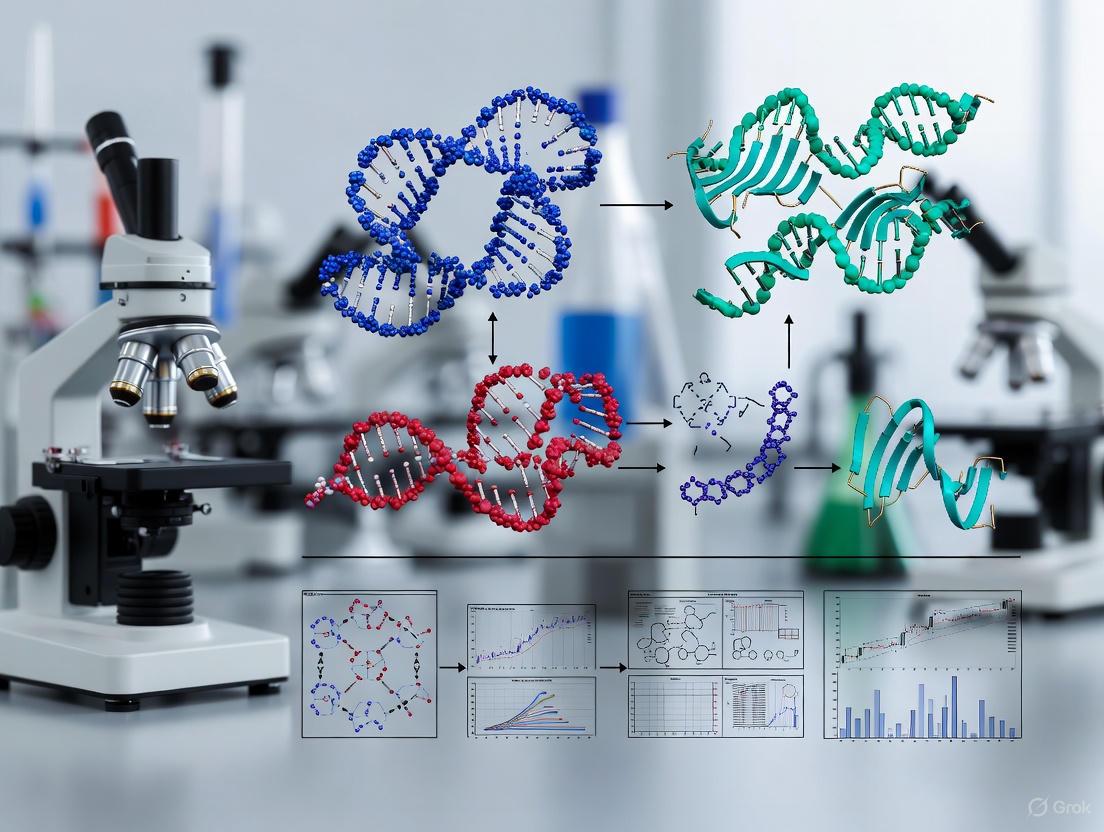
This article synthesizes current research on how gene duplication shapes the evolution of Gene Regulatory Networks (GRNs), focusing on the interplay between robustness and evolvability.
Gene Duplication and GRN Evolution: Mechanisms of Robustness and Innovation in Biomedical Research
Abstract
This article synthesizes current research on how gene duplication shapes the evolution of Gene Regulatory Networks (GRNs), focusing on the interplay between robustness and evolvability. It explores foundational concepts that duplication provides mutational robustness while enabling phenotypic innovation, examines methodological advances from computational modeling to synthetic biology, and analyzes optimization challenges in network rewiring. By comparing validation approaches across model systems and major evolutionary transitions, we highlight conserved principles with direct implications for understanding disease mechanisms and advancing therapeutic development.
The Evolutionary Paradox: How Gene Duplication Creates Both Stability and Innovation in GRNs
In 1970, Susumu Ohno proposed a groundbreaking hypothesis in his book "Evolution by Gene Duplication," suggesting that gene duplication is a fundamental driver of evolutionary innovation [1] [2] [3]. Ohno posited that a duplicated gene copy could escape the "relentless pressure of natural selection" and accumulate "formerly forbidden mutations," potentially emerging as a new gene locus with a hitherto unknown function—a process now termed neo-functionalization [2] [3]. Expressed in modern biological terms, gene duplication increases the mutational robustness of the phenotype encoded by these genes, thereby relaxing selective constraints on individual copies and facilitating the accumulation of genetic diversity [2] [3]. This conceptual framework established gene duplication not merely as a genomic accident but as a crucial provider of raw genetic material for evolutionary innovation.
Ohno's model faces a fundamental theoretical challenge known as "Ohno's dilemma" [1] [2] [3]. This dilemma arises because beneficial mutations that confer novel functions are statistically much rarer than deleterious mutations that impair or destroy gene function. Consequently, deleterious mutations would typically inactivate one duplicate long before rare beneficial mutations could lead to functional divergence [2] [3]. This conceptual problem has spurred several alternative hypotheses, including the Duplication-Degeneration-Complementation (DDC) model, the Escape from Adaptive Conflict (EAC) model, and the Innovation-Amplification-Divergence (IAD) model [1] [2] [3]. These competing frameworks question whether neo-functionalization is the primary fate of duplicated genes and have driven the need for direct experimental testing of Ohno's original proposal.
Competing Theoretical Frameworks in Gene Duplication Evolution
Table 1: Evolutionary Models for Gene Duplication Fate
| Model Name | Key Mechanism | Proposed Outcome |
|---|---|---|
| Ohno's Hypothesis (Neo-functionalization) | One copy accumulates mutations while other maintains original function | New gene function evolves [2] [3] |
| Non-functionalization | One copy accumulates deleterious mutations | One duplicate becomes inactivated [2] [3] |
| Subfunctionalization | Both copies undergo complementary loss-of-function mutations | Ancestral function partitioned between duplicates [2] [3] |
| Duplication-Degeneration-Complementation (DDC) | Degeneration of complementary regulatory elements | Preservation of both copies through complementation [2] |
| Escape from Adaptive Conflict (EAC) | Single-copy gene constrained in optimizing multiple functions | Duplication resolves conflict, enabling functional specialization [2] |
| Innovation-Amplification-Divergence (IAD) | Temporary amplification in copy number precedes divergence | New function evolves under selection for dosage [1] [2] |
The subfunctionalization model proposes an alternative pathway where mutations cause partial loss-of-function in both duplicates, leading to partitioning of ancestral gene functions such that both copies become indispensable for completing the original function [2] [3]. This model differs significantly from Ohno's proposal by emphasizing conservation rather than innovation as the initial selective pressure preserving duplicates. Meanwhile, the gene dosage hypothesis suggests that both copies might be conserved simply through selection for increased gene dosage, providing an immediate selective advantage rather than enabling long-term evolutionary potential [2] [3].
These competing models highlight the complex selective forces governing duplicate gene evolution and underscore the importance of empirical testing to determine their relative prevalence across different biological contexts. The functional load of duplicated genes—defined as the average fitness decrease across conditions following gene deletion—varies substantially with their degree of sequence divergence, with intermediate divergence distances sometimes showing reduced functional load in yeast studies [4]. This variation in compensatory capacity throughout duplicate gene evolution further complicates predictions about their evolutionary trajectories.
Direct Experimental Tests of Ohno's Hypothesis
A Novel Experimental System for Testing Gene Duplication
A groundbreaking experimental test of Ohno's hypothesis was recently developed using directed evolution of a fluorescent protein in Escherichia coli [1] [2] [3]. This innovative system employed the coGFP gene from the marine cnidarian Cavernularia obesa, which exhibits a dual-emission phenotype with maxima at both blue (456 nm) and green (507 nm) wavelengths when excited at 388 nm [1]. To rigorously test Ohno's hypothesis, researchers created a plasmid system containing either one or two identical copies of the coGFP gene, with crucial design features to ensure experimental validity. The two gene copies were arranged in convergently transcribed directions to prevent recombinational copy number instability, and each was placed under independent control of inducible promoters (Ptet and Ptac) to enable controlled expression of either or both copies [1]. A control plasmid with one functionally inactivated copy (containing three chromophore mutations: Q74A, Y75S, G76A) served as the single-copy control [1].
Table 2: Key Experimental Findings from Direct Test of Ohno's Hypothesis
| Experimental Measure | Single-Copy Populations | Double-Copy Populations | Interpretation |
|---|---|---|---|
| Mutational Robustness | Lower | Higher | Supported Ohno's prediction [1] [2] [3] |
| Phenotypic Diversity | Lower | Higher | Relaxed purifying selection [1] [2] |
| Genetic Diversity | Lower | Higher | Increased mutation accumulation [1] [2] |
| Key Beneficial Mutation Combinations | Later accumulation | Earlier accumulation | Evolutionary advantage [1] [2] |
| Phenotypic Evolution Rate | Not accelerated | Not accelerated | Contradicted Ohno's prediction [1] [2] [3] |
| Gene Copy Inactivation | Less frequent | Frequent rapid inactivation | Ohno's dilemma observed [1] [2] [3] |
The experimental protocol involved subjecting these bacterial populations to multiple rounds of mutagenesis and selection under different fluorescence regimes, enabling detailed tracking of both genotypic and phenotypic evolutionary dynamics through high-throughput DNA sequencing and biochemical assays [1] [2]. This experimental design represented a significant methodological advancement because it maintained exact control over gene copy number—a persistent challenge in previous studies due to recombinational instability—while precisely monitoring evolutionary trajectories [1] [2].
Key Findings and Interpretations
The experimental results provided nuanced support for certain aspects of Ohno's hypothesis while challenging others. In agreement with Ohno's prediction, populations carrying two gene copies displayed higher mutational robustness than single-copy populations [1] [2] [3]. This enhanced robustness led to several observable consequences: double-copy populations experienced relaxed purifying selection, evolved higher phenotypic and genetic diversity, carried more mutations, and accumulated combinations of key beneficial mutations earlier than their single-copy counterparts [1] [2]. These findings demonstrated that, at least in the short term, gene duplication does provide a buffer against mutational effects and facilitates the exploration of sequence space.
However, a crucial finding contradicted a central prediction of Ohno's hypothesis: this increased genetic diversity did not accelerate phenotypic evolution toward new or optimized functions [1] [2] [3]. The researchers attributed this discrepancy to the rapid inactivation of one gene copy through accumulation of deleterious mutations—a manifestation of "Ohno's dilemma" [1] [2] [3]. This observation aligns more closely with the non-functionalization and dosage selection models than with neo-functionalization as the primary fate of duplicated genes in this experimental system. The findings suggest that alternative evolutionary models emphasizing gene dosage effects may better explain the short-term retention of duplicated genes, though Ohno's hypothesis may still apply over longer evolutionary timescales or under different selective regimes [1] [2].
Gene Duplication in Complex Systems and Human Evolution
Gene Duplication in Regulatory Networks
The evolution of gene regulatory networks (GRNs) represents a crucial context for understanding the functional significance of gene duplication. Theoretical models suggest that GRNs possess inherent properties of both robustness and evolvability when subjected to gene duplication and divergence processes [5]. In Boolean network models of GRNs, duplication followed by divergence often preserves existing phenotypic attractors while potentially introducing new ones, enabling evolutionary exploration without complete loss of existing functions [5]. This property appears maximized in networks operating near a "critical regime," balancing stability and flexibility [5]. Computational studies further indicate that fixation of beneficial gene duplications under fluctuating environmental conditions promotes the evolution of complex GRNs, with intrinsic factors like mutational bias, gene expression costs, and constraints on expression dynamics significantly influencing evolutionary outcomes [6].
The relationship between gene duplication and genetic robustness—the invariance of phenotypes despite mutations—has been quantitatively examined in yeast models [4]. Interestingly, the capacity for functional compensation between duplicates does not follow a simple monotonic relationship with sequence divergence. Instead, compensation capacity initially increases as duplicates diverge, peaks at intermediate evolutionary distances (around Ka ≈ 0.1), then decreases again as duplicates become more distinct [4]. This pattern suggests that newly formed duplicates may initially provide limited backup capacity due to their high functional load, with compensatory abilities emerging only after moderate sequence divergence has occurred.
Human-Specific Gene Expansions
Recent research leveraging complete telomere-to-telomere (T2T) genome sequences has revealed extensive human-specific gene expansions potentially contributing to brain evolution [7] [8]. These studies identified 213 human-specific gene families comprising 362 paralogs present in all modern human genomes tested, making them top candidates for contributing to human-universal brain features [7] [8]. This represents an approximately five-fold increase compared to previous assessments, highlighting the previously underestimated scope of human-specific gene duplications [8]. Functional investigations using zebrafish CRISPR models "humanized" by introducing mRNA-encoding human paralogs have implicated specific genes in hallmark human brain features: GPR89B appears to function in dosage-mediated brain expansion, while FRMPD2B affects synaptic signaling patterns [7] [8].
These findings establish that segmental duplications have contributed more to genetic divergence between humans and closely related species than single-nucleotide variants, particularly in neurodevelopmental processes [8]. The discovery that many human-specific duplicates exhibit signatures of positive selection and associate with neuropsychiatric disorders further underscores their functional importance in human brain evolution and disease susceptibility [7] [8].
Research Toolkit and Methodological Framework
Essential Research Reagents and Experimental Components
Table 3: Key Research Reagents for Gene Duplication Studies
| Reagent/Component | Specification | Research Function |
|---|---|---|
| coGFP Gene | From Cavernularia obesa, dual-emission (456nm/507nm) | Model protein for directed evolution [1] |
| Plasmid Vector System | Convergent transcription, inducible promoters (Ptet/Ptac) | Maintains stable copy number control [1] |
| Chromophore Mutants | Q74A, Y75S, G76A substitutions | Creates inactive control genes [1] |
| E. coli Host | Standard laboratory strains | Model organism for experimental evolution [1] [2] |
| T2T-CHM13 Genome | Complete telomere-to-telomere human reference | Identifies human-specific gene families [7] [8] |
| Zebrafish Model | CRISPR knockout and mRNA introduction | Tests gene function in neurodevelopment [7] [8] |
| Boolean Network Models | Various topologies (homogeneous, scale-free) | Simulates GRN robustness and evolvability [5] |
Methodological Considerations for Gene Duplication Research
The experimental test of Ohno's hypothesis exemplifies several crucial methodological considerations for gene duplication research. The use of convergently transcribed genes addressed the persistent challenge of copy number instability that had compromised previous studies [1] [2]. This design element was essential for maintaining the experimental distinction between single-copy and double-copy populations across multiple generations. Additionally, the employment of inducible promoter systems enabled researchers to control gene expression independently of copy number, helping to distinguish the effects of genetic redundancy from those of increased gene dosage [1].
In computational studies of gene regulatory networks, the implementation of gene duplication and divergence in Boolean network models requires careful consideration of network architecture [5]. Researchers typically simulate duplication by randomly selecting a gene for copying, then implement divergence through various mutation types: rewiring input connections of the duplicate gene, rewiring output connections to other genes, modifying logical rules, or combinations of these changes [5]. The choice of network topology—whether homogeneous random, scale-free, or other architectures—significantly influences findings regarding robustness and evolvability [5].
For evolutionary genomics studies, the shift to complete telomere-to-telomere genome sequences has proven essential for accurately identifying and characterizing recent gene duplications, which often reside in previously unassembled genomic regions [7] [8]. This technological advancement has revealed that human-specific gene families were substantially undercounted in previous analyses based on older reference genomes [8]. Functional validation using cross-species approaches, such as zebrafish models with introduced human paralogs, provides a powerful system for testing the neurodevelopmental effects of human-specific gene expansions while overcoming limitations of primate models [7] [8].
The direct experimental test of Ohno's hypothesis reveals a nuanced evolutionary reality: while gene duplication does provide mutational robustness and facilitates genetic diversity as Ohno predicted, this does not necessarily translate to accelerated evolution of novel phenotypes due to the competing process of duplicate gene inactivation [1] [2] [3]. This finding helps explain why gene duplications are common evolutionary events while also highlighting the importance of alternative evolutionary models including subfunctionalization and dosage selection [2] [3]. The development of innovative experimental systems that maintain precise control over gene copy number represents a significant methodological advancement that will enable more rigorous tests of evolutionary hypotheses [1] [2].
Future research directions should explore how the evolutionary dynamics observed in microbial model systems translate to multicellular organisms with more complex genomic architectures. The discovery of extensive human-specific gene expansions influencing brain development indicates that gene duplication has indeed been a important mechanism in human evolution, though potentially through dosage effects and complementary function specialization rather than strict neo-functionalization [7] [8]. Integrating the concepts of robustness and evolvability in gene regulatory networks with empirical studies of duplicate gene evolution represents a promising framework for understanding how genetic redundancy facilitates both phenotypic stability and evolutionary innovation [6] [5]. As genomic technologies continue advancing, particularly in resolving complex duplicated regions, our understanding of Ohno's hypothesis and its modern extensions will continue evolving, potentially revealing additional layers of complexity in the relationship between gene duplication and evolutionary innovation.
Mechanisms of Post-Duplication Network Rewiring
Gene duplication is a fundamental driver of evolutionary innovation, providing the raw genetic material for the evolution of new functions and increased biological complexity. Within gene regulatory networks (GRNs), duplication events create immediate redundancy that is subsequently resolved through a process of network rewiring—the evolutionary modification of regulatory interactions between genes. This whitepaper examines the mechanistic basis of post-duplication network rewiring, focusing on its role in the evolution of vertebrate regulatory complexity and its implications for network robustness and disease. Research demonstrates that the two rounds of whole-genome duplication (WGD) at the origin of the vertebrate lineage played a substantial role in increasing the multi-layer complexity of the regulatory network by enhancing its combinatorial organization, with significant consequences for signal integration and noise control [9]. Understanding these rewiring mechanisms provides crucial insights for interpreting genetic vulnerabilities in disease and developing targeted therapeutic strategies.
Theoretical Frameworks of Duplication and Rewiring
Modes of Gene Duplication
Gene duplications occur across different scales, each with distinct implications for network evolution:
- Whole-Genome Duplication (WGD): Involves simultaneous duplication of the entire genome. These are rare events that create massive genetic redundancy. The two rounds of WGD at the vertebrate origin approximately 500 million years ago generated numerous ohnologs (WGD-derived paralogs) that have been preferentially retained in signaling, developmental, and transcriptional regulation pathways [9].
- Small-Scale Duplication (SSD): Involves duplication of individual genes or chromosomal segments. These events occur continuously throughout evolution and typically facilitate more incremental exploration of phenotypic space [9].
- Segmental Duplication: Involves long genomic duplications (typically 1-400 kb) that can encompass multiple genes and their regulatory sequences. These play a significant evolutionary role because entire genes can be duplicated along with regulatory sequences, and have been associated with the development of human-specific traits, including brain development [10].
Evolutionary Trajectories of Duplicate Genes
Following duplication, gene copies undergo distinct evolutionary processes that drive network rewiring:
- Neofunctionalization: One duplicate retains the ancestral function while the other acquires a novel function through mutation. This process directly introduces new regulatory capabilities into the network [4].
- Subfunctionalization: Both duplicates experience degenerative mutations that partition the ancestral gene's functions or expression patterns between them. This division of labor often necessitates rewiring of regulatory interactions [4] [11].
- Dosage Conservation: Duplicates are retained to maintain increased gene dosage, with selection acting to preserve similar functions and interactions [9].
- Promiscuity-Based Evolution: Innate promiscuity in transcription factor interactions creates opportunities for duplicated regulators to gradually acquire new specificities through mutation, facilitating network expansion [12].
Table 1: Characteristics of Duplication Types in Network Evolution
| Duplication Type | Evolutionary Scale | Primary Network Impact | Retention Characteristics |
|---|---|---|---|
| Whole-Genome (WGD) | Macroscopic, episodic | Increases network redundancy and combinatorial complexity | Enriched in developmental genes and transcription factors; subject to dosage balance constraints |
| Small-Scale (SSD) | Local, continuous | Enables incremental exploration of network space | Broader functional distribution; more likely to show asymmetric evolution |
| Segmental | Intermediate, modular | Duplicates gene clusters with regulatory contexts | Associated with gene family expansion and genomic rearrangement hotspots |
Quantitative Effects of Duplication on Network Properties
Robustness and Evolvability
Gene duplication significantly influences the robustness of GRNs—their ability to maintain phenotypic stability despite mutations. Simulation studies using GRN models demonstrate that duplication often mitigates the impact of new mutations, with this buffering effect not merely due to increased gene number but rather to specific architectural changes in network connectivity [11]. The relationship between duplicate divergence and compensatory capacity follows a non-monotonic pattern; as duplicates diverge, their ability to compensate for each other's loss initially increases, peaks at intermediate sequence distances (Ka ≈ 0.1), then decreases to levels similar to random gene pairs at higher divergence [4].
Experimental studies in synthetic GRNs confirm that genotype networks (sets of genotypes producing the same phenotype) provide robustness against mutations while enabling access to novel phenotypes. These networks facilitate evolutionary innovation by allowing exploration of different genotypic neighborhoods while preserving phenotypic function [13].
Motif Enrichment and Circuit Duplication
WGD and SSD events contribute differently to the structural properties of regulatory networks. WGD-derived genes show strong enrichment for complex network motifs, particularly feed-forward loops and bifan arrays, which are considered fundamental building blocks of sophisticated regulatory circuitry [9]. This enrichment occurs because WGD duplicates entire regulatory circuits simultaneously, preserving their topological relationships. Pairs of WGD-derived proteins display a strong tendency to interact both with each other and with common partners, creating highly interconnected network regions with enhanced combinatorial potential [9].
Table 2: Network Rewiring Metrics and Methodologies
| Analytical Approach | Measured Parameters | Experimental/Computational Platform | Key Insights |
|---|---|---|---|
| Network Motif Analysis | Enrichment of specific subgraphs (feed-forward loops, bifans) | Comparative analysis of transcriptional, miRNA, and protein interaction networks [9] | WGD specifically enriches complex motifs; SSD and WGD contribute differently to network architecture |
| Rewiring Quantification (QNetDiff) | Rewiring index based on changes in co-occurrence relationships | Bacterial correlation networks from metagenomic data [14] | Enables identification of key nodes in network restructuring that aren't detectable through abundance changes alone |
| Genotype Network Mapping | Connectivity, robustness, phenotypic accessibility | Synthetic CRISPRi GRNs in E. coli [13] | Provides direct evidence that extensive rewiring preserves phenotype while enabling innovation |
| Functional Load Assessment | Number of sensitive conditions across environments | Quantitative fitness analyses in yeast deletion libraries [4] | Compensation between duplicates is non-monotonic with divergence, peaking at intermediate distances |
Experimental Analysis of Rewiring Mechanisms
Protocol: Mapping Post-Duplication Network Changes
Objective: To quantify rewiring in gene regulatory networks following gene duplication events.
Methodology:
- Network Reconstruction:
- Construct bacterial correlation networks or gene regulatory networks for comparative analysis. For bacterial systems, use tools like SparCC3 to calculate correlation coefficients from abundance data while reducing false correlations [14].
- For synthetic GRNs, employ modular cloning strategies with standardized biological parts (promoters, sgRNAs, fluorescent reporters) to ensure controlled comparison [13].
Rewiring Quantification:
- Apply the QNetDiff method to quantify network rewiring between different conditions or evolutionary states [14].
- Calculate rewiring indices for individual network components to identify key nodes driving architectural changes.
Motif and Circuit Analysis:
- Identify statistically enriched network motifs using subgraph enumeration algorithms.
- Compare motif frequencies between WGD-derived and SSD-derived gene pairs to identify duplication-type-specific patterns [9].
Functional Validation:
Protocol: Assessing Genetic Robustness After Duplication
Objective: To measure how gene duplication affects the robustness of gene regulatory networks to mutations.
Methodology:
- Network Perturbation:
- Introduce specific mutations (qualitative: topology changes; quantitative: parameter changes) into well-characterized GRNs [13].
- For each mutation, quantify the effect on network function and phenotypic output.
Robustness Quantification:
- Measure the fraction of mutations that leave the phenotype unchanged (neutral mutations) versus those that alter it.
- Calculate phenotypic error as the distance between wild-type and mutant expression patterns [11].
Accessibility Analysis:
Diagram 1: Network rewiring mechanisms after gene duplication. The diagram illustrates how gene duplication creates redundancy that is resolved through various rewiring mechanisms, including neofunctionalization (gain of new targets) and subfunctionalization (partitioning of ancestral functions).
The Scientist's Toolkit: Research Reagent Solutions
Table 3: Essential Research Reagents for Studying Network Rewiring
| Reagent/Tool | Function | Application Example |
|---|---|---|
| CRISPRi-based GRN Platform | Programmable repression using sgRNAs for precise network engineering | Constructing synthetic genotype networks in E. coli with defined topologies and parameters [13] |
| Orthogonal sgRNA Libraries | Multiple sgRNAs with different repression strengths for parameter tuning | Quantitative modulation of interaction strengths in synthetic GRNs [13] |
| Fluorescent Reporter System | Multi-color reporters (e.g., mKO2, mKate2, sfGFP) for simultaneous monitoring | Tracking expression dynamics of multiple network nodes in live cells [13] |
| SparCC3 Algorithm | Calculation of robust correlation coefficients from compositional data | Constructing bacterial correlation networks while reducing false correlations from abundance imbalances [14] |
| QNetDiff Tool | Quantification of network rewiring between conditions | Identifying key bacteria associated with disease through network structural changes [14] |
| OHNOLOGS Database | Curated repository of WGD-derived gene pairs in vertebrates | Identifying ancient ohnologs for comparative network analysis [9] |
Post-duplication network rewiring represents a fundamental evolutionary mechanism that shapes the complexity and robustness of gene regulatory systems. The distinct contributions of WGD and SSD events create complementary evolutionary paths: WGD provides sudden increases in combinatorial potential through coordinated circuit duplication, while SSD enables gradual exploration of network space. The emerging paradigm from synthetic biology approaches confirms that genotype networks—interconnected sets of GRNs producing the same phenotype—provide both robustness to mutation and access to evolutionary innovations. Understanding these mechanisms has profound implications for interpreting genetic vulnerabilities in human disease, particularly for WGD-derived genes that are disproportionately associated with cancer and autosomal dominant disorders. Future research leveraging increasingly sophisticated synthetic biology platforms and network analysis tools will further elucidate how rewiring mechanisms contribute to evolutionary innovation and disease pathogenesis.
A fundamental paradox in evolutionary biology lies in understanding how living organisms demonstrate both remarkable stability in the face of perturbations and a consistent capacity for innovation over evolutionary timescales. This duality is epitomized in the concepts of robustness and evolvability. Robustness refers to the invariance of phenotypes in the face of genetic perturbations, while evolvability is the ability of a biological system to acquire novel functions through genetic change [5]. Gene Regulatory Networks (GRNs)—the complex systems of interactions between genes and gene products that drive cellular phenotypes—exist in a dynamical regime that elegantly balances these seemingly contradictory requirements. This regime, known as the critical regime, represents a phase transition between ordered and chaotic dynamics and appears to be a fundamental principle underlying the evolvability of life itself [15]. For researchers investigating the evolutionary consequences of gene duplication events, understanding criticality provides essential insights into how GRNs can maintain functional stability while simultaneously exploring novel phenotypic landscapes.
Theoretical Foundations of Critical Dynamics
The Critical Regime in Dynamical Systems
In complex systems theory, dynamical systems can exist in one of three broad phases: ordered, chaotic, or critical. Ordered systems exhibit high stability, where perturbations rapidly die out and trajectories converge. Chaotic systems demonstrate extreme sensitivity to initial conditions, where small perturbations amplify dramatically. The critical regime exists precisely at the boundary between these phases, where perturbations neither vanish entirely nor overwhelm the system, but instead propagate in non-trivial ways that enable both stability and information processing [15]. When applied to GRNs, criticality implies that perturbations to gene expression (whether from internal stochasticity or external stimuli) will propagate through the network in a controlled manner—neither dying out immediately nor cascading uncontrollably. This balanced state creates an ideal environment for biological systems that must maintain functional integrity while remaining responsive to evolutionary pressures.
Boolean Network Models of Gene Regulation
The theoretical framework for understanding criticality in GRNs has been extensively developed using Boolean network models [5] [15] [16]. In these computational abstractions, genes are represented as nodes that can be in one of two expression states (ON or OFF, represented as 1 or 0). Regulatory interactions are represented as directed edges, and the state of each gene updates synchronously according to logical rules (Boolean functions) based on the states of its regulatory inputs [15] [16]. The dynamics of these networks naturally lead to attractors—stable repeating patterns of gene expression that correspond to distinct cellular phenotypes or fates [5]. The collection of all attractors and their basins of attraction constitutes the attractor landscape, which represents the repertoire of possible phenotypic states available to a cell [5].
Table 1: Key Properties of Network Dynamical Regimes
| Property | Ordered Regime | Critical Regime | Chaotic Regime |
|---|---|---|---|
| Response to Perturbations | Perturbations die out quickly | Perturbations propagate non-trivially | Perturbations amplify dramatically |
| Attractor Landscape | Few, large basins | Moderate number, moderate sizes | Many, small basins |
| Evolutionary Stability | High | Balanced | Low |
| Phenotypic Innovation | Low | High | High but disruptive |
| Information Processing | Limited | Optimal | Overwhelmed |
Quantitative Evidence for Criticality in Genetic Networks
Emergence of Criticality Through Evolutionary Processes
Criticality in GRNs is not merely a theoretical construct but appears to emerge naturally through evolutionary processes that select for evolvability. Computational models demonstrate that when networks evolve under selection pressures that favor both phenotype conservation and phenotype innovation, they consistently evolve toward critical dynamics [15]. In one evolutionary simulation, random Boolean networks were subjected to selection for networks that could both preserve existing phenotypic attractors and generate new ones in response to mutations. This evolutionary trade-off—between maintaining functional stability and exploring novel adaptations—proved sufficient to drive networks toward criticality without explicit selection for specific network parameters [15]. Furthermore, the networks that evolved through this process naturally developed hub-like structures with few global regulators controlling many target genes—a topology observed in real GRNs such as that of Escherichia coli, where seven global regulators control more than 60% of the genes in the network [15].
Robustness and Evolvability Across Network Topologies
The relationship between network topology and dynamical regime reveals important insights into how criticality balances robustness and evolvability. Research comparing different network architectures has demonstrated that:
- Homogeneous random networks operating near criticality (with average sensitivity S ≈ 1) show significantly higher probabilities of preserving existing attractors after gene duplication and divergence compared to networks in ordered or chaotic regimes [5].
- Scale-free networks with heterogeneous degree distributions—similar to those found in real GRNs—exhibit enhanced robustness to gene duplication events while maintaining evolutionary flexibility [5].
- Assortative networks (where highly connected nodes tend to connect to other highly connected nodes) demonstrate increased robustness to gene birth events, though this sometimes comes at the cost of reduced evolvability compared to disassortative networks [16].
Table 2: Quantitative Measures of Robustness and Evolvability Across Network Types
| Network Topology | Attractor Preservation Rate | New Attractor Generation Rate | Critical Regime Preference |
|---|---|---|---|
| Homogeneous Random | 68.5% | 31.5% | Strong |
| Scale-Free | 72.3% | 35.8% | Strong |
| Assortative | 78.1% | 24.9% | Moderate |
| Disassortative | 62.4% | 41.2% | Moderate |
Gene Duplication as an Evolutionary Mechanism
Duplication and Divergence in Network Evolution
Gene duplication represents a fundamental mechanism for evolutionary innovation in GRNs. The process of duplication followed by divergence provides raw genetic material for the exploration of novel regulatory programs while maintaining a backup copy of the original gene [5]. In Boolean network models, this process is implemented by:
- Duplication: A randomly selected gene is duplicated, creating an identical copy with the same regulatory inputs and outputs, resulting in a network with N+1 genes [5].
- Divergence: The duplicate gene accumulates "mutations" through: (i) random rewiring of input connections, (ii) random rewiring of output connections, and (iii) changes to the Boolean logic function [5].
This process mirrors the biological pathways of divergence observed in nature: non-functionalization (one copy becomes silenced), neofunctionalization (one copy develops a new function), and subfunctionalization (both copies partition the original function) [5].
Criticality and the Preservation of Phenotypic Landscapes
Networks operating in the critical regime demonstrate a remarkable capacity to preserve existing phenotypic attractors while exploring novel ones after gene duplication events. Quantitative studies show that after duplication and divergence of a single gene, critical networks preserved their original attractors with significantly higher probability (>68%) compared to ordered or chaotic networks, while simultaneously generating new attractors in approximately 30-40% of cases [5]. This balance enables the accumulation of genetic novelty without catastrophic loss of existing functions—a essential requirement for evolutionary innovation in complex organisms.
Diagram 1: Gene duplication and divergence process in a GRN. Gene C is duplicated to create C', which subsequently diverges through rewiring of regulatory connections.
Experimental Protocols and Methodologies
Boolean Network Simulation for Criticality Analysis
Protocol Objective: To simulate the dynamics of Boolean GRNs and characterize their regime (ordered, critical, chaotic) through computational analysis.
Methodology:
Network Initialization:
- Construct a Boolean network with N nodes (genes), each with a Boolean state σᵢ(t) ∈ {0,1} at time t [16].
- Define the connectivity matrix representing regulatory interactions as directed edges.
- Assign Boolean functions to each node based on its regulatory inputs, typically using:
Dynamics Simulation:
- Update node states synchronously according to: σᵢ(t+1) = fᵢ(σᵢ₁(t), ..., σᵢₖ(t)) where k is the number of regulatory inputs to node i [16].
- Iterate until the network reaches an attractor (fixed point or cycle).
Criticality Assessment:
Perturbation Analysis:
- Introduce point mutations to network connections or logic functions.
- Implement gene duplication and divergence events.
- Measure preservation of original attractors (robustness) and emergence of new attractors (evolvability) [5].
Evolutionary Selection for Evolvability
Protocol Objective: To evolve GRNs toward criticality through selection pressures that balance phenotypic conservation and innovation.
Methodology:
Population Initialization: Create a population of random Boolean networks with varied topologies and dynamical regimes [15].
Fitness Evaluation: Subject each network to:
- Phenotype conservation test: Measure preservation of existing attractors after random mutations.
- Phenotype innovation test: Measure emergence of novel attractors after random mutations [15].
Selection and Reproduction:
- Select networks with highest combined conservation and innovation scores.
- Implement mutation and recombination operations:
Iteration: Repeat for multiple generations while monitoring:
- Evolutionary trajectory toward criticality.
- Emergence of network topological properties (e.g., hub formation, assortativity) [15].
Diagram 2: Comprehensive experimental workflow for studying criticality in GRNs, from network initialization through evolutionary selection and regime classification.
The Scientist's Toolkit: Essential Research Reagents and Solutions
Table 3: Key Computational Tools and Analytical Approaches for Criticality Research
| Tool/Resource | Function | Application in Criticality Research |
|---|---|---|
| Boolean Network Simulation Platforms | Computational modeling of GRN dynamics | Simulating network behavior across parameter space to identify dynamical regimes [5] [15] |
| Sensitivity Analysis Algorithms | Quantification of perturbation propagation | Determining criticality through Derrida analysis and average sensitivity calculations [5] |
| Attractor Identification Algorithms | Detection of stable states and cycles | Mapping phenotypic landscapes and measuring robustness [5] [15] |
| Evolutionary Algorithm Frameworks | Implementation of selection pressures | Evolving networks toward criticality through fitness-based selection [15] |
| Topological Analysis Tools | Measurement of network properties | Quantifying assortativity, degree distribution, and modularity [16] |
| Gene Duplication Simulation Modules | Modeling evolutionary processes | Studying robustness and evolvability after gene birth events [5] [16] |
Implications for Biomedical Research and Therapeutic Development
The principles of critical regime theory have significant implications for understanding disease mechanisms and developing therapeutic interventions. In cancer biology, the transition of cellular networks from critical to chaotic dynamics may explain the loss of differentiation control and emergence of heterogeneous cell populations within tumors. Conversely, neurodegenerative diseases might reflect an excessive progression toward ordered dynamics, reducing neural plasticity and adaptive capacity. For drug development professionals, understanding criticality suggests novel therapeutic strategies aimed at:
- Modulating network dynamics to restore criticality in pathological states
- Identifying fragile nodes in disease-associated networks that could be targeted to disrupt pathological attractors
- Exploiting evolutionary principles to anticipate and counter adaptive resistance to therapies
The quantitative frameworks and experimental protocols outlined in this review provide researchers with the necessary tools to incorporate criticality analysis into their investigations of disease mechanisms and therapeutic development.
Critical regime theory represents a powerful framework for understanding how Gene Regulatory Networks balance the competing demands of robustness and evolvability. Through gene duplication events and subsequent divergence, GRNs explore evolutionary trajectories while maintaining functional integrity—a process optimized when networks operate in the critical regime. The computational models, quantitative measures, and experimental protocols detailed in this review provide researchers with the necessary tools to investigate criticality in both natural and engineered biological systems. As we continue to unravel the principles governing complex biological networks, criticality emerges not merely as an interesting dynamical phenomenon, but as a fundamental principle underlying the evolvability of life itself—with profound implications for understanding disease mechanisms and developing novel therapeutic strategies.
Gene duplication is a fundamental evolutionary mechanism that provides genomic raw material for innovation, yet its immediate consequences on phenotypic stability remain a critical area of investigation. This whitepaper examines early-stage phenotypic preservation following gene duplication within the theoretical framework of gene regulatory network (GRN) evolution and robustness research. While long-term evolutionary fates of duplicate genes have been extensively studied, understanding the initial effects—before copies accumulate distinctive mutations—is essential for deciphering how duplication contributes to evolutionary innovation while maintaining functional integrity [17]. This research directly informs biomedical applications, as the principles governing duplicate gene retention and functional compensation have profound implications for understanding genetic redundancy in disease contexts and identifying potential therapeutic targets.
Current evidence suggests phenotypic outcomes following duplication are strongly influenced by a gene's position within regulatory architectures [17]. The network theory of duplication effects posits that the perturbation caused by gene duplication permeates through webs of molecular interactions, with system-level properties determining whether the original phenotype is preserved [17]. This perspective represents a significant shift from earlier gene-centric views and provides a more nuanced understanding of how genetic redundancy emerges in biological systems.
Quantitative Data Synthesis: Phenotypic Preservation Metrics
Research utilizing GRN models has yielded quantitative insights into the factors affecting phenotypic preservation immediately following duplication events. The table below synthesizes key findings from computational studies:
Table 1: Quantitative Measures of Phenotypic Preservation After Gene Duplication
| Research Focus | Experimental Approach | Key Quantitative Finding | Network Property Correlation |
|---|---|---|---|
| Phenotypic preservation rate | GRN simulation with random duplication | Preservation probability ranges from 20-80% depending on network topology [17] | Higher in networks with specific regulatory architectures |
| Mutational robustness change | Comparison of single mutation effects pre-/post-duplication | Average 15-30% increase in robustness to interaction mutations [17] | Strongly correlated with pre-duplication robustness (r ≈ 0.81) [17] |
| Phenotypic accessibility | Measurement of novel phenotype access via mutation | 40-60% of previously accessible phenotypes remain accessible post-duplication [17] | Higher for phenotypes with greater pre-duplication accessibility |
| Expression divergence | RNA-seq analysis across mammalian lineages | Young duplicates show low expression divergence (Euclidean distance: 0.5-1.0) [18] | Divergence follows arch-shaped relationship with duplication age |
| Duplicate gene retention | Comparative genomics of mammalian metabolic networks | 70.2% node conservation between human and mouse metabolic networks [19] | Non-random distribution of CNAs associated with phenotypic traits |
Additional analyses of expression evolution in mammalian duplicates reveal that young paralogs exhibit significantly lower expression divergence compared to intermediate-age duplicates, with Euclidean distance measurements increasing from approximately 0.5-1.0 in recent duplicates to peaks of 1.5-2.0 before decreasing again in ancient duplicates [18]. This arch-shaped relationship suggests distinct evolutionary phases following duplication events.
Experimental Protocols: Methodologies for Assessing Preservation
Gene Regulatory Network Simulation Framework
Purpose: To model early effects of gene duplication on network stability and phenotypic output [17].
Key Reagents and Resources:
- Boolean Network Models: Representing gene states as binary (ON/OFF) with logical regulatory rules
- Phenotype Classification Algorithm: For categorizing stable gene expression patterns
- Duplication Simulation Module: Implementing precise gene copy operations
- Mutational Robustness Assay: Quantifying tolerance to regulatory interaction changes
Procedure:
- Network Initialization: Establish baseline GRN with defined genes and regulatory interactions
- Phenotype Baseline: Document all stable gene expression patterns pre-duplication
- Duplication Event: Select target gene and create identical copy with preserved interactions
- Stability Assessment: Run multiple iterations to determine phenotypic preservation
- Robustness Measurement: Introduce random interaction mutations and quantify phenotypic stability
- Accessibility Mapping: Identify novel phenotypes reachable via mutation post-duplication
Validation Metrics:
- Phenotypic preservation rate across multiple network topologies
- Robustness index calculated as proportion of neutral mutations
- Accessibility score measuring reachable phenotypic space
Comparative Genomic Analysis of Metabolic Networks
Purpose: To associate gene duplication patterns with phenotypic traits in mammalian evolution [19].
Key Reagents and Resources:
- Ensembl Gene Families: Curated orthology and paralogy relationships across species
- Metabolic Network Reconstruction: Using reference networks from human and mouse
- Isoenzyme Group Classification: Defining functional equivalents in metabolic pathways
- Machine Learning Classifiers: For predicting phenotypes from genetic data
Procedure:
- Orthology Mapping: Establish gene relationships across 16 mammalian species
- Network Projection: Map species-specific gene complements onto reference metabolic networks
- Copy Number Alteration (CNA) Identification: Detect lineage-specific duplications and losses
- Phenotype Correlation: Associate CNA patterns with traits (milk composition, lifespan, metabolic rate)
- Predictive Modeling: Train classifiers to predict phenotypes from genetic data
- Phylogenetic Validation: Confirm patterns using ancestral state reconstruction
Analytical Outputs:
- Enzyme orthology networks with duplication/loss annotations
- Phenotype prediction accuracy metrics
- Lineage-specific adaptation correlations
Visualization Framework: Signaling Pathways and Experimental Workflows
Conceptual Framework of Duplication Effects on GRN Properties
Diagram 1: Duplication Effects on GRN Properties
Experimental Workflow for Preservation Analysis
Diagram 2: Preservation Analysis Workflow
The Scientist's Toolkit: Research Reagent Solutions
Table 2: Essential Research Materials and Computational Tools
| Reagent/Resource | Specific Function | Application Context |
|---|---|---|
| Boolean Network Models | Simulate discrete GRN dynamics | Testing phenotypic stability after duplication events [17] |
| Ensembl Gene Families | Curated orthology/paralogy relationships | Comparative genomic analysis of duplication history [18] |
| RNA-seq Datasets | Quantify expression divergence | Measuring transcriptional changes in young duplicates [18] |
| Metabolic Network Reconstruction | Map enzyme orthology networks | Associating CNAs with phenotypic traits [19] |
| Machine Learning Classifiers | Predict phenotypes from genetic data | Linking duplication patterns to organismal traits [19] |
| Synonymous Substitution (dS) Measurement | Estimate duplication age | Temporal classification of duplication events [18] |
| Euclidean Distance Metrics | Quantify expression divergence | Comparing spatial expression profiles of paralogs [18] |
Discussion: Implications for Evolutionary Innovation and Biomedical Applications
The research synthesized in this whitepaper demonstrates that phenotypic preservation following gene duplication is not merely a passive consequence of genetic redundancy but an active property emerging from network architecture. The finding that networks better at maintaining original phenotypes after duplication also excel at buffering single interaction mutations suggests robustness principles extend across multiple perturbation types [17]. This has significant implications for understanding how biological systems balance stability and adaptability.
From a biomedical perspective, the association between duplicate gene retention in metabolic networks and specific phenotypic traits like milk composition provides a framework for connecting genetic variation to clinically relevant characteristics [19]. Furthermore, the dynamic expression changes observed in young duplicates across mammalian organs [18] offer insights into tissue-specific functional specialization that could inform drug target identification. The evidence that duplication often mitigates mutational impact [17] suggests potential compensatory mechanisms that could be leveraged in therapeutic contexts where gene function is compromised.
Future research directions should focus on integrating single-cell expression data with network modeling to refine our understanding of duplication effects across cell types, and developing more sophisticated computational frameworks that predict phenotypic outcomes based on network position and regulatory logic. Such advances will further illuminate the fundamental principles governing how genetic innovations emerge while maintaining functional stability in biological systems.
Genotype networks represent a fundamental architectural principle of biological systems, describing sets of genotypes connected by small mutational changes that share the same phenotype. These networks provide evolutionary robustness by buffering against deleterious mutations while simultaneously facilitating evolutionary innovation by enabling neutral exploration of genotype space. This framework is particularly relevant in the context of gene regulatory network (GRN) evolution, where extensive rewiring can occur without altering phenotypic outcomes. Through empirical studies of synthetic GRNs and computational models, we examine how genotype networks serve as a substrate for evolutionary processes, linking conceptual models with experimental methodologies for investigating neutral exploration in biological systems.
A genotype network (also termed a neutral network) is defined as a connected set of genotypes that produce the same phenotype, where genotypes are directly connected if they differ by a small mutational change [13]. This organizational framework explains how biological systems balance two seemingly contradictory requirements: maintaining phenotypic stability while exploring evolutionary novelty.
The conceptual foundation of genotype networks addresses the critical non-linearity in genotype-phenotype relationships. Empirical evidence now robustly supports their existence across biological hierarchies—from RNA secondary structures and protein folds to regulatory DNA elements [13]. For gene regulatory networks (GRNs), however, direct experimental evidence has been more challenging to obtain than comparative analyses suggesting that extensive rewiring occurs without altering expression patterns across related species [13].
Genotype networks possess three primary evolutionary implications:
- Mutational robustness: Networks can be traversed via single mutational steps without phenotypic loss, providing buffering against genetic perturbations [13].
- Phenogenetic drift: Genotypes can evolve while phenotype is preserved, particularly relevant in developmental GRNs [13].
- Evolutionary innovation: Different network positions provide access to distinct phenotypic neighborhoods, facilitating the emergence of novel traits [13] [20].
Table 1: Key Properties of Genotype Networks
| Property | Functional Significance | Evolutionary Consequence |
|---|---|---|
| Neutral Connectivity | Genotypes linked by small mutations | Enables gradual exploration of genotype space |
| Local Robustness | Phenotype preserved despite mutations | Buffers against deleterious effects |
| Global Accessibility | Connection between network regions | Facilitates discovery of novel phenotypes |
| Epistatic Structure | Mutation effects depend on genetic background | Creates path-dependent evolutionary trajectories |
Genotype Networks in Gene Regulatory Evolution
Theoretical Framework for GRN Evolution
Gene regulatory networks represent a particularly compelling context for studying genotype networks due to their inherent complexity and central role in determining phenotypic outcomes. The evolution of GRNs occurs through modifications to both network topology (wiring of regulatory interactions) and network parameters (strengths of these interactions) [13]. Theoretical models suggest that numerous distinct GRNs can produce identical phenotypes, with many interconnected through minimal mutational changes [13].
This conceptual framework resolves the apparent paradox of how developmental systems can maintain stability over evolutionary timescales while still generating innovation. The neutral set of genotypes producing a given phenotype forms an interconnected network that spans genotype space, allowing populations to migrate neutrally while preserving function. This neutral exploration becomes particularly significant in the context of gene duplication events, which provide raw material for GRN evolution through neofunctionalization or subfunctionalization of regulatory components.
Empirical Evidence from Synthetic Biology
Direct experimental evidence for GRN genotype networks comes from synthetic biology approaches using CRISPR interference (CRISPRi) in Escherichia coli [13]. These studies constructed three interconnected genotype networks producing distinct phenotypes—GREEN-stripe, BLUE-stripe, and additional pattern-forming GRNs.
The experimental design incorporated two mutation types:
- Qualitative changes: Addition or removal of repression interactions through sgRNA/binding site modifications
- Quantitative changes: Modulation of interaction strengths via promoter substitutions or sgRNA truncations
Notably, multiple GRN topologies could produce identical stripe patterns, demonstrating that different network architectures reside on the same genotype network [13]. Furthermore, specific single mutations could transition GRNs between phenotype networks, illustrating how neutral exploration facilitates access to novel phenotypes.
Diagram 1: Genotype Network Conceptual Framework. Genotype networks (clusters) connect variants producing the same phenotype (dashed lines). Small mutations (edges) enable neutral exploration within networks, while specific changes can trigger phenotypic transitions.
Methodological Approaches for Investigating Genotype Networks
Synthetic GRN Construction and Characterization
The experimental validation of genotype networks employs a modular CRISPRi-based system in E. coli with the following components:
Table 2: Synthetic GRN Experimental Components
| Component | Function | Variants |
|---|---|---|
| Fluorescent Reporters | Phenotype readout (mKO2, mKate2, sfGFP) | Different emission spectra |
| CRISPRi sgRNAs | Implement repression interactions | 4 sgRNAs with different strengths |
| Promoter Library | Tune node expression levels | Low, medium, high strengths |
| Binding Sites | sgRNA target sequences | Sequence variants affecting repression |
| Chemical Inducer | Input signal (arabinose) | Concentration gradient (0-100%) |
The experimental workflow involves:
- Network Design: Engineering GRNs with specific topologies by combining repression interactions
- Parameter Tuning: Modulating interaction strengths via promoter choices and sgRNA variants
- Phenotype Characterization: Quantifying fluorescence patterns across arabinose gradients
- Network Mapping: Identifying genotype networks by determining phenotypic equivalence
Diagram 2: Synthetic GRN Experimental Workflow. The methodology progresses from network design through parameter tuning to phenotypic characterization and network mapping, incorporating variants in promoters, sgRNAs, and topologies.
Computational Simulation Frameworks
Computational approaches complement experimental studies by enabling exploration of vast genotype spaces. The EvoNET simulator implements a forward-in-time model of GRN evolution with these features [20]:
- Regulatory region representation: Binary cis and trans regions determine interaction strengths
- Interaction matrix: Gene-gene interactions as activation, suppression, or neutral
- Phenotype evaluation: Distance from optimal phenotype determines fitness
- Population dynamics: Selection, drift, and mutation operating on GRN populations
The model defines interaction strength through complementarity between cis (Ri,c) and trans (Rj,t) binary regions:
[ |I(R{i,c}, R{j,t})| = \begin{cases} \frac{pc(R{i,c}[1:L-1] \& R{j,t}[1:L-1])}{L} & \text{regulation present} \ 0 & \text{no regulation} \end{cases} ]
where pc is the popcount function counting common set bits, and regulation type (activation/suppression) is determined by the final bits of each region [20].
Quantitative Analysis of Genotype Network Properties
Structural Metrics and Evolutionary Dynamics
Quantitative characterization of genotype networks reveals key structural properties that influence evolutionary dynamics:
Table 3: Genotype Network Quantitative Properties
| Property | Measurement Approach | Biological Significance |
|---|---|---|
| Anisotropy | Deviation from uniform phenotype distribution (metric B) | Some phenotypes are more likely to be produced by mutation [21] |
| Heterogeneity | Variation in accessible phenotypes from different genotypes | Evolutionary potential depends on genetic background [21] |
| Robustness | Fraction of mutations preserving phenotype | Stability against deleterious mutations [13] |
| Evolvability | Fraction of mutations accessing novel phenotypes | Capacity for evolutionary innovation [13] |
| Connectivity | Number of neutral neighbors per genotype | Ability to explore genotype space neutrally [13] |
In ancestral transcription factor studies, GP maps showed significant anisotropy—only 0.07% of genotypes were functional, with strong bias toward specific DNA recognition phenotypes [21]. This anisotropy creates evolutionary channels that steer phenotypic outcomes independently of selection.
Robustness-Evolvability Tradeoffs
The relationship between robustness and evolvability represents a central paradigm in genotype network theory. Empirical studies demonstrate that:
- High robustness does not necessarily constrain evolvability
- Neutral exploration expands accessible phenotypic variation
- Network position determines evolutionary potential
In viral populations, genotype networks exhibit complex topologies with multiple mutational paths linking adaptive genotypes [22]. SEARCHLIGHT single-cell sequencing revealed that enterovirus populations maintain connectivity to multiple adaptive peaks simultaneously through mutational "tunnels" [22].
Essential Research Reagents and Solutions
Table 4: Research Reagent Solutions for Genotype Network Studies
| Reagent/Solution | Function | Application Example |
|---|---|---|
| Modular CRISPRi System | Programmable repression | Synthetic GRN construction [13] |
| Fluorescent Reporter Plasmids | Phenotype quantification | Multiplexed expression monitoring [13] |
| Promoter Library | Expression level tuning | Parameter variation in GRN nodes [13] |
| sgRNA Variant Library | Interaction strength modulation | Quantitative network parameterization [13] |
| Deep Mutational Scanning | Comprehensive genotype sampling | Empirical GP map characterization [21] |
| Ancestral Protein Reconstruction | Historical GP map analysis | Evolution of phenotype accessibility [21] |
| SEARCHLIGHT Primers | Single-cell viral haplotyping | Viral genotype network mapping [22] |
Computational Tools and Implementation
Computational investigations of genotype networks employ both custom and established software platforms:
- EvoNET: Forward-time simulator of GRN evolution with explicit cis/trans regulatory regions [20]
- Network analysis tools: Graph-based approaches for mapping genotype network topology
- Fitness landscape models: Quantifying accessibility between phenotypic states
Flow-based programming environments facilitate management of complex evolutionary simulations, providing modular frameworks that mirror the multifunctionality and interchangeability of genetic systems [23].
Implications for Evolutionary Biology and Biomedical Research
The genotype network framework reshapes our understanding of evolutionary processes in several fundamental ways:
- Reconceptualizing neutral evolution: Neutral mutations are not evolutionary "noise" but essential drivers of exploration that expand accessible phenotypic variation [13] [20].
- Evolutionary innovation mechanism: Novel phenotypes arise via neutral traversals to new network neighborhoods rather than exclusively through direct selective advantage [13].
- Robustness origins: Developmental system robustness emerges as a property of networked genotype spaces rather than requiring specific robustness mechanisms [13].
- Disease pathogenesis: Viral evolution studies demonstrate how genotype networks enable pathogen adaptation through maintained connectivity to multiple resistant genotypes [22].
The integration of genotype network concepts into biomedical research offers promising avenues for therapeutic intervention, particularly in anticipating evolutionary trajectories of pathogens and cancer cells. By mapping genotype networks of target organisms, we may predict and preemptively counter adaptive evolution.
From Theory to Bench: Computational and Synthetic Approaches to Study GRN Evolution
Computational Modeling of GRN Dynamics and Evolution
Gene Regulatory Networks (GRNs) are fundamental systems biology constructs that represent the complex web of interactions between genes and their products, governing cellular processes and phenotypic outcomes. Computational modeling of GRN dynamics provides a powerful framework for investigating how these networks evolve and maintain stability despite genetic perturbations. This technical guide examines the core principles, methodologies, and applications of computational approaches for studying GRN evolution, with particular emphasis on how gene duplication events shape network robustness and evolvability. The research context centers on understanding the immediate and long-term effects of gene duplication on GRN stability, accessibility to novel phenotypes, and evolutionary trajectories—critical insights for both evolutionary biology and biomedical applications.
Theoretical Framework: Gene Duplication in GRN Evolution
Historical and Conceptual Foundations
The evolutionary significance of gene duplication was first formally articulated by Susumu Ohno, who postulated that duplicated genes provide raw material for evolutionary innovation by allowing one copy to accumulate "formerly forbidden mutations" while the other maintains essential functions [3]. This foundational hypothesis has since been refined through several competing models:
- Neofunctionalization: One duplicate retains the original function while the other acquires a novel function through mutation [3]
- Subfunctionalization: Partitioning of ancestral gene functions between duplicates through complementary loss-of-function mutations [3]
- Escape from Adaptive Conflict: Resolution of functional constraints through duplication, allowing optimization of previously conflicting functions [3]
- Innovation-Amplification-Divergence: Temporary amplification of gene copies followed by functional divergence [3]
Computational approaches have been essential for testing these models and understanding how duplication events influence GRN properties beyond the single-gene level.
Network-Level Implications of Gene Duplication
Gene duplication introduces specific topological changes to GRNs that differ from other mutational mechanisms. When a gene duplicates within a GRN, both the original regulatory connections and new emergent interactions must be considered. The immediate effect includes:
- Increased connectivity options through new regulatory interactions
- Potential redundancy that may buffer against mutations
- Dosage effects that can alter expression dynamics
- Opportunities for regulatory divergence through mutation
Research using computational models has demonstrated that the effect of duplication strongly depends on the network context and the specific gene duplicated [11]. Genes with specific topological positions (e.g., hubs vs. peripherals) exhibit different probabilities of retention and functional divergence after duplication.
Key Research Findings: Gene Duplication and GRN Robustness
Quantitative Effects on Mutational Robustness
Computational studies have systematically quantified how gene duplication influences the ability of GRNs to maintain phenotypic stability despite mutations. Key findings from these investigations are summarized in Table 1.
Table 1: Quantitative Effects of Gene Duplication on GRN Properties
| GRN Property | Effect of Duplication | Experimental Support | Key Reference |
|---|---|---|---|
| Mutational robustness | Often enhanced, particularly for interaction mutations | Increased tolerance to mutations in duplicate-bearing networks | [11] |
| Phenotypic accessibility | Maintains or increases access to some phenotypic variants | Phenotypes accessible before duplication remain accessible after | [11] |
| Evolutionary rate | Relaxed purifying selection on duplicate genes | Higher genetic diversity in populations with duplicates | [3] |
| Environmental robustness | Context-dependent; enhanced in fluctuating environments | Networks evolved under fluctuation show higher robustness | [24] |
| Network fragility | Can increase in specific cases (e.g., protein complexes) | Some duplicates require both paralogs for interactions | [11] |
Temporal Dynamics of Duplicate Gene Evolution
The evolutionary trajectory of duplicated genes in GRNs follows distinct phases that computational models have helped characterize:
- Early post-duplication phase: Immediate changes to network topology and potential dosage effects
- Short-term evolution: Accumulation of mutations in regulatory regions and coding sequences
- Long-term fate: Functional divergence, specialization, or loss
Research using GRN models has revealed that networks better at maintaining original phenotypes after duplication are generally more effective at buffering single interaction mutations, and that duplication often enhances this ability further [11]. The effect is not merely due to increased gene number but depends on the specific network architecture and type of mutations involved.
Experimental Protocols and Methodologies
Computational Framework for GRN Evolution
Objective: To simulate the evolutionary dynamics of GRNs following gene duplication events and quantify effects on network robustness and evolvability.
Model Specifications:
- Network representation: Genes as nodes, regulatory interactions as edges (activatory/inhibitory)
- Dynamics formulation: Boolean, differential equation, or stochastic models of gene expression
- Phenotype definition: Specific gene expression patterns or attractor states
- Mutation types: Point mutations, regulatory changes, gene duplications, deletions
Evolutionary Algorithm:
- Initialize population of random GRNs
- Evaluate fitness based on phenotype stability or specific expression patterns
- Select parents proportional to fitness
- Apply mutation operators (including duplication events)
- Generate new population and repeat for multiple generations
Key Parameters:
- Population size: Typically 100-1000 networks
- Mutation rates: Vary by study (e.g., 0.01-0.1 per gene per generation)
- Duplication rate: Generally lower than point mutation rates
- Selection strength: Dependent on fitness function
This framework has been implemented in studies investigating how gene duplication affects network behavior in early evolutionary stages, focusing on mitigation of mutation effects and access to new phenotypic variants [11].
Directed Evolution Experimental Protocol
Objective: To empirically test computational predictions about gene duplication using directed evolution of fluorescent proteins in microbial systems.
Experimental Design:
- Strain construction: Engineer E. coli strains with one versus two identical copies of GFP gene
- Mutation introduction: Apply random mutagenesis to gene copies
- Selection regime: Fluorescence-based sorting for green, blue, or dual-color emission
- Monitoring: Track genotypic and phenotypic evolution through high-throughput sequencing and biochemical assays
Key Measurements:
- Mutational robustness: Ability to maintain fluorescence after mutation
- Genetic diversity: Number and types of mutations accumulated
- Phenotypic evolution: Emergence of novel spectral properties
- Evolutionary rate: Speed of adaptation to selection pressures
This protocol provided direct experimental testing of Ohno's hypothesis, revealing that while duplicates increase mutational robustness, they do not necessarily accelerate functional evolution [3].
Robustness Quantification Methods
Objective: To measure different aspects of GRN robustness following duplication events.
Protocol Details:
Mutational Robustness Assessment:
- Apply random mutations to GRN models
- Calculate fraction of mutations that do not alter phenotype
- Compare single-copy versus duplicate-containing networks
Environmental Robustness Assessment:
- Expose GRN models to fluctuating environmental conditions
- Measure stability of gene expression patterns
- Quantify fitness across environments
Phenotypic Accessibility Measurement:
- Apply mutations to duplicate-containing GRNs
- Identify novel phenotypic states reached
- Compare to accessibility in single-copy networks
Studies implementing these methods have found that phenotypes with easier mutational access before duplication maintain higher accessibility after duplication [11].
Computational Framework and Implementation
Modeling GRN Architecture and Dynamics
The core computational framework for modeling GRN dynamics involves several interconnected components:
Network Representation:
- Mathematical formulation: Typically Boolean networks, ordinary differential equations, or stochastic models
- Interaction types: Activation, repression, combinatorial control
- Timescales: Separation between fast signaling and slow transcriptional events
Key System Parameters:
- Number of genes in network (typically 10-1000 in simulations)
- Connectivity (average number of regulators per gene)
- Interaction strengths (weighted edges)
- Expression thresholds
Dynamics Simulation:
- Initialization from random or specific expression states
- Update synchronously or asynchronously
- Identification of attractors (fixed points, cycles)
- Phenotype definition based on attractor properties
This framework enables researchers to simulate how gene duplication immediately alters network topology and how subsequent evolution reshapes regulatory relationships.
Implementing Gene Duplication in Models
The implementation of gene duplication events in computational GRN models requires specific considerations:
Duplication Mechanisms:
- Whole-gene duplication: Copying of gene node with all regulatory connections
- Regulatory region evolution: Mutation of regulatory sequences post-duplication
- Interaction rewiring: Gain/loss of regulatory connections to duplicates
Post-Duplication Fate Determination:
- Dosage effects: Immediate impact of increased gene copy number
- Subfunctionalization: Complementary mutation in regulatory regions
- Neofunctionalization: Emergence of novel regulatory connections
- Pseudogenization: Accumulation of deleterious mutations
Studies implementing these mechanisms have revealed that the effect of duplication depends on both the type of mutation and the specific genes involved [11].
Visualization of GRN Evolutionary Dynamics
Gene Duplication and Regulatory Rewiring
Diagram 1: Gene duplication and regulatory rewiring in GRNs. The diagram illustrates how gene duplication creates new regulatory connections and potential for novel phenotypic outcomes through regulatory rewiring.
Computational Workflow for GRN Evolution Studies
Diagram 2: Computational workflow for GRN evolution studies. The diagram outlines the key steps in simulating GRN evolution, including duplication events, phenotypic evaluation, and selection.
Research Reagent Solutions
Table 2: Essential Research Reagents and Computational Tools for GRN Studies
| Category | Specific Tools/Reagents | Function | Application Context |
|---|---|---|---|
| Model Organisms | S. cerevisiae, E. coli | Experimental validation | Directed evolution, fitness assays [3] [4] |
| Fluorescent Reporters | GFP variants (e.g., CFP, YFP) | Phenotypic readout | Protein expression tracking, evolutionary experiments [3] |
| Gene Editing Systems | CRISPR-Cas9, Lambda Red | Precise genetic manipulation | Gene duplication, knockout, regulatory element modification |
| Directed Evolution Platforms | Mutagenic strains, error-prone PCR | Generating genetic diversity | Experimental evolution of duplicated genes [3] |
| Computational Frameworks | Boolean networks, ODE models | GRN simulation and analysis | In silico evolution, robustness quantification [11] [25] |
| Sequence Analysis Tools | BLAST, PAML, custom pipelines | Evolutionary analysis | Estimating selection pressure, divergence times [4] |
| Epigenomic Tools | Bisulfite sequencing, ChIP-seq | Epigenetic profiling | DNA methylation analysis in duplicate regulation [26] |
Applications and Future Directions
Biomedical and Biotechnology Applications
Understanding GRN evolution through computational modeling has significant practical implications:
- Disease gene discovery: Identification of evolutionarily recent genes with essential functions in specific tissues [27]
- Drug target identification: Prioritization of targets based on evolutionary robustness and essentiality
- Synthetic biology: Design of stable genetic circuits using principles of evolutionary robustness [28]
- Cancer genomics: Understanding how gene duplication events contribute to oncogenic networks
Recent research has revealed that genes recently duplicated in primates and rodents are more frequently essential when located in topological domains enriched with older genes, suggesting contextual importance for evolutionary novelty [27].
Emerging Computational Approaches
The field of GRN evolutionary modeling is rapidly advancing through several technological and methodological innovations:
- Machine learning integration: Prediction of optimal gene fusion partners for stability engineering [28]
- Single-cell resolution modeling: Incorporation of cellular heterogeneity in GRN dynamics
- Multi-scale models: Integration of molecular, cellular, and population-level dynamics
- 3D genome integration: Incorporation of chromatin architecture in regulatory models [27]
- Deep learning applications: Protein language models for functional annotation of duplicates [29]
These approaches are increasingly powered by large-scale genomic datasets, such as the Y1000+ Project encompassing nearly all known yeast species, which enables robust comparative analyses [29].
Computational modeling of GRN dynamics and evolution provides a powerful framework for understanding how gene duplication shapes network robustness and evolutionary potential. The integration of mathematical modeling, computational simulation, and experimental validation has revealed that duplication events can enhance mutational robustness and maintain phenotypic accessibility, though these effects are strongly context-dependent. Future advances will depend on continued development of sophisticated computational frameworks that incorporate higher-order genomic architecture, single-cell dynamics, and machine learning approaches. These tools will further illuminate the fundamental principles governing GRN evolution and enable practical applications in biomedicine and biotechnology.
Synthetic Biology Platforms for Experimental GRN Manipulation
The study of Gene Regulatory Networks (GRNs) is fundamental to understanding how complex phenotypes emerge from genetic instructions. Within evolutionary biology, a central theme is how GRNs evolve, particularly through processes like gene duplication, and how they maintain robustness—the ability to buffer against mutations and environmental perturbations [17]. Research indicates that gene duplication can profoundly affect network behavior, often enhancing robustness by providing redundancy and mitigating the impact of new mutations [17] [3]. However, the outcome is not merely a function of increased gene count; it depends critically on the structure and dynamics of the GRN itself [17]. Synthetic biology provides a powerful, engineering-oriented approach to dissecting these complex evolutionary principles. By constructing and perturbing synthetic GRNs in a controlled manner, researchers can move beyond correlation to direct causation, testing hypotheses about how gene duplication events influence network robustness and evolvability. This guide details the core synthetic biology platforms that enable such experimental manipulation, providing a technical resource for advancing research in GRN evolution.
Foundational Concepts: GRNs, Gene Duplication, and Robustness
Gene Duplication as an Evolutionary Force in GRNs
Gene duplication is a key mechanism for generating evolutionary novelty. Its potential fates within a GRN include:
- Non-functionalization: One copy accumulates deleterious mutations and becomes a pseudogene [3].
- Neo-functionalization: One copy acquires a new, beneficial function [3].
- Sub-functionalization: The ancestral functions are partitioned between the duplicates [3].
- Conservation of Dosage: Both copies are maintained to increase the output of a gene product [3].
A critical challenge, known as "Ohno's dilemma," is that deleterious mutations that inactivate a duplicate are far more common than beneficial ones that confer new functions [3]. The embeddedness of genes within a network means that the effect of duplicating any single gene can ripple through the entire GRN, influencing its stability and capacity for innovation [17].
Quantifying Robustness in GRNs
In the context of GRNs, robustness can be defined as a genotype's ability to endure random mutations with little or no phenotypic effect [17]. This property is evolutionarily significant because:
- It protects essential functions from mutational degradation.
- It can facilitate evolution by allowing the accumulation of genetic variation that is not immediately exposed to selection [17]. Theoretical and simulation-based studies, such as those using the EvoNET framework, have shown that evolution under stabilizing selection can lead to GRNs that are highly robust to mutations [20]. Gene duplication can enhance this robustness, not just by simple redundancy, but by altering the network's connectivity and dynamic landscape [17].
Core Synthetic Biology Platforms for GRN Construction and Analysis
Synthetic biology offers a suite of platforms for building and analyzing GRNs from the ground up. The table below summarizes the key characteristics of the primary platforms discussed in this guide.
Table 1: Comparison of Core Synthetic Biology Platforms for GRN Manipulation
| Platform Name | Core Principle | Key Advantages | Ideal for GRN Robustness/Duplication Studies |
|---|---|---|---|
| CRISPR-based Synthetic Transcription [30] | Uses programmable CRISPR-based transcription factors (crisprTFs) to control synthetic promoters. | High tunability, modularity, works in diverse cell types, capable of multi-gene circuits. | Mimicking dosage effects and testing network rewiring via orthogonal regulator pairs. |
| Cell-Free TXTL Systems [31] | Reconstitutes gene expression (transcription-translation) in vitro using cell extracts. | Rapid prototyping, well-controlled environment, bypasses cellular complexity. | Rapid testing of network topologies and their response to perturbation before cellular implementation. |
| In Vitro Genelet Circuits [31] | Uses synthetic DNA switches (genelets) controlled by nucleic acid inputs and enzymes. | Highly modular and programmable dynamics; decoupled from cellular machinery. | Constructing minimal, well-defined network motifs (e.g., bistable switches, oscillators) to study design principles. |
| Chromatin Regulator Screening [32] | High-throughput co-recruitment of chromatin regulators to study combinatorial effects on transcription. | Reveals emergent behaviors in eukaryotic regulation; integrates epigenetic layer. | Investigating how epigenetic states contribute to network stability and phenotypic robustness. |
CRISPR-Based Programmable Transcription Systems
CRISPR systems have evolved beyond editing to become powerful platforms for transcriptional control. A key application is the creation of synthetic crisprTFs, typically involving a catalytically dead Cas9 (dCas9) fused to transcriptional activation domains (e.g., VP64, VPR) [30]. These crisprTFs are targeted to synthetic promoters (operators) containing complementary guide RNA (gRNA) binding sites (BS), enabling precise control over gene expression [30].
Table 2: Quantitative Performance of a Modular CRISPR Transcription System [30]
| gRNA Identity | Seed GC% | Number of Binding Sites | Relative Expression Level (% of EF1α control) |
|---|---|---|---|
| gRNA4 | High (≥70%) | 2x | 15% |
| gRNA4 | High (≥70%) | 16x | 270% |
| gRNA7 | ~50-60% | 4x | 26% |
| gRNA7 | ~50-60% | 16x | 760% |
| gRNA10 | ~50-60% | 2x | 30% |
| gRNA10 | ~50-60% | 16x | 1107% |
This platform's modularity is its greatest strength for GRN research. By systematically varying gRNA sequences, the number of binding sites, and the strength of the transcriptional activator, researchers can create a wide dynamic range of expression levels for multiple genes within a network [30]. This allows for the direct engineering of "gene dosage" effects, enabling tests of how increased copy number of a regulatory node influences the robustness and output of the entire circuit.
Cell-Free Transcription-Translation (TXTL) Systems
Cell-free systems, derived from organisms like E. coli (TXTL) or reconstituted from purified components (PURE system), provide a flexible environment for prototyping GRNs [31]. They express genetic circuits from added DNA templates without the constraints of a living cell, which is ideal for debugging designs and characterizing components rapidly [31]. TXTL has been used to express large genetic programs, including the entire genome of bacteriophages, and to characterize complex dynamics of RNA-based circuits and CRISPR components [31]. For GRN studies, this platform is invaluable for rapidly testing how different network topologies—such as feed-forward loops or negative feedback cycles—respond to perturbations, informing predictions about their evolutionary stability before committing to lengthy cellular experiments.
MinimalistIn VitroGenelet Circuits
For fundamental studies of network dynamics, the genelet system provides a minimalist, nucleic acid-based approach. Genelets are synthetic DNA switches that form a partially double-stranded template with an incomplete T7 RNA polymerase promoter [31]. Their activity is controlled by specific single-stranded DNA activators or RNA molecules that bind via toehold-mediated strand displacement, enabling the construction of logical gates and dynamic circuits like oscillators and bistable switches [31]. Because genelet circuits operate with a minimal set of components (T7 RNAP, RNase H, and DNA/RNA strands), they are excellent physical models for studying the core design principles of GRNs, such as how robustness is built into a network's architecture and how parameter changes can drive phenotypic switching.
High-Throughput Screening of Combinatorial Regulation
In eukaryotic systems, chromatin regulation adds a critical layer of control. A recent high-throughput platform enables the study of how pairs of chromatin regulators (CRs) combinatorially influence transcription in yeast [32]. By constructing a library of over 1,900 CR pairs and measuring their impact on gene expression, this approach can identify synergistic or antagonistic interactions (emergent behaviors) that would be difficult to predict from studying individual regulators [32]. This is directly relevant to understanding GRN evolution post-duplication, as newly duplicated genes or regulators may be integrated into the existing chromatin landscape in novel ways, creating new regulatory possibilities that influence evolutionary trajectories.
Experimental Protocols for Key GRN Manipulations
Protocol: Implementing a Tunable CRISPR-Activated GRN Node
This protocol describes how to establish a single, tunable gene expression node in a mammalian cell line using CRISPR activation, a foundational step for building synthetic GRNs [30].
Design and Synthesis of gRNAs and Operators:
- Design a library of gRNA sequences (~20 nt) that are orthogonal to the host genome.
- For each gRNA, design a corresponding synthetic operator promoter. This is a minimal promoter upstream of a multiple cloning site, followed by a tandem array of 2x to 16x binding sites complementary to the gRNA.
- Design Tip: Aim for a GC content of 50-60% in the seed sequence (PAM-proximal 8-12 bases) of the gRNA for optimal activity [30].
- Synthesize the gRNA expression cassettes and operator-driven reporter constructs (e.g., encoding a fluorescent protein like mKate) as modular DNA parts.
Assembly of Expression Vectors:
- Clone the gRNA expression cassette into a plasmid containing a dCas9-VPR transactivation unit.
- Clone the synthetic operator-driven reporter gene into a separate plasmid.
- Alternatively, use a multi-landing pad system to integrate both the activator and reporter constructs into specific genomic safe harbor loci (e.g., Rosa26) for stable, single-copy expression [30].
Transfection and Transient Expression:
- Co-transfect the dCas9-VPR/gRNA plasmid and the operator-reporter plasmid into your target mammalian cells (e.g., CHO, HEK-293T).
- Include controls: an empty gRNA vector and a strong constitutive promoter (e.g., EF1α) driving the reporter.
Quantification and Tuning:
- At 48-72 hours post-transfection, analyze cells using flow cytometry to measure reporter fluorescence.
- Correlate the expression level with the specific gRNA used and the number of binding sites in its operator. This calibration allows you to select gRNA/operator pairs that provide the desired expression level for your network node [30].
Protocol: Rapid Prototyping of a Network Motif in a Cell-Free TXTL System
This protocol outlines how to build and test a simple negative feedback loop, a common GRN motif, using a cell-free TXTL system [31].
Circuit Design and DNA Template Preparation:
- Design a circuit where a repressor protein (e.g., LacI) is expressed from a constitutive promoter.
- The output gene (e.g., GFP) is placed under a promoter that is repressed by LacI.
- The repressor gene (lacI) should also contain binding sites for its own product, creating negative autoregulation.
- Prepare linear DNA templates for the circuit via PCR or use plasmid DNA.
Cell-Free Reaction Setup:
- Use a commercial E. coli TXTL kit or a prepared extract.
- Mix the DNA template(s) with the TXTL master mix according to the manufacturer's instructions. For a negative feedback circuit, a concentration of 1-5 nM of plasmid DNA is a typical starting point.
- Include a control circuit without the negative feedback (e.g., GFP expressed constitutively).
Incubation and Real-Time Monitoring:
- Aliquot the reaction mixture into a multi-well plate.
- Incubate the plate in a plate reader at 29-30°C.
- Monitor GFP fluorescence (Ex: 485 nm, Em: 528 nm) every 5-10 minutes for 8-16 hours.
Data Analysis and Debugging:
- Plot the fluorescence over time to observe the dynamics. A successfully implemented negative feedback loop should show a reduced cell-to-cell variation (noise) and a faster settling time compared to the constitutive control.
- If the circuit does not function as expected, use additional TXTL reactions to characterize the individual components (promoter strength, repressor activity) in isolation to debug the system [31].
Visualization of Experimental Workflows and Network Logic
Workflow for a Multi-Tiered Synthetic GRN Platform
This diagram illustrates the integrated workflow for designing, building, and testing synthetic GRNs using a modular, multi-tiered approach in mammalian cells [30].
Logic of a Bistable Genelet Switch
This diagram depicts the core logic of a synthetic bistable switch implemented with genelet technology, a key motif for studying phenotypic stability in GRNs [31].
The Scientist's Toolkit: Essential Research Reagent Solutions
Table 3: Key Reagents for Synthetic GRN Research
| Reagent / Solution | Function in GRN Manipulation | Specific Examples & Notes |
|---|---|---|
| CRISPR-dCas9 Transcriptional Activators | Core effector for programmable gene activation. | dCas9-VPR fusion protein demonstrates higher activation levels than dCas9-VP64 or dCas9-VP16 [30]. |
| Guide RNA (gRNA) Libraries | Targets dCas9-activators to specific synthetic promoters. | Design for orthogonality and ~50-60% GC in seed region. Can be expressed from plasmids or synthesized in vitro [30]. |
| Synthetic Operator Promoters | Engineered promoters controlled by crisprTFs. | Contain tandem arrays of gRNA binding sites (2x-16x). The number of sites directly correlates with expression output [30]. |
| Cell-Free TXTL Systems | In vitro platform for rapid circuit prototyping. | E. coli extract systems (e.g., TXTL) are commercially available. The PURE system offers a cleaner, defined background [31]. |
| Genelet System Components | For constructing minimal, dynamic in vitro circuits. | Includes synthetic DNA templates, ssDNA activators/inhibitors, T7 RNAP, and E. coli RNase H [31]. |
| Genomic Safe Harbor Landing Pads | For stable, consistent single-copy integration of circuits. | Platforms like the Rosa26 locus provide predictable expression and avoid transgene silencing in mammalian cells [30]. |
| Bioinformatics gRNA Design Tools | Computational selection of high-quality gRNAs. | Tools like CRISPick, CHOPCHOP, and CRISPOR evaluate on-target efficiency (e.g., Rule Set 3) and off-target risks (e.g., CFD score) [33] [34]. |
Comparative Genomics and Phylogenetic Analysis of Gene Turnover
Gene turnover—the evolutionary processes of gene gain, loss, and duplication—represents a fundamental mechanism driving genomic adaptation and functional innovation. Within gene regulatory networks (GRNs), these dynamic changes are particularly consequential, directly influencing network robustness, evolvability, and phenotypic diversity. This technical guide examines the interplay between gene turnover and GRN evolution, synthesizing contemporary comparative genomics methodologies and phylogenetic frameworks to elucidate how genomic reorganization underpins adaptive evolution. The persistence of core genetic functions amid extensive genomic restructuring highlights the remarkable robustness of biological systems, a property essential for maintaining fitness across evolutionary timescales. Understanding these dynamics provides crucial insights for biomedical research, including the identification of evolutionarily constrained genomic elements relevant to disease pathogenesis and therapeutic development.
Gene duplication events and subsequent neofunctionalization or subfunctionalization have long been recognized as primary drivers of evolutionary innovation [35]. In regulatory networks, duplication of transcription factors followed by co-evolution of their DNA-binding specificities enables network expansion and rewiring, as exemplified by the G1/S regulatory complexes in fungi [35]. Conversely, gene loss can refine regulatory architectures by eliminating redundant components, while still preserving essential functions through robust network design [36]. The quantitative analysis of these gene turnover events through phylogenetic comparative methods provides a powerful approach for reconstructing evolutionary histories and identifying genomic elements subject to selective constraints.
Theoretical Foundations: Gene Turnover, GRN Evolution, and Robustness
Mechanisms of Gene Turnover in Evolution
Gene turnover encompasses three primary evolutionary processes: gene gain through duplication or horizontal transfer, gene loss through deletion or pseudogenization, and gene content modification through expansion or contraction of gene families. These processes collectively shape genomic architecture and functional capacity across evolutionary timescales.
Gene duplication serves as a fundamental substrate for evolutionary innovation. The duplication of G1/S transcription factors in fungi and their subsequent divergence into SBF and MBF complexes illustrates how gene duplication enables functional specialization [35]. Following duplication, paralogs may undergo neofunctionalization, where one copy acquires a novel function, or subfunctionalization, where ancestral functions are partitioned between duplicates. The co-evolution of DNA-binding domains and their cognate recognition sequences in these fungal transcription factors demonstrates how duplication events rewire regulatory networks while optimizing cellular fitness [35].
Gene loss represents an equally important evolutionary force, particularly in the adaptation to specialized environments. Comparative genomic analyses of Acidithiobacillus caldus strains reveal that gene loss streamlines genomes for efficiency in extreme acidic conditions, while maintained genes confer essential adaptive functions [37]. This strategic genomic reduction highlights the role of loss in refining biological systems by eliminating non-essential functions, thereby contributing to ecological specialization.
Horizontal Gene Transfer (HGT) introduces genetic material across species boundaries, particularly in microbial genomes. The presence of genomic islands and insertion sequences in A. caldus indicates extensive genetic exchange in extreme environments, providing immediate access to adaptive traits [37]. This mechanism rapidly introduces novel functionalities without the gradual accumulation of mutations, accelerating adaptation to challenging ecological niches.
Robustness in Gene Regulatory Networks
Robustness—the ability of biological systems to maintain functionality despite perturbations—represents an emergent property of GRN architecture. Theoretical frameworks quantify robustness as the capacity of a system to preserve function against genetic or environmental disturbances [36]. This property evolves through selection for stable phenotypic outputs despite underlying genomic changes.
The topological structure of GRNs fundamentally determines their robustness. Computational studies demonstrate that certain network architectures can maintain functionality despite significant parameter variations or component failures [36]. This topological robustness buffers organisms against deleterious mutations and environmental fluctuations, thereby facilitating evolutionary exploration of genomic space. Kitano's formalization mathematically represents robustness (R) of a system (S) with regard to function (a) against perturbations (P) as:
[ R{a}^{S} = \int{p\in P} \psi(p) \cdot D_{a}^{S}(p)dp ]
where (\psi(p)) is the probability of perturbation (p) occurring, and (D_{a}^{S}(p)) measures the extent to which system function is preserved under that perturbation [36].
Robustness and evolvability exhibit a complex relationship in evolutionary dynamics. While robustness stabilizes phenotypic outputs, it potentially constrains adaptive exploration. However, robust networks can accumulate cryptic genetic variation that may be phenotypically expressed under environmental change, thereby actually enhancing evolutionary potential. This balance between stability and adaptability represents a central paradigm in evolutionary systems biology [36].
Methodological Approaches for Comparative Genomics
Genomic Data Acquisition and Assembly
Comparative genomics requires high-quality genome assemblies from phylogenetically diverse taxa. The Zoonomia Project exemplifies this approach, incorporating 240 mammalian species to maximize evolutionary branch length and phylogenetic diversity [38]. Selection of taxa should strategically target lineages spanning key evolutionary transitions, such as the 11 independent terrestrialization events analyzed across 154 animal genomes [39].
Advanced sequencing technologies enable robust genome assembly from minimal biological material. The DISCOVAR de novo assembler can generate contiguous assemblies from PCR-free libraries with as little as 2μg of DNA, achieving contig N50 values comparable to reference genomes (median 46.8kb vs. RefSeq's 47.9kb) [38]. For enhanced contiguity, proximity ligation methods increase scaffold lengths by approximately 200-fold (from 90.5kb to 18.5Mb median), enabling resolution of chromosomal rearrangements [38].
Table 1: Genome Assembly Metrics from the Zoonomia Project
| Assembly Type | Median Contig N50 | Median Scaffold Length | Taxonomic Coverage |
|---|---|---|---|
| DISCOVAR de novo | 46.8 kb | 90.5 kb | 131 species |
| With proximity ligation | 46.8 kb | 18.5 Mb | 10 species |
| Existing references | 47.9 kb | Varies | 121 species |
Homology Identification and Gene Family Analysis
Identifying homologous relationships across species forms the foundation for gene turnover analysis. The InterEvo framework processes 154 genomes through a pipeline that clusters 3,934,362 protein sequences into 483,458 homology groups (HGs), which represent orthologous and paralogous relationships [39]. These HGs undergo phylogenetic reconciliation to reconstruct ancestral states and identify evolutionary transitions.
Gene turnover events are classified into distinct categories based on their evolutionary dynamics:
- Novel Gains: HGs present in ingroup taxa but absent from all outgroups
- Novel Core Gains: Novel HGs present in all ingroup species (permitting one absence)
- Expansions: HGs showing significant increase in gene copy number
- Contractions: HGs showing significant decrease in gene copy number
- Losses: HGs absent in ingroup but present in sister groups and outgroups
Computational tools like CAFE5 implement probabilistic models to identify significantly expanded or contracted gene families across phylogenetic trees, accounting for species-specific variation in evolutionary rates [39]. These analyses reveal profound genomic restructuring during major evolutionary transitions, with terrestrialization events exhibiting particularly high rates of gene turnover [39].
Phylogenetic Framework and Evolutionary Inference
Robust phylogenetic trees provide the essential reference framework for comparative genomics. Maximum likelihood methods offer powerful approaches for phylogenetic reconstruction from various data types, including gene-order data [40]. The Variable Length Binary Encoding (VLBE) scheme represents genomes as binary sequences preserving both gene order and copy number information, enabling application of phylogenetic likelihood methods to whole-genome data [40].
Phylogenetic regression methods test evolutionary hypotheses while accounting for non-independence due to shared ancestry. However, these analyses prove highly sensitive to tree misspecification, with false positive rates escalating dramatically with increasing dataset size under incorrect tree assumptions [41]. Robust regression estimators substantially mitigate this sensitivity, maintaining false positive rates near acceptable thresholds (5%) even under tree misspecification [41].
Table 2: Performance of Phylogenetic Methods Under Tree Misspecification
| Tree Assumption Scenario | Conventional Regression FPR | Robust Regression FPR | Description |
|---|---|---|---|
| GG (Correct) | <5% | <5% | Gene tree assumed, trait evolved along gene tree |
| SS (Correct) | <5% | <5% | Species tree assumed, trait evolved along species tree |
| GS (Mismatched) | 56-80% | 7-18% | Species tree assumed, trait evolved along gene tree |
| RandTree (Mismatched) | Highest among mismatches | Substantially reduced | Random tree assumed |
| NoTree (Mismatched) | Intermediate | Moderately reduced | Phylogeny ignored |
Evolutionary timelines calibrate gene turnover events to geological time using molecular clock methods. For animal terrestrialization, these analyses support three temporal windows of land colonization during the past 487 million years, each associated with specific ecological contexts and genomic adaptations [39].
Experimental Protocols for Gene Turnover Analysis
Genomic Sampling and Sequencing Protocol
Sample Collection and DNA Extraction
- Source biological samples from diverse phylogenetic lineages and ecological niches. The Frozen Zoo at San Diego Zoo Global provides a model repository, maintaining renewable cell cultures for approximately 10,000 vertebrate animals representing 1,100 taxa [38].
- Extract high-molecular-weight DNA using silica-based membrane methods. Quality thresholds: minimum fragment length >5kb, total quantity ≥2μg, minimal protein/RNA contamination.
- Assess DNA quality via fluorometric quantification and agarose gel electrophoresis.
Library Preparation and Sequencing
- Prepare PCR-free libraries to minimize amplification bias.
- Sequence on Illumina platforms using 2×250bp paired-end reads, targeting approximately 50x coverage.
- For chromosome-level assemblies, incorporate proximity ligation (Hi-C) data using Dovetail or similar approaches.
Genome Assembly and Annotation
- Assemble short reads using DISCOVAR de novo or comparable assemblers [38].
- Scaffold assemblies using chromatin interaction data to achieve megabase-scale contiguity.
- Annotate genes through evidence-based pipelines incorporating transcriptomic data, protein homology, and ab initio prediction.
- Functionally annotate genes using Gene Ontology, Pfam, and other databases [39].
Gene Family Evolution Analysis Protocol
Homology Group Construction
- Cluster all protein sequences using graph-based algorithms (e.g., OrthoMCL, Brocchi) to identify homology groups (HGs) [39].
- Validate clustering through all-versus-all BLAST searches with conservative e-value thresholds (e.g., 1e-10).
Ancestral State Reconstruction
- Reconstruct HG content for ancestral nodes using maximum likelihood or parsimony methods.
- Model gene birth-death processes across the phylogeny using stochastic frameworks.
Functional Enrichment Analysis
- Annotate gained, lost, expanded, and contracted HGs with Gene Ontology terms and Pfam domains.
- Test for statistical enrichment of functional terms using Fisher's exact tests with multiple testing correction.
- Identify convergent functions by examining shared GO terms/Pfams across independent evolutionary events [39].
Robustness Assessment Protocol
Perturbation Analysis
- Generate 10,000 parameter perturbations for each GRN topology through Monte Carlo sampling of biochemical parameters [36].
- For each perturbation, simulate network dynamics using ordinary differential equations.
Robustness Quantification
- Calculate robustness according to Kitano's formulation:
[ R = \frac{1}{N} \sum{i=1}^{N} D{a}^{G}(p_i) ]
where (N) is the number of perturbations, and (D{a}^{G}(pi)) equals 1 if the system retains target behavior under perturbation (p_i), otherwise 0 [36].
- Convert scores to percentage values for cross-network comparison.
Topological Analysis
- Systematically modify network architecture through node/edge removal or addition.
- Assess preservation of core functions (e.g., oscillation, bistability) under architectural perturbations.
Visualization and Data Integration
Gene Turnover Analysis Workflow
The following diagram illustrates the comprehensive workflow for analyzing gene turnover through comparative genomics:
Gene Turnover Mechanisms in GRN Evolution
This diagram illustrates how gene turnover mechanisms reshape gene regulatory networks and influence robustness:
Research Reagent Solutions
Table 3: Essential Research Reagents for Gene Turnover Analysis
| Reagent/Category | Specific Examples | Function/Application |
|---|---|---|
| Sequencing Technologies | Illumina MiSeq, PacBio, Oxford Nanopore | Genome assembly; variant detection; structural variant identification |
| Assembly Software | DISCOVAR de novo, CANU, Flye | Genome assembly from sequencing reads; contig formation; scaffolding |
| Comparative Genomics Tools | OrthoMCL, Brocchi, CAFE5 | Homology group construction; gene family evolution analysis |
| Phylogenetic Software | RAxML, MrBayes, BEAST2 | Phylogenetic tree inference; divergence time estimation |
| Functional Annotation | InterProScan, Pfam, Gene Ontology | Functional characterization of genes; pathway assignment |
| Network Modeling | BioNetGen, Copasi, CellDesigner | GRN simulation; robustness quantification; perturbation analysis |
Applications and Case Studies
Terrestrialization: Convergent Genomic Evolution
The independent transition of multiple animal lineages from aquatic to terrestrial habitats represents a compelling natural experiment in genomic adaptation. Analysis of 154 genomes across 21 phyla reveals that despite distinct patterns of gene gain and loss underlying 11 independent terrestrialization events, convergent biological functions repeatedly emerged [39]. Terrestrialization nodes exhibit significantly elevated gene turnover rates compared to aquatic nodes, reflecting extensive genomic restructuring during this major ecological transition.
Convergent functions acquired during terrestrialization include:
- Osmotic regulation: Ion transport and water homeostasis genes
- Environmental sensing: Sensory reception and stimulus response systems
- Detoxification: Cytochrome P450 enzymes and metabolic pathways
- Structural reinforcement: Cuticle and skeletal development genes
- Reproduction: Encapsulated larvae and brooding adaptations
This functional convergence occurred despite largely different genetic implementations across lineages, demonstrating that environmental challenges can predictably shape genomic content through natural selection [39]. Semi-terrestrial species show stronger convergent patterns than fully terrestrial lineages, suggesting that initial adaptation to land follows predictable genomic solutions, while subsequent diversification enables more contingent evolutionary paths.
G1/S Network Evolution in Fungi
The G1/S transcriptional network controlling eukaryotic cell division illustrates how gene duplication and co-evolution rewire regulatory networks. In budding yeast, two paralogous complexes—SBF and MBF—regulate distinct gene subsets through recognition of specific DNA sequences (SCB and MCB) [35]. Phylogenetic analysis indicates that SBF more closely resembles the ancestral regulatory complex, while the ancestral DNA binding element was likely MCB-like.
Experimental replacement of DNA-binding domains with orthologs from diverse fungal species demonstrates that network expansion correlated with improved cellular fitness. Chimeric transcription factors with domains from species with simpler networks could not support normal cell cycle progression when introduced into S. cerevisiae, indicating that co-evolution of transcription factors and their binding sites optimizes network function [35]. This case study exemplifies how gene duplication followed by functional divergence expands regulatory networks while maintaining robustness in essential cellular processes.
Extremophile Adaptation in Acidithiobacillus
Comparative genomics of six Acidithiobacillus caldus strains from diverse acidic environments reveals how gene turnover drives adaptation to extreme conditions. Phylogenomic analysis separates strains into two groups: compact, streamlined genomes versus larger genomes with expanded functional capabilities [37]. This genomic differentiation correlates with environmental parameters, suggesting that ecological factors drive evolutionary divergence.
Frequent horizontal gene transfer mediated by mobile genetic elements (insertion sequences, genomic islands) provides A. caldus with access to a diverse pool of genetic material for environmental adaptation [37]. Gene gains through duplication and HGT introduce novel functions, while gene losses eliminate non-essential genes, resulting in specialized genomes optimized for specific extreme niches. This balance between genome expansion and contraction illustrates how gene turnover enables rapid microbial adaptation to challenging environments.
Concluding Perspectives
The comparative genomics and phylogenetic analysis of gene turnover provides powerful insights into the evolutionary dynamics shaping biological complexity. Through duplication, loss, and rearrangement of genetic material, genomes explore functional space while maintaining essential operations through robust regulatory architectures. The recurrent observation of convergent evolution despite disparate genetic starting points suggests that natural selection can arrive at similar solutions through different genomic routes.
Future research directions should expand taxonomic sampling to understudied lineages, particularly those spanning major evolutionary transitions. Integrating comparative genomics with experimental validation of network robustness will bridge the gap between correlative patterns and causal mechanisms. Ultimately, understanding how gene turnover reshapes regulatory networks while preserving function will illuminate fundamental principles of evolutionary innovation and constraint, with applications ranging from synthetic biology to therapeutic development.
CRISPR-Based Systems for Network Topology Engineering
Gene Regulatory Networks (GRNs) represent the complex causal relationships that control cellular processes, where the structure of these networks—characterized by properties like hierarchical organization, modularity, and sparsity—fundamentally determines their function and robustness [42]. Engineering the topology of these networks is essential for advancing our understanding of complex traits, disease mechanisms, and evolutionary processes, such as those involving gene duplication. The advent of CRISPR-Cas technology has transformed this field, providing a versatile molecular toolbox for precise genome interrogation and manipulation [43]. This guide details the current CRISPR-based systems and methodologies for engineering GRN topology, framing them within the context of evolutionary robustness research. It provides a technical resource for scientists and drug development professionals aiming to model disease, identify therapeutic targets, or investigate the principles of GRN evolution.
Core CRISPR Technologies for Network Perturbation
CRISPR systems enable a multitude of perturbations, each suitable for probing different aspects of network topology and function. The choice of system depends on the specific experimental goal, whether it is to completely disrupt a node, fine-tune its expression, or introduce precise mutations.
Table 1: Core CRISPR Perturbation Modalities for Network Engineering
| Perturbation Modality | Key Components | Primary Effect on Network Node | Major Advantage | Consideration for GRN Studies |
|---|---|---|---|---|
| CRISPR Knockout (CRISPRko) | Nuclease-active Cas9 (e.g., SpCas9), sgRNA [44] | Introduces double-strand breaks (DSBs), repaired by non-homologous end joining (NHEJ), leading to gene disruption [43] | Irreversible node deletion; simple and effective for loss-of-function studies | Potential for confounding DNA damage responses; unpredictable in-frame edits can lead to incomplete knockout [45] [46] |
| CRISPR Interference (CRISPRi) | Catalytically dead Cas9 (dCas9) fused to repressor domains (e.g., KRAB), sgRNA [46] [44] | Silences gene expression by blocking RNA polymerase or recruiting repressive chromatin modifiers [43] [46] | Reversible, tunable knockdown; no genotoxic stress from DSBs [46] | Silencing efficiency can be variable and dependent on sgRNA binding position and local epigenetics [45] |
| CRISPR Activation (CRISPRa) | dCas9 fused to transcriptional activator domains (e.g., VP64, p65), sgRNA [43] [44] | Upregulates gene expression by recruiting transcriptional machinery to the promoter [43] | Reversible, tunable node overexpression; probes gain-of-function phenotypes | Can lead to non-physiological expression levels if not carefully calibrated |
| Base Editing | Cas9 nickase fused to deaminase enzymes, sgRNA [43] [44] | Converts specific base pairs (e.g., C•G to T•A) without requiring DSBs or donor templates [43] | Highly precise single-nucleotide changes; minimal indel formation | Limited by the available editing window and PAM requirements [44] |
| Prime Editing | Cas9-reverse transcriptase fusion, prime editing guide RNA (pegRNA) [43] [44] | Introduces all 12 possible base-to-base conversions, as well as small insertions and deletions, using a pegRNA as a template [43] | Unprecedented precision and versatility for installing specific mutations | Lower efficiency compared to other methods; complex pegRNA design [44] |
| Combinatorial (CRISPRgenee) | Cas9-KRAB fusion, dual sgRNAs for simultaneous cleavage and repression [45] | Combines DNA cleavage (KO) and transcriptional repression (i) on the same target gene [45] | Significantly improved loss-of-function efficacy and reproducibility; overcomes limitations of individual methods [45] | Requires delivery of multiple components; system is more complex to establish |
Advanced Reagents for Enhanced Perturbation
Recent developments have focused on engineering more effective and consistent CRISPR effectors. For CRISPRi, novel repressor domains have been screened and combined to create systems with superior performance. A standout example is the dCas9-ZIM3(KRAB)-MeCP2(t) repressor, which demonstrates significantly enhanced gene repression at both the transcript and protein level across multiple cell lines compared to earlier "gold standard" repressors like dCas9-KOX1(KRAB) [46]. This improved efficiency reduces performance variability across different sgRNAs and target genes, leading to more reliable and interpretable data in network perturbation studies [46]. Furthermore, systems like CRISPRgenee that combine nuclease activity with epigenetic repression in a single cell address the challenge of residual gene expression, ensuring more complete node perturbation and a clearer phenotypic readout [45].
High-Throughput Screening for Network Inference
Mapping the structure of a GRN requires systematically perturbing its components and observing the outcomes. High-throughput CRISPR screens are the cornerstone of this approach, allowing for the functional interrogation of thousands of network nodes in parallel.
Screening Formats and Workflows
There are two primary formats for conducting CRISPR screens: pooled and arrayed. The choice between them depends on the desired scale, available resources, and the type of readout.
- Pooled Screens: In this format, a heterogeneous pool of cells is transduced with a lentiviral library containing a vast collection of sgRNAs, with each cell typically receiving a single sgRNA. The entire pool is then subjected to a selective pressure (e.g., drug treatment, viral infection, or simply growth over time). Cells are then collected, and the abundance of each sgRNA is quantified via high-throughput sequencing. sgRNAs that are enriched or depleted under selection identify genes that confer resistance or sensitivity, respectively [44]. This format is highly scalable and cost-effective for fitness-based readouts but deconvolutes phenotypes based on sequencing.
- Arrayed Screens: In this format, each perturbation (e.g., a specific sgRNA) is applied to cells in a separate well of a multi-well plate. This allows for the direct association of a perturbation with a complex, multi-parametric phenotype without the need for sequencing-based deconvolution. Arrayed screens are ideal for high-content imaging, transcriptomics (e.g., Perturb-seq), proteomics, and other detailed phenotypic analyses [44] [42]. While more labor-intensive and expensive, they provide richer, cell-specific data.
Data Analysis and Network Reconstruction
The raw data from a CRISPR screen—sgRNA counts in pooled screens or high-dimensional phenotypes in arrayed screens—must be processed to infer regulatory relationships. For pooled fitness screens, statistical frameworks (e.g., MAGeCK, DrugZ) are used to identify sgRNAs significantly enriched or depleted relative to a control. In Perturb-seq, where single-cell RNA sequencing is performed following perturbations, the analysis involves comparing the transcriptomic state of perturbed cells to control cells. This can reveal differential expression of both the target gene (the direct effect) and other genes (the indirect effects), which are the building blocks for reconstructing the GRN [42]. Computational techniques, including linear models and causal inference, are then used to distinguish direct regulatory interactions from indirect downstream consequences.
Experimental Protocols for Key Applications
This section provides detailed methodologies for critical experiments in CRISPR-based network topology engineering.
Protocol: Genome-Wide CRISPRi Screen for Essential Genes
This protocol uses a pooled lentiviral CRISPRi screen to identify genes essential for cell proliferation [46] [44].
- Cell Line Preparation: Select an appropriate cell line (e.g., K562, iPSC) and generate a stable cell line expressing the dCas9-ZIM3(KRAB)-MeCP2(t) repressor under a doxycycline-inducible promoter. Validate repressor expression and functionality.
- sgRNA Library Design and Cloning: Select a genome-wide sgRNA library (e.g., Brunello). The library should target transcription start sites (TSSs) of protein-coding genes with 3-10 sgRNAs per gene, plus non-targeting control sgRNAs. Clone the sgRNA library into a lentiviral backbone.
- Lentivirus Production: Produce lentiviral particles containing the sgRNA library in a packaging cell line (e.g., HEK293T). Titrate the virus to determine the volume needed for a low Multiplicity of Infection (MOI ~0.3) to ensure most cells receive a single sgRNA.
- Cell Transduction and Selection: Transduce the dCas9-expressing cells with the sgRNA library virus. After 24-48 hours, add puromycin (or another appropriate selection antibiotic) to select for successfully transduced cells for 3-5 days.
- Induction and Phenotypic Selection: Induce dCas9-repressor expression with doxycycline. Passage the cells for 14-21 days, maintaining a minimum of 500x library coverage (i.e., 500 cells per sgRNA) at each passage to prevent stochastic dropout of sgRNAs.
- Genomic DNA Extraction and Sequencing: Harvest cells at the initial time point (T0) after selection and at the final time point (T-final). Extract genomic DNA from ~100 million cells per time point. Amplify the integrated sgRNA cassettes via PCR and subject the amplicons to high-throughput sequencing.
- Data Analysis: Align sequencing reads to the sgRNA library reference. For each sgRNA, calculate the log2 fold-change in abundance between T-final and T0. Use a robust statistical algorithm (e.g., MAGeCK) to rank essential genes based on the collective depletion of their targeting sgRNAs.
Protocol: Combinatorial Perturbation with CRISPRgenee
This protocol describes a compact, highly effective dual-guide approach for robust loss-of-function studies, ideal for focused network topology validation [45].
- Vector Construction: Clone the sequence for the ZIM3-Cas9 fusion protein into a doxycycline-inducible expression vector. Construct a dual-expression sgRNA vector where one sgRNA (a 20-nt guide) is designed to target a shared exon of the gene for CRISPRko, and a second, truncated sgRNA (a 15-nt guide) is designed to target the gene's promoter region for CRISPRi.
- Cell Line Engineering: Transduce the target cell line (e.g., TF-1, NIH/3T3) with the ZIM3-Cas9 lentivirus and select for stable integrants. Subsequently, transduce these cells with the dual-sgRNA virus and select again to create a polyclonal population.
- Induction of Editing and Repression: Add doxycycline to the culture medium to induce expression of ZIM3-Cas9. Maintain induction for 7-14 days to allow for both DNA cleavage and establishment of epigenetic repression.
- Validation of Loss-of-Function:
- Flow Cytometry: If targeting a surface receptor (e.g., CD13, CD33), stain cells with a fluorescent antibody and analyze by flow cytometry to quantify protein level reduction [45].
- Western Blot / qPCR: Harvest cells and analyze target protein levels by western blot or transcript levels by quantitative PCR to confirm knockdown efficiency.
- Phenotypic Assessment: Subject the perturbed cells to the relevant phenotypic assay (e.g., proliferation assay, differentiation assay, drug treatment) and compare results to control cells expressing non-targeting sgRNAs.
The Scientist's Toolkit: Research Reagent Solutions
Table 2: Essential Research Reagents for CRISPR Network Engineering
| Reagent / Tool | Function | Example/Details |
|---|---|---|
| Advanced CRISPRi Repressors | Potent and consistent transcriptional repression for knockdown studies. | dCas9-ZIM3(KRAB)-MeCP2(t): A next-generation fusion showing improved repression across cell lines and reduced sgRNA-dependent variability [46]. |
| Combinatorial Systems | Achieves robust loss-of-function by simultaneously cleaving DNA and repressing transcription. | CRISPRgenee (ZIM3-Cas9 + dual sgRNAs): Increases LOF efficiency without increasing genotoxic stress, ideal for small-library screens [45]. |
| sgRNA Library Resources | Pre-designed sets of sgRNAs for targeted or genome-wide screening. | Human Brunello KO library: A genome-wide knockout library. Custom dual-guide libraries: For compact, highly active combinatorial targeting [45] [44]. |
| AI-Assisted Design Platforms | Automates and enhances experiment planning, gRNA design, and data analysis. | CRISPR-GPT: An LLM agent system that assists researchers in selecting CRISPR systems, designing gRNAs, planning protocols, and analyzing data [47]. |
| Specialized Cell Models | Provides a physiologically relevant context for studying network topology. | Isogenic cell lines, iPSCs, Microphysiological Systems (MPS): CRISPR-edited lines and organ-on-a-chip models that better recapitulate human pathophysiology for testing perturbations [43] [48]. |
| Plasmid-Based CRISPR Systems | Enables the delivery of CRISPR components on mobile genetic elements, useful for specific ecological or evolutionary studies. | Plasmid-encoded Type IV CRISPR-Cas: Often involved in plasmid-plasmid competition, a tool for studying horizontal gene transfer and conflict [49]. |
CRISPR-based systems have provided an unprecedented capacity to engineer and interrogate GRN topology, directly informing research on network evolution and robustness. The ongoing development of more precise and efficient tools—from base editors and novel repressors to AI-integrated design platforms—continues to enhance the resolution and scale at which we can map genetic causality. Future progress will hinge on the integration of these tools with increasingly complex in vitro models like MPSs and the application of sophisticated computational methods to interpret the rich, high-dimensional data generated. As these technologies mature, they will not only deepen our fundamental understanding of GRN structure and its evolutionary constraints but also accelerate the discovery of novel, network-based therapeutic strategies for human disease.
High-Throughput Sequencing in Experimental Evolution Studies
Experimental evolution, coupled with high-throughput sequencing technologies, provides a powerful framework for observing and analyzing evolutionary processes in real-time. This approach enables researchers to track genetic changes across thousands of generations under controlled laboratory conditions, offering unprecedented insights into the mechanisms of adaptation, selection, and evolutionary dynamics [3] [50]. When framed within the context of gene duplication and gene regulatory network (GRN) evolution, these methodologies become particularly valuable for investigating fundamental questions about evolutionary robustness, innovation, and constraint.
The integration of high-throughput sequencing into experimental evolution has transformed our ability to characterize mutations that drive clonal evolution, map adaptive landscapes, and understand the complex interplay between genetic architecture and phenotypic outcomes [50]. For researchers investigating gene duplication events and their consequences for GRN robustness, these technologies provide the resolution necessary to detect rare variants, quantify fitness effects, and reconstruct evolutionary trajectories with remarkable precision, thereby bridging the gap between theoretical predictions and empirical observation in evolutionary biology.
Theoretical Framework: Gene Duplication, GRNs, and Robustness
Evolutionary Theories of Gene Duplication
Gene duplication has long been recognized as a fundamental mechanism for evolutionary innovation, though consensus regarding its precise evolutionary mechanisms remains elusive [17]. The classical model proposed by Ohno posits that duplication creates genetic redundancy, allowing one copy to maintain original functions while the other accumulates "formerly forbidden mutations" that may lead to novel functions [3]. This hypothesis suggests that gene duplication enhances mutational robustness—a genotype's ability to endure mutations with minimal phenotypic effects—thereby facilitating exploration of new evolutionary trajectories [17] [3].
Alternative models offer different perspectives on duplicate gene evolution. The Duplication-Degeneration-Complementation (DDC) model proposes that duplicates experience subfunctionalization through complementary loss of subfunctions [17] [3]. The Innovation-Amplification-Divergence (IAD) model suggests that temporary amplification of gene copies can precede functional divergence [3]. The Escape from Adaptive Conflict (EAC) model posits that duplication resolves trade-offs in multifunctional genes [17] [3]. Each of these models carries distinct implications for how gene duplication shapes the robustness and evolvability of GRNs.
Gene Regulatory Networks and System-Level Properties
Gene regulatory networks comprise sets of genes that cross-regulate each other, organizing gene activity into specific expression patterns that define cellular phenotypes [17]. These networks exhibit system-level properties that influence evolutionary dynamics, including:
- Mutational robustness: The ability to maintain phenotypic stability despite mutations [17]
- Evolvability: The capacity to access new phenotypic variants through mutation [17]
- Phenotypic accessibility: The ease with which mutations can transition a network between expression states [17]
Research indicates that networks better at maintaining original phenotypes after duplication are generally more effective at buffering single interaction mutations, with duplication often enhancing this ability [17]. This systemic buffering capacity extends beyond simple gene backup, suggesting that duplication-induced robustness emerges from network architecture rather than merely from genetic redundancy [17].
Key Applications in Gene Duplication and GRN Research
Direct Tests of Evolutionary Hypotheses
High-throughput sequencing enables direct experimental tests of long-standing evolutionary hypotheses. A recent study directly tested Ohno's hypothesis by evolving fluorescent protein genes in Escherichia coli with either one or two copies [3]. Researchers used several rounds of mutation and selection for altered fluorescence phenotypes, then employed high-throughput DNA sequencing to analyze genotypic and phenotypic evolutionary dynamics [3].
The findings revealed that populations with two gene copies displayed higher mutational robustness, experienced relaxed purifying selection, and evolved higher genetic diversity [3]. However, contrary to Ohno's prediction, this increased robustness did not accelerate phenotypic evolution, as one copy often rapidly became inactivated by deleterious mutations—a manifestation of "Ohno's dilemma" where deleterious mutations overwhelm beneficial ones before novel functions emerge [3]. This demonstrates how high-throughput sequencing can resolve theoretical debates through precise genotypic and phenotypic measurements.
Characterizing Mutation Spectra and Fitness Landscapes
Multiplex Adaptome Capture Sequencing (mAdCap-seq) represents an advanced application of high-throughput sequencing for experimental evolution studies [50]. This method combines unique molecular identifiers with hybridization-based enrichment to deeply profile mutations in targeted genes known to be under selection [50]. In practice, researchers have used mAdCap-seq to:
- Track 301 mutations at frequencies as low as 0.01% across six E. coli populations
- Infer fitness effects for 240 mutations directly from their trajectory data
- Identify distinct molecular signatures of selection on protein structure and function for different genes [50]
This approach allows researchers to map a cell's "adaptome"—the neighborhood of genetic changes most likely to drive adaptation in specific environments—providing unprecedented resolution for understanding how gene duplication might shape accessible evolutionary paths [50].
Analyzing Network-Level Consequences of Duplication
Beyond individual genes, high-throughput sequencing facilitates analysis of how duplication affects entire GRNs. Computational approaches using GRN models have revealed that duplication's effects depend critically on network structure and position of duplicated genes [17]. Key findings include:
- Networks that better maintain original phenotypes after duplication are generally better at buffering single interaction mutations
- Duplication tends to enhance this buffering ability beyond simple redundancy
- Phenotypes more accessible through mutation before duplication remain more accessible after duplication [17]
These system-level insights demonstrate how high-throughput approaches can reveal principles governing the evolution of robustness in complex genetic networks.
Methodologies and Experimental Protocols
Experimental Design Considerations
Replication Strategy: Proper biological replication is fundamental to successful experimental evolution studies. Crucially, biological replicates (independently evolved populations) must be distinguished from technical replicates (repeated measurements of the same population) [51]. Pseudoreplication—treating non-independent samples as true replicates—artificially inflates sample size and increases false positive rates [51]. In experimental evolution, the correct units of replication are random subsets of the starting population that can be independently assigned to different selective environments [51].
Power Analysis: Determining appropriate sample size requires power analysis, which calculates the number of biological replicates needed to detect a specified effect size with a given probability [51]. Power analysis incorporates five components: (1) sample size, (2) expected effect size, (3) within-group variance, (4) false discovery rate, and (5) statistical power [51]. For researchers studying gene duplication effects, pilot studies or published data can inform realistic estimates of effect sizes and variance for power calculations.
Sequencing Depth vs. Replication: A common misconception is that deep sequencing can compensate for inadequate biological replication [51]. However, while deeper sequencing improves detection of rare variants and low-abundance features, statistical inference about population-level processes depends primarily on the number of biological replicates, not sequencing depth per replicate [51]. For most applications, moderate sequencing depth with sufficient biological replication provides better statistical power than deep sequencing with few replicates [51].
Table 1: Key Considerations for Experimental Design in Evolution Studies
| Design Element | Consideration | Recommendation |
|---|---|---|
| Biological Replicates | Number of independently evolved populations | Minimum 3-6 per condition, more for subtle effects |
| Sequencing Depth | Reads per sample | Balance with replication; moderate depth often sufficient |
| Controls | Positive and negative controls | Include ancestral strain and appropriate environmental controls |
| Randomization | Assignment to treatments | Complete randomization to prevent confounding |
Directed Evolution with Gene Duplication
The following protocol describes an experimental system for directly testing hypotheses about gene duplication:
Strain Construction:
- Create isogenic strains differing only in gene copy number (1 vs 2 copies) of target gene
- Use neutral chromosomal insertion sites for additional copies to avoid positional effects
- Verify copy number and expression levels using qPCR and functional assays [3]
Evolution Experiment Setup:
- Initiate multiple (≥6) independent populations from each starting genotype
- Maintain populations in controlled environments with defined selective pressures
- Passage populations regularly with sufficient population size to maintain diversity
- Archive frozen samples at regular intervals (every 50-500 generations) [3]
Selection Regime Design:
- For studies of robustness: apply relaxed selection to allow mutation accumulation
- For studies of innovation: apply strong selection for new functions
- Include controls for adaptation to laboratory conditions alone [3]
Multiplex Adaptome Capture Sequencing (mAdCap-seq)
This protocol enables high-throughput tracking of beneficial mutations in specific genes:
Library Preparation:
- Extract genomic DNA from evolving populations at multiple timepoints
- Fragment DNA and ligate unique molecular identifiers (UMIs) to distinguish true variants from PCR errors
- Amplify target genes using primers with Illumina adapter sequences [50]
Target Enrichment:
- Design biotinylated oligonucleotide probes complementary to genes of interest
- Hybridize probes to amplified libraries
- Capture probe-bound fragments using streptavidin-coated magnetic beads
- Wash to remove non-specific binding [50]
Sequencing and Analysis:
- Sequence enriched libraries on Illumina platform (minimum 100x coverage)
- Demultiplex sequences by population and timepoint
- Cluster reads by UMI to generate consensus sequences and eliminate PCR errors
- Identify variants and track frequency changes across timepoints [50]
Gene Expression Analysis in Evolved Lines
RNA Sequencing:
- Extract RNA from evolved and ancestral populations under standardized conditions
- Prepare stranded RNA-seq libraries with UMIs to correct for amplification bias
- Sequence to sufficient depth (typically 20-50 million reads per sample)
- Map reads to reference genome and quantify transcript abundances [17]
Network Perturbation Analysis:
- Measure gene expression under multiple conditions in evolved lineages
- Construct gene co-expression networks
- Compare network properties between evolved and ancestral populations
- Identify changes in regulatory relationships and network topology [17]
Data Analysis and Interpretation
Identifying Selected Mutations
Analysis of high-throughput sequencing data from experimental evolution studies focuses on distinguishing beneficial mutations from neutral and deleterious variants. Key approaches include:
- Frequency-based detection: Beneficial mutations increase in frequency over time, often showing characteristic sigmoidal trajectories [50]
- Parallel evolution: Repeated occurrence of mutations in the same gene or pathway across independent populations indicates positive selection [50]
- Fitness inference: Maximum likelihood methods can estimate fitness effects from frequency trajectories in a population context [50]
Table 2: Analytical Approaches for Evolution Sequencing Data
| Method | Application | Considerations |
|---|---|---|
| Variant Calling | Identifying mutations relative to ancestor | Requires high-quality reference genome |
| Time-Series Analysis | Tracking mutation frequencies | Must account for population size fluctuations |
| Fitness Inference | Estimating selection coefficients | Requires adequate timepoints and population sampling |
| Network Analysis | Detecting GRN changes | Needs appropriate null models for significance testing |
Characterizing GRN Robustness
To quantify how gene duplication affects GRN robustness, researchers can analyze:
- Phenotypic stability: Proportion of populations maintaining ancestral phenotype after duplication [17]
- Mutational buffering: Reduction in effect size of deleterious mutations in duplicated vs single-copy networks [17]
- Accessible phenotype space: Number and diversity of phenotypic variants reached through mutation in different genetic backgrounds [17]
High-throughput expression data enables computational reconstruction of GRN models, which can then be simulated to predict robustness properties and evolutionary trajectories [17].
Research Reagent Solutions
Table 3: Essential Research Reagents for Evolution Genomics
| Reagent/Category | Specific Examples | Function in Experimental Evolution |
|---|---|---|
| Model Organisms | Escherichia coli, Saccharomyces cerevisiae | Well-characterized genetics and laboratory handling |
| Selection Markers | Antibiotic resistance genes, fluorescent proteins | Enable tracking and selection of specific functions |
| Sequencing Library Prep | Illumina Nextera, NEBNext Ultra II | Prepare fragmented DNA for high-throughput sequencing |
| Target Enrichment | Custom biotinylated probes, IDT xGen Lockdown | Isolate specific genomic regions for deep sequencing |
| Unique Molecular Identifiers | Custom UMI adapters, commercial UMI sets | Distinguish true biological variants from sequencing errors |
| Reverse Genetics | CRISPR-Cas9, λ-Red recombineering | Engineer specific mutations or gene duplications |
Visualization of Experimental Workflows
Directed Evolution with Gene Duplication
Multiplex Adaptome Capture Sequencing
Gene Regulatory Network Evolution
High-throughput sequencing technologies have revolutionized experimental evolution studies by enabling comprehensive monitoring of evolutionary processes at unprecedented resolution. When applied to questions of gene duplication and GRN evolution, these approaches reveal how genetic architecture shapes evolutionary potential—testing long-standing hypotheses about the relationship between duplication, robustness, and innovation. The methods outlined here, from directed evolution with engineered gene copies to targeted adaptome sequencing, provide powerful tools for understanding the fundamental principles governing evolutionary dynamics in biological systems.
Navigating Evolutionary Constraints: Challenges in GRN Rewiring and Optimization
Epistatic Interactions and Genetic Background Dependencies
Epistasis, the phenomenon where the effect of a genetic mutation depends on the presence or absence of mutations in other genes, represents a fundamental dimension of genetic complexity. Within evolutionary biology and biomedical research, understanding epistatic interactions and their dependency on genetic background is crucial for deciphering genotype-phenotype relationships. This technical review synthesizes current knowledge on how genetic interactions shape evolutionary trajectories, influence robustness in gene regulatory networks (GRNs), and create challenges for therapeutic development. We provide comprehensive quantitative analyses, experimental methodologies, and conceptual frameworks that illuminate the pervasive role of epistasis in biological systems, with particular emphasis on its implications within gene duplication and GRN evolution research.
Epistasis occurs when the phenotypic effect of a mutation at one gene is modified by mutations at one or more other genes, known as modifier genes [52]. This dependency on genetic background means that the same mutation can have divergent effects in different genomic contexts, creating profound implications for evolution, complex disease, and drug development [53] [54]. The concept originated in 1907 with Bateson and colleagues, but its interpretation has evolved significantly with advances in molecular biology and systems biology [52].
In quantitative genetics, epistasis refers to any statistical interaction between genotypes at two or more loci in their effects on phenotypic variation [53]. This can manifest as either a change in the magnitude of effects (where one locus enhances or suppresses another) or a change in the direction of effects (where a beneficial mutation becomes deleterious in a different background) [53]. From an evolutionary perspective, epistasis shapes the topography of fitness landscapes, influencing the accessibility of evolutionary paths and the dynamics of adaptation [54] [55].
For researchers investigating gene duplication and GRN evolution, epistasis represents a central mechanism through which duplicate genes diverge functionally and integrate into existing genetic networks. As duplicate genes accumulate sequence divergence, they develop novel epistatic interactions that expand their functional capabilities and integrate them into new phenotypic contexts [56]. This process fundamentally shapes the robustness and evolvability of biological systems.
Classifications and Models of Epistatic Interactions
Functional Classifications
Epistatic interactions are categorized based on how double-mutant phenotypes deviate from expectations derived from single mutants:
Table 1: Classification of Epistatic Interactions
| Interaction Type | Definition | Biological Interpretation |
|---|---|---|
| Additive | Double-mutant phenotype equals the sum of single-mutant effects | Genes act independently in separate pathways |
| Positive Synergistic | Double-mutant phenotype more severe than expected | Genes function in compensatory or redundant pathways |
| Negative Antagonistic | Double-mutant phenotype less severe than expected | Genes interact in the same functional pathway |
| Sign Epistasis | Mutation effect changes direction (beneficial/deleterious) in different backgrounds | Creates rugged fitness landscapes that constrain evolutionary paths |
| Reciprocal Sign Epistasis | Both mutations change effect direction when combined | Can indicate potential for evolutionary innovation |
Positive epistasis occurs when the double mutation has a fitter phenotype than expected from the two single mutations, while negative epistasis occurs when two mutations together lead to a less fit phenotype than expected [52]. Sign epistasis represents a more extreme form where a mutation that is deleterious on its own can enhance the effect of a particular beneficial mutation in combination [52]. At its most extreme, reciprocal sign epistasis occurs when two deleterious genes are beneficial when together, creating potential for evolutionary innovations [52].
Quantitative Genetic Models
In quantitative genetics, the total genetic variance (VG) is partitioned into orthogonal components: VG = VA + VD + VAA + VAD + VDD + ... where VA represents additive genetic variance, VD dominance variance, and VAA, VAD, and VDD represent various forms of epistatic variance [53]. Most observed genetic variance for quantitative traits is additive, which could be "real" if most loci have additive gene action, or "apparent" from non-zero main effects arising from underlying epistatic gene action at many loci [53]. This distinction becomes critical when attempting to dissect genotype-phenotype maps or predict long-term responses to selection.
Quantitative Evidence and Data Synthesis
Epistasis After Gene Duplication
Gene duplication serves as a major evolutionary mechanism for generating genetic novelties, and recent evidence demonstrates that duplicate genes evolve significant epistatic interactions following duplication events [56]. Quantitative analyses in Saccharomyces cerevisiae reveal that the sum of epistatic interactions for duplicate gene pairs is significantly larger than that of single-copy genes, indicating that duplication expands network connectivity [56].
Table 2: Epistasis Evolution Following Gene Duplication
| Sequence Divergence Level | Number of Duplicate Pairs | Sum of Epistatic Interactions | Functional Spaces of Interaction Partners |
|---|---|---|---|
| Very Low (E-value <10⁻²⁰⁰) | 47 pairs | Similar to single-copy genes | Limited functional diversity |
| Low (E-value 10⁻²⁰⁰-10⁻¹⁵⁰) | 40 pairs | Moderate increase | Moderate expansion |
| Medium (E-value 10⁻¹⁵⁰-10⁻¹⁰⁰) | 43 pairs | Significant increase | Continued expansion |
| High (E-value 10⁻¹⁰⁰-10⁻⁵⁰) | 136 pairs | Further increase | Substantial expansion |
| Very High (E-value 10⁻⁵⁰-10⁻¹⁰) | 821 pairs | Maximum connectivity | Greatest functional diversity |
The connectivity of duplicate gene pairs in epistatic networks shows a positive correlation with their sequence divergence, and duplicate pairs tend to interact with genes occupying more functional spaces than do single-copy genes [56]. This pattern supports an evolutionary model where duplicate genes undergo rapid subfunctionalization accompanied by prolonged neofunctionalization, gradually expanding their functional integration within genetic networks.
Prevalence Across Biological Systems
High-throughput studies across model organisms reveal that epistasis is a pervasive feature of genetic architecture:
- In Escherichia coli, 52% (14/27) of tested random mutation pairs exhibited epistasis for fitness [53]
- In Drosophila melanogaster, 27% (35/128) of tests for epistasis among random mutations showed significant effects on quantitative metabolic traits [53]
- In Saccharomyces cerevisiae, genome-wide screens identified that ~1-3% of gene pairs show genetic interactions in qualitative assays, while quantitative assays reveal interactions in ~13-35% of pairs [53]
- A recent high-throughput genome editing study in yeast found that 24% of natural variants with non-neutral fitness effects exhibited strain-specific effects indicative of epistasis [55]
Notably, beneficial variants show a higher propensity for epistatic interactions compared to deleterious variants, suggesting that adaptation operates within constraints imposed by genetic background [55]. This background dependency creates trade-offs where variants may be beneficial only in specific genetic contexts, potentially explaining why many beneficial variants remain polymorphic in natural populations rather than fixing universally [55].
Experimental Methods and Protocols
High-Throughput Genetic Interaction Mapping
Systematic mapping of epistatic interactions requires specialized methodologies that enable precise genetic perturbation and phenotypic quantification. The following workflow illustrates a generalized approach for quantitative epistasis analysis:
Diagram 1: Quantitative Epistasis Analysis Workflow
Protocol: Quantitative Epistasis Analysis in Metazoans
Adapted from large-scale studies in Caenorhabditis elegans, this protocol enables systematic mapping of genetic interactions for developmental traits [57]:
Gene Inactivation:
- Utilize RNA interference (RNAi) by feeding on mutant worm backgrounds to simultaneously inactivate two genes
- Employ homozygous viable mutants from available genetic libraries
- For each gene pair, measure phenotypes of animals with both genes inactivated and corresponding single-gene inactivation controls
Phenotypic Quantification:
- Implement automated imaging systems for high-throughput phenotypic scoring
- For sex ratio measurements: score percentage of hermaphrodites per plate, analyzing >100 animals per genotype
- For body length measurements: quantify individual worm length in μm, analyzing >40 animals per genotype
- Include duplicate or triplicate biological replicates for each experimental condition
Quality Control:
- Flag plates with insufficient worm counts for manual inspection
- Examine measurement variations among replicates and across different experimental trials
- Remove irreproducible outliers through repeated independent testing
- Validate data consistency by splitting large datasets into independent groups for comparison
Data Normalization:
- Calculate fitness values (f) by normalizing mutant measurements to wild-type controls
- Apply multiplicative model for fitness traits: expected fab = fa × f_b for non-interacting genes
- For phenotypic severity measurements (p), use additive model: expected pab = pa + pb - pa × p_b
Interaction Scoring:
- Compute genetic interaction scores using S-score statistics: S = (vobs - vexp)/σ
- Where vobs is observed double mutant phenotype, vexp is expected value under no interaction, and σ is standard deviation
- Apply minimum bound for σ when small sample sizes produce unreliable variance estimates
- Classify interactions as significant when S-scores exceed established thresholds (typically |S| > 2-3)
This methodology achieves reproducibility correlations of 0.43-0.6 for interaction scores, comparable to yeast studies (correlation ~0.5), validating its robustness for quantitative genetic interaction mapping in multicellular systems [57].
Genome Editing Approaches
Recent advances in precision genome editing enable systematic analysis of epistasis at single-nucleotide resolution:
Diagram 2: High-Throughput Genome Editing for Epistasis Mapping
The CRISPEY-BAR method exemplifies this approach [55]:
- Variant Selection: Curate 1,826 naturally polymorphic variants for introduction into multiple genetic backgrounds
- Precision Editing: Utilize CRISPR-Cas9 genome editing to introduce exact natural variants into defined genomic locations across four distinct S. cerevisiae strains
- Competitive Fitness Assays: Measure variant effects through pooled growth competitions with barcode sequencing readout
- Epistasis Detection: Identify strain-specific fitness effects indicating genetic interactions, validated through statistical significance thresholds
This approach revealed that intermediate phenotypic traits such as flocculation ability can mediate epistatic interactions, providing mechanistic insights into how genetic background modifies variant effects [55].
Genetic Background Effects on Evolutionary Processes
Background-Dependent Mutation Effects
Experimental evolution studies demonstrate that genetic background significantly influences both individual mutation effects and their epistatic interactions:
Table 3: Genetic Background Dependence of topA and pykF Mutations in E. coli
| Progenitor Strain | topA Effect (Fitness) | pykF Effect (Fitness) | Double Mutant Fitness | Absolute Epistasis |
|---|---|---|---|---|
| ECOR1 | 1.010 | 1.120 | 1.060 | -0.076 |
| VS-126 | 1.160 | 1.284 | 1.255 | -0.233 |
| VS-820 | 0.988 | 1.029 | 1.022 | 0.006 |
| TA135 | 1.171 | 1.279 | 1.268 | -0.226 |
| R424 | 0.998 | 1.173 | 1.089 | -0.081 |
| E267 | 1.383 | 1.054 | 1.428 | -0.031 |
| TA105 | 1.130 | 1.157 | 1.087 | -0.225 |
| REL606 | 1.142 | 1.000 | 1.193 | 0.051 |
In this systematic analysis, the fitness effects of both topA and pykF mutations varied significantly across different natural isolate backgrounds (p < 0.001) [54]. Importantly, the epistatic interaction between these mutations also showed significant background dependence (p < 0.001), with epistasis ranging from negative to positive across strains [54]. In one striking case (TA105), the double mutant was less fit than either single mutant, demonstrating reciprocal sign epistasis that creates constrained evolutionary paths [54].
Gene Duplication and Network Robustness
Gene duplication significantly influences the robustness of gene regulatory networks through multiple mechanisms:
Diagram 3: Gene Duplication Effects on Network Robustness and Evolution
Computational modeling of GRNs reveals that duplication affects two key evolutionary properties: mitigation of mutation effects and access to novel phenotypic variants [11]. Networks that better maintain original phenotypes after duplication typically also excel at buffering single interaction mutations, with duplication further enhancing this buffering capacity [11]. The phenotypic accessibility through mutation depends on both mutation type and the specific genes involved, with pre-duplication phenotypic accessibility patterns influencing post-duplication evolutionary potential [11].
Comparative studies in Acropora coral species demonstrate how divergent GRN architectures can underlie conserved developmental processes. Despite 50 million years of divergence, A. digitifera and A. tenuis maintain gastrulation through species-specific GRNs, with A. tenuis exhibiting greater regulatory robustness through paralog redundancy while A. digitifera shows more neofunctionalization [58]. This illustrates how developmental system drift enables phenotypic conservation despite genetic network reorganization.
Research Reagents and Methodological Toolkit
Table 4: Essential Research Reagents for Epistasis Studies
| Reagent/Tool | Function/Application | Example Implementation |
|---|---|---|
| CRISPEY-BAR System | High-throughput precision genome editing with barcode sequencing | Introduction of 1,826 natural variants into 4 yeast strains [55] |
| RNAi Feeding Libraries | Large-scale gene inactivation in metazoans | C. elegans RNAi-on-mutant screens for developmental traits [57] |
| Automated Phenotyping Systems | Quantitative measurement of complex traits | Worm imaging for body length and sex ratio quantification [57] |
| Gene Deletion Collections | Comprehensive mutant libraries for systematic testing | S. cerevisiae deletion collection for genetic interaction screens [56] [53] |
| EvoNET Simulator | Forward-time simulation of GRN evolution | Analysis of robustness and selection in evolving gene networks [20] |
| Natural Isolate Strain Panels | Assessment of genetic background effects | Seven E. coli natural isolates for mutation effect profiling [54] |
Implications for Disease Research and Therapeutic Development
Epistasis has profound implications for human complex diseases and pharmaceutical development. The widespread epistasis observed among natural variants suggests that genetic background significantly influences disease risk alleles and therapeutic responses [55]. This genetic context dependency may explain the limited replication of genetic associations across populations and the variable efficacy of treatments.
In neurodevelopmental disorders, robustness mechanisms in GRNs normally buffer genetic variation, but when overwhelmed or compromised, can contribute to disease pathogenesis [59]. Understanding these epistatic networks provides insights into why mutations in the same gene can cause different diseases in different individuals and why therapeutic interventions may show population-specific efficacy.
For drug development, synthetic lethal interactions represent promising therapeutic targets, particularly in cancer, where targeting genes that are essential only in specific mutational backgrounds enables selective cancer cell killing [52] [57]. The extensive epistasis observed between beneficial variants further suggests that evolutionary trade-offs maintain genetic heterogeneity, with important implications for antibiotic resistance and antiviral treatment strategies [55].
Epistatic interactions and their dependence on genetic background represent fundamental properties of biological systems with far-reaching consequences for evolutionary processes, disease mechanisms, and therapeutic development. The pervasive nature of genetic interactions, evidenced by quantitative studies across model organisms, reveals that genetic background is not merely a modifier but an essential determinant of mutational effects. Through gene duplication and subsequent integration into regulatory networks, organisms evolve robust systems that buffer against perturbations while maintaining capacity for innovation. Future research leveraging high-throughput genomic technologies, combined with computational modeling of network dynamics, will continue to illuminate the complex interplay between genetic factors that shapes phenotypic diversity and evolutionary trajectories.
Gene Dosage Balance and Functional Redundancy Issues
Gene duplication is a fundamental evolutionary process that provides the raw genetic material for innovation and adaptation. However, the immediate consequence of duplication—the creation of redundant gene copies—presents a complex biological problem involving dosage balance and functional redundancy. The gene balance hypothesis explains that the stoichiometric proportions of interacting gene products, such as subunits of protein complexes or members of signaling pathways, must be maintained to ensure proper cellular function [60]. Disruption of this balance through duplication of individual genes can cause deleterious effects due to stoichiometric imbalance, potentially leading to mis-interactions and aggregation of gene products [61]. This review examines the mechanisms governing dosage balance and functional redundancy within the broader context of gene regulatory network evolution and robustness, providing researchers and drug development professionals with a comprehensive technical framework.
Theoretical Frameworks and Evolutionary Models
The Gene Balance Hypothesis
The gene balance hypothesis posits that maintaining stoichiometric balance among interacting cellular components is a critical selective constraint influencing duplicate gene retention. This principle traces back to early genetic studies showing that aneuploidy (individual chromosomal imbalances) has more severe phenotypic consequences than ploidy changes (whole-genome duplication) [60]. The mechanistic basis lies in the behavior of macromolecular complexes: altering the concentration of one subunit disrupts efficient assembly, leading to unproductive subcomplexes and reduced yield of functional complexes (Figure 1) [60].
Figure 1. Stoichiometric imbalance in complex assembly. Disproportionate subunit concentrations (A vs. B) lead to incomplete complexes and reduced functional trimer yield.
Models of Duplicate Gene Evolution
Multiple theoretical models describe evolutionary trajectories following gene duplication:
Ohno's Model (Neofunctionalization): Posits that gene duplication creates redundancy, allowing one copy to accumulate "formerly forbidden mutations" and evolve novel functions while the other maintains ancestral functions [3]. However, experimental tests reveal limitations, as deleterious mutations often inactivate one copy before beneficial mutations establish new functions [3].
Dosage-Balance Model: Suggests that immediate selective pressures following duplication favor retention of genes whose products function in dose-sensitive systems like macromolecular complexes, with stronger selection against stoichiometric imbalance slowing nonfunctionalization rates [61].
Subfunctionalization Model: Proposes that duplicate genes undergo complementary loss of different subfunctions, requiring both copies to collectively perform the ancestral gene's full function [61]. Recent models incorporate dosage effects, showing dosage balance acts as a time-dependent selective barrier to subfunctionalization [61].
Expression Reduction Model: A special form of subfunctionalization where reduced expression in both duplicates maintains total expression at pre-duplication levels, preserving ancestral functions while facilitating duplicate retention [62] [63].
Table 1: Evolutionary Models for Duplicate Gene Fate
| Model | Key Mechanism | Dosage Sensitivity | Time Frame |
|---|---|---|---|
| Nonfunctionalization | Accumulation of degenerative mutations in one copy | Low | Short-term |
| Neofunctionalization | One copy acquires novel function | Variable | Long-term |
| Subfunctionalization | Partitioning of ancestral subfunctions between copies | Moderate | Intermediate |
| Dosage Conservation | Selection for maintained gene dosage | High | Immediate |
| Expression Reduction | Reduced expression in both duplicates preserves total output | High | Intermediate to Long-term |
Quantitative Evidence and Experimental Data
Expression Reduction After Duplication
Comparative genomic studies provide compelling evidence for expression reduction as a mechanism maintaining dosage balance. Research on yeast orthologs revealed that 67.1% of duplicate pairs with negative epistasis showed lower mean expression compared to single-copy orthologs, with an estimated excess of 30.9% of duplicate pairs experiencing significant expression reduction [62]. The median expression ratio (S. cerevisiae/S. pombe) was significantly lower for two-to-one orthologs (0.74) versus one-to-one orthologs (0.94) [62].
In mammalian systems, analysis of RNA-Seq data from human and mouse tissues demonstrated that 56.3% of duplicate pairs showed expression reduction in at least one tissue, with an average Z-score reduction of -0.33 compared to single-copy genes [63]. This pattern was consistent across diverse tissue types, supporting expression reduction as a widespread mechanism for maintaining functional redundancy while addressing dosage balance constraints.
Table 2: Empirical Evidence for Expression Reduction After Gene Duplication
| Organism | Dataset | Key Finding | Statistical Significance |
|---|---|---|---|
| S. cerevisiae vs. S. pombe | 70 two-to-one orthologs with negative epistasis | 67.1% show reduced mean expression | P = 0.006 (Fisher's exact test) |
| S. cerevisiae vs. S. pombe | 227 two-to-one orthologs | 67.4% show reduced mean expression | P = 2×10⁻⁵ (Fisher's exact test) |
| S. cerevisiae vs. S. pombe | All two-to-one orthologs | Median expression ratio: 0.74 vs. 0.94 for one-to-one | P = 4×10⁻⁶ (Mann-Whitney U test) |
| Human vs. Mouse | RNA-Seq across multiple tissues | 56.3% of duplicates show expression reduction | Average Z-score reduction: -0.33 |
Dosage-Sensitive Gene Categories
Genes encoding specific functional classes exhibit heightened dosage sensitivity. Systematic studies identify three major categories as particularly dosage-sensitive:
- Transcription factors and chromatin-associated proteins [60] [64]
- Signal transduction components [60] [64]
- Subunits of macromolecular complexes [60]
These genes are overrepresented among haploinsufficient genes (where loss of one copy causes phenotypic effects) and are preferentially retained following whole-genome duplication [61]. The common feature is their participation in molecular interactions where stoichiometric balance determines functional output.
Experimental Methodologies and Protocols
Direct Experimental Test of Ohno's Hypothesis
A sophisticated experimental system used fluorescent proteins to directly test Ohno's hypothesis about gene duplication and divergence [3]. The methodology provides a template for investigating duplication dynamics:
Experimental System:
- Organism: Escherichia coli
- Reporter Gene: Green fluorescent protein (GFP) gene
- Experimental Groups: Strains with either one (single-copy) or two (double-copy) identical GFP genes
- Selection Scheme: Multiple rounds of mutation and selection for altered fluorescence phenotypes (green, blue, or both)
Workflow and Key Steps:
- Strain Construction: Precisely engineer E. coli strains with single-copy or double-copy GFP genes at defined genomic locations
- Mutagenesis: Introduce random mutations across populations using chemical mutagens or error-prone PCR
- Directed Evolution: Subject populations to repeated cycles of mutation and fluorescence-based selection
- High-Throughput Sequencing: Monitor genotypic evolution through population sequencing at multiple timepoints
- Biochemical Characterization: Express and purify selected protein variants for in vitro functional assays
- Variant Engineering: Site-directed mutagenesis of identified mutations to confirm causative effects
Figure 2. Experimental workflow for testing gene duplication hypotheses using fluorescent protein reporters in E. coli.
Key Findings:
- Double-copy populations showed higher mutational robustness and relaxed purifying selection
- Double-copy populations accumulated greater genetic diversity and more mutations
- Despite increased diversity, phenotypic evolution was not accelerated
- Rapid inactivation of one duplicate copy often occurred via deleterious mutations
- Results support alternatives to Ohno's hypothesis, emphasizing gene dosage importance
Computational Modeling Approaches
Mathematical modeling provides complementary insights into duplication dynamics. The Subfunctionalization + Dosage-Balance Model (Sub + Dos) incorporates:
Model Framework:
- Markov state transitions between functional states of duplicate pairs
- Biophysical parameters quantifying stoichiometric imbalance costs
- Population genetics parameters (effective population size, mutation rates)
- Fitness landscape incorporating dosage sensitivity
Implementation Protocol:
- Parameter Estimation: Derive biophysical parameters from protein interaction data
- State Definition: Define possible functional configurations for duplicate pairs
- Transition Modeling: Calculate probabilities between states based on mutation rates and selection coefficients
- Simulation: Implement stochastic simulations of evolutionary trajectories
- Validation: Compare model predictions with empirical duplication patterns
This approach reveals that dosage balance creates a time-dependent selective barrier, delaying subfunctionalization but ultimately increasing long-term retention after whole-genome duplication [61].
Research Reagent Solutions Toolkit
Table 3: Essential Research Reagents for Investigating Gene Dosage Balance
| Reagent/Tool | Specifications | Research Application | Example Use |
|---|---|---|---|
| Fluorescent Protein Reporters | GFP variants (e.g., CFP, YFP), broad spectral range | Directed evolution experiments | Testing Ohno's hypothesis [3] |
| RNA-Seq Platforms | High-accuracy sequencing, broad dynamic range | Expression quantification | Detecting expression reduction [62] [63] |
| Gene Editing Systems | CRISPR-Cas9, precise integration | Engineered duplication strains | Creating defined copy number variants |
| Synthetic Genetic Arrays | High-throughput mating, automated analysis | Genetic interaction mapping | Synthetic lethality screens [62] |
| Parameters for Modeling | Binding constants, interaction surfaces | Biophysical modeling | Dosage balance simulations [61] |
| Aneuploidy Series | Defined chromosomal duplications | Dosage sensitivity mapping | Gene balance studies [60] |
Implications for Biomedical Research
Understanding gene dosage balance has direct relevance for human disease and drug development:
Disease Mechanisms: Haploinsufficient genes (sensitive to reduced dosage) are enriched for transcription factors, chromatin modifiers, and signal transduction components [64]. These contribute to developmental disorders and cancer susceptibility when dosage is disrupted.
Drug Target Identification: Dosage-sensitive genes and pathways represent potential therapeutic targets, particularly for conditions involving copy number variations or aneuploidy [60].
Synthetic Lethality Strategies: Functional redundancy between duplicate genes can be exploited for cancer therapies targeting specific paralog pairs when one copy is mutated [65].
The principles of dosage balance provide a framework for interpreting disease-associated genetic variants and developing targeted interventions that account for stoichiometric constraints in cellular systems.
Gene dosage balance and functional redundancy represent interconnected constraints shaping the evolution of duplicated genes. The evidence from theoretical models, comparative genomics, and experimental evolution points to expression reduction and stoichiometric balancing as key mechanisms maintaining duplicate genes while preserving ancestral functions. The integration of biophysical models with population genetics provides a powerful framework for predicting duplicate gene fates across different evolutionary contexts. For biomedical researchers, understanding these principles enables better interpretation of disease mutations and development of therapeutic strategies that account for dosage sensitivity in human genetic networks.
Network Fragility vs. Robustness in Duplicate Retention
Gene duplication is a fundamental evolutionary process that provides the raw material for functional innovation. The retention of duplicate genes introduces a critical tension within Gene Regulatory Networks (GRNs): the potential for increased mutational robustness and novel function against the risk of network fragility through deleterious mutations. This whitepaper synthesizes current research to dissect this dichotomy. We examine the molecular mechanisms that determine the fate of duplicated genes, evaluate competing evolutionary models, and present quantitative frameworks and experimental protocols for probing robustness. The evidence indicates that while duplication can enhance network resilience and facilitate adaptation, the evolutionary trajectory is heavily influenced by network topology, dosage constraints, and the specific molecular mechanisms that buffer against perturbation.
Gene duplication events are a primary source of evolutionary novelty, but the persistence of duplicates within GRNs presents a paradox. On one hand, redundancy can confer mutational robustness, allowing networks to maintain function despite perturbations [59]. On the other hand, duplicates can accumulate deleterious mutations, leading to functional decay and potential network fragility [3]. Resolving this tension is critical for understanding evolutionary dynamics, disease etiology, and the principles of network engineering in synthetic biology. This review frames the retention and evolution of duplicated genes within the context of GRN robustness, synthesizing insights from computational modeling, experimental evolution, and comparative genomics to provide a comprehensive guide for researchers and drug development professionals.
Theoretical Framework: Evolutionary Fates of Duplicated Genes
Following a duplication event, gene pairs typically undergo one of several evolutionary trajectories, each with distinct implications for network robustness.
Established Evolutionary Models
- Neofunctionalization (NF): One duplicate retains the original function while the other accumulates mutations that confer a novel, beneficial function. This can increase network complexity and functionality [3].
- Subfunctionalization (SF): The ancestral functions are partitioned between the duplicates, often through complementary loss-of-function mutations. This can create essential redundancy and increase network fragility, as both copies are now required for the full ancestral function [66] [3].
- Conserved Function (CF): Both duplicates are maintained by selection for increased gene dosage, which can stabilize expression levels against fluctuations and enhance network output [66] [3].
The Robustness-Fragility Dilemma
The Ohno hypothesis posits that gene duplication facilitates evolution by relaxing selection and allowing the accumulation of "forbidden mutations." While experimentally supported in terms of increased mutational robustness, this does not necessarily accelerate the evolution of new functions, as one copy often rapidly degenerates [3]. This creates a central dilemma: the very redundancy that provides robustness also reduces the selective pressure on individual copies, making them susceptible to loss-of-function mutations that can undermine the initial robustness.
Quantitative Models and Classifications
The fate of duplicated genes can be inferred and classified using quantitative metrics derived from sequence and network data.
Sequence Divergence Metrics
The normalized distance (p) between duplicate sequences can be used to estimate the time since divergence using the formula: [ p = 1 - e^{-2rt} ] where r is the mutation rate per site and t is the divergence time [66]. This provides a baseline for comparing evolutionary rates across different duplicate pairs.
Network-Based Classification of Duplicate Fates
An Expectation-Maximization (EM) algorithm can classify duplicates into CF, SF, and NF fates based on their Protein-Protein Interaction (PPI) network neighborhoods [66]. Let the normalized neighborhood sizes be:
a = |N(g1)| / ttlb = |N(g2)| / ttlsh = |N(g1) ∩ N(g2)| / ttlwherettl = |N(g1) ∪ N(g2)|.
Table 1: Network Topology Signatures for Classifying Duplicate Gene Fates
| Evolutionary Fate | Theoretical Expectation | Probabilistic Model |
|---|---|---|
| Conserved Function (CF) | a = b = sh = 1 | a + 1 = 2x |
| Subfunctionalization (SF) | a + b = 1, sh = 0 | a + b = 1 |
| Neofunctionalization (NF) | a = x, a + b = 1 > x, sh = 0 | x = a, x ≤ 0.5 |
The EM algorithm uses these topological features to compute the most probable fate (Z) for a gene pair (g1, g2) given a set of evolutionary parameters (θ), which include rates of edge loss (μd, μD) and gain (μa, μA) under each model [66].
Methodologies for Experimental and Computational Analysis
Experimental Evolution Protocol
A direct test of Ohno's hypothesis can be performed using directed evolution of fluorescent proteins in E. coli [3].
Key Steps:
- Strain Construction: Engineer isogenic E. coli strains harboring either one or two copies of a gene encoding a fluorescent protein (e.g., GFP).
- Mutagenesis: Subject populations to repeated rounds of mutagenesis using chemical mutagens or error-prone PCR.
- Selection: Apply selective pressure using Fluorescence-Activated Cell Sorting (FACS) to isolate variants with altered fluorescence phenotypes (e.g., green, blue, or both).
- Monitoring: Track population dynamics and phenotypic evolution over multiple generations.
- Analysis: Sequence populations to identify mutations and correlate genotypic changes with phenotypic outcomes.
Outcome Analysis:
- Mutational Robustness: Assess the retention of original function (e.g., green fluorescence) after mutation in single- vs. double-copy populations.
- Genetic Diversity: Compare the number and type of mutations accumulated in each population.
- Phenotypic Evolution: Measure the emergence of novel functions (e.g., blue fluorescence) and the rate of functional inactivation.
Computational GRN Inference with DAZZLE
The DAZZLE model addresses data sparsity in single-cell RNA sequencing (scRNA-seq) for robust GRN inference [67] [68].
Workflow Overview:
- Input Processing: Transform raw count data using ( \log(x+1) ) to reduce variance.
- Dropout Augmentation (DA): During training, randomly set a small proportion of non-zero expression values to zero to simulate additional dropout noise. This regularizes the model and improves its resilience to zero-inflation.
- Autoencoder Training: A Variational Autoencoder (VAE) is trained to reconstruct the input expression matrix. A parameterized adjacency matrix A, representing the GRN, is used within the encoder and decoder.
- Noise Classification: A noise classifier is trained to predict the likelihood of a zero being a true dropout event, helping the model down-weight potentially unreliable data points.
- Network Extraction: After training, the weights of the adjacency matrix A are extracted as the inferred GRN.
Table 2: Key Reagents and Computational Tools for GRN Robustness Research
| Resource Name | Type | Primary Function | Application in Robustness Research |
|---|---|---|---|
| DAZZLE Software [67] | Computational Tool | GRN inference from scRNA-seq data | Infers robust networks from noisy, zero-inflated single-cell data using Dropout Augmentation. |
| DIP Database [66] | Protein Interaction Data | Source of high-confidence protein-protein interactions | Provides ground-truth network data for validating evolutionary models and classifying duplicate fates. |
| Fluorescent Protein Genes (e.g., GFP) [3] | Biological Reagent | Visual reporter for gene expression | Enables directed evolution experiments to test evolutionary hypotheses and measure mutational robustness. |
| BEELINE Benchmark [67] | Computational Framework | Standardized evaluation of GRN inference algorithms | Provides a platform for objectively comparing the performance and robustness of different inference methods. |
The interplay between network fragility and robustness in duplicate retention is a cornerstone of evolutionary systems biology. Evidence shows that duplication can indeed bolster robustness through redundancy and dosage effects, yet the path is fraught with the risk of functional decay. The ultimate fate of a duplicate is determined by a complex interplay of selection for dosage, the topology of the GRN in which it is embedded, and the presence of molecular mechanisms that buffer variation. Future research, leveraging advanced computational models like DAZZLE and sophisticated experimental evolution platforms, will continue to quantify these forces. A deeper understanding of these principles is essential for deciphering the genetic basis of complex diseases and for the rational design of robust genetic circuits in synthetic biology.
Modularity and Hierarchy in GRN Subcircuit Co-option
Gene regulatory networks (GRNs) function as the genomic control systems for development, and their evolution is a fundamental driver of morphological diversity and innovation. The structure of developmental GRNs is inherently modular and hierarchical, organized into interconnected subcircuits that perform specific regulatory tasks. A major mechanism of evolutionary change is the co-option of these subcircuits—their rewiring and redeployment into new developmental contexts. This process is deeply influenced by the subcircuit's position within the GRN hierarchy. Advances in experimental and computational biology now allow for the detailed dissection of GRN architecture, revealing how modularity facilitates evolutionary change while hierarchical organization constrains it. Understanding the principles governing subcircuit co-option is thus critical for explaining evolutionary robustness and novelty, with significant implications for therapeutic intervention in developmental disorders and disease.
Gene regulatory networks (GRNs) are the foundational genomic programs that control embryonic development, determining transcriptional activity in precise spatial and temporal patterns. The physical reality of a GRN consists of the genes encoding transcription factors and the cis-regulatory modules (CRMs) that control their expression. These components form a hardwired network of functional linkages, where subcircuits act as discrete modules performing defined operations like logic gating, signal interpretation, or stabilizing regulatory states [69].
The evolutionary alteration of the body plan occurs primarily through changes in the structure of these developmental GRNs. The GRN architecture is uniquely hierarchical, mirroring the progression of development itself. Early phases establish broad regional regulatory states, which are then progressively refined into finer-scale patterns, ultimately deploying differentiation gene batteries [69]. This hierarchy is crucial for understanding evolutionary process, as changes at different levels have divergent consequences. The roots of this architectural change lie predominantly in mutations affecting the cis-regulatory nodes of the network. Such mutations can be internal (altering the sequence within a CRM) or contextual (changing the genomic disposition of entire CRMs), and they can produce effects ranging from quantitative output changes to qualitative gains of function that allow a gene to be co-opted into a new network [69].
The Hierarchical and Modular Structure of GRNs
The functional organization of GRNs is a mosaic of subcircuits with distinct evolutionary flexibilities. These subcircuits are assembled into a multi-tiered hierarchy, where the constraint on evolutionary change is inversely related to developmental potential.
Table 1: Hierarchical Levels of GRN Organization and Their Evolutionary Properties
| GRN Tier | Functional Role | Evolutionary Flexibility | Impact of Change |
|---|---|---|---|
| Kernels | Specifies essential, broad developmental fields | Highly conserved, inflexible | Profound, often lethal; drives major phenotypic diversity and speciation [70] |
| Plug-in Modules | Pre-assembled subcircuits (e.g., signal transduction pathways) | Moderately conserved | Context-dependent; used repeatedly in different GRNs [70] |
| Differentiation Gene Batteries | Controls terminal cell-type specific traits | Highly flexible, labile | Minimal phenotypic impact; free to diversify extensively [69] [70] |
This hierarchical structure explains major patterns in evolution, such as the conservation of core body plans (kernels) alongside the diversification of specific traits (differentiation batteries) [69] [70]. The modular nature of subcircuits is key to their co-optability. A well-defined subcircuit with a specific function can be rewired to operate in a new spatial, temporal, or developmental context, a process known as co-option [70].
Figure 1: GRN Hierarchical Structure and Co-option. The network is organized into constrained kernels, reusable plug-in modules, and flexible differentiation gene batteries. Co-option (red, dashed) often involves redeploying a plug-in module or battery to a new developmental context, leading to evolutionary novelty.
Mechanisms of GRN Rewiring and Co-option
The evolution of GRN structure occurs largely through molecular changes that alter the connectivity and function of its subcircuits. The primary mechanisms can be categorized into cis-regulatory evolution and gene duplication.
1Cis-Regulatory Evolution
The topology of a GRN is encoded in its cis-regulatory sequences, making them a potent source of evolutionary change. The types of mutations and their functional consequences are diverse [69].
Table 2: Types of Cis-Regulatory Change and Their Evolutionary Consequences
| Change Type | Specific Mechanism | Possible Evolutionary Consequence |
|---|---|---|
| Internal Sequence Change | Appearance of new transcription factor binding site | Qualitative gain of function; co-optive redeployment [69] |
| Loss of existing transcription factor binding site | Loss of function or altered input [69] | |
| Change in number, spacing, or arrangement of sites | Quantitative output change or input gain/loss [69] | |
| Contextual Sequence Change | Translocation of module via mobile genetic elements | Co-optive redeployment to a new GRN [69] |
| Deletion of an entire module | Loss of spatial repression function [69] | |
| Gene duplication followed by subfunctionalization | Evolutionary novelty and specialization [69] [71] |
A classic example is the evolution of the yellow gene in the pigmentation GRN of Drosophila. The gain of melanic pigmentation in specific body parts of species like D. prostipennis was mapped to activating changes in a CRM of the yellow gene. Conversely, the loss of pigmentation in D. kikkawai was linked to the loss of a critical Abd-B transcription factor binding site in its "body element" CRM [70]. These case studies highlight how cis-regulatory changes can drive both the gain and loss of morphological traits.
Gene Duplication and Ohno's Hypothesis
Gene duplication provides the raw genetic material for evolution. Susumu Ohno's influential hypothesis posits that gene duplication allows one copy to maintain the original function while the other accumulates mutations, potentially leading to novel functions [71]. This process enhances mutational robustness and relaxes purifying selection, permitting greater genetic exploration.
A direct experimental test of Ohno's hypothesis was performed by evolving E. coli carrying one or two copies of a green fluorescent protein (GFP) gene. Populations with two gene copies indeed showed higher mutational robustness and accumulated more genetic diversity. However, the evolution of new functions (e.g., blue fluorescence) was not accelerated, often because one copy was rapidly inactivated by deleterious mutations. This suggests that while gene duplication facilitates initial tolerance to mutation, other factors, such as selection for increased gene dosage, may also underpin its evolutionary prevalence [71].
Experimental Workflow for GRN Analysis
Constructing accurate GRNs is a demanding process that requires integrating multiple lines of evidence. The following protocol outlines a robust strategy for delineating GRN architecture and testing subcircuit function, with the chick embryo being a particularly suitable vertebrate model due to its accessibility and well-annotated genome [72].
Figure 2: Experimental GRN Construction Workflow. A stepwise approach to build a gene regulatory network, from initial biological definition to functional validation and modeling [72].
Detailed Experimental Protocols
Protocol 1: Defining the Regulatory State via Transcriptome Analysis
Objective: To obtain a complete list of transcription factors and signaling molecules expressed in a specific cell population at a given developmental time point [72].
- Microdissection: Precisely isolate the tissue or cell population of interest from chick embryos at the relevant developmental stage.
- RNA Extraction: Use kits designed for small amounts of tissue to extract high-quality total RNA.
- Library Preparation and Sequencing: Prepare RNA sequencing (RNAseq) libraries. For limited cell numbers, employ methods for transcriptome analysis from small amounts of tissue.
- Bioinformatic Analysis: Map sequencing reads to the chick genome, quantify gene expression levels, and identify significantly expressed transcription factors and signaling pathway components. This defines the "regulatory state" of the cell population.
Protocol 2: Functional Perturbation to Establish Epistasis
Objective: To determine the genetic hierarchy and functional requirements of network components [72].
- Selection of Target Genes: Choose candidate transcription factors based on transcriptome data and literature.
- In ovo Electroporation: In the chick embryo, use electroporation to deliver:
- Knockdown Constructs: Morpholino oligonucleotides or shRNA vectors to deplete specific factors.
- Overexpression Constructs: Plasmid vectors carrying the coding sequence of a factor to misexpress it.
- Phenotypic Analysis: After a defined incubation period, analyze the embryos for:
- Molecular Phenotypes: Use in situ hybridization or immunohistochemistry to assess changes in the expression of downstream genes.
- Morphological Phenotypes: Document any alterations in tissue formation or patterning.
- Interpretation: A change in a downstream gene's expression after perturbation of an upstream factor provides evidence for an epistatic relationship.
Protocol 3: Validating Direct Links via Cis-Regulatory Analysis
Objective: To confirm that a transcription factor directly regulates a target gene by binding to a specific CRM [72].
- CRM Identification: Identify non-coding genomic regions conserved across species (e.g., chick, mouse, human) that are likely to act as enhancers.
- Chromatin Immunoprecipitation (ChIP):
- Cross-link proteins to DNA in the tissue of interest.
- Shear the chromatin and immunoprecipitate it using an antibody against the transcription factor of interest.
- Sequence the co-precipitated DNA (ChIP-seq) to identify genomic binding sites.
- Reporter Assay: Clone the putative CRM into a reporter vector (e.g., driving LacZ or GFP). Introduce this construct into the chick embryo via electroporation. Recapitulation of the endogenous expression pattern confirms enhancer activity.
- Mutagenesis: Introduce mutations into the predicted transcription factor binding sites within the CRM. Loss of reporter activity upon mutation confirms the functional necessity of those sites.
The Scientist's Toolkit: Essential Research Reagents
Table 3: Key Reagents for GRN Research
| Reagent / Tool | Function in GRN Analysis |
|---|---|
| Chick Embryo Model System | An ideal amniote model for its accessibility, well-described embryology, and compact genome, facilitating in ovo manipulation and live imaging [72]. |
| RNAseq / Microarrays | For unbiased transcriptome analysis to define the complete regulatory state of a cell population [72]. |
| Morpholino Oligonucleotides | Synthetic nucleotides used to transiently knock down gene expression by blocking translation or splicing [72]. |
| Electroporator | Apparatus used to deliver nucleic acids (Morpholinos, plasmids) directly into specific tissues of the developing embryo [72]. |
| Reporter Constructs (LacZ, GFP) | Plasmid vectors containing a candidate CRM cloned upstream of a reporter gene; used to visualize enhancer activity spatially and temporally [72]. |
| Chromatin Immunoprecipitation (ChIP) | Technique to identify the direct genomic binding sites of a transcription factor, proving physical interaction [72]. |
| Cross-Species Genomic Comparison | Bioinformatics approach to identify evolutionarily conserved non-coding regions, which are strong candidates for functional CRMs [72]. |
Implications for Robustness and Disease
The modular and hierarchical organization of GRNs has direct consequences for evolutionary and phenotypic robustness. Kernels, which underlie fundamental body plans, are robust to change, ensuring developmental stability. In contrast, terminal differentiation programs are more labile, allowing for adaptation and diversity [69] [70]. The co-option of stable, pre-tested plug-in subcircuits is a mechanism for generating innovation without compromising system-level integrity.
From a biomedical perspective, understanding GRN logic is vital for personalized medicine. Mutations in cis-regulatory elements or key transcription factors can rewire networks, leading to developmental disorders and disease. Frameworks like idopNetworks (informative, dynamic, omnidirectional, and personalized networks) aim to reconstruct individual-specific GRNs from genomic data. This approach can reveal how network architecture varies among patients and in response to treatments, such as in surgical vein grafting, potentially predicting clinical outcomes and informing therapeutic strategies [73]. The principles of GRN evolution thus provide a roadmap for understanding the genesis of disease and the variability of patient responses.
Environmental Fluctuations as Drivers of Network Complexity
Environmental fluctuations represent a fundamental selective pressure shaping the evolution of biological systems. For gene regulatory networks (GRNs), which control cellular phenotypes and organismal responses, this pressure directly influences the evolution of key properties such as robustness, evolvability, and complexity. This whitepaper examines how fluctuating environments drive increases in network complexity, with a specific focus on the role of gene duplication as a central evolutionary mechanism. Framed within broader thesis research on GRN evolution and robustness, we synthesize current evidence and methodologies to provide a technical guide for researchers and drug development professionals investigating the interface between environmental biology, genomics, and complex trait analysis.
The theoretical framework connecting environmental variation to network evolution is supported by both empirical findings and in silico models. Research indicates that gene duplicates are more readily retained in populations experiencing environmental fluctuations, as modification of these duplicates provides a pathway for adapting to varying conditions [17]. Furthermore, simulations of GRN evolution under fluctuating environments demonstrate that networks with more genes—often resulting from duplication events—exhibit reduced mutational effect severity, suggesting that duplication enhances robustness in variable settings [17].
Theoretical Framework: Environmental Fluctuations and Network Evolution
Gene Duplication as an Evolutionary Response to Environmental Variation
Gene duplication provides the raw genetic material for evolutionary innovation. In static environments, duplicates may be selectively neutral or even deleterious due to metabolic costs. However, in fluctuating environments, they become a crucial substrate for adaptation.
- Functional Redundancy and Buffering: Initial duplication creates gene backups, enhancing robustness against environmental perturbations by providing genetic redundancy [17].
- Functional Diversification: Under environmental variation, selection pressures favor mutations in duplicate copies that optimize function under different conditions, leading to subfunctionalization or neofunctionalization [17].
- Network Complexity Enhancement: Duplication increases network size and connectivity, with theoretical models showing this can mitigate mutation effects beyond simple changes in gene number [17].
Table 1: Evolutionary Trajectories of Gene Duplicates in Fluctuating Environments
| Evolutionary Path | Mechanism | Effect on Network Complexity | Environmental Context |
|---|---|---|---|
| Subfunctionalization | Partitioning of ancestral functions between duplicates | Increases specialized regulatory paths | Fluctuating conditions favoring different ancestral functions |
| Neofunctionalization | Acquisition of novel regulatory functions by one duplicate | Creates new network connections and modules | Environments presenting new adaptive challenges |
| Conservation of Redundancy | Maintenance of overlapping functions as backup | Enhances robustness without major structural change | Highly unpredictable or stressful environments |
Empirical Evidence from Ecological and Genomic Scales
The relationship between environmental variation and genetic complexity is observable across biological scales. Comparative genomic studies reveal that species inhabiting a wider range of environments possess a larger proportion of duplicate genes in their genomes [17]. For example, Drosophila species living in broader environmental ranges show higher proportions of duplicate genes, suggesting duplication enhances environmental tolerance [17].
At the ecological network level, research demonstrates that network complexity scales with area—a proxy for environmental heterogeneity. The number of species, links, and links per species all increase with area following a power law [74]. As the number of building blocks increases, their interrelationships become more complex, creating systems better equipped to handle environmental variation.
Figure 1: Theoretical pathway through which environmental fluctuations drive increases in network complexity via gene duplication.
Quantitative Evidence and Scaling Relationships
The spatial scaling of ecological networks provides a macroscopic analog to GRN evolution, demonstrating how system size and complexity interrelate under varying environmental conditions.
Network-Area Relationships (NARs)
Empirical studies of ecological networks show consistent power-law scaling between geographic area and network complexity metrics [74]. The number of species (S), links (L), and links per species (L/S) all increase with area (A) according to the generalized power function: N = cA^(zA-d), where c, z, and d are fitted parameters [74].
Table 2: Network Complexity Scaling with Area Across Spatial Domains [74]
| Network Property | Regional Domain Scaling (z) | Biogeographical Domain Scaling (z) | Biological Interpretation |
|---|---|---|---|
| Species Richness (S) | 0.48 ± 0.12 | 0.05 ± 0.41 | Number of network components increases with area |
| Link Number (L) | 0.72 ± 0.10 | 0.41 ± 0.63 | Interactions grow faster than components |
| Links per Species (L/S) | 0.26 ± 0.10 | 0.08 ± 0.11 | Component connectivity increases modestly |
| Mean Indegree | 0.31 ± 0.13 | 0.07 ± 0.19 | Specialization increases with system size |
These scaling relationships demonstrate that larger areas—which typically encompass greater environmental heterogeneity—support not just more network components but fundamentally different network architectures. The faster scaling of links compared to species (z~L~ > z~S~) indicates that larger systems have disproportionately more connections, creating more complex interaction networks [74].
Experimental Methodologies for GRN Analysis Under Perturbation
Benchmarking Network Inference with CausalBench
Evaluating GRN inference methods requires robust benchmarking against realistic networks. CausalBench provides a standardized framework for assessing method performance using large-scale single-cell perturbation data [75].
Experimental Workflow:
- Data Collection: Utilize single-cell RNA sequencing data from CRISPR-based genetic perturbations (e.g., K562 and RPE1 cell lines)
- Network Inference: Apply algorithms to reconstruct GRNs from perturbational data
- Model Evaluation: Assess inferred networks using biology-driven and statistical metrics
- Validation: Compare performance across methods to identify optimal approaches [75]
Key Metrics for Evaluation:
- Mean Wasserstein Distance: Measures correspondence between predicted interactions and strong causal effects
- False Omission Rate (FOR): Quantifies the rate at which existing causal interactions are omitted
- Biological Ground Truth Comparison: Assesses agreement with known biological pathways [75]
Figure 2: CausalBench workflow for evaluating network inference methods using single-cell perturbation data.
In Silico GRN Modeling and Perturbation Analysis
Computational approaches enable systematic investigation of network properties that would be difficult to test empirically. A 2025 study established a framework for simulating GRNs with biologically realistic properties and modeling perturbation effects [42].
Network Generation Protocol:
- Structure Creation: Generate directed networks with hierarchical organization, modularity, and approximate power-law degree distribution
- Expression Modeling: Implement stochastic differential equations to simulate gene expression dynamics
- Perturbation Simulation: Introduce gene knockouts and track effects across the network
- Effect Distribution Analysis: Characterize how network structure influences perturbation spread [42]
Key Model Parameters:
- Sparsity: Most genes are regulated by few transcription factors
- Modularity: Presence of functionally related gene groups
- Degree Dispersion: Variation in regulatory connections follows power-law
- Feedback Loops: Include directed cycles representing regulatory feedback [42]
Table 3: Research Reagent Solutions for GRN Perturbation Studies
| Reagent/Method | Function | Application Context |
|---|---|---|
| CRISPRi/a Systems | Targeted gene knockdown/activation | Precise perturbation of specific network nodes |
| Single-cell RNA-seq | Genome-wide expression profiling | Measuring network-wide response to perturbation |
| CausalBench Suite | Benchmarking network inference methods | Evaluating algorithm performance on real data |
| Perturb-seq | Large-scale parallel perturbation screening | Mapping network connectivity at scale |
| NOTEARS Algorithm | Continuous optimization for DAG learning | Inferring network structure from observational data |
Implications for Therapeutic Development
Understanding how environmental fluctuations shape network complexity has direct relevance for drug discovery and therapeutic targeting. GRN architecture influences how perturbations propagate through biological systems, with implications for identifying effective intervention points.
Network Properties as Therapeutic Targets
The same structural properties that evolve in response to environmental variation—modularity, redundancy, and hierarchical organization—affect how networks respond to pharmaceutical interventions. Gene duplication creates paralog pairs that may need to be co-targeted for effective treatment, as studies show many protein-protein interactions require both paralogues for stability [17]. Understanding these evolved network architectures enables more effective therapeutic strategies that account for biological redundancy and compensatory mechanisms.
Robustness and Resistance Mechanisms
Network complexity confers robustness not just to environmental fluctuations but also to therapeutic interventions. Cancer cells exploit duplication-derived redundancy to develop treatment resistance, while pathogens use duplicated gene families to evade antimicrobial strategies. Mapping these evolved complexity patterns provides insights for designing combination therapies that target multiple network components simultaneously, overcoming redundancy-based resistance mechanisms.
Evidence Across Scales: Validating GRN Evolution from Molecules to Major Transitions
Direct Experimental Tests of Evolutionary Hypotheses
Gene duplication is a fundamental mechanism driving evolutionary innovation, providing the raw material for new gene functions. Within the specific context of Gene Regulatory Network (GRN) evolution, understanding the evolutionary trajectories of duplicated genes is crucial for unraveling the principles of mutational robustness, evolvability, and network complexity. This guide synthesizes current research and provides a technical framework for designing direct experimental tests of the leading hypotheses in this field. We focus particularly on the tension between the long-standing hypothesis of Susumu Ohno and more recent alternative models, providing methodologies to empirically evaluate their predictions in both cellular and computational settings.
Core Evolutionary Hypotheses on Gene Duplication
The evolutionary fate of duplicated genes is governed by several competing and complementary hypotheses.
- Ohno's Hypothesis (1970): This classic model posits that gene duplication provides genetic redundancy, allowing one copy to maintain the original function while the other accumulates "formerly forbidden mutations" without selective penalty, thereby facilitating the emergence of novel functions. This process inherently increases the mutational robustness of the system [3].
- Ohno's Dilemma: A fundamental challenge to Ohno's hypothesis, noting that deleterious mutations that impair gene function are far more common than beneficial ones. Consequently, one duplicate may be inactivated by deleterious mutations long before rare beneficial mutations can lead to functional divergence [3].
- Alternative Models: Several models have been proposed to resolve Ohno's Dilemma:
- Innovation-Amplification-Divergence (IAD): Proposes that a novel, weak function can emerge in a gene prior to duplication. Gene amplification (multiple copies) can then occur, relaxing the constraint on the original function and allowing selection to improve the novel function in one copy, followed by divergence [3].
- Escape from Adaptive Conflict (EAC): Suggests that a single-copy gene may be constrained in optimizing two distinct functions. Duplication allows the daughter copies to specialize, each improving one of the two functions [12] [3].
- Duplication-Degeneration-Complementation (DDC): Assumes that the original gene has multiple sub-functions. After duplication, degenerative mutations in the regulatory regions of both copies lead to a division of the ancestral sub-functions through complementary loss [3].
A Direct Experimental Test of Ohno's Hypothesis
A 2025 study by Mihajlovic et al. provided a direct experimental test of Ohno's hypothesis using a fluorescent protein system in E. coli, offering a robust methodological blueprint [71] [3].
Experimental Protocol
1. Experimental System Setup:
- Organism: Escherichia coli (laboratory strain).
- Reporter Gene: Gene encoding the Green Fluorescent Protein (GFP).
- Genetic Configurations: Two primary populations were engineered:
2. Evolutionary Process:
- Mutation Induction: Populations were subjected to multiple rounds of random mutagenesis using chemical mutagens or error-prone PCR to introduce genetic variation.
- Selection Regime: Cells were selected based on their fluorescence phenotypes using Fluorescence-Activated Cell Sorting (FACS). Selection pressures included:
3. Population Monitoring:
- Phenotypic Analysis: High-throughput fluorescence spectrophotometry and FACS were used to quantify fluorescence intensity and spectral properties in individual cells across generations.
- Genotypic Analysis: High-throughput DNA sequencing was performed on population samples and selected clones to track the accumulation and identity of mutations over time [71] [3].
Key Quantitative Findings
The experimental results provided nuanced support for and against specific predictions of Ohno's hypothesis.
Table 1: Key Quantitative Findings from Mihajlovic et al. (2025)
| Experimental Metric | Single-Copy (SC) Populations | Double-Copy (DC) Populations | Interpretation |
|---|---|---|---|
| Mutational Robustness | Lower | Higher | DC populations were more likely to retain original green fluorescence after mutation, supporting this aspect of Ohno's hypothesis [71]. |
| Genetic Diversity | Lower | Higher | Relaxed purifying selection in DC populations allowed accumulation of a greater number and diversity of mutations [71] [3]. |
| Accumulation of Key Mutations | Slater | Earlier | Certain combinations of beneficial mutations were found in DC populations earlier than in SC populations [71]. |
| Phenotypic Evolution Rate | Not significantly different | Not significantly different | The evolution of new functions (e.g., blue fluorescence) or enhanced fluorescence was not accelerated in DC populations, contradicting a key prediction of Ohno's hypothesis [71] [3]. |
| Fate of Gene Copies | N/A | Frequent inactivation | One of the two gene copies was often rapidly inactivated by deleterious mutations, aligning with "Ohno's Dilemma" [71] [3]. |
Experimental Workflow
The following diagram illustrates the core workflow of the direct evolution experiment:
The Role of Gene Duplication in GRN Evolution and Robustness
The evolution of Gene Regulatory Networks (GRNs) is a complex process where gene duplication plays a critical role, influenced by both external selection and internal constraints.
Network Evolution Under Fluctuating Environments
Computational models of GRN evolution reveal that unpredictable environmental fluctuations promote the fixation of beneficial gene duplications, leading to more complex networks. This complexity is characterized by features such as redundancy and specific degree distributions (e.g., scale-free outdegree) [6]. Under these conditions, duplicated genes can buffer the network against mutations, thereby increasing its mutational robustness. This robustness, in turn, relaxes purifying selection and facilitates the accumulation of genetic diversity, enhancing the network's evolvability—its capacity to generate adaptive phenotypic variation [6].
Duplication of Transcription Factors
A key mechanism for GRN expansion is the duplication of transcription factors (TFs). The innate promiscuity of TFs—their ability to bind to multiple DNA sequences—means that duplication creates immediate potential for network rewiring. Following duplication, mutations in the DNA-binding or protein-protein interaction domains of the TFs can lead to neofunctionalization or subfunctionalization, driving the divergence of regulatory circuits and the emergence of new network modules [12].
Integrated Framework of GRN Evolution
The diagram below synthesizes how gene duplication, environmental pressure, and network properties interact during GRN evolution.
The Scientist's Toolkit: Research Reagents and Computational Tools
Modern research into GRN evolution and gene duplication relies on a suite of wet-lab and computational tools.
Table 2: Essential Research Reagents and Tools for Gene Duplication and GRN Studies
| Tool / Reagent | Function / Application | Example Use Case |
|---|---|---|
| Fluorescent Reporter Genes (e.g., GFP, BFP) | Enable quantitative tracking of gene expression and protein function in high-throughput assays. | Direct phenotypic screening in directed evolution experiments [71] [3]. |
| Model Organisms (e.g., E. coli, Yeast) | Provide genetically tractable systems for controlled evolution experiments and genetic engineering. | Testing evolutionary hypotheses in a laboratory setting with short generation times [71] [3]. |
| Directed Evolution & FACS | Combines random mutagenesis with fluorescence-based selection to evolve proteins with new properties. | Selecting for novel fluorescent protein functions from large mutant libraries [71] [3]. |
| HSDFinder | A bioinformatics tool to identify, categorize, and visualize Highly Similar Duplicated genes (HSDs) in eukaryotic genomes. | Identifying recent gene duplications and linking them to environmental adaptation [76]. |
| scPRINT | A single-cell foundation model pre-trained on >50 million cells to infer cell-type-specific gene networks from scRNA-seq data. | Inferring genome-wide, context-specific GRNs to study the impact of duplication on network topology [77]. |
| BLASTP & InterProScan | Standard bioinformatics tools for comparing protein sequences and identifying functional domains. | Essential steps in HSDFinder pipeline for identifying and annotating paralogs [76]. |
Direct experimental tests, such as the one conducted by Mihajlovic et al., are crucial for validating and refining long-standing evolutionary theories. The evidence indicates that while Ohno's hypothesis correctly predicts that gene duplication enhances mutational robustness and genetic diversity, it may overstate the role of this mechanism in directly accelerating the evolution of novel protein functions. Instead, factors such as gene dosage and the resolution of adaptive conflicts may be equally or more important drivers. Future research should leverage the integrated use of sophisticated experimental model systems, high-throughput sequencing, and powerful computational GRN inference tools to further dissect the complex interplay between gene duplication, network robustness, and environmental adaptation. This multi-faceted approach will be indispensable for translating evolutionary insights into applications in synthetic biology and drug development.
Cross-Species Analysis of Terrestrialization Events
The independent transition of multiple animal lineages from aquatic to terrestrial environments represents a foundational case study for understanding how complex adaptations evolve in response to new environmental challenges. This whitepaper synthesizes recent genomic and systems biology advances to present a cross-species analysis of terrestrialization events, framed within the context of gene regulatory network (GRN) evolution and robustness. We examine how gene duplication events have shaped GRN topology to confer robustness during these major evolutionary transitions, providing both quantitative comparative data and methodological frameworks for researchers investigating the genomic basis of adaptation.
The colonization of land required overcoming profound physiological challenges including desiccation, novel pathogen exposure, gravitational effects, and reproductive constraints [39]. Multiple animal lineages independently evolved terrestrial adaptations, including arthropods, vertebrates, rotifers, molluscs, annelids, nematodes, tardigrades, and onychophorans, creating natural experiments for studying convergent genome evolution [39]. Each transition required extensive rewiring of gene regulatory networks to maintain essential functions while enabling new adaptations.
Genomic Landscape of Terrestrialization Events
Comparative analysis of 154 genomes across 21 animal phyla has identified distinct patterns of gene gain and loss underlying 11 independent terrestrialization events [39]. The InterEvo (intersection framework for convergent evolution) methodology enables systematic identification of convergent biological functions gained independently across different terrestrialization nodes [39].
Quantitative Genomic Turnover Across Terrestrialization Nodes
Table 1: Gene turnover statistics across major terrestrialization events
| Terrestrial Lineage | Novel HGs | Novel Core HGs | Expanded HGs | Contracted HGs | Lost HGs |
|---|---|---|---|---|---|
| Bdelloid rotifers | High | - | High | - | - |
| Clitellate annelids | - | - | - | - | - |
| Land gastropods | - | - | High | - | - |
| Nematodes | High | - | - | - | High |
| Tardigrades | - | - | - | - | High |
| Onychophorans | - | - | - | - | High |
| Arachnids | Low | - | - | - | Low |
| Myriapods | Low | - | - | - | - |
| Armadillidium | - | - | - | - | - |
| Hexapoda | Low | - | - | - | Low |
| Tetrapods | High | - | High | - | - |
Note: "-" indicates data not specifically quantified in source material but described qualitatively [39]
Most terrestrialization events display significantly elevated gene turnover rates compared to aquatic nodes (P = 0.0015) [39]. This genomic plasticity reflects adaptive responses to new environmental challenges. Notable exceptions include arachnids and hexapods, which show lower plasticity, potentially indicating greater reliance on gene co-option rather than de novo gene gain [39].
Convergent Functional Adaptations
Table 2: Convergent biological functions gained across terrestrialization events
| Biological Function | Molecular Mechanism | Terrestrial Lineages Exhibiting Convergence | GRN Impact |
|---|---|---|---|
| Osmoregulation | Ion transport, neurotransmitter-gated ion channels, aquaporins | Multiple lineages | Modified expression patterns for water retention |
| Detoxification | Cytochrome P450 expansion, transmembrane receptors | Multiple lineages | Enhanced stress response networks |
| Metabolic adaptation | Fatty acid metabolism, kinase activity | Multiple lineages | Rewired metabolic pathway regulation |
| Sensory perception | Transmembrane receptor domains | Multiple lineages | Expanded sensory gene regulation |
| Reproductive adaptation | Developmental process genes | Multiple lineages | Modified developmental GRNs |
| Structural reinforcement | Plasma membrane protein complexes | Multiple lineages | Enhanced barrier formation networks |
Analysis of 118 shared Gene Ontology terms across terrestrialization nodes reveals consistent emergence of biological functions related to osmosis, metabolism, reproduction, detoxification, and sensory reception [39]. These convergent functional patterns are particularly evident in semi-terrestrial species, while fully terrestrial lineages followed more divergent adaptive paths [39].
GRN Evolution, Duplication, and Robustness
Gene regulatory network evolution provides the mechanistic link between genomic changes and phenotypic adaptations during terrestrialization. The topological structure of GRNs directly influences their robustness and evolutionary potential.
GRN Topological Features and Essentiality
Research on GRN topology across multiple species (Escherichia coli, Saccharomyces cerevisiae, Drosophila melanogaster, Arabidopsis thaliana, Homo sapiens) has identified three primary topological features that distinguish regulatory organization [78]:
- Knn (average nearest neighbor degree): The most significant feature for classifying regulators versus targets
- Page rank: Measures node importance based on connection significance
- Degree: Number of connections per node
These features create a decision tree that accurately classifies regulators versus targets with 84.91% accuracy [78]. The topological organization has profound implications for network robustness:
Table 3: GRN topological features and their functional correlations
| Topological Feature | Regulator Class | Essential Subsystem Role | Specialized Subsystem Role | Evolutionary Mechanism |
|---|---|---|---|---|
| Low Knn | TF-hubs | Limited involvement | Primary regulation | Target duplication |
| Intermediate Knn + High Page Rank | Core regulators | Essential functions | Limited involvement | Regulatory duplication |
| High Knn | Targets | Essential functions | Limited involvement | Gene duplication |
Life-essential subsystems are primarily governed by transcription factors with intermediate Knn and high page rank or degree, while specialized subsystems are regulated by TFs with low Knn [78]. This organization provides robustness to essential functions while allowing plasticity in specialized functions.
Gene Duplication and GRN Evolution
Gene and genome duplication events represent fundamental mechanisms for GRN expansion and rewiring during terrestrialization. Simulation studies demonstrate that duplication events directly impact GRN topological features [78]:
- Target duplication: Decreases regulator Knn, enabling specialization
- Regulator duplication: Increases regulator Knn, potentially stabilizing essential functions
After duplication events, approximately 90% of ancient regulatory interactions are maintained in E. coli and S. cerevisiae, indicating strong conservation of core GRN architecture with incremental modification [78].
The EvoNET simulation framework models how genetic drift and natural selection operate on GRN evolution, demonstrating that populations evolve increased robustness against deleterious mutations after reaching phenotypic optima [20]. This evolutionary buffering capacity emerges through neutral exploration of genotype space that maintains phenotypic stability [20].
Experimental Methodologies
Comparative Genomics Pipeline (InterEvo)
Objective: Identify convergent genomic adaptations across independent terrestrialization events [39]
Workflow:
- Genome Selection: 154 genomes from 21 animal phyla plus 3 non-animal holozoans as outgroups
- Homology Group Construction: Cluster 3,934,362 protein sequences into 483,458 homology groups (HGs) using orthology/paralogy criteria
- Ancestral Reconstruction: Reconstruct HG content for key terrestrialization nodes using phylogenetic reconciliation
- Gene Turnover Classification:
- Novel HGs: Present in ingroup, absent in all outgroups
- Novel core HGs: Novel HGs present in all ingroup species (permitting one absence)
- Lost HGs: Absent in ingroup but present in sister groups and outgroups
- Expanded/contracted HGs: Identified using CAFE5 software based on gene copy number changes
- Functional Convergence Analysis: Annotate HG functions using Gene Ontology and Pfam domains; identify intersections across terrestrialization events
GRN Topological Analysis
Objective: Quantify relationships between network topology, gene essentiality, and evolutionary processes [78]
Workflow:
- Network Construction: Compile regulatory interactions from species-specific databases
- Topological Metric Calculation:
- Knn (average nearest neighbor degree)
- Page rank (relative importance based on incoming connections)
- Degree (number of connections)
- Machine Learning Classification: Build decision trees using topological features to classify regulators versus targets
- Functional Annotation: Correlate topological classes with biological subsystems using gene ontology
- Evolutionary Simulation: Model duplication events and their impact on network topology
EvoNET Forward Simulation
Objective: Simulate GRN evolution under genetic drift and natural selection [20]
Workflow:
- Individual Representation: Haploid individuals with cis and trans binary regulatory regions (length L)
- Interaction Calculation:
- Interaction strength: Proportional to shared set bits in regulatory regions
- Interaction type: Determined by final bit values (activation, suppression, or no regulation)
- Expression Dynamics: Maturation period allowing GRN to reach equilibrium phenotype
- Fitness Evaluation: Phenotypic optimality measured as distance from target phenotype
- Population Evolution: Forward-time simulation with mutation, recombination, and selection
- Robustness Assessment: Quantify buffering capacity against deleterious mutations
Research Reagent Solutions
Table 4: Essential research materials for terrestrialization genomics
| Reagent/Resource | Function | Application Example |
|---|---|---|
| CAFE5 software | Analyzes gene family evolution | Quantifying expanded/contracted gene families across terrestrial lineages [39] |
| InterEvo pipeline | Identifies convergent evolution | Detecting parallel functional adaptations across terrestrialization events [39] |
| EvoNET simulator | Forward-time GRN evolution | Modeling selection and drift on regulatory networks [20] |
| Orthology clustering algorithms | Groups homologous sequences | Constructing homology groups across diverse species [39] |
| Power-law fitting tools | Analyzes network topology | Verifying scale-free properties of GRNs [78] |
| Decision tree classifiers | Correlates topology and function | Linking network features to biological essentiality [78] |
Visualization of GRN Evolutionary Dynamics
GRN Topology and Essentiality Decision Tree
Diagram 1: GRN Node Classification Logic - Decision tree for classifying regulators versus targets based on topological features [78].
Terrestrialization Genomics Workflow
Diagram 2: Terrestrialization Genomics Pipeline - Comparative genomics workflow for identifying convergent adaptations [39].
GRN Evolution via Duplication Events
Diagram 3: GRN Evolution via Duplication - Impact of gene duplication events on network topology [78].
Cross-species analysis of terrestrialization events reveals both convergent functional adaptations and diverse genomic strategies for achieving terrestrial life. Gene duplication has played a fundamental role in GRN evolution, enabling network expansion while maintaining robustness through specific topological arrangements. The recurrent emergence of similar biological functions—particularly osmoregulation, detoxification, and metabolic adaptation—across independent transitions highlights the predictable aspects of evolutionary adaptation to terrestrial environments.
Future research directions should include expanded taxonomic sampling, integration of non-coding regulatory elements, and dynamic modeling of GRN evolution throughout terrestrialization transitions. The methodological frameworks presented here provide robust approaches for linking genomic changes to phenotypic adaptations through the lens of GRN evolution and robustness.
Developmental System Drift in Conserved Processes
Developmental system drift (DSD) is an evolutionary process wherein the genetic underpinnings of homologous, conserved traits diverge over time while the phenotypic outcome remains essentially unchanged [79]. This phenomenon presents a significant challenge in comparative developmental biology and biomedical research, where extrapolations from model organisms to non-models can be error-prone if lineages have undergone DSD [79]. Within the context of gene regulatory network (GRN) evolution, DSD reveals how robustness, compensatory evolution, and gene duplication shape the relationship between genotype and phenotype. Understanding DSD is therefore critical for establishing accurate null hypotheses about genetic divergence based on phylogenetic distance and for interpreting the translational relevance of model organism studies to human biology and drug development [79].
Core Mechanisms of Developmental System Drift
DSD operates primarily through two non-exclusive population-genetic mechanisms: neutral processes facilitated by robust developmental systems, and adaptive processes involving compensatory evolution.
Robustness and Neutral Accumulation of Genetic Change
Gene regulatory networks often exhibit robustness, a system property that buffers the phenotype against perturbations, including mutations [79]. When populations with robust GRNs become isolated, neutral mutations can accumulate in the genetic pathways controlling conserved traits without altering the phenotypic output. Over evolutionary time, this leads to divergent genetic architectures in descendant lineages for otherwise identical traits. Robustness thus provides the necessary permissiveness for genetic change to occur without phenotypic consequence.
Compensatory Evolution Under Selection
DSD can also occur through adaptive processes. When pleiotropic genes experience directional selection that optimizes one function but disrupts another, compensatory mutations may be selected to restore the disrupted function [79]. This process results in a reconfigured genetic system that maintains the ancestral phenotype through derived mechanisms. Compensatory evolution often produces complex, convoluted regulatory networks underlying conserved phenotypic outputs.
The Role of Gene Duplication
Gene duplication provides raw genetic material for evolutionary innovation. Duplicates can be retained through several pathways:
- Neofunctionalization: One copy acquires a new function.
- Subfunctionalization: Partitions of the ancestral function are divided between duplicates [80].
- Dosage Advantage: Increased gene dosage provides immediate fitness benefit [80].
The rapid functional and evolutionary changes following gene duplication events can directly contribute to DSD by altering GRN connectivity and dynamics without necessarily changing the ultimate phenotypic output [80].
Quantitative Evidence from Empirical Studies
DSD in Coral Gastrulation
A 2025 study comparing gastrulation in Acropora digitifera and Acropora tenuis—coral species that diverged approximately 50 million years ago—provides compelling evidence for DSD [58] [81]. Despite morphological conservation of gastrulation, the transcriptional programs underlying this process have significantly diverged.
Table 1: Quantitative Findings from Acropora Gastrulation Study
| Measurement | A. digitifera | A. tenuis | Biological Significance |
|---|---|---|---|
| Total Transcripts Assembled | 38,110 | 28,284 | Indicates species-specific transcriptional complexity [81] |
| Reads Mapped to Reference | 68.1–89.6% | 67.51–73.74% | Supports data quality and comparative analysis [81] |
| Conserved Gastrula-Upregulated Genes | 370 | 370 | Represents conserved regulatory "kernel" [58] |
| Paralog Expression Pattern | Greater divergence | More redundant expression | Suggests neofunctionalization in A. digitifera vs. robustness in A. tenuis [58] |
| Alternative Splicing Patterns | Species-specific differences | Species-specific differences | Indicates independent peripheral rewiring of conserved module [58] |
This study demonstrates that while a core set of 370 genes involved in axis specification, endoderm formation, and neurogenesis is conserved during gastrulation, the broader GRN has undergone significant diversification through species-specific differences in paralog usage and alternative splicing patterns [58].
Experimental Evolution of Gene Duplication
Research engineering Saccharomyces cerevisiae strains with duplicated IFA38 genes revealed how rapidly duplicates can evolve and influence organismal fitness [80].
Table 2: Experimental Evolution Outcomes Following IFA38 Duplication
| Condition | Fitness Effect | Evolutionary Outcome | Timeframe |
|---|---|---|---|
| Fermentable Media (YPD) | Fitness advantage | Duplicate retained | Maintained over 500 generations [80] |
| Respiratory Conditions (Glycerol) | Fitness cost | Rapid loss of non-tandem copy | Within a few generations [80] |
| Ethanol Stress | Context-dependent benefit | Environment-dependent retention | Varies with ethanol concentration [80] |
This experimental system demonstrated that gene duplication triggers widespread transcriptional changes and that duplicate retention depends critically on environmental context and genomic location (tandem versus non-tandem duplicates) [80]. The surprisingly rapid, asymmetric loss of non-tandem duplicates under respiratory conditions highlights how quickly GRNs can be reconfigured following duplication events.
Experimental Protocols for Investigating DSD
Comparative Transcriptomics Across Species
Objective: To identify conserved and diverged elements of GRNs underlying homologous developmental processes in related species [58] [81].
Workflow:
- Sample Collection: Collect biological replicates across key developmental stages (e.g., blastula, gastrula, post-gastrula) from multiple species.
- RNA Extraction: Use Qiagen RNeasy Mini kit or Trizol reagent for total RNA isolation.
- Library Preparation and Sequencing: Process 1-4 μg of total RNA for Illumina HiSeq sequencing.
- Read Processing: Quality control with FastQC, alignment to reference genomes using Bowtie2, and read counting with HT-Seq.
- Differential Expression Analysis: Identify differentially expressed genes between species and stages using edgeR.
- Alternative Splicing Analysis: Detect species-specific splicing patterns using specialized algorithms.
- Ortholog Mapping: Identify orthologous gene pairs between species genomes.
- Network Construction: Reconstruct GRNs from expression data and identify conserved kernels versus divergent peripheral elements.
Experimental Evolution of Gene Duplicates
Objective: To monitor the immediate and short-term evolutionary fate of duplicated genes and their impact on GRN robustness [80].
Workflow:
- Strain Engineering:
- Use PCR-mediated gene replacement with loxP-kanMX-loxP cassette.
- Introduce silent mutations in duplicates for tracking.
- Create both tandem and non-tandem duplicates.
Fitness Assays:
- Conduct competitive fitness measurements versus GFP-tagged reference strains using FACS.
- Perform monoculture growth assays in multiple media conditions using microplate readers.
Experimental Evolution:
- Propagate duplicate strains for 500+ generations in different environments.
- Transfer cultures regularly to maintain exponential growth.
Genomic & Transcriptomic Monitoring:
- Extract genomic DNA using phenol/chloroform method.
- Perform whole-genome sequencing (Illumina HiSeq) to identify SNPs and CNVs.
- Conduct RNA-Seq to monitor transcriptional changes.
- Validate key expression changes with qRT-PCR.
The Scientist's Toolkit: Research Reagent Solutions
Table 3: Essential Research Reagents for Investigating DSD
| Reagent/Resource | Function in DSD Research | Example Application |
|---|---|---|
| loxP-kanMX-loxP Cassette | Enables precise genomic integration and optional marker excision in yeast | Engineering tandem and non-tandem gene duplicates [80] |
| Illumina HiSeq Platform | High-throughput sequencing for genomic and transcriptomic analyses | RNA-Seq during developmental timecourses; WGS of evolved strains [58] [80] |
| Bowtie2 | Fast and memory-efficient alignment of sequencing reads | Mapping RNA-Seq reads to reference genomes [80] |
| edgeR | Statistical analysis of differential expression from RNA-Seq data | Identifying conserved and divergent gene expression between species [58] |
| Qiagen RNeasy Kit | High-quality total RNA extraction from limited tissue samples | RNA isolation from developmental stages for transcriptomics [80] |
| Reference Genomes | Essential framework for comparative genomics and transcriptomics | Ortholog mapping and evolutionary analyses [58] [81] |
| FACS with GFP Reference | Precise competitive fitness measurements in evolving populations | Quantifying fitness effects of gene duplicates [80] |
Implications for Biomedical Research and Drug Development
The pervasive nature of DSD has significant implications for translational research. When conserved physiological processes in humans and model organisms have undergone DSD, assumptions about conserved genetic mechanisms can lead to failed drug targets and misinterpreted disease models [79]. This is particularly relevant for:
- Target Identification: Genes essential for a process in model organisms may not serve the same function in humans if DSD has occurred.
- Toxicology Studies: Compensatory mechanisms that maintain system robustness in model organisms may differ from human pathways.
- Evolutionary Medicine: Understanding how developmental constraints and drift shape disease susceptibility requires accounting for DSD in lineage-specific adaptations.
Research on DSD emphasizes the need for comparative approaches across multiple species when extrapolating mechanistic insights and highlights the importance of studying GRN properties rather than individual gene functions when translating findings from model organisms to human biology.
Gene Regulatory Networks (GRNs) represent the complex interplay of regulatory genes and their target sequences that orchestrate cellular processes and morphological traits. The experimental accessibility and evolutionary lability of animal pigmentation have established it as a premier model system for deciphering fundamental principles of GRN evolution. Research in this field directly addresses a core paradox in evolutionary biology: how can robust developmental processes, necessary for producing consistent phenotypes, simultaneously exhibit the flexibility required for evolutionary innovation? Pigmentation GRNs provide exceptional empirical evidence for resolving this paradox, as they combine highly conserved core genetic circuits with spectacular phenotypic diversification across species.
This whitepaper synthesizes recent advances in our understanding of pigmentation GRN architecture, evolution, and experimental manipulation. We examine how concepts of genotype networks, regulatory redundancy, and network robustness provide a conceptual framework for understanding the evolutionary dynamics of GRNs. Furthermore, we detail cutting-edge experimental and computational methodologies that enable researchers to dissect these networks with unprecedented precision. The insights gained from pigmentation GRNs not only illuminate fundamental evolutionary mechanisms but also inform biomedical approaches to treating pigmentation disorders and understanding the genetic basis of adaptive variation.
Core Concepts: Genotype Networks, Robustness, and Evolvability
Genotype Networks as Substrates for Evolutionary Innovation
A foundational concept for understanding GRN evolution is the genotype network—a set of genetically distinct circuits that produce the same phenotype yet are interconnected through series of small mutational changes [82]. Empirical evidence from synthetic biology demonstrates that such networks are not merely theoretical constructs but tangible biological realities with profound implications for evolutionary processes.
Key Evidence from Synthetic GRNs: Researchers constructed over twenty distinct synthetic GRNs in Escherichia coli using CRISPR interference (CRISPRi) technology to implement different network topologies and parameters [82]. These networks, based on an incoherent feed-forward loop (IFFL-2) architecture, produced three distinct phenotypic outputs across an arabinose concentration gradient: GREEN-stripe, BLUE-stripe, and other expression patterns. Crucially, multiple genetically distinct GRNs could produce the same phenotypic stripe pattern, forming connected genotype networks where different genotypes could be traversed via single mutational changes while preserving the phenotype. This network organization provides two crucial evolutionary properties: robustness (preservation of phenotype despite genetic variation) and evolvability (accessibility to novel phenotypes through additional mutations).
Regulatory Element Redundancy and Evolutionary Trajectories
Natural pigmentation systems reveal how regulatory architecture shapes evolutionary potential. Studies of Drosophila pigmentation have identified a fundamental distinction between redundant and singular cis-regulatory element (CRE) architectures that create different evolutionary constraints and opportunities [83].
Table: Comparative Features of Redundant and Singular Regulatory Architectures
| Feature | Redundant CRE Architecture | Singular CRE Architecture |
|---|---|---|
| Structure | Multiple CREs regulating the same gene | Single primary CRE regulating a gene |
| Evolutionary conservation | High conservation over evolutionary time (>30 million years) | More labile, evolutionarily dynamic |
| Phenotypic impact | Buffered against mutational effects | Highly sensitive to mutation |
| Role in trait evolution | Maintains stable gene expression patterns | Frequently associated with rapidly evolving traits |
| Examples | homothorax, Eip74EF CREs in Drosophila | ebony CRE in Drosophila |
Research on Drosophila abdominal pigmentation demonstrates that genes controlled by multiple, redundant CREs (such as homothorax and Eip74EF) exhibit remarkable evolutionary stability, with their expression patterns and CRE activities conserved across species with both ancestral monomorphic and derived dimorphic pigmentation phenotypes [83]. Conversely, genes controlled by singular, nonredundant CREs are more frequently associated with rapidly evolving traits, as changes in these regulatory sequences directly impact gene expression and phenotypic outcomes.
Theoretical Framework of GRN Robustness
The robustness of GRNs can be conceptualized as a multivariate character with distinct but correlated components. Computational modeling demonstrates that robustness to genetic mutations (genetic robustness) and robustness to environmental perturbations (environmental robustness) are often correlated due to their dependence on the same underlying network architecture [25]. However, these robustness components can evolve independently under direct selection, allowing networks to adapt to specific stability requirements. This theoretical framework helps explain how GRNs can maintain functional stability while retaining evolutionary flexibility.
Experimental Dissection of Pigmentation GRNs
Methodologies for GRN Mapping
CRISPR/Cas9 Functional Screening
Large-scale functional screens using CRISPR/Cas9 technology have enabled systematic identification of transcription factors necessary and sufficient for pigmentation patterning [84]. The experimental workflow involves:
- Resource Preparation: Utilizing transgenic RNAi lines from resources like the Transgenic RNAi Project at Harvard Medical School.
- Dual Screening Approach: Implementing both loss-of-function (knockout) and gain-of-function (overexpression) screens to overcome genetic redundancy and identify genes with sufficient phenotypic impact.
- Phenotypic Analysis: Scoring abdominal pigmentation patterns in Drosophila melanogaster following genetic perturbation.
- Validation: Confirming candidate genes through independent genetic manipulations and expression analyses.
A screen of 55 transcription factors identified 21 with measurable effects on pigmentation in gain-of-function experiments and 7 of 16 tested in loss-of-function experiments [84]. This approach successfully identified both well-characterized pigmentation genes (bab1, dsx) and novel regulators (slp2) with no previously known role in pigmentation.
In Silico CRE Identification and Validation
Computational prediction combined with experimental validation has proven powerful for mapping CRE components of pigmentation GRNs [84]:
- Computational Prediction: Using in silico methods to identify potential CREs based on sequence conservation, transcription factor binding motifs, and chromatin features.
- In Vivo Validation: Testing predicted CREs using reporter constructs to assess spatiotemporal expression patterns.
- Functional Assessment: Employing genome editing to delete endogenous CREs and evaluate effects on target gene expression and phenotype.
- Evolutionary Analysis: Comparing CRE sequences and activities across related species to infer evolutionary history.
This integrated approach demonstrated that many predicted CREs activate expression in the correct cell-type and developmental stage, and identified specific CREs controlling pupal abdomen expression of trithorax, which shapes sex-specific expression of realizator genes despite having no detectable effect on the GRN's key trans-regulators [84].
Key Signaling Pathways in Pigmentation
The core pigmentation GRN integrates several conserved signaling pathways that regulate melanin production and distribution:
Diagram Title: Core Vertebrate Pigmentation Signaling Pathway
Quantitative Analysis of Synthetic GRN Performance
Table: Phenotypic Output Variations in Synthetic GREEN-stripe GRNs [82]
| GRN Design | Topology | Key Parameter Modifications | Stripe Characteristics | Evolutionary Status |
|---|---|---|---|---|
| 1.1 (Original) | IFFL-2 | sgRNA-1t4, medium promoters | Prototypical symmetric stripe | Reference phenotype |
| 1.2 | IFFL-2 | Full-length sgRNA-1 | Slightly decreased height | Single quantitative mutation |
| 1.3 & 1.4 | IFFL-2 | Increased blue node promoter strength | Asymmetric, shifted to higher [Ara] | Quantitative modifications |
| 2b.1 & 2b.2 | IFFL-2 + extra repression | Added repression (green → orange node) | Preserved GREEN-stripe | Topological mutation |
| 2a.1 | Different topology | Added repression (blue → orange node) | Preserved GREEN-stripe | Alternative topology |
Evolutionary Dynamics of Pigmentation GRNs
Convergent Evolution Through Diverse Genetic Paths
Pigmentation evolution provides striking examples of convergent evolution achieved through distinct genetic mechanisms. Human skin pigmentation demonstrates how similar phenotypic outcomes arise through different genetic changes in separate populations [85]. Lighter skin pigmentation in European and East Asian populations evolved independently through selection on different sets of genes (SLC24A5, SLC45A2 in Europeans; OCA2, MC1R in East Asians), representing a case of convergent phenotypic evolution via distinct molecular paths.
Similarly, studies of Drosophila pigmentation reveal that the repeated evolution of sexually dimorphic abdominal pigmentation across different species has been achieved through redeployment of conserved differentiation genes (tan, yellow), but regulated through distinct architectures at the level of upstream transcription factors [84]. This phenomenon of gene regulatory network homoplasy demonstrates how different genetic solutions can produce similar phenotypic outcomes, with natural selection acting on the final phenotype rather than the specific genetic implementation.
cis- versus trans-Regulatory Evolution
A central question in regulatory evolution concerns the relative contributions of cis-regulatory elements (CREs) versus trans-regulatory factors to phenotypic evolution. Research on Sophophora fruit fly pigmentation provides compelling insights [84]:
- cis-Regulatory Evolution: Changes in CRE sequences that affect their responsiveness to transcription factors, typically affecting expression of a single target gene.
- trans-Regulatory Evolution: Changes in genes encoding transcription factors that affect their expression patterns or DNA-binding specificities, potentially affecting multiple target genes.
Experimental evidence demonstrates that both mechanisms operate in pigmentation evolution, with trans-regulatory evolution appearing particularly significant for pigmentation trait diversity. For example, the gain of dimorphic Bab transcription factor expression represents a trans-change contributing to dimorphic trait evolution [84]. The finding that trans-regulator landscapes are more amenable to evolutionary change than differentiation gene CREs raises important questions about the constraints and opportunities in GRN evolution.
The Role of Gene Duplication in GRN Evolution
Gene duplication provides raw material for GRN evolution by creating genetic redundancies that can be co-opted for novel functions. DNA methylation plays a crucial role in this process by shielding duplicate genes from elimination immediately after duplication, allowing time for evolutionary innovation [26]. Younger duplicate genes show higher levels of DNA methylation across tissues, suggesting an established mechanism for preserving genetic novelty while minimizing detrimental effects.
The organization of genes within topologically associated domains (TADs) further influences how gene duplication contributes to evolutionary innovation [27]. Genes cluster by evolutionary age within TADs, with recently duplicated genes in primates and rodents more frequently becoming essential when located in TADs enriched for older genes. This suggests that TAD organization facilitates the integration of evolutionary novelty into established regulatory networks.
Research Reagent Solutions for Pigmentation GRN Studies
Table: Essential Research Tools for Experimental Analysis of Pigmentation GRNs
| Reagent/Category | Specific Examples | Function/Application | Experimental Context |
|---|---|---|---|
| CRISPR Systems | CRISPRi, CRISPR/Cas9 | Targeted gene repression/activation; functional screening | Synthetic GRNs [82]; Drosophila screens [84] |
| Modular Cloning Systems | Golden Gate assembly | Rapid construction of GRN variants with different topologies | Synthetic GRN engineering [82] |
| Fluorescent Reporters | sfGFP, mKO2, mKate2 | Quantitative monitoring of gene expression dynamics | Live imaging of stripe patterns [82] |
| Expression Resources | Transgenic RNAi Project lines | Genome-scale functional screening | Drosophila pigmentation screens [84] |
| Computational Tools | Pythia, FANTASIA, PAINT | Phylogenetic analysis, functional annotation, evolutionary modeling | Uncertainty assessment in phylogenetics [29]; protein function prediction [29] |
| Epigenetic Modulators | DNA methylation inhibitors | Assessing epigenetic regulation of pigmentation genes | Studying duplicate gene evolution [26] |
The study of pigmentation GRNs has established a powerful paradigm for understanding the principles of regulatory evolution. The experimental tractability of pigmentation systems, combined with advanced genetic tools and computational approaches, has revealed how robustness and evolvability emerge from network properties. Key findings include the role of genotype networks in facilitating phenotypic stability while enabling access to evolutionary innovations, the distinction between redundant and singular regulatory architectures in determining evolutionary potential, and the importance of both cis- and trans-regulatory changes in driving phenotypic diversification.
Future research directions will likely focus on integrating multi-omics data to construct more comprehensive GRN models, developing single-cell approaches to understand cellular heterogeneity in pigmentation patterns, and applying machine learning to predict phenotypic outcomes from GRN architectures. The continued dissection of pigmentation GRNs will not only illuminate fundamental evolutionary mechanisms but also inform regenerative medicine, developmental disorder research, and therapeutic interventions for pigmentation diseases. As a model system, pigmentation continues to offer unique insights into the fundamental question of how complex genetic systems evolve while maintaining functional integrity.
Convergent Evolution of Biological Functions Across Lineages
Convergent evolution, the independent emergence of similar biological traits in distinct lineages, represents a fundamental paradigm for understanding evolutionary constraints and predictability. This whitepaper examines convergent evolution through the integrated lens of gene duplication, gene regulatory network (GRN) architecture, and system robustness. We present evidence that convergence occurs from molecular to organismal levels, driven by common selective pressures that funnel evolution toward limited optimal solutions. Within GRNs, robustness mechanisms arising from gene duplication and network buffering capacity create conditions permissive for convergent evolution by enabling phenotypic stability amid genetic variation. This framework provides insights for identifying evolutionary constraints on disease pathogenesis and therapeutic target development.
Convergent evolution occurs when organisms that aren't closely related evolve similar features or behaviours as solutions to similar problems, often under equivalent selection pressures [86]. The phenomenon provides critical insights into evolutionary constraints, revealing how molecular and developmental systems channel variation toward reproducible phenotypic solutions. From a systems perspective, convergent evolution demonstrates that phenotypic space is not uniformly accessible; instead, physical, chemical, and developmental constraints create privileged paths and endpoints that evolution repeatedly discovers [87].
The study of convergent evolution has progressed from morphological comparisons to molecular analyses, with recent research identifying convergence at the level of protein structures, regulatory elements, and entire GRNs [87]. This whitepaper examines how gene duplication and GRN architecture facilitate convergent evolution through robustness mechanisms that buffer developmental processes against perturbation. Understanding these principles provides a framework for predicting evolutionary trajectories in pathogen evolution, cancer development, and therapeutic design.
Molecular Mechanisms and Evidence of Convergence
Convergent Evolution at Molecular Level
Convergent evolution manifests across multiple biological levels, from amino acid sequences to complex morphological structures. The repeated independent evolution of similar genetic solutions demonstrates the constraints under which evolution operates.
Table 1: Levels of Convergent Evolution with Examples
| Biological Level | Example | Lineages | Genetic Basis |
|---|---|---|---|
| Protein tertiary structure | Protease catalytic triads | Multiple independent enzyme superfamilies | Identical triad arrangements evolved independently >20 times [87] |
| Nucleic acid sequences | Echolocation-related genes | Dolphins and bats | Convergent amino acid changes in hearing-related genes [87] |
| Physiological systems | Electric field generation | African mormyrid fish and South American gymnotiform fish | Independent evolution of electrogenesis systems [87] |
| Morphological structures | Camera-type eyes | Vertebrates, cephalopods, and cnidarians | Independent refinement from simple photoreceptive spots [87] |
| Metabolic pathways | C4 photosynthesis | Multiple plant lineages | Independent recruitment of enzymes for carbon concentration [88] |
Gene Duplication as a Substrate for Convergence
Gene duplication provides raw material for evolutionary innovation by creating genetic redundancy. Immediately after duplication, gene copies are largely redundant, but they can diverge through mutation, leading to new functions (neofunctionalization) or subdivision of ancestral functions (subfunctionalization) [11]. This divergence occurs within the constraints of existing GRN architecture, which influences the phenotypic accessibility of new traits.
The effect of gene duplication on mutational robustness is network-dependent. Research using GRN models has shown that duplication can enhance a network's ability to buffer mutations, with some networks maintaining original phenotypes better after duplication [11]. This robustness creates evolutionary opportunities by allowing genetic exploration while maintaining phenotypic stability—a prerequisite for convergent evolution to occur across lineages.
Gene Regulatory Networks, Robustness, and Evolutionary Convergence
GRN Architecture and Developmental Constraints
Gene regulatory networks comprise sets of genes that cross-regulate each other, establishing the gene expression patterns that define cellular phenotypes and developmental trajectories [89]. The structure of these networks—represented by genes as "nodes" and their regulatory interactions as "edges"—profoundly influences evolutionary potential [89].
Robustness in GRNs refers to the ability to maintain functional output despite perturbations, whether genetic, environmental, or stochastic [59]. This robustness emerges from specific network properties:
- Network buffering: Compensation through redundant regulatory pathways
- Feedback control: Homeostatic regulation of gene expression levels
- Hierarchical organization: Master regulators that canalize developmental trajectories
These robustness mechanisms constrain the phenotypic effects of genetic variation, including mutations in duplicate genes, making certain phenotypes more likely to emerge independently across lineages [59] [11].
Mechanisms of Robustness in Neurodevelopment
The nervous system exemplifies robust developmental systems that facilitate convergent evolution. Neural development employs multiple robustness mechanisms, including:
- Transcriptional compensation: Alternative promoters and enhancers buffer against regulatory mutations [59]
- miRNA-based regulation: Post-transcriptional control stabilizes gene expression patterns [59]
- Network topology: Incoherent feedforward and feedback loops maintain patterning boundaries despite fluctuations [59]
For example, the Shh gradient in neural tube development uses feedback loops connecting Shh signaling with Olig2, Nkx2.2, and Pax6 transcriptional regulators to create robust boundaries that define cell types [59]. Such robust patterning systems explain how similar neural structures can emerge independently in different lineages facing similar environmental challenges.
Figure 1: Robust Patterning in Neural Development. Gene regulatory networks with feedback loops translate morphogen gradients into precise cell fate boundaries, facilitating convergent evolution of neural structures.
Experimental Approaches for Studying Convergent Evolution
Comparative Transcriptomics and GRN Inference
Transcriptomic approaches, particularly RNA sequencing (RNA-Seq), enable researchers to identify genes involved in convergent phenotypes and infer underlying GRNs. Differential gene expression (DGE) analyses compare transcript abundance between species with convergent traits to identify commonly regulated genes [89].
Table 2: Experimental Approaches for Analyzing Convergent Evolution
| Method | Application | Key Considerations |
|---|---|---|
| Comparative transcriptomics | Identify expression convergence | Control for phylogenetic relatedness; use multiple species pairs |
| ATAC-seq/ChIP-seq | Map conserved regulatory elements | Requires high-quality genome assemblies; tissue-specific |
| CRISPR/Cas9 genome editing | Functional validation of candidate genes | Optimize delivery systems (LNP vs viral vectors) [90] |
| Synthetic GRN reconstruction | Test robustness principles | Requires precise control of network parameters |
| Paleogenomics | Historical convergence events | Limited by DNA preservation and sequencing quality |
Experimental workflow for comparative transcriptomics:
- Sample collection: Obtain tissues from species with convergent traits and appropriate outgroups
- RNA sequencing: Generate strand-specific, paired-end reads with sufficient depth (>30M reads/sample)
- Differential expression: Identify significantly differentially expressed genes using DESeq2 or EdgeR [89]
- Network inference: Construct co-expression networks using WGCNA or similar approaches
- Validation: Verify key nodes through functional experiments (e.g., CRISPR/Cas9)
Functional Validation Using Genome Editing
CRISPR/Cas9 systems enable direct testing of convergence hypotheses by modifying candidate genes in model organisms. The recent development of lipid nanoparticle (LNP) delivery methods allows for systemic administration and potential redosing, overcoming limitations of viral vectors [90].
For example, to validate the role of a candidate gene in convergent electric organ development:
- Design gRNAs targeting conserved regulatory regions
- Package CRISPR components into LNPs optimized for target tissue delivery
- Administer to embryonic fish at developmental stages preceding electric organ formation
- Assess phenotypic consequences using histology, electrophysiology, and transcriptomics
- Compare results across multiple species to determine if genetic perturbations produce parallel effects
Research Toolkit for Convergence Studies
Table 3: Research Reagent Solutions for Convergence Studies
| Reagent/Resource | Function | Application Examples |
|---|---|---|
| CRISPR-Cas9 systems | Gene knockout, knock-in, and base editing | Functional validation of convergent mutations [90] |
| Lipid nanoparticles (LNPs) | In vivo delivery of genome editing components | Liver-focused therapies; potential for other tissues [90] |
| Single-cell RNA-seq | Cell-type-specific expression profiling | Characterizing convergent cell types across species |
| Phage-based CRISPR systems | Targeted bacterial elimination | Studying microbiome convergence [90] |
| Mendelian randomization | Causal inference from observational data | Identifying genetically constrained traits |
Computational and Analytical Tools
Analyzing convergent evolution requires specialized computational approaches:
- Phylogenetic comparative methods: Detect convergence while accounting for shared ancestry
- Molecular evolution analyses: Identify convergent amino acid changes (e.g., PAML, HyPhy)
- Network analysis tools: Compare GRN topology across species (e.g., Cytoscape, igraph)
- Genome-wide association studies: Identify genetic variants underlying convergent traits
Figure 2: Experimental Workflow for Convergence Research. Integrated approaches from sample collection to functional validation reveal principles of convergent evolution.
Implications for Disease and Therapeutic Development
Understanding convergent evolution provides powerful insights for biomedical research and therapeutic development. The repeated emergence of similar traits across lineages highlights functionally important biological constraints that can be leveraged for drug discovery.
In cancer biology, convergent evolution explains why independent tumors often develop similar resistance mechanisms to therapies. The GRN concept suggests that these recurring resistance mutations represent predictable outcomes of network constraints rather than random events. Similarly, in infectious diseases, pathogen evolution often converges on similar immune evasion strategies across different geographic populations.
Gene duplication events in disease-related genes can follow predictable evolutionary trajectories due to GRN constraints. For example, in hereditary transthyretin amyloidosis (hATTR), CRISPR therapies successfully reduce TTR protein levels by approximately 90% through targeted gene disruption—a therapeutic approach that leverages the robustness of liver gene regulatory networks to partial gene loss [90].
The expanding toolkit of CRISPR-based therapies, including LNP delivery systems that enable redosing, represents a practical application of evolutionary principles. By targeting nodes in GRNs that exhibit high robustness and predictable evolutionary constraints, these therapies achieve more durable clinical outcomes with reduced risk of resistance development.
Convergent evolution reveals the profound constraints that channel phenotypic variation toward reproducible solutions. Through the integrated study of gene duplication, GRN architecture, and robustness mechanisms, researchers can identify the fundamental principles that govern evolutionary trajectories. This approach provides a predictive framework for understanding disease pathogenesis, drug resistance, and therapeutic target selection. As CRISPR-based therapies advance and multi-omic datasets expand, the principles of convergent evolution will play an increasingly important role in guiding biomedical innovation.
Conclusion
Gene duplication serves as a fundamental evolutionary mechanism that enables GRNs to maintain phenotypic robustness while exploring innovative functions through genotype network exploration. Research consistently demonstrates that networks operating near critical regimes optimally balance these competing demands. The integration of computational models, synthetic biology platforms, and comparative genomics has revealed conserved principles of network evolution, including the importance of modular architecture, hierarchical constraints, and environmental fluctuations in shaping evolutionary outcomes. For biomedical research, these insights illuminate how genetic networks maintain stability against mutations while retaining capacity for adaptation—principles directly relevant to understanding disease resilience, cancer evolution, and developing therapeutic strategies that leverage evolutionary principles. Future directions should focus on translating these evolutionary insights into predictive models for disease progression and innovative treatment approaches that work with, rather than against, fundamental evolutionary constraints.
References
- 1. A direct experimental test of Ohno's hypothesis [https://elifesciences.org/reviewed-preprints/97216]
- 2. A direct experimental test of Ohno's hypothesis - PMC [https://pmc.ncbi.nlm.nih.gov/articles/PMC11964449/]
- 3. A direct experimental test of Ohno's hypothesis [https://elifesciences.org/articles/97216]
- 4. Genetic robustness and functional evolution of gene ... [https://pmc.ncbi.nlm.nih.gov/articles/PMC3936732/]
- 5. Robustness and evolvability in genetic regulatory networks [https://www.sciencedirect.com/science/article/abs/pii/S0022519306005170]
- 6. Evolution of Gene Regulatory Networks by Fluctuating ... [https://pmc.ncbi.nlm.nih.gov/articles/PMC2916849/]
- 7. Human-specific gene expansions contribute to brain evolution [https://pubmed.ncbi.nlm.nih.gov/40695280/]
- 8. Human-specific gene expansions contribute to brain ... [https://www.sciencedirect.com/science/article/abs/pii/S0092867425007391]
- 9. The impact of whole genome duplications on the human gene ... [https://pmc.ncbi.nlm.nih.gov/articles/PMC8675932/]
- 10. Reconstruction of Segmental Duplication Rates and ... [https://pubmed.ncbi.nlm.nih.gov/39980358/]
- 11. Early effects of gene duplication on the robustness and ... [https://bmcbioinformatics.biomedcentral.com/articles/10.1186/s12859-022-05067-1]
- 12. How do regulatory networks evolve and expand throughout ... [https://www.sciencedirect.com/science/article/pii/S0958166915000208]
- 13. Robustness and innovation in synthetic genotype networks [https://www.nature.com/articles/s41467-023-38033-3]
- 14. QNetDiff: a quantitative measurement of network rewiring [https://bmcbioinformatics.biomedcentral.com/articles/10.1186/s12859-024-05702-z]
- 15. Criticality Is an Emergent Property of Genetic Networks that ... [https://pmc.ncbi.nlm.nih.gov/articles/PMC3435273/]
- 16. The influence of assortativity on the robustness and ... [https://pmc.ncbi.nlm.nih.gov/articles/PMC3672371/]
- 17. of Early on the robustness and effects ... gene duplication phenotypic [https://pmc.ncbi.nlm.nih.gov/articles/PMC9706961/]
- 18. The evolution of duplicate gene expression in mammalian ... [https://pmc.ncbi.nlm.nih.gov/articles/PMC5580707/]
- 19. Gene Duplication and Phenotypic Changes in the Evolution of ... [https://pmc.ncbi.nlm.nih.gov/articles/PMC3904969/]
- 20. Evolution of gene regulatory networks by means ... [https://pmc.ncbi.nlm.nih.gov/articles/PMC11365478/]
- 21. The structure of an ancient genotype-phenotype map shaped ... [https://pmc.ncbi.nlm.nih.gov/articles/PMC11838366/]
- 22. Structure and dynamics of enterovirus genotype networks - PMC [https://pmc.ncbi.nlm.nih.gov/articles/PMC11186490/]
- 23. Evo-Devo Strategies for Generative Architecture: Colour- ... [https://www.mdpi.com/2313-7673/5/2/23]
- 24. Evolution under Fluctuating Environments Explains Observed ... [https://journals.plos.org/ploscompbiol/article?id=10.1371/journal.pcbi.1000907]
- 25. Gene network robustness as a multivariate character [https://peercommunityjournal.org/articles/10.24072/pcjournal.125/]
- 26. New Study Explains Evolution of Duplicate Genes [https://qbios.gatech.edu/seeing-double-new-study-explains-evolution-duplicate-genes]
- 27. Evolutionary analysis of gene ages across TADs ... [https://www.sciencedirect.com/science/article/pii/S2211124724002237]
- 28. AI-directed gene fusing prolongs the evolutionary half-life of ... [https://pmc.ncbi.nlm.nih.gov/articles/PMC12487889/]
- 29. Advances and challenges in understanding evolution ... [https://pmc.ncbi.nlm.nih.gov/articles/PMC12571500/]
- 30. A synthetic transcription platform for programmable gene ... [https://www.nature.com/articles/s41467-022-33287-9]
- 31. Cell-Free Synthetic Biology Platform for Engineering Synthetic ... [https://pmc.ncbi.nlm.nih.gov/articles/PMC6632179/]
- 32. A high-throughput synthetic biology approach for studying ... [https://www.sciencedirect.com/science/article/pii/S1097276524004489]
- 33. A Guide to Efficient CRISPR gRNA Design: Principles and ... [https://www.genscript.com/a-guide-to-efficient-crispr-grna-design-principles-and-design-tools.html]
- 34. The Bioinformatics of CRISPR gRNA Design [https://ardigen.com/the-bioinformatics-of-crispr-grna-design/]
- 35. Gene duplication and co-evolution of G1/S transcription factor ... [https://journals.plos.org/plosgenetics/article?id=10.1371/journal.pgen.1006778]
- 36. Evolving Robust Gene Regulatory Networks | PLOS One [https://journals.plos.org/plosone/article?id=10.1371/journal.pone.0116258]
- 37. Gene Turnover Contributes to the Evolutionary Adaptation ... [https://www.frontiersin.org/journals/microbiology/articles/10.3389/fmicb.2016.01960/full]
- 38. A comparative genomics multitool for scientific discovery ... [https://www.nature.com/articles/s41586-020-2876-6]
- 39. Convergent genome evolution shaped the emergence of ... [https://www.nature.com/articles/s41586-025-09722-4]
- 40. Phylogeny analysis from gene-order data with massive ... [https://pmc.ncbi.nlm.nih.gov/articles/PMC5657036/]
- 41. Robust regression rescues poor phylogenetic decisions [https://bmcecolevol.biomedcentral.com/articles/10.1186/s12862-025-02451-2]
- 42. Gene regulatory network structure informs the distribution of ... [https://journals.plos.org/ploscompbiol/article?id=10.1371/journal.pcbi.1013387]
- 43. Cornerstones of CRISPR-Cas in drug development and therapy [https://pmc.ncbi.nlm.nih.gov/articles/PMC5459481/]
- 44. High-throughput CRISPR approaches: New solutions for ... [https://www.sciencedirect.com/science/article/abs/pii/S016599362500113X]
- 45. CRISPR GENome and epigenome engineering improves loss ... [https://pmc.ncbi.nlm.nih.gov/articles/PMC12272254/]
- 46. Engineering novel CRISPRi repressors for highly efficient ... [https://genomebiology.biomedcentral.com/articles/10.1186/s13059-025-03640-4]
- 47. CRISPR-GPT for agentic automation of gene-editing ... [https://www.nature.com/articles/s41551-025-01463-z]
- 48. Harnessing CRISPR technology for next-generation ... [https://www.sciencedirect.com/science/article/pii/S0165993625000329]
- 49. CRISPR-Cas systems are widespread accessory elements ... [https://pmc.ncbi.nlm.nih.gov/articles/PMC9071438/]
- 50. High-throughput characterization of mutations in genes that ... [https://www.sciencedirect.com/science/article/pii/S2405471221003343]
- 51. How thoughtful experimental design can empower ... [https://www.nature.com/articles/s41467-025-62616-x]
- 52. Epistasis [https://en.wikipedia.org/wiki/Epistasis]
- 53. Epistasis and Quantitative Traits: Using Model Organisms to ... [https://pmc.ncbi.nlm.nih.gov/articles/PMC3918431/]
- 54. Genetic background affects epistatic interactions between ... [https://pmc.ncbi.nlm.nih.gov/articles/PMC3565476/]
- 55. Widespread epistasis among beneficial genetic variants ... [https://www.sciencedirect.com/science/article/pii/S2666979X23000162]
- 56. Growth of Novel Epistatic Interactions by Gene Duplication [https://pmc.ncbi.nlm.nih.gov/articles/PMC3274824/]
- 57. A strategy to apply quantitative epistasis analysis on ... [https://bmcgenomdata.biomedcentral.com/articles/10.1186/s12863-017-0508-4]
- 58. Developmental system drift and modular gene regulatory ... [https://www.life-science-alliance.org/content/8/11/e202503293]
- 59. Mechanisms of robustness in gene regulatory networks ... [https://pmc.ncbi.nlm.nih.gov/articles/PMC9940843/]
- 60. Gene balance hypothesis: Connecting issues of dosage ... [https://pmc.ncbi.nlm.nih.gov/articles/PMC3443177/]
- 61. Dosage balance acts as a time-dependent selective barrier to ... [https://bmcecolevol.biomedcentral.com/articles/10.1186/s12862-023-02116-y]
- 62. Maintenance of duplicate genes and their functional ... [https://pmc.ncbi.nlm.nih.gov/articles/PMC2942974/]
- 63. Maintenance of duplicate genes and their functional ... [https://www.sciencedirect.com/science/article/abs/pii/S0168952510001459]
- 64. Dosage balance in gene regulation: biological implications [https://www.sciencedirect.com/science/article/abs/pii/S0168952505000508]
- 65. Evolution of duplicate genes versus genetic robustness ... [https://www.sciencedirect.com/science/article/pii/S0168952503001392]
- 66. Evolution After Whole-Genome Duplication: A Network ... [https://pmc.ncbi.nlm.nih.gov/articles/PMC3815064/]
- 67. Improved gene regulatory network inference from single cell ... [https://pmc.ncbi.nlm.nih.gov/articles/PMC12574904/]
- 68. Improved gene regulatory network inference from single cell ... [https://journals.plos.org/ploscompbiol/article?id=10.1371/journal.pcbi.1013603]
- 69. Evolution of Gene Regulatory Networks that Control ... [https://pmc.ncbi.nlm.nih.gov/articles/PMC3076009/]
- 70. Common Themes and Future Challenges in ... [https://pmc.ncbi.nlm.nih.gov/articles/PMC8834487/]
- 71. A direct experimental test of Ohno's hypothesis [https://pubmed.ncbi.nlm.nih.gov/40172958/]
- 72. Experimental approaches for gene regulatory network ... [https://pmc.ncbi.nlm.nih.gov/articles/PMC3626748/]
- 73. An omnidirectional visualization model of personalized ... [https://www.nature.com/articles/s41540-019-0116-1]
- 74. Ecological network complexity scales with area - PMC [https://pmc.ncbi.nlm.nih.gov/articles/PMC7614050/]
- 75. A large-scale benchmark for network inference from single- ... [https://www.nature.com/articles/s42003-025-07764-y]
- 76. Protocol for HSDFinder: Identifying, annotating ... [https://pmc.ncbi.nlm.nih.gov/articles/PMC8243146/]
- 77. scPRINT: pre-training on 50 million cells allows robust ... [https://www.nature.com/articles/s41467-025-58699-1]
- 78. Three topological features of regulatory networks control ... [https://www.nature.com/articles/s41598-021-03625-w]
- 79. Understanding developmental system drift - PMC [https://pmc.ncbi.nlm.nih.gov/articles/PMC11529278/]
- 80. Rapid functional and evolutionary changes follow gene ... [https://pmc.ncbi.nlm.nih.gov/articles/PMC5577496/]
- 81. Developmental system drift and modular gene regulatory ... [https://pmc.ncbi.nlm.nih.gov/articles/PMC12360431/]
- 82. Robustness and innovation in synthetic genotype networks [https://pmc.ncbi.nlm.nih.gov/articles/PMC10147661/]
- 83. Redundant and Singular Regulatory Elements Underlie the ... [https://pubmed.ncbi.nlm.nih.gov/40905948/]
- 84. The Tom Williams Lab at the University of Dayton | Black Lives ... [https://thetomwilliamslab.com/]
- 85. The Genetics and Evolution of Human Pigmentation [https://www.mdpi.com/2079-7737/14/8/1026]
- 86. Convergent evolution explained with 13 examples [https://www.nhm.ac.uk/discover/convergent-evolution.html]
- 87. Convergent evolution [https://en.wikipedia.org/wiki/Convergent_evolution]
- 88. 18.5G: Convergent Evolution [https://bio.libretexts.org/Bookshelves/Introductory_and_General_Biology/General_Biology_(Boundless)/18%3A_Evolution_and_the_Origin_of_Species/18.05%3A_Evidence_of_Evolution/18.5G%3A_Convergent_Evolution]
- 89. The GRN concept as a guide for evolutionary developmental ... [https://pmc.ncbi.nlm.nih.gov/articles/PMC9515236/]
- 90. CRISPR Clinical Trials: A 2025 Update [https://innovativegenomics.org/news/crispr-clinical-trials-2025/]