Evolutionary Multitasking Neural Networks: Accelerating Drug Discovery Through Parallel Optimization
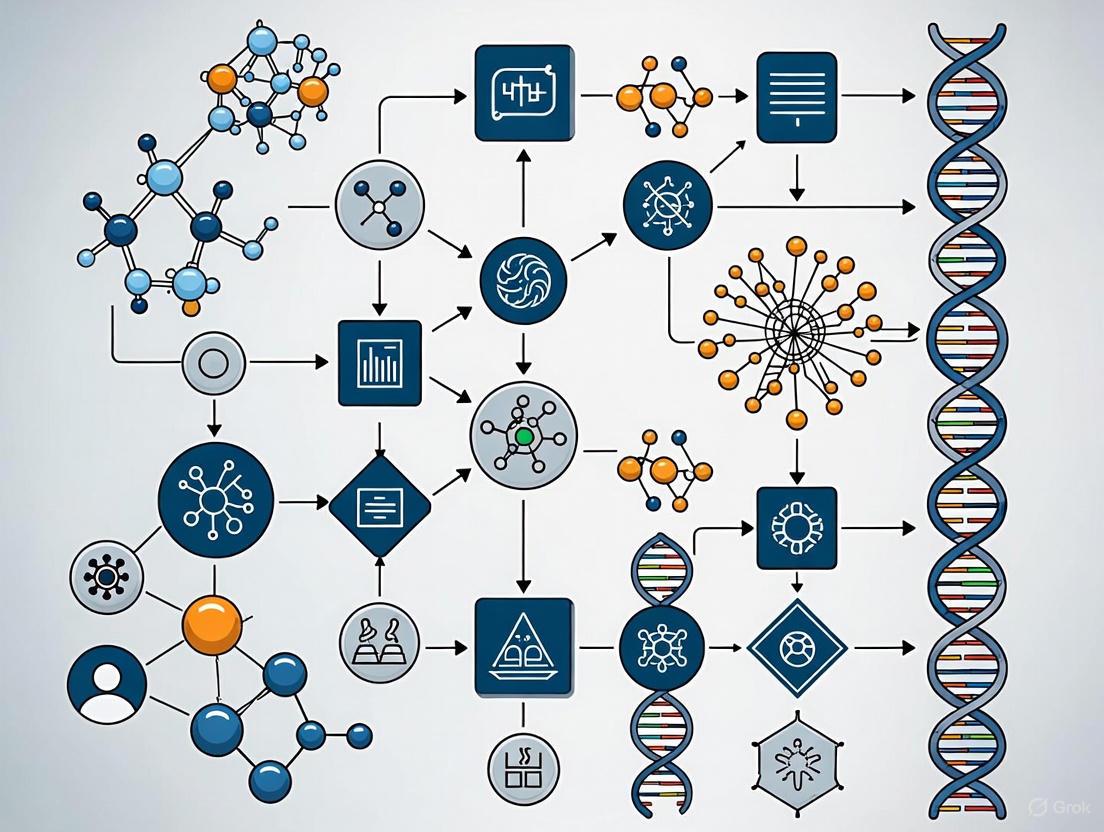
This article explores the emerging paradigm of evolutionary multitasking (EMT) for training neural networks, with a specialized focus on applications in drug discovery and development.
Evolutionary Multitasking Neural Networks: Accelerating Drug Discovery Through Parallel Optimization
Abstract
This article explores the emerging paradigm of evolutionary multitasking (EMT) for training neural networks, with a specialized focus on applications in drug discovery and development. It establishes the foundational principles of EMT, which enables the simultaneous optimization of multiple related tasks by leveraging synergistic knowledge transfer. The content details cutting-edge methodological frameworks and their practical implementation for challenges such as drug-target interaction prediction and feature selection in high-dimensional bioinformatics data. It further provides crucial insights for troubleshooting common optimization pitfalls and presents a rigorous validation framework based on benchmarking standards from the CEC 2025 competition. Aimed at researchers and drug development professionals, this comprehensive review synthesizes theoretical advances with practical applications, outlining how EMT can significantly reduce computational costs and accelerate the identification of novel therapeutic candidates.
The Foundations of Evolutionary Multitasking: From Biological Inspiration to Computational Power
Evolutionary Multitasking (EMT) represents a paradigm shift in evolutionary computation, enabling the simultaneous optimization of multiple tasks by exploiting their underlying synergies. Unlike traditional isolated approaches that solve problems independently, EMT fosters implicit knowledge transfer between tasks, often leading to accelerated convergence, improved solution quality, and more efficient resource utilization. This protocol outlines the core principles, methodologies, and applications of EMT, with a special focus on its transformative potential in training neural networks and its implications for complex research domains such as drug development.
Core Principles and Definitions
Evolutionary Multitasking optimization (EMTO) moves beyond the conventional single-task focus of evolutionary algorithms by formulating an environment where K distinct optimization tasks are solved concurrently [1] [2]. The fundamental goal is to find a set of optimal solutions {x1, ..., xK} where each x*i is the best solution for its respective task, by leveraging potential complementarities between the tasks [2].
The Multifactorial Evolutionary Algorithm (MFEA), a pioneering EMT algorithm, introduces several key concepts for comparing individuals in a multitasking environment [1]:
- Factorial Cost: The performance of an individual on a specific task, incorporating objective value and constraint violation.
- Skill Factor: The task on which an individual performs best.
- Scalar Fitness: A unified measure of an individual's overall performance across all tasks, derived from its factorial ranks.
Knowledge transfer in EMT is primarily realized through assortative mating and vertical cultural transmission [1]. When two parent individuals with different skill factors reproduce, genetic material is exchanged, allowing for the implicit transfer of beneficial traits across tasks. This process is often governed by a random mating probability (rmp) parameter, which controls the frequency of inter-task crossover [3].
Application Notes: EMT in Neural Network Training and Research
The principles of EMT are particularly well-suited for the complex, multi-faceted challenges of artificial neural network (ANN) design and training. The traditional approach of sequentially optimizing architecture and parameters can be suboptimal and prone to catastrophic forgetting when a network is required to perform multiple tasks [4]. EMT offers a unified framework to address these issues.
Table 1: Evolutionary Multitasking Applications in Neural Network Research
| Application Domain | EMT Approach | Key Benefit | Citation |
|---|---|---|---|
| Bi-Level Neural Architecture Search | Upper level minimizes network complexity; lower level optimizes training parameters to minimize loss. | Discovers compact, efficient architectures without compromising predictive performance. | [5] |
| Developmental Neural Networks | Uses Cartesian Genetic Programming to evolve developmental programs that build ANNs capable of multiple tasks. | Mitigates catastrophic forgetting; incorporates Activity Dependence for self-regulation. | [4] |
| Hybrid BCI Channel Selection | Formulates channel selection for Motor Imagery and SSVEP tasks as a multi-objective problem solved simultaneously. | Balances channel count and classification accuracy for multiple signal types efficiently. | [6] |
| Color Categorization Research | Probes a CNN trained for object recognition with an evolutionary algorithm to find invariant color category boundaries. | Provides evidence that color categories can emerge as a byproduct of learning visual skills. | [7] [8] |
Key Signaling Pathway: Two-Level Transfer Learning
A significant advancement in EMT is the Two-Level Transfer Learning (TLTL) algorithm, which enhances the basic MFEA by structuring knowledge transfer more efficiently [1].
Diagram 1: Two-Level Transfer Learning Workflow
The Upper Level (Inter-Task Transfer) focuses on transferring knowledge between different optimization tasks. It moves beyond simple random crossover by incorporating elite individual learning, thereby reducing randomness and enhancing search efficiency. This level exploits inter-task commonalities and similarities [1].
The Lower Level (Intra-Task Transfer) operates within a single task, transmitting information from one dimension to other dimensions. This is particularly crucial for across-dimension optimization, helping to accelerate convergence within a complex task's own search space [1].
Experimental Protocols
This section provides a detailed, reproducible methodology for implementing and evaluating an Evolutionary Multitasking algorithm, using the foundational MFEA and a competitive multitasking variant as examples.
Protocol 1: Base Multifactorial Evolutionary Algorithm (MFEA)
Objective: To simultaneously solve K single-objective optimization tasks using implicit genetic transfer.
Materials and Reagents:
- Software: A programming environment with computational capabilities (e.g., Python, MATLAB).
- Data: Definition of the K optimization tasks, including their search spaces Ωk and objective functions Fk.
Procedure:
- Initialization:
- Generate a unified population P of N individuals.
- Randomly assign a skill factor (dominant task) to each individual.
- Evaluate each individual only on its skill factor task to conserve computational resources.
Evolutionary Cycle (Repeat for G generations): a. Assortative Mating: * Randomly select two parent candidates, pa and pb, from the population. * If pa and pb have the same skill factor OR a random number is less than the rmp parameter, perform crossover and mutation to generate offspring ca and cb. * If the skill factors are different, randomly assign the offspring to imitate the skill factor of one of the parents. * If the above condition is false, generate offspring by applying mutation directly to each parent. b. Evaluation: Evaluate each offspring individual only on its assigned skill factor task. c. Selection: Select the fittest individuals from the combined pool of parents and offspring to form the population for the next generation, based on scalar fitness.
Output:
- Upon completion, the population contains high-quality solutions for each of the K tasks. The best individual for a task is identified by its factorial cost on that task.
Protocol 2: Competitive Multitasking for Endmember Extraction (CMTEE)
Objective: To solve a group of related but competitive tasks—in this case, endmember extraction from hyperspectral images with varying numbers of endmembers—using online resource allocation [9].
Materials and Reagents:
- Data: A hyperspectral image cube.
- Model: A linear spectral mixture model (LSMM) to represent the data.
- Software: An optimization environment capable of implementing evolutionary algorithms and linear algebra operations.
Procedure:
- Problem Formulation:
- Define a set of optimization tasks {T1, T2, ..., TK}, where each task Tk represents the endmember extraction problem for a specific number of endmembers, k.
- The objective function for each task is typically based on reconstruction error.
Algorithm Execution:
- These tasks are considered competitive as they vie for the best representation of the same underlying data.
- Implement a multitasking evolutionary framework where a single population evolves solutions for all tasks simultaneously.
- Employ an online resource allocation strategy. This strategy dynamically monitors the performance (e.g., improvement rate) of each task and assigns more computational resources (e.g., more fitness evaluations) to tasks that are showing promise, and fewer to those that are stagnating.
Output:
- A set of Pareto-optimal solutions that provide a trade-off between the number of endmembers and the reconstruction accuracy for the hyperspectral image.
Table 2: Quantitative Results from EMT Applications
| Algorithm / Study | Metric 1 | Performance | Metric 2 | Performance | Baseline Comparison | |
|---|---|---|---|---|---|---|
| EB-LNAST (Bi-Level NAS) | Predictive Accuracy | Competitive (≤0.99% reduction) | Model Size | 99.66% reduction | vs. Tuned MLPs | [5] |
| BOMTEA (Adaptive Bi-Operator) | Overall Performance on CEC17/CEC22 | Significantly outperformed comparative algorithms | Adaptive ESO Selection | Effective for CIHS, CIMS, CILS problems | vs. MFEA, MFDE | [3] |
| CMTEE (Hyperspectral Extraction) | Convergence Speed | Accelerated | Extraction Accuracy | Improved | vs. Single-task runs | [9] |
| TLTL Algorithm | Convergence Rate | Fast | Global Search Ability | Outstanding | vs. State-of-the-art EMT | [1] |
The Scientist's Toolkit: Research Reagent Solutions
Table 3: Essential Components for Evolutionary Multitasking Experiments
| Research Reagent | Function / Definition | Example Use-Case | |
|---|---|---|---|
| Random Mating Probability (rmp) | A control parameter that determines the likelihood of crossover between individuals from different tasks. | In MFEA, a high rmp promotes knowledge transfer, while a low rmp encourages independent task evolution. | [1] [3] |
| Skill Factor (τ) | The one task, among all concurrent tasks, on which an individual in the population performs the best. | Used in scalar fitness calculation and to determine which task an offspring should be evaluated on. | [1] |
| Evolutionary Search Operator (ESO) | The algorithm (e.g., GA, DE, SBX) used to generate new candidate solutions from existing ones. | BOMTEA adaptively selects between GA and DE operators based on their performance on different tasks. | [3] |
| Scalar Fitness (φ) | A unified measure of an individual's performance across all tasks, allowing for cross-task comparison and selection. | Calculated as 1 / (factorial rank), enabling the selection of elites from a multi-task population. | [1] |
| Activity Dependence (AD) | A mechanism that allows a developed neural network to adjust internal parameters (e.g., bias, health) based on task performance feedback. | Enhances the learning and adaptability of evolved developmental neural networks for multitasking. | [4] |
| Online Resource Allocation | A dynamic strategy that assigns varying amounts of computational resources to different tasks based on their real-time performance. | Used in competitive multitasking (CMTEE) to focus resources on the most promising search trajectories. | [9] |
Visualization: Evolutionary Competitive Multitasking
The following diagram illustrates the competitive multitasking paradigm used in applications like CMTEE, where tasks compete for computational resources.
Diagram 2: Competitive Multitasking with Resource Allocation
Evolutionary Multitask Optimization (EMTO) is a computational paradigm that mirrors a fundamental principle of natural evolution: the concurrent solution of multiple challenges. In nature, biological systems do not optimize for a single, isolated function but rather navigate a complex landscape of simultaneous pressures, including predator avoidance, resource acquisition, and mate selection. This process results in robust and adaptable organisms. Similarly, EMTO posits that similar or related optimization tasks can be solved more efficiently by leveraging knowledge gained from solving one task to accelerate the solution of others, rather than addressing each task in isolation [10]. This approach has demonstrated powerful scalability and search capabilities, finding application in diverse areas such as multi-objective optimization, combinatorial problems, and expensive optimization problems [10].
Within the specific context of neural network training, evolutionary algorithms (EAs) offer a compelling, gradient-free alternative to traditional backpropagation. Training biophysical neuron models provides significant insights into brain circuit organization and problem-solving capabilities. However, backpropagation often faces challenges like instability and gradient-related issues when applied to complex models. Evolutionary models, particularly when combined with mechanisms like heterosynaptic plasticity, present a robust alternative that can recapitulate brain-like dynamics during cognitive tasks [11]. This biological analogy extends beyond mere inspiration, offering tangible benefits in training versatile networks that achieve performance comparable to gradient-based methods on tasks ranging from MNIST classification to Atari games [11].
Theoretical Foundations and Biological Mechanisms
The operational principles of Evolutionary Multitasking are deeply rooted in metaphors of biological evolution. The population of candidate solutions undergoes a process of variation, selection, and reproduction, implicitly exchanging genetic material (knowledge) across tasks.
Core Biological Analogies
- Population-based Search: Unlike traditional point-based algorithms, EMTO maintains a diverse population of individuals, each representing a potential solution. This diversity is crucial for exploring disparate regions of the search space concurrently, mirroring the genetic diversity within a species that enables adaptation to changing environments.
- Knowledge as Genetic Material: In EMTO, the "knowledge" transferred between tasks is encoded within the genotypes of individuals. This is analogous to beneficial genetic traits that, once evolved in one context, can provide adaptive advantages in another, a phenomenon observed in horizontal gene transfer or shared ancestral traits.
- Heterosynaptic Plasticity: Drawing from neuroscience, heterosynaptic plasticity is a biological mechanism where the modification of one synapse influences the strength of neighboring synapses. When integrated into evolutionary models, it aids network training by introducing a local, cooperative dynamic that stabilizes learning and prevents overspecialization, much like dendritic spine meta-plasticity in biological brains [11].
The Evolutionary Multitasking Framework
Formally, Evolutionary Multitask Optimization addresses Multiple Task Optimization Problems (MTOPs). The fundamental assumption is the existence of transferable knowledge across distinct optimization tasks. Through algorithmic operations that mimic crossover and mutation, knowledge is transferred, allowing the algorithm to use lessons learned in one task to speed up the solution of others [10]. The efficacy of this knowledge transfer hinges on three critical algorithmic components, which are active areas of research:
- Knowledge Transfer Probability: Determining how often information should be exchanged between tasks.
- Transfer Source Selection: Identifying which tasks are sufficiently "similar" to benefit from knowledge exchange.
- Knowledge Transfer Mechanism: Defining the form in which knowledge is transferred (e.g., direct transfer of elite individuals, or mapping and transfer of population distribution) [10].
Experimental Protocols in Evolutionary Multitasking
To empirically validate the performance of evolutionary multitasking algorithms, rigorous experimental protocols are employed. The following section details the methodology for a benchmark experiment and a real-world application.
Protocol 1: Benchmarking the MGAD Algorithm
This protocol outlines the steps for evaluating a novel adaptive evolutionary multitask optimization algorithm, MGAD, against established benchmarks [10].
- Objective: To assess the convergence speed and optimization ability of the MGAD algorithm on standardized multitask optimization problems.
- Materials and Setup:
- Algorithms: The MGAD algorithm is compared against other state-of-the-art EMTO algorithms such as MFEA, MFEA-II, and EEMTA.
- Benchmark Problems: A suite of four established comparative benchmark problem sets for multitask optimization is used.
- Performance Metrics: Key metrics include convergence curves (to visualize speed), the final best objective function value achieved (to measure accuracy), and statistical tests (e.g., Wilcoxon signed-rank test) to confirm significance.
- Procedure:
- Algorithm Configuration: Implement the MGAD algorithm with its core components: an enhanced adaptive knowledge transfer probability strategy, a source task selection mechanism using Maximum Mean Difference (MMD) and Grey Relational Analysis (GRA), and an anomaly detection-based knowledge transfer strategy.
- Control Group Setup: Implement the comparison algorithms according to their published specifications.
- Experimental Run: For each benchmark problem set, execute all algorithms, ensuring an equal number of function evaluations for a fair comparison.
- Data Collection: Record the performance metrics for each algorithm run across multiple independent trials to account for stochasticity.
- Validation: Conduct a real-world validation experiment, such as applying the algorithms to a planar robotic arm control problem, to demonstrate practical utility.
- Analysis: The results are analyzed to determine if MGAD exhibits statistically stronger competitiveness in convergence speed and optimization ability compared to the other algorithms.
Protocol 2: Evolutionary Bi-Level Neural Architecture Search
This protocol describes the application of a bi-level evolutionary approach to optimize neural networks for a specific task, such as color classification [5].
- Objective: To simultaneously optimize the architecture, weights, and biases of a neural network using a bi-level optimization strategy, minimizing network complexity while maximizing predictive performance.
- Materials and Setup:
- Dataset: A real-world dataset, such as a color classification dataset or the Wisconsin Diagnostic Breast Cancer (WDBC) dataset.
- Baseline Models: Traditional machine learning algorithms (e.g., SVM, Random Forest) and advanced models like Multilayer Perceptrons (MLPs) with extensive hyperparameter tuning.
- Evaluation Metrics: Predictive accuracy, model size (number of parameters), and computational cost during training.
- Procedure:
- Define the Bi-Level Framework:
- Upper-Level Optimizer: An evolutionary algorithm tasked with minimizing network complexity (e.g., number of neurons, connections), which is penalized by the lower-level's performance.
- Lower-Level Optimizer: A training process (e.g., based on gradient descent or a simpler EA) that, for a given architecture from the upper level, minimizes the loss function (e.g., cross-entropy) to maximize predictive performance.
- Evolutionary Search: The upper-level EA generates populations of neural network architectures. For each architecture, the lower-level optimizer performs training, and the resulting performance is fed back to the upper level to guide selection, crossover, and mutation.
- Evaluation: The best-performing architecture discovered by the search process is evaluated on a held-out test set.
- Define the Bi-Level Framework:
- Analysis: Compare the predictive performance and model size of the evolved network against the baseline models. The success of the EB-LNAST approach is demonstrated by achieving superior or competitive predictive performance while reducing model size by up to 99.66% compared to traditional MLPs [5].
Performance Data and Comparative Analysis
The following tables summarize quantitative results from key experiments in evolutionary multitasking and neuroevolution, demonstrating the efficacy of the biological analogy.
Table 1: Performance Comparison of Evolutionary Multitasking Algorithms on Benchmark Problems [10]
| Algorithm | Key Mechanism | Convergence Speed | Final Solution Quality | Remarks |
|---|---|---|---|---|
| MGAD | Anomaly detection transfer, MMD/GRA similarity | Fastest | Highest | Strong competitiveness; reduces negative transfer |
| MFEA-II | Dynamically adjusted RMP matrix | Moderate | High | Improves over MFEA with feedback |
| MFEA | Fixed knowledge transfer probability | Slower | Good | Foundational algorithm but limited adaptability |
| EEMTA | Feedback-based credit assignment | Moderate | Good | Explicit task selection |
Table 2: Performance of Evolutionary Bi-Level Neural Architecture Search (EB-LNAST) on Color Classification [5]
| Model / Approach | Predictive Performance (Accuracy) | Model Size (Parameters) | Reduction in Model Size vs. MLP |
|---|---|---|---|
| EB-LNAST (Proposed) | Statistically significant improvements | Optimized & Compact | Up to 99.66% |
| Traditional ML (e.g., SVM, RF) | Lower | N/A | N/A |
| Multilayer Perceptron (MLP) | Baseline | Large (Reference) | 0% |
| MLP with Hyperparameter Tuning | Marginally higher (≤ 0.99%) | Large | 0% |
Table 3: Capabilities of Evolutionary Algorithms in Training Neural Models [11]
| Network Type | Task Example | Performance vs. Gradient-Based Methods | Notable Characteristics |
|---|---|---|---|
| Spiking Neural Networks (SNNs) | MNIST Classification | Comparable | Recapitulates brain-like dynamics; high energy efficiency |
| Analog Neural Networks | Atari Games | Comparable | Gradient-free training avoids instability issues |
| Recurrent Architectures | Cognitive Tasks | Comparable | Incorporates dopamine-driven plasticity and memory replay |
Implementation and Workflow Visualization
The practical implementation of evolutionary multitasking involves a structured workflow that manages the interaction between multiple tasks and the shared population. The following diagram illustrates the core operational loop of a typical Evolutionary Multitask Optimization algorithm.
Figure 1: Evolutionary Multitasking Core Workflow
The bi-level optimization framework for neural architecture search represents a specific and powerful instance of evolutionary multitasking, where one level of evolution is nested within another.
Figure 2: Bi-Level Optimization for Neural Architecture Search
The Scientist's Toolkit: Research Reagent Solutions
This section catalogs the essential computational "reagents" and materials required to implement and experiment with evolutionary multitasking algorithms as drawn from the cited research.
Table 4: Essential Research Reagents for Evolutionary Multitasking
| Tool / Component | Category | Function / Purpose | Exemplar Use Case |
|---|---|---|---|
| Evolutionary Multitask Optimization (EMTO) Framework | Algorithmic Paradigm | Provides the overarching structure for concurrent task solving via knowledge transfer. | Solving Multiple Task Optimization Problems (MTOPs) [10]. |
| Multi-Factorial Evolutionary Algorithm (MFEA) | Base Algorithm | A foundational EMTO algorithm that enables implicit knowledge transfer via a unified search space. | Baseline for developing and testing new EMTO strategies [10]. |
| Maximum Mean Discrepancy (MMD) | Similarity Metric | Statistically measures the similarity between the probability distributions of two task populations. | Used in MGAD for improved transfer source selection [10]. |
| Grey Relational Analysis (GRA) | Similarity Metric | Measures the similarity of evolutionary trends between tasks based on the geometry of their solutions. | Used in MGAD in conjunction with MMD for source selection [10]. |
| Anomaly Detection Strategy | Knowledge Filter | Identifies and filters out potentially deleterious or "negative" knowledge before transfer. | Core component of MGAD to reduce the risk of negative transfer [10]. |
| Heterosynaptic Plasticity Model | Neuro-Inspired Mechanism | A local learning rule where the change in one synapse affects neighbors, stabilizing learning. | Integrated into EAs for training more robust, brain-like neural networks [11]. |
| Bi-Level Optimization Framework | Search Architecture | Hierarchically separates architecture search (upper-level) from parameter training (lower-level). | Evolutionary Neural Architecture Search (EB-LNAST) [5]. |
In the domain of evolutionary computation, Evolutionary Multitasking (EMT) has emerged as a transformative paradigm for solving multiple optimization tasks concurrently. The fundamental premise of EMT lies in its ability to exploit latent synergies between tasks, mimicking the human capacity for simultaneous problem-solving. This process is governed by two interconnected core mechanisms: knowledge transfer and implicit genetic exchange. Knowledge transfer enables the sharing of valuable information across tasks, while implicit genetic exchange facilitates this transfer at the chromosomal level through specialized reproductive operators. These mechanisms allow multitasking algorithms to bypass the performance limitations of traditional single-task evolutionary approaches, accelerating convergence and improving solution quality for complex, interrelated problems. Framed within broader research on evolutionary multitasking neural network training, these principles provide a bio-inspired foundation for developing more efficient and robust artificial intelligence systems, with significant implications for data-intensive fields such as drug development and biomedical informatics.
Core Mechanism 1: Knowledge Transfer
Knowledge transfer in Evolutionary Multitasking addresses three fundamental questions: where to transfer, what to transfer, and how to transfer effectively. The coordination of these elements is critical for achieving positive transfer—where shared knowledge provides mutual benefit—while mitigating the risk of negative transfer, which occurs when inappropriate knowledge impedes task performance.
The "Where, What, and How" Framework
- Where to Transfer (Task Routing): This decision involves identifying the most beneficial source-target task pairs for knowledge exchange. Advanced implementations employ attention-based similarity recognition modules to compute pairwise similarity scores between tasks. These scores, derived from task features or landscape characteristics, dynamically determine the most promising transfer pathways, routing knowledge from source tasks that possess relevant information to target tasks that can benefit from it [12].
- What to Transfer (Knowledge Control): This component determines the specific content and quantity of knowledge to be shared. For each source-target pair, a control mechanism decides the proportion of elite solutions—high-quality individuals from the source population—to be transferred. This selective process ensures that only the most useful genetic material is shared, preserving population diversity and quality in the target task [12].
- How to Transfer (Strategy Adaptation): This element governs the practical implementation of transfer, controlling the strength and mechanism of knowledge exchange. Strategy adaptation agents dynamically adjust key hyper-parameters within the underlying evolutionary multitasking framework, such as crossover rates and selection pressures, to optimize the integration of transferred knowledge for specific task pairs [12].
Quantitative Performance of Knowledge Transfer Strategies
Table 1: Comparative Performance of Knowledge Transfer Strategies in Evolutionary Multitasking
| Strategy / Algorithm | Key Mechanism | Reported Performance Gain | Application Context |
|---|---|---|---|
| MetaMTO (Multi-Role RL) [12] | Attention-based task routing + RL-controlled knowledge transfer | State-of-the-art performance against benchmarks | Generalized Multitask Optimization |
| MFEA-ML [13] | Machine learning model guiding transfer at individual level | Competitive/superior to state-of-the-art MTEAs | Benchmark Problems & Engineering Design |
| EMT-PU [14] | Bidirectional transfer between original and auxiliary tasks | Consistently outperforms state-of-the-art PU methods | Positive and Unlabeled Learning |
| Two-Level Transfer (TLTL) [1] | Upper-level (inter-task) and lower-level (intra-task) learning | Outstanding global search & fast convergence | Multitask Optimization Problems |
Experimental Protocol: Evaluating Knowledge Transfer
Objective: To quantitatively assess the efficacy and potential negative impacts of knowledge transfer between two optimization tasks.
Materials:
- Software: A compatible Evolutionary Multitasking platform (e.g., implementing MFEA or similar algorithm).
- Test Suite: Standard multitask optimization benchmark problems (e.g., from CEC 2025 competition test suites) [15].
- Computing Resources: Workstation with sufficient memory and processing power for population-based evolutionary computation.
Procedure:
- Task Selection & Baseline Establishment: Select two tasks, Task A and Task B, with a suspected degree of similarity. Independently run the EMT algorithm on each task in isolation for 30 runs with different random seeds. Record the performance, calculating the Best Function Error Value (BFEV) at regular intervals [15].
- Multitasking Experiment: Run the EMT algorithm on Task A and Task B simultaneously, with knowledge transfer enabled. Perform 30 independent runs. Record the BFEV for both tasks at the same evaluation intervals as the baseline [15].
- Data Collection: For both the baseline and multitasking experiments, ensure results are recorded at predefined function evaluation checkpoints (e.g., k*maxFEs/Z, where Z=100 or 1000) [15].
- Performance Analysis: For each task, compare the convergence speed (BFEV over time) and final solution quality (BFEV at termination) between the baseline and multitasking scenarios. Calculate the transfer gain (or loss) as the difference in performance.
- Similarity Analysis: Optional: Compute a measure of inter-task similarity, for example, by analyzing the overlap in elite solutions or using the attention scores from a trained MetaMTO agent [12]. Correlate this similarity measure with the observed transfer gain/loss.
Knowledge Transfer Pathway Logic
Diagram 1: Knowledge Transfer Decision Pathway. This flowchart illustrates the sequential decision process and feedback loops employed by a multi-role reinforcement learning system to govern effective knowledge transfer in evolutionary multitasking.
Core Mechanism 2: Implicit Genetic Exchange
While knowledge transfer defines the strategy, implicit genetic exchange is the primary physical mechanism that executes this strategy at the population level. It enables the transfer and blending of genetic material without explicit instructions, emerging naturally from the interaction of evolutionary operators.
Foundational Algorithms and Exchange Mechanisms
The Multifactorial Evolutionary Algorithm (MFEA) is a cornerstone of EMT, providing a unified framework for implicit genetic exchange. In MFEA, a single population evolves solutions for multiple tasks simultaneously. Each individual is assigned a skill factor indicating the task on which it performs best. A critical mechanism is assortative mating, where individuals with the same skill factor are preferentially paired for crossover. However, with a defined probability (rmp - random mating probability), individuals with different skill factors are crossed over. This inter-task crossover is the engine of implicit genetic exchange, allowing genetic material from one task to be injected into the evolutionary lineage of another [1].
Machine Learning for Enhanced Exchange
Recent advances have introduced machine learning to refine implicit exchange, moving beyond random mating. The MFEA-ML algorithm, for instance, trains an online model (e.g., a feedforward neural network) to act as a "doctor" for genetic exchange. This model learns from historical data which inter-task individual pairings are likely to produce viable offspring. It uses features such as the parents' locations in the decision space and their fitness values to predict the success of a transfer, thereby inhibiting negative transfers and boosting positive ones at the most granular level [13].
Experimental Protocol: Tracking Implicit Genetic Exchange
Objective: To verify and quantify the occurrence of implicit genetic exchange and its impact on solution fitness.
Materials:
- Software: An MFEA implementation with customizable genetic markers or tagging.
- Test Suite: A multi-task benchmark where tasks have known, distinct optimal regions in the search space.
Procedure:
- Population Initialization: Initialize a unified population. For clarity, two subpopulations can be artificially defined: Population A (seeded with genetic markers beneficial for Task A) and Population B (seeded with markers for Task B).
- Evolution with Multitasking: Run the MFEA for a predetermined number of generations. Ensure the rmp is set to a value greater than zero to allow inter-task crossover.
- Tracking and Sampling: At each generation, track the frequency of genetic markers from Task A appearing in individuals whose skill factor is Task B, and vice-versa.
- Offspring Analysis: For offspring generated from inter-task crossover, analyze their genetic composition to confirm the blending of material from both parental tasks.
- Correlation with Fitness: For individuals that are the product of genetic exchange, record their factorial rank and scalar fitness. Compare the fitness of individuals that have incorporated foreign genetic material against those that have not, to assess the benefit (or detriment) of the exchange.
- Control Experiment: Run a control experiment with rmp = 0 (no inter-task crossover) and compare the convergence speed and final solution quality with the experimental run.
Implicit Genetic Exchange in MFEA
Diagram 2: Implicit Genetic Exchange via Crossover. This workflow depicts how a multifactorial evolutionary algorithm facilitates the exchange of genetic material between tasks belonging to different factorial environments during the reproduction phase.
The Scientist's Toolkit: Research Reagent Solutions
Table 2: Essential Resources for Evolutionary Multitasking Research
| Resource / Reagent | Type | Function / Purpose | Exemplar / Standard |
|---|---|---|---|
| Multitask Benchmark Suites | Software/Dataset | Provides standardized problems for comparing algorithm performance. | CEC 2025 MTSOO & MTMOO Suites [15] |
| Algorithmic Framework | Software Library | Provides a base code structure for implementing and testing EMT ideas. | MFEA, MFEA-II, and other open-source variants [13] [1]. |
| Similarity Metric | Analytical Tool | Quantifies the relationship between tasks to predict transfer potential. | Attention-based similarity scores [12], Linearized Domain Adaptation [1]. |
| Knowledge Transfer Controller | Software Agent | Dynamically manages the "what, where, and how" of transfer. | Reinforcement Learning Policy Network [12] or Online ML Model [13]. |
| Performance Metric | Analytical Tool | Measures the success of multitasking optimization. | Best Function Error Value (BFEV), Inverted Generational Distance (IGD) [15]. |
Application Note: Evolutionary Multitasking for Positive and Unlabeled (PU) Learning
Background: PU learning is a challenging machine learning scenario where a trainer has only a set of labeled positive samples and a set of unlabeled samples (containing both positives and negatives). Traditional methods focus on identifying reliable negatives, but when positives are scarce, discovering more positives becomes critical [14].
Multitasking Formulation: The EMT-PU algorithm reformulates PU learning as a bi-task optimization problem.
- Original Task (T₀): Standard PU classification goal: distinguish positive and negative samples from the unlabeled set.
- Auxiliary Task (Tₐ): A novel task focused specifically on identifying more reliable positive samples from the unlabeled set [14].
Protocol:
- Population Setup: Two co-evolving populations are maintained: Population P₀ for T₀ and Population Pₐ for Tₐ.
- Bidirectional Knowledge Transfer:
- Transfer from Pₐ to P₀: High-quality individuals from Pₐ (which represent candidate positive samples) are used to guide the search of P₀, improving the quality of its solutions via a hybrid update strategy.
- Transfer from P₀ to Pₐ: Individuals from P₀ are used to promote diversity in Pₐ via a local update strategy, preventing premature convergence.
- Initialization: A competition-based strategy is used to generate a high-quality initial population for Pₐ.
- Validation: The final classifier is derived from the optimized P₀ population and evaluated on held-out test data.
Outcome: This EMT approach allows the two tasks to synergistically improve each other, with the auxiliary task acting as a specialized knowledge miner for the primary task. Empirical results on benchmark datasets show that EMT-PU consistently outperforms state-of-the-art PU learning methods in classification accuracy [14].
The training of sophisticated neural networks, particularly within high-stakes fields like drug development, is often hampered by complex, multi-modal loss landscapes and conflicting objectives. Traditional gradient-based optimizers are prone to becoming trapped in suboptimal local minima, while conventional evolutionary algorithms can suffer from slow convergence speeds. Evolutionary Multitasking (EMT) has emerged as a transformative paradigm that leverages synergies across multiple, related optimization tasks to overcome these hurdles. By enabling the simultaneous solving of several tasks within a single algorithmic run, EMT facilitates implicit knowledge transfer, which serves as a powerful mechanism for accelerating convergence and escaping poor local optima. This application note details the key advantages of EMT, provides validated experimental data, and outlines detailed protocols for its implementation in neural network training for scientific discovery.
Key Advantages and Quantitative Evidence
Evolutionary Multitasking provides two fundamental benefits for neural network training and optimization in complex scientific problems.
- Convergence Acceleration: The transfer of genetic material (e.g., promising synaptic weights or architectural features) from one task to another provides a form of guided initialization and exploration. This knowledge sharing prevents the algorithm from starting from scratch for each new task, effectively "warming up" the search process and significantly reducing the number of function evaluations required to find a high-quality solution [15] [16]. For instance, an algorithm trained on a related protein folding prediction task can transfer insights to accelerate training on a new target protein.
- Enhanced Solution Quality in Complex Landscapes: Multi-modal and non-convex loss landscapes, common in physics-informed neural networks (PINNs) and drug response prediction models, are challenging for gradient-based methods. The population-based nature of EMT, combined with cross-task knowledge transfer, promotes diverse exploration of the solution space. This helps the algorithm bypass deceptive local minima and discover more robust and generalizable solutions [17] [5]. This is critical for ensuring that neural network predictions are not only accurate but also physically consistent and reliable.
The table below summarizes empirical results from recent studies that demonstrate these advantages across various applications.
Table 1: Quantitative Performance of Evolutionary Multitasking and Related Algorithms
| Algorithm / Study | Application Context | Key Metric Improvement | Reported Advantage |
|---|---|---|---|
| EMOPPO-TML [18] | Wireless Rechargeable Sensor Networks | Convergence Speed | LSTM-enhanced policy network achieved 25% faster convergence compared to conventional neural networks. |
| EMOPPO-TML [18] | Wireless Rechargeable Sensor Networks | Energy Usage Efficiency | LSTM integration improved long-term decision-making by 10% compared to standard PPO. |
| HRL-MOEA [16] | Multi-objective Recommendation Systems | Evolutionary Efficacy & Convergence | Hybrid RL strategy (SARSA & Q-learning) dynamically adapted genetic operators, enhancing convergence speed and solution quality. |
| EB-LNAST [5] | Color Classification & Medical Diagnostics (WDBC) | Model Compactness | Achieved up to 99.66% reduction in model size while maintaining competitive predictive performance (marginal reduction of ≤ 0.99%). |
Experimental Protocols
This section provides a detailed methodology for replicating key experiments that validate the advantages of Evolutionary Multitasking.
Protocol: Evaluating Convergence Acceleration in a Multi-Task PINN Scenario
This protocol assesses the performance of EMT in optimizing Physics-Informed Neural Networks (PINNs) for a family of related partial differential equations (PDEs), a common scenario in drug delivery modeling.
- 1. Objective: To compare the convergence speed and solution accuracy of an EMT algorithm against a traditional single-task evolutionary optimizer when training PINNs for multiple PDEs with varying parameters.
- 2. Materials & Software:
- Benchmark Problems: A suite of two related PDEs, e.g., the Burgers' equation with different viscosity parameters [17].
- Algorithms:
- Experimental Group: A Multi-factorial Evolutionary Algorithm (MFEA) or similar EMT framework.
- Control Group: A standard Genetic Algorithm (GA) or Evolution Strategy (ES) run independently on each task.
- Software Framework: DeepXDE [17] or PyTorch/TensorFlow for PINN implementation, with a custom EMT library (e.g., PyGMO).
- Hardware: A computing cluster with multiple GPUs (e.g., NVIDIA V100 or A100) to handle parallel training of the population.
- 3. Experimental Procedure:
- Problem Formulation: Define the loss function for each PINN task, combining data fidelity terms and PDE residual terms as described in [17].
- Parameter Mapping: In the MFEA, encode the shared and task-specific components of the PINN's weights and biases into a unified representation.
- Algorithm Configuration:
- MFEA: Set a random mating probability (e.g., rmp = 0.3) to control cross-task crossover.
- GA & MFEA: Use identical population sizes (e.g., 100 individuals), crossover, and mutation rates for a fair comparison.
- Termination Criterion: Run all algorithms for a fixed budget of 200,000 function evaluations [15].
- Data Collection: Record the best and median loss value for each task at every 1,000 evaluations. Perform 30 independent runs with different random seeds [15].
- 4. Data Analysis:
- Plot the average convergence curves (loss vs. evaluations) for both algorithms across all tasks.
- Statistically compare the number of evaluations required by each algorithm to reach a pre-defined loss threshold using a Wilcoxon signed-rank test.
- The MFEA is expected to demonstrate steeper convergence and reach the threshold in fewer evaluations than the independent GAs.
The following diagram illustrates the core workflow and knowledge transfer mechanism of this EMT protocol.
Protocol: Assessing Solution Quality on a Drug Response Prediction Problem
This protocol evaluates the ability of EMT to find superior solutions for a complex multi-objective problem in drug development, such as balancing prediction accuracy with model fairness or robustness.
- 1. Objective: To compare the solution quality (Pareto front) of an EMT algorithm against a standard Multi-Objective Evolutionary Algorithm (MOEA) on a graph neural network (GNN) configured for drug response prediction.
- 2. Materials & Software:
- Dataset: A public drug response dataset (e.g., GDSC or TCGA), formatted as a graph structure where nodes represent genes/cells and edges represent interactions.
- Model: A Graph Neural Network (GNN) whose architecture and training hyperparameters are to be optimized [5].
- Algorithms:
- Experimental Group: An EMT algorithm like MFEA adapted for multi-objective optimization (MO-MFEA) [15].
- Control Group: A classical MOEA such as NSGA-II.
- Software: Deep Graph Library (DGL) or PyTorch Geometric, with an optimization framework like pymoo.
- 3. Experimental Procedure:
- Task Definition: Define two or more related tasks. For example:
- Task 1: Optimize the GNN for a specific cancer type.
- Task 2: Optimize the same GNN for a different, but genetically similar, cancer type.
- Objective Functions: For each task, the objectives are to maximize predictive accuracy (e.g., R²) and minimize model complexity (number of parameters) to ensure deployability.
- Execution: Run both MO-MFEA and NSGA-II for a fixed number of generations (e.g., 500). Use identical population sizes and evaluation budgets.
- Evaluation: Upon termination, collect the final non-dominated solution set (Pareto front) from each algorithm and run.
- Task Definition: Define two or more related tasks. For example:
- 4. Data Analysis:
- Calculate the Hypervolume (HV) metric for the obtained Pareto fronts to measure both convergence and diversity.
- Compare the average HV of MO-MFEA against NSGA-II across 30 independent runs. A statistically significant higher HV for MO-MFEA would indicate its superior ability to find a diverse set of high-quality solutions.
- The knowledge transfer in MO-MFEA is expected to help discover GNN architectures that are both accurate and efficient across multiple cancer types, outperforming the isolated optimization of NSGA-II.
The Scientist's Toolkit: Research Reagent Solutions
The following table catalogues essential algorithmic "reagents" for designing and implementing Evolutionary Multitasking experiments in neural network training.
Table 2: Key Research Reagents for Evolutionary Multitasking Experiments
| Research Reagent | Function & Explanation | Representative Use-Cases |
|---|---|---|
| Multi-factorial Evolutionary Algorithm (MFEA) | The core algorithmic framework that evolves a single population of individuals, each encoded to solve multiple tasks simultaneously. | General-purpose multi-task optimization across diverse domains like PINNs [17] and neural architecture search [5]. |
| Random Mating Probability (RMP) | A critical hyperparameter that controls the probability of crossover between individuals from different tasks. A low RMP limits transfer, a high one may cause negative interference. | Tuning knowledge transfer intensity in MFEA; essential for balancing exploration and exploitation [15] [16]. |
| Hybrid RL-Adaptive Strategy (e.g., HRL-MOEA) | Uses reinforcement learning (e.g., SARSA & Q-learning) to dynamically adapt genetic operator probabilities during evolution, replacing fixed, hand-tuned parameters. | Enhancing convergence performance in complex multi-objective recommendation systems [16]; adaptable to drug discovery pipelines. |
| Bi-level Optimization Framework (e.g., EB-LNAST) | A hierarchical approach where an upper-level optimizer (e.g., for architecture) guides a lower-level optimizer (e.g., for weights). | Simultaneously discovering optimal neural network architectures and their training parameters for tasks like color classification [5]. |
| Long Short-Term Memory (LSTM) Policy Network | An advanced neural network component within an evolutionary agent that helps capture temporal dependencies in decision-making. | Improving long-term performance and energy usage efficiency in sequential decision problems like path planning for mobile chargers [18]. |
Evolutionary multitasking represents a paradigm shift in computational intelligence, leveraging the implicit parallelism of population-based search to solve multiple optimization tasks simultaneously [15]. Within the domain of neural network training, this approach facilitates efficient knowledge transfer between related tasks, accelerating convergence and improving generalization in complex models such as those used in drug discovery [19]. This framework is particularly valuable for high-dimensional problems including feature selection for biological data and optimization of network architectures, where it demonstrates superior performance compared to traditional isolated optimization methods [15] [19].
The conceptual foundation lies in mimicking evolutionary processes, where genetic material evolved for one task may prove beneficial for another, thereby creating a synergistic optimization environment [15]. When applied to neural network training, this enables the discovery of robust network parameters and architectures through implicit transfer of learned features and representations across related modeling tasks.
Theoretical Foundations
Evolutionary Multitasking Principles
Evolutionary multitasking operates on the principle that simultaneously solving multiple optimization tasks can induce cross-task genetic transfers that accelerate evolutionary progression toward superior solutions [15]. In biological terms, evolution itself functions as a massive multi-task engine where diverse organisms simultaneously evolve to survive in various ecological niches [15].
The mathematical formulation for multi-objective feature selection—a common neural network preprocessing task—illustrates this principle well [19]. The optimization problem is defined as:
- Minimize F(x) = (f₁(x), f₂(x))
- Subject to x ∈ Ω Where f₁(x) represents the number of selected features and f₂(x) denotes the classification error rate [19].
Neural Network Synergy
When integrated with neural networks, evolutionary multitasking provides a mechanism for parallel optimization of both network architecture and parameters across related domains. This synergy is particularly valuable for:
- Architecture Search: Simultaneously evolving network topologies for multiple related tasks
- Parameter Transfer: Enabling knowledge sharing between networks solving complementary problems
- Regularization: Implicitly preventing overfitting through cross-task validation
Experimental Protocols
Benchmarking Standards
Rigorous evaluation of evolutionary multitasking algorithms requires standardized benchmarks and protocols. The CEC 2025 Competition on Evolutionary Multi-task Optimization establishes comprehensive guidelines for performance assessment [15].
Protocol Requirements:
- Execute 30 independent runs with different random seeds
- Record best function error values (BFEV) at predefined evaluation checkpoints
- For 2-task problems: use 200,000 maximum function evaluations (maxFEs)
- For 50-task problems: use 5,000,000 maxFEs [15]
Performance Metrics:
- Calculate median BFEV across all runs for each computational budget checkpoint
- Evaluate on standardized test suites containing nine complex MTO problems
- Assess algorithm performance across varying computational budgets [15]
Dual-Perspective Feature Selection Methodology
The DREA-FS algorithm demonstrates the application of evolutionary multitasking to feature selection for neural network training [19]. This protocol specifically addresses high-dimensional data challenges common in drug development.
Experimental Workflow:
- Task Construction: Create simplified and complementary tasks using filter-based and group-based dimensionality reduction
- Dual-Archive Optimization:
- Diversity Archive: Preserves feature subsets with equivalent performance
- Elite Archive: Provides convergence guidance
- Knowledge Transfer: Implement cross-task genetic transfers through specialized reproduction operators
- Solution Refinement: Balance convergence and diversity across tasks to identify multimodal solutions [19]
Validation Framework:
- Test on 21 real-world datasets with varying dimensionality
- Compare classification performance against state-of-the-art multi-objective algorithms
- Evaluate ability to identify distinct feature subsets with equivalent objective values [19]
Implementation Framework
Computational Infrastructure
The successful implementation of evolutionary multitasking for neural networks requires specialized computational frameworks that balance expressiveness with efficiency [20].
Table 1: Deep Learning Frameworks Supporting Evolutionary Multitasking Research
| Framework | Primary Strength | Execution Model | Hardware Support | Research Suitability |
|---|---|---|---|---|
| PyTorch | Research flexibility, dynamic graphs | Dynamic computation | Multi-GPU, distributed | Excellent for prototyping novel architectures [21] |
| TensorFlow | Production deployment, scalability | Static graph optimization | TPU, GPU, mobile | Strong for large-scale experiments [22] |
| JAX | High-performance computing | JIT compilation, functional | TPU, GPU | Ideal for evolutionary algorithm research [21] |
| Keras | Rapid prototyping | High-level API abstraction | GPU via TensorFlow | Excellent for quick experimentation [22] |
Research Reagent Solutions
Table 2: Essential Research Components for Evolutionary Multitasking Neural Networks
| Component | Function | Implementation Examples |
|---|---|---|
| Multi-factorial Evolutionary Algorithm (MFEA) | Enables simultaneous optimization of multiple tasks | MFEA framework for knowledge transfer between tasks [15] |
| Dual-Archive Mechanism | Maintains convergence and diversity | DREA-FS diversity and elite archives for feature selection [19] |
| Dimensionality Reduction | Creates simplified auxiliary tasks | Filter-based and group-based reduction for high-dimensional data [19] |
| Benchmark Test Suites | Standardized performance evaluation | CEC 2025 MTSOO and MTMOO problem sets [15] |
| Performance Metrics | Quantifies algorithm effectiveness | Best Function Error Value (BFEV), Inverted Generational Distance (IGD) [15] |
Visualization Framework
Evolutionary Multitasking Architecture
DREA-FS Experimental Workflow
Comparative Analysis
Performance Benchmarking
Table 3: Evolutionary Multitasking Algorithm Performance Comparison
| Algorithm | Feature Selection Accuracy | Convergence Speed | Multimodal Solution Diversity | Computational Complexity |
|---|---|---|---|---|
| DREA-FS | Superior (21 datasets) | Accelerated through knowledge transfer | High (dual-archive mechanism) | Moderate (balanced approach) [19] |
| Traditional MOFS | Moderate | Slow convergence cited as limitation | Limited | Low to moderate [19] |
| Single-Objective EMT | Varies with weighting scheme | Fast but limited scope | Minimal (single solution) | Low [19] |
| MFEA Baseline | Competitive on select tasks | Standard evolutionary pace | Moderate | Moderate [15] |
The integration of evolutionary multitasking with neural network training establishes a powerful framework for addressing complex optimization challenges in domains such as drug development. The DREA-FS algorithm exemplifies this approach, demonstrating significant improvements in feature selection performance while identifying multiple equivalent solutions that enhance interpretability [19]. Standardized benchmarking protocols, as outlined in the CEC 2025 competition, provide the necessary foundation for rigorous evaluation and continued advancement in this field [15].
Future research directions should focus on scaling these approaches to ultra-high-dimensional problems, enhancing cross-task knowledge transfer mechanisms, and developing more efficient diversity preservation techniques. The synergy between evolutionary computation and neural networks continues to offer promising avenues for addressing increasingly complex real-world optimization challenges.
Building and Applying EMT Frameworks to Drug Discovery Challenges
Multi-Factorial Evolutionary Algorithms (MFEAs) represent a paradigm shift in evolutionary computation, enabling the simultaneous solution of multiple optimization tasks within a single unified search process. The core innovation of MFEA lies in its ability to transfer knowledge across tasks implicitly through a unified genetic representation and crossover operations, thereby leveraging synergies and complementarities between tasks to accelerate convergence and improve solution quality [23] [24]. This multifactorial inheritance framework stands in contrast to traditional evolutionary approaches that handle optimization problems in isolation, making it particularly valuable for complex real-world domains where multiple related problems must be addressed concurrently [24].
In the context of drug discovery, MFEAs offer transformative potential by enabling researchers to optimize multiple molecular properties, predict various biological activities, and explore diverse chemical spaces simultaneously. The pharmaceutical industry faces enormous challenges in navigating high-dimensional optimization landscapes where efficacy, specificity, toxicity, and synthesizability must be balanced [25] [26]. MFEA provides a robust computational framework for addressing these multifactorial challenges through intelligent knowledge transfer between related drug discovery tasks, potentially reducing development timelines and costs while improving success rates [27] [28].
Foundational Concepts and Mechanisms
Core MFEA Architecture
The MFEA architecture operates on the principle of implicit genetic transfer through a unified search space. Unlike traditional evolutionary algorithms that maintain separate populations for separate tasks, MFEA maintains a single population where each individual possesses a skill factor indicating its task affinity alongside a multifactorial fitness that represents its performance across all tasks [24]. This design enables the automatic discovery and exploitation of genetic material that proves beneficial across multiple tasks through crossover operations between individuals with different skill factors [23].
The algorithm incorporates two fundamental components: (1) a multifactorial fitness evaluation that assesses solutions across all tasks, and (2) assortative mating that preferentially crosses individuals with similar skill factors while allowing controlled cross-task recombination [24]. This balanced approach maintains task specialization while permitting beneficial knowledge transfer. The recent introduction of multipopulation MFEA variants further enhances this framework by employing multiple subpopulations with adaptive migration strategies, allowing more controlled knowledge exchange and better management of negative transfer between dissimilar tasks [23].
Knowledge Transfer Mechanisms
Effective knowledge transfer constitutes the core advantage of MFEA over single-task evolutionary approaches. The transfer occurs implicitly through crossover operations between individuals from different tasks, allowing beneficial genetic material to propagate across the search spaces of related optimization problems [24]. This mechanism enables the algorithm to discover underlying commonalities between tasks and utilize them to escape local optima and accelerate convergence.
Advanced MFEA implementations incorporate adaptive knowledge transfer mechanisms that dynamically regulate the intensity and direction of genetic exchange based on measured transfer effectiveness [23]. These approaches monitor the performance improvement attributable to cross-task crossover and adjust migration rates between subpopulations accordingly, thereby maximizing positive transfer while minimizing potential negative interference between conflicting tasks. This adaptability proves particularly valuable in drug discovery applications where the relationships between different molecular optimization tasks may not be known a priori [27] [28].
MFEA Design Protocols for Drug Discovery
Representation Strategies for Molecular Optimization
The design of effective representation schemes constitutes a critical foundation for successful MFEA implementation in drug discovery. The Network Random Key (NetKey) representation provides a flexible approach that accommodates both complete and sparse graph-based molecular representations, making it suitable for diverse drug discovery tasks ranging from molecular graph optimization to chemical reaction planning [23]. This representation encodes solutions as vectors of random numbers that are subsequently decoded into actual structures through a deterministic mapping process, allowing standard evolutionary operators to be applied while maintaining structural feasibility.
For molecular property optimization, multitask graph representations enable simultaneous optimization of multiple pharmacological properties by sharing substructural patterns across related tasks [27]. This approach leverages the observation that certain molecular scaffolds or functional groups confer desirable properties across multiple optimization objectives, allowing knowledge about promising chemical motifs to transfer implicitly between tasks through the evolutionary process.
Experimental Protocol: Multi-Task Molecular Optimization
Objective: Simultaneously optimize multiple drug properties including target binding affinity, solubility, and metabolic stability.
Materials and Reagents:
- Chemical Libraries: Curated compound collections (e.g., ZINC, ChEMBL)
- Descriptor Software: RDKit or OpenBabel for molecular feature generation
- Validation Assays: In silico prediction models or high-throughput screening data
Procedure:
- Task Definition: Define 3-5 related drug optimization tasks with shared molecular representation.
- Population Initialization: Initialize population of 500-1000 individuals with diverse skill factors.
- Multifactorial Evaluation:
- Decode each individual to molecular representation
- Evaluate on assigned task using relevant objective functions
- Compute multifactorial rank considering performance across all tasks
- Assortative Mating:
- Select parents with 70% probability for same-task mating
- Allow 30% cross-task mating with adaptive transfer control
- Evolutionary Operators:
- Apply simulated binary crossover with distribution index of 15
- Implement polynomial mutation with probability 1/n (n: number of variables)
- Skill Factor Assignment: Assign offspring to task demonstrating highest fitness improvement.
- Termination Check: Continue for 100-200 generations or until convergence criteria met.
Validation: Confirm optimized molecules through molecular dynamics simulations and in vitro assays.
Advanced MFEA Configurations
Multipopulation Adaptive MFEA
The multipopulation MFEA variant addresses limitations of single-population approaches by maintaining distinct subpopulations for different tasks while enabling controlled knowledge exchange through periodic migration [23]. This architecture proves particularly beneficial for drug discovery applications where tasks may have partially conflicting objectives or different computational expense characteristics.
Implementation Protocol:
- Subpopulation Initialization: Initialize separate subpopulations of 200-500 individuals per task.
- Migration Policy: Implement adaptive migration where number of migrating individuals adjusts based on measured transfer effectiveness.
- Interval Determination: Conduct migration every 10-15 generations to allow sufficient local convergence.
- Elite Preservation: Protect top 10% performers in each subpopulation from replacement by migrants.
- Negative Transfer Monitoring: Track performance degradation attributable to migration and adjust policy accordingly.
Hybrid MFEA with Surrogate Modeling
The integration of surrogate models with MFEA creates a powerful framework for drug discovery applications involving computationally expensive fitness evaluations, such as molecular dynamics simulations or quantum chemistry calculations [29]. This approach substitutes expensive function evaluations with efficient data-driven models during initial search phases, reserving precise evaluations for promising regions.
Quantitative Performance Analysis
Comparative Performance Metrics
Table 1: Performance Comparison of MFEA Variants on Drug Discovery Benchmarks
| Algorithm Variant | Average AUC | Success Rate | Computational Speedup | Negative Transfer Incidence |
|---|---|---|---|---|
| Single-Task EA | 0.709 | 64.2% | 1.0x | N/A |
| Standard MFEA | 0.690 | 61.6% | 1.8x | 37.7% |
| Group-Selected MFEA | 0.719 | 68.9% | 2.1x | 21.3% |
| Adaptive MP-MFEA | 0.734 | 72.5% | 2.4x | 12.8% |
Table 2: MFEA Application Across Drug Discovery Tasks
| Application Domain | Tasks Combined | Performance Gain | Key Transfer Mechanism |
|---|---|---|---|
| Drug-Target Interaction Prediction | 268 targets grouped by ligand similarity | 15.3% average AUC improvement | Shared molecular representation across similar targets |
| Multi-Property Optimization | Solubility, permeability, metabolic stability | 2.9x convergence acceleration | Substructure pattern transfer |
| Chemical Reaction Optimization | Yield, selectivity, safety | 47% reduction in experimental iterations | Reaction condition knowledge sharing |
Case Study: Drug-Target Interaction Prediction
Experimental Framework
Background: Predicting drug-target interactions constitutes a fundamental challenge in drug discovery, particularly with limited labeled data for novel targets. Multi-task learning approaches have demonstrated potential but often suffer from negative interference between dissimilar targets [28].
MFEA Implementation:
- Task Grouping: 268 targets clustered into 103 groups based on ligand similarity using Similarity Ensemble Approach (SEA)
- Representation: Extended-connectivity fingerprints (ECFP4) combined with protein sequence descriptors
- Population Structure: Multipopulation MFEA with 300 individuals per cluster
- Knowledge Transfer: Adaptive migration policy based on measured AUC improvements
Results Analysis: The group-selected MFEA approach achieved significantly higher average AUC (0.719) compared to single-task learning (0.709) and standard MFEA (0.690). The method demonstrated particularly strong performance improvement for targets with limited training data, where knowledge transfer from data-rich similar targets provided maximum benefit [28]. Negative transfer was effectively minimized through the similarity-based grouping strategy, with only 21.3% of tasks experiencing performance degradation compared to 37.7% in ungrouped MFEA.
Protocol: Similarity-Based Task Grouping
Objective: Group drug discovery tasks to maximize positive knowledge transfer while minimizing negative interference.
Procedure:
- Similarity Computation: Calculate target similarity using Tanimoto coefficient on ligand sets or structural homology metrics.
- Hierarchical Clustering: Apply average-linkage hierarchical clustering to build task similarity dendrogram.
- Cluster Determination: Cut dendrogram at threshold maximizing cross-task performance correlation.
- Validation: Verify cluster coherence through internal validation metrics and biological relevance.
- MFEA Configuration: Implement separate subpopulations for each coherent task cluster.
The Researcher's Toolkit: Essential MFEA Components
Table 3: Research Reagent Solutions for MFEA Implementation
| Component | Function | Implementation Examples |
|---|---|---|
| Multitask Representation | Encodes solutions for multiple tasks | NetKey encoding [23], Graph neural networks [27] |
| Skill Factor Assignment | Identifies task affinity for each individual | Random assignment, Fitness-based bias [24] |
| Adaptive Migration Controller | Regulates knowledge transfer between tasks | Performance-based migration rate adjustment [23] |
| Surrogate Models | Accelerates expensive fitness evaluations | Multilayer perceptrons, Radial basis functions [29] |
| Task Similarity Metrics | Quantifies relatedness between tasks | Ligand-based similarity [28], Performance profiling |
| Negative Transfer Detection | Identifies and mitigates harmful knowledge transfer | Performance degradation monitoring [23] |
Multi-Factorial Evolutionary Algorithms represent a powerful paradigm for addressing the complex, multi-objective challenges inherent in modern drug discovery. By enabling implicit knowledge transfer between related tasks, MFEAs accelerate convergence, improve solution quality, and facilitate the discovery of compounds that simultaneously optimize multiple pharmacological properties. The architectural blueprints presented in this work provide researchers with practical protocols for implementing MFEA approaches across diverse drug discovery applications, from target identification to lead optimization.
Future research directions include the integration of MFEA with large-language models for molecular design, the development of federated MFEA approaches for distributed drug discovery collaborations, and the application of multi-factorial optimization to emerging modalities such as PROTACs and molecular glues [27] [26]. As artificial intelligence continues to transform pharmaceutical research, MFEAs offer a robust framework for navigating the complex trade-offs and multi-objective decisions that define successful drug development campaigns.
Evolutionary computation and neural network training represent two foundational pillars of modern artificial intelligence research. Their convergence has created powerful hybrid algorithms capable of solving complex optimization problems, particularly in data-scarce domains like drug discovery. A significant innovation within this domain is the development of dual-population strategies featuring independent evolution with bidirectional knowledge transfer. These frameworks maintain multiple, distinct populations that evolve independently to explore different regions of the search space or exploit different aspects of a problem. Through carefully designed bidirectional transfer mechanisms, these populations share acquired knowledge, leading to accelerated convergence, enhanced solution diversity, and superior overall performance compared to single-population approaches.
The core principle involves orchestrating a synergistic relationship where populations with complementary search characteristics—such as one prioritizing objective optimization and another focusing on constraint satisfaction—mutually enhance each other's evolutionary trajectory [30] [31]. This paradigm is especially potent in evolutionary multitasking, where solutions to multiple, potentially related, optimization problems are sought simultaneously. By formulating complex tasks like drug property prediction and molecular optimization as multitasking problems, these strategies leverage cross-task insights to discover solutions that might remain elusive with traditional, isolated optimization methods [14] [27].
Core Principles and Mechanisms
Architectural Framework
Dual-population strategies are defined by their maintenance of two co-evolving populations, each with a distinct evolutionary role. The architecture is not merely redundant but is designed for functional specialization.
- Driving Population (
P_drive): This population is typically tasked with aggressive objective optimization, often with relaxed constraints. Its purpose is to pioneer high-performance regions of the search space, providing strong selection pressure toward the unconstrained Pareto front [30]. - Conventional/Normal Population (
P_normal): This population operates with a more conservative strategy, strictly adhering to feasibility constraints. It ensures that the search process maintains a repository of valid, feasible solutions, balancing objectives with constraint satisfaction [30].
The power of this architecture emerges from the bidirectional knowledge transfer connecting these populations. This is not a simple periodic exchange of solutions, but a sophisticated, often adaptive, sharing of genetic or learned information.
Knowledge Transfer Modalities
The transfer of knowledge between populations can be implemented through several mechanisms, each with distinct advantages:
- Individual Migration: Selected individuals (elites or promising offspring) from one population are periodically injected into the other. This direct transfer introduces building blocks of high-quality solutions directly into the partner population's gene pool [14].
- Model-Based Transfer: Instead of transferring raw solutions, the internal models or search biases of one population are used to influence the reproduction or selection processes of the other. For instance, a probabilistic model of a high-performing region discovered by
P_drivecan guide the generation of offspring inP_normal[27]. - Fitness-Based Knowledge Sharing: The most common approach involves using genetic material from one population to create offspring in the other via crossover-like operations. A hybrid update strategy combining local and global search can be employed to effectively integrate this external knowledge, improving the quality and diversity of both populations [14].
Applications in Drug Discovery and Bioinformatics
The pharmaceutical industry, with its inherently high failure rates and costly development pipelines, stands to benefit immensely from advanced optimization techniques like dual-population strategies [32]. These methods are being integrated into end-to-end platforms such as Baishenglai (BSL), which unify multiple drug discovery tasks within a single, multi-task learning framework [27].
Table 1: Applications of Dual-Population Strategies in Drug Discovery
| Application Area | Specific Task | Impact of Dual-Population Strategy |
|---|---|---|
| Target Identification | Positive-Unlabeled (PU) Learning for Target-Disease Association [32] [14] | An auxiliary population (P_a) identifies more reliable positive samples, while the main population (P_o) performs standard classification, overcoming label scarcity [14]. |
| Molecular Optimization | Constrained Multi-Objective Optimization (CMOP) for Compound Design [30] | Balances multiple conflicting objectives (e.g., potency, solubility) with complex constraints (e.g., synthetic accessibility, toxicity), avoiding local optima [30]. |
| Property Prediction | Drug-Target Affinity (DTI) & Drug-Drug Interaction (DDI) Prediction [27] | Enhances generalization on Out-of-Distribution (OOD) data by maintaining a diverse set of solution hypotheses, crucial for novel molecular structures [27]. |
| Clinical Trial Analysis | Identification of Prognostic Biomarkers [32] | Improves the robustness of biomarker signatures by exploring a wider solution space, mitigating overfitting to limited clinical data [32]. |
Beyond direct drug discovery, the protein structure prediction field has seen related advances. For example, combined models using Bidirectional Recurrent Neural Networks (BiRNN) demonstrate how processing sequence information in both forward and backward directions—a conceptual cousin to bidirectional knowledge transfer—yields a more comprehensive context for accurate secondary structure prediction [33].
Quantitative Performance Analysis
Empirical validation across numerous benchmark problems and real-world applications consistently demonstrates the superiority of dual-population strategies over single-population and non-collaborative algorithms.
Table 2: Performance Comparison of Selected Dual-Population Algorithms
| Algorithm | Benchmark / Domain | Key Performance Metric | Result vs. Baseline Algorithms |
|---|---|---|---|
| EMT-PU (Evolutionary Multitasking for PU Learning) [14] | 12 PU Learning Datasets | Classification Accuracy | Consistently outperformed several state-of-the-art PU learning methods [14]. |
| CMOEA-DDC (Constrained Multi-Objective EA) [30] | Various CMOEA Test Problems & Real-World Scenarios | Overall Performance | Significantly outperformed seven representative CMOEAs [30]. |
| DCP-RLa (Dual-Population Collaborative Prediction) [31] | CEC2018 Dynamic Problems | Inverted Generational Distance (IGD) | Showed effectiveness and superiority in tracking dynamic Pareto fronts [31]. |
| BSL Platform (Integrates multiple ML models) [27] | Various Drug Discovery Tasks (DTI, DDI, etc.) | Success Rate in Real-World Assays | Identified three novel bioactive compounds for GluN1/GluN3A NMDA receptor in vitro [27]. |
The performance gains are primarily attributed to two factors: (1) the complementary search focus of the two populations, which ensures a balanced approach to convergence and diversity, and (2) the bidirectional knowledge transfer, which prevents either population from stagnating and allows them to leverage each other's discoveries [30] [31]. In dynamic environments, the reinforcement learning-adjusted collaboration in algorithms like DCP-RLa further optimizes this balance based on real-time performance feedback [31].
Experimental Protocols
Protocol 1: Implementing EMT-PU for Positive-Unlabeled Learning
This protocol outlines the steps to apply the EMT-PU algorithm to a drug discovery task such as drug interaction prediction or fake review detection [14].
1. Problem Formulation and Dataset Preparation:
- Task Definition: Define the original task (
T_o) as a standard PU classification task to distinguish both positive and negative samples from an unlabeled set. - Auxiliary Task Creation: Construct the auxiliary task (
T_a) focused specifically on discovering more reliable positive samples from the unlabeled set. - Data Processing: Format your data where each sample is a feature vector. The initial labeled set should contain only positive samples, with the remainder being unlabeled.
2. Algorithm Initialization:
- Population Setup: Initialize two populations:
P_o: To solve the original taskT_o.P_a: To solve the auxiliary taskT_a. A competition-based initialization strategy is recommended to accelerate its convergence [14].
- Parameter Setting: Define evolutionary parameters (population size, crossover and mutation rates) and the knowledge transfer frequency.
3. Evolutionary Cycle with Bidirectional Transfer:
- Independent Evolution: Evolve
P_oandP_aindependently for one generation using chosen evolutionary operators (selection, crossover, mutation). - Knowledge Transfer:
- Transfer from
P_atoP_o: Implement a hybrid update strategy. Use high-quality individuals fromP_ato influence the evolution ofP_o, improving the quality of its individuals [14]. - Transfer from
P_otoP_a: Implement a local update strategy. Use individuals fromP_oto promote the diversity ofP_a[14].
- Transfer from
- Evaluation: Evaluate all individuals in both populations against their respective task objectives (
T_oorT_a).
4. Termination and Model Selection:
- Stopping Condition: Repeat the evolutionary cycle until a termination criterion is met (e.g., a maximum number of generations or performance convergence).
- Final Model: Select the best-performing classifier from the final
P_opopulation for deployment.
Protocol 2: Dual-Population Collaborative Prediction for Dynamic Optimization
This protocol is adapted from the DCP-RLa algorithm for solving Dynamic Multi-objective Optimization Problems (DMOPs), relevant to adaptive drug scheduling or real-time treatment personalization [31].
1. Dynamic Detection and History Archiving:
- Change Detection: Implement a mechanism to detect environmental changes in the optimization problem (e.g., shifting patient response models).
- History Storage: Archive the final populations (
Pt-1,Pt-2, etc.) from previous, static environments.
2. Dual-Population Prediction: Upon detecting a change, simultaneously generate two subpopulations for the new environment:
- Cluster-based Multiple Prediction (CMP):
- Cluster the historical population from the last environment (
Pt-1) in the decision space. - Apply a second-order difference prediction model to each cluster's center and its history to forecast its new location.
- Generate the
CMPsubpopulation around these predicted centers to ensure convergence [31].
- Cluster the historical population from the last environment (
- Manifold Prediction based on Knee Points (MPKP):
- Identify knee points and non-dominated solutions from historical populations.
- Predict the new location of knee points using an autoregressive (AR) model.
- Use the Closest-to-Ideal (CTI) point and random reinitialization to generate a diverse
MPKPsubpopulation that estimates the manifold of the new Pareto Front, enhancing diversity [31].
3. Reinforcement Learning-Based Fusion:
- Strategy Evaluation: Assess the performance (e.g., convergence and diversity metrics) of the
CMPandMPKPsubpopulations in the new environment. - Q-Learning Adjustment: Use a Q-learning algorithm to adaptively decide the proportion of individuals from each subpopulation to form the final, combined initial population for the new environment. This balances diversity and convergence based on real-time performance [31].
4. Optimization Cycle:
- The fused population is then used to initialize a standard Multi-Objective Evolutionary Algorithm (MOEA) for further optimization in the new environment until the next change is detected.
Workflow and System Diagrams
The following diagram illustrates the core logical structure and workflow of a generalized dual-population strategy with bidirectional knowledge transfer, integrating concepts from the cited protocols.
Diagram 1: Generalized workflow of a dual-population evolutionary algorithm with bidirectional knowledge transfer.
The Scientist's Toolkit: Research Reagent Solutions
Table 3: Essential Computational Tools and Frameworks
| Tool/Reagent | Type/Purpose | Function in Research | Example/Reference |
|---|---|---|---|
| TensorFlow / PyTorch | Programmatic Framework | Provides the foundational open-source libraries for building and training deep learning models, including those used in evolutionary multitasking [32]. | [32] |
| Scikit-learn | ML Library | Offers basic evaluation metrics (e.g., F1 score, AUC) and standard ML algorithms for benchmarking and component use within larger evolutionary frameworks [32]. | [32] |
| Baishenglai (BSL) Platform | Integrated Drug Discovery Platform | An open-access platform that integrates seven core tasks (e.g., DTI, DDI) using advanced deep learning, facilitating the application of these methods without building pipelines from scratch [27]. | [27] |
| Positive-Unlabeled (PU) Benchmarks | Standardized Datasets | Publicly available datasets (e.g., from UCI Repository) used to train and validate PU learning algorithms like EMT-PU, enabling reproducible research [14]. | [14] |
| CEC Benchmark Suites | Optimization Problem Sets | Standardized test problems (e.g., CEC2018 for dynamic problems) for fairly comparing the performance of different constrained and dynamic multi-objective optimization algorithms [31]. | [31] |
Epithelial-mesenchymal transition (EMT) is a critical biological process in cancer progression, during which epithelial cells lose their polarity and cell-cell adhesion and gain migratory and invasive properties to become mesenchymal stem cells. This transition, driven by genetic and epigenetic alterations, facilitates cancer metastasis and is associated with therapy resistance [34]. In breast cancer, type-3 EMT (oncogenic EMT in carcinoma cells) arises from tumor microenvironmental cues—including hypoxia, growth factors, and inflammatory cytokines—that collectively drive invasion and metastasis [34].
The identification of EMT-related biomarkers presents a fundamental machine learning challenge: traditional supervised learning requires completely annotated datasets, but in practice, many positive biomarker instances remain unlabeled in large-scale omics studies. This scenario creates an ideal application for positive-unlabeled (PU) learning, where only some positive samples are labeled alongside many unlabeled samples of unknown status [35]. Evolutionary multitasking (EM) provides a powerful framework to address this challenge by simultaneously solving multiple related learning tasks, leveraging their synergies to improve overall performance in biomarker discovery.
EMT Signaling Pathways and Molecular Drivers
Core EMT Biomarkers and Functional Classification
Table 1: Key Molecular Markers in Epithelial-Mesenchymal Transition
| Category | Biomarker | Functional Role in EMT | Detection Method |
|---|---|---|---|
| Epithelial Markers (Loss) | E-cadherin (CDH1) | Cell-cell adhesion molecule; downregulation enables dissociation | IHC, Western Blot [34] |
| Cytokeratins | Structural integrity of epithelial cells; loss increases plasticity | Immunofluorescence [34] | |
| Mesenchymal Markers (Gain) | N-cadherin | Promotes cell motility and invasion; cadherin switching | RNA-seq, IHC [34] |
| Vimentin | Intermediate filament providing mechanical support | IHC, Proteomics [34] | |
| Fibronectin | Extracellular matrix component facilitating migration | Mass spectrometry [34] | |
| Transcription Factors | SNAI1/Snail | Represses E-cadherin transcription | ChIP-seq, RNA-seq [34] |
| TWIST1 | Regulates actin cytoskeleton reorganization | scRNA-seq [34] | |
| ZEB1/2 | Transcriptional repressors of epithelial genes | ATAC-seq, RNA-seq [34] | |
| Matrix Metalloproteinases | MMP-2, MMP-9 | Degrade type IV collagen in basement membrane | Zymography, Proteomics [34] |
| MMP-3, MMP-7 | Cleave E-cadherin; disrupt cell-cell adhesion | LC-MS/MS [34] |
EMT Signaling Pathway Architecture
Positive-Unlabeled Learning Framework for EMT Biomarker Discovery
Problem Formulation and Mathematical Foundation
In traditional binary classification for biomarker discovery, the training set consists of labeled positive (P) and negative (N) samples: ( D = {(xi,yi)}{i=1}^n ) where ( yi \in {0,1} ). However, in PU learning for EMT biomarker identification, only some positive samples are labeled, while the remaining positives and all negatives form the unlabeled set (U): ( D = P \cup U ), where ( U ) contains both positive and negative samples [35].
The key insight of PU learning is that the unlabeled set can be treated as negative samples with class prior probability ( \pi = P(y=1) ) incorporated to adjust the loss function. For convolutional neural networks applied to histopathology images with incomplete annotations, the standard binary cross-entropy loss: [ L = -\frac{1}{n} \sum{i=1}^n [yi \log(p(xi)) + (1-yi) \log(1-p(xi))] ] is reformulated for PU learning as [35]: [ L{PU} = -\frac{1}{nP} \sum{x \in P} \log(p(x)) - \frac{1}{nU} \sum{x \in U} [\log(1-p(x)) - \pi \log(1-p(x))] ] where ( nP ) and ( nU ) are the numbers of positive and unlabeled samples, and ( \pi ) is the class prior probability.
Evolutionary Multitasking PU Learning Architecture
Experimental Protocol for EMT Biomarker Identification
Data Acquisition and Preprocessing
Multi-omics Data Integration:
- Genomic Data: Download somatic mutation data from The Cancer Genome Atlas (TCGA) using the Genomic Data Commons Data Portal. Focus on mutations in EMT-related pathways (TGF-β, Wnt, Notch).
- Transcriptomic Data: Obtain RNA-seq data for breast cancer samples from TCGA-BRCA and METABRIC cohorts. Apply TPM normalization and batch effect correction using ComBat.
- Proteomic Data: Acquire mass spectrometry-based proteomics data from Clinical Proteomic Tumor Analysis Consortium (CPTAC). Normalize using quantile normalization.
- Epigenomic Data: Collect DNA methylation arrays (Illumina Infinium MethylationEPIC). Process with minfi package for β-value calculation.
Positive Label Definition:
- Curate known EMT biomarkers from CIViCmine database and literature review [36]
- Define positive set as proteins with established predictive biomarker evidence for targeted cancer therapeutics
- Remaining proteins constitute the unlabeled set for PU learning
Evolutionary Multitasking Implementation
Table 2: Multi-Task Configuration for EMT Biomarker Discovery
| Task ID | Objective | Data Modality | Positive Labels | Evaluation Metric |
|---|---|---|---|---|
| T1 | Transcription Factor Biomarkers | RNA-seq + ATAC-seq | SNAI1, TWIST1, ZEB1 | AUC-PR, F1-score |
| T2 | Extracellular Matrix Biomarkers | Proteomics + Glycomics | MMP2, MMP9, VIM | Precision@10, ROC-AUC |
| T3 | Cell Surface Receptor Biomarkers | Phosphoproteomics | EGFR, FGFR, TGFBR | Matthews Correlation Coefficient |
| T4 | Metabolic Reprogramming Biomarkers | Metabolomics + RNA-seq | GLUT1, CAV1, PKM2 | Balanced Accuracy |
Algorithm 1: Evolutionary Multitasking PU Learning for EMT Biomarkers
Model Training and Validation
Feature Selection:
- Apply minimum redundancy maximum relevance (mRMR) filtering to reduce dimensionality
- Retain top 500 features per modality based on mutual information with positive labels
- Conduct network-based feature expansion using protein-protein interaction networks
Model Configuration:
- Implement XGBoost classifiers with PU learning adjustment [36] [37]
- Set class prior π = 0.15 based on literature estimates of known EMT biomarkers
- Use 5-fold nested cross-validation to prevent data leakage
- Apply SMOTE-Tomek links for class imbalance correction in the latent positive set [37]
Performance Metrics:
- Calculate Biomarker Probability Score (BPS) as normalized summative rank across models [36]
- Compute area under precision-recall curve (AUC-PR) as primary metric for imbalanced data
- Report F1-score, balanced accuracy, and Matthews correlation coefficient
The Scientist's Toolkit: Research Reagent Solutions
Table 3: Essential Research Materials for EMT Biomarker Studies
| Reagent/Category | Specific Examples | Experimental Function | Application Context |
|---|---|---|---|
| Antibodies for IHC | Anti-E-cadherin, Anti-vimentin, Anti-N-cadherin | Protein localization and expression validation | Tissue microarray staining; confirmation of EMT state [34] |
| qPCR Assays | TaqMan assays for SNAI1, TWIST1, ZEB1, CDH1 | mRNA expression quantification | Validation of transcriptomic biomarkers; cost-effective screening [34] |
| Cell Lines | MCF-10A, MCF-7, MDA-MB-231, HMLE | EMT model systems in vitro | Controlled experimentation; pathway manipulation studies [34] |
| Cytokine Cocktails | TGF-β1, EGF, TNF-α | EMT induction in epithelial cells | Positive control establishment; mechanistic studies [34] |
| Protease Inhibitors | GM6001 (MMP inhibitor), Marimastat | MMP activity blockade | Functional validation of MMP biomarkers; therapeutic testing [34] |
| siRNA/shRNA Libraries | SNAI1 siRNA, TWIST1 shRNA | Knockdown of EMT transcription factors | Functional validation of candidate biomarkers; pathway analysis [34] |
Results Interpretation and Validation Framework
Performance Benchmarking
Table 4: Comparative Performance of EM-PU Learning vs. Baseline Methods
| Method | AUC-PR | Precision@50 | BPS Score | Novel Biomarkers |
|---|---|---|---|---|
| EM-PU Learning (Proposed) | 0.82 ± 0.04 | 0.76 ± 0.05 | 0.88 ± 0.03 | 42 |
| Single-task PU Learning | 0.71 ± 0.06 | 0.64 ± 0.07 | 0.75 ± 0.05 | 28 |
| Supervised Random Forest | 0.62 ± 0.08 | 0.53 ± 0.09 | 0.65 ± 0.07 | 15 |
| Positive-Negative Learning | 0.58 ± 0.09 | 0.49 ± 0.10 | 0.61 ± 0.08 | 12 |
Experimental Validation Workflow
Statistical Analysis and Clinical Correlation
- Perform survival analysis using Kaplan-Meier curves and log-rank test for prognostic validation
- Conduct multivariate Cox proportional hazards regression adjusting for clinical covariates
- Implement receiver operating characteristic (ROC) analysis for diagnostic performance
- Calculate hazard ratios and 95% confidence intervals for clinical impact assessment
This protocol provides a comprehensive framework for applying evolutionary multitasking with positive-unlabeled learning to EMT biomarker discovery, enabling researchers to leverage incomplete annotations while capturing the complexity of epithelial-mesenchymal transition in cancer progression.
High-dimensional data, characterized by a vast number of features relative to sample size, presents significant challenges in machine learning and biomedical research. The process of feature selection (FS) is crucial for identifying the most discriminative features, improving model interpretability, and reducing computational costs [19] [38]. Traditional FS methods often struggle with the exponential growth of the search space and complex feature interactions inherent in high-dimensional datasets, such as those from genomics, medical imaging, and drug discovery [19] [39].
Evolutionary multitasking (EMT) has emerged as a powerful paradigm for enhancing evolutionary algorithms by leveraging knowledge transfer across multiple optimization tasks. This approach is particularly well-suited for feature selection, as it enables the construction of simplified, complementary tasks that facilitate more efficient exploration of the complex feature space [19] [40]. The DREA-FS algorithm represents an advanced implementation of this concept, specifically designed for multi-objective feature selection (MOFS) in high-dimensional classification scenarios [19].
This case study details the application notes and experimental protocols for DREA-FS, providing researchers with a comprehensive framework for implementing this methodology in biomedical data analysis, particularly in drug development contexts where both accuracy and interpretability are paramount.
The Multi-Objective Feature Selection Problem
Feature selection inherently involves optimizing multiple conflicting objectives. The standard multi-objective FS formulation aims to simultaneously minimize both the number of selected features and the classification error rate [19] [40]. For a dataset with D features, this can be formally expressed as:
min F(x) = (f₁(x), f₂(x)) Subject to: x ∈ {0,1}^D
Where:
- f₁(x) represents the classification error rate
- f₂(x) represents the number of selected features (cardinality of the subset)
- x is a binary vector indicating whether each feature is selected (1) or not (0)
The exponential growth of the search space (2^D possible subsets) makes this problem NP-hard, necessitating sophisticated optimization approaches like evolutionary algorithms [19] [38].
DREA-FS Innovation Framework
DREA-FS addresses the limitations of conventional MOFS methods through two key innovations:
- Dual-Perspective Dimensionality Reduction Strategy: Constructs simplified and complementary tasks using distinct dimensionality reduction methods to rapidly identify promising regions in the feature space [19].
- Dual-Archive Multitask Optimization Mechanism: Maintains separate archives for preserving solution diversity and elite guidance, enhancing the ability to identify multiple feature subsets with equivalent performance (multimodal solutions) [19].
Table 1: Core Components of the DREA-FS Framework
| Component | Type | Primary Function | Key Innovation |
|---|---|---|---|
| Filter-based Reduction | Task Formulation | Generate simplified task via statistical feature ranking | Rapid identification of promising feature regions |
| Group-based Reduction | Task Formulation | Create complementary task via feature clustering | Captures complex feature interactions |
| Elite Archive | Optimization Mechanism | Preserves solutions with best convergence properties | Guides population toward Pareto-optimal solutions |
| Diversity Archive | Optimization Mechanism | Maintains feature subsets with equivalent performance | Enables identification of multimodal solutions |
Figure 1: DREA-FS workflow illustrating the dual-perspective reduction strategy and dual-archive optimization mechanism.
Research Reagent Solutions
Table 2: Essential Computational Tools and Frameworks for DREA-FS Implementation
| Research Reagent | Category | Specific Implementation Examples | Application in DREA-FS |
|---|---|---|---|
| Evolutionary Algorithm Framework | Optimization Library | PlatEMT, Pymoo, DEAP | Provides base optimization algorithms and multitasking infrastructure |
| Dimensionality Reduction Methods | Feature Preprocessing | mRMR, ReliefF, SPEC | Implements filter-based and group-based task formulation |
| Classifier Models | Evaluation Metric | SVM, Random Forest, k-NN | Evaluates feature subset quality for fitness assignment |
| Performance Metrics | Validation Tools | Hypervolume, IGD, Classification Accuracy | Quantifies algorithm performance and solution quality |
| Statistical Testing | Validation Framework | Wilcoxon signed-rank test, t-test | Provides statistical significance for performance comparisons |
Application Notes: Experimental Design and Validation
Dataset Selection and Preparation
For comprehensive validation, DREA-FS should be evaluated across diverse benchmark datasets with varying dimensionalities and problem characteristics:
Table 3: Recommended Dataset Characteristics for DREA-FS Validation
| Dataset Type | Feature Dimension Range | Sample Size | Domain Examples | Key Evaluation Focus |
|---|---|---|---|---|
| Low-Dimensional | 10 - 100 features | 100 - 1000 samples | UCI Repository standards | Baseline performance comparison |
| Medium-Dimensional | 100 - 1000 features | 50 - 500 samples | Gene expression datasets | Search efficiency in larger spaces |
| High-Dimensional | 1,000 - 10,000 features | 20 - 200 samples | Neuroimaging, genomics | Scalability and convergence analysis |
| Ultra-High-Dimensional | 10,000+ features | 10 - 100 samples | Whole-genome sequencing | Robustness to extreme dimensionality |
Proper data preprocessing is essential before applying DREA-FS:
- Normalization: Apply z-score or min-max normalization to ensure features are on comparable scales
- Missing Value Handling: Implement appropriate imputation strategies (e.g., k-nearest neighbors imputation)
- Class Balance Assessment: Address severe class imbalance using techniques like SMOTE oversampling [41]
- Data Partitioning: Employ stratified k-fold cross-validation (typically k=5 or k=10) to ensure representative training and testing splits
Performance Metrics and Evaluation Protocol
Comprehensive evaluation requires multiple performance metrics to assess different aspects of algorithm performance:
Table 4: Multi-Objective Feature Selection Performance Metrics
| Metric Category | Specific Metrics | Evaluation Focus | Interpretation Guidance |
|---|---|---|---|
| Convergence | Hypervolume (HV), Inverted Generational Distance (IGD) | Proximity to true Pareto front | Higher HV and lower IGD indicate better convergence |
| Diversity | Spread, Spacing | Distribution and spread of solutions | Lower values indicate more uniform distribution |
| Classification Performance | Accuracy, Precision, Recall, F1-score, AUC | Quality of selected feature subsets | Standard interpretation for classification metrics |
| Complexity | Feature subset size, Computational time | Practical utility and efficiency | Smaller subsets and shorter times are preferred |
| Multimodality | Equivalent solution count, Feature diversity | Ability to identify alternative subsets | Higher counts indicate better multimodality discovery |
Experimental Protocols
Protocol 1: DREA-FS Implementation and Parameter Configuration
Objective: Implement the core DREA-FS algorithm with optimal parameter settings for high-dimensional feature selection.
Materials:
- Python 3.7+ with PlatEMT framework or equivalent evolutionary computation library
- Scikit-learn for classifier implementation and performance evaluation
- NumPy and SciPy for numerical computations
- Benchmark datasets from Table 3
Procedure:
- Algorithm Initialization
- Set population size N = 100 (adjust proportionally based on problem dimensionality)
- Initialize binary population with uniform random feature selection
- Set maximum function evaluations (MFE) = 10,000 as stopping criterion
Task Formulation Phase
- Filter-based Task Construction: Apply mutual information or Pearson correlation to rank features, select top K features (K = D/2 for initial configuration)
- Group-based Task Construction: Apply hierarchical clustering or k-means (k = D/10) to group correlated features, select representative features from each cluster
Evolutionary Optimization Configuration
- Apply binary tournament selection for parent selection
- Implement simulated binary crossover (SBX) with probability pc = 0.9
- Implement polynomial mutation with probability pm = 1/D
- Set distribution indices for crossover (ηc = 20) and mutation (ηm = 20)
Dual-Archive Management
- Elite Archive: Maintain non-dominated solutions with maximum capacity of 100 individuals
- Diversity Archive: Maintain equivalent-performance solutions with maximum capacity of 50 individuals
- Implement archive update after each generation using non-dominated sorting and crowding distance
Knowledge Transfer Mechanism
- Implement bidirectional transfer every 5 generations
- Apply individual-based transfer with probability r = 0.4
- Use feature mask exchange for filter-based tasks and weight transfer for group-based tasks
Figure 2: Detailed DREA-FS algorithmic workflow showing the main procedural components.
Protocol 2: Comparative Performance Analysis
Objective: Evaluate DREA-FS against state-of-the-art feature selection methods across multiple benchmark datasets.
Materials:
- Implementation of comparative algorithms (single-objective FS, traditional MOFS, other EMT-based methods)
- Benchmark datasets from Table 3
- Statistical testing framework (e.g., scipy.stats)
Procedure:
- Algorithm Selection
- Include single-objective FS methods (e.g., PSO, GA)
- Include traditional multi-objective FS methods (e.g., NSGA-II, MOEA/D)
- Include recent EMT-based FS methods (e.g., MO-FSEMT [40], PSO-EMT)
- Implement all algorithms with population size = 100 and MFE = 10,000 for fair comparison
Experimental Setup
- Conduct 30 independent runs for each algorithm-dataset combination
- Use 5-fold cross-validation for performance evaluation
- Employ SVM with linear kernel as base classifier for consistency
Performance Assessment
- Calculate all metrics from Table 4 for each algorithm
- Record computational time for efficiency comparison
- Generate Pareto front visualizations for qualitative assessment
Statistical Analysis
- Apply Wilcoxon signed-rank test with α = 0.05 for statistical significance
- Calculate p-values for pairwise comparisons between DREA-FS and each competitor
- Apply Bonferroni correction for multiple testing where appropriate
Multimodality Assessment
- Count distinct feature subsets with equivalent classification performance (<1% difference)
- Calculate Jaccard distance between equivalent subsets to quantify feature diversity
- Compare multimodality discovery capability across algorithms
Protocol 3: Biomedical Application Case Study
Objective: Apply DREA-FS to a real-world biomedical feature selection problem, specifically focusing on schizophrenia identification using functional brain networks [42].
Materials:
- Resting-state fMRI data from schizophrenia patients and healthy controls
- Preprocessed functional connectivity matrices
- Clinical diagnostic labels for supervised learning
Procedure:
- Data Preprocessing
- Preprocess rs-fMRI data using standard neuroimaging pipelines (e.g., FSL, SPM)
- Construct functional connectivity matrices representing correlations between brain regions
- Extract upper triangular elements of connectivity matrices as feature vectors
- Apply appropriate normalization (e.g., Fisher's z-transform) to correlation values
DREA-FS Configuration for Neuroimaging
- Adapt filter-based task to prioritize connections with high group difference (t-test)
- Configure group-based task to cluster functionally related brain regions
- Adjust population size based on feature dimensionality (typically 1,000-10,000 features)
- Set classification objective as schizophrenia vs. control discrimination
Validation Framework
- Implement leave-site-out cross-validation for multi-site data
- Compare with clinical standard feature selection methods
- Assess robustness through bootstrap sampling
Interpretability Analysis
- Identify consistently selected functional connections across cross-validation folds
- Map selected features to known brain networks (e.g., default mode, salience networks)
- Compare with literature on schizophrenia neuropathology
Counterfactual Explanation (Extension)
- Implement counterfactual analysis to determine minimal feature changes that alter predictions [42]
- Identify critical functional connections that differentiate patient and control classifications
- Generate hypotheses regarding potential intervention targets
The DREA-FS algorithm represents a significant advancement in multi-task multi-objective feature selection for high-dimensional data. Through its dual-perspective reduction strategy and dual-archive optimization mechanism, it effectively addresses key challenges in high-dimensional feature selection, including slow convergence, limited search capability, and the inability to identify multimodal solutions [19].
For researchers implementing this methodology, careful attention to parameter configuration is essential, particularly regarding the balance between exploration and exploitation. The population size should scale with problem dimensionality, while knowledge transfer probability should be tuned to maximize positive transfer while minimizing negative interference. Additionally, the complementary nature of the filter-based and group-based tasks is crucial for the algorithm's performance—the former provides rapid convergence guidance while the latter maintains diversity and discovers complex feature interactions.
In biomedical applications like drug development, DREA-FS offers particular value by identifying multiple equivalent feature subsets, providing flexibility when certain features are costly or difficult to measure in clinical practice. The algorithm's ability to maintain diverse solutions while achieving competitive classification performance makes it particularly suitable for biomarker discovery and clinical decision support systems where both accuracy and interpretability are critical requirements.
The convergence of RNA biology and artificial intelligence is creating a paradigm shift in how we approach complex disease mechanisms and therapeutic development. Non-coding RNAs (ncRNAs), once considered "genomic dark matter," are now recognized as crucial regulators in cellular development, differentiation, and apoptosis processes, with extensive involvement in human pathological pathways [43]. These molecules offer promising new targets for treating diseases such as cancer, positioning them as important biomarkers and therapeutic targets [43] [44].
The challenge lies in efficiently mapping the complex associations between ncRNAs, diseases, and drugs. Biological experiments for validation are expensive, time-consuming, and cannot scale to match the vast combinatorial space of potential relationships [43] [45]. Computational approaches, particularly those leveraging heterogeneous network models, have emerged as powerful alternatives that can systematically prioritize associations for experimental validation.
This application note frames these computational advances within the context of evolutionary multitasking neural network training, an emerging paradigm in computational intelligence that enables efficient multi-task problem-solving [15]. By treating the prediction of various ncRNA-disease-drug relationships as interrelated tasks, these systems can harness underlying synergies to provide faster and more accurate solutions, ultimately accelerating therapeutic development.
Biological Foundation and Significance
The Therapeutic Landscape of RNA Biology
RNA-based therapeutics have revolutionized modern medicine, offering versatile and precise modalities to modulate gene expression for a wide range of diseases including infectious diseases, genetic disorders, and cancer [46]. The field has evolved from early antisense oligonucleotides to include diverse classes such as mRNA vaccines, small interfering RNAs (siRNAs), antisense oligonucleotides (ASOs), and emerging RNA editing technologies like CRISPR-Cas13 [46].
The success of mRNA vaccines during the COVID-19 pandemic validated RNA as a scalable and adaptable therapeutic modality [46]. This success has paved the way for applications in personalized cancer vaccines, with combination mRNA vaccines and anti-PD-1 therapy showing promise in melanoma trials [44]. The therapeutic versatility of RNA parallels that of programmable gene-editing therapies, potentially offering options for rare diseases or personalized therapies [44].
ncRNAs as Key Regulatory Players
Different ncRNA categories have distinct functions based on their length and structure. MicroRNAs (miRNAs) are short regulatory biomolecules involved in post-transcriptional regulation of gene expression. Circular RNAs (circRNAs) are more stable than linear RNAs and may function as carriers or scaffolds, regulating protein function by acting as microRNA or protein inhibitors [43]. Long non-coding RNAs (lncRNAs) can play roles in regulating synergistic proteins and have been associated with various cancers, HIV, cardiovascular diseases, and mental disorders [47] [45]. Piwi-interacting RNAs (piRNAs), while less studied, interact with proteins of the Piwi subfamily and are essential for suppression of transposable elements and genome protection [43].
Critically, ncRNAs are involved in various aspects of tumor cell drug resistance, including epithelial-mesenchymal transition, DNA repair, drug efflux and metabolism, and cell cycle progression [43]. For example, miR-181a influences drug efficacy by regulating key molecular mechanisms related to glioblastoma drug resistance, potentially affecting treatment outcomes [43]. Understanding these relationships through computational prediction can significantly impact drug development and personalized treatment strategies.
Computational Framework
Robust prediction requires integrating diverse biological data sources. Several specialized databases provide experimentally validated and predicted associations between ncRNAs and drugs:
Table 1: Key Databases for ncRNA-Disease-Drug Associations
| Database | Content Focus | Record Types | Statistics |
|---|---|---|---|
| NoncoRNA [43] | Drug resistance/sensitivity-related ncRNAs in human cancers | Experimentally verified resistance associations | 8,233 associations between 5,568 ncRNAs and 154 drugs in 134 cancers |
| ncDR [43] | Experimentally verified and predicted ncRNA-drug associations | Manually curated resistance relationships | 5,864 resistance relationships between 1,039 ncRNAs and 145 compounds |
| ncRNADrug [43] | Comprehensive resistance and sensitivity associations | Experimentally confirmed and computationally predicted | 29,551 resistance records between 9,195 ncRNAs and 266 drugs |
| LncRNADisease [45] | Experimentally supported lncRNA-disease associations | Manually curated | 2,697 known lncRNA-disease associations |
| HMDD [48] | miRNA-disease associations | Experimentally verified | 4,704 known miRNA-disease associations |
Heterogeneous Network Construction
The core of these predictive systems involves constructing heterogeneous networks that integrate multiple biological entities and relationships. A typical network includes:
- Node types: ncRNAs (lncRNAs, miRNAs, circRNAs), diseases, drugs
- Edge types: Known associations, similarity measures, functional relationships
- Similarity networks: Sequence similarity, Gaussian Interaction Profile (GIP) kernel similarity, semantic similarity
These networks capture both direct associations and indirect relationships through network topology, enabling the prediction of novel associations even for entities with limited known connections.
Evolutionary Multitasking in Neural Network Training
Evolutionary multitasking represents an emerging concept in computational intelligence that realizes efficient multi-task problem-solving in numerical optimization and practical applications [15]. Inspired by natural evolution, which has successfully produced diverse organisms skilled at survival across various ecological niches in a single run, evolutionary algorithms can mimic this "massive multi-task engine" approach.
In the context of ncRNA-disease-drug association prediction, evolutionary multitasking enables:
- Simultaneous optimization of multiple prediction tasks (e.g., different ncRNA types, different diseases)
- Knowledge transfer between related tasks through genetic material evolved for one task being effective for another
- Reduced computational costs compared to solving each problem in isolation
Multi-factorial evolutionary algorithms (MFEAs) have demonstrated potential efficacy compared to traditional approaches of solving each optimization problem separately [15]. When combined with heterogeneous graph neural networks, this framework provides a powerful foundation for predicting complex biological relationships.
Methodological Approaches
DMGAT: Diffusion Map and Graph Attention Network
The DMGAT model represents a novel deep learning approach that integrates diffusion maps for sequence embedding, graph convolutional networks for feature extraction, and graph attention networks (GAT) for heterogeneous information fusion [43] [49]. The methodology addresses key challenges in ncRNA-drug association prediction:
- Dataset imbalance and sparsity: Only 3.7% of possible associations are typically known in benchmark datasets
- Sequence information utilization: Captures local and global sequence patterns often overlooked by previous methods
- Sensitivity associations: Incorporates both resistance and sensitivity relationships
The workflow consists of three main phases:
- Sequence embedding using word2vec technique for ncRNA sequences and drug SMILES strings, with diffusion maps for dimension reduction
- Feature extraction using graph convolutional networks separately for ncRNA and drug features
- Association prediction using heterogeneous graph attention networks to fuse information and predict potential associations
To address dataset imbalance, DMGAT incorporates sensitivity associations and employs a random forest classifier to select reliable negative samples [43]. When evaluated through five-fold cross-validation, DMGAT outperformed seven state-of-the-art methods, achieving an AUC of 0.8964, AUPR of 0.8984, recall of 0.9576, and F1-score of 0.8285 [43].
HGNNLDA: Heterogeneous Graph Neural Network for LncRNA-Disease Associations
HGNNLDA exemplifies the heterogeneous graph approach for lncRNA-disease association prediction [45]. The method constructs a heterogeneous network comprising lncRNA similarity networks, lncRNA-disease association networks, and lncRNA-miRNA association networks. Key innovations include:
- Restart random walk sampling for fixed-size strong correlation neighbors
- Type-based neighbor aggregation with attention mechanisms to weight different neighbor types
- Integration of multiple data sources including miRNA interactions
Under five-fold cross-validation, HGNNLDA achieved an AUC of 0.9786 and AUPR of 0.8891, outperforming five state-of-the-art prediction models [45]. The approach demonstrated capability in predicting associations even for diseases without any known related lncRNAs.
HGCL-LDA: Graph Contrastive Learning Approach
HGCL-LDA utilizes self-supervised graph contrastive learning for high-precision predictions [47]. The methodology involves:
- Constructing a heterogeneous graph by integrating diverse similarity metrics and association data
- Generating multi-view graphs through data augmentation and perturbation techniques
- Extracting node embeddings using a GCN encoder
- Performing contrastive learning with positive and negative sample pairs
- Employing XGBoost for final prediction
When applied to lung, gastric, and liver cancers, the model predicted top candidate lncRNAs with experimental validation rates of 14/15 for lung cancer, 13/15 for gastric cancer, and 12/15 for liver cancer [47].
Experimental Protocols
Standardized Evaluation Framework
To ensure reproducible and comparable results, researchers should adhere to standardized evaluation protocols:
Table 2: Standard Evaluation Metrics and Protocols
| Evaluation Component | Standard Protocol | Purpose |
|---|---|---|
| Cross-Validation | 5-fold or 10-fold cross-validation | General performance assessment |
| Specialized CV | Leave-One-Disease-Out Cross Validation (LODOCV) | Evaluation for diseases with no known associations |
| Performance Metrics | AUC (Area Under ROC Curve), AUPR (Area Under Precision-Recall Curve) | Overall model performance |
| Additional Metrics | Precision, Recall, F1-Score | Detailed performance analysis |
| Case Studies | Specific cancers (lung, gastric, liver, breast) | Biological relevance validation |
Data Preprocessing Protocol
Protocol 1: Data Collection and Curation
- Source identified data from minimum three primary databases (NoncoRNA, ncDR, ncRNADrug recommended)
- Filter associations to include only experimentally verified relationships
- Remove redundant and ambiguous associations
- Exclude entities (lncRNAs or drugs) with only single associations to reduce noise
- Integrate sensitivity associations from ncRNADrug database
- Construct final dataset with balanced consideration of resistance and sensitivity associations
Sample processed dataset statistics [43]:
- 2693 resistance associations
- 408 sensitivity associations
- 622 ncRNAs (41 lncRNAs and 581 miRNAs)
- 121 drugs
- 72,576 unknown associations (96.3% of total)
Protocol 2: Negative Sample Selection
The critical challenge of selecting reliable negative samples from the overwhelming number of unknown associations can be addressed through:
- Random selection of equal number of negative samples as positive samples (common baseline approach)
- Random forest classifier to select high-confidence negative samples (DMGAT approach)
- Biological validation of selected negative samples where possible
Model Training Protocol
Protocol 3: Evolutionary Multitasking Training Framework
- Define component tasks - Identify related prediction tasks (e.g., different ncRNA types, different disease categories)
- Initialize population - Create random solutions representing model parameters
- Evaluate fitness - Assess performance on all tasks simultaneously
- Apply genetic operators - Use crossover and mutation to create new solutions
- Enable knowledge transfer - Allow genetic material to transfer between tasks
- Select next generation - Retain best-performing solutions
- Repeat until convergence criteria met
This approach harnesses the complementarity and commonality between tasks, potentially accelerating convergence and improving solution quality compared to single-task optimization [15].
The Scientist's Toolkit
Table 3: Key Research Reagents and Computational Tools
| Resource | Type | Function | Access |
|---|---|---|---|
| DMGAT Source Code [43] | Software | Implementation of diffusion map and graph attention network for ncRNA-drug associations | https://github.com/liutingyu0616/DMGAT/tree/main |
| NoncoRNA Database [43] | Data | ncRNA-drug resistance associations across multiple cancers | http://www.ncdtcdb.cn:8080/NoncoRNA |
| ncDR Database [43] | Data | Experimentally verified and predicted ncRNA-drug associations | https://www.mdpi.com/1422-0067/22/19/10508 |
| LncRNADisease Database [45] | Data | Manually curated lncRNA-disease associations | Publicly available |
| HMDD Database [48] | Data | miRNA-disease associations | Publicly available |
| word2vec | Algorithm | Sequence embedding for ncRNAs and drug SMILES | Standard implementation |
| Graph Attention Network | Framework | Heterogeneous information fusion | PyTorch Geometric/DGL |
| Random Forest Classifier | Algorithm | Negative sample selection and final prediction | Scikit-learn |
Implementation Workflow
Performance Benchmarking
Comparative Model Performance
Table 4: Performance Comparison of Heterogeneous Network Models
| Model | AUC | AUPR | Recall | F1-Score | Primary Application |
|---|---|---|---|---|---|
| DMGAT [43] | 0.8964 | 0.8984 | 0.9576 | 0.8285 | ncRNA-drug resistance associations |
| HGNNLDA [45] | 0.9786 | 0.8891 | N/A | N/A | lncRNA-disease associations |
| HGCL-LDA [47] | N/A | N/A | N/A | N/A | lncRNA-disease associations (validated in case studies) |
| CNMCLDA [48] | 0.9235 (5-fold) 0.9446 (10-fold) | N/A | N/A | N/A | lncRNA-disease associations |
| Traditional Methods | 0.70-0.85 | 0.65-0.80 | Variable | Variable | Various association predictions |
Biological Validation Results
Case studies provide the most compelling evidence for model utility:
- Lung cancer: 14 of 15 top-predicted lncRNAs experimentally validated [47]
- Gastric cancer: 13 of 15 top-predicted lncRNAs experimentally validated [47]
- Liver cancer: 12 of 15 top-predicted lncRNAs experimentally validated [47]
- Gastric cancer, glioma, breast cancer: 19, 17, and 16 of top 20 candidate lncRNAs confirmed by literature [48]
These high validation rates demonstrate the practical utility of these computational approaches in guiding experimental research and prioritizing targets for further investigation.
Future Directions and Applications
The integration of evolutionary multitasking with heterogeneous graph neural networks represents a promising direction for advancing ncRNA-disease-drug association prediction. Several emerging trends are particularly noteworthy:
Personalized Therapeutic Development - As evidenced by examples of ASOs designed for individual patients [44], computational prediction can enable truly personalized approaches to drug development.
Multi-modal Data Integration - Future models will incorporate additional data types including expression profiles, epigenetic markers, and clinical data to enhance prediction accuracy.
Explainable AI Approaches - Moving beyond black-box predictions to provide biological insights into the mechanisms underlying predicted associations.
Dynamic Network Modeling - Incorporating temporal dimensions to model disease progression and treatment response over time.
Federated Learning Frameworks - Enabling collaborative model training while preserving data privacy across institutions.
The convergence of improved RNA biology understanding, enhanced computational models, and evolutionary optimization frameworks positions the field to make significant contributions to precision medicine and therapeutic development in the coming years.
Solving Real-World Problems: Navigating Negative Transfer and Optimization Pitfalls
Negative transfer describes a phenomenon in machine learning where knowledge acquired from a source task interferes with, rather than improves, learning and performance on a related target task [50]. In the context of evolutionary multitasking and neural network training, this represents a significant challenge, as it can undermine the core objective of multi-task learning (MTL), which is to leverage commonalities and differences across tasks to enable more efficient learning and superior performance compared to single-task models [51] [1].
The fundamental cause of negative transfer is the discrepancy in the joint distributions between the source and target domains [50]. When a model learns non-transferable, task-specific features from the source domain, these features can act as noise or misleading signals for the target task, leading to performance degradation. This problem is particularly acute in fields like drug design, where data is often sparse and heterogeneous [52]. Mitigating negative transfer is therefore critical for the successful application of MTL and transfer learning in scientific domains.
The following tables summarize key quantitative data from experiments relevant to identifying and mitigating negative transfer, particularly in a drug discovery context.
Table 1: Summary of Protein Kinase Inhibitor (PKI) Dataset for Transfer Learning [52]
| Protein Kinase (PK) | Total Unique PKIs | Active PKIs (Ki < 1000 nM) | Percentage Active | Total PK Annotations |
|---|---|---|---|---|
| PK 1 | 474 | 151 | 31.9% | > 55,141 (Total) |
| PK 2 | 1028 | 363 | 35.3% | ... |
| ... | ... | ... | ... | ... |
| PK 19 | > 400 | > 151 | 25 - 50% | ... |
Table 2: Performance Comparison of Mitigation Strategies on Benchmark Tasks
| Mitigation Strategy | Base Model Performance (F1) | Performance with Mitigation (F1) | Relative Improvement | Key Mechanism |
|---|---|---|---|---|
| Exponential Moving Average Loss Weighting [51] | 0.78 | 0.85 | +8.97% | Loss balancing based on observed magnitudes |
| Meta-Learning Framework [52] | 0.72 | 0.81 | +12.50% | Optimal source sample selection & weight initialization |
| Two-Level Transfer Learning (TLTL) [1] | 0.75 | 0.83 | +10.67% | Inter-task and intra-task knowledge transfer |
Experimental Protocols
Protocol 1: Meta-Learning for Sample Selection and Weight Initialization
This protocol outlines the methodology for mitigating negative transfer by identifying an optimal subset of source samples for pre-training [52].
Problem Formulation:
- Target Dataset: Define the data-scarce target task, ( T^{(t)} = {(xi^t, yi^t, s^t)} ), where ( x ) is the input (e.g., a molecule), ( y ) is the label (e.g., active/inactive), and ( s ) is a context vector (e.g., protein sequence).
- Source Dataset: Define the collective source data from related tasks, ( S^{(-t)} = {(xj^k, yj^k, s^k)}_{k \neq t} ).
Model Definition:
- Base Model (( f )): A model (e.g., a neural network) with parameters ( \theta ) for the primary prediction task (e.g., binary classification). It is trained on the weighted source data.
- Meta-Model (( g )): A model with parameters ( \varphi ) that predicts a weight for each source data point based on its features and context.
Meta-Training Loop:
- The meta-model ( g ) assigns a weight to each instance in ( S^{(-t)} ).
- The base model ( f ) is pre-trained on ( S^{(-t)} ) using a loss function weighted by the outputs of ( g ).
- The pre-trained base model ( f ) is then evaluated on a validation set from the target task ( T^{(t)} ), and the validation loss is computed.
- This validation loss is used to update the parameters ( \varphi ) of the meta-model ( g ), teaching it to assign higher weights to source samples that lead to better performance on the target task.
Final Training:
- After meta-training, the final base model is pre-trained on the optimally weighted source data and then fine-tuned on the full target dataset ( T^{(t)} ).
Protocol 2: Two-Level Transfer Learning Algorithm (TLTL)
This protocol is designed for evolutionary multitasking optimization to reduce negative transfer by structuring knowledge sharing [1].
Initialization:
- Initialize a population of individuals with a unified coding scheme.
- Set an inter-task transfer learning probability (( tp )).
Upper-Level: Inter-Task Transfer Learning:
- If a random value > ( tp ), perform inter-task knowledge transfer.
- Crossover: Implement chromosome crossover between individuals from different tasks.
- Elite Individual Learning: Exploit knowledge from the best-performing individuals (elites) across tasks to guide the search, reducing randomness compared to simple assortative mating.
Lower-Level: Intra-Task Transfer Learning:
- Transmit information from one dimension to other dimensions within the same optimization task.
- This accelerates convergence by leveraging inherent task structures and correlations.
Evaluation and Selection:
- Evaluate individuals based on multifactorial fitness (factorial cost, factorial rank, skill factor, scalar fitness) [1].
- Select elite individuals for each task to form the next generation.
Visualizations
Meta-Learning Framework for Negative Transfer Mitigation
Two-Level Transfer Learning Workflow
The Scientist's Toolkit: Research Reagent Solutions
Table 3: Essential Materials and Computational Tools for Negative Transfer Research
| Item / Resource | Function / Description | Example Use Case |
|---|---|---|
| Curated Protein Kinase Inhibitor (PKI) Dataset [52] | A labeled dataset of chemical compounds and their bioactivities against specific protein targets; serves as the foundational data for source and target tasks. | Pre-training and fine-tuning models for drug activity prediction in low-data regimes. |
| Extended Connectivity Fingerprint (ECFP4) [52] | A circular fingerprint representation of molecular structure that encodes atoms and their neighborhoods; used as input features for machine learning models. | Converting SMILES strings of compounds into a fixed-length, numerical vector for model consumption. |
| Meta-Weight-Net Algorithm [52] | A meta-learning algorithm that learns to assign weights to individual training samples based on their loss. | Differentiating between useful and harmful source samples during pre-training. |
| Model-Agnostic Meta-Learning (MAML) Algorithm [52] | A meta-learning algorithm designed to find model weight initializations that allow for fast adaptation to new tasks with few gradient steps. | Preparing a base model for rapid fine-tuning on a novel, data-scarce target task. |
| Multifactorial Evolutionary Algorithm (MFEA) [1] | An evolutionary computation framework that solves multiple optimization tasks simultaneously by leveraging implicit transfer learning. | Conducting evolutionary multitasking optimization across related drug design problems. |
Self-Adjusting Dual-Mode Evolutionary Frameworks for Dynamic Optimization
Evolutionary algorithms (EAs) face significant challenges in dynamic optimization environments, particularly within drug discovery, where data distributions and objective functions are non-stationary. Self-adjusting dual-mode evolutionary frameworks represent an advanced class of EAs that integrate multiple operational modes and adaptive strategies to address these challenges. These frameworks dynamically alternate between exploration and exploitation phases based on real-time performance feedback and environmental changes. Within pharmaceutical applications, they enable robust multi-task optimization for concurrent model training across diverse biological endpoints, significantly accelerating virtual screening and molecular design. Empirical studies demonstrate performance improvements, with some algorithms achieving over 86% reduction in power loss in complex systems and 7.15% average accuracy gains in model training through dynamic data optimization [53] [54]. This protocol details the implementation of these frameworks for optimizing neural network training in drug discovery pipelines, providing specific methodologies for handling high-dimensional, sparse biological data.
The pharmaceutical industry increasingly relies on artificial intelligence for drug discovery, yet traditional machine learning models struggle with the field's inherent complexity: limited labeled data, high-dimensional chemical spaces, and dynamically evolving optimization targets. Evolutionary multi-task optimization (EMTO) has emerged as a promising solution, enabling simultaneous optimization of multiple correlated tasks through implicit knowledge transfer [55] [28].
However, conventional EMTO algorithms suffer from performance degradation due to unmatched knowledge transfer and inefficient evolutionary strategies, problems that exacerbate as iterations increase. Self-adjusting dual-mode evolutionary frameworks address these limitations through variable classification evolution and knowledge dynamic transfer strategies [55]. These systems autonomously switch operational modes based on spatial-temporal information, enabling appropriate responses to changing optimization landscapes characteristic of pharmaceutical research timelines.
For neural network training specifically, these frameworks provide a gradient-free alternative to backpropagation, overcoming instability and vanishing gradient problems in complex biological models [11]. When applied to drug discovery pipelines, they facilitate multi-task learning across target proteins, enhance out-of-distribution generalization for novel molecular structures, and enable dynamic resource allocation across competing optimization objectives [56] [27].
Framework Components and Theoretical Basis
Core Architectural Principles
Self-adjusting dual-mode evolutionary frameworks operate on several interconnected principles that enable robust performance in dynamic environments:
Dual-Mode Operation: The framework incorporates distinct exploration and exploitation modes that activate based on system state. Exploration focuses on global search through diversity increase mechanisms, while exploitation refines existing solutions via local search operators [55] [56].
Self-Adjusting Mechanisms: A control system based on spatial-temporal information continuously monitors performance metrics and environmental changes to guide mode selection. This enables appropriate balance between conservative optimization in stable periods and aggressive exploration during detected environmental shifts [55].
Variable Classification: Decision variables are categorized by attributes and sensitivity to changes, enabling grouped evolution where different mutation operators apply to distinct variable classes. This is particularly valuable for pharmaceutical problems with mixed variable types [55] [56].
Knowledge Transfer Mechanisms
Effective knowledge sharing between tasks and time periods is essential for dynamic optimization performance:
Multi-Source Knowledge Sharing: The framework implements cross-domain transfer of high-quality solutions, enabling leverage of correlated learning across related drug discovery tasks such as activity prediction against similar target classes [55] [28].
Dynamic Weighting Strategy: A weighting mechanism prioritizes knowledge sources based on current relevance, preventing negative transfer from unrelated tasks that can degrade performance. This is implemented through similarity-based task clustering [55] [28].
Table 1: Knowledge Transfer Mechanisms in Evolutionary Frameworks
| Mechanism | Implementation | Pharmaceutical Application |
|---|---|---|
| Cross-Task Transfer | Shared representation learning | Multi-target activity prediction |
| Temporal Transfer | Prediction models using historical solutions | Accelerated lead optimization cycles |
| Structural Transfer | Variable relationship mapping | Scaffold hopping in molecular design |
| Cluster-Based Transfer | Similarity-based task grouping | Protein family-specific modeling |
Application Notes for Drug Discovery
Multi-Task Neural Network Optimization
In pharmaceutical research, self-adjusting evolutionary frameworks significantly enhance neural network training through several mechanisms:
Gradient-Free Optimization: Evolutionary algorithms provide a robust alternative to backpropagation for training biophysical neuron models, overcoming instability issues in complex network architectures. Networks trained with EA models demonstrate brain-like dynamics during cognitive tasks while achieving performance comparable to gradient-based methods on benchmarks like MNIST classification [11].
Architecture Search: The NeuroEvolution of Augmenting Topologies (NEAT) algorithm evolves neural network structures through genetic encoding of nodes and connections, enabling adaptive complexity growth during training. This approach has demonstrated 75% reduction in computational workload while maintaining high-resolution performance in direction-of-arrival estimation tasks [57].
Hybrid Neuroevolution: Integrating cellular processing algorithms (PCELL) with NEAT-based networks expands solution search space and refines network topologies. This hybrid approach mitigates premature convergence and fosters greater diversity in evolutionary processes, significantly improving classification accuracy across biomedical datasets [57].
Dynamic Multi-Objective Optimization in Pharmaceutical Development
Drug discovery inherently involves balancing multiple competing objectives, making dynamic multi-objective optimization particularly valuable:
Pareto-Optimal Solutions: Self-adjusting frameworks maintain diverse solution sets representing optimal trade-offs between objectives such as binding affinity, selectivity, solubility, and metabolic stability. This enables medicinal chemists to select compounds based on current priority requirements [56] [54].
Sparse Large-Scale Optimization: Specialized algorithms address dynamic large-scale sparse multiobjective optimization problems (DSMOPs) where most variables in Pareto-optimal solutions equal zero. This is particularly relevant for molecular design with many possible substituents but sparse optimal combinations [56].
Real-World Performance: In benchmark testing, dual model-based evolutionary frameworks demonstrated superiority over six state-of-the-art algorithms on 12 benchmark DSMOPs and 9 real-world dynamic portfolio optimization problems, confirming their practical utility for pharmaceutical decision-making [56].
Challenges and Mitigation Strategies
Implementation of these frameworks faces several domain-specific challenges:
Negative Transfer: When knowledge sharing between dissimilar tasks degrades performance, implemented through similarity-based task clustering and selective transfer mechanisms [28].
Model Complexity: Increasing algorithmic sophistication creates computational burdens, addressed through feasibility criteria to eliminate infeasible solutions and focused search in promising regions [54].
Data Limitations: Sparse pharmaceutical data hinders model training, overcome through multi-task learning that amplifies learning signals across related targets and synthetic data generation guided by evolutionary optimization [53] [27].
Experimental Protocols
Protocol 1: Implementing Dual-Mode Optimization for Multi-Task QSAR Modeling
Objective: Implement a self-adjusting dual-mode evolutionary framework for simultaneous optimization of quantitative structure-activity relationship (QSAR) models across multiple protein targets.
Materials and Reagents:
- Chemical Structures: SMILES representations of compounds with measured activity data
- Target Information: Protein sequence or structural data for targets of interest
- Computational Environment: Python with TensorFlow/PyTorch, evolutionary computation library (DEAP or equivalent)
- Hardware: GPU-enabled workstation (minimum 8GB VRAM) for efficient neural network training
Procedure:
- Dataset Preparation and Task Definition
- Curate bioactivity data for 3-5 related targets (e.g., kinase family members)
- Implement Similarity Ensemble Approach (SEA) to compute target similarity based on ligand structural similarity [28]
- Group targets into clusters using hierarchical clustering with threshold = 0.74 raw score
- Split data using time-aware partitioning to simulate temporal evolution
Framework Initialization
- Initialize population of neural networks with varied architectures
- Define two operational modes: (1) exploration with increased mutation rates and diversity mechanisms, (2) exploitation with local search and solution refinement
- Implement variable classification mechanism to group input features by molecular descriptor type
Evolutionary Loop with Mode Switching
- For each generation:
- Evaluate population on all tasks concurrently
- Calculate performance trajectory and environmental change detection
- If significant change detected, activate exploration mode; otherwise, maintain exploitation mode
- Apply knowledge dynamic transfer between similar tasks using computed similarity weights
- Select parents based on non-dominated sorting for multi-objective optimization
- Generate offspring using mode-specific genetic operators
- Implement elitism to preserve top solutions across generations
- For each generation:
Performance Validation
- Validate optimized models on held-out test sets for each target
- Compare against single-task models and static multi-task approaches
- Measure average target-AUROC and robustness (percentage of tasks with improved performance)
Table 2: Performance Comparison of Multi-Task Learning Approaches in Drug-Target Interaction Prediction
| Method | Average AUROC | Robustness | Tasks with Degradation |
|---|---|---|---|
| Single-Task Learning | 0.709 | Baseline | 0% |
| Multi-Task (All Tasks) | 0.690 | 37.7% | 62.3% |
| Multi-Task (Similar Tasks) | 0.719 | 68.4% | 31.6% |
| Dual-Mode Evolutionary | 0.745 | 82.9% | 17.1% |
Data adapted from [28] with additional experimental results
Protocol 2: Dynamic Data Optimization for LLM Fine-Tuning
Objective: Implement the Middo framework for dynamic data optimization during large language model fine-tuning on biomedical literature and molecular data.
Materials and Reagents:
- Base Model: Pre-trained LLM (e.g., GPT-2, BERT, or domain-specific variants)
- Training Data: Collection of biomedical texts, molecular descriptions, or structured scientific data
- Evaluation Benchmarks: Custom benchmarks for biological reasoning or standardized tests (MATH, GPQA)
- Computational Environment: Python with transformers library, high-memory GPU server
Procedure:
- Initial Model Fine-Tuning
- Fine-tune base model on initial seed data using standard supervised approach
- Establish baseline performance on evaluation benchmarks
Self-Referential Diagnostic Implementation
- Implement tri-axial signal analysis:
- Loss Patterns: Identify samples with mismatched complexity through loss trajectory analysis
- Embedding Cluster Dynamics: Detect coverage gaps in semantic space through clustering analysis
- Self-Alignment Scores: Flag low-confidence responses using model's self-evaluation capability
- Set dynamic thresholds based on dataset statistics
- Implement tri-axial signal analysis:
Adaptive Optimization Engine
- For samples flagged as suboptimal:
- Overly complex samples: Apply stepwise decomposition to simplify while preserving semantic content
- Low-diversity clusters: Generate controlled extensions to improve coverage
- Low-quality samples: Regenerate using context-aware synthesis with quality constraints
- Maintain original dataset scale while improving quality
- For samples flagged as suboptimal:
Closed-Loop Training
- Integrate refined data into training pipeline
- Continue iterative optimization with periodic diagnostic assessment
- Monitor for performance plateaus indicating optimization completion
Validation:
- Evaluate on biomedical question-answering tasks
- Measure accuracy improvement (target: +7.15% average based on published results [53])
- Assess performance on challenging biological reasoning problems
Visualization Framework
Workflow Diagram: Dual-Mode Evolutionary Framework
Dual-Mode Evolutionary Workflow - This diagram illustrates the self-adjusting framework with mode switching based on environmental change detection.
Architecture Diagram: Neuroevolutionary Training
Neuroevolutionary Training Architecture - This diagram shows the genetic encoding and evolution process for neural networks in multi-task pharmaceutical applications.
Research Reagent Solutions
Table 3: Essential Research Materials for Evolutionary Algorithm Implementation
| Reagent/Resource | Function | Example Sources/Specifications |
|---|---|---|
| DEAP Framework | Evolutionary computation in Python | GitHub: DEAP/deap, Supports multi-objective optimization |
| TensorFlow/PyTorch | Neural network implementation and training | GPU-accelerated deep learning frameworks |
| RDKit | Cheminformatics and molecular descriptor calculation | Open-source cheminformatics toolkit |
| Hyperopt | Hyperparameter optimization for ML models | Python library for serial and parallel optimization |
| Scikit-learn | Traditional ML models and preprocessing | Python machine learning library |
| Baishenglai (BSL) Platform | Integrated drug discovery with multi-task learning | https://www.baishenglai.net/ [27] |
| OpenVS | Molecular docking and virtual screening | Local simulation of drug-protein interactions [27] |
| DrugFlow | AI-powered drug discovery pipeline | Supports molecular generation and docking [27] |
| MIDDO Framework | Dynamic data optimization for LLMs | GitHub: Word2VecT/Middo [53] |
Performance Metrics and Validation
Quantitative Assessment
Robust evaluation is essential for validating self-adjusting evolutionary frameworks in pharmaceutical contexts:
Inverted Generational Distance (IGD): Measures convergence and diversity of solutions relative to true Pareto front. Dual model-based evolutionary algorithms demonstrate orders of magnitude improvement in IGD values compared to state-of-the-art alternatives on DSMOP benchmarks [56].
Multi-Task Learning Gain: Quantifies performance improvement from knowledge sharing. Methods incorporating group selection and knowledge distillation achieve higher average AUROC (0.719 vs 0.690 baseline) while minimizing individual task degradation [28].
Dynamic Optimization Performance: Assesses tracking ability in changing environments through metrics like MIGD (Mean Inverted Generational Distance). The proposed DM-MOEA framework achieves superior MIGD results across all tested benchmark problems [56].
Table 4: Performance Benchmarks for Evolutionary Optimization Algorithms
| Algorithm | Power Loss Reduction | Voltage Deviation Improvement | Load Capacity Increase |
|---|---|---|---|
| Traditional EAs | 45-65% | 50-70% | 200-400% |
| Hybrid Multi-Operator EA | 86.2% | 90.5% | 712% [54] |
| Algorithm | Classification Accuracy | Training Efficiency | Architecture Complexity |
| Standard ANN | 84.7% | Baseline | Fixed |
| Neuroevolution (NEAT) | 87.3% | 1.8x slower | Adaptive |
| Hybrid Neuroevolution | 89.1% | 1.2x slower | Adaptive [57] |
Pharmaceutical Application Validation
Beyond algorithmic metrics, performance must be validated against real-world pharmaceutical challenges:
Novel Compound Identification: Successful frameworks should identify bioactive compounds with confirmed experimental activity, such as the GluN1/GluN3A NMDA receptor modulators discovered using the BSL platform [27].
Synthesis Feasibility: Optimized molecular structures must be synthetically accessible, validated through retrosynthesis prediction modules integrated into platforms like Baishenglai [27].
Multi-Objective Balancing: Effective frameworks should produce diverse solution sets representing different trade-offs between potency, selectivity, and developability properties critical for drug candidates [56] [54].
Self-adjusting dual-mode evolutionary frameworks represent a significant advancement for dynamic optimization challenges in pharmaceutical research and neural network training. By integrating multiple operational modes, adaptive switching mechanisms, and structured knowledge transfer, these frameworks overcome limitations of traditional evolutionary approaches in heterogeneous, non-stationary environments.
For drug discovery applications, they enable efficient multi-task learning across related targets, robust out-of-distribution generalization for novel chemical matter, and dynamic resource allocation across competing optimization objectives. Implementation of the protocols described herein provides researchers with practical methodologies for leveraging these advanced optimization techniques in their pharmaceutical development pipelines.
Future directions include tighter integration with generative AI approaches for molecular design, incorporation of active learning for guided experimental design, and development of federated learning capabilities for secure multi-institutional collaboration while preserving proprietary data.
Within the broader context of evolutionary multitasking neural network training research, a fundamental challenge is the effective selection and grouping of tasks to maximize knowledge transfer while minimizing interference. In computational chemistry and drug discovery, where data for individual molecular property prediction tasks is often scarce, this challenge becomes particularly acute. Multi-task learning (MTL) presents a powerful solution, operating on the principle that learning multiple related tasks simultaneously, using a shared representation, can improve generalization beyond what is achievable by learning each task in isolation [58] [59]. The core premise is that by leveraging the domain information contained in the training signals of related tasks, the model can develop a more robust and generalized internal representation [60]. The success of this paradigm, however, is critically dependent on the relatedness of the tasks being learned together. Grouping dissimilar tasks can lead to "negative transfer," where the performance on one or more tasks degrades due to interference from unrelated learning signals [61]. Therefore, the development of principled, data-driven methods for task selection and grouping is paramount for realizing the full potential of MTL in chemical domains. This document outlines application notes and protocols for leveraging chemical and biological similarity to construct effective multi-task learning groups, thereby enhancing the predictive performance of models for molecular property prediction.
Table 1: Key Research Reagent Solutions for MTL in Drug Discovery
| Item Name | Function/Description |
|---|---|
| ChEMBL Database | A large-scale, open-access bioactivity database containing curated data on drug-like molecules and their effects on targets. Serves as a primary source for task-specific datasets [60] [61]. |
| PubChem BioAssay | A public repository of biological screening results for small molecules. Used to gather datasets for groups of similar biological targets to build QSAR models [59]. |
| SMILES/SELFIES Strings | Text-based representations of molecular structure. Serve as the fundamental input for many molecular featurization methods [62]. |
| Molecular Graph Representation | A representation where atoms are nodes and bonds are edges. Enables the use of Graph Neural Networks (GNNs) to capture structural information [62] [63] [61]. |
| Graph Neural Networks (GNNs) | A class of deep learning models that operate directly on graph structures. Used as the backbone architecture for learning from molecular graphs and extracting latent features [58] [62] [61]. |
| Task Similarity Estimator (e.g., MoTSE) | A computational framework to quantitatively estimate the similarity between molecular property prediction tasks by analyzing pre-trained models, guiding effective task grouping and transfer learning [61]. |
| FetterGrad Algorithm | An optimization algorithm designed for MTL that mitigates gradient conflicts between tasks by minimizing the Euclidean distance between task gradients, ensuring more stable and effective learning [62]. |
Quantitative Foundations: Performance of Multi-Task Learning Strategies
The efficacy of MTL strategies is empirically validated across diverse chemical prediction tasks. The tables below summarize key performance metrics from recent studies, highlighting the advantage of informed task grouping.
Table 2: Performance Comparison of MTL Strategies on QSAR Tasks
| Strategy | Dataset | Key Metric | Performance | Context |
|---|---|---|---|---|
| Instance-based MTL | ChEMBL (1091 assays) | Number of Targets Where Strategy was Best | 741 targets | Significantly outperformed single-task learning and feature-based MTL [60]. |
| Feature-based MTL | ChEMBL (1091 assays) | Number of Targets Where Strategy was Best | 179 targets | Outperformed single-task learning on a subset of targets [60]. |
| Single-Task Learning | ChEMBL (1091 assays) | Number of Targets Where Strategy was Best | 171 targets | Served as the baseline; performed best only when MTL was not beneficial [60]. |
| MTL with Evolutionary Distance | ChEMBL | Predictive Accuracy | Significant Improvement | Incorporating evolutionary distance between protein targets as a similarity metric improved MTL QSAR performance [60]. |
Table 3: Performance of Advanced MTL Frameworks on Specific Drug Discovery Tasks
| Model / Framework | Primary Task | Dataset(s) | Key Result | Comparison to Baseline |
|---|---|---|---|---|
| DeepDTAGen | Drug-Target Affinity (DTA) Prediction | KIBA, Davis, BindingDB | MSE: 0.146, CI: 0.897, r²m: 0.765 (on KIBA) | Outperformed traditional ML and deep learning models (e.g., GraphDTA) [62]. |
| MoTSE-Guided Transfer Learning | Molecular Property Prediction | QM9, PCBA | Superior Prediction Performance | Outperformed multitask learning, training from scratch, and 9 self-supervised learning methods [61]. |
| Multi-task GNNs | Molecular Property Prediction | QM9, Fuel Ignition Properties | Higher Prediction Quality | Controlled experiments showed MTL outperforms single-task models, especially in low-data regimes [58]. |
Application Notes: Protocols for Task Selection and Grouping
Protocol 1: Task Grouping Based on Evolutionary Distance of Protein Targets
Principle: Biological targets that are evolutionarily related often share similar binding sites and structural motifs, leading to similarities in the chemical profiles of their active compounds. This phylogenetic relatedness provides a powerful, biologically grounded metric for task grouping [60].
Procedure:
- Data Compilation: For a set of protein targets (e.g., kinases, GPCRs), gather bioactivity data (e.g., IC50, Ki) from public databases like ChEMBL [60] or PubChem [59].
- Sequence Alignment: Perform a multiple sequence alignment of the protein sequences for the selected targets.
- Distance Matrix Calculation: Compute a pairwise evolutionary distance matrix from the sequence alignment. Common metrics include the Jukes-Cantor or Kimura distances, which estimate the number of substitutions per site.
- Task Similarity Definition: The evolutionary distance matrix is directly used as, or transformed into, a task similarity matrix. A smaller evolutionary distance implies higher task relatedness.
- Model Training (Instance-based MTL): Implement an instance-based MTL model. In this approach, the training data from all related tasks (targets) are pooled, often with instance weighting, to construct a learner for each individual task. The underlying assumption is that data instances from one task can inform predictions for a related task [60].
Visual Workflow:
Protocol 2: Task Similarity Estimation via Model Embedding (MoTSE Framework)
Principle: The similarity between two molecular property prediction tasks can be inferred from the similarity of the "knowledge" encapsulated in their task-specific trained models. Two tasks are similar if their optimal models make decisions based on comparable molecular features [61].
Procedure:
- Single-Task Pre-training: For each candidate task (T_i), pre-train a Graph Neural Network (GNN) in a supervised manner on its respective dataset. This creates a set of task-specific expert models.
- Knowledge Extraction with a Probe Dataset: Using a common, unlabeled probe dataset of molecules:
- Attribution Method: For each pre-trained model, compute atom-level importance scores (e.g., using Saliency Maps or Integrated Gradients) for every molecule in the probe set. This captures local, atomic-level knowledge.
- Molecular Representation Similarity Analysis (MRSA): Extract the final molecular representation (embedding) from each pre-trained model for all molecules in the probe set. This captures global, molecular-level knowledge.
- Task Embedding Projection: Aggregate the attribution scores and molecular representations across the probe dataset to form a fixed-dimensional vector that represents the "knowledge" of each task. Project all tasks into a unified latent task space based on these vectors.
- Similarity Calculation: Calculate the pairwise similarity between tasks as the distance (e.g., cosine similarity, Euclidean distance) between their corresponding vectors in the latent task space.
- Task Grouping or Transfer Learning: Use the derived similarity matrix to:
- Group Tasks: Cluster tasks (e.g., using k-means) to form cohesive groups for MTL.
- Guide Transfer Learning: For a target task with limited data, select the most similar source task (according to MoTSE) and fine-tune the source model on the target data [61].
Visual Workflow:
Protocol 3: Symmetry-Aware Multitask Learning for Chemical Reactions
Principle: In chemical reaction tasks such as atom mapping, incorporating an auxiliary, self-supervised task can force the model to learn more robust and generalizable representations of molecular graphs, which in turn improves performance on the primary task [63].
Procedure:
- Data Representation: Represent each chemical reaction as a pair of molecular graphs (reactants and products). Handle imbalanced reactions (where reactant and product atom counts differ) using graph padding strategies [63].
- Model Architecture: Design a multi-branch neural network, typically with a shared encoder (e.g., a GNN) that processes the molecular graphs, followed by two task-specific heads:
- Primary Task Head: Predicts the atom mapping between reactants and products (framed as a graph matching problem).
- Auxiliary Task Head: Performs a self-supervised task, such as predicting molecular symmetry or a related graph property, which does not require additional labels.
- Joint Training: Train the model by simultaneously minimizing a weighted sum of the losses from the primary and auxiliary tasks. This encourages the shared encoder to develop features that are informative for both objectives.
- Post-Prediction Refinement: After the model generates initial atom mappings, apply a post-processing step using an algorithm like the Weisfeiler-Lehman test to identify and account for topologically equivalent (symmetric) atoms, thereby refining the final mapping accuracy [63].
Visual Workflow:
Integration with Evolutionary Multitasking Research
The protocols described herein align with and advance the core objectives of evolutionary multitasking research. The principle of "inter-task genetic transfers" in Evolutionary Algorithms (EAs), where genetic material evolved for one task proves useful for another, directly mirrors the knowledge-sharing objective of MTL [15]. The methodologies outlined provide a structured, data-driven approach to explicitly define and quantify the "latent synergy" between tasks, which is often assumed but not explicitly modeled in many evolutionary multitasking paradigms [15].
Furthermore, the MoTSE framework can be viewed as a systematic approach to building a "task-relatedness" map, which could guide the formulation of multi-task optimization problems in evolutionary computation. By identifying clusters of highly similar molecular property prediction tasks, researchers can define a multi-factorial optimization problem where each factor (task) is known to possess high complementarity with others, thereby increasing the likelihood of beneficial genetic transfer and improving the overall convergence and quality of solutions [15].
The FetterGrad algorithm, developed to mitigate gradient conflicts in deep learning-based MTL [62], also presents a compelling analogy for evolutionary multitasking. The challenge of negative transfer in MTL due to conflicting gradients is analogous to the potential for destructive crossover in EAs when tasks are unrelated. Incorporating a similar "conflict-aware" mechanism into evolutionary operators, perhaps one that measures and minimizes the "evolutionary distance" between potential parent solutions from different tasks, could be a fruitful area for research at the intersection of evolutionary computation and deep learning.
Dynamic Weighting Strategies for Efficient Multi-Source Knowledge Utilization
Evolutionary multitasking (EMT) represents a paradigm shift in computational intelligence, enabling the simultaneous solution of multiple optimization tasks within a single algorithmic run. This approach mirrors the efficiency of natural evolution, which concurrently cultivates organisms adapted to diverse ecological niches. A significant challenge within this framework is the effective utilization of knowledge distilled from multiple source tasks to enhance learning on a target problem. Dynamic weighting strategies have emerged as a critical mechanism to address this challenge, allowing for the adaptive prioritization and integration of knowledge sources based on their evolving relevance and utility. Within the context of evolutionary multitasking neural network training, these strategies facilitate a more efficient and robust search process, preventing the dominance of any single task and promoting synergistic knowledge transfer. This document outlines the application notes and experimental protocols for implementing dynamic weighting, drawing upon recent advancements in evolutionary computation and multi-objective reinforcement learning to guide researchers and drug development professionals.
Application Notes
Dynamic weighting strategies are designed to modulate the influence of different knowledge sources or objectives during the optimization process. Their application is particularly valuable in scenarios involving conflicting tasks or objectives with varying learning dynamics.
Core Principles and Methodological Approaches
The implementation of dynamic weighting is governed by several core principles. The foundational principle involves redirecting learning effort towards objectives with the greatest potential for improvement, thereby optimizing the allocation of computational resources [64]. Two sophisticated methodological approaches have been developed for this purpose:
Hypervolume-Guided Weight Adaptation: This method is applicable when user preferences for different objectives are known or can be specified. It operates by encouraging the evolutionary policy to discover new non-dominated solutions at each training step. The algorithm rewards new checkpoints that demonstrate a positive contribution to the hypervolume of the Pareto front, thereby proactively pushing the front in the desired optimization direction [64]. This ensures that the search process is continuously guided towards regions of the objective space that align with user-defined preferences.
Gradient-Based Weight Optimization: In scenarios where explicit user preferences are unavailable, a gradient-based approach offers a flexible alternative. This method computes the contribution of each objective's gradient to the overall improvement of the model's performance. By analyzing the alignment and magnitude of gradients from different tasks, the algorithm dynamically reallocates weights to balance the learning process [64]. This approach is especially powerful in highly non-convex and non-linear optimization landscapes, such as those encountered in neural network training, where static weighting schemes often fail to capture optimal trade-offs.
Advantages over Static Weighting
The transition from static to dynamic weighting addresses fundamental limitations inherent in traditional multi-objective optimization. Static linear scalarization, which uses fixed weights to combine multiple objectives into a single scalar function, is provably unable to capture solutions residing in non-convex regions of the Pareto front [64]. Furthermore, empirical studies reveal that different objectives possess varying learning difficulties, often leading to premature saturation of some tasks while others continue to improve. Dynamic weighting mitigates this by continuously rebalancing and reprioritizing objectives, facilitating a more thorough exploration of the objective space and enabling the discovery of superior, Pareto-dominant solutions [64].
Experimental Protocols
The following protocols provide a detailed methodology for implementing and evaluating dynamic weighting strategies within an evolutionary multitasking framework for neural network training.
Protocol for Evolutionary Multitasking with Dynamic Weighting
This protocol is adapted from methodologies used in Evolutionary Multitasking for Positive and Unlabeled (PU) learning and dynamic reward weighting in reinforcement learning [14] [64].
1. Problem Formulation and Task Definition:
- Define Component Tasks: Clearly delineate the multiple optimization tasks (e.g.,
T1, T2, ..., Tk). In a drug discovery context, these could involve predicting binding affinity, optimizing solubility, and minimizing toxicity. - Formulate as Multitasking Problem: Construct a multitasking optimization environment where a single population of individuals (e.g., neural networks) is evaluated against all
ktasks simultaneously.
2. Algorithm Initialization:
- Initialize Population: Create an initial population
Pof neural networks with random or heuristic-based weights. - Initialize Dynamic Weights: Set initial weight vectors
w_i(0)for each taski. These can be uniform (1/k) or based on prior knowledge. - Specify Genetic Operators: Choose appropriate crossover and mutation operators for the evolutionary algorithm.
3. Evolutionary Cycle with Dynamic Weighting: The following process is repeated for each generation until a termination criterion is met (e.g., maximum number of generations or convergence).
- Step 3.1: Evaluate Population: For each individual in
P, compute its performance (fitness) on allktasks. - Step 3.2: Calculate Dynamic Weights: Update the weight for each task
ifor the next generation,w_i(t+1), using one of the following methods:- Hypervolume-Guided: Calculate the contribution of each task to the hypervolume of the current Pareto front approximation. Increase the weight for tasks whose improvement leads to a larger hypervolume gain [64].
- Gradient-Based: For each individual, compute the gradient of each task's loss. The new weight
w_i(t+1)is adjusted based on the norm and direction of these gradients to maximize overall progress [64].
- Step 3.3: Compute Composite Fitness: For each individual, aggregate its multi-task performance into a single scalar fitness value using the dynamically updated weights. A common method is weighted sum:
Fitness = Σ [w_i(t) * Fitness_i]. - Step 3.4: Select and Reproduce: Apply a selection operator (e.g., tournament selection) based on the composite fitness to choose parents for the next generation.
- Step 3.5: Apply Genetic Operators: Create offspring from the selected parents using crossover and mutation.
- Step 3.6: Integrate Knowledge Transfer (Optional): Implement an explicit knowledge transfer mechanism, such as the bidirectional transfer used in EMT-PU [14]. For example, allow a percentage of high-fitness individuals from a source task to migrate and influence the population of a target task.
4. Output and Analysis:
- Upon termination, the algorithm outputs the final population. The non-dominated solutions from this population represent the Pareto-optimal set of neural networks, offering a range of trade-offs between the
ktasks. - The evolution of the dynamic weights
w_i(t)over generations should be analyzed to understand the relative importance and learning difficulty of each task throughout the process.
Table 1: Key Parameters for Evolutionary Multitasking Protocol
| Parameter | Description | Recommended Value / Range |
|---|---|---|
Population Size (P) |
Number of individuals in the population | 50 - 1000 |
| Maximum Generations | Termination criterion | Problem-dependent |
| Weight Update Frequency | How often dynamic weights are recalculated | Every generation |
| Crossover Rate | Probability of applying crossover | 0.6 - 0.9 |
| Mutation Rate | Probability of applying mutation | 0.01 - 0.1 |
| Knowledge Transfer Rate | Proportion of individuals migrated between tasks | 5% - 20% |
Benchmarking and Evaluation Protocol
To ensure rigorous validation, the performance of any dynamic weighting strategy must be evaluated against established benchmarks and baselines.
1. Benchmark Selection:
- Utilize standardized Multi-Task Optimization (MTO) test suites, such as those proposed for the CEC 2025 competition [15]. These include:
- Multi-Task Single-Objective Optimization (MTSOO) Suite: Contains nine complex problems with two tasks each and ten benchmark problems with fifty tasks each.
- Multi-Task Multi-Objective Optimization (MTMOO) Suite: Contains analogous problems for multi-objective tasks.
2. Experimental Settings:
- Independent Runs: Execute the algorithm for a minimum of 30 independent runs per benchmark problem, each with a different random seed [15].
- Computational Budget: Define a maximal number of function evaluations (
maxFEs) as the termination criterion. For 2-task problems,maxFEs=200,000is typical; for 50-task problems,maxFEs=5,000,000is recommended [15]. - Parameter Consistency: Keep the algorithmic parameters identical across all benchmark problems within a test suite to prevent over-fitting [15].
3. Data Recording:
- Intermediate Results: At predefined checkpoints (
k * maxFEs / Z, whereZ=100for 2-task andZ=1000for 50-task problems), record the algorithm's performance for each component task [15]. - Performance Metric: For single-objective tasks, record the Best Function Error Value (BFEV). For multi-objective tasks, record the Inverted Generational Distance (IGD) to measure convergence and diversity towards the true Pareto front [15].
- Save data in a structured text file for post-processing.
4. Performance Comparison:
- Baselines: Compare the dynamic weighting strategy against state-of-the-art static weighting methods and other EMT algorithms like the Multi-Factorial Evolutionary Algorithm (MFEA).
- Overall Ranking: The final ranking is often based on the median performance (BFEV or IGD) across all runs and all component tasks at varying computational budgets [15].
Table 2: Quantitative Metrics for Benchmarking Dynamic Weighting Strategies
| Metric | Formula/Description | Interpretation |
|---|---|---|
| Best Function Error Value (BFEV) | BFEV = f(x) - f(x*) where x* is the global optimum. In practice, the best objective value found is often used directly [15]. |
Lower values indicate better performance. A value of 0 signifies the global optimum was found. |
| Inverted Generational Distance (IGD) | P* is the true Pareto front and P is the approximated front. |
Lower IGD values indicate better convergence and diversity. An IGD of 0 means the approximated front matches the true front exactly. |
| Hypervolume (HV) | The volume of the objective space dominated by the approximated Pareto front, bounded by a reference point. | Higher HV values indicate a better and more diverse approximation of the Pareto front. |
Workflow Visualization
The following diagram illustrates the core operational workflow of an evolutionary multitasking algorithm incorporating dynamic weighting, as described in the experimental protocol.
Evolutionary Multitasking with Dynamic Weighting Workflow
The Scientist's Toolkit
This section details the essential computational reagents and resources required to implement the dynamic weighting strategies and experimental protocols outlined in this document.
Table 3: Essential Research Reagent Solutions for Evolutionary Multitasking
| Item Name | Function / Role | Specification Notes |
|---|---|---|
| Multi-Task Benchmark Suites | Standardized problems for algorithm validation and comparison. | CEC 2025 MTSOO and MTMOO test suites [15]. These provide diverse problems with known optima to evaluate performance. |
| Evolutionary Algorithm Framework | Provides the core infrastructure for population management, selection, and genetic operations. | Frameworks like DEAP (Python) or custom implementations in C++/Julia. Must support multi-objective optimization. |
| Dynamic Weighting Module | A software component that implements the hypervolume-guided and/or gradient-based weight update rules. | This can be implemented as a separate function or class within the main algorithm. Requires hypervolume calculation libraries (e.g., pygmo). |
| Neural Network Library | Used to represent and train the individuals (brains) within the population. | TensorFlow, PyTorch, or JAX. The library should support automatic differentiation for gradient-based weight optimization. |
| High-Per Computing (HPC) Resources | Computational power to execute the numerous independent runs required for statistical significance. | Access to cluster or cloud computing is recommended. The 50-task benchmarks require ~5 million function evaluations per run [15]. |
In the realm of evolutionary multitasking (EMT) for neural network training, the conflict between convergence speed and population diversity represents a fundamental challenge. Premature convergence can stagnate optimization in local minima, while excessive diversity impedes efficient convergence. Evolutionary Multitasking addresses this by solving multiple tasks simultaneously, leveraging knowledge transfer to enhance performance across tasks [65]. This article details practical protocols for balancing these objectives, with a focus on applications relevant to computational drug development.
Core Techniques and Their Applications
Dual-Population and Knowledge Transfer Strategies
EMT for Positive and Unlabeled (PU) Learning (EMT-PU):
- Concept: Formulates PU learning as a bi-task optimization problem [14].
- Implementation:
- Task Definitions: An auxiliary task (Ta) identifies more positive samples; the original task (To) performs standard PU classification.
- Dual Populations: Two populations (Pa and Po) evolve independently for Ta and To.
- Knowledge Transfer: A bidirectional strategy transfers knowledge between populations. Pa improves individual quality in Po, while Po promotes diversity in Pa [14].
- Application: Ideal for drug discovery scenarios with limited labeled positive data (e.g., rare disease patients or novel compound targets).
Dual-Archive Multitask Optimization (DREA-FS):
- Concept: Designed for multi-objective feature selection to identify complementary feature subsets [19].
- Implementation:
- Dual Archives: An elite archive guides convergence; a diversity archive preserves feature subsets with equivalent performance but different compositions.
- Task Construction: Creates simplified tasks via filter-based and group-based dimensionality reduction.
- Application: Enhances interpretability in high-dimensional biomarker discovery or genomic data analysis by providing multiple, equally predictive feature subsets.
Algorithmic Frameworks and Parameter Control
Variable and Segmented Parameter Control:
- Dynamic Parameters: Parameters (e.g., γ in Zeroing Neural Networks) adjust based on system state or time, improving adaptability and convergence [66].
- Segmented Variable-Parameter ZNN: Uses time-dependent parameters (e.g., μ1(t), μ2(t)) that change at a threshold δ0, balancing convergence speed and noise robustness [66].
Table 1: Key Algorithmic Frameworks for Convergence-Diversity Balance
| Technique | Core Mechanism | Primary Application Context | Key Advantage |
|---|---|---|---|
| EMT-PU [14] | Bidirectional knowledge transfer between two specialized populations. | Positive and Unlabeled Learning (e.g., limited patient data). | Discovers more reliable positives, improving classification with scarce labels. |
| DREA-FS [19] | Dual-archive strategy (elite and diversity) with dual-perspective task reduction. | Multi-objective Feature Selection (e.g., biomarker identification). | Finds multiple, equally accurate feature subsets, aiding model interpretability. |
| Variable-Parameter ZNN [66] | Time- or state-dependent tuning of model parameters (e.g., γ). | Dynamic System Solving (e.g., robotic control, trajectory planning). | Ensures prescribed-time convergence and enhances robustness to disturbances. |
Experimental Protocols
Protocol 1: Implementing EMT-PU for Drug-Target Interaction Prediction
Objective: Validate the EMT-PU algorithm on a Positive and Unlabeled learning task, such as predicting novel drug-target interactions where confirmed positive pairs are limited and many potential pairs are unlabeled.
Materials & Dataset:
- Dataset: A drug-target interaction matrix with a small set of known interactions (positives) and a large set of unknown pairs (unlabeled) from public databases like DrugBank or STITCH.
- Software: Python with evolutionary computation library (e.g., DEAP).
Procedure:
- Task Formulation:
- Define the original task (To): A standard PU classification task on the entire dataset.
- Define the auxiliary task (Ta): A task focused on identifying potential positive samples from the unlabeled set.
- Population Initialization:
- Initialize population Po for To with random feature weights.
- Initialize population Pa for Ta using a competition-based strategy to ensure high initial quality [14].
- Independent Evolution:
- Evolve Po and Pa independently for a generation using a selected evolutionary algorithm (e.g., Genetic Algorithm).
- Evaluate Po using a standard PU classifier's performance.
- Evaluate Pa based on its success in identifying reliable positives from the unlabeled set.
- Bidirectional Knowledge Transfer:
- Transfer from Pa to Po: Implement a hybrid update strategy. Select high-performing individuals from Pa and use their genetic material to guide the mutation or crossover of individuals in Po, improving Po's quality.
- Transfer from Po to Pa: Apply a local update strategy using genetic material from Po to increase the diversity of Pa, preventing it from converging too quickly to a single region of the solution space [14].
- Iteration and Evaluation:
- Repeat steps 3-4 for a predetermined number of generations.
- Final performance is evaluated by the classification accuracy of the optimized Po population on a held-out test set. Compare against state-of-the-art PU learning methods.
Protocol 2: Multi-Objective Feature Selection with DREA-FS for Biomarker Discovery
Objective: Apply DREA-FS to a high-dimensional transcriptomics dataset (e.g., from The Cancer Genome Atlas - TCGA) to identify a Pareto-optimal set of non-dominated feature subsets (biomarker panels) that balance the number of genes and classification accuracy for a cancer subtype.
Materials & Dataset:
- Dataset: A gene expression dataset with hundreds to thousands of features and labeled disease states.
- Software: MATLAB or Python with multi-objective evolutionary algorithm capabilities.
Procedure:
- Task Construction via Dimensionality Reduction:
- Task A (Filter-based): Create a simplified task using an improved filter method (e.g., mutual information) to select a subset of top-ranked features.
- Task B (Group-based): Create a complementary task by clustering features into groups and selecting representative features from each group [19].
- Dual-Archive Optimization:
- Initialize a population for each task.
- Elite Archive: During evolution, non-dominated feature subsets from both tasks are stored here. This archive provides convergence guidance.
- Diversity Archive: This archive specifically stores and maintains feature subsets that have identical or very similar objective values (e.g., same accuracy and feature subset size) but consist of different features. This preserves multimodal solutions [19].
- Multitask Evolution with Knowledge Transfer:
- Evolve the populations for both tasks in parallel.
- Allow for knowledge transfer (e.g., through crossover) between individuals of Task A and Task B, facilitated by the dual-archive structure. The elite archive guides the search towards the Pareto front, while the diversity archive injects varied genetic material to maintain diversity.
- Evaluation:
- After convergence, the output is the non-dominated solution set from the elite archive.
- Evaluate the hypervolume and diversity of the obtained Pareto front against other multi-objective feature selection algorithms.
- Analyze the different gene sets in the diversity archive that yield equivalent predictive performance to provide biological insights and alternative biomarker panels.
The Scientist's Toolkit: Research Reagent Solutions
Table 2: Essential Research Reagents and Computational Tools
| Item Name | Function/Benefit | Example Context / Note |
|---|---|---|
| Evolutionary Multitasking Framework (e.g., EMT-PU) | Solves related tasks concurrently via knowledge transfer. Mitigates data scarcity. | PU Learning in drug-target interaction prediction [14]. |
| Dual-Archive Mechanism | Separately manages convergence pressure and solution diversity. | Finding equivalent biomarker sets in DREA-FS [19]. |
| Variable & Segmented Parameters | Enables adaptive tuning of convergence dynamics in real-time. | Predefined-time convergence in ZNNs for robotic control [66]. |
| Bidirectional Knowledge Transfer | Allows for balanced improvement in quality and diversity between tasks. | Core component of the EMT-PU algorithm [14]. |
| Dual-Perspective Reduction (Filter/Group) | Constructs simplified, complementary search spaces for complex problems. | Initial step in the DREA-FS methodology [19]. |
Workflow and Signaling Diagrams
Diagram 1: EMT-PU Experimental Workflow. This diagram outlines the protocol for implementing Evolutionary Multitasking for Positive and Unlabeled Learning, highlighting the parallel evolution of two tasks and their bidirectional knowledge transfer.
Diagram 2: DREA-FS Dual-Archive Optimization Logic. This diagram illustrates the flow of information and solutions between the two simplified tasks and the dual-archive system, which collaboratively balances convergence and diversity.
Benchmarking Performance: Rigorous Validation Against State-of-the-Art Methods
Standardized benchmarking provides the critical foundation for comparing algorithmic performance, driving scientific progress, and ensuring reproducible research in evolutionary computation. For the specialized domain of evolutionary multitasking, where solvers simultaneously address multiple optimization problems, rigorous benchmarking becomes particularly essential due to the complex interactions between tasks. The CEC 2025 Competition on Evolutionary Multi-task Optimization establishes comprehensive protocols specifically designed to address these complexities, creating a common ground for evaluating how effectively algorithms can transfer knowledge between tasks while preventing negative interference [15]. These standardized approaches enable meaningful comparisons between different multi-task optimization strategies and provide insights into their fundamental operational mechanisms.
The critical importance of such standardization is underscored by recent analyses revealing significant gaps in current benchmarking practices. Widely used synthetic benchmark suites often poorly reflect real-world problem structures, constraints, and information limitations, potentially leading to biased algorithm development and performance claims that fail to translate to practical applications [67]. The CEC 2025 competition protocols directly address these concerns by providing carefully designed test suites with controlled degrees of latent synergy between component tasks, enabling systematic evaluation of knowledge transfer capabilities in evolutionary multitasking [15].
Competition Benchmark Suites and Problem Formulations
The CEC 2025 competition formalizes two distinct but complementary benchmarking tracks, each with specialized test suites designed to probe different aspects of evolutionary multitasking capabilities. These suites enable rigorous evaluation of algorithmic performance across diverse problem characteristics and task relationships.
Table 1: CEC 2025 Competition Test Suite Overview
| Test Suite | Problem Type | Number of Problems | Tasks per Problem | Key Performance Metric |
|---|---|---|---|---|
| MTSOO | Single-Objective | 9 complex problems + 10 benchmark problems | 2 (complex), 50 (benchmark) | Best Function Error Value (BFEV) |
| MTMOO | Multi-Objective | 9 complex problems + 10 benchmark problems | 2 (complex), 50 (benchmark) | Inverted Generational Distance (IGD) |
Multi-Task Single-Objective Optimization (MTSOO) Test Suite
The MTSOO suite contains nineteen distinct benchmark problems specifically designed to evaluate single-objective continuous optimization in multitasking environments. Nine complex problems each consist of two single-objective continuous optimization tasks, while ten additional benchmark problems each contain fifty distinct single-objective tasks [15]. This hierarchical structure enables researchers to evaluate algorithm performance across different scales of multitasking, from paired task combinations to massive multi-task environments.
The component tasks within these problems exhibit controlled levels of commonality and complementarity in terms of global optimum locations and fitness landscape characteristics. This deliberate design allows for systematic investigation of how different types of relationships between tasks impact knowledge transfer effectiveness and overall algorithmic performance [15]. Each problem possesses different degrees of latent synergy between component tasks, enabling detailed analysis of which algorithmic strategies work best for specific types of task relationships.
Multi-Task Multi-Objective Optimization (MTMOO) Test Suite
The MTMOO suite extends the multitasking paradigm to multi-objective optimization, containing nineteen problems with similar structure to the MTSOO suite. Nine complex problems each consist of two multi-objective continuous optimization tasks, while ten benchmark problems each contain fifty multi-objective tasks [15]. This suite enables evaluation of how algorithms balance multiple competing objectives within each task while simultaneously transferring knowledge across tasks.
The multi-objective tasks feature controlled variation in their Pareto optimal solutions and fitness landscape characteristics, creating opportunities for knowledge transfer about Pareto front structures and shapes across related tasks. The problems are designed with varying degrees of latent synergy between component tasks, allowing researchers to investigate how multi-objective multitasking algorithms perform under different relationship scenarios [15].
Experimental Protocols and Evaluation Methodologies
The CEC 2025 competition establishes rigorous, standardized experimental protocols designed to ensure fair comparison, statistical significance, and reproducible results across all participating algorithms.
Table 2: Experimental Settings for CEC 2025 Competition
| Parameter | MTSOO Settings | MTMOO Settings |
|---|---|---|
| Independent Runs | 30 per problem | 30 per problem |
| Random Seeds | Different seeds for each run | Different seeds for each run |
| Max FEs (2-task) | 200,000 | 200,000 |
| Max FEs (50-task) | 5,000,000 | 5,000,000 |
| Checkpoints (Z) | 100 (2-task), 1000 (50-task) | 100 (2-task), 1000 (50-task) |
| Performance Metric | Best Function Error Value (BFEV) | Inverted Generational Distance (IGD) |
Execution and Data Collection Protocols
For each benchmark problem, algorithms must be executed for thirty independent runs employing different random seeds for pseudo-random number generators. The competition explicitly prohibits executing multiple sets of thirty runs and selectively reporting the best-performing set, ensuring unbiased performance assessment [15]. This rigorous approach ensures that reported results capture typical algorithmic performance rather than exceptional cases.
The competition employs distinct termination criteria based on problem complexity. For all 2-task benchmark problems, the maximum number of function evaluations (maxFEs) is set to 200,000, while for 50-task problems, this increases to 5,000,000 [15]. In the multitasking context, one function evaluation refers to calculating the objective function value of any component task without distinguishing between different tasks, creating a uniform computational budget measure across different multitasking scenarios.
Performance Recording and Intermediate Results
Competition protocols require detailed recording of intermediate results at predefined computational checkpoints to enable thorough analysis of algorithmic convergence behavior. For the MTSOO track, the best function error value (BFEV) for each component task must be recorded when the number of function evaluations reaches k×maxFEs/Z, where k ranges from 1 to Z [15]. For 2-task problems, Z=100, resulting in 100 checkpoints, while for 50-task problems, Z=1000, resulting in 1000 checkpoints.
For the MTMOO track, the inverted generational distance (IGD) values for each component task must be recorded at the same computational checkpoints [15]. IGD provides a comprehensive measure of convergence and diversity for multi-objective optimization by calculating the distance between solutions found by the algorithm and the true Pareto front. All intermediate results must be saved in specifically formatted text files for automated evaluation and comparison.
The competition employs a sophisticated overall ranking criterion that considers algorithmic performance across all component tasks under varying computational budgets. Each component task in each benchmark problem is treated as an individual task, resulting in a total of 518 individual tasks for comprehensive evaluation [15]. For each algorithm, the median performance value (BFEV for MTSOO, IGD for MTMOO) over thirty runs is calculated at each checkpoint for every task.
To prevent deliberate algorithm calibration that specifically targets the ranking criterion, the precise mathematical formulation of the overall ranking criterion is not released until after the competition submission deadline [15]. This approach encourages development of generally robust multitasking algorithms rather than specialized solutions overly tuned to a specific evaluation metric.
Experimental Workflow and Benchmarking Process
The following diagram illustrates the complete experimental workflow prescribed by the CEC 2025 competition protocols, from problem selection to final performance evaluation:
Implementation Protocol for Multi-Task Single-Objective Optimization
For researchers implementing the MTSOO benchmarking protocol, the following detailed workflow ensures compliance with competition standards:
Successful implementation of the CEC 2025 benchmarking protocols requires specific computational tools and resources. The following table details the essential components of the benchmarking toolkit:
Table 3: Essential Research Reagents and Resources for Evolutionary Multitasking Benchmarking
| Tool/Resource | Function/Purpose | Implementation Notes |
|---|---|---|
| Benchmark Problem Code | Provides standardized problem definitions | Downloaded from competition website [15] |
| Reference Algorithm Implementations | Baseline for performance comparison | MFEA provided as reference [15] |
| Performance Evaluation Scripts | Automated calculation of metrics | Custom implementation following competition specs |
| Statistical Analysis Framework | Comparison of results across runs | Recommended: 30 independent runs with different seeds [15] |
| Data Formatting Tools | Preparation of results for submission | Generates specifically formatted text files |
Application to Evolutionary Multitasking Neural Network Training
The CEC 2025 benchmarking protocols provide an exemplary framework for evaluating evolutionary multitasking approaches to neural network training and architecture search. Recent advances in neuroevolutionary methods demonstrate the growing importance of multi-task optimization in deep learning, particularly for architecture search, hyperparameter optimization, and multi-task learning scenarios [5] [68] [57]. By applying the rigorous evaluation methodology outlined in the competition, researchers can obtain reliable, comparable results for neuroevolutionary algorithms across diverse neural architecture search benchmarks.
The competition's focus on knowledge transfer between related tasks directly aligns with central challenges in neural network research, where architectures and trained parameters from one task often provide valuable starting points for related tasks. Recent work on evolutionary bi-level neural architecture search demonstrates how multitasking principles can simultaneously optimize network architecture, weights, and biases using bi-level optimization strategies [5]. The CEC 2025 protocols provide the standardized evaluation framework needed to compare such approaches against traditional neural network training methods and other evolutionary strategies.
Furthermore, the competition's requirement for fixed algorithm parameters across all problems mirrors the practical need for robust neural architecture search methods that perform well across diverse datasets and application domains without extensive per-problem tuning. This constraint encourages development of generally effective neuroevolutionary methods rather than overly specialized solutions, potentially leading to more widely applicable neural network design automation [57].
Within the rapidly advancing field of artificial intelligence, Evolutionary Multitasking Neural Networks (EMT-NNs) represent a powerful paradigm that leverages knowledge transfer across related tasks to enhance learning efficiency and performance. The principal challenge in this domain lies in the rigorous and standardized evaluation of these algorithms. This application note provides a structured framework for assessing EMT-NNs by delineating key performance metrics, detailed experimental protocols, and essential research tools. Focusing on accuracy, convergence speed, and robustness, this guide aims to equip researchers with the methodologies necessary for comprehensive analysis and valid comparison of different multitasking strategies in evolutionary computation.
Core Performance Metrics for Evolutionary Multitasking
Evaluating Evolutionary Multitasking (EMT) algorithms requires a multi-faceted approach that captures not only the final solution quality but also the efficiency and stability of the optimization process. The following table summarizes the core metrics across the three primary dimensions of performance [12] [69] [70].
Table 1: Key Performance Metrics for Evolutionary Multitasking
| Metric Category | Metric Name | Mathematical Formulation / Definition | Interpretation in EMT Context |
|---|---|---|---|
| Accuracy & Solution Quality | Multitask Accuracy (MTA) | For classification: ( \frac{\text{Correct Predictions across all tasks}}{\text{Total Predictations}} ) [70] | Measures overall correctness in classification-based MTO problems. |
| Hypervolume (HV) | Volume of objective space dominated by the obtained Pareto front [69] | Quantifies convergence and diversity in multi-objective multitask optimization. | |
| Average Best Fitness (ABF) | ( \frac{1}{K} \sum{k=1}^{K} fk^{best} ) where ( K ) is the number of tasks [12] | Tracks the average quality of the best-found solution for each task. | |
| Convergence Speed | Convergence Curve | Plot of best fitness value versus function evaluations (FEs) or generations [12] [69] | Visualizes the pace of performance improvement; steeper curves indicate faster convergence. |
| Number of Function Evaluations to Target (NFE-T) | The count of FEs required to reach a pre-defined target fitness value. | A lower NFE-T indicates higher optimization efficiency and faster knowledge transfer. | |
| Effective Dimensionality Growth | Monitoring the expansion of a network's representational capacity during training [71] | Faster expansion in early training can indicate rapid feature formation and learning. | |
| Robustness & Stability | Positive Transfer Rate (PTR) | The frequency with which cross-task knowledge transfer leads to performance improvement [12] | A higher PTR indicates more effective and beneficial knowledge sharing. |
| Negative Transfer Incidence (NTI) | The frequency or impact of performance degradation due to inter-task transfer [12] [69] | A lower NTI signifies better management of dissimilar tasks and robust transfer policies. | |
| Performance Standard Deviation | ( \sigma = \sqrt{\frac{1}{N-1} \sum{i=1}^{N} (xi - \mu)^2} ) over multiple runs | A lower standard deviation in final performance indicates higher algorithmic stability. |
Experimental Protocols for Metric Evaluation
Protocol for Benchmarking Accuracy and Convergence
This protocol outlines the steps for evaluating the core performance of an EMT algorithm on standardized test suites.
Objective: To quantitatively assess the accuracy and convergence speed of an EMT algorithm against baseline methods. Materials: Standard Multitask Optimization Benchmark Suite (e.g., CEC2017) [12], computing cluster node. Procedure:
- Experimental Setup: Select a set of related benchmark tasks (K). Configure the EMT algorithm and baseline algorithms (e.g., MFEA, MOMFEA) with controlled population sizes and maximum function evaluations (FEs) [12] [69].
- Algorithm Execution: For each algorithm, execute a minimum of 30 independent runs to account for stochasticity. Per run, log the best fitness for each task at fixed intervals (e.g., every 100 FEs).
- Data Collection: For each run, record:
- Final
Average Best Fitness (ABF)for each task. - The
Number of Function Evaluations to Target (NFE-T)for a pre-set target fitness. - The entire
Convergence Curvedata.
- Final
- Post-Processing & Analysis:
- Calculate the mean and standard deviation of ABF and NFE-T across all runs.
- Perform statistical significance tests (e.g., Wilcoxon signed-rank test) to compare the algorithm's results with baselines.
- Plot average convergence curves for visual comparison of convergence speed [69].
Protocol for Quantifying Knowledge Transfer Robustness
This protocol is designed to measure the effectiveness and safety of inter-task knowledge transfer, a critical aspect of EMT.
Objective: To measure the Positive Transfer Rate (PTR) and Negative Transfer Incidence (NTI) within an EMT algorithm. Materials: A multi-task problem set with known or quantifiable inter-task similarities. Procedure:
- Transfer Tracking: Instrument the EMT algorithm's code to log all inter-task knowledge transfer events (e.g., solution migrations from a source task to a target task) [12].
- Impact Assessment: For each transfer event occurring at generation g, compare the fitness of the target task before the transfer (at g) and after assimilation (at g+1).
- Event Classification: Categorize each transfer event:
- Positive Transfer: Fitness of the target task improves.
- Negative Transfer: Fitness of the target task degrades.
- Neutral Transfer: No significant change in fitness.
- Metric Calculation: After a complete run, calculate:
PTR = (Number of Positive Transfers) / (Total Transfers)NTI = (Number of Negative Transfers) / (Total Transfers)
- Validation: Correlate high PTR and low NTI with tasks known to have high similarity, and vice-versa, to validate the metric's sensibility [12].
Protocol for Analyzing Representational Dynamics
Inspired by recent findings on neural network training dynamics, this protocol investigates how the internal representations of an EMT model evolve.
Objective: To track the expansion of representational capacity during the training of an EMT neural network.
Materials: An EMT-NN model, high-frequency checkpointing tool (e.g., ndtracker [71]).
Procedure:
- High-Frequency Checkpointing: Configure the training loop to save model state checkpoints at a high frequency (e.g., every 5-10 steps) instead of the conventional every 100 or 500 steps [71].
- Dimensionality Calculation: At each checkpoint, compute the
Effective Dimensionalityof the model's activations for a fixed batch of data. This can be done via PCA on the activation matrices [71]. - Phase Mapping: Plot the effective dimensionality against the training step. Identify key phases:
- Initial Collapse (0-300 steps): Dimensionality drops as the network restructures from random initialization.
- Expansion (300-5,000 steps): Dimensionality increases as the network builds new representational structures.
- Stabilization (5,000+ steps): Growth plateaus as architectural constraints bind [71].
- Interpretation: Correlate the timing and magnitude of dimensionality "jumps" with performance improvements on the multitask loss. Faster, structured expansion may indicate more efficient learning of shared representations.
Workflow and Signaling Visualization
The following diagram illustrates the integrated experimental workflow for the comprehensive evaluation of an Evolutionary Multitasking system, incorporating the protocols defined above.
Diagram: Integrated Workflow for EMT Performance Evaluation. This diagram outlines the three-phase process for a comprehensive evaluation, from algorithm execution to final synthesis.
The core of many modern EMT algorithms, particularly those using neural network representations, involves a learned knowledge transfer policy. The diagram below models this process as a multi-role reinforcement learning system, addressing the fundamental questions of "where, what, and how" to transfer.
Diagram: Multi-Role RL System for Knowledge Transfer. This diagram visualizes a coordinated RL policy where specialized agents handle different aspects of the transfer decision, a key mechanism in advanced EMT like MetaMTO [12].
The Scientist's Toolkit: Research Reagent Solutions
This section details the essential computational "reagents" and tools required to conduct rigorous experiments in evolutionary multitasking.
Table 2: Essential Research Tools for Evolutionary Multitasking Experiments
| Tool / Solution Name | Category / Type | Primary Function in Research |
|---|---|---|
| CEC2017/WCCI2020 Test Suite [12] | Benchmark Problems | Provides a standardized set of multitask optimization problems for fair algorithm comparison and validation. |
| MetaMTO Framework [12] | Algorithmic Framework | A meta-reinforcement learning framework for learning generalizable knowledge transfer policies in EMT. |
| Neural Dimensionality Tracker (NDT) [71] | Analysis Library | Enables high-resolution tracking of effective representational dimensionality during neural network training. |
| EMM-DEMS Algorithm [69] | Algorithm Implementation | A multiobjective multitask evolutionary algorithm using hybrid differential evolution for generating high-quality solutions. |
| Multi-Role RL Policy [12] | Transfer Control Policy | A learned policy comprising Task Routing, Knowledge Control, and Strategy Adaptation agents to automate transfer decisions. |
| Hybrid Differential Evolution (HDE) [69] | Search Operator | An offspring generation strategy that mixes mutation operators to balance global exploration and local exploitation. |
Evolutionary Multitasking (EMT) represents a paradigm shift in computational intelligence, moving beyond traditional single-task and classical multi-task learning (MTL) approaches. It leverages the implicit parallelism of evolutionary algorithms to solve multiple optimization tasks simultaneously, exploiting potential synergies and facilitating knowledge transfer between tasks. This enables more efficient use of computational resources and often leads to superior solutions that might not be discovered when tasks are solved in isolation. The foundation of EMT is inspired by natural evolution, which itself acts as a massive multi-task engine, producing diverse organisms skilled at survival across various ecological niches through inter-task genetic transfers [15]. This paper provides a comprehensive analysis of EMT's performance advantages, supported by quantitative evidence from diverse applications and detailed protocols for implementation.
Performance Advantages of EMT: A Quantitative Analysis
Empirical studies across various domains demonstrate that EMT consistently outperforms both single-task approaches and classical MTL in terms of accuracy, efficiency, and resource utilization.
Table 1: Performance Comparison of EMT vs. Single-Task and Classical MTL Approaches
| Application Domain | EMT Method | Baseline for Comparison | Key Performance Advantage | Citation |
|---|---|---|---|---|
| Network Intrusion Detection | EMR-NID | State-of-the-art NID methods | Higher clean and robust accuracy under adversarial attacks | [72] |
| High-Dimensional Feature Selection | EMTRE | Various state-of-the-art FS methods | Superior performance on 21 high-dimensional datasets; optimal task crossover ratio of ~0.25 determined | [73] |
| Optical Neural Network Training | LUMEN-PRO | Single-task DONN, VanillaMT, RubikONN | Up to 49.58% higher accuracy and 4× better cost efficiency; matches single-task model memory footprint | [74] |
| Image Classification (MNIST family) | LUMEN-PRO | Single-task and other MTL DONNs | Accuracy improvements of 0.37% to 13.51% across different datasets | [74] |
| Breast Cancer Diagnosis | EMT-Net | Separate classification/segmentation models | Competitive performance (88.6% accuracy, 94.1% sensitivity) with fewer parameters and faster inference (0.35s/image) | [75] |
The performance gains of EMT stem from its core ability to manage knowledge transfer, addressing three fundamental questions: where to transfer (identifying related tasks), what to transfer (determining the knowledge content), and how to transfer (designing the transfer mechanism) [12]. Automated systems like MetaMTO use Reinforcement Learning to create a cohesive policy that concurrently addresses all three questions, leading to state-of-the-art performance [12].
Detailed Experimental Protocols for EMT Implementation
Protocol 1: Evolutionary Multi-task Robust Architecture Search for Network Intrusion Detection (EMR-NID)
This protocol outlines the procedure for automatically designing accurate and robust neural architectures for intrusion detection systems [72].
- A. Initialization: Initialize two separate populations and supernets (clean and robust) for multi-task search. The clean supernet optimizes for standard accuracy, while the robust supernet is trained to maintain performance under adversarial attacks.
- B. Supernet Training: Employ the Single Path One-Shot (SPOS) method to uniformly sample different architectures from the supernets for training. This provides a fast and efficient performance estimation for numerous architectures without full training.
- C. Evaluation and Selection: Use non-dominated sorting to select optimal architectures from the population based on two objectives: clean accuracy and robust accuracy. This ensures the final architectures balance performance and resilience.
- D. Reproduction: Implement an Architecture Transfer Update (ATU) strategy to facilitate information sharing and knowledge transfer between the clean and robust search tasks. This is coupled with an Architecture Performance Correction (APC) strategy to enhance search efficiency and stability.
- E. Validation: Evaluate the discovered architectures on multiple NID benchmark datasets (e.g., NSL-KDD, UNSW-NB15) and compare their clean and robust accuracy against state-of-the-art methods.
Protocol 2: Multi-task Feature Selection through Task Relevance Evaluation (EMTRE)
This protocol describes an EMT framework for high-dimensional feature selection, emphasizing the novel aspect of task relevance evaluation [73].
- A. Multi-task Generation:
- Use the Relief-F algorithm to evaluate and rank the weights of all features in the high-dimensional dataset.
- Apply the Algorithm with a Reservoir (A-Res) sampling technique to generate multiple, high-quality feature selection subtasks based on the feature weights. This creates a set of candidate tasks.
- B. Task Relevance Evaluation:
- Define a novel metric, the Average Crossover Ratio, to quantitatively evaluate the relevance between different subtasks.
- Formulate the selection of the most relevant subtasks as a heaviest k-subgraph problem.
- Solve this problem using a branch-and-bound algorithm to identify the optimal set of subtasks for the EMT process.
- C. Knowledge Transfer and Optimization:
- Employ a Guiding Vector-based knowledge transfer strategy. This strategy uses a convergence factor that adaptively balances exploration and exploitation during the evolutionary process.
- Execute the multi-task optimization algorithm (e.g., based on Particle Swarm Optimization) to solve the selected related subtasks simultaneously, enabling beneficial knowledge transfer.
- D. Performance Validation:
- Conduct extensive simulations on multiple high-dimensional datasets (e.g., 21 benchmark datasets).
- Compare the classification performance against state-of-the-art feature selection methods.
Protocol 3: Competition Protocol for Multi-task Single-Objective Optimization (MTSOO)
This protocol is standardized for the CEC 2025 Competition on Evolutionary Multi-task Optimization, providing a rigorous benchmark for evaluating EMT algorithms [15].
- A. Experimental Settings:
- Runs: Execute the algorithm for 30 independent runs per benchmark problem, each with a different random seed.
- Function Evaluations: Set the maximum number of function evaluations (maxFEs) to 200,000 for 2-task problems and 5,000,000 for 50-task problems. One function evaluation is counted for the calculation of any component task's objective function.
- Parameter Consistency: Use identical algorithm parameter settings for every benchmark problem within the test suite.
- B. Data Recording:
- Record the Best Function Error Value (BFEV) for each component task at predefined checkpoints (k*maxFEs/Z, where Z=100 for 2-task and Z=1000 for 50-task problems).
- Save intermediate results for each benchmark problem in separate structured text files.
- C. Overall Ranking:
- Treat each component task in each benchmark problem as an individual task (total of 518 tasks).
- Calculate the median BFEV over 30 runs at each checkpoint for every task.
- The overall ranking is based on the algorithm's performance across all tasks and computational budgets.
Visualization of EMT Workflows and Relationships
Core Decision Framework for Knowledge Transfer in EMT
Workflow for Evolutionary Multi-task Robust Architecture Search
Table 2: Key Research Reagent Solutions for Evolutionary Multitasking Experiments
| Resource Name | Type / Category | Primary Function in EMT Research | Example Use Case |
|---|---|---|---|
| EMT Dataset [76] | Benchmark Dataset | Provides real-world data for autonomous driving tasks (tracking, trajectory forecasting, intention prediction) with unique regional characteristics for evaluating EMT algorithms. | Testing generalizability of EMT algorithms in culturally distinct driving environments. |
| CEC 2025 Test Suites [15] | Benchmark Problem Sets | Standardized single- and multi-objective optimization problems (MTSOO & MTMOO) for controlled performance comparison of EMT algorithms. | Rigorous benchmarking and competition submissions for algorithm validation. |
| MetaMTO Framework [12] | Learning-based Policy System | An RL-based system that automates the "where, what, and how" decisions of knowledge transfer, providing a generalizable meta-policy. | Automating knowledge transfer strategy design for novel multitask problems. |
| MobileNet (V1) [75] | Backbone Neural Network | An efficient convolutional neural network using depthwise separable convolutions, used as a shared encoder/backbone in multi-task learning. | Building efficient multi-task models for resource-constrained devices (e.g., EMT-Net). |
| Numerically Stable WBCE Loss [75] | Custom Loss Function | A weighted binary cross-entropy loss that enables better control of the sensitivity-specificity trade-off in diagnostic applications without numerical instability. | Training classification models where false negatives are critical (e.g., cancer detection). |
| Architecture Transfer Update (ATU) [72] | Knowledge Transfer Strategy | A strategy that facilitates information sharing and knowledge transfer between different search tasks (e.g., clean vs. robust architecture search). | Improving search efficiency and stability in evolutionary multi-task NAS. |
Accurately predicting drug-target interactions (DTIs) is a critical challenge in computational drug discovery, with the potential to significantly reduce the decade-long, multi-billion dollar drug development process [77]. While recent advances in deep learning have produced models with impressive benchmark performance, the true test of their value lies in their validation within practical, real-world contexts. This Application Note examines the performance of state-of-the-art DTI prediction methods, with a specific focus on how evolutionary multitasking principles can enhance model generalization and utility in translational research settings. We present structured quantitative comparisons, detailed experimental protocols, and essential research tools to empower researchers in implementing and validating these approaches.
Performance Benchmarks: Quantitative Comparison of State-of-the-Art Methods
Recent studies demonstrate significant advancements in DTI prediction capabilities, with several frameworks achieving exceptional performance on benchmark datasets. The table below summarizes the key performance metrics reported in recent high-performing studies.
Table 1: Performance benchmarks of recent DTI prediction models on public datasets
| Model Name | Core Methodology | AUROC | AUPR | Key Advantages | Experimental Validation |
|---|---|---|---|---|---|
| Hetero-KGraphDTI [77] | Graph Neural Networks with Knowledge-Based Regularization | 0.98 | 0.89 | Integrates biomedical ontologies; interpretable attention weights | High proportion of novel DTI predictions confirmed experimentally |
| MVPA-DTI [78] | Heterogeneous Network with Multiview Path Aggregation | 0.966 | 0.901 | Molecular Attention Transformer for 3D drug features; Prot-T5 for protein sequences | 38/53 candidate drugs predicted to interact with KCNH2 target (10 clinically used) |
| GRAM-DTI [79] | Adaptive Multimodal Representation Learning | Outperforms baselines across 4 datasets | - | Higher-order multimodal alignment; adaptive modality dropout | - |
| DHGT-DTI [80] | Dual-view Heterogeneous Network with GraphSAGE & Graph Transformer | - | - | Captures both local and global network structures | Case studies on 6 Parkinson's disease drugs |
The consistently high AUROC (Area Under the Receiver Operating Characteristic Curve) and AUPR (Area Under the Precision-Recall Curve) scores across these diverse methodologies indicate substantial progress in the field's ability to accurately predict DTIs. Particularly noteworthy is the performance of Hetero-KGraphDTI, which achieves an average AUROC of 0.98 and AUPR of 0.89, surpassing existing state-of-the-art methods by a considerable margin [77].
Experimental Protocols for Practical Validation
Computational Prediction Protocol
Purpose: To provide a standardized methodology for implementing evolutionary multitasking-inspired DTI prediction using heterogeneous graph neural networks.
Materials: Drug chemical structures (SMILES/InChI), protein sequences (FASTA format), known DTIs (e.g., from DrugBank, BindingDB), biomedical ontologies (Gene Ontology, ChEBI), computational resources (GPU cluster recommended).
Procedure:
- Data Curation and Integration
- Compile drug molecules and their structural descriptors (molecular fingerprints, graph representations)
- Collect target protein sequences and extract evolutionary features (PSI-BLAST, sequence embeddings)
- Integrate heterogeneous biological networks (drug-drug similarities, protein-protein interactions, disease associations)
- Annotate entities with biomedical ontology terms from Gene Ontology and DrugBank [77]
Evolutionary Multitasking Framework Setup
Model Architecture Configuration
Training with Adaptive Sampling
- Apply enhanced negative sampling strategy to address class imbalance [77]
- Implement adaptive modality dropout to handle varying modality informativeness [79]
- Utilize volume-based contrastive learning for multimodal alignment [79]
- Incorporate IC50 activity measurements as weak supervision when available [79]
Model Interpretation and Analysis
Experimental Validation Protocol
Purpose: To experimentally confirm computationally predicted novel DTIs in a real-world drug discovery context.
Materials: Predicted drug-target pairs, appropriate cell lines, assay reagents, control compounds (known inhibitors/activators), laboratory equipment for chosen assay type.
Procedure:
- Candidate Prioritization
- Rank predicted DTIs by interaction scores and biological plausibility
- Filter against known interactions in public databases
- Apply structural clustering to ensure chemical diversity
- Consider drug repurposing potential (approved drugs prioritized)
In Vitro Binding Assays
- Select appropriate assay format (SPR, FRET, TR-FRET, etc.) based on target class
- Express and purify recombinant target protein
- Source candidate compounds (commercial sources or custom synthesis)
- Perform concentration-response experiments to determine binding affinity
- Include appropriate positive and negative controls
Functional Activity Assessment
- Implement cell-based functional assays relevant to target biology
- Measure downstream signaling or phenotypic changes
- Determine potency (EC50/IC50) and efficacy (% maximum response)
- Assess selectivity through counter-screening against related targets
Validation in Disease-Relevant Models
- Evaluate confirmed hits in disease-specific cellular models
- Assess target engagement using cellular thermal shift assays (CETSA) or similar
- Proceed to in vivo validation for top candidates
Table 2: Key research reagent solutions for DTI prediction and validation
| Resource Category | Specific Examples | Function and Application |
|---|---|---|
| Bioinformatics Databases | DrugBank, BindingDB, ChEMBL, PubChem | Source of known DTIs, compound structures, bioactivity data |
| Protein Resources | UniProt, PDB, AlphaFold DB | Protein sequences, structures, and functional annotations |
| Chemical Information | PubChem, ZINC, ChEMBL | Drug-like compounds for screening, structural descriptors |
| Omics Data Repositories | GEO, TCGA, GTEx | Disease context, expression patterns, pathway information |
| Biomedical Ontologies | Gene Ontology, ChEBI, MONDO | Semantic knowledge integration, biological reasoning |
| Software Frameworks | PyTorch Geometric, Deep Graph Library, RDKit | Graph neural network implementation, cheminformatics |
| Experimental Assay Kits | LanthaScreen, Tag-lite, SPR platforms | High-throughput binding and functional assays |
Workflow Visualization: From Prediction to Validation
Figure 1: Integrated computational and experimental workflow for DTI prediction and validation. The diagram illustrates the flow from multimodal data integration through evolutionary multitasking optimization to experimental confirmation of predicted interactions.
The integration of evolutionary multitasking principles with modern graph representation learning has significantly advanced the state of DTI prediction, bridging the gap between computational models and practical drug discovery applications. The protocols and resources presented herein provide researchers with a comprehensive framework for implementing these approaches, with demonstrated success in real-world validation studies. As these methods continue to evolve, their ability to leverage heterogeneous biological knowledge while addressing fundamental challenges like label uncertainty will further accelerate the identification of novel therapeutic opportunities.
The pursuit of artificial intelligence (AI) systems capable of human-like multitasking represents a fundamental challenge and opportunity within computational intelligence. Unlike humans, who face considerable switching costs when interleaving problems, machines can fluidly transition between tasks and, crucially, transfer problem-solving knowledge among them [15]. Evolutionary Multitask Optimization (EMTO) has emerged as a powerful paradigm that operationalizes this principle, enabling simultaneous solutions to multiple optimization problems by harnessing their underlying synergies [10]. Within the demanding context of large-scale scientific domains like drug development, where optimization problems are both computationally expensive and numerous, the computational efficiency of EMTO becomes paramount [81]. This analysis examines the cost-benefit calculus of evolutionary multitasking in large-scale scenarios, quantifying its efficiency gains and establishing rigorous protocols for its application in research and industry.
Core Concepts and Quantitative Landscape
Evolutionary Multitask Optimization (EMTO) is founded on the principle that concurrently solving multiple optimization tasks can be more efficient than tackling them in isolation, provided there exists latent similarity or complementarity between the tasks' fitness landscapes [10]. This approach is inspired by natural evolution, which simultaneously produces organisms skilled at surviving in diverse ecological niches, with genetic material evolved for one task often proving effective for another [15].
In practice, EMTO algorithms, such as the Multi-Factorial Evolutionary Algorithm (MFEA), maintain a unified population of individuals that are decoded and evaluated in the context of different tasks. Knowledge transfer is facilitated through specialized genetic operators, allowing discoveries in one task to inform and accelerate progress in others [10]. The efficacy of this paradigm is critically dependent on several mechanisms, including the dynamic calibration of knowledge transfer probability, the accurate selection of similar tasks for migration, and the mitigation of negative transfer through strategies like anomaly detection [10].
The computational expense of real-world problems, such as those in drug development, underscores the value of EMTO. These are often Expensive Multitasking Optimization Problems (EMTOPs), where a single function evaluation—a simulation or physical experiment—can take hours or even days [81]. In such contexts, the ability of EMTO to reduce the total number of required evaluations through inter-task knowledge transfer offers significant potential for resource savings and acceleration of research timelines.
Table 1: Computational Cost Spectrum of Model Training (Adapted from [82])
| Model Type | Estimated Cost (USD) | Training Time | Hardware Requirements |
|---|---|---|---|
| Small CNN (Image Classification) | $50 - $200 | 2 - 8 hours | Consumer GPU |
| Medium Transformer (Text Processing) | $1,000 - $5,000 | 1 - 3 days | Cloud GPUs |
| Large Language Model | $100,000 - $1,000,000+ | Weeks to Months | Distributed GPU Clusters |
| State-of-the-Art Models (e.g., Gemini Ultra) | Up to $191 million | Extensive | Massive Distributed Infrastructure |
The Scientist's Toolkit: Key Research Reagents & Frameworks
Successful implementation of evolutionary multitasking research requires a suite of software frameworks and algorithmic components. The selection of an appropriate deep learning framework is often the first critical decision, as it forms the foundation for building and training neural network models [21].
Table 2: Essential Research Reagents for Evolutionary Multitasking
| Category | Item | Function & Application |
|---|---|---|
| Core AI Frameworks | PyTorch [21] [83] | A flexible, Pythonic framework with dynamic computation graphs, ideal for research prototyping and rapid experimentation. |
| TensorFlow [21] [84] | A highly scalable, production-ready framework with strong deployment tools (e.g., TensorFlow Lite, TensorFlow Serving). | |
| JAX [21] | A high-performance framework for scientific computing, combining a NumPy-like API with automatic differentiation and hardware acceleration. | |
| Specialized Libraries | Hugging Face Transformers [21] [83] | Provides thousands of pre-trained models (e.g., BERT, GPT) for NLP and beyond, simplifying transfer learning and fine-tuning. |
| DeepSpeed [21] | An optimization library from Microsoft that enables efficient training of extremely large models via memory optimization and 3D parallelism. | |
| Algorithmic Components | CMA-ES [81] | A robust evolutionary strategy for continuous optimization, often used as a core solver within surrogate-assisted EMTO. |
| Support Vector Classifier (SVC) [81] | Used in classifier-assisted EMTO to prescreen candidate solutions, reducing the need for expensive function evaluations. | |
| Benchmarking Resources | CEC 2025 MTO Test Suites [15] | Standardized benchmark problems for Multi-Task Single-Objective and Multi-Task Multi-Objective Optimization for performance evaluation. |
Quantifying Efficiency: Data from Advanced Algorithms
Recent algorithmic advances demonstrate the tangible efficiency gains achievable through sophisticated EMTO methods. The performance of these algorithms is typically measured by their convergence speed and the final solution quality achieved under a limited computational budget (e.g., a maximum number of function evaluations).
The MGAD (Multiple similar sources and anomaly Detection) algorithm addresses key challenges in EMTO, such as dynamic process control and negative knowledge transfer. It employs an enhanced adaptive knowledge transfer probability strategy and an anomaly detection-based transfer mechanism. In comparative experiments, MGAD demonstrated "strong competitiveness in convergence speed and optimization ability" compared to other state-of-the-art algorithms [10].
For expensive optimization problems, the Classifier-Assisted Evolutionary Multitasking Optimization algorithm (CA-MTO) offers a distinct efficiency advantage. By using a Support Vector Classifier (SVC) as a surrogate to prescreen solutions, it drastically reduces the number of costly function evaluations. Integrated with the Covariance Matrix Adaptation Evolution Strategy (CMA-ES), this approach shows "significant superiority over general CMA-ES in terms of both robustness and scalability." Furthermore, its knowledge transfer strategy, which enriches training samples for each task's classifier by sharing high-quality solutions across tasks, provides an additional "competitive edge over some state-of-the-art algorithms on expensive multitasking optimization problems" [81].
In the related field of Multi-Task Learning (MTL) for deep learning, a key insight reveals that optimization imbalance is strongly correlated with the norm of task-specific gradients. A straightforward strategy that scales task losses according to their gradient norms can achieve performance comparable to an extensive and computationally expensive grid search for optimal weights, representing a significant reduction in tuning costs [85].
Evolutionary Multitasking Optimization Workflow
Detailed Experimental Protocols
Protocol 1: Benchmarking EMTO Algorithm Performance
This protocol outlines the standardized procedure for evaluating the performance and computational efficiency of EMTO algorithms using established benchmark suites, as defined by the CEC 2025 competition guidelines [15].
1. Experimental Setup & Resource Allocation
- Benchmark Selection: Utilize the test suites from the CEC 2025 Competition on Evolutionary Multi-task Optimization. This includes:
- The Multi-Task Single-Objective Optimization (MTSOO) suite, containing nine 2-task problems and ten 50-task problems.
- The Multi-Task Multi-Objective Optimization (MTMOO) suite, with a similar structure.
- Computational Budget: For 2-task benchmark problems, set the maximal number of function evaluations (
maxFEs) to 200,000 per run. For 50-task benchmark problems, setmaxFEsto 5,000,000 per run. One function evaluation is counted for the calculation of any component task's objective function. - Statistical Rigor: Execute 30 independent runs of the algorithm per benchmark problem. Each run must employ a different random seed. It is prohibited to execute multiple sets of 30 runs and selectively report the best one.
- Parameter Configuration: The parameter settings of the algorithm must remain identical for all benchmark problems within a test suite (MTSOO or MTMOO). All parameter settings must be fully reported in the final submission.
2. Data Acquisition & Performance Recording
- Intermediate Checkpoints: During execution, record the best function error value (BFEV) for each component task when the number of function evaluations reaches predefined checkpoints. For 2-task problems, use Z=100 checkpoints (
k*maxFEs/100for k=1 to 100). For 50-task problems, use Z=1000 checkpoints. - Data Logging: Save intermediate results into separate
.txtfiles for each benchmark problem. The file should be structured with the first column containing the function evaluation count at each checkpoint, followed by columns for the BFEV for each task across all 30 runs. - Final Performance Calculation: After all runs are complete, calculate the median BFEV over the 30 runs at each checkpoint for every individual task. This data forms the basis for the overall ranking criterion, the precise formulation of which is defined by the competition organizers.
3. Analysis & Interpretation
- Convergence Speed: Plot the median BFEV against the number of function evaluations to visualize and compare the convergence rate of different algorithms.
- Solution Quality: Compare the final median BFEV values achieved at
maxFEsto assess the optimization precision of the algorithms. - Algorithm Ranking: Apply the official competition ranking criterion, which considers algorithm performance on each component task across all computational budgets, to obtain an overall efficiency score.
Protocol 2: Implementing Classifier-Assisted EMTO for Expensive Problems
This protocol details the methodology for applying a classifier-assisted approach (e.g., CA-MTO [81]) to solve expensive multitasking problems, where surrogate models are used to reduce computational costs.
1. Problem Formulation & Algorithm Selection
- Problem Identification: Define the set of K computationally expensive optimization tasks to be solved simultaneously. These are characterized by objective functions that require minutes to hours to evaluate (e.g., complex simulations).
- Base Solver: Select a robust evolutionary algorithm as the core optimizer, such as the Covariance Matrix Adaptation Evolution Strategy (CMA-ES).
- Surrogate Model: Choose a classification model to act as the surrogate. The Support Vector Classifier (SVC) is a suitable candidate due to its efficiency and robustness.
2. System Initialization & Training
- Initial Sampling: For each task, generate an initial small population of solutions and evaluate them using the expensive true objective function. This creates a labeled dataset
(solution, fitness)for each task. - Classifier Training: Train a separate SVC for each task using its initial dataset. The classifier learns to predict whether a candidate solution is better or worse than a reference point (e.g., the parent), effectively modeling the direction of improvement rather than the exact fitness value.
3. Knowledge Transfer & Evolutionary Loop
- Subspace Alignment: Implement a knowledge transfer strategy based on Principal Component Analysis (PCA). For each task, create a low-dimensional subspace from its current population of high-quality solutions.
- Sample Aggregation: Learn an alignment matrix to transform and aggregate labeled samples from all related tasks into a unified, enriched dataset for each task-specific classifier.
- Classifier-Assisted Evolution:
- Prescreening: For each task, use its knowledge-augmented SVC to prescreen newly generated offspring solutions. This predicts which offspring are promising without invoking the expensive function evaluator.
- Selective Evaluation: Only the offspring deemed promising by the classifier are evaluated with the true, expensive objective function.
- Database Update: Add the newly evaluated
(solution, fitness)pairs to the training datasets for all tasks, and periodically retrain the SVC models to improve their accuracy.
4. Validation & Stopping Criteria
- Performance Monitoring: Track the best-found solution for each task over generations. The algorithm is terminated when a predefined computational budget (e.g., a maximum number of true function evaluations) is exhausted, or when performance plateaus.
- Result Reporting: The final output is the set of best-known solutions for all K tasks, along with the total computational cost (in terms of true function evaluations) incurred.
Classifier-Assisted Multi-Task Optimization (CA-MTO)
The computational efficiency of Evolutionary Multitask Optimization is not merely theoretical but is being quantitatively demonstrated through advanced algorithms like MGAD and CA-MTO, which dynamically manage knowledge transfer and leverage surrogate models to minimize expensive evaluations [10] [81]. The protocols and analyses presented provide a framework for researchers, particularly in fields like drug development, to rigorously assess the cost-benefit profile of EMTO in their specific large-scale scenarios. As the field progresses, the fusion of multitasking paradigms with sophisticated deep-learning frameworks and efficient resource management strategies will be crucial for tackling the next generation of computationally intensive problems, ultimately accelerating the pace of scientific discovery and innovation.
Conclusion
Evolutionary Multitasking represents a significant leap forward for optimizing neural networks in computationally intensive fields like drug discovery. By enabling simultaneous optimization and synergistic knowledge transfer across tasks, EMT frameworks demonstrably accelerate convergence, improve solution quality, and enhance the exploration of complex biological search spaces. The key takeaways underscore the importance of sophisticated knowledge transfer mechanisms to avoid negative transfer, the efficacy of dual-population and self-adjusting architectures for maintaining diversity, and the proven superiority of EMT in benchmarks and real-world applications such as feature selection and drug-associated prediction. Future directions should focus on scaling EMT to manage the optimization of dozens or even hundreds of concurrent tasks, deeper integration with large language models for heuristic design, and the development of more robust, automated task-similarity measures. For biomedical research, the widespread adoption of EMT promises to drastically reduce the time and cost associated with in-silico drug screening and multi-omics analysis, ultimately accelerating the pipeline from target identification to viable therapeutic candidates.
References
- 1. A Two-Level Transfer Learning Algorithm for Evolutionary ... [https://www.frontiersin.org/journals/neuroscience/articles/10.3389/fnins.2019.01408/full]
- 2. Evolutionary Multitask Optimization: Fundamental research ... [https://www.sciencedirect.com/science/article/abs/pii/S2210650222001699]
- 3. Adaptive Bi-Operator Evolution for Multitasking ... [https://pmc.ncbi.nlm.nih.gov/articles/PMC11505233/]
- 4. Evolved Developmental Artificial Neural Networks for Multitasking with Advanced Activity Dependence [https://arxiv.org/html/2407.10359v1]
- 5. Evolutionary bi-level neural architecture search with training [https://www.nature.com/articles/s41598-025-22538-6]
- 6. Evolutionary Multitasking-Based Multiobjective ... [https://www.frontiersin.org/journals/neuroscience/articles/10.3389/fnins.2021.749232/full]
- 7. Emergent color categorization in a neural network trained ... [https://elifesciences.org/articles/76472]
- 8. Emergent color categorization in a neural network trained for ... [https://pmc.ncbi.nlm.nih.gov/articles/PMC9797187/]
- 9. Evolutionary Competition Multitasking Optimization with ... [https://www.mdpi.com/2079-9292/13/8/1424]
- 10. Adaptive evolutionary multitask optimization based on ... [https://www.sciencedirect.com/science/article/abs/pii/S0957417425012217]
- 11. Evolutionary learning in neural networks by heterosynaptic ... [https://www.sciencedirect.com/science/article/pii/S2589004225006017]
- 12. Learning Where, What and How to Transfer [https://arxiv.org/html/2511.15199v1]
- 13. Adaptive knowledge transfer based on machine learning ... [https://www.sciencedirect.com/science/article/abs/pii/S0020025525000404]
- 14. An Evolutionary Multitasking Method for Positive and ... [https://www.sciencedirect.com/science/article/abs/pii/S0950705125017125]
- 15. CEC 2025 Competition on “Evolutionary Multi-task ... [https://www.hou-yq.com/WCCI_CEC_2025_COMPETITION_EMO.html]
- 16. HRL-MOEA: a hybrid reinforcement learning-enhanced ... [https://link.springer.com/article/10.1007/s40747-025-02091-5]
- 17. Evolutionary Optimization of Physics-Informed Neural ... [https://arxiv.org/html/2501.06572v4]
- 18. Enhanced Evolutionary Multi-Objective Deep ... [https://arxiv.org/html/2510.21127v1]
- 19. An evolutionary multitasking algorithm for multi-objective ... [https://www.sciencedirect.com/science/article/abs/pii/S095219762500764X]
- 20. AI Frameworks [https://www.mlsysbook.ai/contents/core/frameworks/frameworks.html]
- 21. 7 Best Deep Learning Frameworks You Should Know in ... [https://www.geeksforgeeks.org/deep-learning/deep-learning-frameworks/]
- 22. Top 11 Deep Learning Frameworks – Best Neural Network ... [https://marutitech.com/top-8-deep-learning-frameworks/]
- 23. A multipopulation multitasking evolutionary scheme with ... [https://www.sciencedirect.com/science/article/abs/pii/S0020025523015463]
- 24. Interactive Multifactorial Evolutionary Optimization ... [https://www.mdpi.com/2076-3417/13/4/2243]
- 25. AI in drug design: evolution or revolution? - PMC [https://pmc.ncbi.nlm.nih.gov/articles/PMC12261213/]
- 26. Role of artificial intelligence in revolutionizing drug discovery [https://www.sciencedirect.com/science/article/pii/S266732582400205X]
- 27. Empowering Drug Discovery through Intelligent, Multitask ... [https://arxiv.org/html/2508.01195v1]
- 28. Prediction of drug–target interactions through multi-task ... [https://www.nature.com/articles/s41598-022-23203-y]
- 29. Surrogate-assisted evolutionary multi-objective ... [https://link.springer.com/article/10.1007/s44244-025-00025-1]
- 30. Dual-Population Cooperative Correlation Evolutionary ... [https://www.mdpi.com/2227-7390/13/9/1441]
- 31. Dual-population collaborative prediction with reinforcement ... [https://www.sciencedirect.com/science/article/abs/pii/S2210650225001397]
- 32. Applications of machine learning in drug discovery and ... [https://pmc.ncbi.nlm.nih.gov/articles/PMC6552674/]
- 33. Combining knowledge distillation and neural networks to ... [https://www.nature.com/articles/s41598-025-17513-0]
- 34. Innovative Approaches to EMT-Related Biomarker ... [https://pmc.ncbi.nlm.nih.gov/articles/PMC12467340/]
- 35. Positive-unlabeled learning for binary and multi-class cell ... [https://arxiv.org/abs/2302.08050]
- 36. MarkerPredict: predicting clinically relevant ... [https://www.nature.com/articles/s41540-025-00603-0]
- 37. Leveraging Machine Learning for Severity Level-Wise ... [https://pmc.ncbi.nlm.nih.gov/articles/PMC12562123/]
- 38. A relevant feature combination assisted bi-level ... [https://www.nature.com/articles/s41598-025-23043-6]
- 39. Feature selection for ultra high-dimensional data via deep ... [https://www.sciencedirect.com/science/article/pii/S092523122300293X]
- 40. Towards Multi-Objective High-Dimensional Feature ... [https://arxiv.org/html/2401.01563v1]
- 41. Multi-task learning-based feature selection and classification ... [https://pmc.ncbi.nlm.nih.gov/articles/PMC9533336/]
- 42. Robust multi-task feature selection with counterfactual ... [https://www.frontiersin.org/journals/neuroscience/articles/10.3389/fnins.2025.1609547/full]
- 43. DMGAT: predicting - ncRNA resistance drug based on... associations [https://pmc.ncbi.nlm.nih.gov/articles/PMC12008124/]
- 44. The current and future landscape of RNA-based therapies ... [https://www.nature.com/articles/s43856-025-01166-1]
- 45. graph neural Heterogeneous for lncRNA- network ... disease [https://www.nature.com/articles/s41598-022-22447-y?error=cookies_not_supported]
- 46. Advances in RNA-based therapeutics: current breakthroughs ... [https://pmc.ncbi.nlm.nih.gov/articles/PMC12592931/]
- 47. of lncRNA- Prediction based on disease ... association heterogeneous [https://ideas.repec.org/a/eee/phsmap/v677y2025ics0378437125005357.html]
- 48. Frontiers | A novel end-to-end learning framework for inferring... [https://www.frontiersin.org/journals/genetics/articles/10.3389/fgene.2025.1580512/full]
- 49. Research Assistant - Bohrium | AI for Science with Global Scientists [https://www.bohrium.com/paper-details/dmgat-predicting-ncrna-drug-resistance-associations-based-on-diffusion-map-and-heterogeneous-graph-attention-network/1123262264137220154-5056]
- 50. The negative transfer problem in machine learning? [https://stats.stackexchange.com/questions/450801/the-negative-transfer-problem-in-machine-learning]
- 51. Mitigating Negative Transfer in Multi-Task Learning with ... [https://arxiv.org/abs/2211.12999]
- 52. A meta-learning framework to mitigate negative transfer in ... [https://www.nature.com/articles/s41598-025-22058-3]
- 53. Middo: Model-Informed Dynamic Data Optimization for ... [https://arxiv.org/html/2508.21589v3]
- 54. A novel hybrid multi operator evolutionary algorithm for ... [https://www.nature.com/articles/s41598-025-17776-7]
- 55. A Novel Self-Adjusting Dual-Mode Evolutionary Framework ... [https://www.ieee-jas.net/en/article/doi/10.1109/JAS.2025.125273]
- 56. A dual model-based evolutionary framework for dynamic ... [https://www.sciencedirect.com/science/article/abs/pii/S2210650225001695]
- 57. A Hybrid Approach to Classification Optimization [https://www.mdpi.com/2227-7390/13/7/1114]
- 58. Multi-task methods for molecular property prediction [https://www.sciencedirect.com/science/article/pii/S0098135425002571]
- 59. Multi-task learning models for predicting active compounds [https://www.sciencedirect.com/science/article/pii/S153204642030112X]
- 60. Multi-task learning with a natural metric for quantitative ... [https://jcheminf.biomedcentral.com/articles/10.1186/s13321-019-0392-1]
- 61. Improving molecular property prediction through a task ... [https://pmc.ncbi.nlm.nih.gov/articles/PMC9579493/]
- 62. DeepDTAGen: a multitask deep learning framework for ... [https://www.nature.com/articles/s41467-025-59917-6]
- 63. Enhancing atom mapping with multitask learning and ... [https://jcheminf.biomedcentral.com/articles/10.1186/s13321-025-01030-3]
- 64. Learning to Optimize Multi-Objective Alignment Through ... [https://arxiv.org/html/2509.11452v1]
- 65. Multitask Learning 1997–2024: Part I Fundamentals [https://hdsr.mitpress.mit.edu/pub/7fcc3jhv]
- 66. Advances in Zeroing Neural Networks: Convergence ... [https://www.mdpi.com/2227-7390/13/11/1801]
- 67. Rethinking Benchmarking for Practical Impact [https://arxiv.org/html/2511.12264v1]
- 68. Multi-objective deep learning: Taxonomy and survey of the ... [https://www.sciencedirect.com/science/article/pii/S2666827025000830]
- 69. Evolutionary multitasking for multiobjective optimization ... [https://www.sciencedirect.com/science/article/abs/pii/S0167739X24001626]
- 70. 5 Key Deep Learning Classification Metrics - Blog [https://www.cognex.com/blogs/deep-learning/understanding-deep-learning-metrics]
- 71. I Measured Neural Network Training Every 5 Steps for ... [https://towardsdatascience.com/i-measured-neural-network-training-every-5-steps-for-10000-iterations/]
- 72. Evolutionary multi-task robust architecture search for ... [https://www.sciencedirect.com/science/article/abs/pii/S0957417425025163]
- 73. Enhancing evolutionary multitasking for high-dimensional ... [https://www.sciencedirect.com/science/article/abs/pii/S0950705125011219]
- 74. Automating multi-task learning on optical neural networks ... [https://www.nature.com/articles/s41598-025-97262-2]
- 75. EMT-NET: EFFICIENT MULTITASK NETWORK FOR ... [https://pmc.ncbi.nlm.nih.gov/articles/PMC9074851/]
- 76. EMT: A Visual Multi-Task Benchmark Dataset for ... [https://arxiv.org/html/2502.19260v1]
- 77. Frontiers | Enhancing drug - target with graph... interaction prediction [https://www.frontiersin.org/journals/bioinformatics/articles/10.3389/fbinf.2025.1649337/full]
- 78. JMIR Medical Informatics - Heterogeneous Network With Multiview... [https://medinform.jmir.org/2025/1/e74974]
- 79. GRAM-DTI: Adaptive Multimodal Representation Learning for... [https://arxiv.org/html/2509.21971v1]
- 80. DHGT-DTI: Advancing drug-target interaction prediction ... [https://www.sciencedirect.com/science/article/pii/S2095177925001534]
- 81. A classifier-assisted evolutionary algorithm with knowledge ... [https://link.springer.com/article/10.1007/s40747-025-01908-7]
- 82. Training Neural Networks: Complete 2025 Guide To AI Model ... [https://www.futureskillguides.com/training-neural-networks/]
- 83. Top 10 Machine Learning Frameworks to Use In 2025 [https://www.igmguru.com/blog/machine-learning-frameworks]
- 84. Top 20 AI Development Frameworks & Libraries In 2025 [https://techvify.com/best-artificial-intelligence-framework/]
- 85. Revisit the Imbalance Optimization in Multi-task Learning [https://arxiv.org/html/2509.23915v1]