Evolutionary Mismatch and Human Disease: A Genomic Framework for Biomedical Research and Therapeutic Development
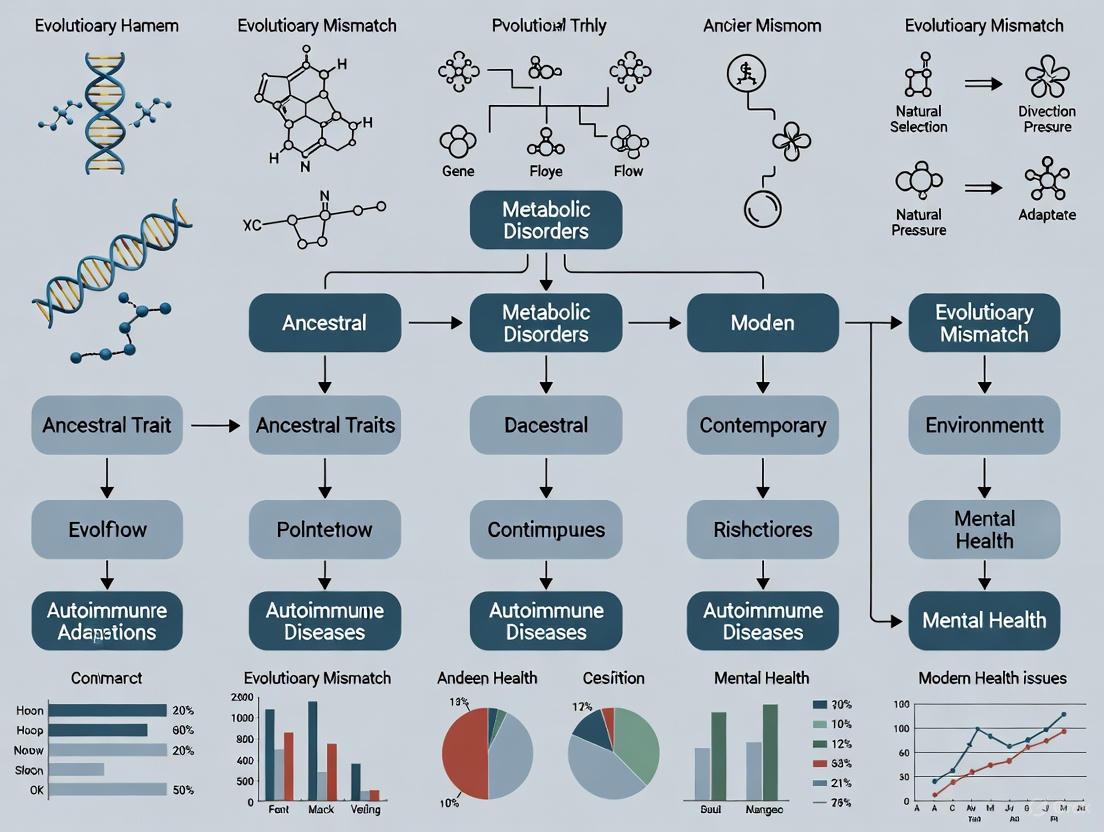
This article synthesizes the evolutionary mismatch hypothesis to explore the rising global burden of non-communicable diseases (NCDs).
Evolutionary Mismatch and Human Disease: A Genomic Framework for Biomedical Research and Therapeutic Development
Abstract
This article synthesizes the evolutionary mismatch hypothesis to explore the rising global burden of non-communicable diseases (NCDs). It posits that a discrepancy between our ancestral human biology and modern industrialized environments underlies susceptibility to conditions like obesity, type 2 diabetes, and autoimmune disorders. We outline a foundational evolutionary framework, detail methodological approaches for identifying genotype-by-environment (GxE) interactions, address challenges in validating mismatch hypotheses, and compare evidence across diverse populations. Aimed at researchers, scientists, and drug development professionals, this review advocates for integrating evolutionary principles with genomic medicine to refine disease etiologies, identify novel therapeutic targets, and advance the goals of personalized, precision medicine.
The Evolutionary Roots of Modern Disease: Defining Mismatch and Its Core Mechanisms
The evolutionary mismatch hypothesis provides a powerful framework for understanding the rising global burden of noncommunicable diseases (NCDs). This technical guide delineates the core concepts of mismatch theory, where traits that evolved as adaptations in ancestral environments (E1) become maladaptive in rapidly altered novel environments (E2). We synthesize current research to detail the phenotypic and genetic mechanisms underpinning this phenomenon, with particular emphasis on human health applications. The document provides structured quantitative data, experimental methodologies for identifying genotype-by-environment (GxE) interactions, and visual tools to aid researchers and drug development professionals in mapping this conceptual model onto modern biomedical challenges.
Core Conceptual Framework of Evolutionary Mismatch
Evolutionary mismatch describes a state of disequilibrium whereby an organism, having evolved in a specific ancestral environment (E1), develops a phenotype that is harmful to its fitness or well-being in a novel environment (E2) [1] [2]. This occurs because the rate of cultural and environmental change often far exceeds the pace of genetic adaptation [3]. The concept is integral to evolution in changing environments and is increasingly prevalent for all species in human-altered habitats, including humans themselves [2].
The formal analysis of a mismatch requires clarifying three central components:
- The Ancestral Environment (E1): The selective environment in which a trait (T) evolved and was likely maintained by natural selection. For humans, this typically refers to the pre-agricultural, hunter-gatherer lifestyle [1] [4].
- The Novel Environment (E2): The current, significantly altered environment to which the organism is imperfectly adapted. For humans, this is the post-industrial, modern environment characterized by processed foods, sedentary behavior, and improved hygiene [1] [3].
- The Trait (T): The specific phenotypic characteristic—whether physiological, morphological, or behavioral—that is expressed in both E1 and E2 but with divergent fitness consequences [2].
Table 1: Key Characteristics of Ancestral (E1) and Novel (E2) Human Environments
| Environmental Component | Ancestral Environment (E1) | Novel Environment (E2) |
|---|---|---|
| Diet | Variable, unprocessed, high-fiber, low in simple sugars | Constant access, ultra-processed, high in refined sugars and fats |
| Physical Activity | High levels of daily locomotion | Sedentary lifestyles, prolonged sitting |
| Pathogen Exposure | High diversity, including helminths and microbiota | Low diversity, minimized by hygiene and antibiotics |
| Social Structure | Small, egalitarian bands | Large, complex, hierarchical societies |
| Psychosocial Stressors | Immediate, physical threats (e.g., predators) | Chronic, abstract threats (e.g., work deadlines, social media) |
Quantitative Evidence: Phenotypic Manifestations in Human Health
The transition to modernity has reshaped environments, yet the slower rate of biological evolution limits phenotypic change, resulting in mismatch conditions that are more common or severe in E2 [4] [5]. The following data summarizes key NCDs linked to the mismatch framework.
Table 2: Public Health Burden of Select Evolutionary Mismatch Conditions
| Mismatch Condition | Proposed E1 Adaptive Value | E2 Maladaptive Consequence | Prevalence & Impact |
|---|---|---|---|
| Obesity & Type 2 Diabetes | "Thrifty genotype" favored efficient energy extraction and storage during feast-or-famine conditions [1] [3]. | Energy-dense diets and low physical activity promote chronic positive energy balance [1] [3]. | Obesity is rampant in developed countries and rapidly increasing in developing nations [3]; NCDs are leading causes of death worldwide [4]. |
| Osteoporosis | High peak bone mass from lifelong high levels of physical activity [1]. | Sedentary lifestyles lead to lower peak bone mass, increasing fracture risk with aging [1]. | Fossil evidence suggests osteoporosis was less common in elderly hunter-gatherers than in modern Western populations [1]. |
| Autoimmune & Allergic Diseases | Immune systems co-evolved with and were regulated by a high burden of parasites and pathogens (e.g., helminths) [3]. | Hygiene and medical advances eradicate these organisms, leading to immune dysregulation [1] [3]. | The rise of multiple sclerosis and irritable bowel disease in industrialized settings is linked to the loss of "old friends" like helminths [3]. |
| Anxiety & Addiction | Anxiety promoted immediate survival; reward systems reinforced behaviors beneficial for survival (e.g., finding food) [1]. | In delayed-return environments, anxiety becomes chronic; reward systems are exploited by drugs, gambling, and hyper-palatable food [1]. | Behavioral mismatches contribute to modern mental health crises and addictive disorders [1]. |
Methodological Toolkit: Identifying Genetic and Physiological Mechanisms
To move beyond correlation and establish causation within the mismatch framework, a rigorous, multi-level methodological approach is required. The following section outlines key experimental protocols and analytical strategies.
Protocol for Establishing a Mismatch
According to current research, confirming an evolutionary mismatch requires satisfying three core criteria [4] [5]:
- Phenotypic Prevalence Gradient: The mismatch condition must be demonstrably more common or severe in the novel environment (E2) compared to the ancestral proxy environment. This is typically established through cross-population comparisons between industrialized and subsistence-level societies [4].
- Environmental Causation: The condition must be tied to specific environmental variables that differ systematically between E1 and E2 (e.g., diet quality, physical activity level, microbial exposure) [4] [5].
- Mechanistic Explanation: A molecular or physiological mechanism must be established that explains how the environmental shift generates the mismatch condition. At the genetic level, this manifests as Genotype-by-Environment (GxE) interactions [4] [6].
Genomic Workflow for Detecting GxE Interactions
A powerful strategy for identifying GxE interactions involves partnering with small-scale, subsistence-level populations undergoing rapid lifestyle change. These groups provide a quasi-natural experiment with extreme environmental variation within a shared genetic background [4] [5]. The workflow below details this approach.
The Scientist's Toolkit: Essential Research Reagents and Materials
Successfully executing the genomic workflow requires a suite of specialized reagents and methodological tools.
Table 3: Key Research Reagent Solutions for Mismatch Studies
| Research Component | Specific Examples & Functions |
|---|---|
| Genomic Analysis | Whole-genome sequencing kits: For comprehensive variant discovery. Genotyping arrays: For cost-effective screening of known SNPs in large cohorts. Polygenic Risk Score (PRS) algorithms: To calculate aggregate genetic risk for NCDs and test for GxE interactions [4]. |
| Environmental Exposure Assessment | Food frequency questionnaires & dietary biomarkers: To quantitatively assess nutritional intake. Accelerometers: To objectively measure physical activity levels. Microbiome sequencing kits (16S rRNA, metagenomics): To characterize gut microbiota composition and diversity [4]. |
| Phenotypic & Clinical Measurement | ELISA kits: For quantifying biomarkers (e.g., insulin, inflammatory cytokines like TNF-α, IL-6). DEXA scanners: For precise measurement of body composition and bone density. Blood pressure monitors & clinical chemistry analyzers: For standard cardiometabolic profiles [1] [4]. |
| Functional Validation | Cell culture systems (e.g., hepatocytes, adipocytes): For in vitro testing of candidate gene function in metabolic pathways. Animal models (e.g., mice, zebrafish): For in vivo studies of gene function in a whole-organism context. Helminthic therapy agents: For experimental testing of the "hygiene hypothesis" and biome reconstitution [3]. |
Visualizing the Core Mismatch Logic and Genetic Models
The following diagrams encapsulate the fundamental logical relationships of the mismatch hypothesis and its genetic underpinnings.
The Mismatch Logic Pathway
This diagram illustrates the causal pathway from environmental change to the manifestation of disease, highlighting key decision points for validation.
Genetic Models of Evolutionary Mismatch
At the genetic level, the core prediction of the mismatch hypothesis is the GxE interaction. This diagram models how the fitness or health effect of an allele flips between the ancestral and novel environments.
The interplay between genetic evolution and cultural and technological change represents a fundamental dynamic in human history, with profound implications for modern health. Genetic evolution operates on timescales of generations through changes in allele frequencies, driven by mechanisms such as natural selection, genetic drift, mutation, and gene flow [7]. In contrast, cultural and technological revolution represents periods of rapid technological progress characterized by innovations whose rapid application and diffusion cause abrupt changes in society [8]. This whitepaper examines the differential paces of these change processes and explores the emerging field of evolutionary mismatch theory, which posits that discrepancies between our evolved biology and modern environments created by rapid technological change contribute to contemporary health challenges. For researchers and drug development professionals, understanding these dynamics opens new avenues for therapeutic intervention by identifying the specific mechanisms through which our ancestral biology maladaptively interacts with modern environments.
Genetic Evolution: Mechanisms and Timescales
Core Mechanisms of Genetic Change
Genetic evolution in human populations follows established principles of population genetics, with several key mechanisms driving changes in allele frequencies over time:
Natural Selection: The process by which populations adapt to their environment through differential survival and reproduction based on heritable traits. This operates on three main principles: variation in the population, heritability of traits, and differential reproduction based on those traits [7]. Selection can be directional (favoring one extreme), stabilizing (favoring average traits), or disruptive (favoring both extremes) [7].
Genetic Drift: Random changes in gene frequency over time, particularly impactful in small populations. This includes the bottleneck effect (significant population reduction leading to loss of genetic variation) and founder effect (establishment of new population by small group) [7]. Genetic drift can lead to loss of genetic variation, fixation of alleles, and genetic divergence between populations [7].
Mutation and Gene Flow: Mutation generates new genetic variants at a rate typically measured as mutations per generation, while gene flow introduces genetic variation through movement of individuals between populations [7]. The change in allele frequency due to mutation can be represented by the equation: Δp = μ(1-p) - νp, where Δp is the change in allele frequency, μ is the mutation rate from wild-type to mutant allele, ν is the mutation rate from mutant to wild-type allele, and p is the frequency of the wild-type allele [7].
Timescales of Human Genetic Evolution
Human genetic evolution operates on extended timescales, with evidence indicating that all humans share a common ancestor who lived approximately 200,000 years ago in Eastern Africa [9]. Much of the genetic variation observed in human populations today developed within the past 50,000 to 70,000 years, after the dispersal of Homo sapiens out of Africa [9]. As a long-lived species with generation times of approximately 20 years, observable intergenerational genetic change in humans is minimal—only two reproductive generations have passed since the discovery of DNA's structure [9].
Table 1: Timescales of Key Evolutionary Processes in Humans
| Evolutionary Process | Typical Timescale | Key Characteristics | Evidence |
|---|---|---|---|
| Allele Frequency Shifts | Centuries to millennia | Slow, incremental change in response to environmental pressures | Light skin pigmentation alleles in Europeans [10] |
| Polygenic Adaptation | Millennia | Selection acting on many genetic loci with small effects | Standing height evolution in ancient populations [10] |
| Major Genetic Innovations | Tens to hundreds of thousands of years | Rare mutations that confer significant advantages | Evolution of lactose persistence in pastoral societies |
| Physiological Adaptations | Generations to centuries | Two-tiered defence: behavioural flexibility and physiological mechanisms [9] | High-altitude adaptations in Tibetan populations |
Cultural and Technological Revolution: Accelerated Change
Characteristics of Technological Revolutions
Cultural and technological revolutions represent periods of accelerated change that differ fundamentally from genetic evolution in pace and mechanism. A technological revolution is defined as "a period in which one or more technologies is replaced by another new technology in a short amount of time" [8]. These revolutions are characterized by:
- Strong interconnectedness and interdependence of participating systems in their technologies and markets
- Capacity to greatly affect the rest of the economy and eventually society
- Progress that is not linear but undulatory [8]
Technological revolutions historically focus on cost reduction through new cheap inputs, new products, and new processes [8]. The expansion of the internet, for instance, was facilitated by inexpensive microelectronics that enabled widespread computer development [8].
Historical and Contemporary Technological Revolutions
The modern era has witnessed several universal technological revolutions that have transformed human societies:
- Industrial Revolution (1760-1840): Transition to new manufacturing processes
- Technical Revolution/Second Industrial Revolution (1870-1920): Expansion of electricity, telecommunications, and transportation systems
- Scientific-Technical Revolution (1940-1970): Advances in computing, nuclear technology, and space exploration
- Information and Telecommunications Revolution (1975-2021): Digital transformation through computing and connectivity [8]
We are currently experiencing what many term the Fourth Industrial Revolution, characterized by technologies that combine hardware, software, and biology (cyber-physical systems), with breakthroughs in robotics, artificial intelligence, nanotechnology, quantum computing, biotechnology, Internet of Things, and 3D printing [8].
Table 2: Comparative Pace of Change: Genetic vs. Technological Evolution
| Parameter | Genetic Evolution | Cultural/Technological Revolution |
|---|---|---|
| Rate of Change | Generational (20+ years per cycle) | Rapid (years to decades) |
| Transmission Mechanism | Biological inheritance | Learning, imitation, education |
| Directionality | Undirected (random mutation) | Directed (intentional innovation) |
| Reversibility | Essentially irreversible | Potentially reversible |
| Environmental Buffering | Requires genetic adaptation | Uses technology and cultural practices [9] |
| Key Examples | Skin pigmentation changes over millennia [10] | Digital revolution over decades [8] |
Evolutionary Mismatch and Modern Human Health
Theoretical Framework of Evolutionary Mismatch
Evolutionary mismatch occurs when traits that were evolved in one environment become maladaptive in another [11]. This framework is particularly relevant for understanding modern human health challenges, as many diseases of civilization represent mismatches between our Paleolithic biology and contemporary environments. Humans have developed extensive dependence on culture and technology that has allowed occupation of extreme environments worldwide, but this very capacity creates novel disease patterns [9].
The concept of culture can be defined as "shared, learned social behavior, or a non-biological means of adaptation that extends beyond the body" [9]. While this cultural adaptation has been spectacularly successful in allowing global colonization, it has also created environments dramatically different from those in which our species evolved.
Digital Evolutionary Mismatch
Recent research has identified computer-mediated communication (CMC) as a potential evolutionary mismatch, though with complex effects on mental health [11]. Theoretical efforts to explain mixed evidence linking CMC to mental health have lacked critical insights from anthropology and evolutionary medicine, which contextualize human health problems in relation to the discrepancy between features of human ancestral environments and contemporary industrialized lifestyles [11].
This relationship is complicated by: (a) failure to contextualize negative mental health effects of CMC against broader societal factors (e.g., family nuclearization) which are plausible preexisting evolutionary mismatches themselves; and (b) ignoring positive effects of CMC in mitigating these mismatches [11]. This perspective serves as an antidote to overpathologization of novel behaviors facilitated by CMC [11].
Research Methodologies and Experimental Protocols
Ancient DNA Analysis for Tracking Genetic Evolution
The advent of ancient DNA (aDNA) analysis has revolutionized our ability to track genetic evolution directly across time. This methodology allows researchers to observe changes in allele frequencies in past populations and test hypotheses about natural selection.
Protocol 1: Ancient DNA Extraction and Sequencing for Trait Analysis
- Sample Collection: Obtain archaeological remains (teeth, petrous bone) under controlled conditions to minimize contamination
- DNA Extraction: Perform extraction in dedicated aDNA facilities with physical isolation, UV irradiation, and bleach decontamination
- Library Preparation: Build sequencing libraries with dual-indexing to track individual samples
- Target Enrichment: Use in-solution hybridization capture to enrich for trait-associated SNPs identified through GWAS
- Sequencing: Perform shallow genome sequencing (0.1-1x coverage) on high-throughput platforms
- Authentication: Assess aDNA authenticity through damage patterns, fragment length, and mitochondrial DNA analysis
- Genotype Calling: Use probabilistic methods to account for low coverage and damage
- Trait Prediction: Apply polygenic risk scores to estimate phenotypic traits in ancient individuals [10]
Limitations and Considerations: Predictions are most accurate for populations closely related to the original GWAS cohort and can vary within populations due to age, sex, and socioeconomic status [10]. For pigmentation, which is among the least polygenic complex traits, predictions are more reliable than for highly polygenic traits like height [10].
Detecting Selection in Ancient and Modern Genomes
Protocol 2: Testing for Polygenic Adaptation
- GWAS Summary Statistics: Obtain effect sizes and frequencies for trait-associated SNPs from large biobanks
- Ancient Genotype Data: Compile genotype data from ancient individuals spanning different time periods
- Polygenic Score Calculation: Compute polygenic scores for ancient individuals: PGS = Σ(βi * Gi), where βi is the effect size of SNP i and Gi is the genotype
- Temporal Analysis: Compare PGS across time periods to identify directional changes
- Selection Tests: Apply tests like the singleton density score (SDS) or time-series tests to detect selection signatures
- Validation: Where possible, compare genetic predictions with skeletal or archaeological evidence (e.g., femur length for stature) [10]
Application Example: This approach has revealed that ancient West Eurasian populations were more highly differentiated for height than present-day populations, and more so than predicted from genetic drift alone [10]. Cox et al. (2021) found that polygenic scores for height predict 6.8% of the observed variance in femur length in ancient skeletons, approximately one quarter of the predictive accuracy in present-day populations [10].
Assessing Technological Impact on Biology
Protocol 3: Measuring Evolutionary Mismatch in Modern Populations
- Identify Potential Mismatch: Select a trait with known evolutionary history that may be maladaptive in modern environments (e.g., reward pathways in digital environments)
- Physiological Measurement: Quantify biological responses to modern stimuli (cortisol levels, inflammatory markers, neural activity via fMRI)
- Comparative Baseline: Establish ancestral baseline through anthropological study of contemporary hunter-gatherer populations or historical records
- Health Outcome Correlation: Measure association between trait expression and health outcomes in modern environments
- Intervention Testing: Develop and test interventions to mitigate mismatch effects
The Scientist's Toolkit: Key Research Reagents and Solutions
Table 3: Essential Research Reagents for Evolutionary Mismatch Studies
| Reagent/Resource | Function/Application | Specifications | Research Context |
|---|---|---|---|
| Ancient DNA Extraction Kits | Isolation of DNA from archaeological specimens | Modified silica-based protocols with uracil-DNA-glycosylase treatment to remove damage | Analysis of selection in ancient populations [10] |
| Whole-Genome Capture Arrays | Enrichment of ancient DNA libraries for human genomic content | Custom-designed biotinylated RNA baits covering entire genome | Efficient sequencing of degraded samples [10] |
| Polygenic Risk Score Calculators | Estimation of genetic predisposition for complex traits | Software implementing PRS = Σ(βi * Gi) with clumping and thresholding | Tracking trait evolution over time [10] |
| Environmental DNA (eDNA) Protocols | Recovery of genetic material from sediments | Calcium phosphate precipitation for enhanced recovery | Contextualizing human evolution in past ecosystems |
| Digital Phenotyping Tools | Passive measurement of human behavior in digital environments | Smartphone sensors, keyboard dynamics, usage patterns | Quantifying technology-behavior interactions [11] |
Implications for Drug Development and Therapeutic Innovation
Understanding the pace differential between genetic evolution and technological change provides critical insights for modern drug development. The evolutionary mismatch framework suggests several strategic approaches:
- Target Identification: Mismatch theories can identify novel therapeutic targets by highlighting physiological systems maladapted to modern environments (e.g., stress response systems in constant digital connectivity) [11]
- Clinical Trial Design: Incorporate evolutionary perspectives in participant selection and outcome measures, considering how genetic backgrounds shaped by different ancestral environments may respond differently to interventions
- Prevention Strategies: Develop interventions that mitigate mismatch effects rather than merely treating symptoms, including digital therapeutics that address technology-induced stress
- Personalized Medicine: Apply ancient DNA insights to understand population-specific disease risks and treatment responses, moving beyond European-centric genetic databases [10]
The rapid pace of technological change suggests that drug development must account for continuously evolving environmental contexts, particularly in mental health where digital technologies create novel cognitive demands and stress patterns [11]. By recognizing that human biology evolves slowly while our environment changes rapidly, researchers can better anticipate future health challenges and develop proactive therapeutic strategies.
Evolutionary mismatch provides a powerful unifying framework for understanding the high prevalence of certain non-communicable diseases (NCDs) in modern, industrialized environments [12] [4]. This concept posits that human biology, shaped by millennia of evolution in contexts vastly different from our modern world, is often inadequately adapted to contemporary lifestyles, leading to disease [13] [14]. This whitepaper examines three key phenotypic examples—the Thrifty Genotype, the Hygiene Hypothesis, and sedentary lifestyles—that illustrate this mismatch. We detail the underlying evolutionary principles, synthesize current research findings into actionable data, and provide methodologies for investigating these phenomena. For researchers and drug development professionals, understanding these mismatches is critical for identifying novel therapeutic targets, developing more physiologically relevant animal models, and designing effective, evolutionarily-informed public health interventions. The evidence underscores that many modern NCDs, including cardiometabolic and immune-dysregulatory conditions, are not merely products of modern life but represent a fundamental discordance between our ancestral biology and our current environment [12] [4].
The Evolutionary Mismatch Framework
The evolutionary mismatch hypothesis states that a condition becomes more common or severe because an organism is imperfectly adapted to a novel environment [4]. For humans, this "novel environment" is the post-industrial lifestyle, characterized by abundant processed food, low physical activity, and decreased exposure to a diverse microbiota [13] [14]. This contrasts sharply with the conditions under which the human lineage evolved.
To rigorously test for an evolutionary mismatch, three criteria must be established [4]:
- Disease Differential: The condition must be more common or severe in the novel environment compared to a proxy for the "ancestral" environment.
- Environmental Driver: The phenotype must be linked to a specific, measurable environmental variable that differs between ancestral and modern contexts.
- Mechanistic Pathway: A clear biological mechanism must connect the environmental shift to the disease-related phenotype.
A powerful approach to studying mismatch involves partnerships with subsistence-level populations undergoing rapid lifestyle change [12] [4] [15]. These groups provide a quasi-natural experiment, allowing for direct comparisons between individuals living more traditional ("matched") lifestyles and those living more modern ("mismatched") lifestyles within a shared genetic and cultural background. Studies with the Orang Asli of Malaysia and the Turkana are prime examples of this methodology [12] [4] [15].
The following diagram illustrates the logical flow from ancestral to modern environments and the resulting phenotypic consequences that constitute an evolutionary mismatch.
The Thrifty Genotype Hypothesis
Core Concept and Evolution
The Thrifty Genotype Hypothesis (TGH), proposed by James Neel in 1962, was one of the first formal evolutionary explanations for a modern NCD [12]. It posits that genetic variants promoting efficient fat storage and energy conservation ("thrifty" alleles) were historically advantageous. Individuals carrying these alleles would have had a survival and reproductive advantage during frequent periods of famine or resource scarcity. However, in modern environments with constant caloric abundance and low energy expenditure, these once-beneficial alleles now predispose individuals to obesity, metabolic syndrome, and type 2 diabetes [12] [15]. This represents a classic genotype-by-environment (GxE) interaction, where the health effect of a genotype depends entirely on the environment.
While highly influential, the TGH has faced critiques and updates. Some researchers question whether famines were a strong enough selective force in human evolution, suggesting that the observed thriftiness may be a byproduct of other human-specific traits, such as large, energetically costly brains [12]. This has led to the development of related hypotheses, summarized in the table below.
Table 1: Alternative and Related Evolutionary Hypotheses for Metabolic Disease
| Hypothesis | Proposed Mechanism | Key Evidence |
|---|---|---|
| Thrifty Genotype [12] | Positive selection for energy-efficient alleles in feast-famine cycles. | High heritability of T2D; genetic loci linked to energy metabolism. |
| Drifty Genotype [12] | Neutral genetic drift in the absence of selection against obesity after loss of predation pressure. | Modeling of selective pressures; inconsistent evidence for famine as a major driver. |
| Thrifty Phenotype [12] | Developmental plasticity in response to early-life undernutrition, increasing disease risk in later life. | Strong epidemiological link between low birth weight and adult metabolic syndrome. |
| Evolutionary Mismatch [12] [4] | Broad mismatch between evolved biology and modern lifestyle (diet, activity), not limited to specific genotypes. | Rapid rise in NCDs with urbanization; studies of subsistence populations. |
Quantitative Data from Transitioning Populations
Research with transitioning populations provides critical phenotypic data supporting the mismatch concept. The Orang Asli Health and Lifeways Project (OA HeLP) has documented a gradient of lifestyle change correlated with health outcomes [15]. Key findings are synthesized in the table below.
Table 2: Lifestyle and Health Indicators Across a Gradient of Modernization (Orang Asli Example)
| Lifestyle Metric | Traditional (Matched) | Transitional | Urbanized (Mismatched) | Measured Health Impact |
|---|---|---|---|---|
| Wild Meat Intake | High (e.g., >60% of diet) | Decreasing rapidly | Very Low | Correlated with lower body fat and waist circumference [15]. |
| Sugar Intake | Very Low | Increasing | High | Associated with increased risk of obesity and T2D [15]. |
| Physical Activity | High (foraging, hunting) | Variable | Low (sedentary wage labor) | Directly linked to cardiometabolic risk factors [4]. |
| Visits to Urban Centers | Rare/Few | Occasional | Frequent | Serves as a proxy for market integration and lifestyle change [15]. |
Experimental Protocol: Genotype-by-Environment (GxE) Interaction Mapping
Objective: To identify genetic loci associated with cardiometabolic traits that show interaction effects with a "modernity" index in a transitioning population.
Methodology:
- Cohort Establishment: Partner with a subsistence-level population experiencing lifestyle variation (e.g., Orang Asli, Turkana) [12] [4]. Obtain informed consent and ethical approval.
- Phenotypic Data Collection:
- Cardiometabolic Traits: Measure BMI, waist circumference, body fat percentage, fasting blood glucose, insulin, HbA1c, and lipid profiles.
- Lifestyle "Modernity" Index: Construct a continuous index based on dietary recalls (e.g., % calories from market foods), physical activity monitors, and survey data (e.g., formal education, urban exposure) [15].
- Genotyping: Perform genome-wide sequencing or SNP array genotyping on all participants.
- Statistical Analysis:
- GxE Scan: Employ a linear mixed model for each SNP:
Trait ~ SNP + Modernity_Index + SNP*Modernity_Index + Covariates + (Relatedness Matrix). Covariates include age, sex. - Significance Threshold: Apply a genome-wide significance threshold (e.g., p < 5x10^-8) for the interaction term.
- Validation: Replicate significant GxE interactions in an independent cohort, if available.
- GxE Scan: Employ a linear mixed model for each SNP:
Expected Outcome: Identification of specific genetic variants where the effect on cardiometabolic health is significantly stronger in individuals with a more modern lifestyle, providing molecular evidence for the thrifty genotype and mismatch hypotheses [4].
The Hygiene Hypothesis and Immune Function
From Hygiene to "Old Friends"
The original Hygiene Hypothesis, proposed by Strachan in 1989, observed an inverse relationship between family size (and presumed microbial exposure) and the incidence of hay fever [16] [17]. It suggested that a lack of early childhood infections could lead to improper immune system development and a higher risk of allergic disease [16].
This hypothesis has since been refined into the "Old Friends" Hypothesis (or microflora hypothesis) [16] [18]. This updated theory posits that it is not childhood infections per se, but rather the lack of exposure to harmless microorganisms and macroorganisms with which humans co-evolved throughout history that is critical. These "old friends" include:
- Environmental saprophytes (e.g., mycobacteria in soil and water) [18].
- Commensal microbiota that colonize the gut, skin, and respiratory tracts [16] [19].
- Chronic infections and parasites, such as helminths, that established a state of commensalism or carrier state [16] [18].
The "Old Friends" are thought to have been essential for the proper development of immunoregulatory pathways. Their relative absence in modern, hygienic environments is hypothesized to lead to a failure to adequately control inflammatory responses, thereby increasing susceptibility to allergic, autoimmune, and other inflammatory disorders [16] [17] [18].
Molecular Mechanisms and Recent Findings
The immunological mechanism has evolved from a simple T-helper 1 (Th1) versus Th2 balance to a more complex model involving regulatory T cells (Tregs) and their cytokines, particularly IL-10 and TGF-β [16] [17]. The "Old Friends" are proposed to stimulate immunoregulatory circuits, which suppress inappropriate inflammation directed against harmless allergens (allergy) or self-tissues (autoimmunity) [17].
Recent groundbreaking research has identified a specific molecular pathway that may underlie the protective effects of helminth infection. The pathway, triggered by the cytokine IL-25, leads to long-lasting mucosal immunity and improved metabolic outcomes [20].
Source: Adapted from Cortez et al. (2025) [20].
Experimental Protocol: Helminth-Induced Immunomodulation
Objective: To evaluate the therapeutic potential of a defined helminth excretory/secretory (ES) product in a mouse model of allergic airway inflammation.
Methodology:
- Animal Model: Use 6-8 week old female C57BL/6 mice. House under specific pathogen-free conditions.
- Helminth Product: Purify ES products from the nematode Heligmosomoides polygyrus (H. polygyrus) culture.
- Sensitization & Treatment:
- Group 1 (Treatment): Sensitized and challenged with ovalbumin (OVA) or house dust mite (HDM) extract. Receive intraperitoneal injection of H. polygyrus ES (e.g., 10μg) at sensitization and/or challenge phases [16].
- Group 2 (Disease Control): Sensitized and challenged with OVA/HDM. Receive vehicle control (PBS).
- Group 3 (Naive Control): Receive PBS only.
- Outcome Measures (24-48 hrs post-final challenge):
- Airway Hyperreactivity: Measure using invasive plethysmography in response to methacholine.
- Cellular Influx: Perform bronchoalveolar lavage (BAL) and conduct differential cell counts (eosinophils, neutrophils, lymphocytes).
- Cytokine Profile: Analyze BAL fluid and restimulated lung cell culture supernatants for Th2 cytokines (IL-4, IL-5, IL-13) and immunoregulatory cytokines (IL-10) via ELISA.
- Lung Histopathology: Score sections stained with H&E for peribronchial and perivascular inflammation, and PAS for goblet cell hyperplasia.
- Statistical Analysis: Compare groups using one-way ANOVA with post-hoc tests (e.g., Tukey's). Significance at p < 0.05.
Expected Outcome: The group treated with helminth ES products is expected to show significant reductions in airway hyperreactivity, eosinophilic inflammation, Th2 cytokines, and lung pathology compared to the disease control group, demonstrating the anti-inflammatory capacity of defined parasitic molecules [16].
Sedentary Lifestyles as a Mismatch
Quantifying the Mismatch and Its Health Impacts
Prolonged physical inactivity represents a profound deviation from the high-activity lifestyles that were the norm throughout human evolution. To operationalize this concept for research, the Evolutionary Mismatched Lifestyle Scale (EMLS) has been developed [13]. This 36-item questionnaire assesses an individual's deviation from ancestral lifestyle norms across seven domains, including Physical Activity and Diet.
Studies using this and similar tools have consistently linked higher mismatch scores to poorer health outcomes [13] [14]. Individuals with higher EMLS scores are more likely to report:
- Poorer subjective physical health.
- More sleep problems and chronic illnesses.
- Poorer mental well-being, including higher levels of depression and anxiety [13].
Research Reagent Solutions for Metabolic and Inflammation Studies
The following table details key reagents and models for investigating the biology of sedentary behavior and metabolic health.
Table 3: Key Research Reagents for Investigating Sedentary Lifestyle Biology
| Reagent / Model | Function/Description | Research Application |
|---|---|---|
| IL-25 Cytokine [20] | A tuft-cell derived cytokine that activates ILC2s and confers multi-tissue immune and metabolic benefits. | Studying the immune-metabolism axis; potential therapeutic for obesity and infection resistance [20]. |
| Mouse Model of Diet-Induced Obesity (DIO) | C57BL/6 mice fed a high-fat, high-sugar diet to mimic Western diets. | Standard model for studying obesity, insulin resistance, and NAFLD. |
| Forced/Voluntary Exercise Wheels | In-cage running wheels for rodents to allow controlled or voluntary exercise. | Comparing effects of exercise vs. sedentarism on physiology and brain function in controlled settings. |
| Human Myotube Cell Culture | Differentiated skeletal muscle cells from human biopsies. | In vitro study of muscle metabolism, insulin signaling, and the effects of exercise-mimetic compounds. |
| Activity Monitors (Accelerometers) | Wearable devices to objectively measure physical activity and sedentary time in human studies. | Quantifying the "activity" component of the EMLS in epidemiological and intervention studies [13]. |
| "Old Friends" Mimetics | Defined molecules from commensals or parasites (e.g., helminth ES products, probiotic lysates). | Experimental tools to recapitulate the immunoregulatory effects of missing microbial exposures [16] [17]. |
The phenotypic examples of the Thrifty Genotype, the Hygiene/"Old Friends" Hypothesis, and sedentary lifestyles collectively provide compelling evidence for the overarching framework of evolutionary mismatch. They illustrate how genetic adaptations, immune development, and daily activity patterns honed in our past are now interacting maladaptively with modern environments, driving the global burden of NCDs.
For the field to advance, future research must:
- Prioritize GxE Mapping: Intensify efforts to identify specific genetic variants that interact with modern lifestyle factors, using well-designed studies in transitioning populations [12] [4].
- Embrace Mechanism: Move beyond correlation to define precise molecular pathways, such as the IL-25/ILC2 axis, that mediate the health benefits of "matched" lifestyles [20].
- Develop "Mimetic" Therapeutics: Translate mechanistic insights into novel therapeutic strategies, such as defined "Old Friends" molecules or exercise mimetics, that can safely recapitulate the protective effects of ancestral exposures [16] [14] [20].
- Refine Public Health Strategies: Integrate the evolutionary mismatch narrative into patient education and public health messaging to provide a compelling "why" that may improve adherence to lifestyle interventions [14].
By adopting an evolutionary perspective, researchers and drug developers can fundamentally re-frame their approach to modern diseases, leading to more predictive models, more effective treatments, and ultimately, a more profound understanding of human health.
The concept of evolutionary mismatch provides a critical framework for understanding many contemporary health challenges. This theory posits that human biology, shaped over millennia by natural selection to thrive in specific ancestral environments, is now operating in modern conditions that are profoundly different from those for which it was adapted [21]. This mismatch between our evolved physiology and contemporary lifestyles is now recognized as a significant contributor to the rising prevalence of chronic diseases [22]. This whitepaper examines three fundamental pillars of this mismatch: dietary composition, physical activity patterns, and microbial exposures. Through a systematic analysis of contrasts between ancestral and modern environments, we aim to provide researchers and drug development professionals with a comprehensive biological context for understanding disease etiology and identifying novel therapeutic targets. The evidence presented underscores that many modern health pathologies, from inflammatory diseases to metabolic disorders, may stem from these discontinuities with our evolutionary past.
Dietary Shifts: From Whole Foods to Ultra-Processed Diets
Quantitative Comparison of Nutritional Profiles
The transition from ancestral to modern diets represents one of the most dramatic environmental shifts in human history. Ancestral diets were characterized by whole, unprocessed foods, while modern industrialized diets are dominated by ultra-processed foods (UPFs), which have become the primary calorie source for many populations [23]. The table below summarizes the key nutritional differences:
Table 1: Nutritional Comparison of Ancestral versus Modern Diets
| Nutrient/Component | Ancestral Diet | Modern Diet | Biological Implications |
|---|---|---|---|
| Dietary Fiber | High (>70g/day) [24] | Low (<15g/day in Western diets) [24] | Reduced gut microbial diversity; impaired SCFA production |
| Added Sugars | Minimal [25] | High (~13% of total calories) [25] | Promotes inflammation, insulin resistance, and metabolic syndrome |
| Saturated Fats | Moderate, from wild sources [25] | High, from processed and industrialized sources [25] | Alters lipid metabolism; promotes chronic inflammation |
| Omega-3 Fatty Acids | High (EPA/DHA) [23] | Low [25] | Reduced anti-inflammatory capacity; impaired brain function |
| Phytonutrients | High diversity (>8,000 compounds) [23] | Limited diversity [23] | Diminished antioxidant and anti-inflammatory protection |
| Protein Diversity | Varied sources [23] | Limited sources [23] | Reduced amino acid spectrum; potential micronutrient gaps |
Impact on the Human Metabolome
The reduction in dietary complexity has profound implications for the human metabolome. Current research indicates the human metabolome consists of approximately 248,097 metabolites, with approximately 32,366 (13%) being food-derived compounds [23]. This makes diet the largest exogenous contributor to the metabolome, far exceeding drugs and their metabolites at 1.3%. The shift to UPFs has substantially diminished the magnitude and diversity of the modern metabolome compared to our evolutionary metabolome, potentially contributing to the rise in chronic diseases [23]. The evolutionary diet contributed to a more diverse metabolome that supported optimal gene expression and metabolic function, aspects that are compromised in modern dietary patterns.
Experimental Protocols for Dietary Mismatch Research
Protocol 1: Metabolomic Profiling of Ancestral vs. Modern Diets
- Sample Collection: Obtain fecal and plasma samples from controlled feeding studies comparing whole food diets versus ultra-processed diets.
- Metabolite Extraction: Use methanol:water (4:1) extraction for broad-spectrum metabolite recovery.
- LC-MS Analysis: Perform liquid chromatography-mass spectrometry with reverse-phase and HILIC chromatography for comprehensive coverage.
- Data Processing: Utilize XCMS or MZmine for peak detection, alignment, and identification against databases (HMDB, MetLin).
- Statistical Analysis: Apply multivariate statistics (PCA, OPLS-DA) to identify differentially abundant metabolites.
Protocol 2: Gut Barrier Function Assessment
- Intestinal Permeability: Administer lactulose/mannitol sugar test and measure urinary excretion ratios.
- Tight Junction Protein Expression: Analyze occludin, ZO-1, and claudin protein levels in intestinal biopsy samples via Western blot.
- Inflammatory Markers: Measure plasma LPS, LBP, and IL-6 levels via ELISA.
- Microbiome Correlation: Perform 16S rRNA sequencing of fecal samples to correlate bacterial taxa with permeability measures.
Evolutionary Activity Patterns vs. Modern Sedentism
Human physiology evolved under conditions requiring substantial daily physical exertion for survival. Hunter-gatherer populations typically engaged in 4-6 hours of moderate-to-vigorous physical activity daily, with males expending approximately 2,600-3,000 kcal/day and females 1,900-2,200 kcal/day [26]. This activity was characterized by varied movement patterns including walking, running, carrying, digging, and climbing, performed in natural environments with seasonal fluctuations in intensity [26]. In stark contrast, modern industrialized populations average <30 minutes of moderate-to-vigorous activity daily, with many individuals classified as completely sedentary [27]. This represents a fundamental mismatch with our evolved activity requirements.
Biological Consequences of Activity Mismatch
The transition to sedentary lifestyles has profound physiological consequences, primarily mediated through inflammatory pathways. Regular physical activity is a potent regulator of systemic low-grade chronic inflammation (SLGCI), with sedentary behavior promoting a pro-inflammatory state [27]. The mechanisms include:
- Reduced anti-inflammatory myokine production (e.g., IL-6, IL-10, IL-1ra) from muscle
- Accumulation of visceral adipose tissue, a significant source of pro-inflammatory cytokines
- Dysregulation of the HPA axis and increased stress reactivity
- Impaired mitochondrial function and increased oxidative stress
Evidence indicates that the relationship between physical activity and mental health follows an inverted U-shaped curve, with both sedentary behavior and excessive exercise associated with increased inflammatory markers and depressive symptoms [27]. This highlights the importance of activity patterns that align with our evolutionary template.
Visualization of Activity-Inflammation Pathways
Figure 1: Biological Pathways Linking Physical Activity Patterns to Inflammatory States
Microbial Exposures: The Disappearing Microbiome
Comparative Microbiome Analysis
The human microbiome represents a critical interface between environment and biology, having co-evolved with humans over millennia. Contemporary research reveals significant differences between ancestral and modern microbiomes, supporting the "disappearing microbiome" hypothesis [24]. Western industrialized populations show 15-30% reduced microbial species richness compared to non-Western populations following traditional subsistence lifestyles [24]. Key compositional differences include the loss of specific taxa such as Treponema, Prevotella, Catenibacterium, Succinivibrio, and Methanobrevibacter in Westernized populations [28] [24].
Table 2: Microbial Taxa Differences Between Ancestral and Modern Populations
| Taxon/Parameter | Ancestral/Traditional | Modern/Westernized | Functional Implications |
|---|---|---|---|
| Species Richness | High [24] | 15-30% lower [24] | Reduced metabolic capacity; diminished ecosystem resilience |
| Treponema | Present in diverse populations [24] | Largely absent [24] | Loss of fiber degradation specialists |
| Prevotella | Higher abundance [28] | Reduced abundance [28] | Reduced complex carbohydrate metabolism |
| Bacteroides | Lower relative abundance [24] | Higher relative abundance [24] | Shift toward mucin degradation in fiber-deprived environment |
| Bifidobacterium | Robust presence, especially in infants [28] | Variable, often reduced [28] | Impaired HMO metabolism; early immune dysregulation |
| Microbial Gene Diversity | High [28] | Reduced [28] | Narrowed functional repertoire for metabolite production |
Mechanisms of Microbial Loss and Functional Consequences
The disappearance of ancestral microbial lineages is driven by multiple factors in modern environments: dietary changes (reduced fiber, increased processing), hygiene and sanitation, antibiotic usage, reduced contact with natural environments, and declining maternal microbial transmission [28] [24]. The functional consequences are profound, as the gut microbiome plays essential roles in nutrient synthesis, xenobiotic metabolism, immune system development, and mucosal barrier maintenance [28].
Of particular concern is the impact on immune function. Microbial exposures in ancestral environments promoted appropriate immune development, while modern reduced exposures are associated with increased inflammatory and autoimmune conditions. The microbiome also modulates brain function and behavior through the gut-brain axis, with implications for psychiatric disorders including depression [27].
Experimental Protocols for Microbiome Research
Protocol 1: Multi-omics Microbiome Analysis
- Sample Collection: Collect fecal samples in DNA/RNA stabilizing buffer, immediately freeze at -80°C.
- DNA Extraction: Use bead-beating enhanced extraction (e.g., MoBio PowerSoil kit) for comprehensive lysis.
- 16S rRNA Sequencing: Amplify V4 region with dual-indexing, sequence on Illumina platform, process with QIIME2 or mothur.
- Shotgun Metagenomics: Perform library preparation with Nextera XT, sequence on Illumina NovaSeq, analyze with HUMAnN2 and MetaPhlAn.
- Metabolomic Profiling: Conduct LC-MS on fecal water and plasma; integrate with microbial data.
Protocol 2: Gut-on-a-Chip Barrier Function Assay
- Device Setup: Use Emulate or similar microfluidic system with human intestinal epithelial cells.
- Microbial Conditioning: Introduce ancestral vs. modern microbial communities in luminal channel.
- Permeability Measurement: Apply FITC-dextran and measure transepithelial electrical resistance (TEER).
- Cytokine Profiling: Collect effluent from basal channel for multiplex cytokine analysis.
- Transcriptomic Analysis: Recover cells for RNA sequencing to evaluate barrier and immune function genes.
Research Reagents and Methodological Toolkit
Table 3: Essential Research Reagents for Evolutionary Mismatch Studies
| Reagent/Category | Specific Examples | Research Application | Technical Notes |
|---|---|---|---|
| Metabolomics Standards | HMDB quantitative standards; Cayman Chemical metabolite panels | Metabolite identification and quantification | Use isotope-labeled internal standards for precise quantification |
| Microbiome Standards | ZymoBIOMICS Microbial Community Standards; BEI Resources strains | Method validation and cross-study comparison | Include both mock communities and defined consortia |
| Cell Culture Models | Caco-2 intestinal barrier model; HuMiX gut-on-a-chip systems | Host-microbe interaction studies | Primary cells preferred over immortalized lines when possible |
| Immunoassays | Meso Scale Discovery (MSD) multi-array cytokine panels; ELISA kits for LPS, LBP, sCD14 | Inflammatory pathway assessment | MSD provides superior dynamic range for cytokine measurement |
| DNA Sequencing Kits | Illumina 16S Metagenomic Sequencing Library Preparation; KAPA HyperPlus for shotgun metagenomics | Microbiome composition and function | Preserve sample integrity with immediate freezing or stabilization |
| Gnotobiotic Systems | Germ-free mice; humanized microbiome mouse models | Causal mechanism testing | Allow adequate acclimation period after microbial transplantation |
| Physical Activity Monitoring | ActiGraph wGT3X-BT; activPAL; heart rate variability monitors | Objective activity measurement | Combine accelerometry with physiological monitoring when possible |
The evidence for evolutionary mismatch across dietary patterns, physical activity, and microbial exposures provides a powerful framework for understanding modern disease etiology. The contrasts between ancestral and modern environments reveal fundamental discontinuities that contribute to the rising burden of chronic inflammatory, metabolic, and psychiatric disorders [23] [27] [24]. For drug development professionals and researchers, this evolutionary perspective offers critical insights for identifying novel therapeutic targets and developing more effective intervention strategies.
Future research should prioritize longitudinal studies that track the transition from traditional to modern lifestyles, mechanistic investigations using gnotobiotic and organoid systems, and clinical trials that test evolutionary medicine-informed interventions. Particularly promising areas include targeting the gut-brain axis for psychiatric disorders, manipulating microbial communities to restore ancestral functions, and developing exercise-mimetic therapies for those unable to engage in physical activity. By integrating evolutionary principles with modern biomedical research, we can advance toward a more comprehensive understanding of human health and disease.
Evolutionary Mismatch as a Unifying Framework for Non-Communicable Diseases (NCDs)
Non-communicable diseases (NCDs) represent one of the most significant global health challenges of the 21st century. According to World Health Organization estimates, NCDs were responsible for 41 million deaths annually—accounting for 71% of all global deaths [29]. The four major NCD categories—cardiovascular diseases (17.9 million deaths), cancers (9.0 million), chronic respiratory diseases (3.8 million), and diabetes (1.6 million)—drive both substantial mortality and healthcare costs worldwide [29]. Perhaps most alarmingly, NCDs are increasingly responsible for premature mortality, with 75% of deaths among adults aged 30-69 years attributable to these conditions [29].
The evolutionary mismatch hypothesis provides a powerful unifying framework for understanding this pandemic. This hypothesis posits that humans evolved in environments that radically differ from those we currently experience; consequently, traits that were once advantageous may now be "mismatched" and disease-causing [6] [4]. This review synthesizes current research on evolutionary mismatch as it relates to NCD etiology, presents methodological approaches for its study, and explores its implications for therapeutic development.
Theoretical Foundations of Evolutionary Mismatch
Core Principles and Definitions
The evolutionary mismatch framework explains disease susceptibility through a fundamental discordance between our evolved biology and modern environments. At the genetic level, this hypothesis predicts that loci with a history of selection will exhibit "genotype by environment" (GxE) interactions, with different health effects in "ancestral" versus "modern" environments [6]. Three criteria must be satisfied to establish an evolutionary mismatch:
- Disease differential: The condition must be more common or severe in novel versus ancestral environments
- Environmental correlation: The disease must be tied to environmental variables that differ between these contexts
- Mechanistic pathway: A molecular or physiological mechanism must link the environmental shift to the disease condition [4]
Extended Evolutionary Synthesis and Cultural Evolution
Contemporary evolutionary medicine incorporates insights from the Extended Evolutionary Synthesis, which expands beyond the gene-centric focus of the Modern Synthesis to include cultural evolution and inclusive inheritance [29]. Unlike biological evolution driven by genetic mutation and natural selection, cultural evolution operates through transmission of information via learning, imitation, and social interaction [29]. This cultural inheritance can occur both horizontally within generations and vertically across generations.
Table: Comparing Biological and Cultural Evolution
| Characteristic | Biological Evolution | Cultural Evolution |
|---|---|---|
| Primary mechanism | Genetic mutation and natural selection | Learning, imitation, social transmission |
| Inheritance system | Genetic | Cultural (ideas, behaviors, traditions) |
| Time scale | Thousands to millions of years | Rapid (within generations) |
| Selection criteria | Survival and reproduction | Human-defined goals (social, economic, technological) |
| Adaptive outcome | Biological fitness | Cultural acceptability/benefit |
Cultural evolution generates particularly potent mismatches because it operates orders of magnitude faster than genetic evolution, creating environments that diverge dramatically from those in which our physiological systems evolved [29]. Human culture in today's socio-technical world often has little in common with adaptation in the biological evolutionary sense, frequently producing unavoidable maladaptations [29].
Mechanisms Linking Mismatch to Disease
Genetic and Molecular Pathways
At the genetic level, evolutionary mismatch manifests through GxE interactions where genetic variants that were neutral or beneficial in ancestral environments become disease-predisposing in modern contexts [6] [4]. This occurs through several distinct mechanisms:
- Previously selected alleles: Variants with a history of positive selection that provided health benefits in ancestral environments but confer health detriments in modern environments
- Stabilizing selection disruptions: Intermediate alleles with similar fitness in ancestral environments where one allele becomes associated with health detriments following environmental change
- Decanalization: The unmasking of phenotypic variation when environmental shifts move populations away from evolutionary-familiar conditions [5]
These genetic mechanisms help explain the "missing heritability" problem in complex diseases, where identified genetic variants account for only a fraction of heritability, suggesting that environmental context is essential for expressing genetic risk [4].
Developmental Mismatch and Early Life Adversity
Early life represents a critical period for evolutionary mismatches with lifelong consequences. The Developmental Origins of Health and Disease (DOHaD) framework posits that early experiences program biological systems in ways that can increase susceptibility to chronic diseases later in life [30]. Early life adversity (ELA) initiates a developmental cascade through several interconnected biological systems:
Developmental Cascade Linking Early Adversity to NCD Risk
The hypothalamic-pituitary-adrenal (HPA) axis represents a core system affected by ELA. Chronic HPA axis hyperactivity can result in glucocorticoid resistance, where cells become less sensitive to cortisol's anti-inflammatory effects, leading to upregulated pro-inflammatory gene transcription and elevated inflammatory activity [30]. This inflammatory state, in turn, drives metabolic dysregulations that underlie many NCDs.
Methodological Approaches for Studying Evolutionary Mismatch
Study Designs for Identifying GxE Interactions
Research on evolutionary mismatch requires innovative methodological approaches that can capture GxE interactions. Traditional genome-wide association studies (GWAS) in industrialized populations have limited power to detect these interactions because environmental risk factors show minimal variability within these populations [4]. The following experimental approaches address this limitation:
Studies of subsistence-level populations undergoing rapid lifestyle change provide particularly powerful natural experiments for identifying mismatch mechanisms [4]. These populations experience extreme variation in diet, physical activity, pathogen exposure, and social conditions, creating a "matched-to-mismatched" spectrum within genetically similar groups.
Table: Key Research Initiatives Studying Evolutionary Mismatch in Transitioning Populations
| Research Project | Population | Primary Research Focus |
|---|---|---|
| Turkana Health and Genomics Project | Turkana people (Kenya) | Genomic adaptations to rapid urbanization |
| Orang Asli Health and Lifeways Project | Orang Asli (Malaysia) | Metabolic transitions with lifestyle change |
| Tsimane Health and Life History Project | Tsimane (Bolivia) | Cardiovascular aging in a high-pathogen environment |
| Shuar Health and Life History Project | Shuar (Ecuador) | Stress physiology and market integration |
| Madagascar Health and Environmental Research | Malagasy communities | Nutritional ecology and health transitions |
These studies combine long-term anthropological fieldwork with cutting-edge genomic and biomedical assessments, enabling researchers to correlate environmental changes with physiological and genetic measures [4].
Evolutionary Patterning for Drug Target Identification
Evolutionary principles can be directly applied to therapeutic development through evolutionary patterning, which identifies drug targets that minimize resistance development [31]. This approach uses the ratio of non-synonymous to synonymous substitutions (ω) to identify codons under the most intense purifying selection (ω≤0.1). Residues under extreme evolutionary constraint are unlikely to develop resistance mutations, making them attractive chemotherapeutic targets [31].
The evolutionary patterning workflow involves:
- Sequence alignment and phylogenetic analysis of orthologous genes
- Selection pressure analysis to identify residues under purifying selection
- Structural modeling to evaluate functional importance and accessibility
- Experimental validation of target sites
This approach was validated by demonstrating that none of the residues providing pyrimethamine resistance in Plasmodium falciparum dihydrofolate reductase were under extreme purifying selection [31].
Experimental Protocols for Key Methodologies
Protocol for Evolutionary Patterning Analysis
Objective: Identify evolutionarily constrained residues in potential drug targets to minimize resistance development.
Step 1: Sequence compilation and alignment
- Retrieve orthologous sequences from genomic databases using BLAST with strict E-value cutoff (e.g., 1e-20)
- Perform multiple sequence alignment using MAFFT (algorithm G-INS-i) with BLOSUM62 matrix
- Verify alignment accuracy with HoT test
- Generate corresponding codon alignment using protein alignment as template
Step 2: Selection pressure analysis
- Perform phylogenetic analysis using maximum likelihood methods (e.g., RAxML)
- Test models of molecular evolution using ModelTest
- Calculate ω (dN/dS) ratios using codon-based models in PAML
- Identify sites under purifying selection (ω≤0.1) using Bayes Empirical Bayes analysis
Step 3: Structural analysis
- Model protein structure using homology modeling or available crystal structures
- Map evolutionarily constrained residues to structural model
- Assess solvent accessibility and functional significance of constrained regions
- Identify potential binding sites that incorporate constrained residues
Step 4: Experimental validation
- Express and purify recombinant protein for functional assays
- Test essentiality of constrained residues through site-directed mutagenesis
- Develop inhibitors targeting constrained regions
- Assess resistance development potential through experimental evolution
Protocol for Collateral Sensitivity Profiling
Objective: Identify evolutionary trade-offs where resistance to one drug confers hypersensitivity to another.
Step 1: Experimental evolution of resistance
- Establish replicate bacterial populations in laboratory media
- Expose to increasing concentrations of primary antibiotic over serial passages
- Continue evolution until significant resistance develops (typically 4-8 weeks)
- Freeze resistant strains at -80°C with glycerol preservation
Step 2: Cross-resistance profiling
- Measure minimum inhibitory concentrations (MICs) for resistant strains against panel of 20+ antibiotics
- Include diverse drug classes: β-lactams, quinolones, aminoglycosides, tetracyclines, etc.
- Identify collateral sensitivities (hypersensitivity in resistant strains)
- Validate findings through dose-response curves
Step 3: Mechanistic studies
- Perform whole-genome sequencing of resistant strains
- Identify mutations through comparison to ancestral genotypes
- Validate causal mutations through genetic complementation
- Elucidate physiological mechanisms underlying collateral sensitivity
Step 4: Treatment strategy design
- Develop drug cycling protocols that exploit collateral sensitivity networks
- Test combination therapies that select against resistance
- Validate efficacy in animal infection models
- Optimize dosing schedules to prevent resistance emergence
Research Tools and Reagent Solutions
Table: Essential Research Reagents for Evolutionary Mismatch Studies
| Reagent/Category | Specific Examples | Research Application |
|---|---|---|
| Genomic Analysis | Whole genome sequencing kits, GTEx database, UK Biobank data | Identifying GxE interactions and selection signatures |
| Cell Culture Models | Primary hepatocytes, adipocytes, immune cells | Studying metabolic and inflammatory pathways in vitro |
| Animal Models | Wild-derived mice, humanized mice, non-human primates | Modeling human physiological responses in controlled settings |
| Biomarker Assays | Multiplex cytokine panels, cortisol ELISA, metabolomic profiles | Quantifying physiological dysregulation in human studies |
| Microbiome Analysis | 16S rRNA sequencing, metagenomic sequencing, gnotobiotic mice | Investigating host-microbe interactions in mismatch conditions |
Visualization of Research Workflows
Subsistence Population Research Workflow
Implications for Therapeutic Development and Clinical Practice
Drug Discovery Applications
Evolutionary principles inform several innovative approaches to drug discovery:
Collateral sensitivity networks represent a promising strategy for combating antibiotic resistance. This approach exploits the evolutionary trade-off where resistance to one drug confers hypersensitivity to another [32]. For example, evolution of resistance to aminoglycoside antibiotics often produces hypersensitivity to β-lactam antibiotics [32]. These networks can inform drug cycling protocols that actively select against resistant pathogens.
Targeted protein degradation technologies, such as proteolysis-targeting chimeras (PROTACs), represent another evolutionarily-informed therapeutic strategy [33]. These molecules harness natural degradation pathways to remove disease-causing proteins, potentially targeting proteins that have been difficult to address with conventional inhibitors.
Clinical Translation and Patient Education
An evolutionary perspective can enhance clinical practice through mismatch education that improves patient adherence to lifestyle interventions [14]. Explaining the ultimate causes of disease provides a cohesive narrative that helps patients understand why certain lifestyle recommendations are effective. This approach aligns with cognitive behavior therapy models that emphasize changing thought patterns to influence behaviors [14].
Clinical applications of evolutionary mismatch include:
- Dietary interventions based on evolutionary principles rather than temporary restrictions
- Physical activity prescriptions that acknowledge our evolutionary history as active hunter-gatherers
- Stress management techniques that address mismatches between modern stressors and ancient stress response systems
- Sleep hygiene recommendations grounded in evolutionary perspectives on natural light-dark cycles
The evolutionary mismatch framework provides a powerful unifying paradigm for understanding and addressing the growing burden of non-communicable diseases. By integrating insights from evolutionary biology, genomics, anthropology, and experimental medicine, this approach offers novel perspectives on disease etiology and therapeutic development.
Future research directions should include:
- Longitudinal studies of transitioning populations to capture dynamic GxE interactions
- Integration of multi-omics data to elucidate pathways from genetic variation to physiological dysfunction
- Development of evolutionarily-informed interventions that address mismatch at both individual and societal levels
- Refined evolutionary patterning approaches for identifying drug targets with minimal resistance potential
As the field progresses, evolutionary medicine promises to transform our approach to NCD prevention and treatment by addressing the fundamental causes of these conditions rather than merely their symptomatic manifestations.
Mapping Mismatch to Mechanisms: Genomic Tools and Partnership-Based Research Models
Studying Subsistence-Level Populations as Natural Experiments for Lifestyle Transition
The evolutionary mismatch hypothesis posits that many non-communicable diseases (NCDs) prevalent in modern societies result from a disconnect between our rapidly changed environments and the human biology shaped by millennia of evolution [4]. Under this framework, traits that were once advantageous in ancestral environments may now be "mismatched" and disease-causing in contemporary post-industrial contexts [4]. This hypothesis provides a powerful lens through which to investigate the complex genotype-by-environment (GxE) interactions underlying NCD risk, which have been notoriously difficult to map in studies confined to post-industrial populations [4].
Subsistence-level populations undergoing rapid lifestyle transition represent invaluable natural experiments for studying these mechanisms. These groups experience extreme gradients of environmental change—from traditional, subsistence-based lifestyles to fully market-integrated, urbanized living—within compressed timeframes and often within shared genetic backgrounds [34] [4]. This creates a quasi-experimental setting where researchers can compare individuals falling on opposite extremes of the "matched" to "mismatched" spectrum, thereby increasing statistical power to detect GxE interactions that would be obscured in more environmentally homogeneous populations [4]. Research partnerships with these communities are thus uniquely positioned to reveal how specific facets of lifestyle transition (e.g., diet, built environment, physical activity) interact with human biology to shape health outcomes.
Key Research Findings from Transitioning Populations
Cardiometabolic Health and the Built Environment
Comparative studies of transitioning Indigenous populations reveal surprising patterns about the drivers of cardiometabolic disease. Research with the Turkana pastoralists of northwest Kenya (n=3,692) and Orang Asli mixed subsistence groups of Peninsular Malaysia (n=688) demonstrated that cardiometabolic health was best predicted by measures quantifying urban infrastructure and market-derived material wealth rather than more proximate factors like diet or acculturation [34]. These results were highly consistent across both populations and sexes, suggesting a generalized phenomenon wherein the built environment serves as a proxy for the duration and intensity of market integration and impacts unmeasured proximate drivers like physical activity, stress, and broader access to market goods [34].
Factor analysis in these populations further revealed that lifestyle variation decomposes into two distinct axes—the built environment and diet—which change at different paces and exhibit different relationships with health [34]. This finding challenges simplistic models of lifestyle transition and underscores the need to disentangle these dimensions methodologically.
Physical Activity and Energy Expenditure Patterns
Quantitative data from subsistence-level populations reveals significantly different patterns of energy expenditure compared to industrialized populations. As shown in Table 1, despite lower average body weights, adults in subsistence-level societies maintain higher physical activity levels (PALs) and total daily energy expenditure than their counterparts in industrialized societies [35].
Table 1: Comparative Energy Expenditure in Subsistence-Level and Industrialized Populations
| Group | Sex | Average Weight (kg) | Average TDEE (kcal/day) | Average PAL |
|---|---|---|---|---|
| Industrialized Populations | M | 77.5 | 2859 | 1.67 |
| F | 63.1 | 2146 | 1.63 | |
| Subsistence Populations | M | 57.2 | 2897 | 1.90 |
| F | 50.6 | 2227 | 1.78 |
Data compiled from [35]. TDEE = Total Daily Energy Expenditure; PAL = Physical Activity Level (TDEE/BMR).
Regression analyses indicate that at the same body weight, adults in industrialized societies have daily energy needs that are 600 to 1000 kilocalories lower than those of people living in subsistence-level societies [35]. This divergence in energy expenditure patterns represents a crucial physiological pathway through which lifestyle transitions may impact NCD risk.
Cognitive and Behavioral Adaptations
Subsistence transitions also shape fundamental cognitive processes. Experimental research with the Nyangatom, a single-ethnic group in Ethiopia whose members practice pastoralism, horticulture, or wage labor, revealed striking differences in social learning strategies [36]. Highly interdependent pastoralists based 80% of their decisions on social information, while more independent horticulturalists relied predominantly on individual payoffs (36% social information use) [36]. Urban dwellers fell between these extremes (62% social information use) [36]. These findings suggest that everyday socioeconomic practices can mold cognitive strategies, with potential implications for how communities adapt to novel environmental challenges.
Methodological Framework and Experimental Protocols
Core Methodological Principles
Research with subsistence-level populations requires specialized methodological approaches that respect both scientific rigor and community context:
- Verbal Administration: Minimize literacy-dependent tasks by verbally administering all study components, including consent forms and questionnaires, to all participants regardless of literacy level [37].
- Longitudinal Engagement: Build research programs with a long-term perspective, similar to ethnographic research, to establish trust and facilitate more complex experimental designs over time [37].
- Contextualized Measurement: Develop lifestyle scales that capture population-specific transition dimensions while maintaining cross-population comparability through factor-analytic approaches [34].
Integrated Data Collection Protocol
The most successful research programs implement comprehensive, integrated data collection spanning multiple domains, as detailed in Table 2.
Table 2: Core Data Collection Domains for Lifestyle Transition Research
| Domain | Specific Measures | Collection Methods |
|---|---|---|
| Cardiometabolic Phenotypes | Waist circumference, body fat %, BMI, blood pressure, total cholesterol, HDL/LDL, triglycerides, glucose [34] | Physical examination, blood collection via point-of-care analyzers |
| Lifestyle & Environment | Urban infrastructure, market integration, dietary patterns, material wealth, acculturation [34] | Structured surveys, direct observation, geographic mapping |
| Socioeconomic Factors | Social networks, subsistence interdependence, educational access, occupational history [36] | Ethnographic interviews, social network mapping, resource tracking |
| Genetic Material | DNA for genomic analyses of GxE interactions [4] | Saliva or blood samples with appropriate consent protocols |
Research Workflow Visualization
The following diagram illustrates the integrated workflow for conducting genomic studies of evolutionary mismatch in transitioning populations:
The Scientist's Toolkit: Essential Research Reagents and Solutions
Table 3: Essential Research Materials and Methodological Solutions
| Tool/Reagent | Function/Application | Implementation Considerations |
|---|---|---|
| Point-of-Care Analyzers | Rapid measurement of cardiometabolic biomarkers (glucose, cholesterol, triglycerides) in field settings [34] | Requires portable power solutions; validation for diverse ethnic populations recommended |
| Standardized Anthropometry Kits | Precise measurement of body composition (weight, height, waist/hip circumference, skinfolds) [34] | Training in standardized protocols essential for inter-researcher reliability |
| Digital Data Collection Platforms | Tablet-based surveys with audio/visual enhancements for low-literacy participants [37] | Must function without consistent internet connectivity; visual analog scales preferred for subjective measures |
| Structured Lifestyle Surveys | Quantification of multi-dimensional lifestyle transitions (diet, built environment, market integration) [34] | Requires cross-cultural adaptation; combination of recall-based and observational items |
| Saliva DNA Collection Kits | Non-invasive genomic sample acquisition for GxE studies [4] | Temperature-stable storage and transport solutions needed for remote areas |
| Environmental Sensors | Objective monitoring of local environmental conditions (air quality, temperature, humidity) | Increasingly paired with GPS data to characterize built environment exposures |
Conceptual Framework of Evolutionary Mismatch
The following diagram illustrates the theoretical pathway from environmental novelty to disease manifestation through evolutionary mismatch:
This conceptual model illustrates how traits shaped by natural selection in ancestral environments may become maladaptive when confronted with rapidly changing modern conditions, potentially giving rise to various NCDs [4] [38]. The speed of industrial transformation—affecting diet, physical activity patterns, toxin exposures, and social structures—has presumably outpaced adaptive evolutionary processes, creating the conditions for mismatch diseases [4].
Implications for Research and Intervention
Studying subsistence-level populations through the lens of evolutionary mismatch offers two primary payoffs: First, it advances fundamental knowledge of how genetic variation interacts with environmental factors to shape disease risk, potentially revealing new loci and pathways that have been invisible to studies focused solely on European-descent populations [4]. Second, it can inform culturally-grounded interventions to prevent NCDs in transitioning communities by identifying the most potent and generalizable drivers of poor health outcomes [34].
Research findings to date suggest that public health interventions may need to prioritize structural and environmental factors (e.g., urban planning, infrastructure development) alongside individual-level behavioral approaches, given the apparent primacy of the built environment in predicting cardiometabolic risk [34]. Furthermore, the documented differences in social learning strategies across subsistence styles [36] indicate that health communication approaches should be tailored to local social dynamics and learning preferences.
As these research partnerships move forward, maintaining ethical engagement with subsistence-level communities remains paramount. This includes ensuring equitable benefits from research findings, respecting cultural protocols, and recognizing that these populations are not merely "living fossils" but contemporary communities navigating complex challenges of cultural preservation and economic development [34] [4].
Identifying Genotype-by-Environment (GxE) Interactions in the Context of Mismatch
The rapid global rise of non-communicable diseases (NCDs) represents one of the most significant challenges to modern public health. Conditions such as obesity, type 2 diabetes, cardiovascular disease, and asthma, often termed "lifestyle" diseases, were rare throughout most of human history but are now common worldwide [39] [40]. The evolutionary mismatch hypothesis provides a powerful explanatory framework for this phenomenon, positing that humans evolved in environments that radically differ from those experienced by most people today [39]. Consequently, traits that were advantageous in past environments may now be "mismatched" and disease-causing in modern contexts [40] [1].
At its core, evolutionary mismatch is a genetic concept: it predicts that loci with a history of selection will exhibit genotype-by-environment (GxE) interactions and have differential health effects in ancestral versus modern environments [39] [40]. This technical guide provides researchers and drug development professionals with methodologies for identifying these critical GxE interactions within the explicit conceptual framework of evolutionary mismatch, offering both theoretical foundations and practical experimental protocols.
Theoretical Foundations: Linking Mismatch Theory to GxE Mechanisms
Core Principles of Evolutionary Mismatch
Evolutionary mismatch occurs when a previously advantageous trait becomes maladaptive due to change in the environment, particularly when that change is rapid [1]. Environmental changes leading to mismatch fall into two categories: temporal (change of the existing environment over time) and spatial (placing organisms into a new environment) [1]. The Neolithic Revolution approximately 10,000-12,000 years ago represents a pivotal transitional context for human evolutionary mismatch, marking the shift from hunter-gatherer lifestyles to agricultural societies [1]. This transition created discordance between human biology adapted to foraging and modern environments characterized by sedentary behaviors and processed foods [1].
The Genetic Basis of Mismatch
The mismatch hypothesis fundamentally predicts that alleles under historical selection will demonstrate context-dependent health effects [39]. This provides a principled approach to uncovering the genetic architecture of NCDs by focusing on GxE interactions in populations undergoing lifestyle transitions [39] [40]. Research indicates that individual differences in environmental sensitivity are themselves heritable, with twin studies estimating the heritability of sensitivity at approximately 47% [41] [42]. Furthermore, these genetic influences on sensitivity overlap significantly with those underlying emotional problems, autistic traits, and wellbeing [42] [43].
Table 1: Documented Examples of Evolutionary Mismatch in Human Health
| Health Condition | Ancadal Adaptation | Modern Maladaptation | Key References |
|---|---|---|---|
| Obesity & Type 2 Diabetes | "Thrifty genes" efficient in calorie storage for feast-or-famine conditions | Constant calorie availability + sedentary lifestyle | [1] |
| Osteoporosis | High peak bone mass from constant physical activity | Sedentary lifestyle reducing bone density | [1] |
| Allergies & Autoimmune Diseases | Immune system adapted to pathogen-rich environment | Oversanitized urban environments reducing microbial exposure | [1] |
| Anxiety Disorders | Immediate threat response system | Delayed-reaction environment with future-oriented stressors | [1] |
Methodological Approaches for Detecting GxE Interactions
Study Designs for Mismatch-Focused GxE Research
Transitional Population Studies
Partnering with small-scale, subsistence-level groups transitioning from "matched" to "mismatched" environments provides diverse genetic backgrounds and necessary environmental variation for mapping GxE interactions [39] [40]. These populations offer a natural experiment for observing how genetic variants influence health outcomes across contrasting environments. Such studies require:
- Deep phenotyping across multiple domains (metabolic, immune, neurological)
- Environmental assessment quantifying traditional versus modern lifestyle factors
- Longitudinal follow-up to track health outcomes across transition periods
Genome-Wide Environment Interaction Studies (GWEIS)
GWEIS represents the most comprehensive approach for scanning the genome for GxE interactions. Recent studies have employed this method to investigate neuroticism across 25 environmental factors, though they note substantial sample size requirements [44]. Key considerations include:
- Heteroscedasticity control using robust standard errors to avoid false positives
- Accounting for covariate interactions to prevent confounding
- Multiple testing correction across numerous SNP-environment combinations
Measuring Environmental Context and Sensitivity
The Evolutionary Mismatched Lifestyle Scale (EMLS)
Recent research has developed and validated a 36-item Evolutionary Mismatched Lifestyle Scale (EMLS) with 7 subdomains of mismatched behaviors (diet, physical activity, relationships, social media use, etc.) [45]. This psychometrically sound instrument associates with physical, mental, and subjective health outcomes, providing a quantitative measure of mismatch at the individual level [45].
Environmental Sensitivity Assessment
The Highly Sensitive Child (HSC) scale measures individual differences in environmental sensitivity, comprising three factors: Excitation (becoming easily overwhelmed), Sensory (unpleasant arousal to stimuli), and Aesthetic (attention to aesthetics and positive experiences) [42] [46]. These measures help identify individuals most susceptible to environmental influences, in line with the differential susceptibility model [46].
Table 2: Methodological Approaches for GxE Interaction Studies
| Method | Key Features | Sample Requirements | Limitations |
|---|---|---|---|
| Transitional Population Studies | Natural experiment design; Contrasting environments; Longitudinal | Moderate N (hundreds to thousands) | Limited generalizability; Complex logistics |
| Genome-Wide Environment Interaction Studies (GWEIS) | Agnostic scanning; Comprehensive; Enables functional follow-up | Large N (>100,000) | Multiple testing burden; Computational intensity |
| Case-Control Studies with Environmental Assessment | Clinical relevance; Efficient for binary outcomes | Variable, depending on disease prevalence | Potential bias from diagnostic heterogeneity [47] |
| Polygenic Score Interaction Analysis | Uses existing GWAS data; Global GxE test | Large discovery and target samples | Cannot identify specific interacting loci |
Experimental Protocols and Workflows
Comprehensive GWEIS Protocol for Mismatch Research
This protocol outlines the steps for conducting a genome-wide analysis of GxE interactions in the context of evolutionary mismatch, based on recent large-scale studies [44].
Sample Collection and Quality Control
- Sample Size Considerations: GWEIS requires larger samples than main-effect GWAS. Recent studies suggest N > 100,000 for adequate power [44]
- Genotyping and Imputation: Standard genome-wide array data with imputation to reference panels
- Quality Control Filters: Apply standard GWAS QC metrics (call rate > 98%, HWE p > 1×10⁻⁶, MAF > 1%)
- Population Stratification: Calculate principal components using genetic data to control for ancestry
Environmental and Phenotypic Assessment
- Mismatch Quantification: Administer the Evolutionary Mismatched Lifestyle Scale (EMLS) to capture multidimensional mismatch [45]
- Specific Environmental Exposures: Assess particular domains (diet quality, physical activity, social support, etc.)
- Health Outcome Measurement: Precise phenotyping for NCDs of interest (metabolic markers, inflammatory biomarkers, etc.)
Statistical Analysis Protocol
The regression model takes the form:
Y = β₀ + β₁SNP + β₂E + β₃(SNP×E) + ΣβᵢCᵢ + Σβⱼ(SNP×Cⱼ) + Σβₖ(E×Cₖ) + ε
Where Y is the phenotype, SNP is genotype, E is environment, and C are covariates.
- Model Specification: Include covariate-SNP and covariate-environment interactions to prevent confounding [44]
- Heteroscedasticity Control: Use Huber-White sandwich estimators for robust standard errors [44]
- Significance Thresholds: Genome-wide significance (p < 5×10⁻⁸) for single SNP tests; FDR correction for gene and gene-set analyses
Functional Validation Workflow
The Scientist's Toolkit: Research Reagent Solutions
Table 3: Essential Research Reagents and Resources for GxE Mismatch Studies
| Resource Category | Specific Examples | Function/Application | Key Considerations |
|---|---|---|---|
| Genotyping Arrays | Global Screening Array, UK Biobank Axiom Array | Genome-wide variant detection | Coverage of ancestry-specific variants; Custom content options |
| Environmental Assessment Tools | Evolutionary Mismatched Lifestyle Scale (EMLS) [45]; Highly Sensitive Child Scale [42] | Quantifying mismatch exposure; Measuring sensitivity | Cultural adaptation; Validation in target population |
| Bioinformatics Tools | PLINK 2.0; GEM [44]; FUMA; MAGMA | GWEIS analysis; Functional annotation; Gene-set analysis | Handling of robust standard errors; Computational efficiency |
| Cell-based Assay Systems | iPSC-derived cells; Organoid models | Functional validation of hits; Mechanism exploration | Environmental manipulation capability; Tissue relevance |
| Biobank Resources | UK Biobank; All of Us; Transitional population cohorts | Large-scale data with environmental measures | Data access procedures; Phenotypic depth |
Data Interpretation and Application
Analytical Considerations for GxE Studies
Interpreting GxE interaction studies requires careful consideration of several methodological factors. Case-control studies are particularly vulnerable to bias when diagnostic heterogeneity exists, as the frequency of specific pathologic diagnoses may depend on the environment [47]. Statistical corrections, such as pseudo-likelihood methods, can address these biases [47].
The heritability of environmental measures presents another consideration, as self-reported life events show approximately 30% heritability [46]. This reflects genetic influences on sensitivity, perception, and reporting of environmental experiences rather than questioning their environmental nature [46].
Implications for Therapeutic Development
Identifying GxE interactions in an evolutionary mismatch framework offers significant promise for drug development:
- Precision Medicine Applications: Genetic profiling for environmental sensitivity could identify individuals most likely to benefit from environmental interventions alongside pharmacological treatments
- Novel Target Identification: Genes showing strong GxE interactions represent promising targets for conditions like metabolic syndrome, inflammation, and stress-related disorders
- Clinical Trial Design: Stratification by environmental exposure and genetic sensitivity could enhance trial efficiency and treatment effect sizes
Research indicates that genetic influences underlying environmental sensitivity explain between 2-12% of variations in emotional problems, autistic traits, and subjective wellbeing, independent of trait-specific genetic influences [42]. This highlights the potential value of incorporating sensitivity genetics in genomic studies of complex traits.
The evolutionary mismatch framework provides a powerful, principled approach for investigating GxE interactions in human health and disease. By focusing on populations in transition and utilizing comprehensive assessment of modern versus ancestral environmental factors, researchers can uncover the genetic architecture of non-communicable diseases with greater efficiency. The methodologies outlined in this guide—from large-scale GWEIS in transitional populations to functional validation of identified interactions—provide a roadmap for advancing our understanding of how modern environments interact with ancient genomes to produce disease. As these approaches mature, they hold significant promise for developing more effective, personalized prevention strategies and treatments for mismatch-related conditions.
Leveraging Anthropological and Biomedical Data in Long-Term Cohort Studies
The rising global burden of non-communicable diseases (NCDs) presents a critical challenge to modern healthcare systems and drug development pipelines. Conditions such as obesity, cardiovascular disease, and type 2 diabetes, rare throughout most of human history, have become commonplace in contemporary societies [40]. The evolutionary mismatch hypothesis provides a powerful theoretical framework for understanding this phenomenon, positing that humans evolved in environments that radically differ from those experienced by most people today [48]. Consequently, biological traits that were advantageous in past environments may now be "mismatched" and disease-causing in modern contexts [40]. This paradigm shift has profound implications for how we design, collect, and analyze data in long-term cohort studies, necessitating integrated approaches that leverage both anthropological and biomedical data streams to unravel the complex etiology of NCDs.
This whitepaper outlines technical frameworks and methodologies for operationalizing the evolutionary mismatch hypothesis within longitudinal cohort research. By bridging evolutionary theory with advanced data science techniques, researchers can develop more powerful models for identifying genetic and environmental risk factors across diverse ancestries and sociocultural contexts [40]. The approaches detailed herein enable the integration of fragmented, multimodal data while addressing critical concerns regarding data privacy, heterogeneity, and distributional shift across research sites [49]. This technical guide provides researchers, scientists, and drug development professionals with both the theoretical foundation and practical methodologies needed to advance our understanding of human health and disease through an evolutionary lens.
Theoretical Foundations: Evolutionary and Developmental Mismatch
The concept of mismatch operates across two distinct timescales with important implications for health outcomes. An evolutionary mismatch occurs when there is an evolutionarily novel environment that differs substantially from the environments in which a species' traits were shaped by natural selection [48]. A developmental mismatch occurs when the phenotype induced during development encounters a different environment post-development, potentially leading to adverse health consequences [48].
Phenotypic Plasticity and Predictive Adaptive Responses
Developmental plasticity allows organisms to adjust their phenotype in response to environmental cues during development. This process involves:
- Immediate Adaptive Responses (IARs): Responses that preserve survival when an environmental challenge is severe
- Predictive Adaptive Responses (PARs): Developmental adjustments when the challenge doesn't threaten survival but where a fitness advantage exists for a phenotype better adapted later in life [48]
PARs can have long-term adverse health consequences when developmental mismatch occurs. For contemporary humans, maternal constraint of fetal growth makes PARs likely even without obvious IARs. This biological mechanism, coupled with nutritionally dense modern environments, explains the widespread observations of developmental mismatch, particularly in populations undergoing nutritional transition [48].
Table 1: Types of Mismatch and Their Characteristics
| Mismatch Type | Timescale | Mechanism | Health Implications |
|---|---|---|---|
| Evolutionary Mismatch | Generational | Discrepancy between current environments and those that shaped human evolution via natural selection | Increased susceptibility to obesity, metabolic syndrome, and other NCDs in evolutionarily novel environments |
| Developmental Mismatch | Within lifetime | Discrepancy between predicted environment based on developmental cues and actual adult environment | Increased disease risk when early-life predictions in utero or infancy inaccurately forecast later nutritional environment |
Genotype-by-Environment (G×E) Interactions in Mismatch
At its core, the evolutionary mismatch hypothesis is a genetic one: it predicts that loci with a history of selection will exhibit genotype-by-environment (G×E) interactions and have differential health effects in ancestral versus modern environments [40]. This insight provides a principled approach to uncovering the genetic architecture of NCDs by:
- Partnering with small-scale, subsistence-level groups transitioning from "matched" to "mismatched" environments
- Leveraging diverse genetic backgrounds and needed environmental variation
- Mapping G×E interactions within an explicit mismatch framework [40]
This approach promises significant contributions to understanding environmental and genetic risk factors for NCDs across diverse ancestries and sociocultural contexts.
Technical Framework: Cross-Cohort Cross-Category (C4) Integration
The integration of anthropological and biomedical data across multiple cohort studies presents significant technical challenges, including data privacy concerns, heterogeneity in data modalities, and distributional shift across sites. Cross-cohort cross-category (C4) learning addresses these challenges by enabling the integration of information from disparate datasets residing at different sites and composed of different data modalities [49].
C4 Architecture and Data Modalities
In a typical C4 setting, different datasets contain different information modalities, resulting in a patched data landscape where certain datasets may miss entire information modalities entirely [49]. This architecture enables the development of models that utilize data from every participating site, offering a more comprehensive understanding of health and disease while preserving data privacy.
Table 2: Data Modalities in Integrated Cohort Studies
| Data Category | Specific Modalities | Research Applications | Technical Considerations |
|---|---|---|---|
| Biomedical Data | Electronic Health Records (EHR), medical imaging, genetic sequencing, clinical biomarkers | Disease subtyping, risk prediction, biomarker discovery | High dimensionality, temporal resolution, structured vs. unstructured data |
| Anthropological Data | Dietary patterns, subsistence strategies, physical activity, social structures, cultural practices | Assessment of environmental mismatch, socio-cultural determinants | Qualitative to quantitative transformation, standardization challenges |
| Omics Data | Genomics, epigenomics, metabolomics, proteomics | Molecular pathways, biological mechanisms, drug targets | Integration across biological scales, data volume, computational requirements |
| Digital Phenotyping | Wearable sensor data, smartphone usage, environmental monitoring | Real-time behavioral assessment, exposure monitoring | Temporal density, data streaming, privacy preservation |
Implementation Approaches for C4 Integration
Several technical approaches enable C4 integration while addressing privacy concerns and data heterogeneity:
Federated Transfer Learning (FTL) FTL utilizes distinct datasets that differ in both sample and feature space, offering an effective way to manage disparities in data distribution across clients [49]. A core component is transfer learning, which enhances the performance of target models developed on target domains by reusing knowledge contained in diverse but related models developed on source domains [49]. Implementation strategies include:
- Using pretrained models on related tasks
- Applying domain adaptation to transfer knowledge from a source domain to a related target domain
- Regarding relationships between modalities as knowledge to be transferred across sites [49]
The FedHealth algorithm exemplifies this approach by first training a model on public data at a central server, then transferring it to clients iteratively for further personalization [49].
Confederated Learning Confederated learning addresses scenarios where clients lack all data modalities by training machine learning models on data distributed across diverse populations and data types using a three-step approach [49]:
- Training conditional generative adversarial networks with matching loss (cGAN) using data from a central server to infer one data type from another
- Transferring cGANs to each local site where missing data types are imputed with generated samples
- Training task-specific models in a federated manner across all sites simultaneously [49]
This approach requires an auxiliary dataset at the central server and doesn't require patient ID matching, but performance depends on the quantity and heterogeneity of available central data [49].
Federated Multimodal Learning (FML) FML systems explicitly combine federated learning with multimodal learning to integrate multiple data modalities across sites [49]. Implementation examples include:
- H-FedMV and S-FedMV for integrating textual and time-series data in bipolar disorder diagnosis
- Deep & Cross network architecture for combining EHR and chest X-ray data for COVID-19 oxygen requirement prediction [49]
A significant limitation is that many FML implementations require all modalities at all sites, which is often unrealistic in real-world scenarios without significant data loss.
Methodologies and Experimental Protocols
Cohort Selection and Participant Recruitment
Effective study design for evolutionary mismatch research requires careful cohort selection to capture relevant environmental transitions:
- Identify Populations in Transition: Partner with small-scale, subsistence-level groups currently transitioning from environments more "matched" with their recent evolutionary history to more "mismatched" environments [40]
- Multi-Site Recruitment: Establish research sites across the environmental gradient to capture sufficient variation in mismatch states
- Cross-Generational Sampling: Where possible, enroll participants across multiple generations to assess developmental mismatch hypotheses
- Matched Controls: Identify appropriate control groups accounting for genetic relatedness, socioeconomic status, and other potential confounders
Data Collection Protocols
Anthropological Data Collection
- Conduct ethnographic interviews to document subsistence strategies, dietary patterns, and physical activity levels
- Administer standardized questionnaires on social organization, kinship networks, and cultural practices
- Perform systematic behavioral observations using established ethnographic protocols
- Collect time allocation data through participant recall or direct observation
Biomedical Assessment
- Implement comprehensive clinical examinations including anthropometric measurements, blood pressure, and physical function assessments
- Collect biospecimens (blood, saliva, urine, stool) for genomic, epigenomic, metabolomic, and proteomic analyses
- Administer standardized health assessments and medical history questionnaires
- Where feasible, conduct medical imaging relevant to specific health outcomes
Environmental Monitoring
- Deploy personal environmental sensors to measure air quality, physical activity, and temperature exposure
- Utilize GPS tracking to assess spatial behavior and environmental exposures
- Collect dietary data through combined methods (food frequency questionnaires, 24-hour recall, direct observation)
Data Integration and Analysis Workflow
The following diagram illustrates the core workflow for integrating and analyzing diverse data types within the evolutionary mismatch framework:
The Scientist's Toolkit: Research Reagent Solutions
Table 3: Essential Research Reagents and Analytical Tools
| Category | Specific Tool/Reagent | Function/Application | Technical Considerations |
|---|---|---|---|
| Genomic Analysis | Whole-genome sequencing kits | Comprehensive variant discovery across coding and non-coding regions | Coverage depth >30x, population-specific reference panels |
| Epigenetic Profiling | Methylation arrays (EPIC, Illumina) | Genome-wide DNA methylation quantification at CpG sites | Cell-type heterogeneity adjustment, batch effect correction |
| Metabolomic Platforms | LC-MS/MS systems | Quantitative analysis of small molecule metabolites, lipidomics | Standardized extraction protocols, internal standards |
| Proteomic Analysis | Olink panels, SomaScan | High-throughput protein biomarker measurement | Multiplexing capacity, dynamic range, specificity validation |
| Microbiome Analysis | 16S rRNA sequencing kits | Taxonomic profiling of bacterial communities | Primer selection, contamination controls, bioinformatic pipelines |
| Cell Culture Models | Primary cell isolation kits | Ex vivo functional validation of genetic findings | Donor variability, passage number effects, differentiation protocols |
| Data Integration | Federated learning platforms (e.g., NVIDIA FLARE) | Privacy-preserving multimodal data analysis | API compatibility, security protocols, model aggregation methods |
Analytical Approaches for Evolutionary Mismatch Studies
Quantifying Mismatch Metrics
Operationalizing evolutionary mismatch requires developing quantitative metrics that capture the degree of disparity between contemporary environments and those that shaped human biology. Effective approaches include:
- Mismatch Indices: Composite scores incorporating multiple dimensions of environment (dietary composition, physical activity, social structure, environmental toxins)
- Transition Timeline: Quantitative assessment of the timing and pace of environmental change within specific populations
- Ancestral Baseline Reconstruction: Modeling ancestral environments using ethnographic, archaeological, and historical data
Statistical Models for G×E Interactions
Advanced statistical approaches are necessary to detect the context-dependent genetic effects predicted by evolutionary mismatch theory:
- Mixed Effects Models: Account for relatedness and population structure while testing for G×E interactions
- Bayesian Methods: Incorporate prior probabilities on effect sizes based on evolutionary history
- Polygenic Interaction Scoring: Develop aggregate measures of genetic susceptibility to mismatch environments
- Causal Inference Methods: Employ Mendelian randomization and other approaches to strengthen causal claims
The following diagram illustrates the analytical pathway from integrated data to biological insight:
Implementation Considerations and Challenges
Data Privacy and Ethical Governance
Integrating anthropological and biomedical data across cohorts raises significant privacy and ethical considerations, particularly when working with indigenous and transitioning populations [49]. Robust governance frameworks must include:
- Federated Learning Infrastructure: Enable model training without sharing raw data across sites [49]
- Community Engagement: Involve participant communities in research design and governance
- Data Sovereignty Protocols: Respect communities' rights to control how their data are used
- Ethical Review Processes: Establish specialized review boards with expertise in evolutionary medicine and research with vulnerable populations
Technical Implementation Challenges
Several technical challenges must be addressed for successful C4 implementation:
Data Heterogeneity
- Different datasets may have different information modalities, resulting in a patched setting [49]
- Distributional shift across datasets due to sample heterogeneity [49]
- Variation in data quality, completeness, and measurement protocols
Analytical Complexity
- Missing data patterns where certain datasets miss entire information modalities entirely [49]
- Need for specialized methods for multimodal data fusion and alignment
- Computational scalability for high-dimensional omics data
Methodological Limitations
- Existing missing value imputation methods mostly focus on single modality settings [49]
- Limited real-world implementation of federated multimodal learning in healthcare [49]
- Challenges with clinical interpretability of complex integrated models
The integration of anthropological and biomedical data within long-term cohort studies represents a transformative approach for understanding human health and disease through an evolutionary lens. By applying the C4 integration framework [49] to the evolutionary mismatch hypothesis [48] [40], researchers can develop more comprehensive models of disease etiology that account for both our evolutionary heritage and contemporary environmental challenges.
Key priorities for advancing this field include:
- Developing Specialized Statistical Methods: Creating analytical approaches specifically designed for testing evolutionary mismatch hypotheses in heterogeneous, multimodal data
- Expanding Diverse Cohort Partnerships: Establishing collaborations with populations across a wider range of environmental transitions and genetic backgrounds
- Advancing Federated Learning Infrastructure: Building more sophisticated privacy-preserving platforms capable of handling complex multimodal data
- Translating Insights to Therapeutic Development: Applying evolutionary mismatch findings to identify novel drug targets and inform clinical trial design
This integrated approach promises to uncover the fundamental biological mechanisms through which modern environments interact with our evolutionary legacy to shape disease risk, ultimately advancing the development of more effective, personalized prevention strategies and therapeutics.
Genome-Wide Association Studies (GWAS) in Diverse, Non-Industrialized Populations
Genome-wide association studies (GWAS) have become a fundamental methodology in modern genetics for dissecting the genetic architecture of complex traits and diseases by testing hundreds of thousands of genetic variants across many genomes [50]. However, a significant limitation persists in the field: the overwhelming majority of GWAS have been conducted primarily on populations of European descent, creating critical gaps in our understanding of global genetic diversity and its implications for health and disease [51] [52]. This disparity has profound implications for healthcare equity, as genetic findings from European populations often do not translate effectively to diverse populations due to differences in linkage disequilibrium (LD), allelic architecture, and environmental contexts [51].
The evolutionary mismatch hypothesis provides a powerful framework for understanding disease susceptibility in modern human populations [4]. This concept posits that humans evolved in environments that radically differ from those we currently experience, and consequently, traits that were once advantageous may now be "mismatched" and disease-causing [40] [4]. Non-communicable diseases (NCDs) such as obesity, cardiovascular disease, and type 2 diabetes were rare throughout most of human history but have become common in post-industrial environments, suggesting that genetic variants previously under selection may now contribute to disease risk through genotype-by-environment (GxE) interactions [40] [4].
Diverse, non-industrialized populations represent invaluable resources for studying these evolutionary mismatches. These populations are currently experiencing rapid transitions from traditional subsistence lifestyles to modernized environments, creating a natural experiment for observing how genetic variants interact with changing environmental conditions [4]. By applying GWAS in these understudied populations, researchers can gain critical insights into the genetic architecture of disease across diverse ancestries while addressing longstanding equity gaps in genomic medicine [52].
Evolutionary Mismatch Framework and GWAS
Theoretical Foundations
The evolutionary mismatch hypothesis operates on the principle that human biology remains largely adapted to environments and lifestyles that differ dramatically from modern post-industrial conditions [4]. At the genetic level, this framework predicts that loci with a history of selection will exhibit GxE interactions, with different health effects in "ancestral" versus "modern" environments [40]. This provides a principled approach to understanding the genetic architecture of NCDs by focusing on specific types of genetic variants and their interaction with measurable environmental factors.
Three criteria must be satisfied to establish an evolutionary mismatch [4]:
- The disease-related phenotype must be more common or severe in novel versus ancestral environments
- The phenotype must be attributable to specific environmental variables that differ between these contexts
- A mechanism must be established by which environmental shifts generate variation in disease-related phenotypes
Table 1: Key Characteristics of Evolutionary Mismatch in Human Disease
| Characteristic | Ancestral Environment | Modern Environment | Consequence |
|---|---|---|---|
| Diet | High fiber, unprocessed foods | High in processed foods, sugars | Increased metabolic disease risk |
| Physical Activity | High daily energy expenditure | Sedentary lifestyle | Obesity, cardiovascular disease |
| Pathogen Exposure | High parasite/microbe exposure | Low exposure, high sanitation | Immune dysregulation |
| Social Structure | Small, tight-knit communities | Large, urban populations | Altered stress responses |
Genetic Mechanisms of Mismatch
From a genetic perspective, evolutionary mismatches may manifest through several mechanisms. Previously neutral or beneficial alleles may become deleterious in novel environments due to changes in selection pressures [4]. Additionally, alleles that were maintained at low frequencies due to negative selection in ancestral environments may increase in frequency when selection pressures relax, potentially contributing to disease risk in modern contexts. The mismatch framework specifically predicts that these genetic effects will show strong GxE interactions, meaning their health impacts will depend critically on environmental context.
The above diagram illustrates the core concept of evolutionary mismatch: genetic variants that were advantageous in ancestral environments may contribute to disease susceptibility in modern environments through GxE interactions.
Methodological Considerations for GWAS in Diverse Populations
Population Representation and Sampling Strategies
Current GWAS populations demonstrate severe imbalance in representation. Studies analyzing the GWAS catalog reveal that approximately 78% of individuals are of European ancestry, 10% are of Asian origin, 10% are from Africa, and 1% are of Hispanic origin, with other ethnicities accounting for less than 1% [51]. This disparity limits the generalizability of findings and perpetuates healthcare inequalities. To address this, researchers should employ strategic sampling approaches that capture the full spectrum of human genetic diversity, with particular emphasis on partnerships with non-industrialized populations experiencing lifestyle transitions [4].
Specific methodological challenges in diverse populations include:
- Differing patterns of linkage disequilibrium (LD): African populations typically show shorter LD blocks due to greater genetic diversity and older population history, requiring higher marker density for effective association mapping [51] [52]
- Population-specific allelic architecture: Effect sizes and risk allele frequencies can vary substantially across populations, affecting transferability of associations [51]
- Local adaptation and selection: Populations inhabiting different environments may show signatures of local adaptation that influence disease risk [4]
- Admixture and complex population structure: Recent admixture can create long-range LD patterns that complicate association testing if not properly accounted for [51] [52]
Table 2: Current Representation in GWAS by Ancestry (based on Mills & Rahal, 2019)
| Population | Discovery (%) | Replication (%) | Combined (%) |
|---|---|---|---|
| European | 86.03 | 76.69 | 83.19 |
| Asian | 9.92 | 17.97 | 12.37 |
| African American/Afro-Caribbean | 1.96 | 1.96 | 1.96 |
| Hispanic/Latin American | 1.30 | 1.33 | 1.30 |
| African | 0.31 | 0.28 | 0.30 |
| Other/Mixed | 0.48 | 1.77 | 0.87 |
Statistical and Analytical Approaches
Current GWAS mixed models may not fully control for substructure between affected and unaffected samples, particularly when environmental components correlate with ancestry at local variants [51]. Methodological development is needed to directly control for local-specific ancestry tracts in variant-level GWAS, which may improve power and reduce false positives in mixed-ancestry samples [51]. Recommended approaches include:
- Local ancestry inference: Modeling ancestry at specific genomic regions rather than global ancestry proportions [52]
- Trans-ancestry meta-analysis: Combining data across diverse populations while accounting for heterogeneity [52]
- Admixture mapping: Leveraging recent admixture as a source of natural randomization [52]
- Ancestry-specific reference panels: Developing and using population-specific reference panels for imputation to improve accuracy [52]
For non-industrialized populations, special consideration should be given to modeling environmental variables that capture aspects of lifestyle transition, such as measures of market integration, dietary composition, physical activity patterns, and pathogen exposure [4]. These measured environmental variables can then be incorporated into GxE interaction tests to specifically evaluate mismatch hypotheses.
Experimental Protocols and Workflows
Study Design for Evolutionary Mismatch GWAS
Implementing GWAS in non-industrialized populations within an evolutionary mismatch framework requires careful study design. The following workflow outlines a comprehensive approach:
Phase 1: Community Engagement and Partnership [4]
- Establish long-term partnerships with subsistence-level communities experiencing lifestyle transitions
- Implement culturally appropriate informed consent processes
- Develop mutually beneficial research agreements that address community priorities
- Ensure ethical oversight for research with vulnerable populations
Phase 2: Phenotypic and Environmental Characterization
- Collect comprehensive phenotypic data including anthropometrics, cardiometabolic markers, and immune parameters
- Quantify environmental exposures through dietary recalls, physical activity monitors, pathogen exposure assessments, and measures of market integration
- Document socioeconomic factors, cultural practices, and historical context
Phase 3: Sample Collection and Genotyping
- Collect biological samples (typically blood or saliva) using methods appropriate for field conditions
- Perform genome-wide genotyping using arrays designed for global diversity (e.g., Illumina Global Screening Array)
- Consider whole-genome sequencing for deeper variant discovery in understudied populations
Analytical Workflow
The analytical pipeline for mismatch-focused GWAS requires specific considerations:
Quality Control and Imputation [52]
- Implement stringent quality control filters while being mindful of population-specific patterns
- Use ancestry-specific reference panels (e.g., Africa-specific references for African populations) for imputation
- Account for relatedness and population structure in downstream analyses
Association Testing and GxE
- Perform GWAS using mixed models that account for genetic relatedness and population stratification
- Test for GxE interactions by including product terms between genetic variants and environmental modifiers
- Use burden tests or sequence kernel association tests (SKAT) for rare variant analyses
- Implement multiple testing corrections appropriate for the study design
Post-association Analysis
- Fine-map association signals using population-specific LD patterns
- Annotate variants with functional genomic data
- Perform colocalization analysis to identify shared genetic signals across populations
- Develop polygenic risk scores and evaluate their transferability across environments
Research Reagents and Tools
Table 3: Essential Research Reagents and Computational Tools
| Category | Specific Tools/Resources | Function | Considerations for Diverse Populations |
|---|---|---|---|
| Genotyping Arrays | Global Screening Array (GSA), H3Africa Array | Genome-wide variant detection | Select arrays with content optimized for specific populations |
| Reference Panels | 1000 Genomes, H3Africa, INDICO, GenomeAsia 100K | Imputation reference | Population-specific panels improve imputation accuracy |
| Quality Control | PLINK, RICOPILI, EasyQC [50] | Data quality assessment | Adjust parameters for population-specific patterns |
| Association Testing | SAIGE, REGENIE, BOLT-LMM [50] | GWAS analysis | Methods that account for relatedness and structure are essential |
| Ancestry Inference | ADMIXTURE, RFMIX, LAMP | Population structure analysis | Critical for correctly modeling stratification |
| Visualization | BigTop [53], Manhattan plots | Results interpretation | VR tools like BigTop enable 3D exploration of results [53] |
| Functional Annotation | ANNOVAR, Ensembl VEP | Variant interpretation | May require population-specific functional data |
Applications to Drug Discovery and Development
GWAS findings from diverse populations have significant implications for drug development and repositioning. The rich information contained in GWAS summary statistics can guide drug discovery by identifying novel therapeutic targets and indicating new uses for existing drugs [54]. Several approaches have been developed:
Top Candidate Gene Approach
- Select top susceptibility genes from GWAS as potential drug targets
- Limitations include incomplete understanding of gene function and pathway context
Drug-Drug and Disease-Disease Similarity
- Deduce drug candidates based on similarities between diseases or drug mechanisms
- Leverage genetic correlations between traits to identify repurposing opportunities
Pathway-Based Methods
- Analyze enrichment of associations in biological pathways rather than individual genes
- May provide more robust signals than single-variant associations
Biological Network Analysis
- Integrate GWAS findings with protein-protein interaction networks and other omics data
- Identify key network modules and hubs as therapeutic targets
Drugs developed using genetic evidence are twice as likely to succeed in clinical trials, highlighting the value of GWAS findings for drug development [54]. Importantly, including diverse populations in these studies ensures that therapeutic developments benefit all populations equitably and may reveal population-specific therapeutic responses.
Genome-wide association studies in diverse, non-industrialized populations represent both a scientific imperative and an ethical obligation. By applying an evolutionary mismatch framework to these studies, researchers can uncover the genetic and environmental determinants of non-communicable diseases in ways that are impossible in homogenized post-industrial populations. The rapid lifestyle transitions occurring in many subsistence-level communities create natural experiments for observing how genetic variants interact with changing environmental conditions.
Future work in this field should focus on several key areas: developing improved statistical methods for analyzing admixed and diverse populations, building larger and more comprehensive reference panels for global populations, deepening partnerships with non-industrialized communities to ensure equitable research practices, and integrating GWAS findings with functional genomic data to elucidate biological mechanisms. Additionally, there is a critical need to train researchers from underrepresented regions in genomic science to build global capacity in this field.
As the field advances, the integration of diverse populations into GWAS will not only address longstanding inequities in genomic medicine but also reveal fundamental insights into human evolutionary history and its implications for health and disease in the modern world.
The DNA mismatch repair (MMR) pathway represents a cornerstone of genomic stability, functioning as a critical post-replication surveillance system that corrects base-base mismatches and insertion-deletion loops. This in-depth technical guide examines MMR biology from molecular mechanisms to functional consequences, framing these concepts within the broader context of evolutionary mismatch and modern human health. Defects in this highly conserved pathway are associated with genome-wide instability, increased mutational burden, and predisposition to various cancers, positioning MMR at the intersection of molecular genetics, disease pathogenesis, and therapeutic development. By integrating quantitative analyses of MMR components, detailed experimental methodologies, and pathway visualization, this review provides researchers and drug development professionals with a comprehensive framework for understanding and investigating MMR biology.
The concept of evolutionary mismatch provides a critical framework for understanding the significance of DNA mismatch repair in modern human health. Rapid industrialization has transformed human habitats faster than biological evolution can adapt, creating environments that may impair core biological functions including DNA repair mechanisms [38]. This mismatch between our evolutionary legacy and contemporary environments potentially undermines genomic stability, with the MMR pathway serving as a crucial defense system against accelerated mutagenesis.
MMR deficiency leads to microsatellite instability (MSI), a condition characterized by variation in the lengths of microsatellite repeats that increases the cellular mutational rate [55]. The acquisition of genomic instability represents one of the hallmarks of cancer cells, with MSI serving as a key biomarker for tumor classification, prognosis, and therapeutic response prediction. Understanding the pathway from genetic loci to functional consequences of MMR deficiency thus provides essential insights for both basic biology and clinical applications.
Core Mechanisms of the Mismatch Repair Pathway
Molecular Components and Functions
The DNA mismatch repair system is an evolutionarily conserved biological pathway that plays a fundamental role in maintaining genomic stability by correcting spontaneous base-base mispairs and small insertion-deletion loops (indels) generated primarily during DNA replication [56] [55]. In humans, this repair process involves a highly coordinated series of molecular interactions mediated by specialized protein complexes.
The human MMR system comprises eight core genes that function as heterodimers, classified as MutS homologs (MSH) and MutL homologs (MLH/PMS). The MSH family includes hMSH2, hMSH3, hMSH5, and hMSH6, while the MLH/PMS family consists of hMLH1, hPMS1 (hMLH2), hMLH3, and hPMS2 (hMLH4) [55]. These components work in concert through a multi-step process involving lesion recognition, repair initiation, excision of erroneous DNA, and resynthesis of the corrected strand.
Table 1: Core Components of the Human Mismatch Repair System
| Gene | Chromosome Location | Protein Product | Primary Partner | Main Function |
|---|---|---|---|---|
| hMSH2 | 2p21 | MSH2 | MSH6/MSH3 | Principal corrective protein; forms MutSα and MutSβ complexes |
| hMSH6 | 2p16 | MSH6 | MSH2 | Forms MutSα; detects base-base mismatches and small indels |
| hMSH3 | 5q14-q15 | MSH3 | MSH2 | Forms MutSβ; recognizes larger insertion-deletion loops |
| hMLH1 | 3p21.3 | MLH1 | PMS2 | Forms MutLα; molecular matchmaker and endonuclease |
| hPMS2 | 7p22 | PMS2 | MLH1 | Forms MutLα; endonuclease activity for strand discrimination |
The MMR process initiates when MutSα (MSH2-MSH6) or MutSβ (MSH2-MSH3) complexes detect DNA mismatches. MutSα predominantly recognizes base-base mismatches and small insertion-deletion distortions (1-2 nucleotides), while MutSβ identifies larger insertion-deletion loops (up to ~16 nucleotides) [55]. Following mismatch recognition, the MutS complexes undergo conformational changes that enable recruitment of MutL heterodimers, primarily MutLα (MLH1-PMS2), which act as molecular matchmakers and endonucleases.
Visualizing the MMR Mechanism
The following diagram illustrates the core mechanism of the DNA mismatch repair pathway:
The MMR mechanism exemplifies a vector-driven pathway directed toward the essential goal of genomic correction [57]. After MutLα recruitment, the complex coordinates downstream effectors including exonuclease 1 (EXO1), which excises the error-containing DNA strand. The resulting single-stranded gap is then filled by DNA polymerase δ (Pol δ), proliferating cell nuclear antigen (PCNA), and replication protein A (RPA), with DNA ligase I sealing the final nick to complete the repair process [56] [55].
Quantitative Analysis of MMR Components
Understanding the quantitative relationships between MMR components and their functional outputs is essential for both basic research and clinical applications. The following table summarizes key quantitative aspects of MMR biology:
Table 2: Quantitative Parameters of MMR System Components
| Parameter | Value/Range | Context | Significance |
|---|---|---|---|
| DNA Polymerase Error Rate | 1/10⁵ nucleotides | Eukaryotic DNA replication | ~100,000 errors per cellular S phase [55] |
| MSH6 Expression Ratio | 10:1 (vs. MSH3) | Relative protein abundance | MutSα predominates over MutSβ in mismatch recognition [55] |
| Mutation Rate Increase (MMR Deficiency) | 50-100 fold | Bacterial models (E. coli) | Demonstrates evolutionary conservation and critical function [55] |
| Microsatellite Instability (MSI) Prevalence | ~15% of all cancers | Colorectal, endometrial, gastric cancers | Major cancer biomarker with diagnostic/prognostic value [55] |
| MMR Gene Mutation Penetrance | 70-90% | Lynch syndrome carriers | High lifetime cancer risk requiring surveillance [55] |
Quantitative comparison methodologies enable rigorous evaluation of MMR function across experimental conditions [58]. These approaches are particularly valuable when assessing the functional impact of MMR gene variants, measuring mutational burden in MMR-deficient cells, or evaluating the efficacy of therapeutic interventions targeting MMR-deficient cancers.
Experimental Protocols for MMR Analysis
Microsatellite Instability Testing
MSI testing represents a cornerstone experimental approach for evaluating MMR functionality in clinical and research settings. The following protocol provides a standardized methodology for MSI analysis:
Principle: Amplification of specific microsatellite markers from matched tumor and normal tissue samples followed by fragment analysis to detect length variations.
Materials:
- DNA extraction kit (QIAamp DNA FFPE Tissue Kit)
- PCR master mix (AmpliTaq Gold 360 Master Mix)
- Fluorescently-labeled primers for 5 NCI-recommended markers (BAT-25, BAT-26, NR-21, NR-24, MONO-27)
- Capillary electrophoresis system (ABI 3500 Genetic Analyzer)
- Genetic analyzer performance-standardized matrix (ROX 500)
- Microsatellite analysis software (GeneMapper)
Procedure:
- Extract genomic DNA from matched tumor and normal formalin-fixed paraffin-embedded (FFPE) tissue sections.
- Quantify DNA concentration using fluorometric methods and normalize to 5 ng/μL.
- Prepare PCR reactions containing 10 ng DNA, 1X PCR master mix, and 0.2 μM of each fluorescent primer.
- Perform PCR amplification: 95°C for 10 min; 40 cycles of 95°C for 30 sec, 55°C for 30 sec, 72°C for 45 sec; final extension at 72°C for 10 min.
- Combine PCR products with internal size standard and perform capillary electrophoresis.
- Analyze fragment sizes using microsatellite analysis software.
- Interpret results: MSI-H (high) if ≥2 markers show instability, MSI-L (low) if 1 marker shows instability, MSS (stable) if no markers show instability.
Troubleshooting: Ensure DNA quality from FFPE tissues by assessing degradation; optimize PCR conditions for problematic markers; include positive and negative controls in each run.
Immunohistochemistry for MMR Protein Expression
IHC provides a complementary approach to MSI testing by directly assessing the expression of MMR proteins:
Principle: Antibody-based detection of MLH1, MSH2, MSH6, and PMS2 proteins in tissue sections to identify loss of expression indicative of MMR deficiency.
Materials:
- FFPE tissue sections (4 μm thickness)
- Antigen retrieval solution (citrate buffer, pH 6.0)
- Primary antibodies: anti-MLH1, anti-MSH2, anti-MSH6, anti-PMS2
- Detection system (HRP-labeled polymer detection kit)
- Chromogen substrate (DAB)
- Hematoxylin counterstain
Procedure:
- Deparaffinize and rehydrate FFPE tissue sections.
- Perform heat-induced epitope retrieval in citrate buffer.
- Block endogenous peroxidase activity with 3% H₂O₂.
- Apply primary antibodies and incubate according to optimized conditions.
- Apply HRP-labeled secondary detection system.
- Develop with DAB chromogen and counterstain with hematoxylin.
- Score staining intensity and distribution: intact nuclear expression in tumor cells (positive); loss of expression in tumor cells with internal positive control (negative).
Interpretation: Loss of MLH1/PMS2 suggests MLH1 promoter hypermethylation or mutation; isolated PMS2 loss suggests MLH1 mutation; MSH2/MSH6 loss suggests EPCAM or MSH2 mutation; isolated MSH6 loss suggests MSH6 mutation.
Pathway-Based Analysis of MMR Genes
Pathway analysis provides a systems biology approach to understanding MMR in the context of broader biological processes:
Principle: Statistical evaluation of MMR pathway enrichment in genomic datasets to identify coordinated alterations across functionally related genes.
Materials:
- Genomic dataset (GWAS, sequencing, or expression data)
- Pathway annotation database (KEGG, Reactome, PID)
- Statistical analysis software (R, Python)
- Pathway analysis tools (GSEA, DAVID, Ingenuity Pathway Analysis)
Procedure:
- Obtain input genomic data (raw genotypes or p-value distributions).
- Select appropriate pathway annotation database based on study goals.
- Map genomic features to biological pathways.
- Perform statistical tests for pathway enrichment (hypergeometric test, Fisher's exact test, GSEA).
- Correct for multiple hypothesis testing (Bonferroni, FDR).
- Interpret significant findings in biological context.
- Visualize results using pathway mapping tools.
Considerations: Choose between candidate pathway and genome-wide approaches based on research questions; account for linkage disequilibrium in SNP-based analyses; consider pathway redundancy and overlap [57].
Research Reagent Solutions
The following table details essential research reagents for investigating MMR biology:
Table 3: Essential Research Reagents for MMR Investigation
| Reagent Category | Specific Examples | Primary Function | Application Notes |
|---|---|---|---|
| Antibodies | Anti-MSH2, Anti-MLH1, Anti-MSH6, Anti-PMS2 | Protein detection and localization | IHC, Western blot, immunofluorescence; validate specificity |
| Cell Lines | HCT116 (MLH1-deficient), LoVo (MSH2-deficient) | MMR-deficient models | Isogenic MMR-proficient controls critical for comparison |
| Plasmids | MMR gene expression vectors, MMR reporter constructs | Functional complementation, mutation analysis | EGFP-based MMR activity reporters available |
| PCR Kits | MSI Analysis System, MMR mutation screening panels | Microsatellite analysis, mutation detection | Standardized marker panels improve reproducibility |
| Pathway Databases | Reactome, KEGG, PID, MSigDB | Pathway annotation and analysis | Reactome offers extensive cross-referencing [59] [57] |
MMR in Cancer and Therapeutic Implications
Deficiency in the MMR pathway has profound implications for cancer development, progression, and treatment response. MMR dysfunction leads to elevated mutation rates across the genome, particularly in microsatellite regions, creating a hypermutator phenotype that accelerates tumor evolution [55]. This genomic instability drives tumor heterogeneity and represents a key enabling characteristic of cancer.
The clinical significance of MMR deficiency is multifaceted. Diagnostically, MSI testing and MMR protein immunohistochemistry serve as standard assessments for Lynch syndrome screening and tumor classification [55]. Prognostically, MMR status provides valuable information, with MMR-deficient colorectal cancers generally exhibiting better stage-adjusted survival compared to MMR-proficient tumors. Therapeutically, MMR deficiency has emerged as a critical predictive biomarker for immunotherapy response, with MMR-deficient tumors demonstrating exceptional sensitivity to immune checkpoint inhibitors due to their high neoantigen burden [55].
These clinical applications highlight the importance of understanding the pathway from genetic loci to functional consequences in MMR biology, providing a compelling example of how basic molecular mechanisms can inform precision medicine approaches.
The DNA mismatch repair pathway represents a paradigm for understanding how molecular surveillance systems maintain genomic integrity and how their dysfunction contributes to human disease. From its evolutionarily conserved mechanisms to its clinical applications in cancer diagnostics and immunotherapy, MMR biology exemplifies the pathway from genetic loci to functional consequences. The experimental frameworks and analytical approaches detailed in this review provide researchers and drug development professionals with the tools to further elucidate MMR biology and its therapeutic implications. As we continue to unravel the complexities of DNA repair pathways in the context of evolutionary mismatch, MMR research will undoubtedly yield new insights into genome maintenance and novel approaches for targeting repair-deficient cancers.
Challenges and Refinements in Evolutionary Mismatch Research
The evolutionary mismatch hypothesis provides a powerful, integrative framework for understanding the underlying causes of many modern health challenges, from obesity to depression [60]. However, researchers advancing mismatch explanations frequently encounter what is known as the "just-so story" critique—the accusation that their hypotheses are post hoc narratives lacking rigorous empirical support [61]. This critique stems from the legitimate scientific concern that evolutionary explanations for modern traits can be easily constructed after the fact without sufficient evidentiary grounding. Overcoming this critique requires implementing stringent, multi-faceted standards of evidence that move beyond mere plausibility to demonstrate causal mechanisms, specific adaptive mismatches, and testable predictions.
This technical guide establishes comprehensive methodological standards for mismatch research, with particular emphasis on study design, measurement, and causal inference relevant to human health and disease. We synthesize emerging best practices from validated research instruments, experimental protocols, and analytical frameworks that collectively address the core concerns underlying the "just-so story" critique. By implementing these standards, researchers can strengthen the evidentiary foundation of mismatch hypotheses and enhance their credibility for scientific and clinical applications in medicine and public health.
Quantitative Validation of Mismatch Constructs
Psychometric Validation of Lifestyle Mismatch
Recent research has addressed the measurement challenge in mismatch research through the development and validation of psychometrically sound assessment tools. The Evolutionary Mismatched Lifestyle Scale (EMLS) represents a significant advancement, providing researchers with a validated 36-item instrument that measures individual differences across seven domains of modern-environment mismatch [60].
Table 1: Factor Structure and Validation Metrics of the Evolutionary Mismatched Lifestyle Scale (EMLS)
| Domain | Number of Items | Sample Item | Cronbach's α | Health Correlation |
|---|---|---|---|---|
| Diet | 6 | Consumption of ultra-processed foods | 0.82 | +0.41 with obesity metrics |
| Physical Activity | 5 | Sedentary behavior during waking hours | 0.79 | +0.38 with cardiovascular risk |
| Social Relationships | 5 | Frequency of in-person vs. digital social interaction | 0.76 | +0.35 with loneliness measures |
| Social Media Use | 5 | Comparative time spent on virtual vs. real-world activities | 0.81 | +0.44 with anxiety symptoms |
| Environmental Exposure | 5 | Time spent in natural vs. built environments | 0.74 | +0.32 with stress biomarkers |
| Sleep Patterns | 5 | Consistency with natural light-dark cycles | 0.78 | +0.39 with fatigue measures |
| Sensory Experience | 5 | Exposure to artificial stimuli (noise, light) | 0.71 | +0.36 with attention deficits |
The development of the EMLS followed a rigorous validation process across four studies with a final sample of 1,901 participants [60]. Exploratory and confirmatory factor analyses confirmed the seven-factor structure, with all subscales demonstrating strong internal consistency (α = 0.71-0.82) and test-retest reliability (r = 0.76-0.85 across 4-week interval). Most importantly, the scale shows significant associations with physical health (β = -0.38, p < 0.01), mental health (β = -0.42, p < 0.01), and subjective wellbeing (β = -0.35, p < 0.01), establishing predictive validity for health outcomes relevant to pharmaceutical and public health interventions.
Empirical Evidence for Health Impacts
Contemporary research provides quantitative evidence for the health consequences of evolutionary mismatch. A recent study examining the impact of modern urban environments found that densely populated, polluted, and industrialised environments are impairing core biological functions essential for survival and reproduction [38]. The research identified four key systems affected:
Table 2: Documented Health Impacts of Environmental Mismatch
| Biological System | Specific Impairment | Population Trend | Effect Size (Cohen's d) |
|---|---|---|---|
| Reproductive Function | Declining sperm quality | Global fertility decline | 0.72 |
| Immune Function | Increased autoimmune conditions | 5-7% annual increase in developed nations | 0.65 |
| Cognitive Function | Developmental delays & accelerated decline | 2-3x increase in cognitive disorders over 50 years | 0.58 |
| Physical Function | Reduced strength & endurance | 15% decrease in aerobic capacity since 1980 | 0.61 |
The effect sizes reported in Table 2 represent substantial impacts on human health, with the strongest effects observed for reproductive function. These findings are particularly significant given that 68% of the world's population is projected to live in urban environments by 2050, suggesting potential for increasing mismatch effects [38].
Methodological Framework: Testing Mismatch Hypotheses
Experimental Workflow for Mismatch Research
Overcoming the "just-so story" critique requires rigorous methodological approaches that test specific predictions derived from mismatch hypotheses. The following workflow outlines a systematic approach for generating and validating mismatch hypotheses:
Standards of Evidence Framework
The "just-so story" critique can be systematically addressed through a multi-level evidentiary framework that requires converging evidence from disparate methodological approaches:
Experimental Protocols & Methodologies
Environmental Mismatch Assessment Protocol
Objective: To quantitatively assess the degree of mismatch between an individual's current environment and reconstructed ancestral conditions across multiple domains.
Materials:
- Validated EMLS instrument (36-item version)
- Biological sampling kits (saliva, blood spot, or hair cortisol)
- Activity monitors (accelerometers with light exposure sensors)
- Environmental sensors (air quality, noise levels)
- Digital phenotyping smartphone application
Procedure:
- Baseline Assessment: Administer the EMLS to establish mismatch profile across seven domains.
- Environmental Monitoring: Deploy sensors to quantify modern environmental features (artificial light, noise pollution, air quality indices).
- Biological Sampling: Collect biomarkers of stress (cortisol), inflammation (CRP), and metabolic function (HbA1c).
- Behavioral Tracking: Monitor physical activity, sleep patterns, and social interaction via accelerometry and digital phenotyping.
- Data Integration: Combine subjective reports (EMLS) with objective environmental and biological measures.
Analysis:
- Calculate mismatch composite score weighted by domain-specific coefficients
- Perform multivariate regression analyzing health outcomes against mismatch score while controlling for covariates
- Conduct mediation analysis to test hypothesized pathways between specific mismatches and health outcomes
Mismatch Reversal Intervention Protocol
Objective: To test causal effects of mismatch reduction by implementing interventions that reintroduce elements of ancestral environments.
Study Design: Randomized controlled trial with 2x2 factorial design (diet x activity x environment)
Intervention Components:
- Dietary Arm: Whole foods diet vs. processed modern diet
- Activity Arm: Outdoor, variable-intensity activity vs. sedentary, indoor activity
- Environmental Arm: Natural environment exposure vs. built environment exposure
Participants: N=400 adults with high mismatch scores (≥75th percentile on EMLS)
Primary Outcomes: Inflammatory biomarkers, psychological wellbeing, cognitive function, cardiometabolic health
Duration: 12-week intervention with 6-month follow-up
Research Reagent Solutions for Mismatch Studies
Table 3: Essential Materials and Methods for Mismatch Research
| Category | Specific Tool/Method | Application in Mismatch Research | Validation Requirements |
|---|---|---|---|
| Assessment Tools | Evolutionary Mismatched Lifestyle Scale (EMLS) | Quantifies individual exposure to modern-environment mismatch | Established factor structure, α = 0.71-0.82, test-retest r = 0.76-0.85 [60] |
| Biomarkers | Hair cortisol, CRP, HbA1c, telomere length | Objective measures of physiological stress response to mismatch | Laboratory assay validation, established normal ranges, stability under storage conditions |
| Environmental Monitoring | Light sensors, noise meters, air quality monitors | Quantifies specific environmental mismatches (artificial light, pollution) | Calibration against reference standards, continuous logging capability |
| Behavioral Tracking | Accelerometry, GPS, digital phenotyping | Objective measurement of physical activity, mobility patterns, social behavior | Comparison with direct observation, privacy protection protocols |
| Cognitive Assessment | CANTAB, NeuroTrax, custom ecological tasks | Measures cognitive function across domains with specific sensitivity to modern demands | Normative data, test-retest reliability, ecological validity |
| Data Integration Platforms | REDCap, LabKey, custom databases | Manages multi-modal data from diverse assessment methods | HIPAA compliance, data validation rules, audit trails |
Analytical Approaches for Causal Inference
Path Analysis for Mechanistic Testing
A critical requirement for overcoming the "just-so story" critique is demonstrating not just association but plausible causal pathways. Path analysis with measured mediators allows researchers to test specific mechanistic hypotheses about how mismatches translate into health outcomes.
The analytical model should include:
- Direct effects of mismatch variables on health outcomes
- Indirect effects through hypothesized physiological pathways
- Moderation effects testing individual differences in vulnerability
- Control variables for alternative explanations
Model fit should be assessed using multiple indices (χ²/df, CFI, RMSEA, SRMR) with cutoff criteria established a priori. Sensitivity analyses should test robustness to unmeasured confounding.
Cross-Population Comparison Designs
Natural experiments involving populations at different stages of environmental transition provide powerful tests of mismatch hypotheses. Methodological requirements include:
- Careful population selection representing points along a modernization continuum
- Measurement invariance testing to ensure construct equivalence across groups
- Control for genetic background where possible
- Historical controls where contemporary traditional populations are unavailable
Overcoming the "just-so story" critique requires mismatch researchers to adopt more rigorous methodological and evidentiary standards than typically expected in other domains of health research. The framework presented here provides a roadmap for building mismatch hypotheses that can withstand skeptical scrutiny through multi-method approaches, mechanistic testing, and causal inference strategies. By implementing these standards—including validated assessment tools, controlled interventions, path analyses, and cross-population comparisons—researchers can transform mismatch hypotheses from speculative narratives into evidence-based explanations for modern health challenges with significant implications for clinical practice and public health policy.
The future of evolutionary medicine depends on embracing these rigorous standards while continuing to develop novel methodologies specifically designed to test mismatch hypotheses. Such approaches will enable the field to move beyond the "just-so story" critique and fulfill its potential as an integrative framework for understanding and addressing the fundamental causes of modern health epidemics.
The evolutionary mismatch hypothesis posits that many modern diseases arise from a discordance between our current environments and those in which our species evolved [4]. This framework explains how traits that were once advantageous can become detrimental in contemporary contexts, leading to a surge in non-communicable diseases (NCDs) such as obesity, cardiovascular disease, and type 2 diabetes [62] [4]. However, a critical confounder in this straightforward narrative is the process of inequitable niche construction—the active modification of environments that disproportionately exposes specific populations to mismatch conditions through social, economic, and political mechanisms [63]. This complex interplay creates a layered pathogenic process wherein preexisting mismatches become embedded within socially structured environments, generating and perpetuating health disparities along racial and socioeconomic lines.
The concept of ecological antagonistic pleiotropy further illuminates this dynamic, describing how genes that were beneficial in ancestral environments can become detrimental under current lifestyle conditions to which humans are poorly adapted [64]. This misadaptation manifests across multiple physiological systems, from metabolic regulation to immune function. For instance, the "thrifty genotype" that once conferred survival advantage during periods of feast and famine now predisposes individuals to obesity and diabetes in environments with constant food abundance [62] [64]. What makes this particularly problematic for modern health research is that these biological processes do not operate uniformly across populations but are systematically shaped by social constructions of race and socioeconomic status that determine exposure to mismatch conditions [63].
Quantitative Landscape of Evolutionary Mismatch Diseases
Population Health Trends
Table 1: Prevalence and Impact of Evolutionary Mismatch-Related Conditions
| Disease Category | Global Burden Trend | Key Mismatch Drivers | Populations Disproportionately Affected |
|---|---|---|---|
| Metabolic Syndrome (Type 2 Diabetes, Hypertension, High Cholesterol) | Steadily increasing; >30% of global population insufficiently active [62] | Processed food consumption, sedentary lifestyle, nutrient-poor diets [62] | Indigenous populations experiencing rapid lifestyle change (e.g., 48.2% obesity rate in Samoa) [62] |
| Autoimmune Diseases | Rapid increase in (post-)industrialized societies [65] | Reduced immune challenges, changed reproductive patterns, positive energy balance [65] | Female populations (80% of autoimmune patients are female) [65] |
| Cardiovascular Diseases | Leading cause of death worldwide; heritability of 40-50% [4] [64] | Diet high in salt and carbohydrates, sedentarism, longevity [64] | Aging populations, those with thrifty genotypes [64] |
| Neurodevelopmental Conditions (ADHD, ASD) | Increasing diagnosis rates [66] | Chronic stress, inequality, overstimulation, cognitive suppression in industrial societies [66] | Individuals with neurodevelopmental variations in standardized educational/occupational systems [66] |
| Bipolar Disorder | Varies by population and lifestyle [67] | Artificial light at night, processed food consumption, circadian disruption [68] [67] | Populations with seasonal light variation, urban environments [68] |
Genetic and Environmental Interaction Data
Table 2: Documented Genotype-Environment Interactions in Mismatch Conditions
| Genetic Variant/Profile | Ancestral Function | Modern Maladaptation | Research Evidence |
|---|---|---|---|
| CREBRF rs373863828 | Enhanced fat storage for famine survival [62] | Increased obesity risk in modern diet context [62] | Samoan population: variant carriers have 35% higher overweight/obesity risk but reduced type 2 diabetes risk [62] |
| "Thrifty Genotype" | Efficient energy storage and utilization [64] | Insulin resistance, obesity, metabolic syndrome [64] | Widespread prevalence of metabolic syndrome in populations experiencing rapid nutrition transition [64] |
| Differential Neurodevelopmental Profiles | Specialized cognitive adaptations (novelty seeking, pattern recognition) [66] | Mismatch with standardized education and workplace demands [66] | ADHD/ASD traits rendered dysfunctional in modern market-based systems despite ancestral advantages [66] |
| Pleiotropic Immune Genes | Enhanced inflammation for pathogen defense [64] | Atherosclerosis, cardiovascular disease in prolonged lifespan [64] | Pro-inflammatory conditions that aided survival now contribute to age-related diseases [64] |
Methodological Framework for Disentangling Confounders
Experimental Protocols for Mismatch Research
Protocol 1: Genotype-Environment (G×E) Interaction Mapping in Transitioning Populations
Objective: To identify genetic loci with divergent health effects across matched (traditional) and mismatched (industrialized) environments.
- Population Selection: Partner with subsistence-level groups experiencing rapid lifestyle change (e.g., Turkana Health and Genomics Project, Tsimane Health and Life History Project) [4].
- Environmental Phenotyping: Quantify degree of "match-mismatch" along multiple axes:
- Diet: Traditional vs. market-based food consumption patterns
- Physical activity: GPS-measured mobility vs. sedentism
- Toxin exposure: Environmental pollutants absent in ancestral settings
- Social stress: Allostatic load biomarkers across lifestyle spectrum [4]
- Genomic Analysis:
- Conduct whole-genome sequencing with particular attention to loci with signatures of selection
- Test for G×E interactions by comparing health outcomes across genetic variants in different environments
- Focus on candidate pathways: energy metabolism, immune function, circadian regulation [4]
- Validation: Replicate findings across multiple transitioning populations to distinguish population-specific from generalizable effects.
Protocol 2: Niche Construction Exposure Assessment
Objective: To quantify how socially embedded factors modify mismatch exposure.
- Historical Analysis: Reconstruct institutional policies (redlining, resource allocation) that created differential environmental exposures [63].
- Biological Embedding Assessment:
- Measure epigenetic markers (DNA methylation) associated with stress and environmental adversity
- Quantify allostatic load through multi-system biomarker integration (cortisol, CRP, blood pressure, lipid profiles) [63]
- Cross-Generational Studies: Examine mismatch health outcomes in relation to ancestral exposure to constructed niches through genealogical records and historical environmental data [63].
Signaling Pathways in Mismatch Conditions
The following diagram illustrates the core pathways through which evolutionary mismatch contributes to disease, integrating metabolic, circadian, and inflammatory mechanisms:
Figure 1: Core signaling pathways in evolutionary mismatch conditions. Modern environmental inputs interact with ancestral genetic variants to dysregulate fundamental physiological systems, leading to modern disease manifestations.
Research Reagent Solutions Toolkit
Table 3: Essential Research Materials for Evolutionary Mismatch Studies
| Research Tool Category | Specific Examples | Research Application |
|---|---|---|
| Genomic Sequencing & Analysis | Whole-genome sequencing kits, GWAS arrays, epigenetic clock assays | Identifying selection signatures, G×E interactions, biological aging measures [4] |
| Environmental Exposure Assessment | GPS activity monitors, dietary recall platforms, environmental toxin sensors | Quantifying lifestyle transition components and novel environmental exposures [4] |
| Metabolic Phenotyping | Oral glucose tolerance tests, continuous glucose monitors, lipid profiling assays | Assessing metabolic health across transition spectrum [62] [64] |
| Circadian Rhythm Measurement | Actigraphy monitors, dim-light melatonin onset tests, core body temperature loggers | Evaluating circadian disruption in bipolar disorder and metabolic conditions [68] |
| Immune-Inflammatory Profiling | Multiplex cytokine assays, CRP/hsCRP tests, flow cytometry panels | Measuring inflammatory load in autoimmune and cardiovascular conditions [65] |
| Stress Physiology Tools | Cortisol ELISA kits, heart rate variability monitors, allostatic load indices | Quantifying stress response in neurodevelopmental and mental health conditions [63] [66] |
Advanced Analytical Approaches
Statistical Modeling for Confounder Adjustment
The following diagram outlines the analytical approach for disentangling confounders in mismatch research:
Figure 2: Analytical workflow for addressing confounders in evolutionary mismatch research, integrating assessment of niche construction factors with genetic susceptibility.
Specialized Methodologies for Specific Conditions
Protocol 3: Circadian-Metabolic Integration in Bipolar Disorder
Objective: To assess how conserved seasonal adaptation mechanisms become dysregulated in bipolar disorder.
- Photoperiod Tracking: Monitor daily light exposure patterns and seasonal variations in patients and controls.
- Metabolic Plasticity Assessment:
- Conduct frequent metabolic phenotyping across mood states (euthymia, depression, mania)
- Measure insulin sensitivity, lipid metabolism, mitochondrial function
- Track circadian parameters: melatonin rhythms, core body temperature, cortisol patterns [68]
- Molecular Pathway Analysis:
- Analyze expression of clock genes (CLOCK, BMAL1) in peripheral tissues
- Assess lithium-sensitive pathways (phosphatidylinositol cycle, GSK3β, Akt)
- Evaluate mTOR and AMPK signaling as integration points of metabolic and circadian systems [68]
- Intervention Testing: Implement and assess timing-based interventions (light therapy, dark therapy, timed feeding) on both circadian and metabolic parameters.
Protocol 4: Neurodevelopmental Mismatch Assessment
Objective: To evaluate how modern environments destabilize neurodevelopmental variations.
- Cognitive Task Development: Create assessment tools that measure cognitive performance across different environmental conditions (varied stimulation levels, movement opportunities, social demands) [66].
- Stress Physiology Monitoring: Measure cortisol response, heart rate variability, and other stress biomarkers in traditional vs. modern educational/occupational settings.
- Environmental Modification Trials: Test how structural changes to environments (reduced sensory stimuli, incorporation of movement, altered social structures) affect functional outcomes in ADHD and ASD profiles [66].
Implications for Research and Intervention
Understanding the confounded nature of evolutionary mismatches necessitates a fundamental shift in both research approaches and intervention strategies. Research must move beyond simple gene-environment models to incorporate the historical processes of niche construction that have differentially distributed mismatch exposures across populations [63]. This requires interdisciplinary collaboration between geneticists, anthropologists, social scientists, and historians to adequately model these complex interactions.
The therapeutic implications are equally profound. Rather than focusing exclusively on individual-level interventions (pharmaceutical or behavioral), effective approaches must address the structural and environmental factors that create and perpetuate mismatch conditions [63] [66]. This might include environmental redesign to better accommodate neurodevelopmental diversity, structural interventions to reduce disproportionate exposure to mismatch conditions among marginalized populations, and timing-based therapies that acknowledge our evolved circadian biology [66] [68]. By acknowledging and addressing these confounders, we can develop more effective and equitable approaches to preventing and treating mismatch-related diseases.
Power and Sample Size Considerations for Detecting GxE Interactions
Gene-environment (GxE) interactions represent a crucial component in understanding the etiology of complex diseases, particularly within the framework of evolutionary mismatch theory, which posits that modern environmental conditions often differ radically from those to which human genomes are adapted. The statistical power to detect these interactions is a fundamental consideration in study design, yet remains challenging due to methodological complexities, multiple testing burdens, and sample size requirements that often exceed those needed for marginal genetic effects. This technical guide synthesizes current methodologies for power and sample size calculation in GxE interaction studies, provides structured comparisons of statistical approaches, and outlines experimental protocols for researchers investigating how discordance between evolved genetic predispositions and contemporary environments shapes human health. We detail specialized software solutions, analytical frameworks, and design considerations that optimize our ability to detect these critical interactions, with particular attention to applications in pharmaceutical development and precision medicine.
Evolutionary mismatch occurs when previously advantageous genetic traits become maladaptive in rapidly changing environments, creating discordance between evolved biology and contemporary lifestyles [1]. The transition from hunter-gatherer societies to agricultural and industrial civilizations has occurred over mere millennia—a timeframe insufficient for significant genetic adaptation. This mismatch manifests in numerous modern health conditions, including metabolic syndrome, autoimmune diseases, and psychological disorders [1] [69]. The thrifty gene hypothesis, for instance, suggests that genes efficient in storing energy during cyclical feast-famine conditions now predispose individuals to obesity and type 2 diabetes in environments of constant caloric availability [1].
Within this framework, gene-environment interactions represent the mechanistic bridge between evolutionary legacy and modern disease risk. A GxE interaction occurs when the effect of an environmental exposure on disease risk differs across genetic subgroups, or conversely, when genetic effects are modified by environmental factors [70] [71] [72]. For example, the relationship between air pollution exposure and rheumatoid arthritis may be modified by genetic background [73], while genetic susceptibility to depression often manifests only in combination with stressful life events [71] [72].
Detecting these interactions presents substantial methodological challenges. GxE studies typically require larger sample sizes than main-effect association studies, face severe multiple testing burdens when conducted genome-wide, and necessitate precise environmental exposure measurement [74] [71]. The resulting statistical power limitations have likely caused the field to underestimate the true prevalence of GxE interactions in human disease. This guide addresses these challenges by synthesizing current methodologies for power calculation and study design optimized for detecting GxE interactions.
Statistical Foundations of GxE Interaction Testing
Fundamental Models and Approaches
The detection of GxE interactions relies primarily on regression-based frameworks that test for statistical interactions between genetic variants and environmental exposures. The joint framework uses a single regression model that includes both genetic main effects and GxE interaction terms:
Where Y is the outcome, SNP is the genetic variant, E is the environmental exposure, C represents covariates, and β₃ quantifies the interaction effect [73]. For case-control studies, this typically employs logistic regression, while continuous outcomes use linear regression.
The alternative stratified framework performs genetic association analyses separately within exposed and unexposed groups, then combines the results [74]. While computationally simpler and easier to implement in consortia settings, the stratified approach only approximates the joint framework and may yield inconsistent results for low-frequency variants or in family-based cohorts [74].
Table 1: Comparison of GxE Interaction Testing Frameworks
| Framework | Model Specification | Advantages | Limitations |
|---|---|---|---|
| Joint | Single model with interaction term | More powerful for low-frequency variants; maintains type I error | Computational complexity in high-dimensional settings |
| Stratified | Separate models per exposure stratum | Easier implementation in consortia; avoids interaction term | Reduced agreement with joint framework for rare variants |
| Two-Step | Screening followed by formal testing | Reduces multiple testing burden; improved power for targeted testing | Complex error control; may miss variants with pure interaction effects |
| Bagging/Random Forests | Machine learning with bootstrap aggregation | Captures complex genetic architecture; uses full sample | Computationally intensive; less established in practice |
Addressing Genetic Model Misspecification
The power to detect GxE interactions is strongly influenced by genetic model specification—the assumed relationship between genotype and phenotype. When the genetic model is mis-specified (e.g., assuming an additive model when the true effect is recessive), significant power can be lost [75]. To address this, researchers can employ 2-degree of freedom (2df) tests that use two covariates to represent genotype without assuming a specific genetic model [75]. These tests code X₁ as an indicator of heterozygous genotype and X₂ as an indicator of homozygous variant genotype, then test both parameters simultaneously.
While 2df tests are slightly less powerful than correctly specified models for classic additive, dominant, or recessive effects, they provide better efficiency robustness when the true genetic model is unknown or deviates from these standard patterns [75]. Alternative approaches include robust test statistics like MAX3, which takes the maximum of test statistics under additive, dominant, and recessive models, with appropriate multiple testing correction.
Study Design Considerations for GxE Investigations
Sampling Strategies and Cohort Selection
The choice of study design profoundly impacts power to detect GxE interactions. Family-based designs, particularly case-parent triads, offer inherent control for population stratification and can estimate parent-of-origin effects, but may have reduced power for detecting GxE interactions compared to population-based designs [74] [76]. Hybrid designs that combine case-parent triads with unrelated controls can improve power while maintaining robustness to confounding [76].
The distribution of environmental exposures within the study population is equally critical. Studies with balanced exposure groups (e.g., similar numbers of exposed and unexposed individuals) generally provide higher power than those with highly unbalanced distributions [74]. For example, in studies of smoking interaction, "ever-smoking" (with more balanced groups) provides better power than "current-smoking" (typically highly unbalanced) [74].
Measurement Precision and Temporal Considerations
Accurate environmental exposure assessment is particularly challenging in GxE studies. Measurement error in environmental variables typically biases interaction effect estimates toward the null, reducing power [71]. Prospective designs with repeated exposure measures can mitigate this concern but increase study costs and duration.
The timing of exposures may be critical, particularly within the evolutionary mismatch framework. Prenatal and early-life exposures may have disproportionate effects on later-life disease risk through developmental programming mechanisms [72]. Studies designed to capture these critical periods require careful consideration of exposure timing and may benefit from retrospective exposure reconstruction when prospective data are unavailable.
Power and Sample Size Calculation Methods
Analytical Approaches and Software Solutions
Several specialized software tools enable power and sample size calculations for GxE interaction studies:
Table 2: Power Calculation Software for GxE Interaction Studies
| Software | Key Features | Study Designs | GxE Specific Features |
|---|---|---|---|
| Haplin | Log-linear modeling; family-based designs | Case-parent triads; hybrid designs | Power for child, parent-of-origin, maternal, and GxE effects [76] |
| GENPWR | Accounts for genetic model misspecification | Case-control; continuous outcomes | 2df tests; various genetic models [75] |
| powerGWASinteraction | Two-stage procedures for GWAS | Case-control studies | Screening methods (marginal, correlation, cocktail) [77] |
| QUANTO | General genetic epidemiology | Case-control; cohort; family | Additive, dominant, recessive models [75] |
The powerGE function in the powerGWASinteraction R package implements analytical power calculations for GxE interactions in case-control studies, incorporating two-stage testing procedures that screen SNPs before formal interaction testing [77]. The methodology computes expected p-values for screening statistics and uses normal approximation to determine the probability that truly interacting SNPs pass the screening stage.
Sample Size Requirements Across Scenarios
Sample size requirements for GxE interactions depend on numerous factors, including minor allele frequency, environmental exposure prevalence, interaction effect size, and genetic model. The following table illustrates representative sample size needs for various scenarios:
Table 3: Sample Size Requirements for Detecting GxE Interactions (80% power, α=5×10⁻⁸)
| MAF | Exposure Prevalence | ORg | ORe | ORgxe | Required Sample Size |
|---|---|---|---|---|---|
| 0.05 | 0.2 | 1.1 | 1.3 | 1.5 | 18,500 |
| 0.15 | 0.3 | 1.1 | 1.3 | 1.5 | 9,200 |
| 0.25 | 0.5 | 1.1 | 1.3 | 1.5 | 6,800 |
| 0.35 | 0.5 | 1.1 | 1.3 | 1.3 | 23,500 |
| 0.35 | 0.5 | 1.1 | 1.3 | 1.7 | 5,100 |
Note: MAF = minor allele frequency; ORg = genetic odds ratio; ORe = environmental odds ratio; ORgxe = interaction odds ratio. Calculations assume case-control design with equal numbers of cases and controls, based on power calculations similar to [77].
For family-based designs, sample size requirements are typically expressed in terms of family triads or dyads. For example, detecting a moderate GxE interaction (ORgxe=1.5) with MAF=0.2 may require approximately 500 case-parent triads for 80% power at α=0.05 [76].
Advanced Analytical Methods
Two-Stage Testing Procedures
To address the substantial multiple testing burden in genome-wide GxE studies, two-stage testing procedures have been developed that screen SNPs before performing formal interaction testing [77]. These methods improve power by reducing the number of tests subject to genome-wide significance thresholds. Common screening approaches include:
- Marginal screening: Selects SNPs with significant marginal genetic effects
- Correlation screening: Selects SNPs associated with the environmental exposure
- Cocktail screening: Uses the most significant of marginal or correlation screening
- Chi-square screening: Combines marginal and correlation screening statistics
After screening, GxE testing can proceed using standard case-control methods, case-only approaches (when SNP and environment are independent), or empirical Bayes estimators [77]. The performance of these methods depends on the underlying genetic architecture and SNP-environment independence assumptions.
Machine Learning Approaches
Traditional GxE tests focus on single SNPs, but aggregate genetic approaches that combine information across multiple variants can improve power by capturing polygenic effects and gene-gene interactions. Bootstrap aggregating (bagging) creates multiple bootstrap samples to construct genetic risk scores, then uses out-of-bag predictions to test GxE interactions without sample splitting [73]. Random forests extend this approach to capture complex genetic architectures including epistasis, potentially outperforming elastic net-based methods in most scenarios [73].
These machine learning approaches are particularly valuable within the evolutionary mismatch framework, where disease risk likely involves complex interactions between multiple genetic variants and modern environmental novelties that would not have been present in ancestral environments.
Experimental Protocols for GxE Detection
Standardized Workflow for GxE Analysis
The following diagram illustrates a comprehensive workflow for GxE interaction analysis:
The Scientist's Toolkit: Essential Research Reagents
Table 4: Essential Methodological Tools for GxE Interaction Research
| Research Tool | Function | Implementation Examples |
|---|---|---|
| Genetic Risk Scores (GRS) | Aggregate multiple genetic effects into a single variable | Elastic net, random forests, bootstrap aggregating [73] |
| Power Calculation Software | Estimate sample size requirements and statistical power | Haplin, GENPWR, powerGWASinteraction [76] [75] [77] |
| Two-Stage Testing Methods | Reduce multiple testing burden in GWAS | Marginal screening, correlation screening, cocktail screening [77] |
| Gene-Environment Independence Tests | Validate assumptions for case-only methods | Chi-square tests of SNP-exposure association [77] |
| Multiple Testing Correction | Control false discovery rate in genome-wide analyses | Bonferroni, FDR, permutation-based approaches [73] |
The detection and characterization of gene-environment interactions represents a critical frontier in understanding how evolutionary mismatch contributes to modern human disease. The substantial methodological challenges—particularly regarding power and sample size—require sophisticated study designs, analytical approaches, and interpretation frameworks. By employing the strategies outlined in this guide, including careful power calculation, appropriate genetic model specification, and advanced two-stage testing procedures, researchers can optimize their ability to detect these elusive interactions. Future directions will likely involve even larger sample sizes through international consortia, improved environmental exposure assessment technologies, and integrative approaches that model the simultaneous effects of multiple genetic variants and environmental factors. Through these advances, we move closer to realizing the promise of personalized prevention and treatment strategies informed by both genetic makeup and environmental context.
This technical guide synthesizes methodologies from current literature on GxE interaction testing, power analysis, and evolutionary mismatch theory. The statistical frameworks, power calculation approaches, and experimental protocols presented herein provide researchers with practical tools for designing adequately powered studies to investigate how discordance between evolved genetics and modern environments shapes human health.
Defining the 'Ancestral Environment' and Navigating Population-Specific Histories
The concept of the ancestral environment is foundational to understanding the evolutionary origins of human traits and the pathogenesis of modern diseases. Within evolutionary medicine, this environment refers to the selective pressures and conditions that characterized the majority of Homo sapiens' evolutionary history, fundamentally shaping our biology. This framework is crucial for investigating evolutionary mismatch, wherein traits adapted to past environments become maladaptive in contemporary settings, contributing to the rise of non-communicable diseases. This guide provides a technical overview for researchers on defining the ancestral environment, accounting for diverse population histories, and applying these principles to modern biomedical research, with a focus on quantitative methodologies and experimental design.
The Theoretical Construct of the Ancestral Environment
Core Definition and Evolutionary Significance
The Environment of Evolutionary Adaptedness (EEA) is formally defined as the ancestral environment to which a species is adapted, comprising the set of selection pressures that shaped a specific adaptation [78]. It is critical to recognize that the EEA is not a single time or place but a statistical composite of the environments in which a species evolved, with each adaptation having its own unique selective history.
For humans, the EEA predominantly encompasses the Pleistocene era, during which our species spent over 99% of its evolutionary history as hunter-gatherers [79]. This period was characterized by nomadic lifestyles, diets secured through hunting and gathering, and social dynamics within small, kin-based bands. The agricultural revolution approximately 10,000–12,000 years ago represents a pivotal transition point from these ancestral conditions, establishing the conditions for potential evolutionary mismatches as human cultural change began to outpace biological evolution [1].
Key Characteristics of the Human Ancestral Environment
Understanding the specific conditions of the human EEA provides critical context for identifying mismatches. The table below summarizes the principal features and their research implications.
Table 1: Defining Features of the Human Ancestral Environment and Research Applications
| Feature Category | Ancestral Condition | Modern Contrast | Research Implications |
|---|---|---|---|
| Subsistence Mode | Hunting and gathering [79] [1] | Agricultural and industrial food production | Studies of energy metabolism, physical activity patterns |
| Dietary Composition | Diverse, unprocessed foods; high fiber; variable calorie availability [1] | High-calorie, processed foods; abundant simple sugars and saturated fats | Investigation of obesity, metabolic syndrome, and diabetes pathogenesis [1] [5] |
| Physical Activity | High daily energy expenditure [1] | Sedentary lifestyles | Research on musculoskeletal health (e.g., osteoporosis) and cardiometabolic disease [1] |
| Social Structure | Small, egalitarian bands [1] | Large, hierarchical societies | Analysis of stress physiology, mental health, and social behavior |
| Pathogen Exposure | High diversity of microbes and parasites [1] | Reduced exposure due to sanitation and antibiotics | Inquiry into immune system dysregulation (e.g., allergies, autoimmune diseases) [1] |
| Information Environment | Direct, immediate sensory input [79] | Digitally mediated, constant information overload | Exploration of attention, reward pathways, and addictive behaviors [79] [1] |
Accounting for Population-Specific Evolutionary Histories
While a universal human EEA exists, different populations have experienced distinct selective pressures since their dispersal from Africa, leading to variations in genetic adaptations and disease susceptibility.
The Framework of Population-Specific EEAs
Human populations exhibit differences in the prevalence of many common and rare genetic diseases, largely resulting from diverse environmental, cultural, demographic, and genetic histories [80] [81]. These differences necessitate a nuanced approach to defining the ancestral context for any given population. Key factors creating these diverse histories include:
- Regional Climatic Adaptations: Such as skin pigmentation, metabolic rates, and cold/heat tolerance.
- Local Diet Domestication: Including lactase persistence in pastoralist societies and amylase copy number variation in high-starch diets.
- Pathogen Regimes: Leading to selective sweeps at immune-related loci, such as the maintenance of sickle-cell alleles in malarial regions [81].
- Cultural Practices: Which can impose unique selective pressures, such as marriage patterns or social structures.
Quantitative Analysis of Between-Population Data
Comparing quantitative traits across populations requires robust graphical and statistical methods. Research into population-specific adaptations often involves comparing measurable traits (e.g., disease prevalence, physiological markers) between groups with different ancestral backgrounds or environmental exposures.
Table 2: Statistical and Graphical Methods for Comparing Quantitative Data Between Groups
| Method | Best Use Case | Key Outputs | Considerations |
|---|---|---|---|
| Back-to-Back Stemplot [82] [83] | Small datasets; comparing two groups | Retains original data; shows distribution shape | Not suitable for large datasets or more than two groups |
| 2-D Dot Chart [83] | Small to moderate data; any number of groups | Visualizes individual data points; good for showing clustering | Can become cluttered with very large sample sizes |
| Parallel Boxplots [83] | Most general use; any number of groups | Five-number summary (min, Q1, median, Q3, max); shows outliers | Summarizes data, losing individual data details |
| Difference Between Means [83] | Quantifying the effect size between two groups | Point estimate of mean difference | Should be reported with confidence intervals and p-values |
The following diagram illustrates the logical workflow for investigating population-specific adaptations using an evolutionary mismatch framework.
Methodological Approaches for Ancestral State Reconstruction
Reconstructing ancestral states—including genetic sequences, phenotypes, and environments—is a critical technical component of evolutionary medicine.
Computational Phylogenetic Methods
Ancestral reconstruction is the extrapolation back in time from measured characteristics of individuals or populations to their common ancestors [84] [85]. This process relies on phylogenetic trees and models of evolution.
Table 3: Core Methods for Ancestral State Reconstruction
| Method | Underlying Principle | Advantages | Limitations |
|---|---|---|---|
| Maximum Parsimony [84] [85] | Minimizes the total number of character state changes | Computationally efficient; intuitively simple | Ignores branch lengths; assumes all changes are equally likely; poor model for rapid evolution |
| Maximum Likelihood (ML) [84] [85] | Finds ancestral states that maximize the probability of observing the data given a model of evolution and a tree | Accounts for branch lengths; uses an explicit evolutionary model | Computationally intensive; dependent on the correctness of the evolutionary model |
| Bayesian Inference [84] | Samples from the posterior probability distribution of ancestral states given the data, model, and tree | Accounts for uncertainty in both the tree and the reconstruction; provides credible intervals | Computationally very intensive; requires specification of prior distributions |
The typical workflow for ancestral sequence reconstruction, which can be adapted for phenotypic or environmental traits, is detailed below.
Studying Subsistence-Level Populations as Natural Experiments
A powerful approach for identifying evolutionary mismatches involves partnering with small-scale, subsistence-level populations who are currently undergoing rapid lifestyle change [5]. These groups provide a unique quasi-experimental setting to observe the health effects of transitioning from a more "matched" to a more "mismatched" environment.
Experimental Protocol for Mismatch Studies in Transitioning Populations:
- Community Partnership: Establish long-term, ethical collaborations with subsistence-level communities, ensuring informed consent and mutual benefit.
- Phenotypic Deep Phenotyping: Collect comprehensive health data, including anthropometrics, cardiometabolic markers, immune profiles, and microbiome samples.
- Genomic Data Generation: Perform whole-genome or genome-wide association sequencing on all participants.
- Environmental Quantification: Objectively measure environmental factors using tools like:
- GPS and accelerometers for physical activity.
- Food frequency questionnaires and biomarker analysis for diet.
- Sanitation and pathogen load assessments.
- Longitudinal Follow-up: Track participants over time to correlate changes in lifestyle with changes in health outcomes.
- GxE Interaction Analysis: Test for statistical interactions between genetic variants and environmental exposures on disease risk.
Application in Drug Discovery and Development
Integrating the concepts of ancestral environment and evolutionary mismatch into pharmaceutical research can yield novel insights and targets.
Target Identification and Validation
Evolutionary perspectives can prioritize drug targets by identifying:
- Ancient, Conserved Pathways: Systems with deep evolutionary origins (e.g., DNA replication, innate immunity) are often fundamental to cellular life and can be studied in model organisms with high predictive value [80] [81].
- Signatures of Selection: Genes that show evidence of positive selection in the human lineage may underlie uniquely human aspects of disease.
- Mismatch-Sensitive Pathways: Pathways like dopaminergic reward systems and energy storage/thrifty gene mechanisms are prime candidates for diseases like addiction and metabolic syndrome [79] [1].
Table 4: Essential Research Reagents for Evolutionary Medicine Studies
| Reagent/Resource | Function/Application | Example Use Case |
|---|---|---|
| High-Throughput Sequencers (e.g., Illumina, PacBio) | Generating genomic data from diverse human populations and model organisms | Identifying population-specific genetic variants; ancestral sequence reconstruction [80] [81] |
| Ancestral Sequence Reconstruction Software (e.g., PAML, HyPhy) | Implementing ML and Bayesian algorithms to infer ancestral genetic states | Resurrecting ancient proteins to study functional evolution [84] [85] |
| Biobanks with Diverse Ancestry (e.g., UK Biobank, All of Us) | Providing large-scale genotype and phenotype data for association studies | Conducting GWAS and GxE interaction studies across diverse genetic backgrounds [80] [5] |
| Model Organism Databases (e.g., Mouse Genome Informatics, Xenbase) | Providing genomic and phenotypic data for comparative evolutionary analyses | Studying deep evolutionary origins of disease genes and pathways [80] [81] |
| Stable Isotope Analysis Kits | Reconstructing paleodiets and migration patterns from biological samples | Correlating historical dietary shifts with genetic adaptations in ancient DNA studies |
A rigorous definition of the ancestral environment, coupled with sophisticated methods for navigating population-specific histories, is no longer a theoretical exercise but a practical necessity for advancing human health research. The evolutionary mismatch framework provides a powerful lens through which to understand the rising burden of non-communicable diseases. By employing the methodological approaches outlined—including ancestral state reconstruction, studies of transitioning populations, and quantitative genetic analyses—researchers can identify the genetic and environmental roots of disease with greater precision. For the drug development community, integrating this evolutionary perspective can enhance target validation, improve the translatability of animal models, and ultimately pave the way for therapies that are more effective across the rich tapestry of human genetic diversity.
Distinguishing Developmental Mismatch from Evolutionary Mismatch
Within the framework of evolutionary medicine, the concepts of developmental and evolutionary mismatch provide powerful, yet distinct, explanations for the increased susceptibility to modern non-communicable diseases. While both concepts describe a misalignment between an organism's biology and its environment, they operate on different timescales and through different biological mechanisms. This whitepaper delineates the theoretical foundations, mechanistic bases, and experimental approaches for distinguishing developmental mismatch from evolutionary mismatch. A precise understanding is critical for researchers and drug development professionals in identifying therapeutic targets and developing intervention strategies, from epigenetic modulators to lifestyle-based therapies, that address the root causes of disease susceptibility.
Conceptual Foundations and Definitions
The mismatch concept provides an overarching framework for understanding disease vulnerability, but it is bifurcated into two distinct hypotheses.
Evolutionary Mismatch postulates that a discrepancy exists between the environment in which a species evolved and its current environment, leading to disease [86]. This is a species-level concept occurring on an evolutionary timescale. Humans, for instance, are largely adapted to a nomadic hunter-gatherer lifestyle that persisted for most of our evolutionary history. The rapid, recent shift to modern, industrial environments—with altered diets, physical activity patterns, and social structures—has rendered many previously advantageous traits maladaptive [1] [4]. This mismatch is a primary explanatory model for the high prevalence of "diseases of civilization," such as obesity, type 2 diabetes, and certain autoimmune diseases [38] [4].
Developmental Mismatch, in contrast, operates at the individual level and across a single lifetime. It posits that a discrepancy between the environment experienced during early developmental stages (e.g., in utero, childhood) and the environment encountered in later life can increase disease risk [86] [87]. This hypothesis is grounded in the paradigms of developmental plasticity and the Developmental Origins of Health and Disease (DOHaD). Here, the developing organism uses environmental cues during critical windows to set its physiological and metabolic trajectories in anticipation of the future environment. If the actual future environment differs from the predicted one, a mismatch occurs, predisposing the individual to disease [87] [88].
Table 1: Core Conceptual Distinctions Between Developmental and Evolutionary Mismatch
| Feature | Developmental Mismatch | Evolutionary Mismatch |
|---|---|---|
| Primary Timescale | Ontogenetic (single lifetime) | Evolutionary (generations) |
| Level of Analysis | Individual | Population/Species |
| Core Mechanism | Developmental plasticity, epigenetic programming | Natural selection on genetic variation |
| Key Predictor | Fidelity of early-life environmental cues to later-life environment | Fidelity of modern environment to ancestral environment |
| Typical Study Models | Longitudinal cohort studies, animal models of early-life stress | Cross-population comparisons, genomic scans for selection |
Underlying Biological Mechanisms
The distinction between these mismatches is rooted in fundamentally different biological processes.
Mechanisms of Developmental Mismatch
The primary mechanism of developmental mismatch is developmental plasticity, mediated largely by epigenetic programming [87]. During critical periods of development, environmental factors such as maternal nutrition, stress, or toxin exposure can induce epigenetic modifications (e.g., DNA methylation, histone modification). These modifications tune gene expression patterns to produce a phenotype that is optimally suited for the predicted postnatal environment.
- The Predictive Adaptive Response (PAR) Hypothesis: This posits that the fetus or infant makes physiological and metabolic adaptations based on nutritional and other cues, expecting similar conditions postnatally [87]. For example, a fetus receiving poor nutrition may develop a "thrifty phenotype" that is highly efficient at storing energy.
- The Mismatch Outcome: If this individual then experiences a nutritionally rich environment later in life, the energy-thrifty setting becomes maladaptive, increasing the risk of obesity, metabolic syndrome, and cardiovascular disease [87] [88]. This mechanism does not require genetic change but is based on the stable, long-term regulation of gene expression via epigenetic marks established during development.
Mechanisms of Evolutionary Mismatch
Evolutionary mismatch arises from the slow pace of genetic adaptation relative to rapid environmental change. Its mechanisms are rooted in population genetics.
- Lagging Natural Selection: Genomes are adapted to ancestral conditions. Traits that were beneficial in the past may be detrimental now. The "thrifty genotype" hypothesis, for instance, suggests that alleles promoting efficient fat storage were advantageous in environments of sporadic food availability but predispose to obesity and diabetes in modern environments with constant caloric surplus [1] [4].
- Genotype-by-Environment (GxE) Interactions: This is a key genetic mechanism. An allele may be neutral or beneficial in an ancestral or matched environment but have deleterious health effects in a mismatched, modern environment [4] [5]. For example, genetic variants associated with efficient sodium retention were likely beneficial in low-salt ancestral environments but contribute to hypertension in high-salt modern diets.
- Decanalization: Stabilizing selection over deep time can lead to "canalization," where a trait is robust to genetic and environmental perturbations. A radically novel environment can "decanalize" the trait, unmasking cryptic genetic variation and increasing disease risk and phenotypic variance [5].
The following diagram illustrates the distinct causal pathways leading to each type of mismatch.
Experimental Approaches and Methodologies
Empirically distinguishing these mismatches requires specific research designs and methodologies.
Investigating Developmental Mismatch
Research on developmental mismatch relies on longitudinal studies and controlled animal experiments that track individuals from early development into adulthood under different environmental conditions.
- Key Experimental Protocol: A classic design involves manipulating the early and late environments of model organisms.
- Subject Grouping: Female mice or rats are randomly divided into groups and reared under either "Stressful" (e.g., limited nesting material, unpredictable maternal separation) or "Enriched" conditions (e.g., complex cages, social housing) [86].
- Adult Challenge: In adulthood, subjects from each early-life group are subdivided again. Some remain in an environment congruent with their upbringing (e.g., stressed early/stressed adult), while others are switched to an incongruent environment (e.g., stressed early/enriched adult, or enriched early/stressed adult) [86].
- Outcome Measurement: The mismatched groups (incongruent) are compared to the matched groups (congruent) on endpoints such as:
- Behavioral Assays: Anxiety-like behavior in elevated plus mazes, social interaction tests.
- Neuroendocrine Function: Hypothalamic-Pituitary-Adrenal (HPA) axis reactivity measured via corticosterone levels in response to stress.
- Neuroanatomy: Hippocampal volume and memory performance, using MRI in humans or histology in animals [86].
- Molecular Analysis: Post-mortem tissue (e.g., hippocampus, prefrontal cortex) is analyzed for persistent epigenetic markers (e.g., DNA methylation of glucocorticoid receptor genes) that were established by the early-life environment [87].
Investigating Evolutionary Mismatch
Testing the evolutionary mismatch hypothesis requires comparative studies across human populations experiencing different degrees of "modernization," combined with genomic tools.
- Key Research Framework: Partnering with small-scale, subsistence-level populations experiencing rapid lifestyle change provides a powerful quasi-experimental model [4] [5].
- Population Selection: Identify cohorts of individuals from the same genetic and cultural background who fall along a spectrum of lifestyle, from traditional (e.g., hunter-gatherer, pastoralist) to urbanized/market-integrated.
- Phenotypic and Environmental Data Collection: Collect deep phenotypic data (e.g., BMI, cardiovascular markers, glucose tolerance) and quantitatively assess environmental factors (e.g., diet composition using food frequency questionnaires, physical activity using accelerometers, pathogen exposure) [4].
- Genomic Analysis: Perform genome-wide sequencing or genotyping on all participants.
- GxE Interaction Tests: Statistically test for interactions between genetic variants (single nucleotide polymorphisms - SNPs) and the "environment" (coded as a continuous or categorical variable of lifestyle modernization) on disease-related traits [4] [5].
- Selection Scans: Identify loci that show signatures of positive selection in the human lineage. The hypothesis is that these selected loci are strong candidates for showing GxE interactions, where the selected allele confers a health detriment in the modern environment [4].
- Validation: A confirmed evolutionary mismatch locus is one where a genetic variant shows a past history of selection and is associated with health benefits in the traditional lifestyle but health detriments in the modernized lifestyle [5].
Table 2: Key Reagents and Tools for Mismatch Research
| Research Tool | Function/Application | Relevant Mismatch Context |
|---|---|---|
| DNA Methylation Kits (e.g., bisulfite sequencing) | To map and quantify epigenetic modifications like DNA methylation in tissues. | Developmental Mismatch (analyzing persistent epigenetic marks from early life). |
| GWAS Genotyping Arrays | To genotype hundreds of thousands to millions of SNPs across the genome in a population. | Evolutionary Mismatch (identifying genetic variants associated with disease and testing for GxE interactions). |
| Accelerometers / Activity Monitors | To objectively measure physical activity levels and sedentary time in free-living individuals. | Both (quantifying a key component of the modern "mismatched" environment). |
| Metabolic Cages (Animal Research) | To precisely measure energy expenditure, food intake, and respiratory quotient in model organisms. | Developmental Mismatch (assessing metabolic outcomes in mismatch animal models). |
| ELISA/Kits for Cortisol & Corticosterone | To quantify levels of glucocorticoid stress hormones in serum, saliva, or hair. | Both (measuring HPA axis activity as an outcome of mismatch stress). |
| Dietary Assessment Tools (e.g., FFQ, 24-hr recall) | To characterize dietary patterns, especially the consumption of processed vs. whole foods. | Evolutionary Mismatch (defining the "mismatched" modern diet in population studies). |
Integration with Modern Health Research and Therapeutics
For researchers and drug development professionals, this distinction is not merely academic; it informs target identification, clinical trial design, and therapeutic strategy.
Drug Discovery Targets: Developmental mismatch highlights the potential of epigenetic machinery as a therapeutic target. Drugs that can safely reverse or modulate maladaptive epigenetic marks established during development represent a frontier pharmacology. In contrast, evolutionary mismatch research can identify high-value genetic targets—those genes where GxE interactions are strongest. This can help prioritize targets for conventional drug development (e.g., small molecules, biologics) aimed at pathways that are dysregulated in the modern context [4].
Clinical Trial Design: Understanding these mismatches can refine patient stratification. For diseases influenced by developmental mismatch, trials could be enriched for individuals with specific early-life histories (e.g., low birth weight). For those driven by evolutionary mismatch, genetic screening for specific "mismatch alleles" could identify patients most likely to respond to an intervention, particularly one that mimics a "matched" condition (e.g., a drug that mimics the effects of physical activity) [89] [4].
Beyond Pharmacology: The most direct intervention suggested by both theories is environmental modification. This includes public health strategies and personalized lifestyle medicine designed to better align modern lifestyles with our evolved biology (e.g., promoting whole foods, physical activity, social connection, and time in natural environments) [38] [89]. The Evolutionary Mismatched Lifestyle Scale (EMLS) is a newly developed tool that quantifies an individual's degree of lifestyle mismatch and is associated with health outcomes, providing a metric for assessing intervention efficacy [60].
Developmental and evolutionary mismatch are complementary but non-redundant concepts within evolutionary medicine. Developmental mismatch is an ontogenetic process where an individual's developmental trajectory, shaped by early-life cues, becomes misaligned with their adult environment, primarily mediated by epigenetic mechanisms. Evolutionary mismatch is a phylogenetic process where a population's genome, shaped by ancestral environments, becomes misaligned with its current environment, operating through GxE interactions and decanalization. For the drug development community, this distinction is crucial: it separates the malleable, experience-dependent biology of an individual's lifespan from the deep, population-level genetic legacies that require different strategic approaches, from epigenetic therapies to genetically-informed clinical trials. Future research that integrates both perspectives will provide a more complete understanding of disease etiology and a broader arsenal of preventive and therapeutic strategies.
Evaluating the Evidence: Cross-Population Studies and Clinical Correlates
Non-communicable diseases (NCDs) constitute the leading cause of mortality worldwide, with divergent prevalence patterns observed between industrialized and subsistence-level populations. This technical analysis examines the global burden of NCDs through the theoretical framework of evolutionary mismatch, wherein human physiology adapted to ancestral environments struggles to maintain homeostasis in modern industrialized contexts. Cardiovascular diseases, cancers, chronic respiratory diseases, and diabetes account for 80% of all premature NCD deaths globally, with 73% of all NCD deaths occurring in low- and middle-income countries [90]. This review synthesizes quantitative epidemiological data, presents experimental methodologies for investigating mismatch hypotheses, and provides technical resources for researchers and drug development professionals working at the intersection of evolutionary medicine and NCD prevention.
The concept of evolutionary mismatch provides a unifying explanatory framework for understanding the disproportionate burden of NCDs in industrialized populations. This theory posits that previously advantageous traits may become maladaptive due to rapid environmental change, particularly when those changes outpace the capacity for genetic adaptation [1]. Human physiology evolved primarily in response to the selective pressures of hunter-gatherer subsistence, characterized by high energy expenditure, variable food availability, and diverse nutrient profiles. The transition to industrialized environments—with sedentary lifestyles, energy-dense nutrition, and novel environmental toxicants—has created a mismatch between our evolved biology and contemporary living conditions [14].
The developmental mismatch hypothesis further suggests that early-life exposures program metabolic, cardiovascular, and immune pathways for environments that may differ substantially from those experienced later in life, creating additional vulnerability to NCDs [91]. This is particularly relevant for understanding the rapid rise of NCDs in populations undergoing economic transition, where individuals may experience subsistence conditions during early development before transitioning to industrialized lifestyles as adults.
Comparative Analysis of NCD Burden
Global Distribution Patterns
The burden of NCDs demonstrates significant disparity between industrialized and subsistence-level populations, though this distinction is becoming increasingly complex with globalization. According to World Health Organization data, NCDs killed 43 million people in 2021, representing 75% of non-pandemic-related deaths globally [90]. Of these deaths, 73% occur in low- and middle-income countries, challenging simplistic assumptions about disease distribution purely along economic lines [90].
Table 1: Global Burden of Major NCD Categories (2021 Data)
| NCD Category | Annual Global Mortality | % of Total NCD Deaths | Disparity Notes |
|---|---|---|---|
| Cardiovascular Diseases | 19 million | 44.2% | Higher case fatality rates in subsistence populations due to limited healthcare access |
| Cancers | 10 million | 23.3% | Different cancer profiles by environment and subsistence patterns |
| Chronic Respiratory Diseases | 4 million | 9.3% | Higher prevalence in populations exposed to indoor air pollution from solid fuels |
| Diabetes (& associated kidney diseases) | 2 million | 4.7% | Rapid increase in transitioning populations; 15% prevalence in rural South Indian farmers [92] |
| Total (Four Major NCDs) | 35 million | 81.4% | Account for 80% of all premature NCD deaths |
Cardiovascular Disease Profiles
Cardiovascular diseases demonstrate varying prevalence and manifestation across population types. In industrialized settings, coronary artery disease predominates, while subsistence populations may experience different cardiovascular manifestations. A study of type 2 diabetes patients in Eastern Ethiopia found a 42.5% prevalence of CVD among this population, with hypertensive heart disease (39.0%), heart failure (6.8%), and stroke (2.2%) being the most common presentations [93]. Significant associations were observed with physical inactivity (AOR=1.45), hypertension (AOR=2.41), and higher body mass index (AOR=1.81) [93].
The Rural Epidemiology of Diabetes in South India (REDSI) study of 106,111 individuals revealed unexpected patterns, with farming communities demonstrating nearly double the diabetes prevalence compared to non-farming rural populations (15.0% vs. 8.7%) [92]. This challenges conventional assumptions about subsistence activities providing protection against metabolic diseases and highlights the role of environmental factors beyond simple physical activity patterns.
Metabolic Disorders
Diabetes prevalence patterns illustrate the complex interaction between genetic susceptibility, developmental history, and contemporary environment. The thrifty genotype hypothesis proposes that genes efficient in storing energy during feast-famine cycles become maladaptive in environments with constant food abundance [1]. This is particularly evident in populations undergoing rapid nutritional transition.
Table 2: Diabetes Prevalence and Risk Factor Distribution by Population Type
| Parameter | Industrialized Populations | Subsistence-Level Populations | Transitioning Populations |
|---|---|---|---|
| Diabetes Prevalence | 8.5% in high-income countries | Variable (0.7-15% depending on specific population) | Rapidly increasing (e.g., 11.9% in rural South India) [92] |
| Primary Risk Factors | Sedentary behavior, processed food consumption, obesity | Increasingly similar to industrialized patterns with unique environmental exposures | Dual burden: traditional undernutrition and emerging overnutrition |
| Unique Exposures | Food processing methods, occupational stress | Agrochemical exposure (strong association in farming populations, p<0.0001) [92] | Rapid dietary westernization, reduced physical activity in transportation |
| Complication Profile | Advanced cardiovascular complications | Higher infection rates, earlier onset of complications | Mixed profile with elements of both patterns |
Environmental and Occupational Exposures
Subsistence-level populations face unique environmental exposures that modify NCD risk. The REDSI study found a strong association between agrochemical exposure and diabetes prevalence among rural farming populations (p<0.0001) [92]. This suggests that endocrine-disrupting chemicals in agricultural environments may contribute to metabolic dysfunction independently of traditional risk factors like obesity and hypercholesterolemia, which showed no association with diabetes in this population [92].
Air pollution represents another significant environmental risk factor, accounting for 6.7 million deaths globally annually, with approximately 5.6 million of these due to NCDs including stroke, ischemic heart disease, chronic obstructive pulmonary disease, and lung cancer [90]. The proportional impact of air pollution is greater in subsistence-level populations due to both outdoor and indoor air pollution exposures.
Evolutionary Mechanisms in NCD Pathogenesis
The Mismatch Framework
Evolutionary mismatch occurs when previously adaptive traits become maladaptive in novel environments [1]. The transition from hunter-gatherer subsistence to agricultural and eventually industrial societies has occurred too rapidly for human genetic adaptation, resulting in physiological mismatches across multiple systems:
- Metabolic mismatch: Evolved mechanisms for efficient energy storage and metabolism become maladaptive in environments of constant caloric availability [14]
- Immune mismatch: Immune systems calibrated for high pathogen loads and diverse microbiomes malfunction in sanitized environments, contributing to autoimmune and inflammatory diseases [1]
- Activity mismatch: Musculoskeletal systems adapted for regular physical activity deteriorate in sedentary contexts, contributing to osteoporosis and musculoskeletal disorders [1]
Diagram 1: Evolutionary Mismatch Pathway. This diagram illustrates the conceptual pathway through which traits evolved in ancestral environments become maladaptive in modern contexts, leading to non-communicable diseases.
Life History Theory and Developmental Mismatch
Life history theory provides a framework for understanding how organisms allocate finite energy resources between growth, maintenance, and reproduction [91]. Developmental mismatch occurs when early-life environmental cues program physiological systems for environmental conditions that differ substantially from those actually encountered later in life. This mismatch between anticipated and actual environments can produce NCD vulnerability through several mechanisms:
- Predictive adaptive responses: Fetal and early postnatal nutrition cues program metabolic settings for anticipated nutritional environment
- Epigenetic programming: Early-life stressors establish epigenetic patterns that may be maladaptive in different environmental contexts
- Life history trade-offs: Energy allocation decisions favoring early reproduction may come at the cost of later-life maintenance and repair
Methodological Framework for NCD Disparity Research
Epidemiological Study Designs
Investigating NCD disparities requires multidisciplinary approaches combining epidemiological, physiological, and evolutionary perspectives. Key methodological considerations include:
Cross-population comparative studies should standardize diagnostic criteria while accounting for population-specific disease manifestations. The REDSI study employed a mobile application-based survey validated against medical records in 12.8% of participants to ensure diagnostic accuracy across rural settings [92].
Retrospective cohort analyses of clinical data can identify risk factors specific to different populations. The Ethiopian CVD study utilized multivariate logistic regression to identify associated factors, controlling for age, sex, and behavioral covariates [93]. This approach revealed population-specific risk patterns, with physical inactivity (AOR=1.45) and alcohol use (AOR=2.39) emerging as significant factors in this population [93].
Longitudinal studies of transitioning populations provide unique insights into NCD emergence. These studies track populations as they shift from subsistence to industrialized lifestyles, documenting changes in NCD incidence and identifying critical transition points in disease risk trajectories.
Physiological Assessment Protocols
Comprehensive NCD research requires detailed physiological characterization using standardized protocols:
Cardiometabolic assessment should include oral glucose tolerance tests, lipid profiles, blood pressure monitoring, and body composition analysis using standardized equipment and protocols across study sites. These measures should be contextualized with assessment of traditional risk factors and novel environmental exposures.
Environmental exposure assessment must extend beyond traditional risk factors to include measures of agrochemical exposure (e.g., pesticide metabolites in urine), air pollution exposure (personal and ambient monitoring), and dietary composition (24-hour recalls and food frequency questionnaires).
Imaging protocols for cardiovascular structure and function, hepatic steatosis, and bone density should be implemented using standardized equipment and reading protocols to enable valid cross-population comparisons.
Diagram 2: Research Methodology Framework. This diagram outlines a comprehensive methodological approach for comparative NCD research across industrialized and subsistence-level populations.
Experimental Models for Mismatch Hypotheses
Translational research investigating evolutionary mismatch requires innovative experimental models:
Non-human primate studies can examine physiological responses to controlled dietary manipulations simulating subsistence versus industrialized nutrition patterns. These studies allow detailed investigation of metabolic, cardiovascular, and inflammatory pathways in closely related species.
Mouse models with humanized gene variants can test specific evolutionary hypotheses regarding thrifty genes and other putative adaptations to ancestral environments. These models permit examination of gene-by-environment interactions underlying NCD susceptibility.
Organ-on-a-chip systems can investigate the impact of environmental toxicants identified in epidemiological studies (e.g., agrochemicals) on specific tissue functions, enabling mechanistic studies of exposure-disease pathways.
Research Reagent Solutions
Table 3: Essential Research Reagents for NCD Disparity Investigations
| Reagent Category | Specific Examples | Research Applications | Technical Considerations |
|---|---|---|---|
| Metabolic Assays | ELISA kits for adipokines, insulin, inflammatory cytokines; Oral glucose tolerance test reagents | Quantification of metabolic dysfunction across populations | Standardize collection, processing, and storage across field sites; account for population-specific reference ranges |
| Molecular Biology Kits | DNA/RNA extraction kits suitable for field conditions; DNA methylation analysis kits; SNP genotyping arrays | Investigation of genetic and epigenetic contributions to NCD disparities | Optimize for varying sample quality in resource-limited settings; select ancestry-informative markers |
| Environmental Exposure Assessment | Pesticide metabolite ELISA kits; PAH exposure biomarkers; Personal air pollution monitors | Quantification of novel environmental risk factors in subsistence populations | Validate in specific exposure contexts; establish appropriate detection limits |
| Microbiome Analysis | Stool collection and preservation systems; 16S rRNA sequencing kits; Metagenomic analysis pipelines | Characterization of microbiome differences across populations and relationships to NCD risk | Control for dietary variations; standardize collection timing and methods |
| Point-of-Care Diagnostics | Portable HbA1c analyzers; Field-friendly lipid testing systems; Rapid hypertension screening tools | Population screening and phenotyping in resource-limited settings | Validate against standard laboratory methods; ensure environmental stability of reagents |
The comparative analysis of NCD prevalence across industrialized and subsistence-level populations reveals complex patterns that cannot be explained by simple binary classifications. The evolutionary mismatch framework provides powerful explanatory models for understanding why human physiology remains vulnerable to NCDs in modern environments. Key findings include:
- The triple burden of disease in transitioning populations, who face persistent infectious diseases, emerging NCDs, and the health impacts of environmental degradation
- The unexpectedly high prevalence of diabetes (15%) among farming populations in South India, strongly associated with agrochemical exposure [92]
- The persisting disparity in NCD outcomes, with 82% of premature NCD deaths occurring in low- and middle-income countries despite lower aggregate prevalence [90]
Future research should prioritize longitudinal studies of transitioning populations, mechanistic investigations of novel environmental risk factors, and interventional studies grounded in evolutionary principles. The growing recognition that precision medicine is fundamentally evolutionary medicine underscores the importance of integrating evolutionary perspectives into NCD research and drug development [91]. This approach promises not only to elucidate the fundamental causes of NCD disparities but also to inform more effective, culturally contextualized prevention and treatment strategies.
This whitepaper examines the exceptional cardiometabolic health of two traditionally subsistence-based populations—the Tsimane of Bolivia and the Turkana of Kenya—within the framework of the evolutionary mismatch hypothesis. Despite high infectious and inflammatory burdens, the Tsimane exhibit the lowest recorded levels of coronary atherosclerosis documented in any population, attributed to lifelong minimal levels of conventional cardiovascular disease (CVD) risk factors [94]. Similarly, the Turkana display unique genetic adaptations that facilitate survival on a meat-rich diet in an arid environment, which may become maladaptive in rapidly urbanizing settings [95] [4]. We present quantitative data from longitudinal studies, detail key experimental protocols for assessing cardiovascular health in field settings, and visualize critical pathways. This analysis provides insights for researchers and drug development professionals seeking to understand the fundamental drivers of cardiometabolic disease and identify novel therapeutic targets.
The evolutionary mismatch hypothesis posits that human physiology is primarily adapted to conditions prevalent during our evolutionary history, which differ radically from modern post-industrial environments. This mismatch is implicated in the rising global burden of non-communicable diseases (NCDs), including cardiovascular disease, obesity, and type 2 diabetes [4]. These "lifestyle" diseases were rare throughout human history but are now leading causes of death worldwide [4]. At the genetic level, this hypothesis predicts that alleles once neutral or beneficial may now contribute to disease susceptibility, resulting in genotype-by-environment (GxE) interactions [6] [4].
Studying populations like the Tsimane and Turkana, who live subsistence lifestyles that more closely resemble human evolutionary history, provides a unique opportunity to understand the environmental determinants of cardiometabolic health. These populations are not "ancestral," but their lifestyles incorporate key elements consistent with the human evolutionary past: diets low in processed foods, high levels of physical activity, and different pathogen exposure landscapes [4]. Furthermore, as these groups experience rapid lifestyle changes due to market integration and urbanization, they offer a quasi-natural experiment for observing how transitions to "modern" lifestyles interact with genetics and physiology to influence disease risk [95] [4].
The Tsimane Case Study: Low CVD Despite High Inflammation
Population Profile and Lifestyle
The Tsimane are a forager-horticulturalist population of approximately 16,000 people in the Bolivian Amazon [96]. Their subsistence is based on slash-and-burn horticulture (plantains, rice, manioc), fishing, hunting, and gathering [94] [96]. This lifestyle entails high levels of daily physical activity and a diet high in complex carbohydrates and fiber, with low fat content, primarily from fish and game [97] [94]. Access to modern amenities like sanitation and healthcare is minimal for most Tsimane, resulting in a high burden of infections and parasites [97] [98].
Key Quantitative Findings on Cardiovascular Health
Long-term research by the Tsimane Health and Life History Project (THLHP) has systematically documented their health status. The following table summarizes key cardiovascular and metabolic markers compared to industrialized populations.
Table 1: Cardiovascular and Metabolic Profile of the Tsimane Population
| Parameter | Tsimane Findings | Comparative Context (Industrialized Populations) |
|---|---|---|
| Coronary Artery Calcium (CAC) | 85% of adults (n=705) had CAC=0; only 3% had CAC>100. In adults >75 years, 65% had CAC=0, and only 8% had CAC≥100 [94]. | A five-fold lower prevalence of significant atherosclerosis (CAC≥100) than in the Multi-Ethnic Study of Atherosclerosis (MESA) [94]. |
| Peripheral Arterial Disease (PAD) | No cases (ABI<0.9) found among 258 adults assessed [97]. | Prevalence typically 5-25% for adults over 70 in various national samples [97]. |
| Hypertension | Prevalence: 3.5% (age 40+); 23% (age 70+) [97]. | Substantially higher prevalence in age-matched industrialized populations. |
| Blood Lipids | Mean LDL-C: 2.35 mmol/L (91 mg/dL); Mean HDL-C: 1.0 mmol/L (39.5 mg/dL) [94]. | LDL-C is remarkably low; HDL-C is also low, contrary to typical "protective" profiles in industrial contexts [94]. |
| Inflammation | 51% of participants had high-sensitivity CRP >3.0 mg/dL, indicating elevated inflammation [94]. | High CRP is a known risk factor for CVD in industrial populations, but this association was not observed in Tsimane [97] [94]. |
| Obesity, Diabetes, Smoking | Rare [94]. | Major risk factors in industrialized populations. |
Experimental Protocols for Field-Based Assessment
The methodologies developed by the THLHP provide a model for rigorous biomedical data collection in remote, non-industrial settings.
Coronary Atherosclerosis Assessment via CT:
- Objective: To quantify coronary artery calcium (CAC) as a direct measure of atherosclerotic burden.
- Equipment: A 16-detector row computed tomography (CT) scanner (GE Brightspeed) was transported to the field [94].
- Procedure: Participants underwent a single, electrocardiogram (ECG)-gated non-contrast CT scan. A licensed radiological technician acquired the scans, supervised by team cardiologists [94].
- Data Analysis: A central core laboratory, blinded to participant data, performed calcium scoring using semi-automatic software (GE SmartScore 4.0) according to the Agatston method [94]. CAC scores were categorized as 0 (no risk), 1-99 (low risk), 100-399 (moderate risk), and ≥400 (high risk) for comparative analysis.
Peripheral Arterial Disease (PAD) Assessment:
- Objective: To assess for PAD using the Ankle-Brachial Index (ABI).
- Procedure: Blood pressure measurements were taken from the brachial artery in the arm and the dorsalis pedis and posterior tibial arteries in the ankle using a Doppler ultrasound device [97].
- Calculation: The ABI was calculated for each leg by dividing the higher ankle pressure by the higher brachial pressure. An ABI of <0.9 was considered diagnostic of PAD [97].
Biomarker Collection and Analysis:
- Blood Sampling: Following fasting morning blood draws, samples were processed and analyzed for a comprehensive panel of biomarkers [94].
- Biomarkers Measured: This included lipids (LDL-C, HDL-C, triglycerides, apolipoproteins), inflammatory markers (high-sensitivity C-reactive protein - hs-CRP, erythrocyte sedimentation rate - ESR, leukocytes, cytokines), and metabolic markers (glucose) [97] [94].
The Turkana Case Study: Genetic Adaptation and Mismatch
Population Profile and Lifestyle
The Turkana are pastoralists inhabiting a hot, arid region of northern Kenya. Their traditional lifestyle is nomadic, centered around herds of cattle, goats, and camels. Approximately 70-80% of their diet is derived from animal sources, including milk, blood, and meat, making it rich in purines and saturated fats [95]. Access to water is limited, and dehydration is common.
Key Findings on Genetic Adaptation and Metabolic Health
Research from the Turkana Health and Genomics Project (THGP) has identified specific genetic adaptations that enable this lifestyle.
- Genomic Analysis: Whole-genome sequencing of 367 individuals revealed several regions of the genome under natural selection, with the STC1 gene showing exceptionally strong evidence of adaptation [95].
- Function of STC1: The STC1 gene is expressed in the kidneys and is implicated in the body's response to dehydration and the processing of purine-rich foods [95].
- Health Outcomes: Despite a diet very high in purines (which should predispose to gout), the condition is rare among traditionally living Turkana. Furthermore, while 90% of those assessed were dehydrated, they remained generally healthy [95].
- Emerging Mismatch: When the researchers compared biomarker and gene expression profiles of city-dwelling Turkana to their rural kin, they found an imbalance in gene expression that may predispose them to chronic diseases like hypertension and obesity. The same adaptations that were protective in a traditional environment may become liabilities in a modern context with different diets and activity patterns [95].
Visualization of Core Concepts
The Evolutionary Mismatch Pathway in Cardiometabolic Disease
The following diagram illustrates the conceptual pathway from adaptation to disease within the mismatch framework, as exemplified by the Tsimane and Turkana case studies.
Metabolic Pathway Dysregulation in Heart Failure
Metabolomic studies reveal how substrate utilization changes with cardiovascular disease, providing context for the healthy metabolic profiles of active populations like the Tsimane. The following diagram summarizes these shifts.
The Scientist's Toolkit: Research Reagent Solutions
Field and laboratory research in these contexts requires specialized reagents and tools. The following table details key materials and their applications.
Table 2: Essential Research Reagents and Materials for Field-Based Cardiometabolic Studies
| Research Reagent / Tool | Function & Application |
|---|---|
| Non-Contrast CT Scanner & CAC Scoring Software | Enables direct quantification of coronary artery calcium in field settings for atherosclerotic burden assessment. Example: GE Brightspeed scanner with SmartScore software [94]. |
| Doppler Ultrasound Device | Essential for non-invasive assessment of Peripheral Arterial Disease (PAD) via the Ankle-Brachial Index (ABI) [97]. |
| High-Sensitivity CRP (hs-CRP) Assay | Quantifies low-grade inflammation. Critical for studying populations with high infectious burden, like the Tsimane, where standard CRP may be less discriminatory [94]. |
| Liquid Chromatography-Mass Spectrometry (LC-MS) | A core platform for metabolomics, allowing for the measurement of hundreds of metabolites (e.g., acylcarnitines, branched-chain amino acids) in plasma or urine to characterize metabolic fingerprints [99]. |
| Whole Genome Sequencing | Identifies genetic variants and regions under natural selection, as used in the Turkana study to pinpoint adaptations in genes like STC1 [95]. |
| Enzyme-linked Immunosorbent Assay (ELISA) Kits | For targeted quantification of specific biomarkers in blood plasma, such as cytokines, apolipoproteins, and other proteins of interest [94]. |
Discussion and Research Implications
The cases of the Tsimane and Turkana populations offer profound insights for biomedical research and drug development. The Tsimane demonstrate that a lifestyle characterized by high energy expenditure and a low-calorie, high-fiber diet can confer remarkable resistance to coronary atherosclerosis, even in the presence of a significant inflammatory drive [97] [94]. This suggests that the pathological role of inflammation in CVD may be contingent on the presence of other metabolic risk factors. For the Turkana, their genetic adaptations reveal how specific alleles can be protective in one environment but potentially contribute to disease risk in another, highlighting the importance of GxE interactions [95] [4].
From a therapeutic perspective, these studies suggest that interventions mimicking aspects of these "matched" lifestyles—such as promoting physical activity and diets low in processed foods—remain paramount. Furthermore, the identification of protective genetic variants, like those in the Turkana's STC1 gene, could illuminate new biological pathways for drug discovery. For instance, understanding how the STC1 protein modulates purine metabolism or renal water conservation could lead to novel treatments for gout or hypertension.
Future research should continue to leverage long-term, partnership-based studies with subsistence-level populations undergoing lifestyle transitions. Integrating detailed anthropological data with deep molecular phenotyping (genomics, metabolomics, proteomics) will be key to unraveling the complex interplay of environment, genetics, and physiology in shaping cardiometabolic health [4] [98]. This approach promises to refine the evolutionary mismatch framework and identify novel strategies for preventing and treating cardiovascular and metabolic diseases in all populations.
The rapid increase in immune-mediated diseases in industrialized nations represents a significant challenge to modern medicine. This whitepaper examines the biome depletion theory, which posits that the absence of historically ubiquitous organisms, particularly helminths, from the human inner ecology results in immune dysregulation. We synthesize evidence from recent studies on helminthic therapy, detailing its mechanisms of action through trained immunity and immunomodulatory excretory/secretory products (ESPs). The content is framed within the evolutionary mismatch hypothesis, explaining how discrepancies between contemporary environments and those in which the human immune system evolved contribute to the pathogenesis of inflammatory and autoimmune disorders. For research and drug development professionals, this document provides a technical overview of the underlying science, summarizes quantitative data in comparable tables, outlines experimental protocols, and details essential research reagents.
The human immune system evolved in the presence of a complex biome, including helminths, which co-evolved with their hosts over millions of years. The evolutionary mismatch hypothesis suggests that modern, industrialized environments have radically changed in ways that outpace our evolutionary adaptation, leading to increased disease susceptibility [4] [100]. The rapid rise in autoimmune and inflammatory diseases in industrialized nations is too swift to be explained by genetics alone, pointing to a primary role for environmental factors [101].
The "Hygiene Hypothesis" and its subsequent refinement, the "Old Friends Hypothesis" and the "Biome Depletion Theory", provide a framework for this phenomenon. These hypotheses propose that a lack of exposure to immunoregulatory organisms, such as helminths, during early life impairs the proper development of immune regulatory pathways [102] [101]. The consequence is a dysregulated immune system that overreacts to innocuous antigens, leading to a higher prevalence of conditions like Crohn's disease, ulcerative colitis, multiple sclerosis, and asthma [103] [101].
The Biome Depletion Theory and Helminthic Therapy
The Biome Depletion Theory specifically identifies the loss of species diversity, including helminths, from the human ecosystem as a key driver of immune dysregulation [102]. Helminthic therapy, the deliberate inoculation with live helminths or their derivatives, is an experimental immunotherapy designed to "replete" the biome and restore immune homeostasis [101].
Helminths modulate host immunity primarily through their excretory/secretory products (ESPs), which contain a molecular repertoire of proteins, peptides, lipids, and RNA-carrying extracellular vesicles (EVs) [103] [102]. These products have the potential to train innate immune cells and hematopoietic stem cell precursors, inducing a long-term functional reprogramming known as 'trained immunity' [102].
Diagram 1: Conceptual workflow of biome depletion and helminthic therapy mechanism.
Mechanisms of Action: Trained Immunity and Immunomodulation
Helminths and their ESPs induce a state of trained immunity and modulate the host immune response through several interconnected mechanisms. Trained immunity describes the long-term functional reprogramming of innate immune cells, such as macrophages, leading to an enhanced response to secondary challenges [102]. This is distinct from adaptive immune memory and is driven by epigenetic and metabolic alterations in bone marrow progenitor cells and tissue-resident immune cells.
The immunomodulatory effects are largely mediated by a shift from pro-inflammatory T-helper 1 (TH1) and T-helper 17 (TH17) responses towards a T-helper 2 (TH2) and regulatory T-cell (Treg) profile [101]. Helminth secretions promote the induction of Tregs while inhibiting the function of antigen-presenting cells and pro-inflammatory T cells [101].
Diagram 2: Helminth-induced immunomodulation and trained immunity signaling.
Quantitative Data and Clinical Evidence
Table 1: Selected Clinical Trials and Studies on Helminthic Therapy
| Helminth Species / Product | Target Disease | Study Model | Key Quantitative Findings | Reference / PMID |
|---|---|---|---|---|
| Trichuris suis ova (TSO) | Crohn's Disease, Ulcerative Colitis | Human Clinical Trials | Significant reduction in disease activity indices; improved clinical symptoms. | [101] |
| Necator americanus | Multiple Sclerosis, Asthma | Human Observational & Trials | Reduced number of new or enlarging brain lesions in MS; lower incidence of asthma. | [101] |
| Helminth ESPs / EVs | Inflammatory Bowel Disease | In vitro & Animal Models | Modulation of macrophage activity; reduction in pro-inflammatory cytokines (e.g., TNF-α, IL-6). | [103] [102] |
| Multiple Species | Multiple Autoimmune Diseases | Meta-analysis | Correlation between helminth infection and reduced autoimmune disease prevalence (Odds Ratio < 1). | [101][citation:13*] |
| Bacillus Calmette-Guérin (BCG) | General Immune Training | Human Vaccination Studies | Protection against secondary infections; induction of T-cell-independent immunity. | [102] |
Note: Reference [104] is from the Wikipedia article's bibliography and is included here as it represents the type of meta-analysis used in the field.
Table 2: Key Immunological Parameters Modulated by Helminth Infection
| Parameter | Direction of Change | Measured Outcome / Assay |
|---|---|---|
| Interleukin-4 (IL-4) | ↑ Increase | ELISA, Flow Cytometry (Intracellular Staining) |
| Interleukin-5 (IL-5) | ↑ Increase | ELISA, Flow Cytometry (Intracellular Staining) |
| Interleukin-10 (IL-10) | ↑ Increase | ELISA, Flow Cytometry (Intracellular Staining) |
| Interferon-gamma (IFN-γ) | ↓ Decrease | ELISA, ELISpot, Flow Cytometry |
| Tumor Necrosis Factor-alpha (TNF-α) | ↓ Decrease | ELISA, Multiplex Immunoassay |
| Regulatory T-cells (Treg) | ↑ Increase | Flow Cytometry (FoxP3+ staining) |
| TH17 Cells | ↓ Decrease | Flow Cytometry (IL-17A+ staining) |
Experimental Protocols for Key Investigations
Protocol 1: Assessing Trained Immunity In Vitro
- Isolation of Precursors: Isolate human CD34+ hematopoietic stem cells or primary monocytes from peripheral blood mononuclear cells (PBMCs) of healthy donors using density gradient centrifugation and magnetic-activated cell sorting (MACS).
- Primary Stimulation (Training): Culture cells with a defined concentration of helminth ESPs (e.g., 1-20 µg/mL) or a control stimulus (e.g., BCG, β-glucan) in complete media for 24 hours.
- Resting Phase: Wash cells and culture them in cytokine-rich media (e.g., containing M-CSF for monocytes) for 5-7 days to allow for a return to baseline and the establishment of epigenetic and metabolic reprogramming.
- Secondary Stimulation (Challenge): Re-stimulate cells with a heterologous stimulus, such as a Toll-like receptor (TLR) agonist (e.g., LPS for TLR4) or a heat-killed pathogen (e.g., Candida albicans).
- Readout and Analysis:
- Cytokine Production: Quantify pro-inflammatory (e.g., TNF-α, IL-6) and anti-inflammatory (e.g., IL-10) cytokine levels in supernatants by ELISA or multiplex immunoassay.
- Metabolic Profiling: Measure glycolytic and oxidative phosphorylation rates using a Seahorse Analyzer.
- Epigenetic Analysis: Perform ChIP-seq for histone modifications (e.g., H3K4me3, H3K27ac) or ATAC-seq to assess chromatin accessibility.
Protocol 2: Evaluating Therapeutic Efficacy in a Murine Colitis Model
- Helminth Infection/ Treatment: Infect experimental mice with a controlled dose of live helminth larvae (e.g., Heligmosomoides polygyrus) or administer purified ESPs/EVs via oral gavage. A control group receives vehicle only.
- Induction of Colitis: After the establishment of helminth infection (e.g., day 7-10), induce colitis by adding dextran sulfate sodium (DSS) to the drinking water for 5-7 days.
- Disease Monitoring: Monitor mice daily for clinical signs:
- Disease Activity Index (DAI): A composite score of weight loss, stool consistency, and fecal blood (measured by guaiac test).
- Tissue Collection and Analysis: Euthanize mice at a predetermined endpoint.
- Histopathology: Score colon sections for inflammatory cell infiltration, tissue damage, and crypt loss after H&E staining.
- Immune Profiling: Isolate lamina propria lymphocytes and mesenteric lymph node cells for flow cytometric analysis of T-cell (Treg, TH1, TH17) and macrophage populations.
- Cytokine Measurement: Analyze colonic tissue homogenates or cell culture supernatants for cytokine levels.
Diagram 3: Generalized workflow for a human clinical trial of helminthic therapy.
The Scientist's Toolkit: Research Reagents and Models
Table 3: Essential Research Reagents and Models for Helminthic Therapy Research
| Reagent / Model | Specification / Common Example | Function in Research |
|---|---|---|
| Live Helminths | Necator americanus, Trichuris suis, Heligmosomoides polygyrus | Used in in vivo models to study the effects of a full, natural infection on disease progression and immunity. |
| Helminth Ova | Trichuris suis ova (TSO) | A clinically tested, non-colonizing formulation for human trials and animal studies. |
| Excretory/Secretory Products (ESPs) | Filtered, sterile culture supernatants from adult worms or larvae. | Used for in vitro and in vivo studies to identify the specific immunomodulatory molecules responsible for therapeutic effects. |
| Extracellular Vesicles (EVs) | Ultracentrifugation-purified vesicles from ESPs. | To study the role of vesicle-contained miRNAs, proteins, and lipids in intercellular communication and immune training. |
| Synthetic Exosomes | Lab-generated vesicles loaded with helminth-derived miRNAs or proteins. | A potential future therapeutic modality to mimic natural delivery mechanisms without whole organisms. |
| Mouse Colitis Models | DSS-induced colitis, T-cell transfer model. | Standardized in vivo platforms for pre-clinical testing of helminth-based therapies for IBD. |
| Cytokine Detection Kits | ELISA, Luminex, ELISpot kits for IFN-γ, IL-4, IL-10, IL-17, TNF-α. | Quantification of immune responses in cell cultures, serum, and tissue homogenates. |
| Flow Cytometry Antibodies | Anti-mouse/human: CD4, FoxP3, IL-17A, IFN-γ, CD11b, F4/80. | Immunophenotyping of immune cells from blood, spleen, lymph nodes, and lamina propria. |
Helminthic therapy represents a paradigm-shifting approach to treating immune dysregulation, grounded in the principles of evolutionary medicine and the biome depletion theory. Evidence indicates that helminths and their derived products can re-establish immune balance through the induction of trained immunity and the promotion of a robust immunoregulatory network.
The future of this field lies in moving beyond whole organisms to defined molecular therapies. Optimizing the production, purification, and delivery of ESPs and EVs is crucial for clinical translation [103]. Furthermore, mimicking natural delivery mechanisms using synthetic exosomes engineered with helminth-derived molecules could revolutionize the field, offering a controlled and scalable therapeutic platform [103] [102]. By deciphering the diverse modes of action of helminth-derived products, researchers can unlock their full therapeutic potential and pave the way for a new class of treatments for chronic inflammatory diseases.
Validating Mismatch through Ancient Genomics and Paleopathological Records
The Environmental Mismatch Hypothesis posits that rapid industrialization has reshaped human habitats faster than biological evolution can adapt, creating a divergence between our modern environments and those for which our biology was optimized [38]. This whitepaper details how the fields of ancient genomics and paleopathology provide a technical framework for quantitatively validating this hypothesis. By recovering and analyzing ancient biomolecules from archaeological remains, researchers can directly observe the genomic and pathological landscape of past populations, establishing crucial baselines for human health and adaptation. This guide outlines the core experimental protocols, data analysis frameworks, and reagent solutions essential for investigating the molecular foundations of evolutionary mismatch, offering researchers a toolkit to explore its implications for modern human health and chronic disease.
The concept of evolutionary mismatch provides a powerful lens for interpreting contemporary health challenges, from declining fertility and immune dysfunction to rising chronic disease rates [38]. The central premise is that many modern ailments stem from a disconnect between our current industrialized lifestyles and the environments in which the human genome was forged. Ancient genomics—the recovery and sequencing of DNA from archaeological specimens—allows for the direct observation of this genome over millennia [105]. Concurrently, paleopathology provides evidence of past health and disease. Together, they form an indisputable empirical record against which the scale and trajectory of mismatch can be measured.
The integration of these fields has moved from descriptive medical history to a dynamic, quantitative science capable of tracking pathogen evolution, human adaptation, and population health in deep time [106]. High-throughput DNA sequencing has been pivotal, enabling the genomic characterization of ancient pathogens and human populations on a scale previously unimaginable [106] [105]. This technical guide describes the methods underpinning this research, providing scientists and drug development professionals with the protocols to contextualize modern human health within its deep evolutionary history.
Core Methodologies in Ancient Genomics
Ancient DNA (aDNA) research requires specialized wet- and dry-laboratory procedures to overcome the challenges of working with degraded, damaged, and contaminated biomolecules. The following sections detail the standard workflow.
Experimental Workflow for Ancient DNA Analysis
The process, from sample preparation to data analysis, involves critical authentication steps to ensure endogenous DNA is recovered and modern contamination is excluded. The following diagram illustrates the core workflow.
Detailed Experimental Protocols
Protocol 1: DNA Extraction from Ancient Osseous Remains
This protocol is optimized for the recovery of ultrashort, damaged aDNA molecules [105].
- Principle: To maximize yield of endogenous aDNA while minimizing co-extraction of contaminants.
- Materials & Reagents:
- Bone or Tooth Powder: Generated by drilling into the dense cortical bone or cementum of a well-preserved specimen (e.g., petrous bone).
- Lysis Buffer: Containing EDTA and proteinase K for decalcification and digestion.
- Binding Buffer: Often a guanidinium thiocyanate-based solution to promote DNA binding to silica.
- Silica-based Spin Columns: For purification and concentration of aDNA fragments.
- Procedure:
- Demineralization: Incubate ~100 mg of bone powder in lysis buffer with EDTA (0.5 M, pH 8.0) and proteinase K (0.5 mg/mL) for 24-48 hours at 37°C with constant rotation.
- Binding: Transfer the supernatant to a fresh tube and mix with a binding buffer containing guanidinium thiocyanate.
- Purification: Pass the mixture through a silica-based spin column. The aDNA binds to the silica membrane.
- Washing: Wash the membrane multiple times with an ethanol-based wash buffer.
- Elution: Elute the purified aDNA in a low-salt elution buffer (e.g., TE) or nuclease-free water. The resulting fragments are typically ultrashort (30-80 base pairs) [105].
Protocol 2: Single-Stranded Library Preparation
This method is favored for its high sensitivity and ability to minimize loss of authentic aDNA molecules [105].
- Principle: To convert damaged, single-stranded aDNA molecules into sequencing libraries without a second-strand synthesis step, thereby preserving more material.
- Materials & Reagents:
- Splint Oligos: DNA oligonucleotides complementary to the library adapters.
- DNA Ligase: T4 DNA ligase or a thermostable ligase for adapter ligation.
- Library Adapters: Containing sequencing primer motifs and unique dual indices (barcodes) for sample multiplexing.
- DNA Polymerase: For limited extension to create a double-stranded region for primer binding.
- Procedure:
- Adapter Ligation: A single-stranded DNA adapter is ligated directly to the 3' end of the aDNA molecule using a splint oligo and DNA ligase.
- Extension: A DNA polymerase synthesizes a complementary strand, starting from the 3' end of the ligated adapter.
- Second Adapter Ligation: A second adapter is ligated to the newly synthesized 3' end.
- Indexing & Amplification: The library is amplified via PCR using primers that add full sequencing adapters and sample-specific indices. The number of PCR cycles is minimized to reduce bias.
Protocol 3: In-Solution Target Enrichment
Used to enrich for specific genomic regions (e.g., the human mitochondrial genome, pathogen genomes, or specific nuclear loci) from complex sequencing libraries [105].
- Principle: To use biotinylated RNA or DNA baits complementary to target sequences to pull them out of a whole-genome library, thereby increasing on-target coverage.
- Materials & Reagents:
- Biotinylated Baits: Single-stranded RNA or DNA oligonucleotides covering the target region(s).
- Magnetic Streptavidin Beads: To bind the biotinylated baits and their captured targets.
- Hybridization Buffer: Containing salts and blocking agents to promote specific binding.
- Procedure:
- Hybridization: The aDNA library is denatured and incubated with the biotinylated baits in a hybridization buffer for 24-48 hours.
- Capture: Magnetic streptavidin beads are added to bind the bait-DNA complexes.
- Washing: The bead-bound complexes are washed stringently to remove non-specifically bound DNA.
- Elution: The captured DNA is eluted from the beads and re-amplified by PCR for sequencing. This method allows for the retrieval of entire chromosomes from ancient specimens [105].
Data Authentication and Analysis
Bioinformatic authentication is critical to distinguish endogenous aDNA from contamination.
- Damage Pattern Analysis: Authentic aDNA shows characteristic patterns of chemical damage, including cytosine deamination at fragment ends, which manifests as C-to-T substitutions in sequencing data [105]. Tools like
mapDamageare used to quantify this. - Contamination Estimates: For human aDNA, mitochondrial contamination is estimated from the consistency of base calls across the genome. Nuclear contamination is assessed by analyzing the heterozygosity of polymorphic sites on the X chromosome in males or using specialized software.
- Phylogenetic Analysis: Recovered pathogen or human sequences are placed within phylogenetic trees to check for an evolutionary position consistent with their claimed age and to identify molecular changes over time.
Paleopathology and the Microscopic Record
While genomics provides a molecular narrative, paleopathology offers direct evidence of disease. The integration of microscopic and biomolecular techniques has dramatically refined diagnostic capabilities.
Key Paleopathological Markers of Health and Disease
The following table summarizes quantitative data derived from paleopathological and genomic studies, which can serve as baselines for measuring mismatch.
Table 1: Quantitative Paleopathological and Genomic Baselines for Health
| Metric | Pre-Industrial / Ancient Population Data | Modern / Industrialized Population Data | Implication for Mismatch | Primary Source of Data |
|---|---|---|---|---|
| Pathogen Diversity | Distinct pathogen strains co-circulated (e.g., Salmonella enterica emergence linked to Neolithization [105]). | Shifted pathogen spectrum; ancient strains absent. | Changes in human diet and habitat facilitated emergence of new human-adapted pathogens. | Ancient metagenomics [105] |
| Oral Microbiome | Higher microbial diversity; presence of specific periodontal pathogens but lower calculus prevalence in some foragers [105]. | Less diverse microbiome; shift towards cariogenic (cavity-causing) bacteria. | Dietary shifts (sugar, processed food) alter oral ecology, contributing to dental disease. | Dental calculus metagenomics [105] |
| Cranial Morphology | Cranial variation strongly correlates with neutral genetic distance, supporting an 'out-of-Africa' model [107]. | N/A (morphological change operates on longer timescales). | Demonstrates neutral evolutionary processes dominate cranial shape, a baseline for detecting recent selection. | Craniometric analysis [107] |
| Brain Size Evolution | Distinct shifts in brain-body scaling at hominin divergence; directional, accelerating evolution [108]. | N/A | Provides a deep-time context for the evolution of cognitive traits potentially mismatched with modern stressors. | Endocranial volume analysis [108] |
Integrating Disparate Data Types: A Conceptual Workflow
Validating the mismatch hypothesis requires the synthesis of genomic, pathological, and environmental data. The following diagram outlines the logical workflow for an integrated research program.
Key Integration Steps:
- Temporal Alignment: Data from securely dated archaeological contexts are aligned on a chronological scale to track changes through time.
- Phylogenetic Comparative Methods: These methods account for shared evolutionary history when testing for correlations between traits (e.g., brain size) and environmental variables, distinguishing neutral evolution from adaptive change [107] [108].
- Molecular Dating: Pathogen genomes are dated using molecular clock methods, allowing researchers to correlate the emergence and spread of infectious diseases with major human transitions like the advent of agriculture [106] [105].
- Phenotypic Reconstruction: aDNA data can be used to statistically infer ancient epigenomes, providing insights into gene regulation in past populations [105].
The Scientist's Toolkit: Essential Research Reagent Solutions
The following table catalogs key reagents and materials critical for successful ancient genomics research, as derived from the cited methodologies.
Table 2: Essential Research Reagents for Ancient Genomics
| Reagent / Material | Function / Application | Technical Notes |
|---|---|---|
| Proteinase K | Digests proteins in the mineral matrix of bone/tooth powder, releasing bound DNA. | Used in high concentrations during prolonged lysis; critical for breaking down cross-linked proteins in aged samples. |
| EDTA (Ethylenediaminetetraacetic acid) | Chelating agent that demineralizes bone by binding calcium ions. | Essential for dissolving the hydroxyapatite matrix to access DNA trapped within. |
| Silica-coated Magnetic Beads | Purifies DNA fragments by binding in high-salt conditions and releasing in low-salt elution buffers. | Preferred for automated liquid handling systems; effective for concentrating ultrashort aDNA fragments. |
| Single-Stranded DNA Ligase | Ligates adapters to single-stranded DNA molecules during library preparation. | Crucial for single-stranded library protocols, maximizing the recovery of damaged aDNA. |
| Biotinylated RNA Baits | Synthetic RNA molecules used for in-solution capture of target genomic regions. | Designed to cover the entire mitochondrial genome or specific pathogen genomes; hybridize to aDNA libraries for enrichment. |
| Uracil-DNA Glycosylase (UDG) | Enzyme that removes uracils from DNA, a common damage product in aDNA. | Treatment reduces sequencing errors from C-to-T damage but can be applied partially to retain damage patterns for authentication. |
| Unique Dual Indexes (UDIs) | Short DNA barcode sequences added to each library during PCR. | Allows for multiplexing of hundreds of samples in a single sequencing run and accurate bioinformatic demultiplexing, preventing index hopping errors. |
The methodologies outlined in this technical guide provide a robust and falsifiable framework for testing the Environmental Mismatch Hypothesis. By leveraging ancient genomics, researchers can track the evolution of both human and pathogen genomes, identifying alleles under selection and reconstructing past microbial environments. Combined with the direct evidence of disease from paleopathology, this data creates a quantitative baseline of human health across the profound ecological transitions from foraging to agriculture to industry. For drug development and biomedical research, these deep-time perspectives are invaluable. They reveal the evolutionary context of human immune function, neurobiology, and metabolic processes, potentially identifying "mismatched" biological pathways that contribute to contemporary disease etiologies. As these technical capabilities continue to advance, they will further illuminate the complex interplay between our ancient biology and our modern world.
Synthesizing Findings from Major Research Initiatives in Evolutionary Medicine
Evolutionary medicine represents a paradigm shift in biomedical research, systematically applying principles from evolutionary biology to understand human health and disease. This whitepaper synthesizes findings from major research initiatives within this rapidly expanding field, with particular focus on the evolutionary mismatch framework as an explanatory model for the rising global burden of non-communicable diseases (NCDs). We review the compelling evidence that many modern pathologies arise from mismatches between contemporary environments and those in which human physiology evolved. The analysis encompasses genomic studies, comparative phylogenetic approaches, and clinical applications, highlighting how evolutionary perspectives are sparking transformational innovation in biomedical research, clinical care, and public health. For researchers and drug development professionals, we provide detailed methodological protocols, visualization of key concepts, and essential research tools driving this interdisciplinary field forward.
Evolutionary medicine, sometimes called Darwinian medicine, constitutes a framework for understanding human health and disease through the application of evolutionary principles [109] [22]. Formalized as a discipline in the 1990s through the pioneering work of Williams and Nesse, this approach complements traditional medical research by seeking ultimate, rather than merely proximate, explanations for disease vulnerability [109] [22]. Where traditional medicine focuses on mechanistic causes (e.g., how a disease develops), evolutionary medicine addresses why humans are vulnerable to specific diseases in the first place, considering the deep evolutionary history that has shaped human physiology [14].
The core premise of evolutionary medicine recognizes that natural selection operates to maximize reproductive success, not health or longevity [109] [110]. Consequently, many disease states represent trade-offs that were evolutionarily advantageous in ancestral environments but may be maladaptive in contemporary contexts [110]. The field has identified several pathways through which evolution influences disease risk, including mismatch, life history trade-offs, defense mechanisms, coevolution with pathogens, evolutionary constraints, and various forms of selection [109].
Evolutionary medicine is inherently interdisciplinary, drawing insights from anthropology, ecology, genetics, and comparative biology [22] [21]. This integrative approach provides a powerful lens for examining diverse health challenges, from antimicrobial resistance to the epidemic of non-communicable diseases, offering novel perspectives for therapeutic development and public health interventions [22].
The Evolutionary Mismatch Framework: Theoretical Foundations
Conceptual Principles and Definitions
The evolutionary mismatch hypothesis posits that many modern diseases arise from disparities between contemporary environments and those to which human physiology is evolutionarily adapted [3] [5]. This framework explains how traits that were advantageous or neutral in ancestral environments can become maladaptive in rapidly changing modern contexts, leading to increased disease susceptibility [5].
An evolutionary mismatch is formally defined as "a condition that is more common or severe in an organism because it is imperfectly or inadequately adapted to a novel environment" [5]. This phenomenon occurs when environmental change outpaces biological evolution, creating a situation where previously adaptive alleles or traits are now disease-causing in new environments [3]. The dramatic transition to modernity—characterized by changes in diet, physical activity patterns, toxin exposures, and hygiene—has created numerous mismatch conditions that contribute to the high prevalence of NCDs worldwide [5].
Criteria for Establishing Mismatch Conditions
Research indicates that establishing a condition as an evolutionary mismatch requires meeting three rigorous criteria [5]:
Prevalence Difference: The condition must be more common or severe in novel (e.g., postindustrial) environments compared to ancestral or subsistence-level environments that better reflect human evolutionary history.
Environmental Correlation: The condition must be tied to specific environmental variables that differ significantly between ancestral and modern contexts.
Mechanistic Explanation: There must be an identifiable molecular or physiological mechanism explaining how the environmental shift generates the mismatch condition.
At the genetic level, this mechanistic explanation typically manifests as loci exhibiting genotype-by-environment (GxE) interactions, where genetic variants show different health effects in ancestral versus modern environments [5]. These may include previously beneficial alleles that now confer disease risk or alleles that were maintained by stabilizing selection but have become detrimental in novel environments [5].
Types of Mismatch in Human Health
Evolutionary mismatch operates through multiple distinct pathways that impact human health:
- Metabolic Mismatch: Discordance between evolved mechanisms for efficient energy storage and modern environments with abundant calories, contributing to obesity, type 2 diabetes, and cardiovascular disease [3] [5].
- Immunological Mismatch: Discrepancies between evolved immune function expecting certain microbial exposures and modern hygienic environments, leading to increased autoimmune and inflammatory conditions [3] [22].
- Developmental Mismatch: Disruptions in evolved developmental pathways due to environmental changes during critical periods, potentially affecting health outcomes throughout the lifespan [109].
Table 1: Evolutionary Pathways to Disease Vulnerability
| Pathway | Conceptual Basis | Clinical Examples |
|---|---|---|
| Mismatch | Exposure to evolutionarily novel environment | Myopia, metabolic disease, autoimmune conditions [109] [3] |
| Life History Trade-offs | Evolutionary compromises between survival and reproduction | Senescence, reproductive cancers, developmental programming [109] [110] |
| Excessive Defense Mechanisms | Dysregulation of normally adaptive defenses | Fever, inflammation, anxiety responses [109] |
| Human-Pathogen Coevolution | Rapid microbial evolution relative to humans | Antibiotic resistance, emerging infectious diseases [109] [22] |
| Evolutionary Constraints | Consequences of human evolutionary history | Bipedalism (back pain), ancestral herbivory (appendix) [109] |
| Balancing Selection | Heterozygote advantage maintaining deleterious alleles | Sickle cell anemia, G6PD deficiency [109] |
Major Research Initiatives and Methodological Approaches
Genomic Studies of Subsistence-Level Populations
A powerful approach in evolutionary medicine involves partnering with subsistence-level populations experiencing rapid lifestyle change, creating natural experiments for studying evolutionary mismatch [5]. These populations provide unique opportunities to observe genotype-environment interactions across a matched-mismatched spectrum.
Experimental Protocol: Genomic Mapping in Transitioning Populations
Population Selection: Identify subsistence-level groups with well-characterized anthropology and varying degrees of transition to market economies and Westernized lifestyles [5].
Environmental Metrics: Develop quantitative measures of "modernity" including dietary composition, physical activity patterns, microbial exposures, and other relevant environmental variables [5].
Phenotypic Characterization: Conduct comprehensive health assessments including metabolic parameters, immune function, cardiovascular health, and cognitive measures [5].
Genomic Analysis:
- Perform whole-genome sequencing or genome-wide association studies (GWAS)
- Identify loci with signatures of positive selection
- Test for GxE interactions using environmental metrics as modifiers
- Apply polygenic risk scoring to assess aggregate genetic effects [5]
Functional Validation: Use cellular and animal models to validate putative mechanisms linking genetic variants to disease pathways [5].
This approach has successfully identified several mismatch loci, including APOL1 variants that confer resistance to African sleeping sickness but increase risk for kidney disease in modern environments—an example of pleiotropic trade-off [21].
Comparative Phylogenetic Approaches
Evolutionary medicine leverages comparative biology across diverse species to understand human disease vulnerability and resistance [22]. By systematically mapping physiological adaptations across the tree of life, researchers can identify natural models of disease resistance that could inform novel therapeutic approaches.
Experimental Protocol: Comparative Phylogenetic Mapping
Trait Selection: Identify human diseases for which natural resistance exists in other species (e.g., cancer resistance in elephants, cardiovascular resilience in marine mammals) [22].
Phylogenetic Analysis: Construct detailed phylogenetic trees incorporating species with relevant adaptations and closely related species without such adaptations [22].
Genomic Comparison:
- Sequence genomes of adapted and non-adapted species
- Identify rapidly evolving genes and conserved non-coding elements
- Conduct convergent evolution analysis across independent lineages
Functional Screening:
- Use CRISPR/Cas9 to edit candidate genes in model organisms
- Develop organoid systems from multiple species
- Test gene function in cellular assays [22]
This approach has revealed, for example, that elephants possess multiple copies of tumor suppressor genes (e.g., TP53), providing insight into their remarkably low cancer rates despite large body size and long lifespan [21]. Similarly, studies of naked mole rats have identified unique oxidative stress resistance mechanisms contributing to their exceptional longevity [21].
Experimental Evolution and Microbial Resistance
Evolutionary principles guide novel approaches to combatting antimicrobial resistance and treatment resistance in cancers [22]. Experimental evolution studies with pathogens and cancer models provide critical insights into resistance dynamics.
Experimental Protocol: Evolutionary Therapy Design
Resistance Monitoring:
- Culture pathogens or cancer cells under drug pressure
- Sequence populations across multiple time points
- Identify resistance mutations and evolutionary pathways
Evolutionary Steering:
- Apply alternating drug regimens to constrain resistance evolution
- Use sublethal doses to maintain susceptible strains (adaptive therapy)
- Employ combination therapies that require multiple mutations for resistance [22]
Phage Therapy Development:
- Isolate bacteriophages against pathogenic bacteria
- Engineer phages to target resistance mechanisms
- Develop phage cocktails to prevent resistance evolution [22]
This approach has led to innovative cancer treatment strategies that maintain stable tumor burden by controlling drug-resistant subpopulations, rather than attempting maximal cell kill which often selects for resistance [22].
Table 2: Quantitative Evidence for Evolutionary Mismatch in Modern Diseases
| Disease Condition | Ancestral Prevalence | Modern Prevalence | Key Environmental Drivers |
|---|---|---|---|
| Obesity | Rare [5] | 42.4% of US adults [3] | Processed foods, sedentary lifestyle [3] [5] |
| Type 2 Diabetes | Rare [5] | Global prevalence ~6.3% and rising [5] | High glycemic load, decreased activity [5] [14] |
| Autoimmune Disease | Limited evidence | 5-10% of population in developed nations [3] | Hygiene, microbiome depletion [3] [22] |
| Cardiovascular Disease | Rare before middle age [6] | Leading cause of death worldwide [6] [5] | Atherogenic diet, sedentary behavior [6] [5] |
| Myopia | Uncommon | >50% in some industrialized populations | Reduced outdoor time, near-work [109] |
Applications to Disease Research and Therapeutic Development
Metabolic Diseases
The evolutionary mismatch framework provides a powerful explanatory model for the global epidemic of obesity, type 2 diabetes, and metabolic syndrome. The "thrifty genotype" hypothesis, first proposed by Neel in 1962, suggests that genes promoting efficient fat storage would have been advantageous in ancestral environments characterized by periodic food scarcity but are detrimental in modern environments with constant calorie availability [3] [5].
Recent genomic studies have identified several loci supporting this hypothesis, including genes involved in nutrient sensing, insulin signaling, and adipocyte function [5]. Research with transitioning populations has revealed specific GxE interactions, where genetic variants associated with metabolic efficiency show neutral or beneficial effects in traditional environments but deleterious effects in Westernized contexts [5].
Notably, a study of Polynesian populations identified a genetic variant (likely under positive selection) that substantially increases obesity risk while paradoxically decreasing type 2 diabetes risk—a finding that challenges conventional understanding of metabolic disease relationships and may reveal novel therapeutic targets [21].
Immune and Inflammatory Disorders
The rising incidence of autoimmune and inflammatory diseases in industrialized societies represents another compelling case of evolutionary mismatch. The "hygiene hypothesis" (more accurately termed the "old friends" hypothesis) proposes that co-evolution with helminths and other microorganisms trained immune regulation, and their absence in modern environments leads to immune dysregulation [3] [110].
Molecular studies have identified specific immune pathways, particularly those involving regulatory T-cells and innate immune sensors, that are dysregulated in the absence of traditional microbial exposures [3]. This understanding has inspired novel therapeutic approaches, including:
- Helminth Therapy: Controlled administration of helminths or helminth-derived molecules to recalibrate immune function [3]
- Microbiome Restoration: Strategic interventions to rebuild diverse microbial communities
- Immunomodulatory Drugs: Development of pharmaceuticals that target evolutionarily conserved immune pathways [22]
Clinical trials of helminth-derived therapeutics for inflammatory bowel disease and multiple sclerosis have shown promising results, demonstrating the translational potential of evolutionarily informed approaches [3].
Cancer and Treatment Resistance
Evolutionary medicine reframes cancer as an ecological and evolutionary problem within multicellular organisms [22]. Cancer development represents the breakdown of cooperative cellular systems that evolved to maintain multicellularity, with cancer cells essentially "cheating" evolutionary rules to proliferate at the expense of the organism.
This perspective has inspired innovative therapeutic strategies:
- Adaptive Therapy: Applying treatment at doses sufficient to control tumor growth rather than achieve maximal cell kill, thereby preventing the expansion of resistant clones by maintaining competitive interactions between sensitive and resistant cells [22]
- Extinction Therapy: Using combination therapies designed to simultaneously target multiple resistance pathways, making evolutionary escape statistically improbable [22]
- Evolutionary Steering: Sequencing or cycling therapies to direct tumor evolution toward more treatable states [22]
These approaches acknowledge that cancer is a moving target whose evolutionary dynamics must be managed rather than simply attacked with maximal force.
Research Tools and Methodologies
The Scientist's Toolkit: Essential Research Reagents
Table 3: Essential Research Reagents for Evolutionary Medicine Studies
| Research Reagent | Application | Key Functions |
|---|---|---|
| Whole Genome Sequencing Kits | Genomic studies of diverse populations | Identification of genetic variants, selection signatures, and phylogenetic relationships [5] [21] |
| CRISPR/Cas9 Gene Editing Systems | Functional validation of candidate genes | Manipulation of putative mismatch genes in cellular and animal models [5] [22] |
| Multi-Omics Platforms (proteomics, metabolomics, transcriptomics) | Comprehensive phenotyping | Characterization of molecular pathways involved in mismatch conditions [5] [21] |
| Organoid Culture Systems | Comparative biology studies | Development of species-specific tissue models for functional testing [22] |
| Helminth-Derived Compounds | Immune modulation studies | Investigation of immunoregulatory pathways conserved from coevolution [3] |
| Environmental Sampling Kits | Microbiome and exposure research | Characterization of environmental variables in transitioning populations [5] |
| Phage Libraries | Antimicrobial resistance research | Development of evolution-informed antibacterial therapies [22] |
Future Directions and Research Priorities
The future of evolutionary medicine research encompasses several promising directions:
Systematic Phylogenetic Mapping: Comprehensive cross-species analysis to identify natural models of disease resistance and vulnerability, creating a "periodic table" of physiological adaptations [22].
Longitudinal Cohort Studies: Establishment of prospective studies in transitioning populations to observe mismatch dynamics in real time and identify early biomarkers of disease progression [5].
Therapeutic Evolutionary Steering: Refinement of evolution-based treatment protocols for cancer, infectious disease, and other conditions where resistance development limits efficacy [22].
Integration with Precision Medicine: Development of evolutionarily informed polygenic risk scores that incorporate environmental context and ancestral evolutionary pressures [5] [21].
Public Health Applications: Implementation of evolutionarily consistent preventive strategies that address fundamental mismatch drivers rather than merely treating downstream symptoms [22] [14].
As the field matures, evolutionary medicine promises to transform biomedical research by providing a deeper understanding of disease etiology, inspiring novel therapeutic approaches, and ultimately improving human health through evolutionarily informed interventions.
Conclusion
The evolutionary mismatch framework provides a powerful, paradigm-shifting lens through which to understand the etiology of modern NCDs. By synthesizing insights from foundational theory, methodological innovation, and cross-population validation, it becomes clear that many common diseases are not simply failures of biological systems, but rather the result of our ancient biology operating in a novel context. For biomedical research and drug development, this implies a critical need to shift from a purely disease-centric model to one that incorporates environmental and evolutionary history. Future directions must include the systematic mapping of GxE interactions across diverse ancestries, the development of mismatch-informed preclinical models, and the design of therapeutic and public health interventions—from pharmacological targets to biome-reconstitution therapies—that are aligned with our evolutionary legacy. Ultimately, integrating evolutionary perspectives is not merely an academic exercise but a essential step toward realizing the full potential of precision medicine.
References
- 1. - Wikipedia Evolutionary mismatch [https://en.wikipedia.org/wiki/Evolutionary_mismatch]
- 2. and How To Evaluate It: A Basic Tutorial Evolutionary Mismatch [https://zenodo.org/records/13966113]
- 3. - PMC Evolutionary mismatch [https://pmc.ncbi.nlm.nih.gov/articles/PMC6109377/]
- 4. Applying an evolutionary mismatch framework to understand disease susceptibility | PLOS Biology [https://journals.plos.org/plosbiology/article?id=10.1371/journal.pbio.3002311]
- 5. Applying an evolutionary mismatch framework to understand disease susceptibility - PMC [https://pmc.ncbi.nlm.nih.gov/articles/PMC10513379/]
- 6. Applying an evolutionary mismatch framework to understand disease susceptibility - PubMed [https://pubmed.ncbi.nlm.nih.gov/37695771/]
- 7. The Dynamics of Population Genetics [https://www.numberanalytics.com/blog/dynamics-population-genetics-evolutionary-change]
- 8. Technological revolution - Wikipedia [https://en.wikipedia.org/wiki/Technological_revolution]
- 9. Are humans still evolving ? Technological advances and unique... [https://pmc.ncbi.nlm.nih.gov/articles/PMC3327538/]
- 10. Frontiers | Quantitative Human Paleogenetics: What can Ancient DNA... [https://www.frontiersin.org/journals/genetics/articles/10.3389/fgene.2021.703541/full]
- 11. Digital technologies and evolutionary : Harming, but also... mismatch [https://pubmed.ncbi.nlm.nih.gov/41182800/]
- 12. Integrating the Thrifty and Genotype ... Evolutionary Mismatch [https://pmc.ncbi.nlm.nih.gov/articles/PMC11525211/]
- 13. People with an evolutionarily-mismatched lifestyle are more likely to face several negative outcomes [https://www.psypost.org/people-with-an-evolutionary-mismatched-lifestyle-are-more-likely-to-face-several-negative-outcomes/]
- 14. An evolutionary mismatch narrative to improve lifestyle medicine: a patient education hypothesis - PMC [https://pmc.ncbi.nlm.nih.gov/articles/PMC7962761/]
- 15. Beyond the Thrifty : Examining Genotype Hypotheses... Evolutionary [https://www.vanderbilt.edu/evolution/beyond-the-thrifty-genotype-examining-evolutionary-hypotheses-for-modern-metabolic-health/]
- 16. The hygiene : current perspectives and future therapies... hypothesis [https://pmc.ncbi.nlm.nih.gov/articles/PMC4918254/]
- 17. Frontiers | Revisiting the Hygiene in the Context of... Hypothesis [https://www.frontiersin.org/journals/immunology/articles/10.3389/fimmu.2020.615192/full]
- 18. Old Friends Hypothesis | News-Medical [https://www.news-medical.net/health/Old-Friends-Hypothesis.aspx]
- 19. : Nutrition and Immunity Hygiene Hypothesis [https://www.numberanalytics.com/blog/hygiene-hypothesis-nutrition-immunity]
- 20. “ Hygiene in a Can”: New Study Sheds Light on How... Hypothesis [https://www.medschool.pitt.edu/news/hygiene-hypothesis-can-new-study-sheds-light-how-parasites-could-improve-health]
- 21. Research: Evolutionary medicine | eLife [https://elifesciences.org/articles/69398]
- 22. Frontiers | The future of evolutionary medicine: sparking innovation in biomedicine and public health [https://www.frontiersin.org/journals/science/articles/10.3389/fsci.2023.997136/full]
- 23. Unraveling the Evolutionary and Its Contribution to the... Diet Mismatch [https://pmc.ncbi.nlm.nih.gov/articles/PMC11279030/]
- 24. The human microbiome in evolution | BMC Biology | Full Text [https://bmcbiol.biomedcentral.com/articles/10.1186/s12915-017-0454-7]
- 25. Human Evolution in Nutritional Biochemistry [https://www.numberanalytics.com/blog/human-evolution-nutritional-biochemistry]
- 26. Exercise like a hunter-gatherer: a prescription for organic physical ... [https://pubmed.ncbi.nlm.nih.gov/21545934/]
- 27. Frontiers | Inflammation and depression: an evolutionary framework... [https://www.frontiersin.org/journals/psychology/articles/10.3389/fpsyg.2025.1554062/full]
- 28. Insights into human evolution from ancient and contemporary microbiome studies - PMC [https://pmc.ncbi.nlm.nih.gov/articles/PMC5534492/]
- 29. Frontiers | Postmodern evolutionary framework for chronic diseases ... [https://www.frontiersin.org/journals/ecology-and-evolution/articles/10.3389/fevo.2025.1608810/full]
- 30. Early life adversity and risk for non - communicable health outcomes... [https://bmcmedicine.biomedcentral.com/articles/10.1186/s12916-025-04388-1]
- 31. Evolutionary Patterning: A Novel Approach to the Identification of Potential Drug Target Sites in Plasmodium falciparum | PLOS One [https://journals.plos.org/plosone/article?id=10.1371/journal.pone.0003685]
- 32. mSphere of Influence: Evolutionary Strategies To Sensitize Drug-Resistant Pathogens - PMC [https://pmc.ncbi.nlm.nih.gov/articles/PMC6595146/]
- 33. Frontiers | New strategies to enhance the efficiency and precision of drug discovery [https://www.frontiersin.org/journals/pharmacology/articles/10.3389/fphar.2025.1550158/full]
- 34. The built environment is more predictive of cardiometabolic health than... [https://pmc.ncbi.nlm.nih.gov/articles/PMC11383452/]
- 35. Subsistence Level - an overview | ScienceDirect Topics [https://www.sciencedirect.com/topics/social-sciences/subsistence-level]
- 36. Subsistence styles shape human social learning strategies - PMC [https://pmc.ncbi.nlm.nih.gov/articles/PMC5444520/]
- 37. Studying low-literate consumers through experimental methods: Implications for subsistence marketplaces - ScienceDirect [https://www.sciencedirect.com/science/article/abs/pii/S0148296312000410]
- 38. biology is ill-adapted to Human cities – new study modern [https://www.lboro.ac.uk/news-events/news/2025/november/human-biology-is-ill-adapted-to-modern-cities/]
- 39. Evolutionary mismatch and the role of GxE interactions in human ... [https://pubmed.ncbi.nlm.nih.gov/36713247/]
- 40. [2301.05255] Evolutionary mismatch and the role of GxE interactions ... [https://arxiv.org/abs/2301.05255]
- 41. Genetic architecture of Environmental Sensitivity reflects multiple heritable components: a twin study with adolescents - PubMed [https://pubmed.ncbi.nlm.nih.gov/32488124/]
- 42. Genetics of environmental sensitivity and its association with variations in emotional problems, autistic traits, and wellbeing | Molecular Psychiatry [https://www.nature.com/articles/s41380-024-02508-6]
- 43. Genetics of environmental sensitivity and its association with variations in emotional problems, autistic traits, and wellbeing - PubMed [https://pubmed.ncbi.nlm.nih.gov/38499655/]
- 44. Genome-wide gene-environment interactions in neuroticism: an exploratory study across 25 environments | Translational Psychiatry [https://www.nature.com/articles/s41398-021-01288-9]
- 45. Mind the gap: Development and validation of an evolutionary ... [https://pubmed.ncbi.nlm.nih.gov/39166012/]
- 46. A multivariate genetic analysis of anxiety sensitivity, environmental sensitivity and reported life events in adolescents - PMC [https://pmc.ncbi.nlm.nih.gov/articles/PMC10107936/]
- 47. Case-control studies of gene-environment interactions. When a case might not be the case - PubMed [https://pubmed.ncbi.nlm.nih.gov/30133451/]
- 48. and developmental Evolutionary are consequences of... mismatches [https://pubmed.ncbi.nlm.nih.gov/30966891/]
- 49. Learning across diverse biomedical modalities and data ... cohorts [https://pmc.ncbi.nlm.nih.gov/articles/PMC10873158/]
- 50. Genome-wide association studies | Nature Reviews Methods Primers [https://www.nature.com/articles/s43586-021-00056-9]
- 51. Frontiers | Data simulation to optimize frameworks for genome - wide ... [https://www.frontiersin.org/journals/genetics/articles/10.3389/fgene.2025.1559496/full]
- 52. - Genome in Ancestrally wide ... Association Studies Diverse [https://pubmed.ncbi.nlm.nih.gov/31607513/]
- 53. BigTop: a three-dimensional virtual reality tool for GWAS visualization | BMC Bioinformatics | Full Text [https://bmcbioinformatics.biomedcentral.com/articles/10.1186/s12859-020-3373-5]
- 54. Turning genome-wide association study findings into opportunities for drug repositioning - ScienceDirect [https://www.sciencedirect.com/science/article/pii/S2001037020303044]
- 55. Frontiers | Mismatch , Genome Stability and Cancer Repair Pathway [https://www.frontiersin.org/journals/molecular-biosciences/articles/10.3389/fmolb.2020.00122/full]
- 56. Mechanisms and functions of DNA mismatch repair [https://pubmed.ncbi.nlm.nih.gov/18157157/]
- 57. Pathway analysis of genomic data: concepts, methods, and prospects for future development - PMC [https://pmc.ncbi.nlm.nih.gov/articles/PMC3378813/]
- 58. Quantitative Comparison - an overview | ScienceDirect Topics [https://www.sciencedirect.com/topics/computer-science/quantitative-comparison]
- 59. Home - Reactome Pathway Database [https://reactome.org/]
- 60. Mind the gap: Development and validation of an evolutionary ... [https://research.vu.nl/en/publications/mind-the-gap-development-and-validation-of-an-evolutionary-mismat]
- 61. Frontiers | A review of empirical evidence on different uncanny valley... [https://www.frontiersin.org/journals/psychology/articles/10.3389/fpsyg.2015.00390/full]
- 62. Evolutionary mismatch and the metabolic trident - The Oxford Scientist [https://oxsci.org/evolutionary-mismatch-and-the-metabolic-trident/]
- 63. Embedded racism: Inequitable niche as a neglected... construction [https://pubmed.ncbi.nlm.nih.gov/37197590/]
- 64. Evolutionary cardiology and experimental research - PMC [https://www.ncbi.nlm.nih.gov/pmc/articles/PMC9262302/]
- 65. Out of balance: the role of evolutionary mismatches in the sex disparity in autoimmune disease - ScienceDirect [https://www.sciencedirect.com/science/article/pii/S0306987721000761]
- 66. Frontiers | ADHD and Autism in Neurocognitive Mismatch Theory... [https://www.frontiersin.org/journals/psychology/articles/10.3389/fpsyg.2025.1617192/abstract]
- 67. Bipolar disorder : An evolutionary psychoneuroimmunological approach [https://pubmed.ncbi.nlm.nih.gov/33421542/]
- 68. Metabolic plasticity: an evolutionary perspective on metabolic and circadian dysregulation in bipolar disorder | Molecular Psychiatry [https://www.nature.com/articles/s41380-025-03123-9]
- 69. Enhancing the ecological realism of evolutionary theory mismatch [https://pubmed.ncbi.nlm.nih.gov/34802715/]
- 70. Gene-environment interactions and their impact on human health [https://pubmed.ncbi.nlm.nih.gov/36585519/]
- 71. What is a gene environment interaction ? - The Institute for... [https://iere.org/what-is-a-gene-environment-interaction/]
- 72. Gene–environment interaction | Research Starters | EBSCO Research [https://www.ebsco.com/research-starters/science/gene-environment-interaction]
- 73. Efficient gene–environment interaction testing through bootstrap... [https://www.nature.com/articles/s41598-023-28172-4?error=cookies_not_supported&code=1c707c77-3386-45e4-b40a-30ed146ede4a]
- 74. An Empirical Comparison of Joint and Stratified Frameworks for Studying GxE Interactions: Systolic Blood Pressure and Smoking in the CHARGE Gene-Lifestyle Interactions Working Group - PMC [https://www.ncbi.nlm.nih.gov/pmc/articles/PMC4911246/]
- 75. Power and Sample Size Calculations for Genetic Association Studies in the Presence of Genetic Model Mis-Specification - PMC [https://www.ncbi.nlm.nih.gov/pmc/articles/PMC7666027/]
- 76. Haplin power analysis: a software module for power and sample size calculations in genetic association analyses of family triads and unrelated controls | BMC Bioinformatics | Full Text [https://bmcbioinformatics.biomedcentral.com/articles/10.1186/s12859-019-2727-3]
- 77. Help for package powerGWASinteraction [https://cran.r-project.org/web/packages/powerGWASinteraction/refman/powerGWASinteraction.html]
- 78. of Environment Adaptedness (EEA) | SpringerLink Evolutionary [https://link.springer.com/rwe/10.1007/978-3-319-28099-8_1627-1]
- 79. 3 Things We Know About the Ancestral Environment [https://www.psychologytoday.com/us/blog/darwins-subterranean-world/201806/3-things-we-know-about-the-ancestral-environment]
- 80. The influence of evolutionary on history and disease human health [https://www.nature.com/articles/s41576-020-00305-9?error=cookies_not_supported&code=76660d8b-f906-46f8-8ba1-5e24ad24cbf9]
- 81. The influence of evolutionary on history and disease... human health [https://pmc.ncbi.nlm.nih.gov/articles/PMC7787134/]
- 82. 2.3 Displaying Quantitative Data – Significant Statistics – beta (extended) version [https://pressbooks.lib.vt.edu/introstatistics/chapter/histograms-frequency-polygons-and-time-series-graphs/]
- 83. 14 Comparing quantitative data between individuals | Scientific Research and Methodology [https://bookdown.org/pkaldunn/SRM-Textbook/BetweenQuantData.html]
- 84. Ancestral reconstruction - Wikipedia [https://en.wikipedia.org/wiki/Ancestral_reconstruction]
- 85. Ancestral Reconstruction - PMC [https://pmc.ncbi.nlm.nih.gov/articles/PMC4942178/]
- 86. Two Different Mismatches : Integrating the Developmental and the... [https://pmc.ncbi.nlm.nih.gov/articles/PMC9634284/]
- 87. Epigenetic mechanisms and the mismatch concept of the developmental origins of health and disease - PubMed [https://pubmed.ncbi.nlm.nih.gov/17413851/]
- 88. —An Extended Perspective | SpringerLink Developmental Mismatches [https://link.springer.com/chapter/10.1007/978-3-031-87861-9_8]
- 89. Evolutionary biology within medicine: a perspective of growing value - PMC [https://pmc.ncbi.nlm.nih.gov/articles/PMC3281315/]
- 90. Noncommunicable diseases [https://www.who.int/news-room/fact-sheets/detail/noncommunicable-diseases]
- 91. The influence of evolutionary history on human health and disease ... [https://ncbi.nlm.nih.gov/pmc/articles/PMC7787134]
- 92. Association of Agriculture Occupational Exposure With Diabetes and Cardiovascular Risk Factors in South Indian Villages: REDSI Study - PMC [https://pmc.ncbi.nlm.nih.gov/articles/PMC8498024/]
- 93. Frontiers | Prevalence of Cardiovascular Disease and Associated Factors Among Type 2 Diabetes Patients in Selected Hospitals of Harari Region, Eastern Ethiopia [https://www.frontiersin.org/journals/public-health/articles/10.3389/fpubh.2020.532719/full]
- 94. Coronary atherosclerosis in indigenous South American Tsimane ... [https://pmc.ncbi.nlm.nih.gov/articles/PMC6028773/]
- 95. Kenya’s Turkana people genetically adapted to live in harsh environment, study suggests | Global development | The Guardian [https://www.theguardian.com/global-development/2025/sep/19/kenya-turkana-people-genetically-adapted-to-live-in-harsh-environment-study-suggests]
- 96. The Tsimane Health and Life History Project: Integrating anthropology and biomedicine - PMC [https://pmc.ncbi.nlm.nih.gov/articles/PMC5421261/]
- 97. Inflammation and Infection Do Not Promote Arterial Aging... | PLOS One [https://journals.plos.org/plosone/article?id=10.1371/journal.pone.0006590]
- 98. The Tsimane Health and Life History Project: Integrating anthropology and biomedicine - PubMed [https://pubmed.ncbi.nlm.nih.gov/28429567/]
- 99. Narrative review of metabolomics in cardiovascular disease [https://jtd.amegroups.org/article/view/51551/html]
- 100. The influence of evolutionary history on human health and disease | Nature Reviews Genetics [https://www.nature.com/articles/s41576-020-00305-9]
- 101. - Wikipedia Helminthic therapy [https://en.wikipedia.org/wiki/Helminthic_therapy]
- 102. Coevolutionary interplay: Helminths -trained immunity and its impact... [https://elifesciences.org/articles/105393]
- 103. Coevolutionary interplay: Helminths -trained immunity and its impact... [https://pubmed.ncbi.nlm.nih.gov/40231720/]
- 104. Part 2: Data Tables and Charts • CLIR [https://www.clir.org/pubs/reports/pub122/part2/]
- 105. Ancient DNA analysis | Nature Reviews Methods Primers [https://www.nature.com/articles/s43586-020-00011-0]
- 106. Paleomicrobiology: Diagnosis and Evolution of Ancient Pathogens [https://pubmed.ncbi.nlm.nih.gov/31283430/]
- 107. (PDF) Insights From a Quantitative Genetic Approach to Human ... [https://www.academia.edu/15823505/Insights_From_a_Quantitative_Genetic_Approach_to_Human_Morphological_Evolution]
- 108. uniqueness of Quantitative brain human revealed through... evolution [https://elifesciences.org/articles/41250]
- 109. sciencedirect.com/topics/ medicine -and-dentistry/ evolutionary - medicine [https://www.sciencedirect.com/topics/medicine-and-dentistry/evolutionary-medicine]
- 110. : A Powerful Tool for Improving Human Health Evolutionary Medicine [https://evolution-outreach.biomedcentral.com/articles/10.1007/s12052-008-0036-9]