Cis-Regulatory Elements: The Hidden Architects of Trait Evolution and Precision Medicine
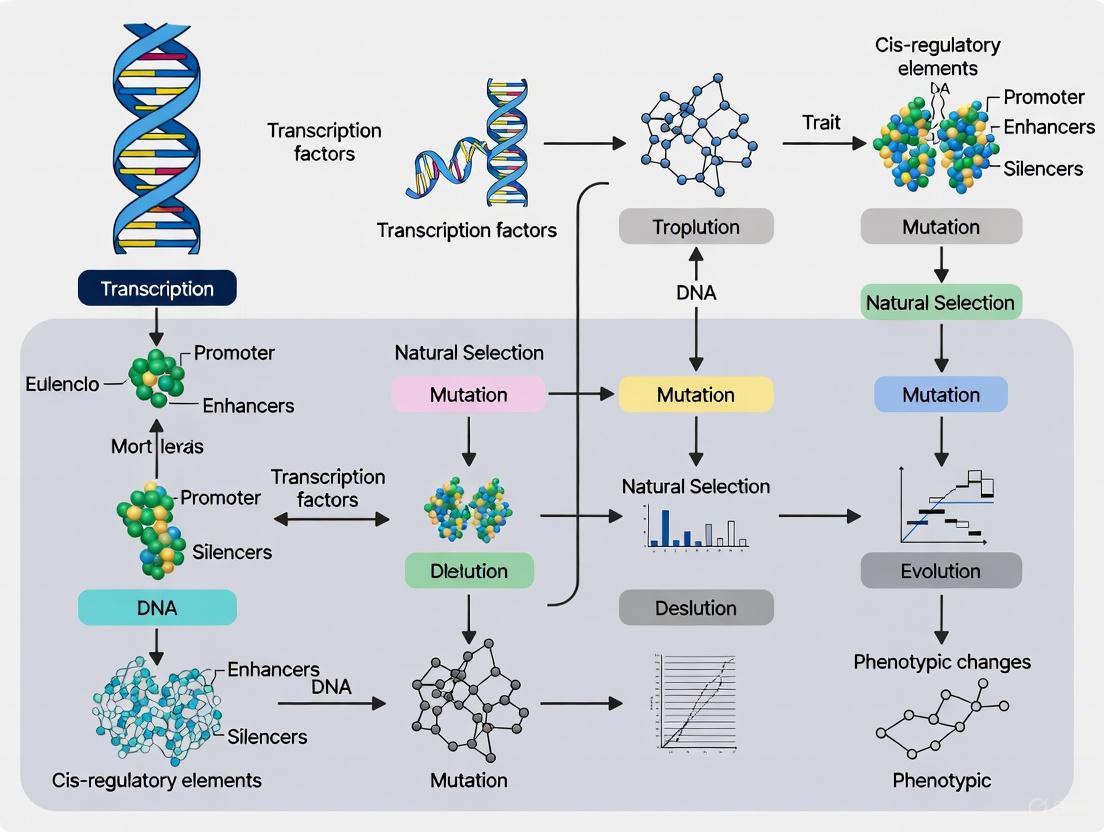
This article explores the pivotal role of cis-regulatory elements (CREs) as the primary drivers of phenotypic diversity and trait evolution.
Cis-Regulatory Elements: The Hidden Architects of Trait Evolution and Precision Medicine
Abstract
This article explores the pivotal role of cis-regulatory elements (CREs) as the primary drivers of phenotypic diversity and trait evolution. We delve into the foundational principles of CREs—enhancers, promoters, silencers, and insulators—and their complex grammar governing gene expression. The piece critically reviews cutting-edge methodologies for CRE identification, from high-throughput assays like MPRA and CRISPR screens to advanced computational tools and deep learning models. It further addresses key challenges in the field, including the re-evaluation of enhancer modularity and the interrogation of non-coding variants. By highlighting applications in pharmacogenomics and drug discovery, particularly through the lens of cell-type-specific regulatory dynamics, this resource provides researchers and drug development professionals with a comprehensive framework for understanding how variation in the non-coding genome shapes complex traits and disease susceptibility.
The Non-Coding Blueprint: How Cis-Regulatory Elements Sculpt Phenotypic Diversity
The genetic blueprint of complex organisms contains not only protein-coding genes but also a vast array of cis-regulatory elements (CREs) that precisely orchestrate gene expression in space and time. These non-coding DNA sequences—including enhancers, promoters, silencers, and insulators—form intricate regulatory networks that control developmental processes, cellular identity, and physiological responses. Increasingly, evolutionary biology recognizes that changes in these regulatory elements, rather than solely protein-coding mutations, underlie the emergence of novel traits and morphological diversity across species [1]. From the loss of pelvic spines in stickleback fish due to enhancer deletion to the gain of wing spots in Drosophila guttifera through novel enhancer activity, CRE evolution provides a fundamental mechanism for phenotypic innovation [1]. This technical guide delineates the core components of the cis-regulatory landscape, their functional mechanisms, and the advanced methodologies enabling their study, framing this knowledge within the context of trait evolution research.
The Core Components of theCis-Regulatory Landscape
Enhancers: Drivers of Spatial-Temporal Expression
Enhancers are short (200-1000 bp) non-coding DNA sequences that enhance transcription of their target genes regardless of orientation or distance. They function by binding transcription factors (TFs) that recruit co-activators and the transcriptional machinery, often through long-range chromatin looping. Enhancers frequently exhibit characteristic chromatin signatures, including histone marks such as H3K27ac and H3K4me1, and open chromatin configuration detectable by ATAC-seq [2].
Super-enhancers represent a specialized class of enhancers—clusters of several interacting enhancers with unusually strong H3K27ac signals that drive expression of genes defining cell identity [3]. These elements are disproportionately associated with disease-associated genetic variants and oncogenes in tumorigenesis.
The evolution of enhancer activity represents a key mechanism for trait evolution. For instance, the acquisition of novel wing pigmentation patterns in Drosophila guttifera resulted from the evolution of new enhancer activities of the wingless gene, which generated new expression domains during pupal development [1]. Similarly, Human Gain Enhancers (HGEs) identified in developing human cortex and limb exhibit increased activity linked to the evolution of human-specific traits [4].
Promoters: Gatekeepers of Transcription Initiation
Promoters are cis-regulatory elements located immediately upstream of transcription start sites (TSSs) that initiate basal transcription. While traditionally viewed as distinct from distal regulatory elements, promoters share functional similarities with enhancers and insulators—they exhibit accessible chromatin, can engage in long-range interactions, and some can even display enhancer-blocking activity [5]. Approximately 70% of mammalian promoters are associated with CpG islands (CGIs)—genomic regions with high GC content and CpG dinucleotide frequency that typically remain unmethylated [4].
Silencers: Repressors of Gene Expression
Silencers are CREs that repress transcription of their target genes, functioning through mechanisms analogous to enhancers but with opposite effects. They recruit repressive transcription factors that facilitate the establishment of repressive chromatin environments, often marked by histone modifications such as H3K27me3 and H3K9me3 [3] [6].
Super-silencers (SSs) represent a recently characterized class of potent repressive elements identified by their strong H3K27me3 signals [3]. In GM12878 lymphoblastoid cells, 879 super-silencer regions have been identified, each averaging 36 kb in length and containing approximately 5 constituent silencers [3]. These elements are associated with the lowest levels of gene expression among all silencers and enhancers and demonstrate high tissue-specificity [3]. Approximately 13% of B-cell super-silencers convert to super-enhancers in B-cell lymphoma, with 22% of these recurring in over half of patients [3]. This conversion phenomenon highlights the dynamic nature of regulatory elements and their importance in carcinogenesis.
Table 1: Characteristics of Super-Silencers in GM12878 Cells
| Feature | Super-Silencers (SSs) | Typical Silencers (TSs) | Enhancers |
|---|---|---|---|
| Average Length | 36 kb | 1.5 kb | Varies |
| Number of Constituents | 5.25 silencers/SS | Individual | Varies |
| H3K27me3 Signal | Strong | Moderate | Low/Absent |
| Genomic Distribution | >60% intergenic | >60% intergenic | ~45% intergenic |
| CpG Island Overlap | 27% | ~17% | ~17% |
| Evolutionary Conservation | 13% in placental clades | 8.5% | 7.0-7.7% |
| Associated Gene Expression | Lowest | Low | High |
Insulators: Architects of Chromatin Domains
Insulators are non-coding DNA elements that organize the genome into distinct topological domains and prevent inappropriate regulatory interactions. They perform two primary functions: enhancer-blocking (preventing enhancer-promoter communication when positioned between them) and barrier activity (stopping the spread of repressive chromatin) [5].
In animals, insulators frequently define the boundaries of topologically associated domains (TADs) and are enriched for binding sites of architectural proteins like CTCF [5]. While plant insulators are less characterized, studies have demonstrated that heterologous insulators from Drosophila (gypsy, Fab-7) and humans (BEAD1c) can function in transgenic plants, suggesting conservation of insulator mechanisms across kingdoms [5].
Evolutionary Dynamics ofCis-Regulatory Elements
The evolution of CREs provides a fundamental mechanism for phenotypic innovation with minimal disruptive consequences. Several evolutionary pathways have been characterized:
Enhancer Gain and Loss
Complete or partial loss of enhancer function can lead to trait loss, as exemplified by the disappearance of pelvic spines in freshwater stickleback populations due to deletion of a Pitx1 gene enhancer [1]. Conversely, gains of new enhancer activities can generate novel traits. In Drosophila guttifera, the evolution of new wingless enhancers enabled the development of novel wing pigment patterns [1]. These new enhancers may arise through co-option of pre-existing regulatory sequences, neofunctionalization after gene duplication, transposon insertion, or de novo generation [1].
CpG Island Turnover and Enhancer Evolution
CpG island (CGI) turnover represents a potent mechanism for regulatory evolution. Orphan CGIs (oCGIs)—those not associated with promoters—are significantly enriched within enhancers and associated with increased levels of enhancer-associated histone modifications [4]. Comparative genomics across nine mammalian species reveals that species-specific oCGIs are strongly enriched for enhancers exhibiting species-specific activity [4]. Genes associated with enhancers with species-specific CGIs show concordant expression biases, supporting CGI turnover as a driver of gene regulatory innovation [4]. This mechanism particularly contributes to the evolution of Human Gain Enhancers (HGEs), which show increased activity during human embryonic development [4].
Silencer Evolution in Disease
The conversion of super-silencers to super-enhancers in B-cell lymphoma demonstrates the functional plasticity of CREs and their role in disease evolution [3]. Super-silencers are enriched for B-cell cancer-associated genetic variants—both somatic and germline—and translocation breakpoints, with over 80% of B-cell lymphoma t(3;14)(q27;q32) translocations fusing BCL6 super-silencers with enhancer-rich regions [3]. This highlights how alterations in repressive elements can contribute to oncogenic transformation.
Table 2: Evolutionary Mechanisms of Cis-Regulatory Elements
| Evolutionary Mechanism | Molecular Process | Phenotypic Consequence | Example |
|---|---|---|---|
| Enhancer Loss | Deletion or mutation of enhancer sequence | Loss of trait | Loss of pelvic spines in stickleback fish [1] |
| Enhancer Gain | Emergence of new enhancer activity | Novel trait formation | Wing spots in D. guttifera [1] |
| CpG Island Turnover | Species-specific gain/loss of oCGIs | Altered enhancer activity, gene expression changes | Human Gain Enhancers (HGEs) [4] |
| Silencer-Enhancer Conversion | Epigenetic switching from repressive to active state | Oncogenic activation | B-cell lymphoma super-silencer conversion [3] |
| Transposable Element Insertion | TE integration creates new regulatory sequences | Novel regulatory connections | TE-derived CREs in maize [7] |
Experimental Methods for MappingCis-Regulatory Elements
Epigenomic Profiling
Chromatin immunoprecipitation followed by sequencing (ChIP-seq) for histone modifications (H3K27ac for active enhancers, H3K27me3 for silencers, H3K4me3 for promoters) provides a primary method for CRE identification. Assay for Transposase-Accessible Chromatin using sequencing (ATAC-seq) maps open chromatin regions, identifying potentially active CREs [2].
Functional Characterization Methods
KAS-ATAC-seq represents an advanced integration of optimized KAS-seq with ATAC-seq that simultaneously reveals chromatin accessibility and transcriptional activity of CREs [2]. This method enables identification of Single-Stranded Transcribing Enhancers (SSTEs) by precisely measuring ssDNA levels within ATAC-seq peaks, providing more precise annotation of functional CREs than either method alone [2].
KAS-ATAC-seq Workflow for Functional CRE Identification
Ss-STARR-seq enables genome-wide identification of silencers. This method involves constructing a library of genomic fragments cloned into a plasmid vector downstream of a minimal promoter. When transfected into cells, active silencers reduce reporter expression, allowing their identification through sequencing of surviving cells [6]. Application in mouse embryonic fibroblasts (MEFs) and embryonic stem cells (mESCs) identified 89,596 and 115,165 silencers, respectively, with activities ranging from 2 to 6-fold repression [6].
3D Genome Architecture Mapping
Hi-C and related chromosome conformation capture methods map the three-dimensional organization of chromatin, revealing interactions between CREs and their target promoters. These approaches identify topologically associated domains (TADs) whose boundaries are frequently demarcated by insulators [5].
The Scientist's Toolkit: Research Reagent Solutions
Table 3: Essential Research Reagents for Cis-Regulatory Element Analysis
| Reagent/Method | Function | Application Examples |
|---|---|---|
| KAS-ATAC-seq | Simultaneously maps chromatin accessibility and transcriptional activity | Identification of Single-Stranded Transcribing Enhancers (SSTEs) [2] |
| Ss-STARR-seq | Genome-wide screening of silencer activity | Identified 115,165 silencers in mESCs [6] |
| H3K27me3 ChIP-seq | Maps genomic regions with repressive histone mark | Super-silencer identification in GM12878 cells [3] |
| ATAC-STARR-seq | Measures transcriptional activity of accessible DNA | Silencer validation (negative ATAC-STARR-seq scores) [3] |
| ROSE Algorithm | Identifies super-enhancers and super-silencers | Rank-ordering of H3K27me3 signals to define super-silencers [3] |
| CRADLE Software | Analyzes STARR-seq data for silencer identification | Called silencers from Ss-STARR-seq data in mouse cells [6] |
The comprehensive characterization of enhancers, promoters, silencers, and insulators provides the foundational framework for understanding how genomic regulatory sequences shape phenotypic diversity. The emerging paradigm recognizes that evolutionary changes in cis-regulatory elements—through sequence alteration, epigenetic modification, or structural variation—contribute significantly to morphological and physiological innovations across species. The development of sophisticated functional genomics tools like KAS-ATAC-seq and genome-wide silencer screening methods enables unprecedented resolution in mapping the functional regulatory genome. For researchers investigating the genetic basis of trait evolution, particularly in the context of human disease, crop improvement, or evolutionary adaptation, integrating multi-omics data on cis-regulatory elements with phenotypic analyses will be essential for bridging genotype-to-phenotype relationships. As these methodologies continue to advance, they will further illuminate how modifications in the regulatory landscape drive the evolution of biological diversity.
CRE-Mediated Trait Evolution Pathway
Cis-regulatory elements (CREs) are non-coding DNA sequences that function as molecular switches to precisely control the dosage, timing, and spatial patterning of gene expression [8]. These regulatory elements—including enhancers, promoters, silencers, and insulators—serve as integration platforms for transcription factors (TFs) that interpret developmental and environmental cues to orchestrate complex gene regulatory networks (GRNs) [9]. The fundamental cis-regulatory logic governs how combinations of TF binding sites within CREs process information to determine transcriptional outputs, ultimately shaping phenotypic diversity and driving evolutionary innovation [10].
Understanding cis-regulatory logic is particularly crucial for trait evolution research, as non-coding regulatory variation has been shown to contribute significantly to phenotypic diversity. While protein-coding sequences remain largely conserved across species, CREs diverge considerably in sequence while often maintaining conserved functions, creating a paradox that underscores the importance of understanding regulatory rather than just coding sequence evolution [10]. This technical guide examines the molecular architecture of CREs, the experimental and computational methods for their identification, and the principles governing their operation within regulatory networks.
Molecular Anatomy of Cis-Regulatory Elements
Structural Components and Classification
CREs are typically organized as modular DNA segments ranging from 100 to 1000 base pairs in length, containing multiple transcription factor binding sites (TFBSs) that act in combination [9]. The core components include:
- Promoters: Located proximal to transcription start sites (TSS), promoters contain canonical sequences (TATA box, TFIIB recognition site, initiator, downstream core promoter element) that facilitate transcription initiation through RNA polymerase assembly [9].
- Enhancers: These distal elements can be located upstream, downstream, within introns, or at considerable distances from their target genes, and function to enhance transcription probability through looping mechanisms [9].
- Silencers: Repressive elements that bind repressor proteins to reduce transcription, often sharing similar epigenetic properties with enhancers, making them particularly challenging to distinguish [11].
- Insulators: Boundary elements that prevent inappropriate interactions between adjacent chromatin domains, helping to ensure enhancer-promoter specificity [9].
The traditional view of CREs as autonomous, modular elements controlling specific expression domains has been recently challenged. Evidence now suggests considerable functional pleiotropy, where individual CREs can regulate multiple traits, and interdependence between elements [10]. This complexity necessitates more sophisticated models of cis-regulatory function.
The Cis-Regulatory Code: From Binding Sites to Information Processing
At their most fundamental level, CREs are composed of TF binding sites—short DNA sequences typically 6-20 bp in length that are recognized by sequence-specific TFs [8]. The arrangement, spacing, and combination of these binding sites define the cis-regulatory logic that processes inputs into transcriptional outputs.
Two principal models describe cis-regulatory information processing:
- Enhanceosomes: Characterized by highly cooperative and coordinated TF binding where the precise architecture of binding sites is critical for function [9].
- Billboards: Feature more flexible organization where transcriptional output represents the summed contribution of bound TFs without strict requirements for specific arrangement [9].
While Boolean logic models (AND, OR gates) have been useful simplifications, detailed studies reveal that cis-regulatory logic is generally non-Boolean, with gene-regulation functions that cannot be fully described by simple binary operations [9]. This complexity arises from cooperative binding, TF competition, and the quantitative nature of transcriptional responses.
Methodologies for Cis-Regulatory Element Identification
Experimental Approaches for Genome-wide CRE Mapping
Table 1: High-Throughput Methods for CRE Identification
| Method | Principle | Resolution | Advantages | Limitations |
|---|---|---|---|---|
| DAP-seq [8] | In vitro TF binding to naked genomic DNA | High (TFBS level) | No antibodies needed; High throughput | Lacks chromatin context; No PTMs |
| ChIP-seq [8] | In vivo TF binding via immunoprecipitation | High (TFBS level) | Natural chromatin context | Requires high-quality antibodies |
| CUT&Tag [8] | Antibody-targeted tethering of MNase | High (TFBS level) | High signal-to-noise; Low cell input | Still requires specific antibodies |
| ATAC-seq [2] | Transposase accessibility of chromatin | Medium (peak level) | Identifies open chromatin; Simple protocol | Does not directly measure activity |
| KAS-ATAC-seq [2] | Combines chromatin accessibility with ssDNA detection | High (functional CREs) | Identifies transcribed CREs | More complex experimental setup |
Recent methodological advances have significantly improved our ability to identify functional CREs. KAS-ATAC-seq, which combines chromatin accessibility with single-stranded DNA detection, enables quantitative analysis of transcriptional activity at CREs by measuring ssDNA levels within ATAC-seq peaks [2]. This approach successfully discriminates between merely accessible CREs and those actively engaged in transcription, identifying Single-Stranded Transcribing Enhancers (SSTEs) as a functionally relevant subset [2].
Figure 1: KAS-ATAC-seq Workflow for Identifying Transcriptionally Active CREs
Computational Approaches for CRE Prediction and Classification
Computational methods have emerged to complement experimental approaches for CRE identification. CREATE (Cis-Regulatory Elements identificAtion via discreTe Embedding) represents a recent multimodal deep learning framework that integrates genomic sequences, chromatin accessibility, and chromatin interaction data to classify multiple CRE types simultaneously [11]. This approach demonstrates superior performance in distinguishing functionally similar elements like enhancers and silencers, achieving a macro-averaged auROC of 0.964 in K562 cells [11].
The Bag-of-Motifs (BOM) framework provides an alternative minimalist approach that represents distal CREs as unordered counts of transcription factor motifs, combined with gradient-boosted trees for prediction [12]. Despite its simplicity, BOM outperforms more complex deep learning models in predicting cell-type-specific enhancers across multiple species, achieving 93% accuracy in assigning CREs to their correct cell type in mouse embryos [12].
Table 2: Performance Comparison of Computational CRE Identification Methods
| Method | Input Data | CRE Types Identified | Reported Performance | Key Advantages |
|---|---|---|---|---|
| CREATE [11] | Sequence + Accessibility + Interactions | Multi-class (enhancers, silencers, promoters, insulators) | auROC: 0.964 ± 0.002 (K562) | Excellent silencer identification; Multi-omics integration |
| BOM [12] | TF motif counts | Enhancers (cell-type-specific) | Accuracy: 93% (mouse E8.25) | Interpretable; Cross-species application |
| DeepSEA [11] | DNA sequence | Chromatin features | auROC: ~0.91 (comparison) | Sequence-based prediction only |
| ES-transition [11] | DNA sequence | Enhancers, silencers | auROC: 0.928 ± 0.002 | Enhancer-silencer transitions |
| DeepICSH [11] | Sequence + Epigenetic features | Silencers | auPRC: 0.743 ± 0.003 | Silencer-specific identification |
Cis-Regulatory Logic in Gene Regulatory Networks
From TF Binding to Network Architecture
Gene regulatory networks (GRNs) represent the complex interplay between TFs and CREs that controls developmental processes and cellular identities [13]. In these networks, nodes represent genes and directed edges connect TFs to their target genes, representing regulatory interactions. The cis-regulatory logic determines how these networks process information and generate specific transcriptional outputs.
Two primary network modeling approaches have emerged:
- Expression-based methods: Utilize gene expression data from transcriptome sequencing with computational methods including correlation metrics, mutual information, and regression algorithms [13].
- Sequence-based methods: Incorporate motif analysis and chromatin data to model TF binding specificity, providing mechanistic insights into regulatory relationships [13].
Single-cell technologies have revolutionized GRN construction by providing thousands of cellular data points, enabling the application of sophisticated supervised learning algorithms, including diverse deep learning architectures [13]. However, these approaches must address challenges including data sparsity from dropout events and the stochastic nature of gene expression in individual cells.
Information Processing in Cis-Regulatory Modules
CREs function as information processing units that integrate multiple inputs to determine transcriptional outputs. The design principles of these modules include:
- Combinatorial Control: Multiple TFs collaborate to determine expression patterns, with AND-like logic ensuring specificity and OR-like logic providing robustness [9].
- Temporal Integration: CREs can integrate signals from different time points, creating dynamic responses to developmental cues [9].
- Context Dependence: The same CRE may produce different outputs depending on cellular context, chromatin environment, and TF concentrations [14].
The non-Boolean nature of cis-regulatory logic presents challenges for modeling, as gene-regulation functions cannot typically be described by simple binary operations [9]. This has led to the development of more sophisticated mathematical frameworks that capture the quantitative relationships between TF concentrations and transcriptional outputs.
Figure 2: Information Processing in a Cis-Regulatory Element
Cis-Regulatory Evolution and Trait Diversity
Evolutionary Dynamics of CREs
The evolution of CREs plays a crucial role in generating phenotypic diversity. Several key principles have emerged from comparative studies:
- Functional Conservation with Sequence Divergence: CREs can diverge considerably in sequence while maintaining conserved functions through binding of the same TFs and performing similar developmental roles across species [10].
- Co-option and Repurposing: Existing CREs are frequently co-opted for new functions rather than new elements evolving de novo, explaining how a limited repertoire of genes can generate diverse forms [10].
- Pleiotropy and Interdependence: Individual CREs often regulate multiple traits and show functional interdependence, challenging the paradigm of completely autonomous, modular enhancers [10].
The fragility or robustness of cis-regulatory architecture influences evolutionary tempo, with some traits evolving rapidly due to fragile regulatory configurations while others remain conserved due to robust architectures [10]. This relationship between regulatory robustness and evolutionary rate provides a framework for understanding variation in morphological evolution across traits and lineages.
Case Studies in Cis-Regulatory Evolution
Research in evolutionary developmental biology has revealed numerous examples where CRE evolution underlies trait diversification:
- Stickleback pelvic reduction: Repeated deletion of a Pitx1 enhancer is responsible for pelvic reduction in multiple freshwater stickleback populations [10].
- Butterfly wing patterns: Optix drives repeated convergent evolution of butterfly wing pattern mimicry through cis-regulatory changes [10].
- Plant adaptations: In Arabidopsis, promoter analysis of ABA-regulated genes reveals distinct motif variants that correlate with qualitative and quantitative differences in gene expression, potentially contributing to environmental adaptation [15].
These case studies demonstrate how sequence changes in CREs can alter gene expression patterns to generate evolutionary innovations without altering protein-coding sequences.
The Scientist's Toolkit: Research Reagent Solutions
Table 3: Essential Research Reagents for Cis-Regulatory Analysis
| Reagent/Resource | Function/Application | Key Features | Example Uses |
|---|---|---|---|
| N3-kethoxal [2] | Chemical labeling of ssDNA in KAS-ATAC-seq | Detects transcriptionally active regions; Permeabilization-enhanced efficiency | Identification of SSTEs; Mapping active transcription bubbles |
| Tn5 Transposase [2] | Simultaneous fragmentation and adapter tagging of accessible DNA | Identifies open chromatin regions; Simplifies library preparation | ATAC-seq; KAS-ATAC-seq; Chromatin accessibility mapping |
| Recombinant TFs [8] | In vitro binding assays for TF specificity profiling | Enables high-throughput binding studies; No antibodies required | DAP-seq; Protein-binding microarrays |
| High-Specificity Antibodies [8] | Immunoprecipitation of TF-DNA complexes | Enables in vivo binding mapping; Requires validation | ChIP-seq; CUT&Tag; Targeted protein degradation |
| GimmeMotifs Database [12] | Annotated TF binding motifs for computational analysis | Reduces redundancy in motif databases; Clustered motifs | BOM framework; Motif enrichment analysis |
| VQ-VAE Framework [11] | Discrete embedding generation for CRE classification | Captures discrete regulatory patterns; Enables interpretable deep learning | CREATE model; Multi-class CRE identification |
Future Directions and Applications
Technological Innovations
The field of cis-regulatory analysis continues to advance through both experimental and computational innovations. Emerging areas include:
- Single-cell multi-omics: Technologies that simultaneously measure chromatin accessibility, gene expression, and epigenetic modifications in individual cells will provide unprecedented resolution of cellular heterogeneity in regulatory programs [13].
- Deep learning interpretability: Methods that combine the predictive power of complex models with biological interpretability, like CREATE's discrete embeddings, will enhance our understanding of regulatory codes [11].
- In vivo perturbation screens: CRISPR-based approaches for systematically testing CRE function at scale will bridge the gap between correlation and causation in regulatory genomics [13].
Implications for Trait Evolution Research
Understanding cis-regulatory logic has profound implications for evolutionary biology and biomedical research:
- Predicting evolutionary trajectories: Mapping the relationship between regulatory architecture and evolutionary robustness may help predict which traits are more likely to evolve rapidly [10].
- Disease variant interpretation: Over 90% of disease-associated variants are in non-coding regions, highlighting the need to decipher cis-regulatory grammar for precision medicine applications [13].
- Crop improvement strategies: CRE identification facilitates the selection of target sites for genetic engineering of crops with improved agronomic traits [8].
As our understanding of cis-regulatory logic deepens, we move closer to predictive models of gene regulation that can explain how genetic variation shapes phenotypic diversity across evolution, development, and disease.
For decades, the observed genetic paradox between high protein sequence similarity and profound phenotypic differences between humans and chimpanzees presented a conundrum for evolutionary biologists. This paradox was famously addressed by King and Wilson, who proposed that changes in gene regulation, rather than changes in protein-coding sequences themselves, primarily underlie morphological and behavioral evolution [16]. They hypothesized that evolutionary divergence is driven more by modifications to when, where, and how genes are expressed than by alterations to the protein products themselves. This prescient hypothesis—while bold and initially short on mechanistic detail—grew naturally from earlier foundational work by Jacob and Monod establishing that regulatory programs were encoded in the genome and thus subject to evolutionary modification [16]. For several decades, this proposal remained frustratingly abstract, supported largely by indirect evidence and anecdotal examples due to technological limitations in studying regulatory sequences directly [16].
The advent of large-scale genomic datasets has now made it possible to directly examine the evolution of cis-regulatory elements (CREs) on a genome-wide scale, providing robust validation of King and Wilson's core insight [16]. CREs are defined as non-coding DNA sequences, including enhancers, promoters, silencers, and insulators, that precisely modulate the dosage and spatiotemporal patterns of gene expression by serving as binding sites for transcription factors (TFs) [8]. This review synthesizes how contemporary research has confirmed the primacy of regulatory evolution while revealing the complex mechanisms through which CREs shape phenotypic diversity, with particular implications for understanding human evolution and developing precision therapeutic approaches.
The Functional Architecture of Cis-Regulatory Elements
Definition and Classification of CREs
Cis-regulatory elements are typically short DNA fragments (6-20 bp) that function as specific binding sites for transcription factors [8]. These elements operate as molecular switches that control transcriptional programs, with their combinatorial logic enabling precise regulation of gene expression across different cell types and developmental stages. CREs can be categorized based on their location and function:
- Promoters: Located proximal to transcription start sites (typically within -250 to +250 bp), these elements serve as tethering points for the basal transcriptional machinery and can contain multiple transcription factor binding sites [17].
- Enhancers: These distal elements can be located up to hundreds of kilobases from their target genes and function independently of orientation and position to activate transcription [17]. Enhancers often exhibit modular organization, with a single gene potentially regulated by multiple enhancers controlling different aspects of its expression pattern [17].
- Silencers: Elements that repress gene expression at specific time points or locations through transcription factor binding [17].
- Insulators: DNA sequences that establish boundaries between regulatory domains, preventing inappropriate cross-talk between adjacent genes [17].
The Combinatorial Logic of Gene Regulation
The regulatory capacity of CREs emerges from the collective activity of multiple transcription factor binding sites arranged in specific configurations. Recent computational approaches like the Bag-of-Motifs (BOM) framework demonstrate that representing distal cis-regulatory elements as unordered counts of transcription factor motifs enables accurate prediction of cell-type-specific enhancer activity across diverse species [12]. This minimalist representation, combined with machine learning models, achieves high predictive accuracy while revealing that motif composition alone can largely determine cell-type identity, outperforming more complex deep-learning models [12].
Table 1: Key Cis-Regulatory Element Types and Their Characteristics
| Element Type | Genomic Position | Primary Function | Key Characteristics |
|---|---|---|---|
| Promoter | Proximal to TSS (-250 to +250 bp) | Transcription initiation | Binds RNA polymerase; contains core and proximal elements |
| Enhancer | Distal (up to >1 Mb from gene) | Transcriptional activation | Position/orientation independent; often cell-type-specific |
| Silencer | Various locations | Transcriptional repression | Recruits repressive complexes; timing/location specific |
| Insulator | Between regulatory domains | Boundary formation | Prevents cross-talk; often binds CTCF protein |
Methodological Advances in CRE Identification and Characterization
High-Throughput Experimental Approaches
The systematic identification of CREs has been revolutionized by second-generation sequencing techniques that enable genome-wide mapping of regulatory elements [8]. These approaches can be broadly categorized into direct methods (identifying DNA sequences bound by transcription factors) and indirect methods (locating CREs based on downstream effects like chromatin opening or histone modifications).
DNA affinity purification sequencing (DAP-seq) involves incubating genomic DNA with tagged recombinant transcription factors to enrich all genomic fragments containing CREs of the target TF [8]. This approach has generated massive datasets, including a genome-wide binding atlas of 529 Arabidopsis transcription factors [8]. Modified versions include double DAP-seq (dDAP-seq) and sequential DAP-seq (seq-DAP-seq) for profiling TF heterodimers, and multiDAP for parallel analysis across multiple species [8].
Chromatin immunoprecipitation sequencing (ChIP-seq) uses anti-TF antibodies to immunoprecipitate genomic sequences bound by endogenous transcription factors in their native chromatin context [8]. Limitations including antibody requirements and epitope masking have been addressed by technical improvements such as:
- Semi-in vivo ChIP-seq: Uses epitope-tagged TFs to eliminate need for specific antibodies [8]
- CUT&RUN: Uses antibody-coupled MNase for high signal-to-noise profiling [8]
- CUT&Tag: A Tn5 tagmentation-based method efficient with as few as 100-1000 cells [8]
Functional genomic profiling leverages various molecular signatures to identify active regulatory elements:
- Cap Analysis of Gene Expression (CAGE): Quantitatively profiles transcription start sites, enabling identification of both mRNA and enhancer RNAs (eRNAs) as proxies for regulatory activity [18]
- ATAC-seq: Maps regions of open chromatin associated with regulatory activity [12]
- PRO-seq: Precisely maps nascent transcription, including unstable enhancer RNAs [19]
Massively Parallel Reporter Assays for Functional Validation
Massively Parallel Reporter Assays (MPRAs) have revolutionized functional characterization of CREs by enabling high-throughput measurement of thousands of sequences' regulatory activity [20]. In a typical MPRA workflow, oligonucleotide libraries containing candidate regulatory sequences are cloned into vectors upstream of a minimal promoter and barcoded reporter gene. The library is introduced into cells, and regulatory activity is quantified by comparing barcode counts in RNA versus DNA [20].
This approach has been powerfully applied to evolutionary questions, enabling direct measurement of cis and trans effects between species by testing orthologous regulatory elements in different cellular environments [20]. For example, MPRAs comparing human and mouse embryonic stem cells revealed that cis effects are widespread across transcribed regulatory elements, while trans effects are rarer but stronger in enhancers than promoters [20].
Diagram 1: MPRA workflow for high-throughput CRE functional characterization.
Evidence for CRE Evolution from Comparative Genomics
Divergence-Based Analyses
Early comparative genomic approaches examined human-chimpanzee divergence patterns in putative regulatory sequences. Initial studies found surprisingly little evidence of constraint in hominid regulatory sequences compared to rodents, possibly reflecting widespread degradation due to reduced effective population sizes [16]. However, improved statistical methodologies later revealed evidence of positive selection acting on promoters of hundreds of genes, with neural development and nutrition-related genes showing particularly strong signatures of adaptive evolution [16].
The sequencing of multiple primate genomes enabled detection of human-accelerated regions (HARs) - conserved noncoding sequences showing elevated substitution rates in the human lineage [16]. These studies collectively demonstrated that a subset of CREs has indeed experienced positive selection in humans, potentially contributing to human-specific traits.
Polymorphism-Based Analyses
More recent approaches leverage human polymorphism data from projects like the 1000 Genomes to study very recent evolutionary processes affecting CREs [16]. These analyses reveal that transcription factor binding sites are significantly constrained, though less strongly than coding sequences, with the strength of constraint correlated to functional importance:
- Stronger constraint in bound versus unbound TFBSs [16]
- Stronger constraint in proximal versus distal TFBSs relative to transcription start sites [16]
- Stronger constraint in TFBSs with strong versus weak ChIP-seq signals [16]
Mutations that decrease motif matching scores are enriched for rare alleles, indicating purifying selection against disruptive variants [16]. Interestingly, constraint is observed both in mammalian-conserved regions and nonconserved regions, suggesting substantial functional novelty in primate-specific regulatory elements [16].
Integrated Divergence-Polymorphism Approaches
Joint consideration of interspecies divergence and intraspecies polymorphism helps overcome limitations of either approach alone. Classical methods like the McDonald-Kreitman test have been adapted to study CRE evolution, comparing relative rates of polymorphism and divergence in functional and nonfunctional classes [16]. These approaches can help distinguish between positive and negative selection while accounting for demographic confounding factors.
Studies combining these approaches have revealed wide-spread roles for both positive and negative selection in shaping human CREs, with some controversy regarding the relative importance of background selection versus hitchhiking in explaining observed patterns of diversity around regulatory elements [16].
Table 2: Genomic Signatures of Selection in Human Cis-Regulatory Elements
| Analysis Type | Evolutionary Timescale | Key Findings | Limitations |
|---|---|---|---|
| Primate divergence | ~25 million years | Accelerated evolution in neural/nutrition genes; human-accelerated regions | Long-term evolutionary heterogeneity |
| Human polymorphism | ~1 million years | TFBSs significantly constrained; rare alleles in functional sites | Difficult to distinguish selection types |
| Combined divergence/polymorphism | Multiple timescales | Widespread positive and negative selection; controls for demography | Complex statistical modeling required |
Mechanistic Insights into CRE Evolutionary Dynamics
Cis versus Trans Regulatory Evolution
A fundamental question in regulatory evolution concerns the relative contributions of cis-acting changes (variants affecting the DNA sequence of regulatory elements themselves) versus trans-acting changes (variants affecting diffusible factors like transcription factors). MPRAs comparing orthologous regulatory elements between species have revealed several key principles:
- Cis effects are widespread across transcribed regulatory elements, with the strongest effects associated with disruption of motifs recognized by strong transcriptional activators [20]
- Trans effects are rarer but stronger in enhancers than promoters, associated with transcription factors differentially expressed between species [20]
- Cis-trans compensation is common within promoters but not enhancers, potentially reflecting stabilizing selection on gene expression [20]
These findings highlight fundamental differences in how promoters and enhancers evolve, with enhancers showing higher turnover and more frequent evolutionary innovations [20].
Evolutionary Conservation and Turnover
Comparative analyses reveal substantial variation in evolutionary conservation across different CRE classes. In mammalian embryonic stem cells, the proportion of transcription start sites classified as conserved varies significantly by biotype: 31% for mRNA promoters, 7% for eRNA transcription start sites (enhancers), with sequence orthology rates being substantially higher than conservation rates [20]. This indicates high activity turnover even when sequences remain alignable, particularly for enhancers.
Plant genomes show similar patterns, with many regulatory elements identified through chromatin accessibility or nascent transcription exhibiting weak evolutionary conservation [19]. In rice, for example, many accessible chromatin regions and enhancer RNAs show evidence of recent evolutionary origin and rapid turnover, suggesting continual regulatory innovation [19].
Diagram 2: Cis and trans effects drive regulatory evolution through distinct mechanisms.
Medical and Pharmacogenomic Implications
CRE Variation in Drug Response and Adverse Reactions
The role of CRE variation in human pharmacogenomics is increasingly recognized, with implications for drug development and personalized medicine. Genome-wide association studies reveal that 96.4% of pharmacogenomic-associated single nucleotide polymorphisms reside in noncoding regions [17], suggesting regulatory variation plays a dominant role in interindividual differences in drug response.
The pregnane X receptor (PXR) pathway provides a compelling example of how drug-induced CREs influence therapeutic outcomes. PXR is a nuclear receptor activated by diverse prescription drugs that regulates genes involved in drug metabolism and transport [18]. CAGE profiling of PXR-expressing hepatocytes identified 2,398 drug-induced CRE candidates, which were significantly enriched near genetic variants associated with bilirubin levels and vitamin D deficiency - known adverse effects of PXR-activating drugs [18]. Integration with chromatin immunoprecipitation data narrowed these to 364 high-confidence drug-inducible PXR-binding elements, including both promoters and enhancers [18].
Functional Characterization of Pharmacogenomic CREs
Follow-up studies have demonstrated how noncoding variants within these drug-responsive elements alter regulatory activity and contribute to adverse drug reactions:
- The UGT1A1*28 promoter polymorphism reduces expression of the UGT1A1 enzyme, increasing risk of neutropenia from irinotecan chemotherapy [18] [17]
- A minor allele in PBREM (UGT1A1*60, rs4124874) decreases UGT1A1 transcriptional activity [18]
- Enhancers of CYP24A1 and TSKU harbor functional alleles that alter regulatory activities and influence vitamin D metabolism [18]
These examples illustrate how characterizing drug-responsive regulatory elements can reveal the genomic basis of adverse drug reactions and identify biomarkers for personalized treatment strategies.
Table 3: Clinically Relevant Genetic Variants in Pharmacogenomic CREs
| Gene | Variant/Element | Functional Effect | Clinical Impact |
|---|---|---|---|
| UGT1A1 | UGT1A1*28 promoter variant | Reduced UGT1A1 expression | Increased irinotecan toxicity |
| UGT1A1 | PBREM enhancer (UGT1A1*60) | Decreased transcriptional activity | Altered drug metabolism |
| CYP24A1 | Drug-induced enhancer | Altered vitamin D metabolism | Vitamin D deficiency with PXR activators |
| TSKU | Drug-induced enhancer | Influences vitamin D enzymes | Vitamin D deficiency with PXR activators |
Research Reagent Solutions for CRE Studies
Table 4: Essential Research Reagents and Methods for Cis-Regulatory Element Analysis
| Reagent/Method | Primary Application | Key Features | Technical Considerations |
|---|---|---|---|
| DAP-seq | Genome-wide TF binding profiling | Uses recombinant TFs; does not require antibodies | Lacks chromatin context; potential false positives |
| ChIP-seq | In vivo TF binding mapping | Native chromatin context; high specificity | Requires high-quality antibodies; crosslinking artifacts |
| CUT&RUN/Tag | Low-input TF binding mapping | High signal-to-noise; works with 100-1000 cells | Specialized protocols; optimization required |
| MPRA | High-throughput functional validation | Tests thousands of sequences simultaneously | Removed from genomic context; size limitations |
| CAGE | Genome-wide active promoter/enhancer mapping | Quantitative; identifies eRNAs | Specialized library preparation; bioinformatics complexity |
| PRO-seq | Nascent transcription mapping | Single-nucleotide resolution; detects unstable eRNAs | Technical complexity; low signal for weak elements |
The evolutionary paradigm first articulated by King and Wilson has been overwhelmingly validated by contemporary genomic studies. We now recognize that changes in cis-regulatory elements represent a fundamental mechanism driving phenotypic diversity, with particular importance for human evolution and disease susceptibility. The convergence of comparative genomics, functional assays, and medical genetics has revealed that CRE evolution occurs through diverse mechanisms - from subtle changes in transcription factor binding sites to complete turnover of regulatory elements - with profound consequences for gene regulation.
Future research directions will likely focus on understanding the 3D architectural context of regulatory evolution, developing more sophisticated models of combinatorial regulation, and translating knowledge of CRE variation into improved therapeutic strategies. As single-cell technologies and genome editing approaches continue to advance, we will gain increasingly precise insights into how regulatory changes shape phenotypic diversity across evolutionary timescales. The continuing integration of evolutionary biology with functional genomics and medicine promises to reveal not only how we became human, but how regulatory variation contributes to individualized disease risk and treatment response.
For decades, the dominant paradigm for understanding the genetic basis of trait evolution has centered on changes in protein-coding sequences. However, a persistent conundrum in genetics has been the profound physiological and morphological differences between species like humans and chimpanzees despite their 99.5% protein-coding sequence identity [16]. This apparent paradox led to the seminal hypothesis that differences in gene regulation, rather than protein structure, primarily explain trait diversification across species [16]. Cis-regulatory elements (CREs)—non-coding DNA sequences that regulate the transcription of nearby genes—have consequently emerged as crucial players in evolutionary biology.
CREs function as the genome's regulatory architecture, controlling when, where, and to what extent genes are expressed. The evolution of CREs enables tissue-specific and developmental stage-specific modifications without disrupting essential gene functions, providing a versatile mechanism for phenotypic innovation [16] [10]. While early evidence for this hypothesis was limited to anecdotal examples, the advent of large-scale genomic datasets has finally enabled direct, genome-wide investigation of CRE evolution and its role in shaping complex traits [16]. This whitepaper synthesizes contemporary evidence from comparative genomics demonstrating the significant enrichment of trait-associated variants in CREs and outlines the methodological frameworks for decoding this evidence.
Quantitative Evidence: Systematic Enrichment of Trait-Associated Variants in CREs
Genome-wide association studies (GWAS) have consistently revealed that the vast majority of variants associated with complex traits reside in non-coding genomic regions. Integration of GWAS signals with functional genomic annotations provides compelling evidence that these trait-associated variants are significantly enriched in cis-regulatory elements.
Table 1: Evidence for Trait-Variant Enrichment in Regulatory Regions
| Evidence Type | Study/Model | Key Finding | Implication |
|---|---|---|---|
| GWAS Signal Enrichment | Human GWAS Integration [21] | GWAS signals are significantly enriched in regulatory regions (e.g., chromatin accessibility, eQTLs). | Non-coding variants affecting regulation are primary drivers of complex traits. |
| Fine-Mapping Resolution | Chicken AIL (16 gens) [21] | 154 single-gene QTLs identified for growth traits; regulatory variants foundational. | Enhanced recombination breaks LD, narrowing QTLs to single genes with regulatory mechanisms. |
| Variant Functional Spectrum | FIND Model [22] | Stratifies variants into Fitness/Nearly Fixed, Intermediate/Trait-modulating, Neutral, Deleterious categories. | Provides framework for distinguishing trait-modulating from pathogenic alleles in non-coding regions. |
| Conserved Regulatory Function | Cross-Species Comparison [10] | CREs can diverge in sequence while maintaining function (covert homology); co-option is frequent. | Sequence conservation underestimates functional conservation; regulatory architectures can be repurposed. |
The enrichment is mechanistically explained by the role of regulatory variants in fine-tuning gene expression. As demonstrated in avian models, "regulatory variants [are] foundational" to growth and developmental traits, establishing a network landscape of tissue-specific regulatory mutations [21]. Furthermore, the FIND model demonstrates that trait-modulating alleles, which have been favored by recent selection and exhibit a wide range of derived allele frequencies, can be systematically distinguished from both neutral and deleterious variants using integrative approaches [22].
Methodological Framework: Experimental and Analytical Protocols
Decoding the evidence for CRE enrichment requires a multi-faceted approach, combining population genetics, functional genomics, and computational biology. Below are detailed protocols for key methodologies.
Protocol 1: Temporal Annotation of Evolutionary Changes
Objective: To estimate the timing of evolutionary changes that led to trait differences between modern humans and primates or hominin ancestors [23].
- Data Integration: Collect large-scale genomic and phenotypic data from modern humans, archaic hominins (e.g., Neanderthals, Denisovans), and non-human primates.
- Phenotype Extraction: Derive deep-learning-based imaging phenotypes from available data to quantify morphological traits.
- Variant Annotation: Annotate genetic variants with temporal information based on their presence or absence in ancestral genomes at different evolutionary time points.
- Selection Scanning: Apply tests for natural selection (e.g., based on divergence or polymorphism) to identify loci with accelerated evolution in specific lineages.
- Timeline Reconstruction: Integrate the temporal annotations and selection signals to estimate when selective pressures acted on specific traits, linking genetic changes to phenotypic divergence events.
Protocol 2: Colocalization Analysis for Variant-to-Function Mapping
Objective: To establish a network landscape of tissue-specific regulatory mutations and functional gene relationships underlying complex traits [21].
- QTL Fine-Mapping: Utilize populations with high recombination rates (e.g., Advanced Intercross Lines) to map quantitative trait loci (QTLs) to narrow genomic intervals.
- Molecular QTL Mapping: Generate molecular QTL (molQTL) data, such as expression QTLs (eQTLs), chromatin accessibility QTLs (caQTLs), or histone modification QTLs (hQTLs) from relevant tissues.
- Statistical Colocalization: Apply multiple co-localization methods (e.g., eCAVIAR, COLOC) to test the hypothesis that a trait-associated QTL and a molQTL share a single causal variant.
- Network Construction: For colocalized loci, build gene-regulatory networks by linking regulatory variants to their target genes and the phenotypes they influence.
- Cross-Species Validation: Compare the identified regulatory mechanisms with those in model organisms to elucidate conserved and divergent features of trait evolution.
Diagram 1: Colocalization analysis workflow for mapping trait variants to regulatory mechanisms.
Protocol 3: Fitness-Stratified Variant Classification with FIND
Objective: To stratify genetic variants into refined categories based on their impact on fitness and trait modulation [22].
- Variant Categorization: Partition human genome variants into four categories based on fitness effect and derived allele frequency (DAF) spectrum: Fixed/Nearly Fixed (F), Intermediate/Trait-modulating (I), Neutral (N), and Deleterious (D).
- Feature Annotation: Annotate each variant with 289 multi-aspect features spanning:
- Genome sequence information
- Epigenetic signals (chromatin states, histone modifications, TF binding)
- Protein-coding effect scores
- Genome-wide non-coding effect scores (evolutionary conservation, regulatory predictions)
- Gene-level measurements (essentiality, 3D genome, expression)
- Model Training: Train a deep learning model (TabNet) on the balanced dataset of ~2 million variants. Leverage sequential attention mechanisms to identify the most informative features for each classification decision.
- Variant Scoring & Interpretation: Assign each variant a probability score for belonging to each category. The final classification is the category with the highest probability. Use the attention weights from the model to interpret which biological features were most critical for the classification.
The Scientist's Toolkit: Essential Research Reagents and Solutions
Table 2: Key Research Reagents and Resources for CRE/Trait Evolution Studies
| Reagent/Resource | Function/Application | Example/Source |
|---|---|---|
| Advanced Intercross Line (AIL) | A population designed over multiple generations to increase recombination events, breaking linkage disequilibrium and enabling fine-mapping of QTLs to very narrow intervals. [21] | 16-generation chicken AIL for growth trait mapping. [21] |
| Reference Epigenome Maps | Comprehensive maps of chromatin accessibility, histone modifications, and transcription factor binding sites that annotate putative CREs across many cell types and tissues. [16] [22] | ENCODE, Epigenomics Roadmap, EpiMap databases. [22] |
| Molecular QTL Datasets | Resources that map genetic variants to their effects on molecular phenotypes like gene expression (eQTLs) or chromatin accessibility (caQTLs). Essential for colocalization studies. [21] | Genotype-Tissue Expression (GTEx) project, chicken GTEx. [21] |
| Variant Pathogenicity Predictors | Computational tools that score the deleteriousness or functional impact of genetic variants, particularly in non-coding regions. [22] | dbNSFP, PhyloP, PhastCons, GERP++, regBase. [22] |
| Deep Learning Frameworks | Advanced models for integrating complex, high-dimensional genomic data to classify variants or predict their functional impact. [22] | TabNet (Attentive Interpretable Tabular Learning). [22] |
Visualizing Regulatory Evolution: From Sequence to Phenotype
The path from a genetic variant in a CRE to a change in phenotype involves a multi-step process that can be interrogated through specific experimental and analytical workflows.
Diagram 2: Logical pathway from a regulatory variant to an evolved trait.
Discussion and Future Perspectives
The evidence that trait-associated variants are profoundly enriched in cis-regulatory elements is now undeniable. This paradigm shift forces a re-evaluation of how we search for the genetic underpinnings of both common complex traits and evolutionary innovations. The classical view of enhancers as highly modular, autonomous units is being supplemented by a more nuanced understanding that they can be multifunctional, interdependent, and subject to complex forms of robustness and fragility that influence evolutionary rates [10].
Future research must focus on several frontiers. First, improving the functional interpretation of non-coding variants remains a paramount challenge, requiring even deeper integration of single-cell multi-omics data and high-throughput experimental validations. Second, moving beyond individual enhancers to understand the systemic properties of regulatory networks—how changes in one CRE affect the function of others in a circuit—will be crucial. Finally, as demonstrated by cross-species comparisons, understanding both the conserved and divergent features of regulatory mechanisms will unlock principles of how evolution reconfigures genomic regulatory landscapes to generate diversity. The tools and methodologies outlined herein provide the foundational toolkit for this next phase of discovery, with profound implications for understanding biology and developing novel therapeutic strategies.
Mapping the Regulatory Genome: From High-Throughput Assays to AI-Driven Discovery
Cis-regulatory elements (CREs), such as enhancers, promoters, and silencers, are the fundamental genetic switches that precisely control gene expression dosage, spatiotemporal patterning, and cellular identity [8]. In the context of trait evolution research, understanding CRE architecture provides essential insights into how phenotypic diversity arises without alterations to protein-coding sequences. These non-coding regulatory elements function as molecular integration platforms that are bound by transcription factors (TFs), ultimately orchestrating the complex gene regulatory networks (GRNs) that define cellular states and evolutionary adaptations [8]. The systematic identification and functional characterization of CREs have been revolutionized by the development of high-throughput genomic technologies that enable researchers to move beyond single-gene studies toward comprehensive regulatory network mapping.
This technical guide focuses on three cornerstone methodologies—ChIP-seq, ATAC-seq, and MPRA—that form an integrated experimental pipeline for CRE discovery and validation. Chromatin Immunoprecipitation followed by sequencing (ChIP-seq) provides direct mapping of protein-DNA interactions in their native chromatin context [8]. The Assay for Transposase-Accessible Chromatin using sequencing (ATAC-seq) identifies genomically accessible regions that are hallmark features of active regulatory elements [24]. Massively Parallel Reporter Assays (MPRA) enable high-throughput functional validation of thousands of candidate CREs simultaneously, quantitatively measuring their regulatory potential [25] [26] [27]. When deployed within a complementary framework, these technologies empower researchers to progress from mapping regulatory elements to understanding their functional consequences and evolutionary significance.
Methodological Foundations: Core Technologies for CRE Profiling
Chromatin Immunoprecipitation Sequencing (ChIP-seq)
Principles and Applications: ChIP-seq identifies genome-wide binding sites for transcription factors and histone modifications by combining chromatin immunoprecipitation with next-generation sequencing. This method captures protein-DNA interactions in their native chromatin context through formaldehyde cross-linking, followed by antibody-mediated pulldown of the target protein and its bound DNA fragments [8]. For CRE discovery, ChIP-seq against specific TFs directly maps binding sites, while histone modification ChIP-seq (e.g., H3K27ac for active enhancers) provides indirect evidence of regulatory activity. The major advantage of ChIP-seq lies in its ability to capture in vivo binding events within the natural chromatin landscape, including appropriate nucleosome positioning and co-factor interactions that influence TF binding specificity [8].
Technical Evolution and Protocol Innovations: Traditional ChIP-seq protocols require large cell numbers (10^5-10^7 cells) and high-quality antibodies, presenting challenges for plant systems and rare cell types [8]. Recent advancements have addressed these limitations through several improved methodologies:
- Semi-in vivo ChIP-seq uses epitope-tagged TFs to eliminate antibody dependency, enabling rapid, low-cost, and scalable profiling [8].
- Natural ChIP (N-ChIP) operates at low temperatures without formaldehyde fixation, preventing dissociation of weaker TF-DNA interactions [8].
- Chromatin Endogenous Cleavage coupled with sequencing (ChEC-seq) fuses target TFs to micrococcal nuclease (MNase), selectively releasing TF-bound fragments while keeping irrelevant chromatin insoluble [8].
- CUT&RUN and CUT&Tag utilize antibody-coupled MNase (CUT&RUN) or Tn5 transposase (CUT&Tag) for highly efficient target release with improved signal-to-noise ratios [8]. CUT&Tag is particularly notable for its compatibility with low cell inputs (100-1,000 cells) and single-cell applications [8].
- Enhanced and Advanced ChIP (eChIP/aChIP) for plant systems eliminate the nuclei isolation step that typically causes significant material loss, enabling CRE mapping from minimal tissue samples (0.01g) with improved signal-to-noise profiles [8].
Table 1: Comparative Analysis of ChIP-seq and Its Derivative Technologies
| Method | Key Principle | Cell Input | Resolution | Advantages | Limitations |
|---|---|---|---|---|---|
| ChIP-seq | Antibody-based immunoprecipitation | 10^5-10^7 | 100-500 bp | Gold standard; captures in vivo context | Requires specific antibodies; high input |
| CUT&RUN | Antibody-MNase fusion | 100-500,000 | Single nucleosome | Low background; no crosslinking | Limited to available antibodies |
| CUT&Tag | Antibody-Tn5 fusion | 100-1,000 | Single nucleosome | Low input; high signal-to-noise | Complex protocol |
| ChEC-seq | TF-MNase fusion | Variable | Protein-DNA interaction | No antibody needed | Requires TF engineering |
| eChIP/aChIP | Simplified plant protocol | 0.01g plant tissue | Similar to ChIP-seq | Bypasses nuclei isolation | Plant-specific |
Assay for Transposase-Accessible Chromatin using Sequencing (ATAC-seq)
Principles and Applications: ATAC-seq identifies genomically accessible regions by utilizing the Tn5 transposase enzyme to simultaneously fragment and tag open chromatin regions with sequencing adaptors. The fundamental principle is that active regulatory elements reside in nucleosome-depleted regions that are more accessible to transposase integration [24]. This method provides a rapid, sensitive approach for mapping candidate CREs across the entire genome with minimal cell input requirements (500-50,000 cells for standard protocols, down to single cells with specialized approaches). ATAC-seq has become the preferred method for chromatin accessibility profiling due to its simplicity, low input requirements, and ability to capture the full spectrum of regulatory elements—from promoters and enhancers to insulators and silencers.
Single-Cell Advancements and Integration with CRE Prediction: The development of single-nucleus ATAC-seq (snATAC-seq) has enabled researchers to map chromatin accessibility across heterogeneous cell populations, providing unprecedented resolution of cell-type-specific regulatory landscapes [24]. This technological advancement is particularly valuable for trait evolution studies in complex tissues like the mammalian brain, where cellular heterogeneity previously obscured cell-type-specific regulatory signatures. The computational framework Bag-of-Motifs (BOM) leverages snATAC-seq data by representing distal CREs as unordered counts of transcription factor motifs, then using gradient-boosted trees to accurately predict cell-type-specific enhancers [24]. This minimalist representation combined with machine learning has demonstrated remarkable performance in classifying cell-type-specific CREs across mouse, human, zebrafish, and Arabidopsis datasets, outperforming more complex deep-learning models while using fewer parameters [24].
Massively Parallel Reporter Assays (MPRA)
Principles and Applications: MPRAs represent a paradigm shift in CRE functional validation by enabling high-throughput, quantitative assessment of thousands to hundreds of thousands of candidate regulatory sequences in a single experiment [25] [26] [27]. The core principle involves cloning candidate DNA sequences into reporter vectors upstream or downstream of a minimal promoter driving a reporter gene, with each candidate sequence tagged with unique barcodes that enable quantitative measurement of regulatory activity through RNA/DNA sequencing ratio analysis [27]. This design allows multiplexed assessment of CRE function at unprecedented scale, addressing a critical bottleneck between CRE discovery and functional validation.
Experimental Designs and Variants: Several MPRA implementations have been developed, each with distinct advantages:
- LentiMPRA uses lentiviral delivery to integrate reporter constructs into the genome, providing more stable expression and chromatin context [27].
- STARR-seq (Self-Transcribing Active Regulatory Region Sequencing) positions candidate sequences in the 3'UTR of the reporter gene, allowing direct quantification of enhancer activity through self-transcription without separate barcodes [27].
- TilingMPRA systematically tiles genomic regions to finely map functional elements within larger candidate loci [27]. A comprehensive evaluation of six major MPRA and STARR-seq datasets revealed that technical variations in library design, sequencing depth, and data processing pipelines significantly impact enhancer calls, highlighting the importance of standardized analytical frameworks for cross-study comparisons [27].
Integration with Machine Learning for CRE Engineering: The massive empirical data generated by MPRAs has enabled the training of sophisticated deep learning models like Malinois, a convolutional neural network that accurately predicts cell-type-informed CRE activity from DNA sequence alone (Pearson's r = 0.88-0.89 with experimental validation) [25]. These predictive models can be coupled with computational optimization platforms like CODA (Computational Optimization of DNA Activity) to design novel synthetic CREs with programmed cell-type specificity [25]. Remarkably, these synthetically engineered CREs can outperform natural sequences from the human genome in driving targeted expression patterns, demonstrating the potential for bespoke regulatory element design for both basic research and therapeutic applications [25].
Integrated Experimental Workflows for CRE Discovery
Diagram 1: Integrated CRE Discovery and Validation Workflow. The pipeline begins with complementary discovery methods (ATAC-seq and ChIP-seq) that identify candidate regulatory elements, followed by functional validation and engineering phases that leverage MPRA and machine learning for CRE characterization and design.
Comparative Analysis of CRE Discovery Methods
Table 2: Comprehensive Comparison of Major CRE Discovery Technologies
| Parameter | ATAC-seq | ChIP-seq | MPRA |
|---|---|---|---|
| Primary Application | Genome-wide chromatin accessibility mapping | Protein-DNA interaction mapping | High-throughput functional validation |
| Throughput | High (entire genome) | Medium (antibody-specific) | Very High (thousands of constructs) |
| Resolution | 100-500 bp | 100-500 bp | Single nucleotide (for variants) |
| Cell Input Requirements | Low (500-50,000 cells) | High (10^5-10^7 cells) | Variable (depends on delivery method) |
| Key Strengths | Identifies all accessible regions; low input; fast protocol | Captures in vivo binding context; histone modifications | Direct functional measurement; quantitative; tests synthetic sequences |
| Major Limitations | Indirect evidence of function; does not identify bound TFs | Antibody-dependent; high input; limited throughput | Removed from native genomic context; episomal vs. integrated differences |
| Complementary Data | Identifies candidate CRE locations | Identifies mechanism of regulation | Quantifies regulatory activity |
| Evolutionary Studies Applications | Comparative accessibility across species/samples | TF binding site evolution | Functional consequences of non-coding variants |
Advanced Applications in Trait Evolution Research
Decoding Evolutionary Changes Through CRE Function
The integration of ChIP-seq, ATAC-seq, and MPRA provides a powerful toolkit for investigating how cis-regulatory evolution contributes to phenotypic diversity. By applying these technologies across phylogenetically relevant species, researchers can identify conserved and diverged regulatory elements that underlie species-specific traits. The multiDAP approach, which pools barcoded genomic DNA from multiple species for parallel TF binding profiling in a single assay, exemplifies how these technologies are being adapted for evolutionary studies [8]. This method efficiently reveals how CREs and their associated TF binding specificities have evolved across related species.
Similarly, the BOM (Bag-of-Motifs) framework has demonstrated remarkable conservation in the predictive power of motif composition for identifying cell-type-specific enhancers across mouse, human, and zebrafish models [24]. This cross-species applicability suggests that fundamental principles of regulatory grammar are conserved across vertebrates, enabling researchers to leverage model organism data for understanding human regulatory evolution and vice versa.
Connecting Non-coding Variants to Phenotypic Outcomes
Genome-wide association studies (GWAS) have identified thousands of non-coding variants associated with complex traits and diseases, but linking these statistical associations to causal mechanisms remains challenging. The technologies covered in this guide provide a direct path from variant to function. For example, MPRA can systematically test the functional consequences of non-coding variants by introducing both natural and synthetic mutations into regulatory sequences and quantifying their effects on transcriptional activity [26]. When combined with ATAC-seq and ChIP-seq data that provide cellular context, this approach can pinpoint causal variants and elucidate their mechanisms of action.
In one notable application, researchers performed MPRA on over 50,000 sequences derived from fetal neuronal ATAC-seq datasets and validated enhancers from mouse models, including over 20,000 variants associated with psychiatric disorders [26]. This integrated approach demonstrated a strong correlation between MPRA results and neuronal enhancer activity in mouse embryos, with four out of five tested variants showing significant effects in both systems [26]. This validation across experimental platforms and species provides compelling evidence for the functional relevance of non-coding variants in complex traits.
Table 3: Key Research Reagents and Computational Tools for CRE Discovery
| Resource Type | Specific Examples | Function/Application | Key Features |
|---|---|---|---|
| Experimental Models | enSERT transgenic mouse assay [26] | In vivo validation of human enhancer activity | Provides rich, multi-tissue phenotyping; organismal context |
| Cyagen/Taconic Cre repository [28] | Tissue-specific gene manipulation | >200 Cre and >16,000 KO/cKO mouse models | |
| Computational Frameworks | BOM (Bag-of-Motifs) [24] | Predicts cell-type-specific enhancers | Gradient-boosted trees using motif counts; highly interpretable |
| Malinois CNN [25] | Predicts CRE activity from sequence | Deep convolutional neural network; r=0.88-0.89 with experimental data | |
| CODA (Computational Optimization of DNA Activity) [25] | Designs synthetic CREs with programmed specificity | Integrates evolutionary, probabilistic, and gradient-based algorithms | |
| Software Tools | HOMER [26] | Motif discovery and functional enrichment | Identifies overrepresented transcription factor binding sites |
| GimmeMotifs [24] | TF motif analysis and clustering | Reduces motif redundancy; improves annotation | |
| Reference Databases | VISTA Enhancer Browser [26] | Catalog of validated enhancers | Gold standard for in vivo enhancer activity |
| ENCODE cCRE Registry [27] | Candidate cis-regulatory elements | Integrates multiple epigenomic marks across cell types |
The integration of ChIP-seq, ATAC-seq, and MPRA technologies has transformed our ability to discover, characterize, and engineer cis-regulatory elements at unprecedented scale and resolution. This powerful experimental pipeline enables researchers to progress from mapping regulatory elements in their native chromatin context to quantitatively measuring their functional consequences and even designing synthetic elements with programmed specificity. For trait evolution research, these approaches provide the necessary tools to decipher how changes in non-coding regulatory sequences generate phenotypic diversity across species and populations.
As these technologies continue to evolve, several exciting frontiers are emerging. The combination of massively parallel functional assays with advanced machine learning models is enabling the predictive design of synthetic regulatory elements, moving beyond natural variation to explore the vast sequence space of potential CREs [25]. Meanwhile, the refinement of single-cell multi-omics approaches promises to unravel regulatory heterogeneity in complex tissues, providing insights into how cellular diversity arises from common genomic templates. Together, these advances are paving the way for a comprehensive understanding of the cis-regulatory code and its role in evolution, disease, and biological design.
The emergence of CRISPR-Cas9 screening technologies has fundamentally transformed the landscape of functional genomics, enabling systematic and high-throughput interrogation of gene function at an unprecedented scale. This perturbation revolution provides researchers with a powerful toolkit for dissecting complex biological systems, from basic developmental mechanisms to disease pathways. CRISPR screening accelerates therapeutic target identification and drug discovery by providing a precise and scalable platform for functional genomics [29]. The development of extensive single-guide RNA (sgRNA) libraries enables high-throughput screening that systematically investigates gene-drug interactions across the entire genome [29].
For researchers investigating the role of cis-regulatory elements in trait evolution, CRISPR screening offers particularly compelling applications. These technologies enable systematic mapping of gene regulatory networks (GRNs) by perturbing both coding sequences and non-coding regulatory elements, allowing researchers to establish causal relationships between genetic elements and phenotypic outcomes. The ability to perform loss-of-function and gain-of-function studies at scale provides an unprecedented window into the hierarchical organization of GRNs and the relative contributions of cis- and trans-regulatory evolution to phenotypic diversity [30].
Core Principles of CRISPR Screening Technologies
Fundamental Mechanisms and Screening Modalities
CRISPR-based screening technologies utilize RNA-guided nucleases, most commonly Cas9, to introduce targeted perturbations throughout the genome. The system comprises two essential components: the Cas9 nuclease, which induces double-strand breaks in DNA, and the guide RNA (gRNA), which directs Cas9 to specific genomic loci [31]. DNA cleavage triggers repair through non-homologous end joining (NHEJ), an error-prone process that often introduces insertions or deletions (InDels) at the repaired locus, causing frameshifts or premature stop codons that effectively ablate gene function [32].
Three primary screening modalities have been developed, each with distinct mechanisms and applications suitable for different research questions in evolutionary and developmental biology:
CRISPR knockout (CRISPRko): Utilizes nuclease-active Cas9 to create double-strand breaks, resulting in frameshift mutations and complete gene disruption [33]. This approach provides the substantial benefit of driving gene deletion to homozygosity at a high frequency, maximizing phenotypic impact [32].
CRISPR interference (CRISPRi): Employs a catalytically inactive Cas9 (dCas9) fused to transcriptional repressors like KRAB to block transcription without permanent DNA alteration [32] [33]. This system is particularly valuable for studying essential genes where complete knockout might be lethal, and for investigating non-coding regulatory elements [31].
CRISPR activation (CRISPRa): Uses dCas9 fused to transcriptional activators (e.g., VP64, VPR, or SAM) to enhance gene expression from endogenous loci [32] [33]. This gain-of-function approach provides something completely new to genomic-based screening and has substantial impact on studying traits with complex cellular pathophysiology [32].
Table 1: Comparison of Primary CRISPR Screening Modalities
| Screening Type | Cas9 Form | Mechanism | Primary Applications | Advantages |
|---|---|---|---|---|
| CRISPRko | Nuclease-active | Indels via NHEJ repair | Essential gene identification, complete loss-of-function studies | High efficiency, permanent knockout, clear phenotypic signals [34] |
| CRISPRi | dCas9-KRAB fusion | Transcriptional repression | Essential gene studies, non-coding element investigation, partial knockdown | Reversible, avoids DNA damage, reduces false positives from amplified genes [32] [31] |
| CRISPRa | dCas9-activator fusion | Transcriptional activation | Gain-of-function studies, enhancer mapping, gene overexpression | Identifies genes whose increased expression drives phenotypes, mimics gain-of-function scenarios [32] [33] |
Advanced Screening Applications
The modular nature of CRISPR systems has enabled the development of specialized screening applications that extend beyond simple gene perturbation. Base editing screens utilize Cas9 fused to enzymatic domains that enable precise nucleotide modifications, allowing functional analysis of genetic variants [31]. Prime editing screens employ reverse transcriptase enzymes to induce small-scale insertions, deletions, or substitutions, enabling the generation of variant libraries for high-throughput functional annotation [31]. These approaches are particularly valuable for evolutionary studies investigating the functional significance of single-nucleotide polymorphisms associated with trait variation.
For studies of cis-regulatory evolution, CRISPRi and CRISPRa screens can be strategically deployed to target putative regulatory elements. A notable example comes from research on Drosophila pigmentation, where in silico prediction of regulatory elements followed by in vivo validation identified numerous transcription factors controlling abdominal pigmentation patterns [30]. This approach demonstrates how CRISPR screening enables systematic dissection of the gene regulatory networks underlying rapidly evolving traits.
Experimental Design and Workflow
Library Design and Selection
The foundation of any successful CRISPR screen lies in careful library design. Modern libraries typically include multiple sgRNAs per gene (often 4-10) to account for variations in efficiency and to provide statistical robustness [35]. The Brunello library, for example, is a well-validated genome-scale human CRISPRko library with improved on-target efficiency [36]. Library design must balance several factors: on-target potential to cause deleterious indels (influenced by guide placement within the gene, GC content, and exon conservation), and off-target activity (predicted by the number of mismatch sites) [35].
Critical considerations for library design include:
- Control elements: Including both non-targeting controls (with no genomic binding sites) and safe-targeting guides (targeting non-functional, non-genic regions) to control for nonspecific toxicity from DNA damage [35].
- Guide specificity: Truncated guides of length 17-18 bp have shown promise in reducing off-target effects while preserving on-target activity [35].
- Library complexity: Ensuring sufficient representation of each sgRNA (typically 200-1000 cells per guide) to maintain library diversity throughout the screen.
Screening Protocols and Methodologies
The execution of CRISPR screens follows well-established protocols that can be adapted for different biological questions and model systems. The general workflow for a pooled CRISPR screen involves several key stages:
Library delivery: Lentiviral transduction of sgRNA libraries into Cas9-expressing cells at low multiplicity of infection (MOI ~0.3) to ensure most cells receive a single guide [31].
Selection and perturbation: Application of selection pressure (e.g., antibiotics for stable integration) and induction of Cas9 activity if using inducible systems [36].
Phenotypic application: Exposure to specific experimental conditions based on the research question, such as differentiation protocols [36], drug treatments [32], or pathogen challenges [29].
Phenotypic sorting: Isolation of cell populations based on phenotypic readouts, typically using fluorescence-activated cell sorting (FACS) for marker expression [36] [37] or selection-based methods for survival assays [32].
Sequencing and analysis: Extraction of genomic DNA, amplification of sgRNA sequences, and next-generation sequencing to quantify guide abundance in different populations [31].
The following workflow diagram illustrates a typical FACS-based CRISPR screening approach:
A specific example of this approach comes from a screen for regulators of human developmental timing, where researchers performed a whole-genome CRISPRko screen during neuroectoderm differentiation of human embryonic stem cells [36]. The experimental protocol included:
- Cell line engineering: Integration of an inducible Cas9 gene into the AAVS1 locus of H9 PAX6::H2B-GFP hESC reporter cells [36].
- Library transduction: Infection with the Brunello lentiviral pooled library and puromycin selection for stable integration [36].
- Perturbation and differentiation: Doxycycline induction of Cas9 followed by neuroectoderm differentiation using dual SMAD inhibition [36].
- Phenotypic sorting: FACS isolation of PAX6-GFP^high^ and PAX6-GFP^low^ populations at 72-84 hours of differentiation [36].
- Analysis: sgRNA quantification by NGS and statistical analysis to identify enriched/depleted guides [36].
The Scientist's Toolkit: Essential Research Reagents
Table 2: Key Research Reagent Solutions for CRISPR Screening
| Reagent Category | Specific Examples | Function and Application |
|---|---|---|
| CRISPR Libraries | Brunello genome-wide library [36], Mini-library validation sets [37] | Systematic gene perturbation with multiple sgRNAs per gene for statistical robustness |
| Delivery Systems | Lentiviral vectors [36], Electroporation protocols for primary cells [32] | Efficient sgRNA delivery while maintaining high library complexity and representation |
| Cell Models | Endogenous reporter lines (e.g., TRIM24-mClover3 [37]), Stem cell differentiation models [36], Organoids [29] | Physiologically relevant systems for studying gene function in specific biological contexts |
| Screening Platforms | FACS-based sorting [36] [37], Single-cell RNA sequencing (Perturb-seq) [34] | High-resolution phenotypic readouts connecting genetic perturbations to transcriptional outcomes |
| Analysis Tools | MAGeCK [34], SLIDER [37], CRISPhieRmix [34] | Computational methods for identifying significantly enriched/depleted genes from screen data |
Data Analysis and Computational Methods
The analysis of CRISPR screen data presents unique computational challenges due to the large-scale nature of the experiments and the need to distinguish true signals from various sources of noise. The general workflow for analysis includes sequence quality assessment, read alignment, read count normalization, estimation of sgRNA abundance changes, and aggregation of sgRNA effects to determine overall gene-level impacts [34].
Analysis Approaches for Different Screen Types
Different screening modalities and experimental designs require specialized analytical approaches:
Dropout screens: Identify essential genes by detecting sgRNAs depleted from the population over time. Analysis tools like MAGeCK and BAGEL use negative binomial distributions or Bayesian frameworks to quantify essentiality [34].
Sorting-based screens: Detect genes that influence specific markers when perturbed. The SLIDER algorithm, specifically designed for FACS-based screens, utilizes changes in rank distribution rather than absolute count changes to account for the skewed distributions resulting from cell sorting [37].
Single-cell CRISPR screens: Combine genetic perturbations with transcriptomic profiling. Methods like MIMOSCA (used in Perturb-seq) employ linear models to connect perturbations to transcriptional changes [34].
Chemical-genetic screens: Identify genes that modify cellular response to compounds. Tools like DrugZ use normal distribution-based models to detect synthetic lethal interactions or drug resistance mechanisms [34].
The following diagram illustrates the bioinformatics workflow for analyzing CRISPR screen data:
Addressing Analytical Challenges
CRISPR screen analysis must contend with several specific challenges:
Off-target effects: Guides with unintended targets can cause false positives. Experimental designs that include safe-targeting controls and computational methods that account for guide specificity help mitigate this issue [35].
Multiple testing: Genome-wide screens involve thousands of statistical tests, requiring careful false discovery rate control [34].
Screen-specific noise: Different screen types exhibit distinct noise structures. For example, FACS-based screens produce highly skewed distributions that violate assumptions of many standard analysis tools [37].
sgRNA efficiency variability: Individual guides targeting the same gene can show different efficiencies, necessitating robust aggregation methods [34].
The SLIDER algorithm exemplifies how specialized tools can address screen-specific challenges. Unlike count-based methods designed for proliferation screens, SLIDER uses rank-based statistics that are more appropriate for the skewed distributions resulting from FACS-based enrichment [37]. This approach demonstrated superior performance in a screen for TRIM24 regulators, identifying known and novel negative regulators including the KAP1 corepressor, CNOT deadenylase, and GID/CTLH E3 ligase complexes [37].
Applications in Evolutionary and Developmental Biology
Dissecting Gene Regulatory Networks
CRISPR screening has emerged as a powerful approach for systematically mapping the hierarchical organization of gene regulatory networks that control trait development and evolution. By enabling parallel perturbation of numerous regulatory genes and their target sequences, these screens can establish causal relationships between network components and phenotypic outcomes.
A compelling example comes from studies of Drosophila pigmentation, where CRISPR-based screens have identified numerous transcription factors controlling abdominal pigmentation patterns, including both well-characterized genes (bab1, dsx) and novel regulators (slp2) with no previously known role in pigmentation [30]. These findings reveal how CRISPR screens can overcome genetic redundancy and identify loci whose expression is sufficient to alter trait formation.
Furthermore, comparative studies of cis-regulatory elements across Sophophora fruit flies have demonstrated how CRISPR approaches can distinguish between cis- and trans-regulatory evolution. These investigations revealed that the evolution of trans-regulatory factors is surprisingly common compared to changes in differentiation gene CREs, suggesting an amenability to change in the trans-regulatory landscape [30].
Case Study: Mapping Developmental Timing Regulators
A genome-wide CRISPRko screen investigating human developmental timing mechanisms exemplifies the power of this approach for evolutionary developmental biology [36]. Researchers used directed differentiation of human embryonic stem cells into neuroectoderm to identify regulators of PAX6 expression timing during neural differentiation. The screen identified the epigenetic factors Menin and SUZ12 as key modulators of differentiation speed, with loss-of-function of either factor accelerating cell fate acquisition [36].
Follow-up investigations revealed that Menin and SUZ12 act synergistically across germ layers and developmental stages, pointing to chromatin bivalency (the coexistence of active H3K4me3 and repressive H3K27me3 marks) as a general driver of developmental timing [36]. This study demonstrates how CRISPR screening can identify core regulatory mechanisms that control the pace of development—a fundamental aspect of evolutionary change.
Future Directions and Concluding Perspectives
The field of CRISPR screening continues to evolve rapidly, with several emerging technologies poised to enhance its applications in evolutionary and developmental biology. Single-cell CRISPR screening methods like Perturb-seq and CROP-seq combine genetic perturbations with transcriptomic readouts at single-cell resolution, enabling detailed characterization of how perturbations affect cellular heterogeneity and developmental trajectories [34] [33]. The integration of organoid models with CRISPR screening creates more physiologically relevant systems for studying complex developmental processes [29]. Additionally, the combination of CRISPR screening with artificial intelligence and big data technologies is expanding the scale, intelligence, and automation of functional genomics [29].
Despite these advances, challenges remain in the application of CRISPR screening to evolutionary studies. Off-target effects continue to complicate screen interpretation, though improved guide designs and computational methods are steadily overcoming these limitations [29]. The data complexity generated by large-scale screens requires sophisticated bioinformatic approaches and multidisciplinary collaboration [29] [34]. For evolutionary applications specifically, extending these approaches to non-model organisms presents additional technical hurdles.
For researchers investigating cis-regulatory elements in trait evolution, CRISPR screening technologies offer an unprecedented opportunity to move beyond correlation and establish causal mechanisms. By enabling systematic functional validation of putative regulatory elements and their interacting transcription factors, these approaches can reveal how changes at specific nodes within gene regulatory networks produce phenotypic diversity. As these methods continue to mature and become more accessible, they will undoubtedly transform our understanding of how regulatory evolution shapes the remarkable diversity of life.
Understanding the genetic basis of trait diversity is a fundamental goal in evolutionary biology. Cis-regulatory elements (CREs), non-coding DNA sequences that regulate gene expression, have emerged as crucial players in trait evolution [8] [10]. These elements—including enhancers, promoters, and silencers—function as molecular switches that precisely modulate the dosage, timing, and spatial patterns of gene expression without altering the protein-coding sequence itself [8]. The evolution of CREs enables morphological diversification and adaptation by rewiring gene regulatory networks (GRNs), often with reduced pleiotropic consequences compared to coding sequence mutations [10]. Consequently, deciphering the cis-regulatory code—the complex relationship between DNA sequence and regulatory activity—has become a central challenge in evolutionary developmental biology. Computational intelligence approaches, particularly machine learning (ML) and deep learning (DL) models, are now providing powerful tools to address this challenge, enabling researchers to predict CRE activity from sequence and understand their role in shaping phenotypic diversity.
Computational Frameworks for CRE Prediction
The Bag-of-Motifs (BOM) Framework
The Bag-of-Motifs (BOM) framework represents a minimalist yet highly effective approach for predicting cell-type-specific CREs. This method treats distal regulatory sequences as unordered collections of transcription factor binding motifs, disregarding spatial arrangement information in favor of a simplified motif count representation [12]. Each cis-regulatory element is encoded as a vector of motif counts, which serves as input to a gradient-boosted trees classifier (XGBoost) for prediction tasks [12].
Key Implementation Details:
- Motif Annotation: CRE sequences are annotated using motif databases such as GimmeMotifs, which clusters TF binding motifs to reduce redundancy [12].
- Feature Representation: The model uses a "bag" (unordered count) of motifs, with approximately 89% of CREs typically annotated with relevant motifs [12].
- Model Architecture: XGBoost implementation captures non-linear combinatorial interactions between transcription factors.
- Interpretability: SHAP (SHapley Additive exPlanations) values quantify the contribution of individual motifs to predictions, providing biological insights [12].
Table 1: Performance Comparison of CRE Prediction Models on Mouse E8.25 Embryonic Data
| Model | Architecture | auPR | MCC | Key Advantages |
|---|---|---|---|---|
| BOM | Gradient-boosted trees | 0.99 | 0.93 | High interpretability, computational efficiency |
| LS-GKM | Gapped k-mer SVM | 0.84 | 0.52 | Discovers novel sequence patterns |
| DNABERT | Transformer | 0.64 | 0.30 | Captures long-range dependencies |
| Enformer | CNN-Transformer hybrid | 0.90 | 0.70 | Models very long-range interactions (up to 196 kb) |
Deep Learning Architectures for CRE Prediction
Deep learning approaches offer alternative strategies for CRE prediction, potentially capturing more complex sequence features:
Convolutional Neural Networks (CNNs): Models such as Basset utilize three-layer CNN architectures to detect motif-like features in DNA sequences [12]. These networks apply convolutional filters to scan sequences, detecting conserved motifs and their variants.
Hybrid Architectures: Enformer combines CNNs with transformer components, using self-attention mechanisms to model long-range dependencies between regulatory elements and their target genes across distances up to 196 kilobases [12].
Recurrent Networks: Bidirectional LSTM (Long Short-Term Memory) architectures can capture dependencies between transcription factor binding sites across CRE sequences [12].
Despite their theoretical advantages, these deeper architectures have demonstrated more limited performance in CRE classification tasks compared to the simpler BOM approach, particularly for cell-type-specific prediction [12].
Diagram Title: BOM Computational Workflow
Experimental Methodologies for CRE Identification and Validation
High-Throughput CRE Profiling Technologies
Experimental characterization of CREs provides essential training data and validation for computational models. Several high-throughput methods have been developed for systematic CRE identification:
Chromatin-Based Approaches:
- ATAC-seq (Assay for Transposase-Accessible Chromatin with sequencing): Identifies genomically accessible regions where nucleosomes have been displaced, indicative of potential regulatory activity [12] [19].
- ChIP-seq (Chromatin Immunoprecipitation followed by sequencing): Maps genome-wide binding sites for specific transcription factors or histone modifications associated with regulatory elements [8] [12].
- CUT&Tag (Cleavage Under Targets and Tagmentation): An antibody-directed tethering of Tn5 transposase to specific chromatin proteins, enabling low-input, high-signal profiling of protein-DNA interactions [8].
Nascent Transcription Mapping:
- PRO-seq (Precision Run-On sequencing): Directly maps actively transcribing RNA polymerases, enabling detection of enhancer RNAs (eRNAs) and other unstable transcriptional products that mark active regulatory elements [19].
3D Chromatin Architecture:
- Hi-C: Captures genome-wide chromatin interactions, connecting distal regulatory elements with their target promoters [8].
Table 2: Experimental Methods for CRE Identification
| Method | Target | Resolution | Key Applications in CRE Biology |
|---|---|---|---|
| DAP-seq | TF binding sites | 6-20 bp | Genome-wide in vitro TF binding profiling without cellular context [8] |
| ChIP-seq | Endogenous TF binding | 100-500 bp | In vivo TF binding and histone modifications [8] |
| ATAC-seq | Chromatin accessibility | ~100 bp | Genome-wide mapping of open chromatin [12] |
| PRO-seq | Nascent transcription | Single-base | Detection of enhancer RNAs and active transcription [19] |
| Hi-C | Chromatin interactions | 1 kb-1 Mb | Connecting enhancers to target promoters [8] |
Functional Validation of Computational Predictions
Computational predictions of CRE activity require experimental validation to establish biological relevance. Key validation approaches include:
Massively Parallel Reporter Assays (MPRAs) These assays enable high-throughput functional testing of thousands of candidate CRE sequences simultaneously [19]. Synthetic constructs containing candidate CREs driving minimal promoters and reporter genes are introduced into cells, with reporter expression quantitatively measuring regulatory activity.
Synthetic Enhancer Construction BOM's predictions were validated by constructing synthetic enhancers from the most predictive motifs identified by the model [12]. These minimal synthetic elements were tested in vivo and demonstrated to drive cell-type-specific expression patterns, confirming the predictive power of the motif-based model.
In Planta Validation In rice, candidate CREs identified through integrated analysis (CNSs, chromatin accessibility, and PRO-seq signals) were validated using 3D chromatin interaction data, connecting intergenic transcribed regulatory elements with their target genes [19]. These interactions frequently co-localized with expression quantitative trait loci (eQTLs), providing genetic evidence for their regulatory function [19].
Diagram Title: CRE Validation Pipeline
Table 3: Research Reagent Solutions for CRE Studies
| Reagent/Resource | Function | Application Context |
|---|---|---|
| GimmeMotifs Database | Clustered TF binding motif collection | Motif annotation for BOM and other motif-based methods [12] |
| XGBoost Library | Gradient-boosted trees implementation | BOM model training and prediction [12] |
| TensorFlow.js | Browser-based ML model execution | Deployment of CRE models for web applications [38] |
| snATAC-seq Reagents | Single-nucleus chromatin accessibility profiling | Cell-type-specific CRE identification in complex tissues [12] |
| PRO-seq Library Prep Kit | Nascent transcript capture | Genome-wide mapping of enhancer RNAs [19] |
| BigQuery ML | Cloud-based machine learning | Scalable CRE model training and deployment [39] |
Implications for Evolutionary Biology and Trait Research
Evolutionary Dynamics of CREs
Computational approaches have revealed fundamental insights into how CREs evolve and contribute to phenotypic diversity:
Sequence vs. Function Conservation CRE sequences can diverge considerably between species while maintaining their regulatory function—a phenomenon known as covert homology [10]. This occurs because different motif combinations can produce similar expression patterns, allowing for substantial sequence turnover while preserving function.
Modification vs. De Novo Evolution The relative contribution of existing CRE modification versus emergence of entirely new elements in evolutionary innovation remains actively debated. Evidence supports both pathways: co-option of existing elements for new functions, and emergence of new elements from previously non-functional sequences [10].
Pleiotropy and Modularity Contrary to the traditional view of highly modular, trait-specific enhancers, many CREs regulate multiple traits (pleiotropy) [10]. This pleiotropy creates interdependence between traits and constrains evolutionary paths, as mutations in such elements affect multiple phenotypes simultaneously.
CREs in Crop Improvement
Understanding CRE evolution has practical applications in crop breeding. In horticultural crops, CRE variation underlies important agronomic traits, and manipulating CREs offers opportunities for precision breeding [8]. The identification of CREs associated with desirable traits enables marker-assisted selection and genetic engineering approaches to improve yield, quality, and stress resistance.
Future Directions and Challenges
While computational approaches have dramatically advanced CRE prediction, several challenges remain:
Interpreting Pleiotropic Elements Models struggle to accurately predict the activity of broadly active, pleiotropic CREs, which appear to rely more on chromatin context or higher-order interactions than distinctive motif combinations [12]. Improved models incorporating chromatin context and 3D genome architecture may address this limitation.
Cross-Species Prediction Transfer learning between species remains challenging due to rapid turnover of CRE sequences. However, models trained on mouse embryonic data successfully predicted CREs in closely related developmental stages, suggesting conservation of regulatory codes over moderate evolutionary distances [12].
Integration with Functional Genomics Future approaches will increasingly integrate predictive models with multi-omics data (epigenomics, transcriptomics, proteomics) to build more comprehensive models of gene regulation that account for cellular context and state.
The continued development of computational intelligence approaches for CRE prediction will further illuminate the role of regulatory evolution in generating biological diversity and provide powerful tools for biotechnology and medicine.
The elucidation of cis-regulatory elements (CREs)—enhancers, promoters, silencers, and insulators—has emerged as a central frontier in understanding the genetic basis of trait evolution. These elements orchestrate complex spatiotemporal gene expression patterns, driving phenotypic diversity in health, disease, and domestication. This technical guide explores how the integration of multi-omics data—genomics, epigenomics, transcriptomics, and chromatin structure—is unlocking unprecedented, cell-type-specific resolution of regulatory landscapes. We detail computational and experimental methodologies, provide a curated toolkit for researchers, and contextualize these advances within a framework for deciphering the role of non-coding regulatory variation in shaping complex traits.
Cis-regulatory elements are non-coding DNA sequences that control the transcription of nearby genes, forming the foundational logic of gene regulatory networks (GRNs). Unlike coding mutations, which often have pleiotropic effects, cis-regulatory variants can modulate gene expression in a highly specific, context-dependent manner (e.g., tissue-specific, developmental stage-specific), making them prime candidates for driving evolutionary adaptations and complex traits [40]. The challenge, however, lies in the systematic identification and functional characterization of these elements, which are embedded in the vast non-coding genome and their activities are highly dynamic.
The integration of multi-omics data provides a powerful solution, enabling a transition from mere sequence annotation to a functional understanding of regulatory mechanisms. By concurrently analyzing data from multiple molecular layers—such as chromatin accessibility, three-dimensional (3D) chromatin architecture, histone modifications, and transcriptomes—researchers can move beyond correlation to infer causality and pinpoint functional CREs critical for cellular identity and function [41] [11]. This guide details the core methods and applications of multi-omics integration, with a specific focus on deriving cell-type-specific regulatory insights that illuminate the path from genetic sequence to biological function and phenotypic diversity.
Core Multi-Omics Technologies and Data Types
A robust multi-omics workflow relies on high-quality data from complementary assays. The table below summarizes key technologies for profiling different molecular layers relevant to CRE analysis.
Table 1: Core Omics Technologies for Profiling Cis-Regulatory Elements
| Omics Layer | Key Technologies | Measured Features | Relevance to CREs |
|---|---|---|---|
| Genomics | Whole Genome Sequencing (WGS, PacBio, Illumina) | Genetic variants (SNPs, Indels), structural variations | Identifies potential regulatory variants in non-coding regions [40]. |
| Epigenomics | scATAC-seq, ChIP-seq, scNMT | Chromatin accessibility, transcription factor binding, histone modifications, DNA methylation | Maps active regulatory regions and their epigenetic states [42] [43] [44]. |
| Transcriptomics | scRNA-seq, CITE-seq | Gene expression levels, surface protein abundance | Defines cellular states and identifies differentially expressed genes [42] [44]. |
| 3D Chromatin Structure | Hi-C, Micro-C, ChromSTEM | Chromatin interactions, topologically associating domains (TADs), higher-order packing | Links distal CREs (e.g., enhancers) to their target gene promoters [45] [46]. |
Computational Strategies for Multi-Omics Data Integration
The high dimensionality, heterogeneity, and technical noise inherent to multi-omics data present significant computational challenges. Integration strategies have evolved to address these, broadly falling into two categories based on data origin: matched (from the same cell) and unmatched (from different cells of the same population or tissue) integration [47] [44].
Methodological Approaches
Table 2: Computational Methods for Multi-Omics Integration
| Methodology | Representative Tools | Core Algorithm | Data Type | Key Advantages |
|---|---|---|---|---|
| Matrix Factorization | MOFA+ [44], scAI [44], Mowgli [42] | Identifies latent factors representing shared biological signal across omics. | Unmatched & Matched | Interpretable factors; Scalable to large datasets. |
| Deep Learning (Autoencoders) | scMVAE [44], totalVI [44], BABEL [44], scECDA [42] | Neural networks learn a unified, low-dimensional latent representation. | Primarily Matched | Handles non-linear relationships; Flexible for diverse data types. |
| Network-Based | citeFUSE [44], Seurat v4 [47] [44] | Constructs and fuses cell-similarity graphs from different modalities. | Matched | Computationally efficient; Interpretable modality weights. |
| Manifold Alignment | Pamona [47], GLUE [43] | Aligns distinct omics spaces using prior knowledge or common manifolds. | Unmatched | Does not require paired data; Uses biological knowledge (e.g., GLUE's guidance graph). |
A leading approach for unmatched data is Graph-Linked Unified Embedding (GLUE), which uses a knowledge-based "guidance graph" to explicitly model regulatory interactions between features of different omics layers (e.g., linking an ATAC-seq peak to a gene if it is a putative regulatory region) [43]. This biologically informed model facilitates accurate integration and simultaneous regulatory inference, demonstrating superior performance in benchmarking studies [43].
For classifying CREs from integrated data, advanced deep learning models like CREATE (Cis-Regulatory Elements identificAtion via discreTe Embedding) have been developed. CREATE integrates genomic sequence, chromatin accessibility, and chromatin interaction data within a Vector Quantized Variational Autoencoder (VQ-VAE) framework to generate discrete embeddings, enabling accurate multi-class classification (enhancer, silencer, promoter, insulator) of CREs with high interpretability [11].
Experimental Protocols for Key Applications
Protocol: Identifying Cell-Type-Specific Cis-Regulatory Variants
This protocol is adapted from studies investigating phenotypic differentiation between Eastern and Western pigs [40].
- Genome Sequencing and Assembly: Generate a high-resolution, chromosome-scale reference genome for the target organism using long-read sequencing (e.g., PacBio) and scaffolding technologies (e.g., Hi-C, BioNano maps). This is critical for accurate variant calling and annotation in non-coding regions [40].
- Population Genomics: Perform whole-genome resequencing of a diverse panel of individuals from the populations or breeds of interest. Identify selective sweeps and conserved non-coding regions to prioritize candidate regulatory loci [40].
- Multi-Tissue Profiling: From representative individuals, collect multiple relevant tissues.
- Perform RNA-seq to profile gene expression and identify differentially expressed genes.
- Perform ATAC-seq on matched tissue samples to map genome-wide chromatin accessibility landscapes and identify active CREs [40].
- Data Integration and Variant Calling:
- Map ATAC-seq reads to the new reference genome and call peaks to define accessible chromatin regions (ACRs).
- Overlap ACRs with selective sweep regions and identify genetic variants (e.g., SNPs) within these ACRs.
- Correlate the genotype at these variant sites with both chromatin accessibility (ATAC-seq signal) and the expression of nearby genes (RNA-seq) to identify potential causal cis-regulatory variants [40].
- Functional Validation: Candidate variants require validation, for example, by luciferase reporter assays to test their allele-specific effects on transcriptional activity.
Protocol: Constructing TE-Mediated Gene Regulatory Networks (TE-GRNs)
This protocol outlines the process for uncovering the role of Transposable Elements (TEs) as foundational sequences for CREs, as demonstrated in livestock [48].
- Genome Annotation: Annotate TEs in the reference genome using tools like RepeatMasker to define their types, genomic distributions, and evolutionary ages [48].
- Functional Genomics Data Generation: Generate transcriptomic (RNA-seq) and epigenomic (ChIP-seq for histone marks, ATAC-seq) data from multiple tissues.
- Identification of TE-Derived CREs:
- Overlap the genomic coordinates of TEs with those of cis-regulatory elements defined by epigenomic marks (e.g., H3K27ac for enhancers, H3K4me3 for promoters) and chromatin accessibility peaks.
- Identify TEs that are expressed in a tissue-specific manner by analyzing RNA-seq data [48].
- Network Construction:
- For a tissue of interest, link TE-derived CREs to their potential target genes based on chromatin interaction data (e.g., Hi-C) or proximity.
- Integrate TE expression and target gene expression data to infer regulatory relationships.
- Use computational frameworks to assemble these interactions into a TE-mediated Gene Regulatory Network (TE-GRN), revealing how TEs contribute to the genetic basis of complex traits [48].
Table 3: Key Research Reagents and Computational Tools
| Category / Item | Function / Description | Example Use Case |
|---|---|---|
| 10X Multiome Kit | Enables simultaneous profiling of gene expression (scRNA-seq) and chromatin accessibility (scATAC-seq) from the same single nucleus. | Paired vertical integration to link open chromatin regions to gene expression in heterogeneous tissues [42]. |
| CITE-seq Antibodies | Oligo-tagged antibodies that allow quantification of surface protein abundance alongside transcriptome in single cells. | Immune cell phenotyping and identification of cell states not apparent from RNA alone [44]. |
| Dovetail Hi-C Reagents | Facilitates genome-wide profiling of 3D chromatin architecture and organization into TADs. | Linking distal enhancers to their target gene promoters to interpret the functional impact of non-coding variants [46]. |
| CREATE Model | A deep learning framework for multi-class CRE identification and characterization from integrated multi-omics data. | Systematically identifying and classifying silencers, enhancers, promoters, and insulators in a cell-type-specific manner [11]. |
| GLUE Software | A computational framework for integrating unpaired single-cell multi-omics data using a knowledge-guided graph. | Constructing a unified map of cell states from scRNA-seq and scATAC-seq data generated from different cells of the same tissue [43]. |
Visualization of Workflows and Biological Insights
The following diagram synthesizes the core concepts and data flows discussed in this guide, illustrating the pathway from raw data to biological insight.
The integration of multi-omics data represents a paradigm shift in functional genomics, moving beyond catalogs of sequences and expression counts to dynamic, mechanistic models of gene regulation. By leveraging the computational and experimental strategies outlined in this guide, researchers can now systematically identify and characterize cell-type-specific cis-regulatory elements and the variants that alter their function. This capability is fundamental to decoding the genetic basis of complex traits, understanding evolutionary adaptations in domesticated animals [48] [40], and ultimately, informing drug discovery by pinpointing pathogenic regulatory mechanisms in human disease. The journey from sequence to function, while complex, is now powerfully illuminated by the integrative analysis of the multi-omics landscape.
Beyond Modularity: Navigating the Complexities and Challenges in Cis-Regulatory Analysis
The paradigm of enhancer modularity, which posits that discrete, independent cis-regulatory elements control specific aspects of gene expression, has fundamentally shaped evolutionary developmental biology. This review synthesizes recent evidence challenging this classical view, demonstrating that enhancers frequently exhibit extensive pleiotropy and functional interdependence. We present empirical data from quantitative enhancer mapping studies, evolutionary analyses, and three-dimensional genome architecture research that collectively argue for a more complex model of enhancer organization. The emerging picture reveals enhancers as often entangled entities with distributed regulatory information, where mutations can have unanticipated pleiotropic consequences. This revised understanding has profound implications for interpreting the genetic basis of trait evolution, disease susceptibility, and the potential for targeted therapeutic interventions.
For decades, the principle of enhancer modularity has served as a cornerstone of evolutionary developmental biology ("evo-devo"). This concept posits that cis-regulatory regions are organized into discrete, independently functioning enhancers, each controlling a specific spatiotemporal component of a gene's expression pattern [1]. The modularity model provides an attractive explanation for how mutations can generate morphological diversity without pleiotropic constraints—the alteration of one enhancer could modify one trait without affecting others [1] [10].
However, recent advances in functional genomics and quantitative developmental biology have revealed substantial challenges to this paradigm. A growing body of evidence suggests that enhancers are frequently pleiotropic, affecting multiple traits, and often functionally interdependent, with regulatory information distributed across overlapping sequences [10] [49]. This review systematically evaluates this evidence and explores its implications for understanding trait evolution and the genetic architecture of disease.
Empirical Evidence Challenging Enhancer Modularity
Extensive Overlap of Regulatory Sequences
Recent high-resolution mapping of enhancer architecture has revealed that regulatory sequences controlling distinct expression patterns are often extensively entangled rather than discrete:
Table 1: Evidence of Enhancer Entanglement from Regulatory Mapping Studies
| Gene/Locus | Species | Finding | Experimental Approach | Reference |
|---|---|---|---|---|
| yellow (y) | Drosophila biarmipes | The body enhancer spans the entire sequence of two wing enhancers (5.4 kb) | Quantitative reporter assay with systematic deletions | [49] |
| yellow (y) | Drosophila melanogaster | Regulatory activities for abdominal pigmentation involve extensively overlapping sequences | Principal component analysis of phenotypic variation | [49] |
| wingless (wg) | Drosophila guttifera | New longitudinal vein tip enhancer evolved overlapping with preexisting crossvein enhancer | Transgenic reporter assays | [1] |
At the yellow locus in Drosophila, classical studies identified separate enhancers for body pigmentation, wing spots, and sensory bristles. However, quantitative mapping demonstrates that the regulatory information for abdominal expression spans up to 5.4 kb and extensively overlaps with sequences controlling wing patterning [49]. This entanglement challenges the notion of compact, discrete enhancers and suggests a more distributed architecture of regulatory information.
Enhancer Pleiotropy: Single Elements with Multiple Functions
The assumption that enhancers control single expression domains has been repeatedly challenged by evidence of enhancer pleiotropy:
- Multi-tissue activity: So-called "tissue-specific" enhancers often drive expression in multiple developmental contexts [10] [49]. For instance, enhancers of the yellow gene affect patterning in both the abdomen and wings, despite these structures developing at different times and locations [49].
- Pleiotropic effects of enhancer mutations: Mutations in enhancers can have unexpected effects on multiple traits. For example, small deletions in noncoding DNA can significantly affect butterfly wing pigmentation patterns in complex, multi-trait ways [10].
- Regulatory elements with multiple roles: Many cis-regulatory elements participate in regulating gene expression in the development of multiple traits and show high interdependence [10].
Functional Interdependence Between Regulatory Elements
The classical view of enhancer autonomy is undermined by several phenomena demonstrating functional cooperation between regulatory elements:
- Shadow enhancers: Pairs of enhancers with overlapping expression patterns provide robustness to genetic and environmental perturbation [10].
- Facilitator elements: Sequences that cannot drive expression alone but enhance the function of neighboring enhancers [49].
- Enhancer clusters: Groups of enhancers that work cooperatively to establish robust gene expression, sometimes described as "super-enhancers" [49].
Table 2: Types of Enhancer Interdependence and Their Functional Consequences
| Type of Interdependence | Functional Role | Evolutionary Implication |
|---|---|---|
| Shadow Enhancers | Genetic robustness, phenotypic stability | Constrains evolutionary change, provides mutational buffer |
| Facilitator Elements | Potentiate enhancer activity | Creates dependency relationships between sequences |
| Enhancer Overlap | Shared regulatory information | Couples evolution of seemingly distinct traits |
| Multiway Hubs | Coordinate regulation of multiple genes | Enables coordinated evolutionary changes |
Methodological Approaches for Studying Enhancer Architecture
Quantitative Enhancer Mapping
Traditional enhancer assays test the sufficiency of DNA fragments to drive expression but often fail to assess quantitative aspects of regulation or necessity. Recent approaches address these limitations:
Systematic Deletion and Randomization Series:
- Create nested deletions from both 5' and 3' ends of regulatory regions
- Replace specific segments with random sequence to test necessity
- Quantify expression changes using standardized reporter assays [49]
Principal Components Analysis of Expression Patterns:
- Deconstruct complex expression patterns into independent components
- Map regulatory sequences controlling each component
- Identify segments affecting single versus multiple pattern elements [49]
Capturing 3D Genome Architecture
Enhancer function depends critically on three-dimensional genomic contacts, studied through:
Capture Hi-C (CHi-C):
- Targets specific genomic regions (e.g., enhancers, promoters) with capture probes
- Identifies chromosomal contacts at high resolution
- Can be applied to specific cell types and developmental stages [50] [51]
Multi-assay Integration:
- Combine CHi-C with ATAC-seq (chromatin accessibility) and RNA-seq (gene expression)
- Enables detection of "trimodal QTLs" affecting accessibility, contact, and expression [51]
- Reveals coupling between enhancer activity and connectivity
The following diagram illustrates the integrated multi-omics approach for studying enhancer-promoter interactions:
Evolutionary Comparative Approaches
Comparative studies across species reveal how enhancer architecture evolves:
- Sequence conservation analysis: Identifying conserved noncoding elements with regulatory potential [10]
- Transgenic assays: Testing orthologous enhancers from different species in model organisms [1]
- Regulatory innovation mapping: Tracing the evolutionary origin of new enhancer activities [1]
Mechanisms of Enhancer- Promoter Communication
Dynamic Nature of Enhancer-Promoter Interactions
The relationship between enhancer-promoter proximity and gene expression varies across developmental contexts:
Permissive Topology:
- Preformed enhancer-promoter loops exist before gene activation
- Characteristic of early developmental stages [50]
- May poise genes for rapid activation
Instructive Loops:
- Enhancer-promoter proximity correlates with activation
- Predominates during tissue differentiation [50]
- Associated with emergence of new distal interactions
Table 3: Modes of Enhancer-Promoter Regulation Across Development
| Developmental Stage | Predominant Mode | Characteristics | Functional Significance |
|---|---|---|---|
| Cell Fate Specification | Permissive | Preformed loops, uncoupled from activity | Developmental plasticity, rapid response |
| Tissue Differentiation | Instructive | Coupled proximity and activation | Precise spatial patterning, stabilization |
Multiway Hubs and Higher-Order Organization
Beyond pairwise interactions, enhancers and promoters form complex multiway hubs:
- Formative state transitions: During pluripotency exit, embryonic stem cells form extensive multiway hubs bringing together 5-8 distant genomic loci [52]
- Interchromosomal coordination: Enhancers and promoters from different chromosomes can colocalize in nuclear space [52]
- Dynamic reconfiguration: 3D genome organization is remodeled during cell state transitions, creating new regulatory opportunities [52]
Research Reagent Solutions for Enhancer Studies
Table 4: Essential Research Reagents and Their Applications in Enhancer Biology
| Reagent/Technology | Primary Application | Key Function | Considerations |
|---|---|---|---|
| Capture Hi-C | 3D chromatin mapping | Targeted profiling of chromatin interactions | Requires custom capture probes; high resolution with frequent cutters (e.g., DpnII) |
| ATAC-seq | Chromatin accessibility | Genome-wide mapping of open chromatin | Adapted for crosslinked material for multi-omics integration |
| CHiCAGO | Hi-C data analysis | Statistical framework for identifying significant contacts | Uses stringent scoring to distinguish specific interactions from background |
| Activity-By-Contact (ABC) Model | Functional enhancer prediction | Integrates contact frequency and enhancer activity | Adapted for CHi-C data (CHi-C ABC) |
| GRID-seq | RNA-chromatin interactions | Maps chromatin-associated RNAs and their binding sites | Reveals noncoding RNA involvement in chromatin organization |
| Bayesian Multimodality Analysis | QTL detection | Identifies variants affecting multiple regulatory modalities | Increased power for detecting shared effects on accessibility, contact, and expression |
Evolutionary Implications: Beyond Modular Evolution
The classical view of enhancer modularity provided an elegant mechanism for evolutionary change—mutations in discrete elements could alter specific traits without pleiotropic effects. The evidence for enhancer pleiotropy and interdependence necessitates a revised evolutionary framework:
Constraints on Evolutionary Change
- Pleiotropic constraints: Mutations in entangled enhancers may affect multiple traits simultaneously, constraining evolutionary paths [10] [49]
- Robustness and fragility: Some regulatory architectures are surprisingly fragile to small mutations, while others are robust to large deletions [10]
- Coordinated evolution: Entangled enhancers may facilitate coordinated evolution of multiple traits through single mutations
Origins of Regulatory Innovation
The classical view emphasized enhancer co-option and de novo emergence as sources of novelty. The entangled enhancer model suggests additional mechanisms:
- Regulatory information redistribution: Existing regulatory information can be reconfigured through mutations that affect enhancer core specificity [49]
- Connectivity rewiring: Changes in 3D genome architecture can bring existing enhancers into contact with new promoters without sequence changes [52] [51]
- Quantitative modulation: Evolution may tune expression levels through distributed mutations across entangled enhancers rather than discrete changes [49]
The following diagram illustrates the classical modular versus entangled enhancer models:
The classical paradigm of enhancer modularity requires significant revision in light of recent evidence. Rather than discrete, autonomous elements, enhancers often function as entangled entities with distributed regulatory information, frequent pleiotropy, and functional interdependence. This revised understanding has several important consequences:
Implications for Trait Evolution
- Evolutionary paths: The distribution of pleiotropy across enhancers influences which evolutionary paths are accessible [10]
- Tempo of evolution: Regulatory architectures vary in robustness, potentially creating variation in evolutionary rates across traits [10]
- Cryptic homology: Enhancers with divergent sequences but conserved function may be more common than previously recognized [10]
Implications for Disease Genetics
- Variant interpretation: Noncoding variants in enhancers may have unanticipated pleiotropic effects on disease risk [51]
- Therapeutic targeting: Understanding enhancer entanglement is crucial for developing targeted epigenetic therapies
- Network medicine: Diseases may arise from disruptions in regulatory networks rather than single elements
Open Questions and Research Frontiers
Future research should address several key questions:
- How prevalent is enhancer entanglement across the genome and across species?
- What determines whether an enhancer architecture is robust or fragile to mutation?
- How does 3D genome organization facilitate or constrain enhancer pleiotropy?
- Can we predict the pleiotropic consequences of noncoding variants?
The reevaluation of enhancer modularity represents not the abandonment of a useful model, but its evolution into a more nuanced understanding that better reflects the complexity of regulatory genomes. As research continues to unravel this complexity, we anticipate new insights into the fundamental principles governing the evolution of form and the genetic basis of disease.
A central challenge in modern genomics lies in accurately predicting the function of cis-regulatory elements (CREs) when sequence similarity alone proves insufficient. While CREs—such as enhancers, promoters, and silencers—orchestrate the spatiotemporal precision of gene expression, their evolution often involves rapid sequence turnover, rendering traditional homology-based inference unreliable. This technical guide synthesizes cutting-edge methodologies that overcome this "homology conundrum" by leveraging functional assays, computational modeling, and structural prediction. Framed within the broader context of trait evolution research, we detail how these approaches enable researchers to decipher the regulatory code governing phenotypic diversity, with significant implications for understanding evolutionary biology and identifying therapeutic targets in human disease.
Cis-regulatory elements are non-coding DNA sequences that precisely control gene expression through interactions with transcription factors (TFs) and other regulatory proteins [8]. These elements—typically short 6-20 bp TF binding sites—function as molecular switches that fine-tune transcriptional output [8]. For decades, evolutionary biology has relied on sequence conservation as a primary indicator of functional importance. However, this approach presents a significant conundrum for CRE biology: while function may be conserved across species, the underlying DNA sequences can diverge rapidly, creating a "twilight zone" where homology detection fails [53].
This limitation is particularly problematic for understanding the evolution of morphological and physiological traits, which are often driven by changes in gene regulation rather than protein-coding sequences themselves [54] [55]. The inability to accurately annotate CRE function across species hinders efforts to map the regulatory changes underlying evolutionary adaptations. This whitepaper details the experimental and computational strategies that are overcoming this challenge, enabling researchers to infer CRE function through direct functional assessment, structural analysis, and sophisticated modeling of regulatory grammar.
Experimental Paradigms for Direct Functional Assessment
Massively Parallel Reporter Assays (MPRAs)
Principle: MPRAs combine high-throughput oligonucleotide synthesis with next-generation sequencing to simultaneously test thousands to tens of thousands of candidate CREs for regulatory activity in a single experiment [56].
Workflow:
- Library Design: Synthetic oligonucleotides containing candidate CREs, specific mutations, or random sequences are synthesized on programmable microarrays [56].
- Vector Construction: These sequences are cloned into reporter constructs, typically upstream of a minimal promoter and a reporter gene (e.g., GFP).
- Cell Transfection: The pooled library is delivered into target cells via transient transfection or viral integration.
- Activity Measurement: Reporter expression is quantified by sequencing transcribed barcodes (RNA-seq) or sorting cells based on fluorescent intensity (flow cytometry) [56].
Key Applications:
- Validate candidate CREs identified through chromatin features (e.g., ChIP-seq peaks) [56]
- Perform exhaustive mutational analysis to define functional nucleotides within CREs
- Test synthetic CREs to deduce regulatory rules governing expression patterns
- Assess cell-type specificity of regulatory sequences across multiple cellular contexts [56]
Table 1: MPRA Implementation Considerations
| Aspect | Advantages | Limitations |
|---|---|---|
| Throughput | Tests thousands of sequences in parallel | Limited by oligonucleotide synthesis length (<200 bp) |
| Quantification | Provides continuous, quantitative activity measurements | Ectopic plasmid-based measurement lacks native chromatin context |
| Design Flexibility | Capable of testing wild-type, mutant, and synthetic sequences | Requires careful normalization using barcodes and control sequences |
| Biological Context | Can be adapted for various cell types and in vivo models | Plasmid-based system may not capture chromosomal effects |
CRISPR-Based Functional Genomics
Principle: CRISPR interference (CRISPRi) and activation (CRISPRa) enable targeted perturbation of endogenous CREs within their native chromosomal context, establishing direct causal links between regulatory elements and gene expression [57].
Workflow for CRISPRi Tiling Screens:
- sgRNA Library Design: Design single-guide RNAs (sgRNAs) tiling across genomic regions of interest, typically focusing on topologically associated domains (TADs) containing target genes.
- Primary Cell Transduction: Isolate primary human cells (e.g., T cell subsets) and sequentially transduce with lentivirus encoding dCas9-KRAB or dCas9-ZIM3 and the sgRNA library [57].
- Sorting and Sequencing: Sort cells based on target protein expression levels (e.g., CD28low vs. CD28high populations) and sequence sgRNAs to identify enriched or depleted guides.
- Hit Identification: Statistically associate specific genomic regions with changes in gene expression, defining CRISPRi-responsive elements (CiREs) [57].
Key Applications:
- Map gene-, cell type-, and stimulation-specific CREs in complex multi-gene loci [57]
- Identify functional enhancer-promoter interactions and boundary elements
- Decipher context-dependent regulatory programs in primary human cells
- Validate disease-associated non-coding genetic variants [57]
Computational Approaches for Deciphering Regulatory Codes
Motif-Centric Predictive Modeling
Principle: Representing CREs as collections of transcription factor binding motifs (a "bag-of-motifs") enables accurate prediction of cell-type-specific regulatory activity, even when primary sequence conservation is low [12].
The BOM (Bag-of-Motifs) Framework:
- Sequence Encoding: Convert distal CRE sequences into feature vectors representing counts of known TF motifs, ignoring spatial arrangement and orientation [12].
- Model Training: Apply gradient-boosted trees (XGBoost) to learn combinatorial contributions of motifs to cell-type-specific activity [12].
- Interpretation: Use SHAP values to quantify each motif's contribution to individual predictions, enabling biological interpretation [12].
- Validation: Construct synthetic enhancers from predictive motifs to experimentally validate model predictions [12].
Performance Benchmarks: In direct comparisons across diverse datasets, BOM achieved superior performance (mean auPR = 0.99, MCC = 0.93) compared to deep learning models like Enformer and DNABERT, while using fewer parameters and providing direct interpretability [12].
Table 2: Computational Methods for CRE Functional Prediction
| Method | Approach | Advantages | Limitations |
|---|---|---|---|
| BOM Framework | Bag-of-motifs with gradient-boosted trees | High interpretability, cross-species applicability, outperforms deep learning models | Ignores motif syntax and spatial relationships |
| Deep Learning (Enformer, DNABERT) | Neural networks learning sequence features | Can capture long-range dependencies and complex patterns | Computationally intensive, requires large datasets, limited interpretability |
| gkm-SVM | k-mer based support vector machines | Discovers novel sequence patterns without prior motif knowledge | Requires additional motif annotation for biological interpretation |
| Chromatin Profiling | Integration of epigenetic marks (H3K27ac, H3K4me1) | Captures in vivo regulatory state | Correlative rather than functional, limited predictive power from sequence alone |
Cross-Phyla Annotation Through Structural Similarity
Principle: Protein structures are more evolutionarily conserved than amino acid sequences, enabling functional inference across larger evolutionary distances where sequence-based methods fail [53].
The MorF (MorphologFinder) Workflow:
- Structure Prediction: Use AlphaFold2 or ColabFold to predict three-dimensional structures for all proteins in a proteome of interest [53].
- Structural Alignment: Align predicted structures against reference databases (AlphaFoldDB, PDB, SwissProt) using FoldSeek to identify structurally similar proteins ("morphologs") [53].
- Annotation Transfer: Functionally annotate query proteins based on their top morpholog hits, using orthology databases like EggNOG for validation [53].
- Biological Interpretation: Apply novel annotations to single-cell datasets to reveal cell-type-specific functions [53].
Performance: In the freshwater sponge Spongilla lacustris, MorF annotated ~60% of the proteome, representing a 50% increase compared to sequence-based methods alone, and correctly identified homologs in >90% of cases where comparisons were possible [53].
Integrative Research Toolkit
Table 3: Essential Research Reagents and Solutions for CRE Functional Analysis
| Reagent/Solution | Function | Application Examples |
|---|---|---|
| Programmable Microarray Oligos | High-throughput synthesis of CRE libraries | MPRA library construction for testing thousands of candidate sequences [56] |
| Barcoded Reporter Constructs | Unique identification of CRE activity in pooled assays | Linking sequence to expression output in MPRAs via RNA-seq of barcodes [56] |
| dCas9-KRAB/ZIM3 Systems | CRISPR interference for transcriptional repression | Functional mapping of essential CREs in native chromatin context [57] |
| Custom sgRNA Libraries | Targeted perturbation of genomic regions | Tiling screens across TADs to identify functional CREs [57] |
| AlphaFold2/ColabFold | Protein structure prediction from sequence | Generating structural models for cross-phyla annotation [53] |
| FoldSeek | Rapid protein structure alignment | Identifying structurally similar proteins (morphologs) across evolutionary distances [53] |
| GimmeMotifs Database | Clustered TF binding motifs | Annotating CREs with reduced redundancy for motif-based models [12] |
| XGBoost Algorithm | Gradient-boosted tree machine learning | Training accurate classifiers for cell-type-specific CRE activity [12] |
Case Studies in Evolutionary and Functional Analysis
Decoding a Multi-Gene Immune Locus in Human T Cells
Challenge: Understand how adjacent costimulatory genes (CD28, CTLA4, ICOS) on human chromosome 2q33.2 exhibit divergent expression patterns despite originating from ancestral duplications [57].
Approach: CRISPRi tiling screens across a 1.44-Mb topologically associating domain in primary human T conventional and T regulatory cells identified gene-, cell subset-, and stimulation-specific CREs [57].
Key Findings:
- Discovered a critical CTCF boundary element that reinforces CRE interaction with CTLA4 while preventing promiscuous activation of CD28 [57]
- Identified distinct regulatory elements for constitutive versus inducible CTLA4 expression
- Revealed how chromosomal architecture orchestrates context-specific gene regulation in a complex multi-gene locus [57]
Implications for Trait Evolution: Demonstrates how gene duplication followed by regulatory divergence enables functional specialization, with direct relevance to immune disease susceptibility and therapeutic development.
Evolutionary Divergence in Tetrapod Limb Development
Challenge: Identify regulatory changes underlying morphological evolution of the tetrapod limb, specifically comparing mouse (pentadactyl) and pig (modified unguligrade) forelimb development [54].
Approach: Integrated chromatin immunoprecipitation for histone modifications (H3K4me3, H3K27ac, H3K4me1) with chromatin accessibility profiling at equivalent developmental stages in mouse and pig limb buds [54].
Key Findings:
- Mapped conserved and species-specific regulatory landscapes associated with limb patterning genes
- Identified epigenomic signatures of CREs potentially responsible for digit reduction and skeletal elongation in the pig lineage [54]
- Provided a resource for exploring how regulatory alterations contribute to anatomical evolution
Implications for Trait Evolution: Illustrates how comparative epigenomics can reveal CREs underlying morphological adaptations, even when sequence conservation is limited.
Cis-Regulatory Changes in Plant Domestication
Challenge: Understand how genetic variants within CREs drive phenotypic transitions from wild to cultivated plants during domestication [55].
Approach: Comparative genomics combined with emerging technologies like genome editing and single-cell genetic screens to identify CRE variants associated with domestication traits [55].
Key Findings:
- CRE variants differentiate wild and cultivated species through both de novo evolution and mutations in ancestral elements
- These variants influence changes in cell identity and contribute to "domestication syndrome" traits
- MPRA technologies enable high-throughput functional validation of CRE variants in plants [55]
Implications for Trait Evolution: Demonstrates the power of CRE analysis for understanding rapid phenotypic evolution under artificial selection, with applications for crop improvement.
The homology conundrum in CRE biology is being systematically addressed through an integrated toolkit of functional genomics, computational modeling, and structural analysis. By moving beyond sequence conservation as the primary indicator of function, researchers can now directly assay regulatory activity, predict cell-type-specific enhancers from sequence features, and infer function across vast evolutionary distances through structural similarity.
These approaches are revolutionizing our understanding of trait evolution by revealing how changes in gene regulation—rather than protein-coding sequences—underlie morphological and physiological diversity. The experimental and computational frameworks detailed here provide a roadmap for deciphering the regulatory logic of complex genomes, with profound implications for evolutionary biology, disease mechanism discovery, and therapeutic development.
As these technologies mature, we anticipate increased integration of multi-modal data—combining MPRA, CRISPR screens, single-cell epigenomics, and structural prediction—to create comprehensive maps of regulatory function across the tree of life. This will ultimately resolve the homology conundrum by establishing a functional, rather than sequence-based, definition of regulatory element conservation.
The evolution of morphological diversity is predominantly driven by changes in gene regulation, rather than by alterations in protein-coding sequences themselves. At the heart of this process lie cis-regulatory elements (CREs)—non-coding DNA sequences including enhancers, silencers, promoters, and insulators that precisely control the timing, location, and level of gene expression. A central paradox in evolutionary developmental biology is why some CRE mutations lead to dramatic phenotypic changes while others have minimal effect. This article examines the emerging principles of regulatory fragility and robustness, exploring the architectural and mechanistic bases that determine a CRE's sensitivity to perturbation within the context of trait evolution research.
Recent findings challenge the long-standing paradigm of enhancer modularity, which posited that individual CREs independently control specific expression domains. Instead, evidence reveals that CREs often function within complex, interdependent networks where elements can be pleiotropic, regulating multiple traits simultaneously [10]. This complexity creates a spectrum of regulatory vulnerability, where some elements appear exceptionally fragile—succumbing to even minor mutations—while others demonstrate remarkable resilience to perturbation. Understanding this dichotomy is critical for elucidating the genetic basis of evolutionary change and for developing therapeutic strategies that target regulatory networks.
Quantitative Landscape of CRE Fragility
The phenotypic impact of CRE mutations varies significantly, as demonstrated by empirical studies across model organisms. The table below synthesizes quantitative evidence of this variability, highlighting how different types of CRE perturbations affect morphological outcomes.
Table 1: Documented Effects of CRE Perturbations Across Species
| Organism | CRE/Target Gene | Type of Perturbation | Phenotypic Effect | Reference |
|---|---|---|---|---|
| Butterfly | Pigmentation enhancer | 18 bp deletion | Significant pigmentation change | [10] |
| Mouse | Various enhancers | Deletions >1 kb | No noticeable effect on morphology | [10] |
| Drosophila | homothorax CREs | Individual CRE deletion | Partial loss of pigmentation (redundancy) | [58] |
| Zebrafish | tyrosinase gene | CRISPR-induced indels | >76.5% frameshift mutations cause pigmentation loss | [59] |
| Human Cell Line | Synthetic enhancer | Mutations in TF binding sites | Variable effects; competitive binding increases robustness | [60] |
This spectrum of effects underscores a fundamental principle: regulatory fragility is not uniform across the genome. While some elements are exceptionally sensitive to minute changes, others buffer extensive alterations through compensatory mechanisms. This variation suggests that the genomic and chromatin context of a CRE profoundly influences its evolutionary potential.
Mechanistic Bases of Fragility and Robustness
Architectural Principles: Redundancy vs. Singularity
A primary determinant of CRE robustness is the redundancy of regulatory information. Studies in Drosophila pigmentation have revealed that some genes, like homothorax and Eip74EF, are regulated by multiple, partially redundant enhancers that drive expression in similar spatiotemporal contexts [58]. In such architectures, the deletion or mutation of a single CRE may have minimal phenotypic consequence due to compensatory activity from parallel elements. Conversely, genes controlled by singular, non-redundant CREs lack this buffering capacity, making them more susceptible to mutational perturbation.
This architectural principle has profound evolutionary implications. Research indicates that redundant CRE architectures can be remarkably stable over evolutionary timescales. For instance, the redundant CREs regulating Eip74EF have been conserved for over 30 million years, predating the emergence of sexually dimorphic pigmentation in the melanogaster subgroup [58]. This conservation suggests that redundancy may be an ancient property of certain gene regulatory networks, rather than a recently evolved safeguard.
Molecular Determinants of Regulatory Sensitivity
At the molecular level, several factors determine a CRE's sensitivity to mutation:
- Transcription Factor Binding Dynamics: CREs characterized by competitive binding between TF family members with slightly different binding preferences demonstrate enhanced mutational robustness [60]. This competition creates a molecular buffer wherein mutation to one binding site may shift equilibrium toward a related TF with similar regulatory output.
- Motif Grammar and Combinatorial Logic: The Bag-of-Motifs (BOM) model demonstrates that representing CREs as unordered counts of TF binding motifs enables accurate prediction of cell-type-specific activity [12]. This minimalist approach suggests that while motif composition is critical, certain architectural features like precise motif spacing and orientation may be more flexible than previously assumed.
- Pleiotropy and Interdependence: Contrary to the modular enhancer paradigm, many CREs regulate multiple traits (pleiotropy) and exhibit functional interdependence [10]. This pleiotropy constrains evolution, as mutations must simultaneously satisfy multiple functional requirements, potentially increasing fragility.
Table 2: Molecular Features Influencing CRE Robustness
| Feature | Fragile CREs | Robust CREs |
|---|---|---|
| Architecture | Singular, non-redundant | Multiple, redundant enhancers |
| TF Binding | Single, high-affinity sites | Competitive binding among TF families |
| Pleiotropy | Single function | Multiple regulatory roles |
| Context | Limited chromatin interactions | Integrated multi-omics landscape |
| Conservation | Recently evolved | Deeply conserved across species |
Experimental Evidence and Case Studies
Drosophila Pigmentation: A Model of Regulatory Evolution
The rapidly evolving pigmentation patterns in Drosophila species provide compelling evidence for the spectrum of regulatory robustness. Systematic evaluation of predicted abdomen CREs revealed that the homothorax gene is regulated by partially redundant CREs, wherein deletion of individual elements produces only partial loss of function [58]. Surprisingly, pupal-stage Homothorax expression and CRE activities were conserved even in Drosophila species with ancestral monomorphic phenotypes, indicating that the redundant regulatory architecture predates the trait's evolution.
In contrast, other pigmentation genes are controlled by singular, non-redundant CREs. When pigmentation patterns evolve, regulatory changes appear biased toward these singularly regulated genes, while genes with redundant architectures maintain conserved expression patterns [58]. This observation suggests that evolutionary tinkering preferentially targets fragile, non-buffered regulatory elements, while robust, redundant systems resist change.
Minimal Mutations, Maximal Effects: The Butterfly Wing Pattern
Perhaps the most striking example of regulatory fragility comes from butterfly wing patterns, where deletions as small as 18 base pairs can produce significant changes in pigmentation [10]. This remarkable sensitivity stands in sharp contrast to observations in mouse models, where deletions of entire enhancers (1 kb or more) sometimes yield no noticeable phenotypic effect. This extreme fragility suggests that some CREs function as precise molecular switches, where minimal sequence alterations can disrupt critical TF binding sites or chromatin contacts essential for regulatory activity.
Methodologies for Assessing CRE Vulnerability
Computational Prediction of CRE Function
Advanced computational frameworks now enable quantitative prediction of CRE activity from sequence information. The Bag-of-Motifs (BOM) model uses gradient-boosted trees on unordered TF motif counts to accurately predict cell-type-specific enhancer activity across diverse species [12]. This approach demonstrates that minimalist representation of regulatory sequences can capture essential functional determinants while offering direct interpretability.
For more comprehensive characterization, the CREATE framework integrates genomic sequences with chromatin accessibility and chromatin interaction data using a Vector Quantized Variational Autoencoder (VQ-VAE) to generate discrete CRE embeddings [11]. This multi-omics approach enables robust classification of CRE types and provides insights into their cell-type-specific functions.
Table 3: Key Computational Tools for CRE Analysis
| Tool | Methodology | Application | Key Advantage |
|---|---|---|---|
| BOM | Gradient-boosted trees on motif counts | Predict cell-type-specific enhancers | High accuracy with interpretability |
| CREATE | VQ-VAE integrating multi-omics data | Multi-class CRE identification | Captures cell-type-specific functions |
| Deep Molecular Learning | Thermodynamic model + MPRA | Analyze mutation effects on synthetic CREs | Quantifies competitive TF binding |
Functional Validation Through Genome Editing
CRISPR-Cas9 technology has revolutionized experimental validation of CRE function. The Cre-Controlled CRISPR (3C) system enables conditional gene inactivation in zebrafish, providing a versatile platform for assessing CRE necessity in specific cellular contexts [59]. This system couples Cas9-GFP expression to Cre recombinase activity, allowing fluorescent tracking of mutant cells and their subsequent isolation for omics analyses.
For high-throughput functional characterization, Massively Parallel Reporter Assays (MPRAs) enable systematic analysis of thousands of synthetic CRE variants in a single experiment [60]. When combined with thermodynamic modeling, MPRA data can reveal how mutations affect transcriptional activity through alterations in TF binding affinity and competition.
The Scientist's Toolkit: Essential Research Reagents
Table 4: Key Reagents for Investigating CRE Fragility and Robustness
| Reagent/Technology | Function | Application in CRE Research | |
|---|---|---|---|
| DAP-seq | Genome-wide identification of TF binding sites | Mapping CREs in vitro without cellular context | [8] |
| CUT&RUN/Tag | In vivo TF binding profiling with high signal-to-noise | Identifying bona fide CREs in native chromatin context | [8] |
| 3C Mutagenesis | Cre-dependent CRISPR gene inactivation | Conditional CRE perturbation in specific cell types | [59] |
| PRO-seq | Genome-wide profiling of nascent transcription | Identifying active enhancers via eRNA transcription | [19] |
| MPRA | High-throughput functional screening | Quantifying effects of thousands of CRE mutations | [60] |
| XGBoost | Gradient-boosted tree machine learning algorithm | Training BOM models for CRE classification | [12] |
Integrated Workflow for CRE Analysis
The following diagram illustrates a comprehensive experimental pipeline for systematically investigating CRE fragility and robustness, integrating both computational and functional genomics approaches:
Integrated Workflow for CRE Fragility Analysis
The dichotomy between regulatory fragility and robustness represents a fundamental aspect of cis-regulatory evolution with far-reaching implications. Fragile CREs, often characterized by singular architecture and minimal buffering capacity, serve as hot spots for evolutionary change and may underlie rapid morphological diversification. In contrast, robust CREs, frequently embedded within redundant, interdependent networks, provide stability to essential developmental processes and resist evolutionary perturbation.
Future research must address several critical questions: How does chromatin environment influence CRE fragility? To what extent do 3D genome architecture and nuclear organization contribute to regulatory robustness? How do non-coding genetic variants associated with disease map onto the fragility spectrum? Answering these questions will require continued development of integrated computational and experimental approaches that bridge sequence determinants with higher-order regulatory principles.
For drug development professionals, understanding regulatory fragility offers promising therapeutic avenues. Targeting fragile nodes in pathogenic gene regulatory networks may enable precise modulation of disease processes with minimal off-target effects. Conversely, strategies to enhance robustness may protect against deleterious non-coding mutations in genetic disorders. As CRISPR-based therapies advance, the principles of regulatory fragility and robustness will undoubtedly inform the design of more precise and safe genomic interventions.
In the broader context of trait evolution research, the continuum between regulatory fragility and robustness provides a predictive framework for understanding evolutionary potential. Rather than viewing evolution as solely dependent on mutation rate and selective pressure, we must now consider the inherent vulnerability of regulatory architectures—some genetic circuits are poised for change, while others are entrenched by constraint. Deciphering this regulatory calculus remains essential for unraveling the molecular basis of biological diversity.
In the quest to understand how cis-regulatory elements (CREs) drive trait evolution, researchers face a trio of persistent technical challenges. CREs are short, non-coding DNA sequences that function as molecular switches, precisely controlling the spatiotemporal patterns of gene expression without altering the protein-coding sequence themselves [8]. Studying their role in evolution requires integrating disparate, large-scale genomic datasets, guarding against misleading statistical relationships or spurious correlations, and functionally validating the regulatory effects of these elements in a biological context. This technical guide details advanced methodologies and frameworks to overcome these hurdles, providing a robust pipeline for elucidating the molecular underpinnings of evolutionary change.
Data Integration in Multi-Omics CRE Studies
The systematic identification of CREs generates complex, multi-modal datasets. Effective data integration is paramount to unify these disparate sources into a coherent view of gene regulatory networks.
Core Data Integration Techniques for CRE Research
| Technique | Description | Application in CRE Research |
|---|---|---|
| Data Consolidation | Combines data from multiple sources into a single repository, such as a data warehouse or lakehouse [61]. | Creating a centralized, version-controlled repository for diverse CRE datasets (e.g., from ENCODE, ROADMAP, custom experiments) to enable unified querying and analysis [8]. |
| Data Federation/Virtualization | Allows real-time querying of data from multiple sources without physically moving or replicating it [61]. | Providing a unified view of CRE annotations distributed across public databases (e.g., PlantDAP, RiceSCBase) for initial exploratory analysis [62]. |
| ELT (Extract, Load, Transform) | Loads raw data into a central platform first, with transformations executed thereafter using native compute [63]. | Ingesting raw sequencing data (e.g., FASTQ files) into a cloud analytics platform before performing quality control, alignment, and peak-calling as downstream transformation steps. |
Best Practices for a Robust Integration Pipeline
- Define Data Contracts and Ownership: Establish clear agreements between experimental and computational teams on schema, data formats, and freshness for each data type (e.g., ChIP-seq, scATAC-seq, MPRA data) to prevent pipeline failures and ensure reproducibility [63].
- Enforce Version Control and CI/CD: Treat analytical code, including data transformation scripts for peak calling or motif analysis, as production-level code. Use version control systems and Continuous Integration/Continuous Deployment (CI/CD) pipelines to enable safe experimentation, peer review, and automated testing of data workflows [63].
- Monitor Lineage and Freshness: Actively track data lineage from raw sequencing reads through to interpreted CRE calls. Monitor data freshness to ensure that analyses reflect the most current experimental results and annotations [63].
Navigating and Mitigating Spurious Correlations
In genomic studies, spurious correlations are non-causal statistical associations that can mislead model predictions and lead to incorrect biological conclusions [64] [65]. In the context of CRE identification, a model might falsely associate a DNA sequence feature with enhancer activity because that feature is correlated with, but not causative of, a confounding factor like local GC content.
Advanced Detection and Mitigation Strategies
| Strategy | Principle | Application Example |
|---|---|---|
| Causal Intervention Testing | Uses counterfactual analysis to assess if a relationship persists when a feature is modified [65]. | Systematically mutating positions within a candidate CRE in a MPRA to test if the specific base pair, and not a correlated feature, is driving regulatory activity. |
| Data-Centric Pruning | Identifies and removes minimal training data subsets where spurious correlations are concentrated [65]. | Analyzing training dynamics in a CRE prediction model to find and remove genomic loci where predictions rely on confounders rather than genuine regulatory signals. |
| Causal Regularization | Algorithmically quantifies the causal influence of features on labels and penalizes reliance on non-causal features during model training [65]. | Building a classifier for active enhancers that is regularized to ignore sequence features that are predictive only due to biases in the training cell type. |
A primary challenge is that models can latch onto these spurious patterns with high confidence, making them difficult to detect with standard validation [64]. Therefore, employing logical reasoning and domain knowledge is essential. Always question if a proposed CRE mechanism is biologically plausible and test whether identified correlations hold across different biological contexts, cell types, or evolutionary lineages [65].
Functional Validation of cis-Regulatory Elements
The definitive step in CRE analysis is functional validation, which connects computational predictions with biological activity. The following workflow outlines a rigorous, multi-stage protocol for this purpose.
Detailed Experimental Protocols
Phase 1: Surface Display Verification
This phase confirms that a recombinant protein (e.g., carbonic anhydrase for a biomineralization study) is correctly localized and exposed on the extracellular surface [66].
- Surface Protein Fractionation: Isolate surface protein fractions using methods appropriate for your chassis organism. For E. coli, perform outer membrane extraction; for Caulobacter crescentus, use S-layer extraction; and for Synechococcus elongatus, S-layer stripping is required [66].
- Trypsin Accessibility Assay: Treat intact cells with trypsin. Surface-exposed proteins will be digested, while intracellular proteins remain protected. Compare trypsin-treated samples to untreated controls via SDS-PAGE and Western blot using an appropriate tag antibody (e.g., anti-Myc). The disappearance of the target protein band in the treated sample confirms surface display and accessibility [66].
- Protein Detection and Localization: Analyze whole-cell lysates, surface fractions, and trypsin-cleaved samples by SDS-PAGE and Western blot to verify the presence, size, and enrichment of the target fusion protein [66].
Phase 2: Carbonic Anhydrase (CA) Activity Measurement
This phase quantitatively assesses the enzymatic function of the surface-displayed protein.
- Wilbur-Anderson Assay: This pH-based assay directly measures CO₂ hydration kinetics. Resuspend cells in a CO₂-saturated buffer containing phenol red (pH indicator). Monitor the absorbance at 557 nm as the enzyme catalyzes the conversion of CO₂ to bicarbonate and protons, causing a pH drop. Quantify activity as the time required for the pH to shift from 8.3 to 6.3. Use bovine CA as a positive control and a CA-null strain as a negative control [66].
- Esterase-Based Activity Assay: Use a commercial colorimetric kit (e.g., Abcam ab284550) that measures CA's esterase activity on a proprietary substrate. The hydrolysis reaction releases a chromophore (e.g., nitrophenol), which is quantified by absorbance at 405 nm. This provides a standardized, reproducible benchmark for enzymatic activity [66].
Phase 3: Calcium Carbonate Precipitation Testing
This functional assay links enzymatic activity to the desired macroscopic output of microbially induced calcium carbonate precipitation (MICP).
- Calcium Depletion Assay: Incubate engineered cells in a medium containing calcium ions. Use the O-cresolphthalein complexone (O-CPC) method to periodically measure the depletion of soluble calcium from the solution, which corresponds to calcium carbonate formation. Lighter coloration in the assay indicates greater precipitation [66].
- Gravimetric Analysis: To conclusively validate precipitation, filter the insoluble calcium carbonate crystals from the medium, air-dry them, and weigh them to obtain a direct, quantitative measure of mineralization efficiency [66].
The Scientist's Toolkit: Key Research Reagents
| Reagent / Material | Function in Validation | Application Example |
|---|---|---|
| Myc-Tag Antibody | Immunodetection of epitope-tagged fusion proteins in Western blot and other immunoassays [66]. | Confirming the expression and size of a surface-displayed carbonic anhydrase fusion protein. |
| Trypsin | A protease used to digest surface-exposed proteins, confirming their extracellular localization and accessibility [66]. | Differentiating between proteins merely present in the membrane fraction and those truly displayed on the outer surface. |
| Phenol Red | A pH indicator used in the Wilbur-Anderson assay to visually and spectrophotometrically track the rate of CO₂ hydration [66]. | Directly measuring the catalytic activity of carbonic anhydrase by monitoring the reaction-induced pH drop. |
| O-Cresolphthalein Complexone (O-CPC) | A colorimetric compound that complexes with calcium ions; used to quantify soluble Ca²⁺ concentration in solution [66]. | Indirectly measuring calcium carbonate precipitation efficiency by tracking the depletion of calcium ions from the medium. |
| dDAP-seq / multiDAP | High-throughput methods to identify genomic binding sites for transcription factor (TF) heterodimers or to parallelly reveal CREs across multiple species [8]. | Mapping the binding sites of a dimeric TF involved in a trait of interest or comparing conserved CREs across phylogenetically relevant plants. |
| CUT&Tag | A low-input, high-efficiency method for profiling in vivo protein-DNA interactions, suitable for limited plant tissue samples [8]. | Identifying the genomic targets of a transcription factor in a specific plant cell type or tissue. |
Successfully demystifying the role of CREs in trait evolution is contingent on a robust technical foundation. By implementing modern data integration architectures like ELT, maintaining vigilance against spurious correlations through causal analysis, and adhering to rigorous, multi-stage functional validation protocols, researchers can build high-confidence models of gene regulatory evolution. The integration of these disciplined approaches provides a powerful pipeline for moving from correlative genomic observations to causative molecular understanding, ultimately enabling the precise engineering of traits in crops and the development of targeted therapies.
From Variant to Mechanism: Validating CRE Function in Disease and Drug Response
Genome-wide association studies (GWAS) have revolutionized our understanding of the genetic architecture of complex traits and diseases. A striking finding from these studies is that the vast majority (approximately 90%) of trait-associated variants lie in non-coding regions of the genome [67] [68]. These regions predominantly encompass cis-regulatory elements (CREs) such as enhancers, promoters, and insulators, which orchestrate the precise spatiotemporal regulation of gene expression [69]. This discovery positions non-coding variants as key players in trait evolution and disease pathogenesis, primarily through mechanisms that alter the function of these regulatory elements. However, a fundamental challenge persists: bridging the gap between statistical association and biological mechanism by definitively linking non-coding GWAS hits to their causal target genes and understanding their functional consequences.
The regulatory genome operates through complex three-dimensional chromatin architectures that bring distal regulatory elements into physical proximity with their target gene promoters [70] [69]. This spatial organization means that a non-coding variant can influence a gene hundreds of kilobases away, while having no effect on genes immediately adjacent to it. This review provides an in-depth technical guide to the contemporary frameworks and methodologies for mapping these connections, with a specific focus on the integrated use of expression quantitative trait loci (eQTL) mapping and chromatin interaction maps. We frame this discussion within the broader context of understanding how variation in cis-regulatory elements contributes to phenotypic diversity and evolution.
The Regulatory Landscape: Cis-Regulatory Elements and 3D Genome Architecture
Defining Cis-Regulatory Elements
Cis-regulatory elements are non-coding DNA sequences that regulate the transcription of genes on the same chromosome. Their activity is central to the evolution of complex traits, as they can accumulate mutations that fine-tune gene expression without the deleterious effects often associated with protein-coding changes.
- Enhancers: These are the primary distal regulatory elements that augment gene transcription independent of their orientation and distance from the target gene's promoter [69]. They function as binding platforms for transcription factors and co-activators.
- Promoters: Located immediately upstream of the transcription start site (TSS), promoters initiate transcription. While GWAS variants can fall within promoters, they are significantly enriched in distal enhancers [68].
- Insulators: These elements, often bound by proteins like CTCF, demarcate active and repressive chromatin domains and can block enhancer-promoter interactions, thereby insulating genes from inappropriate regulation [69].
Epigenetic Signatures of Active Regulatory Elements
Active CREs are characterized by distinct epigenetic states, which can be mapped genome-wide using high-throughput sequencing techniques (Table 1). These signatures are crucial for annotating the potential functional elements in a given cell type or tissue.
Table 1: Key Epigenetic Features and Assays for Mapping Cis-Regulatory Elements
| Epigenetic Feature | Functional Significance | Primary Assay |
|---|---|---|
| H3K27ac | Marks active enhancers and promoters [71] | ChIP-seq |
| H3K4me3 | Marks active promoters [72] | ChIP-seq |
| H3K4me1 | Marks primed/poised enhancers [70] | ChIP-seq |
| H3K27me3 | Marks Polycomb-repressed regions [72] | ChIP-seq |
| Open Chromatin | Reveals nucleosome-depleted, accessible regions | ATAC-seq, DNase-seq |
| RNA Polymerase II | Indicates active transcription [70] | ChIP-seq |
3D Chromatin Architecture and Long-Range Interactions
The linear distance between a variant and a gene is a poor predictor of regulatory influence. Chromatin is organized into complex three-dimensional structures that facilitate long-range interactions. Technologies like ChIA-PET (Chromatin Interaction Analysis by Paired-End Tag Sequencing) and Hi-C have revealed that CREs frequently form DNA loops with their target gene promoters, effectively bringing them into close spatial proximity [70] [69].
For example, in maize, high-resolution chromatin interaction maps constructed via ChIA-PET demonstrated that promoter-proximal regions often form loops with distal regulatory elements, and these interactions provide the topological basis for quantitative trait loci (QTLs) influencing gene expression and phenotype [70]. Genes connected by such "promoter-proximal interaction" (PPI) loops tend to be highly and coordinately expressed, underscoring the functional importance of this 3D architecture [70].
The following diagram illustrates the workflow for generating and utilizing chromatin interaction maps to link GWAS variants to target genes.
Expression Quantitative Trait Loci (eQTLs): Linking Variation to Expression
Fundamentals of eQTL Mapping
An expression QTL (eQTL) is a genetic locus that explains a fraction of the variation in expression levels of a specific gene. eQTLs are categorized based on the relative genomic positions of the variant and the target gene:
- cis-eQTLs: The genetic variant is located near the gene it influences (typically within 1 megabase). These are often detected with high statistical power and are highly replicable across tissues [73].
- trans-eQTLs: The variant is located distally from the target gene (>5 Mb) or on a different chromosome. These typically have smaller effect sizes and are more challenging to detect, requiring very large sample sizes [73].
Large-scale eQTL meta-analyses, such as those conducted by the eQTLGen Consortium (N=31,684), have identified cis-eQTLs for a remarkable 88% of expressed genes in blood, highlighting the pervasive genetic control of transcriptome abundance [73].
Limitations and Systematic Biases of eQTL Colocalization
Colocalization analysis, which tests whether the same genetic variant underlies both a GWAS signal and an eQTL signal, is a widely used method for prioritizing candidate causal genes. However, this approach has significant limitations.
Systematic benchmarking using protein QTL (pQTL) data—where the causal gene is known to be the one encoding the protein—revealed that simply assigning the closest gene to a variant outperformed eQTL colocalization methods. The best colocalization method achieved a recall of only 46.3% with a precision of 45.1% [74]. Combining multiple QTLs with Mendelian randomization increased precision to 81% but drastically reduced recall to 7.1% [74], indicating a major trade-off.
Furthermore, GWAS hits and cis-eQTLs are systematically different. eQTLs are strongly clustered near transcription start sites (TSSs) of genes with simpler regulatory landscapes. In contrast, GWAS hits are more uniformly distributed and are enriched near genes that are under strong selective constraint (e.g., transcription factors) and have complex regulatory architectures across tissues [68]. This suggests that eQTL mapping has limited discovery power at the most trait-relevant genes, partly because large-effect eQTLs affecting constrained genes may be purged by natural selection [68].
Table 2: Performance Benchmarking of eQTL Colocalization and Alternative Methods for Causal Gene Assignment
| Method | Precision | Recall | Key Strengths | Key Limitations |
|---|---|---|---|---|
| Closest Gene | 71.9% | 76.9% | Simple, high recall | Biologically naive |
| Coloc.Susie | 45.1% | 46.3% | Bayesian framework | Low precision and recall |
| MR (IVW) | ~40% | ~15% | Uses multiple IVs | Prone to false positives |
| MR (Multi-QTL) | 81.0% | 7.1% | High precision | Extremely low recall |
An Integrated Framework: Combining eQTLs with Chromatin Interactions
Given the limitations of eQTL evidence alone, the most robust strategy for linking non-coding GWAS hits to causal genes involves the triangulation of evidence from multiple sources, with chromatin interaction data providing a critical, direct physical link.
The GEM-Finder Approach: A Case Study in Prioritization
The GEM-Finder (Genomic Element Mapping for Fine Discovery of Promoter-Linked Variants) framework exemplifies this integrated approach [71]. It was developed to dissect GWAS variants by leveraging long-range interacting cis-regulatory elements that connect to differentiation-stage-specific genes. Unlike conventional methods that focus only on cell-type-specific CREs, GEM-Finder utilizes chromatin interaction data (e.g., H3K27ac ChIP-seq) to identify CREs linked to specific genes.
This method demonstrated superior performance, associating 7.6 times more diseases/traits than conventional approaches. It revealed that 68% of the 53 human diseases/traits studied had unique associations in a differentiation-specific manner [71]. This highlights the critical importance of incorporating dynamic chromatin architecture into functional genomics analyses.
A Unified Workflow for Causal Gene Identification
The most effective modern protocols for causal gene identification follow a multi-step, integrative workflow. The following diagram outlines this logical process, from variant annotation to final gene prioritization.
The Scientist's Toolkit: Essential Research Reagents and Protocols
Key Research Reagent Solutions
Table 3: Essential Reagents and Resources for Experimental Validation of Non-Coding GWAS Variants
| Reagent / Resource | Function / Application | Key Considerations |
|---|---|---|
| ChIP-grade Antibodies (H3K27ac, H3K4me3, RNA Pol II) [72] | Mapping active promoters and enhancers via ChIP-seq. | Specificity and efficacy vary; validation is critical. |
| Assay for Transposase-Accessible Chromatin (ATAC-seq) [69] | Identifying regions of open, accessible chromatin genome-wide. | Requires low cell input; sensitive to cell quality. |
| Chromatin Conformation Capture Kits (Hi-C, ChIA-PET) [70] | Mapping 3D genome architecture and long-range interactions. | Technically complex; requires high sequencing depth. |
| CRISPR/Cas9 Knockout/Inhibition Systems (CRISPRi) [69] | Functional validation of CREs by targeted perturbation. | Enables high-throughput screening of regulatory elements. |
| Reporter Assay Vectors (STARR-seq, Luciferase) [69] | Testing the enhancer activity of specific DNA sequences. | Provides direct functional evidence but is out of genomic context. |
Detailed Protocol: ChIA-PET for Mapping Enhancer-Promoter Interactions
The following protocol, adapted from studies in maize and human cells, outlines the key steps for generating high-resolution chromatin interaction maps using RNA Polymerase II or histone mark-specific ChIA-PET [70].
- Cell Fixation and Crosslinking: Treat cells with formaldehyde to crosslink DNA and associated proteins, preserving in vivo chromatin interactions.
- Chromatin Fragmentation: Sonicate the crosslinked chromatin to shear DNA into fragments of 300-500 bp.
- Chromatin Immunoprecipitation (ChIP): Incubate the fragmented chromatin with a specific antibody (e.g., against H3K4me3 or RNA Polymerase II). Immunoprecipitate the protein-DNA complexes and purify the bound DNA.
- ChIA-PET Library Preparation:
- Proximity Ligation: The ChIP-enriched chromatin fragments are end-repaired, A-tailed, and ligated to half-linkers, facilitating proximity ligation that joins interacting DNA fragments.
- DNA Purification and Digestion: Purify the ligated products and digest with the appropriate restriction enzyme.
- Intra-Molecular Ligation: Perform a second ligation under dilute conditions to favor the formation of circular DNA products from the ligated interacting fragments.
- PCR Amplification and Sequencing: Amplify the final ChIA-PET libraries using primers specific to the half-linkers. The libraries are then subjected to paired-end sequencing on a high-throughput platform.
- Bioinformatic Analysis: Process the sequenced reads to map paired-end tags (PETs) to the reference genome. Identify statistically significant clusters of PETs that represent specific protein-mediated chromatin interactions.
The journey from a non-coding GWAS hit to a validated causal gene and mechanism remains complex, but the integration of eQTL mapping with high-resolution chromatin interaction data provides a powerful and necessary framework. While eQTLs offer a statistical link between genotype and expression, chromatin interaction maps provide the missing physical basis for this link, revealing the precise spatial connections that underlie gene regulation.
Future progress will depend on several key developments. First, the generation of cell-type and differentiation-stage-specific chromatin interaction maps will be essential, as regulatory networks are highly dynamic [71]. Second, increasing the sample size of eQTL studies, particularly in diverse populations and contexts, will improve power to detect weaker and context-specific effects, including trans-eQTLs [73]. Finally, the development of novel computational methods that can seamlessly integrate these multi-modal data layers—genetic, transcriptomic, epigenetic, and 3D architectural—will be crucial for robust causal inference.
Understanding the role of cis-regulatory elements in trait evolution requires moving beyond linear genomic distance. By embracing the three-dimensional nature of the genome and the dynamic regulation it facilitates, researchers can more accurately decipher the functional consequences of non-coding genetic variation, ultimately illuminating the path from genetic sequence to phenotypic diversity and disease.
This technical review examines the critical role of drug-induced cis-regulatory elements (CREs) in mediating adverse drug reactions (ADRs) through pharmacogenomic mechanisms. While coding region polymorphisms have traditionally been the focus of pharmacogenomics, genome-wide association studies reveal that over 96% of pharmacogenomic variants reside in noncoding regions, predominantly within CREs that control gene expression in drug-responsive tissues. We synthesize recent advances in identifying and characterizing these regulatory elements through chromatin immunoprecipitation sequencing (ChIP-seq), cap analysis of gene expression (CAGE), and massively parallel reporter assays (MPRAs). The integration of deep learning models with experimental validation demonstrates how drug-activated transcription factors like pregnane X receptor (PXR) reshape the regulatory landscape, influencing expression of genes involved in drug metabolism and disposition. Within the broader context of trait evolution research, we examine how CRE sequence divergence and functional conservation illuminate evolutionary constraints on drug response pathways. This whitepaper provides methodologies for characterizing drug-induced CREs and presents a framework for incorporating regulatory element analysis into drug development pipelines to predict and prevent ADRs.
The conventional paradigm of pharmacogenomics has predominantly focused on coding region polymorphisms in genes governing drug metabolism (e.g., CYP450 family) and drug targets. However, evidence from pharmacogenomic genome-wide association studies (GWAS) reveals a striking enrichment of signal in noncoding regions, with 96.4% of associated single nucleotide polymorphisms residing outside protein-coding sequences [17]. This finding necessitates a shift in focus toward cis-regulatory elements (CREs)—including promoters, enhancers, silencers, and insulators—that orchestrate spatial and temporal control of gene expression in response to pharmacological stimuli.
CREs function as molecular integration platforms that interpret genetic variation, environmental signals, and drug exposures to fine-tune transcriptional outputs. From an evolutionary perspective, CREs represent a primary substrate for phenotypic diversity, with comparative genomics revealing that regulatory sequences diverge more rapidly than coding sequences while maintaining functional conservation through compensatory mechanisms [10]. This evolutionary plasticity positions CREs as critical mediators of interindividual variation in drug response, particularly for adverse reactions that manifest through off-target regulatory effects.
Cis-Regulatory Elements: Architecture and Function in Pharmacogenes
Classification of Regulatory Elements
The regulatory landscape surrounding pharmacogenes comprises several functionally distinct element classes:
- Promoters: Minimal sequences directing transcription initiation, typically located proximal to transcription start sites (-250 to +250 bp) [17]
- Enhancers: Distal regulatory elements that activate transcription in a position- and orientation-independent manner through chromatin looping [75]
- Silencers: Elements that repress transcriptional activity at specific developmental stages or in specific cell types [17]
- Insulators: Boundary elements that prevent inappropriate enhancer-promoter interactions, often mediated by CTCF binding [17]
Table 1: Characteristics of Major Cis-Regulatory Element Classes
| Element Type | Genomic Position | Primary Function | Characteristic Features |
|---|---|---|---|
| Promoter | Proximal to TSS (-250 to +250 bp) | Transcription initiation | TFIID binding, initiator sequences |
| Enhancer | Distal (up to 1 Mb from gene) | Transcription activation | DNase I hypersensitivity, H3K27ac, eRNA transcription |
| Silencer | Various locations | Transcription repression | Repressive histone marks (H3K27me3) |
| Insulator | Boundary regions | Chromatin domain organization | CTCF binding, chromatin barriers |
Evolutionary Dynamics of CREs
Within the framework of trait evolution, CREs exhibit distinct evolutionary patterns compared to protein-coding sequences. While early studies suggested widespread CRE degradation in hominids [16], more recent analyses reveal substantial functional conservation despite sequence divergence, with approximately 37% of mutations in transcription factor binding sites predicted to be deleterious [16]. This apparent paradox—high sequence divergence coupled with functional conservation—suggests compensatory evolutionary mechanisms that maintain regulatory function while allowing sequence turnover.
The "more things change, the more they stay the same" principle observed in evolutionary developmental biology applies directly to pharmacogene regulation: CREs can diverge considerably in sequence while maintaining similar expression outputs through different transcription factor binding site combinations [10]. This has profound implications for understanding cross-species differences in drug response and for translating findings from model organisms to humans.
Mechanisms of Drug-Induced CRE Activation
Nuclear Receptor-Mediated Regulatory Programming
Drug-activated transcription factors, particularly nuclear receptors, function as master regulators that reprogram the CRE landscape in response to pharmacological stimuli. The pregnane X receptor (PXR, NR1I2) exemplifies this mechanism, responding to diverse prescription drugs including rifampicin, dexamethasone, phenobarbital, and tamoxifen by binding to and activating hundreds of CREs genome-wide [18].
Upon activation by ligand binding, PXR forms a heterodimer with retinoid X receptor α (RXRα) and recruits coactivators to cognate response elements within regulatory DNA. This initiates chromatin remodeling and assembly of the transcriptional machinery, ultimately driving expression of genes involved in drug metabolism and transport. Vitamin D deficiency—a well-documented adverse effect of multiple PXR-activating drugs—illustrates how drug-induced CRE activation can produce unintended pharmacological consequences through regulatory crosstalk [18].
Characteristic Features of Drug-Responsive CREs
Drug-induced CREs display distinctive molecular signatures that enable their genome-wide identification:
- Chromatin accessibility: DNase I hypersensitive sites indicate nucleosome-depleted regions accessible to transcription factors [25]
- Histone modifications: H3K4me1 (primed enhancers), H3K27ac (active enhancers), H3K4me3 (active promoters) [18]
- Transcription factor co-occupancy: Collaborative binding of nuclear receptors with tissue-specific transcription factors [18]
- Enhancer RNA production: Bidirectional transcription from active enhancer elements [18]
Table 2: Experimentally Validated Drug-Induced CREs and Their Target Genes
| CRE Name | Regulated Gene | Activating Drug | Biological Effect | ADR Association |
|---|---|---|---|---|
| XREM | CYP3A4 | Rifampicin, Phenobarbital | Enhanced drug metabolism | Altered drug exposure |
| PBREM | UGT1A1 | Rifampicin | Increased glucuronidation | Hyperbilirubinemia |
| DPE15-17 | UGT1A1, TSKU, CYP24A1 | Rifampicin | Vitamin D metabolism | Vitamin D deficiency |
| VKORC1 promoter | VKORC1 | Warfarin | Reduced vitamin K recycling | Altered anticoagulant response |
Methodologies for Identifying and Validating Drug-Induced CREs
Genome-Wide Mapping Approaches
Chromatin Immunoprecipitation Sequencing (ChIP-seq)
Protocol: Cells or tissues are fixed with formaldehyde to crosslink DNA-bound proteins, followed by chromatin fragmentation and immunoprecipitation with antibodies specific to transcription factors (e.g., PXR), coactivators, or histone modifications. After reverse-crosslinking, the co-precipitated DNA is sequenced and mapped to the reference genome to identify binding sites [18] [17].
Applications: Smith et al. employed PXR ChIP-seq in human primary hepatocytes to identify approximately 300 drug-induced enhancer candidates, though with noted limitations in sensitivity and specificity [18].
Cap Analysis of Gene Expression (CAGE)
Protocol: CAGE captures the 5' ends of capped RNAs, enabling precise mapping of transcription start sites for both mRNA and enhancer RNAs. The FANTOM5 project established a comprehensive atlas of promoters and enhancers across diverse cell types and tissues using this approach [18].
Applications: A 2025 Nature Communications study applied CAGE to HepG2 cells stably expressing PXR (ShP51 cells), identifying 2,398 CREs significantly induced by rifampicin treatment (FDR < 0.1), comprising 217 promoters and 2,181 distal elements [18].
Massively Parallel Reporter Assays (MPRAs)
Protocol: Synthetic oligonucleotide libraries containing thousands to millions of candidate regulatory sequences are cloned into vectors upstream of a minimal promoter and reporter gene. The library is transfected into target cells, and regulatory activity is quantified by sequencing the transcribed reporter mRNA [25].
Applications: MPRAs enabled functional characterization of 776,474 candidate CREs across three human cell types (K562, HepG2, SK-N-SH), providing training data for deep learning models of CRE activity [25].
Computational Approaches and Deep Learning
Recent advances in deep learning have revolutionized CRE prediction and design. The Malinois model—a deep convolutional neural network trained on MPRA data—accurately predicts CRE activity from DNA sequence alone (Pearson's r = 0.88-0.89 across cell types) [25]. Coupled with optimization algorithms like CODA (Computational Optimization of DNA Activity), these models enable de novo design of synthetic CREs with programmed cell-type specificity, outperforming natural sequences in driving targeted expression [25].
Figure 1: Deep Learning Framework for CRE Prediction and Design
Experimental Validation of Functional Alleles in Drug-Induced CREs
Functional Characterization of Noncoding Variants
The translational significance of drug-induced CREs hinges on demonstrating functional consequences for genetic variation within these elements. A 2025 study integrated CAGE-based CRE identification with PXR ChIP-seq and GWAS data to prioritize 364 high-confidence drug-inducible, PXR-binding elements (217 promoters and 147 enhancers) [18]. Among these, enhancers regulating UGT1A1, TSKU, and CYP24A1 contained functional alleles that alter regulatory activity and associate with bilirubin and vitamin D levels—phenotypes directly relevant to ADRs of PXR-activating drugs.
Pathway Analysis and Phenotypic Connections
Stratified linkage-disequilibrium score regression (S-LDSC) analysis of UK Biobank GWAS data revealed profound enrichment of vitamin D and bilirubin level-associated variants within drug-induced CREs (exceeding 100-fold enrichment), establishing a molecular bridge between PXR-mediated regulatory programming and clinically relevant ADRs [18]. Gene ontology analysis further connected these CREs to biological processes including steroid metabolism, vitamin metabolism, and leukocyte-mediated immunity—aligning with known pharmacological and immunological aspects of ADRs.
The Scientist's Toolkit: Essential Research Reagents
Table 3: Key Research Reagents for Studying Drug-Induced CREs
| Reagent/Technology | Primary Application | Function in CRE Research |
|---|---|---|
| ChIP-seq | Genome-wide TF binding mapping | Identifies in vivo binding sites of drug-activated transcription factors |
| CAGE | Transcription start site mapping | Quantifies promoter and enhancer activity through capped RNA capture |
| MPRA Libraries | High-throughput functional screening | Tests thousands of candidate sequences for regulatory activity in parallel |
| CRISPR/Cas9 | Genome editing | Validates CRE function through targeted deletion or mutation |
| siRNA/shRNA | Gene knockdown | Assesses transcription factor requirement for CRE activity |
| Luciferase Reporter Vectors | Regulatory activity quantification | Measures transcriptional output of candidate CREs |
| Primary Hepatocytes | Physiological model system | Provides human-relevant cellular context for drug response studies |
| Stable Cell Lines | Controlled gene expression | Enables study of specific transcription factors (e.g., PXR-expressing HepG2) |
Adverse Reaction Mechanisms Through CRE Misexpression
Immunologically Mediated Adverse Reactions
Off-target adverse drug reactions frequently involve immunological mechanisms with strong genetic predispositions. Severe cutaneous adverse reactions (SCARs) like Stevens-Johnson syndrome/toxic epidermal necrolysis (SJS/TEN) show striking associations with specific HLA alleles:
- Carbamazepine-induced SJS/TEN: HLA-B*15:02 in Han Chinese populations (PPV 3%, NPV 100%) [76]
- Abacavir hypersensitivity: HLA-B*57:01 with 55% PPV and 100% NPV [76]
- Allopurinol-induced SCARs: HLA-B*58:01 across multiple populations [76]
While these associations implicate immune recognition, the precise regulatory mechanisms connecting HLA genotype to ADR risk remain actively investigated. Noncoding variants may modulate HLA expression levels or tissue-specific expression patterns through CRE activity.
Metabolic and Homeostatic Disruption
Drug-induced CRE activation can disrupt endogenous metabolic pathways, leading to characteristic ADRs. The well-characterized UGT1A1*28 polymorphism reduces expression of the uridine diphosphate-glucuronosyltransferase, leading to impaired bilirubin conjugation and increased risk of neutropenia during irinotecan therapy [75] [18]. Similarly, polymorphisms in the VKORC1 promoter alter warfarin dosing requirements by regulating vitamin K epoxide reductase expression [75].
Figure 2: Drug-Induced CRE Activation and Adverse Reaction Pathways
Implications for Drug Development and Regulatory Science
Preclinical Safety Assessment
Incorporating CRE analysis into preclinical development could significantly improve ADR prediction. Current approaches include:
- Comprehensive CRE mapping in relevant cell types and tissues using ChIP-seq and ATAC-seq
- Functional characterization of common noncoding variants in pharmacogene CREs using MPRAs
- Cross-species comparative analysis to identify conserved versus human-specific regulatory elements
Clinical Pharmacogenomics Implementation
The translation of CRE pharmacogenomics into clinical practice faces distinct challenges:
- Functional interpretation of noncoding variants requires sophisticated epigenetic datasets
- Population-specific allele frequencies necessitate diverse reference populations
- Multigenic contributions to regulatory variation complicate predictive models
Despite these challenges, several CRE variants have achieved clinical implementation, including UGT1A1*28 for irinotecan dosing and VKORC1 promoter variants for warfarin initiation [75] [77].
Future Directions and Converging Technologies
The field of CRE pharmacogenomics is advancing through several technological frontiers:
- Single-cell multi-omics enables mapping CRE activity across cell types within complex tissues like liver and intestine
- Chromatin conformation capture techniques (Hi-C, ChIA-PET) illuminate the three-dimensional architecture connecting distal CREs to their target promoters
- Machine learning integration with functional genomics accelerates the identification of causal variants and their mechanistic interpretation
- Synthetic biology approaches facilitate the design of optimized CREs for gene therapy applications with reduced off-target effects
These advancing methodologies will progressively illuminate the "regulatory code" governing drug response, enabling more precise prediction and prevention of adverse reactions through a comprehensive understanding of drug-induced CRE dynamics.
Drug-induced cis-regulatory elements represent a crucial interface between pharmacological exposures, genetic variation, and transcriptional responses that underlie adverse drug reactions. The integration of evolutionary perspectives with cutting-edge functional genomics reveals how CRE sequence divergence and functional conservation shape individual drug response profiles. As deep learning models and high-throughput experimental methods continue to mature, the systematic characterization of drug-induced CREs will transform pharmacogenomics from predominantly coding-focused to comprehensively regulatory in scope. This paradigm shift promises to enhance drug safety through improved prediction of ADR risk and more precise individualization of pharmacotherapy.
Understanding the mechanisms of trait evolution is a fundamental pursuit in biology. Research increasingly indicates that cis-regulatory elements (CREs)—non-coding DNA sequences including enhancers, promoters, and silencers that regulate gene expression—play a pivotal role in driving phenotypic diversity [55]. These elements function as molecular switches that precisely modulate the dosage and spatiotemporal patterns of gene expression, ultimately shaping cell identity and organismal traits [8]. This technical guide examines how comparative analyses of CREs across species and cell types are unveiling the conserved and divergent principles of gene regulation, providing a critical framework for understanding the role of regulatory evolution in trait development and adaptation. The integration of advanced computational models and experimental techniques now enables researchers to decipher the regulatory code that governs cellular diversity across the evolutionary spectrum, from plants to mammals [12] [55] [78].
Computational Framework for Deciphering Regulatory Codes
Bag-of-Motifs (BOM): A Minimalist Yet Powerful Approach
The Bag-of-Motifs (BOM) framework represents a significant advancement in predicting cell-type-specific regulatory elements across diverse species. This computational approach utilizes a minimalist representation of distal cis-regulatory elements as unordered counts of transcription factor (TF) motifs, combined with gradient-boosted trees for prediction tasks [12]. Despite its conceptual simplicity, BOM has demonstrated remarkable accuracy in predicting cell-type-specific enhancers across mouse, human, zebrafish, and Arabidopsis datasets, outperforming more complex deep-learning models while requiring fewer parameters [12].
The methodology involves several key steps:
- Sequence Processing: Candidate CREs are defined as distal (>1 kb from transcription start site), non-exonic peaks trimmed to 500 bp windows
- Motif Annotation: Motifs are annotated using GimmeMotifs, a database of clustered TF binding motifs that reduces redundancy
- Feature Encoding: Each sequence is encoded as an unordered vector of motif counts ("bag")
- Model Training: Classification and regression tasks are performed using the XGBoost gradient-boosting algorithm
- Interpretation: SHAP values quantify the contribution of each motif to individual predictions [12]
Performance Benchmarking Across Species and Cell Types
In rigorous benchmarking experiments on single-nucleus ATAC-seq data from mouse embryos encompassing 17 annotated cell types, BOM correctly assigned 93% of CREs to their cell type of origin, with average precision, recall, and F1 scores of 0.93, 0.92, and 0.92 respectively (auROC = 0.98; auPR = 0.98) [12]. The model maintained robust performance even when applied to finer-grained developmental states and showed remarkable generalization capability when trained on data from one developmental time point (E8.25) and tested on another (E8.5), achieving a mean auPR of 0.85 [12].
Table 1: Performance Comparison of Sequence-Based Classification Methods on Distal Regulatory Elements
| Method | Type | Mean auPR | Mean MCC | Key Advantages | Limitations |
|---|---|---|---|---|---|
| BOM | Gradient-boosted trees on motif counts | 0.99 | 0.93 | High interpretability, cross-species applicability | Limited to motif-containing elements |
| LS-GKM | Gapped k-mer SVM | 0.84 | 0.52 | Discovers novel patterns without prior motif knowledge | Requires motif annotation for interpretation |
| DNABERT | Transformer language model | 0.64 | 0.30 | Contextual k-mer representations | Computationally intensive, limited interpretability |
| Enformer | Hybrid convolutional-transformer | 0.90 | 0.70 | Models long-range interactions up to 196 kb | Very computationally intensive |
When benchmarked against other sequence-based classifiers including LS-GKM, DNABERT, and Enformer, BOM demonstrated superior performance across cell types, achieving a mean area under the precision-recall curve (auPR) of 0.99 and Matthews correlation coefficient (MCC) of 0.93, outperforming alternative approaches by substantial margins [12]. This performance advantage, combined with direct interpretability, makes BOM particularly valuable for evolutionary studies seeking to identify specific regulatory changes underlying phenotypic divergence.
Experimental Methodologies for Cis-Regulatory Analysis
High-Throughput CRE Identification Techniques
Systematic identification of CREs relies on both direct approaches that identify DNA sequences bound by transcription factors and indirect approaches that locate CREs based on downstream effects such as chromatin opening or histone modifications [8]. The following experimental protocols represent state-of-the-art methodologies for CRE profiling.
Table 2: Experimental Methods for Cis-Regulatory Element Identification
| Method | Principle | Resolution | Throughput | Key Applications |
|---|---|---|---|---|
| DAP-seq | In vitro TF binding to naked genomic DNA | 6-20 bp | High | TF binding specificity without cellular context |
| ChIP-seq | In vivo TF binding with crosslinking | 100-1000 bp | Medium | Endogenous TF binding in native chromatin |
| CUT&RUN | Antibody-coupled MNase cleavage | <100 bp | Medium-high | High signal-to-noise, low cell input |
| CUT&Tag | Tn5 tagmentation-based profiling | <100 bp | High | Single-cell applications, low input |
| ATAC-seq | Transposase accessibility | 100-500 bp | High | Genome-wide chromatin accessibility |
| Hybrid Assays (ASE/ASCA) | Allele-specific expression/accessibility | Single-base | Medium | Cis-regulatory divergence in hybrid cells |
Detailed Experimental Protocol: Human-Chimpanzee Hybrid Cell Analysis
The use of human-chimpanzee hybrid cells represents a powerful approach for quantifying cis-regulatory divergence while controlling for trans-acting environments [78]. The following protocol outlines the key steps:
Cell Culture and Differentiation:
- Generate human-chimpanzee hybrid induced pluripotent stem (iPS) cells through cell fusion
- Differentiate hybrid cells into target cell types representing diverse developmental lineages:
- Motor neurons (MN)
- Cardiomyocytes (CM)
- Hepatocyte progenitors (HP)
- Pancreatic progenitors (PP)
- Skeletal myocytes (SKM)
- Retinal pigment epithelium (RPE)
- Maintain at least two independently generated hybrid lines per experiment
- Collect multiple biological replicates (≥2) per hybrid line per cell type
RNA-seq for Allele-Specific Expression:
- Extract total RNA from each cell type
- Prepare sequencing libraries with unique molecular identifiers
- Sequence to minimum depth of 134 million paired-end reads
- Map reads to both human and chimpanzee reference genomes simultaneously
- Quantify allele-specific expression using computational pipelines that correct for mapping bias
- Assign reads to human or chimpanzee genome based on species-specific SNPs
ATAC-seq for Allele-Specific Chromatin Accessibility:
- Harvest nuclei from each cell type
- Perform tagmentation with Tn5 transposase
- Sequence accessible chromatin regions
- Process data through alignment pipeline for both genomes
- Identify differentially accessible regions with species bias
- Integrate with ASE data to link accessibility changes to expression changes
Data Analysis and Integration:
- Identify genes showing significant allele-specific expression (FDR < 0.05)
- Identify regulatory elements showing allele-specific chromatin accessibility
- Correlase ASCA with ASE to infer causal relationships
- Perform motif enrichment in divergent regulatory elements
- Apply machine learning to identify putative causal variants [78]
Diagram 1: Hybrid Cell Experimental Workflow
Conserved Principles in Regulatory Evolution
The Predictive Power of Motif Composition
Cross-species analyses have revealed that motif composition alone provides surprising predictive power for cell-type-specific regulatory activity. The success of the Bag-of-Motifs approach demonstrates that an enumerative, minimalist representation capturing the combinatorial contributions of TF motifs can accurately predict distal regulatory elements across diverse species including mouse, human, zebrafish, and Arabidopsis [12]. This conservation suggests fundamental principles of regulatory logic:
- Motif Combinatorics: Specific combinations of transcription factor binding sites, rather than individual motifs, determine cell-type-specific activity
- Quantitative Thresholds: The number of motif instances can influence regulatory strength, with higher counts often correlating with enhanced activity
- Context Independence: To a significant degree, regulatory specificity is encoded in the sequence itself, independent of chromatin context
Experimental validation of these principles comes from synthetic enhancer construction, where predictive motifs identified by computational models were assembled to create functional enhancers driving cell-type-specific expression [12].
Developmental Conservation and Constraint
Studies across evolutionary timescales reveal remarkable conservation of regulatory principles governing development. In mammalian evolution, certain regulatory pathways demonstrate deep conservation, while others show remarkable divergence. The hybrid cell system examining human-chimpanzee divergence across six cell types found that cis-regulatory changes in gene expression and chromatin accessibility are largely cell type-specific or shared across all cell types, with limited sharing between subsets of cell types [78].
This pattern suggests developmental constraints on certain regulatory pathways, particularly those governing essential cellular functions, while other pathways—especially those related to recently evolved traits—show greater evolutionary flexibility. The conservation of regulatory architectures across plant and animal lineages further supports the existence of fundamental principles governing gene regulation in eukaryotes [12] [55].
Divergent Regulatory Mechanisms Driving Trait Evolution
Cell Type-Specific Regulatory Divergence
Comparative analyses reveal that cell type-specific genes and regulatory elements evolve faster than those shared across cell types, suggesting an important role for specialized functions in evolutionary adaptation [78]. This principle was demonstrated in human-chimpanzee comparisons, where:
- Motor neurons showed coordinated changes in cis-regulation of genes involved in neuronal firing
- Lineage-specific natural selection acted on cell type-specific regulatory elements
- Genetic variants altering chromatin accessibility and transcription factor binding led to neuron-specific expression changes in neurodevelopmentally important genes like FABP7 and GAD1 [78]
The hybrid cell system identified thousands of genes and cis-regulatory elements showing cell type-specific allele-specific expression and chromatin accessibility, highlighting the tissue-specific nature of regulatory evolution [78].
Regulatory Innovation in Plant Domestication
Plant domestication provides a powerful model for understanding how cis-regulatory evolution shapes traits. Genetic variants within CREs have driven phenotypic transitions from wild to cultivated plants during domestication [55]. Key findings include:
- CRE variants differentiate wild and cultivated species through both de novo evolution and mutations in ancestral elements
- These variants influence changes in cell identity in domesticated plants and contribute to "domestication syndromes"
- CRE modifications offer promising avenues for crop improvement through precise regulation of gene expression [55]
The systematic identification of CREs in horticultural crops has revealed associations between regulatory variants and agronomic traits, providing insights into the architecture of gene regulatory networks and enabling targeted selection of sites for genetic engineering [8].
Diagram 2: Regulatory Divergence Mechanisms and Outcomes
The Scientist's Toolkit: Essential Research Reagents and Solutions
Table 3: Research Reagent Solutions for Cis-Regulatory Studies
| Reagent/Resource | Function | Example Applications | Key Features |
|---|---|---|---|
| GimmeMotifs Database | Clustered TF binding motifs | Motif annotation for BOM models | Reduces redundancy, improves interpretation |
| XGBoost Algorithm | Gradient-boosted trees | BOM model implementation | Handles motif count data, provides feature importance |
| Hybrid iPS Cell Lines | Interspecies comparisons | Human-chimpanzee regulatory divergence | Controls for trans-effects, enables ASE/ASCA |
| DAP-seq Libraries | In vitro TF binding profiling | Genome-wide TF binding specificity | No antibodies needed, high throughput |
| CUT&Tag Reagents | In vivo TF binding profiling | Low-input TF binding assays | Works with limited cells, high signal-to-noise |
| snATAC-seq Kits | Single-cell chromatin accessibility | Cell type-specific regulatory landscapes | Resolves heterogeneity, maps developmental trajectories |
| MPRA Libraries | Functional screening of variants | High-throughput testing of CRE activity | Parallel assessment of thousands of sequences |
| Species-Specific Reference Genomes | Read mapping and variant calling | Cross-species comparative genomics | Enables allele-specific analysis in hybrids |
Implications for Trait Evolution Research and Therapeutic Development
The integration of cross-species and cross-cell-type comparisons provides unprecedented insights into the role of cis-regulatory elements in trait evolution. Several key principles emerge:
First, the sequence basis of regulatory activity shows remarkable conservation across diverse species, enabling predictive modeling of cell-type-specific elements based on motif content alone [12]. This conservation facilitates the transfer of insights from model organisms to humans and agricultural species.
Second, evolutionary innovation often occurs through cell type-specific regulatory changes that minimize pleiotropic effects [78]. This principle explains how substantial phenotypic evolution can occur without disrupting essential biological processes.
Third, the modular nature of gene regulation enables targeted manipulation of specific traits through precise editing of cis-regulatory elements [55] [8]. This has profound implications for both crop improvement and therapeutic interventions.
For drug development professionals, understanding cell type-specific regulatory divergence offers new opportunities for targeted therapies. The identification of human-specific regulatory changes in disease-relevant cell types may reveal novel therapeutic targets with reduced off-target effects. Furthermore, the principles revealed through evolutionary comparisons provide a framework for predicting how regulatory variants might influence drug response across diverse human populations.
As single-cell technologies continue to advance and computational models become increasingly sophisticated, our ability to decipher the regulatory code underlying trait evolution will transform both basic biology and applied biomedical research. The integration of these approaches promises to unlock new strategies for addressing fundamental challenges in both human health and food security.
Cis-regulatory elements (CREs), such as enhancers, promoters, and silencers, are non-coding DNA sequences that precisely control the timing, location, and level of gene expression. Unlike coding mutations, which often have pleiotropic effects, changes in CREs can modify specific aspects of a gene's expression pattern without disrupting its core function, making them a primary substrate for evolutionary innovation [79]. Research has revealed that a substantial portion of the genetic differences underlying unique human phenotypes—from derived anatomical features to local adaptations—resides in these noncoding regions [79]. However, the functional characterization of CREs and the interpretation of variation within them present a formidable challenge due to the genome's scale and our limited ability to decipher its regulatory grammar.
The quest to understand the role of CREs in trait evolution relies on a sophisticated toolkit of experimental and computational methods. These tools must be capable of reading out noncoding functions, operating at genome scale, and being applied across phenotypically relevant cell types and developmental time points [79]. This review provides a comprehensive benchmarking of the primary discovery tools, comparing their throughput, resolution, and applicability to evolutionary questions. We focus on how these methods are deployed to link causal evolutionary genetic changes to their downstream impacts on gene regulation and ultimately, phenotypic diversity.
Experimental Methods for Functional Characterization
CRISPR-Based Screening Technologies
Overview and Principle: CRISPR genomic perturbation screens represent a powerful functional approach to directly link CREs to their target genes and phenotypic outcomes. This method involves systematically perturbing noncoding regions and measuring the downstream consequences on gene expression and cellular phenotypes [79].
Detailed Protocol:
- Guide RNA Library Design: Design a sgRNA library targeting putative regulatory elements (e.g., Human Accelerated Regions - HARs, or other conserved non-coding elements). Include multiple sgRNAs per element and non-targeting control sgRNAs.
- Viral Transduction: Deliver the sgRNA library into a relevant cell model (e.g., human stem cells, neural progenitors) using a lentiviral system at a low Multiplicity of Infection (MOI) to ensure single guide integration.
- Selection and Expansion: Select successfully transduced cells with antibiotics (e.g., puromycin) and expand the population to maintain library representation.
- Phenotypic Screening:
- For Pooled Screens: Use single-cell RNA sequencing (e.g., Perturb-seq) to capture both the sgRNA identity (from the cDNA library) and the transcriptome of individual cells [79].
- For Arrayed Screens: Isolate single clones, expand them, and perform detailed molecular phenotyping (e.g., RT-qPCR, immunostaining).
- Data Analysis: Sequence the sgRNA barcodes from the final cell population. For Perturb-seq, computational tools are used to associate each sgRNA with its corresponding gene expression profile. Identify sgRNAs that are enriched or depleted relative to the initial library, indicating a effect on cell fitness or proliferation.
Applications in Evolution: CRISPR screens have been instrumental in studying loci of evolutionary interest. For instance, they have been used to dissect the role of Human Accelerated Regions (HARs) in human-specific neurodevelopment, revealing target genes and phenotypes involved in neuronal maturation and migration [79].
Massively Parallel Reporter Assays (MPRAs)
Overview and Principle: MPRAs are high-throughput, sequencing-based methods that functionally screen thousands of noncoding sequences and their variants in parallel to quantify their regulatory activity (e.g., enhancer or promoter activity) [79].
Detailed Protocol:
- Library Construction: Synthesize an oligonucleotide library containing thousands of putative regulatory sequences (wild-type and mutant variants). Each sequence is associated with a unique DNA barcode.
- Cloning: Clone the library into a plasmid vector upstream of a minimal promoter and a reporter gene (e.g., GFP). The barcode is located in the 3' UTR of the reporter transcript.
- Delivery: Transfect the plasmid library into a cell line of interest. Include a sample of the transfected plasmid pool as a "DNA baseline" to control for transfection and amplification biases.
- RNA Harvesting and Sequencing: After a set period (e.g., 48 hours), harvest total RNA and convert it to cDNA.
- Sequencing and Analysis: Sequence both the plasmid DNA library and the cDNA library to count the barcodes. The regulatory activity of each element is calculated as the ratio of its RNA barcode count to its DNA barcode count. This normalized value reflects the element's ability to drive transcription.
Applications in Evolution: MPRAs have been applied to study the regulatory effects of modern human-specific variants and archaic introgressed sequences from Neanderthals and Denisovans, helping to identify causal variants that alter gene expression and may underlie adaptive traits [79].
Computational Methods for Prediction and Analysis
Machine Learning Models for Regulatory Prediction
Overview and Principle: Machine learning (ML) models are increasingly used to predict regulatory activity and genome function directly from DNA sequence, complementing experimental methods by enabling genome-wide predictions [79].
Detailed Protocol:
- Data Curation: Assemble a training set of known functional and non-functional genomic sequences, often derived from experimental data like epigenetic marks (ChIP-seq, ATAC-seq) or MPRA outputs.
- Feature Extraction: Convert DNA sequences into numerical features. This can involve k-mer frequencies, or more sophisticated approaches like one-hot encoding for deep learning models.
- Model Training: Train a chosen ML model (e.g., convolutional neural networks like Enformer) to learn the mapping between the input sequence features and the known regulatory outputs. Enformer, for instance, leverages a transformer architecture to incorporate long-range genomic interactions [79].
- Variant Effect Prediction: To predict the impact of a noncoding variant, the model is run on both the reference and alternate alleles. The difference in the predicted output (e.g., chromatin accessibility or gene expression) quantifies the putative effect of the variant.
- Model Validation: Validate predictions against held-out experimental data or through orthogonal functional assays.
Applications in Evolution: ML models have been used to "dissect" the regulatory code of HARs, predicting which nucleotides are most critical for their function and identifying transcription factors whose binding may have evolved in the human lineage [79].
Phylogenetic Comparative Methods
Overview and Principle: Phylogenetic comparative methods (PCMs) test hypotheses about the evolutionary processes that drive divergence in gene expression among species by modeling trait evolution on a phylogenetic tree [80].
Detailed Protocol:
- Data Collection: Obtain gene expression data (e.g., RNA-seq) for orthologous genes across multiple species. Ensure the data is properly normalized (e.g., TPM, FPKM).
- Tree Construction: Use a known species phylogeny based on genomic data.
- Model Fitting: Fit different models of trait evolution to the expression data for each gene:
- Brownian Motion (BM): Models random drift-like evolution.
- Ornstein-Uhlenbeck (OU): Models selection towards an optimal trait value [80].
- Model Selection: Use criteria like Akaike Information Criterion (AIC) to select the best-fit model for each gene.
- Performance Assessment: Use packages like 'Arbutus' to perform parametric bootstrapping and assess the absolute (not just relative) goodness-of-fit of the best model. This step checks if the model adequately describes the distribution of the data [80].
Applications in Evolution: PCMs are used to characterize the evolutionary dynamics of gene expression over time, for example, by looking for signatures of stabilizing or directional selection in the distribution of gene expression values across species [80].
Comparative Analysis of CRE Discovery Tools
The following tables provide a side-by-side comparison of the primary experimental and computational methods for CRE analysis, highlighting their key characteristics, requirements, and applications.
Table 1: Benchmarking Experimental CRE Discovery Tools
| Method | Key Principle | Throughput | Resolution | Primary Readout | Key Applications in Evolution |
|---|---|---|---|---|---|
| CRISPR Screens [79] | Endogenous perturbation of CREs | High (Pooled) | Single sgRNA (200-500 bp) | Target gene expression (Perturb-seq), cell fitness | Linking HARs and other conserved non-coding elements to target genes and phenotypic outcomes in human evolution. |
| MPRAs [79] | Exogenous testing of sequence activity | Very High (10,000s of sequences) | Single variant (varies by design) | Reporter gene expression (RNA/DNA barcode ratio) | Quantifying the regulatory impact of modern human-specific variants and archaic introgressed sequences. |
| STARR-seq [79] | Exogenous testing of enhancer activity | Very High (10,000s of sequences) | Single variant (varies by design) | Self-transcribing reporter activity | Genome-wide identification of enhancers and assessment of variant effects. |
Table 2: Benchmarking Computational CRE Discovery Tools
| Method | Key Principle | Scale | Input Features | Key Output | Key Applications in Evolution |
|---|---|---|---|---|---|
| ML Models (e.g., Enformer) [79] | Predict regulatory function from sequence | Genome-wide | DNA sequence (with long-range context) | Predicted chromatin profiles, gene expression | Dissecting the regulatory grammar of HARs; predicting the functional impact of noncoding variants across the genome. |
| Phylogenetic Comparative Methods [80] | Model gene expression evolution on a phylogeny | Multi-species gene sets | Gene expression values, species tree | Model of evolution (e.g., BM, OU), parameter estimates (e.g., selection strength α) | Inferring evolutionary forces (drift, selection) acting on gene expression divergence. |
| Integrative Data Analysis [81] | Combine experimental data with computational modeling | Varies by data | Experimental restraints (NMR, SAXS, etc.) | Structural ensembles compatible with data | Generating detailed structural and dynamic models of biomolecules to understand functional mechanisms. |
Essential Research Reagent Solutions
The following table catalogues key reagents and computational tools that form the backbone of modern CRE discovery research.
Table 3: Key Research Reagent Solutions for CRE Discovery
| Reagent / Tool Name | Type | Primary Function |
|---|---|---|
| Perturb-seq [79] | Experimental Platform | Connects CRE perturbations to genome-wide expression and cellular phenotypes in a pooled screen. |
| MPRA / STARR-seq Libraries [79] | Experimental Reagent | Synthetic oligonucleotide libraries for high-throughput testing of thousands of regulatory sequences and variants. |
| Enformer Model [79] | Computational Model | Predicts gene expression and chromatin profiles from DNA sequence by effectively incorporating long-range genomic interactions. |
| Arbutus R Package [80] | Computational Tool | Assesses the absolute performance of phylogenetic comparative models to ensure the reliability of evolutionary inferences. |
| HAR/Linker Mouse Models [79] | In Vivo Model | Transgenic models used to validate the in vivo function of human-specific regulatory elements during development. |
| Xplor-NIH [81] | Computational Software | Integrates experimental data (e.g., from NMR) as restraints to guide molecular simulations and structure determination. |
Visualizing Experimental and Computational Workflows
The following diagrams illustrate the logical flow of key methodologies discussed in this review.
Diagram 1: CRISPR screening workflow for CRE discovery.
Diagram 2: Massively parallel reporter assay workflow.
Diagram 3: Machine learning approach for variant effect prediction.
Conclusion
The study of cis-regulatory elements has fundamentally shifted our understanding of trait evolution, revealing that changes in the non-coding genome are a major source of phenotypic diversity. The integration of massive epigenomic datasets with sophisticated AI models is rapidly decoding the regulatory logic embedded in DNA sequence. However, the field is moving beyond the classic view of autonomous, modular enhancers toward a more complex model of interdependent and pleiotropic regulatory networks. Future research must focus on deepening our understanding of this regulatory syntax across diverse cell types and developmental stages. For biomedical research, this translates into a pressing need to systematically map non-coding variants in CREs that underlie disease risk and interindividual differences in drug response. The continued development of comprehensive databases like CREdb, coupled with advanced functional genomics, will be crucial for translating regulatory discoveries into novel diagnostic tools and therapeutic strategies in precision medicine, ultimately enabling interventions that target the very regulatory switches that control our biology.
References
- 1. Enhancer modularity and the evolution of new traits - PMC [https://pmc.ncbi.nlm.nih.gov/articles/PMC4862421/]
- 2. Quantitative analysis of cis-regulatory elements in ... [https://www.nature.com/articles/s41467-024-50680-8]
- 3. Super-silencers are crucial for development and ... [https://www.nature.com/articles/s41467-025-63329-x]
- 4. CpG island turnover events predict evolutionary changes in enhancer activity | Genome Biology | Full Text [https://genomebiology.biomedcentral.com/articles/10.1186/s13059-024-03300-z]
- 5. Insulators in Plants: Progress and Open Questions - PMC [https://pmc.ncbi.nlm.nih.gov/articles/PMC8470105/]
- 6. Genome‐Wide Silencer Screening Reveals Key ... [https://pmc.ncbi.nlm.nih.gov/articles/PMC12079485/]
- 7. A map of integrated cis-regulatory elements enhances ... [https://pubmed.ncbi.nlm.nih.gov/40369872/]
- 8. Cis-regulatory elements: systematic identification and ... [https://pmc.ncbi.nlm.nih.gov/articles/PMC12454757/]
- 9. Cis-regulatory element [https://en.wikipedia.org/wiki/Cis-regulatory_element]
- 10. new questions in cis-regulatory evolution [https://www.sciencedirect.com/science/article/abs/pii/S0169534724001708]
- 11. CREATE: cell-type-specific cis-regulatory element ... [https://www.nature.com/articles/s41467-025-59780-5]
- 12. Motif-based models accurately predict cell type-specific ... [https://www.nature.com/articles/s41467-025-65362-2]
- 13. Understanding the roles of cis-regulatory elements ... [https://pmc.ncbi.nlm.nih.gov/articles/PMC11444527/]
- 14. Regulation of Transcription by Transcription Factors - NCBI - NIH [https://www.ncbi.nlm.nih.gov/books/NBK28086/]
- 15. and CBF/DREB1-Regulated Genes of Arabidopsis - PMC [https://pmc.ncbi.nlm.nih.gov/articles/PMC1203392/]
- 16. Cis-regulatory Elements and Human Evolution - PMC [https://pmc.ncbi.nlm.nih.gov/articles/PMC4258466/]
- 17. Uncovering drug-responsive regulatory elements - PMC [https://pmc.ncbi.nlm.nih.gov/articles/PMC4716675/]
- 18. Drug-induced cis-regulatory elements in human ... [https://www.nature.com/articles/s41467-025-59132-3]
- 19. Uncovering the multi-layer cis-regulatory landscape of rice via ... [https://genomebiology.biomedcentral.com/articles/10.1186/s13059-025-03715-2]
- 20. Cis and trans effects differentially contribute to the evolution of ... [https://genomebiology.biomedcentral.com/articles/10.1186/s13059-020-02110-3]
- 21. Mapping the regulatory genetic landscape of complex traits ... [https://www.nature.com/articles/s41467-025-60834-x]
- 22. Stratifying variant deleteriousness and trait-modulating effect ... [https://genomebiology.biomedcentral.com/articles/10.1186/s13059-025-03843-9]
- 23. Tracing human trait evolution through integrative genomics ... [https://www.sciencedirect.com/science/article/pii/S2666979X25000230]
- 24. Motif-based models accurately predict cell type-specific distal ... [https://pmc.ncbi.nlm.nih.gov/articles/PMC12644898/]
- 25. Machine-guided design of cell-type-targeting cis-regulatory ... [https://www.nature.com/articles/s41586-024-08070-z]
- 26. Massively parallel reporter assays and mouse transgenic ... [https://www.nature.com/articles/s41467-025-60064-1]
- 27. Comprehensive evaluation of diverse massively parallel ... [https://genomebiology.biomedcentral.com/articles/10.1186/s13059-025-03828-8]
- 28. Expanding the Cre-lox Toolbox: Advanced Targeting and a ... [https://www.cyagen.com/events/expanding-the-cre-lox-toolbox]
- 29. CRISPR screening redefines therapeutic target ... [https://www.sciencedirect.com/science/article/pii/S2095177925001741]
- 30. The Tom Williams Lab at the University of Dayton | Black Lives ... [https://thetomwilliamslab.com/]
- 31. Perturbomics: CRISPR–Cas screening-based functional ... [https://pmc.ncbi.nlm.nih.gov/articles/PMC12322284/]
- 32. CRISPR: A Screener's Guide - PMC [https://pmc.ncbi.nlm.nih.gov/articles/PMC7036479/]
- 33. FAQ: Frequently asked questions [https://myllia.com/faq/]
- 34. Bioinformatics approaches to analyzing CRISPR screen data [https://pmc.ncbi.nlm.nih.gov/articles/PMC10019185/]
- 35. Genome-scale measurement of off-target activity using ... [https://www.nature.com/articles/ncomms15178]
- 36. Genome-wide CRISPR screen identifies Menin and SUZ12 ... [https://www.nature.com/articles/s41556-025-01751-5]
- 37. Genome-wide CRISPR-Cas9 screen analyzed by SLIDER ... [https://pmc.ncbi.nlm.nih.gov/articles/PMC10329041/]
- 38. in browser: ways to cook up a Machine / Хабр learning model [https://habr.com/ru/articles/520386/]
- 39. Easily create with BigQuery ML! machine learning models [https://www.linkedin.com/pulse/easily-create-machine-learning-models-bigquery-ml-from-koji-tanaka-fpk1c]
- 40. Integration of multi-omics data reveals cis-regulatory variants ... [https://gsejournal.biomedcentral.com/articles/10.1186/s12711-022-00754-2]
- 41. Integrating Multi-Omics Data: Methods and Applications in ... [https://www.sciencedirect.com/science/article/pii/S2215017X25000657]
- 42. Multi-omics single-cell data alignment and integration with ... [https://pmc.ncbi.nlm.nih.gov/articles/PMC12543095/]
- 43. Multi-omics single-cell data integration and regulatory ... [https://www.nature.com/articles/s41587-022-01284-4]
- 44. Computational Methods for Single-cell Multi-omics ... [https://pmc.ncbi.nlm.nih.gov/articles/PMC10025765/]
- 45. Visualization of chromatin higher-order structures and ... [https://pmc.ncbi.nlm.nih.gov/articles/PMC8560465/]
- 46. Analysis of three-dimensional chromatin packing domains ... [https://www.nature.com/articles/s41598-022-16028-2]
- 47. A Guide to Multi-omics Integration Strategies [https://frontlinegenomics.com/a-guide-to-multi-omics-integration-strategies/]
- 48. Multi-omics analysis reveals critical cis-regulatory roles of ... [https://pmc.ncbi.nlm.nih.gov/articles/PMC11914811/]
- 49. Entangled and non-modular enhancer sequences producing ... [https://pmc.ncbi.nlm.nih.gov/articles/PMC11578167/]
- 50. Enhancer–promoter interactions become more instructive in ... [https://pmc.ncbi.nlm.nih.gov/articles/PMC11018526/]
- 51. Genetic coupling of enhancer activity and connectivity in ... [https://www.nature.com/articles/s41467-025-55900-3]
- 52. Enhancer-promoter interactions are reconfigured through ... [https://www.sciencedirect.com/science/article/pii/S1097276524001345]
- 53. Cross-phyla protein annotation by structural prediction and ... [https://genomebiology.biomedcentral.com/articles/10.1186/s13059-023-02942-9]
- 54. Epigenomic signatures of cis-regulatory elements in the ... [https://www.nature.com/articles/s41597-025-04946-5]
- 55. Review Cis-regulatory dynamics in plant domestication [https://www.sciencedirect.com/science/article/abs/pii/S0168952525000460]
- 56. Understanding how cis-regulatory function is encoded in DNA ... [https://pmc.ncbi.nlm.nih.gov/articles/PMC4540672/]
- 57. Systematic decoding of cis gene regulation defines context ... [https://www.nature.com/articles/s41588-024-01743-5]
- 58. Redundant and Singular Regulatory Elements Underlie the ... [https://pubmed.ncbi.nlm.nih.gov/40905948/]
- 59. Cre-Controlled CRISPR mutagenesis provides fast and ... [https://www.nature.com/articles/s41467-021-21427-6]
- 60. Deep molecular learning of transcriptional control of a ... [https://www.sciencedirect.com/science/article/pii/S2589004223028249]
- 61. 7 Data Integration Techniques And Strategies in 2025 [https://rivery.io/data-learning-center/data-integration-techniques-and-strategies/]
- 62. A single-cell rice atlas integrates multi-species data to ... [https://www.nature.com/articles/s41477-025-02106-6]
- 63. Data integration: The 2025 guide for modern analytics teams [https://www.getdbt.com/blog/data-integration]
- 64. How Spurious Correlations Undermine Hallucination ... [https://arxiv.org/html/2511.07318v2]
- 65. What is Spurious Correlation in Statistics (With Examples) [https://airbyte.com/data-engineering-resources/spurious-correlations]
- 66. Functional Validation - 2025 UBC iGEM Wiki [https://2025.igem.wiki/ubc-vancouver/biocementing-bacteria/functional-validation]
- 67. Demystifying non-coding GWAS variants: an overview of ... [https://pmc.ncbi.nlm.nih.gov/articles/PMC9585674/]
- 68. Systematic differences in discovery of genetic effects on gene ... [https://pmc.ncbi.nlm.nih.gov/articles/PMC12270542/]
- 69. Genome-wide maps of transcription regulatory elements and ... [https://pmc.ncbi.nlm.nih.gov/articles/PMC6566905/]
- 70. Chromatin interaction maps reveal genetic regulation for ... [https://www.nature.com/articles/s41467-019-10602-5]
- 71. GEM-Finder: dissecting GWAS variants via long-range ... [https://www.medrxiv.org/content/10.1101/2025.03.02.25323165v1]
- 72. Chromatin state maps: new technologies, new insights - PMC [https://pmc.ncbi.nlm.nih.gov/articles/PMC2486450/]
- 73. and trans-eQTL analyses identify thousands of genetic loci ... [https://pmc.ncbi.nlm.nih.gov/articles/PMC8432599/]
- 74. Extensive co-regulation of neighboring genes complicates ... [https://www.sciencedirect.com/science/article/pii/S2666247724000885]
- 75. Pharmacogene regulatory elements: from discovery to ... [https://pmc.ncbi.nlm.nih.gov/articles/PMC3506911/]
- 76. Pharmacogenomics of off‐target adverse drug reactions - PMC [https://pmc.ncbi.nlm.nih.gov/articles/PMC5555876/]
- 77. Pharmacogenomics: A Genetic Approach to Drug ... [https://www.mdpi.com/1424-8247/17/7/940]
- 78. Cell type-specific cis-regulatory divergence in gene ... [https://elifesciences.org/reviewed-preprints/89594v1]
- 79. Massively parallel approaches for characterizing ... [https://www.sciencedirect.com/science/article/abs/pii/S0959437X24001059]
- 80. Evaluating the Performance of Widely Used Phylogenetic ... [https://pmc.ncbi.nlm.nih.gov/articles/PMC10461906/]
- 81. Combining Experimental Data and Computational Methods for ... [https://pmc.ncbi.nlm.nih.gov/articles/PMC7594097/]