Beyond Homology: Deciphering the Role of Non-Homologous Genes in Complex Traits and Disease
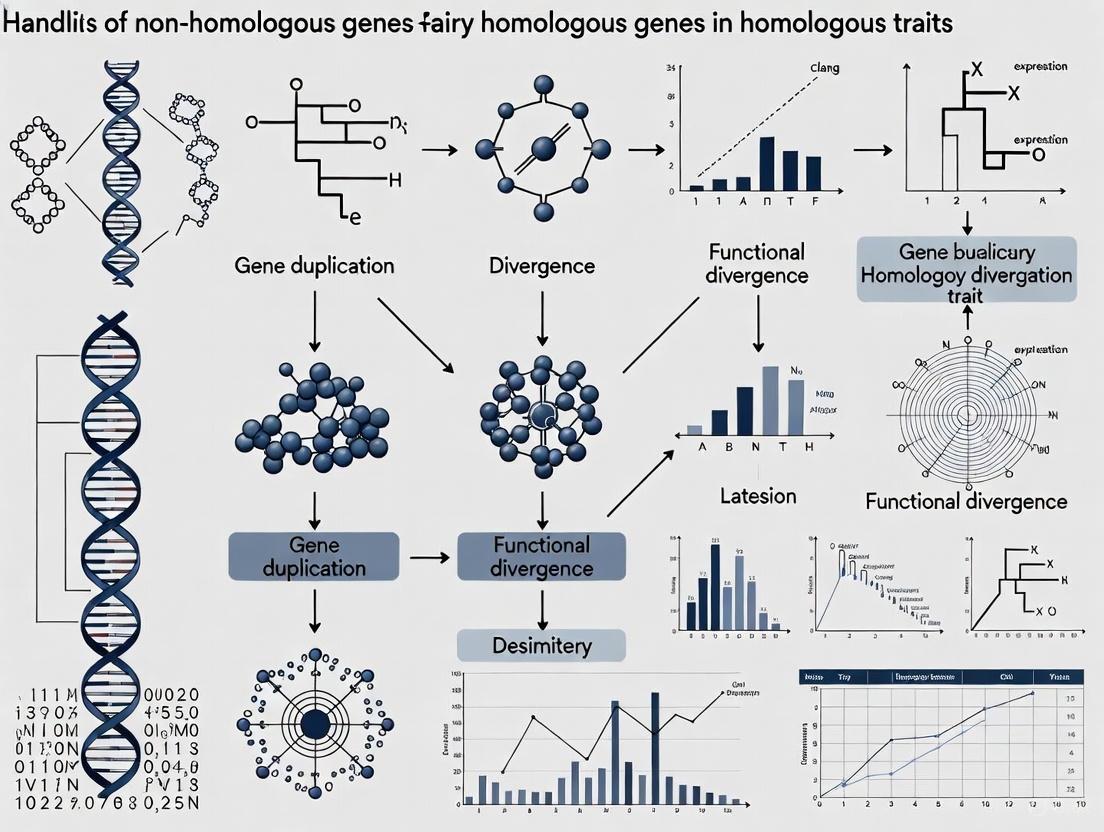
This article explores the critical biological phenomenon where homologous traits—structures or processes sharing an evolutionary origin—are controlled by non-honologous genes.
Beyond Homology: Deciphering the Role of Non-Homologous Genes in Complex Traits and Disease
Abstract
This article explores the critical biological phenomenon where homologous traits—structures or processes sharing an evolutionary origin—are controlled by non-honologous genes. Aimed at researchers, scientists, and drug development professionals, it synthesizes foundational concepts, methodological applications in genome engineering, troubleshooting for genetic analysis, and validation strategies. We examine how evolutionary processes like developmental system drift and deep homology lead to this dissociation, its implications for interpreting genomic data, and its potential for revealing novel therapeutic targets by moving beyond a simplistic one-gene, one-trait paradigm.
The Evolutionary Puzzle: When Homologous Traits Are Built by Non-Homologous Genes
Core Concepts: Homology Fundamentals
What is the fundamental definition of homology? Homology is a central concept in biology defined as similarity in anatomical structures, genes, or developmental processes between different taxa due to shared ancestry, regardless of current functional differences [1]. The term was first applied to biology in a non-evolutionary context by the anatomist Richard Owen in 1843, who defined a homolog as "the same organ in different animals under every variety of form and function" [1] [2]. After Darwin, homology was reinterpreted as evidence for common descent [1].
How does homology differ from analogy? Homology and analogy are often confused but represent fundamentally different evolutionary phenomena:
- Homology: Similarity due to common ancestry (e.g., vertebrate forelimbs like human arms, bat wings, and whale flippers all derive from the same ancestral tetrapod structure) [3].
- Analogy (Homoplasy): Superficial similarity due to convergent evolution for similar functions, not common ancestry (e.g., wings of birds, bats, and insects evolved independently) [1] [3].
A structure can be homologous at one level but analogous at another. Bird and bat wings are analogous as wings but homologous as forelimbs because they evolved from the same ancestral vertebrate forelimb structure, not from a winged ancestor [3].
What are the main types of homology recognized in modern biology? Contemporary evolutionary biology recognizes several specialized concepts of homology:
| Homology Type | Definition | Key Characteristics |
|---|---|---|
| Taxic Homology | Equivalent to synapomorphy (shared derived character); used in phylogenetic systematics [4] [5]. | Defines natural groups (clades); rigorously identified through phylogenetic analysis [4]. |
| Biological Homology | Emphasizes common ancestry through continuity of genetic information underlying phenotypic traits [4]. | Focuses on conserved gene regulatory networks that give a trait its essential identity [4]. |
| Deep Homology | Sharing of genetic regulatory apparatus used to build morphologically and phylogenetically disparate features [4] [1]. | Ancient genetic, cellular, or molecular components are co-opted independently in different lineages [4]. |
| Serial Homology | Correspondence between structures within the same organism, derived from a repeated body plan [1] [2]. | Examples: legs of a centipede, vertebrae in a vertebrate backbone, insect mouthparts [1]. |
Troubleshooting Common Experimental Challenges
How should I interpret conserved gene expression in non-homologous structures? A major challenge arises when homologous genes are involved in the development of non-homologous traits, a phenomenon known as deep homology [4] [6].
- The Problem: The gene Pax6 is critical for eye development in both vertebrates and invertebrates like fruit flies. However, vertebrate and insect eyes are not homologous—they evolved independently [4] [6].
- The Solution: Recognize that homology exists at different hierarchical levels. Pax6 itself is homologous at the gene level (conserved across bilaterians) and was co-opted independently into the developmental pathways of two non-homologous organs [4] [6]. The conserved function indicates that Pax6 was part of an ancestral genetic toolkit for building light-sensitive structures, not that the complex camera eyes of vertebrates and cephalopods share a recent common ancestor [6].
- Experimental Protocol: To test for deep homology:
- Identify Candidate Genes: Use sequencing (e.g., RNA-Seq) to find genes expressed during the development of the trait in your model organism.
- Conduct Phylogenetic Analysis: Determine if the gene is a true ortholog of genes known to be involved in similar traits in distantly related species.
- Functional Testing: Use techniques like CRISPR-Cas9 knockout or RNAi to test if the gene's function is conserved.
- Network Analysis: Investigate if the gene is part of a larger conserved gene regulatory network (GRN) or if it has been independently co-opted.
What should I do when homologous traits are generated by non-homologous processes? The reverse problem also occurs: homologous morphological structures can be generated by non-homologous genes or developmental processes, a phenomenon known as developmental system drift [7].
- The Problem: The process of body segmentation (somitogenesis) is highly conserved across vertebrates, but the underlying molecular mechanisms and genetic networks show significant variation between lineages [7].
- The Solution: Focus on the homology of the dynamic process itself, not just its static genetic components. Homology of process requires its own specific criteria, including sameness of dynamical properties and morphological outcome, even if the underlying genes have diverged [7].
- Experimental Protocol: To assess homology of process in the presence of genetic drift:
- Perturbation Experiments: Use experimental embryology to test if the system responds to perturbations in a similar way across species.
- Dynamic Modeling: Create computational models of the ontogenetic process (e.g., using ordinary differential equations) to compare core dynamical properties.
- Compare Modules: Break down the process into functional dynamical modules (e.g., in segmentation: a clock, signaling mechanism, and wavefront) and test their conservation independently [7].
How can I avoid misidentifying homology in genetic association studies? In genomic studies, a primary concern is confounding by population structure, which can create spurious genetic associations [8].
- The Problem: Genetic variants may appear associated with a trait not because of a causal link, but because both the variant and the trait are correlated with ancestry or subpopulation membership [8].
- The Solution: Implement robust statistical controls for population structure.
- Experimental Protocol: Standard GWAS quality control:
- Genotype Quality Control: Filter variants based on call rate, minor allele frequency, and Hardy-Weinberg equilibrium.
- Population Structure Control: Include top principal components (PCs) of genetic variation as covariates in association models to account for ancestry [8].
- Family-Based Designs: Use trios (parents and offspring) to test associations, as Mendelian transmission randomizes allele inheritance and avoids population structure confounding [8].
- Cross-Ancestry Replication: Replicate findings in independent cohorts of different ancestries to strengthen evidence for a true, generalizable association [8].
The Scientist's Toolkit: Research Reagents & Materials
This table outlines key reagents and their applications in homology research.
| Research Reagent / Material | Primary Function in Homology Research |
|---|---|
| Next-Generation Sequencing (NGS) | Enables genomic studies of non-model organisms to uncover the genetic basis of trait evolution and identify homologous genes/regulatory elements [4]. |
| CRISPR-Cas9 Gene Editing | Allows for functional testing of candidate homologous genes (e.g., knockouts, knock-ins) to assess their role in trait development across species. |
| RNAi (RNA interference) | Used to knock down gene expression and test the functional necessity of genes in developmental processes in a wide range of organisms. |
| In Situ Hybridization | Visualizes spatial gene expression patterns in embryos and tissues, critical for comparing developmental roles of genes and identifying homologous expression domains. |
| Phylogenetic Analysis Software | Tools for building evolutionary trees and testing hypotheses of homology at the gene, character, and species levels. |
| Antibodies (for conserved proteins) | Used in immunohistochemistry to detect and localize protein products, revealing homologous tissues or cell types. |
Visualizing Concepts and Workflows
Homology Assessment Workflow
The following diagram outlines a logical workflow for assessing homology, integrating criteria from different biological levels to avoid common pitfalls.
Hierarchical Levels of Homology
This diagram shows the relationship between different hierarchical levels at which homology can be assessed, highlighting the potential for dissociation between levels (e.g., deep homology).
Troubleshooting Guide: Common Experimental Challenges
FAQ 1: My model organism shows a conserved phenotype, but the canonical gene knockout does not produce the expected effect. Is my model broken?
Problem: A standard gene knockout in your model organism does not recapitulate the phenotype described in established literature, suggesting a potential failure of the model system.
Solution: This is a classic signature of Developmental System Drift (DSD). The homologous trait is conserved, but its underlying genetic mechanism has diverged in your specific model lineage [9].
- Action Plan:
- Confirm Trait Homology: Revisit the morphological, topological, and phylogenetic criteria to verify the trait is truly homologous and not convergent [9] [10].
- Expand Genetic Screening: Do not assume the genetic pathway is fully conserved. Initiate an unbiased genetic screen (e.g., CRISPR/Cas9 mutagenesis) in your organism to identify the actual regulators [11].
- Test for Redundancy: Investigate potential paralogs or unrelated genes that may have been co-opted to fulfill the same function, providing genetic robustness [9].
- Profile Gene Expression: Compare the gene expression landscape (e.g., via single-cell RNA-seq) during the trait's development in your model and the reference organism to identify divergent regulatory networks [7].
Diagram: Diagnosing Genetic Divergence
FAQ 2: How can I definitively prove that similar traits in two species are homologous and not convergent?
Problem: Distinguishing between true homology (shared ancestry) and homoplasy (convergent evolution) is a fundamental challenge, especially when genetic data is conflicting.
Solution: Homology is not a single-line evidence but an integrative conclusion [10]. Use a multi-criteria approach to build a robust case.
- Action Plan:
- Establish Phylogenetic Context: Ensure the trait is consistent with the well-established species phylogeny and appears as a synapomorphy (shared derived trait) for the clade [10].
- Apply Classical Criteria: Assess the trait for:
- Topological Correspondence: Same position in the body plan.
- Structural Similarity: Complex, detailed anatomical resemblance [9].
- Analyze Process Dynamics: Move beyond static genes. Use live imaging and quantitative measures to determine if the dynamics of the developmental process (e.g., oscillator patterns, growth gradients) are conserved, even if specific genes are not [7].
- Search for Deep Homology: Investigate if a shared, ancient genetic regulatory circuit is involved, which may have been recruited independently (e.g., Pax6 in diverse eye types) [6] [11].
Table: Criteria for Assessing Homology vs. Convergence
| Criterion | True Homology | Convergence (Homoplasy) |
|---|---|---|
| Phylogenetic Distribution | Fits nested hierarchy of clades; is a synapomorphy. | Patchy distribution; appears in distantly related lineages. |
| Developmental Process | Conserved underlying process dynamics (e.g., oscillation, gradient) [7]. | Different ontogenetic sequences and cellular origins. |
| Genetic Basis | Can exhibit Developmental System Drift (DSD) or involve deep homology [9] [6]. | Different genetic bases, unless utilizing deeply homologous toolkits. |
| Structural Complexity | High, detailed similarity in organization and substructures. | Often superficial similarity in function, but different structural details. |
FAQ 3: I have found a conserved gene expression pattern. Can I conclude the underlying tissues are homologous?
Problem: A gene is expressed in similar patterns in two different species, leading to the hypothesis that the associated tissues are homologous.
Solution: Not necessarily. Homologous genes can be co-opted into the development of non-homologous structures [6] [11]. This is a key distinction between gene homology and trait homology.
- Action Plan:
- Determine Gene Function: Use functional experiments (knockout, knockdown) in each species. If gene loss has different phenotypic consequences in the two tissues, it argues against tissue homology.
- Map the Gene Regulatory Network (GRN): The expression of one gene is weak evidence. Determine if a core, interconnected GRN is shared between the tissues. Homologous structures often share a core "identity network" [7] [10].
- Check for Pleiotropy: The gene might be involved in a fundamental cellular process (e.g., cell cycle, basic metabolism) and its expression is not specific to the trait's identity.
Diagram: Interpreting Conserved Gene Expression
Key Experimental Protocols
Protocol 1: Detecting Developmental System Drift via Comparative GRN Analysis
Objective: To empirically identify and confirm DSD by comparing the genetic architecture of a homologous trait in two or more species [9] [7].
Materials:
- Two or more related species with a clearly homologous morphological trait.
- CRISPR/Cas9 gene editing system or species-appropriate mutagenesis method.
- RNA sequencing (RNA-seq) and single-cell RNA-seq capabilities.
- Antibodies for key protein detection (if applicable).
Methodology:
- Phenotypic Landmarking: Precisely define the homologous trait at the morphological and histological level across species to ensure comparison validity [9].
- Transcriptomic Profiling: Perform RNA-seq on tissue isolated at key developmental time points of the trait's formation in all species.
- Candidate Gene Identification: From the transcriptomic data, identify differentially expressed genes and transcription factors. Use gene ontology (GO) enrichment to find potential functional conservation.
- Functional Perturbation: Systematically knock out candidate genes in each species using CRISPR/Cas9. A strong DSD signature is when knocking out Gene A in Species 1 disrupts the trait, but has no effect in Species 2, where knocking out Gene B (a non-ortholog) does [9] [11].
- Network Validation: For genes that show functional conservation, map their cis-regulatory elements (e.g., via ChIP-seq) to determine if the network logic (upstream regulators and downstream targets) is conserved or has drifted.
Table: Key Reagents for DSD Investigation
| Research Reagent / Tool | Function / Application | Example in DSD Research |
|---|---|---|
| CRISPR/Cas9 System | Targeted gene knockout, knock-in, or activation [12]. | Used to functionally test the role of non-homologous genes in different species for the same trait. |
| Single-Cell RNA-Seq | Profiling gene expression at single-cell resolution to map cell types and states. | Identifies divergent transcriptional trajectories leading to a homologous trait. |
| Phylogenetic Comparative Methods | Statistical framework for analyzing trait evolution across a phylogeny. | Tests for correlation between genetic change and phylogenetic distance, independent of phenotype. |
| Live-Imaging Microscopy | Quantitative tracking of developmental dynamics in real-time. | Measures conservation of process parameters (e.g., oscillation speed, gradient slope) despite genetic drift [7]. |
Protocol 2: Testing for Deep Homology
Objective: To determine if a shared genetic toolkit is used in the development of putatively non-homologous traits [6] [11].
Methodology:
- Identify Candidate Toolkit Gene: Select a gene known to be involved in patterning similar structures across deep phylogenetic divides (e.g., a Hox gene, Pax6, tinnman).
- Expression Analysis: Test for expression of the candidate gene in your trait of interest via in situ hybridization or reporter constructs.
- Functional Testing: Perturb the function of the candidate gene (e.g., with CRISPR/Cas9). A positive result for deep homology is the disruption of the trait's development, even if the trait itself is a novel evolutionary invention and not homologous to structures in other lineages [6].
- Network Context Analysis: Determine if the gene operates within a similar network context (e.g., same upstream regulators and downstream targets) as in other systems, or if it has been integrated into a completely novel network.
The Scientist's Toolkit: Research Reagent Solutions
Table: Essential Molecular Tools for Evolutionary Developmental Biology
| Category | Reagent/Tool | Primary Function in Evo-Devo |
|---|---|---|
| Genome Editing | CRISPR/Cas9 Nickase | Generates paired single-strand breaks for precise duplications via cNHEJ [12]. |
| cNHEJ Inhibitors (e.g., KU70/KU80 knockdown) | Blocks classical NHEJ; enhances formation of inversions/translocations via aNHEJ to model genomic rearrangements [12]. | |
| Gene Expression Analysis | Cross-Species RNA-Seq | Profiles transcriptomes across species to identify conserved and divergent gene sets. |
| In Situ Hybridization Probes | Visualizes spatial gene expression patterns in embryos and tissues. | |
| Functional Analysis | Morpholinos | Transient gene knockdown, useful in non-model organisms. |
| Transgenic Reporter Lines (e.g., GFP) | Tracks cell lineages and visualizes promoter activity in real-time. | |
| Bioinformatics | Phylogenetic Analysis Software (e.g., BEAST, RAxML) | Reconstructs evolutionary relationships to provide context for homology. |
| Gene Ontology (GO) Enrichment Tools | Identifies functionally related gene sets that are over-represented. |
The discovery that the Pax-6 gene is a key regulator of eye development across animal phyla—from flies to mice to squids—presented a fascinating puzzle for evolutionary developmental biology. While eyes with vastly different anatomical designs (such as the compound eyes of fruit flies and the camera-type eyes of vertebrates) were long thought to have evolved independently, the universal role of Pax-6 suggests a shared genetic foundation. This technical guide addresses the central challenge for researchers: how to interpret and investigate the role of this homologous gene in the evolution of what are largely considered non-homologous visual structures. This framework is essential for designing robust experiments and accurately analyzing results in the study of homologous genes in non-homologous traits.
Core Concepts FAQ
Q1: If animal eyes evolved independently multiple times, why do they all use the Pax-6 gene during development? The prevailing hypothesis is that Pax-6 was part of an ancestral genetic toolkit for building simple light-sensitive cells in a common ancestor. This primitive system was then independently co-opted and integrated into the developmental pathways of various, morphologically distinct eyes. Pax-6 is not creating the same structure each time; rather, it acts as a highly conserved "tool" within different genetic networks. Its recurrence is an example of deep homology, where conserved genetic mechanisms are redeployed in different contexts to build non-homologous structures [13] [6].
Q2: What is the fundamental difference between a homologous gene and a homologous trait? A homologous gene is one shared by different species due to descent from a common ancestor. A homologous trait is an anatomical structure shared due to descent from a common ancestor, implying structural continuity. The Pax-6 gene is homologous across bilaterians. However, the complex camera eyes of vertebrates and cephalopods are non-homologous (or analogous) traits because they evolved independently from simpler, separate light-sensing organs. The challenge is that a homologous gene can be used in the development of non-homologous traits [6].
Q3: What specific biological function does the Pax-6 gene perform? The PAX6 protein is a transcription factor. It regulates eye development by binding to specific DNA sequences and controlling the expression of downstream target genes. It is often described as a "master control gene" or "eye selector gene" because it sits at the top of a genetic cascade that initiates eye tissue formation, though it does not act alone [13] [14] [15].
Q4: Beyond eye development, what other roles does Pax-6 have? Pax-6 has pleiotropic effects and is critical for the development of other systems. In mammals, it is expressed in and essential for the proper formation of specific regions of the central nervous system (including the olfactory bulb), and the pancreas. This multifunctional nature is important to consider when interpreting the phenotypic outcomes of Pax-6 mutations [14] [16] [15].
Troubleshooting Common Experimental Challenges
Challenge 1: Interpreting Conflicting Expression Data in Non-Model Organisms
- Problem: Pax-6 expression is not detected in the developing eyes of some chelicerates (e.g., spiders, mites), contradicting the expected pattern.
- Solution: Do not assume the gene is uninvolved. Consider these points:
- The gene's role may have shifted in specific lineages. In eyeless mites, Pax-6 is retained but appears to function primarily in central nervous system development, not eye patterning [16].
- Investigate the entire Retinal Determination Gene Network (RDGN), not just Pax-6. Other genes like sine oculis (Six), eyes absent (Eya), and dachshund (Dac) might have taken over the primary regulatory role [16] [6].
- Use multiple techniques (e.g., HCR in situ hybridization, knockdown experiments) to confirm function, as expression alone may not tell the whole story [16].
Challenge 2: Establishing Causality in Ectopic Eye Formation Experiments
- Problem: Misexpression of Pax-6 leads to ectopic eye formation in Drosophila and Xenopus, but the resulting structures are not fully formed, functional eyes.
- Solution: Frame conclusions carefully.
- State that Pax6 is sufficient to initiate the process of eye development by activating the core genetic network.
- Acknowledge that the formation of a complete, functional eye requires the coordinated action of the entire RDGN and tissue-specific cues. The experiment demonstrates potential, not a recapitulation of evolution [13] [6].
- Use transcriptomics on ectopic tissue to identify which parts of the eye development network are activated.
Challenge 3: Correlating Genotype with Phenotype in Mammalian Studies
- Problem: PAX6 mutations in humans lead to a wide spectrum of ocular phenotypes (aniridia, foveal hypoplasia, microphthalmia, coloboma, etc.) with significant inter-familial variability, making predictions difficult.
- Solution: Understand the mutation's molecular consequence.
- Haploinsufficiency (loss of one functional allele) is the most common cause, typically leading to the pan-ocular disorder aniridia. These are often nonsense or frameshift mutations [14] [17].
- Missense mutations, particularly in the paired and homeodomains, often lead to milder, non-aniridia phenotypes like isolated foveal hypoplasia or optic nerve malformations, as they produce a partially functional protein [14] [15] [17].
- Consider the effect on different isoforms (e.g., canonical PAX6 vs. PAX6(5a)), as mutations affecting specific isoforms can lead to distinct phenotypes [14].
Table 1: Common PAX6 Mutations and Associated Ocular Phenotypes in Humans
| Mutation Type | Molecular Consequence | Expected Major Ocular Phenotype | Key Clinical Features |
|---|---|---|---|
| Nonsense / Frameshift | Haploinsufficiency | Classic Aniridia | Iris hypoplasia, foveal hypoplasia, nystagmus, cataracts, keratopathy [14] [15] |
| Whole Gene Deletion | Haploinsufficiency (part of WAGR syndrome) | Classic Aniridia | Aniridia plus Wilms tumor, genitourinary anomalies, intellectual disability [15] |
| Missense (e.g., in DNA-binding domains) | Partial loss of function | Non-aniridia Spectrum | Isolated foveal hypoplasia, microphthalmia, coloboma, Peters anomaly [14] [15] [17] |
| Regulatory Region Mutations | Reduced gene expression | Variable (Aniridia to milder defects) | Phenotype depends on the degree of PAX6 expression reduction [14] [15] |
Essential Experimental Workflows & Diagrams
Core Workflow for Analyzing Pax-6 Function in a Novel Trait
The following diagram outlines a logical pathway for designing an experiment to test the role of Pax-6 in a newly discovered eye-like structure, accounting for the homology paradox.
The Retinal Determination Gene Network (RDGN)
The Pax-6 gene does not work in isolation. It is a key node in an interacting network of transcription factors. The conservation and interaction of this entire network are more informative than Pax-6 alone.
The Scientist's Toolkit: Research Reagent Solutions
Table 2: Essential Reagents for Pax-6 and Eye Evolution Research
| Reagent / Tool | Primary Function | Example Application in Pax-6 Research |
|---|---|---|
| CRISPR-Cas9 | Targeted gene knockout or editing. | Generating Pax-6 loss-of-function models in model and non-model organisms to test necessity [18]. |
| Base Editors / Prime Editors | Precise nucleotide conversion without double-strand breaks. | Introducing specific human missense mutations into model organisms to study their phenotypic effect [18]. |
| Hybridization Chain Reaction (HCR) | High-sensitivity, multiplexed RNA in situ hybridization. | Mapping precise spatial and temporal expression of Pax-6 and other RDGN genes in embryonic tissue with low background [16]. |
| Anti-PAX6 Antibodies | Immunodetection of PAX6 protein. | Visualizing protein localization, stability, and quantity in wild-type vs. mutant tissues via immunohistochemistry or Western blot. |
| Single-Cell RNA Sequencing (scRNA-seq) | Transcriptomic profiling of individual cells. | Identifying distinct cell populations in the eye that express Pax-6 and uncovering its downstream target genes [14]. |
| Phylogenetic Analysis Software | Reconstructing evolutionary relationships. | Mapping the presence/absence of Pax-6 and its role in eyes onto a robust phylogeny to test independent recruitment hypotheses [6]. |
Q1: What does "Conserved Somitogenesis Dynamics with Divergent Genetic Networks" mean? This concept describes the observation that the fundamental process of somitogenesis (the segmentation of the vertebrate body axis) is conserved across species, but the specific genetic networks that control it can diverge. While the output—the rhythmic formation of somites—is stable, the molecular components and their interactions can vary between different animal groups [19].
Q2: Why is understanding non-homology in this context important for my research? Many research questions assume that homologous structures (like somites) are controlled by homologous genes. This case shows that this is not always true. Genetic networks can be rewired during evolution. Recognizing this helps avoid misinterpretations in gene function experiments and provides a framework for understanding how developmental systems evolve [6] [19].
Q3: What are the key conserved features of the somitogenesis clock across amniotes? Studies comparing mice, chickens, anole lizards, and alligators have identified several conserved elements [19]:
- A molecular oscillator ("the clock"): Genes expressed in a cyclic wave across the presomitic mesoderm (PSM).
- Gradients within the PSM: A gradient of signaling molecules like FGF8 establishes a "determination front" where somites bud off.
- Interaction of clock and wavefront: The periodic signal from the clock interacts with the moving wavefront to set somite boundaries.
Troubleshooting Guide: Common Experimental Challenges
Problem: Failed synchronization of oscillatory gene expression in in vitro models.
- Potential Cause: Incorrect serum concentration or timing during the synchronization protocol. Cell confluency can also affect synchronization efficiency.
- Solution:
- Ensure cells are at 90% confluence before starting synchronization [20].
- Precisely follow the low-serum treatment protocol: incubate in DMEM with 0.2% FBS for 24 hours before returning to normal growth medium [20].
- Validate synchronization by checking the expression of a known cycling gene (e.g., HES1) via q-PCR at short intervals post-stimulation.
Problem: Weak or absent oscillatory signal in embryo samples.
- Potential Cause: The sampling interval is too long, missing the oscillation peaks. The period of the clock is species-specific and temperature-dependent.
- Solution:
- Optimize sampling frequency based on the known species period (e.g., every 30 minutes for mouse models with a ~2-hour period, less frequently for human models with a ~5-hour period) [20].
- For zebrafish, control for temperature rigorously, as the segmentation period varies greatly with temperature, though somite size remains constant [21].
Problem: Unexpected gene expression patterns in non-model reptile species.
- Potential Cause: Assumptions based on mouse/chick models may not hold. Genetic networks have diverged.
- Solution:
- Do not assume all genetic interactions are conserved. For example, the hes6a gradient found in anole lizards and frogs is not present in mice or chickens [19].
- Use comparative phylogenetics to inform your experiments. Test for the presence of gradients and oscillations empirically rather than relying solely on data from traditional models.
Quantitative Data & Experimental Protocols
Key Quantitative Comparisons
Table 1: Species-Specific Characteristics of the Segmentation Clock
| Species | Oscillation Period | Key Cycling Genes | Primary Model System |
|---|---|---|---|
| Human (in vitro) | ~5 hours [20] | HES1 [20] | Mesenchymal Stem/Stromal Cells (UCB1) [20] |
| Mouse (in vitro & in vivo) | ~2 hours [20] | Hes1, Hes7 [20] | C2C12 myoblasts, embryo [20] |
| Zebrafish | Temperature-dependent (e.g., ~30 min at 28°C) [21] | her1, her7 | Embryo |
| Anole Lizard | Data Incomplete | hes6a (gradient) [19] | Embryo |
Table 2: Conserved and Divergent Features in Amniote Somitogenesis
| Feature | Status | Notes and Examples |
|---|---|---|
| FGF8 Gradient | Conserved [19] | Forms a posterior-to-anterior gradient in the PSM across mice, chicks, and reptiles. |
| Molecular Oscillator | Conserved [19] | Notch and Wnt pathway genes oscillate, but specific members and periods can differ. |
| hes6a Gradient | Divergent [19] | Present in anole lizards and frogs (anamniotes), but lost in mice and chickens. |
| Network Architecture | Divergent [19] | Interactions between signaling pathways (Notch, Wnt, FGF) can vary between species. |
Detailed Experimental Protocol: In Vitro Oscillation Assay
This protocol is adapted from studies using human mesenchymal stem cells and mouse myoblasts to model the segmentation clock [20].
Objective: To synchronize cells and detect oscillatory gene expression indicative of the segmentation clock.
Materials:
- Human UCB1 mesenchymal stem cells or mouse C2C12 myoblasts [20].
- Cell culture flasks (T-25 cm) and standard growth medium (DMEM high glucose with 10% FBS for UCB1, 5% FBS for C2C12) [20].
- Synchronization medium: DMEM with 0.2% FBS [20].
- RNA isolation kit (e.g., RNeasy Mini Kit) [20].
- Equipment for q-PCR.
Workflow:
- Cell Culture: Grow cells to 90% confluence in standard growth medium.
- Synchronization: Replace the medium with synchronization medium (DMEM + 0.2% FBS). Incubate for 24 hours.
- Stimulation & Time-Series Collection: Return cells to standard growth medium. This is time zero (t=0).
- Collect cell samples for RNA extraction at regular intervals (e.g., every 30 minutes for 8 hours for mouse cells, and extended intervals up to 24 hours for human cells) [20].
- Immediately freeze samples or proceed to RNA extraction.
- RNA Extraction & Analysis: Isolate total RNA from all time-point samples. Perform reverse transcription and quantitative PCR (q-PCR) for target genes (e.g., HES1).
- Data Analysis: Analyze q-PCR data (often using ΔΔCt method). Plot gene expression levels over time. Use Fourier analysis to identify significant oscillatory components in the time-series data [20].
Signaling Pathways & Genetic Networks
The following diagram summarizes the core conserved interactions of the segmentation clock and wavefront, integrating Notch, Wnt, and FGF signaling pathways, based on findings from mouse, chicken, and reptile models [20] [19] [21].
The Scientist's Toolkit: Research Reagent Solutions
Table 3: Essential Reagents for Studying Somitogenesis
| Reagent / Material | Function / Application | Example Use-Case |
|---|---|---|
| C2C12 Mouse Myoblasts | A well-characterized in vitro model for studying oscillatory gene expression with a 2-hour period [20]. | Investigating the core oscillator mechanism in a tractable cell system. |
| Human Mesenchymal Stem Cells (UCB1) | An in vitro model for the human segmentation clock, showing a ~5-hour oscillation period [20]. | Studying human-specific aspects of somitogenesis and developmental disorders. |
| SU5402 (FGF Inhibitor) | Pharmacological inhibitor of the FGF signaling pathway [21]. | Testing the role of the FGF gradient in wavefront establishment and somite patterning in zebrafish. |
| DREKA Zebrafish Line | Transgenic line expressing a fluorescent reporter for Erk activity, a downstream effector of FGF signaling [21]. | Live imaging of the determination wavefront dynamics in response to perturbations. |
| Antibodies (engrailed, wingless, Distal-less) | Used for whole-mount in situ hybridization and immunohistochemistry to visualize gene expression patterns in embryos [22]. | Validating spatial expression patterns of key developmental genes in model and non-model organisms. |
| Fourier Transform Analysis | A mathematical method to identify periodic components in time-series gene expression data from microarrays or q-PCR [20]. | Objectively identifying genes with oscillatory expression from high-throughput data. |
The Impact on Comparative Biology and Phylogenetic Reconstruction
Troubleshooting Guides
Guide 1: Resolving Incorrect Homology Assessments in Gene Networks
Problem: A conserved gene regulatory network (CRN) is identified across species, but the phenotypic trait it builds is not homologous, leading to incorrect phylogenetic conclusions. This is a classic case of deep homology where the genetic machinery is homologous and ancient, but the morphological structures it constructs are not [4] [6].
Solution:
- Conduct a Phylogenetic Analysis: Independently determine the phylogenetic relationship of your study species using multiple, unrelated genetic markers. This provides the evolutionary framework to test homology hypotheses [4].
- Map Character Evolution: Trace the evolution of the phenotypic trait (e.g., camera eye) onto this established phylogeny. If the trait appears in distantly related groups without being present in their common ancestor, it indicates independent origins (homoplasy) rather than homology [6].
- Differentiate Gene History from Trait History: Recognize that a gene like
Pax6is a homology at the Bilaterian level. Its co-option for eye development in different lineages (e.g., vertebrates and cephalopods) is a separate evolutionary event. The homologous gene does not automatically confer homology on the structures it helps develop [4] [6].
Prevention: Always interpret the role of genetic networks within a robust phylogenetic framework. Homology of a genetic toolkit (deep homology) does not equate to homology of the resultant morphological trait [4].
Guide 2: Handling Conflicting Signals from Gene Trees and Species Trees
Problem: A gene tree, constructed from a gene underlying a homologous trait, is incongruent with the accepted species tree. This can be due to gene duplication, loss, or horizontal gene transfer, complicating phylogenetic reconstruction.
Solution:
- Identify Gene Family Relationships: Determine if the gene is part of a larger gene family. Use tools to distinguish between orthologs (genes separated by a speciation event) and paralogs (genes separated by a gene duplication event). Only orthologs are reliable for tracing species phylogeny [4].
- Employ Phylogenomic Approaches: Move beyond single-gene analyses. Use large-scale genomic data (e.g., from Next-Generation Sequencing) to build consensus trees from hundreds or thousands of genes, which can resolve conflicts from individual gene histories [4].
- Apply Specific Methodologies: Use algorithms designed to handle gene tree/species tree incongruence, such as those that account for incomplete lineage sorting.
Frequently Asked Questions (FAQs)
Q1: If the same gene is responsible for building a trait in two different species, doesn't that prove the traits are homologous?
A: No. This is a common misconception. The same gene (e.g., Pax6) can be co-opted independently in different evolutionary lineages to build similar, but non-homologous, structures. Vertebrate and cephalopod camera eyes are a prime example. They are built using homologous genetic tools but evolved independently and are thus analogous, not homologous [6].
Q2: What is the difference between 'taxic homology' and 'deep homology'? A:
- Taxic Homology (Synapomorphy): A shared, derived character that defines a clade (e.g., vertebrae in vertebrates). It is rigorously identified through phylogenetic analysis [4].
- Deep Homology: Describes the sharing of the ancient genetic regulatory apparatus used to build morphologically disparate features. The genetic components are homologous and deeply conserved, but the resulting complex traits may not be [4].
Q3: How can I experimentally test whether a shared trait is truly homologous? A: A strong test involves integrating multiple lines of evidence:
- Phylogenetic Distribution: The trait should be consistent with the organismal phylogeny, not appearing multiple times independently.
- Developmental Genetic Basis: Investigate if the trait develops from the same embryonic tissues and is governed by a shared Character Identity Network (ChIN), not just a single gene [4].
- Fossil Evidence: Look for transitional forms in the fossil record that link the traits in question.
Table 1: Key Concepts in Homology and Genetic Networks
| Concept | Definition | Key Takeaway for Researchers |
|---|---|---|
| Taxic Homology | A shared characteristic due to common ancestry, identified via phylogenetic analysis; equivalent to a synapomorphy [4]. | The rigorous standard for declaring traits homologous; defines evolutionary groups. |
| Deep Homology | The sharing of an ancient genetic regulatory apparatus used to build phylogenetically disparate morphological features [4]. | Explains how non-homologous traits can have a shared genetic basis. |
| Character Identity Network (ChIN) | A conserved gene regulatory network that provides a trait its "essential identity" [4]. | A shared ChIN is strong evidence for the taxic homology of a trait. |
| Orthology | Homology between genes in different species due to a speciation event [4]. | The correct type of homology to use for reconstructing species phylogenies. |
Table 2: Genetic Pathways in Eye Development: Vertebrates vs. Insects
| Component | Role in Vertebrate Eye Development | Role in Insect (Drosophila) Eye Development |
|---|---|---|
| Pax6 / eyeless | Master control gene for eye initiation [6]. | Master control gene for eye initiation [6]. |
| Network Context | Functions within a vertebrate-specific genetic network. | Functions within an insect-specific network involving sine oculis, eyes absent, dachshund [6]. |
| Embryonic Origin | Retina from neural ectoderm; lens from head ectoderm [6]. | Retina from invaginations of lateral head ectoderm [6]. |
| Interpretation | Deep homology of Pax6; independent evolution (non-homology) of the camera eye structure. |
Deep homology of eyeless; independent evolution (non-homology) of the compound eye structure. |
Experimental Protocols
Protocol 1: Differentiating Homologous from Analogous Traits Using Phylogenetics and Genetics
Objective: To determine if a shared phenotypic trait (Trait X) in Species A and Species B is homologous or analogous.
Methodology:
- Phylogenetic Mapping:
- Construct a robust, multi-gene phylogeny for the group containing Species A and B.
- Map the presence/absence of Trait X onto this phylogeny.
- Interpretation: If Trait X is present in the common ancestor of A and B and all its descendants, it is likely homologous. If it appears independently in A and B on distant branches, it is analogous.
- Character Identity Network (ChIN) Analysis:
- Functional Genetic Testing:
- If feasible, use CRISPR or RNAi to test the functional role of key network genes in both species.
- Interpretation: If the same network is necessary and sufficient for trait identity in both, it supports homology.
Protocol 2: Isolating Orthologs for Phylogenetic Reconstruction
Objective: To identify true orthologs from a gene family to prevent incorrect phylogenetic trees.
Methodology:
- Gene Sequence Collection: Gather all homologous sequences of the gene of interest from the study species and outgroups.
- Gene Tree Construction: Perform a multiple sequence alignment and construct a phylogenetic gene tree.
- Reconciliation with Species Tree: Compare the gene tree to a known species tree. Identify nodes that represent gene duplication events.
- Ortholog Identification: Identify clades of genes that diverge only at speciation events. Tools like OrthoFinder can automate this process. Use only these orthologous sequences for final species tree construction.
Research Workflow and Signaling Pathways
Research Workflow for Homology Assessment
Genetic Network for Eye Development
The Scientist's Toolkit: Research Reagent Solutions
Table 3: Essential Materials for Evolutionary Developmental Biology Research
| Research Reagent / Tool | Function / Explanation |
|---|---|
| Next-Generation Sequencing (NGS) | Enables genomic and transcriptomic studies in non-model organisms, allowing researchers to identify gene regulatory networks (GRNs) and ChINs without prior genetic infrastructure [4]. |
| Phylogenetic Analysis Software | Software packages (e.g., BEAST, RAxML, MrBayes) used to reconstruct evolutionary relationships, which is the foundational step for testing homology hypotheses [4]. |
| CRISPR-Cas9 / RNAi | Gene editing and knockdown technologies used for functional validation of the role of specific genes and networks in trait development. |
| Ortholog Finding Algorithms | Computational tools (e.g., OrthoFinder, InParanoid) that help distinguish orthologs from paralogs in gene families, which is critical for accurate phylogenetic reconstruction [4]. |
| Phylo-color.py | A specialized Python script for adding color information to nodes in phylogenetic trees, aiding in the visualization of trait mapping and evolutionary relationships [23]. |
Leveraging DNA Repair Pathways: From CRISPR Editing to Chromosome Engineering
Harnessing NHEJ and HDR for Gene Disruption and Knock-In Strategies
DNA Repair Pathways in Genome Editing: Core Concepts
FAQ: What are the fundamental differences between NHEJ and HDR?
Answer: NHEJ (Non-Homologous End Joining) and HDR (Homology-Directed Repair) are two distinct cellular pathways for repairing double-strand breaks (DSBs) induced by CRISPR-Cas systems. Their core differences are summarized in the table below.
Table 1: Fundamental Comparison of NHEJ and HDR Pathways
| Feature | NHEJ (Non-Homologous End Joining) | HDR (Homology-Directed Repair) |
|---|---|---|
| Primary Application | Gene knockouts, gene disruption [24] [25] | Gene knock-ins, precise point mutations, sequence insertion [24] [25] |
| Repair Template | Not required; error-prone [25] | Requires a donor DNA template (e.g., ssODN, dsDNA) [25] |
| Precision | Low; often results in insertions or deletions (indels) [25] | High; enables precise, defined sequence changes [25] |
| Efficiency | High; active throughout the cell cycle [25] | Low; intrinsically less efficient and restricted to S/G2 phases [24] [25] |
| Key Advantage | Speed and efficiency for generating loss-of-function mutations [25] | Precision for inserting specific sequences or correcting mutations [25] |
The following diagram illustrates how these two pathways are harnessed following a CRISPR-induced double-strand break to achieve different genetic outcomes.
Experimental Design and Optimization
FAQ: How do I choose and design a donor template for HDR?
Answer: The choice of donor template is critical for HDR success and depends primarily on the size of the intended insertion [24] [26] [27].
Table 2: HDR Donor Template Selection Guide
| Template Type | Recommended Insert Size | Key Characteristics | Best Use Cases |
|---|---|---|---|
| ssODN(Single-Stranded Oligodeoxynucleotide) | < 50 - 120 nucleotides [24] [26] | Lower toxicity, reduced random integration compared to dsDNA [26] | Point mutations, short tag insertions (e.g., FLAG, HA) [27] |
| Long ssDNA | > 500 nucleotides [26] | Produced via methods other than chemical synthesis; lower cytotoxicity than plasmids [26] | Medium to large insertions where ssODN is insufficient |
| dsDNA(Double-Stranded DNA) | > 100 nucleotides [24] | Can be linear dsDNA or small circular DNA; large plasmids may have lower efficiency and cause toxicity [24] [27] | Larger insertions such as fluorescent proteins (e.g., GFP) |
Design Parameters:
- Homology Arm Length: The length of sequence flanking the edit that is homologous to the target genome is critical.
- Silent Mutations: Introducing silent mutations in the Protospacer Adjacent Motif (PAM) or the seed region of the guide RNA binding site in the donor template is a key strategy. This prevents the Cas9 nuclease from re-cutting the DNA after a successful HDR event, thereby increasing the yield of correctly edited cells [24] [26] [27].
- Insertion Site: The intended edit should be positioned as close as possible to the Cas9 cut site—ideally within 10 nucleotides—as HDR efficiency decreases with increasing distance [26].
FAQ: How can I increase HDR efficiency in my experiments?
Answer: Since NHEJ is the dominant and more efficient pathway in most cell types, shifting the balance toward HDR often requires active intervention. The following diagram and table outline key strategies.
Table 3: Strategies to Enhance HDR Efficiency
| Strategy | Method | Key Considerations |
|---|---|---|
| Chemical Enhancement | Use small molecules or proprietary proteins (e.g., Alt-R HDR Enhancer Protein) that can shift repair balance toward HDR, reportedly increasing efficiency up to two-fold [28]. | Some NHEJ inhibitors, particularly DNA-PKcs inhibitors, have been associated with increased risks of large structural variations and chromosomal translocations, requiring careful evaluation [29]. |
| Cell Cycle Control | Synchronize cells in S and G2 phases, where HDR is naturally active [26]. | HDR is restricted to these phases because homologous templates (sister chromatids) are available [25]. |
| Donor Design & Delivery | Use single-stranded donor templates (ssODN/ssDNA) to reduce toxicity and random integration [26]. Covalently tether the donor template to the Cas9 RNP complex [26]. | Tethering ensures the donor is physically proximal to the break site. |
| CRISPR Component Delivery | Deliver CRISPR components as pre-assembled Ribonucleoprotein (RNP) complexes via electroporation [24] [30]. | RNP delivery leads to high editing efficiency, reduced off-target effects, and a shorter cellular presence of the nuclease, which can help reduce re-cutting after HDR [30]. |
Troubleshooting Common Experimental Issues
FAQ: I am getting low knock-in efficiency. What should I check?
Answer: Low HDR efficiency is a common challenge. Follow this systematic troubleshooting guide to identify and resolve the issue.
- Step 1: Verify Guide RNA Efficiency
- Problem: The guide RNA (gRNA) has low on-target activity.
- Solution: Test 2-3 different gRNAs targeting your locus of interest to identify the most effective one [30]. Use bioinformatics tools (e.g., IDT's Alt-R HDR Design Tool, GenScript's tool) for design and prioritize gRNAs with high on-target and low off-target scores [24] [27].
- Step 2: Optimize Donor Template Design
- Problem: The donor template is suboptimal.
- Solution: Ensure homology arms are long enough for your insert size [27]. Incorporate silent mutations in the PAM sequence to prevent re-cutting [24] [26]. For plasmid donors, consider using smaller, minimal backbone constructs to reduce toxicity and improve delivery [24] [27].
- Step 3: Optimize Delivery and Concentrations
- Problem: Incorrect ratios or concentrations of editing components.
- Solution: Use pre-assembled RNP complexes for highly efficient editing [30]. Titrate the concentrations of the RNP complex and the donor template. A typical starting guide RNA to Cas9 molar ratio is 1.2:1 [24]. Ensure you are using a high-efficiency delivery method like electroporation for difficult-to-transfect cells [24].
- Step 4: Employ HDR Enhancers
- Problem: The NHEJ pathway is outcompeting HDR.
- Solution: Incorporate an HDR enhancer, such as a specialized protein that can boost HDR rates without increasing off-target edits or compromising cell viability [28].
FAQ: How can I accurately quantify HDR and NHEJ outcomes?
Answer: Traditional gel-based assays or short-read sequencing can underestimate complex editing outcomes. The droplet digital PCR (ddPCR) method provides a highly sensitive and quantitative solution [31] [32].
Detailed Protocol: ddPCR for HDR/NHEJ Quantification [31] [32]
This method uses a multi-probe system within a single amplicon to distinguish between wild-type, HDR-edited, and NHEJ-edited alleles.
Probe Design:
- Reference Probe (FAM): Binds to the genomic DNA away from the cut site. It provides a positive signal for counting total genome copies.
- NHEJ Probe (HEX/VIC): Binds at the wild-type cut site. If an indel occurs via NHEJ, the probe cannot bind, resulting in a loss of HEX signal (FAM+, HEX-).
- HDR Probe (FAM): Binds specifically to the successfully integrated edit. This creates a stronger FAM signal (FAM++, HEX+).
- Dark Probe (Non-fluorescent): A competitive oligonucleotide that can be used to block cross-reactivity of the HDR probe with the wild-type sequence, improving specificity.
Workflow:
- Extract genomic DNA from edited cells.
- Prepare the ddPCR reaction mix with the specific probe set and primers.
- Generate thousands of nanoliter-sized droplets, effectively partitioning the sample.
- Perform PCR amplification on the droplets.
- Read the plate on a droplet reader. Each droplet is analyzed for its fluorescent signature (FAM and HEX), allowing for absolute quantification of wild-type, HDR, and NHEJ alleles in the original sample.
This method is capable of detecting one HDR or NHEJ event in a background of 1,000 wild-type genome copies, making it ideal for sensitive quantification and optimization of editing conditions [32].
The Scientist's Toolkit: Essential Reagents and Materials
Table 4: Key Research Reagent Solutions for CRISPR Genome Editing
| Reagent / Material | Function | Examples & Notes |
|---|---|---|
| Cas9 Nuclease | Creates a double-strand break at the target DNA sequence. | Choose between wild-type Cas9 (general use), Cas9 nickases (for paired nicking to reduce off-targets), or high-fidelity variants (e.g., HiFi Cas9) for improved specificity [29] [32]. |
| Guide RNA (gRNA) | Directs the Cas nuclease to the specific genomic locus. | Chemically synthesized, modified gRNAs (e.g., Alt-R CRISPR gRNAs) offer improved stability, higher editing efficiency, and reduced immune stimulation compared to in vitro transcribed (IVT) gRNAs [30]. |
| HDR Donor Template | Serves as the repair template for precise knock-in. | Available as ssODN, long ssDNA, linear dsDNA, or circular dsDNA (e.g., GenScript's GenExact ssDNA, GenWand dsDNA). Select based on insert size [27]. |
| HDR Enhancers | Shifts DNA repair balance from NHEJ toward HDR. | Includes small molecule inhibitors and proprietary recombinant proteins (e.g., IDT's Alt-R HDR Enhancer Protein). Use with awareness of potential risks like increased structural variations with some NHEJ inhibitors [28] [29]. |
| Electroporation System | A physical delivery method for efficient transfection of RNPs and donor templates, especially in hard-to-transfect cells. | Critical for primary cells, stem cells (iPSCs, HSPCs), and other sensitive cell types [24] [28]. |
Advanced Topics and Safety Considerations
FAQ: What are the hidden risks of CRISPR editing, and how can I mitigate them?
Answer: Beyond small indels and well-known off-target effects, CRISPR editing can lead to larger, more complex genomic alterations that pose significant safety concerns, especially for therapeutic development.
- Structural Variations (SVs): CRISPR-Cas9 can induce large, unintended on-target DNA damage, including kilobase- to megabase-scale deletions, chromosomal truncations, and translocations [29]. These events are often missed by standard PCR-based quality control methods (like short-read amplicon sequencing) because the large deletions can remove the primer binding sites, making the events "invisible" and leading to an overestimation of HDR success [29].
- Risks with HDR-Enhancing Strategies: The use of certain small molecules to enhance HDR, particularly DNA-PKcs inhibitors, has been shown to dramatically increase the frequency of these large deletions and chromosomal translocations [29]. While effective at boosting HDR rates, their impact on genomic integrity must be carefully evaluated.
- Mitigation Strategies:
- Use Advanced Assays: Employ genome-wide methods specifically designed to detect SVs (e.g., CAST-Seq, LAM-HTGTS) for comprehensive safety assessment, especially in pre-clinical therapeutic development [29].
- Evaluate Enhancers Carefully: Consider the potential trade-off between HDR efficiency and genomic instability when using NHEJ-inhibiting compounds. Explore alternative strategies like cell cycle synchronization or the use of other classes of HDR enhancers with safer profiles [26] [29].
- Leverage Advanced Nuclease Variants: Use high-fidelity Cas9 variants (e.g., HiFi Cas9) to reduce off-target effects, though note that these may not fully prevent on-target SVs [29].
Exploiting NHEJ for Complex Chromosomal Rearrangements and Chromothripsis
Core Concepts: NHEJ and Chromothripsis
What is the fundamental relationship between NHEJ and chromothripsis?
Canonical non-homologous end joining (NHEJ) is the primary DNA double-strand break (DSB) repair pathway responsible for generating the complex genomic rearrangements characteristic of chromothripsis following mitotic errors [33]. When chromosome segregation fails, mis-segregated chromosomes can be encapsulated in micronuclei, where they undergo catastrophic fragmentation—a process called chromothripsis [34] [35]. Following reincorporation into the main nucleus, these fragmented chromosomes are ligated back together almost exclusively by the NHEJ pathway within a single cell cycle [33]. Experimental evidence demonstrates that deletion of core NHEJ components (DNA-PKcs, LIG4, XLF) substantially reduces complex rearrangements and shifts the rearrangement landscape toward simple alterations, effectively eliminating classic chromothripsis patterns [33].
What are the key experimental findings linking NHEJ to chromothripsis signatures?
Key experimental data demonstrates that NHEJ deficiency dramatically alters chromothripsis outcomes. The table below summarizes quantitative findings from systematic DSB repair pathway inactivation studies:
Table: Impact of DSB Repair Pathway Inactivation on Chromothripsis-Associated Rearrangements
| Inactivated Pathway | Gene(s) Targeted | Effect on Rearrangement Frequency | Effect on Rearrangement Complexity |
|---|---|---|---|
| Canonical NHEJ | PRKDC, LIG4, NHEJ1 | Substantially reduced | Shift from complex to simple patterns |
| NHEJ Promotion | TP53BP1 | Decreased | Reduced complexity |
| Alternative End Joining | POLQ | Minimal to no effect | No significant change |
| Single-Strand Annealing | RAD52 | Minimal to no effect | No significant change |
| Homologous Recombination | RAD54L | Minimal to no effect | No significant change |
Data adapted from [33]
Experimental Models & Methodologies
What model systems are best for studying NHEJ in chromothripsis?
The CEN-SELECT system provides a robust experimental model for investigating NHEJ-mediated chromothripsis [33]. This approach enables controlled induction of micronuclei containing a specific chromosome (Y chromosome harboring a neomycin-resistance marker) through doxycycline and auxin (DOX/IAA)-induced centromere inactivation [33]. Key methodological steps include:
- Centromere Inactivation: Treatment with DOX/IAA induces replacement of the centromeric histone H3 variant CENP-A with a chimeric mutant that functionally inactivates the Y centromere [33]
- Micronuclei Formation: Following centromere inactivation, the Y chromosome mis-segregates into micronuclei during mitosis [33]
- Chromosome Fragmentation: The micronuclear envelope ruptures, leading to Y chromosome shattering in the subsequent cell cycle [33]
- Selection: Application of G418 selection isolates cells that have successfully reassembled the neoR-containing fragment into a stable derivative chromosome via NHEJ [33]
This system allows for precise tracking of chromothriptic events and subsequent genetic and cytogenetic analysis of the resulting rearrangements [33].
How do I validate NHEJ-specific chromothripsis in experimental models?
A multi-assay approach is essential for confirming NHEJ-mediated chromothripsis:
Table: Validation Methods for NHEJ in Chromothripsis
| Method | What It Measures | NHEJ-Specific Signature |
|---|---|---|
| Metaphase DNA FISH | Visualizes chromosome rearrangements | Complex rearrangements limited to micronucleated chromosome[sitation:6] |
| Breakpoint Junction Sequencing | Molecular signatures at rearrangement junctions | Blunt-ended joins with minimal (0-2 bp) microhomology [33] |
| Cell Survival Assays | Viability under G418 selection | Decreased survival in NHEJ-deficient cells [33] |
| Immunofluorescence for DDR | DNA damage response activation | Persistent 53BP1-labeled micronuclei bodies in NHEJ deficiency [33] |
NHEJ in Chromothripsis Workflow
The Scientist's Toolkit: Research Reagent Solutions
What essential reagents are needed for studying NHEJ in chromothripsis?
Table: Essential Research Reagents for NHEJ-Chromothripsis Studies
| Reagent/Cell Line | Function/Application | Key Features |
|---|---|---|
| CEN-SELECT DLD-1 cells | Controlled micronuclei induction | DOX/IAA-inducible centromere inactivation; Y chromosome with neoR marker [33] |
| NHEJ-KO clones | Pathway-specific functional studies | Biallelic inactivation of PRKDC, LIG4, or NHEJ1 [33] |
| CRISPR/Cas9 RNPs | Targeted gene inactivation | sgRNAs for specific DSB repair pathway genes [33] |
| DNA-PKcs inhibitors | Chemical inhibition of NHEJ | Small molecule inhibitors (e.g., NU7441) to complement genetic approaches |
| FISH probes | Cytogenetic validation | Chromosome-specific paint probes for rearrangement visualization [33] |
| γH2AX antibodies | DNA damage detection | Immunofluorescence staining for DSB markers [33] |
Troubleshooting Common Experimental Challenges
How do I resolve issues with inefficient chromothriptic rearrangement formation?
If your experiments yield insufficient complex rearrangements, consider these solutions:
Optimize Micronuclei Induction:
Verify NHEJ Competence:
Improve Detection Sensitivity:
What controls are essential for interpreting NHEJ-specific effects?
Proper experimental design requires these critical controls:
- Wild-type NHEJ controls: Multiple isogenic wild-type clones to account for clonal variability [33]
- Pathway-specific controls: KO clones for other DSB repair pathways (POLQ, RAD52, RAD54) to establish NHEJ specificity [33]
- Spontaneous rearrangement baseline: Measure background rearrangement rates without micronuclei induction [33]
- Functional validation: Include radiation sensitivity assays to confirm NHEJ deficiency [33]
DSB Repair Pathway Competition
Advanced Applications & Integration with Gene Editing Technologies
How can I leverage emerging gene editing tools to study NHEJ in chromothripsis?
New genome engineering technologies provide powerful approaches to investigate NHEJ-mediated chromothripsis:
HRMR (Homologous Recombination Mediated Rearrangement): A new chromosome editing strategy that uses homologous recombination to promote precise chromosome rearrangements with 80-fold higher efficiency compared to traditional NHEJ-based methods [37]
evoCAST Systems: Evolved CRISPR-associated transposases enabling efficient kilobase-scale DNA insertions (10-30% efficiency) at target loci, useful for engineering chromosomal rearrangements [38]
Engineered Recombinases: Machine learning-optimized recombinases (e.g., superDn29-dCas9) achieving up to 53% insertion efficiency for large DNA fragments without requiring double-strand breaks [38]
What are the clinical and translational implications of understanding NHEJ in chromothripsis?
The NHEJ-chromothripsis connection has significant clinical relevance:
Cancer Genomics: Chromothripsis is pervasive across cancers, with frequencies exceeding 50% in several cancer types (e.g., 100% in liposarcomas, 77% in osteosarcomas) [39]
Therapeutic Targeting: Tumors with chromothripsis may be vulnerable to NHEJ inhibition, particularly when combined with other defects in DNA repair [40]
Diagnostic Applications: Chromothripsis signatures can help identify specific cancer drivers, including oncogene amplification and tumor suppressor inactivation [39]
Non-homologous Oligonucleotide Enhancement (NOE) is a simple but powerful technique that dramatically increases the efficiency of CRISPR-Cas9-mediated gene disruption. By adding non-homologous DNA during editing, researchers can "rescue" otherwise ineffective guide RNAs and significantly increase the frequency of homozygous gene knockouts, even in challenging polyploid cell lines [41] [42]. This method works by manipulating cellular DNA repair pathways to favor error-prone repair over precise repair, thereby increasing the likelihood of disruptive mutations at the target site [41].
Key Mechanisms and Experimental Evidence
How NOE Works: Diverting DNA Repair Pathways
NOE operates by introducing excess DNA ends into cells during CRISPR editing, which appears to shift the balance of DNA repair toward mutagenic pathways [41]. When Cas9 creates a double-strand break, cells can repair it through multiple mechanisms. Without NOE, breaks are often perfectly repaired, leading to a futile cycle of re-cutting and re-repair. NOE disrupts this cycle by providing alternative substrates that may titrate out repair proteins or stimulate error-prone repair [42].
The following diagram illustrates how NOE influences DNA repair pathways at Cas9-induced double-strand breaks:
Molecular Outcomes Vary by Cell Type
The specific molecular outcomes of NOE-enhanced editing depend on cellular context [41]:
- In HEK293T and K562 cells: NOE primarily stimulates insertion of exogenous DNA fragments, including the non-homologous oligonucleotide itself or the double-stranded sgRNA transcription template.
- In U2OS and other cell lines: NOE mainly causes large deletions at the target site rather than insertions.
This cell-type specificity suggests that different cellular environments have varying predispositions toward particular DNA repair subpathways, which can be exploited by NOE.
Troubleshooting Guide
Frequently Asked Questions
Q: My sgRNA appears completely inactive. Can NOE help? A: Yes. Research demonstrates that NOE can rescue otherwise ineffective sgRNAs. In one experiment, NOE increased editing rates from nearly undetectable to approximately 17% at the YOD1 locus [41].
Q: Does NOE work with plasmid-based Cas9 delivery? A: NOE is most effective with Cas9 ribonucleoprotein (RNP) delivery via electroporation. It shows minimal stimulation when Cas9 and sgRNA are delivered via plasmids [41].
Q: What type of non-homologous DNA works best for NOE? A: Single-stranded DNA oligonucleotides (127-mer) show the strongest effect, but denatured salmon sperm DNA and double-stranded DNA also work. Shorter oligonucleotides (<24 base pairs) lose efficacy, potentially due to intracellular degradation [41] [43].
Q: Does NOE increase off-target editing? A: NOE increases editing proportionally at both on-target and off-target sites without changing their relative ratios. The fold-increase is similar for on-target and off-target sites (2.8±1.0 versus 2.9±0.9 fold) [41].
Q: Can I use NOE for homology-directed repair (HDR)? A: No. NOE specifically stimulates error-prone repair pathways and actually reduces the frequency of HDR. Use standard HDR optimization strategies instead [41].
Common Problems and Solutions
Problem: Low gene disruption efficiency despite using NOE
- Causes: Insufficient DNA length, incorrect Cas9 delivery method, or suboptimal cell type.
- Solutions: Use longer single-stranded DNA (≥24 bases), ensure RNP delivery rather than plasmid-based delivery, and optimize DNA concentration (titrate between 0.1-2.0 μg/μL) [41] [43].
Problem: Unexpected large DNA insertions at target site
- Causes: Common in HEK293T and K562 cell lines where NOE stimulates foreign DNA integration.
- Solutions: If precise knockouts are needed without insertions, consider using cell lines that predominantly produce deletions rather than insertions, or use purified sgRNA without DNA template contamination [41].
Problem: No improvement in editing efficiency
- Causes: Using circular plasmid DNA instead of linear DNA fragments, or incorrect oligonucleotide design.
- Solutions: Ensure DNA has free ends (linear fragments work, circular plasmids do not). Verify oligonucleotide length and homology - must be non-homologous to the target genome [41].
Research Reagent Solutions
Table: Essential reagents for NOE experiments
| Reagent | Function | Optimal Specifications |
|---|---|---|
| Cas9 RNP Complex | Creates targeted double-strand breaks | Recombinant Cas9 protein complexed with in vitro transcribed sgRNA [41] |
| Non-homologous DNA | Stimulates error-prone repair | Single-stranded oligonucleotides (≥24 nt, ideally ~127 nt) with no homology to target genome [41] [43] |
| Electroporation System | Delivery method for RNP and DNA | Nucleofection systems optimized for specific cell types [41] |
| Control sgRNA | Benchmarking editing efficiency | Validated high-efficiency guide for your cell type [42] |
| Genomic DNA Isolation Kit | Post-editing analysis | Column-based or magnetic bead-based purification [42] |
| Edit Detection Reagents | Quantifying indels | T7E1 assay, tracking-deactivated CRISPR sequencing, or next-generation sequencing [41] |
Table: NOE performance across experimental conditions
| Parameter | Without NOE | With NOE | Fold Change |
|---|---|---|---|
| Indel Frequency (HEK293T, EMX1 locus) | ~20% | Markedly increased | Several fold [41] |
| Homozygous Knockouts (HEK293T) | 0% | 60% of clones | >60-fold increase [41] |
| Editing Rescue (YOD1 locus) | Nearly undetectable | ~17% | From inactive to functional [41] |
| U2OS Cell Editing | Low baseline | ~5-fold increase | 5x [41] |
| Chlamydomonas reinhardtii (FKB12 locus) | Low baseline | Up to 100-fold increase | 100x [43] |
| Off-target Editing | Variable low levels | Proportionally increased | 2.9±0.9 fold [41] |
Experimental Protocols
Standard NOE Workflow for Mammalian Cells
The following diagram outlines the key steps in a typical NOE experiment for enhancing gene disruption in mammalian cells:
Detailed Protocol: NOE with Cas9 RNP in HEK293T Cells
Materials Preparation:
- Recombinant Cas9 protein (commercially available)
- In vitro transcribed sgRNA targeting your gene of interest
- Single-stranded DNA oligonucleotide (127-base, non-homologous to target genome)
- Electroporation buffer system optimized for HEK293T cells
- Cell culture media and standard lab equipment
Step-by-Step Method:
RNP Complex Formation:
- Combine 5 μg (30 pmol) Cas9 protein with 2 μg (60 pmol) sgRNA in a 1.5 mL tube
- Incubate at room temperature for 15 minutes to form RNP complexes
- Centrifuge briefly to collect liquid
NOE Mixture Preparation:
- Add 1-2 μg of non-homologous single-stranded DNA to the RNP complex
- Adjust total volume to 10-20 μL with nuclease-free water
- Mix gently by pipetting, do not vortex
Cell Preparation and Electroporation:
- Harvest and count HEK293T cells, resuspend at 1×10^6 cells per 100 μL electroporation buffer
- Combine 100 μL cell suspension with RNP+DNA mixture
- Transfer to electroporation cuvette and electroporate using manufacturer's protocol
- Immediately add pre-warmed media and transfer to culture plate
Post-Electroporation Processing:
- Incubate cells at 37°C, 5% CO2 for 72 hours to allow editing and expression
- Harvest cells for genomic DNA extraction or continue culture for clonal isolation
Efficiency Analysis:
Specialized Application: NOE in Chlamydomonas reinhardtii
Recent research demonstrates that NOE works exceptionally well in the microalga Chlamydomonas reinhardtii, increasing editing efficacy by up to 100-fold at the endogenous FKB12 locus [43]. Key adaptations for this system include:
- Using short double-stranded non-homologous oligodeoxynucleotides (dsNHO)
- Ensuring the dsNHO has a minimum of 24 base pairs with appropriate termini
- Works with both Cas9 and Cas12a (Cpf1) systems
- Evidence suggests KU70/80 heterodimer involvement in the mechanism [43]
Theoretical Framework: NOE in DNA Repair Context
NOE functions within the framework of cellular DNA repair pathways. The non-homologous DNA ends likely compete for components of the classical non-homologous end joining (NHEJ) pathway, particularly Ku70-Ku80, which is the primary sensor for DNA double-strand breaks in mammalian cells [44] [43]. This competition may shunt repair toward more error-prone alternative pathways, including microhomology-mediated end joining (MMEJ) or other auxiliary repair mechanisms [44].
The effectiveness of NOE across diverse species—from human cells to microalgae—suggests it targets evolutionarily conserved aspects of DNA damage response. This conservation makes NOE particularly valuable for comparative studies of DNA repair mechanisms in different experimental systems.
Gene drives are genetic engineering techniques that enable biased inheritance, allowing specific genes to spread through populations at rates much higher than the 50% chance expected from traditional Mendelian inheritance [45] [46]. By utilizing CRISPR-Cas9 systems, scientists can create synthetic gene drives that potentially transform entire populations within a few generations, offering powerful new approaches to address vector-borne diseases, control invasive species, and manage agricultural pests [45] [47]. This technical support center provides essential guidance for researchers working with these sophisticated genetic systems, with particular emphasis on troubleshooting common experimental challenges within the context of homologous traits research.
Fundamental Mechanisms of Gene Drives
Gene drives function by ensuring that a particular genetic element is passed on to nearly 100% of offspring, rather than the typical 50% [45]. The CRISPR-Cas9 system forms the technological foundation for most modern gene drive approaches, with the Cas9 enzyme acting as molecular scissors that cut DNA at precise locations guided by RNA sequences [47] [46].
There are two primary strategic applications for gene drives in research and potential deployment:
Population Suppression: These drives disrupt essential genes to reduce reproductive capacity or cause sterility, ultimately decreasing population size [45] [48]. For example, suppression drives targeting female fertility genes in mosquitoes have demonstrated potential for collapsing laboratory populations within 7-11 generations [47].
Population Modification/Replacement: These drives propagate specific traits through populations, such as disease-blocking genes that prevent mosquitoes from transmitting malaria parasites [45] [47]. The Transmission Zero project exemplifies this approach, engineering mosquitoes to express antimicrobial peptides that inhibit Plasmodium colonization in the midgut [45].
The following diagram illustrates the fundamental homing mechanism through which CRISPR-based gene drives spread through a population:
Troubleshooting Common Experimental Challenges
FAQ: Addressing Low Drive Efficiency
Q: What are the primary factors causing low gene drive conversion efficiency in our experiments, and how can we address them?
A: Low drive efficiency typically stems from three main factors: ineffective gRNA design, suboptimal Cas9 expression, or competing DNA repair pathways. To address these issues:
gRNA Optimization: Design multiple gRNAs with high on-target efficiency scores and minimal predicted off-target effects. Utilize computational tools to identify unique target sites with minimal sequence similarity to other genomic regions. Consider employing a multiplexed gRNA approach to target multiple sites simultaneously, which can help prevent the formation of functional resistance alleles [47].
Cas9 Expression Tuning: Modulate Cas9 expression levels using tissue-specific or germline-specific promoters. Excessive Cas9 expression can increase cellular toxicity, while insufficient expression reduces cutting efficiency. Consider using high-fidelity Cas9 variants to improve specificity while maintaining adequate activity [29].
Repair Pathway Management: The competing non-homologous end joining (NHEJ) pathway often introduces indels that create resistance alleles. While DNA-PKcs inhibitors can enhance homology-directed repair (HDR), recent studies show they may exacerbate structural variations including kilobase-to megabase-scale deletions and chromosomal translocations [29]. Consider transient inhibition of 53BP1 instead, which has shown improved HDR rates without increasing translocation frequencies in some studies [29].
FAQ: Managing Resistance Alleles
Q: How can we prevent or manage the formation of resistance alleles that limit gene drive spread?
A: Resistance alleles form when cellular repair mechanisms introduce mutations at the cut site that prevent further recognition by the CRISPR system. Mitigation strategies include:
Multiplexed gRNA Approaches: Target multiple sites within the same essential gene to reduce the probability that a single mutation will confer complete resistance [47]. Research on Drosophila melanogaster demonstrated that drives targeting the stall (stl) gene with multiple gRNAs achieved higher suppression rates in cage trials [48].
Optimal Target Site Selection: Choose target sites in conserved genomic regions where mutations are more likely to be deleterious to gene function, creating a fitness cost that selects against resistance alleles [47].
Self-Limiting Systems Consideration: For research applications where permanent population modification is undesirable, investigate self-limiting suppression systems where the gene drive frequency declines once releases stop, allowing population recovery [45].
FAQ: Structural Variation Concerns
Q: Our team is observing unexpected phenotypic outcomes despite successful drive integration. Could structural variations be responsible, and how can we detect them?
A: Yes, recent research reveals that CRISPR editing can induce large structural variations (SVs) including chromosomal translocations and megabase-scale deletions that often go undetected by standard short-read sequencing [29]. These undervalued genomic alterations raise substantial safety concerns for both basic research and clinical translation.
Detection and Mitigation Strategies:
Advanced Characterization Methods: Implement genome-wide structural variation detection methods such as CAST-Seq or LAM-HTGTS to identify large-scale aberrations that conventional sequencing misses [29].
Careful Assessment of HDR-Enhancing Compounds: Exercise caution when using DNA-PKcs inhibitors like AZD7648 to enhance HDR rates, as these compounds have been shown to increase the frequency of kilobase- and megabase-scale deletions as well as chromosomal arm losses across multiple human cell types and loci [29].
Comprehensive Analysis: Be aware that traditional HDR quantification based on short-read amplicon sequencing may overestimate precise editing rates when large deletions remove primer-binding sites, rendering these aberrations 'invisible' to standard analysis [29].
Essential Research Reagents and Materials
The table below summarizes key reagents and their applications in gene drive research:
| Reagent/Material | Primary Function | Application Notes |
|---|---|---|
| CRISPR-Cas9 System [47] | Creates double-strand breaks at target DNA sites | High-fidelity variants reduce off-target effects; consider Cas12 systems as alternatives |
| Guide RNA (gRNA) [47] | Targets Cas nuclease to specific genomic loci | Multiplexed gRNAs minimize resistance; modified bases can improve stability |
| Homology-Directed Repair Template [47] | Provides DNA template for precise editing | Optimize homology arm length; may include fluorescent markers for tracking |
| DNA-PKcs Inhibitors [29] | Enhances HDR efficiency by suppressing NHEJ | Use with caution due to risk of increased structural variations; consider alternative HDR enhancers |
| High-Fidelity Cas9 Variants [29] | Reduces off-target editing while maintaining on-target activity | Examples include HiFi Cas9; particularly valuable when target site constraints necessitate reduced specificity |
| Vector Systems for Delivery | Introduces genetic constructs into target organisms | Plasmid, viral, or transposon-based depending on organism; species-specific optimization required |
Quantitative Data on Gene Drive Performance
The following table summarizes performance metrics from selected gene drive studies:
| Study System | Drive Type | Key Metric | Performance Outcome |
|---|---|---|---|
| Anopheles gambiae [47] | Population suppression (female sterility) | Prevalence in test population | 100% prevalence within 7-11 generations |
| Drosophila melanogaster [48] | Homing suppression (stall gene target) | Population suppression in cage trials | Successful suppression in high-release cages; failed in low-release replicates |
| Mouse (t-CRISPR) [45] | First validated genetic biocontrol in mammals | Development stage | Approved for contained research; enclosure trials in progress |
| Aedes aegypti [47] | Population modification (dengue resistance) | Disease transmission blocking | Antibody-based drives show promise in preventing virus transmission |
Regulatory and Safety Considerations
Gene drive research operates within a complex international regulatory framework that researchers must navigate:
Contained Research Requirements: The NIH Guidelines for Research Involving Recombinant or Synthetic Nucleic Acid Molecules were updated in September 2024 with new requirements for conducting research using Gene Drive Modified Organisms (GDMOs) in contained research settings [49].
International Frameworks: The Cartagena Protocol on Biosafety serves as the main supplementary protocol affecting genetically modified organisms, including gene drives [45]. In 2024, most parties to the Cartagena Protocol welcomed additional voluntary guidance for case-by-case risk assessment of engineered gene drives [45].
Phased Testing Pathways: Research involving genetically modified mosquitoes typically follows a phased approach from laboratory containment to small-scale isolated releases, then to small-scale open releases, and eventually large-scale open releases [45]. The Transmission Zero project currently remains in the contained phase and has not proceeded beyond laboratory settings [45].
The following workflow diagram outlines the key decision points in the gene drive experimentation pathway:
Advanced Technical Considerations
Structural Variation and Genome Integrity
Beyond well-documented concerns of off-target mutagenesis, recent studies reveal a more pressing challenge: large structural variations (SVs), including chromosomal translocations and megabase-scale deletions [29]. These genomic alterations raise substantial safety concerns for clinical translation and basic research. Key findings include:
On-Target Aberrations: Large kilobase-to megabase-scale deletions have been observed at on-target sites in multiple systems, including upon BCL11A editing in hematopoietic stem cells (HSCs) [29].
Chromosomal Translocations: Simultaneous cleavage of the target site and an off-target site can induce translocations between heterologous chromosomes [29].
Repair Pathway Implications: Inhibition of key NHEJ pathway components like DNA-PKcs, while potentially enhancing HDR rates, markedly aggravates the off-target profile with surveys revealing a thousand-fold increase in the frequency of structural variations in some cases [29].
Experimental Protocol: Efficiency Optimization
For researchers troubleshooting low drive conversion efficiency, the following detailed methodology may help standardize assessments:
Crossing Scheme Setup: Establish individual crosses with careful control of genetic backgrounds. For initial efficiency testing in Drosophila, cross drive-bearing males to wild-type virgin females [48].
Germline Analysis: Assess drive conversion rates in the F1 generation by genotyping individual offspring. Calculate conversion efficiency as the percentage of heterozygotes that become homozygous for the drive allele.
Fitness Cost Evaluation: Monitor potential fitness costs in female drive carriers through individual crosses, as some fitness costs may stem from maternal deposition of Cas9 combined with new gRNA expression [48].
Multiplexed gRNA Validation: For drives employing multiple gRNAs, verify the presence and functionality of all guide RNAs through sequencing and functional assays to ensure no guides have been lost during inheritance.
Long-Term Population Monitoring: In cage trials, monitor population dynamics over multiple generations, as suppression may succeed in high-release frequency scenarios but fail in lower-release replicates due to fitness costs and other factors [48].
Gene drive technology represents a powerful tool with potential applications across public health, conservation, and agriculture. However, technical challenges including low drive efficiency, resistance allele formation, and structural variations require meticulous experimental design and thorough troubleshooting. As the field advances, researchers must balance innovation with careful consideration of ecological impacts and ethical responsibilities, while adhering to evolving regulatory frameworks. The troubleshooting guidance and technical resources provided here offer a foundation for addressing common experimental hurdles in gene drive research.
Practical Applications in Functional Gene Characterization and Disease Modeling
Troubleshooting Guide: CRISPR-Cas9 Genome Editing
Q1: My single-guide RNA (sgRNA) does not seem to be functional. How can I validate its activity before moving to in vivo experiments?
A: sgRNA validation is a critical step to save time and resources. An efficient method is to perform in vitro cleavage assays before proceeding to animal models [50].
- Protocol: In Vitro sgRNA Validation Assay
- Cas9 Protein Preparation: Use commercially available Cas9 protein or a crude extract from transfected HEK293T cells expressing Cas9 [50].
- Target Amplification: Generate a polymerase chain reaction (PCR) product spanning the genomic region of interest, including the sgRNA target site.
- Cleavage Reaction: Incubate the Cas9 protein, candidate sgRNA, and the PCR product together.
- Analysis: Resolve the reaction products on an agarose gel. Successful cleavage by an active sgRNA will result in two smaller DNA bands compared to the intact PCR product [50].
- Correlation: This in vitro activity has been shown to correlate strongly with in vivo function in every tested case, streamlining the genome editing process [50].
Q2: How do I confirm and quantify the success of a CRISPR edit in my cell population or model organism?
A: Validation is a multi-step process and depends on the generation of your model. The table below summarizes key techniques for screening genome-edited animals, which can be adapted for cell cultures [51].
Table 1: Validation Methods for Genome-Edited Models
| Generation | Method | Key Application | Technical Insight |
|---|---|---|---|
| G0 (Mosaic Founder) | T7 Endonuclease Assay (or similar) | Rapid detection of indels; confirms cleavage has occurred. | Detects heteroduplex DNA caused by sequence mismatches; does not specify the exact sequence change [52] [51]. |
| Sanger Sequencing + Decomposition Analysis | Determines the spectrum and frequency of different indel mutations in a mosaic population. | Uses sequence trace data from a PCR amplicon; software like TIDE or SeqScreener deconvolutes the mixed sequences [52] [51]. | |
| Western Blot / Immunocytochemistry | Confirms knockout at the protein level or verifies Cas9 delivery. | Uses antibodies to detect the presence or absence of the target protein or the Cas9 protein itself [52]. | |
| G1 (Germline Transmission) | Sanger Sequencing | Definitive characterization of the inherited allele sequence. | Provides the exact DNA sequence of the edited locus, confirming the intended mutation is present and heritable [51]. |
| Off-target PCR & Sequencing | Checks for unintended edits at predicted off-target sites. | PCR amplifies potential off-target loci, which are then sequenced to confirm no unintended mutations occurred [51]. | |
| Next-Generation Sequencing (NGS) | Comprehensive qualitative and quantitative screening for on-target and off-target effects. | Offers high-throughput analysis of many samples and can accurately determine which cells have the desired mutation [52]. |
The following workflow outlines the key steps from design to final validation of a CRISPR-edited model:
Q3: My edited cells show poor health after transfection and selection. What controls should I have in place?
A: Monitoring cellular health is paramount. Implement the following controls to troubleshoot viability issues [52]:
- Delivery Control: Use a fluorophore-expressing vector (e.g., OFP/GFP) to visually confirm and quantify transfection/transduction efficiency via flow cytometry or fluorescence imaging [52].
- Antibiotic Selection Control: Include non-transfected cells in your antibiotic selection to verify that the antibiotic is working and that death is due to selection rather than toxicity [52].
- Phenotypic Assays: Use high-content screening (HCS) platforms or simple viability and apoptosis assays to quantitatively assess cellular health and stress responses throughout the process [52].
Troubleshooting Guide: Stem Cell-Based Disease Modeling
Q4: What are the advantages of using induced Pluripotent Stem Cells (iPSCs) over immortalized cell lines for disease modeling?
A: iPSCs offer several critical advantages that make them superior for modeling human disease, particularly neurological and psychiatric disorders [53]:
- Relevant Cellular Context: iPSCs can be differentiated into the specific cell types affected by a disease (e.g., neurons, cardiomyocytes), providing a more physiologically relevant model than often poorly differentiated immortalized lines [53].
- Patient-Specific Genetics: iPSCs can be generated from patients, capturing the complete genetic background of the disease, which is crucial for polygenic or sporadic disease forms [54] [53].
- Avoidance of Immortalization Artifacts: Immortalized cell lines often have oncogenic origins or acquire additional mutations during culture, which can mask disease-specific phenotypes. iPSCs, especially when derived from sources like PBMCs, can have a lower mutational burden [53].
- Unlimited Expansion: Unlike primary cells, iPSCs can self-renew indefinitely, providing an endless supply of disease-relevant cells for large-scale screens or repeated experiments [53].
Q5: How can I functionally characterize a list of candidate genes derived from a genomic screen in my iPSC-derived neurons?
A: To understand the biological meaning behind a large gene list, leverage functional annotation bioinformatics tools.
- Protocol: Functional Annotation of Gene Lists
- Input: Upload your list of candidate gene identifiers (e.g., gene symbols, Ensembl IDs) to a tool like the DAVID Bioinformatics Database [55].
- Analysis: Use the Functional Annotation tool to identify statistically overrepresented biological themes.
- Key Outputs:
- Gene Ontology (GO) Terms: Identifies enriched biological processes, molecular functions, and cellular components.
- KEGG Pathway Maps: Visualizes your genes on canonical signaling and metabolic pathways to see functional clusters.
- Gene Functional Classification: Groups genes based on functional similarity, helping to reduce redundancy and highlight major functional themes in your list [55].
- Validation: The enriched themes provide testable hypotheses about underlying disease mechanisms, which can be validated using targeted CRISPRi/a or knockout in your iPSC model [53].
Research Reagent Solutions
This table details key reagents and their functions for critical experiments in functional genomics and disease modeling.
Table 2: Essential Research Reagents and Their Applications
| Reagent / Tool | Primary Function | Example Application |
|---|---|---|
| CRISPR-Cas9 System | Targeted induction of double-strand breaks (DSBs) for gene knockout or knock-in via NHEJ or HDR [44] [53]. | Creating isogenic mutant iPSC lines to study the effect of a specific point mutation. |
| CRISPRi/a (dCas9) | Modulation of endogenous gene expression without altering the DNA sequence [53]. | High-throughput screens to identify genetic modifiers of a disease phenotype in iPSC-derived neurons. |
| T7 Endonuclease I | Detection of small insertions/deletions (indels) caused by NHEJ repair [52] [51]. | Rapid initial screening of CRISPR editing efficiency in a pool of transfected cells. |
| Polymerase Chain Reaction (PCR) | Amplification of a specific DNA region of interest from a complex genomic background [51]. | Generating amplicons for Sanger sequencing or cleavage detection assays to validate edits. |
| Anti-Cas9 Antibody | Immunodetection of Cas9 protein expression via Western blot or immunocytochemistry [52]. | Confirming successful delivery and expression of Cas9 in transfected cell populations. |
| DAVID Bioinformatics Database | Functional annotation and enrichment analysis of large gene lists [55]. | Interpreting results from RNA-seq or CRISPR screens to identify key biological pathways. |
Understanding Key Pathways: Non-Homologous End Joining (NHEJ)
In the context of homologous traits research, understanding the default DNA repair pathway is crucial, as it often competes with precise homologous recombination. The following diagram illustrates the core NHEJ pathway, a primary source of non-homologous outcomes in genome editing [44].
The NHEJ pathway is initiated by the recognition of a DSB by the Ku70/Ku80 heterodimer, which then recruits the DNA-PKcs catalytic subunit [44]. This complex then acts as a platform to recruit various processing enzymes as needed:
- Artemis: An endonuclease activated by DNA-PKcs that processes DNA overhangs and hairpins [44].
- Polymerase μ and λ: Specialized polymerases that can synthesize DNA in a template-dependent or independent manner to fill in gaps during end joining [44].
- PNK and Aprataxin: Enzymes that restore ligatable ends by phosphorylating 5' ends or removing 5' adenylates from aborted ligation events [44]. Finally, the DNA ligase IV complex, stabilized by XRCC4 and XLF, ligates the DNA ends together, often resulting in small insertions or deletions (indels) that are a hallmark of NHEJ [44]. This pathway is a key consideration when designing gene editing experiments, as it is the dominant and competing repair mechanism in most mammalian cells.
Navigating Challenges in Genetic Analysis and Experimental Design
Overcoming Functional Redundancy in Gene Family Studies
Frequently Asked Questions (FAQs)
1. What is functional redundancy, and why is it a problem in genetic research? Functional redundancy occurs when two or more genes in a genome perform similar functions. This means that disrupting a single gene may not produce an observable phenotype because its homologous counterpart compensates for the loss. While this is beneficial for an organism's stability, it poses a significant challenge for researchers using loss-of-function screens to determine gene function, as it can lead to false-negative results where important genes are missed [56] [57].
2. Are there different types of genetic redundancy? Yes, genetic redundancy generally arises through two main mechanisms:
- Redundancy of parts: This occurs when two or more proteins share high sequence similarity, often due to gene duplication events, and can perform the same biochemical function interchangeably [57].
- Distributed robustness: This refers to cases where different genes or pathways, which may not be sequence-similar, can support the same function through distinct cellular mechanisms. An example is the multiple independent error-checking pathways in DNA replication [57].
3. What is the evolutionary explanation for the persistence of redundant genes? Several theories explain why redundant genes are retained instead of one copy being lost. These include:
- Increased gene dosage: Having multiple copies can be beneficial when higher levels of the gene product are needed [57].
- Subfunctionalization: After duplication, the two copies undergo mutations that cause them to split the ancestral functions [58] [57].
- Expression reduction: A model proposes that after duplication, the expression level of each daughter gene is reduced. The loss of either duplicate would then result in a total expression level lower than the original, which is deleterious, thus preserving both copies [58].
4. How can I accurately identify all members of a gene family to plan redundancy experiments? For precise identification of gene family members, especially in small, targeted families, a manual pipeline is often recommended over fully automated ones. This approach allows for curation at each step and involves:
- Using homology search tools like BLAST or HMMER with carefully chosen statistical thresholds and query sequences.
- Performing multiple sequence alignment with tools like MUSCLE or MAFFT.
- Constructing a phylogenetic tree with tools like RAxML to confirm that the candidate sequences group with known members of the targeted gene family [59].
Troubleshooting Guides
Problem: High False-Negative Rates in Loss-of-Function Screens
Issue: A genome-wide siRNA or CRISPR screen failed to identify known players in a biological pathway, likely because redundant genes masked the phenotypic effect of individual gene knockouts [56].
Solution: Implement a gene-family-based screening approach. Instead of targeting individual genes, design reagents (e.g., siRNAs or sgRNAs) to simultaneously target multiple homologous genes within a family.
Experimental Protocol: A Genome-Wide Gene-Family siRNA Screen
This protocol is adapted from a method developed to minimize false negatives in studying the Wnt/β-catenin signaling pathway, which contains many redundant gene families [56].
- Step 1: Identify Redundant Gene Families. Use genome databases and manual curation [59] to define all members of a gene family (e.g., the ten Frizzled receptors in humans).
- Step 2: Design and Pool siRNA Libraries.
- Individual Gene Library: Design 3–4 distinct siRNAs for each gene member.
- Gene-Family Library: Create pooled siRNAs that combine targeting sequences for multiple family members into a single well. For example, a pool might contain siRNAs targeting FZD1, FZD2, FZD4, and FZD7 simultaneously.
- Step 3: Conduct the High-Content Screen. Transfert cells with the individual or pooled siRNA libraries in a multi-well plate format. Use an assay relevant to your pathway (e.g., a β-catenin translocation assay for Wnt signaling) and automate the readout using high-content microscopy.
- Step 4: Data Analysis and Validation. Analyze the data to identify hits. Importantly, compare the results from the individual gene screen and the gene-family screen. The gene-family screen is expected to identify hits that were missed by the individual gene screen due to functional redundancy [56].
The workflow and the quantitative advantage of this method are summarized in the diagram and table below.
Table 1: Quantitative Comparison of Screening Approaches in a Model Study [56]
| Screening Method | Number of Identified Hits | Key Advantage |
|---|---|---|
| Individual Gene Screen | 4 | Identifies essential, non-redundant genes |
| Gene-Family Based Screen | 10 | Reveals 6 additional hits masked by functional redundancy |
Problem: Inefficient Gene Disruption in Polyploid Cell Lines
Issue: When using CRISPR-Cas9 to generate knockouts, especially in polyploid cell lines, it is difficult to disrupt all alleles of a redundant gene, resulting in a high number of heterozygous clones and no observable phenotype.
Solution: Utilize Non-homologous Oligonucleotide Enhancement (NOE) to stimulate error-prone repair and increase the frequency of homozygous gene disruption [41].
Experimental Protocol: Enhancing CRISPR-Cas9 Disruption with NOE
- Step 1: Prepare CRISPR-Cas9 Components. Complex the purified Cas9 protein with your sgRNA to form a Ribonucleoprotein (RNP). Note: NOE works most effectively with RNP delivery.
- Step 2: Add Non-homologous DNA. Co-deliver the RNP complex with a long (e.g., >100 nt), single-stranded DNA oligonucleotide that has no homology to the target genome into the cells via nucleofection. The sequence of this DNA is not important.
- Step 3: Screen for Clonal Knockouts. Plate the cells for clonal expansion and screen the resulting clones for gene disruption. The addition of non-homologous DNA diverts DNA repair away from error-free pathways and toward error-prone repair, dramatically increasing the rate of insertions and deletions (indels) and the probability of obtaining homozygous knockouts [41].
Table 2: Effect of NOE on Gene Disruption in Tetraploid HEK293T Cells [41]
| Editing Condition | Heterozygous Clones | Homozygous Knockout Clones |
|---|---|---|
| Cas9 RNP alone | 40% | 0% |
| Cas9 RNP + NOE | 40% | 60% |
The Scientist's Toolkit: Research Reagent Solutions
Table 3: Essential Reagents for Overcoming Functional Redundancy
| Reagent / Tool | Function / Explanation | Example Use Case |
|---|---|---|
| Gene-Family siRNA Pool | A pooled reagent targeting multiple homologous genes simultaneously. | Overcoming redundancy in the Frizzled gene family during Wnt pathway screening [56]. |
| Non-homologous ssODN | A long, single-stranded oligonucleotide with no genomic homology. | Enhancing homozygous knockout rates in polyploid cells via NOE [41]. |
| Cas9 RNP Complex | Pre-assembled complex of Cas9 protein and sgRNA. | Provides high-efficiency editing and is compatible with NOE enhancement [41]. |
| Manual Curation Pipelines | A stepwise approach using BLAST, alignment, and phylogenetics. | Precisely identifying all members of a target gene family to inform reagent design [59]. |
| High-Content Imaging System | Automated microscopy for quantitative analysis of cellular phenotypes. | Essential for running and analyzing high-throughput, phenotype-based genetic screens [56]. |
Minimizing Off-Target Effects in CRISPR/Cas9 Editing
FAQs: Understanding and Addressing Off-Target Effects
Q1: What are off-target effects in CRISPR/Cas9 editing? Off-target effects occur when the CRISPR/Cas9 system acts on untargeted genomic sites, creating unintended DNA cleavages that can lead to adverse outcomes, including unintended mutations that may compromise the precision of gene modifications [60] [61]. These effects are a major concern, especially for therapeutic and clinical applications [62].
Q2: Why should I be concerned about off-target effects? The level of concern depends on your experimental goals. For basic research generating multiple knockout cell lines, the risk might be acceptable. However, for applications like gene therapy, where an elevated mutation burden could pose significant risks, minimizing off-targets is crucial [63]. In all cases, off-target effects can compromise the fidelity of your genotype-phenotype correlations [62].
Q3: What are the main mechanisms leading to off-target effects? The primary mechanism is the tolerance of mismatches between the guide RNA (gRNA) and the genomic DNA. The Cas9/sgRNA complex can tolerate up to 3 mismatches, meaning it can bind and cleave sites that are not a perfect match to your intended gRNA [60]. Furthermore, off-target effects can also be sgRNA-independent, arising from transient, nonspecific interactions with the DNA [60].
Q4: How can I predict where off-target effects might occur? You can use in silico prediction tools to nominate potential off-target sites. These software tools scan the genome for sequences with similarity to your gRNA sequence.
| Tool Name | Key Characteristics |
|---|---|
| CasOT [60] | Allows custom adjustment of PAM sequence and mismatch number (at most 6). |
| Cas-OFFinder [60] | Highly adjustable in sgRNA length, PAM type, and number of mismatches or bulges. |
| CCTop [60] | Scoring model based on the distances of the mismatches to the PAM sequence. |
| FlashFry [60] | High-throughput tool that provides information on GC content and on/off-target scores. |
Q5: What are the most effective strategies to reduce off-target effects? A multi-pronged approach is most effective, combining optimal gRNA design, advanced Cas9 variants, and refined experimental delivery.
- Optimal gRNA Selection: Use predictive software (e.g., CRISPOR, Cas-OFFinder) to select a gRNA with low sequence similarity to other sites in the genome [64] [63].
- High-Fidelity Cas9 Variants: Use engineered Cas9 proteins with improved specificity. These "high-fidelity" variants, such as eSpCas9, SpCas9-HF1, and HiFi-Cas9, have reduced affinity for DNA, making them less tolerant of gRNA-DNA mismatches [65] [63].
- CRISPR Nickases (Double Nicking): Use a pair of gRNAs with a Cas9 nickase (nCas9), which only cuts a single DNA strand. A double-strand break is only created when two nicks occur in close proximity and time, dramatically increasing specificity [65] [63].
- Control Cas9 Exposure Time: Deliver CRISPR components as pre-assembled ribonucleoproteins (RNPs) – Cas9 protein complexed with sgRNA. RNA and protein are degraded more quickly than DNA plasmids, limiting the window for off-target activity [65].
- Modify the Cellular Environment: Inhibiting the classical non-homologous end joining (c-NHEJ) pathway can enhance the accuracy of repairs in certain contexts, though this approach requires careful consideration of your experimental goals [12].
Troubleshooting Guide: Common Problems and Solutions
Problem: Persistent off-target effects despite careful gRNA design.
- Solution 1: Switch from plasmid DNA delivery to RNP delivery. This reduces the duration of Cas9 activity inside the cell, limiting opportunities for off-target cutting [65].
- Solution 2: Employ a high-fidelity Cas9 variant like HiFi-Cas9. These proteins are engineered to be less tolerant of gRNA-DNA mismatches while maintaining high on-target activity [65] [63].
- Solution 3: Implement a double-nicking strategy using a Cas9 nickase (nCas9) and two gRNAs that target adjacent sites. This requires two off-target events to occur simultaneously at the same locus to create a double-strand break, which is statistically far less likely [65].
Problem: Low on-target editing efficiency after implementing off-target mitigation strategies.
- Solution: Titrate your CRISPR components. High-fidelity variants and RNP delivery can sometimes reduce on-target efficiency. Optimize the concentration of your sgRNA and Cas9 protein or mRNA to find the balance between high on-target and low off-target activity [64] [65]. Ensure your delivery method (e.g., electroporation, lipofection) is efficient for your specific cell type [64].
Problem: Need to confirm the absence of off-target edits in a clinical or therapeutic context.
- Solution: Use unbiased genome-wide detection methods. While in silico prediction is a good first step, experimental validation is essential for critical applications. Methods like GUIDE-seq (highly sensitive, uses dsODN integration into DSBs) or Digenome-seq (highly sensitive, uses whole-genome sequencing of purified DNA digested with Cas9) provide a more comprehensive profile of off-target sites [60].
Problem: Uncertainty in interpreting editing results due to potential off-target confounding.
- Solution: Isolate and characterize multiple independent clones. If you are generating a knockout cell line, analyzing 2-3 distinct clones allows you to confirm that the observed phenotypic effects are consistent and therefore likely due to the on-target edit rather than a unique, clonal off-target event [63].
Experimental Protocols for Off-Target Assessment
Protocol 1: In Silico Prediction of Off-Target Sites
- Obtain the 20-nucleotide target sequence of your gRNA and the specific PAM sequence for your Cas9 nuclease (e.g., 5'-NGG-3' for SpCas9).
- Input this information into an off-target prediction tool such as Cas-OFFinder.
- Set the parameters to allow for up to 3-4 mismatches and search the appropriate reference genome.
- The software will output a list of putative off-target sites. Prioritize sites with mismatches in the "seed" region (PAM-proximal 8-12 bases) for further screening [60].
Protocol 2: GUIDE-seq for Genome-Wide Off-Target Detection GUIDE-seq is a highly sensitive, cell-based method that detects double-strand breaks (DSBs) genome-wide by capturing the integration of a double-stranded oligodeoxynucleotide (dsODN) tag [60].
- Transfection: Co-transfect your cells with plasmids encoding Cas9 and your sgRNA, along with the synthetic GUIDE-seq dsODN.
- Tag Integration: During repair of CRISPR-induced DSBs via the NHEJ pathway, the dsODN is integrated into the break sites.
- Genomic DNA Extraction & Library Prep: Harvest cells 48-72 hours post-transfection. Extract genomic DNA and shear it. Prepare sequencing libraries using primers specific to the integrated dsODN tag to enrich for off-target sites.
- Sequencing and Analysis: Perform next-generation sequencing and align reads to the reference genome to identify all DSB sites, both on-target and off-target [60].
| Reagent / Resource | Function and Explanation |
|---|---|
| High-Fidelity Cas9 Variants (e.g., eSpCas9, SpCas9-HF1, HiFi-Cas9) | Engineered versions of Cas9 with reduced DNA binding affinity, making them less tolerant of gRNA-DNA mismatches and thus more specific [65] [63]. |
| Cas9 Nickase (nCas9) | A Cas9 protein with one inactivated nuclease domain (HNH or RuvC). It creates single-strand breaks ("nicks") and is used in pairs with two gRNAs for a double-nicking strategy to enhance specificity [65]. |
| Ribonucleoprotein (RNP) Complexes | Pre-complexed Cas9 protein and sgRNA. Delivery of RNPs leads to rapid editing and rapid degradation of the components, reducing the time window for off-target activity [65]. |
| In Silico Prediction Software (e.g., Cas-OFFinder, CCTop) | Computational tools that scan a reference genome to nominate potential off-target sites based on sequence similarity to the gRNA, informing experimental design and validation [60] [63]. |
| GUIDE-seq dsODN Tag | A short, double-stranded DNA oligonucleotide that is incorporated into DSBs during repair. It serves as a tag for genome-wide amplification and sequencing of off-target sites [60]. |
Visualization of Key Concepts
CRISPR Off-Target Mitigation Strategies
DNA Repair Pathways and Off-Target Risk
Optimizing HDR Efficiency Over Error-Prone NHEJ
FAQs and Troubleshooting Guides
Why is My HDR Efficiency Consistently Low?
Homology-Directed Repair (HDR) is inherently less efficient than Non-Homologous End Joining (NHEJ) because it is active primarily during the S and G2 phases of the cell cycle and requires a homologous DNA template [66] [25]. NHEJ, in contrast, is a fast, robust, and error-prone pathway that is active throughout the entire cell cycle and is the cell's default, quick-fix response to double-strand breaks (DSBs) [66] [67].
Troubleshooting Steps:
- Inhibit the NHEJ Pathway: Use chemical inhibitors or RNA interference to suppress key NHEJ proteins. Small-molecule inhibitors like AZD7648 (a DNA-PKcs inhibitor) have been shown to significantly shift repair toward HDR by inhibiting NHEJ [68]. Scr7 is another compound that can inhibit the NHEJ core factor DNA ligase IV [69].
- Synchronize the Cell Cycle: Since HDR is favored in the S and G2 phases, synchronizing your cell population to these phases can improve HDR efficiency. This can be achieved using chemicals like aphidicolin or mimosine [25].
- Modulate DNA Repair Pathways: Recent strategies, such as the ChemiCATI method, combine the knockdown of the alternative end-joining (MMEJ) key factor Polq with NHEJ inhibition (e.g., AZD7648) to "reshape" the DNA repair preference and achieve HDR knock-in efficiencies of up to 90% in mouse embryos [68].
How Can I Improve HDR in Non-Dividing Cells like Neurons?
In non-dividing cells, also known as post-mitotic cells, HDR efficiency is exceptionally low because the homologous template from a sister chromatid is not available. These cells often rely heavily on error-prone repair pathways like NHEJ and microhomology-mediated end joining (MMEJ) [70].
Troubleshooting Steps:
- Use DSB-Independent Editing Tools: Consider switching to newer precision editing tools that do not rely on creating a DSB. Base Editors enable direct chemical conversion of one base pair to another, while Prime Editors use a reverse transcriptase and a prime editing guide RNA (pegRNA) to "search and replace" DNA sequences. Both systems can achieve precise edits without triggering the competing NHEJ pathway [70] [71].
- Inhibit Competing Pathways: Research indicates that neurons may have a unique propensity for MMEJ. Using specific inhibitors to suppress MMEJ factors could potentially help improve the precision of edits, though this approach is still under investigation [70].
What is the Best Way to Design the Donor Template for HDR?
The design and delivery of the donor template are critical for successful HDR.
Troubleshooting Steps:
- Choose the Right Template:
- ssODNs (single-stranded oligodeoxynucleotides): Ideal for introducing point mutations or short insertions (typically up to 100bp). They are highly deliverable and can improve HDR efficiency [25].
- dsDNA (double-stranded DNA): Necessary for inserting larger DNA fragments, such as fluorescent protein tags. These can be delivered via plasmids or viral vectors [68].
- Optimize Homology Arm Length: Ensure the homology arms (the regions flanking your edit in the donor template) are long enough and have high sequence homology to the target site. For ssODNs, homology arms of 30-90 nucleotides are common. For larger dsDNA donors, arms of 500-1000 bp may be used [25].
- Position the DSB Close to the Edit: The Cas9-induced cut should be as close as possible to the intended mutation or insertion site to maximize the chance that HDR will incorporate your change [25].
Table 1: Strategies to Enhance HDR Efficiency
| Strategy | Mechanism of Action | Example Reagents/Methods | Key Considerations |
|---|---|---|---|
| Chemical Inhibition | Suppresses key proteins in the NHEJ pathway to reduce competition. | AZD7648 [68], Scr7 [69] | Optimize concentration and timing to minimize cytotoxicity. |
| Cell Cycle Synchronization | Enriches cell population in S/G2 phase where HDR is active. | Aphidicolin, Mimosine [25] | Can be challenging to apply in vivo; efficiency varies by cell type. |
| MMEJ Pathway Inhibition | Suppresses the alternative error-prone MMEJ pathway. | shRNA/siRNA against Polq (e.g., CATI strategy) [68] | Often used in combination with NHEJ inhibition for synergistic effect. |
| Donor Template Optimization | Increases availability and efficiency of the homologous template. | Using ssODNs [25], optimizing homology arm length and sequence [25] | Critical for all HDR experiments. ssODNs are efficient for small edits. |
| Novel Editing Tools | Bypasses DSB repair pathways entirely, avoiding NHEJ competition. | Base Editors, Prime Editors [71] | Ideal for post-mitotic cells and point mutations; size limits for insertions. |
Table 2: Comparison of DNA Repair Pathways in CRISPR/Cas9 Editing
| Feature | HDR (Homology-Directed Repair) | NHEJ (Non-Homologous End Joining) | MMEJ (Microhomology-Mediated End Joining) |
|---|---|---|---|
| Template Required | Yes (homologous donor DNA) [67] | No [25] | No (uses microhomologous sequences near the break) [66] |
| Fidelity | High, precise [25] | Error-prone [25] | Error-prone, often causes large deletions [70] |
| Primary Role in Editing | Knock-ins, precise point mutations, gene corrections [25] | Gene knockouts [25] | Contributes to unpredictable mutations and large deletions in some cells [70] |
| Cell Cycle Dependence | S and G2 phases [66] | Active throughout all phases [25] | Active throughout all phases |
| Relative Efficiency | Low [66] [25] | High (the predominant pathway) [66] [25] | Variable, can be prominent in specific cell types (e.g., neurons) [70] |
Experimental Protocols
Protocol 1: Enhancing HDR Using Chemical Inhibitors (e.g., AZD7648)
This protocol is adapted from the ChemiCATI strategy developed for mouse embryos [68].
Materials:
- CRISPR-Cas9 components (Cas9 protein/gRNA ribonucleoprotein complex)
- Donor template (ssODN or dsDNA with homology arms)
- AZD7648 (DNA-PKcs inhibitor) stock solution
- Appropriate cell culture media
Method:
- Preparation: Design and prepare your sgRNA and donor template with optimized homology arms.
- Transfection/Electroporation: Co-deliver the CRISPR-Cas9 components and the donor template into your target cells using your preferred method.
- Chemical Treatment: After delivery, immediately treat the cells with an optimized concentration of AZD7648 (e.g., 1-10 µM, requires titration for your cell type). Incubate the cells for 12-24 hours.
- Recovery and Analysis: Remove the inhibitor-containing medium and replace it with fresh culture medium. Allow the cells to recover for several days before analyzing the editing outcomes via sequencing or functional assays.
Protocol 2: HDR-Mediated Gene Knock-in in Mammalian Cells
This is a standard protocol for inserting a larger DNA fragment, such as a fluorescent tag [25].
Materials:
- Cas9 expression plasmid or Cas9 mRNA
- sgRNA expression plasmid or synthetic sgRNA
- dsDNA donor plasmid containing your gene of interest (e.g., GFP) flanked by homology arms (500-1000 bp)
- Transfection reagent
Method:
- Design: Design the donor plasmid so that the homology arms are identical to the genomic sequences immediately flanking the planned Cas9 cut site.
- Co-delivery: Co-transfect the cells with a mixture of the Cas9 nuclease, sgRNA, and the donor plasmid. The molar ratio of donor plasmid to CRISPR machinery should be optimized (a starting point is 3:1).
- Enrichment (Optional): If your donor plasmid contains a selectable marker (e.g., puromycin resistance), you can add the selective agent 48 hours post-transfection to enrich for successfully transfected cells.
- Validation: After 5-7 days, analyze the cells via genomic PCR, flow cytometry (for fluorescent tags), or antibiotic selection to confirm precise knock-in.
The Scientist's Toolkit: Key Research Reagents
Table 3: Essential Reagents for Optimizing HDR Experiments
| Reagent | Function | Example Use Case |
|---|---|---|
| AZD7648 | DNA-PKcs inhibitor that suppresses the classical NHEJ pathway [68]. | Shifting repair bias from NHEJ to HDR/MMEJ in mouse embryos and cell lines. |
| ssODN (single-stranded oligodeoxynucleotide) | Short, single-stranded DNA donor template for HDR. | Introducing precise point mutations or short tags with high efficiency [25]. |
| dsDNA Donor with Homology Arms | Double-stranded donor template (plasmid or fragment) for larger insertions. | Knocking in fluorescent reporter genes (e.g., GFP) or larger cDNA sequences [68]. |
| Prime Editor System (PE2/PE3) | A "search-and-replace" editing system that does not require DSBs, avoiding NHEJ. | Making precise edits in non-dividing cells or when HDR efficiency is very low [71]. |
| Cell Synchronization Agents (Aphidicolin) | Reversible inhibitor of DNA synthesis that arrests cells at the G1/S boundary, enriching for S/G2 phase cells upon release. | Increasing the proportion of cells competent for HDR repair before CRISPR editing [25]. |
DNA Repair Pathway Logic
The following diagram illustrates the cellular decision-making process when a double-strand break (DSB) is induced by CRISPR-Cas9, and the points where experimental interventions can steer the outcome toward precise HDR.
Addressing Cell-Type Specific Variation in DNA Repair Outcomes
Core Concepts: DNA Repair Pathways
What are the primary DNA double-strand break (DSB) repair pathways, and how do they differ? Cells have two major pathways for repairing DNA double-strand breaks, which are crucial for maintaining genomic integrity. The choice between them significantly impacts the outcome of genome editing experiments [72] [67].
- Non-Homologous End Joining (NHEJ): This is an error-prone pathway that directly ligates broken DNA ends without requiring a homologous template [73] [67]. It is active throughout the entire cell cycle and is the predominant repair pathway in mammalian cells [74] [73]. Its imprecision often results in small insertions or deletions (indels), making it ideal for gene knockout studies [74] [67].
- Homology-Directed Repair (HDR): This is a precise repair mechanism that uses a homologous DNA template (such as a sister chromatid or an externally supplied donor template) to accurately repair the break [75] [67]. HDR is restricted to the late S and G2 phases of the cell cycle when a homologous template is available [74] [76].
How does Microhomology-Mediated End Joining (MMEJ) fit in? MMEJ is an alternative, highly error-prone end-joining pathway [74]. It requires short microhomologies (5-25 base pairs) on either side of the break, which are exposed through end resection. Annealing of these microhomologies typically results in large deletions [74]. MMEJ can fully compensate for the absence of NHEJ and is particularly active in dividing cells [74] [77].
Troubleshooting FAQs
1. Why are my HDR efficiencies so low, especially in non-dividing cells? Low HDR efficiency is a common challenge, primarily due to competition from the more active and dominant NHEJ pathway [74]. This is exacerbated in non-dividing cells, such as neurons and cardiomyocytes, because HDR is largely restricted to the S and G2 phases of the cell cycle [74] [77].
- Solution: Implement strategies to suppress NHEJ and/or favor HDR.
- Protocol: Treat cells with small molecule inhibitors targeting key NHEJ proteins. Alternatively, use Cas9 fused to HDR-promoting factors or restrict Cas9 expression to S and G2 phases to enhance HDR rates [75].
2. Why do I observe different editing outcomes in neurons compared to iPSCs or other dividing cells? Editing outcomes are highly dependent on cell type due to inherent differences in DNA repair pathway activity [77]. Postmitotic cells (like neurons) and proliferating cells (like iPSCs) utilize different DSB repair machineries.
- Key Evidence: A 2025 study directly compared iPSCs and iPSC-derived neurons, showing that neurons predominantly produce small indels typical of NHEJ, while iPSCs show a broader range of outcomes, including larger deletions associated with MMEJ [77].
- Kinetics: DSB repair also occurs on a different timeline; indels in neurons can continue to accumulate for up to two weeks after Cas9 delivery, whereas they plateau within days in dividing cells [77].
3. How can I improve the precision of my knock-in experiments? Precise integration via HDR requires optimization of the donor template and suppression of competing repair pathways.
- Solution:
- Template Design: Use single-stranded DNA (ssDNA) templates, which show lower toxicity and fewer random integrations than double-stranded DNA (dsDNA) [75]. Ensure the insertion site is within 10 nucleotides of the Cas9 cut site, as HDR efficiency inversely correlates with this distance [75].
- Prevent Re-cutting: Design your donor template to include silent mutations in the Protospacer Adjacent Motif (PAM) sequence or the sgRNA seeding region. This prevents the Cas9-sgRNA complex from re-cleaving the successfully edited locus, thereby enriching for HDR products [75].
Table 1: Efficiency and Kinetics of Major DSB Repair Pathways in Actively Cycling Human Cells [72]
| Repair Pathway | Relative Efficiency | Approximate Time to Completion | Key Characteristics |
|---|---|---|---|
| NHEJ (Compatible ends) | 6x more efficient than HR | ~30 minutes | Fast, accurate repair of compatible ends |
| NHEJ (Incompatible ends) | 3x more efficient than HR | ~30 minutes | Fast, error-prone, generates indels |
| Homologous Recombination (HR) | Baseline | 7 hours or longer | Slow, precise, cell-cycle dependent |
Table 2: Characteristic CRISPR-Cas9 Repair Outcomes Across Cell Types [74] [77]
| Cell Type | Predominant Repair Pathway(s) | Typical Indel Profile | Noteworthy Considerations |
|---|---|---|---|
| Dividing Cells (e.g., iPSCs) | NHEJ & MMEJ | Broad range; larger deletions (>10 bp) from MMEJ | Editing outcomes plateau within days |
| Non-Dividing Cells (e.g., Neurons) | Classical NHEJ | Narrow range; small indels from NHEJ | Indels can accumulate for over two weeks |
| Primary T Cells (Resting) | Classical NHEJ | Small indels from NHEJ | Similar to other non-dividing cells |
Experimental Protocols
Protocol 1: Characterizing Cell-Type-Specific Repair Outcomes
Objective: To directly compare the spectrum of Cas9-induced indels in dividing cells versus non-dividing cells.
- Cell Preparation:
- Use genetically identical cell lines (isogenic pairs) where possible, such as induced Pluripotent Stem Cells (iPSCs) and iPSC-derived postmitotic cells (e.g., neurons or cardiomyocytes) [77].
- CRISPR Delivery:
- Dividing Cells: Deliver Cas9 ribonucleoprotein (RNP) via electroporation or chemical transfection.
- Non-Dividing Cells: For hard-to-transfect cells like neurons, use Virus-Like Particles (VLPs) pseudotyped with VSVG and/or BaEVRless (BRL) glycoproteins for efficient RNP delivery [77].
- Harvesting and Analysis:
- Harvest cells at multiple time points (e.g., days 3, 7, 14) to account for differing repair kinetics [77].
- Extract genomic DNA and amplify the target locus by PCR.
- Sequence the PCR amplicons using next-generation sequencing (NGS) to quantify the type and frequency of indels.
Protocol 2: Modulating Repair Pathway Choice
Objective: To shift DSB repair from error-prone pathways (NHEJ/MMEJ) toward precise HDR.
- Small Molecule Inhibition:
- Cell Cycle Synchronization:
- For dividing cell types, synchronize the cell population at the S/G2 phase, where HDR is most active, before delivering CRISPR components [75].
- Template Design and Delivery:
- Co-deliver Cas9 RNP with a single-stranded oligodeoxynucleotide (ssODN) or long ssDNA HDR template.
- Covalently tether the HDR template to the Cas9 RNP complex to increase its local concentration at the DSB site [75].
Signaling Pathways and Workflows
DSB Repair Pathway Choice and Outcomes
Workflow for Analyzing Cell-Type-Specific Repair
The Scientist's Toolkit: Research Reagent Solutions
Table 3: Essential Reagents for DNA Repair and Genome Editing Research
| Reagent / Tool | Function / Application | Key Considerations |
|---|---|---|
| Cas9 Ribonucleoprotein (RNP) | Cleaves DNA at a target site to create a DSB. Using pre-formed RNP complexes reduces off-target effects. | Preferred over plasmid DNA for transient delivery and higher fidelity. |
| Virus-Like Particles (VLPs) | Efficiently delivers Cas9 RNP to hard-to-transfect cells (e.g., neurons). | Pseudotyping with VSVG/BRL enhances transduction in human cells [77]. |
| ssODN / Long ssDNA | Serves as a donor template for HDR to introduce precise edits. | ssDNA reduces toxicity and random integration vs. dsDNA. Homology arms of 350-700 nt are often optimal [75]. |
| NHEJ Inhibitors | Chemical compounds that suppress the NHEJ pathway to favor HDR. | Can be used to shift repair outcomes toward precision editing, especially in dividing cells [77] [75]. |
| HDR Enhancers | Small molecules that increase the efficiency of homologous recombination. | Used in conjunction with HDR donor templates to improve knock-in rates [75]. |
| Antibodies (γH2AX, 53BP1) | Immunostaining markers for detecting and quantifying DSBs and repair foci. | Used to confirm DSB induction and monitor repair kinetics [77]. |
Strategies for Accurate Genotype-Phenotype Mapping in Polyploid Systems
Frequently Asked Questions (FAQs)
Q1: What fundamental genetic characteristic makes genotype-phenotype mapping more complex in polyploids compared to diploids?
In diploid organisms, only two alleles exist for a single gene locus on homologous chromosomes, making segregation and analysis relatively straightforward. In polyploids, multiple alleles (homeoalleles) are associated with a single locus, making segregation patterns vastly more complex. For example, in an octoploid strawberry, determining which specific allele or combination of up to eight different homeoalleles regulates a trait is extremely difficult. Polyploid plant cells possess complex regulatory mechanisms to unify gene expression between these homeologs, which defines their relative contributions to the final phenotype [78] [79].
Q2: What are the main types of polyploidy, and how do they differ in their genetic implications?
The two primary types are autopolyploidy and allopolyploidy, which have distinct origins and genetic consequences, summarized in the table below.
Table 1: Types of Polyploidy and Their Characteristics
| Feature | Autopolyploidy | Allopolyploidy |
|---|---|---|
| Origin | Genome duplication within a single species [80] | Hybridization between two or more different species followed by chromosome doubling [78] [80] |
| Chromosome Pairing | Multivalent pairing (during meiosis in neopolyploids) [80] | Preferential bivalent pairing (between chromosomes from the same progenitor) [80] |
| Inheritance | Polysomic (all homologous chromosomes can pair) [80] | Disomic or intermediate (disomic after meiotic stabilization) [80] |
| Genetic Diversity | Potentially novel functions from gene duplication [78] | Fixed heterozygosity and potential for heterosis (hybrid vigor) [78] [80] |
Q3: Which sequencing technologies are best suited for tackling complex polyploid genomes?
Overcoming the challenges of polyploid genome assembly requires a combination of technologies:
- Next-Generation Sequencing (NGS): While revolutionary, short-read NGS technologies can struggle with the high sequence homology between subgenomes. Pitfalls include short-read alignment ambiguity, heterozygote miscalling, and copy number uncertainty [78] [79].
- Third-Generation/Long-Read Sequencing: Technologies that produce long reads are critical for navigating repetitive regions and resolving the complex structure of polyploid genomes, leading to more complete assemblies [78] [81].
- Targeted Genotyping-by-Sequencing: Solutions like Flex-Seq and Capture-Seq offer flexible, scalable mid-plex genotyping. Capture-Seq, in particular, can phase alleles into haplotypes by producing contiguous sequence data at target regions, which is more effective for polyploids than single-SNP assays [79].
Troubleshooting Common Experimental Challenges
Table 2: Common Issues and Solutions in Polyploid Genotype-Phenotype Mapping
| Challenge | Potential Cause | Solution & Strategy |
|---|---|---|
| Ambiguous variant calling and haplotype phasing | High sequence homology between subgenomes causes short sequencing reads to map to multiple locations. | Use long-read sequencing to generate reads that span repetitive and homologous regions. Employ haplotype-phasing bioinformatics tools and targeted sequencing approaches like Capture-Seq to assign alleles to their specific subgenome [79] [81]. |
| Difficulty in linking homeoalleles to traits | Complex interactions and contributions of multiple homeoalleles to a single phenotype. | Use high-throughput RNA-seq to determine which homeoalleles are expressed. Combine with genome-wide association studies (GWAS) and genomic prediction models built in well-phenotyped training populations [79] [81]. |
| Incomplete or fragmented genome assembly | Standard assembly algorithms fail to differentiate between highly homologous subgenomes. | Employ a combination of optical mapping, Hi-C chromatin interaction data, and long-read sequencing to scaffold and assign contigs to correct subgenomes. If available, use a diploid progenitor genome as a guide [78]. |
| Phenotyping inaccuracy and inefficiency | Reliance on manual, low-throughput phenotyping creates a bottleneck. | Invest in high-throughput phenotyping platforms. Develop and validate accurate EHR-derived phenotyping algorithms, and use genotype-stratified sampling for validation to correct bias and improve power in genetic analyses [82]. |
The Scientist's Toolkit: Essential Reagents & Solutions
Table 3: Key Research Reagents and Kits for Polyploid Research
| Research Reagent / Solution | Primary Function |
|---|---|
| Colchicine or Oryzalin | Chemical agents used to induce polyploidy by disrupting mitotic spindle formation, leading to chromosome doubling [80]. |
| Flex-Seq / Capture-Seq Probes (LGC Biosearch Technologies) | Custom-designed oligonucleotide probes for targeted genotyping-by-sequencing, allowing for flexible and scalable mid-plex genotyping and haplotype phasing in polyploids [79]. |
| KASP Genotyping Assay | A PCR-based genotyping chemistry useful for SNP detection; known for accuracy and resilience to crude DNA extracts, though scalability can be a limitation [79]. |
| Bisulfite Sequencing Kits | Enable genome-scale studies of DNA methylation, a key epigenetic mark that can diverge after polyploidization and affect gene expression [81]. |
| ChIP-Seq Kits | Used to investigate histone modifications and transcription factor binding sites (chromatin immunoprecipitation followed by sequencing), providing insights into epigenetic regulation in polyploids [81]. |
Detailed Experimental Protocols
Protocol 1: A Multi-Technology Workflow for De Novo Polyploid Genome Assembly
Objective: To generate a complete and haplotype-phased genome assembly for a polyploid species. Background: Reliance on a single sequencing technology often results in fragmented, chimeric assemblies where sequences from different subgenomes are merged.
Methodology:
- DNA Extraction: Use high-molecular-weight (HMW) DNA extraction kits to obtain DNA fragments >50 kb.
- Multi-Platform Sequencing:
- Perform Long-Read Sequencing (e.g., PacBio or Oxford Nanopore) to generate reads capable of spanning repetitive regions.
- Perform Short-Read Sequencing (e.g., Illumina) for high-base-quality polishing of the long-read assembly.
- Perform Hi-C Sequencing on cross-linked chromatin to capture intra- and inter-chromosomal interaction data.
- Hybrid Assembly:
The following diagram illustrates the core workflow and data integration points of this strategy.
Protocol 2: Integrating Transcriptome and Genome Data to Resolve Homeoallele Contributions
Objective: To determine the expression levels of individual homeoalleles and link them to a phenotypic trait of interest. Background: In polyploids, phenotypic traits are often governed by the combined expression of multiple homeoalleles. Distinguishing their individual contributions requires assigning RNA-seq reads to their specific subgenome of origin.
Methodology:
- Genotyping: Generate a high-density set of genome-wide markers (e.g., using Flex-Seq or WGS) for your mapping population or diversity panel.
- Phasing: Use the genetic data and a high-quality reference genome to phase heterozygous variants, assigning them to subgenome A, B, etc.
- RNA Sequencing: Perform high-throughput RNA-seq (e.g., Illumina) on tissues relevant to your target phenotype.
- Homeoallele-Specific Expression Analysis:
- Map RNA-seq reads to the phased reference genome.
- Use tools designed for quantifying allele-specific expression.
- Count reads that contain SNPs unique to each subgenome to calculate the expression level of each homeoallele [81].
- Association Mapping: Perform expression QTL (eQTL) or genome-wide association analysis using both the homeoallele-specific expression data and the high-density genetic markers to identify genomic regions controlling the expression and the trait [79].
The logical flow of this integrated analysis is shown below.
Establishing Causality and Translating Findings Across Biological Systems
Core Concepts in Functional Validation
Functional validation is a critical step in modern genetic research, allowing scientists to bridge the gap between gene sequence data and biological function. Two powerful, complementary approaches for this validation are Virus-Induced Gene Silencing (VIGS) for loss-of-function studies and Virus-Induced Gene Complementation (VIGC) for gain-of-function/rescue experiments. Within the specific context of researching homologous traits—where similar characteristics may arise from non-homologous genes in different species—these tools are indispensable. They enable researchers to determine whether different genes in various species perform analogous functions in the development of a shared trait, thereby illuminating the molecular basis of evolutionary convergence.
Virus-Induced Gene Silencing (VIGS) is an RNA-mediated reverse genetics technique that exploits the plant's natural antiviral defense mechanism to silence endogenous genes. When a plant is infected with a recombinant virus containing a fragment of a host gene, it initiates a sequence-specific RNA degradation process that targets the corresponding endogenous mRNA for destruction, leading to a knockdown phenotype [83] [84] [85]. This allows for rapid functional analysis without the need for stable transformation.
Virus-Induced Gene Complementation (VIGC), in contrast, uses viral vectors to express and deliver functional genes in planta. This approach can rescue mutant phenotypes by restoring the function of a defective gene, providing direct evidence of a gene's function. A seminal study demonstrated this by using a Potato virus X (PVX) vector to express the LeMADS-RIN transcription factor, which successfully complemented the non-ripening rin mutant phenotype in tomato, causing the fruits to ripen [86].
The following diagram illustrates the core mechanism behind the VIGS technique:
VIGS Mechanism
Key Methodologies and Experimental Protocols
Establishing a VIGS System
The successful implementation of a VIGS system requires careful selection of a viral vector, cloning of the target gene fragment, and an efficient delivery method. Below is a generalized protocol that has been adapted for different plant species, including Nicotiana benthamiana, tomato, and Luffa [87] [84].
Protocol: TRV-based VIGS
Vector Selection and Preparation: The Tobacco Rattle Virus (TRV) system is widely used due to its broad host range and ability to invade meristematic tissues. The system is bipartite, consisting of:
- TRV1: Encodes proteins for replication and movement.
- TRV2: Contains the coat protein and a multiple cloning site (MCS) for inserting the target gene fragment [84].
Insert Cloning: A 300-500 base pair fragment of the target gene (e.g., Phytoene desaturase [PDS] as a visual marker for silencing) is amplified via PCR and cloned into the TRV2 vector using restriction enzymes or recombination-based cloning (e.g., GATEWAY technology) [84].
Agrobacterium Transformation: The recombinant TRV2 vector and the helper TRV1 vector are independently transformed into Agrobacterium tumefaciens strain GV3101.
Plant Inoculation:
- Grow plants until they have 2-4 true leaves.
- Prepare Agrobacterium cultures for both TRV1 and recombinant TRV2 by growing them overnight to an OD₆₀₀ of 0.6-0.8.
- Pellet the bacteria and resuspend in an induction buffer (10 mM MgCl₂, 10 mM MES, 200 µM Acetosyringone).
- Mix the TRV1 and TRV2 cultures in a 1:1 ratio.
- Inoculate plants using a needleless syringe to infiltrate the mixture into the abaxial side of leaves. Alternatively, use a syringe to make small punctures and apply the bacterial suspension [87] [84].
Post-Inoculation Care and Analysis:
- Keep plants in low-light conditions for 24 hours to aid infection.
- Maintain plants in a greenhouse or growth chamber (e.g., 24-28°C, 16h light/8h dark).
- Silencing phenotypes (e.g., photobleaching for PDS) typically appear in 2-4 weeks.
- Verify silencing efficiency by quantifying the reduction in target gene mRNA levels using RT-qPCR [87].
Implementing a Complementation Assay (VIGC)
The VIGC protocol builds upon the viral vector technology used in VIGS but is designed for gene overexpression and phenotypic rescue.
Protocol: PVX-based Gene Complementation [86]
Vector Construction: The full-length coding sequence (CDS) of the functional gene of interest (e.g., LeMADS-RIN) is cloned into a PVX-based expression vector. It is critical to include appropriate controls, such as a mutated version of the gene where the start codon is replaced with a stop codon.
Delivery into the Mutant:
- In vitro RNA transcripts can be synthesized from the recombinant vector and mechanically inoculated onto the plant's leaves.
- Alternatively, the PVX construct can be delivered via Agrobacterium infiltration, as described in the VIGS protocol.
- For specific tissues like tomato fruit, the viral construct can be introduced by needle-injecting the carpopodium (pedicel) of immature or mature green fruits.
Phenotypic Monitoring:
- Monitor the plants or tissues for the rescue of the mutant phenotype over a period of weeks.
- In the case of the rin mutant, fruits were observed for the development of red ripening sectors 2-3 weeks post-injection [86].
Molecular Validation:
- Confirm the expression of the virally delivered gene and its downstream targets using RT-qPCR or immunoblotting (if a tagged version of the protein is expressed).
The workflow for a complementation assay is summarized below:
VIGC Workflow
Troubleshooting Guides and FAQs
VIGS Troubleshooting
Problem: No Silencing Phenotype Observed
- Potential Cause & Solution: The most common issue is low silencing efficiency.
- Check Vector Integrity: Verify that the insert is present and in the correct orientation in the viral vector by sequencing.
- Optimize Insert Fragment: Ensure the fragment is 300-500 bp and has low sequence complexity (avoid homopolymeric regions). Test multiple non-overlapping fragments if possible [84].
- Optimize Agro-infiltration: The OD₆₀₀ of the Agrobacterium culture is critical; test a range from 0.5 to 1.5. Ensure the infiltration buffer contains acetosyringone, which enhances T-DNA transfer [87].
- Confirm Plant Growth Conditions: Young, vigorously growing plants silence best. High temperatures or stress can reduce silencing efficiency. Maintain optimal growth conditions post-inoculation.
Problem: Patchy or Inconsistent Silencing
- Potential Cause & Solution: This is often related to uneven viral spread.
- Improve Infiltration Technique: Ensure the bacterial suspension is fully infiltrated into the leaf mesophyll, creating a water-soaked appearance.
- Extend Incubation Time: Silencing is not always uniform and can take several weeks to become systemic. Be patient and monitor over time [85].
Problem: Severe Viral Symptoms Interfere with Analysis
- Potential Cause & Solution: The viral infection itself is causing pathology.
- Use Appropriate Controls: Always include plants infected with an empty vector virus to distinguish viral symptoms from the true silencing phenotype.
- Monitor Timing: Analyze the phenotype at the peak of silencing, which often occurs before severe viral symptoms develop.
Complementation Assay Troubleshooting
Problem: No Phenotypic Complementation
- Potential Cause & Solution:
- Verify Gene Function: Confirm that the cloned CDS is functional and full-length.
- Check Protein Expression: Use a tagged version (e.g., His-tag) of the protein and perform an immunoblot to confirm it is expressed from the viral vector [86].
- Titer and Delivery: For fruit or other specialized tissues, ensure the viral inoculum is delivered effectively and reaches the target cells. Increasing the titer or trying different delivery methods (e.g., different injection sites) may help.
Problem: Complementation is Only Partial or Sectors
- Potential Cause & Solution: This is common in VIGC and indicates that the viral vector has not spread uniformly to all cells in the target tissue. This can be a limitation of the technique, but the presence of sectors in the mutant background is strong evidence of successful complementation [86].
Frequently Asked Questions (FAQs)
Q1: Can VIGS be used to silence genes in polyploid species with high gene redundancy? A1: Yes, this is a key strength of VIGS. By designing the insert to target a conserved region shared among multiple members of a gene family, VIGS can simultaneously silence several redundant genes, overcoming the functional redundancy that often plagues mutant analysis in polyploids [85].
Q2: How long does the VIGS silencing effect last? A2: VIGS typically induces transient silencing that can last for several weeks to months, depending on the plant species, viral vector, and target gene. In some cases, the silencing effect can be maintained throughout the life cycle of an annual plant [85]. Furthermore, VIGS can sometimes induce heritable epigenetic modifications that are passed to subsequent generations [83].
Q3: My gene of interest is lethal when knocked out. Can I still study it functionally? A3: VIGS is an ideal tool for this scenario. Because it typically creates a knockdown rather than a permanent knockout, it allows the study of essential genes that would be lethal in stable mutant lines. The transient nature of the silencing enables the plant to recover after the critical developmental window has passed [85].
Q4: What is the main advantage of using viral vectors for complementation over stable transformation? A4: Speed and simplicity. Stable transformation is time-consuming and technically challenging in many crop species, often taking many months. VIGC can provide functional data in a matter of weeks, bypassing the need for laborious and species-specific transformation protocols [86].
The Scientist's Toolkit: Research Reagent Solutions
The following table details essential materials and reagents used in VIGS and VIGC experiments.
| Reagent/Vector | Function/Application | Key Considerations |
|---|---|---|
| TRV (Tobacco Rattle Virus) | A widely used, bipartite VIGS vector with a broad host range (Solanaceae, Cruciferae, etc.). | Effectively silences genes in meristems and other tissues; induces mild viral symptoms [84]. |
| PVX (Potato Virus X) | A viral vector used for both VIGS and Virus-Induced Gene Complementation (VIGC). | Successfully used for functional complementation of the rin mutant in tomato [86]. |
| CGMMV (Cucumber Green Mottle Mosaic Virus) | A VIGS vector optimized for use in cucurbit species (cucumber, watermelon, Luffa). | Effectively established silencing in ridge gourd leaves and stems [87]. |
| Agrobacterium tumefaciens (GV3101) | A bacterial strain used to deliver DNA constructs (viral vectors) into plant cells. | The standard for agro-infiltration; requires acetosyringone in the buffer for efficient T-DNA transfer [87] [84]. |
| Phytoene Desaturase (PDS) | A marker gene used to visually validate VIGS efficiency. | Silencing inhibits carotenoid biosynthesis, causing photobleaching (white patches), a clear visual indicator [87] [84]. |
| Gateway Cloning System | A recombination-based cloning system for efficient insertion of target sequences into VIGS vectors. | Simplifies and speeds up the vector construction process, enabling high-throughput studies [84]. |
Data Presentation: Comparative Analysis of Viral Vectors
The choice of viral vector is critical and depends on the plant species and experimental goal. The table below provides a comparative overview of commonly used vectors.
| Vector | Virus Type | Primary Application | Key Advantages | Notable Host Species |
|---|---|---|---|---|
| TRV | RNA Virus | VIGS | Broad host range; infects meristems; mild symptoms | N. benthamiana, Tomato, Potato, Arabidopsis [84] |
| PVX | RNA Virus | VIGS & VIGC | Well-characterized; used for both silencing and complementation | Tomato, N. benthamiana [86] |
| BSMV | RNA Virus | VIGS | Effective in monocotyledonous plants | Barley, Wheat, Maize [83] |
| CGMMV | RNA Virus | VIGS | Highly effective in cucurbit species | Cucumber, Watermelon, Luffa [87] |
| TYMV | RNA Virus | VIGS | Reported higher efficiency than TRV in some species (e.g., radish) [88] | Radish, Crucifers [88] |
Comparative Genomics and Orthogroup Analysis Across Species
Frequently Asked Questions (FAQs)
FAQ 1: What are the main causes of missing genes in my orthogroup analysis, and how can I address this? Missing genes often result from technical issues like poor genome annotation, assembly gaps, or fragmented gene models rather than true biological absence. To address this, use tools like FastOMA that are specifically designed to handle fragmented gene models and can select the most evolutionarily conserved isoforms, improving gene coverage in your analysis [89]. Furthermore, ensure you are using high-quality, complete genomes. Recent advances in sequencing have produced nearly complete human genomes, closing 92% of previous assembly gaps and reaching telomere-to-telomere status for 39% of chromosomes, which dramatically improves the detection of genes in complex regions [90].
FAQ 2: My orthology inference is too slow for multiple genomes. How can I improve processing time? Traditional orthology methods that rely on all-against-all sequence comparisons scale poorly with large datasets. For processing thousands of eukaryotic genomes, use tools with linear scalability, such as FastOMA. By leveraging coarse-grained family placement and avoiding unnecessary comparisons, FastOMA can process over 2,000 genomes in under 24 hours, a task that would take weeks with conventional quadratic-complexity tools like OrthoFinder or SonicParanoid [89].
FAQ 3: How consistent are the results from different orthology inference algorithms? Studies on plant genomes with complex histories, such as Brassicaceae, have shown that different algorithms (OrthoFinder, SonicParanoid, and Broccoli) can produce highly similar orthogroup compositions, especially for diploid species. However, discrepancies can arise, particularly when analyzing polyploid species. It is often beneficial to use more than one algorithm and to fine-tune results with additional phylogenetic tree inference [91].
FAQ 4: How do I handle non-homologous sequences or genes in a study focused on homologous traits? Non-homologous sequences, such as centromeres or sex chromosomes, present a challenge but also an opportunity to understand the mechanisms of meiosis and genome evolution [92]. In orthology analysis, the initial step in a tool like FastOMA involves clustering unmapped sequences (those without recognizable homologs in the reference database) using a highly scalable tool like Linclust to form new gene families, ensuring these sequences are not lost to the analysis [89].
FAQ 5: What is the best way to validate structural variants or potential errors introduced during genome editing that might affect my analysis? To comprehensively validate structural variants (SVs), a combination of methods is recommended. Linked-read sequencing (e.g., 10x Genomics) can detect large heterozygous SVs, while optical genome mapping (e.g., Bionano Genomics) provides confirmation with long-range structural information. This combined approach has been successfully used to identify unexpected large chromosomal deletions at atypical non-homologous off-target sites in CRISPR-Cas9-edited cell lines [93].
Troubleshooting Guides
Issue 1: Low Number of Orthogroups or Incomplete Clusters
Problem: Your analysis returns fewer orthogroups than expected, or specific gene families appear incomplete.
Solutions:
- Cause A: Incomplete or fragmented input genomes.
- Action: Assess genome quality and completeness using metrics like BUSCO. Whenever possible, use newer, more complete genome assemblies. Recent telomere-to-telomere (T2T) assemblies have closed the vast majority of gaps, providing a more complete gene set [90].
- Verification: Check the publication details of your source genomes for quality metrics.
- Cause B: Overly stringent inference algorithm parameters.
- Action: Adjust the parameters of your orthology tool. For instance, in FastOMA, you can modify the thresholds for merging rootHOGs (e.g., the minimum protein overlap percentage) [89].
- Verification: Compare the number of orthogroups and singleton genes across different parameter settings.
Issue 2: Poor Performance or Long Run Times
Problem: The orthology analysis is taking an unreasonably long time or consuming excessive computational resources.
Solutions:
- Cause A: Using a method with quadratic or poor scalability.
- Action: Switch to a tool designed for scalability, such as FastOMA, which uses k-mer-based placement and taxonomy-guided subsampling to achieve linear scaling [89].
- Verification: Consult benchmarking data for different tools. FastOMA has demonstrated linear scaling, processing 2,086 proteomes in a day, whereas OrthoFinder and SonicParanoid show quadratic scaling [89].
- Cause B: Insufficient pre-filtering of sequences.
- Action: Utilize the built-in pre-filtering of your chosen tool. For example, Vclust, a tool for clustering viral genomes, can analyze only a fraction (e.g., 20%) of k-mers during prefiltering, reducing runtime by ~40% and memory usage by ~60% with minimal impact on accuracy [94].
- Verification: Run a subset of your data with and without pre-filtering to check for significant changes in output.
Issue 3: Integrating Data from Polyploid or Recently Duplicated Genomes
Problem: Results are difficult to interpret due to complex genomic histories involving whole-genome duplication.
Solutions:
- Cause: Algorithms may struggle to distinguish between recent paralogs and true orthologs.
- Action: As demonstrated in a Brassicaceae study (which included meso- and hexaploids), use multiple inference algorithms (e.g., OrthoFinder, SonicParanoid, Broccoli) and compare the consensus. Follow up with gene tree inference to resolve discrepancies [91].
- Verification: Manually inspect the gene trees and alignments for key genes of interest to confirm the orthology assignments.
Experimental Protocols & Data
Table 1: Benchmarking Performance of Genomic Analysis Tools
| Tool Name | Primary Application | Key Metric | Reported Performance | Reference |
|---|---|---|---|---|
| FastOMA | Orthology Inference | Scaling Behavior | Linear time complexity; 2,086 eukaryotic proteomes in <24 hrs [89]. | [89] |
| Vclust | Viral Genome Clustering & ANI | Processing Speed | Millions of genomes in hours; >40,000x faster than VIRIDIC [94]. | [94] |
| OrthoFinder | Orthology Inference | Scaling Behavior | Quadratic time complexity [89]. | [89] |
| SonicParanoid | Orthology Inference | Scaling Behavior | Quadratic time complexity [89]. | [89] |
Table 2: Key Research Reagent Solutions for Genomic Analysis
| Reagent / Resource | Function / Application | Specifications / Notes |
|---|---|---|
| PacBio HiFi Reads | Long-read sequencing for genome assembly. | ~18 kb length, high base-level accuracy. Used in combination with ONT for T2T assemblies [90]. |
| Oxford Nanopore (ONT) Ultra-Long Reads | Long-read sequencing for genome assembly. | >100 kb length, lower base-level accuracy. Essential for spanning complex repeats [90]. |
| Strand-seq | Haplotype phasing of assembly graphs. | Enables global phasing without trio data [90]. |
| Bionano Genomics Optical Mapping | Genome-wide structural variant detection/validation. | Long-range structural information (up to 2.5 Mb molecules) [93]. |
| 10x Genomics Linked-Reads | Structural variant detection and phasing. | Helps detect large SVs in heterozygous state; average depth >50x recommended [93]. |
Protocol 1: A Scalable Workflow for Orthogroup Inference Across Many Genomes
This protocol uses FastOMA for high-speed, accurate orthology inference.
- Input Preparation: Gather proteome files (in FASTA format) for all species in your analysis. Prepare a species tree file in Newick format. The NCBI taxonomy can be used as a default [89].
- Software Installation: Install FastOMA from GitHub (https://github.com/DessimozLab/FastOMA/) [89].
- Run FastOMA: Execute the main workflow. The algorithm proceeds in two main steps:
- Step 1: Gene Family Inference. Input proteins are mapped to reference hierarchical orthologous groups (HOGs) using the alignment-free OMAmer tool. Unmapped sequences are clustered into new families using Linclust [89].
- Step 2: Orthology Inference. For each gene family, the nested structure of HOGs is resolved via a bottom-up traversal of the species tree, defining orthologs at each ancestral node [89].
- Output Analysis: Analyze the resulting HOGs for your species of interest. The output is compatible with the wider OMA ecosystem for downstream applications like phylogenetic profiling.
Protocol 2: Validating Structural Variants with Linked-Reads and Optical Mapping
This protocol is for detecting large SVs that may be missed by short-read sequencing.
- Sample Preparation:
- High Molecular Weight (HMW) DNA Extraction: Extract long DNA fragments, ensuring a majority are >20 kb in length [93].
- Library Preparation & Sequencing:
- For 10x Linked-Reads: Prepare libraries per manufacturer's instructions and sequence to an average mean depth of at least 50x [93].
- For Optical Genome Mapping: Label HMW DNA with a specific sequence motif (e.g., the Nick, Label, Repair, and Stain protocol for Bionano Genomics) and image on a dedicated platform (e.g., Saphyr System) [93].
- Data Analysis:
- Linked-Reads: Use the Long Ranger/Loupe pipeline (10x Genomics) to map reads, call SVs, and visualize them. Look for barcode overlaps supporting SV calls [93].
- Optical Mapping: Use the vendor's software (e.g., Bionano Solve) to assemble genome maps, call SVs, and compare them to a reference genome [93].
- Integration & Validation: Overlap the SV calls from both technologies. SVs called by both methods are considered high-confidence. Visually inspect the evidence in both the Loupe browser (for linked-reads) and the optical mapping assembly graph.
Workflow Diagrams
Orthology Inference with FastOMA
SV Validation Workflow
Protein-Protein Interaction Networks to Identify Core Functional Modules
Frequently Asked Questions (FAQs)
Q1: What are the core components of a functional module in a PPI network? A functional module consists of core and ring components [95]. Core proteins and protein-protein interactions (PPIs) are evolutionarily conserved across multiple species and are essential for the module's primary biological function. Ring components are more variable and may collaborate with core components to execute specific functions under certain conditions [95].
Q2: What are the main experimental methods for mapping PPIs? The primary methods include [96] [97]:
- Yeast Two-Hybrid (Y2H): Detects binary interactions in vivo but may miss membrane proteins.
- Affinity Purification-Mass Spectrometry (AP-MS): Identifies protein complexes but may not distinguish direct interactions.
- Protein Microarrays: High-throughput screening of multiple interactions simultaneously.
Q3: How can gene expression data improve functional module identification? Integrating gene expression data helps calculate co-expression degree, which indicates whether proteins have similar functions and belong to the same module [98]. This fusion helps remove noise from PPI network data and guides more accurate module detection [99] [98].
Q4: My PPI network analysis yields many false positives. How can I address this? This common challenge arises from experimental artifacts or computational errors [100]. Solutions include:
- Using statistical methods (e.g., hypergeometric test) to assess interaction significance [100]
- Integrating multiple data sources (e.g., gene expression, evolutionary conservation) to validate interactions [100] [98]
- Applying machine learning approaches like Random Forests to distinguish true interactions [100]
Q5: What computational algorithms effectively identify core functional modules? Several algorithms show good performance:
- heinz: Uses integer-linear programming to find provably optimal subnetworks [99]
- NHB-FMD: Employs network hierarchy and genetic algorithms for module detection [101]
- ECTG: Combines topological features with gene expression data [98]
Troubleshooting Guides
Issue 1: Incomplete or Noisy PPI Data
Problem: Available PPI data represents only a fraction of all possible interactions, containing both false positives and false negatives [100].
Solutions:
- Data Integration: Combine PPI data with other biological information (gene expression, evolutionary conservation) to fill gaps and reduce noise [100] [98].
- Computational Prediction: Use sequence-based, structure-based, or machine learning methods to predict novel interactions [100].
- Network Reconstruction: Apply topological constraints and calculate edge weights using measures like Jackknife correlation coefficient to assess reliability [98].
Issue 2: Distinguishing Stable vs. Transient Interactions
Problem: PPIs are dynamic, changing in response to cellular conditions, but static network representations may miss this complexity [102] [96].
Solutions:
- Technique Selection: Choose appropriate experimental methods - co-immunoprecipitation detects stable complexes, while FRET/BRET can capture transient interactions [96] [97].
- Temporal Analysis: Incorporate time-series experiments to observe interaction dynamics [100].
- Contextual Scoring: Use scoring functions that integrate condition-specific data (e.g., gene expression under different stimuli) [99].
Issue 3: Identifying Evolutionarily Conserved Core Modules Across Species
Problem: When studying homologous traits, non-homologous genes or divergent interactions complicate cross-species comparisons.
Solutions:
- Interolog Mapping: Transfer known interactions from one species to another based on protein homology [100].
- Evolutionary Scoring: Use PPI evolution scores (PPIES) and interface evolution scores (IES) to quantify conservation [95]. Components with scores ≥7 are typically considered core elements.
- Module Family Analysis: Infer homologous modules across multiple species using topological and functional similarities [95].
Experimental Protocols
Protocol 1: Identifying Core Functional Modules Using Integrated Scoring
Principle: Combine topological and evolutionary information to distinguish core from ring components [95].
Procedure:
- Compile PPI Data: Collect interactions from databases (BioGRID, IntAct, HPRD, DIP, MINT) [99] [95].
- Calculate Evolutionary Scores:
- Define Core Components: Identify proteins with IES ≥7 and PPIs with PPIES ≥7 as core components [95].
- Validate Functionally: Core components should correlate with essential genes and form dynamic network hubs [95].
Protocol 2: Reconstructing PPI Networks with Gene Expression Integration
Principle: Enhance PPI network quality by incorporating gene expression similarity [98].
Procedure:
- Calculate Gene Expression Similarity: Use Jackknife correlation coefficient to avoid false positives from outlier data [98]:
GEC(u,v) = min{r_pea(u^(j),v^(j)): j=1,2,...,n} - Determine Topological Features: Compute topological coefficient PTC(u,v) combining clustering factor and topological factor [98]:
PTC(u,v) = αC_n + (1-α)T(u,v) - Assign Edge Weights: Combine both measures [98]:
ω(u,v) = PTC(u,v)*GEC(u,v) - Detect Modules: Apply clustering algorithms to the weighted network [98].
Protocol 3: Yeast Two-Hybrid Screening for Binary Interactions
Principle: Detect protein interactions in vivo through reconstitution of transcription factor activity [96].
Procedure:
- Construct Fusion Proteins:
- Fuse protein of interest ("bait") to DNA-binding domain (BD)
- Fuse potential partners ("prey") to activation domain (AD)
- Transform Yeast: Co-transform bait and prey constructs into yeast reporter strain [96].
- Screen for Interactions: Plate on selective media lacking specific nutrients to detect reporter gene activation [96].
- Control Experiments: Include empty vector controls to eliminate auto-activation [96].
Limitations: Requires nuclear localization, may miss interactions requiring post-translational modifications [96].
Research Reagent Solutions
Table 1: Essential Research Reagents for PPI Studies
| Reagent/Resource | Function/Application | Key Examples |
|---|---|---|
| Yeast Two-Hybrid Systems | Detect binary protein interactions in vivo | Classic Y2H, Membrane Y2H (MYTH) for membrane proteins [96] |
| Affinity Purification Tags | Purify protein complexes for mass spectrometry | Tandem Affinity Purification (TAP) tags [97] |
| Fluorescent Protein Tags | Visualize interactions in living cells | FRET/BRET pairs, Bimolecular Fluorescence Complementation (BiFC) [96] [97] |
| PPI Databases | Access curated interaction data | HPRD, BioGRID, IntAct, DIP, MINT [99] [100] [95] |
| Analysis Software | Visualize and analyze PPI networks | Cytoscape (with plugins), NAViGaTOR, NetworkX [103] [100] |
| Module Detection Algorithms | Identify functional modules computationally | heinz, NHB-FMD, ECTG [99] [98] [101] |
Visualizations
Diagram 1: Core-Ring Organization of Functional Modules
Diagram 2: Experimental Workflow for Core Module Identification
Table 2: Comparison of Key Module Detection Algorithms
| Algorithm | Methodology | Strengths | Limitations |
|---|---|---|---|
| heinz [99] | Integer-linear programming for prize-collecting Steiner tree problem | Finds provably optimal solutions; handles large networks | Requires specialized computational resources |
| NHB-FMD [101] | Network hierarchy with genetic algorithm optimization | Effective module partitioning; good performance | Computationally intensive for very large networks |
| ECTG [98] | Evolutionary algorithm combining topology and gene expression | Reduces noise; identifies biologically relevant modules | Parameter sensitivity requires optimization |
| Core-Ring [95] | Evolutionary conservation scores (PPIES/IES) | Biologically interpretable; evolutionarily grounded | Requires multi-species comparative data |
Understanding the organization of PPI networks into core and ring components provides crucial insights for studying homologous traits, as core elements often represent evolutionarily conserved functional units, while ring components may explain species-specific adaptations and variations in trait implementation.
Linking Genetic Variants in NBS Genes to Disease Resistance Profiles
NBS-LRR Gene Fundamentals & Distribution
What are NBS-LRR genes and why are they crucial for disease resistance?
NBS-LRR (Nucleotide-Binding Site Leucine-Rich Repeat) genes constitute the largest and most important class of plant disease resistance (R) proteins. They function as intracellular immune receptors that recognize pathogen-secreted effector proteins to initiate robust defense responses, a process known as effector-triggered immunity (ETI). This immune response often includes a hypersensitive response and programmed cell death at the infection site to prevent pathogen spread [104].
Key Functional Domains:
- N-terminal domain: Typically a Toll/interleukin-1 receptor (TIR) or coiled-coil (CC) domain involved in signaling [104] [105]
- Nucleotide-Binding Site (NBS): Binds and hydrolyzes ATP/GTP to provide energy for immune signaling activation [104] [106]
- Leucine-Rich Repeat (LRR): Provides pathogen recognition specificity through protein-protein interactions [104] [106]
Table 1: NBS-LRR Gene Distribution Across Plant Species
| Species | Total NBS-LRR Genes | TNL Subfamily | CNL Subfamily | RNL Subfamily | Reference |
|---|---|---|---|---|---|
| Salvia miltiorrhiza | 196 | 2 | 75 | 1 | [104] |
| Glycine max (Soybean) | 319 | Not specified | Not specified | Not specified | [107] |
| Vernicia montana (Resistant tung tree) | 149 | 3 | 98* | Not specified | [106] |
| Vernicia fordii (Susceptible tung tree) | 90 | 0 | 49* | Not specified | [106] |
| Phaseolus vulgaris (Common bean) | 178 | 30 | 148 | Not specified | [105] |
| Arabidopsis thaliana | 207 | Not specified | Not specified | Not specified | [104] |
*Includes CC-NBS-LRR and CC-NBS types
Key Experimental Workflows & Protocols
How do I identify and characterize NBS-LRR genes in my species of interest?
Genome-Wide Identification Protocol:
Figure 1: Workflow for Genome-Wide Identification of NBS-LRR Genes
Detailed Methodology:
- Domain Search: Use HMMER software with Hidden Markov Model profiles of NBS domains (e.g., from InterPro) to search genome assemblies [104] [106]
- Classification: Categorize genes into subfamilies based on N-terminal domains (TIR, CC, or RPW8) and C-terminal LRR domains [104]
- Chromosomal Mapping: Analyze genomic distribution and identify gene clusters using physical mapping data [106]
- Evolutionary Analysis: Identify orthologous and paralogous gene pairs through synteny analysis [106]
How do I functionally validate NBS-LRR gene candidates?
Functional Validation Protocol:
Figure 2: Workflow for Functional Validation of NBS-LRR Genes
Case Study: Fusarium Wilt Resistance in Tung Trees [106]
- Expression Analysis: Compared expression patterns of orthologous gene pairs in resistant (Vernicia montana) and susceptible (Vernicia fordii) species using qRT-PCR
- Regulatory Mechanism: Identified WRKY transcription factor binding to W-box elements in promoters
- Functional Test: Used Virus-Induced Gene Silencing (VIGS) to knock down candidate gene Vm019719 in resistant plants, resulting in increased susceptibility
- Promoter Analysis: Discovered that susceptible allele contained a deletion in the W-box element, explaining its ineffective defense response
Troubleshooting Common Experimental Challenges
How do I address low sequencing library yield in NBS-LRR amplicon sequencing?
Problem: Unexpectedly low final library yield despite proper sample preparation.
Table 2: Troubleshooting Low Sequencing Yield
| Root Cause | Failure Signs | Corrective Actions |
|---|---|---|
| Poor input quality | Degraded DNA/RNA; contaminants | Re-purify input sample; check 260/230 (>1.8) and 260/280 (~1.8) ratios [108] |
| Quantification errors | Inconsistent measurements | Use fluorometric methods (Qubit) instead of UV absorbance alone [108] |
| Adapter ligation issues | Sharp ~70-90 bp peaks (adapter dimers) | Titrate adapter:insert molar ratios; ensure fresh ligase and optimal conditions [108] |
| Overly aggressive purification | Sample loss; incomplete fragment removal | Optimize bead:sample ratios; avoid bead over-drying [108] |
Why do my NBS-LRR phylogenetic analyses show unexpected subfamily distributions?
Context: Significant variation exists in NBS-LRR subfamily composition across species [104]:
- TNL Reduction: Salvia species show marked reduction in TNL members
- Complete Absence: Monocots like rice completely lack TNL subfamily
- Subfamily Loss: Vernicia fordii lacks TIR domains entirely, while its resistant counterpart Vernicia montana retains them [106]
Solution: This reflects genuine evolutionary patterns rather than technical artifacts. Compare your results with established patterns in related species and focus on conserved CNL subfamily members which are more universally present.
Essential Research Reagents & Tools
Table 3: Research Reagent Solutions for NBS-LRR Studies
| Reagent/Tool | Function | Application Example |
|---|---|---|
| HMMER Software | Identification of NBS domains in genome sequences | Genome-wide identification of NBS-LRR genes [104] [106] |
| Virus-Induced Gene Silencing (VIGS) | Functional characterization through gene knockdown | Validating Vm019719 role in Fusarium wilt resistance [106] |
| NBS-SSR Markers | Molecular markers developed from NBS-LRR sequences | Association mapping for anthracnose and common bacterial blight resistance [105] |
| qRT-PCR Assays | Expression profiling of candidate genes | Comparing NBS-LRR expression in resistant vs. susceptible genotypes [106] [105] |
FAQ: Addressing Common Research Challenges
How can I distinguish genuine resistance-associated NBS-LRR variants from non-functional polymorphisms?
Strategy: Integrate multiple evidence types:
- Expression Correlation: Identify variants in differentially expressed NBS-LRR genes between resistant and susceptible genotypes [106]
- Association Mapping: Use NBS-derived markers in genome-wide association studies (GWAS) to link with disease resistance phenotypes [105]
- Domain Analysis: Prioritize non-synonymous variants in conserved NBS and LRR domains that affect protein function
- Regulatory Elements: Check for variants in promoter regions, especially cis-regulatory elements like W-boxes that affect expression [106]
What is the significance of non-homologous NBS-LRR genes conferring resistance to similar pathogens in different species?
This phenomenon illustrates non-homologous genes participating in homologous traits - different genetic solutions evolving for the same functional outcome. Examples include:
- Distinct NBS-LRR genes providing Fusarium wilt resistance in different tung tree species [106]
- Various NBS-LRR clusters associated with anthracnose resistance across common bean chromosomes [105]
Research Implication: Focus on conserved functional networks and pathways rather than strict sequence homology when translating findings between species.
How do I address the challenge of gene redundancy in NBS-LRR functional studies?
Solutions:
- Target Multiple Paralogs: Use VIGS constructs that target conserved regions across gene clusters [106]
- Express Dominant Negatives: Express defective versions that interfere with entire subfamily function
- CRISPR-Cas9 Knockouts: Target conserved regulatory elements or generate large deletions affecting multiple genes
- Cluster-Level Analysis: Analyze NBS-LRR genes as coordinated units rather than individual entities
What are best practices for visualizing NBS-LRR network data?
Recommendations based on biological network visualization principles [109]:
- Determine Figure Purpose First: Decide whether to emphasize network structure, functionality, or expression patterns
- Consider Alternative Layouts: Use adjacency matrices for dense networks and node-link diagrams for structural relationships
- Ensure Readable Labels: Maintain font sizes equivalent to caption text; provide high-resolution versions for complex networks
- Use Color Effectfully: Apply divergent color schemes (red-blue) for differential expression and sequential schemes (yellow-green) for expression levels [109]
Integrating Transcriptomic and Genomic Data to Correlate Expression with Phenotype
Troubleshooting Guides and FAQs
Data Quality Control and Preprocessing
Q: After aligning RNA-Seq data, my BAM files are large and slow to process. What is the standard procedure to handle this? A: It is recommended to sort and index your BAM files. The Binary Alignment Map (BAM) format is more efficient for software to process than the human-readable Sequence Alignment Map (SAM) format [110]. After generation, BAM files should be sorted by genomic coordinates, which is required by most downstream software [110]. Finally, create a BAM index file (BAI), which acts as a "table of contents" for the BAM file, allowing for rapid data retrieval without processing the entire file [110]. Tools like Samtools or Picard can perform these sorting and indexing steps [110].
Q: My eQTL analysis has low power. What are the primary factors I should check related to genotype data quality? A: Low power in eQTL mapping is often related to sample size and data quality [111]. For genotype data, you should perform rigorous quality control (QC) at two levels [111]:
- Sample-level QC: Identify and remove samples with excessive missing genotype rates, gender mismatches, or unexpected relatedness between samples [111].
- Variant-level QC: Filter out genetic variants with a high missingness rate, those that significantly deviate from Hardy-Weinberg Equilibrium (HWE), and those with a low Minor Allele Frequency (MAF), as these have limited power to detect associations [111]. Tools like PLINK and VCFtools are standard for these QC procedures [111].
Q: What are the critical steps in preparing phenotype data from RNA-Seq for integrative analysis? A: The initial phase of RNA-Seq bioinformatics involves several key steps [112]:
- Quality Control & Trimming: Assess the quality of raw sequencing data (FASTQ files) and filter out low-quality sequences, adapters, and contaminants.
- Alignment: Map the sequenced reads to a reference genome or transcriptome database using alignment tools.
- Quantification: Calculate the abundance of each expressed gene using normalized metrics like TPM or FPKM. Subsequent analysis includes differential expression, and functional enrichment analyses (GO, KEGG) [112].
Statistical Analysis and Integration
Q: How can I statistically integrate genomic and transcriptomic data to find genes underlying a complex trait like obesity? A: A powerful method is to perform a correlated meta-analysis that integrates two key associations [113]:
- SNP-Transcript Association: Test for association between genetic variants (SNPs) and gene expression levels.
- Transcript-Phenotype Association: Test for association between gene expression levels and the phenotypic trait (e.g., BMI). The correlated meta-analysis model combines the evidence from these two associations while accounting for their statistical dependence, which helps correct for type I error and can identify genes where both associations contribute to the overall link [113].
Q: My analysis involves non-homologous structures (e.g., different eye types) regulated by homologous genes. Is this a challenge for the biological interpretation?
A: No, this is an established biological concept. Homology can exist at different hierarchical levels independently [114]. A homologous gene (e.g., Pax6) can be recruited into the development of non-homologous structures (e.g., insect vs. vertebrate eyes) [6]. The consistent role of a gene like Pax6 across bilaterians is a homologous character at the genetic level. However, the complex image-forming eyes in different lineages were assembled independently, making them non-homologous structures at the morphological level [6]. Your analysis should interpret findings within this hierarchical framework.
Q: What is a recommended model to use both genetic and transcriptomic information for phenotypic prediction while avoiding redundancy? A: The GTCBLUP model (or its derived GTCBLUPi variant) is designed for this purpose. It integrates both genomic and transcriptomic data into a Best Linear Unbiased Prediction (BLUP) framework while specifically conditioning the transcriptomic data on genetic effects. This conditioning removes the shared variation between the two data layers, addressing collinearity problems and allowing the model to capture the unique predictive power of each data type [115]. Studies have shown that such combined models outperform models using only one type of information [115].
Experimental Protocols
Protocol 1: Expression Quantitative Trait Loci (eQTL) Mapping Analysis
This protocol outlines the steps to identify genetic variants that regulate gene expression levels [111].
| Step | Procedure | Tools & Specifications |
|---|---|---|
| 1. Input Data | Collect genotype data (e.g., VCF files) and gene expression data (e.g., from RNA-Seq). | Public repositories: dbSNP, GTEx, eQTLGen[eQTL Catalogue [111]. |
| 2. Genotype QC | Perform sample-level and variant-level quality control. | PLINK [111], VCFtools [111]. Filter for missingness, HWE (P > 10⁻⁶), and MAF [111]. |
| 3. Expression QC | Process and normalize expression data. Adjust for technical covariates. | R/Bioconductor packages. Adjust for batch effects, blood cell counts (if using blood tissue) [113]. |
| 4. Association Testing | For each SNP-transcript pair within a specified window, test two associations. | Linear (mixed) models. 1. Transcript ~ SNP + Covariates [113]. 2. Transcript ~ Phenotype + Covariates [113]. |
| 5. Data Integration | Combine evidence from both associations using a correlated meta-analysis. | Custom scripts (e.g., based on Province and Borecki method [113]). |
| 6. Prioritize Genes | Apply significance thresholds to find genes linking SNPs to the phenotype. | Criteria: P_meta < P_SNP, P_meta < P_BMI, and both P_SNP and P_BMI meet Bonferroni-corrected significance [113]. |
Protocol 2: Integrating Omics Data for Genomic Prediction (GTCBLUP Model)
This protocol describes using mixed models to improve phenotype prediction accuracy by combining genotype and transcriptome data [115].
| Step | Procedure | Tools & Specifications |
|---|---|---|
| 1. Data Preparation | Prepare genomic relationship matrix (GRM) from SNPs and transcriptomic relationship matrix. | G matrix: Calculated from genotype data following VanRaden's method [115]. |
| 2. Model Fitting | Apply the GTCBLUP model, which conditions transcriptomic data on genetic effects. | ASReml-R software [115]. Model: y = Xb + Z_g * g + Z_c * t_c + e [115]. |
| 3. Variance Estimation | Estimate the proportion of phenotypic variance explained by genomic and transcriptomic components. | Output from mixed model solver in ASReml-R [115]. |
| 4. Accuracy Assessment | Evaluate the prediction accuracy of the model using cross-validation. | Compare accuracies of GBLUP, TBLUP, and GTCBLUP models [115]. |
Data Presentation Tables
Table 1: Key Bioinformatics File Formats in Transcriptomic and Genomic Analysis
| File Format | Description | Primary Use |
|---|---|---|
| FASTQ | Contains raw nucleotide sequences and their corresponding quality scores [116]. | Primary output from NGS sequencers; input for alignment [116]. |
| FASTA | Contains sequence data with a header line starting with ">", followed by sequence lines [116]. | Format for reference genomes and transcriptomes [116]. |
| BAM | Compressed, binary version of a SAM file containing aligned sequencing reads [110] [116]. | Stores alignment data; efficient for software processing [110]. |
| BAI | BAM index file; acts as a "table of contents" for the BAM file [110]. | Enables rapid access to alignments within specific genomic regions [110]. |
| VCF | Variant Call Format; stores gene sequence variations [111]. | Output from variant calling pipelines; input for genotype QC and eQTL analysis [111]. |
| GTF/GFF | Gene Transfer/Feature Format; describes the locations of gene features in a reference genome [116]. | Provides genomic annotations for quantifying gene expression [116]. |
Table 2: Essential Research Reagent Solutions and Computational Tools
| Item | Function / Application |
|---|---|
| Reference Genome (FASTA) | A curated sequence used as a scaffold for aligning sequencing reads to determine their genomic origin [116]. |
| Annotation File (GTF/GFF) | Defines the coordinates of genes, exons, and other genomic features, essential for quantifying gene expression [116]. |
| Alignment Software (e.g., BWA, STAR) | Maps short sequencing reads from a FASTQ file to a reference genome to create a SAM/BAM file [110]. |
| Variant Caller (e.g., GATK) | Analyzes aligned reads in BAM files to identify genetic variants (SNPs, indels), outputting them in VCF format [111]. |
| Quality Control Tools (e.g., PLINK, FastQC) | PLINK performs quality control on genotype data [111]. FastQC assesses the quality of raw sequencing data. |
| eQTL Mapping Tools | A suite of statistical methods and software for identifying associations between genetic variants and gene expression [111]. |
Workflow and Pathway Visualizations
RNA-Seq Data Processing and Integration Workflow
Hierarchical Concept of Homology in Evolution
eQTL Mapping and Correlated Meta-Analysis Logic
Conclusion
The dissociation between homologous traits and non-homologous genes is not a biological anomaly but a fundamental feature of evolutionary complexity. Understanding this principle is crucial for accurate genetic analysis, as it moves us beyond simplistic models and forces a systems-level approach. For biomedical research, this paradigm highlights that the genetic basis of conserved traits or disease states can differ between species and even individuals, with direct implications for drug development and personalized medicine. Future research must continue to integrate evolutionary biology with functional genomics, leveraging advanced gene editing and comparative analyses to build predictive models of how complex genetic networks produce and maintain phenotypic stability. This knowledge will be vital for identifying robust therapeutic targets and understanding the full spectrum of genomic variation in human health and disease.
References
- 1. Homology (biology) - Wikipedia [https://en.wikipedia.org/wiki/Homology_(biology)]
- 2. A Phenomenological and Dynamic View of Homology [https://pmc.ncbi.nlm.nih.gov/articles/PMC5569646/]
- 3. Homologies and analogies [https://evolution.berkeley.edu/evolution-101/the-history-of-life-looking-at-the-patterns/homologies-and-analogies/]
- 4. Using Genetic Networks and Homology to Understand the Evolution of Phenotypic Traits - PMC [https://pmc.ncbi.nlm.nih.gov/articles/PMC3269019/]
- 5. The Search for Common Origin: Homology Revisited - PMC [https://pmc.ncbi.nlm.nih.gov/articles/PMC6701455/]
- 6. Non-homology via homologous genes [https://ncse.ngo/non-homology-homologous-genes]
- 7. Homology of process: developmental dynamics in ... [https://pmc.ncbi.nlm.nih.gov/articles/PMC8086918/]
- 8. Open problems in human trait genetics | Genome Biology [https://genomebiology.biomedcentral.com/articles/10.1186/s13059-022-02697-9]
- 9. Understanding developmental system drift - PMC [https://pmc.ncbi.nlm.nih.gov/articles/PMC11529278/]
- 10. The integrative approach to inferring homology [https://link.springer.com/article/10.1007/s10539-022-09846-1]
- 11. Evo-Devo: Discovery of Diverse Mechanisms Regulating ... [https://www.sciencedirect.com/science/article/abs/pii/S0070215315001805]
- 12. Nonhomologous end joining as key to CRISPR/Cas-mediated ... [https://pmc.ncbi.nlm.nih.gov/articles/PMC8968298/]
- 13. Pax genes in eye development and evolution [https://www.sciencedirect.com/science/article/abs/pii/S0959437X05000912]
- 14. The Spectrum of PAX6 Mutations and Genotype-Phenotype ... [https://pmc.ncbi.nlm.nih.gov/articles/PMC6947179/]
- 15. PAX6 gene: MedlinePlus Genetics [https://medlineplus.gov/genetics/gene/pax6/]
- 16. The expression of Pax6 and retinal determination genes in the ... [https://pmc.ncbi.nlm.nih.gov/articles/PMC12239259/]
- 17. PAX6 gene [https://gene.vision/knowledge-base/pax6/]
- 18. Genome editing in the treatment of ocular diseases [https://www.nature.com/articles/s12276-023-01057-2]
- 19. A large-scale view of the evolution of amniote development [https://www.sciencedirect.com/science/article/abs/pii/S0959437X13000294]
- 20. Identification of Oscillatory Genes in Somitogenesis from ... [https://pmc.ncbi.nlm.nih.gov/articles/PMC1899184/]
- 21. Fgf8 dynamics and critical slowing down may account for ... [https://www.nature.com/articles/s42003-022-03053-0]
- 22. Conserved developmental processes and the formation of ... [https://pmc.ncbi.nlm.nih.gov/articles/PMC2615821/]
- 23. Add color information to nodes in a phylogenetic tree [https://github.com/acorg/phylo-color]
- 24. Tips and tricks for a successful CRISPR knock-in experiment [https://sg.idtdna.com/page/support-and-education/decoded-plus/crispr-knock-in/]
- 25. HDR vs NHEJ: DNA Repair Pathway Comparison [https://invivobiosystems.com/crispr/hdr-vs-nhej/]
- 26. Homology-directed repair FAQs [https://www.takarabio.com/learning-centers/gene-function/gene-editing/crisprcas9-knockins/homology-directed-repair-faqs?srsltid=AfmBOoqsDHMtu_i-zktiX_Gcecul1EZ3YP9x9WEewkiIGzebbQ87e33Q]
- 27. HDR Design Tool FAQ [https://www.genscript.com/hdr-design-tool-faq.html]
- 28. Boost HDR Efficiency with new HDR Enhancer Protein | IDT [https://www.idtdna.com/pages/about/news/2025/09/25/integrated-dna-technologies-launches-new-enhancer-protein-to-accelerate-crispr-based-therapies-from-translational-research-to-clinical-breakthrough]
- 29. The hidden risks of CRISPR/Cas: structural variations and ... [https://www.nature.com/articles/s41467-025-62606-z]
- 30. 5 tips when starting a CRISPR-Cas9 experiment | IDT [https://www.idtdna.com/page/support-and-education/decoded-plus/quick-tips-when-starting-a-crispr-experiment/]
- 31. Detection and Quantification of HDR and NHEJ Induced by Genome... [https://pmc.ncbi.nlm.nih.gov/articles/PMC6372302/]
- 32. Systematic quantification of HDR and NHEJ reveals effects of locus... [https://www.nature.com/articles/srep23549?error=cookies_not_supported&code=d87c4233-a30e-4798-9774-bffe1a008e60]
- 33. Non-homologous end joining shapes the genomic ... [https://www.nature.com/articles/s41467-024-49985-5]
- 34. Mechanisms and consequences of localized, complex ... [https://pmc.ncbi.nlm.nih.gov/articles/PMC3616639/]
- 35. Chromothripsis—Explosion in Genetic Science - PMC [https://pmc.ncbi.nlm.nih.gov/articles/PMC8147837/]
- 36. Analysis of complex chromosomal rearrangements using a ... [https://pmc.ncbi.nlm.nih.gov/articles/PMC9118736/]
- 37. 生命学院高冠军课题组开发高效精准的染色体编辑新方法 [https://openinfo.shanghaitech.edu.cn/2025/0407/c19a1108905/page.htm]
- 38. 行业资讯【2025 ASGCT】基因编辑:新工具与技术进展摘要汇总 [https://bydrug.pharmcube.com/news/detail/dc5d4488a8819585e6d4c92f3e310ed8]
- 39. Comprehensive analysis of chromothripsis in 2658 human ... [https://www.nature.com/articles/s41588-019-0576-7]
- 40. Nature:揭示染色体碎裂导致基因组重排的新机制- 癌症研究 [https://news.bioon.com/article/9801e740234b.html]
- 41. Non-homologous DNA increases gene disruption ... [https://www.nature.com/articles/ncomms12463]
- 42. Tips and Tricks | Blog Categories [https://cornlab.com/blog-category/tips-and-tricks/]
- 43. Investigating CRISPR-mediated gene editing and its ... [https://era.ed.ac.uk/handle/1842/42095]
- 44. Non-homologous DNA end joining and alternative pathways ... [https://pmc.ncbi.nlm.nih.gov/articles/PMC7062608/]
- 45. Explained: How It Works, Why It Matters, and... - ISAAA.org Gene Drive [https://www.isaaa.org/blog/entry/default.asp?BlogDate=11/26/2025]
- 46. What is a gene ? | Live Science drive [https://www.livescience.com/gene-drive.html]
- 47. CRISPR Gene Drives: Eradicating Malaria, Controlling ... [https://www.synthego.com/blog/gene-drive-crispr/]
- 48. : A New Tool for Nature - Simple Science Gene Drives [https://scisimple.com/en/articles/2025-05-10-gene-drives-a-new-tool-for-nature--a37o245]
- 49. Updates to the NIH Guidelines for Research Involving ... [https://researchsafety.northwestern.edu/safety-information/updates-to-the-nih-guidelines-for-research-involving-recombinant-or-synthetic-nucleic-acid-molecules.html]
- 50. CRISPR Guide RNA Validation In Vitro - PMC [https://pmc.ncbi.nlm.nih.gov/articles/PMC5549792/]
- 51. Screening and validation of genome-edited animals - PMC [https://pmc.ncbi.nlm.nih.gov/articles/PMC9008557/]
- 52. TALEN and CRISPR Validation Tools [https://www.thermofisher.com/us/en/home/life-science/genome-editing/crispr-validation.html]
- 53. Functional genomics in stem cell models: considerations and applications - PMC [https://pmc.ncbi.nlm.nih.gov/articles/PMC10404852/]
- 54. Human–Monkey Chimeras for Modeling Human Disease [https://pmc.ncbi.nlm.nih.gov/articles/PMC7366261/]
- 55. DAVID Functional Annotation Bioinformatics Microarray Analysis [https://davidbioinformatics.nih.gov/]
- 56. A genome-wide loss-of-function screening method for ... [https://www.nature.com/articles/cr201697]
- 57. Gene Redundancy - an overview [https://www.sciencedirect.com/topics/biochemistry-genetics-and-molecular-biology/gene-redundancy]
- 58. Maintenance of duplicate genes and their functional ... [https://pmc.ncbi.nlm.nih.gov/articles/PMC2942974/]
- 59. Approaches to increase the validity of gene family ... [https://pmc.ncbi.nlm.nih.gov/articles/PMC10692271/]
- 60. Off-target effects in CRISPR/Cas9 gene editing - PMC [https://pmc.ncbi.nlm.nih.gov/articles/PMC10034092/]
- 61. Methods for detecting off-target effects of CRISPR/Cas9 [https://pubmed.ncbi.nlm.nih.gov/41213415/]
- 62. Off-target Effects in CRISPR/Cas9-mediated Genome ... [https://www.sciencedirect.com/science/article/pii/S216225311630049X]
- 63. CRISPR 101: Off-Target Effects [https://blog.addgene.org/crispr-101-off-target-effects]
- 64. Troubleshooting Guide for Common CRISPR-Cas9 Editing ... [https://synapse.patsnap.com/article/troubleshooting-guide-for-common-crispr-cas9-editing-problems]
- 65. Strategies to Avoid and Reduce Off-Target Effects [https://crisprmedicinenews.com/news/strategies-to-avoid-and-reduce-off-target-effects/]
- 66. Methodologies for Improving HDR Efficiency - PMC [https://pmc.ncbi.nlm.nih.gov/articles/PMC6338032/]
- 67. HDR vs. NHEJ: CRISPR Gene Editing Techniques [https://www.zeclinics.com/blog/hdr-vs-nhej-in-crispr-gene]
- 68. 刘真组开发通用且高效的哺乳动物基因敲入策略 [https://cebsit.cas.cn/xwen/kyjz/2025/202507/t20250718_7891808.html]
- 69. 大型DNA編輯技術突破為基因治療帶來新希望 [https://geneonline.news/%E5%A4%A7%E5%9E%8Bdna%E7%B7%A8%E8%BC%AF%E6%8A%80%E8%A1%93%E7%AA%81%E7%A0%B4%E7%82%BA%E5%9F%BA%E5%9B%A0%E6%B2%BB%E7%99%82%E5%B8%B6%E4%BE%86%E6%96%B0%E5%B8%8C%E6%9C%9B/]
- 70. 基因編輯技術突破揭示神經元獨特運作機制助力精準治療 [https://geneonline.news/%E5%9F%BA%E5%9B%A0%E7%B7%A8%E8%BC%AF%E6%8A%80%E8%A1%93%E7%AA%81%E7%A0%B4%E6%8F%AD%E7%A4%BA%E7%A5%9E%E7%B6%93%E5%85%83%E7%8D%A8%E7%89%B9%E9%81%8B%E4%BD%9C%E6%A9%9F%E5%88%B6%E5%8A%A9%E5%8A%9B%E7%B2%BE/]
- 71. 引导编辑技术的研究进展及应用 [https://html.rhhz.net/XMSYXB/html/2024/4/1714093206136-371325216.htm]
- 72. Comparison of nonhomologous end joining and ... [https://pmc.ncbi.nlm.nih.gov/articles/PMC2695993/]
- 73. Non-homologous end joining [https://en.wikipedia.org/wiki/Non-homologous_end_joining]
- 74. Tissue Specific DNA Repair Outcomes Shape the ... [https://pmc.ncbi.nlm.nih.gov/articles/PMC8446275/]
- 75. Homology-directed repair FAQs [https://www.takarabio.com/learning-centers/gene-function/gene-editing/crisprcas9-knockins/homology-directed-repair-faqs?srsltid=AfmBOooQukAb04Jx1OllnxWH8lAoxNfRAwtEHl2PFPwyhwKc0NTqPSp6]
- 76. DNA Repair - Molecular Biology of the Cell - NCBI Bookshelf [https://www.ncbi.nlm.nih.gov/books/NBK26879/]
- 77. Characterizing and controlling CRISPR repair outcomes in ... [https://www.nature.com/articles/s41467-025-66058-3]
- 78. Current Strategies of Polyploid Plant Genome Sequence ... [https://pmc.ncbi.nlm.nih.gov/articles/PMC6258962/]
- 79. NGS solutions for polyploid plant breeding challenges - LGC [https://blog.biosearchtech.com/tackling-breeding-challenges-for-polyploid-crops]
- 80. Polyploidy [https://en.wikipedia.org/wiki/Polyploidy]
- 81. Polyploid Genomes in Plants [https://www.cd-genomics.com/agri/polyploid-genomes-in-plants.html]
- 82. Phenotype validation in electronic health records based ... [https://pmc.ncbi.nlm.nih.gov/articles/PMC5891135/]
- 83. Virus-Induced Gene Silencing (VIGS): A Powerful Tool for ... [https://pmc.ncbi.nlm.nih.gov/articles/PMC10057534/]
- 84. A Methodological Advance of Tobacco Rattle Virus ... [https://www.frontiersin.org/journals/plant-science/articles/10.3389/fpls.2021.671091/full]
- 85. Application and Expansion of Virus-Induced Gene ... [https://www.mdpi.com/2311-7524/9/8/934]
- 86. Virus-induced gene complementation reveals a ... [https://pmc.ncbi.nlm.nih.gov/articles/PMC3495281/]
- 87. Establishment of virus-induced gene silencing (VIGS) system ... [https://plantmethods.biomedcentral.com/articles/10.1186/s13007-023-01064-4]
- 88. Establishing VIGS and CRISPR/Cas9 techniques to verify ... [https://www.sciencedirect.com/science/article/pii/S209531192400131X]
- 89. Orthology inference at scale with FastOMA [https://www.nature.com/articles/s41592-024-02552-8]
- 90. Complex genetic variation in nearly complete human ... [https://www.nature.com/articles/s41586-025-09140-6]
- 91. Different orthology inference algorithms generate similar ... [https://pubmed.ncbi.nlm.nih.gov/39906489/]
- 92. Non-homologous sequence interactions during meiosis [https://www.sciencedirect.com/science/article/pii/S0959437X25000577]
- 93. Whole genomic analysis reveals atypical non-homologous ... [https://pmc.ncbi.nlm.nih.gov/articles/PMC10457329/]
- 94. Ultrafast and accurate sequence alignment and clustering ... [https://www.nature.com/articles/s41592-025-02701-7]
- 95. Module organization and variance in protein- ... [https://www.nature.com/articles/srep09386]
- 96. Fundamentals of protein interaction network mapping - PMC [https://pmc.ncbi.nlm.nih.gov/articles/PMC4704491/]
- 97. A Comprehensive Guide to Understanding and Utilizing It [https://www.cusabio.com/c-21172.html?srsltid=AfmBOoqyjX33yfQlJPdI8YSMRo7d6C3cEOsbJHDKoltgF4BMlgYl1jZR]
- 98. Protein functional module identification method combining ... [https://bmcgenomics.biomedcentral.com/articles/10.1186/s12864-021-07620-3]
- 99. Identifying functional modules in protein–protein interaction ... [https://pmc.ncbi.nlm.nih.gov/articles/PMC2718639/]
- 100. Protein-protein interaction networks | Bioinformatics Class ... [https://fiveable.me/bioinformatics/unit-9/protein-protein-interaction-networks/study-guide/iRiKxkgIkWVbmsUO]
- 101. A Network Hierarchy-Based method for functional module ... [https://www.sciencedirect.com/science/article/abs/pii/S0022519318303266]
- 102. Protein Interaction Networks - Neuroproteomics - NCBI - NIH [https://www.ncbi.nlm.nih.gov/books/NBK56024/]
- 103. Visualization of protein interaction networks: problems and ... [https://bmcbioinformatics.biomedcentral.com/articles/10.1186/1471-2105-14-S1-S1]
- 104. Genome-Wide Characterization and Expression Pattern ... [https://pmc.ncbi.nlm.nih.gov/articles/PMC12469828/]
- 105. Genome-Wide Association Study Identifies NBS-LRR ... [https://www.frontiersin.org/journals/plant-science/articles/10.3389/fpls.2017.01398/full]
- 106. Functional characterization of NBS-LRR genes reveals an ... [https://bmcbiol.biomedcentral.com/articles/10.1186/s12915-024-01836-x]
- 107. Genome-wide mapping of NBS-LRR genes and their ... [https://pubmed.ncbi.nlm.nih.gov/22877146/]
- 108. How to Troubleshoot Sequencing Preparation Errors (NGS ... [https://www.cd-genomics.com/resource-sequencing-preparation-troubleshooting.html]
- 109. Ten simple rules to create biological network figures for ... [https://pmc.ncbi.nlm.nih.gov/articles/PMC6762067/]
- 110. What are SAM & BAM Files? [https://www.zymoresearch.com/blogs/blog/what-are-sam-and-bam-files?srsltid=AfmBOooqsKjwYw5G0iArYnnRsCxaxLZcjOHyGT7zYJdEQUUqPa9hHgnC]
- 111. A brief guide to analyzing expression quantitative trait loci [https://pmc.ncbi.nlm.nih.gov/articles/PMC11600780/]
- 112. Bioinformatics for Transcriptomics: Overview, Applications, ... [https://bioinfo.cd-genomics.com/bioinformatics-for-transcriptomics-overview-applications-tools-and-pipeline.html]
- 113. Integrating genetic and transcriptomic data to identify ... [https://www.nature.com/articles/s41366-025-01898-z]
- 114. Biological hierarchies and the concept of homology - PubMed [https://pubmed.ncbi.nlm.nih.gov/1663811/]
- 115. Incorporating transcriptomic data into genomic prediction ... [https://pmc.ncbi.nlm.nih.gov/articles/PMC12551188/]
- 116. Files and File Types - UC Davis Bioinformatics Core [https://ucdavis-bioinformatics-training.github.io/2019_March_UCSF_mRNAseq_Workshop/data_reduction/filetypes.html]