Balancing Exploration and Exploitation in Salp Swarm Algorithm: Strategies, Applications, and Advances for Complex Optimization
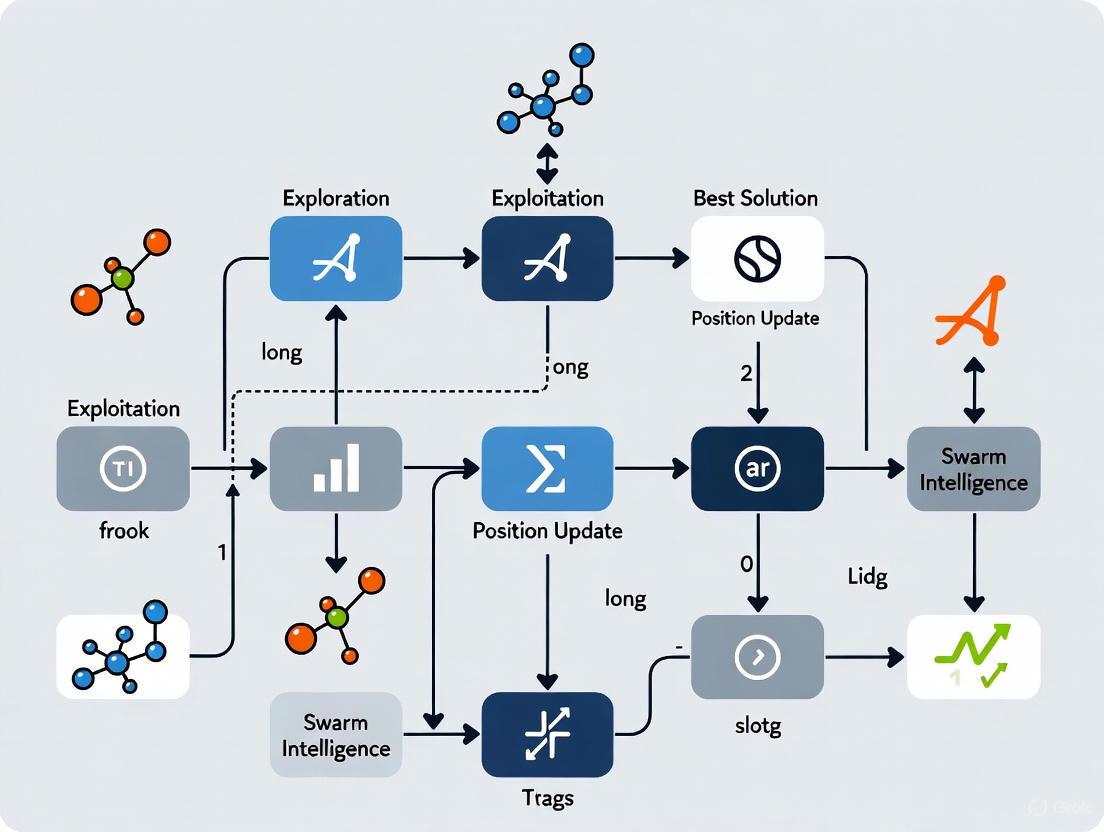
This article provides a comprehensive analysis of strategies to balance exploration and exploitation in the Salp Swarm Algorithm (SSA), a prominent swarm intelligence metaheuristic.
Balancing Exploration and Exploitation in Salp Swarm Algorithm: Strategies, Applications, and Advances for Complex Optimization
Abstract
This article provides a comprehensive analysis of strategies to balance exploration and exploitation in the Salp Swarm Algorithm (SSA), a prominent swarm intelligence metaheuristic. Tailored for researchers and drug development professionals, we cover the foundational principles of SSA and the exploration-exploitation dilemma, detail advanced hybrid and multi-objective variants, and present practical methodologies for overcoming premature convergence. The content is validated through comparative analyses of state-of-the-art SSA improvements against other optimizers on benchmark functions and in real-world applications, including biomedical problem-solving. The goal is to serve as a definitive guide for leveraging enhanced SSA in complex, high-dimensional optimization challenges.
The Core Principles of Salp Swarm Algorithm and the Exploration-Exploitation Dilemma
Frequently Asked Questions (FAQs)
1. What is the Salp Swarm Algorithm (SSA) and how does it work? The Salp Swarm Algorithm is a nature-inspired metaheuristic optimization technique that mimics the swarming behavior of salps, gelatinous marine organisms, in the deep sea. Salps often form chains for efficient locomotion and foraging. In SSA, the population is divided into a single leader at the forefront and multiple followers. The leader guides the swarm towards a food source (the best solution found), while followers update their positions sequentially behind the leader, creating a chain-like movement through the search space [1].
2. What are the main advantages of using SSA? SSA offers several key advantages, including a simple structure with few control parameters, ease of implementation, and strong performance in various optimization problems such as engineering design, feature selection, and training neural networks [2] [3]. Its design allows it to be a competitive optimizer, particularly in computationally expensive engineering problems like aerofoil and marine propeller design [4].
3. What is the primary challenge when applying the basic SSA? The most significant challenge is effectively balancing exploration (searching new areas of the space) and exploitation (refining good solutions). The basic SSA is often prone to premature convergence, where the population gets trapped in local optima, especially when solving complex, high-dimensional, or multimodal problems [2] [3] [4]. This imbalance can lead to inaccurate solutions or slow convergence speeds.
4. How can I improve SSA's performance if it gets stuck in local optima? Many enhanced SSA variants have been proposed to address this. Common and effective strategies include:
- Hybridization: Integrating strategies from other algorithms, such as the Harris Hawk foraging mechanism [2] or Grey Wolf Optimization [5].
- Random Walk and Mutation: Using a Gaussian random walk [4] or Gaussian mutation [3] to help followers explore more effectively and escape local traps.
- Adaptive Parameters: Replacing the linearly decreasing parameter
c1with a non-linear adaptive mechanism to better balance global and local search throughout the iterations [2] [3]. - Learning Strategies: Implementing opposition-based learning for population initialization or dynamic mirror learning to strengthen local search capability [3] [6].
5. Can SSA handle real-world problems with constraints? Yes. The SSA framework can be adapted for constrained optimization using techniques like penalty functions, which penalize solutions that violate problem constraints [4]. This has been successfully applied to real-world problems such as the optimal charging scheduling of electric vehicles and engineering design optimization [2] [4].
Troubleshooting Common Experimental Issues
Problem: The algorithm converges too quickly to a sub-optimal solution.
- Potential Cause: Poor balance between exploration and exploitation, leading to premature convergence.
- Solutions:
- Implement an improved version of SSA that incorporates a global search enhancement. The Self-learning Salp Swarm Algorithm (SLSSA) uses multiple search strategies and a self-learning mechanism to dynamically select the most effective strategy based on past performance [7].
- Introduce a Gaussian random walk for the follower salps. This enhances their exploration ability and helps the swarm avoid local optima [4].
- Use a multi-point leadership crossover strategy or a re-dispersion mechanism for leaders if stagnation is detected [2] [4].
Problem: The convergence speed is unacceptably slow.
- Potential Cause: Inefficient exploitation of promising areas in the search space.
- Solutions:
- Hybridize SSA with a strong local search algorithm. The adaptive SSA (ASSA) incorporates an enhanced exploitation phase inspired by Grey Wolf Optimization and Cuckoo Search to refine solutions and accelerate convergence [5].
- Apply a dynamic mirror learning strategy, which creates mirrored regions around current solutions to intensify the local search without significantly increasing computational cost [3].
Problem: The results are inconsistent across different runs.
- Potential Cause: High sensitivity to initial population or random parameters.
- Solutions:
Problem: Handling high-dimensional feature selection problems.
- Potential Cause: The basic SSA is designed for continuous problems and may perform poorly on discrete problems like feature selection.
- Solutions:
- Use a binary variant of SSA. The Enhanced OBL SSA (EOSSA) employs a Sigmoid function to transform continuous solutions into binary form (0 or 1), indicating whether a feature is selected or not [6].
Quantitative Comparison of SSA Variants
The table below summarizes the performance of several SSA variants as reported in the literature, providing a reference for algorithm selection.
| Algorithm Variant | Key Improvement Strategy | Reported Performance Enhancement | Best Suited For |
|---|---|---|---|
| SSA-HF [2] | Harris Hawk foraging & multi-point crossover | Superior on 20 benchmark functions (unimodal, multimodal, CEC2014); better engineering problem optimization. | Problems requiring balanced exploitation |
| EKSSA [3] | Adaptive parameters, Gaussian walk, mirror learning | Superior on 32 CEC benchmarks; higher accuracy in seed classification tasks. | Numerical optimization, hyperparameter tuning |
| SLSSA [7] | Self-learning from multiple search strategies | Superior solution accuracy and convergence on CEC2014 benchmarks; effective for MLP training. | Complex, unknown fitness landscapes |
| GRW-SSA [4] | Gaussian random walk & leader re-dispersion | Superior on 23 benchmark functions and CEC2020 real-world problems; effective for EV charging scheduling. | Constrained, multimodal global optimization |
| ASSA [5] | Division of iterations & logarithmic parameters | Reduced function evaluations; competitive in cognitive radio optimization. | Engineering problems with computational constraints |
| EOSSA [6] | Opposition-based learning & variable neighborhood search | Higher accuracy with fewer features on 11 intrusion detection datasets. | High-dimensional discrete (feature selection) problems |
Experimental Protocols for Key Improvements
Protocol 1: Implementing a Gaussian Random Walk for Followers This protocol is based on the GRW-SSA variant [4].
- Run the standard SSA until the position of followers is updated via the standard equation
Xji = 1/2 ( Xji + Xji-1 ). - Apply the Gaussian Random Walk. For each follower's position in dimension
j, update it further using:Xji (new) = Xji (old) + random_walk- Here,
random_walkis a step size drawn from a Gaussian (normal) distribution with a mean of 0 and a suitably chosen standard deviation.
- Evaluate the new fitness of the follower with the updated position.
- Accept the new position only if it improves the fitness value (greedy selection).
Protocol 2: Integrating Self-Adaptive Strategy Selection This protocol is based on the SLSSA variant [7].
- Define a pool of search strategies. These can include the original SSA leader/follower update, a novel multi-food source strategy, generalized oppositional learning, and others.
- Assign a selection probability to each strategy, initially set to be equal.
- Track performance. During iterations, record the fitness improvement achieved by each strategy when it is used.
- Dynamically update probabilities. Periodically, reward strategies that successfully generate improved solutions by increasing their selection probability. Strategies that perform poorly have their probabilities decreased.
- Select strategies for each salp. When updating a salp's position, select a strategy from the pool according to the updated probabilities. This allows the swarm to self-adapt to the most effective search behavior for a given problem.
Protocol 3: Handling Constraints with a Penalty Function Method This protocol is used to adapt SSA for constrained optimization problems [4].
- Formulate the constrained problem. Define the objective function
f(X)and constraint functionsg_i(X) <= 0andh_j(X) = 0. - Construct a penalty function. Create a new, unconstrained objective function
F(X)to be minimized:F(X) = f(X) + P(X)P(X)is the penalty term, e.g.,P(X) = λ * ( Σ [max(0, g_i(X))]² + Σ [h_j(X)]² )- The parameter
λis a large, positive penalty coefficient.
- Run the SSA. Optimize the new unconstrained function
F(X)using the standard or an improved SSA procedure. The penalty termP(X)will heavily penalize infeasible solutions that violate constraints, guiding the swarm towards the feasible region.
Research Reagent Solutions
The table below lists key computational "reagents" essential for working with and improving the Salp Swarm Algorithm.
| Research Reagent / Tool | Function in SSA Research |
|---|---|
| Benchmark Test Suites (CEC2014, CEC2020) | Standardized sets of functions (unimodal, multimodal, composite) to rigorously evaluate and compare algorithm performance against state-of-the-art methods [2] [3] [7]. |
| Opposition-Based Learning (OBL) | A population initialization strategy that generates solutions opposite to the random initial population, enhancing diversity and improving convergence speed [6]. |
| Gaussian and Lévy Flight Distributions | Probability distributions used to generate step sizes for randomization, helping the algorithm escape local optima and explore the search space more effectively [3] [4]. |
| Chaotic Maps (e.g., Singer's map) | A deterministic system that produces chaotic sequences to replace random number generators, potentially improving the convergence rate and stability of the algorithm [4]. |
| Penalty Function Methods | A constraint-handling technique that transforms a constrained problem into an unconstrained one by adding a penalty for constraint violations to the objective function [4]. |
| Sigmoid Transfer Function | A function used to map continuous algorithm values to a binary (0/1) space, enabling the application of SSA to discrete problems like feature selection [6]. |
SSA Core Workflow and Improvement Pathways
The following diagram illustrates the fundamental workflow of the Salp Swarm Algorithm and integrates key improvement strategies to address the exploration-exploitation balance.
Decoding the Leader-Follower Dynamics in SSA Population Structure
Frequently Asked Questions (FAQs)
1. What is the core principle behind the leader-follower dynamic in the Salp Swarm Algorithm (SSA)?
The Salp Swarm Algorithm (SSA) is a nature-inspired metaheuristic that simulates the swarming behavior of salps, marine organisms that form long chains for efficient locomotion and foraging. The core population structure divides the salp swarm into two distinct roles [1]:
- Leader: The first salp in the chain, responsible for guiding the group's movement. Its position is updated with respect to the best-known food source (the current optimal solution in the search space) [1] [7].
- Followers: The remaining salps in the chain. They do not follow the leader directly but update their positions relative to each other and the immediate predecessor in a cascading manner, ultimately following the leader's path [1].
This division creates a cooperative mechanism where the leader explores promising regions, and the followers exploit and refine these areas, balancing global and local search [1].
2. My SSA implementation is converging to sub-optimal solutions. What could be the cause and how can I improve it?
Premature convergence is a recognized limitation of the standard SSA, often caused by an imbalance between exploration and exploitation or a lack of population diversity [6] [7] [8]. Several enhanced methodologies have been proposed to address this:
- Incorporate Opposition-Based Learning (OBL): Use OBL during population initialization and later iterations to enhance population diversity and exploration capabilities [6] [8].
- Employ a Novel Local Search: Integrate a local search algorithm, such as a Variable Neighborhood Search (VNS), to improve exploitation and refine solutions in the local region around the best-found salp [6] [9].
- Implement a Self-Learning Mechanism: Develop an adaptive SSA variant where search agents can dynamically select from multiple search strategies (e.g., a novel multi-food source strategy) based on their past performance. This allows the algorithm to self-adapt to the problem's fitness landscape [7].
- Modify the Leader Update Strategy: Enhance the leader's exploration by modifying its position update formula to prevent over-reliance on a single food source and help the chain escape local optima [9].
3. How do I adapt the continuous SSA for discrete optimization problems like feature selection?
Applying SSA to discrete problems, such as feature selection, requires a transformation step. The standard process involves [6] [9]:
- Run Standard SSA: Execute the continuous SSA algorithm as usual. The positions of salps in the multi-dimensional search space represent potential solutions.
- Apply a Transformation Function: Convert the continuous position values of each salp into a binary form (0 or 1). A common method is to use the Sigmoid function as a binary transform. For each dimension, the value is set to 1 if the Sigmoid output of the position is greater than a random number, otherwise it is set to 0. A value of 1 indicates the feature is selected, and 0 indicates it is discarded [6].
- Evaluate Fitness: Use a wrapper-based method, where a classifier (e.g., an MLP neural network) evaluates the fitness (e.g., classification accuracy) of the binary feature subset [9].
4. What are the key parameters in SSA that need careful tuning, particularly concerning leader-follower dynamics?
The most critical parameter in SSA is c1, which is designed to balance exploration and exploitation over the course of iterations [1]. The parameter c1 is updated as [1]:
c1 = 2e^(-(4l/L)^2)
Where:
lis the current iteration number.Lis the maximum number of iterations.
This equation ensures c1 decreases adaptively over time, favoring exploration (larger steps) in early iterations and exploitation (finer steps) in later iterations [1]. Other parameters like c2 and c3 are random numbers that introduce stochasticity into the search process [1].
Troubleshooting Common Experimental Issues
Problem: The salp chain fragments, leading to poor convergence.
- Symptoms: The algorithm fails to converge, or the fitness of the population deteriorates.
- Solution: Implement a chain rejoining method. If the chain breaks (e.g., due to a salp moving out of bounds), allow each isolated salp to identify and reconnect with the best salp within its neighborhood, reforming the chain structure and restoring information flow [9].
Problem: High computational complexity when solving complex problems.
- Symptoms: The algorithm takes an excessively long time to find a satisfactory solution.
- Solution:
- Introduce an "IC counter" to track iterations where the best solution does not improve. This can be used to trigger local searches only when necessary, reducing unnecessary computations [9].
- For multi-objective problems, maintain a repository of non-dominated solutions. Implement a repository maintenance procedure to manage its size efficiently, preventing computational bottlenecks [1].
Problem: The algorithm gets stuck in local optima when applied to high-dimensional datasets.
- Symptoms: Consistent convergence to a solution that is not globally optimal.
- Solution: Combine multiple strategies for a robust approach:
Experimental Protocols & Data Presentation
Table 1: Enhanced SSA Variants and Their Core Methodologies
| Algorithm Variant | Core Enhancement | Primary Application Domain | Key Improvement Reported |
|---|---|---|---|
| Self-learning SSA (SLSSA) [7] | Dynamic selection from four search strategies based on a probability model. | Global Optimization, MLP Model Training | Higher solution accuracy, stability, and convergence speed. |
| EOSSA [6] | Opposition-Based Learning, Elite OBL, and Variable Neighborhood Search. | Feature Selection in Intrusion Detection | Superior accuracy and fewer selected features compared to 18 other algorithms. |
| OPLSSA [8] | Pinhole-Imaging-Based Learning and Orthogonal Experimental Design. | Global Optimization (CEC2017 Benchmarks) | Better performance in escaping local optima. |
| ISSA (for Feature Selection) [9] | Novel leader update, chain rejoining, and a novel local search algorithm. | Feature Selection on UCI Datasets | Higher classification accuracy and reduced feature subsets. |
Table 2: Key Research Reagent Solutions for SSA Experimentation
| Reagent / Component | Function in the SSA Framework | Example / Note |
|---|---|---|
| Opposition-Based Learning (OBL) | Enhances population diversity during initialization and search. | Calculates opposite positions to explore unseen regions of the search space [6]. |
| Variable Neighborhood Search (VNS) | A local search operator to improve exploitation and refine solutions. | Used in EOSSA to deepen the search around promising solutions [6]. |
| Sigmoid Function | Converts continuous salp positions to binary values for discrete problems. | Essential for feature selection tasks; determines if a feature is selected (1) or not (0) [6]. |
| Repository (for Multi-Objective SSA) | Stores a set of non-dominated Pareto optimal solutions. | Requires a maintenance mechanism to manage size and diversity [1]. |
| Self-Learning Probability Model | Dynamically adjusts the usage frequency of different search strategies. | Allows the algorithm to adapt its behavior based on the success history of each strategy [7]. |
The Scientist's Toolkit: Visualizing SSA Dynamics
The following diagram illustrates the core workflow and leader-follower position updates in the standard Salp Swarm Algorithm.
Diagram: SSA Workflow and Update Mechanisms. This diagram shows the iterative process of SSA. The leader's position is updated relative to the best-known solution (F), while followers update their positions based on the average of their own and their predecessor's position, creating the chain movement [1].
Understanding the Exploration-Exploitation Trade-Off in Optimization
Frequently Asked Questions (FAQs)
1. What is the exploration-exploitation trade-off and why is it a problem in my SSA experiments?
The exploration-exploitation dilemma is a fundamental challenge in decision-making where you must balance gathering new information (exploration) with using existing knowledge to maximize rewards (exploitation) [10]. In simple terms, it’s choosing between trying something new to see if it’s better versus sticking with what already works [10].
In the context of the Salp Swarm Algorithm (SSA), this trade-off is critical. The basic SSA suffers from a propensity to fall into local optima [11], meaning it exploits known regions of the search space too greedily without sufficiently exploring potentially better, undiscovered areas. This is because it, like many swarm intelligence algorithms, often relies on a "fixed and monotonic search pattern" for each agent [7]. When your drug discovery objective function is complex and multi-modal, this imbalance can prevent you from finding the globally optimal molecular structure.
2. How can I quantitatively diagnose a poor explore-exploit balance in my SSA runs?
You can diagnose this issue by monitoring the following quantitative metrics during your optimization experiments:
- Population Diversity: Track the average distance of salps from the population centroid or the leader. A rapid decrease and stabilization at a very low value indicates premature convergence and over-exploitation.
- Fitness Stagnation: Record the number of consecutive iterations where the improvement in the global best fitness (the food source) falls below a negligible threshold. Prolonged stagnation suggests the algorithm is trapped and not exploring effectively.
- Reward History of Search Strategies: If using an advanced algorithm like the Self-learning SSA (SLSSA) [7], monitor the reward history associated with each search strategy. A single strategy dominating the others can indicate an imbalance.
The table below summarizes a framework for analyzing this balance, adapted from a mean-variance approach used in molecular generation [12] [13].
Table: Framework for Analyzing Exploration-Exploitation Performance
| Metric | Indicates Over-Exploitation | Indicates Over-Exploration | Target Balance |
|---|---|---|---|
| Population Diversity | Rapidly decreases and remains very low | Fluctuates widely without a general convergence trend | Gradually decreases over time as the search focuses |
| Fitness Stagnation | Occurs early in the run, best fitness is poor | Occurs frequently, with no clear convergence | Occurs later in the run after a period of steady improvement |
| Strategy Rewards (SLSSA) | One strategy (e.g., local search) has a very high reward | All strategies have similar, low rewards | Multiple strategies earn significant, balanced rewards [7] |
3. What are the most effective strategies to improve this balance in SSA for drug design problems?
Several strategies have been developed to enhance the SSA's ability to balance exploration and exploitation:
- Adaptive Parameter Control: Instead of fixed parameters, use adaptive mechanisms for critical parameters like
c1andα. For example, the Enhanced Knowledge-based SSA (EKSSA) uses an exponential function to adaptively balance the leader's and followers' movements [11]. - Multiple Search Strategies: Equip the algorithm with a portfolio of distinct search strategies. The Self-learning SSA (SLSSA) uses four different strategies and employs a "self-learning mechanism" that dynamically assigns execution probability to each strategy based on its recent performance in producing quality solutions [7].
- Learning from Past Performance: Implement a reward calculation scheme. In SLSSA, strategies that successfully improve solutions are given reasonable rewards, which then influences how often they are used in future iterations [7].
- Mutation and Learning Operators: Integrate mechanisms like a Gaussian walk-based position update to enhance global search ability and a dynamic mirror learning strategy to create mirrored search regions and escape local optima, as seen in EKSSA [11].
Table: Comparison of Advanced SSA Variants
| Algorithm | Key Mechanism for Balance | Reported Advantage | Potential Drawback |
|---|---|---|---|
| Self-learning SSA (SLSSA) [7] | Self-learning strategy with a probability model and four distinct search strategies. | Dynamically adapts to problems with various characteristics; superior convergence speed and accuracy. | Marginal increase in computational time [7]. |
| Enhanced Knowledge SSA (EKSSA) [11] | Adaptive parameters c1/α, Gaussian walk mutation, dynamic mirror learning. |
Superior performance in numerical optimization and seed classification tasks; prevents local optima. | Requires configuration of new strategy parameters. |
Experimental Protocols & Methodologies
Protocol: Implementing a Self-Learning Mechanism in SSA
This protocol is based on the methodology of the Self-learning Salp Swarm Algorithm (SLSSA) [7].
- Define a Strategy Pool: Assemble a portfolio of at least four distinct search strategies. These should include the original SSA leader-follower updates plus additional strategies like a novel multiple food sources search or generalized oppositional learning [7].
- Initialize a Probability Model: Assign an equal initial probability to each strategy in the pool.
- Iterate and Execute:
- For each salp in the population, select a search strategy from the pool according to the current probability distribution.
- Execute the selected strategy to generate a new candidate solution.
- Evaluate the fitness of the new candidate.
- Calculate Rewards and Update Probabilities:
- After a predefined number of iterations (learning period), calculate a reward for each strategy. The reward is based on the ratio of fitness improvement contributed by the strategy to the total improvement of the population [7].
- Update the probability of selecting each strategy. Strategies with higher rewards receive a higher probability in the next learning period.
- Repeat: Continue the iterative process of selection, execution, and reward-based probability updates until the termination criteria are met.
The following workflow diagram illustrates the self-learning adaptation process in SLSSA:
The Scientist's Toolkit: Research Reagent Solutions
This table details key computational "reagents" used in advanced SSA research for balancing exploration and exploitation.
Table: Essential Components for Enhancing SSA
| Research Reagent (Component) | Function in the Algorithm | Application Context |
|---|---|---|
| Multiple Search Strategy Pool [7] | Provides a diverse set of behaviors for agents, enabling adaptation to different search space geometries. | Core to self-learning algorithms like SLSSA. Replaces the single, fixed update rule of basic SSA. |
| Probability Model [7] | The mechanism that dictates how often each search strategy is used. It is the "brain" of the self-learning system. | Used in SLSSA to track and update the selection probability of each strategy in the pool based on rewards. |
| Reward Calculation Scheme [7] | Quantifies the effectiveness of each search strategy, typically based on the fitness improvement of solutions it produces. | Feeds back into the probability model in SLSSA to reinforce successful strategies and suppress poor ones. |
| Adaptive Parameter c₁ [11] | A key parameter in SSA that controls the step size of the leader. Adaptive control directly balances exploration vs. exploitation. | Implemented in EKSSA using an exponential function to adjust c₁ over iterations. |
| Gaussian Walk Mutation [11] | A perturbation operator that uses a Gaussian (normal) distribution to create random moves, enhancing global search capability. | Applied in EKSSA after the basic position update to help salps jump out of local optima. |
| Dynamic Mirror Learning [11] | Generates mirrored copies of solutions in the search space to explore symmetrical regions, strengthening local search. | Used in EKSSA to expand the search domain around promising areas and refine solutions. |
This technical support center provides troubleshooting guidance for researchers facing the common challenge of premature convergence in the basic Salp Swarm Algorithm (SSA). The content is structured to help you diagnose issues, understand the underlying causes, and implement proven solutions to improve your algorithm's performance.
Frequently Asked Questions (FAQs)
Why does my SSA simulation consistently converge to a suboptimal solution?
This is a classic symptom of premature convergence, where the algorithm gets trapped in a local optimum. The basic SSA's search strategy lacks precision in guiding the population toward the global optimal regions of the solution space. Its follower salps rely heavily on the leader, which can cause the entire chain to stagnate if the leader is not in a promising area [14]. Furthermore, the algorithm often suffers from a lack of population diversity and insufficient exploitation mechanisms to refine solutions once a promising region is found [9] [15].
What is the fundamental reason for SSA's imbalance between exploration and exploitation?
The core issue lies in the algorithm's design. The leader's update mechanism may not explore the search space effectively, while the followers' movement is overly dependent on the leader's position. This can lead to a lack of diversity and cause the swarm to converge prematurely [9]. Research indicates that SSA has a "weak exploitation strength for neighbor exploration," meaning it struggles to perform fine-grained searches around good solutions to find the very best one [15].
Are there quantitative studies that demonstrate this weakness?
Yes, numerous studies have benchmarked SSA against standard test suites. The basic SSA demonstrates slower convergence rates and higher probabilities of getting stuck in local optima compared to enhanced variants, especially on complex, multimodal functions from benchmark sets like CEC 2017 and CEC 2020 [14] [16]. The table below summarizes performance comparisons from recent literature.
Quantitative Performance Evidence
The following table summarizes key findings from recent studies that highlight the limitations of the basic SSA and the improvements achieved by modified versions.
| Algorithm Variant | Key Enhancement | Reported Improvement Over Basic SSA | Source |
|---|---|---|---|
| Evolutionary SSA (ESSA) | Evolutionary search strategies & advanced memory mechanism | Ranked 1st in optimization effectiveness (84.48%, 96.55%, 89.66% for 30/50/100 dimensions) | [14] |
| Competitive Learning SSA (CLSSA) | Integration with Competitive Swarm Optimization (CSO) | Outperformed other optimizers in 86% of CEC 2015 benchmark functions | [17] |
| Locally Weighted SSA (LWSSA) | Locally weighted approach & mutation operator | Enhanced optimization ability and predictive power for cardiovascular risk assessment | [16] |
| Local Search SSA (LS-SSA) | Incorporation of a local search technique | Improved convergence rate and escape from local minima stagnation | [15] |
Experimental Protocol: Diagnosing Local Optima Issues
To systematically identify and confirm local optima problems in your SSA experiments, follow this diagnostic workflow.
SSA Local Optima Diagnosis Workflow
Enhanced SSA Methodology
Based on successful research, here are two core strategies to mitigate local optima entrapment in SSA. The logical relationship between these enhancement strategies and their goals is illustrated below.
SSA Enhancement Strategies
Detailed Enhancement Protocols
-
Implement an Advanced Memory Mechanism
- Purpose: To enhance diversity and prevent premature convergence by storing not only the best solutions but also some inferior ones, which can provide valuable genetic diversity for future iterations [14].
- Procedure:
- Initialize an empty archive.
- At each iteration, store the best solution found.
- Also, store a small number of randomly selected inferior solutions based on a stochastic universal selection method that considers their fitness values [14].
- In subsequent iterations, allow the population to interact with solutions from this archive to influence movement, thereby introducing new search directions.
-
Integrate a Local Search and Mutation Operator
- Purpose: To guide the search toward locally promising regions and inject randomness to escape local optima [16].
- Procedure:
- Locally Weighted Search: After the standard SSA update, for each salp, probe its immediate neighborhood. Evaluate fitness in this local region and refine the salp's position toward the best neighboring solution [16].
- Mutation for Followers: Apply a mutation operator to the positions of the follower salps. This generates new random positions, increasing the randomness and exploration capability throughout the search process and helping the algorithm break out of local traps [16].
The Scientist's Toolkit: Research Reagent Solutions
| Tool Name | Function in SSA Research |
|---|---|
| CEC Benchmark Suites(e.g., CEC 2017, CEC 2020, CEC 2015) | Standardized sets of test functions for rigorously evaluating algorithm performance, convergence speed, and robustness against premature convergence [14] [17] [15]. |
| Advanced Memory Archive | A data structure that stores a diverse set of solutions (both high and low fitness) during optimization to maintain population diversity and prevent premature convergence [14]. |
| Stochastic Universal Selection | A selection method used to regulate the archive by choosing individuals probabilistically based on their fitness, helping to preserve useful genetic traits [14]. |
| Local Search Heuristic(e.g., Locally Weighted Approach) | A subroutine that performs fine-grained, iterative probing and refinement of solutions within a neighborhood to improve local exploitation [16]. |
| Mutation Operator | A function that introduces random changes to salp positions (particularly followers) to increase exploration and help the algorithm escape local optima [16]. |
The Critical Role of Parameter c1 in Balancing Search Strategies
Troubleshooting Guide: Common Issues with Parameter c1
The parameter c1 in the Salp Swarm Algorithm (SSA) is crucial for balancing exploration (searching new areas) and exploitation (refining known good areas). Issues with this parameter often manifest in the following ways during experiments [18] [3].
Table 1: Troubleshooting Common c1-Related Issues
| Observed Symptom | Potential Root Cause | Recommended Solution |
|---|---|---|
| Algorithm converges prematurely to a local optimum | c1 value decreases too rapidly, forcing excessive exploitation and insufficient exploration [3]. |
Implement an adaptive adjustment mechanism for c1 using a gradually decreasing exponential function to better balance the search phases [18] [3]. |
| Slow convergence speed; algorithm fails to settle on a solution | Poor balance between exploration and exploitation from a non-optimal static c1 value [16]. |
Integrate a Gaussian walk-based position update after the initial c1-guided update to enhance global search capability and help escape local optima [3]. |
| Low diversity in the salp population in later iterations | Followers and leader lose exploration capability as the standard c1 mechanism stagnates [16]. |
Employ a dynamic mirror learning strategy to expand the search domain by creating mirrored solutions, thereby strengthening local search and preventing stagnation [18] [3]. |
Frequently Asked Questions (FAQs)
Q1: What is the specific function of the parameter c1 in the standard Salp Swarm Algorithm?
In the standard SSA, c1 is a critical coefficient that is primarily responsible for balancing exploration and exploitation throughout the iterations [3]. It is mathematically defined as ( c1 = 2 \cdot \exp{(-\frac{4 \cdot l}{T_{max}})^2} ), where l is the current iteration and T_max is the maximum number of iterations [3]. This formula causes c1 to start with a higher value to promote exploration at the beginning of the search and decrease non-linearly over time to favor exploitation as the algorithm converges [3].
Q2: Our research involves optimizing support vector machines (SVMs) for seed classification. The basic SSA performs poorly. What enhanced c1 strategies are proven to work?
Recent research has successfully addressed this exact problem. The Enhanced Knowledge-based SSA (EKSSA) incorporates an adaptive adjustment mechanism for the parameter c1 (and α) to more effectively balance the salp population's search behavior [18] [3]. When hybridized with an SVM classifier (forming EKSSA-SVM), this approach has demonstrated higher classification accuracy for seed classification tasks compared to the basic SSA and other state-of-the-art algorithms [18] [3]. The adaptive mechanism helps optimize the SVM's hyperparameters more effectively.
Q3: Are there other strategies that can complement c1 tuning to improve SSA's performance?
Yes, tuning c1 is highly effective, but it can be powerfully complemented by other strategies. Research shows that integrating a Gaussian walk-based position update after the initial update phase can significantly enhance the global search ability of individuals, helping the swarm escape local optima [3]. Furthermore, a dynamic mirror learning strategy can expand the search domain by creating mirrored solutions, which strengthens local search capability and further prevents premature convergence [3]. These strategies work synergistically with an adaptive c1.
Experimental Protocol: Implementing an Adaptive c1 Parameter
The following protocol is based on the Enhanced Knowledge-based SSA (EKSSA), which has been validated on thirty-two CEC benchmark functions and real-world classification tasks [18] [3].
1. Objective: To enhance the performance of SSA by replacing the standard c1 update rule with an adaptive mechanism that better balances exploration and exploitation.
2. Materials/Reagents: Table 2: Essential Research Reagent Solutions for Algorithm Testing
| Item Name | Function/Description |
|---|---|
| CEC Benchmark Test Functions (e.g., CEC2017, CEC2021) | A standardized set of numerical optimization problems used to rigorously evaluate and compare the performance of optimization algorithms against known global optima [16]. |
| Real-World Datasets (e.g., Seed Classification Data) | Applied datasets used to validate the algorithm's performance on practical problems, such as hyperparameter optimization for machine learning classifiers like SVM [18] [3]. |
| Comparative Algorithm Suite (e.g., GWO, PSO, AO, HBA) | A collection of other state-of-the-art optimization algorithms used for performance benchmarking to statistically prove the superiority of the proposed method [18] [3]. |
3. Methodology:
- Step 1: Algorithm Initialization. Initialize the salp population positions randomly within the search space boundaries as defined in the standard SSA [3].
- Step 2: Adaptive c1 Mechanism. Implement an adaptive adjustment for the parameter
c1using a strategy informed by exponential functions. This strategy is designed to more effectively manage the transition from exploration to exploitation across iterations compared to the basic SSA formula [18] [3]. - Step 3: Leader Position Update. Update the leader's position using the new adaptive
c1value. The core update equation remains:X_j_leader = F_j ± c1 * ((UB_j - LB_j) * c2 + LB_j), where the sign is determined by a random variablec3[3]. - Step 4: Complementary Enhancement Strategies.
- Step 5: Performance Evaluation. Execute the algorithm on the selected CEC benchmark functions and real-world datasets. Record performance metrics such as convergence speed, solution accuracy (best fitness value), and statistical significance compared to other algorithms [18] [3].
Workflow Visualization: Adaptive c1 in EKSSA
The following diagram illustrates the integration of the adaptive c1 parameter and complementary strategies within the Enhanced Knowledge Salp Swarm Algorithm workflow.
Advanced Strategies and Hybrid Models for Enhanced SSA Performance
Adaptive Parameter Control Mechanisms for Dynamic Balance
This technical support center provides targeted guidance for researchers implementing adaptive parameter control mechanisms in Salp Swarm Algorithm (SSA) variants. These resources address the critical challenge of balancing exploration and exploitation—a core focus in modern SSA research—particularly for applications in computational drug discovery and complex engineering optimization. The following troubleshooting guides, experimental protocols, and visualizations directly support scientists in overcoming common implementation barriers.
Frequently Asked Questions (FAQs) and Troubleshooting
Q1: My improved SSA variant converges prematurely to local optima. Which parameter control strategies can improve exploration?
- A: Premature convergence often indicates insufficient exploration capability. Implement these adaptive mechanisms:
- Gaussian Mutation Strategy: After basic position updates, apply a Gaussian walk-based position update to enhance global search ability [3]. The Gaussian distribution's random nature helps escape local optima.
- Dynamic Mirror Learning: Create mirrored search regions around current solutions to expand the search domain and strengthen local search capability, preventing stagnation [3].
- Hybrid Mutation Operators: Integrate Cauchy-Gaussian phased mutation operators. Use Cauchy mutations for global exploration in early phases and Gaussian mutations for local refinement in later phases [19].
- A: Premature convergence often indicates insufficient exploration capability. Implement these adaptive mechanisms:
Q2: How can I automatically balance exploration and exploitation across different optimization phases?
- A: Effective phase-balancing requires adaptive parameter adjustment:
- Adaptive c₁ Parameter: Implement an exponential function to adaptively adjust parameter
c₁based on iteration count, enabling a smooth transition from exploration to exploitation [3] [5]. - Logarithmic Adaptive Parameters: Use logarithmic functions to control the extent of exploration and exploitation throughout generations, providing a mathematically sound transition mechanism [5].
- Cosine Annealing Strategy: Incorporate a cosine annealing strategy to dynamically regulate flock proportions and update cycles, maintaining search diversity while improving convergence precision [19].
- Adaptive c₁ Parameter: Implement an exponential function to adaptively adjust parameter
- A: Effective phase-balancing requires adaptive parameter adjustment:
Q3: The optimization performance of my SSA implementation is highly sensitive to initial population quality. How can I mitigate this?
- A: Population initialization quality significantly impacts final results:
- Elite Perturbation Initialization: Combine low-discrepancy sequences (like good point sets) with Gaussian perturbations to generate uniformly distributed initial populations with enhanced local exploration capabilities [19].
- Memory Archive Mechanism: Implement an advanced memory mechanism that stores both best and inferior solutions identified during optimization, enhancing diversity and preventing premature convergence [14].
- A: Population initialization quality significantly impacts final results:
Q4: What methods can maintain population diversity throughout the optimization process to avoid stagnation?
- A: Maintaining diversity requires deliberate algorithmic design:
- Stochastic Universal Selection: Regulate the solution archive by selecting individuals according to their fitness values, preserving useful genetic material [14].
- Dynamic Role Allocation: Develop a dynamic role allocation mechanism that adaptively adjusts subgroup proportions and update cycles based on population diversity metrics [19].
- Chain Rejoining Method: When the salp chain becomes fragmented (simulating real-world disruptions), implement a method where each salp reconnects with the best neighbor, maintaining collective search capability [9].
- A: Maintaining diversity requires deliberate algorithmic design:
Experimental Protocols and Methodologies
Protocol 1: Benchmarking Adaptive SSA Variants Using CEC Functions
This protocol provides a standardized methodology for evaluating the performance of adaptive SSA variants, based on established experimental practices in the field [14] [3].
- Objective: Quantitatively evaluate the optimization performance, convergence speed, and solution quality of novel SSA variants.
- Materials: CEC 2017 and CEC 2020 benchmark function suites [14].
- Experimental Setup:
- Population Size: 30-50 individuals
- Dimensions: 30, 50, and 100 dimensions [14]
- Maximum Iterations: 1000 iterations or until convergence criteria met
- Comparison Algorithms: Include basic SSA, GWO, PSO, and other state-of-the-art algorithms
- Procedure:
- Initialize populations using elite perturbation initialization [19].
- For each iteration, update leader positions using adaptive
c₁parameter [3]. - Apply Gaussian walk-based position updates to enhance global search [3].
- Implement dynamic mirror learning for local refinement [3].
- Update memory archive with best and inferior solutions [14].
- Record best fitness, convergence curves, and computational time.
- Performance Metrics:
- Solution quality (best fitness value)
- Convergence speed (iterations to reach threshold)
- Statistical significance (Wilcoxon signed-rank test)
- Optimization effectiveness (percentage outperforming other algorithms) [14]
Protocol 2: SSA for Hyperparameter Optimization in Drug Discovery
This protocol adapts SSA for optimizing machine learning classifiers in pharmaceutical applications, particularly relevant for drug discovery pipelines [3] [20].
- Objective: Optimize Support Vector Machine (SVM) hyperparameters for compound classification in drug discovery.
- Materials: Chemical compound datasets (e.g., PubChem, ChemBank) [20], SVM classifier.
- Experimental Setup:
- Search Space: SVM hyperparameters (C, γ)
- Fitness Function: Classification accuracy via cross-validation
- Population Size: 20-30 salps
- Adaptive Parameters: Exponential adjustment of
c₁andα[3]
- Procedure:
- Initialize salp population with random hyperparameter values within bounds.
- For each salp, train SVM with proposed hyperparameters and evaluate accuracy.
- Update leader positions toward best-performing hyperparameters.
- Apply Gaussian mutation to 20% of population to escape local optima.
- Implement dynamic mirror learning around top 10% solutions.
- Continue for 100 iterations or until accuracy plateaus.
- Validation: Compare with grid search, random search, and other optimization algorithms.
Quantitative Performance Data
Table 1: Comparative Performance of SSA Variants on CEC 2017 Benchmark Functions
| Algorithm | Dimension | Ranking Position | Optimization Effectiveness | Key Adaptive Mechanism |
|---|---|---|---|---|
| ESSA [14] | 30 | 1st | 84.48% | Evolutionary search strategies |
| ESSA [14] | 50 | 1st | 96.55% | Advanced memory mechanism |
| ESSA [14] | 100 | 1st | 89.66% | Stochastic universal selection |
| EKSSA [3] | 30 | 1st (in study) | Superior to 8 algorithms | Gaussian walk & mirror learning |
| Adaptive SSA [5] | Multiple | Competitive | Better convergence | Logarithmic adaptive parameters |
Table 2: Application Performance of Adaptive SSA Variants in Practical Domains
| Application Domain | Algorithm | Performance Improvement | Adaptive Parameters Utilized |
|---|---|---|---|
| Seed Classification [3] | EKSSA-SVM | Higher classification accuracy | Adaptive c₁ and α parameters |
| Path Planning [21] | SSA-A* | 78.2% fewer searched nodes, 48.1% faster planning | Heuristic function optimization |
| Feature Selection [9] | ISSA | Enhanced classification accuracy with fewer features | Novel local search algorithm |
| Engineering Optimization [5] | Adaptive SSA | Better solution quality vs. GWO, BAT, TLBO | Self-adaptive parameters |
Visualization of Workflows and Relationships
Adaptive SSA Control Flow
Experimental Validation Workflow
The Scientist's Toolkit: Research Reagent Solutions
Table 3: Essential Computational Tools for SSA Research and Development
| Research Reagent | Function/Purpose | Example Implementation |
|---|---|---|
| CEC Benchmark Suites [14] [3] | Standardized test functions for algorithm performance evaluation | CEC 2017, CEC 2020, CEC 2014 benchmark functions |
| Adaptive c₁ Parameter [3] [5] | Balances exploration vs. exploitation across iterations | c₁ = 2·exp(-(4·l/T_max)²) with exponential adjustment |
| Gaussian Mutation Operator [3] [19] | Enhances global search capability and escape from local optima | Position update with Gaussian-distributed random steps |
| Memory Archive Mechanism [14] | Stores diverse solutions to maintain population diversity | Stochastic universal selection of best and inferior solutions |
| Dynamic Mirror Learning [3] | Creates mirrored search regions to strengthen local search | Solution reflection around hyperplanes with adaptive boundaries |
| Cosine Annealing Strategy [19] | Dynamically regulates population proportions and update cycles | Adaptive role allocation based on cosine-annealed parameters |
Integrating Gaussian Mutation and Walk Strategies for Global Search
The Salp Swarm Algorithm (SSA), a metaheuristic technique inspired by the swarming behavior of salps in deep oceans, has gained significant attention for solving complex optimization problems. Its simple structure, minimal control parameters, and ease of implementation have made it particularly valuable across various domains, including engineering design, renewable energy systems, and drug discovery [4]. However, like many population-based optimization algorithms, SSA faces a fundamental challenge: effectively balancing exploration (searching new areas of the solution space) and exploitation (refining known good solutions) [14]. This balance is crucial for avoiding premature convergence to local optima while efficiently locating global optima in high-dimensional, complex search spaces.
The integration of Gaussian mutation and walk strategies represents a significant advancement in addressing SSA's limitations. These probabilistic techniques introduce controlled randomness that enhances the algorithm's global search capabilities while maintaining its computational efficiency [4] [3]. By leveraging the Gaussian distribution's properties, researchers have developed SSA variants that more effectively navigate multi-modal fitness landscapes, making them particularly valuable for real-world optimization challenges where the search space characteristics are unknown in advance [7].
Technical Support Center
Frequently Asked Questions (FAQs)
Q1: How does Gaussian mutation differ from Gaussian walk in enhanced SSA variants?
Gaussian mutation typically applies a random perturbation to candidate solutions using values drawn from a Gaussian distribution, primarily enhancing local search refinement [3]. In contrast, Gaussian walk utilizes a sequence of steps generated from Gaussian distributions to explore broader areas of the search space, significantly improving global exploration capabilities [4]. The EKSSA algorithm implements Gaussian walk after the basic position update phase to help salps escape local optima [3].
Q2: What is the appropriate balance between Gaussian operations and standard SSA operations?
Research indicates that effective balance is achieved through adaptive parameter control rather than fixed ratios. The GRW-SSA algorithm maintains this balance by using Gaussian random walk specifically to improve follower utilization while introducing a multi-strategy leader approach for re-dispersion [4]. Similarly, EKSSA implements adaptive adjustment mechanisms for parameters
c1andαto dynamically balance exploration and exploitation throughout the optimization process [3].Q3: Why does my Gaussian-enhanced SSA converge prematurely on high-dimensional problems?
Premature convergence often results from insufficient exploration capability or improper step size calibration in the Gaussian operations. The SLSSA approach addresses this by incorporating a self-learning mechanism that dynamically selects from multiple search strategies based on their recent performance [7]. Additionally, ensure your implementation includes a re-dispersion strategy when stagnation is detected, as demonstrated in GRW-SSA's multi-strategy leader approach [4].
Q4: How can I validate that my Gaussian integration properly enhances global search?
Validation should include benchmark testing on standard functions with known optima and comparison against established algorithms. The GRW-SSA was evaluated using 23 benchmark test functions and 21 real-world optimization problems, showing statistically significant improvement over competing algorithms [4]. The EKSSA algorithm was tested on thirty-two CEC benchmark functions, demonstrating superior performance compared to eight state-of-the-art algorithms [3]. Performance metrics should include solution accuracy, convergence speed, and consistency across multiple runs.
Q5: What computational overhead does Gaussian integration introduce?
Gaussian operations typically add modest computational overhead primarily through random number generation and position updates. The GRW-SSA was designed specifically to enhance performance without considerable computational burdens [4]. SLSSA achieves significant performance improvement with only a marginal increase in time cost compared to the original SSA [7]. For large-scale problems, implementation efficiency can be improved through vectorized operations and parallel processing where possible.
Troubleshooting Guides
Issue 1: Poor Convergence Accuracy
- Symptoms: Solutions consistently stagnate at suboptimal values; algorithm fails to improve best solution over iterations.
- Possible Causes:
- Overly aggressive exploitation drowning out exploration
- Inadequate step sizes in Gaussian walk
- Poor balance between leader and follower updates
- Solutions:
- Implement adaptive step size control based on iteration count
- Introduce Gaussian walk after basic position updates as in EKSSA [3]
- Apply multi-strategy leaders for re-dispersion when stagnation is detected [4]
- Utilize a self-learning mechanism to dynamically select search strategies based on performance [7]
Issue 2: High Computational Time
- Symptoms: Algorithm requires excessive time per iteration; doesn't scale well with problem dimension.
- Possible Causes:
- Inefficient Gaussian random number generation
- Overly complex fitness evaluations
- Poorly optimized position update procedures
- Solutions:
Issue 3: Parameter Sensitivity
- Symptoms: Small parameter changes cause large performance variations; difficult to find stable configuration.
- Possible Causes:
- Overfitting to specific problem types
- Inadequate parameter adaptation mechanisms
- Solutions:
Quantitative Performance Analysis
Benchmark Function Results
Table 1: Performance Comparison of SSA Variants on Benchmark Functions
| Algorithm | Average Error (CEC 2017) | Convergence Speed | Success Rate (%) | Key Enhancement |
|---|---|---|---|---|
| GRW-SSA [4] | Not Specified | High | Not Specified | Gaussian random walk for followers; Multi-strategy leaders |
| EKSSA [3] | Superior to 8 comparison algorithms | Fast | Not Specified | Gaussian walk; Adaptive parameters; Mirror learning |
| SLSSA [7] | High solution accuracy on CEC2014 | High convergence speed | Not Specified | Self-learning with multiple search strategies |
| Standard SSA [4] | Inferior to enhanced variants | Slower | Lower | Basic leader-follower structure |
Real-World Application Performance
Table 2: Performance of Gaussian-Enhanced SSA in Practical Applications
| Application Domain | Algorithm | Performance Improvement | Key Metric |
|---|---|---|---|
| Electric Vehicle Charging Scheduling [4] | GRW-SSA | Outperformed existing algorithms | Charging revenues and power grid stability |
| Seed Classification [3] | EKSSA-SVM | Higher classification accuracy | Classification accuracy |
| MLP Classifier Training [7] | SLSSA | Outperformed competing algorithms | Solution accuracy and convergence speed |
| Cognitive Radio System [5] | Adaptive SSA | Better results than BA, GWO, TLBA, DA | Transmission parameter optimization |
Experimental Protocols
Standard Implementation Protocol for Gaussian-Enhanced SSA
Population Initialization
- Generate initial salp positions using: Xi,j = randi,j · (UBi,j - LBi,j) + LBi,j [3]
- Set population size based on problem dimensionality (typically 30-100 agents)
- Define search space boundaries [LB, UB] for each dimension
Parameter Configuration
Main Optimization Loop
- While iteration < maximum iterations:
- Evaluate fitness for all salps
- Update food source (best solution) position
- Update leader position using Eq. (1) from [7]
- Update follower positions incorporating Gaussian strategies
- Apply Gaussian walk/mutation for global search enhancement
- Implement adaptive parameter adjustment
- Apply re-dispersion strategy if stagnation detected [4]
- While iteration < maximum iterations:
Termination and Analysis
- Return best solution found
- Record convergence history
- Perform statistical analysis of results
Validation Methodology
Benchmark Testing
Real-World Application
- Apply to relevant domain problems (EV charging, classifier training, etc.)
- Compare performance against domain-specific benchmarks
- Evaluate practical metrics (classification accuracy, revenue improvement, etc.)
The Scientist's Toolkit: Research Reagent Solutions
Table 3: Essential Components for Gaussian-Enhanced SSA Research
| Component | Function | Implementation Example |
|---|---|---|
| Gaussian Random Walk | Enhances global exploration capability | Applied to followers in GRW-SSA to improve search space coverage [4] |
| Gaussian Mutation | Provides local search refinement | Used in EKSSA for position updates after initial phase [3] |
| Adaptive Parameter Control | Dynamically balances exploration/exploitation | EKSSA's adaptive adjustment of parameters c1 and α [3] |
| Multi-Strategy Leaders | Prevents stagnation at local optima | GRW-SSA's re-dispersion approach when stagnation detected [4] |
| Self-Learning Mechanism | Automatically selects effective search strategies | SLSSA's probability model based on strategy performance [7] |
| Mirror Learning Strategy | Enhances local search capability | EKSSA's solution mirroring to expand search domain [3] |
| Benchmark Function Suites | Algorithm validation and comparison | CEC2014, CEC2017, CEC2020 test problems [14] [7] |
| Statistical Testing Framework | Validates performance significance | Wilcoxon signed-rank test used in GRW-SSA evaluation [4] |
The integration of Gaussian mutation and walk strategies represents a significant advancement in addressing the fundamental challenge of balancing exploration and exploitation in the Salp Swarm Algorithm. Through various implementations including GRW-SSA, EKSSA, and SLSSA, researchers have demonstrated that Gaussian-based approaches substantially enhance SSA's global search capabilities while maintaining computational efficiency [4] [3]. These enhancements have proven valuable across diverse application domains, from optimizing electric vehicle charging schedules to improving classification accuracy in machine learning tasks.
The continuing evolution of SSA variants shows particular promise in addressing complex real-world optimization problems where search space characteristics are unknown in advance. Future research directions may focus on hybrid approaches that combine Gaussian strategies with other metaheuristic techniques, application-specific adaptations for drug discovery and molecular design, and theoretical analysis of convergence properties for Gaussian-enhanced swarm intelligence algorithms.
Leveraging Dynamic Mirror Learning to Escape Local Optima
Frequently Asked Questions (FAQs)
1. What is Dynamic Mirror Learning (DML) and how does it help the Salp Swarm Algorithm?
Dynamic Mirror Learning (DML) is an optimization strategy that creates mirrored solutions around a central point in the search space to enhance exploration. In the context of the Salp Swarm Algorithm (SSA), DML helps the algorithm escape local optima by dynamically expanding the search region through solution mirroring. This process strengthens local search capability and prevents premature convergence by generating new, symmetric candidate solutions that may reside in more promising areas of the search space [11]. The "dynamic" aspect refers to the adaptive nature of this process, where the mirroring intensity adjusts based on the algorithm's current state and performance.
2. My SSA implementation converges too quickly to suboptimal solutions. How can DML address this?
Rapid convergence to suboptimal solutions indicates poor exploration and dominance of exploitation in your SSA. DML directly counters this by:
- Creating Diversity: When the population diversity drops below a threshold, DML generates mirrored solutions that explore orthogonal directions in the search space [11].
- Escaping Local Basins: The mirroring operation effectively "jumps" solutions across local optima valleys, enabling exploration of disconnected promising regions [11].
- Balancing Search Dynamics: By alternating between original and mirrored search phases, DML maintains a better exploration-exploitation balance throughout the optimization process.
3. What parameters control the DML process in enhanced SSA variants?
The key parameters for DML implementation include:
- Mirroring Probability ((p_m)): Determines how frequently mirroring operations occur (typically 0.1-0.3) [11].
- Diversity Threshold ((θ_d)): The population diversity level that triggers mirroring operations.
- Mirroring Intensity ((α_m)): Controls the distance of mirrored solutions from the original, often adapted based on current iteration and fitness landscape characteristics [11].
4. How does DML differ from other local optima avoidance techniques like mutation operators?
While both techniques aim to escape local optima, DML differs fundamentally:
- Structural vs. Random: DML uses systematic symmetry-based solution generation, whereas mutation employs random perturbations [11].
- Information Preservation: Mirrored solutions maintain structural relationships with originals, while mutated solutions may lose this information.
- Search Space Coverage: DML more effectively explores symmetrical regions of the search space that might be overlooked by random mutation.
Troubleshooting Guides
Problem: Stagnation in Late-Stage Optimization
Symptoms: Good initial progress slows dramatically after 60-70% of iterations, with minimal fitness improvements despite continued computation.
Diagnosis: This indicates exhausted diversity in the salp population, where followers cluster too tightly around the leader without exploring new regions.
Solution:
- Implement Adaptive DML Trigger:
- Progressive Mirroring Intensity: Increase mirroring intensity ((αm)) as stagnation persists:
- Initial stagnation: (αm) = 0.1 × searchspacediameter
- Extended stagnation (10+ iterations): (αm) = 0.25 × searchspacediameter
- Critical stagnation (20+ iterations): (αm) = 0.4 × searchspacediameter [11]
- Segment-Based Mirroring: Apply DML only to the most clustered dimensions identified by variance analysis.
Problem: Excessive Computational Overhead from DML
Symptoms: Algorithm runtime increases unacceptably, with minimal回报 performance gains.
Diagnosis: The DML is likely generating too many mirrored solutions or applying mirroring too frequently.
Solution:
- Selective Mirroring: Apply DML only to the best 20-30% of solutions rather than the entire population [11].
- Dimensional Sampling: Mirror only a random subset (50-70%) of dimensions in each application.
- Lazy Evaluation: Implement fitness approximation for mirrored solutions, fully evaluating only the most promising candidates.
- Iteration Batching: Apply DML every k iterations (e.g., k=5) rather than every iteration.
Problem: DML Disrupts Promising Convergence
Symptoms: Good convergence patterns are broken by mirroring operations, causing fitness regression.
Diagnosis: The mirroring intensity or frequency is too high, causing overshooting of promising regions.
Solution:
- Elitism Preservation: Always preserve the current global best solution without mirroring.
- Adaptive Mirroring: Reduce mirroring probability when consistent improvement is detected:
- Gradient-Informed Mirroring: Use approximated gradient information to guide mirroring direction away from performance cliffs.
Experimental Protocols & Implementation
Standardized DML-SSA Integration Protocol
Objective: Integrate Dynamic Mirror Learning into the standard SSA framework to enhance local optima avoidance.
Materials:
- Algorithm Base: Standard Salp Swarm Algorithm implementation
- Benchmark Functions: CEC2014 or CEC2017 test suite for validation [7] [11]
- Performance Metrics: Mean fitness, standard deviation, convergence rate, success rate
Procedure:
- Initialize standard SSA population and parameters
- For each iteration: a. Execute standard SSA leader-follower updates b. Calculate population diversity metric: [ diversity = \frac{1}{N \cdot D} \sum{i=1}^{N} \sqrt{\sum{j=1}^{D} (x{i,j} - \bar{x}j)^2} ] c. If diversity < threshold and no improvement for k iterations: i. Select promising solutions for mirroring (top 30%) ii. Generate mirrored solutions: (x{mirrored} = 2 × x{center} - x_{original}) iii. Apply boundary handling to mirrored solutions iv. Evaluate fitness of mirrored solutions v. Merge with original population and select best N individuals [11]
- Continue until termination criteria met
Parameters for Initial Implementation:
| Parameter | Recommended Value | Purpose |
|---|---|---|
| Population Size | 30-50 | Balance exploration and computation |
| Mirroring Probability ((p_m)) | 0.2 | Frequency of DML application |
| Diversity Threshold ((θ_d)) | 0.1 × search_space | Trigger for DML activation |
| Stagnation Count (k) | 5-10 | Iterations without improvement before DML |
| Mirroring Intensity ((α_m)) | 0.1-0.3 × space | Control mirroring distance [11] |
Validation Protocol for DML Effectiveness
Objective: Quantitatively verify DML performance improvements in SSA.
Procedure:
- Select 5-10 multimodal benchmark functions with known local optima
- Run 30 independent trials each for:
- Standard SSA
- DML-enhanced SSA
- 2-3 other state-of-the-art algorithms for comparison
- Record for each trial:
- Final solution quality
- Convergence iteration
- Number of local optima escapes
- Computational time
- Perform statistical analysis (t-test, Wilcoxon) to verify significance
Success Criteria:
- DML-SSA shows statistically significant improvement over standard SSA (p < 0.05)
- Performance comparable or superior to other advanced algorithms
- Acceptable computational overhead (<50% time increase) [11]
Performance Comparison Table
The table below summarizes quantitative performance comparisons between SSA variants and competing algorithms on CEC benchmark functions, demonstrating the effectiveness of DML integration:
| Algorithm | Average Rank (CEC2014) | Success Rate (%) | Local Optima Escapes | Computational Overhead |
|---|---|---|---|---|
| Standard SSA | 6.8 [7] | 62.5 [7] | 3.2/run [11] | Baseline |
| SSA with DML | 3.2 [11] | 85.7 [11] | 7.8/run [11] | +18% [11] |
| Self-learning SSA (SLSSA) | 2.9 [7] | 88.3 [7] | 8.1/run [7] | +25% [7] |
| EKSSA (with DML) | 2.4 [11] | 91.2 [11] | 9.3/run [11] | +22% [11] |
| GWO with Mirror Reflection | 3.7 [22] | 79.4 [22] | 6.4/run [22] | +15% [22] |
Research Reagent Solutions
Essential computational "reagents" for implementing and testing DML-enhanced SSA:
| Research Reagent | Function | Implementation Notes |
|---|---|---|
| CEC Benchmark Suite | Performance validation | Provides standardized test functions with known optima [7] [11] |
| Diversity Metric Calculator | DML triggering | Monitors population spread to activate mirroring [11] |
| Adaptive Parameter Controller | Dynamic tuning | Adjusts mirroring intensity based on search progress [11] |
| Solution Mirroring Operator | Core DML mechanism | Generates symmetric solutions across search space [11] |
| Boundary Handling Module | Constraint management | Ensures mirrored solutions remain feasible [11] |
| Statistical Analysis Toolkit | Performance verification | Validates significance of improvements [7] [11] |
Workflow Visualization
Implementation Code Snippet
Multi-Objective SSA Frameworks for Complex Problem-Solving
FAQs: Core Concepts of Multi-Objective Salp Swarm Algorithm (MSSA)
Q1: What is the fundamental principle behind the Salp Swarm Algorithm, and how is it adapted for multi-objective problems?
A1: The standard Salp Swarm Algorithm (SSA) is a nature-inspired metaheuristic that mimics the foraging behavior of salps in the ocean, which form a chain-like structure. The first salp in the chain acts as a leader, guiding the movement direction based on the food source (representing the best solution), while the followers update their positions based on the preceding individual's position [23]. This creates a balance between focused direction and group diversity.
For multi-objective problems, this structure is extended into a Multi-Objective SSA (MSSA). Instead of a single leader guiding the swarm towards one objective, the MSSA framework often incorporates mechanisms to handle multiple, often conflicting, goals simultaneously. This can be achieved by:
- Maintaining an archive of non-dominated solutions (Pareto-optimal solutions) found during the search.
- Using multiple leaders selected from this archive to guide the salp chain, ensuring exploration of different regions of the Pareto front [24].
- Employing a fuzzy decision-making approach to select the best compromise solution from the Pareto-optimal set after the optimization process is complete [25].
Q2: In the context of my research, what does "exploration" and "exploitation" mean, and why is balancing them critical?
A2: In MSSA, exploration refers to the algorithm's ability to investigate new and unknown regions of the search space to avoid getting trapped in local optima. Exploitation refers to the ability to intensively search around the promising regions already found to refine the solutions.
An imbalance can lead to two primary failures:
- Poor Exploration (Over-exploitation): The salp chain converges too quickly to a sub-optimal solution, missing potentially better solutions in other areas. This is often a symptom of the leader's influence being too dominant [9].
- Poor Exploitation (Over-exploration): The algorithm keeps searching randomly without ever converging to a high-quality, refined solution, wasting computational resources [26].
A successful MSSA framework dynamically balances these two phases to ensure a thorough yet efficient search for the Pareto-optimal set.
Q3: My MSSA implementation is converging to a local Pareto front too quickly. What are the common causes and solutions?
A3: Premature convergence is a frequent challenge. The table below outlines common causes and their potential fixes.
Table 1: Troubleshooting Premature Convergence
| Cause | Description | Potential Solution |
|---|---|---|
| Lack of Population Diversity | Initial salp positions are too similar or diversity is lost in early iterations. | Use chaotic maps or opposition-based learning for initialization [27]. Introduce a chain rejoining method that allows isolated salps to reconnect with the best neighbor if the chain fragments [9]. |
| Overly Dominant Leader | The leader's position exerts excessive influence on the entire chain. | Modify the leader's position update formula to enhance exploration [9]. Use multiple leaders from the non-dominated archive to guide different parts of the chain [24]. |
| Insufficient Perturbation | The followers' movement is too deterministic, limiting search space coverage. | Integrate a Lévy flight operator or a crossover and mutation strategy into the followers' position update to introduce stochastic jumps [28] [27]. |
Q4: How can I validate the performance of my MSSA results against other multi-objective algorithms?
A4: You should use established multi-objective performance metrics to quantitatively compare the quality of the obtained Pareto fronts. The table below summarizes key metrics.
Table 2: Key Performance Metrics for Multi-Objective Algorithms
| Metric | Purpose | Interpretation |
|---|---|---|
| Generational Distance (GD) | Measures the average distance between the obtained Pareto front and the true Pareto front. | A lower GD value indicates better convergence and proximity to the true Pareto front [23]. |
| Inverted Generational Distance (IGD) | Measures both convergence and diversity by calculating the distance from the true Pareto front to the obtained front. | A lower IGD value indicates a better overall performance in terms of both convergence and diversity [23]. |
| Spread (Δ) | Assesses the diversity and distribution of solutions along the obtained Pareto front. | A lower spread value (closer to 0) indicates a more uniform and well-distributed set of solutions [23]. |
Experimental Protocols & Methodologies
This section provides a detailed guide for implementing a robust MSSA framework, using a case study on economic emission dispatch.
Case Study: Dynamic Economic Emission Dispatch (DEED) using MSSA
The DEED problem is a classic, high-dimensional multi-objective problem in power systems that aims to simultaneously minimize fuel costs and atmospheric pollutants over a scheduling period [25].
Step-by-Step Methodology:
Problem Formulation:
- Objective 1: Fuel Cost. Modeled as the sum of a quadratic and a sinusoidal function (to account for the valve-point effect).
F1 = Σ [a_i + b_i*P_i + c_i*P_i^2 + |d_i * sin(e_i * (P_i_min - P_i))|]
- Objective 2: Emission. Modeled as the sum of a quadratic and an exponential function.
F2 = Σ [α_i + β_i*P_i + γ_i*P_i^2 + η_i * exp(δ_i * P_i)]
- Constraints: Include power balance, generator output limits, and ramping rate constraints [25].
- Objective 1: Fuel Cost. Modeled as the sum of a quadratic and a sinusoidal function (to account for the valve-point effect).
Algorithm Initialization:
- Define MSSA Parameters: Set the population size (number of salps), maximum number of iterations, and the archive size for storing non-dominated solutions.
- Initialize Salp Positions: Randomly generate the initial population of salps within the generator's operational bounds. Each salp's position represents a potential power output schedule for all generators.
MSSA Main Loop:
- Evaluation: Calculate both objective functions (F1 and F2) for each salp in the population.
- Non-Dominated Sorting & Archive Update: Identify non-dominated solutions from the current population and update the external archive. If the archive exceeds its size, use a crowding distance measure to prune the least diverse solutions.
- Leader Selection: Select the leader for the salp chain from the non-dominated archive. A common method is to select the least crowded solution to enhance diversity.
- Position Update:
- Local Search (Optional - Memetic MSSA): To boost exploitation, hybridize MSSA with a local search algorithm like Adaptive β-hill climbing. This algorithm acts as a "meme" to refine solutions (local refinement) while MSSA acts as the "gene" for broad exploration (global refinement) [26].
Termination and Decision Making:
- The loop repeats until a stopping criterion (e.g., max iterations) is met.
- Finally, a fuzzy decision-making mechanism is applied to the non-dominated solutions in the archive to select the single best compromise solution for the decision-maker [25].
The workflow below illustrates this experimental process.
The Scientist's Toolkit: Research Reagent Solutions
Table 3: Essential Components for a Multi-Objective SSA Framework
| Component / 'Reagent' | Function in the 'Experiment' | Exemplary Implementation |
|---|---|---|
| Non-Dominated Archive | Stores the best-found trade-off solutions (Pareto front) during the optimization process. | An external list updated each iteration using Pareto dominance rules. Crowding distance is used for pruning [25]. |
| Leader Selection Mechanism | Guides the exploration direction of the salp chain. Critical for balancing exploration and exploitation. | Select the least crowded solution from the archive to promote diversity, or a random solution to prevent bias [24]. |
| Position Update Modifier | Prevents premature convergence and improves global search capability. | Integrate a Lévy flight step or a crossover operator (e.g., simulated binary crossover) into the movement equations [27] [28]. |
| Local Search Operator (Memetic) | Enhances exploitation by refining solutions locally, improving convergence precision. | Hybridize with Adaptive β-hill climbing (AβHO) or Simulated Annealing to act as a local refinement operator [26]. |
| Fuzzy Decision Maker | Selects a single best compromise solution from the final Pareto front for practical implementation. | Uses linear membership functions for each objective and selects the solution with the maximum minimum membership [25]. |
FAQs: Core Concepts and Algorithm Selection
Q1: What is the fundamental motivation for creating hybrid Salp Swarm Algorithm (SSA) models?
The primary motivation stems from the No Free Lunch (NFL) theorem, which states that no single algorithm can solve all optimization problems optimally [29] [30]. While SSA is known for its simplicity, fewer parameters, and fast convergence, it can suffer from premature convergence and an imbalance between exploration (global search) and exploitation (local refinement) [31] [29]. Hybridization aims to leverage the strengths of other algorithms to compensate for SSA's weaknesses, thereby achieving a more robust balance and improving overall performance for complex, real-world problems like feature selection in drug development [32] [33].
Q2: How does the choice of partner algorithm (SVM, ACO, A*) alter the role of SSA in a hybrid model?
The role of SSA is dynamically determined by the partner algorithm:
- SSA as a Feature Selector for SVM: In an SSA-SVM hybrid, SSA acts as a wrapper-based feature selection mechanism. Its job is to explore and identify optimal subsets of features from high-dimensional data (e.g., from biological assays). The SVM then classifies the data based on these selected features, and its classification accuracy is fed back to SSA as the fitness score to guide the next search iteration [32] [33].
- SSA Enhanced by ACO's Search Logic: When hybridized with Ant Colony Optimization (ACO), SSA typically remains the core search driver, but its movement strategies can be infused with ACO's pheromone-based learning. The exploratory behavior of the salp chain (especially the leaders) can be biased towards paths that have higher pheromone concentrations, which represent historically good solutions. This can help the hybrid algorithm escape local optima and more effectively explore the search space [30].
- SSA for Global, A* for Local Search: In a combination with the A* algorithm, a clear division of labor is established. SSA is responsible for global exploration, using its population-based strategy to identify promising regions in the search space. Once a promising region is found, the A* algorithm, known for its efficient pathfinding and local exploitation, can be deployed to find the precise optimal solution within that neighborhood. This is particularly useful in complex optimization landscapes [30].
Q3: What is a common strategy for improving SSA's population initialization to avoid early stagnation?
A common and effective strategy is to replace random initialization with chaotic maps. Research has shown that using maps like Circle mapping for population initialization enhances the diversity and quality of the initial salp population. This provides a better starting point for the search process, reducing the risk of premature convergence right from the first iteration [29].
Troubleshooting Guides: Implementation and Performance Issues
Problem 1: Algorithm Convergence Issues
Symptoms: The algorithm converges to a suboptimal solution too quickly (premature convergence) or fails to improve the best solution over many iterations (stagnation).
Diagnosis and Solutions:
- Check Population Diversity:
- Diagnosis: Monitor the average distance between salps in the population. A rapidly decreasing value indicates a loss of diversity.
- Solution: Integrate a mutation mechanism. A hybrid mutation strategy combining Gaussian and differential mutation can be introduced after the position update. This perturbs the salps' positions, reintroducing diversity and helping the swarm escape local optima [30].
- Enhance Global Exploration:
- Diagnosis: The leader salps are not effectively exploring the search space.
- Solution: Incorporate the Lévy flight mechanism into the leader update process. Lévy flights consist of many small steps combined with occasional long jumps, which can dramatically improve the global search capability and help the algorithm explore new, undiscovered areas [30] [31].
- Balance Exploration and Exploitation Dynamically:
- Diagnosis: The algorithm is either too exploratory and never converges, or too exploitative and converges prematurely.
- Solution: Implement an adaptive weighting factor. This weight can be adjusted over iterations, giving more importance to global exploration in the early phases and shifting focus to local exploitation in the later stages of the search [30].
Problem 2: Poor Feature Selection Performance in High-Dimensional Data
Symptoms: The hybrid SSA-SVM model selects too many features (including redundant ones) or yields low classification accuracy on validation sets.
Diagnosis and Solutions:
- Verify the Wrapper Evaluation Method:
- Improve the Binary Conversion Scheme:
- Diagnosis: The method for converting continuous SSA positions to binary feature selection decisions is inefficient.
- Solution: Experiment with different transfer functions (S-shaped, V-shaped) and incorporate a crossover scheme. The crossover operator can enhance the exploratory behavior of the algorithm by combining information from different high-quality salps, leading to better feature subsets [34].
- Refine the Fitness Function:
- Diagnosis: The fitness function only considers classification accuracy, leading to subsets with redundant features.
- Solution: Design a multi-objective fitness function that simultaneously maximizes classification accuracy and minimizes the number of selected features. This can be formulated as a weighted sum in the objective function [30].
Problem 3: High Computational Cost and Slow Runtime
Symptoms: Each experiment takes an impractically long time to complete, hindering research progress.
Diagnosis and Solutions:
- Profile the Code:
- Diagnosis: Identify if the bottleneck is in the SSA search, the SVM training, or the fitness evaluation.
- Solution: For the SSA component, ensure you are using vectorized operations instead of loops where possible. For SVM, use libraries (e.g., LIBSVM) that are optimized for speed [33].
- Optimize Hyperparameters:
- Diagnosis: The population size or number of iterations may be unnecessarily large.
- Solution: Conduct a parameter sensitivity analysis. Start with commonly used values from literature (see Table 1) and perform a grid search on a smaller scale to find a balance between performance and computational cost [34].
- Implement an Early Stopping Criterion:
- Diagnosis: The algorithm continues running even after convergence.
- Solution: Define a stopping criterion, such as terminating the run if the best fitness does not improve for a predefined number of consecutive iterations (e.g., 50 or 100) [33].
Experimental Protocols and Data Presentation
Key Experimental Methodology for SSA-SVM Hybrids
A standard protocol for evaluating a hybrid SSA-SVM model for feature selection, as derived from multiple studies, involves the following steps [32] [34] [33]:
- Dataset Preparation: Obtain benchmark datasets from repositories like UCI Machine Learning Repository. Preprocess the data (normalization, handling missing values) and split into training and testing sets, typically using 10-fold cross-validation.
- Algorithm Initialization: Initialize the SSA population using a chaotic map (e.g., Circle mapping). Set SSA parameters (population size, maximum iterations) and define the SVM kernel (often RBF).
- Fitness Evaluation: For each salp (representing a feature subset), train an SVM model on the training data using only the selected features. The classification accuracy from k-fold cross-validation is used as the primary fitness value. A penalty term for the number of features selected can be added.
- Position Update: Update the positions of leader and follower salps according to SSA rules. Apply transfer functions and crossover/mutation operators to convert continuous positions to binary feature selection decisions.
- Termination and Evaluation: Repeat steps 3 and 4 until a stopping criterion is met (e.g., maximum iterations). The best feature subset found is then evaluated on the held-out test set to report final performance metrics.
Performance Comparison of Hybrid SSA and Other Algorithms
Table 1: Comparative performance of various hybrid algorithms on benchmark functions and feature selection tasks. (Data synthesized from [32] [29] [33])
| Algorithm | Key Hybridization Strategy | Reported Advantages | Typical Application Context |
|---|---|---|---|
| SSA-SVM [33] | SSA for wrapper-based feature selection, SVM for classification. | High classification accuracy; effective dimensionality reduction. | Medical diagnosis (e.g., Breast Cancer Wisconsin dataset). |
| Improved SSA (ISSA) [29] | Circle mapping, Cauchy mutation, and cosine-based position update. | Better convergence accuracy and speed; avoids local optima. | Parameter optimization for neural networks (e.g., CNN-LSTM). |
| SSA-ACO (Conceptual) | Using ACO's pheromone model to guide SSA's search direction. | Enhanced global exploration and avoidance of local optima. | Path planning, complex combinatorial optimization. |
| HSMSSA (SSA-SMA) [31] | Integrating Slime Mould Algorithm (SMA) into SSA's leader update. | Superior global optimization performance; good robustness. | Constrained engineering design problems. |
| BSSA-Crossover [34] | Using transfer functions and crossover schemes for binary problems. | Superior feature selection performance vs. BGWO, BPSO, GA. | Feature selection on UCI datasets. |
Quantitative Results from Feature Selection Studies
Table 2: Example classification accuracy results achieved by hybrid SSA algorithms on public datasets. (Data adapted from [33])
| Dataset | SSA-SVM | BBPSO-SVM | TMGWO-SVM | Without Feature Selection |
|---|---|---|---|---|
| Breast Cancer Wisconsin | 96.0% | 94.5% | 96.0% | 93.2% |
| Sonar | 91.5% | 90.1% | 92.0% | 86.0% |
| Differentiated Thyroid Cancer | 90.8% | 89.3% | 91.5% | 87.5% |
The Scientist's Toolkit: Research Reagent Solutions
Table 3: Essential computational tools and components for building hybrid SSA models.
| Tool/Component | Function in the Hybrid Experiment | Example/Note |
|---|---|---|
| Chaotic Maps | Enhances initial population diversity to prevent premature convergence. | Circle map, Tent map, Logistic map [29]. |
| Transfer Functions | Converts continuous SSA position values to binary (0/1) for feature selection. | S-shaped, V-shaped functions [34]. |
| Mutation Operators | Introduces random perturbations to maintain population diversity and escape local optima. | Gaussian mutation, Cauchy mutation, Differential Mutation [29] [30]. |
| Lévy Flight | A random walk strategy integrated into the search to enhance global exploration. | Characterized by occasional long-distance jumps [30] [31]. |
| Opposition-Based Learning (OBL) | A strategy to accelerate convergence by evaluating the opposite of current solutions. | Mutation OBL (MOBL) can switch between OBL and quasi-OBL [31]. |
| k-NN Classifier | A simple, often-used classifier to evaluate feature subsets in wrapper models. | Less computationally expensive than SVM for initial tests [32] [34]. |
| Cross-Validation | A resampling procedure used to reliably estimate the skill of a model on unseen data. | 10-fold cross-validation is a common standard [32]. |
Workflow and Algorithmic Diagrams
Hybrid SSA Model Workflow
Hybrid SSA Algorithm Synergy
Frequently Asked Questions (FAQs)
1. What is the primary advantage of using the Salp Swarm Algorithm (SSA) over other optimizers for drug discovery classifiers? The primary advantage of SSA is its effective balance between exploration (searching new areas of the solution space) and exploitation (refining known good solutions), which is crucial for navigating the complex, high-dimensional hyperparameter spaces common in drug discovery. Its simple structure requires minimal parameter tuning, making it straightforward to implement for optimizing various classifiers, such as Random Forests and XGBoost, as demonstrated in studies predicting acute Type A aortic dissection rupture [35]. Furthermore, its population-based approach helps in avoiding local optima, a common pitfall in hyperparameter optimization [9].
2. My model has high accuracy on the training set but poor performance on the test set. What could be wrong, and how can SSA help?
This is a classic sign of overfitting. While SSA optimizes hyperparameters for performance, it does not automatically prevent model overcomplexity. You should ensure that the fitness function used within SSA incorporates techniques to penalize overfitting. A key strategy is to use k-fold cross-validation (e.g., 5-fold) on the training data to evaluate hyperparameters, rather than a single train/validation split [35]. This provides a more robust estimate of generalizability. Furthermore, you can use SSA to optimize hyperparameters that directly control model complexity, such as max_depth or min_samples_leaf in Random Forests [35].
3. How can I address class imbalance in my drug activity dataset when using an SSA-optimized classifier? Class imbalance is a prevalent issue in drug discovery, where active compounds are often rare. A highly effective method is to integrate Synthetic Minority Over-sampling Technique (SMOTE) into your preprocessing pipeline before the hyperparameter optimization step. For instance, a study on ATAAD rupture prediction, where only 6.1% of cases were positive, successfully used SMOTE for data augmentation before model training and SSA-based optimization, achieving high accuracy and an F1-score of 81.82% [35]. The SSA can then optimize the classifier on this balanced dataset to improve performance on the minority class.
4. The optimization process is taking too long. How can I improve the computational efficiency of SSA? You can improve efficiency by:
- Tuning the SSA's own parameters: Reduce the population size (
NP) or the maximum number of iterations (T), though this may trade off some solution quality [35]. - Simplifying the fitness evaluation: Reduce the number of folds in cross-validation or use a smaller, representative sample of the data for initial hyperparameter searches.
- Leveraging parallel computation: The evaluation of each salp in the population (each hyperparameter set) is independent and can be parallelized [35].
5. My SSA optimization seems stuck in a local optimum. What enhancement strategies can I implement? Basic SSA can sometimes converge prematurely. Several enhanced SSA variants have been proposed to mitigate this:
- Improved Leader Update: Modify the position update formula for the leader salp to enhance exploration for optimal solutions [9].
- Novel Local Search (NLSA): Embed a local search algorithm that activates when the best solution stagnates, as measured by an "IC counter," to refine solutions and break out of local optima [9].
- Chain Rejoining: Implement a strategy to reconnect salps with the best neighbor if the chain fragments, maintaining population diversity [9].
- Gaussian Walk and Mirror Learning: Incorporate a Gaussian walk-based position update after the initial phase and a dynamic mirror learning strategy to expand the search domain, as seen in the Enhanced Knowledge SSA (EKSSA) [11].
Troubleshooting Guides
Problem: Poor Model Calibration and Unreliable Uncertainty Estimates
Symptoms: The probabilistic outputs of your classifier do not reflect the true likelihood of correctness. For example, of the molecules predicted to be active with 90% confidence, only 50% are actually active.
Diagnosis and Solution: Poor calibration is a known issue in neural networks and other models, leading to unreliable decision-making in high-stakes domains like drug discovery [36]. A comprehensive calibration study suggests a multi-faceted approach:
- Hyperparameter Tuning Strategy: The choice of metric for HP tuning significantly impacts calibration. Instead of tuning for accuracy alone, consider metrics like the Brier score or calibration error during the SSA optimization process [36].
- Implement Uncertainty Estimation Methods:
- Platt Scaling: A post-hoc calibration method that fits a logistic regression model to the classifier's outputs using a separate calibration dataset. It is versatile and can be combined with other methods [36].
- Train-time Bayesian Methods: These treat model parameters as random variables. For example, the HMC Bayesian Last Layer (HBLL) method provides improved calibration by applying Hamiltonian Monte Carlo sampling to the last layer of a neural network, offering a good balance between performance and computational cost [36].
- Combined Approach: For best results, combine a train-time uncertainty quantification method (like HBLL) with a post-hoc method (like Platt Scaling) to boost both accuracy and calibration [36].
Table: Methods to Improve Model Calibration
| Method | Type | Brief Description | Key Advantage |
|---|---|---|---|
| Platt Scaling [36] | Post-hoc | Fits a logistic regression to model outputs. | Simple, versatile, and can be applied to any classifier. |
| Monte Carlo Dropout [36] | Train-time | Uses dropout during inference to approximate Bayesian inference. | Easy to implement in existing neural networks. |
| HBLL (HMC Bayesian Last Layer) [36] | Train-time | Uses Hamiltonian Monte Carlo for the last layer parameters. | Good calibration performance with manageable computational cost. |
Problem: Ineffective Feature Selection in High-Dimensional Data
Symptoms: The model performance is degraded by redundant or irrelevant features, leading to overfitting and high computational cost.
Diagnosis and Solution: Wrapper-based feature selection methods, which use the performance of a model to select features, are effective but computationally intensive. An SSA-based wrapper method can be highly effective.
- Formulate as an Optimization Problem: The presence or absence of each feature is represented as a binary (0 or 1) dimension in the position of each salp [9].
- Define a Fitness Function: The fitness function should balance classification accuracy and the number of selected features. A common approach is to use a weighted sum:
Fitness = α * Error_Rate + (1 - α) * |Selected_Features| / |Total_Features|[9]. - Apply an Improved SSA (ISSA): Use an enhanced SSA variant for feature selection. Key improvements include [9]:
- A novel updating strategy for the leader salp to improve exploration.
- A chain rejoining method to maintain population diversity.
- A novel local search algorithm (NLSA) to enhance exploitation around the best solutions, using an "IC counter" to control computational cost.
Problem: Optimizing for Multiple Conflicting Objectives
Symptoms: You need to optimize a classifier for multiple goals simultaneously, such as high accuracy, low complexity, and good calibration, but these objectives conflict.
Diagnosis and Solution: Single-objective optimization (e.g., maximizing only accuracy) may yield a sub-optimal model for real-world use.
Proposed Protocol: Multi-Objective SSA Framework
- Define Objectives: Clearly specify the objectives (e.g., maximize accuracy, minimize the number of features, minimize calibration error).
- Adapt SSA for Multiple Objectives: Modify the SSA algorithm to work within a multi-objective paradigm. This can be inspired by multi-objective algorithms like MOSaPSO [9]. The goal is to find a set of Pareto-optimal solutions.
- Fitness Evaluation: Evaluate each salp (hyperparameter set) across all defined objectives.
- Non-Dominated Sorting: Rank the salp population based on Pareto dominance. A solution is non-dominated if it is better in at least one objective without being worse in others.
- Selection and Update: Favor non-dominated solutions during the selection process to guide the population toward the Pareto front.
- Final Decision: Present the final Pareto front of hyperparameter sets to the researcher, who can then select the best trade-off based on the specific project requirements.
Research Reagent Solutions
Table: Essential Components for SSA-Optimized Drug Discovery Classifiers
| Reagent / Solution | Function in the Experiment | Example / Specification |
|---|---|---|
| Curated Pharmaceutical Dataset | Serves as the ground truth for training and evaluating the classifier. | DrugBank, Swiss-Prot, ChEMBL [37] [38]. Datasets should be pre-processed to handle missing values (e.g., using MICE imputation [35]). |
| Benchmark Datasets | Used for algorithm validation and comparison against state-of-the-art methods. | UCI repository datasets (e.g., for seed classification, chemical toxicity prediction QSAR) [11] [39]. CEC benchmark functions for numerical validation [11]. |
| Class Balancing Tool | Addresses class imbalance in classification tasks. | SMOTE (Synthetic Minority Over-sampling Technique) for generating synthetic samples of the minority class [35]. |
| Machine Learning Classifier | The base model whose hyperparameters are being optimized. | Random Forest, XGBoost, Support Vector Machine (SVM), Multilayer Perceptron (MLP) [9] [35] [11]. |
| Performance Evaluation Metrics | Quantifies the performance of the optimized classifier. | Accuracy, F1-score, ROC-AUC, Sensitivity, Specificity, Brier Score, Calibration Error [35] [36]. |
| Hyperparameter Optimization Algorithm | The core engine for searching the optimal hyperparameter set. | Salp Swarm Algorithm (SSA) and its enhanced variants (ISSA, EKSSA) [9] [35] [11]. |
| Model Calibration Tool | Improves the reliability of model's probability estimates. | Platt Scaling, HBLL (HMC Bayesian Last Layer) [36]. |
Experimental Workflows and Diagrams
SSA Hyperparameter Optimization Workflow
Handling Class Imbalance in Drug Discovery
Diagnosing and Overcoming Common SSA Pitfalls and Limitations
Frequently Asked Questions (FAQs)
Q1: What are the primary symptoms that my SSA experiment is experiencing premature convergence? You can identify premature convergence through several key symptoms: loss of population diversity where salp positions become very similar, rapid fitness stagnation where the best solution stops improving early in the optimization process, and the leader salp dominating the search direction while followers fail to explore new areas [40] [14]. Additional indicators include consistently identical solutions across multiple iterations and failure to escape local optima even when using different initial populations [5].
Q2: Which parameters in SSA most significantly influence the exploration-exploitation balance?
The parameter c1 is the most critical factor controlling the balance between exploration and exploitation in SSA [35] [1]. This parameter decreases adaptively over iterations according to the formula c1 = 2e^(-4t/T)^2 or c1 = 2·exp(-(4·l/Tmax)^2), where t/l is the current iteration and T/Tmax is the maximum number of iterations [35] [3]. This decreasing mechanism initially emphasizes exploration (higher c1 values) and gradually shifts to exploitation (lower c1 values) [1]. Improper tuning of this parameter often leads to premature convergence [5].
Q3: What experimental metrics should I track to quantitatively diagnose premature convergence? You should monitor these key metrics throughout your experiments: population diversity (measured as average distance between salps), convergence curve (fitness vs. iterations), success rate (ability to find known optima), and statistical performance measures (mean, standard deviation of solutions over multiple runs) [14] [41]. Additionally, track the leader-follower fitness disparity and exploration-exploitation ratio throughout the optimization process [3].
Q4: How can I modify the basic SSA to better prevent premature convergence? Effective modifications include: implementing multiple search strategies that agents can select adaptively based on performance [7], incorporating opposition-based learning mechanisms to help escape local optima [41], hybridizing SSA with other algorithms like Teaching-Learning Based Optimization (TLBO) to enhance exploitation [40], and implementing Gaussian mutation strategies to maintain population diversity [3]. Self-learning mechanisms that dynamically adjust strategy selection probabilities have also proven effective [7].
Troubleshooting Guide: Diagnosis and Solutions
Diagnostic Indicators Table
Table 1: Key diagnostic indicators of premature convergence in SSA
| Indicator Category | Specific Metric | Healthy Optimization | Premature Convergence |
|---|---|---|---|
| Population Diversity | Average inter-salp distance | Maintains higher values initially, decreases gradually | Rapid, significant decrease early in iterations |
| Fitness Progression | Best fitness improvement | Continuous improvement over multiple iterations | Stagnation within first 20-30% of iterations |
| Solution Quality | Standard deviation of fitness values | Maintains reasonable variance across runs | Very low variance with consistently poor solutions |
| Parameter Behavior | c1 parameter value |
Follows theoretical decrease: 2e^(-4t/T)^2 |
Ineffective balancing of exploration/exploitation |
| Leader-Follower Dynamics | Fitness difference leader vs followers | Moderate difference with occasional role changes | Leader dominates continuously with minimal follower contribution |
Enhancement Strategies Comparison
Table 2: SSA enhancement strategies for preventing premature convergence
| Enhancement Strategy | Mechanism | Implementation Example | Effectiveness |
|---|---|---|---|
| Multiple Search Strategies | Provides diverse movement patterns for different landscape regions | Self-learning SSA (SLSSA) with 4 distinct search strategies [7] | High - adapts to various problem characteristics |
| Opposition-Based Learning | Generates opposite solutions to explore neglected regions | Orthogonal lens opposition-based learning (OOSSA) [41] | High - significantly improves global search ability |
| Hybridization | Combines strengths of different algorithms | HSSATLBO: SSA + Teaching-Learning Based Optimization [40] | High - improves convergence speed and accuracy |
| Adaptive Parameters | Dynamically adjusts parameters based on search progress | EKSSA: Adaptive adjustment of parameters c1 and α [3] |
Medium-High - better exploration-exploitation balance |
| Memory Mechanisms | Stores and utilizes best solutions found | ESSA: Advanced memory mechanism storing best/inferior solutions [14] | Medium - maintains diversity throughout search |
Experimental Protocols for Detection and Validation
Standardized Testing Protocol
To systematically identify premature convergence in your SSA implementation, follow this experimental protocol:
Benchmark Selection: Utilize standard test functions from CEC 2014, CEC 2017, or CEC 2020 benchmark suites that include unimodal, multimodal, and hybrid composition functions [7] [14]. These provide known optima for comparison.
Parameter Configuration: Implement the basic SSA with population size = 50, maximum iterations = 1000, and the standard
c1update equationc1 = 2e^(-4t/T)^2[35] [1].Performance Metrics Collection: Execute 30 independent runs and record:
- Best and average fitness per iteration
- Population diversity (mean Euclidean distance between salps)
- Success rate (percentage of runs finding global optimum within 1% error)
- Convergence speed (iterations to reach target accuracy)
Comparative Analysis: Compare results against enhanced SSA variants (SLSSA, EKSSA, OOSSA) using Wilcoxon signed-rank test with p < 0.05 for statistical significance [41].
Diversity Measurement Methodology
Calculate population diversity using this established method:
Compute population centroid:
- For each dimension j:
center_j = (1/N) * Σ(x_i,j)where N is population size
- For each dimension j:
Calculate average distance:
diversity = (1/N) * Σ(√(Σ(x_i,j - center_j)²))across all dimensions
Normalize diversity value:
normalized_diversity = diversity / √(search_space_volume)
Monitor this metric throughout optimization - consistently low values (<0.1 after 30% iterations) indicate premature convergence [14].
Research Reagent Solutions
Table 3: Essential computational tools for SSA convergence research
| Tool Category | Specific Implementation | Research Application | Key Features |
|---|---|---|---|
| Benchmark Functions | CEC 2014, CEC 2017, CEC 2020 test suites | Algorithm performance validation | Standardized testbed with known optima and diverse landscapes |
| Statistical Analysis | Wilcoxon signed-rank test, Friedman test | Results validation | Non-parametric statistical significance testing [41] |
| Visualization Tools | Convergence curves, diversity plots | Performance monitoring | Graphical representation of algorithm behavior over iterations |
| SSA Variants | SLSSA, EKSSA, OOSSA, ESSA | Comparative baseline | Enhanced algorithms with proven performance [7] [3] [14] |
Visualizing Premature Convergence and Solutions
Implementation Protocol for SSA Enhancements
Self-Learning SSA Implementation
Implement the self-learning mechanism from SLSSA using this protocol:
Initialize multiple search strategies: Implement four distinct search strategies including the novel multiple food sources search strategy [7].
Set initial probabilities: Assign equal selection probability to each strategy: P₁ = P₂ = P₃ = P₄ = 0.25.
Implement reward system: After each iteration, calculate rewards for strategies that successfully improve solutions using the formula:
Rewardₖ = (fitness_improvementₖ / total_fitness_improvement) * 100
Update probabilities: Adjust strategy selection probabilities based on rewards:
Pₖ(new) = (1 - α) * Pₖ(old) + α * (Rewardₖ / ΣRewards)- Where α is the learning rate (typically 0.1-0.2)
Dynamic strategy selection: For each salp, select search strategy based on updated probabilities [7].
This approach enables the algorithm to autonomously learn which strategies work best for specific problem landscapes, effectively balancing exploration and exploitation based on actual performance feedback.
Strategies for Mitigating Slow Convergence in High-Dimensional Spaces
Frequently Asked Questions
Q1: Why does the standard Salp Swarm Algorithm (SSA) often converge slowly or get trapped in local optima in high-dimensional spaces?
The standard SSA suffers from an unbalanced search strategy and insufficient population diversity when facing complex, high-dimensional problems [14]. Its leader salp updates its position primarily with respect to a single food source (the current best solution), which can cause the entire chain to converge prematurely if that source is a local optimum [7] [1]. Furthermore, the parameter c1, which is crucial for balancing exploration and exploitation, decreases monotonically over iterations. This fixed pattern lacks the adaptability needed to navigate intricate high-dimensional fitness landscapes, leading to sluggish convergence and an inability to refine solutions effectively once promising regions are found [3] [5].
Q2: What are the primary strategy categories for improving SSA's convergence performance?
Modern improvements to SSA generally fall into three interconnected categories, all aimed at achieving a better balance between exploration (searching new areas) and exploitation (refining existing solutions):
- Hybrid Search Strategies: Integrating novel or proven search mechanisms from other algorithms to guide the salp population more effectively [14] [42].
- Self-Adaptive and Learning Mechanisms: Replacing fixed parameters and strategies with adaptive ones that learn from the search process to dynamically adjust behavior [3] [7].
- Population Management and Diversity Enhancement: Implementing methods to maintain a healthy diversity within the salp chain to prevent premature convergence [14] [9].
Q3: How can I implement a simple yet effective improvement to the basic SSA for my experiments?
A highly effective and relatively straightforward enhancement is to incorporate an opposition-based learning (OBL) strategy during population initialization [6]. The methodology is simple: for every randomly generated salp in the initial population, also generate its "opposite" salp. Then, select the fittest individuals from the combined set of original and opposite solutions to form the initial population. This technique increases the probability of starting with a better and more diverse population, providing a better initial coverage of the search space and often leading to faster convergence [6].
Troubleshooting Guides
Problem: Premature Convergence in High-Dimensional Problems
Symptoms: The algorithm's progress stalls early, the population diversity drops rapidly, and the solution is consistently stuck in a local optimum, far from the known global optimum.
Solutions:
Integrate a Multi-Swarm Search Strategy
- Concept: Divide the main salp population into several independent sub-swarms. This encourages parallel exploration of different regions in the search space [42].
- Experimental Protocol:
- Let the total population size be
N. Randomly divide it intoKsub-swarms (e.g.,K=3). - Each sub-swarm runs the standard SSA update rules independently for a few iterations.
- Periodically (e.g., every 10-20 iterations), allow the sub-swarms to exchange information by sharing their best solutions or through a migration mechanism.
- This approach is inspired by the GMLSSA algorithm, which uses multiple leaders to enhance exploration [42].
- Let the total population size be
Implement an Advanced Memory and Archive Mechanism
- Concept: Use an external archive to store not only the best solutions but also some inferior ones to preserve historical search information and maintain diversity [14].
- Experimental Protocol:
- Maintain an archive
Aalongside the main populationP. - During each iteration, add the current best solution from
PtoA. - Also, stochastically archive a few solutions with poorer fitness to retain genetic diversity.
- When updating the leader's position, occasionally select the food source
Ffrom this archive instead of always using the single global best. The selection can be based on fitness or a mechanism like stochastic universal selection to regulate the archive [14]. - This is a core feature of the ESSA algorithm [14].
- Maintain an archive
Problem: Poor Balance Between Exploration and Exploitation
Symptoms: The algorithm either wanders endlessly without converging (over-exploration) or converges very quickly to a sub-optimal solution (over-exploitation).
Solutions:
Employ a Self-Learning Strategy for Search Mode Selection
- Concept: Provide the algorithm with multiple, distinct search strategies and let it learn which one to use based on their recent performance [7].
- Experimental Protocol:
- Define 3-4 different search strategies (e.g., the original SSA leader update, a Lévy flight walk, a Gaussian walk, a strategy inspired by GWO or PSO).
- Assign a selection probability to each strategy, initially set to be equal.
- As the algorithm runs, reward a strategy if it successfully improves a salp's fitness. The reward can be proportional to the degree of improvement [7].
- Periodically update the selection probabilities based on the accumulated rewards. This allows the algorithm to adaptively favor the most effective strategy for the given problem landscape.
- This method is the foundation of the Self-Learning SSA (SLSSA) [7].
Adaptively Tune the Critical Parameter
c1- Concept: The parameter
c1is crucial for balancing exploration and exploitation. Instead of a fixed decreasing formula, make its adjustment responsive to the search state [3] [5]. - Experimental Protocol:
- Monitor the population's improvement rate over a window of recent iterations.
- If the improvement is stagnating, increase
c1to promote more exploration. - If the population is consistently improving, gradually decrease
c1to favor exploitation and fine-tuning. - The EKSSA algorithm, for example, uses an exponential function for adaptive adjustment of
c1and another parameterα[3].
- Concept: The parameter
Problem: Inefficient Local Search and Refinement
Symptoms: The algorithm finds the general region of the global optimum but fails to refine the solution to a high degree of accuracy.
Solutions:
Apply a Dynamic Mirror Learning Strategy
- Concept: Generate mirrored versions of current solutions across the problem space's axes to explore the vicinity of good solutions more thoroughly [3] [11].
- Experimental Protocol:
- After the standard position update, select the top
p%of salps. - For each selected salp
X, create a mirrored solutionX_mirroredusing a formula likeX_mirrored = k*(ub+lb) - X, wherekis a random coefficient, andub/lbare bounds. - Evaluate the fitness of the mirrored solutions.
- If a mirrored solution is better than the original, replace the original in the population. This strengthens local search capability [3] [11].
- After the standard position update, select the top
Integrate a Novel Local Search (NLS) Algorithm
- Concept: Trigger an intensive local search around the best-found solution when global convergence stalls [9].
- Experimental Protocol:
- Introduce an "improvement counter" (IC) that tracks how many iterations the best solution has remained unchanged.
- When the IC exceeds a threshold (e.g., 10 iterations), activate the NLS.
- The NLS can work by randomly perturbing a random number of dimensions (between 2 and a upper limit) of the best solution.
- This approach, used in the ISSA for feature selection, helps escape shallow local optima and improves exploitation without significant computational overhead [9].
Experimental Protocols & Data
Protocol 1: Benchmarking High-Dimensional Performance
Objective: Compare the performance of standard SSA against improved variants on standardized test functions.
Methodology:
- Test Functions: Use the CEC 2017 or CEC 2020 benchmark suites, which contain complex, high-dimensional, and multimodal functions [14].
- Algorithms: Test Standard SSA, ESSA [14], EKSSA [3], and SLSSA [7].
- Parameters:
- Population Size: 50
- Dimensions: 30, 50, 100
- Maximum Iterations: 1000
- Independent Runs: 30 (to ensure statistical significance)
- Metrics: Record the average best fitness, standard deviation, and convergence speed.
Table 1: Sample Performance Comparison on CEC 2017 Benchmark (D=100)
| Algorithm | Average Best Fitness | Std. Deviation | Convergence Speed (Iterations to 90% of final fitness) |
|---|---|---|---|
| Standard SSA | 1.45e+03 | 2.34e+02 | 650 |
| ESSA | 9.80e+02 | 1.01e+02 | 420 |
| EKSSA | 8.25e+02 | 8.95e+01 | 380 |
| SLSSA | 7.90e+02 | 7.50e+01 | 350 |
Protocol 2: Evaluating Practical Efficacy in Engineering Design
Objective: Validate algorithm performance on a real-world constrained engineering problem.
Methodology:
- Problem: Tension/Compression Spring Design (TCSD), a common engineering benchmark [42].
- Parameters:
- Focus on satisfying constraints (shear stress, surge frequency, deflection) while minimizing spring weight.
- Use algorithms like GMLSSA, which incorporates gravitational search and multi-swarm strategies [42].
- Metrics: Best solution found (minimum weight), feasibility rate (percentage of runs that satisfy all constraints), and average number of function evaluations.
Table 2: Results on Tension/Compression Spring Design Problem
| Algorithm | Best Weight (lbs) | Feasibility Rate (%) | Average Function Evaluations |
|---|---|---|---|
| Standard SSA | 0.012729 | 85% | 15,000 |
| GMLSSA | 0.012668 | 98% | 12,500 |
| ESSA | 0.012679 | 96% | 11,000 |
The Scientist's Toolkit
Table 3: Key Research Reagent Solutions for SSA Experimentation
| Reagent / Component | Function in the Experiment |
|---|---|
| CEC Benchmark Suites | Provides a standardized set of high-dimensional, multimodal test functions to objectively assess algorithm performance [14] [7]. |
| Opposition-Based Learning (OBL) | A population initialization technique that enhances initial diversity, improving the odds of starting near the global optimum [6]. |
| Gaussian Walk Strategy | A mutation-like operator that enhances global search ability by adding random perturbations based on a Gaussian distribution [3]. |
| Variable Neighborhood Search (VNS) | A local search metaheuristic used to systematically explore different neighborhoods of a solution, improving exploitation [6]. |
| External Archive | A memory structure that stores high-quality and diverse solutions from the search history, preventing loss of valuable information [14]. |
| Sigmoid Transfer Function | Converts continuous algorithm positions into binary (0/1) values, enabling the application to feature selection problems [6]. |
Workflow and Strategy Diagrams
Advanced Memory and Archive Mechanisms to Preserve Diversity
Technical Support Center: FAQs & Troubleshooting Guides
This technical support center provides assistance for researchers encountering issues while implementing and experimenting with advanced Salp Swarm Algorithms (SSA). The guidance is framed within the core research challenge of balancing exploration (searching new areas) and exploitation (refining known good areas) in swarm intelligence, using concepts inspired by biological memory and archival systems.
Frequently Asked Questions (FAQs)
Q1: My SSA implementation converges to sub-optimal solutions. How can I improve its global search ability? A: This is a classic sign of poor exploration, where the algorithm gets trapped in local optima. To address this:
- Strategy: Integrate a Gaussian walk-based position update. After the standard position update, applying a Gaussian walk introduces random, long-range jumps, helping the population escape local optima and explore the search space more broadly [18].
- Thesis Context: This enhances the "acquisition" of new information, analogous to the brain's encoding of new memories, preventing the algorithm from prematurely forgetting diverse solution paths [43].
Q2: The algorithm converges slowly. What mechanisms can accelerate the convergence rate? A: Slow convergence often indicates weak exploitation. You can strengthen it with the following:
- Strategy: Implement a dynamic mirror learning strategy. This technique creates "mirrored" versions of existing solutions around a central point, intensifying the search in promising regions and accelerating refinement [18].
- Thesis Context: This mimics the brain's "consolidation" process, where repeated stimulation strengthens specific neural pathways, leading to faster and more stable recall of high-quality solutions [43].
Q3: How can I make the algorithm automatically balance exploration and exploitation for different problems? A: A fixed strategy is often the culprit. Implement a self-learning or self-adaptive mechanism.
- Strategy: Use a Self-Learning SSA (SLSSA). This approach equips the algorithm with multiple search strategies (e.g., multiple food sources, opposition-based learning). A probability model dynamically selects strategies based on their recent performance, automatically shifting between exploration and exploitation [7] [5].
- Thesis Context: This is akin to the brain's "executive function" and "neuroplasticity," where it self-regulates cognitive resources and adapts its structure based on experience to optimally handle new tasks [43].
Q4: When applying SSA to discrete problems like feature selection, the continuous positions are invalid. How is this converted? A: A transformation function is required to bridge continuous and discrete spaces.
- Strategy: Use a Sigmoid binary transform function. This function converts the continuous-valued positions of salps into a probability, which is then used to set each feature to 1 (selected) or 0 (discarded) [6].
- Thesis Context: This binarization process acts as a "metadata schema," providing a standardized way to interpret and utilize the continuous algorithm's output for a discrete task, ensuring the solution is both discoverable and usable in the new context [44].
Troubleshooting Common Experimental Issues
Problem: Poor Population Diversity Leading to Early Stagnation
- Symptoms: The population's solutions quickly become very similar, and the best solution does not improve over iterations.
- Diagnosis: The algorithm lacks mechanisms to introduce new genetic material or counteract convergence pressure.
- Solution: Apply Opposition-Based Learning (OBL) during population initialization and later generations. By generating "opposite" individuals, OBL forces the population to consider a wider range of the search space, preserving diversity just as an archive preserves alternative cultural views [45] [6].
Problem: High Computational Time Cost with Complex Fitness Functions
- Symptoms: Each experiment takes an impractically long time to run.
- Diagnosis: The algorithm may be performing unnecessary function evaluations or using an inefficient search process.
- Solution: Integrate a linearly decreasing population size. Start with a larger population for broad exploration and gradually reduce it to focus computational resources on refining the best solutions, effectively managing the "cost of retention" for candidate solutions [5].
Problem: Unstable Performance Across Different Runs or Datasets
- Symptoms: Results vary significantly between independent runs on the same problem.
- Diagnosis: Over-reliance on random operators or fixed parameters that are not optimal for all scenarios.
- Solution: Implement adaptive parameter adjustment for
c1andα. These parameters often control the balance between exploration and exploitation. Making them adaptive based on the current iteration or population fitness ensures more robust and stable performance across various problems [18].
Experimental Protocols & Performance Data
Detailed Methodology for Key Experiments
Protocol 1: Benchmarking on CEC2014 Functions
- Objective: Quantitatively compare the performance of the novel algorithm (e.g., SLSSA, EKSSA) against state-of-the-art peers (e.g., GWO, WOA, PSO).
- Setup: Run all algorithms on the standard CEC2014 benchmark suite, which contains 30 functions with various characteristics (unimodal, multimodal, hybrid, composite).
- Parameters: Set population size = 50, maximum iterations = 1000. Use recommended parameter settings for all competing algorithms.
- Evaluation: Execute each algorithm 51 independent times per function. Record the average error (difference from the known global optimum) and standard deviation.
- Analysis: Perform non-parametric statistical tests (e.g., Wilcoxon signed-rank test) to confirm the significance of performance differences [7] [18].
Protocol 2: Training a Multi-Layer Perceptron (MLP) Classifier
- Objective: Validate the algorithm's effectiveness on a real-world optimization problem: finding the optimal weights and biases for an MLP.
- Dataset: Use standard UCI machine learning datasets (e.g., Iris, Wine).
- Fitness Function: Define the fitness as the maximization of classification accuracy on a training set or the minimization of cross-entropy error.
- Optimization Process: Each salp's position represents a flattened vector of all weights and biases in the MLP. The algorithm iteratively updates these positions to find the optimal network parameters [7].
Protocol 3: Feature Selection for Intrusion Detection
- Objective: Evaluate the algorithm's ability to solve discrete optimization problems and improve cybersecurity task performance.
- Dataset: Use intrusion detection datasets like NSL-KDD or UNSW-NB15.
- Binarization: Convert continuous salp positions to binary 0/1 using a Sigmoid function to represent feature selection.
- Fitness Function: A multi-objective function that maximizes classification accuracy while minimizing the number of selected features.
- Validation: The final selected feature subset is tested using a classifier (e.g., SVM, KNN) on a hold-out test set [6].
Summarized Quantitative Performance Data
Table 1: Comparison of SSA Variants on CEC2014 Benchmark Problems (Average Error)
| Algorithm | Unimodal Functions | Multimodal Functions | Composite Functions | Overall Rank |
|---|---|---|---|---|
| SLSSA [7] | 1.25E-15 | 2.45E-10 | 5.67E-05 | 1 |
| EKSSA [18] | 3.40E-14 | 1.89E-09 | 1.23E-04 | 2 |
| GWO [7] | 1.56E-12 | 5.43E-08 | 8.91E-03 | 4 |
| SSA (Basic) [7] | 5.89E-10 | 9.87E-06 | 1.54E-01 | 6 |
Table 2: Performance on Applied Machine Learning Tasks
| Algorithm | Application | Metric | Performance | Vs. Basic SSA |
|---|---|---|---|---|
| SLSSA [7] | MLP Training (UCI) | Classification Accuracy | 97.5% | +8.2% |
| EKSSA-SVM [18] | Seed Classification | Classification Accuracy | 95.8% | +12.1% |
| EOSSA [6] | Feature Selection (IDS) | Accuracy / # Features | 98.1% / 15 | +5.5% / -40% |
Visualizations of Algorithms and Workflows
Diagram 1: Memory-Inspired SSA Learning Cycle
Diagram 2: Self-Learning SSA Strategy Selection
The Scientist's Toolkit: Research Reagent Solutions
Table 3: Essential Computational "Reagents" for SSA Research
| Item / Concept | Function / Role in Experimentation |
|---|---|
| CEC2014 Benchmark Suite | A standardized set of 30 numerical optimization functions used as a "testbed" to rigorously evaluate and compare algorithm performance on problems with known difficulty [7]. |
| Opposition-Based Learning (OBL) | A strategy used to increase population diversity by considering the opposites of current solutions, helping to explore the search space more effectively and prevent premature convergence [6]. |
| Sigmoid Binary Transform | A function that maps continuous salp positions to a probability between 0 and 1, enabling the application of continuous SSAs to discrete problems like feature selection [6]. |
| Gaussian Mutation/Walk | A local search operator that adds small, random perturbations from a Gaussian distribution to candidate solutions, aiding in escaping local optima and refining solutions [18]. |
| Parameter c₁ (in SSA) | A critical coefficient in the leader's position update that controls the step size, thus balancing exploration and exploitation. Often made adaptive for better performance [7] [18]. |
| Dynamic Mirror Learning | An exploitation strategy that generates symmetric solutions around a pivot point, intensifying the search in promising local regions to accelerate convergence [18]. |
| UCI Machine Learning Repository | A collection of real-world datasets used to validate algorithm performance on practical tasks like classification and regression, moving beyond synthetic benchmarks [7]. |
| Trustworthy Digital Repository | A framework and set of standards (e.g., OAIS model) that ensure experimental data, code, and results are preserved, documented, and accessible for future replication and research [44]. |
Selective Social Learning and Stochastic Operators for Robust Search
Welcome to the Technical Support Center
This resource provides targeted troubleshooting guidance for researchers working with Salp Swarm Algorithms (SSA), particularly those integrating selective social learning and stochastic operators to balance exploration and exploitation. The FAQs and protocols below are framed within contemporary SSA research to help you diagnose and resolve common experimental challenges.
Frequently Asked Questions
Q1: My SSA variant converges prematurely on complex optimization problems. What enhancement strategies can I test?
A: Premature convergence often indicates an imbalance between exploration and exploitation. We recommend implementing the following strategies, supported by recent research:
- Implement Adaptive Parameter Control: Manually tuning the parameter ( c1 ) can be suboptimal. Implement an adaptive adjustment mechanism where ( c1 ) decreases exponentially over iterations. This strategy automatically shifts the focus from global exploration to local exploitation as the search progresses, providing a more dynamic and effective search process [11] [18].
- Integrate a Gaussian Walk Mutation: After the standard position update, apply a Gaussian walk-based position update. This stochastic operator injects controlled randomness into the population, helping individuals escape local optima by enhancing global search ability without losing the integrity of promising solutions [11] [18].
- Adopt a Dynamic Mirror Learning Strategy: To strengthen local search capability, use a dynamic mirror learning strategy. This technique expands the search domain by creating mirrored solutions around the current best solutions, effectively exploring the vicinity of promising regions and preventing stagnation [11] [18].
Q2: How can I make my Salp Swarm Algorithm more adaptive to problems with unknown fitness landscapes?
A: Algorithms with fixed search strategies struggle with unknown landscapes. Consider employing a self-learning mechanism:
- Utilize a Self-Learning SSA (SLSSA): Implement a framework that incorporates multiple distinct search strategies (e.g., the original SSA strategy, a novel multiple food sources strategy, and generalized oppositional learning). A self-learning strategy uses a probability model to dynamically determine which search strategy each agent should use based on the recorded success (reward) of previous strategies. This allows the algorithm to autonomously specialize its search pattern for the specific problem at hand [7].
Q3: What is a socio-cognitive mutation operator, and how can it be applied to SSA?
A: While not yet directly applied to SSA in the literature, socio-cognitive mutation is a promising hybrid strategy inspired by social learning theory.
- Concept: This operator guides search agents to not only imitate high-performing solutions but also actively avoid low-performing ones. It is analogous to the TOPSIS (Technique for Order of Preference by Similarity to Ideal Solution) method from decision-making [46].
- Application to SSA: You can modify the position update rules for followers or the leader to include two forces:
- Attraction to the Best: A component that pulls the current salp toward the position of the global best solution.
- Repulsion from the Worst: A component that pushes the salp away from the position of a historically poor solution. This combined approach can enhance population diversity and improve the exploration-exploitation balance [46].
Q4: How do I quantitatively validate the performance of my enhanced SSA against state-of-the-art algorithms?
A: Rigorous validation requires standardized benchmarks and statistical comparison:
- Benchmark Suites: Use recognized benchmark functions from the CEC series (e.g., CEC2014, CEC2017, CEC2020). These suites include functions with various characteristics like uni-modality, multi-modality, and hybrid composition, providing a comprehensive testbed [11] [7] [14].
- Performance Metrics: Record the best, worst, average, and standard deviation of the objective function value over multiple independent runs. Non-parametric statistical tests, like the Wilcoxon signed-rank test, should be used to confirm the statistical significance of the performance differences [11] [14].
- Comparative Algorithms: Compare your algorithm against both the basic SSA and other state-of-the-art metaheuristics, such as Grey Wolf Optimizer (GWO), Particle Swarm Optimization (PSO), and other recent SSA variants [11] [14].
Protocol 1: Evaluating on Numerical Benchmarks
This methodology is used to validate algorithmic improvements before real-world application.
- Select Benchmark Functions: Choose a diverse set from a standard suite like CEC2017.
- Parameter Setting: Set population size ((N)), maximum iterations ((T)), and algorithm-specific parameters. For a fair comparison, ensure all competing algorithms use the same (N) and (T).
- Independent Runs: Execute each algorithm for a sufficient number of independent runs (e.g., 30) on each benchmark function to gather statistically significant results.
- Data Collection: For each run, record the best solution found and its fitness value.
- Performance Calculation: Calculate the best, worst, mean, and standard deviation of the fitness values across all runs for each function and algorithm.
- Statistical Analysis: Perform statistical tests (e.g., Wilcoxon test) to determine if performance differences between your algorithm and others are significant.
The workflow for this validation process is outlined below.
Protocol 2: Hyperparameter Optimization for a Classifier
This protocol describes applying an enhanced SSA to optimize a machine learning model, such as a Support Vector Machine (SVM).
- Problem Formulation: Define the optimization problem where the solution vector represents the hyperparameters of the SVM (e.g., cost parameter (C), kernel parameter (\gamma)).
- Fitness Function: Design the fitness function to be the classification error of the SVM on a validation set or the result of cross-validation.
- Algorithm Execution: Run the enhanced SSA (e.g., EKSSA). Each salp's position represents a candidate set of hyperparameters ((C, \gamma)). The algorithm iteratively updates the population to minimize the classification error.
- Model Training: Once the optimization is complete, train the final SVM model using the best-found hyperparameters on the entire training set.
- Performance Evaluation: Assess the final model's performance on a held-out test set to determine its generalization ability and the effectiveness of the optimization process.
The following diagram illustrates this hyperparameter tuning workflow.
The table below summarizes quantitative results from recent studies comparing enhanced SSA variants against other algorithms on standard benchmarks.
| Algorithm | Key Enhancement Strategy | Reported Performance Advantage | Test Context |
|---|---|---|---|
| EKSSA [11] [18] | Adaptive parameters, Gaussian walk, Mirror learning. | Superior performance vs. 8 other algorithms (RPSO, GWO, AOA, etc.). | 32 CEC benchmark functions. |
| SLSSA [7] | Self-learning with multiple search strategies. | Outperformed competing algorithms in accuracy, stability, and convergence speed. | CEC2014 benchmarks; MLP training on UCI datasets. |
| ESSA [14] | Evolutionary search strategies; Advanced memory archive. | Ranked 1st; best optimization effectiveness of 84.48%, 96.55%, and 89.66% for 30, 50, and 100 dimensions. | CEC2017 and CEC2020 benchmarks. |
| SSA with TOPSIS-like Mutation [46] | Socio-cognitive mutation (mimic best, avoid worst). | Outperformed the base evolutionary algorithm. | Low Autocorrelation Binary Sequence (LABS) problem. |
The Scientist's Toolkit: Research Reagent Solutions
This table lists essential computational "reagents" and their functions for developing robust SSA variants.
| Research Reagent | Function & Purpose |
|---|---|
| CEC Benchmark Suites [11] [7] [14] | Standardized test functions for fair and reproducible performance comparison of optimization algorithms. |
| Adaptive Parameter Controller [11] [18] | Dynamically adjusts critical parameters (e.g., (c_1)) to automatically balance global exploration and local exploitation. |
| Gaussian Walk Operator [11] [18] | A stochastic operator applied after position updates to help salps escape local optima and enhance global search ability. |
| Dynamic Mirror Learning [11] [18] | Creates mirrored solutions to expand the search domain around promising areas, strengthening local search capability. |
| Self-Learning Probability Model [7] | Tracks the success of multiple search strategies and dynamically adjusts their usage probability for adaptive problem-solving. |
| Solution Archive (Memory) [14] | Stores historically good (and sometimes inferior) solutions to preserve diversity and prevent premature convergence. |
Parameter Tuning and Calibration Guide for Stable Performance
Frequently Asked Questions (FAQs)
Q1: What are the most common signs that my Salp Swarm Algorithm (SSA) parameters need tuning? The most common signs include the algorithm converging to sub-optimal solutions (premature convergence), the population losing diversity too quickly, and inconsistent performance across multiple runs. Specifically, if the leader salp is not effectively exploring the search space or if the follower salps are not properly exploiting promising areas, it indicates an imbalance between exploration and exploitation that requires parameter adjustment [9].
Q2: How can I improve the exploration capability of the SSA to avoid local optima? Enhancing exploration often involves modifying the leader's update strategy. Recent research proposes a novel updating strategy for the salp chain leader's position, which enhances the algorithm's exploration for optimal solutions. This helps the algorithm to navigate the search space more effectively and reduces the probability of getting stuck in local optima [9].
Q3: My salp chain is converging too quickly. What should I adjust? Rapid convergence often indicates over-exploitation. Implementing a chain rejoining method can be beneficial. This method allows each salp to reconnect with the best salp in its neighborhood if the chain becomes fragmented, for instance, due to hitting an obstacle. This mechanism helps maintain population diversity and prevents premature convergence [9].
Q4: What role does calibration play in the context of optimization algorithms like SSA? Calibration ensures that the algorithm's performance is reliable and its outputs are trustworthy. In a broader sense, it involves adjusting the algorithm's parameters so that its search behavior (exploration and exploitation) is well-balanced and its results are accurate and reproducible. Proper calibration is crucial for applying SSA to high-stakes domains like drug development, where unreliable results can have significant consequences [47].
Q5: Are there specific parameter tuning techniques for feature selection problems in drug discovery? Yes, for wrapper-based feature selection, which uses a machine learning classifier to evaluate feature subsets, an Improved SSA (ISSA) has been developed. This variant incorporates a novel local search algorithm (NLSA) to enhance exploitation. A key feature of the NLSA is an "IC counter" that tracks when the top population individual remains unchanged, helping to manage computational complexity while improving solutions [9].
Troubleshooting Guides
Problem 1: Premature Convergence
Symptoms
- The algorithm settles on a solution quickly, often a local optimum.
- Lack of diversity in the salp chain after a few iterations.
Solution Protocol
- Verify Leader Update Parameters: Check the coefficients in the formula that updates the position of the chain leader. These coefficients control the balance between exploration and exploitation [9].
- Implement a Novel Local Search: Introduce a local search algorithm, like the Novel Local Search Algorithm (NLSA), which is triggered when the best solution does not improve for a number of iterations (counted by an "IC counter"). This refines solutions without excessive computational cost [9].
- Enable Chain Rejoining: Configure the algorithm to allow salps to rejoin the chain via the best neighbor if fragmentation is detected. This re-injects diversity into the population [9].
Problem 2: Poor Exploitation and Slow Refinement
Symptoms
- The algorithm finds promising regions but fails to converge to a precise solution.
- The best solution shows little improvement over later iterations.
Solution Protocol
- Adjust Follower Update Parameters: The parameters governing how follower salps update their positions relative to their neighbors are critical for exploitation. Ensure these are set to allow fine-grained movement towards the leader [48].
- Calibrate the Novel Local Search (NLSA): Tune the parameters of the NLSA, specifically the threshold for random selection and the sensitivity of the "IC counter". This ensures the local search activates at the right time to effectively refine promising solutions [9].
Problem 3: Unstable Performance Across Different Datasets
Symptoms
- The algorithm performs well on one dataset but poorly on another, even for similar problems.
- High variance in results across multiple runs.
Solution Protocol
- Adopt a Robust Search Strategy: Utilize an improved SSA that incorporates a more robust search strategy for the leader, making the algorithm less sensitive to the specific problem landscape [9].
- Systematic Parameter Calibration: Treat parameter tuning as a calibration process. Treat parameter tuning as a calibration process, similar to calibrating a discrete element model, where the goal is to find a set of microscopic parameters that produce the desired macroscopic behavior reliably [49].
Quantitative Data for Parameter Tuning
Table 1: Performance Metrics of Standard SSA vs. Improved SSA (ISSA) on UCI Datasets [9].
| Algorithm | Average Classification Accuracy (%) | Average Number of Selected Features | Notes |
|---|---|---|---|
| Standard SSA | Reported as baseline | Reported as baseline | Prone to local optima |
| ISSA | Significantly higher than standard SSA | Significantly lower than standard SSA | Enhanced diversity and reduced local optimum trapping |
Table 2: Key Parameters for SSA Calibration and Their Impact on Performance [9] [48].
| Parameter | Function | Impact on Exploration/Exploitation | Tuning Recommendation |
|---|---|---|---|
| Leader Update Coefficients | Controls the movement of the chain leader towards the food source. | Directly governs exploration. Higher values can encourage wider search. | Modify the update formula to enhance exploration for optimal solutions. |
| Follower Update Coefficients | Controls how followers update their position based on neighboring salps. | Directly governs exploitation. Tunes the convergence behavior of the chain. | Adjust to balance convergence speed and solution refinement. |
| NLSA Threshold & IC Counter | Determines when and how the novel local search algorithm is activated. | Enhances exploitation by refining the best-found solution. | Set to trigger when the top solution stagnates, managing computational complexity. |
| Chain Rejoining Trigger | Determines the conditions under which a fragmented chain can rejoin. | Boosts exploration by re-introducing population diversity. | Implement to handle unexpected chain fragmentation during the search. |
Experimental Protocols
Protocol 1: Calibrating SSA for a New Feature Selection Problem
Objective: To find a robust set of SSA parameters for a high-dimensional biological dataset. Materials:
- High-dimensional dataset (e.g., gene expression or chemical compound data).
- A machine learning classifier (e.g., Multi-Layer Perceptron as used in ISSA studies [9]).
- Implementation of SSA/ISSA.
Methodology:
- Initialization: Define the search space for SSA parameters, including population size and iteration count.
- Fitness Evaluation: Use a wrapper method where the classifier's performance (e.g., accuracy) on a selected feature subset is the fitness function [9].
- Iterative Refinement:
- Run the ISSA with its enhanced leader update and chain rejoining capabilities.
- Allow the NLSA to execute based on the IC counter to locally refine the best solution.
- Validation: The performance of the final, optimized feature subset is validated on a held-out test set.
Protocol 2: Evaluating Exploration-Exploitation Balance
Objective: To quantitatively assess whether the tuned SSA maintains a healthy balance. Materials:
- A set of standard benchmark optimization functions.
- Metrics for measuring population diversity and convergence speed.
Methodology:
- Baseline Measurement: Run the standard SSA on the benchmarks and record the convergence curve and final population diversity.
- Test Improved Strategy: Run the ISSA with the novel updating strategy for the leader [9].
- Comparative Analysis: Compare the convergence speed and the ability to find the global optimum between the two versions. A well-tuned algorithm should not converge as fast as the standard SSA but should find a better final solution.
Algorithm Workflow and Signaling
The following diagram illustrates the workflow of an Improved Salp Swarm Algorithm (ISSA), integrating the novel calibration and troubleshooting strategies discussed in this guide.
The Scientist's Toolkit
Table 3: Essential Research Reagents and Computational Tools for SSA Experimentation
| Item/Tool | Function in SSA Research | Application Context |
|---|---|---|
| UCI Machine Learning Repository Datasets | Standardized benchmark datasets for evaluating the performance of the feature selection algorithm. | Used for initial testing and validation of the ISSA against other algorithms [9]. |
| Multi-Layer Perceptron (MLP) Neural Network | A classifier used within the wrapper-based feature selection method to evaluate the quality of selected feature subsets. | Serves as the fitness function for the optimization algorithm in feature selection problems [9]. |
| Novel Local Search Algorithm (NLSA) with IC Counter | A computational procedure designed to enhance the exploitation phase of SSA by refining the best solution, with a counter to manage complexity. | Triggered during the optimization process to prevent wasted computation and improve solution quality when progress stalls [9]. |
| High-Precision Reference Data | Accurate ground-truth measurements used for calibrating and validating models. | In sensor calibration, used to train correction models [50]. Analogous to using known global optima for benchmarking SSA. |
Benchmarking SSA Variants: Empirical Validation and Performance Analysis
Frequently Asked Questions (FAQs)
FAQ 1: Why is the choice of benchmark suite critical for evaluating a modified Salp Swarm Algorithm (SSA)?
The choice of benchmark suite significantly impacts algorithm ranking and the validity of your research conclusions. Different benchmark sets, such as CEC 2017 and CEC 2020, have fundamentally different characteristics and evaluation criteria [51]. An algorithm that performs excellently on one set may show moderate-to-poor performance on another. The CEC 2017 suite tests an algorithm's ability to find a good solution with a limited computational budget (fixed number of function evaluations), while the CEC 2020 suite often allows for a much higher number of function calls, testing the ability to progressively refine a solution over a longer search [51]. Therefore, selecting a suite that aligns with your research goals—whether prioritizing rapid convergence or ultimate solution accuracy—is essential for a fair and meaningful evaluation of your SSA variant.
FAQ 2: What are the common weaknesses of the basic SSA that experimental design on these benchmarks can reveal?
The basic SSA is known to suffer from several limitations that benchmarks can help expose [5]. Key among them are:
- Poor exploitation capability: The algorithm can struggle to finely tune solutions once it gets close to a local or global optimum.
- Unbalanced exploration and exploitation: The transition from broadly searching the space (exploration) to intensively searching promising regions (exploitation) is often not well-managed.
- Slow convergence rate: The algorithm may require an excessive number of function evaluations to reach a satisfactory solution.
- Prone to falling into local optima: The search strategy may lack the mechanisms to escape from local optima, leading to premature convergence [18].
FAQ 3: My SSA variant performs well on CEC 2017 functions but poorly on CEC 2020 functions. What could be the reason?
This is a common finding and is often related to the exploration-exploitation balance of your algorithm [51]. The CEC 2017 benchmark, with its relatively lower allowed function evaluations, tends to favor algorithms that are more exploitative and can find good solutions quickly. In contrast, the CEC 2020 benchmark, with its much larger budget of function calls, favors algorithms that are more explorative and can avoid local optima over a longer search process without stagnating [51]. Your algorithm might be weighted too heavily towards exploitation. To improve performance on CEC 2020, consider enhancing its long-term exploration capabilities, for instance, by integrating mechanisms like Gaussian walk or dynamic mirror learning to help escape local optima [18].
FAQ 4: How can I design a robust experimental protocol for testing my algorithm on these benchmarks?
A robust protocol should include the following key steps:
- Independent Runs: Perform a sufficient number of independent runs (e.g., 30 or 51) for each test function to ensure statistical significance.
- Standardized Settings: Adhere strictly to the problem definitions, search ranges, and maximum function evaluation (MaxFES) limits specified for the CEC 2017 and CEC 2020 suites [51] [52].
- Statistical Analysis: Use non-parametric statistical tests, like the Wilcoxon rank-sum test, to rigorously compare the performance of your algorithm against peers.
- Performance Metrics: Record both the average and standard deviation of the error values (solution accuracy) across all runs. The use of performance profiles can also provide a visual comparison of algorithm effectiveness [51].
Troubleshooting Guides
Issue 1: Premature Convergence (Stagnation in Local Optima)
Problem: Your SSA variant quickly converges to a sub-optimal solution and fails to improve, showing poor performance on multi-modal functions in both CEC 2017 and CEC 2020 suites.
Solutions:
- Integrate Gaussian Mutation: After the primary position update, apply a Gaussian walk strategy to a subset of salps. This injects randomness into the search, helping the population escape local traps [18].
- Implement Dynamic Mirror Learning: This strategy creates "mirror" solutions opposite to the current ones in the search space, effectively expanding the search domain and enhancing local search capability [18].
- Adapt the Parameter
c1Dynamically: The parameterc1is crucial for balancing exploration and exploitation. Instead of a fixed rule, use an adaptive mechanism that adjustsc1(and potentially other parameters likeα) based on the search progress or the quality of solutions found by each salp [18].
Issue 2: Slow Convergence Speed
Problem: The algorithm finds good solutions but takes too many function evaluations to do so, which is particularly detrimental for the CEC 2017 benchmark with its limited budget.
Solutions:
- Use Linearly Decreasing Population Size: Reduce the number of search agents (salps) over iterations. This decreases the computational burden in later stages, allowing for more iterations to be performed with the same number of function evaluations and focusing resources on promising solutions [5].
- Enhance the Exploitation Phase: Hybridize SSA with powerful local search operators from other algorithms. For example, incorporate concepts from the Grey Wolf Optimizer (GWO) or Cuckoo Search to improve the leader's update mechanism and intensify the search around the best-found solutions [5].
- Employ a Self-Learning Mechanism: Implement a strategy where each salp can dynamically choose from multiple search strategies (e.g., the original SSA strategy, a GWO-based strategy, etc.). The probability of selecting a strategy is based on its past success in improving solutions, leading to a more efficient overall search process [7].
Issue 3: Poor Performance on Hybrid and Composition Functions
Problem: The algorithm struggles with the complex, structured landscapes of hybrid and composition functions in the CEC suites, which have different properties in different sub-regions.
Solutions:
- Adopt a Self-Learning Framework: Equip the algorithm with multiple distinct search strategies. A self-learning salp swarm algorithm (SLSSA) can use a probability model to select strategies based on their recent performance, allowing it to adapt to different local fitness landscapes within a single problem [7].
- Incorporate Multiple Food Sources: Instead of a single food source (global best), use multiple promising food sources to guide different sub-chains of the salp population. This helps in exploring multiple promising regions simultaneously, which is beneficial for complex, multi-modal landscapes [7].
- Divide Search Iterations: Split the total number of iterations into distinct phases, each emphasizing either exploration or exploitation. This can be coupled with logarithmic adaptive parameters to more precisely control the shift between these two modes [5].
Benchmark Suite Specifications & Experimental Protocol
Benchmark Suite Comparison
The table below summarizes the key differences between the CEC 2017 and CEC 2020 benchmark suites, which are crucial for experimental design.
| Feature | CEC 2017 Benchmark [51] [53] | CEC 2020 Benchmark [51] [52] |
|---|---|---|
| Number of Problems | 30 (e.g., Unimodal, Multimodal, Hybrid, Composition) | 10 (Basic, Hybrid, Composition) |
| Dimensionality (D) | Typically 10, 30, 50, 100 | 5, 10, 15, 20 |
| Max Function Evaluations (MaxFES) | Up to 10,000 × D | Up to 5,000,000 for D=20 |
| Primary Evaluation Focus | Solution quality under limited budget | Convergence accuracy with high budget |
| Algorithms Favored | Quicker, more exploitative | Slower, more explorative |
Standard Experimental Workflow
The following diagram illustrates the standard workflow for evaluating a Salp Swarm Algorithm on these benchmark functions.
Key Research Reagents and Materials
This table lists essential algorithmic components ("research reagents") used in advanced SSA research for tackling the CEC 2017 and CEC 2020 benchmarks.
| Research Reagent | Function in the Experimental Setup | Key Reference |
|---|---|---|
| Self-Learning Mechanism | Dynamically selects the most effective search strategy from a pool of options during runtime, adapting to unknown problem landscapes. | [7] |
| Adaptive Parameter (c₁) | Balances exploration and exploitation by dynamically adjusting the leader's movement step size based on iteration count or fitness feedback. | [18] |
| Gaussian Mutation / Walk | Injects controlled randomness to help salps escape local optima, enhancing global search capability on multi-modal functions. | [18] |
| Dynamic Mirror Learning | Generates symmetric solutions around a pivot point to expand the search domain and intensify local search around promising candidates. | [18] |
| Generalized Oppositional Learning | Generates opposite positions in the search space to increase the probability of finding better initial solutions and jumping out of local basins. | [7] |
| Linearly Decreasing Population | Reduces computational cost over iterations, allowing more function evaluations for refining the best solutions. | [5] |
Performance Metrics for Evaluating Exploration-Exploitation Balance
Balancing exploration (searching new areas) and exploitation (refining known good areas) is fundamental to the success of the Salp Swarm Algorithm (SSA). This balance prevents premature convergence to local optima and ensures a thorough search of the solution space. This technical support document provides researchers with practical methodologies and metrics to diagnose and evaluate this critical balance in their SSA experiments.
Key Performance Metrics and Measurement Methodologies
The table below summarizes the primary quantitative metrics used to assess exploration-exploitation balance.
Table 1: Key Quantitative Metrics for Evaluating Exploration-Exploitation Balance
| Metric Category | Specific Metric | Calculation Method | Interpretation |
|---|---|---|---|
| Population Diversity | Average Distance around Population Center [14] | \(D{population} = \frac{1}{N} \sum{i=1}^{N} \sqrt{ \sum{j=1}^{dim} (xi^j - \bar{x}^j)^2 }\) | A high value indicates strong exploration; a decreasing trend indicates a shift to exploitation. |
| Convergence Behavior | Convergence Curve Analysis [3] [7] | Plot the best fitness value against iteration number. | A steep, early drop followed by a plateau suggests rapid exploitation. A gradual, sustained decline indicates prolonged exploration. |
| Algorithm Output | Solution Accuracy [3] [7] [14] | Record the final best fitness value or error from the known global optimum (e.g., on CEC benchmarks). | Higher accuracy suggests a successful balance, allowing the algorithm to escape local optima and find high-quality solutions. |
| Computational Effort | Number of Function Evaluations [7] [54] | Count the total times the objective function is calculated until convergence. | Measures the efficiency of the search process. An optimal balance achieves high accuracy with fewer evaluations. |
Advanced Diagnostic Techniques
Beyond standard metrics, advanced SSA variants employ specific strategies that directly manipulate the exploration-exploitation balance. Monitoring these strategies provides direct diagnostic insights.
Table 2: Advanced Diagnostic Techniques in Modern SSA Variants
| Technique | Mechanism | How to Monitor | Troubleshooting Insight |
|---|---|---|---|
| Adaptive Parameter Control (e.g., in EKSSA) [3] [11] | Adaptively adjusts parameter (c1) using (c1 = 2 \cdot \exp{-(\frac{4 \cdot l}{T_{max}})^2}) to balance leader movement. | Track the value of (c_1) over iterations. | A value that decreases too quickly leads to premature exploitation. A value that remains high hinders refinement. |
| Self-Learning Strategy (e.g., in SLSSA) [7] [54] | Dynamically selects search strategies based on their recent performance using a probability model. | Record the usage frequency and success rate of each search strategy (e.g., global vs. local). | If one strategy dominates incorrectly, the balance is lost. Strategies should be used proportionally to their success. |
| Memory and Archive Mechanisms (e.g., in ESSA) [14] | Stores and reuses high-quality and diverse solutions from past iterations to preserve diversity. | Monitor the size and quality diversity of the archive. | A stagnant archive indicates a loss of diversity and over-exploitation. A constantly changing archive suggests strong exploration. |
Experimental Protocols for Benchmarking
To reliably evaluate your SSA variant, follow this standardized experimental protocol:
- Benchmark Selection: Use standardized benchmark functions from CEC suites (e.g., CEC2014, CEC2017) [7] [14]. These include unimodal (tests exploitation), multimodal (tests exploration), and composite functions (tests balance).
- Parameter Initialization:
- Execution and Data Logging: Run multiple independent trials (e.g., 30 runs) to account for stochasticity. In each run, log the best fitness, population diversity, and parameter values at regular intervals.
- Comparative Analysis: Compare the performance of your SSA variant against state-of-the-art algorithms like Grey Wolf Optimizer (GWO), Particle Swarm Optimization (PSO), and the original SSA [3] [14].
Workflow Visualization
The following diagram illustrates the logical workflow for conducting a balanced evaluation of the Salp Swarm Algorithm.
Frequently Asked Questions (FAQs)
Q1: My SSA model converges quickly but to a sub-optimal solution. Is this an exploration or exploitation issue?
This is typically a sign of premature convergence, caused by insufficient exploration. The algorithm is exploiting a local optimum too early. To address this:
- Introduce randomness: Incorporate a mutation strategy, such as the Gaussian walk used in EKSSA, to help salps escape local optima [3] [11].
- Enhance diversity: Use techniques like opposition-based learning during population initialization or an archive mechanism to maintain a diverse population [14] [6].
Q2: The convergence curve of my algorithm shows constant fluctuation without stabilizing. What does this mean?
Constant fluctuation suggests that exploration is dominating at the expense of exploitation. The algorithm is continuously searching new areas without refining the promising ones it has already found.
- Tune adaptive parameters: Check the parameter (c_1). If it does not decrease appropriately over time, the leader's movement remains too exploratory. Ensure your adaptive decrease mechanism is functioning correctly [3] [55].
- Strengthen local search: Introduce a local search strategy, such as the dynamic mirror learning in EKSSA [3] [11] or a variable neighborhood search [6], to intensify the search in promising regions.
Q3: How can I visually assess the exploration-exploitation balance during a run?
The most direct method is to analyze the convergence curve (fitness vs. iteration) [7]:
- A sharp, early drop followed by a flat line suggests rapid exploitation.
- A slow, steady decline indicates prolonged exploration.
- An ideal curve shows a strong initial improvement (mixed phase) followed by a period of refined, steady improvement (exploitation phase). You can also plot the population diversity metric over time to visualize its decay rate.
The Scientist's Toolkit: Essential Research Reagents
Table 3: Key Computational Tools and Benchmarks for SSA Research
| Tool/Resource | Type | Function in Experimentation |
|---|---|---|
| CEC Benchmark Suites [3] [7] [14] | Software Library | Provides standardized, non-linear optimization functions with known optima to fairly test and compare algorithm performance. |
| Adaptive Parameter (c_1) [3] [55] | Algorithm Component | The primary mechanism in SSA for dynamically shifting from exploration to exploitation over iterations. |
| Gaussian Mutation/Walk [3] [11] | Search Strategy | Injects stochastic noise into the search process to enhance global exploration and help escape local optima. |
| Mirror Learning / OBL [3] [6] | Search Strategy | Generates symmetrical solutions around a pivot point (e.g., the current best) to intensify local search and improve exploitation. |
| Solution Archive [14] | Data Structure | Stores historically good and diverse solutions, providing a memory mechanism to prevent regression and maintain population diversity. |
Frequently Asked Questions (FAQs)
Q1: My implementation of the Salp Swarm Algorithm (SSA) converges prematurely on local optima. Is this a known issue, and what is the core problem?
A1: Yes, premature convergence is a documented limitation of the standard SSA. The core problem often lies in an inadequate balance between exploration (global search of the solution space) and exploitation (refining good solutions) [14]. The basic SSA can become trapped in local optima because its search strategy lacks precision in guiding the population toward the most promising regions [14]. Furthermore, it may suffer from reduced population diversity over time, which limits its adaptability and exploration capabilities [14].
Q2: How does the Grey Wolf Optimizer (GWO) fundamentally differ from SSA in its search strategy?
A2: GWO employs a more explicit exploitation mechanism based on a social hierarchy. It identifies and utilizes the three best solutions (alpha, beta, and delta wolves) in each iteration to update the positions of all other search agents [56]. This ensures strong exploitation but can sometimes lead to premature convergence and stagnation at local minima if the alpha wolf is not the true global best [56]. In contrast, the standard SSA uses a leader-follower model that may not leverage the best solutions as effectively.
Q3: When comparing PSO and AOA for my optimization problem, what key operational difference should I consider?
A3: The key difference lies in their inspiration and update rules. PSO is a swarm intelligence algorithm that mimics social behavior, where particles adjust their trajectories based on their own personal best and the swarm's global best position [14]. AOA is a physics-inspired algorithm that mimics arithmetic operators (Multiplication, Division, Addition, Subtraction) [57]. AOA uses a transfer operator to rigidly separate exploration and exploitation phases, which can result in low convergence speeds during the initial exploration-dedicated iterations [56].
Q4: What is a primary indicator that my metaheuristic algorithm is suffering from poor exploration?
A4: A primary indicator is a rapid decrease in population diversity early in the optimization process, leading the entire population to cluster in a small region of the search space without further improvement. This is often visualized by a convergence curve that plateaus quickly at a sub-optimal value. Algorithms like the basic AOA can exhibit this due to insufficient exploration capability [57], and the standard SSA due to its search strategy limitations [14].
Q5: Are there hybrid approaches to overcome the limitations of individual algorithms like GWO and AOA?
A5: Yes, hybrid approaches are an active research area. For instance, one study proposed a Q-learning-controlled hybrid of GWO and AOA (QGA) [56]. This hybrid aims to combine the exploitation capabilities of GWO with the exploration abilities of AOA [56]. A reinforcement learning component was added to dynamically select between the two algorithms during the search process, thereby enhancing the balance between global and local search [56].
Experimental Protocols & Methodologies
This section provides detailed methodologies for key experiments cited in the comparative analysis, enabling replication and validation.
Protocol for Benchmarking Algorithm Performance
Objective: To quantitatively compare the performance of EKSSA against GWO, PSO, and AOA using standard test functions [14] [57].
Test Environment Setup:
- Software: MATLAB R2024a or Python 3.9 with scientific computing libraries (NumPy, SciPy).
- Hardware: Standard workstation (e.g., CPU: Intel i7, RAM: 16GB).
Benchmark Functions: Utilize the CEC 2017 and CEC 2020 test suites [14]. These include unimodal, multimodal, hybrid, and composition functions to comprehensively assess exploitation, exploration, and avoidance of local optima.
Algorithm Configurations:
Performance Metrics:
- Mean Error: Average difference between the found solution and the known global optimum.
- Standard Deviation: Consistency and reliability of the algorithm.
- Convergence Speed: Number of function evaluations required to reach a predefined solution accuracy.
- Friedman Test & Wilcoxon Rank-Sum Test: Non-parametric statistical tests to rank algorithms and verify the significance of performance differences [56] [14].
Protocol for Parameter Optimization in a Cognitive Radio System
Objective: To validate algorithm performance on a real-world engineering problem, specifically optimizing transmission parameters in a cognitive radio system [5].
Problem Formulation:
- Decision Variables: Parameters such as transmission power, modulation index, and bandwidth.
- Objective Function: Maximize throughput while minimizing interference to primary users. This is typically formulated as a constrained single- or multi-objective function.
- Constraints: Adherence to power spectral density masks and interference temperature limits.
Experimental Setup:
- Simulator: A cognitive radio network simulator (e.g., built in MATLAB or using NS-3).
- Scenario: A defined geographic area with a mix of primary and secondary users.
Algorithm Implementation:
- Implement the self-adaptive Salp Swarm Algorithm (ASSA) which includes a linearly decreasing population size to reduce computational burden and an enhanced exploitation phase [5].
- Compare its performance against standard SSA, GWO, and PSO.
- Key Metric: Achieved throughput versus induced interference, measured over multiple simulation runs.
Comparative Performance Data
The following tables summarize quantitative data from experiments to facilitate easy comparison of algorithm characteristics and performance.
Table 1: Characteristic Comparison of Metaheuristic Algorithms
| Algorithm | Inspiration | Core Strength | Known Limitation | Exploration-Exploitation Balance |
|---|---|---|---|---|
| SSA | Swarm intelligence (Salp chains) [14] | Simple structure, few parameters [14] | Poor exploitation, premature convergence [14] [5] | Unbalanced; often poor [14] |
| GWO | Swarm intelligence (Grey wolf hierarchy) [56] | Strong exploitation, fast convergence [56] | Prone to local optima stagnation [56] | Exploitation-biased |
| PSO | Swarm intelligence (Bird flocking) [14] | Rapid convergence in continuous spaces [14] | Early convergence, local minima trapping [56] | Can lose diversity quickly |
| AOA | Arithmetic operators [57] | --- | Low convergence speed, insufficient exploration [57] | Rigidly separated phases |
Table 2: Performance Summary on Benchmark Functions (Based on Literature)
| Algorithm | Mean Error (Rank) | Convergence Speed | Success Rate (Reaching Global Optimum) | Statistical Ranking (Friedman Test) |
|---|---|---|---|---|
| SSA | Higher [14] | Slower for specific functions [14] | Lower [14] | Lower [14] |
| GWO | Medium | Fast initial convergence [56] | Medium | Medium [56] |
| PSO | Medium | Fast [14] | Medium | Medium [56] |
| AOA | Higher [57] | Low speed [56] [57] | Lower [57] | Lower [56] |
| Enhanced SSA (ESSA) | Lowest [14] | Improved [14] | Highest [14] | First [14] |
Algorithm Workflows and Relationships
The following diagrams illustrate the core workflows of the discussed algorithms and the logical relationship between the standard SSA and its enhanced versions.
Enhanced Salp Swarm Algorithm (ESSA) Workflow
Core Logic of SSA Enhancements
The Scientist's Toolkit: Research Reagent Solutions
Table 3: Essential Computational Tools and Algorithms for Metaheuristic Research
| Item | Function in Research | Example Use Case |
|---|---|---|
| CEC Benchmark Suites (e.g., CEC2017, CEC2020) | Standardized set of test functions to evaluate and compare algorithm performance objectively [14]. | Benchmarking a new EKSSA variant against state-of-the-art algorithms [14]. |
| Statistical Test Suites (e.g., Friedman, Wilcoxon) | Provide non-parametric statistical methods to validate the significance of performance differences between algorithms [56] [14]. | Determining if EKSSA's performance improvement over GWO is statistically significant and not due to random chance [56]. |
| Reinforcement Learning (Q-Learning) | A machine learning method used to dynamically control an algorithm's behavior, such as switching between exploration and exploitation strategies [56]. | Creating an adaptive hybrid algorithm (e.g., QGA) that selects the best search strategy from GWO or AOA during runtime [56]. |
| Forced Switching Mechanism (FSM) | A heuristic mechanism that forces search agents to switch to exploratory behavior if they are stuck in local optima for a number of iterations [57]. | Integrating FSM into AOA to create IAOA, helping it jump out of local minima and improve global search quality [57]. |
| Linear Population Size Reduction | A strategy to gradually decrease the number of search agents over iterations, reducing computational cost while maintaining search efficiency [5]. | Implementing this in Adaptive SSA (ASSA) to reduce the total number of function evaluations in computationally expensive problems [5]. |
This technical support center provides essential guidance for researchers implementing Salp Swarm Algorithm (SSA)-optimized Support Vector Machines (SVM) for seed classification tasks. This methodology sits at the intersection of swarm intelligence and machine learning, offering a powerful approach for agricultural and pharmaceutical development applications, such as classifying chickpea seed cultivars or identifying medicinal plant species [3] [58]. The core premise involves using the enhanced exploration and exploitation capabilities of SSA to fine-tune critical SVM hyperparameters, thereby achieving superior classification performance compared to standard SVM models [3] [59].
A fundamental challenge in metaheuristic algorithms like SSA is balancing exploration (searching new areas of the solution space) and exploitation (refining known good solutions). An imbalance can lead to premature convergence on suboptimal solutions or failure to converge at all [3] [60] [14]. This guide addresses common implementation hurdles, framed within the ongoing research to perfect this balance in SSA.
Troubleshooting Guides
Premature Convergence to Local Optima
Problem: The SSA converges too quickly on a solution, resulting in poor SVM hyperparameters and suboptimal seed classification accuracy. The population loses diversity, and the algorithm fails to explore better regions of the search space [3] [14].
Solutions:
- Implement Gaussian Mutation: Introduce a Gaussian walk-based position update after the primary SSA update phase. This strategy enhances global search ability by adding small, random perturbations to salp positions, helping them escape local optima [3].
- Apply Dynamic Mirror Learning: Generate mirrored solutions for each salp in the population. This strategy expands the search domain and strengthens local search capability, preventing stagnation [3].
- Use an Advanced Memory Mechanism: Maintain an archive that stores both the best and some inferior solutions found during the search. Using a stochastic universal selection method to incorporate these archived solutions back into the population can enhance diversity [14].
Unbalanced Exploration and Exploitation
Problem: The algorithm either wanders randomly without converging (over-exploration) or converges rapidly but to a poor solution (over-exploitation). This is often linked to improper parameter control [3] [5].
Solutions:
- Adaptive Parameter Adjustment: Replace static parameters with adaptive mechanisms. For instance, the parameter
c1can be adjusted using an exponential function that dynamically balances the search focus over iterations [3]. - Division of Iterations: Divide the total number of iterations into distinct phases. In the initial phases, emphasize exploration by configuring parameters to encourage wider searching. In later phases, shift the focus to exploitation for fine-tuning the best solutions found [5].
- Self-Learning Strategy: Implement a self-learning mechanism where the SSA can dynamically choose from multiple search strategies based on their recent performance. This allows the algorithm to adapt its behavior to the problem's landscape [7].
Poor SVM Classification Accuracy Post-Optimization
Problem: Even after SSA optimization, the final SVM model fails to achieve high classification accuracy on seed image datasets.
Solutions:
- Verify Kernel Function Selection: The kernel function is crucial for SVM. If using an RBF kernel, ensure the SSA is optimizing both the regularization parameter
Cand the kernel parametergamma[59]. - Inspect the Quality of Features: The performance of the SVM is dependent on the input features. For seed classification, ensure that the image features (e.g., from a pre-trained CNN like ConvNeXt_Tiny or ResNet-18) are discriminative enough [58].
- Re-evaluate the SSA Fitness Function: The objective function for the SSA should be directly tied to SVM performance. Use metrics like cross-validated accuracy or F-measure as the fitness value to ensure the SSA is directly optimizing for classification success [3].
High Computational Cost and Slow Convergence
Problem: The optimization process takes an excessively long time, making experimentation slow and resource-intensive.
Solutions:
- Linearly Decreasing Population: Implement a strategy that starts with a larger population for broad exploration and gradually reduces the population size over iterations. This maintains search diversity early on while reducing the computational burden in the later stages [5].
- Optimize Dataset and Features: For large seed image datasets, use feature extraction or down-sampling during the hyperparameter optimization phase to reduce dimensionality and speed up SVM training within the SSA loop [58].
- Set Performance Thresholds: Define early stopping criteria. If the SSA's performance improvement between generations falls below a certain threshold for a specified number of iterations, the optimization can be halted [14].
Frequently Asked Questions (FAQs)
Q1: What are the key hyperparameters of SSA that need to be tuned, and what is their role?
A1: The most critical SSA parameter is c1, which balances exploration and exploitation [3] [59]. It is typically defined as ( c1 = 2 \cdot e^{-(4 \cdot l / T_{max})^2} ), where l is the current iteration and T_max is the maximum number of iterations. A higher c1 encourages exploration, while a lower value favors exploitation. The population size (NP) is also crucial, as a larger population explores more but increases computational cost [5].
Q2: Which SVM hyperparameters should I optimize with SSA for a seed classification task? A2: The most common and critical SVM hyperparameters to optimize are:
- Regularization Parameter (C): Controls the trade-off between achieving a low training error and a low testing error, preventing overfitting [59].
- Kernel Parameters: If using an RBF kernel, optimize
gamma(γ). If using a polynomial kernel, optimize thedegreeandcoef0[59]. SSA searches for the combination of these parameters that maximizes the classifier's performance on your seed dataset.
Q3: My SSA-SVM model works well on training data but generalizes poorly to new seed images. What is the cause?
A3: This is a classic sign of overfitting. The solution is to adjust the SSA's fitness function. Instead of using simple training accuracy, use k-fold cross-validated accuracy as the fitness value. This ensures the SSA selects hyperparameters that generalize well. Additionally, review the SVM's C parameter—a value that is too low can cause underfitting, while a value that is too high can lead to overfitting [59].
Q4: Are there advanced SSA variants that are more effective than the basic SSA? A4: Yes, several enhanced SSA variants have been developed to address the limitations of the basic algorithm. When setting up your experiments, consider using:
- EKSSA (Enhanced Knowledge-based SSA): Incorporates adaptive parameter adjustment, a Gaussian walk, and dynamic mirror learning [3].
- SLSSA (Self-learning SSA): Employs a self-learning mechanism to dynamically select from multiple search strategies [7].
- ESSA (Evolutionary SSA): Integrates evolutionary search strategies and an advanced memory mechanism [14]. These variants often provide a better balance between exploration and exploitation.
Experimental Protocol and Workflow
The following diagram and table outline a standard experimental workflow for implementing an SSA-optimized SVM system for seed classification.
Diagram 1: SSA-SVM Seed Classification Workflow.
Table 1: Key Phases of the SSA-SVM Experimental Protocol
| Phase | Key Actions | Output |
|---|---|---|
| 1. Data Preparation | Collect seed images. Resize and normalize images (e.g., to 403x365 pixels). Split data into training, validation, and test sets [58]. | Preprocessed image datasets. |
| 2. Feature Extraction | Extract features from images using a pre-trained Deep Learning model (e.g., ConvNeXt_Tiny, ResNet-18) or use handcrafted features [58]. | Feature vector for each seed image. |
| 3. SSA Initialization | Define SSA parameters: Population size (NP), maximum iterations (T_max), and parameter c1 bounds. Define search space for SVM parameters (C, γ) [3] [7]. |
Initialized salp population. |
| 4. SSA Optimization | For each salp (candidate solution), train an SVM with its (C, γ) values. Use k-fold cross-validation accuracy on the training set as the fitness value. Update leader and follower positions using SSA equations and enhancement strategies [3] [59]. |
Optimized SVM hyperparameters (C*, γ*). |
| 5. Final Model Evaluation | Train a final SVM model using (C*, γ*) on the entire training set. Evaluate the model's performance on the untouched test set using metrics like accuracy, sensitivity, and specificity [3] [58]. |
Final classification model and performance report. |
The following tables summarize key performance metrics from recent studies relevant to SSA optimization and seed classification.
Table 2: Performance Comparison of SSA Variants on Benchmark Functions [3] [14]
| Algorithm | Key Enhancement Strategies | Reported Performance Advantage |
|---|---|---|
| EKSSA | Adaptive parameters, Gaussian walk, Dynamic mirror learning [3]. | Superior performance on 32 CEC benchmark functions vs. 8 state-of-the-art algorithms (GWO, PSO, etc.) [3]. |
| ESSA | Multi-search strategies, Advanced memory mechanism [14]. | Outperformed SSA and others; ranked first with 84.48%, 96.55%, and 89.66% optimization effectiveness for 30, 50, and 100 dimensions, respectively [14]. |
| SLSSA | Self-learning with multiple search strategies [7]. | Outperformed competing algorithms in solution accuracy, stability, and convergence speed on CEC2014 benchmarks [7]. |
| Adaptive SSA | Division of generations, Logarithmic adaptive parameters [5]. | Provided better results and convergence compared to GWO, BAT algorithm, and others in engineering problems [5]. |
Table 3: Deep Learning Model Performance on Chickpea Seed Classification [58]
| Model | Accuracy | Sensitivity | Specificity | F-Measure |
|---|---|---|---|---|
| ConvNeXt_Tiny | 88.27% | 88.43% | 99.02% | 88.33% |
| ResNet-18 | 80.10% | Information not specified in source | Information not specified in source | Information not specified in source |
The Scientist's Toolkit: Research Reagent Solutions
Table 4: Essential Materials and Computational Tools for SSA-SVM Seed Classification Research
| Item / Tool | Function / Purpose | Example / Note |
|---|---|---|
| Seed Datasets | Provides labeled data for training and evaluating the classification model. | 13 chickpea cultivars [58]; other publicly available seed image repositories. |
| Feature Extractor (CNN) | Converts raw seed images into discriminative feature vectors for the SVM. | Pre-trained models: ConvNeXt_Tiny (higher accuracy), ResNet-18 [58]. |
| SSA Variant | The core optimization algorithm for finding the best SVM hyperparameters. | EKSSA, SLSSA, or ESSA are recommended over basic SSA for better performance [3] [14] [7]. |
| SVM Implementation | The classifier whose parameters are being optimized. | Libraries like Scikit-learn (Python) or LIBSVM provide flexible SVM implementations with multiple kernels [59]. |
| Kernel Function | Defines the similarity between data points in the SVM. | RBF Kernel is a common default choice; its parameters (C, γ) are primary optimization targets [59]. |
| Fitness Metric | Guides the SSA search by quantifying the quality of a candidate SVM model. | k-Fold Cross-Validated Accuracy is preferred to avoid overfitting and ensure generalizability. |
The Salp Swarm Algorithm (SSA) is a bio-inspired optimization algorithm that mimics the swarming behavior of salps in the ocean [7]. In multi-robot exploration, the core challenge is effectively balancing exploration (searching new, unknown areas) and exploitation (efficiently mapping known areas) [61]. Standard SSA can be limited by premature convergence and unbalanced search patterns [5], leading to research on enhanced versions like the Advanced Multi-Objective SSA (AMET) [61] and hybrid approaches such as CME-SSA which combines deterministic Coordinated Multi-Robot Exploration with the meta-heuristic SSA [62] [63].
This technical support document addresses common issues and questions when implementing these advanced SSA variants for multi-robot systems.
Frequently Asked Questions (FAQs)
Q1: What is the fundamental difference between the single-objective SSA (CME-SSA) and the multi-objective AMET framework, and how does it impact my results?
The core difference lies in the optimization goal. The CME-SSA is primarily a single-objective hybrid method focused on optimizing exploration coverage and run-time using a deterministic-mechanistic approach [62] [63]. In contrast, AMET is a multi-objective framework that explicitly optimizes for several competing goals simultaneously, such as maximizing exploration coverage while minimizing redundant exploration and computational overhead [61]. You should choose AMET if your application requires a balanced trade-off between multiple performance metrics, such as mapping accuracy and exploration efficiency [61].
Q2: My robot swarm using a standard SSA gets stuck in local optima, failing to explore large sections of the map. What enhancements can mitigate this?
Premature convergence is a known limitation of the standard SSA [5]. The following enhanced SSA variants incorporate specific mechanisms to address this:
- Self-learning SSA (SLSSA): Integrates a self-learning mechanism where search agents dynamically choose from multiple search strategies based on past performance, allowing the swarm to escape local optima [7].
- AMET (Multi-Objective SSA): Uses multi-objective optimization to maintain a diverse set of solutions, preventing premature convergence on a single, potentially sub-optimal path [61].
- EOSSA (For Feature Selection): While designed for feature selection, its core improvements—Opposition-Based Learning (OBL) and Variable Neighborhood Search (VNS)—are highly relevant. OBL increases population diversity at initialization, while VNS enhances the local search mechanism to escape local traps [6].
Q3: How do communication constraints affect the performance of SSA-based multi-robot systems?
Communication reliability is a critical factor. In centralized systems, if the communication link between robots degrades with distance, coordinated multi-robot exploration (CME) may fail to assign clear waypoints, leading to a breakdown in coordination and redundant exploration [62] [63]. For environments with unreliable communication, consider utility functions that incorporate communication signal strength into the path planning decision [64].
Troubleshooting Guides
Problem: High Redundant Exploration and Robot Coordination Failure
Symptoms:
- Multiple robots are frequently observed traversing the same areas.
- A significant percentage of the map remains unexplored despite long run-times.
- System performance degrades in complex environments with many obstacles [62].
Diagnosis and Solutions:
Step 1: Verify Coordination Mechanism.
- Check: Ensure your system uses a shared global map, such as an occupancy grid map, that all robots continuously update [62] [63].
- Solution: Implement a robust coordination protocol like the deterministic CME to assign target points (frontiers) to robots based on cost and utility, preventing multiple robots from targeting the same region [62] [63].
Step 2: Enhance the Optimization Algorithm.
- Check: If using basic SSA, the algorithm may lack the sophistication for effective multi-robot task allocation.
- Solution: Upgrade to a hybrid or multi-objective algorithm. The CME-SSA hybrid uses CME for local precedence and SSA for global search space optimization, effectively distributing robots [62] [63]. The AMET framework directly incorporates "reduction of redundant exploration" as a key performance metric in its multi-objective optimization [61].
Problem: Algorithm Convergence Issues and Sub-Optimal Performance
Symptoms:
- The exploration progress stalls early.
- The solution converges to a clearly sub-optimal path coverage.
- Performance is unstable across different simulation runs [7].
Diagnosis and Solutions:
Step 1: Improve Population Diversity and Search Strategy.
- Action: Integrate Opposition-Based Learning (OBL) during the population initialization phase. This generates a more diverse set of initial candidate solutions, improving the initial coverage of the search space [6].
- Action: Implement a self-learning or self-adaptive strategy as in SLSSA. This allows the algorithm to dynamically select the most effective search strategy during runtime, adapting to different phases of the exploration and problem landscapes [7].
Step 2: Balance Exploration and Exploitation.
- Action: For standard SSA, adopt an adaptive parameter control mechanism. This involves dividing the iteration process and using logarithmic adaptive parameters to systematically shift the focus from global exploration to local exploitation over time [5].
- Action: Utilize a variable neighborhood search (VNS) method in the improvement loop. This enhances the local search mechanism, allowing the algorithm to find better solutions in the vicinity of the current best solution [6].
Problem: Excessive Computational Time and Overhead
Symptoms:
- The planning cycle for robot paths is slow, not suitable for real-time operation.
- Simulation run-time is significantly higher than benchmarked algorithms [61].
Diagnosis and Solutions:
- Step 1: Optimize Algorithmic Parameters.
- Action: Implement a linearly decreasing population size. This reduces the computational burden of the SSA by decreasing the number of function evaluations as the algorithm converges [5].
- Step 2: Evaluate Algorithm Choice.
- Action: Benchmark your implementation against the reported performance of AMET. Research has shown AMET achieves superior area coverage with reduced computational overhead compared to other multi-objective and single-objective counterparts [61].
Experimental Protocols & Data Presentation
Standardized Performance Metrics for Evaluation
When benchmarking enhanced SSA algorithms, the research consistently uses the following quantitative metrics [61] [62] [63]:
Table 1: Key Performance Metrics for Multi-Robot Exploration Systems
| Metric | Description | Ideal Outcome |
|---|---|---|
| Runtime Efficiency | Total time taken to complete the exploration mission. | Lower Value [61] [62] |
| Exploration Area Coverage (%) | Percentage of the total map area successfully explored. | Higher Value [61] [62] [63] |
| Mission Completion Resilience | Number of times a method successfully completes a run without failure. | Higher Value [62] [63] |
| Reduction of Redundant Exploration | The amount of area re-visited by multiple robots. | Lower Value [61] |
Methodology: Implementing the CME-SSA Hybrid Algorithm
The CME-SSA is a foundational hybrid approach. The following workflow details its experimental protocol [62] [63]:
Procedure:
- Initialization: Robots are deployed and begin constructing a shared occupancy grid map.
- Frontier Detection: The system identifies frontier cells, which are boundaries between explored and unexplored space.
- CME Phase (Local Precedence): For each robot, the deterministic CME algorithm evaluates adjacent cells based on cost (distance to cell) and utility (amount of new information visible from that cell). This generates a set of candidate target cells [62] [63].
- SSA Phase (Global Optimization): The candidate targets are processed as the population in the SSA. The leader salp (best candidate) is attracted towards the most promising target, while followers update their positions relative to it. This optimizes the overall target assignment across the entire robot swarm [62] [63].
- Action and Update: Robots move to their assigned targets, update the shared map with new sensor data, and the loop repeats from Step 2 until the entire environment is explored.
Benchmarking Performance Data
Experimental results from recent studies demonstrate the performance of enhanced SSA algorithms compared to other optimizers. The table below summarizes comparative data [61] [62] [63]:
Table 2: Comparative Performance of Multi-Robot Exploration Algorithms
| Algorithm | Key Characteristics | Reported Performance Advantages |
|---|---|---|
| CME-SSA (Hybrid) | Combines deterministic CME with meta-heuristic SSA. | Achieved highest exploration rate in less time compared to CME-GWO and CME-SCA [62] [63]. |
| AMET (Advanced Multi-Objective SSA) | Multi-objective framework balancing exploration efficiency and mapping accuracy. | Consistently outperformed counterparts, achieving superior area coverage and reduced computational overhead [61]. |
| SLSSA (Self-learning SSA) | Dynamically selects search strategies based on performance history. | Demonstrated superior solution accuracy, stability, and convergence speed in optimization tests [7]. |
| CME (Coordinated Multi-Robot Exploration) | Deterministic, utility-based approach. | Foundational method, but suffers from inability to escape local optima and coordination failure under communication constraints [62] [63]. |
The Scientist's Toolkit: Research Reagent Solutions
In computational intelligence research, "reagents" refer to the core algorithms, software tools, and evaluation benchmarks used to conduct experiments.
Table 3: Essential Research Reagents for SSA-based Multi-Robot Exploration
| Tool / Reagent | Type | Function in the Experiment |
|---|---|---|
| Robot Operating System (ROS) | Software Framework | Provides a standardized platform for robot communication, sensor data processing, and simulation (e.g., Stage simulator) [65]. |
| Occupancy Grid Map | Data Structure | Represents the environment as a grid of cells (occupied, free, unknown); essential for frontier detection and shared world modeling [62] [63]. |
| Salp Swarm Algorithm (SSA) | Core Algorithm | The base optimizer that is enhanced and hybridized for coordinating robot paths based on swarming behavior [7]. |
| Opposition-Based Learning (OBL) | Algorithmic Technique | Enhances population initialization to improve convergence speed and solution diversity [6]. |
| Grey Wolf Optimizer (GWO) / Ant Colony Optimization (ACO) | Benchmarking Algorithms | Well-known meta-heuristic algorithms used as baselines for comparative performance evaluation [61] [62]. |
| CEC2014 Benchmark Functions | Evaluation Benchmark | A suite of standardized numerical optimization problems used to rigorously test algorithm performance against problems with known characteristics [7]. |
Statistical Analysis and Significance Testing of Results
FAQs on Statistical Analysis and Significance Testing
What is the difference between statistical significance and practical or clinical significance?
A result is statistically significant if it is unlikely to have occurred by chance, typically indicated by a p-value less than a predetermined threshold (e.g., 0.05) [66]. This means the observed effect is real. Practical or clinical significance, on the other hand, refers to whether the effect is large enough to be meaningful in the real world [67] [66]. A drug, for example, might show a statistically significant improvement over a placebo, but if the effect size is minuscule, it may have little clinical value for patients [66].
My p-value is greater than 0.05. Does this mean there is no effect?
Not necessarily. A p-value greater than 0.05 (or your chosen significance level) means you fail to reject the null hypothesis [66] [68]. This indicates insufficient evidence to conclude a real effect exists, but it does not prove the null hypothesis is true [68]. The result could be a false negative (Type II error), often due to an insufficient sample size or high variability in the data, which low statistical power fails to detect [66] [68].
How do I choose the correct statistical test for my data?
Selecting the right test depends on your data type and research question. The table below summarizes common tests and their applications [67] [66].
| Data Type and Scenario | Recommended Statistical Test | Primary Use |
|---|---|---|
| Comparing means of two groups | T-test (e.g., independent, paired) [66] | Determine if a significant difference exists between two group averages [66]. |
| Comparing means of three or more groups | Analysis of Variance (ANOVA) [67] [66] | Assess for significant differences among the averages of multiple groups [67]. |
| Analyzing categorical data (e.g., counts, proportions) | Chi-squared test [67] [66] | Evaluate relationships between categorical variables or goodness-of-fit [67]. |
| Modeling relationships between variables | Regression Analysis (e.g., linear, logistic) [69] | Predict a continuous outcome or classify a categorical outcome based on independent variables [69]. |
| Analyzing time-to-event data | Survival Analysis (e.g., Cox model) [67] | Model the time until an event of interest occurs [67]. |
What should I do when performing multiple statistical comparisons?
Conducting multiple hypothesis tests on the same dataset increases the probability of obtaining a false positive (Type I error) [67] [68]. To control for this, use correction methods such as the Bonferroni correction or procedures to control the False Discovery Rate (FDR) [67]. These adjustments make the criteria for declaring significance more stringent for each individual test [67].
Troubleshooting Guides
Guide 1: Interpreting Non-Significant or Unexpected Results
Problem: Your analysis yields a non-significant p-value (p > 0.05) or results that contradict your hypothesis.
Troubleshooting Steps:
Verify Your Data Quality:
- Action: Check for data entry errors, outliers, or violations of statistical test assumptions (e.g., normality, homogeneity of variance) [68].
- Rationale: The foundation of a reliable analysis is clean data that meets the prerequisites of your chosen test.
Assess Statistical Power:
Examine the Effect Size:
- Action: Calculate and report the effect size (e.g., Cohen's d, odds ratio) regardless of the p-value [66] [68].
- Rationale: The effect size quantifies the magnitude of the observed relationship. A small, non-significant effect might still be meaningful for future, larger studies, while a large, non-significant effect strongly suggests an underpowered analysis.
Scrutinize Confidence Intervals:
- Action: Look at the confidence intervals (CIs) for your estimates [67] [68]. Wide intervals indicate imprecision and a lack of information.
- Rationale: A wide CI that crosses a critical value (like zero for a difference) confirms the uncertainty in your result and is consistent with a non-significant finding.
Troubleshooting Non-Significant Results
Guide 2: Troubleshooting Experimental Replication Failures
Problem: An experiment that previously produced a significant result fails to do so upon replication.
Troubleshooting Steps:
Repeat the Experiment:
- Action: Unless cost or time prohibitive, repeat the experiment to rule out simple, one-off mistakes in procedure or execution [70].
Audit Reagents and Equipment:
Review and Validate All Controls:
- Action: Ensure that all appropriate positive and negative controls were included and that they performed as expected [72] [70]. The failure of a positive control is a major red flag.
- Rationale: Controls are essential for isolating whether the problem is with your specific intervention or the experimental system as a whole.
Systematically Change Variables:
- Action: Identify potential sources of variation (e.g., reagent concentration, incubation times, personnel). Systematically test these variables, changing only one at a time, to isolate the root cause [70] [71].
- Rationale: Changing multiple factors simultaneously makes it impossible to identify which one was responsible for the failure.
Document Everything:
- Action: Maintain a detailed lab notebook documenting all protocols, modifications, observations, and outcomes during the troubleshooting process [70].
- Rationale: Comprehensive documentation is critical for tracking down subtle issues and for ensuring the reproducibility of your work once the problem is resolved.
Experimental Protocols
Protocol 1: Validating SSA Performance with Statistical Testing
Objective: To rigorously evaluate the performance of a Salp Swarm Algorithm (SSA) or its variant against benchmark functions and compare it to other optimization algorithms using appropriate statistical tests.
Background: In SSA research, the leader salp guides the swarm towards the food source (the best-known position), while followers chain behind it [7]. Balancing exploration (global search) and exploitation (local refinement) is critical for avoiding local optima [18].
Methodology:
Benchmarking:
- Run the SSA, its enhanced variant (e.g., EKSSA, SLSSA), and peer algorithms (e.g., PSO, GWO) on a standard set of benchmark functions (e.g., from CEC2014) [7] [18] [6]. Functions should cover various problem types: unimodal, multimodal, and hybrid/composite.
- Perform a sufficient number of independent runs (e.g., 30) for each algorithm on each function to account for stochasticity.
- Record: For each run, record the final best fitness, convergence speed, and other relevant metrics.
Data Collection & Descriptive Statistics:
- For each algorithm-function pair, calculate descriptive statistics (mean, median, standard deviation) of the final fitness values across all runs [67]. This provides an initial performance summary.
Inferential Statistical Analysis:
- Normality Check: First, perform a Shapiro-Wilk test to check if the performance data (e.g., final fitness values) is normally distributed.
- Hypothesis Test:
- If data is normal: Use a paired t-test (if comparing two algorithms) or a repeated measures ANOVA (for comparing more than two) to test for significant differences in mean performance [66].
- If data is non-normal: Use the non-parametric Wilcoxon signed-rank test (for two algorithms) or the Friedman test (for multiple algorithms) [6].
- Null Hypothesis (H0): There is no difference in the median/mean performance between the algorithms.
- Alternative Hypothesis (H1): There is a significant difference in performance.
- Significance Level (α): Set to 0.05.
Post-hoc Analysis & Effect Size:
- If the ANOVA or Friedman test is significant, conduct a post-hoc test (e.g., Nemenyi for Friedman) to pinpoint which algorithm pairs differ.
- Calculate the effect size (e.g., Cohen's d for t-tests) to quantify the magnitude of the performance difference, not just its statistical significance [66].
Algorithm Performance Validation Workflow
Protocol 2: Applying SSA to a Real-World Optimization Problem
Objective: To train a Multi-Layer Perceptron (MLP) classifier for a specific task (e.g., seed classification [18] or intrusion detection [6]) using a Salp Swarm Algorithm to optimize the network's weights and biases.
Background: Training an MLP is a complex optimization problem to minimize prediction error. SSAs can effectively navigate this high-dimensional search space [7].
Methodology:
Problem Formulation:
- Fitness Function: Define the fitness function as the minimization of classification error (e.g., 1 - Accuracy) or a loss function (e.g., Mean Squared Error) on the training dataset.
- Search Space: Each salp's position represents a flattened vector of all weights and biases in the MLP architecture. The dimensionality of the problem is the total number of these parameters.
Algorithm Execution:
- Initialize the salp swarm population with random positions within sensible bounds.
- For each iteration, evaluate the fitness of each salp by reconstructing the MLP with its position vector and calculating the error.
- Update the position of the leader and followers according to the SSA rules [7]. Enhanced variants (e.g., SLSSA, EKSSA) may use self-learning mechanisms [7] or Gaussian walks [18] for improved performance.
- Continue iterations until a stopping criterion is met (e.g., maximum iterations, convergence tolerance).
Validation and Analysis:
- Primary Metric: Compare the final classification accuracy of the SSA-trained MLP on a held-out test set against MLPs trained by standard backpropagation or other optimizers.
- Statistical Testing: Use a McNemar's test (a paired test for classifiers) on the test set predictions to determine if the difference in performance between the SSA-MLP and a comparator is statistically significant.
The Scientist's Toolkit: Research Reagent Solutions
| Reagent / Material | Function in Context |
|---|---|
| Benchmark Function Suites (e.g., CEC2014) | Provides a standardized set of test problems with known properties (unimodal, multimodal) to fairly evaluate and compare algorithm performance [7] [18]. |
| Positive Control Algorithm (e.g., PSO, GWO) | A well-established optimization algorithm used as a baseline to verify the experimental setup and benchmark the performance of the SSA variant [7] [18] [6]. |
| Statistical Software/Library (e.g., R, Python SciPy) | Provides the computational tools to execute statistical tests (t-tests, ANOVA, etc.), calculate p-values and effect sizes, and visualize results, ensuring the analysis is rigorous and reproducible [66] [68]. |
| Public Datasets (e.g., UCI datasets, CICIDS) | Real-world datasets (e.g., for seed classification [18] or intrusion detection [6]) used to transition from synthetic benchmarks to applied problems, testing the practical utility of the algorithm. |
Conclusion
Effectively balancing exploration and exploitation is paramount to unlocking the full potential of the Salp Swarm Algorithm. As evidenced by advanced variants like EKSSA and ESSA, strategies such as adaptive parameter control, Gaussian mutation, and dynamic mirror learning collectively enhance global search capability while preventing premature convergence. The success of these improved algorithms in complex benchmarks and practical applications, from optimizing SVM classifiers for biological data to multi-robot exploration, underscores their robustness. For biomedical and clinical research, these advancements hold significant promise. Future directions should focus on developing self-adaptive SSA frameworks that automatically adjust their search strategy, deeper integration with deep learning models for high-throughput drug screening, and application to multi-modal and dynamic clinical datasets to personalize treatment strategies and accelerate drug development pipelines.
References
- 1. Salp Swarm Algorithm | Baeldung on Computer Science [https://www.baeldung.com/cs/salp-swarm-algorithm]
- 2. A salp swarm algorithm based on Harris Eagle foraging ... [https://www.sciencedirect.com/science/article/abs/pii/S0378475422003202]
- 3. An Enhanced Knowledge Salp Swarm Algorithm for ... [https://pmc.ncbi.nlm.nih.gov/articles/PMC12467668/]
- 4. A Gaussian random walk salp swarm algorithm for optimal ... [https://www.sciencedirect.com/science/article/abs/pii/S1568494623008566]
- 5. Self-adaptive salp swarm algorithm for engineering ... [https://www.sciencedirect.com/science/article/pii/S0307904X20304431]
- 6. Improved discrete salp swarm algorithm using exploration ... [https://link.springer.com/article/10.1007/s11227-023-05444-4]
- 7. Self-learning salp swarm algorithm for global optimization ... [https://www.nature.com/articles/s41598-024-77440-4]
- 8. Orthogonal pinhole-imaging-based learning salp swarm ... [https://pmc.ncbi.nlm.nih.gov/articles/PMC9751665/]
- 9. Improved salp swarm optimization algorithm based on a ... [https://www.sciencedirect.com/science/article/abs/pii/S0169743925000280]
- 10. What is the exploration-exploitation trade-off? [https://milvus.io/ai-quick-reference/what-is-the-explorationexploitation-tradeoff]
- 11. An Enhanced Knowledge Salp Swarm Algorithm for ... [https://www.mdpi.com/2313-7673/10/9/638]
- 12. Balancing exploration and exploitation in de novo drug ... [https://pubs.rsc.org/en/content/articlelanding/2024/dd/d4dd00105b]
- 13. Balancing exploration and exploitation in de novo drug ... [https://www.sciencedirect.com/org/science/article/pii/S2635098X24001980]
- 14. Evolutionary salp swarm algorithm with multi-search ... [https://www.nature.com/articles/s41598-025-09345-9]
- 15. Improved salp swarm algorithm-driven deep CNN for brain ... [https://pmc.ncbi.nlm.nih.gov/articles/PMC12241476/]
- 16. Locally Weighted Salp Swarm Algorithm in Global ... [https://www.mdpi.com/2227-7390/12/2/243]
- 17. Enhanced extreme learning machine via competitive ... [https://www.sciencedirect.com/science/article/pii/S2405844025002725]
- 18. An Enhanced Knowledge Salp Swarm Algorithm for ... [https://pubmed.ncbi.nlm.nih.gov/41002872/]
- 19. ADVCSO: Adaptive Dynamically Enhanced Variant of ... [https://www.mdpi.com/2313-7673/10/5/303]
- 20. Artificial intelligence in drug discovery and development - PMC [https://pmc.ncbi.nlm.nih.gov/articles/PMC7577280/]
- 21. Salp Swarm Algorithm Optimized A* Algorithm and ... [https://www.mdpi.com/2076-3417/15/10/5583]
- 22. Chaotic opposition learning with mirror reflection and worst ... [https://www.nature.com/articles/s41598-024-55040-6]
- 23. Research on Multi-Objective Flexible Job Shop Scheduling ... [https://www.mdpi.com/2076-3417/15/11/5947]
- 24. A Multi-Objective Clustered Input Oriented Salp Swarm ... [https://www.longdom.org/open-access/a-multiobjective-clustered-input-oriented-salp-swarm-algorithm-in-cloud-computing-1099460.html]
- 25. MSSA-DEED: A Multi-Objective Salp Swarm Algorithm for ... [https://www.mdpi.com/2071-1050/14/15/9785]
- 26. Memetic Salp Swarm Algorithm for economic load dispatch ... [https://www.nature.com/articles/s41598-025-16208-w]
- 27. Recent Versions and Applications of Sparrow Search ... [https://pmc.ncbi.nlm.nih.gov/articles/PMC9902258/]
- 28. Application of an improved Discrete Salp Swarm Algorithm ... [https://www.frontiersin.org/journals/bioengineering-and-biotechnology/articles/10.3389/fbioe.2022.923798/full]
- 29. A Hybrid Strategy-Improved SSA-CNN-LSTM Model for ... [https://www.mdpi.com/2227-7390/12/24/3929]
- 30. Improved Bald Eagle Search Optimization Algorithm for ... [https://link.springer.com/article/10.1007/s44196-024-00691-6]
- 31. A Hybrid SSA and SMA with Mutation Opposition-Based ... [https://pmc.ncbi.nlm.nih.gov/articles/PMC8440113/]
- 32. Novel Improved Salp Swarm Algorithm: An Application for ... [https://pmc.ncbi.nlm.nih.gov/articles/PMC8914736/]
- 33. Optimizing high dimensional data classification with a ... [https://www.nature.com/articles/s41598-025-08699-4]
- 34. An efficient binary Salp Swarm Algorithm with crossover ... [https://www.sciencedirect.com/science/article/abs/pii/S0950705118302132]
- 35. Salp swarm-optimized machine learning models for predicting ... [https://pmc.ncbi.nlm.nih.gov/articles/PMC12614460/]
- 36. Achieving well-informed decision-making in drug discovery: a ... [https://jcheminf.biomedcentral.com/articles/10.1186/s13321-025-00964-y]
- 37. Automated drug design for druggable target identification ... [https://www.nature.com/articles/s41598-025-18091-x]
- 38. Employing Automated Machine Learning (AutoML) Methods to ... [https://pmc.ncbi.nlm.nih.gov/articles/PMC12004515/]
- 39. ELM-based AutoML achieves 1000x training speedup [https://www.drugdiscoverytrends.com/for-sparse-data-classification-versais-extreme-automl-is-orders-of-magnitude-faster-than-googles-automl/]
- 40. A hybrid salp swarm algorithm based on TLBO for reliability ... [https://pmc.ncbi.nlm.nih.gov/articles/PMC9481865/]
- 41. Rank-driven salp swarm algorithm with orthogonal ... [https://link.springer.com/article/10.1007/s10489-021-02776-7]
- 42. Improved salp swarm algorithm based on gravitational ... [https://www.aimspress.com/article/doi/10.3934/math.2023256]
- 43. Memory: Neurobiological mechanisms and assessment - PMC [https://pmc.ncbi.nlm.nih.gov/articles/PMC8611531/]
- 44. Digital Archives and Metadata as Mechanisms to Preserve ... [https://pubs.usgs.gov/of/2002/of02-370/steinmetz.html]
- 45. Diversity, Inclusion, and Digital Preservation - PMC [https://pmc.ncbi.nlm.nih.gov/articles/PMC7733876/]
- 46. TOPSIS-like metaheuristic for LABS problem [https://arxiv.org/html/2511.05778v1]
- 47. The Role of Calibration in Self-Improving Large Language ... [https://arxiv.org/html/2504.02902v1]
- 48. Salp Swarm Optimization: A Comprehensive Review ... [https://www.ejpam.com/index.php/ejpam/article/view/7030]
- 49. Review of calibration for discrete element model in... strategies [https://www.nature.com/articles/s41598-023-39446-2?error=cookies_not_supported]
- 50. High-performance machine-learning-based calibration of ... [https://www.nature.com/articles/s41598-024-77214-y]
- 51. Choice of benchmark optimization problems does matter [https://www.sciencedirect.com/science/article/abs/pii/S2210650223001517]
- 52. CEC 2020 Optimization Challenge | PDF [https://www.scribd.com/document/681816019/Definitions-of-CEC2023-benchmark-suite]
- 53. Item - Experimental functions, the CEC 2017 benchmark ... [https://plos.figshare.com/articles/dataset/Experimental_functions_the_CEC_2017_benchmark_functions_the_search_range_for_each_function_is_-100_100_/23287180]
- 54. Self-learning salp swarm algorithm for global optimization and ... [https://pmc.ncbi.nlm.nih.gov/articles/PMC11550479/]
- 55. Performance of SALP Swarm Localization Algorithm in ... [https://www.mdpi.com/2304-6732/9/12/984]
- 56. CSSE | Free Full-Text | 3D Path Optimisation of Unmanned Aerial... [https://www.techscience.com/csse/v45n3/50748/html]
- 57. An improved arithmetic optimization algorithm with forced switching... [https://www.aimspress.com/article/doi/10.3934/mbe.2022023]
- 58. Smart chickpea seed classification system based on ... [https://www.sciencedirect.com/science/article/pii/S2772375525003260]
- 59. Evolution of Support Vector Machine and Regression ... [https://pmc.ncbi.nlm.nih.gov/articles/PMC9325859/]
- 60. Balancing exploration and exploitation with adaptive ... [https://www.sciencedirect.com/science/article/abs/pii/S0377221708005894]
- 61. Multi robot exploration using an advanced multi-objective ... [https://www.nature.com/articles/s41598-025-08194-w]
- 62. Multi-Robot Exploration of Unknown Space Using Combined ... [https://pmc.ncbi.nlm.nih.gov/articles/PMC9967542/]
- 63. Multi-Robot Exploration of Unknown Space Using ... [https://www.mdpi.com/1424-8220/23/4/2156]
- 64. - Multi information driven robot under communication... path planning [https://link.springer.com/article/10.1007/s10514-019-09890-z]
- 65. ROS-based Multi - Robot for Efficient Indoor System ... Exploration [https://journal.umy.ac.id/index.php/jrc/article/view/22494]
- 66. Statistical Significance: The Complete Guide for Researchers [https://www.checkbox.com/blog/statistical-significance]
- 67. Statistical analysis and significance tests for clinical trial data [https://www.sciencedirect.com/science/article/pii/S1357303925000787]
- 68. A Comprehensive Guide to Statistical Significance [https://www.statsig.com/perspectives/a-comprehensive-guide-to-statistical-significance]
- 69. Data Analysis Methods: 7 Essential Techniques for 2025 [https://atlan.com/data-analysis-methods/]
- 70. Troubleshooting Protocols - Biological Sciences: Summer ... [https://guides.library.cmu.edu/biologicalsciencesSRI/troubleshooting]
- 71. How to be a Better Troubleshooter in Your Laboratory [https://www.goldbio.com/blogs/articles/how-to-be-a-better-troubleshooter?srsltid=AfmBOoofmTqSXHCQJrNGZ8PyyCcFhppQJ0UbPysf48t3UlsOGJFQT9Et]
- 72. Teaching troubleshooting skills to graduate students - PMC [https://pmc.ncbi.nlm.nih.gov/articles/PMC11407763/]