The Determination of the Beginning of Life: Science versus Law
Exploring the scientific and legal perspectives on when human life begins, featuring key theories, experiments, and ethical implications.
When Does Human Existence Begin?
Imagine a single question that has challenged scientists, philosophers, jurists, and theologians for centuries: when exactly does human life begin? This fundamental question remains without a consensus answer, creating a complex territory where science and law intertwine in continuous dialogue.
At the heart of this debate are different views about what defines us as human beings and how society should protect and regulate the earliest stages of existence. Law faces the challenge of building conceptual parameters for the beginning of life, based on constantly evolving scientific sources 1 .
This constant adaptation occurs because we live in a dynamic society where multiple scientific descriptions coexist, all with equivalent value, and it is up to society to decide which explanation is valid in each context 1 .
In this article, we will explore the main scientific theories about the beginning of life, examine crucial experiments that challenge our understandings, and investigate how Brazilian law navigates these turbulent waters. Prepare for a fascinating journey through the mysteries of human origins!
Scientific Foundations: Multiple Perspectives on the Beginning of Life
Science offers various lenses through which we can examine the beginning of life, each with its own ethical and legal implications. These perspectives are not mutually exclusive but represent different points along a developmental continuum.
Genetic Criterion
Under the genetic perspective, human life begins at the moment of fertilization, when sperm and egg unite to form an organism with a unique and complete genetic code. This new being possesses all the genetic information needed to guide its development, becoming genetically distinct from both parents 1 .
Embryological Criterion
The embryological view focuses on the early stages of development, from the formation of the zygote to implantation in the uterus (around day 7). This period includes crucial processes such as cell division and blastocyst formation, where the first cellular differentiation occurs 1 .
Neurological Criterion
Some scientists argue that human life reaches a significant milestone with the development of the central nervous system and the beginning of detectable brain activity, generally between the 8th and 12th week of gestation. This perspective associates the beginning of personal life with the capacity for consciousness and sensory experience 1 .
Ecological Criterion
The ecological criterion emphasizes implantation as a crucial moment, when the embryo establishes a dynamic relationship with the maternal body. Before this stage, the embryo can divide to form twins or not implant successfully, raising questions about its individuality 1 .
Comparative Analysis of Scientific Perspectives
| Criterion | Developmental Milestone | Scientific Basis |
|---|---|---|
| Genetic | Fertilization | Formation of a unique and complete human DNA |
| Embryological | First week (until implantation) | Processes of cell division and blastocyst formation |
| Neurological | 8th-12th week | Formation of central nervous system and brain activity |
| Ecological | Implantation (around 7 days) | Establishment of functional relationship with maternal organism |
| Metabolic | Birth | Independent metabolism from maternal organism |
Developmental Timeline
Fertilization
Union of sperm and egg forming a zygote with unique genetic code.
Implantation (Day 7)
Embryo attaches to uterine wall, establishing connection with maternal body.
Neural Development (Weeks 8-12)
Formation of central nervous system and detectable brain activity.
Birth
Establishment of independent metabolism and physiological autonomy.
A Scientific Milestone: Primate Cloning and Its Implications
In 2018, the Institute of Neuroscience of the Chinese Academy of Sciences in Shanghai was the stage for a revolutionary experiment that brought new dimensions to the debate about the beginning of life. Scientists led by Qiang Sun and Muming Poo produced the first primate clones – two female long-tailed macaques named Zhong Zhong and Hua Hua 3 .
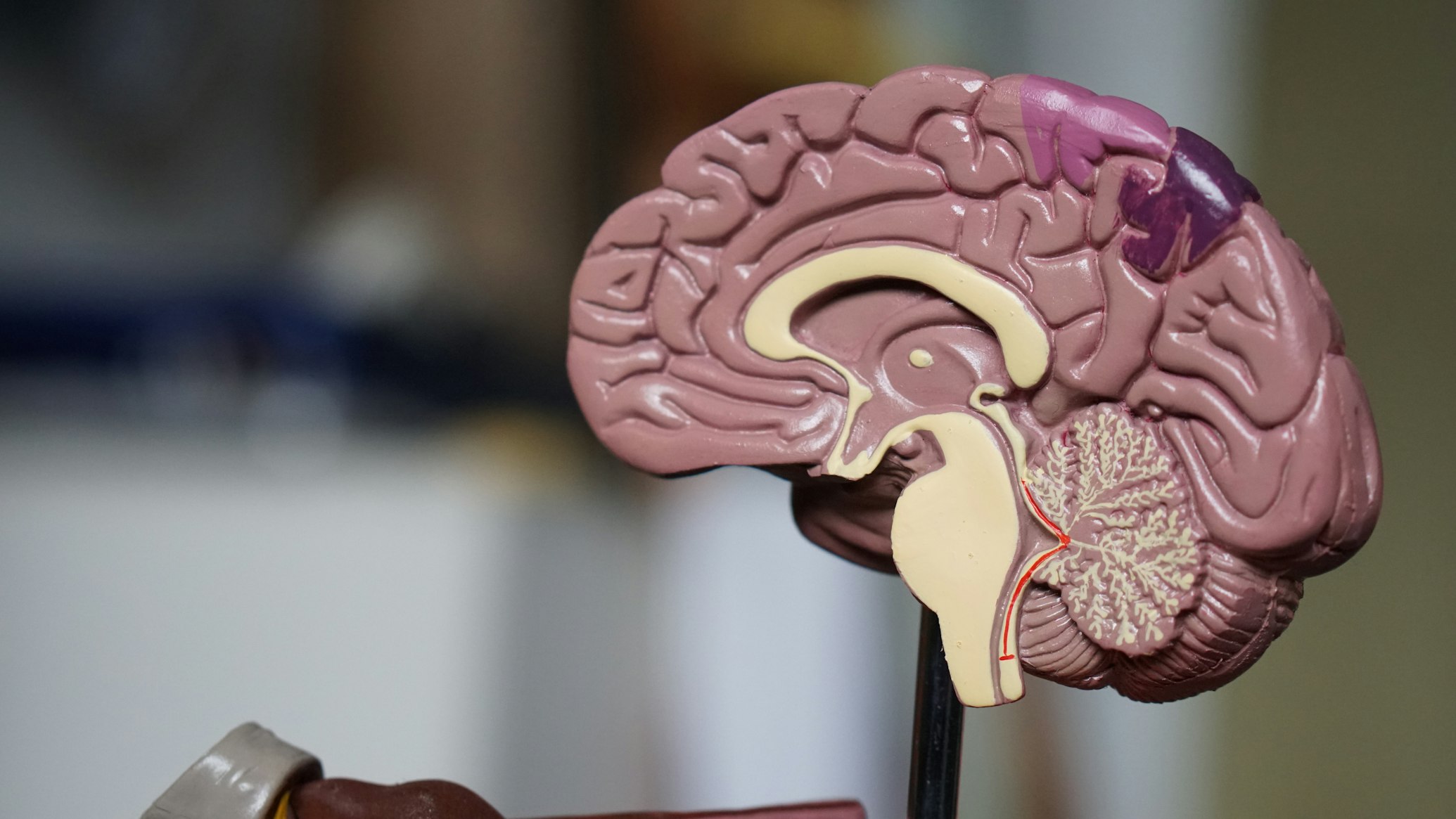
Laboratory setting for advanced genetic research
Methodology of the Experiment
The Chinese team perfected the somatic cell nuclear transfer technique (the same method used to create the sheep Dolly in 1996), but with a crucial innovation: they identified and addressed the reprogramming-resistant regions (RRRs) – areas of DNA where it is particularly difficult to erase the epigenetic marks of the mature cell state 3 .
The process involved the following steps:
- Collection of donor cells: Researchers used two types of donor cells: cells from a monkey fetus at mid-gestation and cells from an adult female monkey 3 .
- Nucleus removal: The nucleus of monkey eggs was carefully removed, eliminating their genetic material 3 .
- Nuclear transfer: The nucleus of the donor cells was transferred to the enucleated eggs 3 .
- Epigenetic reprogramming: Using a "molecular eraser," scientists eliminated the epigenetic marks of mature cells before implantation 3 .
- Implantation: The reconstituted embryos were implanted in different surrogate mothers 3 .
Results and Analysis
The results revealed both the potential and the significant challenges of primate cloning:
Primate Cloning Efficiency
| Donor Cell Type | Embryos Generated | Births | Survival | Success Rate |
|---|---|---|---|---|
| Adult monkey cells | 192 | 2 | 0 (deaths within hours) | 0% |
| Fetal cells | 109 | 2 | 2 (healthy) | 1.8% |
| Total | 301 | 4 | 2 | 0.66% |
The limited success of this experiment demonstrated the extraordinary complexity of cellular reprogramming in primates and raised profound questions about when and how cloned life can be considered a new individual.
The Dialogue with Law: Building Legal Parameters
The Brazilian legal system faces the challenge of translating these scientific complexities into functional legal parameters. According to research published in Tempus Actas, "the law has the obligation to build conceptual parameters for the beginning of life, for this it must use scientific sources" 1 .
Adaptation of Law to Science
Unlike a static body of rules, law demonstrates a remarkable ability to adapt to scientific discoveries. The study reveals that "the law does not decline, it adapts to new scientific-biological parameters, breaking paradigms and adapting to theories about the beginning of human life" 1 . This flexibility is essential in a dynamic society where scientific knowledge is constantly evolving.
Society's Role in Collective Decision
Although science provides essential data, the final decision about which explanation is valid in a given context belongs to society. The study explains that "we live in a dynamic society, where there are various descriptions, from the perspective of varied points of view, but all with the same value" 1 . This pluralistic reality requires continuous dialogue between experts and citizens.
Research Tools: Technologies Shaping the Debate
Scientific investigation into the beginning of life depends on specialized technologies and reagents that allow researchers to manipulate and study embryonic development.
| Tool/Reagent | Main Function | Application in the Debate |
|---|---|---|
| Somatic Cell Nuclear Transfer | Replace egg nucleus with nucleus of adult cell | Cloning (as in the case of Zhong Zhong and Hua Hua) |
| Embryo Culture | Nutritive media for early embryonic development | Allow study of embryos in vitro for limited time |
| Molecular Eraser | Remove epigenetic marks from mature cells | Cellular reprogramming in cloning |
| Implantation Tests | Verify chromosomal integrity and imprinting errors | Selection of embryos for implantation |
| Genomic Sequencing | Complete DNA analysis | Identification of possible genetic anomalies |
Conclusion: An Evolving Dialogue
The determination of the beginning of life remains one of the most profound and complex questions at the intersection of science, law, and philosophy.
As we explored throughout this article, different scientific criteria point to distinct moments along the continuum of human development, each with its own ethical and legal implications.
Key Takeaways
Legal Adaptation
Scientific Advancements
Societal Dialogue
The primate cloning experiment that produced Zhong Zhong and Hua Hua illustrates how scientific advances continue to challenge our established definitions, raising new questions about individuality and genetic identity 3 . Meanwhile, Brazilian law demonstrates a remarkable ability to adapt to these new paradigms, building conceptual parameters that, although based on scientific sources, recognize the fundamental role of society in the collective decision about which explanation to consider valid in each context 1 .
As new scientific discoveries emerge, they will inevitably bring new insights and new questions, feeding this essential discussion for generations to come.